



Opigolix
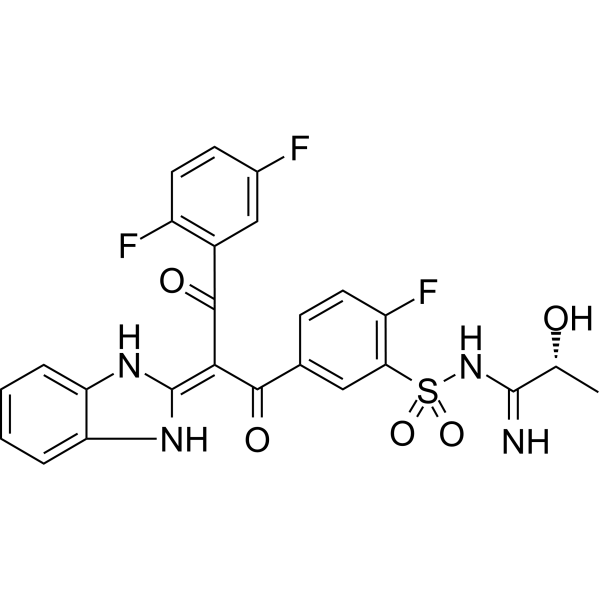
Opigolix (ASP-1707) is a Gonadotropin-releasing hormone (GnRH) receptor antagonist, used for the research of endometriosis and rheumatoid arthritis.
For research use only. We do not sell to patients.
- CAS No.: 912587-25-8
- Formula: C25H19F3N4O5S
- Molecular Weight:544.50
-
Storage:
Please store the product under the recommended conditions in the Certificate of Analysis.

To place orders, for customer services and technical support, please contact: MedChemExpress USA
Tel: 609-228-6898 E-mail: [email protected] [email protected]


-
 Biological Activity
-
Chemical Information
- Protocols
- Purity & Documentation
- References
-
 Help & FAQs


-
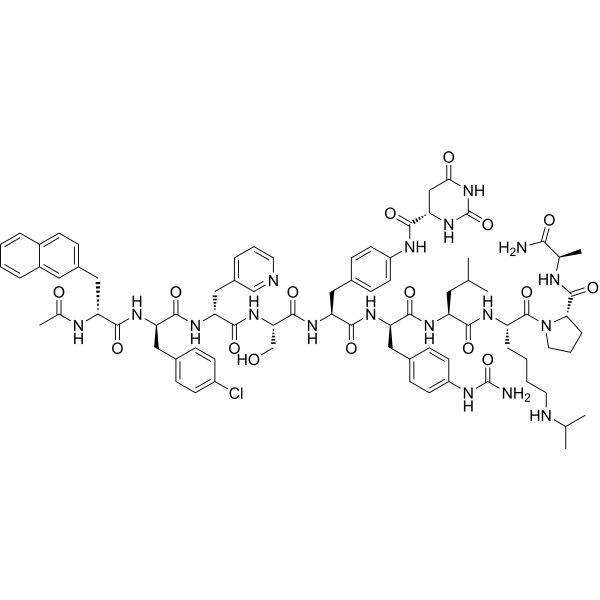
HY-16168A
DegarelixGnRHR Antagonist -
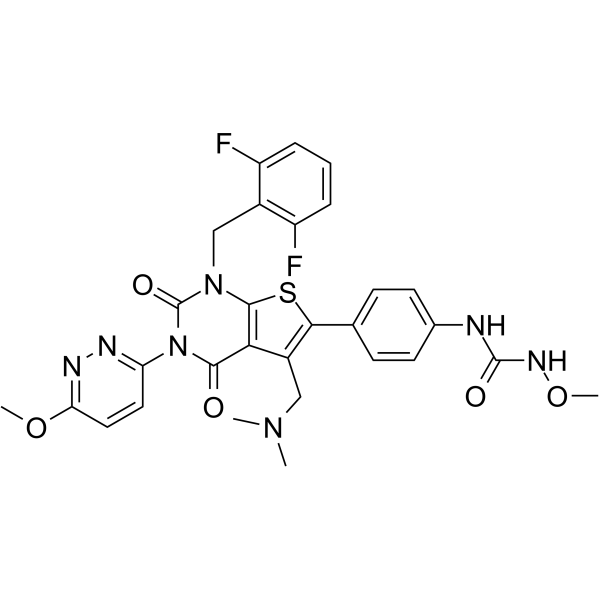
HY-16474
RelugolixGnRH Antagonist -
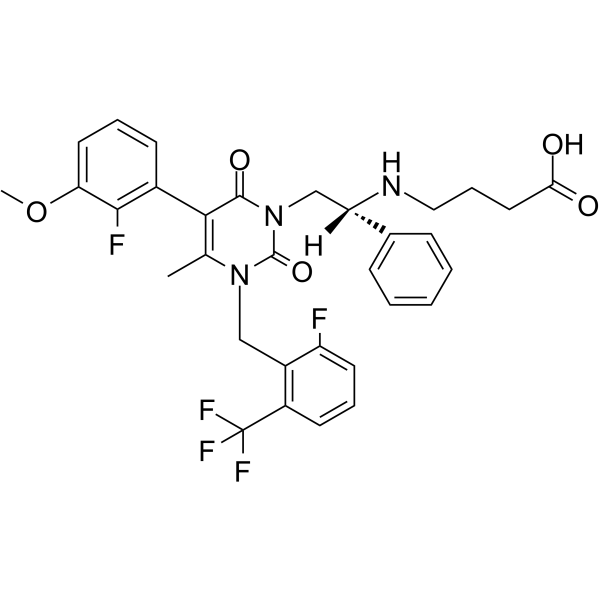
HY-14789
(R)-ElagolixGnRH Receptor Antagonist -
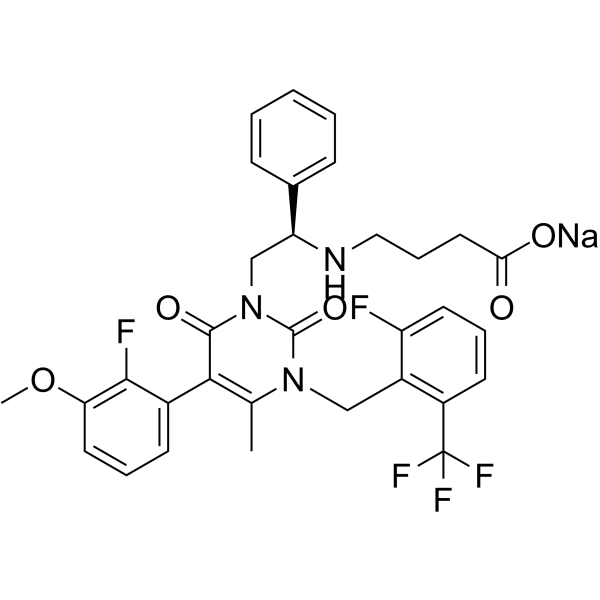
HY-14369
Elagolix sodiumGnRH Receptor Antagonist -
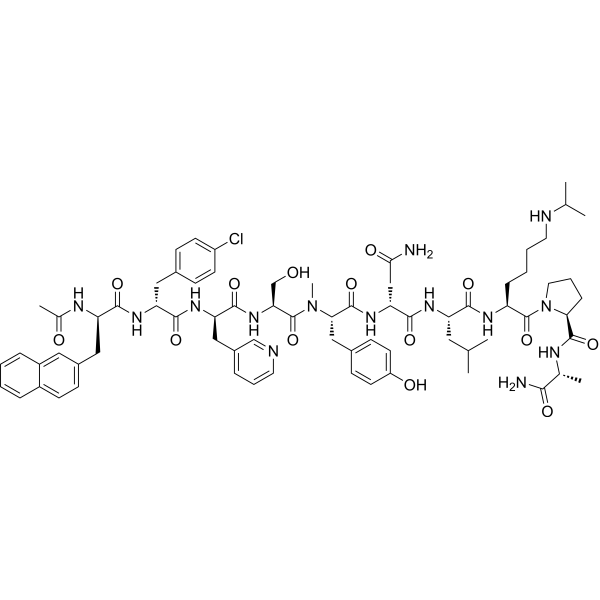
HY-13534
AbarelixGnRH Antagonist -
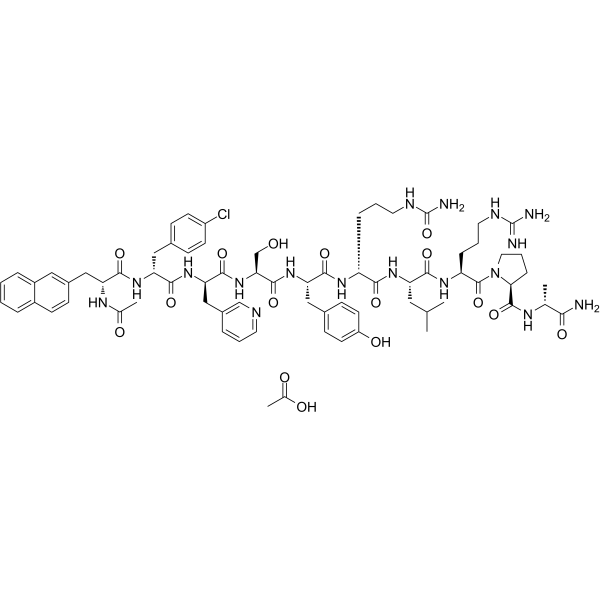
HY-P0009A
Cetrorelix acetateGnRH Receptor Antagonist -
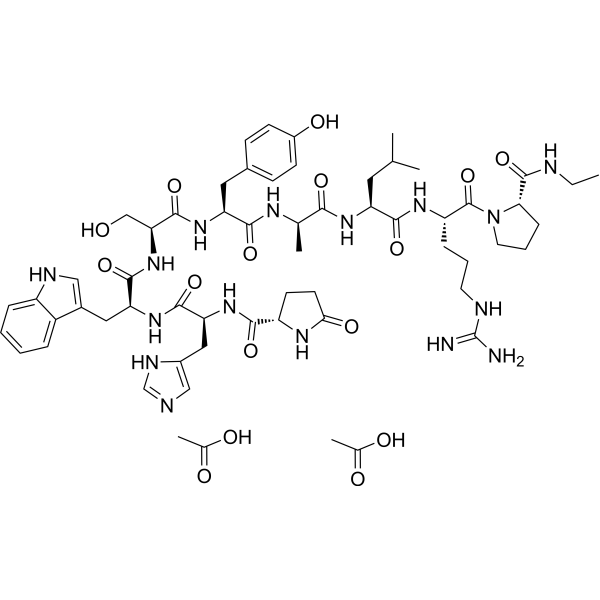
HY-17405
Alarelin AcetateGnRH Receptor Agonist -

HY-16474R
Relugolix (Standard)GnRH Antagonist -

HY-14789R
(R)-Elagolix (Standard)GnRH Receptor Antagonist -

HY-14369R
Elagolix sodium (Standard)GnRH Receptor Antagonist -
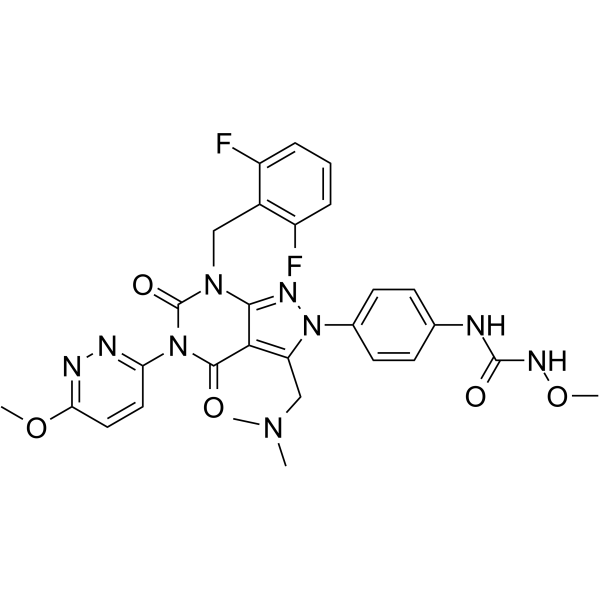
HY-134864
LumigolixGnRH Receptor Antagonist -
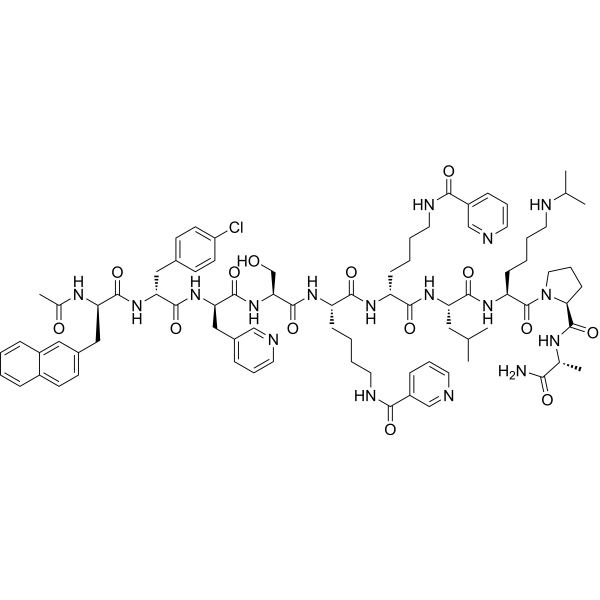
HY-P0013
AntideLHRH Antagonist


Biological Activity
Description
IC50 & Target
GnRH receptor[1]
In Vitro
Opigolix (Compound 726) is a GnRH receptor antagonist, used for the research of sex hormone-dependent diseases, particularly GnRH-related diseases[1].
MedChemExpress (MCE) has not independently confirmed the accuracy of these methods. They are for reference only. Further protocols information, click here.
Clinical Trial
| NCT Number | Sponsor | Condition | Start Date |
Phase

|
|---|---|---|---|---|
| NCT01329991 | Plexxikon| | 2011-05 | PHASE1 |


Chemical Information
-
CAS No. 912587-25-8
-
Molecular Weight 544.50
-
Formula C25H19F3N4O5S
-
SMILES
O=C(C1=CC(S(NC([C@H](O)C)=N)(=O)=O)=C(F)C=C1)/C(C(C2=C(C=CC(F)=C2)F)=O)=C3NC4=CC=CC=C4N\3
-
Synonyms
ASP-1707
-
Shipping
Room temperature in continental US; may vary elsewhere.
-
Storage
Please store the product under the recommended conditions in the Certificate of Analysis.

Protocols
-
Collagen-Induced Arthritis
Collagen-induced arthritis (CIA) is an autoimmune murine model of rheumatoid arthritis in which immunization with type II collagen (CII) emulsified in an adjuvant induces a T cell- and autoantibody-driven inflammatory arthritis characterized by synovial hyperplasia, immune cell infiltration, and joint destruction. The model typically relies on genetically susceptible mouse strains (e. g. , DBA/1) and reproduces key features of human rheumatoid arthritis, including anti-collagen immune responses and progressive joint inflammation. Disease onset generally occurs within ~3-4 weeks after immunization, depending on antigen/adjuvant combinations and protocol variation. The immunopathology is driven by adaptive immune activation against CII, leading to systemic and local joint inflammation mediated by pro-inflammatory cytokines and effector immune cells, making CIA a standard preclinical platform for evaluating immunomodulatory and anti-arthritic interventions.
-
Research Protocol for Endocrine Diseases
Endocrine diseases often arise from disrupted hormone production, hormone signaling, or target-tissue responsiveness; for diabetes-focused endocrine disease models, insulin signaling regulates glucose uptake, hepatic glucose output, lipid metabolism, and β-cell compensation. Type 2 diabetes develops through interacting defects in insulin resistance, β-cell dysfunction, adipose inflammation, hepatic glucose overproduction, altered incretin signaling, and ectopic lipid metabolism. A major unresolved question is whether endocrine dysfunction is driven primarily by target-tissue insulin resistance, intrinsic β-cell failure, immune/inflammatory stress, or combined multi-organ failure that differs by disease stage.


Purity & Documentation
References

Calculators
Concentration (start) × Volume (start) = Concentration (final) × Volume (final)


Opigolix Related Classifications
HY-U00289 Related Classifications
 Powered by Bioz