



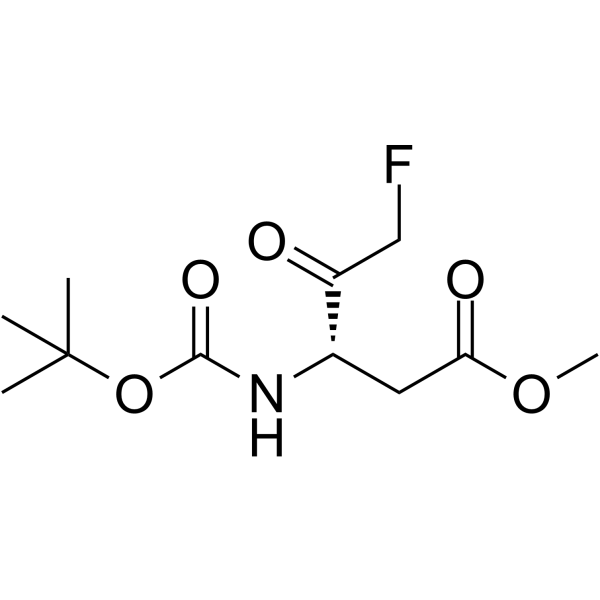
Boc-Asp(OMe)-fluoromethyl ketone
Based on 1 publication(s) in Google Scholar
Boc-Asp(OME)-Fluoromethyl Ketone is a broad range caspase inhibitor that inhibits Fas-mediated phagocytosis and oxidative rupture inhibition, but does not affect the chemotactic activity of IL-8.
For research use only. We do not sell to patients.
- Purity : 98.0%
- CAS No.: 187389-53-3
- Formula: C11H18FNO5
- Molecular Weight:263.26
-
Storage:
-20°C, sealed storage, away from moisture
* In solvent : -80°C, 6 months; -20°C, 1 month (sealed storage, away from moisture)

To place orders, for customer services and technical support, please contact: MedChemExpress USA
Tel: 609-228-6898 E-mail: [email protected] [email protected]


-
 Biological Activity
-
Chemical Information
-
Solvent & Solubility
- Protocols
- Purity & Documentation
- References
-
 Help & FAQs


-
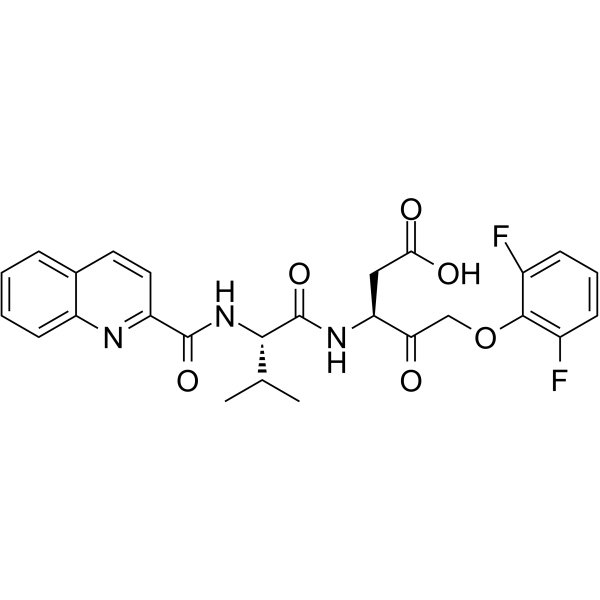
HY-12305
Q-VD-OPhPan-caspase Inhibitor -
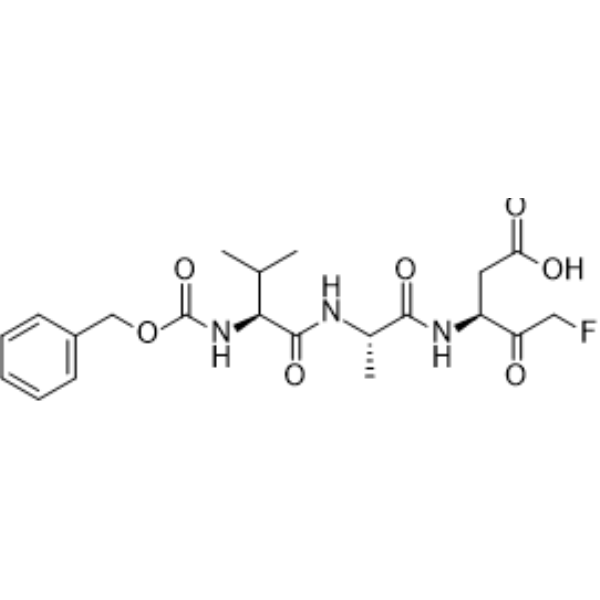
HY-16658B
Z-VAD-FMKPan-Caspase Inhibitor -
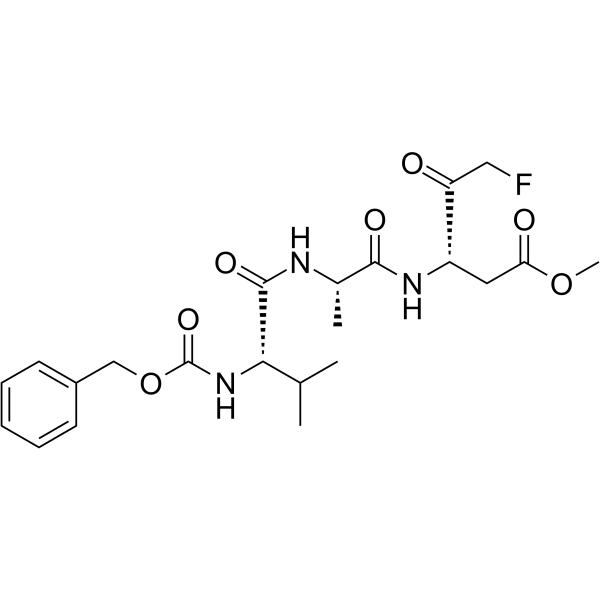
HY-16658
Z-VAD(OMe)-FMKPan-caspase Inhibitor -
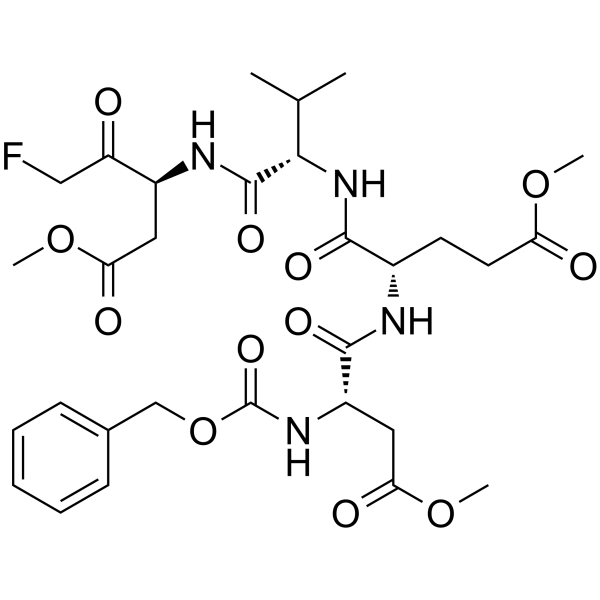
HY-12466
Z-DEVD-FMKCaspase-3 Inhibitor -
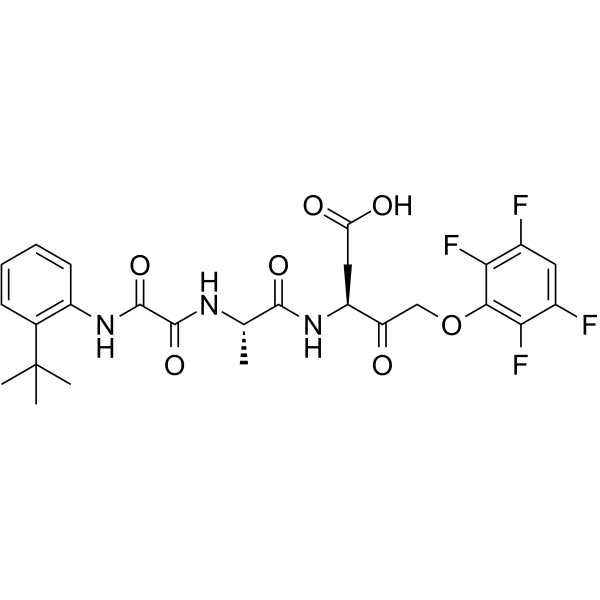
HY-10396
Emricasanpan-Caspase Inhibitor -
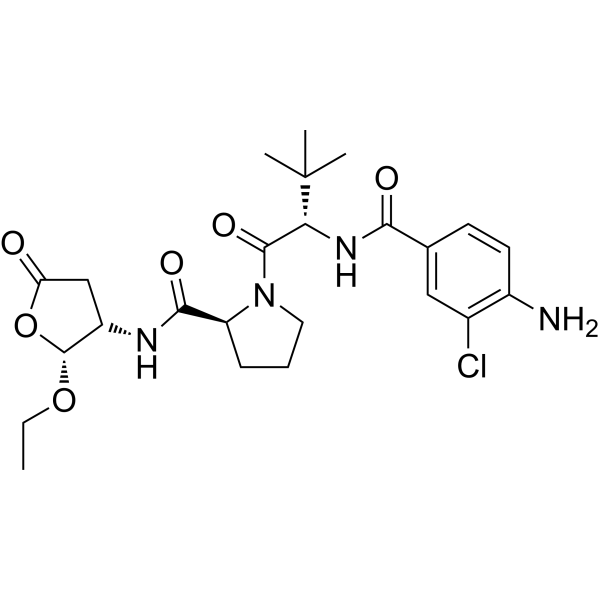
HY-13205
BelnacasanCaspase-1 Inhibitor -
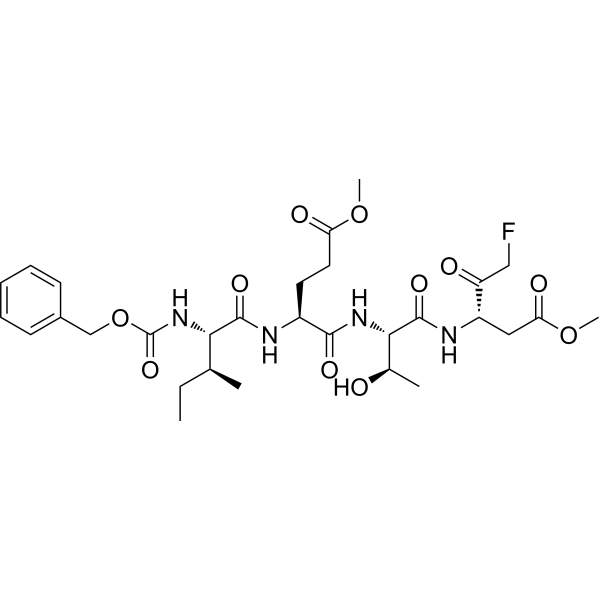
HY-101297
Z-IETD-FMKCaspase-8 Inhibitor -
HY-P1001
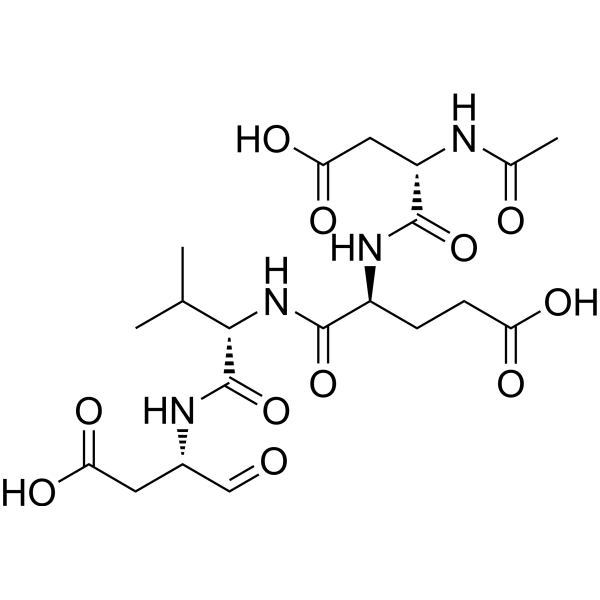
Ac-DEVD-CHOCaspase-3 Inhibitor -
HY-13523
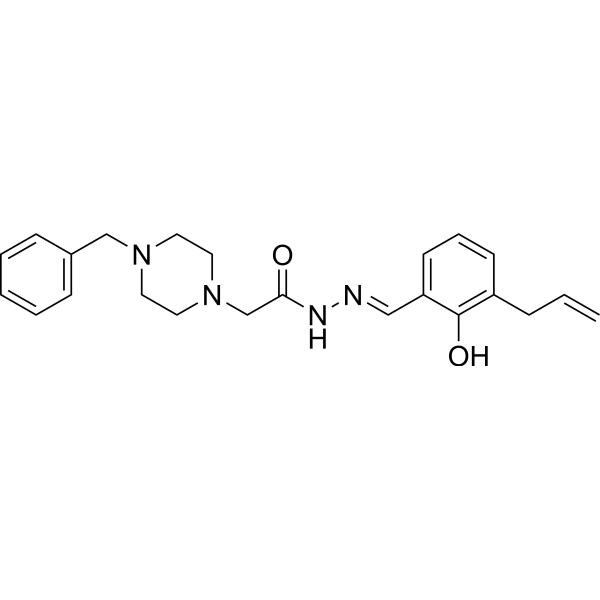
PAC-1Caspase Activator -
HY-P1095
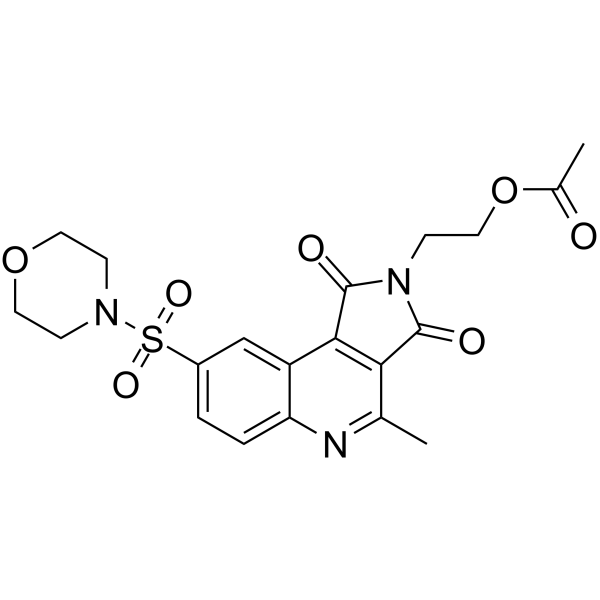
IvachtinCaspase-3 Inhibitor -
HY-18633
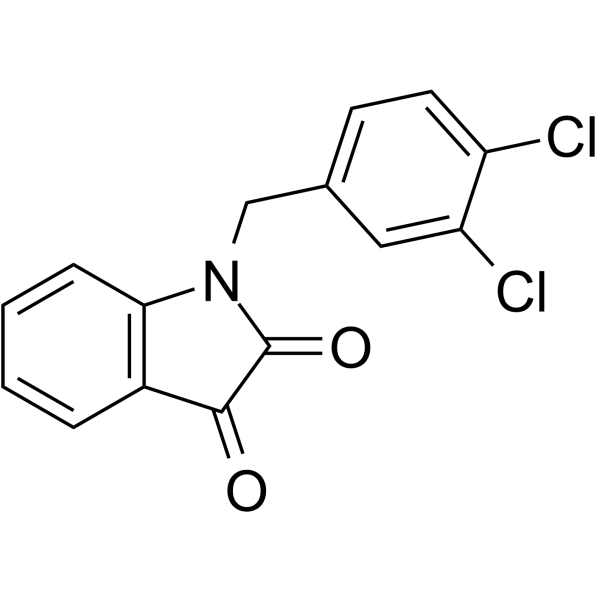
MDK83190Apoptosis Inducer -
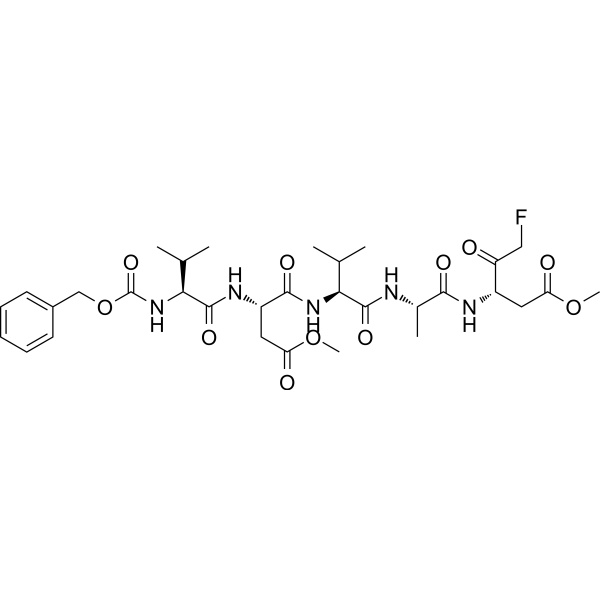
HY-P1008
Z-VDVAD-FMKCaspase-2 Inhibitor
Publications Citing Use of MedChemExpress (MCE) Boc-Asp(OMe)-fluoromethyl ketone
MoreAll Caspase Isoforms
More

Biological Activity
Description
IC50 & Target
[1]|
Caspase |
In Vitro
Boc-Asp(OME)-Fluoromethyl Keton (100 μM; 30 minutes; Polymorphonuclear leukocytes) prevents Fas-induced and spontaneous apoptosis ( CH-11)[1]. Boc-Asp(OME)-Fluoromethyl Keton (20 μM; 5 hours; J774.1/JA-4 cells) significantly increases LDH release[2].
MedChemExpress (MCE) has not independently confirmed the accuracy of these methods. They are for reference only. Further protocols information, click here.


Chemical Information
-
CAS No. 187389-53-3
-
Appearance Liquid (Density: 1.15 g/cm3)
-
Molecular Weight 263.26
-
Formula C11H18FNO5
-
Color Colorless to light yellow
-
SMILES
O=C(OC)C[C@H](NC(OC(C)(C)C)=O)C(CF)=O
-
Synonyms
Boc-Asp(OMe)-FMK
-
Shipping
Room temperature in continental US; may vary elsewhere.
-
Storage
-20°C, sealed storage, away from moisture
* In solvent : -80°C, 6 months; -20°C, 1 month (sealed storage, away from moisture)


Publications (1)
-
Journal Impact Factor
-
Most Recent
-
J Adv Res
Targeting myofibroblast copper vulnerability reverses pulmonary fibrosis via METTL3-directed STAT6 m6A driving cuproptosis. [Abstract]2026 May 21:S2090-1232(26)00436-4. PMID: 42173361


Solvent & Solubility
In Vitro:
DMSO : ≥ 100 mg/mL (379.85 mM; Hygroscopic DMSO has a significant impact on the solubility of product, please use newly opened DMSO)
* "≥" means soluble, but saturation unknown.
Please refer to the solubility information to select the appropriate solvent. Once prepared, please aliquot and store the solution to prevent product inactivation from repeated freeze-thaw cycles.
Storage method and period of stock solution: -80°C, 6 months; -20°C, 1 month (sealed storage, away from moisture). When stored at -80°C, please use it within 6 months. When stored at -20°C, please use it within 1 month.
Please refer to the solubility information to select the appropriate solvent. Once prepared, please aliquot and store the solution to prevent product inactivation from repeated freeze-thaw cycles.
Storage method and period of stock solution: -80°C, 6 months; -20°C, 1 month (sealed storage, away from moisture). When stored at -80°C, please use it within 6 months. When stored at -20°C, please use it within 1 month.
Concentration (start) × Volume (start) = Concentration (final) × Volume (final)

Protocols
-
Phagocytosis Functional Assay
A phagocytosis functional assay measures the ability of phagocytic cells, such as neutrophils, macrophages, monocytes, or microglia/macrophages, to bind and internalize particulate targets including bacteria, yeast particles, beads, or myelin particles. Fluorescent flow-cytometry assays detect target uptake as fluorescence associated with gated phagocytes, while pH-sensitive dyes such as pHrodo increase signal in acidic phagosomal compartments and therefore preferentially report internalized particles rather than particles remaining outside the cell. Microscopy or high-content imaging can be used to confirm intracellular localization and, in some protocols, to follow uptake kinetics.
-
Apoptosis Solutions
Apoptosis is a regulated, generally non-lytic cell-death pathway that removes unwanted, damaged, infected, or abnormal cells through coordinated morphological changes, caspase activation, DNA fragmentation, and membrane remodeling. The intrinsic apoptosis pathway is controlled mainly by mitochondrial outer membrane permeabilization, BCL-2 family proteins, cytochrome c release, apoptosome formation, caspase-9 activation, and downstream executioner caspase-3/7 activation. The extrinsic apoptosis pathway is initiated by death receptors such as Fas, TNFR, and TRAIL receptors, which recruit adaptor proteins and activate caspase-8 before engaging executioner caspases or mitochondrial amplification through BID cleavage. Apoptosis is linked to many phenotypes, including cancer cell killing, tissue homeostasis, immune regulation, neurodegeneration, infection response, and treatment-induced cytotoxicity; unresolved questions include how apoptosis interacts with necroptosis, pyroptosis, ferroptos


Purity & Documentation
-
Data Sheet (280 KB)
-
SDS (393 KB)
- English - EN (393 KB)
- Français - FR (393 KB)
- Deutsch - DE (393 KB)
- Norwegian - NO (393 KB)
- Español - ES (393 KB)
- Swedish - SV (393 KB)
- Italian - IT (393 KB)
- Korean - KR (393 KB)
- Portuguese - PT (393 KB)
-
Handling Instructions (2659 KB)
References
[1]. Paunel-Görgülü A, et al. Stimulation of Fas signaling down-regulates activity of neutrophils from major trauma patients with SIRS. Immunobiology. 2011;216(3):334-342. [Content Brief]
[2]. Koike A, et al. Pan-caspase inhibitors induce necroptosis via ROS-mediated activation of mixed lineage kinase domain-like protein and p38 in classically activated macrophages. Exp Cell Res. 2019;380(2):171-179. [Content Brief]


Complete Stock Solution Preparation Table
Please refer to the solubility information to select the appropriate solvent. Once prepared, please aliquot and store the solution to prevent product inactivation from repeated freeze-thaw cycles.
Storage method and period of stock solution: -80°C, 6 months; -20°C, 1 month (sealed storage, away from moisture). When stored at -80°C, please use it within 6 months. When stored at -20°C, please use it within 1 month.
| Optional Solvent | Concentration Solvent Mass | 1 mg | 5 mg | 10 mg | 25 mg |
|---|---|---|---|---|---|
| DMSO | 1 mM | 3.7985 mL | 18.9926 mL | 37.9853 mL | 94.9632 mL |
| 5 mM | 0.7597 mL | 3.7985 mL | 7.5971 mL | 18.9926 mL | |
| 10 mM | 0.3799 mL | 1.8993 mL | 3.7985 mL | 9.4963 mL | |
| 15 mM | 0.2532 mL | 1.2662 mL | 2.5324 mL | 6.3309 mL | |
| 20 mM | 0.1899 mL | 0.9496 mL | 1.8993 mL | 4.7482 mL | |
| 25 mM | 0.1519 mL | 0.7597 mL | 1.5194 mL | 3.7985 mL | |
| 30 mM | 0.1266 mL | 0.6331 mL | 1.2662 mL | 3.1654 mL | |
| 40 mM | 0.0950 mL | 0.4748 mL | 0.9496 mL | 2.3741 mL | |
| 50 mM | 0.0760 mL | 0.3799 mL | 0.7597 mL | 1.8993 mL | |
| 60 mM | 0.0633 mL | 0.3165 mL | 0.6331 mL | 1.5827 mL | |
| 80 mM | 0.0475 mL | 0.2374 mL | 0.4748 mL | 1.1870 mL | |
| 100 mM | 0.0380 mL | 0.1899 mL | 0.3799 mL | 0.9496 mL |


Boc-Asp(OMe)-fluoromethyl ketone Related Classifications
HY-103348 Related Classifications
 Powered by Bioz