



Z-Asp-CH2-DCB

Based on 1 Customer Validation
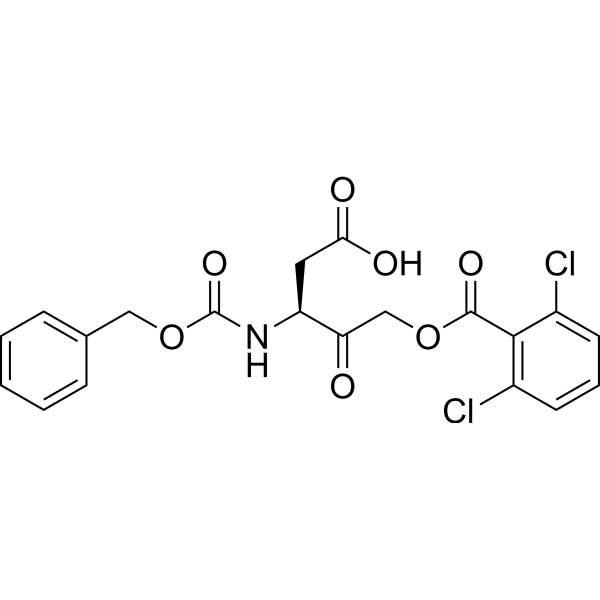
Z-Asp-CH2-DCB is an irreversible broad spectrum caspase inhibitor. Z-Asp-CH2-DCB also inhibits proteases with caspase-like activity. Z-D-CH2-DCB blocks the production of IL-1β, TNF-α, IL-6, and IFN-γ in staphylococcal enterotoxin B (SEB)-stimulated peripheral blood mononuclear cells (PBMC), and reduces SEB-1-stimulated T-cell proliferation in a dose-dependent manner. Z-Asp-CH2-DCB prevents SU5416-induced septal cell apoptosis and emphysema development.
Nur für Forschungszwecke. Wir verkaufen nicht an Patienten.
- Reinheit : 99.64%
- CAS. Nr.: 153088-73-4
- Formel: C20H17Cl2NO7
- Molecular Weight:454.26
-
Speicherung:
-20°C, sealed storage, away from moisture
* In solvent : -80°C, 6 months; -20°C, 1 month (sealed storage, away from moisture)

To place orders, for customer services and technical support, please contact: MedChemExpress USA
Tel: 609-228-6898 E-mail: [email protected] [email protected]


-
 Biologische Aktivität
-
Chemical Information
-
Lösungsmittel & Löslichkeit
- Protokoll
- Reinheit & Dokumentation
- Verweise
-
 Help & FAQs


-
HY-13205
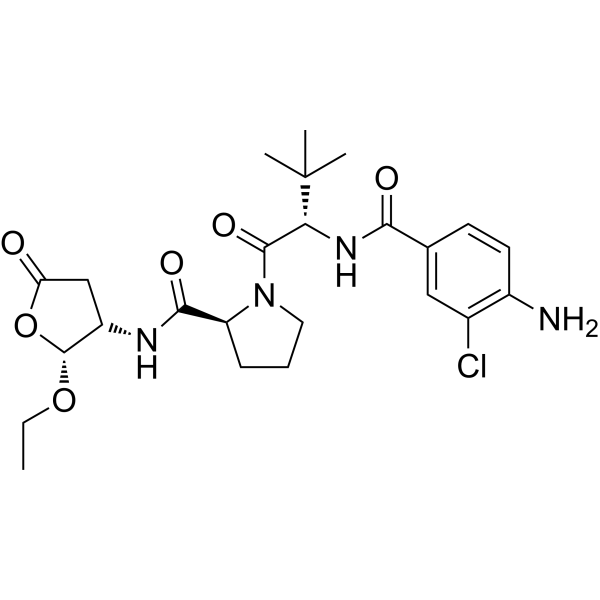
BelnacasanCaspase-1 Inhibitor -
HY-16658
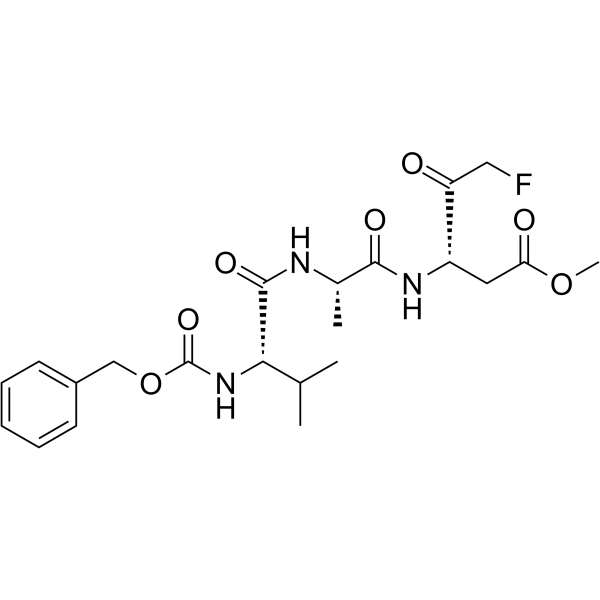
Z-VAD(OMe)-FMKPan-caspase Inhibitor -
HY-12466
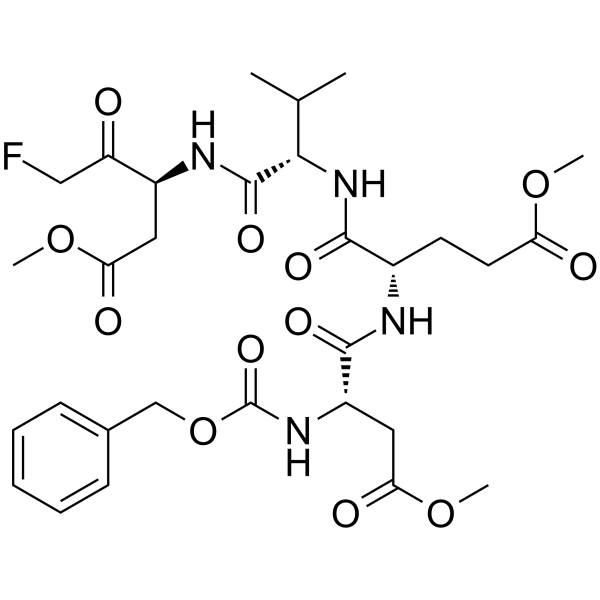
Z-DEVD-FMKCaspase-3 Inhibitor -
HY-10396
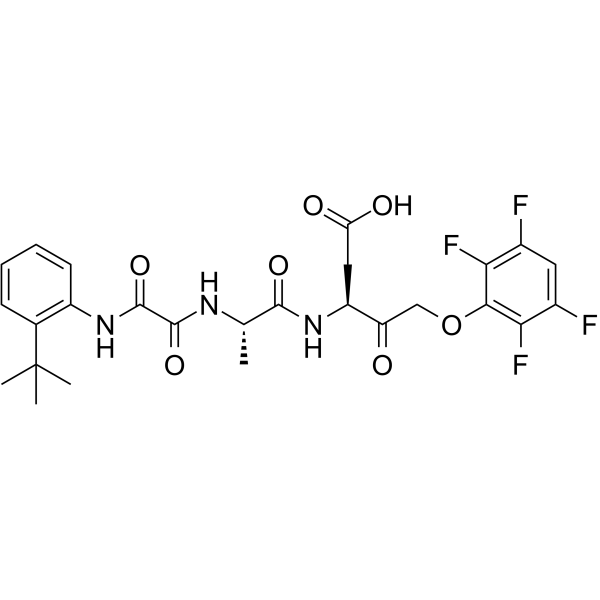
Emricasanpan-Caspase Inhibitor -
HY-12305
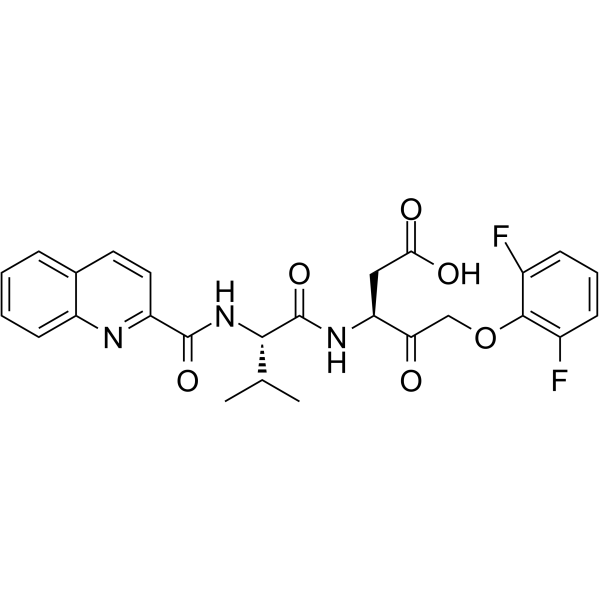
Q-VD-OPhPan-caspase Inhibitor -

HY-13205R
Belnacasan (Standard)Caspase-1 Inhibitor -
HY-120019
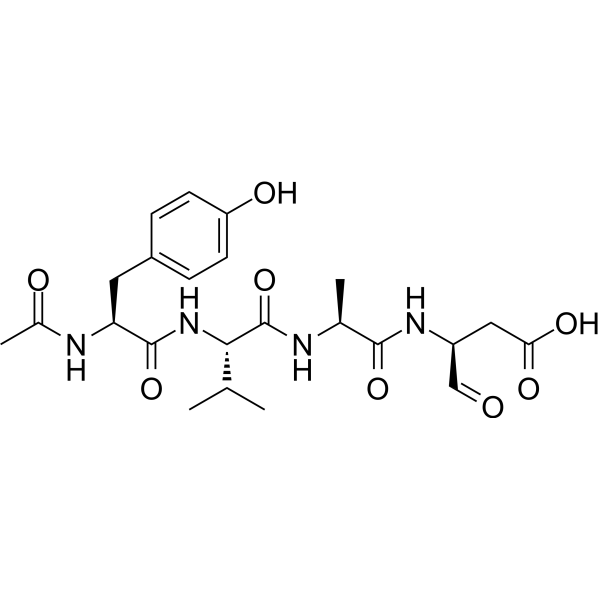
Ac-YVAD-CHOICE Inhibitor -
HY-101297
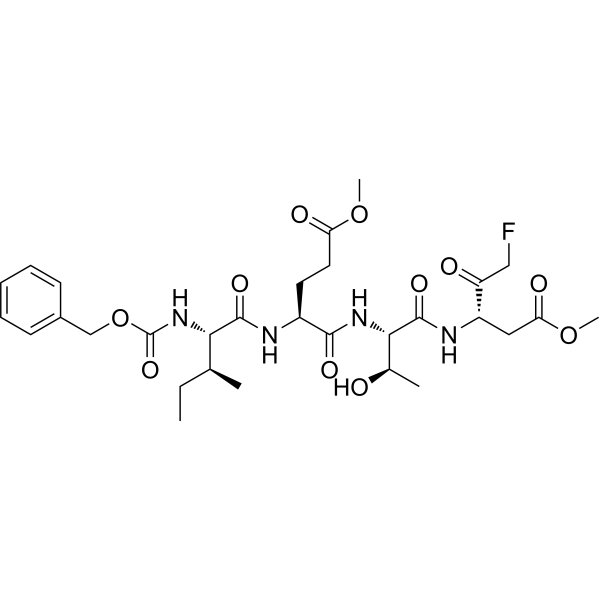
Z-IETD-FMKCaspase-8 Inhibitor -
HY-P1006
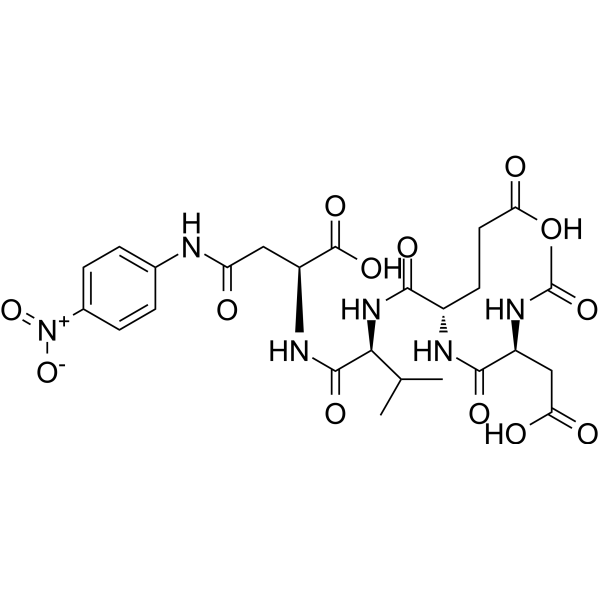
Ac-DEVD-pNAColorimetric Substrate -
HY-16658B
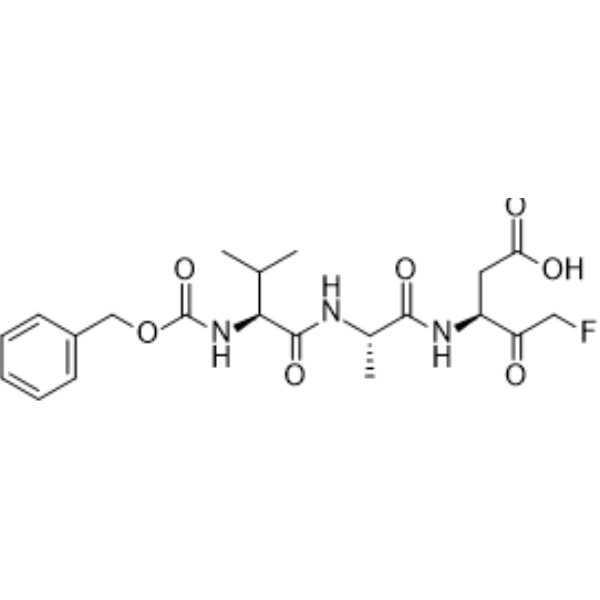
Z-VAD-FMKPan-Caspase Inhibitor -
HY-P1001
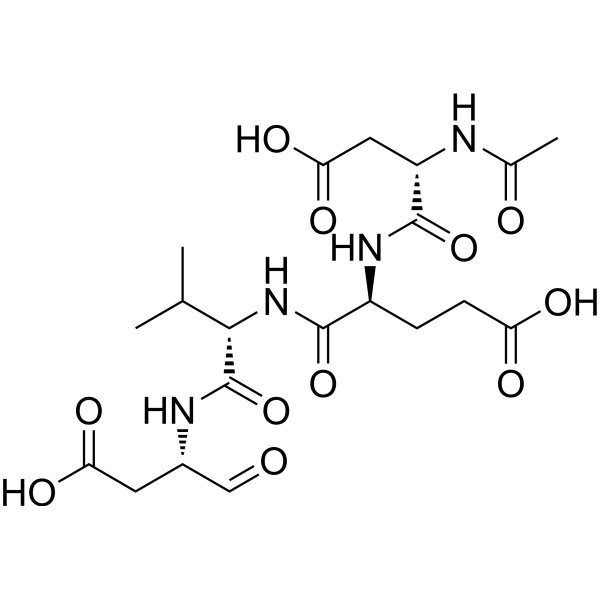
Ac-DEVD-CHOCaspase-3 Inhibitor -
HY-P1092
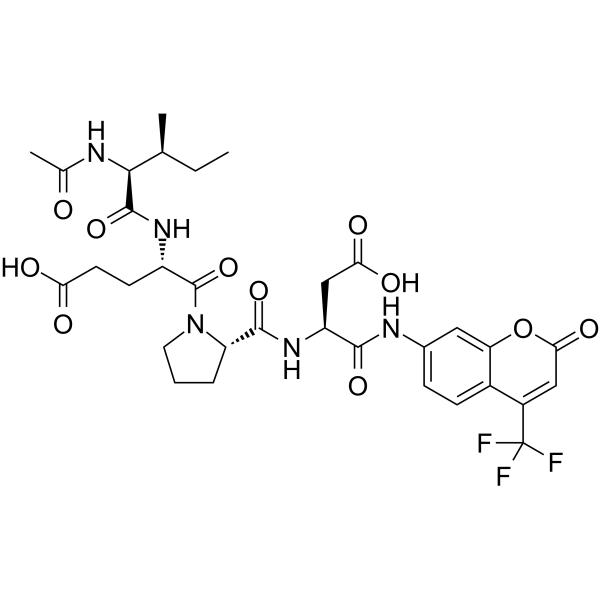
Ac-IEPD-AFCGranzyme B Substrate
Alle Caspase Isoform-spezifische Produkte anzeigen
More

Biologische Aktivität
Beschreibung
In Vitro
Z-Asp-CH2-DCB (10-100 μM) blocks the production of IL-1β, TNF-α, IL-6, and IFN-γ in SEB-stimulated (200 ng; 16 hours) PBMC in a dose-dependent manner. The production of the chemokines MCP-1, MIP-1α, and MIP-1β was also suppresses. The inhibitory effect of Z-Asp-CH2-DCB on TSST-1-activated PBMC is similar, reducing IL-1β, IL-6, TNF-α, IFN-γ, MCP-1, MIP-1α, and MIP-1β to 10, 36, 25, 10, 11, 25, and 30%, respectively, of levels in untreated cells[1].
Z-Asp-CH2-DCB (10-100 μM; 48 hours) inhibits T-cell proliferation in PBMC stimulated with 200 ng of SEB/ml [1].
MedChemExpress (MCE) has not independently confirmed the accuracy of these methods. They are for reference only.
-
Cell Line:Human peripheral blood mononuclear cells
-
Concentration:10, 50, 100 μM
-
Incubation Time:48 hours
-
Result:Inhibited T-cell proliferation in PBMC stimulated with SEB.
In Vivo
MedChemExpress (MCE) has not independently confirmed the accuracy of these methods. They are for reference only.
-
Animal Model:Male Sprague-Dawley rats (SU5416+ Z-Asp-CH2-DCB group)[1]
-
Dosage:1 mg
-
Administration:Intraperitoneal injection; every day for 3 weeks
-
Result:The caspase 3-like activity in SU5416-treated rat lungs is significantly higher, whereas lungs from rats treated with SU5416+Z-Asp-CH2-DCB showed no increase in apoptotic activity.
- Annexin V plus membrane-impermeant dye apoptosis staining
- BrdU Incorporation Assay
- Somatic Cell Culture
- CFSE Dye Dilution Proliferation Assay
- Dye-dilution cell tracking and proliferation staining
- CCK-8/WST-8 Cell Proliferation Assay
- Protocol for Cell Cycle
- Cell Counting-Based Growth Curve Assay
- Colony Formation (Clonogenic) Assay
- Cell Viability Determination by MTT Colorimetric Assay
- EdU Incorporation Assay (Click Chemistry-Based DNA Synthesis Measurement)
- Ki-67 Immunostaining Proliferation Assay
- Detection of Apoptosis
- TUNEL staining for apoptotic DNA fragmentation
- PCNA Immunodetection Proliferation Assay
- PBMC Thawing for Immune Assays
- Protocol for Cell Counting and Cell Density Analysis
- Apoptosis Solutions
- MTT Cell Proliferation Assay
- Pyroptosis Solutions


Chemical Information
-
CAS. Nr. 153088-73-4
-
Appearance Solid
-
Molecular Weight 454.26
-
Formel C20H17Cl2NO7
-
Color White to off-white
-
SMILES
O=C(OCC([C@@H](NC(OCC1=CC=CC=C1)=O)CC(O)=O)=O)C2=C(Cl)C=CC=C2Cl
-
Versand
Room temperature in continental US; may vary elsewhere.
-
Speicherung
-20°C, sealed storage, away from moisture
* In solvent : -80°C, 6 months; -20°C, 1 month (sealed storage, away from moisture)


Lösungsmittel & Löslichkeit
In Vitro:
DMSO : 100 mg/mL (220.14 mM; Need ultrasonic; Hygroscopic DMSO has a significant impact on the solubility of product, please use newly opened DMSO)
Please refer to the solubility information to select the appropriate solvent. Once prepared, please aliquot and store the solution to prevent product inactivation from repeated freeze-thaw cycles.
Storage method and period of stock solution: -80°C, 6 months; -20°C, 1 month (sealed storage, away from moisture). When stored at -80°C, please use it within 6 months. When stored at -20°C, please use it within 1 month.
Please refer to the solubility information to select the appropriate solvent. Once prepared, please aliquot and store the solution to prevent product inactivation from repeated freeze-thaw cycles.
Storage method and period of stock solution: -80°C, 6 months; -20°C, 1 month (sealed storage, away from moisture). When stored at -80°C, please use it within 6 months. When stored at -20°C, please use it within 1 month.
Konzentration (Stammlösung) × Volumen (Stammlösung) = Konzentration (Ziellösung) × Volumen (Ziellösung)
In Vivo:
Select the appropriate dissolution method based on your experimental animal and administration route.
- For the following dissolution methods, please ensure to first prepare a clear stock solution using an In Vitro approach and then sequentially add co-solvents:
- To ensure reliable experimental results, the clarified stock solution can be appropriately stored based on storage conditions. As for the working solution for In Vivo experiments, it is recommended to prepare freshly and use it on the same day.
- The percentages shown for the solvents indicate their volumetric ratio in the final prepared solution. If precipitation or phase separation occurs during preparation, heat and/or sonication can be used to aid dissolution.
Add each solvent one by one: 10% DMSO 40% PEG300 5% Tween-80 45% Saline
Solubility: ≥ 2.08 mg/mL (4.58 mM); Clear solution
This protocol yields a clear solution of ≥ 2.08 mg/mL (saturation unknown).
Taking 1 mL working solution as an example, add 100 μL DMSO stock solution (20.8 mg/mL) to 400 μL PEG300, and mix evenly; then add 50 μL Tween-80 and mix evenly; then add 450 μL Saline to adjust the volume to 1 mL.
Preparation of Saline: Dissolve 0.9 g sodium chloride in ddH₂O and dilute to 100 mL to obtain a clear Saline solution.
Add each solvent one by one: 10% DMSO 90% (20% SBE-β-CD in Saline)
Solubility: ≥ 2.08 mg/mL (4.58 mM); Clear solution
This protocol yields a clear solution of ≥ 2.08 mg/mL (saturation unknown).
Taking 1 mL working solution as an example, add 100 μL DMSO stock solution (20.8 mg/mL) to 900 μL 20% SBE-β-CD in Saline, and mix evenly.
Preparation of 20% SBE-β-CD in Saline (4°C, storage for one week): 2 g SBE-β-CD powder is dissolved in 10 mL Saline, completely dissolve until clear.
In Vivo Dissolution Calculator
Please enter the basic information of animal experiments:
-
-
-
-
Recommended: Prepare an additional quantity of animals to account for potential losses during experiments.
Please enter your animal formula composition:
-
%DMSO +
Recommended: Keep the proportion of DMSO in working solution below 2% if your animal is weak.
-
%+
-
+%Tween-80 + +
-
%Saline +
The co-solvents required include: DMSO, . All of co-solvents are available by MedChemExpress (MCE). , Tween 80. All of co-solvents are available by MedChemExpress (MCE).
Working solution concentration: 0.22 mg/mL
Method for preparing stock solution: mg drug dissolved in μL DMSO. Stock solution concentration: mg/mL. * In solvent : -80°C, 6 months; -20°C, 1 month (sealed storage, away from moisture)
1. Take μL DMSO stock solution;
2. Add μL .
μL , mix evenly;
3. Then add μL Tween 80, mix evenly;
4. Then add μL
Please ensure that the stock solution in the first step is dissolved to a clear state, and add co-solvents in sequence. You can use ultrasonic heating (ultrasonic cleaner, recommended frequency 20-40 kHz), vortexing, etc. to assist dissolution.


Reinheit & Dokumentation
-
Data Sheet (275 KB)
-
SDS (252 KB)
- English - EN (252 KB)
- Français - FR (252 KB)
- Deutsch - DE (252 KB)
- Norwegian - NO (252 KB)
- Español - ES (252 KB)
- Swedish - SV (252 KB)
- Italian - IT (252 KB)
- Korean - KR (252 KB)
- Portuguese - PT (252 KB)
-
Handling Instructions (2659 KB)
Verweise
[1]. Krakauer T, et al. Caspase inhibitors attenuate superantigen-induced inflammatory cytokines, chemokines, and T-cell proliferation. Clin Diagn Lab Immunol. 2004 May;11(3):621-4. [Content Brief]
[2]. Kasahara Y, et al. Inhibition of VEGF receptors causes lung cell apoptosis and emphysema. J Clin Invest. 2000 Dec;106(11):1311-9. [Content Brief]
[3]. Twumasi P, et al. Caspase inhibitors affect the kinetics and dimensions of tracheary elements in xylogenic Zinnia (Zinnia elegans) cell cultures. BMC Plant Biol. 2010 Aug 6;10:162. [Content Brief]


Complete Stock Solution Preparation Table
Please refer to the solubility information to select the appropriate solvent. Once prepared, please aliquot and store the solution to prevent product inactivation from repeated freeze-thaw cycles.
Storage method and period of stock solution: -80°C, 6 months; -20°C, 1 month (sealed storage, away from moisture). When stored at -80°C, please use it within 6 months. When stored at -20°C, please use it within 1 month.
| Optional Solvent | Concentration Solvent Mass | 1 mg | 5 mg | 10 mg | 25 mg |
|---|---|---|---|---|---|
| DMSO | 1 mM | 2.2014 mL | 11.0069 mL | 22.0138 mL | 55.0346 mL |
| 5 mM | 0.4403 mL | 2.2014 mL | 4.4028 mL | 11.0069 mL | |
| 10 mM | 0.2201 mL | 1.1007 mL | 2.2014 mL | 5.5035 mL | |
| 15 mM | 0.1468 mL | 0.7338 mL | 1.4676 mL | 3.6690 mL | |
| 20 mM | 0.1101 mL | 0.5503 mL | 1.1007 mL | 2.7517 mL | |
| 25 mM | 0.0881 mL | 0.4403 mL | 0.8806 mL | 2.2014 mL | |
| 30 mM | 0.0734 mL | 0.3669 mL | 0.7338 mL | 1.8345 mL | |
| 40 mM | 0.0550 mL | 0.2752 mL | 0.5503 mL | 1.3759 mL | |
| 50 mM | 0.0440 mL | 0.2201 mL | 0.4403 mL | 1.1007 mL | |
| 60 mM | 0.0367 mL | 0.1834 mL | 0.3669 mL | 0.9172 mL | |
| 80 mM | 0.0275 mL | 0.1376 mL | 0.2752 mL | 0.6879 mL | |
| 100 mM | 0.0220 mL | 0.1101 mL | 0.2201 mL | 0.5503 mL |


Z-Asp-CH2-DCB Related Classifications
HY-113953 Related Classifications
 Powered by Bioz