Search Result
Results for "
κ receptors
" in MedChemExpress (MCE) Product Catalog:
10
Isotope-Labeled Compounds
| Cat. No. |
Product Name |
Target |
Research Areas |
Chemical Structure |
-
- HY-101718
-
-
-
- HY-B0188A
-
|
Org GB 94
|
Histamine Receptor
Opioid Receptor
ERK
p38 MAPK
|
Neurological Disease
Metabolic Disease
|
|
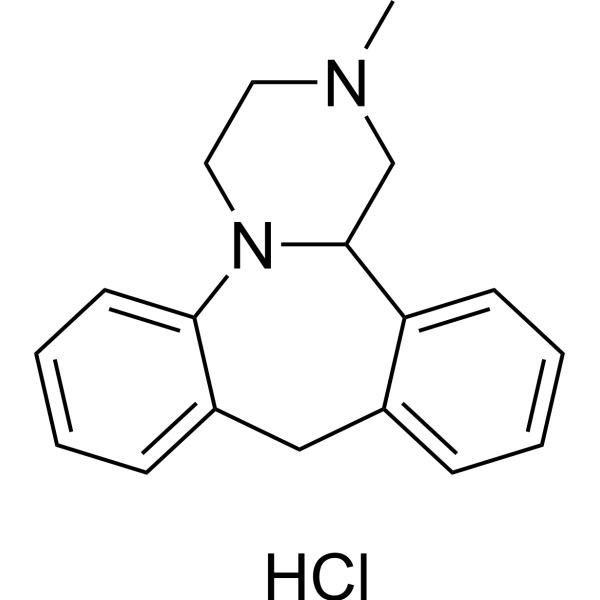
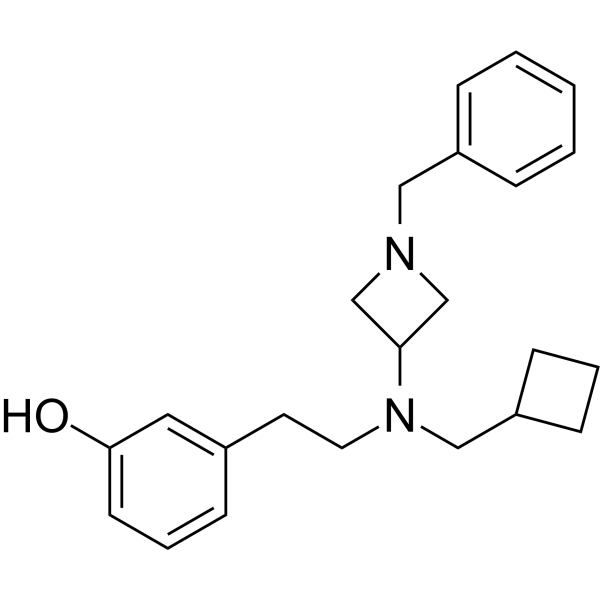
Mianserin hydrochloride (Org GB 94) is an orally active H1 receptor antagonist. Mianserin hydrochloride can activate κ-opioid receptor and octopamine receptor. Mianserin hydrochloride increases ERK1/2 and CREB phosphorylation, and antagonizes full κ-opioid agonist and Dynorphin A (HY-P1333)-induced MAPK phosphorylation. Mianserin hydrochloride modulates social and exploratory behaviour, raises electroconvulsive thresholds. Mianserin hydrochloride can be used for the research of neurological disease, such as depression and epilepsy .
|
-
-
- HY-10487
-
-
-
- HY-P990047
-
|
AMG133 antibody
|
ADC Antibody
GLP Receptor
|
Metabolic Disease
|
|
Maridebart (AMG133 antibody) is a human immunoglobulin G1-kappa, anti-GIPR (gastric inhibitory polypeptide receptor) monoclonal antibody. Maridebart is the antibody portion of Maridebart cafraglutide (HY-164535) and can be used for the synthesis of antibody-drug conjugates (ADC). Maridebart can be used for the reserrch of obesity and type 2 diabetes .
|
-

-
- HY-100903
-
|
nor-Binaltorphimine dihydrochloride; nor-BNI dihydrochloride
|
Opioid Receptor
|
Neurological Disease
|
|
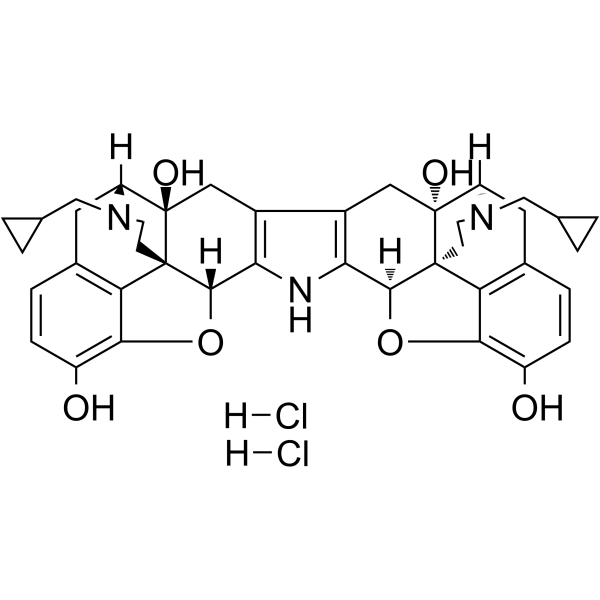
Norbinaltorphimine dihydrochloride (nor-Binaltorphimine dihydrochloride; nor-BNI dihydrochloride) is a selective, long-acting competitive antagonist of the κ-opioid receptor. Norbinaltorphimine dihydrochloride blocks κ-opioid receptor-mediated analgesic effects, and inhibits butorphanol-induced changes in κ-opioid receptor binding kinetics, desensitization and down-regulation. Norbinaltorphimine dihydrochloride suppresses specific opioid withdrawal symptoms, precipitates withdrawal behaviors in butorphanol-dependent rats, and serves as a molecular probe for studying κ-opioid receptor-agonist interactions. Norbinaltorphimine dihydrochloride is applicable to research related to neurological disorders such as pain .
|
-
-
- HY-117040
-
|
Norbinaltorphimine; NorBNI
|
Opioid Receptor
|
Neurological Disease
|
|
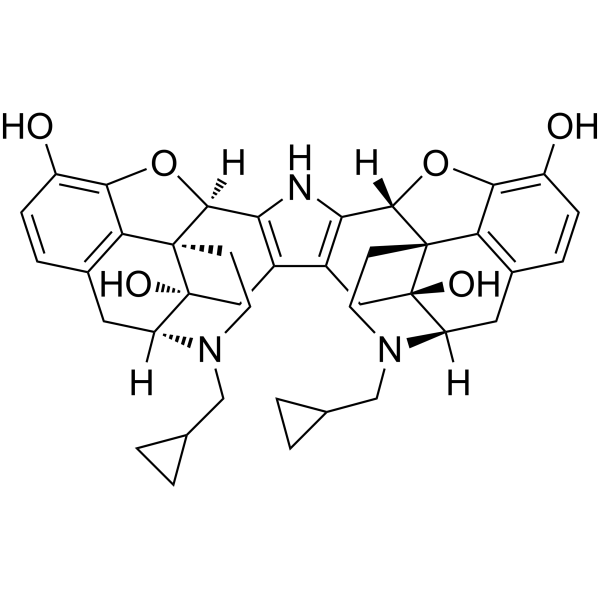
nor-Binaltorphimine (Norbinaltorphimine; NorBNI) is a selective, long-acting competitive antagonist of the κ-opioid receptor. nor-Binaltorphimine blocks κ-opioid receptor-mediated analgesic effects, and inhibits butorphanol-induced changes in κ-opioid receptor binding kinetics, desensitization and down-regulation. nor-Binaltorphimine suppresses specific opioid withdrawal symptoms, precipitates withdrawal behaviors in butorphanol-dependent rats, and serves as a molecular probe for studying κ-opioid receptor-agonist interactions. nor-Binaltorphimine is applicable to research related to neurological disorders such as pain .
|
-
-
- HY-B0188
-
|
Mianserine
|
Histamine Receptor
Opioid Receptor
ERK
p38 MAPK
|
Neurological Disease
|
|
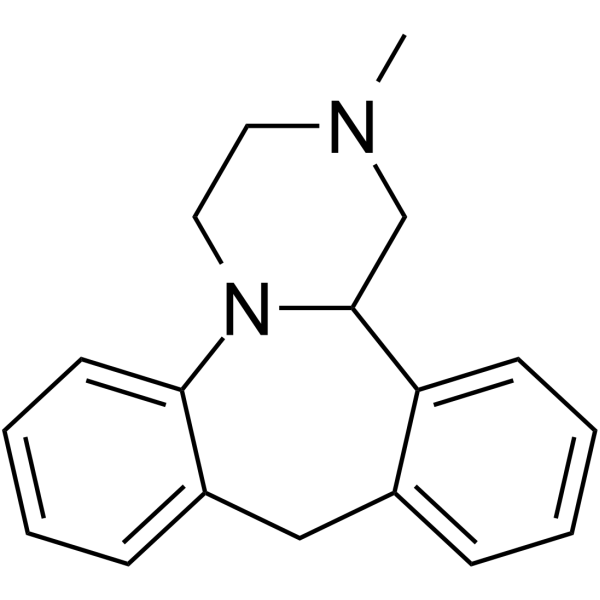
Mianserin (Mianserine) is an orally active H1 receptor antagonist. Mianserin can activate κ-opioid receptor and octopamine receptor. Mianserin increases ERK1/2 and CREB phosphorylation, and antagonizes full κ-opioid agonist and Dynorphin A (HY-P1333)-induced MAPK phosphorylation. Mianserin modulates social and exploratory behaviour, raises electroconvulsive thresholds. Mianserin can be used for the research of neurological disease, such as depression and epilepsy .
|
-
-
- HY-P3445A
-
-
-
- HY-P2159
-
|
|
Opioid Receptor
Endogenous Metabolite
|
Neurological Disease
|
|
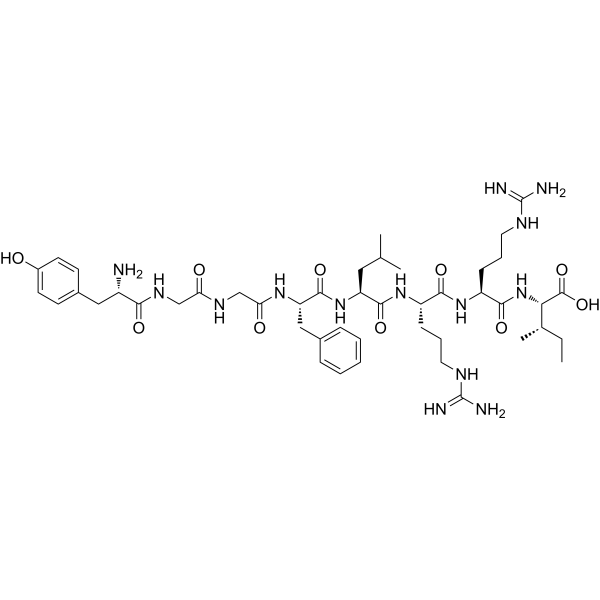
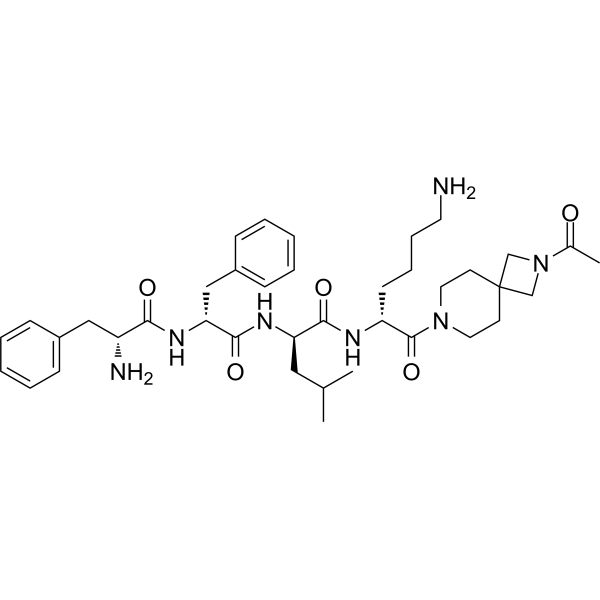
Dynorphin A (1-8) is a ligand with preference for the κ-opioid receptor, and its IC50 value against human placental κ-opioid receptor is 330 nM. Dynorphin A (1-8) mediates neuroprotective effects by inhibiting oxidative stress, suppressing apoptosis, and competitively displacing the binding of κ partial agonists. Dynorphin A (1-8) is the dominant opioid peptide in human placental villi and tissue extracts; it undergoes rapid hydrolysis and can enter the central nervous system via intranasal administration. Dynorphin A (1-8) can be used in studies related to ischemic stroke .
|
-
-
- HY-100845
-
|
Divinorin A
|
Opioid Receptor
|
Cardiovascular Disease
|
|
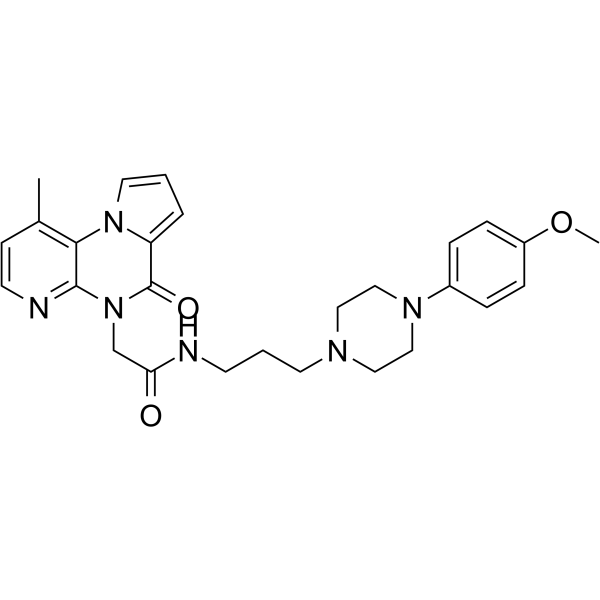
Salvinorin A is a potent, unique and short-acting high efficacy kappa-opioid receptor (KOPr) agonist with Ki value of 4.3 nm. Salvinorin A is a non-nitrogenous neoclerodane isolated from Salvia divinorum.
|
-

-
- HY-107749
-
-
-
- HY-P3445
-
-
-
- HY-P0088
-
|
Dynorphin A Porcine Fragment 1-13
|
Opioid Receptor
|
Others
|
|
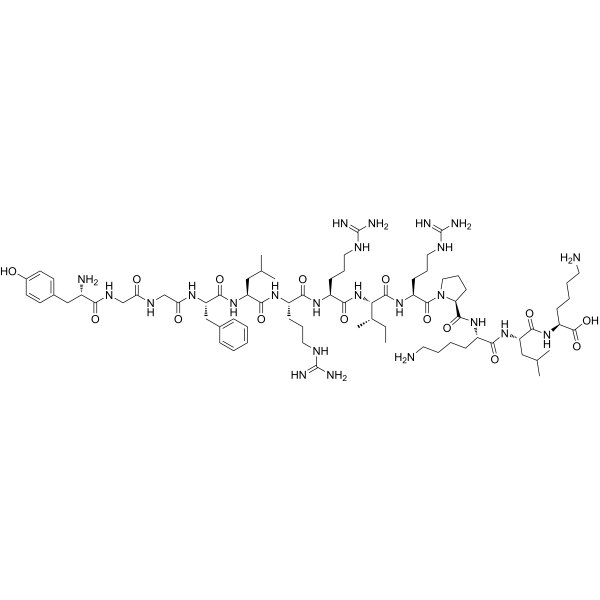
Porcine dynorphin A (1-13) is a potent, endogenous κ opioid receptor agonist and is antinociceptive at physiological concentrations.
|
-
-
- HY-P3609
-
CR 665
2 Publications Verification
JNJ 38488502; FE 200665
|
Opioid Receptor
|
Neurological Disease
|
|
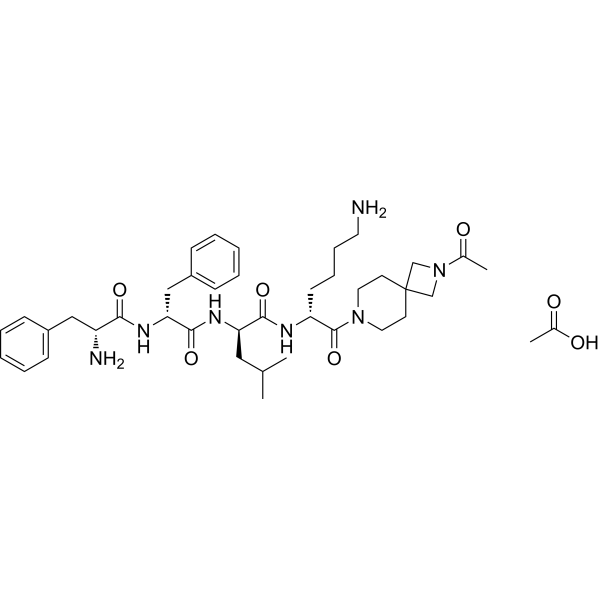
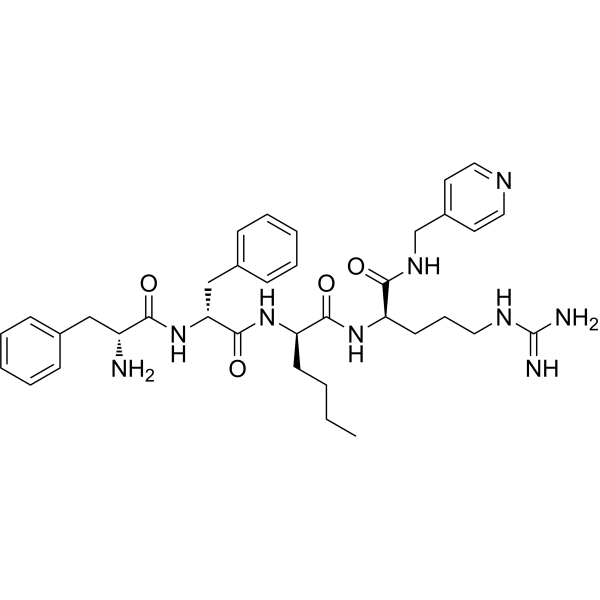
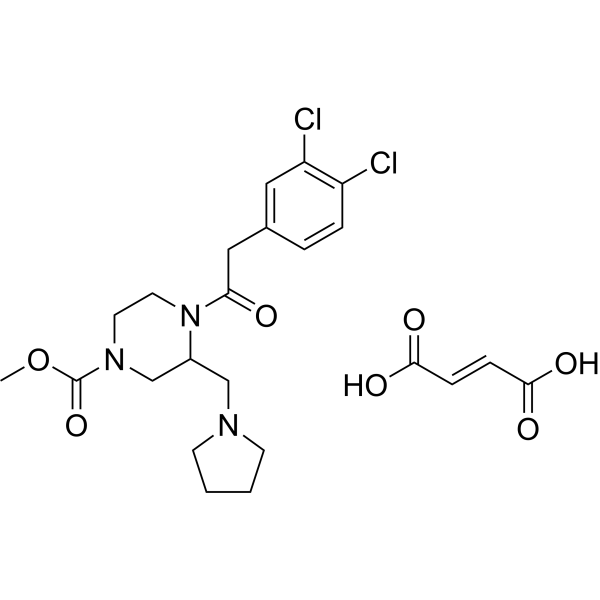
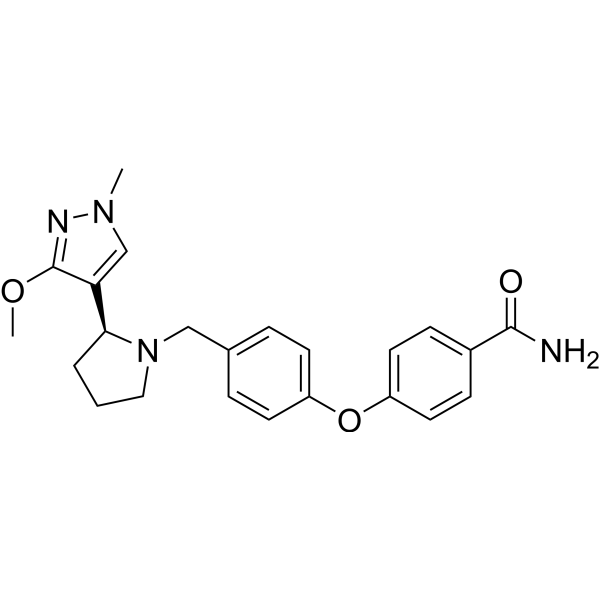
CR 665 (JNJ 38488502) is a peripherally selective κ-opioid agonist. CR 665 can activate the kappa opioid receptor with EC50 value of 10.9 nM. CR 665 can be used for the research of peripheral pain .
|
-
-
- HY-107748
-
|
5'-GNTI hydrochloride
|
Opioid Receptor
|
Neurological Disease
|
|
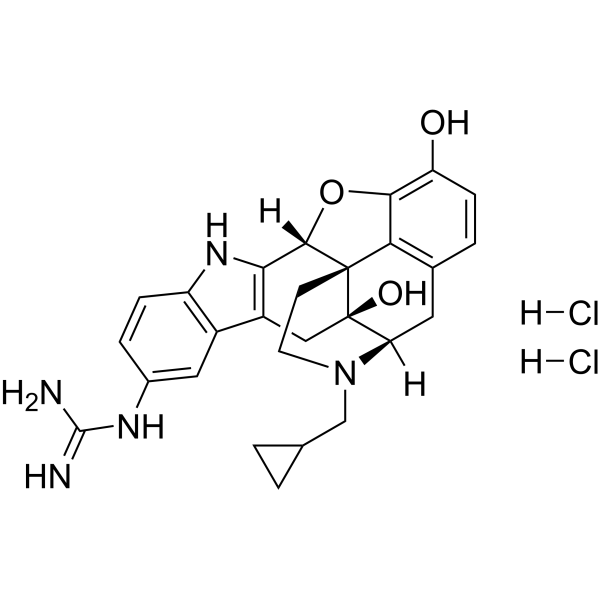
5'-Guanidinonaltrindole (5'-GNTI) hydrochloride is a highly selective and potent κ-opioid receptor antagonist with a Ki of 0.18 nM for human κ-opioid receptor .
|
-
-
- HY-P1337
-
-

-
- HY-107747
-
-
-
- HY-P990013
-
|
Glutazumab; GMA-102; GMA-105
|
GCGR
|
Metabolic Disease
|
|
Gulgafafusp alfa is a human IgG2κ antibody targeting the glucagon-like peptide 1 receptor GLP1R .
|
-

-
- HY-P0186A
-
|
|
Opioid Receptor
|
Neurological Disease
|
|
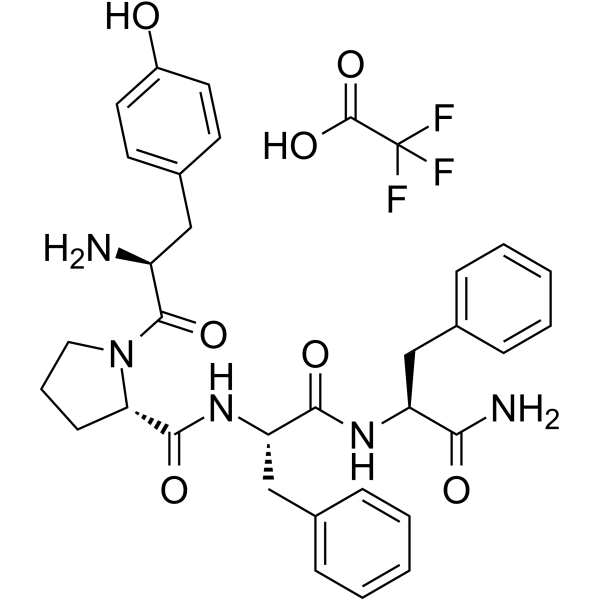
Endomorphin 2 TFA, a high affinity, highly selective agonist of the μ-opioid receptor, displays reasonable affinities for kappa3 binding sites, with Ki value between 20 and 30 nM .
|
-
-
- HY-P990089
-
-

-
- HY-P990712
-
|
RZ-358; XOMA 358
|
Insulin Receptor
|
Inflammation/Immunology
|
|
Ersodetug is an anti-INSR (insulin receptor) human IgG2 κ monoclonal antibody . Recommend Isotype Controls: Human IgG2 kappa, Isotype Control (HY-P99002).
|
-

-
- HY-101079
-
|
|
Opioid Receptor
|
Neurological Disease
|
|
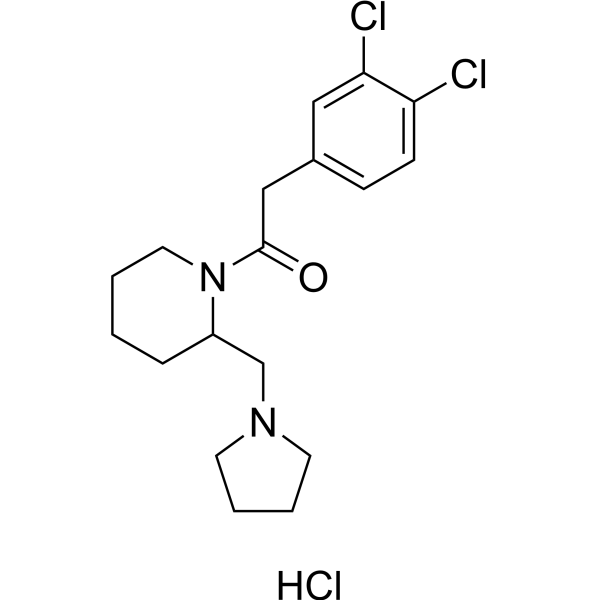
BRL 52537 hydrochloride is a highly selective κ-Opioid receptor (KOR) agonist with Kis of 0.24 nM and 1560 nM for κ and μ subtypes, respectively. BRL 52537 hydrochloride decreases ischemia-evoked NO production as a potential mechanism of neuroprotection. BRL 52537 hydrochloride attenuates early stroke damage .
|
-
-
- HY-P990086
-
|
RG-6292; RO-7296682
|
Interleukin Related
|
Cancer
|
|
Vopikitug is an IgG1-kappa, anti-IL2RA (interleukin 2 receptor alpha subunit, IL-2RA, TAC, p55, CD25) homo sapiens monoclonal antibody. Vopikitug shows antineoplastic activity .
|
-

-
- HY-P1302
-
|
|
Opioid Receptor
|
Neurological Disease
|
|
Orphanin FQ(1-11), a orphanin FQ or nociceptin (OFQ/N) fragment, is a potent NOP receptor (ORL-1; OP4) agonist, with a Ki of 55 nM. Orphanin FQ(1-11) has no affinity for μ, δ, κ1 and κ3 receptors (Ki>1000 nM). Orphanin FQ(1-11) is analgesic in CD-1 mice .
|
-

-
- HY-P9988
-
|
BA301
|
ADC Antibody
TAM Receptor
|
Cancer
|
|
Mecbotamab is a humanized IgG1-κ antibody targeting to AXL receptor tyrosine kinase (AXL). Mecbotamab can serves as a conditionally active biologic (CAB), which can be conjugated with MMAE (HY-15162) via a cleavable linker, to form ADC Mecbotamab vedotin (BA3011) .
|
-

-
- HY-N0050
-
|
(+)-Allomatrine
|
Others
|
Neurological Disease
|
|
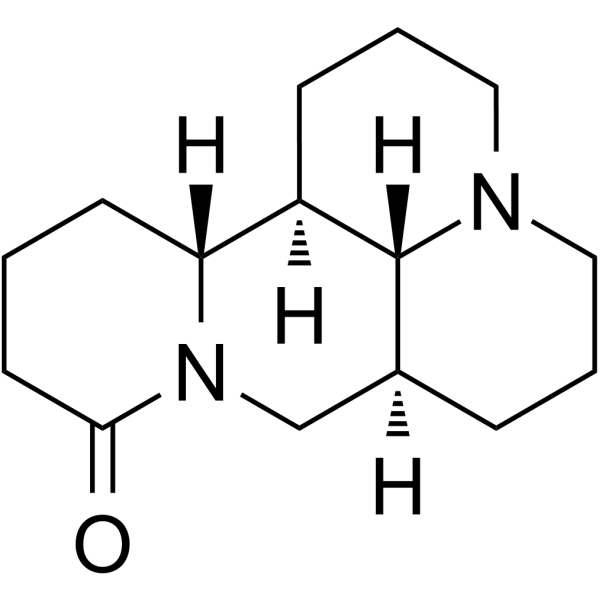
Allomatrine ((+)-Allomatrine) is an alkaloid from the bark of Sophora japonica. Allomatrine has antinociceptive properties mediated mainly through the activation ofκ-opioid receptors .
|
-
-
- HY-101205
-
-
-
- HY-15997B
-
|
(±)-Trans-(1R,2R)-U-50488 hydrochloride
|
Opioid Receptor
|
Neurological Disease
|
|
(±)-U-50488 ((±)-Trans-(1R,2R)-U-50488) hydrochloride is a selective κ opioid receptor (KOR) agonist .
|
-

-
- HY-121800
-
-
-
- HY-P1337A
-
-

-
- HY-P990085
-
|
INCAGN02390
|
Tim3
|
Infection
|
|
Verzistobart is an IgG1κ antibody targeting the hepatitis A virus cellular receptor HAVCR2.
|
-

-
- HY-P990022
-
|
DS-6016A
|
TGF-β Receptor
|
Metabolic Disease
|
|
Prafnosbart (DS-6016A) is an IgG1-kappa, anti-ACVR1 (activin A receptor type 1, ACVRLK2, ALK2, ACVR1A, SKR1) humanized monoclonal antibody. Prafnosbart can be used for bone metabolism disorders research .
|
-

-
- HY-107750A
-
|
|
Opioid Receptor
|
Neurological Disease
|
|
Cyprodime hydrochloride is a highly selective μ-opioid receptor antagonist with Ki values of 5.4 nM, 244.6 nM and 2187 nM for μ-, δ- and κ-opioid receptors, respectively. Cyprodime hydrochloride has anti-depressant-like effect .
|
-

-
- HY-135230
-
|
FP3FBZ
|
Opioid Receptor
|
Neurological Disease
|
|
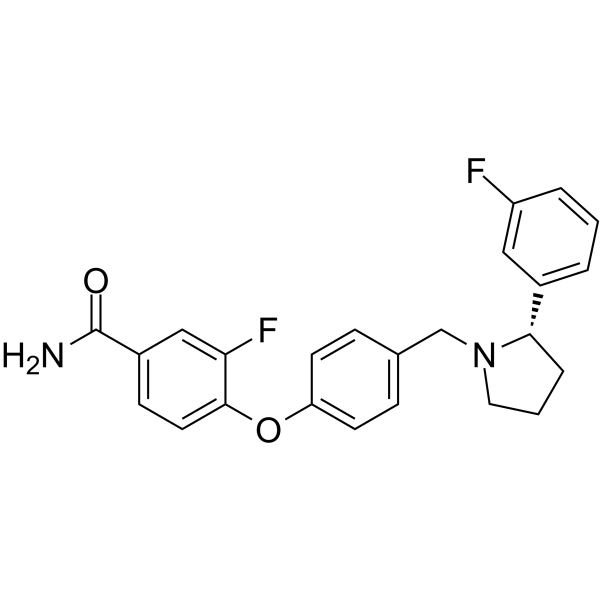
LY2444296 is an orally bioavailable, high-affinity and selective short-acting kappa opioid receptor (KOPR) antagonist, with a Ki value of ~1 nM. LY2444296 exhibits anti-anxiety like effects .
|
-
-
- HY-169867
-
|
7-Benzylidenenaltrexone
|
Opioid Receptor
|
Neurological Disease
|
|
BNTX (7-Benzylidenenaltrexone) is a highly selective δ1 opioid receptor antagonist. BNTX selectively antagonizes the antinociceptive activity mediated by spinal δ1 opioid receptors, and does not alter the antinociceptive effects mediated by δ2, μ or κ opioid receptors at selective doses .
|
-

-
- HY-156614
-
-
-
- HY-107743
-
|
NalBzoH
|
Opioid Receptor
|
Neurological Disease
|
|
Naloxone benzoylhydrazone (NalBzoH) is a mixed agonist/antagonist. Naloxone benzoylhydrazone is a prototypic κ3-opioid receptor agonist, and a partial agonist at the cloned μ and δ opioid receptors, and an antagonist at opioid-like NOP receptors. Naloxone benzoylhydrazone has potently analgesia effect .
|
-

-
- HY-10486
-
-
-
- HY-P99698
-
|
LDP
|
PD-1/PD-L1
|
Inflammation/Immunology
Cancer
|
|
Lesabelimab (LDP) is an immunoglobulin G1-kappa anti-CD274 monoclonal antibody. CD274 is an immune checkpoint ligand, represses antitumour immunity through the interaction with PDCD1 receptor .
|
-

-
- HY-15997C
-
|
(±)-Trans-(1R,2R)-U-50488 hydrate hydrochloride
|
Opioid Receptor
|
Neurological Disease
|
|
(±)-U-50488 ((±)-Trans-(1R,2R)-U-50488) hydrate hydrochloride is a selective κ opioid receptor (KOR) agonist .
|
-

-
- HY-105235
-
|
CI-977
|
Opioid Receptor
|
Neurological Disease
|
|
Enadoline (CI-977) is a highly selective, brain-penetrating, and nonpeptide kappa-opioid receptor (KOR) agonist (Ki=1.25 nM). Antinociceptive effects .
|
-

-
- HY-B0188AR
-
|
Org GB 94 (Standard)
|
Reference Standards
Histamine Receptor
Opioid Receptor
ERK
p38 MAPK
|
Neurological Disease
Metabolic Disease
|
|
Mianserin hydrochloride (Org GB 94) (Standard) is the analytical standard of Mianserin hydrochloride. This product is intended for research and analytical applications. Mianserin hydrochloride is an orally active H1 receptor antagonist. Mianserin hydrochloride can activate κ-opioid receptor and octopamine receptor. Mianserin hydrochloride increases ERK1/2 and CREB phosphorylation, and antagonizes full κ-opioid agonist and Dynorphin A (HY-P1333)-induced MAPK phosphorylation. Mianserin hydrochloride modulates social and exploratory behaviour, raises electroconvulsive thresholds. Mianserin hydrochloride can be used for the research of neurological disease, such as depression and epilepsy .
|
-

-
- HY-B0188S
-
|
Mianserine-d3
|
Histamine Receptor
Isotope-Labeled Compounds
Opioid Receptor
ERK
p38 MAPK
|
Neurological Disease
|
|
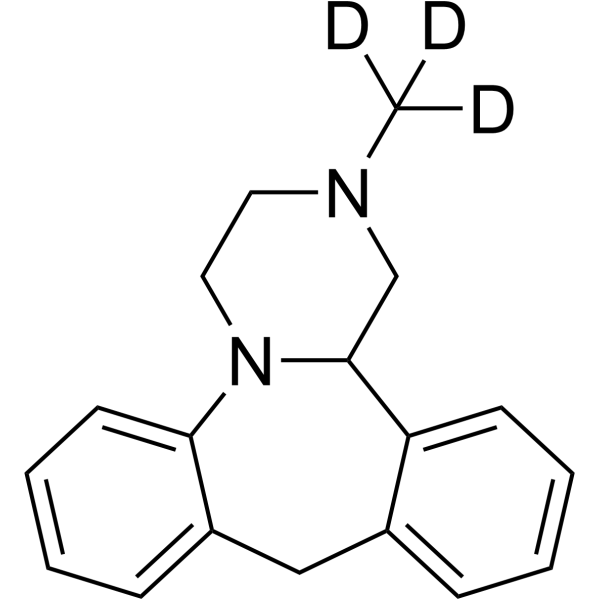
Mianserin-d3 is the deuterium labeled Mianserin (HY-B0188). Mianserin (Mianserine) is an orally active H1 receptor antagonist. Mianserin can activate κ-opioid receptor and octopamine receptor. Mianserin increases ERK1/2 and CREB phosphorylation, and antagonizes full κ-opioid agonist and Dynorphin A (HY-P1333)-induced MAPK phosphorylation. Mianserin modulates social and exploratory behaviour, raises electroconvulsive thresholds. Mianserin can be used for the research of neurological disease, such as depression and epilepsy .
|
-
-
- HY-P99733
-
|
|
ADC Antibody
TAM Receptor
|
Cancer
|
|
Mipasetamab is an IgG1κ antibody targeting to AXL, a tyrosine kinase receptor and an TAM Receptor. Mipasetamab involves in synthesis of ADCT-601 (Mipasetamab uzoptirine), an AXL-targeted antibody-drug conjugate (ADC). ADCT-601 has anti-tumor activity .
|
-

-
- HY-120949
-
|
|
Opioid Receptor
|
Neurological Disease
|
|
(1R,2R)-U-50488 hydrochloride is the absolute stereochemistry of (±)-U-50488 hydrochloride. (±)-U-50488 hydrochloride is a selective κ opioid receptor (KOR) agonist .
|
-

-
- HY-145128
-
-
-
- HY-P5833
-
|
κ-Bgt
|
nAChR
|
Neurological Disease
|
|
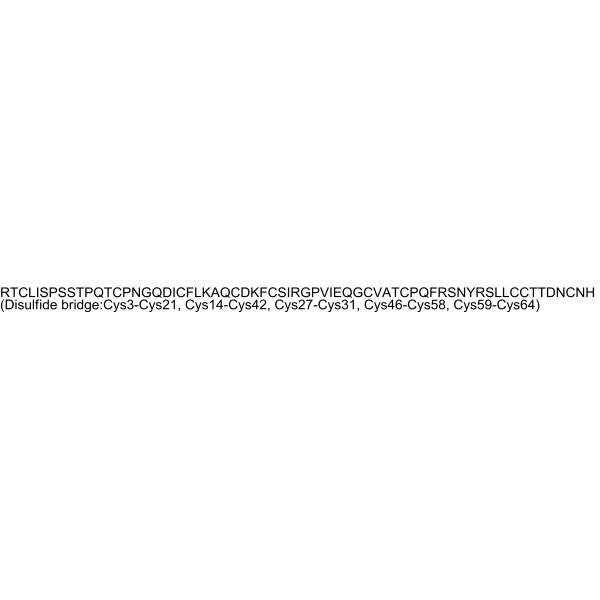
κ-Bungarotoxin (κ-Bgt) is a potent, selective, and slowly reversible antagonist of α3β2 neuronal nicotinic acetylcholine receptors with an IC50 of 2.30 nM .
|
-
-
- HY-16765
-
|
TD-1211
|
Opioid Receptor
|
Neurological Disease
|
|
Axelopran (TD-1211) is an opioid receptor antagonist with pKi values of 9.8, 8.8 and 9.9 for human recombinant μ and δ receptors and guinea pig κ receptor, respectively.
|
-

-
- HY-P991135
-
|
RO-7502175; RG-6411
|
CCR
|
Cancer
|
|
Enzelkitug is a humanized immunoglobulin G1-κ monoclonal antibody targeting the human C-C motif chemokine receptor 8 (CCR8). Enzelkitug is promising for research of various solid tumors and hematological malignancies .
|
-

-
- HY-P991134
-
|
|
IGF-1R
|
Inflammation/Immunology
|
|
Elegrobart is an immunoglobulin G1-κ monoclonal antibody targeting the human insulin-like growth factor 1 receptor (IGF1R). Elegrobart is promising for research of diseases associated with abnormal IGF1R signaling, especially thyroid eye disease .
|
-

- HY-136786
-
-

- HY-151811
-
|
|
Opioid Receptor
|
Neurological Disease
|
|
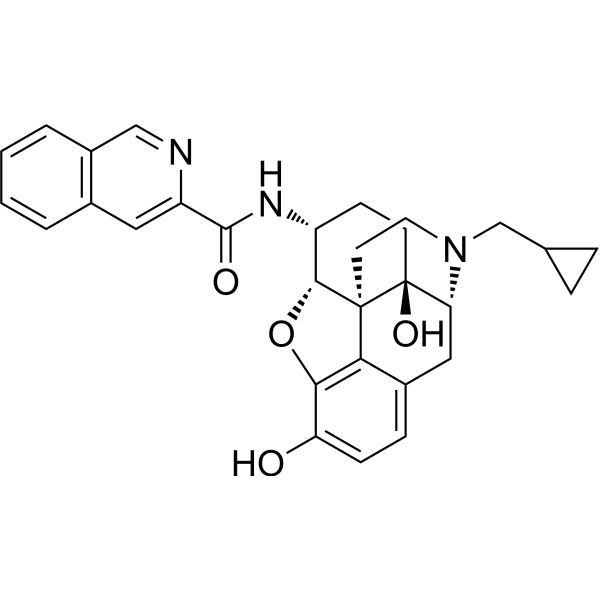
NAQ is a potent and selective μ opioid receptor partial agonist, with a Ki of 0.55 nM. NAQ shows selectivity for Mu opioid receptor over the δ receptor (Ki=132.50 nM) and the κ receptor (Ki=26.45 nM). NAQ can be used for the research of opioid withdrawal or dependence .
|
-
- HY-P1302A
-
|
|
Opioid Receptor
|
Neurological Disease
|
|
Orphanin FQ(1-11) TFA, a orphanin FQ or nociceptin (OFQ/N) fragment, is a potent NOP receptor (ORL-1; OP4) agonist, with a Ki of 55 nM. Orphanin FQ(1-11) TFA has no affinity for μ, δ, κ1 and κ3 receptors (Ki>1000 nM). Orphanin FQ(1-11) TFA is analgesic in CD-1 mice .
|
-

- HY-P3874
-
|
|
Opioid Receptor
|
Neurological Disease
|
|
Peptide E is a potent kappa opiate receptor agonist. Peptide E has opiate receptor binding activity with IC50 value of 0.39 μM. Peptide E can be used for the research of central nervous system .
|
-

- HY-122189
-
|
(-)-Akuammine; Vincamajoridine
|
Others
|
Neurological Disease
|
|
Akuammine is an indole alkaloid that has been found in Picralima nitida and has analgesic activity. It selectively binds to the μ- and κ-opioid receptors over the δ-opioid receptor (Kis=0.3, 1.68, and 10.4 μM for the human receptors, respectively). Akuammine inhibits forskolin-induced cAMP production in HEK293 cells expressing human μ- or κ-opioid receptors (IC50s=2.6 and 0.073 μM, respectively). It increases the latency to withdrawal in the tail-flick or hot plate test in mice when administered at a dose of 60 mg/kg.
|
-

- HY-B0188AS
-
|
Org GB 94-d3
|
Isotope-Labeled Compounds
Histamine Receptor
Opioid Receptor
ERK
p38 MAPK
|
Neurological Disease
Metabolic Disease
|
|
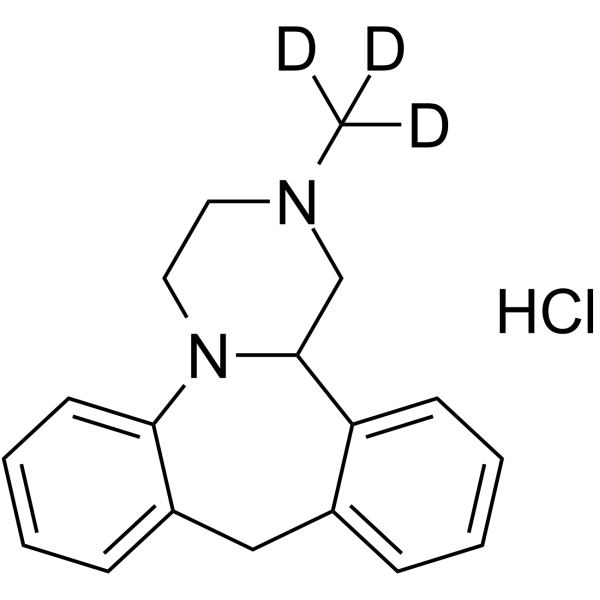
Mianserin-d3 hydrochloride is the deuterium labeled Mianserin. Mianserin (Mianserine) is an orally active H1 receptor antagonist. Mianserin can activate κ-opioid receptor and octopamine receptor. Mianserin increases ERK1/2 and CREB phosphorylation, and antagonizes full κ-opioid agonist and Dynorphin A (HY-P1333)-induced MAPK phosphorylation. Mianserin modulates social and exploratory behaviour, raises electroconvulsive thresholds. Mianserin can be used for the research of neurological disease, such as depression and epilepsy .
|
-
- HY-101223
-
|
|
Opioid Receptor
|
Neurological Disease
|
|
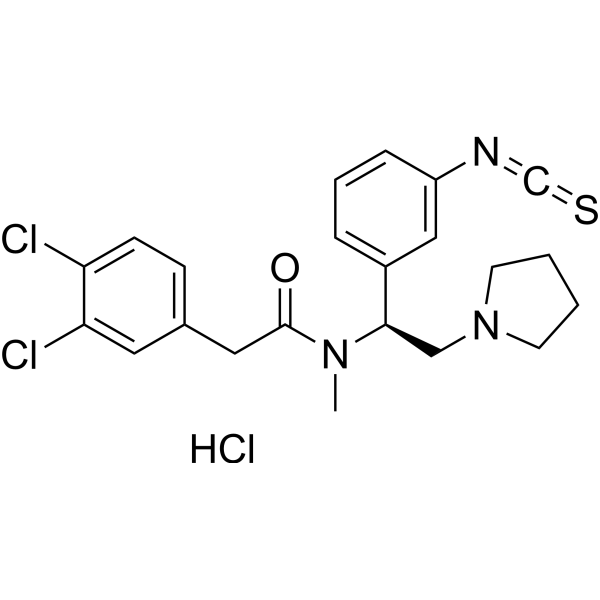
DIPPA hydrochloride is an irreversible, long-lasting, selective and high affinity κ-opioid receptor antagonist. DIPPA hydrochloride can be used for the research of anxiety and antidepressant .
|
-
- HY-P0186
-
|
|
Opioid Receptor
|
Neurological Disease
|
|
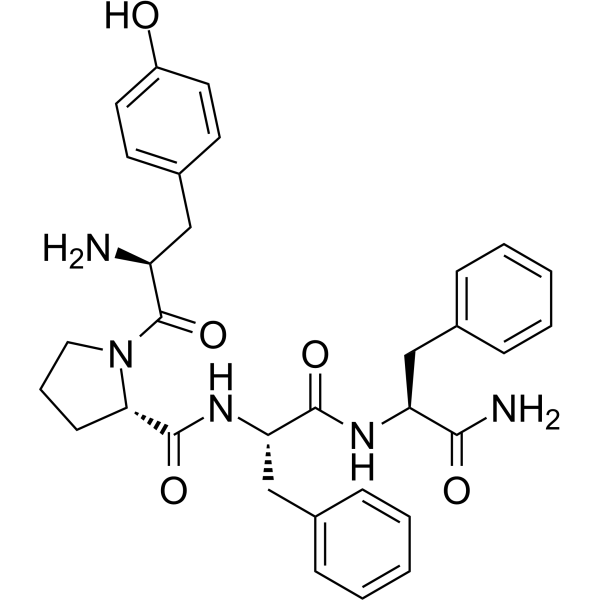
Endomorphin 2, a high affinity, highly selective agonist of the μ-opioid receptor, displays reasonable affinities for kappa3 binding sites, with Ki value between 20 and 30 nM.
|
-
- HY-P1299
-
|
|
Opioid Receptor
|
Neurological Disease
|
|
UFP-101 is a potent, selective, and competitive antagonist of the NOP receptor, with a pKi of 10.24. UFP-101 displays >3000-fold selectivity over δ, μ and κ opioid receptors. UFP-101 shows antidepressant-like effect .
|
-

- HY-P10006
-
|
|
Opioid Receptor
|
Neurological Disease
|
|
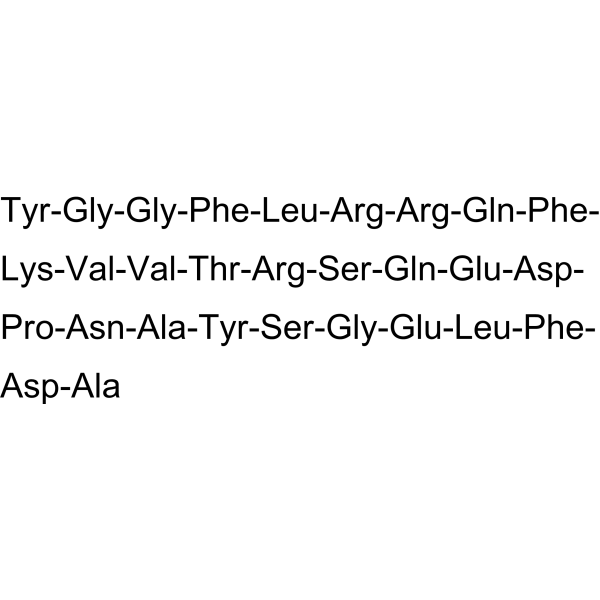
Leumorphin, human is a potent kappa opioid receptor (κ opioid receptor) agonist. Leumorphin, human inhibits the contraction of the myenteric plexus-longitudinal muscle preparation of the guinea pig ileum .
|
-
- HY-P3634
-
|
|
Opioid Receptor
|
Neurological Disease
|
|
[DAla2] Dynorphin A (1-13), amide (porcine) is a petide. [DAla2] Dynorphin A (1-13), amide (porcine) might have the κ opioid receptor agonist effect. [DAla2] Dynorphin A (1-13), amide (porcine) can be used for the research of nervous system .
|
-
![[DAla2] Dynorphin A (1-13), amide (porcine)](//file.medchemexpress.com/product_pic/hy-p3634.gif)
- HY-P10177
-
|
|
Opioid Receptor
|
Neurological Disease
|
|
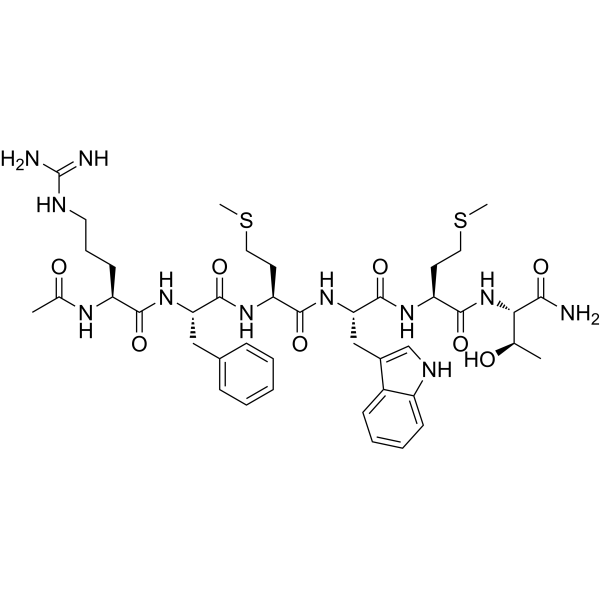
Acetalin-3 (Ac-RFMWMT-NH2), a hexapeptide, is a μ opioid receptor antagonist with high affinity for μ and κ3 opioid receptor, weak affinity for κ1 receptors and no affinity for κ2 receptors .
|
-
- HY-P10175
-
|
|
Opioid Receptor
|
Neurological Disease
|
|
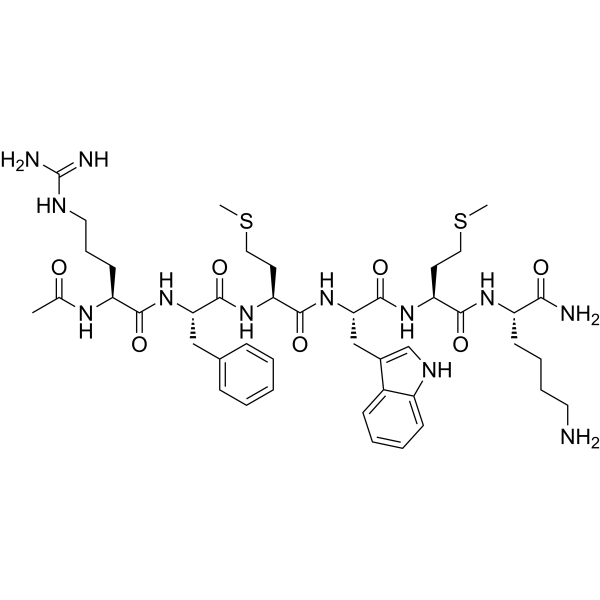
Acetalin-1 (Ac-RFMWMK-NH2), a hexapeptide, is a μ opioid receptor antagonist with high affinity for μ and κ3 opioid receptor, weak affinity for κ1 receptors and no affinity for κ2 receptors .
|
-
- HY-P10203
-
|
|
Opioid Receptor
|
Inflammation/Immunology
|
|
μ/κ/δ opioid receptor agonist 1 is a μ opioid receptor (MOR), κ opioid receptor (KOR), and δ opioid receptor (DOR) agonist. μ/κ/δ opioid receptor agonist 1 produces a strong and long-lasting analgesic effect through peripheral MOR and KOR in the tail-flick test .
|
-
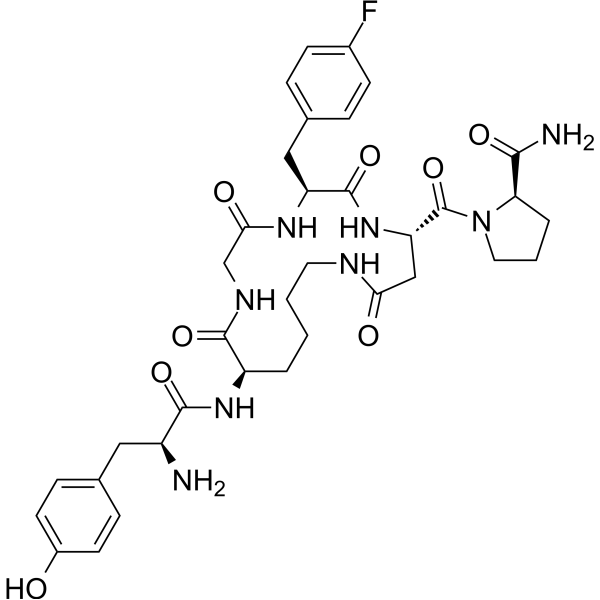
- HY-P3376
-
-
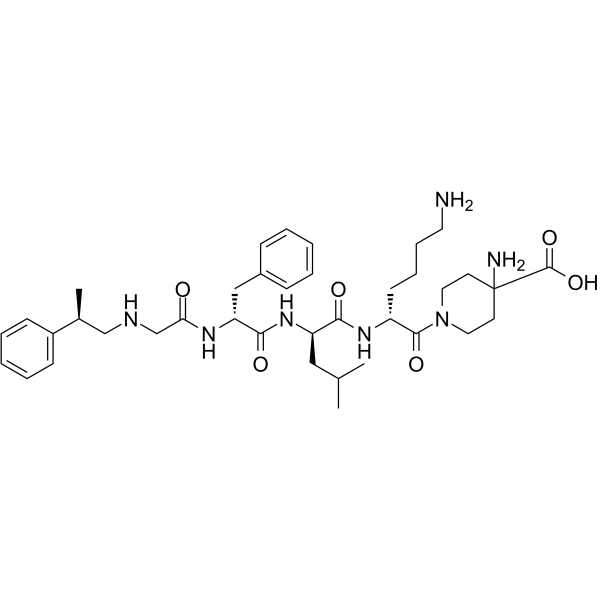
- HY-P99104
-
|
COVI-AMG; STI-2020
|
SARS-CoV
|
Infection
|
|
Plutavimab a human IgG1-κ anti-SARS-CoV-2 antibody, targeting to Spike (S) glycoprotein receptor binding domain (RBD) .
|
-

- HY-169822
-
-

- HY-16765A
-
|
TD-1211 sulfate
|
Opioid Receptor
|
Neurological Disease
|
|
Axelopran sulfate is an opioid receptor antagonist with pKi values of 9.8, 8.8 and 9.9 for human recombinant μ and δ receptors and guinea pig κ receptor, respectively.
|
-

- HY-P991152
-
|
QX-005N
|
Interleukin Related
|
Inflammation/Immunology
|
|
Oturkibart is a humanized immunoglobulin G4-κ monoclonal antibody targeting the human interleukin 4 receptor (IL4R). Oturkibart is promising for research of inflammatory diseases, such as asthma and atopic dermatitis .
|
-

- HY-119733
-
|
|
Opioid Receptor
|
Neurological Disease
|
|
BU09059 is a potent and selective Kappa-opioid receptor antagonist with a pA2 of 8.62. BU09059 has nanomolar affinity for the κ-receptor, with 15-fold and 616-fold selectivity over μ- and δ-receptors, respectively. BU09059 significantly blocks U50488 (HY-15997B)-induced antinociception .
|
-
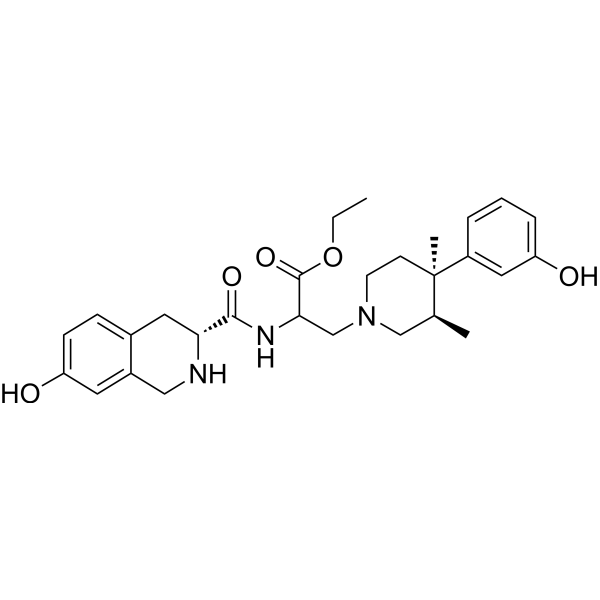
- HY-130482
-
-

- HY-122169
-
|
Ketocyclazocine
|
Opioid Receptor
|
Neurological Disease
|
|
Ketazocine (Ketocyclazocine) is a selective κ-opioid receptor (KOR) agonist. Ketazocine is promising for research of analgesics and sedatives .
|
-

- HY-P99966
-
|
|
RANKL/RANK
|
Cancer
|
|
Narlumosbart (JMT103) is an IgG4κ antibody targeting receptor activator of nuclear factor-κB ligand (RANKL) .
|
-

- HY-107747A
-
-
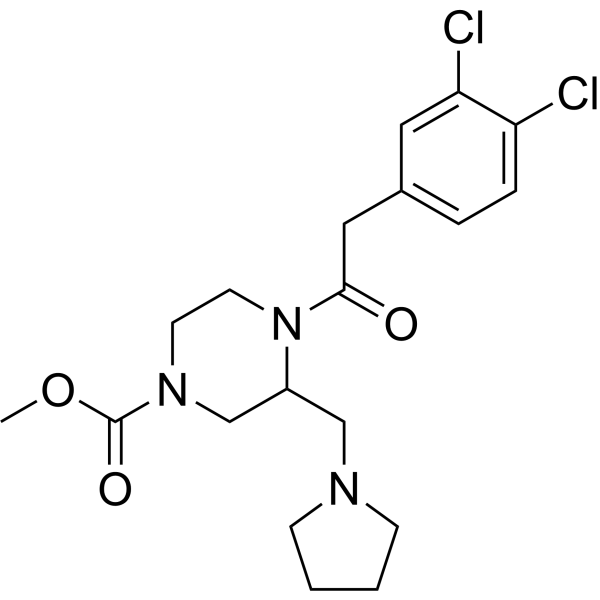
- HY-167842
-
-

- HY-19206
-
-

- HY-107750
-
-

- HY-P991727
-
-

- HY-163017
-
-
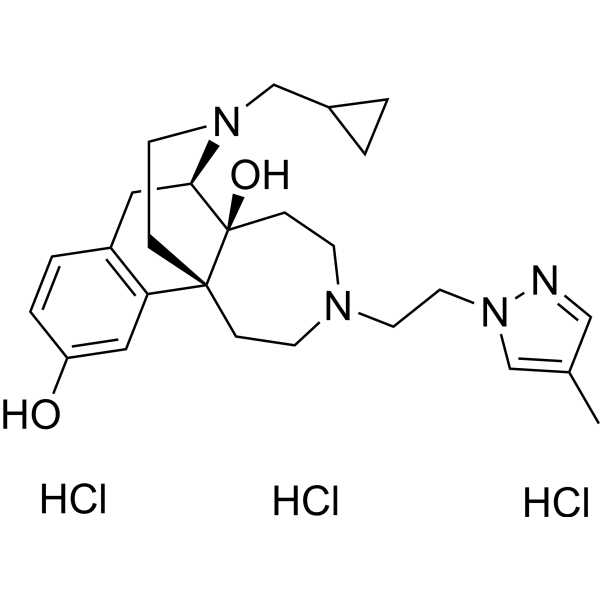
- HY-123389
-
|
(R)-UM-1071
|
Opioid Receptor
|
Endocrinology
|
|
MR2034 ((R)-UM-1071) is a κ-opioid receptor agonist with activity that stimulates the hypothalamic-pituitary-adrenal axis. MR2034 has shown the potential to promote mood and inhibit addictive behaviors in animal models and can be used to study inhibitory approaches related to mood and addictive disorders. MR2034 is selective for κ-opioid receptors and can effectively modulate biological processes related to stress and mood .
|
-

- HY-100963
-
-
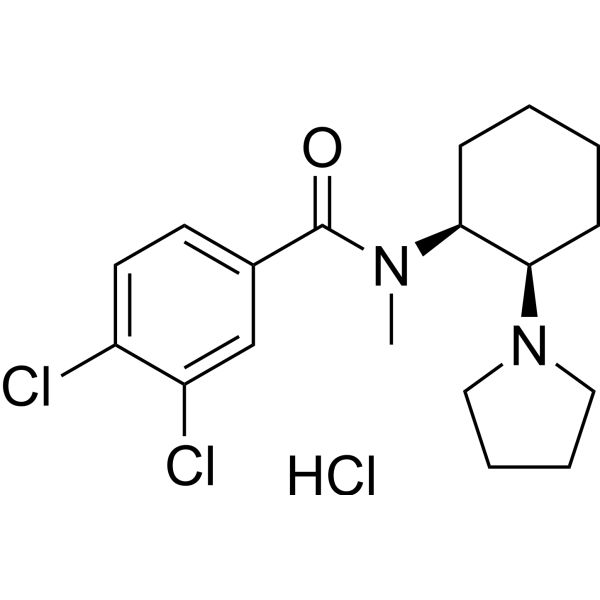
- HY-101205A
-
-

- HY-105235A
-
|
CI-977 hydrochloride
|
Opioid Receptor
|
Neurological Disease
|
|
Enadoline (CI-977) hydrochloride is a highly selective, brain-penetrating, and nonpeptide kappa-opioid receptor (KOR) agonist (Ki=1.25 nM). Antinociceptive effects .
|
-

- HY-118615
-
|
|
Opioid Receptor
|
Neurological Disease
|
|
LY2048978 is a non-selective opioid receptor antagonist with Ki of 0.287, 0.471 and 1.05 nM for human mu, kappa and delta opioid receptors in vitro, respectively. LY2048978 can be used in the research of major depressive disorder and alcohol use disorder .
|
-

- HY-177790
-
|
|
Orexin Receptor (OX Receptor)
|
Neurological Disease
|
|
Orexin receptor antagonist 7 (Compound 34) is an antagonist of the orexin receptor (OX1R), with a Ki value of 4.05 nM. Orexin receptor antagonist 7 shows no detectable activity towards OX2R and has very low affinities for the three opioid receptors (μ, δ, κ) (Ki > 1,000 nM). Orexin receptor antagonist 7 can be used for research on opioid addiction .
|
-

- HY-P990052
-
|
MAD-0004J08
|
SARS-CoV
|
Infection
|
|
Simaravibart (MAD-0004J08) is an IgG1κ antibody targeting the SARS-CoV2 spike (S) glycoprotein receptor binding domain .
|
-

- HY-163917
-
|
|
Opioid Receptor
|
Neurological Disease
|
|
SalA-VS-08 is a full agonist of kappa-opioid receptor (KOR) with selectivity and G-protein bias. SalA-VS-08 can be used in the research of analgesia .
|
-

- HY-117881
-
|
|
Opioid Receptor
|
Neurological Disease
|
|
CJ-15208 is a potent and selective κ-opioid receptor antagonist with significant opioid activity. CJ-15208 exhibited strong analgesic effects in the warm water tail withdrawal test in mice and was mediated through multiple opioid receptors. The stereoisomers of CJ-15208 exhibited different opioid activity characteristics, for example, one stereoisomer exhibited κ-opioid receptor antagonism, while the other exhibited δ-opioid receptor antagonism. All stereoisomers of CJ-15208 had no significant effects on respiration. The stereoisomers of CJ-15208 did not lead to the development of drug tolerance, which makes it potential in the further development of safe opioid analgesics .
|
-

- HY-P99748
-
|
|
TGF-β Receptor
|
Inflammation/Immunology
|
|
Nadecnemab is an IgG4κ antibody targeting to GFRA3, glial cell derived neurotrophic factor family receptor alpha 3. Nadecnemab can be used for research of osteoarthritis of the knee/pain .
|
-

- HY-163916
-
|
|
Opioid Receptor
|
Neurological Disease
|
|
SalA-VS-07 is a G protein-biased partial agonist for the Kappa-opioid receptor (KOR). SalA-VS-07 can be used for research of pain and other disorders .
|
-

- HY-141468
-
|
β-CNA dihydrochloride
|
Opioid Receptor
|
Neurological Disease
|
|
β-Chlornaltrexamine dihydrochloride (β-CNA dihydrochloride) is a potent long-term opioid receptor blocker. β-Chlornaltrexamine dihydrochloride can effectively block the inhibitory effect of κ opioid receptor agonists on dopamine release. β-Chlornaltrexamine dihydrochloride can be used to study the mechanism of pain perception .
|
-

- HY-107749R
-
|
|
Reference Standards
Opioid Receptor
|
Neurological Disease
|
|
ML 190 (Standard) is the analytical standard of ML 190 (HY-107749). This product is intended for research and analytical applications. ML 190 is a selective κ opioid receptor (KOR) antagonist with an IC50 of 120 nM and an EC50 of 129 nM, respectively .
|
-

- HY-125790
-
|
|
Opioid Receptor
|
Neurological Disease
|
|
Cyclazocine is a μ, δ, and κ opioid receptor modulator with Ki values of 0.32, 1.1, and 0.18 nM, respectively. Cyclazocine exhibits "mixed" pharmacological activities, acting as a μ-partial antagonist, κ-agonist, and low-affinity δ ligand. Cyclazocine shows antinociceptive activity in mice. Cyclazocine can be used in studies on psychoactive substance addiction .
|
-

- HY-100903R
-
|
nor-Binaltorphimine dihydrochloride (Standard); nor-BNI dihydrochloride (Standard)
|
Opioid Receptor
Reference Standards
|
Neurological Disease
|
|
Norbinaltorphimine dihydrochloride (Standard) is the analytical standard of Norbinaltorphimine dihydrochloride (HY-100903). This product is intended for research and analytical applications. Norbinaltorphimine dihydrochloride (nor-Binaltorphimine dihydrochloride; nor-BNI dihydrochloride) is a selective, long-acting competitive antagonist of the κ-opioid receptor. Norbinaltorphimine dihydrochloride blocks κ-opioid receptor-mediated analgesic effects, and inhibits butorphanol-induced changes in κ-opioid receptor binding kinetics, desensitization and down-regulation. Norbinaltorphimine dihydrochloride suppresses specific opioid withdrawal symptoms, precipitates withdrawal behaviors in butorphanol-dependent rats, and serves as a molecular probe for studying κ-opioid receptor-agonist interactions. Norbinaltorphimine dihydrochloride is applicable to research related to neurological disorders such as pain .
|
-

- HY-10487R
-
|
|
Reference Standards
Opioid Receptor
|
Neurological Disease
|
|
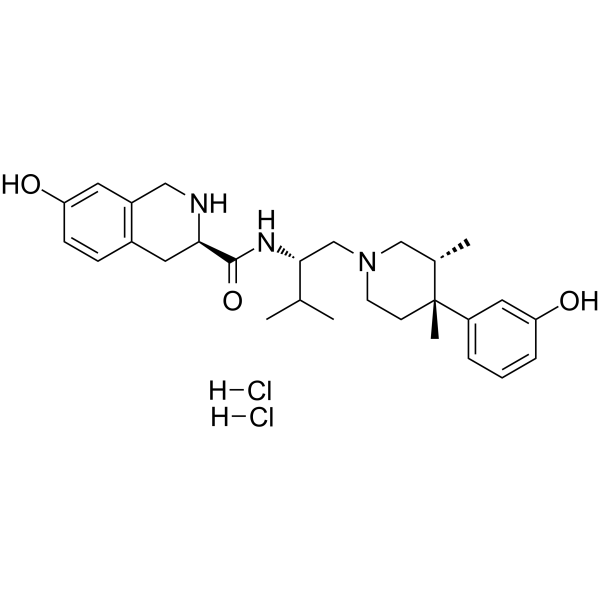
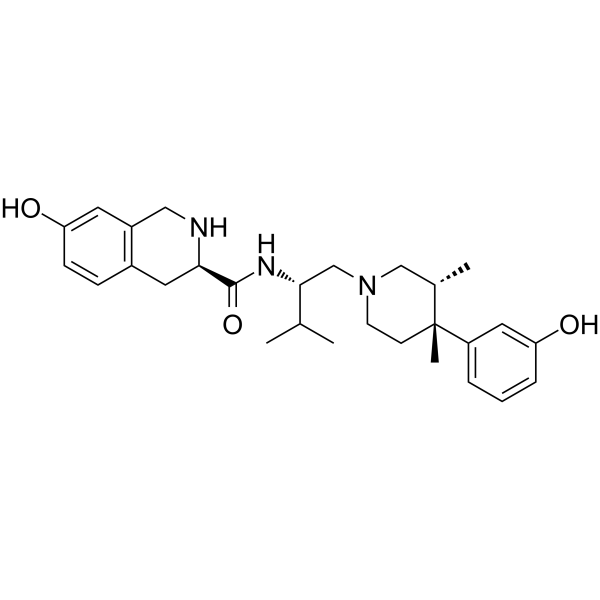
JDTic dihydrochloride (Standard) is the analytical standard of JDTic dihydrochloride (HY-10487). This product is intended for research and analytical applications. JDTic dihydrochloride is a potent antagonist of kappa-opioid receptors (KOR), blocking the κ-agonist U50, 488-induced antinociception.
|
-

- HY-P992116
-
|
|
TAM Receptor
|
Cancer
|
|
Ladarutatug is a humanized monoclonal antibody targeting Tyrosine-protein kinase receptor UFO. The Ladarutatug antibody isotype is human IgG4κ; the recommended isotype control is Human IgG4 (S228P) kappa, Isotype Control (HY-P99003) .
|
-

- HY-P992118
-
|
|
TREM receptor
|
Inflammation/Immunology
|
|
Lifonebart is a humanized monoclonal antibody targeting TREM2 (triggering receptor expressed on myeloid cells 2). The antibody isotype of Lifonebart is human IgG1κ, and the recommended isotype control is Human IgG1 kappa, Isotype Control (HY-P99001) .
|
-

- HY-182453
-
|
|
Opioid Receptor
|
Neurological Disease
|
|
RM1490 (Compound 251) acts as an inhibitor of μ-opioid receptor (MOR) (IC50 ≤ 300 nM), an activator of δ-opioid receptor (DOR) (EC50 > 3000 nM), and an inhibitor of κ-opioid receptor (KOR) (IC50 ≤ 300 nM). RM1490 is applicable to the research of neuropsychiatric disorders .
|
-

- HY-13597
-
|
|
Opioid Receptor
|
Neurological Disease
|
|
CJ-15161 is a κ-opioid receptor agonist. CJ-15161 can be used to study physiological functions such as pain relief and emotional regulation .
|
-

- HY-N12302A
-
|
(E/Z)-N1-Dihydrocaffeoyl, N10-caffeoyl spermidine
|
Drug Derivative
|
Others
|
|
(E/Z)-Scotanamine D is a hydroxycinnamic acid amide found in the roots of Scopolia tangutica. (E/Z)-Scotanamine D is inactive against μ-, δ-, and κ-opioid receptors .
|
-

- HY-106605
-
|
LY 120363
|
Dopamine Receptor
5-HT Receptor
|
Neurological Disease
|
|
Flumezapine (LY 120363) is a potent and balanced antagonist of the dopamine D2 receptor and the 5-hydroxytryptamine receptor (5-HT receptor). Flumezapine does not alter the increase in serum cortisol caused by κ-opioid receptor agonists. Flumezapine inhibits the conditioned avoidance response in rats and has a low risk of extrapyramidal side effects. Flumezapine can be used in antipsychotic research .
|
-

- HY-P1594
-
|
|
Opioid Receptor
iGluR
|
Neurological Disease
|
|
Dynorphin A (1-10) an endogenous opioid neuropeptide, binds to extracellular loop 2 of the κ-opioid receptor. Dynorphin A (1-10) also blocks NMDA-activated current with an IC50 of 42.0 μM.
|
-

- HY-P1316
-
|
|
Opioid Receptor
|
Neurological Disease
|
|
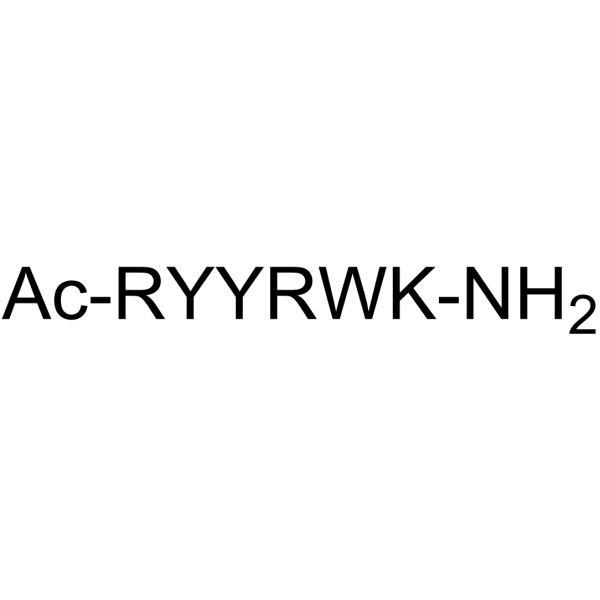
Ac-RYYRWK-NH2 is a potent and selective partial agonist for the nociceptin receptor (NOP), [ 3H]Ac-RYYRWK-NH2 binds to rat cortical membranes ORL1 with a Kd of 0.071 nM, but has no affinity for µ-, κ- or δ-opioid receptors .
|
-
- HY-19231
-
|
Org 41793
|
Opioid Receptor
|
Neurological Disease
|
|
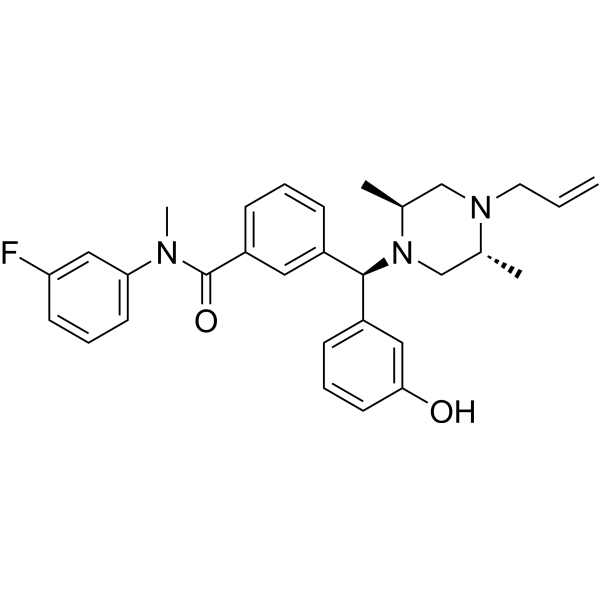
DPI-3290 (Org 41793) is a potent and specific opioid receptors agonist with Ki values of 0.18 nM, 0.46 nM, and 0.62 nM for δ-, μ-, and κ-opioid receptors, respectively. DPI-3290 is one of a series of novel centrally acting agents with potent antinociceptive activity .
|
-
- HY-P1316A
-
|
|
Opioid Receptor
|
Neurological Disease
|
|
Ac-RYYRWK-NH2 is a potent and selective partial agonist for the nociceptin receptor (NOP), [ 3H]Ac-RYYRWK-NH2 binds to rat cortical membranes ORL1 with a Kd of 0.071 nM, but has no affinity for μ-, κ- or δ-opioid receptors .
|
-

- HY-123689A
-
|
ALKS-33 hydrochloride; RDC-0313 hydrochloride
|
Opioid Receptor
|
Neurological Disease
|
|
Samidorphan hydrochloride is an orally active opioid system modulator that has a high affinity for binding with μ‐opioid, κ‐opioid, and δ‐opioid receptors. Samidorphan hydrochloride acts as an antagonist at μ‐opioid receptors and acts as a partial agonist at k-opioid and δ‐opioid receptors. Samidorphan hydrochloride primarily acts as an opioid receptor antagonist in vivo. Samidorphan can improve the behavior of depressed animals .
|
-

- HY-12363
-
U-69593
1 Publications Verification
|
Opioid Receptor
|
Neurological Disease
|
|
U-69593 is a potent and selective κ1-opioid receptor agonist . U-69593 attenuates addictive agent-induced behavioral sensitization in the rat . U-69593 reduces anxiety and enhances spontaneous alternation memory in mice . U-69593 reduces calcium-dependent dialysate levels of dopamine and glutamate in the ventral striatum .
|
-
- HY-107748A
-
|
5'-GNTI TFA
|
Endogenous Metabolite
|
Neurological Disease
|
|
5'-Guanidinonaltrindole TFA is a selective kappa-opioid receptor antagonist with significant opioid antagonist activity. 5'-Guanidinonaltrindole TFA exhibits 5 times the antagonistic potency of the prototypical kappa-opioid receptor antagonist norbinatorphimine in smooth muscle preparations, with a selectivity ratio exceeding 500 times. Binding and functional studies of 5'-Guanidinonaltrindole TFA showed pA(2) values comparable to smooth muscle data. 5'-Guanidinonaltrindole TFA is regarded as a potentially valuable pharmacological tool for studying opioids due to its high selectivity and potency .
|
-

- HY-P992012
-
|
|
Opioid Receptor
|
Neurological Disease
Cancer
|
|
CA1001 is a small-molecule ZNF74 inhibitor and a peripherally restricted κ/δ dual opioid receptor agonist. CA1001 exhibits potent antitumor activity both in vitro and in vivo. CA1001, in combination with immune checkpoint inhibitors, significantly enhances tumor regression. CA1001 activates peripherally restricted κ/δ dual opioid receptors and exerts analgesic effects under conditions of inflammatory pain, neuropathic pain, and mechanical hyperalgesia. CA1001 can be used in research related to melanoma, mechanical hyperalgesia, neuropathic pain, and inflammatory arthritis pain.
|
-

- HY-136654
-
|
|
Opioid Receptor
|
Neurological Disease
|
|
LPK-26 hydrochloride is a selective kappa-opioid receptor agonist with a Ki of 0.68 nM. LPK-26 exhibits potent antinociceptive effects with low physical dependence potential and can be utilized in relevant research .
|
-

- HY-17609
-
|
CR-845; FE-202845
|
Opioid Receptor
|
Neurological Disease
Inflammation/Immunology
|
|
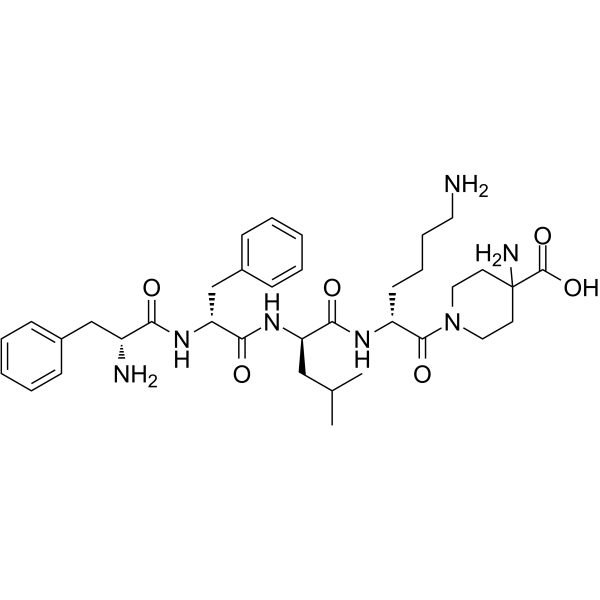
Difelikefalin (CR-845) is a peripherally restricted and selective agonist of kappa opioid receptor (KOR). Difelikefalin produces anti-inflammatory effects and has the potential in modulating pruritus in conditions such as chronic kidney disease .
|
-
- HY-122561
-
|
|
Opioid Receptor
|
Neurological Disease
|
|
MK-1925 is an orally active, CNS-penetrant ORL1 receptor antagonist with an IC50 of 8.2 nM. MK-1925 selectively inhibits the ORL1 receptor and shows no significant activity against other opioid receptors or the hERG potassium channel .
|
-

- HY-124959
-
|
U-62066 mesylate
|
Opioid Receptor
|
Neurological Disease
|
|
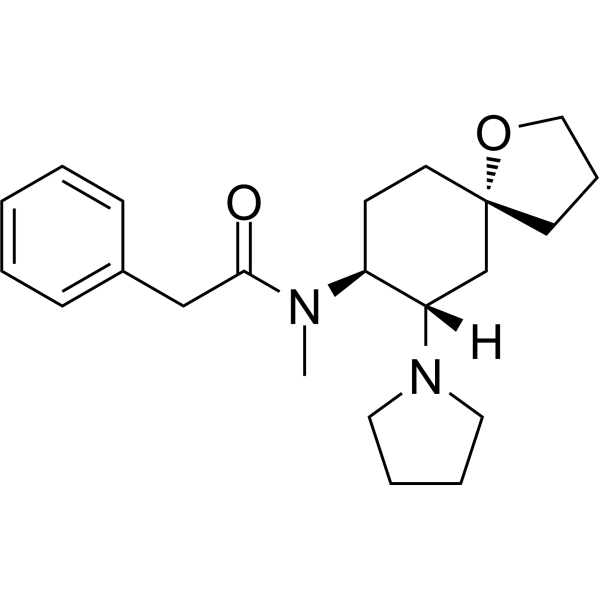
Spiradoline mesylate (U-62066 mesylate), an arylacetamide, is a selective kappa opioid receptor (KOR) agonist with a Ki of 8.6 nM in guinea pig. The Ki values of Spiradoline mesylate for μ and δ receptors are 252 nM and 9400 nM, respectively. Spiradoline mesylate has potent diuretic, analgesic, antiarrythmic, antitussive, neuroprotective properties and easily penetrates the blood-brain barrier .
|
-

- HY-106756
-
|
U-62066
|
Opioid Receptor
|
Neurological Disease
|
|
Spiradoline (U-62066), an arylacetamide, is a selective kappa opioid receptor (KOR) agonist with a Ki of 8.6 nM in guinea pig. The Ki values of Spiradoline for μ and δ receptors are 252 nM and 9400 nM, respectively. Spiradoline has potent diuretic, analgesic, antiarrythmic, antitussive, neuroprotective properties and easily penetrates the blood-brain barrier .
|
-

- HY-P99963
-
|
HS636
|
PD-1/PD-L1
|
Cancer
|
|
Sudubrilimab (HS636) is an Ig G1-kappa monoclonal antibody against PDL1. Sudubrilimab is fused at the C terminus of the heavy chain to a TGF-β1 receptor Ⅱ ectodomain (TGFBR2-ECD), and which can sequester the PD-1/PD-L1 pathway and TGF-β bioactivity in the immunosuppressive tumor microenvironment .
|
-

- HY-106732
-
|
|
Opioid Receptor
|
Neurological Disease
|
|
AT-076 is an opioid pan antagonist at nociception, kappa, mu, and delta opioid receptors, with Ki values of 1.75 nM (NOP), 1.67 nM (MOP), 1.14 nM (KOP) and 19.6 nM (DOP), respectively .
|
-

- HY-137920
-
|
|
Opioid Receptor
|
Cardiovascular Disease
|
|
Salvinorin A (Divinorin A) propionate is a potent, unique and short-acting high efficacy kappa-opioid receptor (KOPr) agonist with Ki value of 4.3 nm. Salvinorin A propionate is a non-nitrogenous neoclerodane isolated from Salvia divinorum .
|
-

- HY-P1594A
-
|
|
Opioid Receptor
iGluR
|
Neurological Disease
|
|
Dynorphin A (1-10) (TFA), an endogenous opioid neuropeptide, binds to extracellular loop 2 of the κ-opioid receptor. Dynorphin A (1-10) (TFA) also blocks NMDA-activated current with an IC50 of 42.0 μM.
|
-

- HY-P1333
-
|
|
Opioid Receptor
Apoptosis
Caspase
Endogenous Metabolite
|
Neurological Disease
|
|
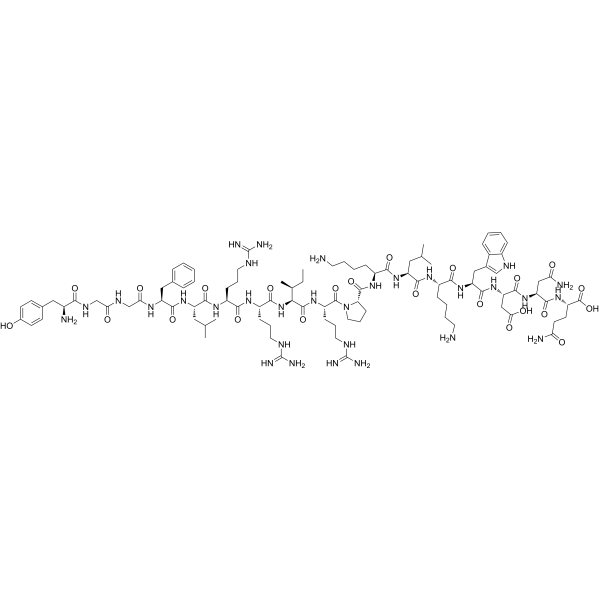
Dynorphin A is an endogenous opioid peptide involved in inhibitory neurotransmission in the central nervous system (CNS). Dynorphin A is a highy potent kappa opioid receptor (KOR) agonist, and is also an agonist for other opioid receptors, such as mu (MOR) and delta (DOR). Dynorphin A can induce neuronal death, and can be used in the research of neurological disease .
|
-
- HY-101307
-
|
7-Benzylidenenaltrexone maleate
|
Opioid Receptor
|
Neurological Disease
|
|
BNTX (7-Benzylidenenaltrexone) maleate is a δ1-opioid receptor antagonist with the Kis of 0.1, 10.8, 13.3, and 58.6 nM for δ1, δ2-, μ-, and κ-opioid receptor, respectively. BNTX maleate shows antinociceptive activity .
|
-

- HY-105389
-
|
RWJ-38705
|
Opioid Receptor
|
Neurological Disease
|
|
Tramadol N-oxide (RWJ 38705) is an analgesic. Tramadol N-oxide sproduces dose-related, long-lasting antinociception. Tramadol N-oxide has affinity for μ opioid receptor (Ki = 38.5 μM) and δ, κ receptors (Ki > 100 μM). Tramadol N-oxide can be used for the study of analgesic effect .
|
-

- HY-176710A
-
|
|
Drug Isomer
|
Others
|
|
(R)-PAD-PF2 is an isomer of PAD-PF2 (HY-176710). PAD-PF2 is a PAD family inhibitor, as well as a κ-opioid receptor agonist (EC50 = 7.55 μM) and an M1 muscarinic acetylcholine receptor antagonist (IC50 = 12.3 μM).
|
-

- HY-P1299A
-
|
|
Opioid Receptor
|
Neurological Disease
|
|
UFP-101 TFA is a potent, selective, and competitive antagonist of the N/OFQ peptide (NOP) receptor, with a pKi of 10.24. UFP-101 TFA displays >3000-fold selectivity over δ, μ and κ opioid receptors. UFP-101 TFA shows antidepressant-like effect .
|
-
- HY-101302
-
|
|
Opioid Receptor
TRP Channel
|
Inflammation/Immunology
|
|
Naltriben mesylate is a potent δ2-opioid receptor antagonist and a TRPM7 activator. Naltriben mesylate shows Ki values of 0.013 nM, 19 nM and 152 nM for δ, μ and κ receptors, respectively. Naltriben mesylate enhances glioblastoma cell migration and invasion. Naltriben mesylate can be used in research into neurological diseases and cancer .
|
-

- HY-13243
-
|
ADL 8-2698; LY 246736
|
Opioid Receptor
|
Neurological Disease
|
|
Alvimopan (ADL 8-2698) is a potent, selective, orally active and reversible μ-opioid receptor antagonist, with an IC50 of 1.7 nM. Alvimopan has selectivity for μ-opioid receptor (Ki=0.47 nM) over κ- and δ-opioid receptors (Kis=100, 12 nM, respectively). Alvimopan can be used for the research of postoperative ileus .
|
-
- HY-129668
-
|
|
Adrenergic Receptor
|
Neurological Disease
|
|
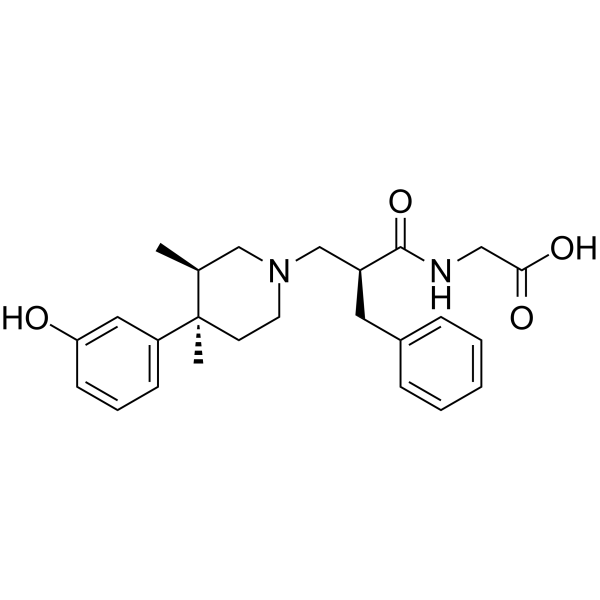
Bremazocine is a potent opioid kappa receptor agonist with analgesic activity. Bremazocine induces peripheral analgesia by releasing endogenous norepinephrine. The analgesic effect of bremazocine is associated with interaction with adenosine receptors. Bremazocine produces a dose-dependent peripheral analgesia after topical application. The effect of bremazocine is affected by nonselective α(2) adrenaline receptor antagonists, suggesting that it acts through a norepinephrine pathway .
|
-

- HY-76657
-
|
ADL 8-2698 monohydrate; LY 246736 monohydrate
|
Opioid Receptor
|
Neurological Disease
Cancer
|
|
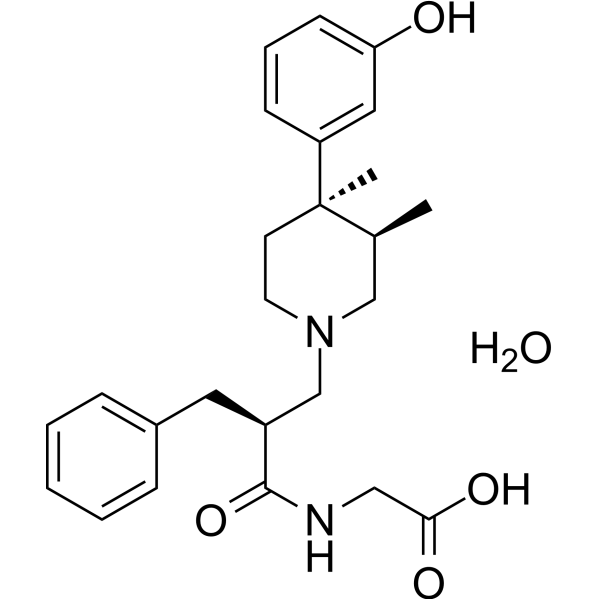
Alvimopan monohydrate (ADL 8-2698 monohydrate) is a potent, selective, orally active and reversible μ-opioid receptor antagonist, with an IC50 of 1.7 nM. Alvimopan monohydrate has selectivity for μ-opioid receptor (Ki=0.47 nM) over κ- and δ-opioid receptors (Kis=100, 12 nM, respectively). Alvimopan monohydrate can be used for the research of postoperative ileus .
|
-
- HY-160761
-
|
|
Opioid Receptor
|
Inflammation/Immunology
|
|
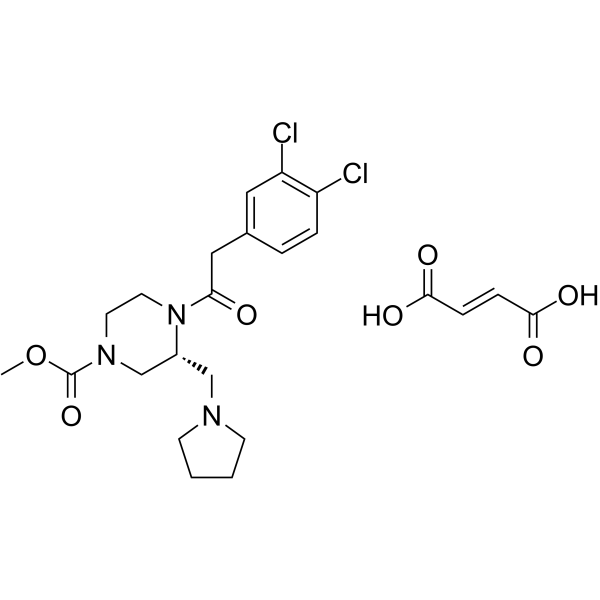
K-Opioid receptor agonist-1 (Compound 5a) is an agonist for κ-Opioid receptor with Ki of 0.25 nM and EC50 of 2 nM. K-Opioid receptor agonist-1 is blood brain barrier (BBB) penetrate (brain/plasma ratios of 0.50 to 0.65). K-Opioid receptor agonist-1 exhibits anti-inflammatory activity in dermatitis models induced by Arachidonic acid (HY-109590) or oxazolidinone .
|
-

- HY-171236
-
|
|
Opioid Receptor
|
|
|
FEKAP is a brain-penetrant and selective kappa opioid receptor (KOR) agonist (Ki = 0.43 nM) which isotope labeled form exhibits excellent imaging properties. 11C-FEKAP can be utilized as a radiotracer for imaging KOR .
|
-

- HY-P3647
-
-
![[DPro10] Dynorphin A (1-11), porcine](//file.medchemexpress.com/product_pic/hy-p3647.gif)
- HY-P9901
-
|
MDX-010; BMS-734016
|
CTLA-4
|
Cancer
|
|
Ipilimumab is a fully human monoclonal antibody IgG1κ that blocks the inhibitory receptor cytotoxic T lymphocyte antigen 4 (CTLA-4) on T cells. Ipilimumab can be used in unresectable or metastatic melanoma (MM) studies .
|
-

- HY-P3647A
-
|
|
Opioid Receptor
Adenylate Cyclase
|
Neurological Disease
|
|
[DPro10] Dynorphin A (1-11), porcine hydrochloride, a N-Alkylated derivative, is a potent κ-opioid receptor agonist with a Ki value of 0.13 nM. [DPro10] Dynorphin A (1-11), porcine hydrochloride has analgesic property .
|
-
![[DPro10] Dynorphin A (1-11), porcine hydrochloride](//file.medchemexpress.com/product_pic/hy-p3647a.gif)
- HY-P9999
-
|
RG6102; RO-7126209
|
Amyloid-β
|
Neurological Disease
|
|
Trontinemab (RG6102) is a brain-penetrant, anti-amyloid, bispecific and humanizedized IgG1-κ antibody, targeting to Aβ plaques and transferrin receptor 1 (TFR1). Trontinemab binds to fibrillar Aβ as well as Aβ plaques triggering plaque clearance by engaging immune cells on Alzheimer disease (AD) brain sections. Trontinemab also shows specific affinity to cynomolgus and human TFR1 .
|
-

- HY-101718R
-
|
CERC-501 (Standard); LY-2456302 (Standard)
|
Reference Standards
Opioid Receptor
|
Neurological Disease
|
|
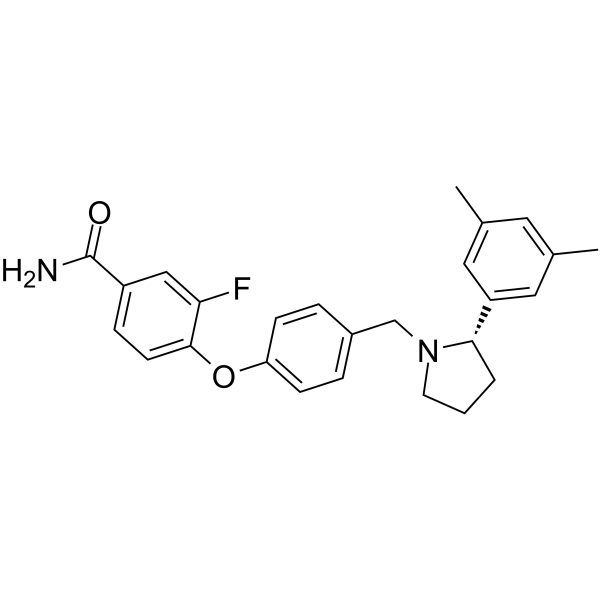
Aticaprant (Standard) (CERC-501 (Standard)) is the analytical standard of Aticaprant (HY-101718). This product is intended for research and analytical applications. Aticaprant (CERC-501) is a potent and centrally-penetrant kappa opioid receptor antagonist with a Ki of 0.807 nM.
|
-

- HY-P5907
-
|
|
Opioid Receptor
|
Neurological Disease
|
|
Helianorphin-19 is a potent and selective κ-opioid receptor (KOR) activator with a Ki of 21 nM and an EC50 of 45 nM. Helianorphin-19 exhibits strong KOR-specific peripheral analgesic activity in a mouse model of chronic visceral pain .
|
-
- HY-17609C
-
|
CR-845 acetate; FE-202845 acetate
|
Opioid Receptor
|
Neurological Disease
|
|
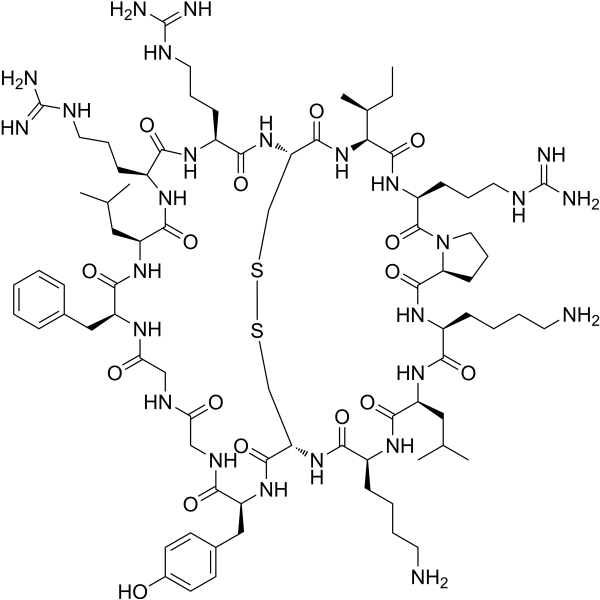
Difelikefalin (CR-845; FE-202845) acetate is a peripherally restricted and selective agonist of kappa opioid receptor (KOR). Difelikefalin acetate produces anti-inflammatory effects and has the potential in modulating pruritus in conditions such as chronic kidney disease .
|
-

- HY-P1333A
-
|
|
Opioid Receptor
Apoptosis
Caspase
Endogenous Metabolite
|
Neurological Disease
|
|
Dynorphin A TFA is an endogenous opioid peptide involved in inhibitory neurotransmission in the central nervous system (CNS). Dynorphin A TFA is a highy potent kappa opioid receptor (KOR) agonist, and is also an agonist for other opioid receptors, such as mu (MOR) and delta (DOR). Dynorphin A TFA can induce neuronal death, and can be used in the research of neurological disease .
|
-

- HY-P991841
-
|
|
IFNAR
|
Inflammation/Immunology
|
|
Anti-CD119 Antibody (GIR 208) reacts with the human CD119 (IFN-γ R alpha). IFN-γ exerts its biologic effects by interacting with a single high affinity receptor, IFN-γ receptor. Recommend Isotype Controls: Mouse IgG1 kappa, Isotype Control (HY-P99977) .
|
-

- HY-123689S
-
|
ALKS-33-d4; RDC-0313-d4
|
Isotope-Labeled Compounds
Opioid Receptor
|
Neurological Disease
|
|
Samidorphan-d4 is the deuterium labeled Samidorphan(HY-123689).Samidorphan (ALKS-33) is an orally active opioid system modulator that has a high affinity for binding with μ‐opioid, κ‐opioid, and δ‐opioid receptors. Samidorphan acts as an antagonist at μ‐opioid receptors and acts as a partial agonist at k-opioid and δ‐opioid receptors. Samidorphan primarily acts as an opioid receptor antagonist in vivo .
|
-

- HY-106605S
-
|
LY 120363-d8 hydrochloride
|
Isotope-Labeled Compounds
Dopamine Receptor
5-HT Receptor
|
Neurological Disease
|
|
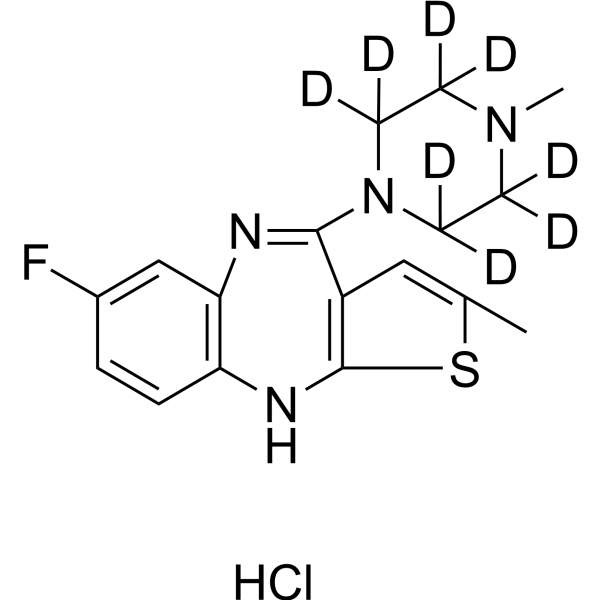
Flumezapine-d8 (LY 120363-d8) hydrochloride is deuterated labeled Flumezapine hydrochloride. Flumezapine hydrochloride is a potent and balanced antagonist of the dopamine D2 receptor and the 5-hydroxytryptamine receptor (5-HT receptor). Flumezapine hydrochloride does not alter the increase in serum cortisol caused by κ-opioid receptor agonists. Flumezapine hydrochloride inhibits the conditioned avoidance response in rats and has a low risk of extrapyramidal side effects. Flumezapine hydrochloride can be used in antipsychotic research.
|
-
- HY-123689S1
-
|
ALKS-33-d5; RDC-0313-d5
|
Isotope-Labeled Compounds
Opioid Receptor
|
Neurological Disease
|
|
Samidorphan-d5 (ALKS-33-d5) is is a deuterated compound of Samidorphan. Samidorphan is an orally active opioid system modulator that binds with high affinity to μ-opioid, κ-opioid, and δ-opioid receptors. Samidorphan is a μ-opioid receptor antagonist and a partial agonist at k-opioid and δ-opioid receptors. Samidorphan acts primarily as an opioid receptor antagonist in vivo .
|
-

- HY-123689
-
|
ALKS-33; RDC-0313
|
Opioid Receptor
|
Neurological Disease
|
|
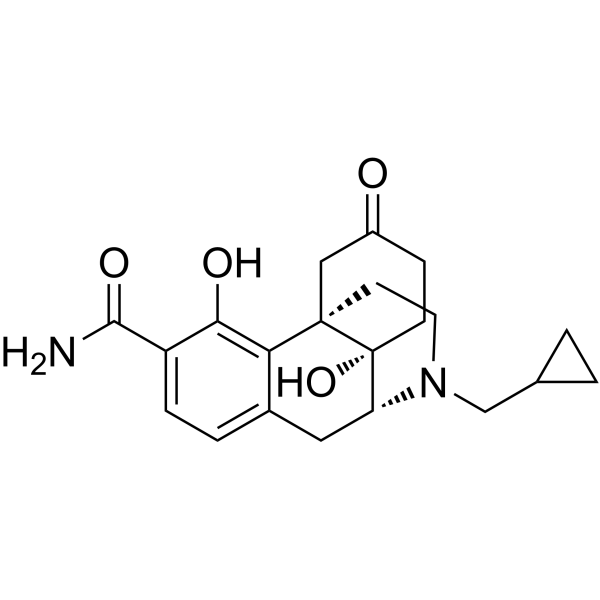
Samidorphan (ALKS-33) is an orally active opioid system modulator that has a high affinity for binding with μ‐opioid, κ‐opioid, and δ‐opioid receptors. Samidorphan acts as an antagonist at μ‐opioid receptors and acts as a partial agonist at k-opioid and δ‐opioid receptors. Samidorphan primarily acts as an opioid receptor antagonist in vivo. Samidorphan can improve the behavior of depressed animals .
|
-
- HY-P1301
-
|
|
Opioid Receptor
|
Neurological Disease
|
|
[Arg14,Lys15]Nociceptin is a highly potent and selective NOP receptor (ORL1; OP4) agonist, with an EC50 of 1 nM. [Arg14,Lys15]Nociceptin displays high selectivity over opioid receptors, with IC50s of 0.32, 280, >10000 and 1500 nM for NOP, μ, δ and κ receptors, respectively .
|
-
![[Arg14,Lys15]Nociceptin](//file.medchemexpress.com/product_pic/hy-p1301.gif)
- HY-P991673
-
|
LuAG13909
|
Androgen Receptor
|
Inflammation/Immunology
|
|
Asedebart is a CHO-expressed human antibody that targets Adrenocorticotropic hormone (ACTH). Asedebart blocks the binding of ACTH to its receptor through antagonism. Asedebart has huIgG1 heavy chain and huκ light chain, with a predicted molecular weight (MW) of 145 kDa. The isotype control for Asedebart can refer to Human IgG1 kappa, Isotype Control (HY-P99001). Asedebart can be used for inflammatory diseases such as psoriasis and ulcerative colitis research .
|
-

- HY-106131
-
|
PD-123497
|
Sodium Channel
Opioid Receptor
|
Cardiovascular Disease
|
|
RSD-921 (PD-123497) is a potent Na + channel blocker with anti-arrhythmic activity. RSD-921 displays a low affinity for κ-opioid receptors and behaves as a weak κ-agonist in vitro. RSD 921 displays state-, time- and voltage-dependent block of the open state of cardiac, skeletal muscle and neuronal Na + channels expressed in Xenopus oocytes. RSD-921 can be used for cardiac arrhythmias research .
|
-

- HY-179282
-
|
|
Opioid Receptor
|
Neurological Disease
|
|
Mu opioid receptor antagonist 9 is potent, selective and CNS-pentrant mu-opioid receptor (MOR) antagonist with a Ki of 77.3 nM. Mu opioid receptor antagonist 9 exhibits selectivity over kappa-opioid receptor (KOR), and delta-opioid receptor (DOR). Mu opioid receptor antagonist 9 effectively blocks the antinociceptive effects of psychoactive substances. Mu opioid receptor antagonist 9 can reverse psychoactive substances-induced respiratory depression in mice. Mu opioid receptor antagonist 9 can be used for the research of Opioid Use Disorder (OUD) .
|
-

- HY-76657A
-
|
ADL 8-2698 dihydrate; LY 246736 dihydrate
|
Opioid Receptor
|
Neurological Disease
Cancer
|
|
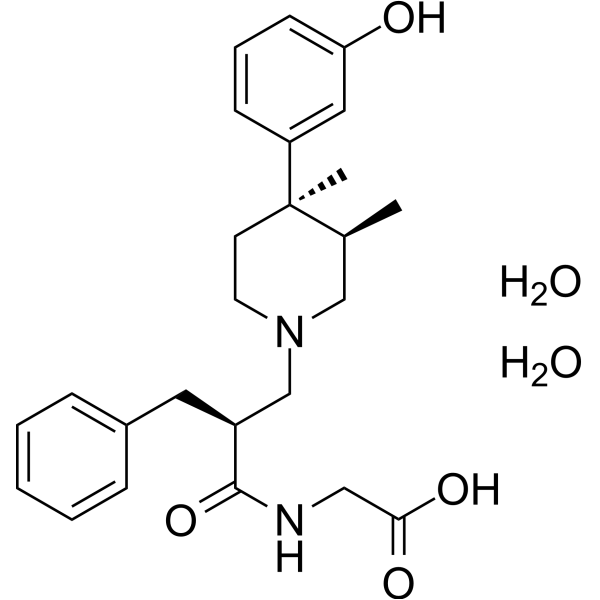
Alvimopan dihydrate (ADL 8-2698 dihydrate) is a potent, selective, orally active and reversible μ-opioid receptor antagonist, with an IC50 of 1.7 nM. Alvimopan dihydrate has selectivity for μ-opioid receptor (Ki=0.47 nM) over κ- and δ-opioid receptors (Kis=100, 12 nM, respectively). Alvimopan dihydrate can be used for the research of postoperative ileus .
|
-
- HY-P1301A
-
|
|
Opioid Receptor
|
Neurological Disease
|
|
[Arg14,Lys15]Nociceptin TFA is a highly potent and selective NOP receptor (ORL1; OP4) agonist, with an EC50 of 1 nM. [Arg14,Lys15]Nociceptin TFA displays high selectivity over opioid receptors, with IC50s of 0.32, 280, >10000 and 1500 nM for NOP, μ, δ and κ receptors, respectively .
|
-
![[Arg14,Lys15]Nociceptin TFA](//file.medchemexpress.com/product_pic/hy-p1301a.gif)
- HY-135698
-
|
M-CAM
|
Opioid Receptor
|
Neurological Disease
|
|
Methocinnamox (M-CAM) a selective and long-acting μ-opioid receptor (MOR) antagonist with a Ki of 0.6 nM. Methocinnamox binds to the orthosteric site of the MOR in a pseudo-irreversible, non-covalent manner, resulting in prolonged receptor blockade that persists until new receptors are synthesized. Methocinnamox acts as a reversible antagonist at both the kappa-opioid receptor (KOR) (Ki = 4.9 nM) and delta-opioid receptor (DOR) (Ki = 2.2 nM), and it exhibits no intrinsic agonist activity at these receptors. Methocinnamox can be used to reverse and prevent opioid overdose and addiction .
|
-

- HY-P991820
-
|
|
Phosphatase
|
Inflammation/Immunology
|
|
Anti-Mouse CD45 Antibody (I3/2.3) reacts with the mouse CD45. CD45 plays a key role in T-cell receptor (TCR) and B-cell receptor (BCR) signal transduction. Recommend Isotype Controls: Rat IgG2b kappa, Isotype Control (HY-P990682) .
|
-

- HY-174520
-
|
|
mRNA
|
Inflammation/Immunology
|
|
Human TLR8 mRNA encodes the human toll like receptor 8 (TLR8) protein, a member of the Toll-like receptor (TLR) family which plays a fundamental role in pathogen recognition and activation of innate immunity. TLR8 acts via MYD88 and TRAF6, leading to NF-kappa-B activation, cytokine secretion and the inflammatory response.
|
-

- HY-P990046
-
|
Incagn-02385
|
LAG-3
|
Inflammation/Immunology
|
|
Tuparstobart (Incagn-02385) is an IgG1κ antibody targeting LAG-3. LAG-3 is an immune checkpoint receptor protein mainly expressed on activated T cells, NK cells, B cells and plasmacytoid dendritic cells .
|
-

- HY-123689R
-
|
ALKS-33 (Standard); RDC-0313 (Standard)
|
Opioid Receptor
Reference Standards
|
Neurological Disease
|
|
Samidorphan (Standard) is the analytical standard of Samidorphan. This product is intended for research and analytical applications. Samidorphan (ALKS-33) is an orally active opioid system modulator that has a high affinity for binding with μ‐opioid, κ‐opioid, and δ‐opioid receptors. Samidorphan acts as an antagonist at μ‐opioid receptors and acts as a partial agonist at k-opioid and δ‐opioid receptors. Samidorphan primarily acts as an opioid receptor antagonist in vivo. Samidorphan can improve the behavior of depressed animals.
|
-

- HY-P0185
-
|
|
Opioid Receptor
|
Neurological Disease
|
|
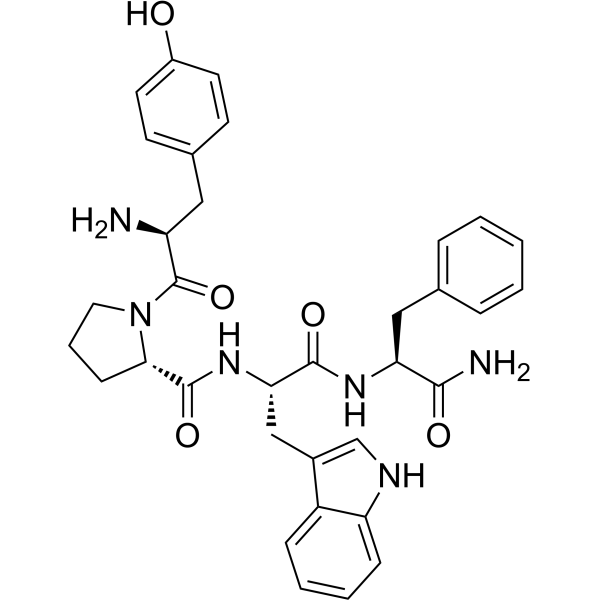
Endomorphin 1, a high affinity, highly selective agonist of the μ-opioid receptor (Ki: 1.11 nM), displays reasonable affinities for kappa3 binding sites, with Ki value between 20 and 30 nM. Endomorphin 1 has antinociceptive properties .
|
-
- HY-P991798
-
|
|
Transmembrane Glycoprotein
|
Inflammation/Immunology
|
|
Anti-Mouse CD155 Antibody (4.24) reacts with the mouse CD155. CD155 is a member of a subfamily of immunoglobulin-like adhesion receptors. Recommend Isotype Controls: Rat IgG2a kappa, Isotype Control (HY-P990679) .
|
-

- HY-P991765
-
|
|
VISTA
|
Inflammation/Immunology
|
|
Anti-VISTA Antibody (GG8) reacts with human VISTA. Endogenous VISTA has inhibitory effects both as a ligand on APCs and as a receptor on T cells. Recommend Isotype Controls: Mouse IgG1 kappa, Isotype Control (HY-P99977) .
|
-

- HY-P0185A
-
|
|
Opioid Receptor
|
Neurological Disease
|
|
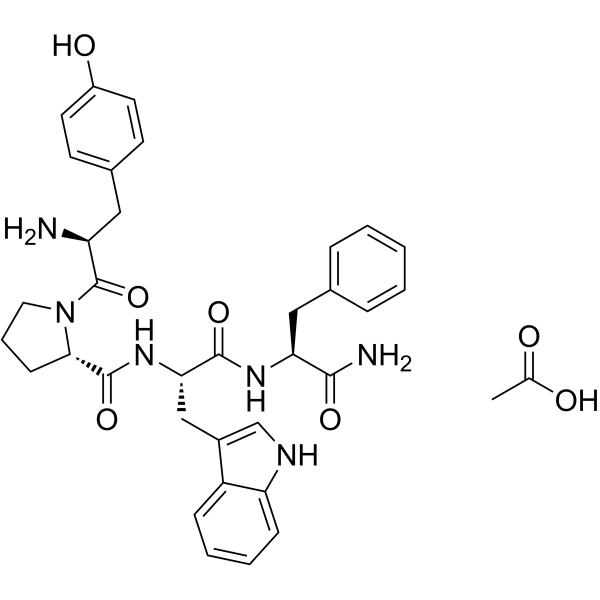
Endomorphin 1 acetate, a high affinity, highly selective agonist of the μ-opioid receptor (Ki: 1.11 nM), displays reasonable affinities for kappa3 binding sites, with Ki value between 20 and 30 nM. Endomorphin 1 acetate has antinociceptive properties .
|
-
- HY-183773
-
|
|
Opioid Receptor
|
Neurological Disease
|
|
KOR agonist-9 is a selective kappa opioid receptor (KOR) agonist with an EC50 of 1.41 nM. KOR agonist-9 exhibits >125-fold selectivity over μ/δ-opioid receptors. KOR agonist-9 antinociceptive and antipruritic effects in mice. KOR agonist-9 can be used for the research of pain, pruritus .
|
-

- HY-180212
-
|
|
Opioid Receptor
|
Neurological Disease
|
|
SYK-1106 is a potent delta-opioid receptor (DOR) agonist with an EC50 of 89 pM and a Ki of 848 pM. SYK-1106 is selective for μ and κ opioid receptors, with Ki values of 9.54 nM and 2.45 nM, respectively. SYK-1106 induces dose-dependent antidepressant-like effects. SYK-1106 can be used for the research of depression .
|
-

- HY-P991785
-
|
|
CXCR
|
Cancer
|
|
Anti-Mouse ACKR4 Antibody (A4Mab-3) reacts with atypical chemokine receptor 4 (ACKR4). ACKR4 is a seven-transmembrane domain-containing protein that belongs to the atypical chemokine receptors (ACKRs) family. Recommend Isotype Controls: Rat IgG2b kappa, Isotype Control (HY-P990682) .
|
-

- HY-18618
-
|
|
Opioid Receptor
|
Neurological Disease
Inflammation/Immunology
|
|
SB-612111 is a novel and potent opiate receptor-like orphan receptor (ORL-1) antagonist with a high affinity for hORL-1 (Ki=0.33 nM). SB-612111 exhibits selectivity for μ-, κ- and δ-receptors with Ki values of 57.6 nM, 160.5 nM and 2109 nM, respecticely. SB-612111 effectively antagonizes the pronociceptive action of Nociceptin (HY-P0183) in an acute pain model .
|
-
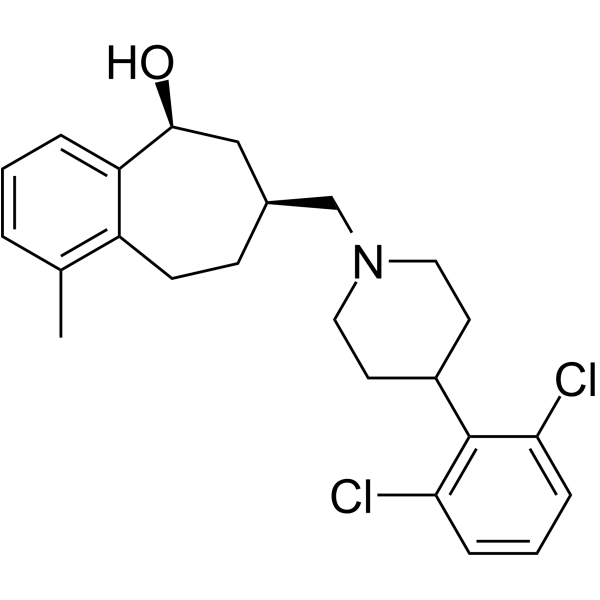
- HY-11052A
-
|
|
Opioid Receptor
|
Neurological Disease
|
|
Trap-101 hydrochloride is a potent, selective and competitive antagonist of NOP receptors over classical opioid receptors. Trap-101 stimulates GTPγ 35S binding to CHOhNOP membranes with pKi values of 8.65, 6.60, 6.14 and <5 for NOP, μ-, κ-, and δ-opioid receptors, respectively. Trap-101 attenuates motor deficits in a rat model of parkinson's disease and can be used for the research of nervous system diseases .
|
-
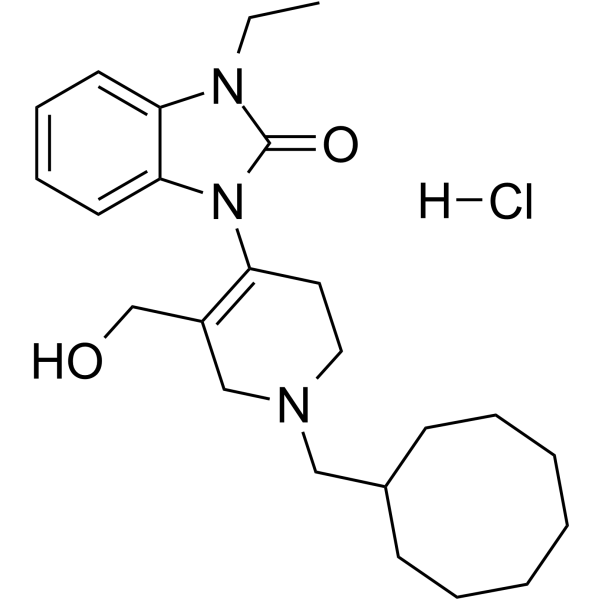
- HY-18618A
-
|
|
Opioid Receptor
|
Neurological Disease
Inflammation/Immunology
|
|
SB-612111 hydrochloride hydrochloride is a novel and potent opiate receptor-like orphan receptor (ORL-1) antagonist with a high affinity for hORL-1 (Ki=0.33 nM). SB-612111 hydrochloride exhibits selectivity for μ-,?κ- and?δ-receptors with Ki values of?57.6 nM, 160.5 nM and 2109 nM, respecticely. SB-612111 hydrochloride effectively antagonizes the pronociceptive action of Nociceptin (HY-P0183) in an acute pain model .
|
-
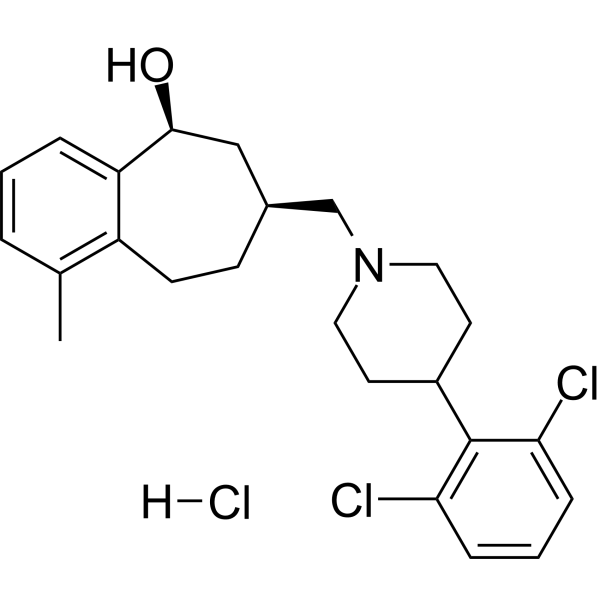
- HY-13243R
-
|
ADL 8-2698 (Standard); LY 246736 (Standard)
|
Opioid Receptor
Reference Standards
|
Neurological Disease
Cancer
|
|
Alvimopan (Standard) is the analytical standard of Alvimopan. This product is intended for research and analytical applications. Alvimopan (ADL 8-2698) is a potent, selective, orally active and reversible μ-opioid receptor antagonist, with an IC50 of 1.7 nM. Alvimopan has selectivity for μ-opioid receptor (Ki=0.47 nM) over κ- and δ-opioid receptors (Kis=100, 12 nM, respectively). Alvimopan can be used for the research of postoperative ileus .
|
-

- HY-16979
-
|
|
Opioid Receptor
|
Neurological Disease
|
|
RK-851 is a highly selective and orally active δ-opioid receptor antagonist, with a negative logarithm of the antagonist concentration (pA2) of 8.84. TRK-851 exhibits the selectivity for the δ receptor of more than 100 times higher than that for the μ or κ receptors. TRK-851 exhibits a potent antitussive effect in a rat model of capsaicin-induced cough. TRK-851 can be used for research on antitussive effects .
|
-

- HY-133173
-
|
RU51599
|
Vasopressin Receptor
Opioid Receptor
|
Neurological Disease
|
|
Niravoline (RU51599) is an arginine vasopressin (AVP) release inhibitor and a selective kappa opioid receptor agonist. Niravoline has a pure water diuresis effect without associated electrolyte excretion. Niravoline can reduce brain oedema following transient forebrain ischaemia in rats .
|
-

- HY-108043
-
|
|
Opioid Receptor
|
Neurological Disease
|
|
AZD-2327 is a potent and selective δ-opioid receptor agonist. AZD-2327 binds to the human opioid receptor (Ki of 0.49 and 0.75 nM and EC50 of 24 and 9.2 nM at the C27 and F27 isoforms, respectively). AZD-2327 shows selectivity of >1000-fold over the human μ- and κ-opioid receptor subtypes as well as >130 other receptors and channels. AZD-2327 exhibits antidepressant and anxiolytic activities and can be used for the research of neurological disease .
|
-

- HY-P991844
-
|
|
CD74
|
Inflammation/Immunology
|
|
Anti-HLA-DQ Antibody (1a3) reacts with human HLA-DQ. HLA-DQ (DQ) is a cell surface receptor protein found on antigen-presenting cells. Recommend Isotype Controls: Mouse IgG2a kappa, Isotype Control (HY-P99978) .
|
-

- HY-P99450
-
|
IPH 5401; Anti-C5aR1 mAb
|
Complement System
|
Inflammation/Immunology
Cancer
|
|
Avdoralimab (IPH 5401) is a fully human IgGκ monoclonal antibody that targets the complement C5a receptor 1 (C5aR1) that prevents its binding to C5a. Avdoralimab can be used for complement-driven inflammatory diseases and solid tumours research .
|
-

- HY-126910
-
|
|
Opioid Receptor
|
Metabolic Disease
|
|
Mesyl Salvinorin B is a potent and selective kappa opioid receptor (KOP-r) agonist. Mesyl Salvinorin B prevents the ADE (Alcohol deprivation effect) in mice. Mesyl Salvinorin B dose-dependently reduces alcohol intake and preference in CED (chronic escalation drinking) mice .
|
-
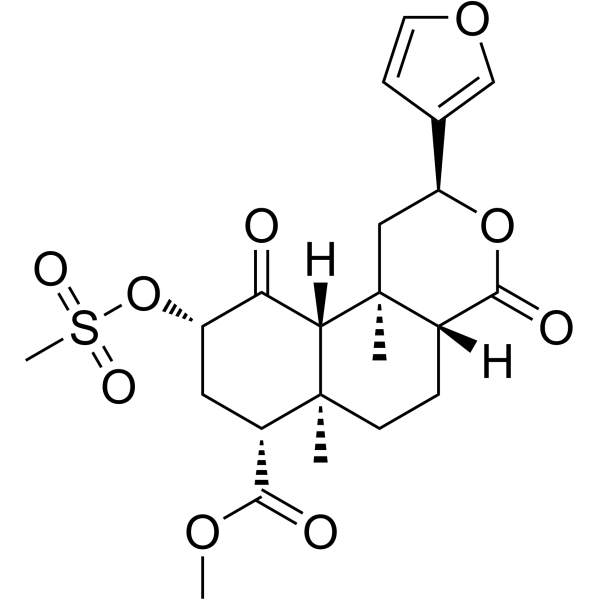
- HY-13243S1
-
|
ADL 8-2698-d7; LY 246736-d7
|
Isotope-Labeled Compounds
Opioid Receptor
|
Neurological Disease
Cancer
|
|
Alvimopan-d7 (ADL 8-2698-d7) is deuterium labeled Alvimopan. Alvimopan (ADL 8-2698) is a potent, selective, orally active and reversible μ-opioid receptor antagonist, with an IC50 of 1.7 nM. Alvimopan has selectivity for μ-opioid receptor (Ki=0.47 nM) over κ- and δ-opioid receptors (Kis=100, 12 nM, respectively). Alvimopan can be used for the research of postoperative ileus .
|
-

- HY-18617
-
|
|
Opioid Receptor
|
Neurological Disease
Inflammation/Immunology
|
|
rel-SB-612111 hydrochloride is a novel and potent human opiate receptor-like orphan receptor (ORL-1) antagonist with a high affinity for hORL-1 (Ki=0.33 nM). rel-SB-612111 hydrochloride exhibits selectivity for μ-, κ- and δ-receptors with Ki values of 57.6 nM, 160.5 nM and 2109 nM, respecticely. rel-SB-612111 hydrochloride effectively antagonizes the pronociceptive action of Nociceptin (HY-P0183) in an acute pain model .
|
-
- HY-171758
-
|
|
Opioid Receptor
|
Neurological Disease
|
|
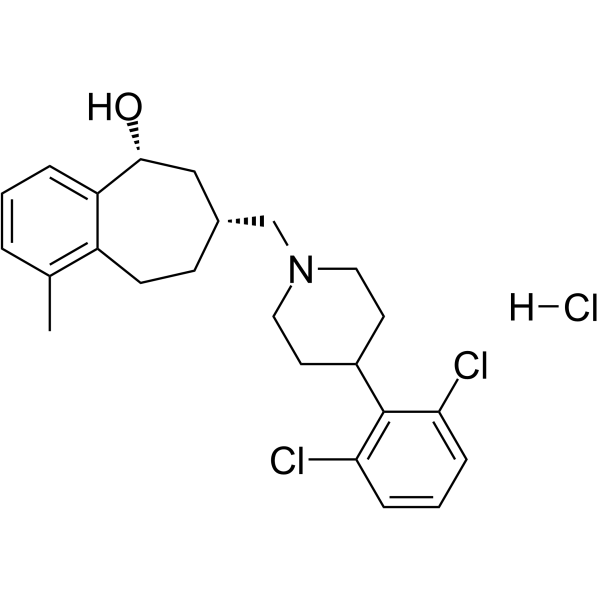
BU72 is a highly potent and long-acting agonist of μ and κ opioid receptors, and also has a partial agonist effect on δ opioid receptors (EC50 values are 0.054, 0.033, and 0.58 nM, respectively). BU72 has a strong and long-lasting analgesic effect, which is mainly mediated by μ opioid receptors. BU72 has a long-lasting activity and can partially reverse the analgesic effect of morphine. BU72 can be used in the study of opioid dependence .
|
-

- HY-110302
-
|
|
Opioid Receptor
|
Neurological Disease
|
|
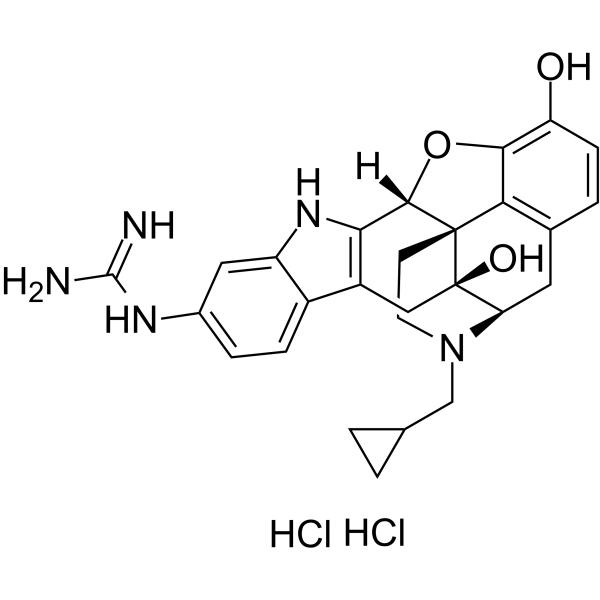
6'-GNTI dihydrochloride, a κ-opioid receptor (KOR) agonist, displays bias toward the activation of G protein-mediated signaling over β-arrestin2 recruitment. 6'-GNTI 6'-GNTI dihydrochloride only activates the Akt pathway in striatal neurons .
|
-
- HY-118949
-
|
|
Opioid Receptor
|
Metabolic Disease
|
|
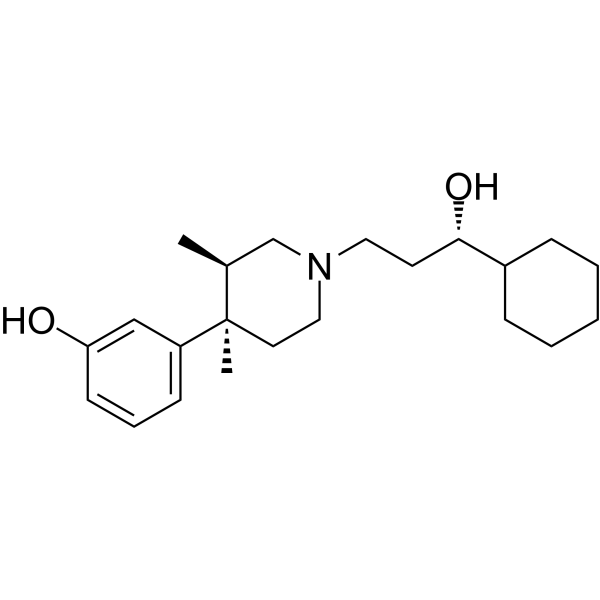
LY255582 is a pan-opioid antagonist and has high affinity for mu, delta, and kappa receptors (Ki: 0.4 nM, 5.2, 2.0 nM respectively). LY255582 can decrease food intake and body weight. LY255582 can be used for the research of obesity .
|
-
- HY-P1300
-
|
|
Opioid Receptor
|
Neurological Disease
|
|
[(pF)Phe4]Nociceptin(1-13)NH2 is a highly potent and selective NOP receptor (OP4) agonist, with a pKi of 10.68 and a pEC50 of 9.31. [(pF)Phe4]Nociceptin(1-13)NH2 displays high selectivity over δ, κ, and μ opioid receptors (>3000 fold) .
|
-
![[(pF)Phe4]Nociceptin(1-13)NH2](//file.medchemexpress.com/product_pic/hy-p1300.gif)
- HY-P9958
-
|
AMG-162
|
NF-κB
Caspase
Apoptosis
RANKL/RANK
|
Endocrinology
Cancer
|
|
Denosumab is a human monoclonal antibody that targets the protein RANKL. Denosumab binds to the receptor activator of nuclear factor kappa-B ligand (RANKL) and prevents its binding to the RANK receptor (KD of 0.003 nM for human RANKL). Denosumab promotes proliferation and spermatogenesis. Denosumab prevents bone resorption through inhibition of the NF-κB pathway. Denosumab can be used in bone-related studies .
|
-

- HY-P99315
-
|
BG 9588; Anti-Human CD40L Recombinant Antibody; Hu5c8
|
TNF Receptor
|
Inflammation/Immunology
|
|
Ruplizumab (BG 9588) is a humanized anti-CD40L IgG1κ monoclonal antibody. By binding to CD40L, Ruplizumab blocks its interaction with the CD40 receptor, inhibits T-B cell costimulatory signals, and mediates the depletion of activated T cells via the Fc segment. Ruplizumab has immunosuppressive effects. Ruplizumab can be used in the study of systemic lupus erythematosus, organ transplant rejection, and autoimmune diseases. Recommend Isotype Controls: Human IgG1 kappa, Isotype Control (HY-P99001) .
|
-

- HY-P99299
-
|
HGS-ETR 2; ETR2-ST01
|
Apoptosis
|
Cancer
|
|
Lexatumumab (HGS-ETR 2) is a human agonistic TRAIL receptor 2 (TRAIL-R2, DR5, APO-2) IgG4κ type monoclonal antibody. Lexatumumab induces apoptosis in malignant mesothelioma. Lexatumumab can be used for malignant pleural mesothelioma (MPM) research .
|
-

- HY-P4679
-
|
E2078
|
Opioid Receptor
|
Neurological Disease
|
|
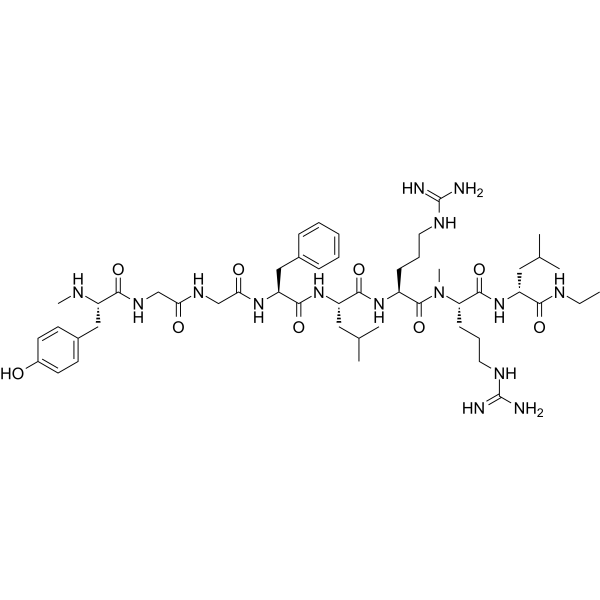
(N-Me-Tyr1,N-Me-Arg7,D-Leu-NHEt8)-Dynorphin A (1-8) (E-2078), a stable Dynorphin A (1–8) (HY-P2159) analog, is a kappa opioid receptor (KOR) agonist .
|
-
- HY-163277
-
|
|
Opioid Receptor
|
Inflammation/Immunology
|
|
PIPE-3297 (compound 25) is a selective kappa opioid receptor (KOR) agonist, which activates the G-protein signaling with EC50 of 1.1 nM and exhibits low β-arrestin-2 recruitment activity (10%). PIPE-3297 induces myelination and reveals an anti-inflammatory activity .
|
-
- HY-130696
-
|
(+)-Trans-(1R,2R)-U-50488
|
Opioid Receptor
|
Neurological Disease
|
|
(+)-U-50488 ((+)-Trans-(1R,2R)-U-50488) is a less active κ opioid receptor (KOR) agonist than the enantiomer of (-)-Trans-(1S,2S)-U-50488 (HY-15997) .
|
-

- HY-15997A
-
|
(+)-Trans-(1R,2R)-U-50488 hydrochloride
|
Opioid Receptor
|
Neurological Disease
|
|
(+)-U-50488 (hydrochloride) (+)-Trans-(1R,2R)-U-50488 hydrochloride) is a less active κ opioid receptor (KOR) agonist than the enantiomer of (-)-Trans-(1S,2S)-U-50488 (HY-15997) .
|
-

- HY-A0115R
-
|
HOE 498 diacid (Standard); Ramipril diacid (Standard)
|
Drug Metabolite
Reference Standards
Angiotensin-converting Enzyme (ACE)
Endogenous Metabolite
|
Cardiovascular Disease
|
|
Alvimopan (dihydrate) (Standard) is the analytical standard of Alvimopan (dihydrate). This product is intended for research and analytical applications. Alvimopan dihydrate (ADL 8-2698 dihydrate) is a potent, selective, orally active and reversible μ-opioid receptor antagonist, with an IC50 of 1.7 nM. Alvimopan dihydrate has selectivity for μ-opioid receptor (Ki=0.47 nM) over κ- and δ-opioid receptors (Kis=100, 12 nM, respectively). Alvimopan dihydrate can be used for the research of postoperative ileus .
|
-

- HY-76657AR
-
|
ADL 8-2698 dihydrate (Standard); LY 246736 dihydrate (Standard)
|
Reference Standards
Opioid Receptor
|
Neurological Disease
Cancer
|
|
Alvimopan (dihydrate) (Standard) is the analytical standard of Alvimopan (dihydrate). This product is intended for research and analytical applications. Alvimopan dihydrate (ADL 8-2698 dihydrate) is a potent, selective, orally active and reversible μ-opioid receptor antagonist, with an IC50 of 1.7 nM. Alvimopan dihydrate has selectivity for μ-opioid receptor (Ki=0.47 nM) over κ- and δ-opioid receptors (Kis=100, 12 nM, respectively). Alvimopan dihydrate can be used for the research of postoperative ileus .
|
-

- HY-P1300A
-
|
|
Opioid Receptor
|
Neurological Disease
|
|
[(pF)Phe4]Nociceptin(1-13)NH2 TFA is a highly potent and selective NOP receptor (OP4) agonist, with a pKi of 10.68 and a pEC50 of 9.31. [(pF)Phe4]Nociceptin(1-13)NH2 TFA displays high selectivity over δ, κ, and μ opioid receptors (>3000 fold) .
|
-
![[(pF)Phe4]Nociceptin(1-13)NH2 TFA](//file.medchemexpress.com/product_pic/hy-p1300a.gif)
- HY-P1625
-
|
Dynorphin A ethylamide (1-9)
|
Opioid Receptor
|
Neurological Disease
|
|
Daeatal (Dynorphin A ethylamide (1-9)) is an ethylamine-modified dynorphin fragment that can be used in the study of analgesia, addiction, depression, etc. Dynorphin A is an endogenous opioid peptide involved in inhibitory neurotransmission in the central nervous system (CNS). Dynorphin A is a highy potent kappa opioid receptor (KOR) agonist, and is also an agonist for other opioid receptors, such as mu (MOR) and delta (DOR). Dynorphin A can induce neuronal death, and can be used in the research of neurological disease .
|
-

- HY-10672
-
|
|
Urotensin Receptor
Cytochrome P450
Sodium Channel
Opioid Receptor
|
Cardiovascular Disease
|
|
Urotensin-II receptor antagonist-1 (compound 1) is a low oral bioavailability (F=0-3%, rat) selective human Urotensin II receptor antagonist, Ki=16 nM (test on HEK293 cells expressing recombinant human UT receptor). Urotensin-II receptor antagonist-1 inhibits cytochrome P450 (IC50=0.75 μM, CYP2D6; 1.4 μM, CYP3A4), inhibits κ-opioid receptor (EC50=3.2 μM), targets cardiac sodium channels (Ki=2.5 μM) .
|
-

- HY-P99384
-
|
B-701; MFGR-1877S; RG-7444
|
FGFR
|
Cancer
|
|
Vofatamab (B-701) is an anti-FGFR3 monoclonal antibody (mAb). Vofatamab blocks activation of both the wildtype and genetically activated receptor. Vofatamab can be used in the research of metastatic urothelial carcinoma (mUC). Recommend Isotype Controls: Human IgG1 kappa, Isotype Control (HY-P99001) .
|
-

- HY-P991843
-
|
|
CCR
|
Inflammation/Immunology
|
|
Anti-CCR5 Antibody (HEK/1/85a/7a) recognizes an epitope on human CCR5. CCR5 is a seven-transmembrane G-protein-coupled receptor (GPCR). Recommend Isotype Controls: Rat IgG2b kappa, Isotype Control (HY-P990682) .
|
-

- HY-181515
-
|
|
Opioid Receptor
|
Neurological Disease
|
|
KOR agonist 8 (Compound 8a) is a κ-opioid receptor (KOR) agonist and an analgesic agent, with a Ki value of 5.3 nM for human KOR, and EC50 values of 43.1 nM and 9236 nM for human KOR. It exhibits subtype selectivity for MOR/KOR and DOR/KOR. KOR agonist 8 is applicable for pain-related research .
|
-

- HY-P991074
-
|
|
Fc Receptor (FcR)
|
Inflammation/Immunology
|
|
GMA-161 is a humanized IgG1 antibody that targets Fcγ receptor III (CD16). GMA-161 has the potential for the study of autoimmune disorders. The isotype control for GMA-161 can refer to Human IgG1 kappa, Isotype Control (HY-P99001) .
|
-

- HY-P9958A
-
|
|
RANKL/RANK
Apoptosis
NF-κB
|
Neurological Disease
Endocrinology
Cancer
|
|
Denosumab (anti-TNFSF11) is a human monoclonal antibody that targets the protein RANKL. Denosumab binds to the receptor activator of nuclear factor kappa-B ligand (RANKL) and prevents its binding to the RANK receptor (KD of 0.003 nM for human RANKL). Denosumab promotes proliferation and spermatogenesis. Denosumab prevents bone resorption through inhibition of the NF-κB pathway. Denosumab can be used in bone-related studies .
|
-

- HY-P992326
-
|
|
PDGFR
|
Inflammation/Immunology
Cancer
|
|
BOT1711 is a human IgG1κ monoclonal antibody targeting PDGFRB/CD140b. PDGFRB/CD140b belongs to type I receptor tyrosine kinases (RTKs), and is mainly expressed in vascular smooth muscle cells, pericytes, fibroblasts, certain mesenchymal stem cells, and tumor stromal cells.
|
-

- HY-161812
-
|
|
Opioid Receptor
|
Others
|
|
MOR agonist-4 (2d) is a G protein signaling-biased Kappa opioid receptor (KOR) agonist with an EC50 value of 11 nM. MOR agonist-4 contains an electron withdrawing CF3 group and a bias factor of 38 based on triazole. MOR agonist-4 is used in the research of pruritis and analgesia .
|
-

- HY-159088
-
|
|
Opioid Receptor
|
Neurological Disease
|
|
KOR agonist 2 (Compound 23p) is an agonist for κ opioid receptor (KOR) with Ki of 1.9 nM. KOR agonist 2 exhibits analgesic effect in mouse models with ED50 of 1.30 mg/kg. KOR agonist 2 exhibits high clearance rate (2 mg/kg, i.v.) in mice, high metabolism and clearance in liver microsomes .
|
-

- HY-130696A
-
|
(±)-trans-(1R,2R)-U-50488
|
Opioid Receptor
|
Neurological Disease
|
|
(±)-U-50488 ((±)-trans-(1R,2R)-U-50488) is a selective kappa opioid receptor agonist. (±)-U-50488 can improve symptoms related to status epilepticus, but has no significant effect on spontaneous seizure episodes. (±)-U-50488 can be used for research of epilepsy .
|
-

- HY-135238
-
|
PD-117302
|
Opioid Receptor
|
Others
|
|
(rel)-RSD 921 (PD-117302) is a κ-opioid receptor agonist. (rel)-RSD 921 did not have a greater food-inducing effect in obese than in lean Zucker rats; in both obese and lean Zucker rats, lean rats were more sensitive to its initial food-inducing effect but ultimately ate less.
|
-

- HY-76711
-
|
|
Opioid Receptor
|
Neurological Disease
Metabolic Disease
Inflammation/Immunology
Cancer
|
Naltrexone is an orally active, long-acting opioid receptor (opioid receptor) antagonist. Naltrexone blocks the euphoric effects of exogenous opioids and reduces alcohol craving by blocking opioid receptors (μ, κ, and δ) as well as opioid growth factor receptors. Low doses of Naltrexone are used to relieve chronic pain, treat inflammatory diseases and inhibit tumor growth, while high doses or continuous administration exert pro-inflammatory or pro-proliferative effects. Naltrexone relieves intractable pruritus caused by psoriasis, atopic dermatitis and other conditions, and its combination with Bupropion (HY-B0403) inhibits food craving, thereby reducing body weight .
|
-

- HY-N0164
-
Matrine
Maximum Cited Publications
18 Publications Verification
Matridin-15-one; Vegard; α-Matrine
|
PINK1/Parkin
Opioid Receptor
Autophagy
Mitophagy
Ferroptosis
Apoptosis
|
Inflammation/Immunology
Cancer
|
|
Matrine (Matridin-15-one) is an alkaloid found in plants from the Sophora genus that can act as a kappa opioid receptor and u-receptor agonist. Matrine has a variety of pharmacological effects, including anti-cancer, anti-oxidative stress, anti-inflammation and anti-apoptosis effects. Matrine is potential in the research of disease like human non-small cell lung cancer, hepatoma, papillary thyroid cancer and acute kidney injury (AKI) .
|
-
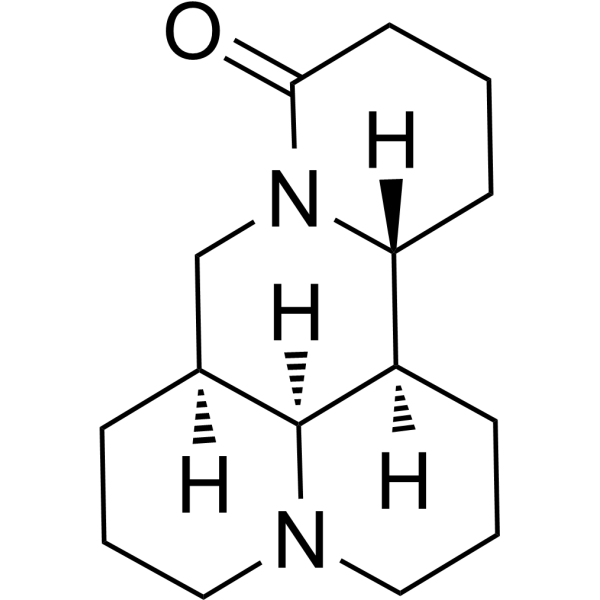
- HY-P991805
-
|
|
Orphan GPCR
|
Inflammation/Immunology
|
|
Anti-Mouse F4/80 Antibody (Cl:A3-1) reacts with the mouse F4/80. The F4/80 receptor is generally considered a murine pan-macrophage marker. Recommend Isotype Controls: Rat IgG2b kappa, Isotype Control (HY-P990682) .
|
-

- HY-17609S
-
|
CR-845-d5; FE-202845-d5
|
Isotope-Labeled Compounds
Opioid Receptor
|
Neurological Disease
|
|
Difelikefalin-d5 (CR-845-d5) is deuterium labeled Difelikefalin. Difelikefalin (CR-845; FE-202845) is a peripherally restricted and selective agonist of kappa opioid receptor (KOR). Difelikefalin produces anti-inflammatory effects and has the potential in modulating pruritus in conditions such as chronic kidney disease .
|
-

- HY-P991780
-
|
|
EGFR
|
Cancer
|
|
Anti-Mouse HER2 (domain I) Antibody (H2Mab-304) reacts with domain I of mouse HER2. HER2 is a 185 kDa transmembrane receptor tyrosine kinase that is part of the EGFR family. Recommend Isotype Controls: Rat IgG1 kappa, Isotype Control (HY-P99979).
|
-

- HY-P991848
-
|
|
Fc Receptor (FcR)
|
Inflammation/Immunology
|
|
Anti-CD64 Antibody (10.1) recognizes an epitope on human CD64 (Fc_RI). Fc gamma receptors (Fc_Rs) are membrane-bound proteins which control and mediate communication of IgG antibodies within the immune system. Recommend Isotype Controls: Mouse IgG1 kappa, Isotype Control (HY-P99977) .
|
-

- HY-P5892
-
|
|
Opioid Receptor
|
Neurological Disease
|
|
β-Endorphin (1-27) (human) is an opioid antagonist that binds μ-, δ-, and κ-opioid receptors with Kis of 5.31, 6.17, and 39.82 nM, respectively. β-Endorphin (1-27) (human) inhibits β-Endorphin (HY-P1502)-induced and etorphine-induced analgesia .
|
-

- HY-P991151
-
|
|
PD-1/PD-L1
TNF Receptor
|
Cancer
|
|
Opamtistomig is a humanized immunoglobulin (H-γ1-scFv-L-κ) dimer monoclonal antibody targeting human programmed death ligand 1 (PD-L1), CD274 and tumor necrosis factor receptor superfamily member 9 (TNFRSF9). Opamtistomig is promising for research of various solid tumors and hematological malignancies .
|
-

- HY-W019787
-
|
|
Opioid Receptor
CXCR
|
Neurological Disease
|
|
BAM-12P, an endogenous opioid peptide, is a novel pro-Met-enkephalin. BAM-12P can activate human κ-opioid receptor (hKOR) with an EC50 of 101 nM and a pEC50 of 6.99. BAM-12P is a ligand for CXCR7 with an EC50 of 175 nM .
|
-

- HY-17609S1
-
|
CR-845-d5 hydrochloride; FE-202845-d5 hydrochloride
|
Isotope-Labeled Compounds
Opioid Receptor
|
Neurological Disease
Inflammation/Immunology
|
|
Difelikefalin-d5 (CR-845-d5) hydrochloride is the deuterium labeled Difelikefalin (HY-17609). Difelikefalin (CR-845) is a peripherally restricted and selective agonist of kappa opioid receptor (KOR). Difelikefalin produces anti-inflammatory effects and has the potential in modulating pruritus in conditions such as chronic kidney disease .
|
-

- HY-136208
-
|
|
Opioid Receptor
|
Neurological Disease
|
|
TAN-452 is an orally active, selective peripherally acting δ-opioid receptor (DOR) antagonist with a Ki of 0.47 nM and a Kb of 0.21 nM. TAN-452 is an antagonist for μ-opioid receptor (MOR; Ki=36.56 nM and Kb=9.43 nM) and κ-opioid receptor (KOR; Ki=5.31 nM and Kb=7.18 nM). TAN-452, a derivative of Naltrindole, demonstrates low brain penetrability and attenuates morphine-induced side effects without affecting pain control .
|
-
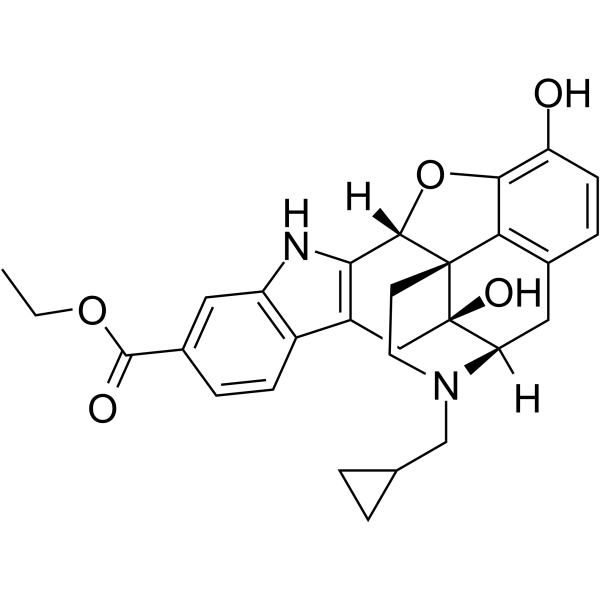
- HY-P990867
-
|
|
Insulin Receptor
Akt
|
Cancer
|
|
Anti-CD220/Insulin Receptor Antibody (IR 83-22) is an anti-human CD220/Insulin Receptor IgG1 monoclonal antibody. Anti-CD220/Insulin Receptor Antibody (IR 83-22) can block Akt overactivation caused by Trip13 deficiency. Anti-CD220/Insulin Receptor Antibody (IR 83-22) can be used for research on cancer such as hepatocellular carcinoma (HCC). Anti-CD220/Insulin Receptor Antibody (IR 83-22) often used in western blotting. The recommend isotype control of Anti-CD220/Insulin Receptor Antibody (IR 83-22): Mouse IgG1 kappa, Isotype Control (HY-P99977) .
|
-

- HY-P991847
-
|
|
PD-1/PD-L1
|
Cancer
|
|
Anti-PD-L2 Antibody (3.2) recognizes an epitope on mouse and human PD-L2. PD-L2 is a 25 kD type I transmembrane protein and a member of B7 family within the immunoglobulin receptor superfamily. Recommend Isotype Controls: Mouse IgG1 kappa, Isotype Control (HY-P99977) .
|
-

- HY-P991778
-
|
|
TNF Receptor
|
Inflammation/Immunology
|
|
Anti-Mouse BAFF-R Antibody (9B9) reacts with mouse B-cell activating factor receptor (BAFF-R). Anti-Mouse BAFF-R Antibody (9B9) blocks BAFF-R both in vivo and in vitro. Recommend Isotype Controls: Rat IgG2b kappa, Isotype Control (HY-P990682) .
|
-

- HY-124754
-
|
BTRX-335140; CYM-53093
|
Opioid Receptor
|
Neurological Disease
Metabolic Disease
|
|
Navacaprant (BTRX-335140) is a selective and orally active κ opioid receptor (KOR) antagonist, has antagonist activity for κOR, μOR and δOR with IC50 values of 0.8 nM, 110 nM, and 6500 nM, respectively.
Navacaprant endows with favorable in vitro ADMET and in vivo pharmacokinetic profiles and medication-like duration of action in rats. Navacaprant distributes well into the CNS and can be used for the research of neuropathy .
|
-
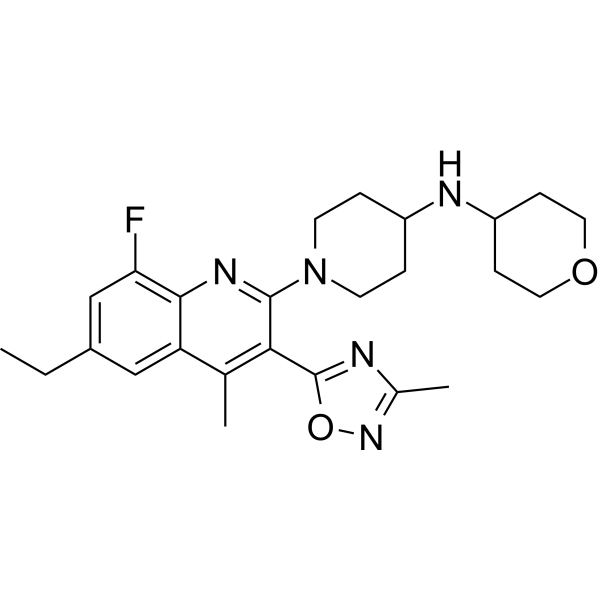
- HY-P991048
-
|
|
c-Fms
|
Cancer
|
|
AMG-820 is a fully human IgG2 antibody that targets CSF-1R. AMG-820 inhibits binding of the ligands CSF1 and IL34 and subsequent ligand-induced receptor activation. The isotype control for AMG-820 can refer to Human IgG2 kappa, Isotype Control (HY-P99002) .
|
-

- HY-P991807
-
|
|
Integrin
|
Inflammation/Immunology
|
|
Anti-Mouse MAdCAM-1 Antibody (MECA-89) reacts with mouse MAdCAM-1. Anti-Mouse MAdCAM-1 Antibody (MECA-89) blocks the interaction of MAdCAM-1 with its receptor in vivo and in vitro. Recommend Isotype Controls: Mouse IgG2a kappa, Isotype Control (HY-P99978) .
|
-

- HY-170973
-
|
|
Opioid Receptor
|
|
|
KOR agonist 4 (compound 39) is an agonist of Kappa Opioid Receptor. KOR agonist 4 is an activator of G-protein signaling. KOR agonist 4 binds with GTPγS with an EC50 of 14 nM and with an Emax of 83 %. KOR agonist 4 demonstrates moderate to high intrinsic clearance in human hepatocytes. KOR agonist 4 exhibits 60- and 810-fold selectivities versus the related mu (MOR) and delta (DOR) opioid receptors. KOR agonist 4 is potential for central nervous system (CNS) disorders research .
|
-

- HY-156131
-
|
ADL 2-1294
|
Opioid Receptor
|
Neurological Disease
Inflammation/Immunology
|
|
Loperamide (ADL 2-1294) is selective and orally active μ opioid receptor agonist with Ki valuess of 3, 48 and 1156 nM against μ, δ and κ opioid receptor, respectively. Loperamide produces antinociception and antihyperalgesia. Loperamide exhibits peripheral selectivity, enhancing fluid, electrolyte, and glucose absorption, reversing PGE2 (HY-101952)- and Cholera toxin (HY-P1446)-induced intestinal secretion, and reducing intestinal motility. Loperamide can be used for the researches of inflammatory pain and protracted diarrhoea .
|
-

- HY-76711R
-
|
|
Reference Standards
Opioid Receptor
|
Neurological Disease
Metabolic Disease
Inflammation/Immunology
Cancer
|
Naltrexone (Standard) is the analytical standard of Naltrexone (HY-76711). This product is intended for research and analytical applications. Naltrexone is an orally active, long-acting opioid receptor (opioid receptor) antagonist. Naltrexone blocks the euphoric effects of exogenous opioids and reduces alcohol craving by blocking opioid receptors (μ, κ, and δ) as well as opioid growth factor receptors. Low doses of Naltrexone are used to relieve chronic pain, treat inflammatory diseases and inhibit tumor growth, while high doses or continuous administration exert pro-inflammatory or pro-proliferative effects. Naltrexone relieves intractable pruritus caused by psoriasis, atopic dermatitis and other conditions, and its combination with Bupropion (HY-B0403) inhibits food craving, thereby reducing body weight.
|
-

- HY-76711S
-
|
|
Isotope-Labeled Compounds
Opioid Receptor
|
Neurological Disease
Metabolic Disease
Inflammation/Immunology
Cancer
|
Naltrexone-d4 is deuterium labeled Naltrexone (HY-76711). Naltrexone is an orally active, long-acting opioid receptor (opioid receptor) antagonist. Naltrexone blocks the euphoric effects of exogenous opioids and reduces alcohol craving by blocking opioid receptors (μ, κ, and δ) as well as opioid growth factor receptors. Low doses of Naltrexone are used to relieve chronic pain, treat inflammatory diseases and inhibit tumor growth, while high doses or continuous administration exert pro-inflammatory or pro-proliferative effects. Naltrexone relieves intractable pruritus caused by psoriasis, atopic dermatitis and other conditions, and its combination with Bupropion (HY-B0403) inhibits food craving, thereby reducing body weight.
|
-

- HY-110252
-
|
|
Opioid Receptor
|
Neurological Disease
Inflammation/Immunology
|
|
Salvinorin B is a selective and brain-penetrant kappa opioid receptor (KOPr) agonist with an EC50 of 248 nM and Ki of 2.95 μM. Salvinorin B activates downstream signaling pathways by binding to KOPr, inhibits pain transmission and reduces inflammatory response. Salvinorin B can be used for the researches of inflammation, immunology and neurological disease, such as neuropathic pain, multiple sclerosis and anxiety .
|
-

- HY-P991854
-
|
|
Interleukin Related
|
Inflammation/Immunology
|
|
Anti-iNKT Cell Antibody (6B11) recognizes an epitope on T cell receptor (TCR) V alpha 24-J alpha 18. Anti-iNKT Cell Antibody is specific for cloned and primary human but not rodent iNKT and the human invariant TCR-α. Recommend Isotype Controls: Mouse IgG1 kappa, Isotype Control (HY-P99977) .
|
-

- HY-P990051
-
|
AOC-1001 Antibody; AOC-1044 Antibody
|
Transferrin Receptor
|
Neurological Disease
Inflammation/Immunology
|
|
Delpacibart is a humanized IgG1κ monoclonal antibody targeting the transferrin receptor TFRC. Delpacibart can be conjugated with the phosphorodiamidate morpholino oligonucleotide (PMO) Zotadirsen (HY-177972), which targets exon 44 of the dystrophin gene, to synthesize the antibody-oligonucleotide conjugate (AOC) Delpacibart zotadirsen (HY-177564). Delpacibart is suitable for use in Duchenne muscular dystrophy (DMD44) research .
|
-

- HY-19627A
-
|
S-297995 tosylate
|
Opioid Receptor
|
Neurological Disease
Metabolic Disease
|
|
Naldemedine (S-297995) tosylate is an orally active μ-opioid receptor antagonist (PAMORA) . Naldemedine tosylate shows potent binding affinities (Ki=0.34, 0.43, 0.94 nM, respectively) and antagonist activities (IC50=25.57, 7.09, 16.1 nM, respectively) for recombinant human μ-, δ-, and κ- opioid receptors . Naldemedine can be used in opioid-induced constipation (OIC) research . Naldemedine tosylate is predicted to bind to 3CL pro encoded by SARS-CoV2 genome .
|
-
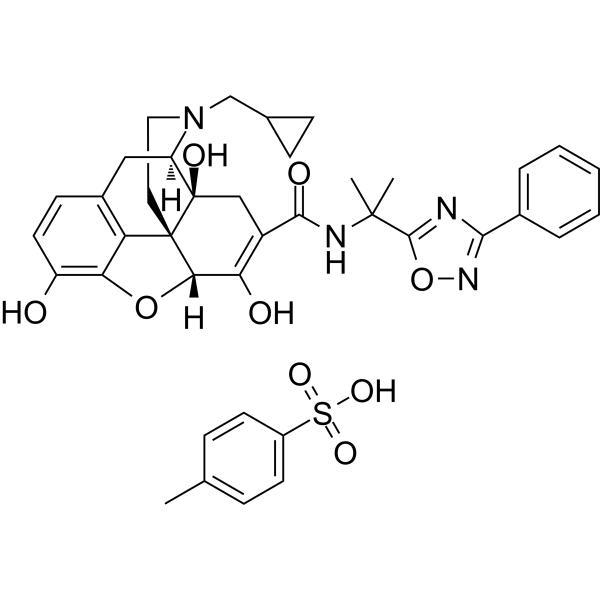
- HY-19627
-
|
S-297995
|
Opioid Receptor
|
Neurological Disease
Metabolic Disease
|
|
Naldemedine (S-297995) is an orally active μ-opioid receptor antagonist (PAMORA) . Naldemedine shows potent binding affinities (Ki=0.34, 0.43, 0.94 nM, respectively) and antagonist activities (IC50=25.57, 7.09, 16.1 nM, respectively) for recombinant human μ-, δ-, and κ- opioid receptors . Naldemedine can be used in opioid-induced constipation (OIC) research . Naldemedine is predicted to bind to 3CL pro encoded by SARS-CoV2 genome .
|
-
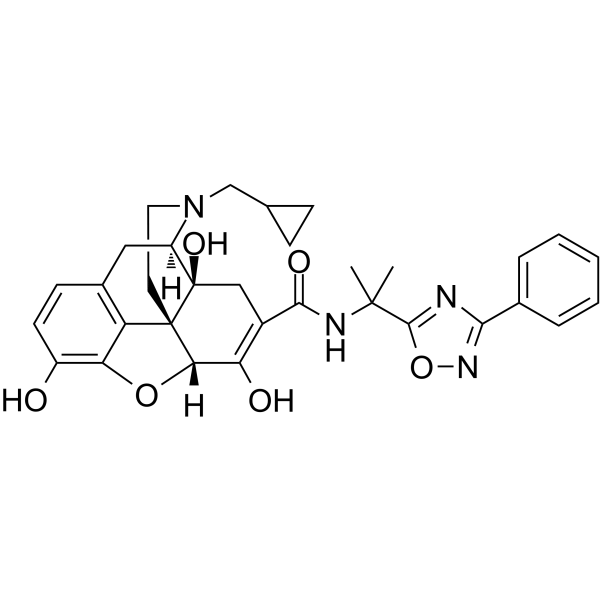
- HY-P991055
-
|
RG-6234; RO-7425781
|
CD3
|
Inflammation/Immunology
|
|
Forimtamig (RG-6324) is a GPRC5DxCD3 T-cell-engaging bispecific antibody. Forimtamig has a 2 + 1 format, comprising two high-affinity GPRC5D binding moieties and one CD3 binder. Forimtamig further features a P329G LALA mutated Fc domain that inhibits Fcγ receptor and C1q binding, yet retains binding to the neonatal Fc receptor. The isotype control for Forimtamig can refer to Human IgG1 kappa, Isotype Control (HY-P99001) .
|
-

- HY-N0164R
-
|
Matridin-15-one (Standard); Vegard (Standard); α-Matrine (Standard)
|
PINK1/Parkin
Reference Standards
Opioid Receptor
Autophagy
Mitophagy
Ferroptosis
Apoptosis
|
Inflammation/Immunology
Cancer
|
|
Matrine (Standard) is the analytical standard of Matrine. This product is intended for research and analytical applications. Matrine (Matridin-15-one) is an alkaloid found in plants from the Sophora genus that can act as a kappa opioid receptor and u-receptor agonist. Matrine has a variety of pharmacological effects, including anti-cancer, anti-oxidative stress, anti-inflammation and anti-apoptosis effects. Matrine is potential in the research of disease like human non-small cell lung cancer, hepatoma, papillary thyroid cancer and acute kidney injury (AKI) .
|
-

- HY-178720
-
|
|
Opioid Receptor
|
Neurological Disease
|
|
SHR0687 is a selective tetrapeptide kappa opioid receptor (KOR) agonist with an EC50 of 0.53 pM. SHR0687 displays high potency and selectivity over MOR and DOR, with negligible blood-brain barrier penetration. SHR0687 activates KOR specifically, leading to potential modulation of neurological pathways without significant central nervous system effects. SHR0687 can be used for the research of pain .
|
-

- HY-P991804
-
|
|
Transmembrane Glycoprotein
|
Inflammation/Immunology
|
|
Anti-Mouse CD79b Antibody (HM79b) reacts with the mouse CD79b. CD79b participates in the signal transduction cascade activated by the B cell antigen receptor complex (BCR), ultimately leading to complex internalization, transport to late endosomes, and antigen presentation. Recommend Isotype Controls: Mouse IgG2a kappa, Isotype Control (HY-P99978) .
|
-

- HY-P990137
-
|
|
CD28
|
Neurological Disease
Inflammation/Immunology
|
|
Anti-Rat CD28 Antibody (JJ319) is a mouse-derived IgG1 κ type antibody inhibitor, targeting to rat CD28. Anti-Rat CD28 Antibody (JJ319) activates T cells in the presence of T cell receptor-stimulation. Anti-Rat CD28 Antibody (JJ319) can be used for the researches of inflammation and immunology, such as transplantation and neuritis .
|
-
- HY-120511
-
KNT-127
1 Publications Verification
|
Opioid Receptor
|
Neurological Disease
|
|
KNT-127 is a selective and BBB-penetrant δ-opioid receptor (DOR) agonist (Ki = 0.16 nM). KNT-127 is highly selective to the δ receptor, with Ki values of 0.16, 21.3 and 153 nM for δ, μ and κ receptors, respectively. KNT-127 acts as a biased ligand that mainly activates cyclic adenosine monophosphate (cAMP) signaling with lower beta-arrestin signaling activation. KNT-127 increases the release of dopamine and L-glutamate in the striatum, nucleus accumbens, and prefrontal cortex. KNT-127 exhibits antidepressant- and anxiolytic-like effects. KNT-127 can be studied in research on neurological diseases .
|
-
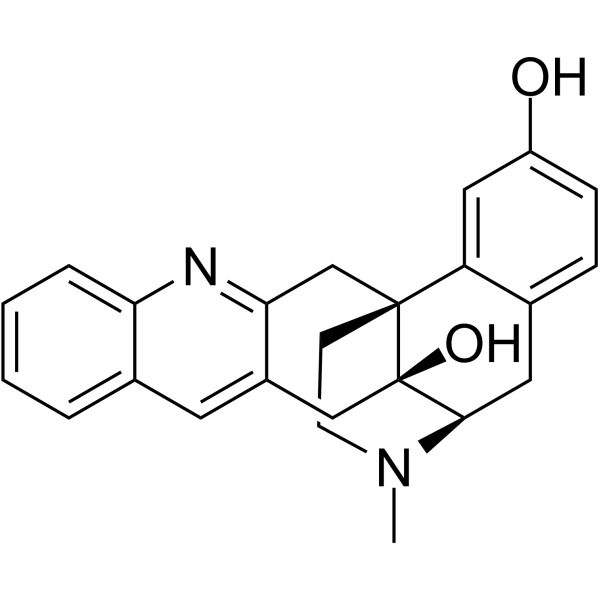
- HY-178945
-
|
|
Opioid Receptor
Interleukin Related
TNF Receptor
Sigma Receptor
|
Neurological Disease
Inflammation/Immunology
|
|
KOR agonist 7 (Compound 29) is a highly selective κ-opioid receptor (KOR) agonist with a Ki of 138 nM. KOR agonist 7 shows no activity at μ- and δ-opioid receptors or σ1 receptor, and exhibits extremely low affinity for σ2 receptor (Ki = 2.8 μM). KOR agonist 7 significantly reduces the secretion of pro-inflammatory cytokines such as IL-6, TNF-α, and IFN-γ, while increasing the production of the anti-inflammatory cytokine IL-10. KOR agonist 7 downregulates the expression of the pro-inflammatory M1 macrophage marker CD80 and upregulates the anti-inflammatory M2 macrophage marker CD163. KOR agonist 7 holds potential for applications in analgesia and immune modulation .
|
-

- HY-W654256
-
|
Matridin-15-one-d3; Vegard-d3; α-Matrine-d3
|
Isotope-Labeled Compounds
PINK1/Parkin
Opioid Receptor
Autophagy
Mitophagy
Ferroptosis
Apoptosis
|
Inflammation/Immunology
Cancer
|
|
Matrine-d3 (Matridin-d3) is a deuterium labeled Matrine (HY-N0164). Matrine (Matridin-15-one) is an alkaloid found in plants from the Sophora genus that can act as a kappa opioid receptor and u-receptor agonist. Matrine has a variety of pharmacological effects, including anti-cancer, anti-oxidative stress, anti-inflammation and anti-apoptosis effects. Matrine is potential in the research of disease like human non-small cell lung cancer, hepatoma, papillary thyroid cancer and acute kidney injury (AKI) .
|
-

- HY-P99866
-
|
MEHD-7945A; RG 7597
|
EGFR
Akt
p38 MAPK
Apoptosis
|
Cancer
|
|
Duligotuzumab (MEHD-7945A; RG 7597) is a humanized IgG-κ monoclonal antibody targeting EGFR. Duligotuzumab blocks the binding of ligands to these two receptors, inhibits downstream HER/ErbB, AKT and MAPK signaling pathways, induces antibody-dependent cellular cytotoxicity, reduces the proliferation and migration abilities of cancer cells, promotes apoptosis, exerts radiosensitizing effects, and reverses EGFR resistance in cancer cells. Duligotuzumab can be used in tumor-related research .
|
-

- HY-P99410
-
|
AMG 714; PRV-015
|
Interleukin Related
|
Inflammation/Immunology
|
|
Ordesekimab (AMG 714; PRV-015) is a fully human IgG1κ anti-IL-15 (Interleukin Related) monoclonal antibody. The binding of Ordesekimab to IL-15 inhibits the interaction of IL-15 with the IL-2Rβ and common γ chain of the IL-15 receptor complex, but not with the IL-15Rα chain. Ordesekimab has the potential for study of nonresponsive celiac disease (NRCD) .
|
-

- HY-P991756
-
|
|
CD44
|
Cancer
|
|
Anti-Mouse CD44 Antibody (KM703) recognizes mouse CD44. CD44 is the main receptor for hyaluronan (HA). Anti-Mouse CD44 Antibody (KM703) does not recognize the HA binding site of CD44. Anti-Mouse CD44 Antibody (KM703) is a non-HA-blocking antibody. Recommend Isotype Controls: Rat IgG2a kappa, Isotype Control (HY-P990679) .
|
-

- HY-P990856
-
|
|
Transferrin Receptor
|
Cancer
|
|
Anti-CD71 Antibody (OKT-9) is a kind of mouse IgG1 κ chimeric antibody, targeting to human CD71. Anti-CD71 Antibody (OKT-9) can recognize CD71 also known as Transferrin receptor protein 1 (TfR1). Anti-CD71 Antibody (OKT-9) can be used for the detections of immunohistochemistry, immunofluorescence and flow cytometry in cancer, such as leukemia and lymphoma .
|
-

- HY-P991491
-
|
|
SARS-CoV
Influenza Virus
|
Infection
|
|
VIR-7229 is a human IgG1 monoclonal antibody (mAb) targeting Receptor-Binding Domain, RBD, Spike glycoprotein. VIR-7229 exerts antiviral activity by competing with ACE2 for binding and inducing S1 protein shedding. VIR-7229 can be used in SARS-CoV-2 infection research. Recommended isotype control: Human IgG1 kappa, Isotype Control (HY-P99001) .
|
-

- HY-P991201
-
|
|
Interleukin Related
|
Inflammation/Immunology
|
|
REGN-7257 is a humanized monoclonal antibody targeting IL2RG. REGN-7257 blocks the signal transduction induced by common gamma chain (γc) cytokines via the IL2RG chain of the γc cytokine receptor complex. REGN-7257 is applicable for research on immune-mediated diseases and T cell-mediated diseases . Its corresponding isotype control is Human IgG4 kappa, Isotype Control (HY-P99003).
|
-

- HY-P991720
-
|
|
Interleukin Related
|
Inflammation/Immunology
|
|
Tepilukimig is a bivalent humanized IgG1κ monoclonal antibody inhibitor targeting TSLP-IL7Rα and TSLP-CRLF2. Tepilukimig inhibits the binding of TSLP to its receptors (IL7Rα and CRLF2) on the cell surface, thereby completely interrupting the inflammatory signaling pathway driven by TSLP. Tepilukimig can be used for allergic and inflammatory diseases like atopic dermatitis and asthma research .
|
-

- HY-P990130
-
|
|
Transferrin Receptor
|
Neurological Disease
|
|
Anti-Mouse/Rat CD71/TfR1 Antibody (OX-26) is a mouse-derived IgG2a κ type antibody, targeting to mouse/rat CD71/TfR1. Anti-Mouse/Rat CD71/TfR1 Antibody (OX-26) targets the transferrin receptor and binds to an extracellular domain for the transferrin receptor. Anti-Mouse/Rat CD71/TfR1 Antibody (OX-26) can be used for the research in drug delivery, especially for drug delivery to the brain .
|
-
- HY-136832
-
|
|
Serotonin Transporter
Potassium Channel
Arrestin
Opioid Receptor
|
Cardiovascular Disease
Neurological Disease
|
|
Noribogaine hydrochloride is an orally active, blood-brain barrier permeable SERT inhibitor (IC50=50-300 nM) and hERG channel blocker. Noribogaine hydrochloride enhances serotonergic transmission, activates the κ-opioid receptor (OPRK) G protein signaling pathway and inhibits β-arrestin recruitment. Meanwhile, Noribogaine hydrochloride blocks the μ-opioid receptor (OPRM) signaling pathway as well as ion channels associated with cardiac repolarization. Noribogaine hydrochloride induces neuritogenesis, upregulates GDNF mRNA expression, and modulates opioid tolerance. Noribogaine hydrochloride reduces alcohol-seeking behavior in experimental animals, and is widely used in studies related to depression, addiction, alcoholism, and cardiotoxicity .
|
-

- HY-P990836
-
|
|
Interleukin Related
|
Inflammation/Immunology
|
|
Anti-IL-9 Antibody (MH9A4) is a kind of mouse IgG2b κ chimeric antibody inhibitor, targeting to human IL-9. Anti-IL-9 Antibody (MH9A4) reacts with human IL-9 (interleukin-9) and does not block the binding of IL-9 to the IL-9 receptor. Anti-IL-9 Antibody (MH9A4) can be used for the detection of flow cytometry and ELISA .
|
-

- HY-175703
-
|
|
RANKL/RANK
Reactive Oxygen Species (ROS)
NF-κB
p38 MAPK
ERK
JNK
MMP
|
Metabolic Disease
|
|
RANKL-IN-1 is a selective and orally active Receptor Activator of Nuclear Factor-κ B Ligand (RANKL) inhibitor with a KD value of 7.6 μM. RANKL-IN-1 exhibits inhibitory activity and selectivity against osteoclastogenesis with an IC50 value of 0.07 μM and SI of 82.57. RANKL-IN-1binds directly to RANKL and blocks the RANKL-induced activation of the NF-κB and MAPK pathways. RANKL-IN-1 can be used for the research of metabolic disease, such as osteoporosis .
|
-

- HY-130118
-
|
|
Mas-related G-protein-coupled Receptor (MRGPR)
|
Neurological Disease
|
|
MRGPRX1 agonist 1 is a highly potent MRGPRX1 agonist (EC50=50 nM) with greater than 50-fold selectivity for δ, μ, and κ opioid receptors. MRGPRX1 agonist 1 is inactive against MRGPRC11. MRGPRC11 inhibits high voltage-activated (HVA) Ca 2+ currents, reduces neurotransmitter release, and mitigates nociceptive transmission in the spinal cord. MRGPRX1 agonist 1 is useful for the study of chronic pain, especially neuropathic pain .
|
-
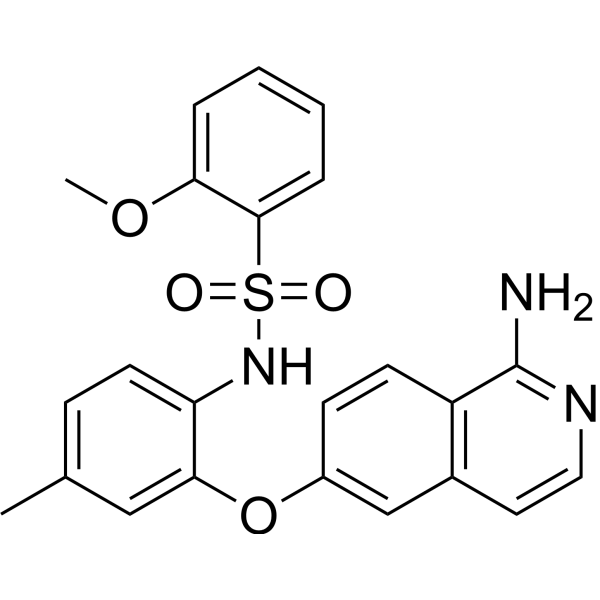
- HY-120045A
-
|
|
Opioid Receptor
|
Neurological Disease
|
|
DuP 747 hydrochloride is an analgesic with selective kappa-opioid receptor agonist activity. DuP 747 showed less spiradoline-appropriate selection when administered SC, but showed a partial generalized response to spiradoline when administered IP or PO. The 5-hydroxy-desmethoxy metabolite of DuP 747 induced selection of the saline-appropriate lever only. The effects of DuP 747 suggest that its metabolites may play a major role in the similar responses to spiradoline after IP and PO administration .
|
-

- HY-B1051
-
|
Flumetasone
|
Glucocorticoid Receptor
TNF Receptor
Interleukin Related
Keap1-Nrf2
|
Inflammation/Immunology
Endocrinology
Cancer
|
|
Flumethasone (Flumetasone) is an orally active, high selective and potent glucocorticoid receptor (GR) agonist. Flumethasone activates GR to inhibit nuclear factor kappa B (NF-κB)-mediated pro-inflammatory cytokine production (TNF-α, IL-1β) and promotes anti-inflammatory gene expression (IL-10), while also regulating metabolic enzyme activity (tyrosine aminotransferase induction). Flumethasone is promising for research of inflammatory diseases, cancer, and endocrine regulation .
|
-
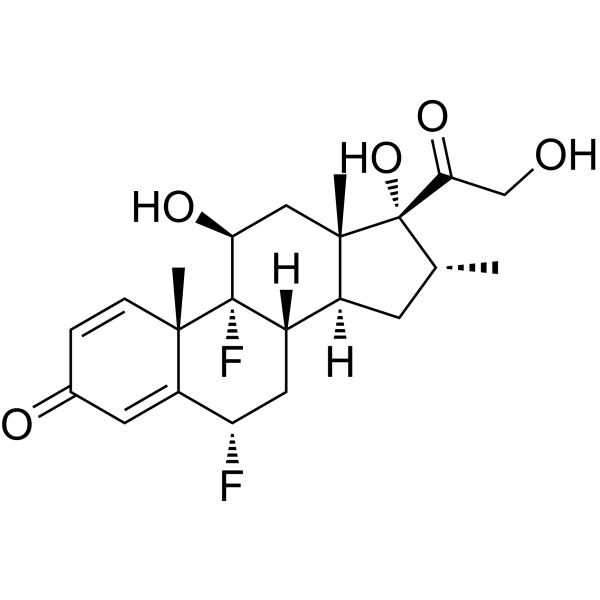
- HY-15997
-
|
(-)-Trans-(1S,2S)-U-50488 hydrochloride
|
Opioid Receptor
|
Infection
Cancer
|
|
(-)-U-50488 hydrochloride ((-)-Trans-(1S,2S)-U-50488 hydrochloride) is a selective kappa-opioid receptor (KOR) agonist (b>Kd=2.2 nM) over μ-opioid receptor (MOR) (b>Kd=430 nM). (-)-U-50488 hydrochloride is a more active enantiomer than (+)?trans-(1R,2R) U-50488 (HY-15997A)?or the (±)?trans-racemic mixture U-50488 (HY-15997B). (-)-U-50488 hydrochloride has a potent and sustained anti-HIV effect in fected blood monocyte-derived macrophages (MDM) .
|
-

- HY-N9736
-
|
|
Calcineurin
|
Infection
Neurological Disease
Inflammation/Immunology
|
|
6,4'-Dihydroxy-7-methoxyflavanone, a flavonoid, is a nature product that could be isolated from Heartwood Dalbergia odorifera. 6,4'-Dihydroxy-7-methoxyflavanone inhibits receptor activators of nuclear factor kappa-B ligand (RANKL) induced osteoclastogenesis. 6,4'-Dihydroxy-7-methoxyflavanone has antioxidant, anti-inflammatory and neuroprotective effects. 6,4'-Dihydroxy-7-methoxyflavanone can be used in research of osteoporosis .
|
-
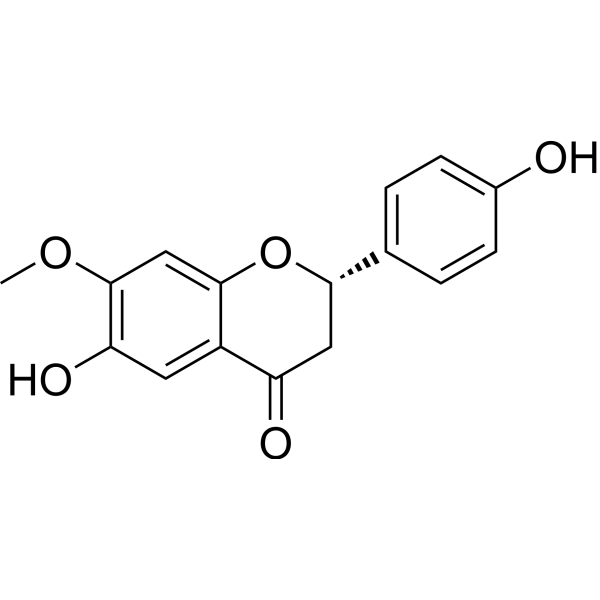
- HY-111011
-
|
JNJ 38488502 acetate; FE 200665 acetate
|
Opioid Receptor
|
Neurological Disease
|
|
CR 665 (JNJ 38488502) acetate is a kappa-opioid agonist that may effectively treat visceral pain by activating receptors on afferent nerves within the gut. CR 665 acetate exhibits peripheral selectivity, differentiating its pharmacokinetic profile from that of non-selective opioids like oxycodone. CR 665 acetate has demonstrated a beneficial effect on visceral pain tolerance thresholds without the delayed analgesic response characteristic of opioids that penetrate the brain. CR 665 acetate is proposed for use in managing postoperative pain due to its pain-relieving properties.
|
-

- HY-145404
-
|
|
Opioid Receptor
|
Metabolic Disease
|
|
Mitragynine pseudoindoxyl is a potent orally active agonist of the μ-opioid receptor (MOR-1, Ki=0.8 nM) and an antagonist of the δ-opioid receptor (DOR-1, Ki=3.0 nM). Mitragynine pseudoindoxyl has moderate affinity for the κ-opioid receptor (KOR-1, Ki=24 nM) and does not recruit β-arrestin-2, acting through G protein-mediated signaling pathways without β-arrestin-2-related activation. Mitragynine pseudoindoxyl produces potent analgesic activity through a mixed μ-agonist/δ-antagonist mechanism, with low side effects such as physical dependence, respiratory depression, and constipation, and no rewarding or aversive behaviors. Mitragynine pseudoindoxyl reduces hyperactivity, inhibits GI transit, and enhances characteristics, making it a potential analgesic .
|
-

- HY-176710
-
|
|
Protein Arginine Deiminase
Opioid Receptor
mAChR
|
Neurological Disease
Inflammation/Immunology
Cancer
|
|
PAD-PF2 is a PAD family inhibitor, as well as a κ-opioid receptor agonist (EC50 = 7.55 μM) and an M1 muscarinic acetylcholine receptor antagonist (IC50 = 12.3 μM). The IC50 values of PAD-PF2 against PAD1, PAD2, PAD3 and PAD4 are 109 nM, 27.9 nM, 106 nM and 20.1 nM, respectively. PAD-PF2 binds to the common allosteric pocket of PAD1-4, and its inhibitory effects on PAD2 and PAD4 are Ca 2+-dependent. PAD-PF2 inhibits protein citrullination in neutrophils. PAD-PF2 is applicable to research related to rheumatoid arthritis, neurodegenerative diseases and cancer .
|
-

- HY-P991000
-
|
AU-007; BD-8; BDG8
|
Interleukin Related
|
Cardiovascular Disease
Inflammation/Immunology
Cancer
|
|
Imneskibart (AU-007) is a human monoclonal antibody that binds to the CD25-binding epitope of interleukin-2 (IL-2), blocking the binding of IL-2 to the trimeric IL-2 receptor while retaining the ability to bind to the dimeric IL-2 receptor. Imneskibart expands effector T cell and NK cell populations, reduces regulatory T cells, increases the effector T cell/regulatory T cell ratio, and alleviates vascular leakage. Imneskibart can be used in research related to melanoma and non-small cell lung cancer. The corresponding isotype control is: Human IgG1 kappa, Isotype Control (HY-P99001) .
|
-

- HY-P990859
-
|
|
Transmembrane Glycoprotein
|
Others
|
|
Anti-CD44 Antibody (Hermes-1) is a kind of rat IgG2a κ chimeric antibody, targeting to human CD44. Anti-CD44 Antibody (Hermes-1) blocks the binding of hyaluronan to CD44. Anti-CD44 Antibody (Hermes-1) restores (Platelet-derived Growth Factor-BB)-induced β-receptor activation and motility in fibroblasts. Anti-CD44 Antibody (Hermes-1) causes partial loss of the anti-aging effect of hyaluronic .
|
-

- HY-P991599
-
|
|
Interleukin Related
|
Inflammation/Immunology
|
|
SHR-1703 is a long-acting humanized anti-IL-5 IgG1 monoclonal antibody. SHR-1703 can selectively recognize and bind to IL-5, blocking the binding of IL-5 to the α chain of the receptor on the surface of eosinophils, thereby inhibiting the proliferation, activation, and migration of eosinophils, and ultimately reducing eosinophil-mediated inflammation and damage. SHR-1703 can be used in the research of eosinophil-related diseases, such as eosinophilic asthma. Recommend Isotype Controls: Human IgG1 kappa, Isotype Control (HY-P99001) .
|
-

- HY-P99238
-
|
|
ADC Antibody
|
Inflammation/Immunology
Cancer
|
|
Rolinsatamab is a IgG1κ type chimeric antibody targeting to PRLR (prolactin receptor). Rolinsatamab can be conjugated with pyrrolobenzodiazepine (PDB) dimer SGD-1882 (HY-101127) via a cleavable maleimidocaproyl type linker, to form an antibody-drug conjugate, Rolinsatamab talirine. One Rolinsatamab talirine has an average of 2 site-specific drug attachment engineered cysteines (S239C). The linker equips the valine-alanine dipeptide, as cathepsine B cleavage site. on an average of 2 site-specific drug attachment engineered cysteines (S239C) .
|
-

- HY-175532
-
|
|
mAChR
|
Neurological Disease
|
|
M4 mAChR Modulator-2 is an orally active, selective, brain-penetrant positive allosteric modulator (PAM) of the M4 muscarinic acetylcholine receptor (M4 mAChR) (EC50 = 513 nM). M4 mAChR Modulator-2 exhibits high target selectivity, showing negligible affinity and low inhibition rates for non-target receptors (D1R/D2R/D3R, 5-HT subtypes, κ/δ/μ opioid receptors, H1, M1/M2) while specifically binding to M4 mAChR with a Ki of 377 nM and an inhibition rate of 62.8%. M4 mAChR Modulator-2 reverses Dizocilpine (MK-801) (HY-15084B)-induced hyperlocomotion in mice. M4 mAChR Modulator-2 can be used for the study of schizophrenia
|
-

- HY-15691A
-
|
|
Opioid Receptor
mTOR
|
Neurological Disease
Metabolic Disease
|
|
PF-4455242 hydrochloride is an orally bioavailable, blood-brain barrier-permeable κ-opioid receptor (KOR) inhibitor. PF-4455242 hydrochloride blocks in vivo effects induced by KOR and MOR agonists, and elicits KOR-independent outward currents in ventral tegmental area neurons. PF-4455242 hydrochloride promotes energy expenditure and activates the hypothalamic mTOR pathway. PF-4455242 hydrochloride attenuates stress-induced behavioral effects and produces antidepressant-like effects. PF-4455242 hydrochloride can be used in studies related to pain, depression, addictive disorders, and obesity induced by estrogen withdrawal .
|
-

- HY-15691
-
|
|
Opioid Receptor
mTOR
|
Neurological Disease
Metabolic Disease
|
|
PF-04455242 is an orally bioavailable, blood-brain barrier-permeable κ-opioid receptor (KOR) inhibitor. PF-04455242 blocks in vivo effects induced by KOR and MOR agonists, and elicits KOR-independent outward currents in ventral tegmental area neurons. PF-04455242 promotes energy expenditure and activates the hypothalamic mTOR pathway. PF-04455242 attenuates stress-induced behavioral effects and produces antidepressant-like effects. PF-04455242 can be used in studies related to pain, depression, addictive disorders, and obesity induced by estrogen withdrawal .
|
-

- HY-P991047
-
|
JR-141 antibody (uncoupled from iduronate 2-sulfatase)
|
Transferrin Receptor
|
Neurological Disease
Cancer
|
|
Anti-CD71/TfR1 Antibody (JR-141 antibody (uncoupled from iduronate 2-sulfatase)) is a humanized anti-human transferrin receptor (CD71/TfR1) antibody. Anti-CD71/TfR1 Antibody is the antibody part of the fusion protein Pabinafusp alfa (HY-P99797). The recommend isotype control of Anti-CD71/TfR1 Antibody: Human IgG1 kappa, Isotype Control (HY-P99001) .
|
-

- HY-P990233
-
|
|
IFNAR
|
Infection
Inflammation/Immunology
Cancer
|
|
Anti-Mouse IFNγR/CD119 Antibody (GR-20) is a rat-derived IgG2a κ type antibody inhibitor, targeting to mouse IFNγR/CD119.Anti-Mouse IFNγR/CD119 Antibody (GR-20) reacts with the mouse IFNγR (interferon gamma receptor) α chain also known as CD119 and IFNγ receptor 1. Anti-Mouse IFNγR/CD119 Antibody (GR-20) blocks the binding of IFNγ to CD119 therefore inhibiting IFNγ signaling. Anti-Mouse IFNγR/CD119 Antibody (GR-20) can be used for the researches of cancer, infection, inflammation and immunology, such as melanoma and C. trachomatis infected genital tract inflammation .
|
-
- HY-P990256
-
|
|
CTLA-4
|
Inflammation/Immunology
Cancer
|
|
Anti-Mouse CTLA-4/CD152 (LALA-PG) Antibody (9D9) is a mouse-derived IgG2a κ type antibody inhibitor targeting to mouse CTLA-4/CD152. Anti-Mouse CTLA-4/CD152 (LALA-PG) Antibody (9D9) contains a LALA-PG mutation in the Fc fragment rendering it unable to bind to endogenous Fcγ receptors. Anti-Mouse CTLA-4/CD152 (LALA-PG) Antibody (9D9) can be used for the researches of cancer and immunology, such as colon .
|
-
- HY-P990849
-
|
|
c-Fms
|
Others
|
|
Anti-CSF1R/CD115 Antibody (2-4A5-4) is a kind of rat IgG1 κ chimeric antibody inhibitor, targeting to human CSF1R/CD115. Anti-CSF1R/CD115 Antibody (2-4A5-4) can neutralize colony stimulating factor 1 receptor (CSF1R), also known as CD115. Anti-CSF1R/CD115 Antibody (2-4A5-4) can be used for the detections of immunohistochemistry, functional assays and flow cytometry .
|
-

- HY-P992146
-
|
MYTX-011 Antibody; Q-397
|
ADC Antibody
c-Met/HGFR
|
Cancer
|
|
Zevontabart (MYTX-011 Antibody; Q-397) is a pH-dependent anti-c-MET antibody. Zevontabart regulates the trafficking process of c-MET to reduce receptor recycling, and enhances its own endocytosis and accumulation in c-MET-expressing cells. Zevontabart induces cytotoxicity in solid tumor cells and exerts anti-tumor activity in a non-small cell lung cancer xenograft mouse model. Zevontabart can be used to synthesize ADC, such as: MYTX-011. Zevontabart can be used in studies related to non-small cell lung cancer, with its corresponding isotype control being Human IgG1 kappa, Isotype Control (HY-P99001) .
|
-

- HY-P991749
-
|
|
Interleukin Related
|
Inflammation/Immunology
|
|
Anti-Rat CD25 Antibody (OX-39) recognizes the 55 kDa low-affinity interleukin-2 receptor α chain (IL-2R α, CD25). Anti-Rat CD25 Antibody (OX-39) interacts with a single class of sites on the alpha chain of the rat R-IL2 with a high affinity (Kd of 0.8 nM) and competes with IL2 binding on this chain (Ki of 0.53 nM). Anti-Rat CD25 Antibody (OX-39) is a weak inhibitor in vitro on IL2-induced proliferation and in vivo on allograft rejection. Recommend Isotype Controls: Mouse IgG1 kappa, Isotype Control (HY-P99977) .
|
-

- HY-P990791
-
|
|
Transferrin Receptor
|
Infection
Inflammation/Immunology
Cancer
|
|
Anti-Mouse CD71/TfR1 Antibody (R17 217.1.3) is a rat-derived IgG2a κ type antibody inhibitor, targeting to mouse CD71/TfR1. Anti-Mouse CD71/TfR1 Antibody (R17 217.1.3) can deplete CD71 + cells and inhibit transferrin receptor. Anti-Mouse CD71/TfR1 Antibody (R17 217.1.3) can be used for the researches of cancer, infection, inflammation and immunology, such as lung cancer, lymphocytic choriomeningitis virus (LCMV) infection and Cardiac allograft .
|
-

- HY-P990154
-
|
|
Transmembrane Glycoprotein
|
Inflammation/Immunology
Cancer
|
|
Anti-Mouse TIM-1/CD365 Antibody (3B3) is a rat-derived IgG2a κ type agonistic antibody, targeting to mouse TIM-1/CD365. Anti-Mouse TIM-1/CD365 Antibody (3B3) enhances T-cell proliferation and responses by forming a stable TIM-1 complex and bringing TIM-1 into the T-cell receptor (TCR)-CD3 complex. Anti-Mouse TIM-1/CD365 Antibody (3B3) can be used for the researches of cancer, inflammation and immunology, such as experimental autoimmune encephalomyelitis, B16 F10 tumor and transplant .
|
-
- HY-P11642
-
|
|
ERK
Androgen Receptor
Opioid Receptor
Enteropeptidase
mTOR
Aminopeptidase
|
Neurological Disease
Inflammation/Immunology
Cancer
|
|
Sialorphin is a neutral endopeptidase (NEP) and aminopeptidase N (APN) inhibitor that responds to androgen signals. Sialorphin blocks the degradation of endogenous opioid peptides and interacts with μ-, δ-, κ-opioid receptors. Sialorphin regulates the ERK/mTOR signaling pathway by inducing cell cycle arrest, enhancing ERK1/2 activity, and reducing the phosphorylation levels of mTOR, 4E-BP1, p70S6K; accordingly, Sialorphin exhibits antiproliferative activity against colorectal cancer, glioma and prostate cancer cells without cytotoxicity. In addition, Sialorphin also produces antinociceptive responses, regulates sexual behavior, relaxes corpus cavernosum smooth muscle, and alleviates experimental colitis. Sialorphin is also a copper (II) ion-binding ligand. Sialorphin has been used in mechanistic studies related to cancer, pain management and inflammatory bowel disease .
|
-

- HY-P11642A
-
|
|
Enteropeptidase
Aminopeptidase
Opioid Receptor
ERK
mTOR
Androgen Receptor
|
Inflammation/Immunology
|
|
Sialorphin TFA is a neutral endopeptidase (NEP) and aminopeptidase N (APN) inhibitor that responds to androgen signals. Sialorphin TFA blocks the degradation of endogenous opioid peptides and interacts with μ-, δ-, κ-opioid receptors. Sialorphin TFA regulates the ERK/mTOR signaling pathway by inducing cell cycle arrest, enhancing ERK1/2 activity, and reducing the phosphorylation levels of mTOR, 4E-BP1, p70S6K; accordingly, Sialorphin TFA exhibits antiproliferative activity against colorectal cancer, glioma and prostate cancer cells without cytotoxicity. In addition, Sialorphin TFA also produces antinociceptive responses, regulates sexual behavior, relaxes corpus cavernosum smooth muscle, and alleviates experimental colitis. Sialorphin TFA is also a copper (II) ion-binding ligand. Sialorphin TFA has been used in mechanistic studies related to cancer, pain management and inflammatory bowel disease .
|
-

- HY-P990814
-
|
|
SARS-CoV
|
Infection
|
|
Anti-SARS-CoV-2 S protein Antibody (RBD epitope B, SARS2-34) is a mouse-derived IgG1 κ type antibody inhibitor, targeting to SARS-CoV-2 S protein. Anti-SARS-CoV-2 S protein Antibody (RBD epitope B, SARS2-34) reacts with the receptor binding domain (RBD) epitope B in the spike (S) protein of SARS-CoV-2 (Severe Acute Respiratory Syndrome Coronavirus 2). Anti-SARS-CoV-2 S protein Antibody (RBD epitope B, SARS2-34) can block the binding of the SARS-CoV-2 S protein to angiotensin-converting enzyme 2 (ACE2). Anti-SARS-CoV-2 S protein Antibody (RBD epitope B, SARS2-34) can be used for the research of SARS-CoV-2 infection .
|
-

- HY-P990815
-
|
|
SARS-CoV
|
Infection
|
|
Anti-SARS-CoV-2 S protein Antibody (RBD epitope A, SARS2-01) is a mouse-derived IgG1 κ type antibody inhibitor, targeting to SARS-CoV-2 S protein. Anti-SARS-CoV-2 S protein Antibody (RBD epitope A, SARS2-01) reacts with the receptor binding domain (RBD) epitope A in the spike (S) protein of SARS-CoV-2 (Severe Acute Respiratory Syndrome Coronavirus 2). Anti-SARS-CoV-2 S protein Antibody (RBD epitope A, SARS2-01) can block the binding of the SARS-CoV-2 S protein to angiotensin-converting enzyme 2 (ACE2). Anti-SARS-CoV-2 S protein Antibody (RBD epitope A, SARS2-01) can be used for the research of SARS-CoV-2 infection .
|
-

- HY-P992076
-
|
|
TGF-β Receptor
TGF-beta/Smad
Cholinesterase (ChE)
Fungal
|
Infection
Cancer
|
Anti-Candida auris β-1,3-glucans Antibody (2G8) is an antibody targeting Candida auris β-1,3-glucans, and also acts as an inhibitor of AChE and TGF-β receptor 2. Anti-Candida auris β-1,3-glucans Antibody (2G8) also targets fungal cell wall components, effectively inhibits fungal growth and interferes with capsule formation, thereby significantly reducing the fungal load in mouse tissues. Anti-Candida auris β-1,3-glucans Antibody (2G8) not only blocks TGF-β receptor binding to inhibit the Smad signaling pathway, reduces fibroblast activation and collagen deposition, but also induces epithelial differentiation of tumor cells and reduces pancreatic tumor metastasis. Anti-Candida auris β-1,3-glucans Antibody (2G8) specifically binds to the conserved N-linked glycoepitope on AChE to inhibit its activity without interfering with BChE, and can be used in studies of cryptococcosis and related tumor mechanisms .The isotype control is Human IgG1 kappa, Isotype Control (HY-P99001).
|
-

- HY-P990269
-
|
|
TNF Receptor
|
Inflammation/Immunology
Cancer
|
|
Anti-Mouse CD40L/CD154 (LALA-PG) Antibody (MR-1) is a mouse-derived IgG2a κ type antibody inhibitor, targeting to mouse CD40L/CD154. Anti-Mouse CD40L/CD154 (LALA-PG) Antibody (MR-1) is a chimeric version of the original MR-1 antibody (HY-P990134). The variable domain sequences are identical to the original MR-1 but the constant region sequences have been switched from Armenian hamster IgG to mouse IgG2a. Anti-Mouse CD40L/CD154 (LALA-PG) Antibody (MR-1) contains a LALA-PG mutation in the Fc fragment rendering it unable to bind to endogenous Fcγ receptors. Anti-Mouse CD40L/CD154 (LALA-PG) Antibody (MR-1) blocks CD40/CD40L signaling. Anti-Mouse CD40L/CD154 (LALA-PG) Antibody (MR-1) can be used for researches of cancer, inflammation and immunology.
|
-
- HY-P990304B
-
|
|
TNF Receptor
|
Infection
Inflammation/Immunology
Cancer
|
|
Anti-Mouse 4-1BBL/CD137L (D265A) Antibody (TKS-1) is a mouse-derived IgG1 κ antibody inhibitor that targets mouse 4-1BBL/CD137L. Anti-Mouse 4-1BBL/CD137L (D265A) Antibody (TKS-1) is a chimeric version of the original TKS-1 antibody (HY-P990304). The variable domain sequences are identical to the original TKS-1 but the constant region sequences have been switched from rat IgG2a to mouse IgG1. Anti-Mouse 4-1BBL/CD137L (D265A) Antibody (TKS-1) contains a D265A mutation in the Fc fragment rendering it unable to bind to endogenous Fcγ receptors. Anti-Mouse 4-1BBL/CD137L (D265A) Antibody (TKS-1) reacts with mouse 4-1BB ligand (4-1BBL). Anti-Mouse 4-1BBL/CD137L (D265A) Antibody (TKS-1) can be used for the researches of cancer, infection, inflammation and immunology.
|
-
- HY-P990270
-
|
|
TNF Receptor
|
Inflammation/Immunology
Cancer
|
|
Anti-Mouse CD40L/CD154 (D265A) Antibody (MR-1) is a mouse-derived IgG1 κ type antibody inhibitor, targeting to mouse CD40L/CD154. Anti-Mouse CD40L/CD154 (D265A) Antibody (MR-1) is a chimeric version of the original MR-1 antibody (HY-P990134). The variable domain sequences are identical to the original MR-1 but the constant region sequences have been switched from Armenian hamster IgG to mouse IgG1. Anti-Mouse CD40L/CD154 (D265A) Antibody (MR-1) contains a D265A mutation in the Fc fragment rendering it unable to bind to endogenous Fcγ receptors. Anti-Mouse CD40L/CD154 (D265A) Antibody (MR-1) blocks CD40/CD40L signaling. Anti-Mouse CD40L/CD154 (D265A) Antibody (MR-1) can be used for researches of cancer, inflammation and immunology.
|
-
- HY-P990304C
-
|
|
TNF Receptor
|
Infection
Others
Inflammation/Immunology
Cancer
|
|
Anti-Mouse 4-1BBL/CD137L (LALA-PG) Antibody (TKS-1) is a mouse-derived IgG2a κ antibody inhibitor that targets mouse 4-1BBL/CD137L.Anti-Mouse 4-1BBL/CD137L (LALA-PG) Antibody (TKS-1) is a chimeric version of the original TKS-1 antibody (HY-P990304). The variable domain sequences are identical to the original TKS-1 but the constant region sequences have been switched from rat IgG2a to mouse IgG2a. Anti-Mouse 4-1BBL/CD137L (LALA-PG) Antibody (TKS-1) contains a LALA-PG mutation in the Fc fragment rendering it unable to bind to endogenous Fcγ receptors. Anti-Mouse 4-1BBL/CD137L (LALA-PG) Antibody (TKS-1) reacts with mouse 4-1BB ligand (4-1BBL). Anti-Mouse 4-1BBL/CD137L (LALA-PG) Antibody (TKS-1) can be used for the researches of cancer, infection, inflammation and immunology.
|
-
| Cat. No. |
Product Name |
Target |
Research Area |
-
- HY-17609
-
|
CR-845; FE-202845
|
Opioid Receptor
|
Neurological Disease
Inflammation/Immunology
|
|
Difelikefalin (CR-845) is a peripherally restricted and selective agonist of kappa opioid receptor (KOR). Difelikefalin produces anti-inflammatory effects and has the potential in modulating pruritus in conditions such as chronic kidney disease .
|
-
- HY-P1333
-
|
|
Opioid Receptor
Apoptosis
Caspase
Endogenous Metabolite
|
Neurological Disease
|
|
Dynorphin A is an endogenous opioid peptide involved in inhibitory neurotransmission in the central nervous system (CNS). Dynorphin A is a highy potent kappa opioid receptor (KOR) agonist, and is also an agonist for other opioid receptors, such as mu (MOR) and delta (DOR). Dynorphin A can induce neuronal death, and can be used in the research of neurological disease .
|
-
- HY-P0185
-
|
|
Opioid Receptor
|
Neurological Disease
|
|
Endomorphin 1, a high affinity, highly selective agonist of the μ-opioid receptor (Ki: 1.11 nM), displays reasonable affinities for kappa3 binding sites, with Ki value between 20 and 30 nM. Endomorphin 1 has antinociceptive properties .
|
-
- HY-P3445A
-
-
- HY-P2159
-
|
|
Opioid Receptor
Endogenous Metabolite
|
Neurological Disease
|
|
Dynorphin A (1-8) is a ligand with preference for the κ-opioid receptor, and its IC50 value against human placental κ-opioid receptor is 330 nM. Dynorphin A (1-8) mediates neuroprotective effects by inhibiting oxidative stress, suppressing apoptosis, and competitively displacing the binding of κ partial agonists. Dynorphin A (1-8) is the dominant opioid peptide in human placental villi and tissue extracts; it undergoes rapid hydrolysis and can enter the central nervous system via intranasal administration. Dynorphin A (1-8) can be used in studies related to ischemic stroke .
|
-
- HY-P3445
-
-
- HY-P0088
-
|
Dynorphin A Porcine Fragment 1-13
|
Opioid Receptor
|
Others
|
|
Porcine dynorphin A (1-13) is a potent, endogenous κ opioid receptor agonist and is antinociceptive at physiological concentrations.
|
-
- HY-P3609
-
CR 665
2 Publications Verification
JNJ 38488502; FE 200665
|
Opioid Receptor
|
Neurological Disease
|
|
CR 665 (JNJ 38488502) is a peripherally selective κ-opioid agonist. CR 665 can activate the kappa opioid receptor with EC50 value of 10.9 nM. CR 665 can be used for the research of peripheral pain .
|
-
- HY-P1337
-
-
- HY-P0186A
-
|
|
Opioid Receptor
|
Neurological Disease
|
|
Endomorphin 2 TFA, a high affinity, highly selective agonist of the μ-opioid receptor, displays reasonable affinities for kappa3 binding sites, with Ki value between 20 and 30 nM .
|
-
- HY-P1302
-
|
|
Opioid Receptor
|
Neurological Disease
|
|
Orphanin FQ(1-11), a orphanin FQ or nociceptin (OFQ/N) fragment, is a potent NOP receptor (ORL-1; OP4) agonist, with a Ki of 55 nM. Orphanin FQ(1-11) has no affinity for μ, δ, κ1 and κ3 receptors (Ki>1000 nM). Orphanin FQ(1-11) is analgesic in CD-1 mice .
|
-
- HY-P1594A
-
|
|
Opioid Receptor
iGluR
|
Neurological Disease
|
|
Dynorphin A (1-10) (TFA), an endogenous opioid neuropeptide, binds to extracellular loop 2 of the κ-opioid receptor. Dynorphin A (1-10) (TFA) also blocks NMDA-activated current with an IC50 of 42.0 μM.
|
-
- HY-P1337A
-
-
- HY-P1299A
-
|
|
Opioid Receptor
|
Neurological Disease
|
|
UFP-101 TFA is a potent, selective, and competitive antagonist of the N/OFQ peptide (NOP) receptor, with a pKi of 10.24. UFP-101 TFA displays >3000-fold selectivity over δ, μ and κ opioid receptors. UFP-101 TFA shows antidepressant-like effect .
|
-
- HY-P5833
-
|
κ-Bgt
|
nAChR
|
Neurological Disease
|
|
κ-Bungarotoxin (κ-Bgt) is a potent, selective, and slowly reversible antagonist of α3β2 neuronal nicotinic acetylcholine receptors with an IC50 of 2.30 nM .
|
-
- HY-P1302A
-
|
|
Opioid Receptor
|
Neurological Disease
|
|
Orphanin FQ(1-11) TFA, a orphanin FQ or nociceptin (OFQ/N) fragment, is a potent NOP receptor (ORL-1; OP4) agonist, with a Ki of 55 nM. Orphanin FQ(1-11) TFA has no affinity for μ, δ, κ1 and κ3 receptors (Ki>1000 nM). Orphanin FQ(1-11) TFA is analgesic in CD-1 mice .
|
-
- HY-P3874
-
|
|
Opioid Receptor
|
Neurological Disease
|
|
Peptide E is a potent kappa opiate receptor agonist. Peptide E has opiate receptor binding activity with IC50 value of 0.39 μM. Peptide E can be used for the research of central nervous system .
|
-
- HY-P0186
-
|
|
Opioid Receptor
|
Neurological Disease
|
|
Endomorphin 2, a high affinity, highly selective agonist of the μ-opioid receptor, displays reasonable affinities for kappa3 binding sites, with Ki value between 20 and 30 nM.
|
-
- HY-P1299
-
|
|
Opioid Receptor
|
Neurological Disease
|
|
UFP-101 is a potent, selective, and competitive antagonist of the NOP receptor, with a pKi of 10.24. UFP-101 displays >3000-fold selectivity over δ, μ and κ opioid receptors. UFP-101 shows antidepressant-like effect .
|
-
- HY-P1594
-
|
|
Opioid Receptor
iGluR
|
Neurological Disease
|
|
Dynorphin A (1-10) an endogenous opioid neuropeptide, binds to extracellular loop 2 of the κ-opioid receptor. Dynorphin A (1-10) also blocks NMDA-activated current with an IC50 of 42.0 μM.
|
-
- HY-P1316A
-
|
|
Opioid Receptor
|
Neurological Disease
|
|
Ac-RYYRWK-NH2 is a potent and selective partial agonist for the nociceptin receptor (NOP), [ 3H]Ac-RYYRWK-NH2 binds to rat cortical membranes ORL1 with a Kd of 0.071 nM, but has no affinity for μ-, κ- or δ-opioid receptors .
|
-
- HY-P5907
-
|
|
Opioid Receptor
|
Neurological Disease
|
|
Helianorphin-19 is a potent and selective κ-opioid receptor (KOR) activator with a Ki of 21 nM and an EC50 of 45 nM. Helianorphin-19 exhibits strong KOR-specific peripheral analgesic activity in a mouse model of chronic visceral pain .
|
-
- HY-P0185A
-
|
|
Opioid Receptor
|
Neurological Disease
|
|
Endomorphin 1 acetate, a high affinity, highly selective agonist of the μ-opioid receptor (Ki: 1.11 nM), displays reasonable affinities for kappa3 binding sites, with Ki value between 20 and 30 nM. Endomorphin 1 acetate has antinociceptive properties .
|
-
- HY-W019787
-
|
|
Opioid Receptor
CXCR
|
Neurological Disease
|
|
BAM-12P, an endogenous opioid peptide, is a novel pro-Met-enkephalin. BAM-12P can activate human κ-opioid receptor (hKOR) with an EC50 of 101 nM and a pEC50 of 6.99. BAM-12P is a ligand for CXCR7 with an EC50 of 175 nM .
|
-
- HY-P10006
-
|
|
Opioid Receptor
|
Neurological Disease
|
|
Leumorphin, human is a potent kappa opioid receptor (κ opioid receptor) agonist. Leumorphin, human inhibits the contraction of the myenteric plexus-longitudinal muscle preparation of the guinea pig ileum .
|
-
- HY-P11642A
-
|
|
Enteropeptidase
Aminopeptidase
Opioid Receptor
ERK
mTOR
Androgen Receptor
|
Inflammation/Immunology
|
|
Sialorphin TFA is a neutral endopeptidase (NEP) and aminopeptidase N (APN) inhibitor that responds to androgen signals. Sialorphin TFA blocks the degradation of endogenous opioid peptides and interacts with μ-, δ-, κ-opioid receptors. Sialorphin TFA regulates the ERK/mTOR signaling pathway by inducing cell cycle arrest, enhancing ERK1/2 activity, and reducing the phosphorylation levels of mTOR, 4E-BP1, p70S6K; accordingly, Sialorphin TFA exhibits antiproliferative activity against colorectal cancer, glioma and prostate cancer cells without cytotoxicity. In addition, Sialorphin TFA also produces antinociceptive responses, regulates sexual behavior, relaxes corpus cavernosum smooth muscle, and alleviates experimental colitis. Sialorphin TFA is also a copper (II) ion-binding ligand. Sialorphin TFA has been used in mechanistic studies related to cancer, pain management and inflammatory bowel disease .
|
-
- HY-P3634
-
|
|
Opioid Receptor
|
Neurological Disease
|
|
[DAla2] Dynorphin A (1-13), amide (porcine) is a petide. [DAla2] Dynorphin A (1-13), amide (porcine) might have the κ opioid receptor agonist effect. [DAla2] Dynorphin A (1-13), amide (porcine) can be used for the research of nervous system .
|
-
- HY-P10177
-
|
|
Opioid Receptor
|
Neurological Disease
|
|
Acetalin-3 (Ac-RFMWMT-NH2), a hexapeptide, is a μ opioid receptor antagonist with high affinity for μ and κ3 opioid receptor, weak affinity for κ1 receptors and no affinity for κ2 receptors .
|
-
- HY-P10175
-
|
|
Opioid Receptor
|
Neurological Disease
|
|
Acetalin-1 (Ac-RFMWMK-NH2), a hexapeptide, is a μ opioid receptor antagonist with high affinity for μ and κ3 opioid receptor, weak affinity for κ1 receptors and no affinity for κ2 receptors .
|
-
- HY-P10203
-
|
|
Opioid Receptor
|
Inflammation/Immunology
|
|
μ/κ/δ opioid receptor agonist 1 is a μ opioid receptor (MOR), κ opioid receptor (KOR), and δ opioid receptor (DOR) agonist. μ/κ/δ opioid receptor agonist 1 produces a strong and long-lasting analgesic effect through peripheral MOR and KOR in the tail-flick test .
|
-
- HY-P3376
-
-
- HY-P1316
-
|
|
Opioid Receptor
|
Neurological Disease
|
|
Ac-RYYRWK-NH2 is a potent and selective partial agonist for the nociceptin receptor (NOP), [ 3H]Ac-RYYRWK-NH2 binds to rat cortical membranes ORL1 with a Kd of 0.071 nM, but has no affinity for µ-, κ- or δ-opioid receptors .
|
-
- HY-P3647
-
-
- HY-P3647A
-
|
|
Opioid Receptor
Adenylate Cyclase
|
Neurological Disease
|
|
[DPro10] Dynorphin A (1-11), porcine hydrochloride, a N-Alkylated derivative, is a potent κ-opioid receptor agonist with a Ki value of 0.13 nM. [DPro10] Dynorphin A (1-11), porcine hydrochloride has analgesic property .
|
-
- HY-P1333A
-
|
|
Opioid Receptor
Apoptosis
Caspase
Endogenous Metabolite
|
Neurological Disease
|
|
Dynorphin A TFA is an endogenous opioid peptide involved in inhibitory neurotransmission in the central nervous system (CNS). Dynorphin A TFA is a highy potent kappa opioid receptor (KOR) agonist, and is also an agonist for other opioid receptors, such as mu (MOR) and delta (DOR). Dynorphin A TFA can induce neuronal death, and can be used in the research of neurological disease .
|
-
- HY-P1301
-
|
|
Opioid Receptor
|
Neurological Disease
|
|
[Arg14,Lys15]Nociceptin is a highly potent and selective NOP receptor (ORL1; OP4) agonist, with an EC50 of 1 nM. [Arg14,Lys15]Nociceptin displays high selectivity over opioid receptors, with IC50s of 0.32, 280, >10000 and 1500 nM for NOP, μ, δ and κ receptors, respectively .
|
-
- HY-P1301A
-
|
|
Opioid Receptor
|
Neurological Disease
|
|
[Arg14,Lys15]Nociceptin TFA is a highly potent and selective NOP receptor (ORL1; OP4) agonist, with an EC50 of 1 nM. [Arg14,Lys15]Nociceptin TFA displays high selectivity over opioid receptors, with IC50s of 0.32, 280, >10000 and 1500 nM for NOP, μ, δ and κ receptors, respectively .
|
-
- HY-P1300
-
|
|
Opioid Receptor
|
Neurological Disease
|
|
[(pF)Phe4]Nociceptin(1-13)NH2 is a highly potent and selective NOP receptor (OP4) agonist, with a pKi of 10.68 and a pEC50 of 9.31. [(pF)Phe4]Nociceptin(1-13)NH2 displays high selectivity over δ, κ, and μ opioid receptors (>3000 fold) .
|
-
- HY-P4679
-
|
E2078
|
Opioid Receptor
|
Neurological Disease
|
|
(N-Me-Tyr1,N-Me-Arg7,D-Leu-NHEt8)-Dynorphin A (1-8) (E-2078), a stable Dynorphin A (1–8) (HY-P2159) analog, is a kappa opioid receptor (KOR) agonist .
|
-
- HY-P1300A
-
|
|
Opioid Receptor
|
Neurological Disease
|
|
[(pF)Phe4]Nociceptin(1-13)NH2 TFA is a highly potent and selective NOP receptor (OP4) agonist, with a pKi of 10.68 and a pEC50 of 9.31. [(pF)Phe4]Nociceptin(1-13)NH2 TFA displays high selectivity over δ, κ, and μ opioid receptors (>3000 fold) .
|
-
- HY-P1625
-
|
Dynorphin A ethylamide (1-9)
|
Opioid Receptor
|
Neurological Disease
|
|
Daeatal (Dynorphin A ethylamide (1-9)) is an ethylamine-modified dynorphin fragment that can be used in the study of analgesia, addiction, depression, etc. Dynorphin A is an endogenous opioid peptide involved in inhibitory neurotransmission in the central nervous system (CNS). Dynorphin A is a highy potent kappa opioid receptor (KOR) agonist, and is also an agonist for other opioid receptors, such as mu (MOR) and delta (DOR). Dynorphin A can induce neuronal death, and can be used in the research of neurological disease .
|
-
- HY-P5892
-
|
|
Opioid Receptor
|
Neurological Disease
|
|
β-Endorphin (1-27) (human) is an opioid antagonist that binds μ-, δ-, and κ-opioid receptors with Kis of 5.31, 6.17, and 39.82 nM, respectively. β-Endorphin (1-27) (human) inhibits β-Endorphin (HY-P1502)-induced and etorphine-induced analgesia .
|
-
- HY-P11642
-
|
|
ERK
Androgen Receptor
Opioid Receptor
Enteropeptidase
mTOR
Aminopeptidase
|
Neurological Disease
Inflammation/Immunology
Cancer
|
|
Sialorphin is a neutral endopeptidase (NEP) and aminopeptidase N (APN) inhibitor that responds to androgen signals. Sialorphin blocks the degradation of endogenous opioid peptides and interacts with μ-, δ-, κ-opioid receptors. Sialorphin regulates the ERK/mTOR signaling pathway by inducing cell cycle arrest, enhancing ERK1/2 activity, and reducing the phosphorylation levels of mTOR, 4E-BP1, p70S6K; accordingly, Sialorphin exhibits antiproliferative activity against colorectal cancer, glioma and prostate cancer cells without cytotoxicity. In addition, Sialorphin also produces antinociceptive responses, regulates sexual behavior, relaxes corpus cavernosum smooth muscle, and alleviates experimental colitis. Sialorphin is also a copper (II) ion-binding ligand. Sialorphin has been used in mechanistic studies related to cancer, pain management and inflammatory bowel disease .
|
| Cat. No. |
Product Name |
Target |
Research Area |
Image |
-
- HY-P9999
-
|
RG6102; RO-7126209
|
Amyloid-β
|
Neurological Disease
|
|
Trontinemab (RG6102) is a brain-penetrant, anti-amyloid, bispecific and humanizedized IgG1-κ antibody, targeting to Aβ plaques and transferrin receptor 1 (TFR1). Trontinemab binds to fibrillar Aβ as well as Aβ plaques triggering plaque clearance by engaging immune cells on Alzheimer disease (AD) brain sections. Trontinemab also shows specific affinity to cynomolgus and human TFR1 .
|
-

(5)
-
- HY-P9901
-
|
MDX-010; BMS-734016
|
CTLA-4
|
Cancer
|
|
Ipilimumab is a fully human monoclonal antibody IgG1κ that blocks the inhibitory receptor cytotoxic T lymphocyte antigen 4 (CTLA-4) on T cells. Ipilimumab can be used in unresectable or metastatic melanoma (MM) studies .
|
-
(5)
-
- HY-P9958
-
|
AMG-162
|
NF-κB
Caspase
Apoptosis
RANKL/RANK
|
Endocrinology
Cancer
|
|
Denosumab is a human monoclonal antibody that targets the protein RANKL. Denosumab binds to the receptor activator of nuclear factor kappa-B ligand (RANKL) and prevents its binding to the RANK receptor (KD of 0.003 nM for human RANKL). Denosumab promotes proliferation and spermatogenesis. Denosumab prevents bone resorption through inhibition of the NF-κB pathway. Denosumab can be used in bone-related studies .
|
-
(5)
-
- HY-P991047
-
|
JR-141 antibody (uncoupled from iduronate 2-sulfatase)
|
Transferrin Receptor
|
Neurological Disease
Cancer
|
|
Anti-CD71/TfR1 Antibody (JR-141 antibody (uncoupled from iduronate 2-sulfatase)) is a humanized anti-human transferrin receptor (CD71/TfR1) antibody. Anti-CD71/TfR1 Antibody is the antibody part of the fusion protein Pabinafusp alfa (HY-P99797). The recommend isotype control of Anti-CD71/TfR1 Antibody: Human IgG1 kappa, Isotype Control (HY-P99001) .
|
-
(5)
-
- HY-P990051
-
|
AOC-1001 Antibody; AOC-1044 Antibody
|
Transferrin Receptor
|
Neurological Disease
Inflammation/Immunology
|
|
Delpacibart is a humanized IgG1κ monoclonal antibody targeting the transferrin receptor TFRC. Delpacibart can be conjugated with the phosphorodiamidate morpholino oligonucleotide (PMO) Zotadirsen (HY-177972), which targets exon 44 of the dystrophin gene, to synthesize the antibody-oligonucleotide conjugate (AOC) Delpacibart zotadirsen (HY-177564). Delpacibart is suitable for use in Duchenne muscular dystrophy (DMD44) research .
|
-
(5)
-
- HY-P990047
-
|
AMG133 antibody
|
ADC Antibody
GLP Receptor
|
Metabolic Disease
|
|
Maridebart (AMG133 antibody) is a human immunoglobulin G1-kappa, anti-GIPR (gastric inhibitory polypeptide receptor) monoclonal antibody. Maridebart is the antibody portion of Maridebart cafraglutide (HY-164535) and can be used for the synthesis of antibody-drug conjugates (ADC). Maridebart can be used for the reserrch of obesity and type 2 diabetes .
|
-
(5)
-
- HY-P99384
-
|
B-701; MFGR-1877S; RG-7444
|
FGFR
|
Cancer
|
|
Vofatamab (B-701) is an anti-FGFR3 monoclonal antibody (mAb). Vofatamab blocks activation of both the wildtype and genetically activated receptor. Vofatamab can be used in the research of metastatic urothelial carcinoma (mUC). Recommend Isotype Controls: Human IgG1 kappa, Isotype Control (HY-P99001) .
|
-
(5)
-
- HY-P99410
-
|
AMG 714; PRV-015
|
Interleukin Related
|
Inflammation/Immunology
|
|
Ordesekimab (AMG 714; PRV-015) is a fully human IgG1κ anti-IL-15 (Interleukin Related) monoclonal antibody. The binding of Ordesekimab to IL-15 inhibits the interaction of IL-15 with the IL-2Rβ and common γ chain of the IL-15 receptor complex, but not with the IL-15Rα chain. Ordesekimab has the potential for study of nonresponsive celiac disease (NRCD) .
|
-
(5)
-
- HY-P99315
-
|
BG 9588; Anti-Human CD40L Recombinant Antibody; Hu5c8
|
TNF Receptor
|
Inflammation/Immunology
|
|
Ruplizumab (BG 9588) is a humanized anti-CD40L IgG1κ monoclonal antibody. By binding to CD40L, Ruplizumab blocks its interaction with the CD40 receptor, inhibits T-B cell costimulatory signals, and mediates the depletion of activated T cells via the Fc segment. Ruplizumab has immunosuppressive effects. Ruplizumab can be used in the study of systemic lupus erythematosus, organ transplant rejection, and autoimmune diseases. Recommend Isotype Controls: Human IgG1 kappa, Isotype Control (HY-P99001) .
|
-
(5)
-
- HY-P99299
-
|
HGS-ETR 2; ETR2-ST01
|
Apoptosis
|
Cancer
|
|
Lexatumumab (HGS-ETR 2) is a human agonistic TRAIL receptor 2 (TRAIL-R2, DR5, APO-2) IgG4κ type monoclonal antibody. Lexatumumab induces apoptosis in malignant mesothelioma. Lexatumumab can be used for malignant pleural mesothelioma (MPM) research .
|
-
(5)
-
- HY-P99866
-
|
MEHD-7945A; RG 7597
|
EGFR
Akt
p38 MAPK
Apoptosis
|
Cancer
|
|
Duligotuzumab (MEHD-7945A; RG 7597) is a humanized IgG-κ monoclonal antibody targeting EGFR. Duligotuzumab blocks the binding of ligands to these two receptors, inhibits downstream HER/ErbB, AKT and MAPK signaling pathways, induces antibody-dependent cellular cytotoxicity, reduces the proliferation and migration abilities of cancer cells, promotes apoptosis, exerts radiosensitizing effects, and reverses EGFR resistance in cancer cells. Duligotuzumab can be used in tumor-related research .
|
-
(5)
-
- HY-P99450
-
|
IPH 5401; Anti-C5aR1 mAb
|
Complement System
|
Inflammation/Immunology
Cancer
|
|
Avdoralimab (IPH 5401) is a fully human IgGκ monoclonal antibody that targets the complement C5a receptor 1 (C5aR1) that prevents its binding to C5a. Avdoralimab can be used for complement-driven inflammatory diseases and solid tumours research .
|
-
(5)
-
- HY-P9958A
-
|
|
RANKL/RANK
Apoptosis
NF-κB
|
Neurological Disease
Endocrinology
Cancer
|
|
Denosumab (anti-TNFSF11) is a human monoclonal antibody that targets the protein RANKL. Denosumab binds to the receptor activator of nuclear factor kappa-B ligand (RANKL) and prevents its binding to the RANK receptor (KD of 0.003 nM for human RANKL). Denosumab promotes proliferation and spermatogenesis. Denosumab prevents bone resorption through inhibition of the NF-κB pathway. Denosumab can be used in bone-related studies .
|
-
(5)
-
- HY-P991055
-
|
RG-6234; RO-7425781
|
CD3
|
Inflammation/Immunology
|
|
Forimtamig (RG-6324) is a GPRC5DxCD3 T-cell-engaging bispecific antibody. Forimtamig has a 2 + 1 format, comprising two high-affinity GPRC5D binding moieties and one CD3 binder. Forimtamig further features a P329G LALA mutated Fc domain that inhibits Fcγ receptor and C1q binding, yet retains binding to the neonatal Fc receptor. The isotype control for Forimtamig can refer to Human IgG1 kappa, Isotype Control (HY-P99001) .
|
-
(5)
-
- HY-P991201
-
|
|
Interleukin Related
|
Inflammation/Immunology
|
|
REGN-7257 is a humanized monoclonal antibody targeting IL2RG. REGN-7257 blocks the signal transduction induced by common gamma chain (γc) cytokines via the IL2RG chain of the γc cytokine receptor complex. REGN-7257 is applicable for research on immune-mediated diseases and T cell-mediated diseases . Its corresponding isotype control is Human IgG4 kappa, Isotype Control (HY-P99003).
|
-
(5)
-
- HY-P990256
-
|
|
CTLA-4
|
Inflammation/Immunology
Cancer
|
|
Anti-Mouse CTLA-4/CD152 (LALA-PG) Antibody (9D9) is a mouse-derived IgG2a κ type antibody inhibitor targeting to mouse CTLA-4/CD152. Anti-Mouse CTLA-4/CD152 (LALA-PG) Antibody (9D9) contains a LALA-PG mutation in the Fc fragment rendering it unable to bind to endogenous Fcγ receptors. Anti-Mouse CTLA-4/CD152 (LALA-PG) Antibody (9D9) can be used for the researches of cancer and immunology, such as colon .
|
-
(5)
-
- HY-P990013
-
|
Glutazumab; GMA-102; GMA-105
|
GCGR
|
Metabolic Disease
|
|
Gulgafafusp alfa is a human IgG2κ antibody targeting the glucagon-like peptide 1 receptor GLP1R .
|
-
(5)
-
- HY-P99238
-
|
|
ADC Antibody
|
Inflammation/Immunology
Cancer
|
|
Rolinsatamab is a IgG1κ type chimeric antibody targeting to PRLR (prolactin receptor). Rolinsatamab can be conjugated with pyrrolobenzodiazepine (PDB) dimer SGD-1882 (HY-101127) via a cleavable maleimidocaproyl type linker, to form an antibody-drug conjugate, Rolinsatamab talirine. One Rolinsatamab talirine has an average of 2 site-specific drug attachment engineered cysteines (S239C). The linker equips the valine-alanine dipeptide, as cathepsine B cleavage site. on an average of 2 site-specific drug attachment engineered cysteines (S239C) .
|
-
(5)
-
- HY-P990089
-
-
(5)
-
- HY-P990712
-
|
RZ-358; XOMA 358
|
Insulin Receptor
|
Inflammation/Immunology
|
|
Ersodetug is an anti-INSR (insulin receptor) human IgG2 κ monoclonal antibody . Recommend Isotype Controls: Human IgG2 kappa, Isotype Control (HY-P99002).
|
-
(5)
-
- HY-P990086
-
|
RG-6292; RO-7296682
|
Interleukin Related
|
Cancer
|
|
Vopikitug is an IgG1-kappa, anti-IL2RA (interleukin 2 receptor alpha subunit, IL-2RA, TAC, p55, CD25) homo sapiens monoclonal antibody. Vopikitug shows antineoplastic activity .
|
-
(5)
-
- HY-P9988
-
|
BA301
|
ADC Antibody
TAM Receptor
|
Cancer
|
|
Mecbotamab is a humanized IgG1-κ antibody targeting to AXL receptor tyrosine kinase (AXL). Mecbotamab can serves as a conditionally active biologic (CAB), which can be conjugated with MMAE (HY-15162) via a cleavable linker, to form ADC Mecbotamab vedotin (BA3011) .
|
-
(5)
-
- HY-P99983
-
|
|
Inhibitory Antibodies
|
Inflammation/Immunology
|
|
Mouse IgG1 (D265A) kappa, Isotype Control is a mouse IgG1(D265A)κ isotype control with a D265A mutation and inactivity against mouse Fc gamma receptors (FcγR1, FcγR2, FcγR3, FcγR4) .
|
-
(5)
-
- HY-P991048
-
|
|
c-Fms
|
Cancer
|
|
AMG-820 is a fully human IgG2 antibody that targets CSF-1R. AMG-820 inhibits binding of the ligands CSF1 and IL34 and subsequent ligand-induced receptor activation. The isotype control for AMG-820 can refer to Human IgG2 kappa, Isotype Control (HY-P99002) .
|
-
(5)
-
- HY-P990856
-
|
|
Transferrin Receptor
|
Cancer
|
|
Anti-CD71 Antibody (OKT-9) is a kind of mouse IgG1 κ chimeric antibody, targeting to human CD71. Anti-CD71 Antibody (OKT-9) can recognize CD71 also known as Transferrin receptor protein 1 (TfR1). Anti-CD71 Antibody (OKT-9) can be used for the detections of immunohistochemistry, immunofluorescence and flow cytometry in cancer, such as leukemia and lymphoma .
|
-
(5)
-
- HY-P990130
-
|
|
Transferrin Receptor
|
Neurological Disease
|
|
Anti-Mouse/Rat CD71/TfR1 Antibody (OX-26) is a mouse-derived IgG2a κ type antibody, targeting to mouse/rat CD71/TfR1. Anti-Mouse/Rat CD71/TfR1 Antibody (OX-26) targets the transferrin receptor and binds to an extracellular domain for the transferrin receptor. Anti-Mouse/Rat CD71/TfR1 Antibody (OX-26) can be used for the research in drug delivery, especially for drug delivery to the brain .
|
-
(5)
-
- HY-P990859
-
|
|
Transmembrane Glycoprotein
|
Others
|
|
Anti-CD44 Antibody (Hermes-1) is a kind of rat IgG2a κ chimeric antibody, targeting to human CD44. Anti-CD44 Antibody (Hermes-1) blocks the binding of hyaluronan to CD44. Anti-CD44 Antibody (Hermes-1) restores (Platelet-derived Growth Factor-BB)-induced β-receptor activation and motility in fibroblasts. Anti-CD44 Antibody (Hermes-1) causes partial loss of the anti-aging effect of hyaluronic .
|
-
(5)
-
- HY-P990085
-
|
INCAGN02390
|
Tim3
|
Infection
|
|
Verzistobart is an IgG1κ antibody targeting the hepatitis A virus cellular receptor HAVCR2.
|
-
(5)
-
- HY-P990022
-
|
DS-6016A
|
TGF-β Receptor
|
Metabolic Disease
|
|
Prafnosbart (DS-6016A) is an IgG1-kappa, anti-ACVR1 (activin A receptor type 1, ACVRLK2, ALK2, ACVR1A, SKR1) humanized monoclonal antibody. Prafnosbart can be used for bone metabolism disorders research .
|
-
(5)
-
- HY-P990233
-
|
|
IFNAR
|
Infection
Inflammation/Immunology
Cancer
|
|
Anti-Mouse IFNγR/CD119 Antibody (GR-20) is a rat-derived IgG2a κ type antibody inhibitor, targeting to mouse IFNγR/CD119.Anti-Mouse IFNγR/CD119 Antibody (GR-20) reacts with the mouse IFNγR (interferon gamma receptor) α chain also known as CD119 and IFNγ receptor 1. Anti-Mouse IFNγR/CD119 Antibody (GR-20) blocks the binding of IFNγ to CD119 therefore inhibiting IFNγ signaling. Anti-Mouse IFNγR/CD119 Antibody (GR-20) can be used for the researches of cancer, infection, inflammation and immunology, such as melanoma and C. trachomatis infected genital tract inflammation .
|
-
(5)
-
- HY-P990791
-
|
|
Transferrin Receptor
|
Infection
Inflammation/Immunology
Cancer
|
|
Anti-Mouse CD71/TfR1 Antibody (R17 217.1.3) is a rat-derived IgG2a κ type antibody inhibitor, targeting to mouse CD71/TfR1. Anti-Mouse CD71/TfR1 Antibody (R17 217.1.3) can deplete CD71 + cells and inhibit transferrin receptor. Anti-Mouse CD71/TfR1 Antibody (R17 217.1.3) can be used for the researches of cancer, infection, inflammation and immunology, such as lung cancer, lymphocytic choriomeningitis virus (LCMV) infection and Cardiac allograft .
|
-
(5)
-
- HY-P990269
-
|
|
TNF Receptor
|
Inflammation/Immunology
Cancer
|
|
Anti-Mouse CD40L/CD154 (LALA-PG) Antibody (MR-1) is a mouse-derived IgG2a κ type antibody inhibitor, targeting to mouse CD40L/CD154. Anti-Mouse CD40L/CD154 (LALA-PG) Antibody (MR-1) is a chimeric version of the original MR-1 antibody (HY-P990134). The variable domain sequences are identical to the original MR-1 but the constant region sequences have been switched from Armenian hamster IgG to mouse IgG2a. Anti-Mouse CD40L/CD154 (LALA-PG) Antibody (MR-1) contains a LALA-PG mutation in the Fc fragment rendering it unable to bind to endogenous Fcγ receptors. Anti-Mouse CD40L/CD154 (LALA-PG) Antibody (MR-1) blocks CD40/CD40L signaling. Anti-Mouse CD40L/CD154 (LALA-PG) Antibody (MR-1) can be used for researches of cancer, inflammation and immunology.
|
-
(5)
-
- HY-P99698
-
|
LDP
|
PD-1/PD-L1
|
Inflammation/Immunology
Cancer
|
|
Lesabelimab (LDP) is an immunoglobulin G1-kappa anti-CD274 monoclonal antibody. CD274 is an immune checkpoint ligand, represses antitumour immunity through the interaction with PDCD1 receptor .
|
-
(5)
-
- HY-P99733
-
|
|
ADC Antibody
TAM Receptor
|
Cancer
|
|
Mipasetamab is an IgG1κ antibody targeting to AXL, a tyrosine kinase receptor and an TAM Receptor. Mipasetamab involves in synthesis of ADCT-601 (Mipasetamab uzoptirine), an AXL-targeted antibody-drug conjugate (ADC). ADCT-601 has anti-tumor activity .
|
-
(5)
-
- HY-P991673
-
|
LuAG13909
|
Androgen Receptor
|
Inflammation/Immunology
|
|
Asedebart is a CHO-expressed human antibody that targets Adrenocorticotropic hormone (ACTH). Asedebart blocks the binding of ACTH to its receptor through antagonism. Asedebart has huIgG1 heavy chain and huκ light chain, with a predicted molecular weight (MW) of 145 kDa. The isotype control for Asedebart can refer to Human IgG1 kappa, Isotype Control (HY-P99001). Asedebart can be used for inflammatory diseases such as psoriasis and ulcerative colitis research .
|
-
(5)
-
- HY-P991074
-
|
|
Fc Receptor (FcR)
|
Inflammation/Immunology
|
|
GMA-161 is a humanized IgG1 antibody that targets Fcγ receptor III (CD16). GMA-161 has the potential for the study of autoimmune disorders. The isotype control for GMA-161 can refer to Human IgG1 kappa, Isotype Control (HY-P99001) .
|
-
(5)
-
- HY-P991000
-
|
AU-007; BD-8; BDG8
|
Interleukin Related
|
Cardiovascular Disease
Inflammation/Immunology
Cancer
|
|
Imneskibart (AU-007) is a human monoclonal antibody that binds to the CD25-binding epitope of interleukin-2 (IL-2), blocking the binding of IL-2 to the trimeric IL-2 receptor while retaining the ability to bind to the dimeric IL-2 receptor. Imneskibart expands effector T cell and NK cell populations, reduces regulatory T cells, increases the effector T cell/regulatory T cell ratio, and alleviates vascular leakage. Imneskibart can be used in research related to melanoma and non-small cell lung cancer. The corresponding isotype control is: Human IgG1 kappa, Isotype Control (HY-P99001) .
|
-
(5)
-
- HY-P991135
-
|
RO-7502175; RG-6411
|
CCR
|
Cancer
|
|
Enzelkitug is a humanized immunoglobulin G1-κ monoclonal antibody targeting the human C-C motif chemokine receptor 8 (CCR8). Enzelkitug is promising for research of various solid tumors and hematological malignancies .
|
-
(5)
-
- HY-P991134
-
|
|
IGF-1R
|
Inflammation/Immunology
|
|
Elegrobart is an immunoglobulin G1-κ monoclonal antibody targeting the human insulin-like growth factor 1 receptor (IGF1R). Elegrobart is promising for research of diseases associated with abnormal IGF1R signaling, especially thyroid eye disease .
|
-
(5)
-
- HY-P990958
-
|
|
Inhibitory Antibodies
|
Inflammation/Immunology
|
|
HY-P990958 is an T cell receptor germline-encoded variable chain Vβ6/β10-targeting IgG1κ type humanized antibody, the recommed isotype control is Human IgG1 kappa, Isotype Control (HY-P99001) .
|
-

(5)
-
- HY-P99963
-
|
HS636
|
PD-1/PD-L1
|
Cancer
|
|
Sudubrilimab (HS636) is an Ig G1-kappa monoclonal antibody against PDL1. Sudubrilimab is fused at the C terminus of the heavy chain to a TGF-β1 receptor Ⅱ ectodomain (TGFBR2-ECD), and which can sequester the PD-1/PD-L1 pathway and TGF-β bioactivity in the immunosuppressive tumor microenvironment .
|
-
(5)
-
- HY-P990046
-
|
Incagn-02385
|
LAG-3
|
Inflammation/Immunology
|
|
Tuparstobart (Incagn-02385) is an IgG1κ antibody targeting LAG-3. LAG-3 is an immune checkpoint receptor protein mainly expressed on activated T cells, NK cells, B cells and plasmacytoid dendritic cells .
|
-
(5)
-
- HY-P991151
-
|
|
PD-1/PD-L1
TNF Receptor
|
Cancer
|
|
Opamtistomig is a humanized immunoglobulin (H-γ1-scFv-L-κ) dimer monoclonal antibody targeting human programmed death ligand 1 (PD-L1), CD274 and tumor necrosis factor receptor superfamily member 9 (TNFRSF9). Opamtistomig is promising for research of various solid tumors and hematological malignancies .
|
-
(5)
-
- HY-P991720
-
|
|
Interleukin Related
|
Inflammation/Immunology
|
|
Tepilukimig is a bivalent humanized IgG1κ monoclonal antibody inhibitor targeting TSLP-IL7Rα and TSLP-CRLF2. Tepilukimig inhibits the binding of TSLP to its receptors (IL7Rα and CRLF2) on the cell surface, thereby completely interrupting the inflammatory signaling pathway driven by TSLP. Tepilukimig can be used for allergic and inflammatory diseases like atopic dermatitis and asthma research .
|
-
(5)
-
- HY-P99104
-
|
COVI-AMG; STI-2020
|
SARS-CoV
|
Infection
|
|
Plutavimab a human IgG1-κ anti-SARS-CoV-2 antibody, targeting to Spike (S) glycoprotein receptor binding domain (RBD) .
|
-
(5)
-
- HY-P991152
-
|
QX-005N
|
Interleukin Related
|
Inflammation/Immunology
|
|
Oturkibart is a humanized immunoglobulin G4-κ monoclonal antibody targeting the human interleukin 4 receptor (IL4R). Oturkibart is promising for research of inflammatory diseases, such as asthma and atopic dermatitis .
|
-
(5)
-
- HY-P991632
-
|
|
Inhibitory Antibodies
|
Cancer
|
|
Rat IgG1 (P329G) kappa is a rat-derived IgG1 κ isotype control antibody. The P329G/LALA mutations in its Fc domain reduce Fc receptor binding.
|
-

(5)
-
- HY-P99966
-
|
|
RANKL/RANK
|
Cancer
|
|
Narlumosbart (JMT103) is an IgG4κ antibody targeting receptor activator of nuclear factor-κB ligand (RANKL) .
|
-
(5)
-
- HY-P991727
-
-
(5)
-
- HY-P990052
-
|
MAD-0004J08
|
SARS-CoV
|
Infection
|
|
Simaravibart (MAD-0004J08) is an IgG1κ antibody targeting the SARS-CoV2 spike (S) glycoprotein receptor binding domain .
|
-
(5)
- HY-P99748
-
|
|
TGF-β Receptor
|
Inflammation/Immunology
|
|
Nadecnemab is an IgG4κ antibody targeting to GFRA3, glial cell derived neurotrophic factor family receptor alpha 3. Nadecnemab can be used for research of osteoarthritis of the knee/pain .
|
-
(5)
- HY-P990867
-
|
|
Insulin Receptor
Akt
|
Cancer
|
|
Anti-CD220/Insulin Receptor Antibody (IR 83-22) is an anti-human CD220/Insulin Receptor IgG1 monoclonal antibody. Anti-CD220/Insulin Receptor Antibody (IR 83-22) can block Akt overactivation caused by Trip13 deficiency. Anti-CD220/Insulin Receptor Antibody (IR 83-22) can be used for research on cancer such as hepatocellular carcinoma (HCC). Anti-CD220/Insulin Receptor Antibody (IR 83-22) often used in western blotting. The recommend isotype control of Anti-CD220/Insulin Receptor Antibody (IR 83-22): Mouse IgG1 kappa, Isotype Control (HY-P99977) .
|
-
(5)
- HY-P990137
-
|
|
CD28
|
Neurological Disease
Inflammation/Immunology
|
|
Anti-Rat CD28 Antibody (JJ319) is a mouse-derived IgG1 κ type antibody inhibitor, targeting to rat CD28. Anti-Rat CD28 Antibody (JJ319) activates T cells in the presence of T cell receptor-stimulation. Anti-Rat CD28 Antibody (JJ319) can be used for the researches of inflammation and immunology, such as transplantation and neuritis .
|
-
(5)
- HY-P991491
-
|
|
SARS-CoV
Influenza Virus
|
Infection
|
|
VIR-7229 is a human IgG1 monoclonal antibody (mAb) targeting Receptor-Binding Domain, RBD, Spike glycoprotein. VIR-7229 exerts antiviral activity by competing with ACE2 for binding and inducing S1 protein shedding. VIR-7229 can be used in SARS-CoV-2 infection research. Recommended isotype control: Human IgG1 kappa, Isotype Control (HY-P99001) .
|
-
(5)
- HY-P990836
-
|
|
Interleukin Related
|
Inflammation/Immunology
|
|
Anti-IL-9 Antibody (MH9A4) is a kind of mouse IgG2b κ chimeric antibody inhibitor, targeting to human IL-9. Anti-IL-9 Antibody (MH9A4) reacts with human IL-9 (interleukin-9) and does not block the binding of IL-9 to the IL-9 receptor. Anti-IL-9 Antibody (MH9A4) can be used for the detection of flow cytometry and ELISA .
|
-
(5)
- HY-P991599
-
|
|
Interleukin Related
|
Inflammation/Immunology
|
|
SHR-1703 is a long-acting humanized anti-IL-5 IgG1 monoclonal antibody. SHR-1703 can selectively recognize and bind to IL-5, blocking the binding of IL-5 to the α chain of the receptor on the surface of eosinophils, thereby inhibiting the proliferation, activation, and migration of eosinophils, and ultimately reducing eosinophil-mediated inflammation and damage. SHR-1703 can be used in the research of eosinophil-related diseases, such as eosinophilic asthma. Recommend Isotype Controls: Human IgG1 kappa, Isotype Control (HY-P99001) .
|
-
(5)
- HY-P990849
-
|
|
c-Fms
|
Others
|
|
Anti-CSF1R/CD115 Antibody (2-4A5-4) is a kind of rat IgG1 κ chimeric antibody inhibitor, targeting to human CSF1R/CD115. Anti-CSF1R/CD115 Antibody (2-4A5-4) can neutralize colony stimulating factor 1 receptor (CSF1R), also known as CD115. Anti-CSF1R/CD115 Antibody (2-4A5-4) can be used for the detections of immunohistochemistry, functional assays and flow cytometry .
|
-
(5)
- HY-P990154
-
|
|
Transmembrane Glycoprotein
|
Inflammation/Immunology
Cancer
|
|
Anti-Mouse TIM-1/CD365 Antibody (3B3) is a rat-derived IgG2a κ type agonistic antibody, targeting to mouse TIM-1/CD365. Anti-Mouse TIM-1/CD365 Antibody (3B3) enhances T-cell proliferation and responses by forming a stable TIM-1 complex and bringing TIM-1 into the T-cell receptor (TCR)-CD3 complex. Anti-Mouse TIM-1/CD365 Antibody (3B3) can be used for the researches of cancer, inflammation and immunology, such as experimental autoimmune encephalomyelitis, B16 F10 tumor and transplant .
|
-
(5)
- HY-P990814
-
|
|
SARS-CoV
|
Infection
|
|
Anti-SARS-CoV-2 S protein Antibody (RBD epitope B, SARS2-34) is a mouse-derived IgG1 κ type antibody inhibitor, targeting to SARS-CoV-2 S protein. Anti-SARS-CoV-2 S protein Antibody (RBD epitope B, SARS2-34) reacts with the receptor binding domain (RBD) epitope B in the spike (S) protein of SARS-CoV-2 (Severe Acute Respiratory Syndrome Coronavirus 2). Anti-SARS-CoV-2 S protein Antibody (RBD epitope B, SARS2-34) can block the binding of the SARS-CoV-2 S protein to angiotensin-converting enzyme 2 (ACE2). Anti-SARS-CoV-2 S protein Antibody (RBD epitope B, SARS2-34) can be used for the research of SARS-CoV-2 infection .
|
-
(5)
- HY-P990815
-
|
|
SARS-CoV
|
Infection
|
|
Anti-SARS-CoV-2 S protein Antibody (RBD epitope A, SARS2-01) is a mouse-derived IgG1 κ type antibody inhibitor, targeting to SARS-CoV-2 S protein. Anti-SARS-CoV-2 S protein Antibody (RBD epitope A, SARS2-01) reacts with the receptor binding domain (RBD) epitope A in the spike (S) protein of SARS-CoV-2 (Severe Acute Respiratory Syndrome Coronavirus 2). Anti-SARS-CoV-2 S protein Antibody (RBD epitope A, SARS2-01) can block the binding of the SARS-CoV-2 S protein to angiotensin-converting enzyme 2 (ACE2). Anti-SARS-CoV-2 S protein Antibody (RBD epitope A, SARS2-01) can be used for the research of SARS-CoV-2 infection .
|
-
(5)
- HY-P990304B
-
|
|
TNF Receptor
|
Infection
Inflammation/Immunology
Cancer
|
|
Anti-Mouse 4-1BBL/CD137L (D265A) Antibody (TKS-1) is a mouse-derived IgG1 κ antibody inhibitor that targets mouse 4-1BBL/CD137L. Anti-Mouse 4-1BBL/CD137L (D265A) Antibody (TKS-1) is a chimeric version of the original TKS-1 antibody (HY-P990304). The variable domain sequences are identical to the original TKS-1 but the constant region sequences have been switched from rat IgG2a to mouse IgG1. Anti-Mouse 4-1BBL/CD137L (D265A) Antibody (TKS-1) contains a D265A mutation in the Fc fragment rendering it unable to bind to endogenous Fcγ receptors. Anti-Mouse 4-1BBL/CD137L (D265A) Antibody (TKS-1) reacts with mouse 4-1BB ligand (4-1BBL). Anti-Mouse 4-1BBL/CD137L (D265A) Antibody (TKS-1) can be used for the researches of cancer, infection, inflammation and immunology.
|
-
(5)
- HY-P990270
-
|
|
TNF Receptor
|
Inflammation/Immunology
Cancer
|
|
Anti-Mouse CD40L/CD154 (D265A) Antibody (MR-1) is a mouse-derived IgG1 κ type antibody inhibitor, targeting to mouse CD40L/CD154. Anti-Mouse CD40L/CD154 (D265A) Antibody (MR-1) is a chimeric version of the original MR-1 antibody (HY-P990134). The variable domain sequences are identical to the original MR-1 but the constant region sequences have been switched from Armenian hamster IgG to mouse IgG1. Anti-Mouse CD40L/CD154 (D265A) Antibody (MR-1) contains a D265A mutation in the Fc fragment rendering it unable to bind to endogenous Fcγ receptors. Anti-Mouse CD40L/CD154 (D265A) Antibody (MR-1) blocks CD40/CD40L signaling. Anti-Mouse CD40L/CD154 (D265A) Antibody (MR-1) can be used for researches of cancer, inflammation and immunology.
|
-
(5)
- HY-P990304C
-
|
|
TNF Receptor
|
Infection
Others
Inflammation/Immunology
Cancer
|
|
Anti-Mouse 4-1BBL/CD137L (LALA-PG) Antibody (TKS-1) is a mouse-derived IgG2a κ antibody inhibitor that targets mouse 4-1BBL/CD137L.Anti-Mouse 4-1BBL/CD137L (LALA-PG) Antibody (TKS-1) is a chimeric version of the original TKS-1 antibody (HY-P990304). The variable domain sequences are identical to the original TKS-1 but the constant region sequences have been switched from rat IgG2a to mouse IgG2a. Anti-Mouse 4-1BBL/CD137L (LALA-PG) Antibody (TKS-1) contains a LALA-PG mutation in the Fc fragment rendering it unable to bind to endogenous Fcγ receptors. Anti-Mouse 4-1BBL/CD137L (LALA-PG) Antibody (TKS-1) reacts with mouse 4-1BB ligand (4-1BBL). Anti-Mouse 4-1BBL/CD137L (LALA-PG) Antibody (TKS-1) can be used for the researches of cancer, infection, inflammation and immunology.
|
-
(5)
- HY-P990475
-
|
|
Inhibitory Antibodies
|
Inflammation/Immunology
|
|
The Anti-Nogo Receptor/NgR Antibody is a CHO-expressed human antibody targeting Nogo Receptor/NgR. The Anti-Nogo Receptor/NgR Antibody contains huIgG2 heavy chain and huκ light chain, with a predicted molecular weight (MW) of 150 kDa. For the isotype control of Anti-Nogo Receptor/NgR Antibody, you may refer to Human IgG2 kappa, Isotype Control (HY-P99002).
|
-

(5)
- HY-P992116
-
|
|
TAM Receptor
|
Cancer
|
|
Ladarutatug is a humanized monoclonal antibody targeting Tyrosine-protein kinase receptor UFO. The Ladarutatug antibody isotype is human IgG4κ; the recommended isotype control is Human IgG4 (S228P) kappa, Isotype Control (HY-P99003) .
|
-
(5)
- HY-P992118
-
|
|
TREM receptor
|
Inflammation/Immunology
|
|
Lifonebart is a humanized monoclonal antibody targeting TREM2 (triggering receptor expressed on myeloid cells 2). The antibody isotype of Lifonebart is human IgG1κ, and the recommended isotype control is Human IgG1 kappa, Isotype Control (HY-P99001) .
|
-
(5)
- HY-P992012
-
|
|
Opioid Receptor
|
Neurological Disease
Cancer
|
|
CA1001 is a small-molecule ZNF74 inhibitor and a peripherally restricted κ/δ dual opioid receptor agonist. CA1001 exhibits potent antitumor activity both in vitro and in vivo. CA1001, in combination with immune checkpoint inhibitors, significantly enhances tumor regression. CA1001 activates peripherally restricted κ/δ dual opioid receptors and exerts analgesic effects under conditions of inflammatory pain, neuropathic pain, and mechanical hyperalgesia. CA1001 can be used in research related to melanoma, mechanical hyperalgesia, neuropathic pain, and inflammatory arthritis pain.
|
-
(5)
- HY-P991841
-
|
|
IFNAR
|
Inflammation/Immunology
|
|
Anti-CD119 Antibody (GIR 208) reacts with the human CD119 (IFN-γ R alpha). IFN-γ exerts its biologic effects by interacting with a single high affinity receptor, IFN-γ receptor. Recommend Isotype Controls: Mouse IgG1 kappa, Isotype Control (HY-P99977) .
|
-
(5)
- HY-P991820
-
|
|
Phosphatase
|
Inflammation/Immunology
|
|
Anti-Mouse CD45 Antibody (I3/2.3) reacts with the mouse CD45. CD45 plays a key role in T-cell receptor (TCR) and B-cell receptor (BCR) signal transduction. Recommend Isotype Controls: Rat IgG2b kappa, Isotype Control (HY-P990682) .
|
-
(5)
- HY-P991798
-
|
|
Transmembrane Glycoprotein
|
Inflammation/Immunology
|
|
Anti-Mouse CD155 Antibody (4.24) reacts with the mouse CD155. CD155 is a member of a subfamily of immunoglobulin-like adhesion receptors. Recommend Isotype Controls: Rat IgG2a kappa, Isotype Control (HY-P990679) .
|
-
(5)
- HY-P991765
-
|
|
VISTA
|
Inflammation/Immunology
|
|
Anti-VISTA Antibody (GG8) reacts with human VISTA. Endogenous VISTA has inhibitory effects both as a ligand on APCs and as a receptor on T cells. Recommend Isotype Controls: Mouse IgG1 kappa, Isotype Control (HY-P99977) .
|
-
(5)
- HY-P991785
-
|
|
CXCR
|
Cancer
|
|
Anti-Mouse ACKR4 Antibody (A4Mab-3) reacts with atypical chemokine receptor 4 (ACKR4). ACKR4 is a seven-transmembrane domain-containing protein that belongs to the atypical chemokine receptors (ACKRs) family. Recommend Isotype Controls: Rat IgG2b kappa, Isotype Control (HY-P990682) .
|
-
(5)
- HY-P991844
-
|
|
CD74
|
Inflammation/Immunology
|
|
Anti-HLA-DQ Antibody (1a3) reacts with human HLA-DQ. HLA-DQ (DQ) is a cell surface receptor protein found on antigen-presenting cells. Recommend Isotype Controls: Mouse IgG2a kappa, Isotype Control (HY-P99978) .
|
-
(5)
- HY-P991843
-
|
|
CCR
|
Inflammation/Immunology
|
|
Anti-CCR5 Antibody (HEK/1/85a/7a) recognizes an epitope on human CCR5. CCR5 is a seven-transmembrane G-protein-coupled receptor (GPCR). Recommend Isotype Controls: Rat IgG2b kappa, Isotype Control (HY-P990682) .
|
-
(5)
- HY-P992326
-
|
|
PDGFR
|
Inflammation/Immunology
Cancer
|
|
BOT1711 is a human IgG1κ monoclonal antibody targeting PDGFRB/CD140b. PDGFRB/CD140b belongs to type I receptor tyrosine kinases (RTKs), and is mainly expressed in vascular smooth muscle cells, pericytes, fibroblasts, certain mesenchymal stem cells, and tumor stromal cells.
|
-
(5)
- HY-P991780
-
|
|
EGFR
|
Cancer
|
|
Anti-Mouse HER2 (domain I) Antibody (H2Mab-304) reacts with domain I of mouse HER2. HER2 is a 185 kDa transmembrane receptor tyrosine kinase that is part of the EGFR family. Recommend Isotype Controls: Rat IgG1 kappa, Isotype Control (HY-P99979).
|
-
(5)
- HY-P991805
-
|
|
Orphan GPCR
|
Inflammation/Immunology
|
|
Anti-Mouse F4/80 Antibody (Cl:A3-1) reacts with the mouse F4/80. The F4/80 receptor is generally considered a murine pan-macrophage marker. Recommend Isotype Controls: Rat IgG2b kappa, Isotype Control (HY-P990682) .
|
-
(5)
- HY-P991848
-
|
|
Fc Receptor (FcR)
|
Inflammation/Immunology
|
|
Anti-CD64 Antibody (10.1) recognizes an epitope on human CD64 (Fc_RI). Fc gamma receptors (Fc_Rs) are membrane-bound proteins which control and mediate communication of IgG antibodies within the immune system. Recommend Isotype Controls: Mouse IgG1 kappa, Isotype Control (HY-P99977) .
|
-
(5)
- HY-P991847
-
|
|
PD-1/PD-L1
|
Cancer
|
|
Anti-PD-L2 Antibody (3.2) recognizes an epitope on mouse and human PD-L2. PD-L2 is a 25 kD type I transmembrane protein and a member of B7 family within the immunoglobulin receptor superfamily. Recommend Isotype Controls: Mouse IgG1 kappa, Isotype Control (HY-P99977) .
|
-
(5)
- HY-P991778
-
|
|
TNF Receptor
|
Inflammation/Immunology
|
|
Anti-Mouse BAFF-R Antibody (9B9) reacts with mouse B-cell activating factor receptor (BAFF-R). Anti-Mouse BAFF-R Antibody (9B9) blocks BAFF-R both in vivo and in vitro. Recommend Isotype Controls: Rat IgG2b kappa, Isotype Control (HY-P990682) .
|
-
(5)
- HY-P991807
-
|
|
Integrin
|
Inflammation/Immunology
|
|
Anti-Mouse MAdCAM-1 Antibody (MECA-89) reacts with mouse MAdCAM-1. Anti-Mouse MAdCAM-1 Antibody (MECA-89) blocks the interaction of MAdCAM-1 with its receptor in vivo and in vitro. Recommend Isotype Controls: Mouse IgG2a kappa, Isotype Control (HY-P99978) .
|
-
(5)
- HY-P991854
-
|
|
Interleukin Related
|
Inflammation/Immunology
|
|
Anti-iNKT Cell Antibody (6B11) recognizes an epitope on T cell receptor (TCR) V alpha 24-J alpha 18. Anti-iNKT Cell Antibody is specific for cloned and primary human but not rodent iNKT and the human invariant TCR-α. Recommend Isotype Controls: Mouse IgG1 kappa, Isotype Control (HY-P99977) .
|
-
(5)
- HY-P991804
-
|
|
Transmembrane Glycoprotein
|
Inflammation/Immunology
|
|
Anti-Mouse CD79b Antibody (HM79b) reacts with the mouse CD79b. CD79b participates in the signal transduction cascade activated by the B cell antigen receptor complex (BCR), ultimately leading to complex internalization, transport to late endosomes, and antigen presentation. Recommend Isotype Controls: Mouse IgG2a kappa, Isotype Control (HY-P99978) .
|
-
(5)
- HY-P991756
-
|
|
CD44
|
Cancer
|
|
Anti-Mouse CD44 Antibody (KM703) recognizes mouse CD44. CD44 is the main receptor for hyaluronan (HA). Anti-Mouse CD44 Antibody (KM703) does not recognize the HA binding site of CD44. Anti-Mouse CD44 Antibody (KM703) is a non-HA-blocking antibody. Recommend Isotype Controls: Rat IgG2a kappa, Isotype Control (HY-P990679) .
|
-
(5)
- HY-P992146
-
|
MYTX-011 Antibody; Q-397
|
ADC Antibody
c-Met/HGFR
|
Cancer
|
|
Zevontabart (MYTX-011 Antibody; Q-397) is a pH-dependent anti-c-MET antibody. Zevontabart regulates the trafficking process of c-MET to reduce receptor recycling, and enhances its own endocytosis and accumulation in c-MET-expressing cells. Zevontabart induces cytotoxicity in solid tumor cells and exerts anti-tumor activity in a non-small cell lung cancer xenograft mouse model. Zevontabart can be used to synthesize ADC, such as: MYTX-011. Zevontabart can be used in studies related to non-small cell lung cancer, with its corresponding isotype control being Human IgG1 kappa, Isotype Control (HY-P99001) .
|
-
(5)
- HY-P991749
-
|
|
Interleukin Related
|
Inflammation/Immunology
|
|
Anti-Rat CD25 Antibody (OX-39) recognizes the 55 kDa low-affinity interleukin-2 receptor α chain (IL-2R α, CD25). Anti-Rat CD25 Antibody (OX-39) interacts with a single class of sites on the alpha chain of the rat R-IL2 with a high affinity (Kd of 0.8 nM) and competes with IL2 binding on this chain (Ki of 0.53 nM). Anti-Rat CD25 Antibody (OX-39) is a weak inhibitor in vitro on IL2-induced proliferation and in vivo on allograft rejection. Recommend Isotype Controls: Mouse IgG1 kappa, Isotype Control (HY-P99977) .
|
-
(5)
- HY-P992076
-
|
|
TGF-β Receptor
TGF-beta/Smad
Cholinesterase (ChE)
Fungal
|
Infection
Cancer
|
Anti-Candida auris β-1,3-glucans Antibody (2G8) is an antibody targeting Candida auris β-1,3-glucans, and also acts as an inhibitor of AChE and TGF-β receptor 2. Anti-Candida auris β-1,3-glucans Antibody (2G8) also targets fungal cell wall components, effectively inhibits fungal growth and interferes with capsule formation, thereby significantly reducing the fungal load in mouse tissues. Anti-Candida auris β-1,3-glucans Antibody (2G8) not only blocks TGF-β receptor binding to inhibit the Smad signaling pathway, reduces fibroblast activation and collagen deposition, but also induces epithelial differentiation of tumor cells and reduces pancreatic tumor metastasis. Anti-Candida auris β-1,3-glucans Antibody (2G8) specifically binds to the conserved N-linked glycoepitope on AChE to inhibit its activity without interfering with BChE, and can be used in studies of cryptococcosis and related tumor mechanisms .The isotype control is Human IgG1 kappa, Isotype Control (HY-P99001).
|
-
(5)
| Cat. No. |
Product Name |
Category |
Target |
Chemical Structure |
-
- HY-N0164
-
-
-
- HY-110252
-
|
|
Terpenoids
Labiatae
Encelia stenophylla Greene
Diterpenoids
Plants
Source Classification
|
Opioid Receptor
|
|
Salvinorin B is a selective and brain-penetrant kappa opioid receptor (KOPr) agonist with an EC50 of 248 nM and Ki of 2.95 μM. Salvinorin B activates downstream signaling pathways by binding to KOPr, inhibits pain transmission and reduces inflammatory response. Salvinorin B can be used for the researches of inflammation, immunology and neurological disease, such as neuropathic pain, multiple sclerosis and anxiety .
|
-
-
- HY-B0188A
-
-
-
- HY-P0185
-
-
-
- HY-P2159
-
-
-
- HY-100845
-
-
-
- HY-N0050
-
-
-
- HY-B0188AR
-
|
Org GB 94 (Standard)
|
Alkaloids
Structural Classification
Leguminosae
Other Alkaloids
Crotalaria pallida Ait.
Plants
Source Classification
|
Reference Standards
Histamine Receptor
Opioid Receptor
ERK
p38 MAPK
|
|
Mianserin hydrochloride (Org GB 94) (Standard) is the analytical standard of Mianserin hydrochloride. This product is intended for research and analytical applications. Mianserin hydrochloride is an orally active H1 receptor antagonist. Mianserin hydrochloride can activate κ-opioid receptor and octopamine receptor. Mianserin hydrochloride increases ERK1/2 and CREB phosphorylation, and antagonizes full κ-opioid agonist and Dynorphin A (HY-P1333)-induced MAPK phosphorylation. Mianserin hydrochloride modulates social and exploratory behaviour, raises electroconvulsive thresholds. Mianserin hydrochloride can be used for the research of neurological disease, such as depression and epilepsy .
|
-
-
- HY-A0115R
-
-
-
- HY-N9736
-
|
|
Flavonoids
Dalbergia odorifera T. Chen
Flavones
Leguminosae
Plants
Source Classification
|
Calcineurin
|
|
6,4'-Dihydroxy-7-methoxyflavanone, a flavonoid, is a nature product that could be isolated from Heartwood Dalbergia odorifera. 6,4'-Dihydroxy-7-methoxyflavanone inhibits receptor activators of nuclear factor kappa-B ligand (RANKL) induced osteoclastogenesis. 6,4'-Dihydroxy-7-methoxyflavanone has antioxidant, anti-inflammatory and neuroprotective effects. 6,4'-Dihydroxy-7-methoxyflavanone can be used in research of osteoporosis .
|
-
-
- HY-N0164R
-
-
-
- HY-N12302A
-
-
| Cat. No. |
Product Name |
Chemical Structure |
-
- HY-76711S
-
|
|
Naltrexone-d4 is deuterium labeled Naltrexone (HY-76711). Naltrexone is an orally active, long-acting opioid receptor (opioid receptor) antagonist. Naltrexone blocks the euphoric effects of exogenous opioids and reduces alcohol craving by blocking opioid receptors (μ, κ, and δ) as well as opioid growth factor receptors. Low doses of Naltrexone are used to relieve chronic pain, treat inflammatory diseases and inhibit tumor growth, while high doses or continuous administration exert pro-inflammatory or pro-proliferative effects. Naltrexone relieves intractable pruritus caused by psoriasis, atopic dermatitis and other conditions, and its combination with Bupropion (HY-B0403) inhibits food craving, thereby reducing body weight.
|
-
-
- HY-B0188S
-
|
|
|
Mianserin-d3 is the deuterium labeled Mianserin (HY-B0188). Mianserin (Mianserine) is an orally active H1 receptor antagonist. Mianserin can activate κ-opioid receptor and octopamine receptor. Mianserin increases ERK1/2 and CREB phosphorylation, and antagonizes full κ-opioid agonist and Dynorphin A (HY-P1333)-induced MAPK phosphorylation. Mianserin modulates social and exploratory behaviour, raises electroconvulsive thresholds. Mianserin can be used for the research of neurological disease, such as depression and epilepsy .
|
-
-
- HY-17609S1
-
|
|
|
Difelikefalin-d5 (CR-845-d5) hydrochloride is the deuterium labeled Difelikefalin (HY-17609). Difelikefalin (CR-845) is a peripherally restricted and selective agonist of kappa opioid receptor (KOR). Difelikefalin produces anti-inflammatory effects and has the potential in modulating pruritus in conditions such as chronic kidney disease .
|
-
-
- HY-B0188AS
-
|
|
|
Mianserin-d3 hydrochloride is the deuterium labeled Mianserin. Mianserin (Mianserine) is an orally active H1 receptor antagonist. Mianserin can activate κ-opioid receptor and octopamine receptor. Mianserin increases ERK1/2 and CREB phosphorylation, and antagonizes full κ-opioid agonist and Dynorphin A (HY-P1333)-induced MAPK phosphorylation. Mianserin modulates social and exploratory behaviour, raises electroconvulsive thresholds. Mianserin can be used for the research of neurological disease, such as depression and epilepsy .
|
-
-
- HY-123689S1
-
|
|
|
Samidorphan-d5 (ALKS-33-d5) is is a deuterated compound of Samidorphan. Samidorphan is an orally active opioid system modulator that binds with high affinity to μ-opioid, κ-opioid, and δ-opioid receptors. Samidorphan is a μ-opioid receptor antagonist and a partial agonist at k-opioid and δ-opioid receptors. Samidorphan acts primarily as an opioid receptor antagonist in vivo .
|
-
-
- HY-17609S
-
|
|
|
Difelikefalin-d5 (CR-845-d5) is deuterium labeled Difelikefalin. Difelikefalin (CR-845; FE-202845) is a peripherally restricted and selective agonist of kappa opioid receptor (KOR). Difelikefalin produces anti-inflammatory effects and has the potential in modulating pruritus in conditions such as chronic kidney disease .
|
-
-
- HY-W654256
-
|
|
|
Matrine-d3 (Matridin-d3) is a deuterium labeled Matrine (HY-N0164). Matrine (Matridin-15-one) is an alkaloid found in plants from the Sophora genus that can act as a kappa opioid receptor and u-receptor agonist. Matrine has a variety of pharmacological effects, including anti-cancer, anti-oxidative stress, anti-inflammation and anti-apoptosis effects. Matrine is potential in the research of disease like human non-small cell lung cancer, hepatoma, papillary thyroid cancer and acute kidney injury (AKI) .
|
-
-
- HY-123689S
-
|
|
|
Samidorphan-d4 is the deuterium labeled Samidorphan(HY-123689).Samidorphan (ALKS-33) is an orally active opioid system modulator that has a high affinity for binding with μ‐opioid, κ‐opioid, and δ‐opioid receptors. Samidorphan acts as an antagonist at μ‐opioid receptors and acts as a partial agonist at k-opioid and δ‐opioid receptors. Samidorphan primarily acts as an opioid receptor antagonist in vivo .
|
-
-
- HY-106605S
-
|
|
|
Flumezapine-d8 (LY 120363-d8) hydrochloride is deuterated labeled Flumezapine hydrochloride. Flumezapine hydrochloride is a potent and balanced antagonist of the dopamine D2 receptor and the 5-hydroxytryptamine receptor (5-HT receptor). Flumezapine hydrochloride does not alter the increase in serum cortisol caused by κ-opioid receptor agonists. Flumezapine hydrochloride inhibits the conditioned avoidance response in rats and has a low risk of extrapyramidal side effects. Flumezapine hydrochloride can be used in antipsychotic research.
|
-
-
- HY-13243S1
-
|
|
|
Alvimopan-d7 (ADL 8-2698-d7) is deuterium labeled Alvimopan. Alvimopan (ADL 8-2698) is a potent, selective, orally active and reversible μ-opioid receptor antagonist, with an IC50 of 1.7 nM. Alvimopan has selectivity for μ-opioid receptor (Ki=0.47 nM) over κ- and δ-opioid receptors (Kis=100, 12 nM, respectively). Alvimopan can be used for the research of postoperative ileus .
|
-
| Cat. No. |
Product Name |
|
Classification |
-
- HY-174520
-
|
|
|
mRNA
|
|
Human TLR8 mRNA encodes the human toll like receptor 8 (TLR8) protein, a member of the Toll-like receptor (TLR) family which plays a fundamental role in pathogen recognition and activation of innate immunity. TLR8 acts via MYD88 and TRAF6, leading to NF-kappa-B activation, cytokine secretion and the inflammatory response.
|
Your information is safe with us. * Required Fields.
Inquiry Information
- Product Name:
- Cat. No.:
- Quantity:
- MCE Japan Authorized Agent:





![[DAla2] Dynorphin A (1-13), amide (porcine)](http://file.medchemexpress.com/product_pic/hy-p3634.gif)


![[DPro10] Dynorphin A (1-11), porcine](http://file.medchemexpress.com/product_pic/hy-p3647.gif)
![[DPro10] Dynorphin A (1-11), porcine hydrochloride](http://file.medchemexpress.com/product_pic/hy-p3647a.gif)


![[Arg14,Lys15]Nociceptin](http://file.medchemexpress.com/product_pic/hy-p1301.gif)


![[Arg14,Lys15]Nociceptin TFA](http://file.medchemexpress.com/product_pic/hy-p1301a.gif)


![[(pF)Phe4]Nociceptin(1-13)NH2](http://file.medchemexpress.com/product_pic/hy-p1300.gif)


![[(pF)Phe4]Nociceptin(1-13)NH2 TFA](http://file.medchemexpress.com/product_pic/hy-p1300a.gif)





