



Anti-Mouse TIM-1/CD365 Antibody (3B3)
Anti-Mouse TIM-1/CD365 Antibody (3B3) is a rat-derived IgG2a κ type agonistic antibody, targeting to mouse TIM-1/CD365. Anti-Mouse TIM-1/CD365 Antibody (3B3) enhances T-cell proliferation and responses by forming a stable TIM-1 complex and bringing TIM-1 into the T-cell receptor (TCR)-CD3 complex. Anti-Mouse TIM-1/CD365 Antibody (3B3) can be used for the researches of cancer, inflammation and immunology, such as experimental autoimmune encephalomyelitis, B16 F10 tumor and transplant.
For research use only. We do not sell to patients.
- Molecular Weight:150 kDa
-
Storage:
Please store the product under the recommended conditions in the Certificate of Analysis.

To place orders, for customer services and technical support, please contact: MedChemExpress USA
Tel: 609-228-6898 E-mail: [email protected] [email protected]


-
 Biological Activity
-
Chemical Information
- Purity & Documentation
- References
-
 Help & FAQs




Biological Activity
Description
Isotype
Rat IgG2a kappa
Recommend Isotype Controls
Species Reactivity
Mouse
IC50 & Target
TIM-1/CD365
In Vitro
Anti-Mouse TIM-1/CD365 Antibody (3B3) (10 μg/mL, 48 h) enhances T cell proliferation in response to ovalbumin and antigen-presenting cells [1].
Anti-Mouse TIM-1/CD365 Antibody (3B3) (10 μg/mL, 3 days) increases IL-4 levels in TH2 cells[1].
Anti-Mouse TIM-1/CD365 Antibody (3B3) (2.5 μg/mL, 2-4 days) results in a substantial increase in CD4+ and CD8+ T cell accumulation in mixed lymphocytes[4].
Anti-Mouse TIM-1/CD365 Antibody (3B3) (2.5 μg/mL, 6 days) enhances proliferation of CD4+CD25+ C57BL/6 regulatory T cells stimulated with mature DBA/2 DC cells[4].
MedChemExpress (MCE) has not independently confirmed the accuracy of these methods. They are for reference only.
In Vivo
Anti-Mouse TIM-1/CD365 Antibody (3B3) suppresses tumor growth and increases activated CD4+ and CD8+ T cells in B16 F10 tumor mice models[2].
Anti-Mouse TIM-1/CD365 Antibody (3B3) (100 μg, i.p., every other day from day 0 to 8) enhances the severity in experimental autoimmune encephalomyelitis (EAE) mice models[3].
Anti-Mouse TIM-1/CD365 Antibody (3B3) (250 μg, i.p., at days 0 and 2 after transplantation) negates prevent allograft rejection in MHC-mismatched islet transplant mice models[4].
MedChemExpress (MCE) has not independently confirmed the accuracy of these methods. They are for reference only.
-
Animal Model:Ovalbumin-induced airway hyperreactivity (AHR) mice models[1]
-
Dosage:100 μg
-
Administration:Intraperitoneally injection, 1 d or 8 h before the initial exposure to OVA
-
Result:Produced lower concentrations of IL-4 and IL-10 in splenocytes.
Showed considerable airway inflammation.
-
Animal Model:Experimental autoimmune encephalomyelitis (EAE) mice models (PLP139-151-immunized SJL mice) [3]
-
Dosage:100 μg
-
Administration:Intraperitoneally injection, every other day from day 0 to 8
-
Result:Had 3-5 times the basal proliferation of spleen cells.
Secreted large quantities of IFN-γ, IL-17, 2, 6, and TNF-α in spleen cells.
Increased the frequency of IL-17-producing PLP139-151/IAs-reactive CD4+ T cells and IFN-γ–producing PLP139-151-specific CD4+ T cells.
Showed large numbers of neutrophils in the lesions.
Enhanced the severity of EAE.
Gene ID
Accession
Q5QNS5-1
Conjugated
Unconjugated
Reconsititution
The product can be reconstituted/diluted with sterile PBS or saline.
Format
-
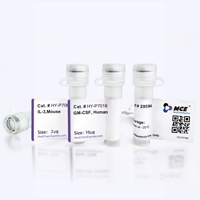
Product Image
Application
in vivo TIM-1 activation; in vitro T cell stimulation/activation; Functional assays; ELISA; Flow


Chemical Information
-
Molecular Weight 150 kDa
-
SMILES
[Anti-Mouse TIM-1/CD365 Antibody (3B3)]
-
Formulation
Please refer to the lot-specific COA for specific buffer information.
-
Storage
Please store the product under the recommended conditions in the Certificate of Analysis.


Purity & Documentation
References
[1]. Umetsu SE, et al. TIM-1 induces T cell activation and inhibits the development of peripheral tolerance. Nat Immunol. 2005 May;6(5):447-54. [Content Brief]
[2]. Tian X, et al. B-cell immune checkpoint TIM-1: a potential target for tumour immunotherapy. Signal Transduct Target Ther. 2023 Oct 20;8(1):389. [Content Brief]
[3]. Xiao S, et al. Differential engagement of Tim-1 during activation can positively or negatively costimulate T cell expansion and effector function. J Exp Med. 2007 Jul 9;204(7):1691-702. [Content Brief]
[4]. Degauque N, et al. Immunostimulatory Tim-1-specific antibody deprograms Tregs and prevents transplant tolerance in mice. J Clin Invest. 2008 Feb;118(2):735-41. [Content Brief]

Calculators
Concentration (start) × Volume (start) = Concentration (final) × Volume (final)


Anti-Mouse TIM-1/CD365 Antibody (3B3) Related Classifications
HY-P990154 Related Classifications
 Powered by Bioz