



Denosumab (anti-TNFSF11)
Based on 3 publication(s) in Google Scholar
Denosumab (anti-TNFSF11) is a human monoclonal antibody that targets the protein RANKL. Denosumab binds to the receptor activator of nuclear factor kappa-B ligand (RANKL) and prevents its binding to the RANK receptor (KD of 0.003 nM for human RANKL). Denosumab promotes proliferation and spermatogenesis. Denosumab prevents bone resorption through inhibition of the NF-κB pathway. Denosumab can be used in bone-related studies.
For research use only. We do not sell to patients.
- Purity : 99.9%
- CAS No.: 615258-40-7
- Molecular Weight:145.16 kDa
-
Storage:
Please store the product under the recommended conditions in the Certificate of Analysis.


To place orders, for customer services and technical support, please contact: MedChemExpress USA
Tel: 609-228-6898 E-mail: [email protected] [email protected]


-
 Biological Activity
-
Chemical Information
- Purity & Documentation
- References
-
 Help & FAQs






Publications Citing Use of MedChemExpress (MCE) Denosumab (anti-TNFSF11)
More Customer Validation & Images

-
Cell Proliferation/Viability Assay
-
Cell Imaging/Staining
-
RT-PCR
-
WB
-
In Vivo Efficacy Study


Biological Activity
Description
Isotype
Human IgG2 kappa
Recommend Isotype Controls
Species Reactivity
Human
IC50 & Target
TNFSF11/RANKL/CD254
In Vitro
Denosumab (0.25-20 μM, 7 days) enhances osteogenic differentiation at physiological concentrations in human mesenchymal stem cells of the jaw bone[4].
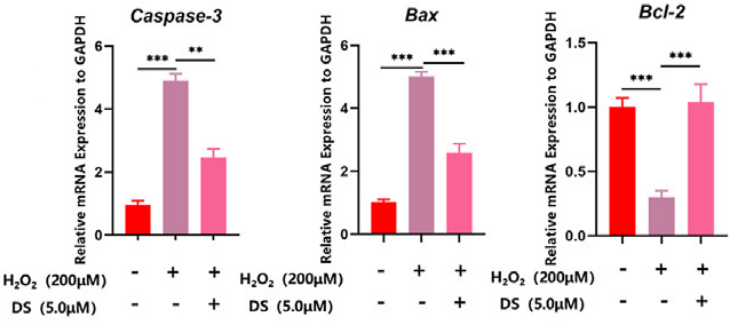
Denosumab (0.1 μM–5 μM) alleviates ROS-induced chondrocytes Apoptosis, with promoting Bcl-2 and suppressing pro-apoptotic genes Bax and caspase-3[5].
Denosumab (5 μM, 5-60 min) suppresses RANKL-induced osteoclastogenesis by inhibiting the NF-κB signaling pathway[5].
Denosumab (0.001-0.1 μg/mL, 24-72 h) significantly increases human β-cell proliferation[6].
MedChemExpress (MCE) has not independently confirmed the accuracy of these methods. They are for reference only.
-
Cell Line:mesenchymal stem cells of the jaw bone
-
Concentration:0.25, 1, 5, 20 μM
-
Incubation Time:7 days
-
Result:Increased ALP activity at 0.25 μM, 1 μM and 5 μM.
Enhanced ALP activity at 1 μM and 5 μM significantly more than 0.25 μM.
Decreased ALP activity at 20 μM.
upregulated the key enzymes of osteogenic differentiation ALP, COL1 and RUNX2 at 0.25 μM.
-
Cell Line:peripheral blood mononuclear cells (PBMCs)
-
Concentration:5 μM
-
Incubation Time:5, 10, 60 min
-
Result:Reversed the increased phosphorylation of IκBα and p65.
had an impact on the phosphorylation of p38.
In Vivo
Denosumab (1 mg/kg, s.c., single) enhances human β-cell proliferation in human islets transplanted under the kidney capsule of male euglycemic NOD/SCID mice[6].
Denosumab (5 mg/kg, s.c., single) increases testis weight, inhibin B, and sperm count in humanized RANKL mice[7].
MedChemExpress (MCE) has not independently confirmed the accuracy of these methods. They are for reference only.
-
Animal Model:mouse DMM model of OA (induced through surgical destabilization of the medial meniscus for 5-week-old male NOD-SCID mice irradiated with a sublethal dose (1.0 Gy) and then injected intravenously with 2 × 10⁴ human CD34+ monocytes)[5]
-
Dosage:10 mg/kg
-
Administration:Subcutaneous injection (s.c.), twice a week, 4 weeks
-
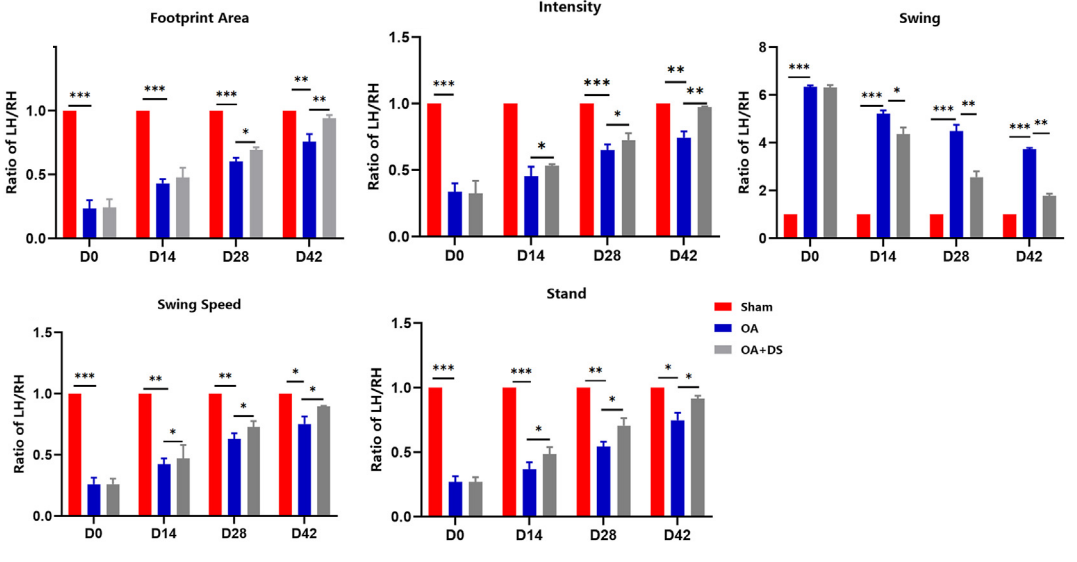
Result:Increased footprint area, increased intensity, reduced swing, increased swing speed and increased stand time.
Inhibited subchondral bone resorption.
Restored articular cartilage and proteoglycan.
Inhibited early hyperactivity of the osteoclasts.
Attenuated chondrocyte apoptosis in degenerated cartilage induced by DMM surgery.
Reduced the enlargement of the lining cell layer, cellular density of synovial stroma, and leukocytic infiltrate.
Clinical Trial
| NCT Number | Sponsor | Condition | Start Date |
Phase

|
|---|---|---|---|---|
| NCT01329991 | Plexxikon| | 2011-05 | PHASE1 |
Gene ID
Accession
Conjugated
Unconjugated
Reconsititution
The product can be reconstituted/diluted with sterile PBS or saline.
Application
ELISA, FACS, Functional assay
Verified Bioactivity
-
 Flow Cytometry analysis of Hela cells labelling TNFSF11 (red) with Denosumab (anti-TNFSF11) (HY-P9958A). Goat Anti-Human IgG (Alexa Fluor 488) (HY-P83776) at a dilution of 1/1000 was used as the secondary antibody. Blue-Human IgG2 kappa (HY-P99002). Black-Unlabelled control, cells without incubation with primary antibody.


Chemical Information
-
CAS No. 615258-40-7
-
Appearance Liquid
-
Molecular Weight 145.16 kDa
-
Color Colorless to light yellow
-
SMILES
[Denosumab (anti-TNFSF11)]
-
Shipping
Shipping with dry ice.
-
Formulation
Please refer to the lot-specific COA for specific buffer information.
-
Storage
Please store the product under the recommended conditions in the Certificate of Analysis.


Publications (3)
-
Journal Impact Factor
-
Most Recent
-
J Clin Invest
Targeting RANKL-independent osteoclastogenesis overcomes denosumab resistance in models of ER+ breast cancer bone metastasis. [Abstract]2026 May 15;136(10):e199285. PMID: 42138086 -
Phytomedicine
Schisandrol B inhibits osteoclastogenesis and mitigates estrogen deficiency-induced bone loss by targeting TRAF6-NOX1 pathway. [Abstract]2026 Jan:150:157669. PMID: 41435606 -
Regen Ther
Denosumab ameliorates osteoarthritis by protecting cartilage against degradation and modulating subchondral bone remodeling. [Abstract]2024 Mar 26:27:181-190. PMID: 38840731
Denosumab (anti-TNFSF11) purchased from MedChemExpress. Usage Cited in: Regen Ther. 2024 Mar 26:27:181-190. [Abstract]
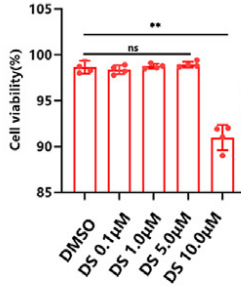
The cytotoxic impact of Denosumab (DS, 0.1-10 μM; 24 h) at different concentrations, evaluated using an MTT assay. The results showed that DS (0.1–5 μM) showed no cytotoxic effect on chondrocytes as compared to the DMSO control. However, the viability of chondrocytes significantly decreased after treatment with 10 μM DS.
Denosumab (anti-TNFSF11) purchased from MedChemExpress. Usage Cited in: Regen Ther. 2024 Mar 26:27:181-190. [Abstract]
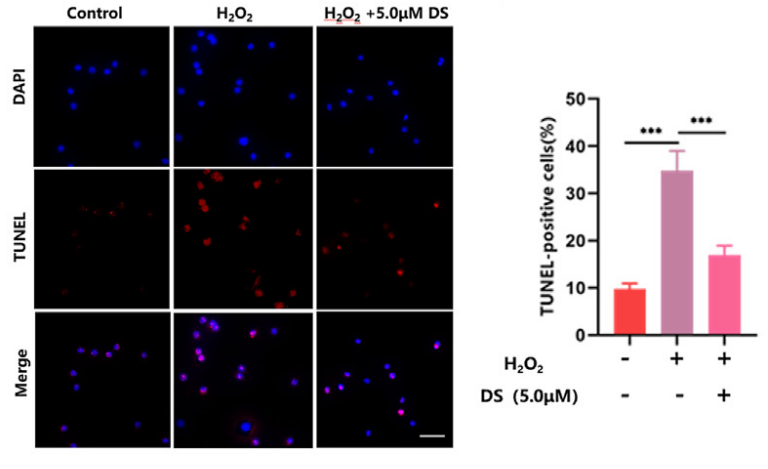
Examples of TUNEL staining and quantification to evaluate cell apoptosis. The results showed that Denosumab (DS, 5 μM; 5 days) exerts an anti-apoptotic effect on chondrocytes.
Denosumab (anti-TNFSF11) purchased from MedChemExpress. Usage Cited in: Regen Ther. 2024 Mar 26:27:181-190. [Abstract]
Denosumab (DS, 5 μM) reversed H₂O₂-induced downregulation of bcl-2 and upregulation of bax and caspase-3 in chondrocytes.
Denosumab (anti-TNFSF11) purchased from MedChemExpress. Usage Cited in: Regen Ther. 2024 Mar 26:27:181-190. [Abstract]
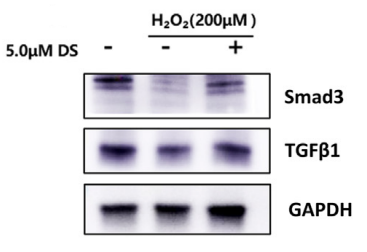
Denosumab (DS, 5 μM) treatment effectively inhibited hypertrophic differentiation of chondrocytes by upregulating the TGFβ1/smad3 pathway.
Denosumab (anti-TNFSF11) purchased from MedChemExpress. Usage Cited in: Regen Ther. 2024 Mar 26:27:181-190. [Abstract]
Denosumab (DS, 10 mg/kg; s.c.; twice a week for 4 weeks) ameliorated pain-related behaviors in mice, shown as increased footprint area, increased intensity, reduced swing, increased swing speed, and increased stand time.


Purity & Documentation
-
Data Sheet (268 KB)
-
SDS (251 KB)
- English - EN (251 KB)
- Français - FR (251 KB)
- Deutsch - DE (251 KB)
- Norwegian - NO (251 KB)
- Español - ES (251 KB)
- Swedish - SV (251 KB)
- Italian - IT (251 KB)
- Korean - KR (251 KB)
- Portuguese - PT (251 KB)
-
Inhibitory Antibodies User Guide (603 KB)
References
[1]. 1. Moen MD, et al. Denosumab: a review of its use in the treatment of postmenopausal osteoporosis. Drugs Aging. 2011;28(1):63-82. [Content Brief]
[2]. 2. Kendler DL, et al. Denosumab in the Treatment of Osteoporosis: 10 Years Later: A Narrative Review. Adv Ther. 2022 Jan;39(1):58-74. [Content Brief]
[3]. 3. Dell'Aquila E, et al. Denosumab for cancer-related bone loss. Expert Opin Biol Ther. 2020 Nov;20(11):1261-1274. [Content Brief]
[4]. 4. Mosch A, et al. Physiological concentrations of denosumab enhance osteogenic differentiation in human mesenchymal stem cells of the jaw bone. Arch Oral Biol. 2019 May;101:23-29. [Content Brief]
[5]. 5. Shangguan L, et al. Denosumab ameliorates osteoarthritis by protecting cartilage against degradation and modulating subchondral bone remodeling. Regen Ther. 2024 Mar 26;27:181-190. [Content Brief]
[6]. 6. Kondegowda NG, et al. Osteoprotegerin and Denosumab Stimulate Human Beta Cell Proliferation through Inhibition of the Receptor Activator of NF-κB Ligand Pathway. Cell Metab. 2015 Jul 7;22(1):77-85. [Content Brief]
[7]. 7. Andreassen CH, et al. Denosumab stimulates spermatogenesis in infertile men with preserved Sertoli cell capacity. Cell Rep Med. 2024 Oct 15;5(10):101783. [Content Brief]

Calculators
Concentration (start) × Volume (start) = Concentration (final) × Volume (final)


Denosumab (anti-TNFSF11) Related Classifications
HY-P9958A Related Classifications
 Powered by Bioz