



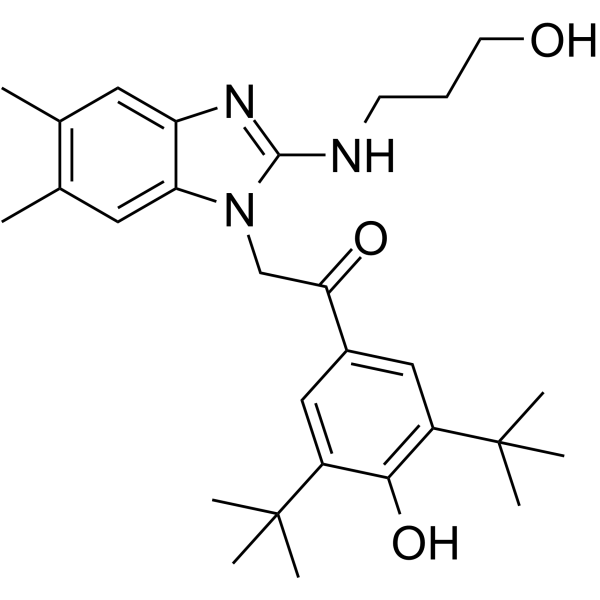
CID-2858522

Based on 1 Customer Validation
CID-2858522 is a highly potent and selective antigen receptor-mediated NF-κB activation inhibitor with an IC50 of 70 nM.
For research use only. We do not sell to patients.
- Purity : 99.78%
- CAS No.: 758679-97-9
- Formula: C28H39N3O3
- Molecular Weight:465.63
-
Storage:Powder -20°C, 3 years , 4°C, 2 years ; In solvent -80°C, 2 years , -20°C, 1 year

To place orders, for customer services and technical support, please contact: MedChemExpress USA
Tel: 609-228-6898 E-mail: [email protected] [email protected]


-
 Biological Activity
-
Chemical Information
-
Solvent & Solubility
- Protocols
- Purity & Documentation
- References
-
 Help & FAQs


-
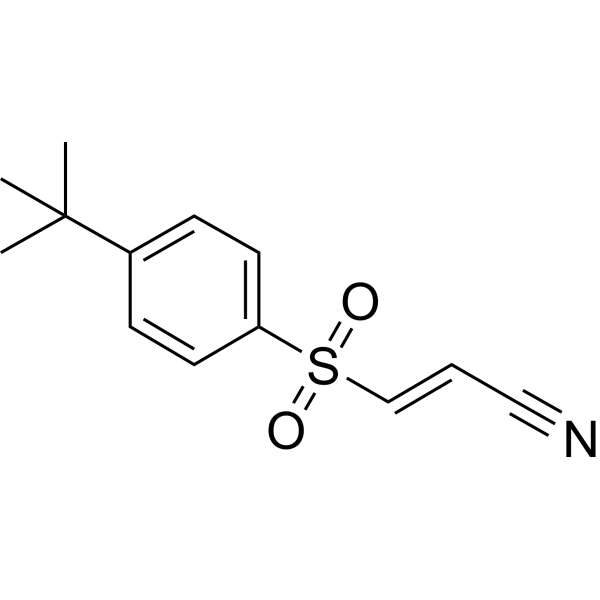
HY-10257
BAY 11-7085NF-κB Activation Inhibitor -
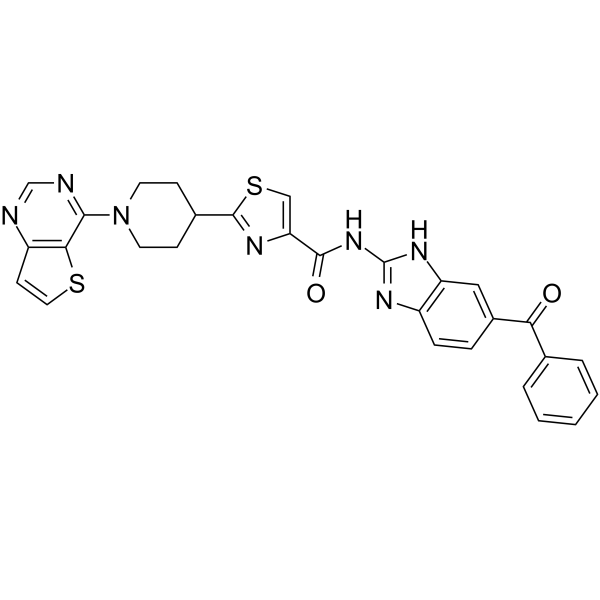
HY-10496
SC75741NF-κB Inhibitor -
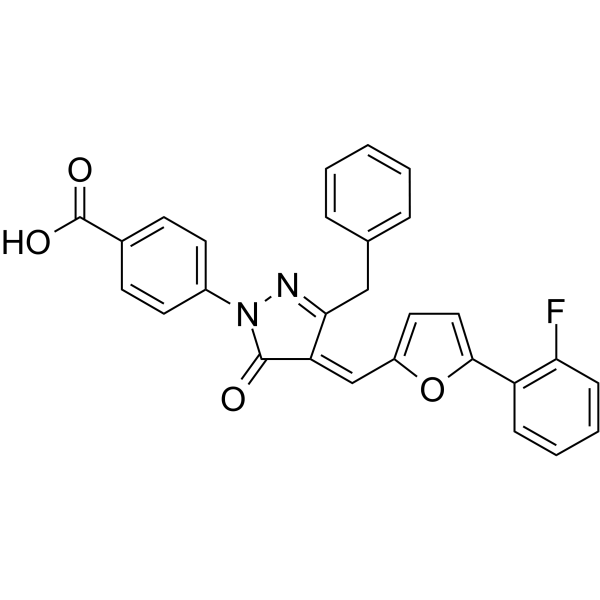
HY-110261
GS143IκBα Ubiquitination Inhibitor -
HY-18738
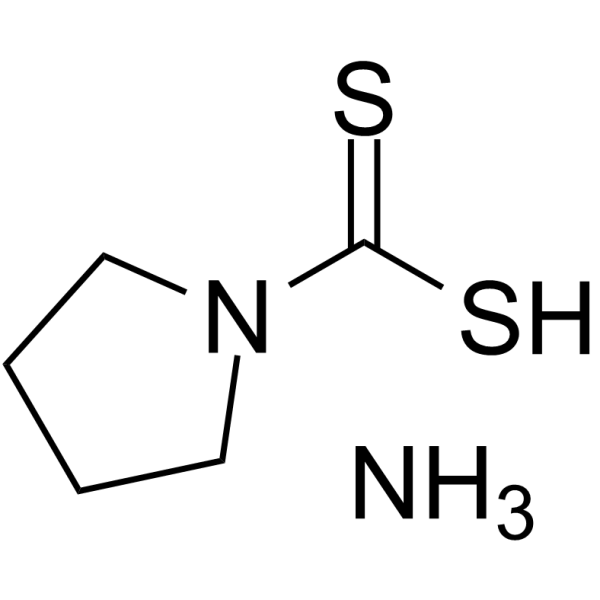
Pyrrolidinedithiocarbamate ammoniumSelective NF-κB Inhibitor -
HY-13982
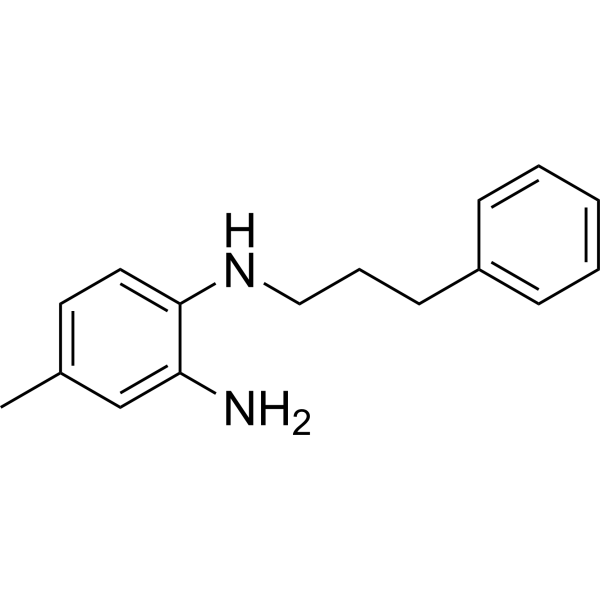
JSH-23NF-κB Inhibitor -
HY-N0191
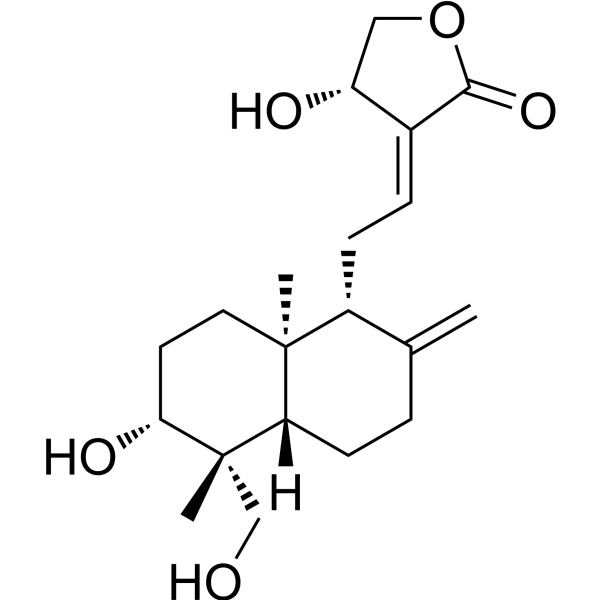
AndrographolideNF-κB Inhibitor -
HY-32735
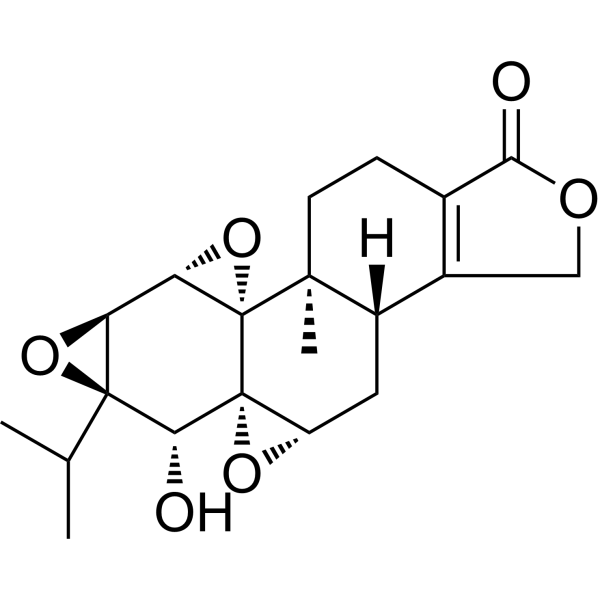
TriptolideImmunosuppressive Agent -
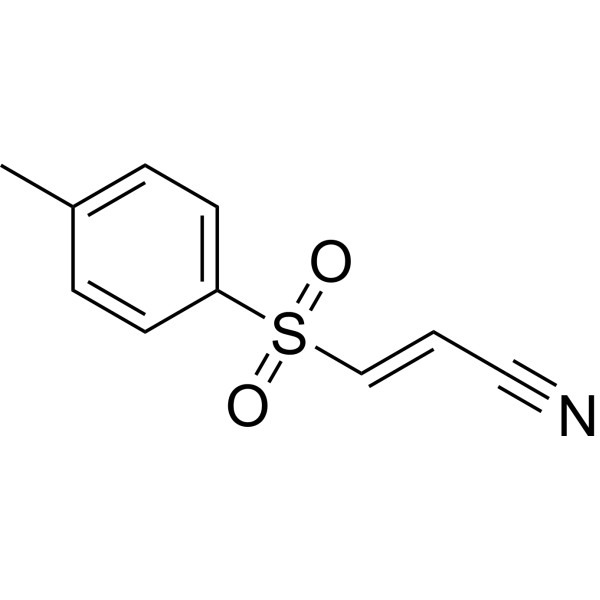
HY-13453
BAY 11-7082IκBα/NF-κB Inhibitor -
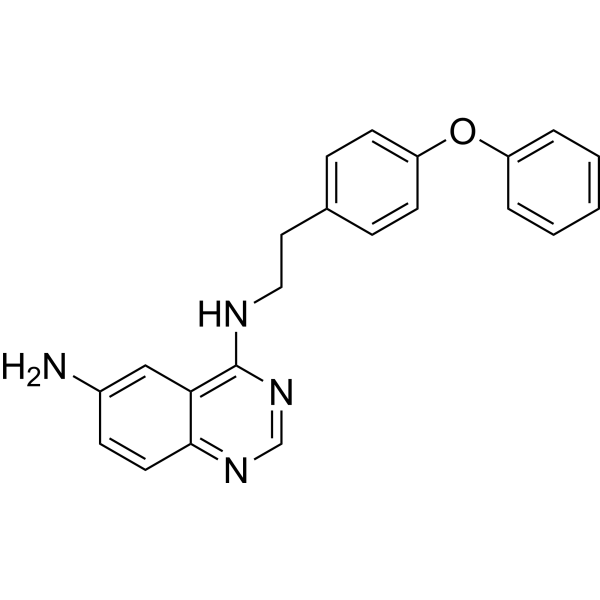
HY-13812
QNZTNF Receptor Inhibitor -
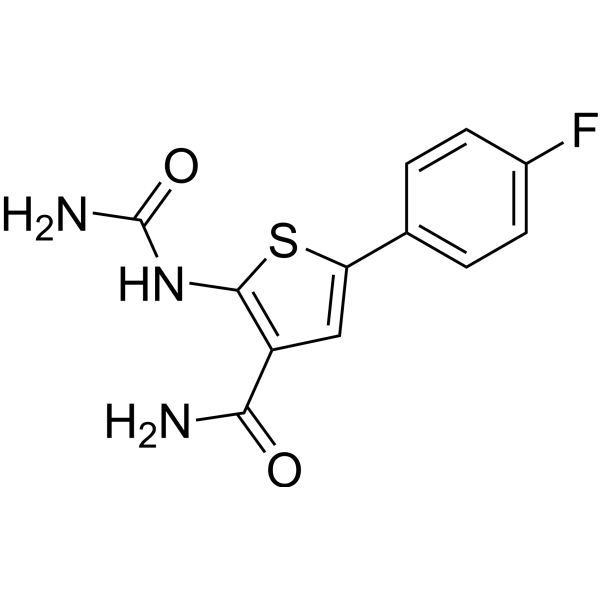
HY-10074
TPCA-1IKK-2 Inhibitor -
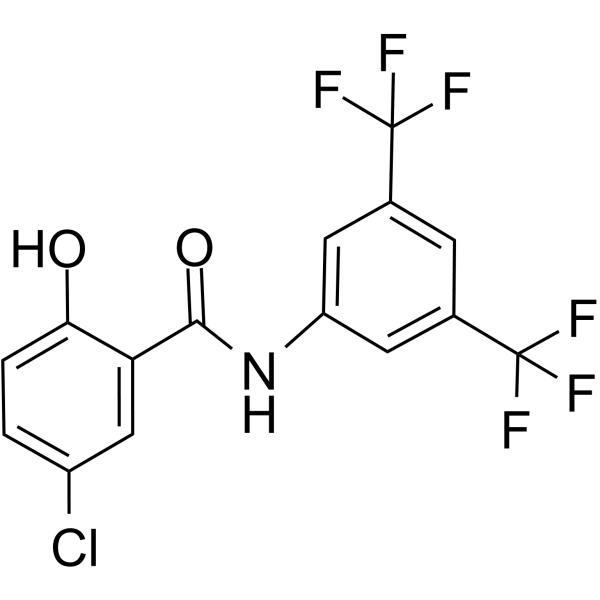
HY-10172
IMD-0354IKKβ Inhibitor -
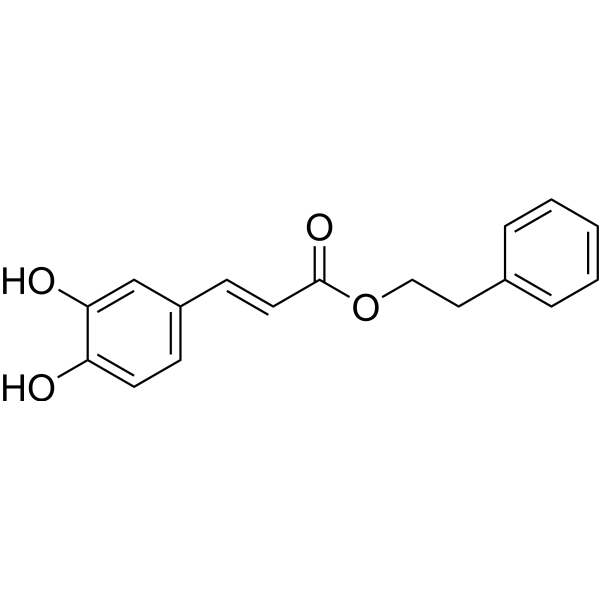
HY-N0274
Caffeic acid phenethyl esterApoptosis Inducer


Biological Activity
Description
IC50 & Target
[1]|
NF-κB 70 nM (IC50) |
Cellular Effect
|
Cell Line

|
Type | Value | Description | References |
|---|---|---|---|---|
| HEK293 | IC50 |
0.07 μM
Compound: 1
|
Inhibition of antigen receptor-mediated NF-kappaB activity in HEK293 cells after 2 hrs by luciferase reporter gene assay
Inhibition of antigen receptor-mediated NF-kappaB activity in HEK293 cells after 2 hrs by luciferase reporter gene assay
|
[PMID: 20153655] |
| HEK293 | IC50 |
0.07 μM
Compound: 1a, CID-2858522
|
Inhibition of NF-kappaB activation transfected in PMA-stimulated HEK293 cells after 16 hrs by luciferase reporter gene assay
Inhibition of NF-kappaB activation transfected in PMA-stimulated HEK293 cells after 16 hrs by luciferase reporter gene assay
|
[PMID: 20481485] |
In Vitro
CID-2858522 (Compound 1) inhibits antigen receptor-mediated NF-κB with an IC50 of 70 nM. CID-2858522 also inhibits testosterone hydroxylase in the presence of human liver microsomes (HLM) and an NADPH generating system with an IC50 of 85 μM[1]. In the HEK293 cell line used for primary screening, CID-2858522 suppresses NF-κB reporter gene activity in a concentration-dependent manner, with IC50 ~70 nM and with maximum inhibition achieved at 0.25-0.5 μM. In contrast, CID-2858522 does not inhibit TNF-induced NF-κB-reporter gene activity at concentrations as high as 4 μM, thus demonstrating selectivity for the NF-κB pathway activated by PMA/Ionomycin. Cell viability assays indicate that CID-2858522 is not toxic to HEK293 cells at concentrations ≤8 μM. CID-2858522 also potently inhibits PMA/Ionomycin-induced NF-κB reporter gene activity in transient transfection assays[2].
MedChemExpress (MCE) has not independently confirmed the accuracy of these methods. They are for reference only.
In Vivo
MedChemExpress (MCE) has not independently confirmed the accuracy of these methods. They are for reference only.


Chemical Information
-
CAS No. 758679-97-9
-
Appearance Solid
-
Molecular Weight 465.63
-
Formula C28H39N3O3
-
Color Off-white to light yellow
-
SMILES
CC1=C(C)C=C2N=C(NCCCO)N(CC(C3=CC(C(C)(C)C)=C(O)C(C(C)(C)C)=C3)=O)C2=C1
-
Shipping
Room temperature in continental US; may vary elsewhere.
-
Storage
Powder -20°C 3 years 4°C 2 years In solvent -80°C 2 years -20°C 1 year


Solvent & Solubility
In Vitro:
DMSO : 12.5 mg/mL (26.85 mM; ultrasonic and warming and heat to 60°C; Hygroscopic DMSO has a significant impact on the solubility of product, please use newly opened DMSO)
Please refer to the solubility information to select the appropriate solvent. Once prepared, please aliquot and store the solution to prevent product inactivation from repeated freeze-thaw cycles.
Storage method and period of stock solution: -80°C, 2 years; -20°C, 1 year. When stored at -80°C, please use it within 2 years. When stored at -20°C, please use it within 1 year.
Please refer to the solubility information to select the appropriate solvent. Once prepared, please aliquot and store the solution to prevent product inactivation from repeated freeze-thaw cycles.
Storage method and period of stock solution: -80°C, 2 years; -20°C, 1 year. When stored at -80°C, please use it within 2 years. When stored at -20°C, please use it within 1 year.
Concentration (start) × Volume (start) = Concentration (final) × Volume (final)
In Vivo:
Select the appropriate dissolution method based on your experimental animal and administration route.
- For the following dissolution methods, please ensure to first prepare a clear stock solution using an In Vitro approach and then sequentially add co-solvents:
- To ensure reliable experimental results, the clarified stock solution can be appropriately stored based on storage conditions. As for the working solution for In Vivo experiments, it is recommended to prepare freshly and use it on the same day.
- The percentages shown for the solvents indicate their volumetric ratio in the final prepared solution. If precipitation or phase separation occurs during preparation, heat and/or sonication can be used to aid dissolution.
Add each solvent one by one: 10% DMSO 40% PEG300 5% Tween-80 45% Saline
Solubility: ≥ 2.5 mg/mL (5.37 mM); Clear solution
This protocol yields a clear solution of ≥ 2.5 mg/mL (saturation unknown).
Taking 1 mL working solution as an example, add 100 μL DMSO stock solution (25.0 mg/mL) to 400 μL PEG300, and mix evenly; then add 50 μL Tween-80 and mix evenly; then add 450 μL Saline to adjust the volume to 1 mL.
Preparation of Saline: Dissolve 0.9 g sodium chloride in ddH₂O and dilute to 100 mL to obtain a clear Saline solution.
Add each solvent one by one: 10% DMSO 90% (20% SBE-β-CD in Saline)
Solubility: 2.5 mg/mL (5.37 mM); Suspended solution; Need ultrasonic
This protocol yields a suspended solution of 2.5 mg/mL. Suspended solution can be used for oral and intraperitoneal injection.
Taking 1 mL working solution as an example, add 100 μL DMSO stock solution (25.0 mg/mL) to 900 μL 20% SBE-β-CD in Saline, and mix evenly.
Preparation of 20% SBE-β-CD in Saline (4°C, storage for one week): 2 g SBE-β-CD powder is dissolved in 10 mL Saline, completely dissolve until clear.
In Vivo Dissolution Calculator
Please enter the basic information of animal experiments:
-
-
-
-
Recommended: Prepare an additional quantity of animals to account for potential losses during experiments.
Please enter your animal formula composition:
-
%DMSO +
Recommended: Keep the proportion of DMSO in working solution below 2% if your animal is weak.
-
%+
-
+%Tween-80 + +
-
%Saline +
The co-solvents required include: DMSO, . All of co-solvents are available by MedChemExpress (MCE). , Tween 80. All of co-solvents are available by MedChemExpress (MCE).
Working solution concentration: 0.22 mg/mL
Method for preparing stock solution: mg drug dissolved in μL DMSO. Stock solution concentration: mg/mL.
1. Take μL DMSO stock solution;
2. Add μL .
μL , mix evenly;
3. Then add μL Tween 80, mix evenly;
4. Then add μL
Please ensure that the stock solution in the first step is dissolved to a clear state, and add co-solvents in sequence. You can use ultrasonic heating (ultrasonic cleaner, recommended frequency 20-40 kHz), vortexing, etc. to assist dissolution.


Purity & Documentation
-
Data Sheet (281 KB)
-
SDS (419 KB)
- English - EN (419 KB)
- Français - FR (419 KB)
- Deutsch - DE (419 KB)
- Norwegian - NO (419 KB)
- Español - ES (419 KB)
- Swedish - SV (419 KB)
- Italian - IT (419 KB)
- Korean - KR (419 KB)
- Portuguese - PT (419 KB)
-
Handling Instructions (2659 KB)
References
[1]. Okolotowicz KJ, et al. Selective benzimidazole inhibitors of the antigen receptor-mediated NF-kappaB activationpathway. Bioorg Med Chem. 2010 Mar 1;18(5):1918-24. [Content Brief]
[2]. Peddibhotla S, et al. Inhibition of protein kinase C-driven nuclear factor-kappaB activation: synthesis, structure-activity relationship, and pharmacological profiling of pathway specific benzimidazole probe molecules. J Med Chem. 2010 Jun 24;53(12):4793-7. [Content Brief]
[3]. Shi R, et al. Chemical biology strategy reveals pathway-selective inhibitor of NF-kappaB activation induced by protein kinase C. ACS Chem Biol. 2010 Mar 19;5(3):287-99. [Content Brief]


Complete Stock Solution Preparation Table
Please refer to the solubility information to select the appropriate solvent. Once prepared, please aliquot and store the solution to prevent product inactivation from repeated freeze-thaw cycles.
Storage method and period of stock solution: -80°C, 2 years; -20°C, 1 year. When stored at -80°C, please use it within 2 years. When stored at -20°C, please use it within 1 year.
| Optional Solvent | Concentration Solvent Mass | 1 mg | 5 mg | 10 mg | 25 mg |
|---|---|---|---|---|---|
| DMSO | 1 mM | 2.1476 mL | 10.7381 mL | 21.4763 mL | 53.6907 mL |
| 5 mM | 0.4295 mL | 2.1476 mL | 4.2953 mL | 10.7381 mL | |
| 10 mM | 0.2148 mL | 1.0738 mL | 2.1476 mL | 5.3691 mL | |
| 15 mM | 0.1432 mL | 0.7159 mL | 1.4318 mL | 3.5794 mL | |
| 20 mM | 0.1074 mL | 0.5369 mL | 1.0738 mL | 2.6845 mL | |
| 25 mM | 0.0859 mL | 0.4295 mL | 0.8591 mL | 2.1476 mL |


CID-2858522 Related Classifications
HY-15530 Related Classifications
 Powered by Bioz