



Flumethasone
Based on 1 publication(s) in Google Scholar
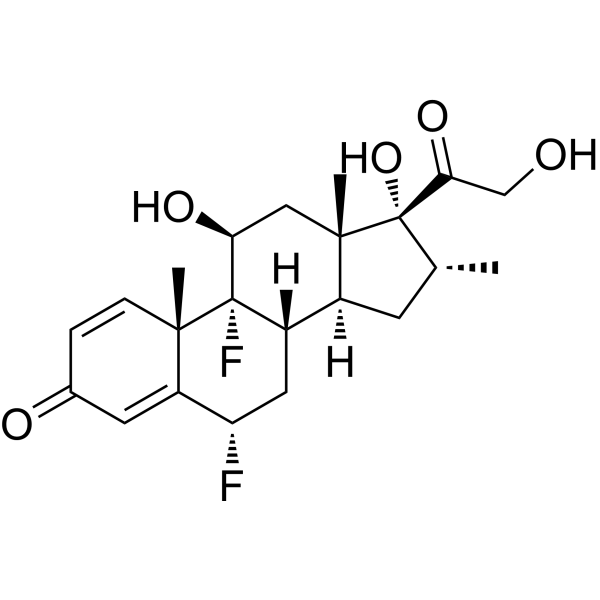
Flumethasone (Flumetasone) is an orally active, high selective and potent glucocorticoid receptor (GR) agonist. Flumethasone activates GR to inhibit nuclear factor kappa B (NF-κB)-mediated pro-inflammatory cytokine production (TNF-α, IL-1β) and promotes anti-inflammatory gene expression (IL-10), while also regulating metabolic enzyme activity (tyrosine aminotransferase induction). Flumethasone is promising for research of inflammatory diseases, cancer, and endocrine regulation.
For research use only. We do not sell to patients.
- Purity : 99.84%
- CAS No.: 2135-17-3
- Formula: C22H28F2O5
- Molecular Weight:410.45
-
Storage:Powder -20°C, 3 years , 4°C, 2 years ; In solvent -80°C, 2 years , -20°C, 1 year

To place orders, for customer services and technical support, please contact: MedChemExpress USA
Tel: 609-228-6898 E-mail: [email protected] [email protected]


-
 Biological Activity
-
Chemical Information
-
Solvent & Solubility
- Protocols
- Purity & Documentation
- References
-
 Help & FAQs


-
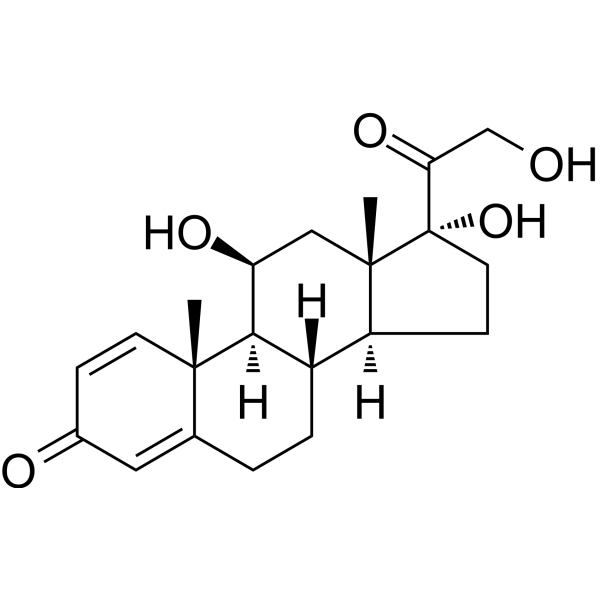
HY-17463
PrednisoloneGlucocorticoid -
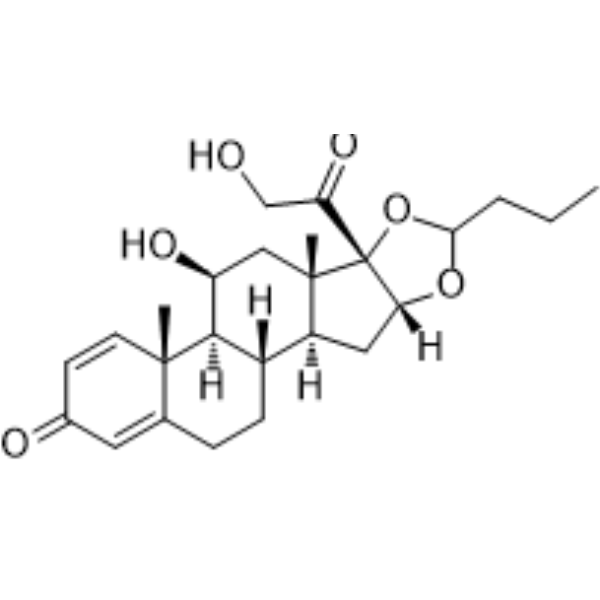
HY-13580
BudesonideGlucocorticoid Receptor Agonist -
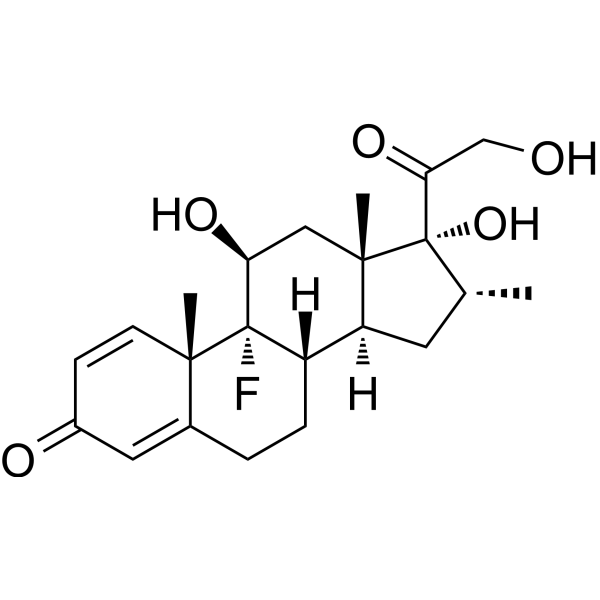
HY-14648
DexamethasoneGR Agonist -
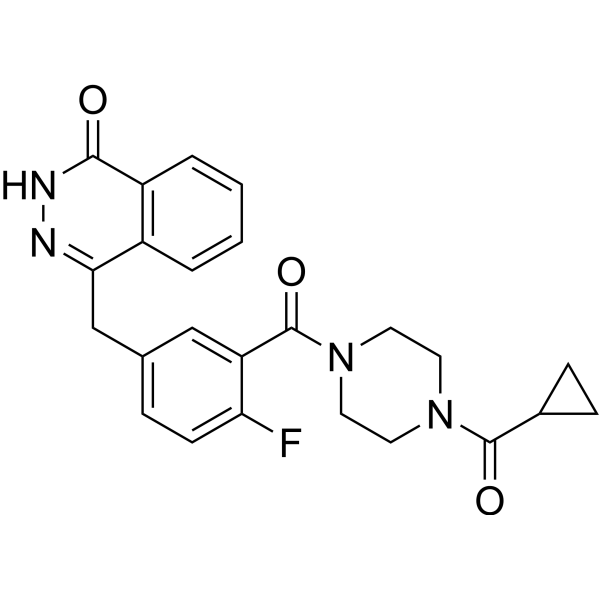
HY-10162
OlaparibPARP Inhibitor -
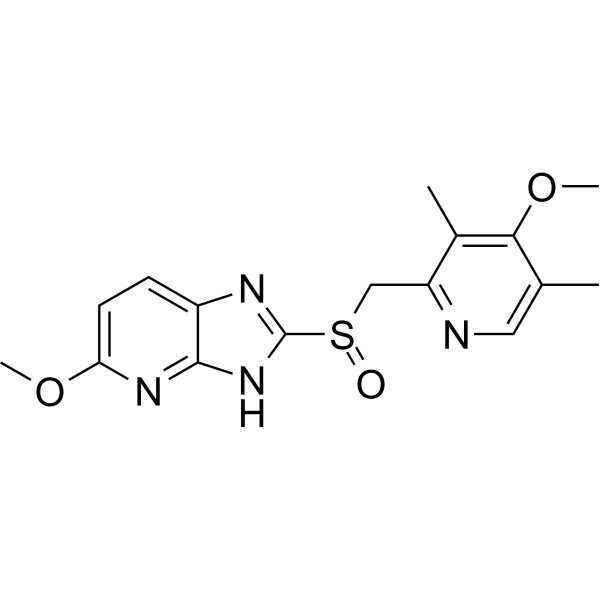
HY-17421
TenatoprazoleProton Pump Inhibitor -
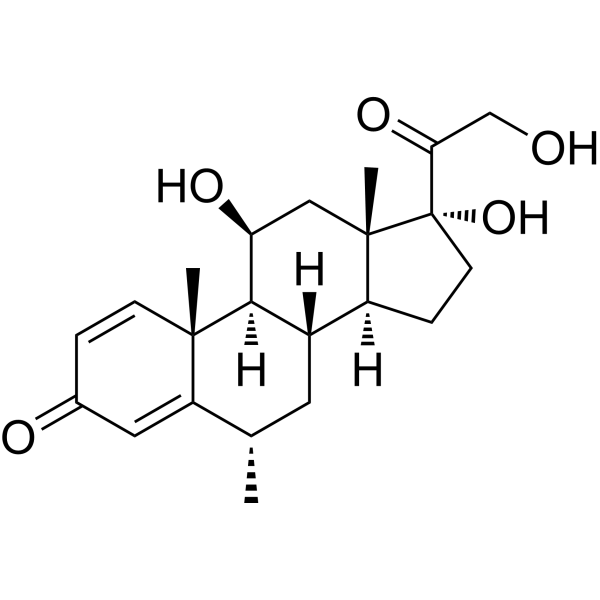
HY-B0260
MethylprednisoloneGlucocorticoid -
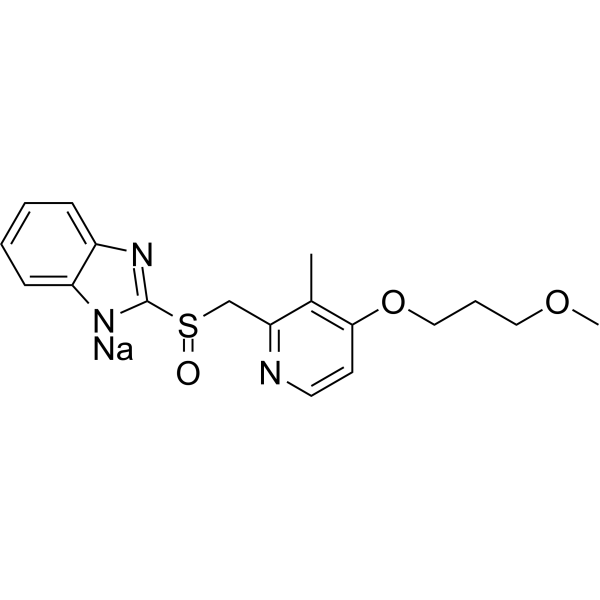
HY-B0656A
Rabeprazole sodiumPump Inhibitor -
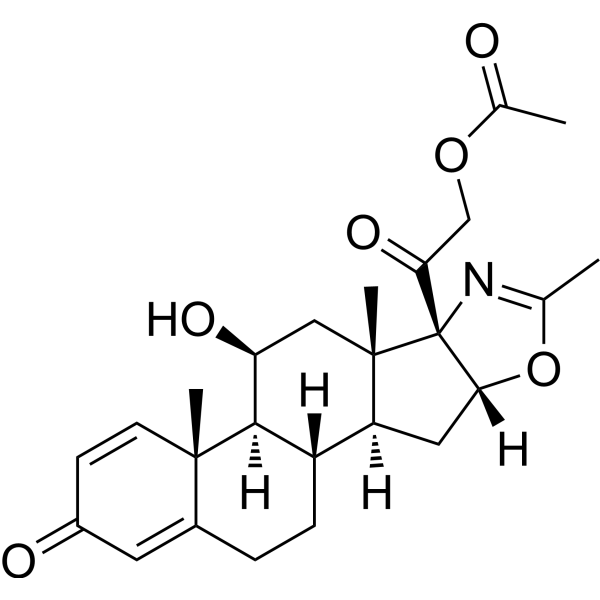
HY-13609
DeflazacortGlucocorticoid -
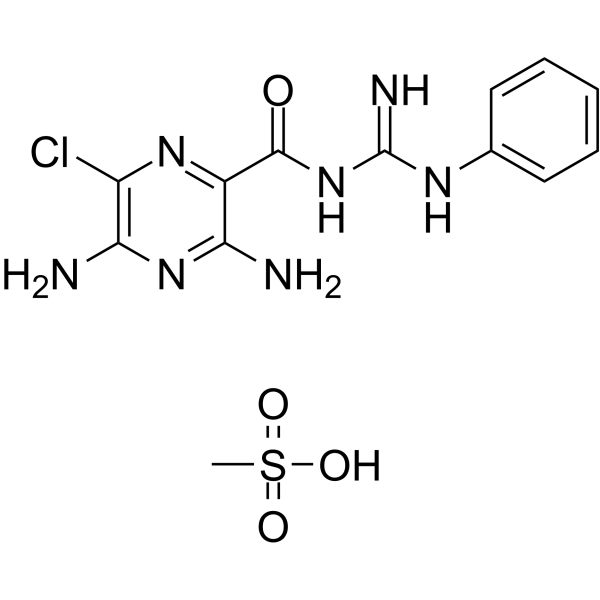
HY-108464A
Phenamil methanesulfonateENaC Inhibitor -

HY-B1051R
Flumethasone (Standard)Corticosteroid -
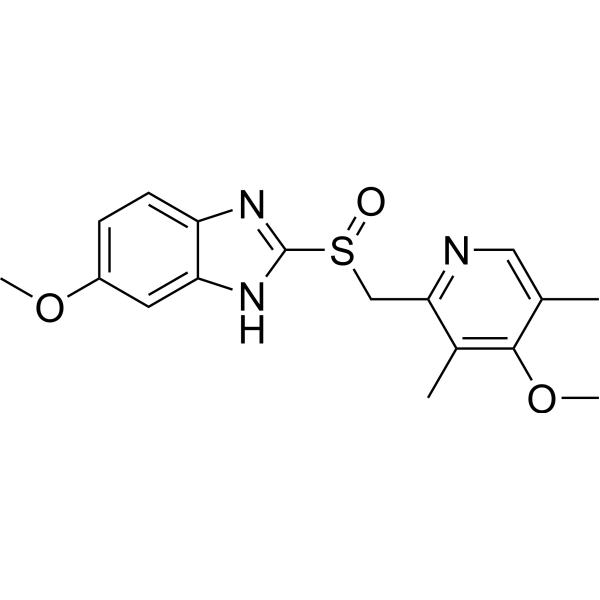
HY-B0113
OmeprazoleH+,K+-ATPase Inhibitor -
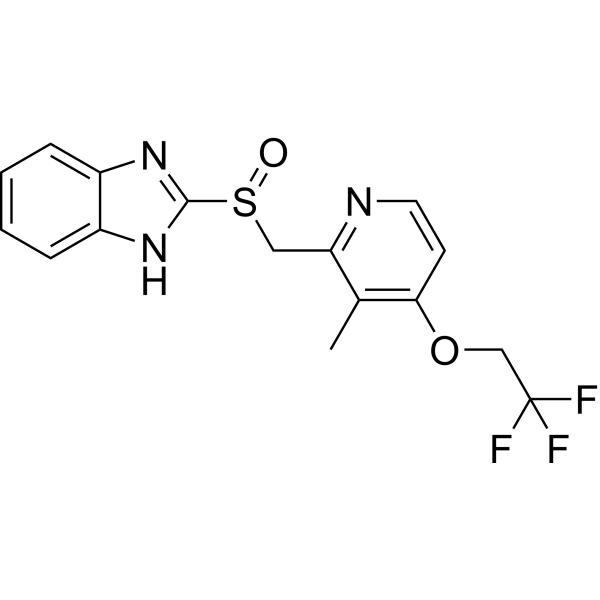
HY-13662
LansoprazoleProton Pump Inhibitor
Publications Citing Use of MedChemExpress (MCE) Flumethasone
More

Biological Activity
Description
In Vitro
Flumethasone (0-200 nM; 0-24 h) reduces Nrf2 protein levels through glucocorticoid receptor (GCR)-dependent proteasomal degradation in A549 and H460 cells[1].
Flumethasone (100 nM; 4 h) enhances ubiquitination of Nrf2 in A549 and H460 cells, an effect blocked by GCR knockdown[1].
MedChemExpress (MCE) has not independently confirmed the accuracy of these methods. They are for reference only.
-
Cell Line:A549 and H460 cells
-
Concentration:50 nM, 100 nM, 200 nM
-
Incubation Time:0-24 h
-
Result:Decreased Nrf2 protein levels in a concentration-dependent manner, with significant reduction observed at 100 nM and 200 nM.
-
Cell Line:A549 and H460 cells
-
Concentration:100 nM
-
Incubation Time:4 h
-
Result:Promoted Nrf2 ubiquitination, and this effect was abrogated in GCR-knockdown cells.
In Vivo
MedChemExpress (MCE) has not independently confirmed the accuracy of these methods. They are for reference only.
-
Animal Model:Adult male C57BL/6J mice and C57BL/6J-ob obese mutant mice[2]
-
Dosage:10-8 to 10-6 moles/kg
-
Administration:i.p., a single dose
-
Result:Induced a 10-fold increase in liver TA activity at 4 hr, significantly higher than hydrocortisone derivatives in adrenalectomized C57BL/6J mice.


Chemical Information
-
CAS No. 2135-17-3
-
Appearance Solid
-
Molecular Weight 410.45
-
Formula C22H28F2O5
-
Color White to off-white
-
SMILES
C[C@@]12[C@](C(CO)=O)(O)[C@H](C)C[C@@]1([H])[C@]3([H])C[C@H](F)C4=CC(C=C[C@]4(C)[C@@]3(F)[C@@H](O)C2)=O
-
Synonyms
Flumetasone
-
Shipping
Room temperature in continental US; may vary elsewhere.
-
Storage
Powder -20°C 3 years 4°C 2 years In solvent -80°C 2 years -20°C 1 year


Publications (1)
-
Journal Impact Factor
-
Most Recent
-
Drug Test Anal
High-throughput liquid chromatography tandem mass spectrometry assay as initial testing procedure for analysis of total urinary fraction. [Abstract]2021 Feb;13(2):283-298. PMID: 32852861


Solvent & Solubility
In Vitro:
DMSO : 100 mg/mL (243.64 mM; Need ultrasonic; Hygroscopic DMSO has a significant impact on the solubility of product, please use newly opened DMSO)
Please refer to the solubility information to select the appropriate solvent. Once prepared, please aliquot and store the solution to prevent product inactivation from repeated freeze-thaw cycles.
Storage method and period of stock solution: -80°C, 2 years; -20°C, 1 year. When stored at -80°C, please use it within 2 years. When stored at -20°C, please use it within 1 year.
Please refer to the solubility information to select the appropriate solvent. Once prepared, please aliquot and store the solution to prevent product inactivation from repeated freeze-thaw cycles.
Storage method and period of stock solution: -80°C, 2 years; -20°C, 1 year. When stored at -80°C, please use it within 2 years. When stored at -20°C, please use it within 1 year.
Concentration (start) × Volume (start) = Concentration (final) × Volume (final)
In Vivo:
Select the appropriate dissolution method based on your experimental animal and administration route.
- For the following dissolution methods, please ensure to first prepare a clear stock solution using an In Vitro approach and then sequentially add co-solvents:
- To ensure reliable experimental results, the clarified stock solution can be appropriately stored based on storage conditions. As for the working solution for In Vivo experiments, it is recommended to prepare freshly and use it on the same day.
- The percentages shown for the solvents indicate their volumetric ratio in the final prepared solution. If precipitation or phase separation occurs during preparation, heat and/or sonication can be used to aid dissolution.
Add each solvent one by one: 10% DMSO 40% PEG300 5% Tween-80 45% Saline
Solubility: ≥ 2.5 mg/mL (6.09 mM); Clear solution
This protocol yields a clear solution of ≥ 2.5 mg/mL (saturation unknown).
Taking 1 mL working solution as an example, add 100 μL DMSO stock solution (25.0 mg/mL) to 400 μL PEG300, and mix evenly; then add 50 μL Tween-80 and mix evenly; then add 450 μL Saline to adjust the volume to 1 mL.
Preparation of Saline: Dissolve 0.9 g sodium chloride in ddH₂O and dilute to 100 mL to obtain a clear Saline solution.
Add each solvent one by one: 10% DMSO 90% (20% SBE-β-CD in Saline)
Solubility: ≥ 2.5 mg/mL (6.09 mM); Clear solution
This protocol yields a clear solution of ≥ 2.5 mg/mL (saturation unknown).
Taking 1 mL working solution as an example, add 100 μL DMSO stock solution (25.0 mg/mL) to 900 μL 20% SBE-β-CD in Saline, and mix evenly.
Preparation of 20% SBE-β-CD in Saline (4°C, storage for one week): 2 g SBE-β-CD powder is dissolved in 10 mL Saline, completely dissolve until clear.
In Vivo Dissolution Calculator
Please enter the basic information of animal experiments:
-
-
-
-
Recommended: Prepare an additional quantity of animals to account for potential losses during experiments.
Please enter your animal formula composition:
-
%DMSO +
Recommended: Keep the proportion of DMSO in working solution below 2% if your animal is weak.
-
%+
-
+%Tween-80 + +
-
%Saline +
The co-solvents required include: DMSO, . All of co-solvents are available by MedChemExpress (MCE). , Tween 80. All of co-solvents are available by MedChemExpress (MCE).
Working solution concentration: 0.22 mg/mL
Method for preparing stock solution: mg drug dissolved in μL DMSO. Stock solution concentration: mg/mL.
1. Take μL DMSO stock solution;
2. Add μL .
μL , mix evenly;
3. Then add μL Tween 80, mix evenly;
4. Then add μL
Please ensure that the stock solution in the first step is dissolved to a clear state, and add co-solvents in sequence. You can use ultrasonic heating (ultrasonic cleaner, recommended frequency 20-40 kHz), vortexing, etc. to assist dissolution.


Purity & Documentation
-
Data Sheet (282 KB)
-
SDS (418 KB)
- English - EN (418 KB)
- Français - FR (418 KB)
- Deutsch - DE (418 KB)
- Norwegian - NO (418 KB)
- Español - ES (418 KB)
- Swedish - SV (418 KB)
- Italian - IT (418 KB)
- Korean - KR (418 KB)
- Portuguese - PT (418 KB)
-
Handling Instructions (2659 KB)
References
[1]. Zhou Y, et al. Flumethasone enhances the efficacy of chemotherapeutic drugs in lung cancer by inhibiting Nrf2 signaling pathway. Cancer Lett. 2020 Apr 1;474:94-105. [Content Brief]
[2]. Blake RL. Flumethasone induction of liver tyrosine aminotransferase activity in inbred strains and obese mutant mice. Biochem Pharmacol. 1970 May;19(5):1803-15. [Content Brief]
[3]. Bednarek D, et al. The effect of steroidal and non-steroidal anti-inflammatory drugs on the cellular immunity of calves with experimentally-induced local lung inflammation. Vet Immunol Immunopathol. 1999 Oct 1;71(1):1-15. [Content Brief]
[4]. Willi RA, et al. Environmental glucocorticoids corticosterone, betamethasone and flumethasone induce more potent physiological than transcriptional effects in zebrafish embryos. Sci Total Environ. 2019 Jul 1;672:183-191. [Content Brief]


Complete Stock Solution Preparation Table
Please refer to the solubility information to select the appropriate solvent. Once prepared, please aliquot and store the solution to prevent product inactivation from repeated freeze-thaw cycles.
Storage method and period of stock solution: -80°C, 2 years; -20°C, 1 year. When stored at -80°C, please use it within 2 years. When stored at -20°C, please use it within 1 year.
| Optional Solvent | Concentration Solvent Mass | 1 mg | 5 mg | 10 mg | 25 mg |
|---|---|---|---|---|---|
| DMSO | 1 mM | 2.4364 mL | 12.1818 mL | 24.3635 mL | 60.9088 mL |
| 5 mM | 0.4873 mL | 2.4364 mL | 4.8727 mL | 12.1818 mL | |
| 10 mM | 0.2436 mL | 1.2182 mL | 2.4364 mL | 6.0909 mL | |
| 15 mM | 0.1624 mL | 0.8121 mL | 1.6242 mL | 4.0606 mL | |
| 20 mM | 0.1218 mL | 0.6091 mL | 1.2182 mL | 3.0454 mL | |
| 25 mM | 0.0975 mL | 0.4873 mL | 0.9745 mL | 2.4364 mL | |
| 30 mM | 0.0812 mL | 0.4061 mL | 0.8121 mL | 2.0303 mL | |
| 40 mM | 0.0609 mL | 0.3045 mL | 0.6091 mL | 1.5227 mL | |
| 50 mM | 0.0487 mL | 0.2436 mL | 0.4873 mL | 1.2182 mL | |
| 60 mM | 0.0406 mL | 0.2030 mL | 0.4061 mL | 1.0151 mL | |
| 80 mM | 0.0305 mL | 0.1523 mL | 0.3045 mL | 0.7614 mL | |
| 100 mM | 0.0244 mL | 0.1218 mL | 0.2436 mL | 0.6091 mL |


Flumethasone Related Classifications
HY-B1051 Related Classifications
 Powered by Bioz