Search Result
Results for "
AChE+Inhibitors
" in MedChemExpress (MCE) Product Catalog:
24
Isotope-Labeled Compounds
| Cat. No. |
Product Name |
Target |
Research Areas |
Chemical Structure |
-
- HY-14566
-
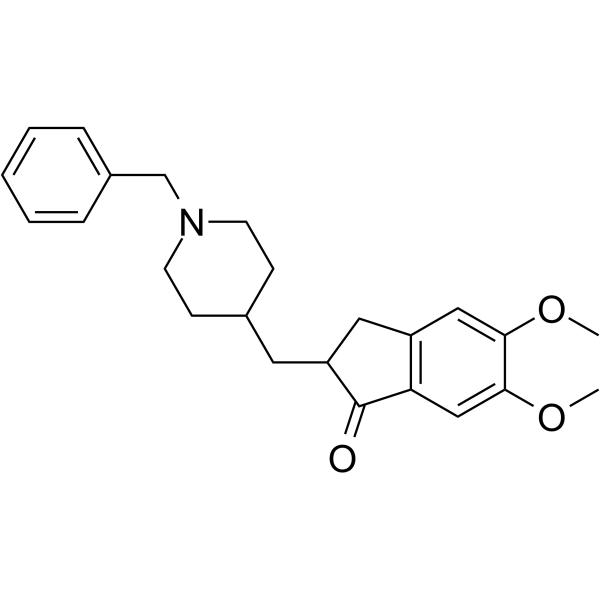
Donepezil
Maximum Cited Publications
24 Publications Verification
E2020 free base
|
Cholinesterase (ChE)
|
Neurological Disease
Cancer
|
|
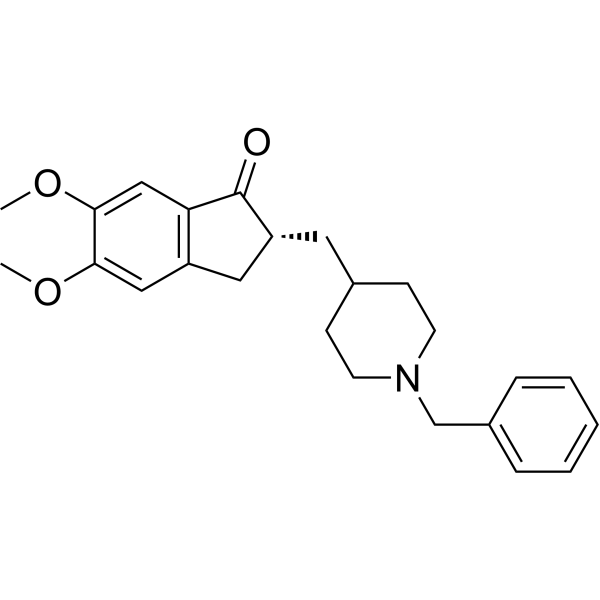
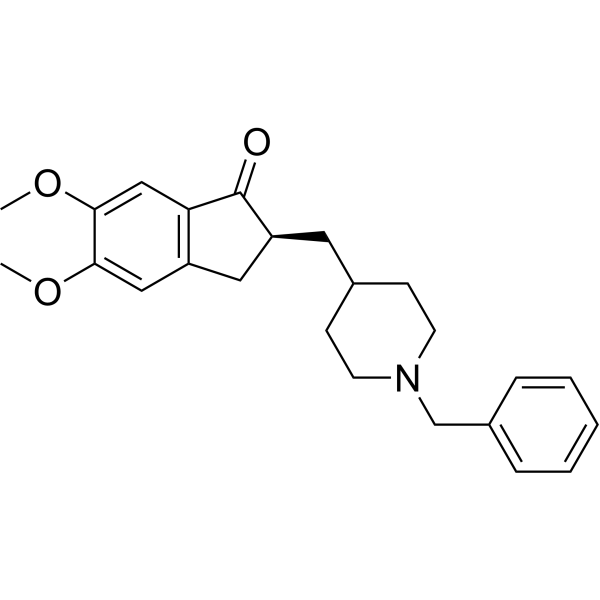
Donepezil (E2020 free base) is a specific and potent AChE inhibitor with IC50s of 8.12 nM and 11.6 nM for bovine AChE and human AChE, respectively .
|
-
-
- HY-B0034
-
|
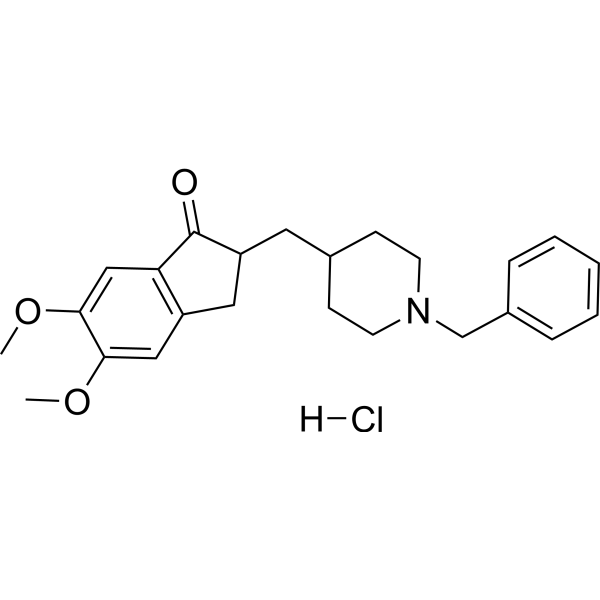
E2020
|
Cholinesterase (ChE)
|
Neurological Disease
Cancer
|
|
Donepezil Hydrochloride (E2020) is a reversible, selective AChE inhibitor with an IC50 of 6.7 nM for AChE activity. Donepezil shows high selectivity for AChE over BuChE . Donepezil exhibits neuroprotective effect on Aβ42 neurotoxicity .
|
-
-
- HY-76299
-
-
-
- HY-W017423
-
-
-
- HY-75247
-
-
-
- HY-B0832
-
-
-
- HY-N4261
-
-
-
- HY-76299R
-
-

-
- HY-N1474
-
|
|
Cholinesterase (ChE)
|
Infection
Inflammation/Immunology
Cancer
|
|
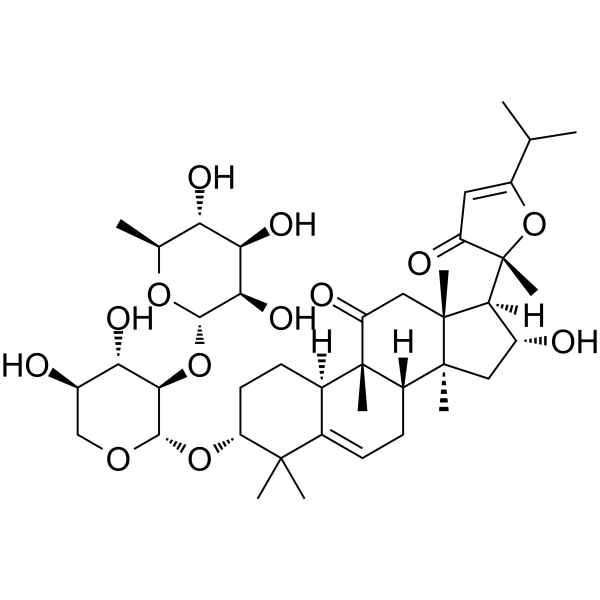
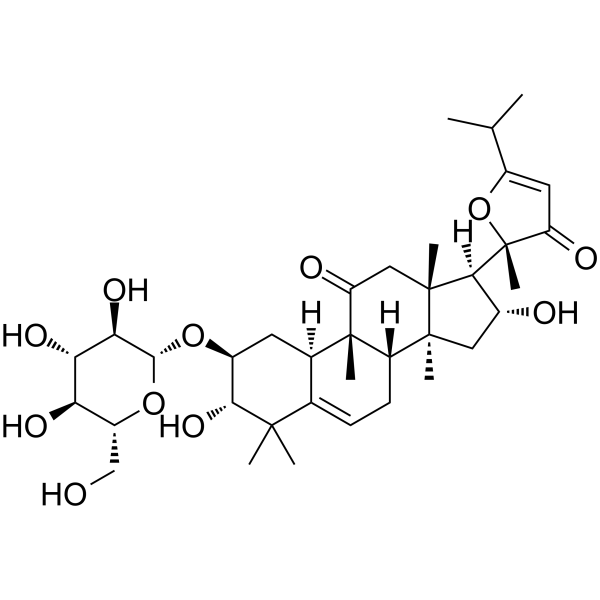
Picfeltarraenin IA, a triterpenoid obtained from Picriafel-terrae Lour (P.fel-terrae), is an acetylcholinesterase (AChE) inhibitor. Picfeltarraenin IA can be used for the treatment of herpes infections, cancer and inflammation .
|
-
-
- HY-116792
-
-
-
- HY-I0020
-
|
(-)-Narwedine; Narwedin
|
Cholinesterase (ChE)
|
Neurological Disease
|
|
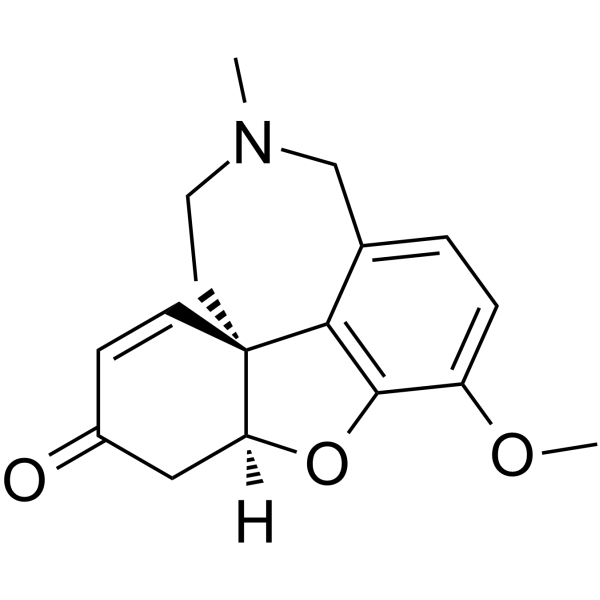
Galanthaminone (Narwedin) is a competitive and reversible cholinesterase (AChE) inhibitor; is used for the treatment of mild to moderate Alzheimer's disease and various other memory impairments.
|
-
-
- HY-126765
-
-
-
- HY-N2211
-
|
|
Cholinesterase (ChE)
|
Infection
Inflammation/Immunology
Cancer
|
|
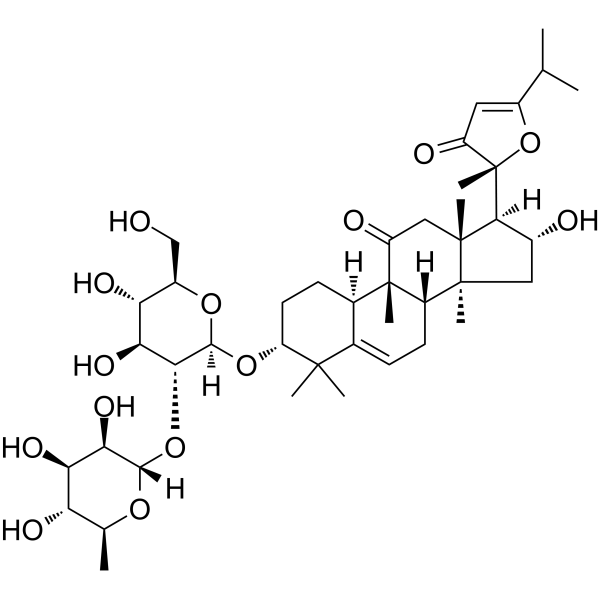
Picfeltarraenin IB, a triterpenoid obtained from Picriafel-terrae Lour (P.fel-terrae), is an acetylcholinesterase (AChE) inhibitor. Picfeltarraenin IB can be used for the treatment of herpes infections, cancer and inflammation .
|
-
-
- HY-W009431
-
-

-
- HY-136838
-
-
-
- HY-B0830
-
-
-
- HY-B0832R
-
|
|
Reference Standards
Cholinesterase (ChE)
Insecticide
|
Neurological Disease
|
|
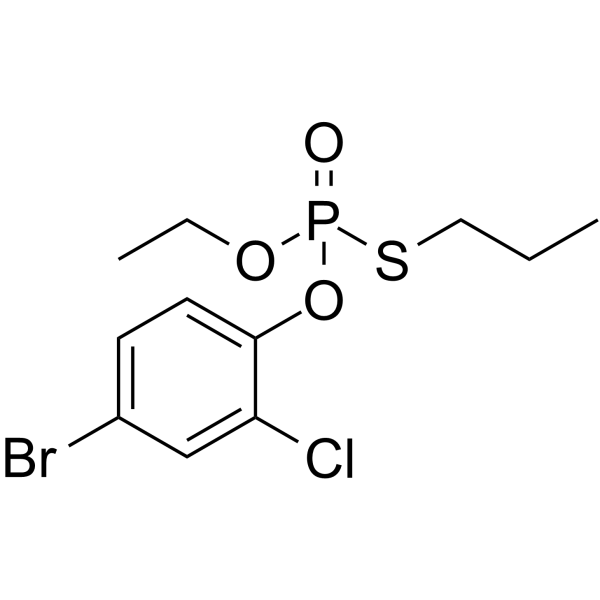
Profenofos (Standard) is the analytical standard of Profenofos. This product is intended for research and analytical applications. Profenofos is an insecticida used on field crops, vegetables, and fruit crops. Profenofos is an acetylcholinesterase (AChE) inhibitor, with neurotoxicity .
|
-

-
- HY-116026
-
-
-
- HY-118165
-
-
-
- HY-134137
-
-

-
- HY-14566A
-
-
-
- HY-W077226
-
-
-
- HY-106440
-
|
|
Cholinesterase (ChE)
|
Neurological Disease
|
|
Zifrosilone is an orally active acetylcholinesterase (AChE) inhibitor with a mean maximum inhibition of 20.9% at 10 mg. Zifrosilone can be used for the research of neurological disease .
|
-

-
- HY-76299S
-
-
-
- HY-119419
-
-
-
- HY-N2043
-
|
|
Cholinesterase (ChE)
|
Neurological Disease
|
|
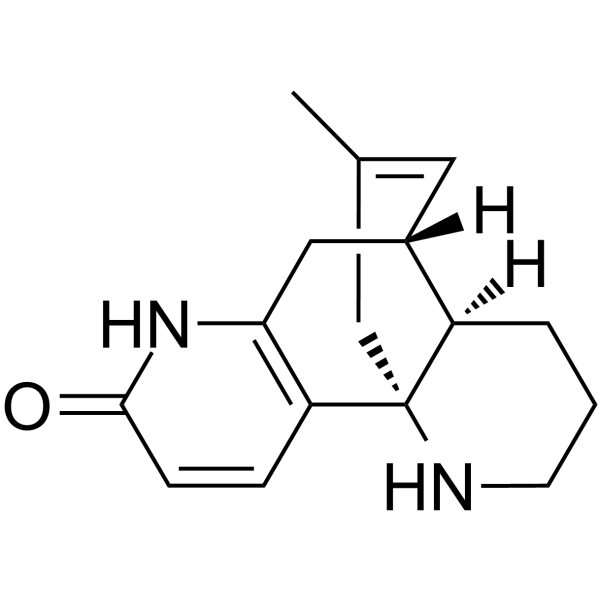
Huperzine B is a Lycopodium alkaloid isolated from Huperzia serrata and a highly selective acetylcholinesterase (AChE) inhibitor. Huperzine B can be uesd to can be used to improve Alzheimer's disease .
|
-
-
- HY-148108
-
|
|
Cholinesterase (ChE)
|
Neurological Disease
|
|
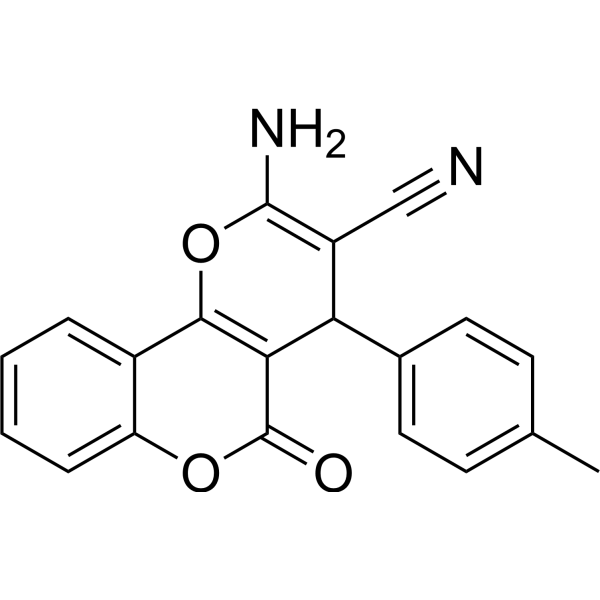
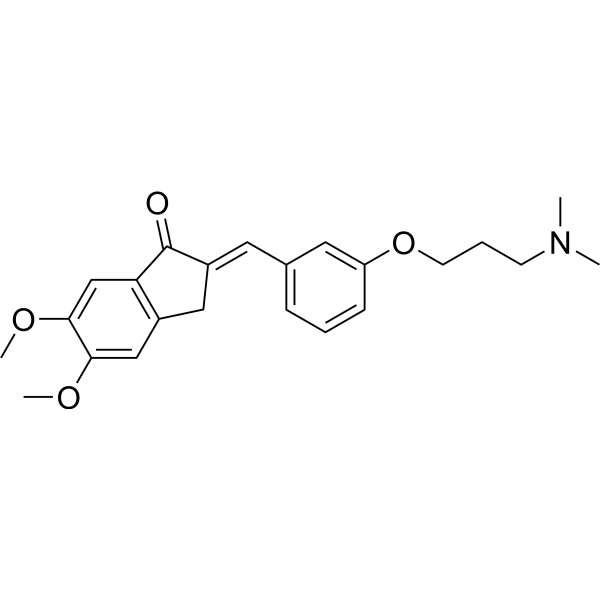
AChE-IN-27 (compound 8c) is an AChE inhibitor (IC50=0.19 µM). AChE-IN-27 can be used in studies of neurological diseases such as alzheimer's disease, dementia, ataxia and myasthenia gravis .
|
-
-
- HY-180448
-
-

-
- HY-N8755
-
-
-
- HY-N6619A
-
-
-
- HY-N15414
-
-

-
- HY-N11711
-
|
|
Cholinesterase (ChE)
|
Others
|
|
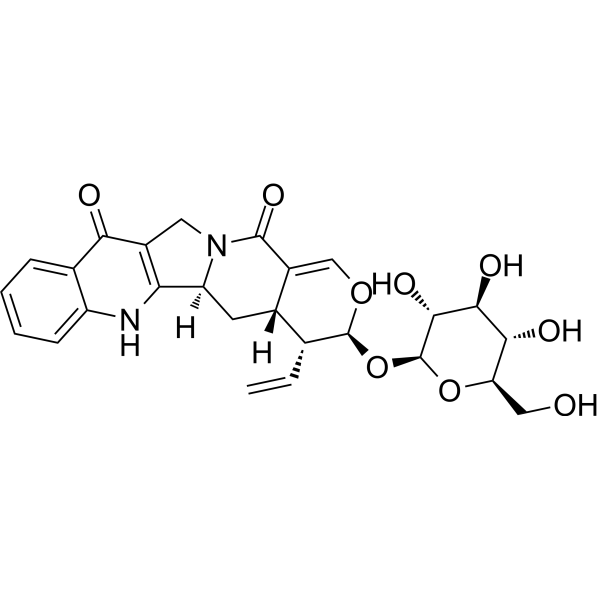
Pumiloside is a natural product that can be isolated from Nauclea officinalis. Pumiloside is a AchE inhibitor with IC50 value of 118.36 μM .
|
-
-
- HY-131413
-
|
Sanguinine
|
Cholinesterase (ChE)
|
Neurological Disease
|
|
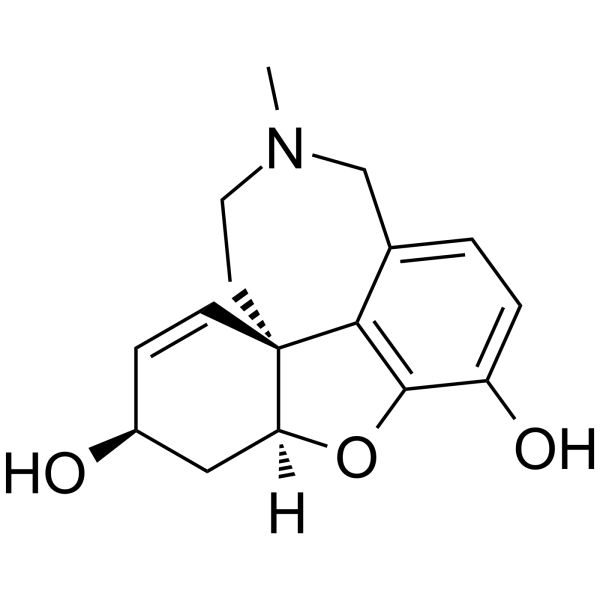
O-Desmethyl Galanthamine (Sanguinine) is galanthamine-type alkaloid. O-Desmethyl Galanthamine is an acetylcholinesterase (AChE) inhibitor, with an IC50 1.83 μM .
|
-
-
- HY-178750
-
|
|
Cholinesterase (ChE)
|
Neurological Disease
|
|
AChE-IN-96 (Compound 8a) is an AChE inhibitor, with an IC50 of 0.697 μM. AChE-IN-96 can be used for the study of neurodegenerative diseases such as Alzheimer's disease (AD) .
|
-

-
- HY-106412A
-
-

-
- HY-170811
-
|
|
Cholinesterase (ChE)
|
Neurological Disease
|
|
DCDQ is a potent acetylcholinesterase (AChE) inhibitor. DCDQ shows a strong binding affinity with the 4EY7 protein (binding energy: −8.2 kcal/mol). DCDQ is promising for research of Alzheimer's disease (AD) .
|
-

-
- HY-14566S
-
-
-
- HY-156372
-
-
-
- HY-N2219
-
-
-
- HY-W782096
-
-
-
- HY-N13924
-
-

-
- HY-N12388
-
-
-
- HY-156356
-
-
-
- HY-N10425
-
-
-
- HY-105157
-
-
-
- HY-155714
-
-
-
- HY-113626
-
|
(-)-Cyclopenine
|
Cholinesterase (ChE)
|
Metabolic Disease
|
|
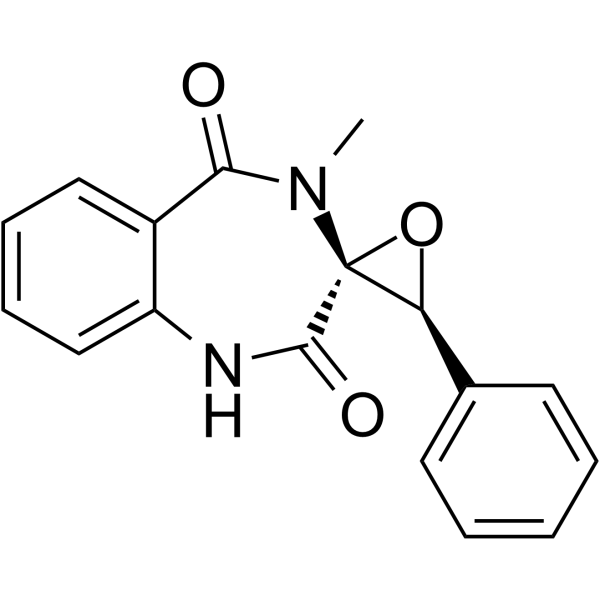
(-)-Cyclopenin ((-)-Cyclopenine) is the enantiomer of Cyclopenin. Cyclopenin is a selective acetylcholinesterase (AChE) inhibitor with the IC50 of 2.04 μM .
|
-
-
- HY-N4261R
-
-

-
- HY-149888
-
-
-
- HY-76299S1
-
-
- HY-U00028
-
-
- HY-161058
-
-
- HY-N6619
-
|
|
Cholinesterase (ChE)
|
Neurological Disease
|
|
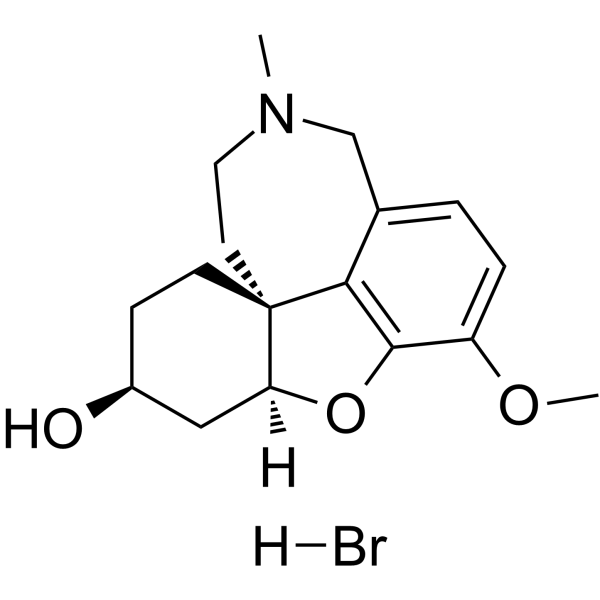
Lycoramine hydrobromide, a dihydro-derivative of galanthamine, is isolated from Lycoris radiate. Lycoramine hydrobromide is a potent acetylcholinesterase (AChE) inhibitor .
|
-
- HY-119592
-
-
- HY-159173
-
-

- HY-155345
-
-
- HY-49373
-
-

- HY-168622
-
-

- HY-163861
-
-

- HY-N15707
-
|
(+)-Isocorydine N-oxide
|
Cholinesterase (ChE)
|
Neurological Disease
|
|
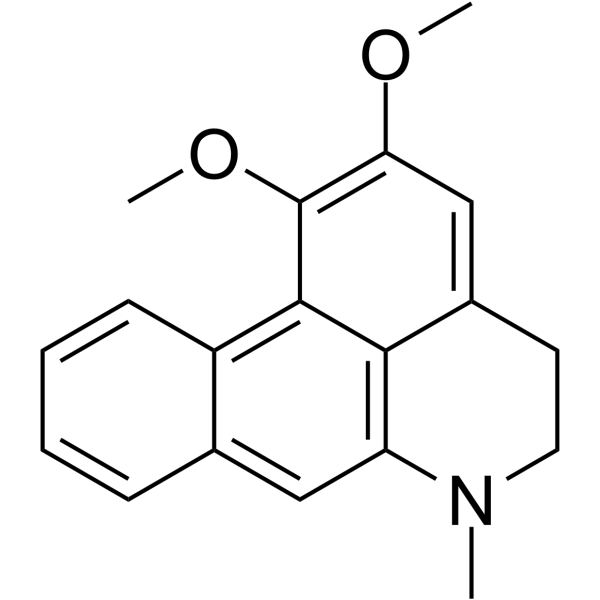
Isocorydine N-oxide ((+)-Isocorydine N-oxide), an alkaloidal, a acetylcholinesterase (AChE) inhibitor. Isocorydine N-oxide can be used for the study of Alzheimer's disease .
|
-

- HY-124140
-
|
|
Cholinesterase (ChE)
|
Others
|
|
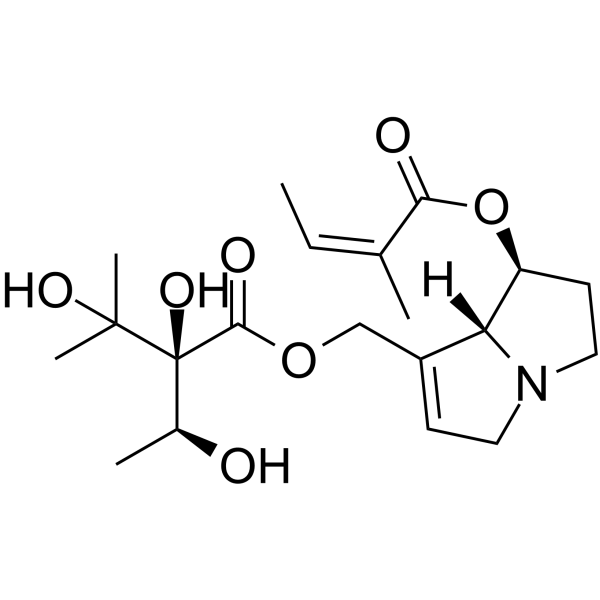
Heliosupine is a pyrrolizidine alkaloid. Heliosupine is an acetylcholinesterase (AChE) inhibitor, with an IC50 0.57 mM. Heliosupine exhibits deterrent effects against generalist herbivores .
|
-
- HY-156030
-
-
- HY-162005
-
-
- HY-N15450
-
|
|
Cholinesterase (ChE)
|
Neurological Disease
|
|
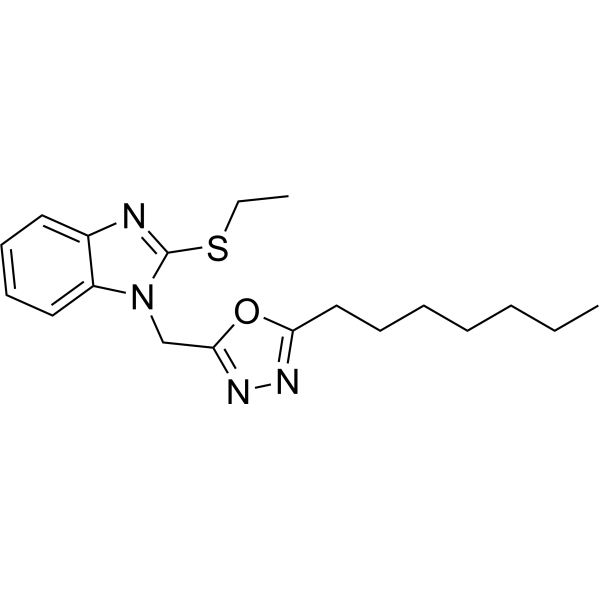
Undulatine is a potent AChE inhibitor with an IC50 of 7.4 μM. Undulatine is able to cross the BBB by passive permeation and can be used in the study of Alzheimer’s disease .
|
-

- HY-176242
-
|
|
Others
|
Neurological Disease
|
|
Buphanidrine is an acetylcholinesterase (AChE) inhibitor with an IC50 of 52.8 μM. Buphanidrine can be extracted from Brunsvigia josephinae and has potential applications in Alzheimer's disease research .
|
-

- HY-W783157
-
|
Heterofos
|
Insecticide
Cholinesterase (ChE)
|
Infection
|
|
Heterophos (Heterofos) is an organophosphorus insecticide and an AChE inhibitor. Heterophos inhibits AChE's function of decomposing acetylcholine, causing disorder of insect nerve conduction and exerting insecticidal effects .
|
-

- HY-118165S
-
-

- HY-B0830S
-
-
- HY-N12423
-
|
|
Cholinesterase (ChE)
|
Neurological Disease
|
|
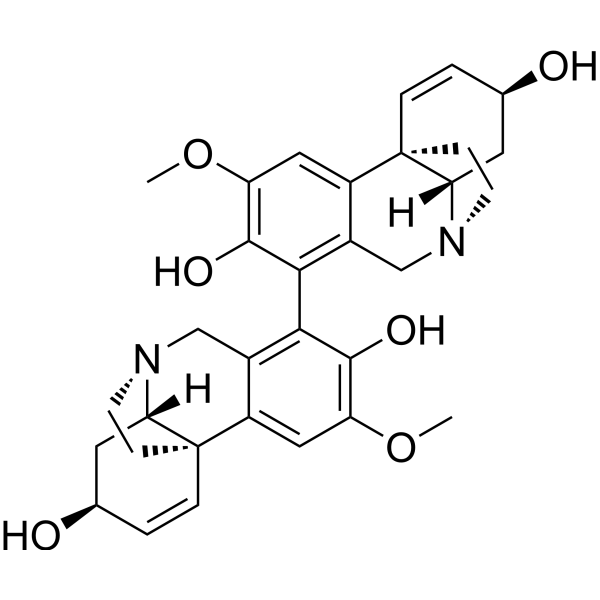
Bis-(-)-8-demethylmaritidine, a natural alkaloid, is a potent acetylcholinesterase (AChE) inhibitor. Bis-(-)-8-demethylmaritidine can be used for Alzheimer's disease research .
|
-
- HY-131252
-
|
Dihydro E2020
|
Cholinesterase (ChE)
|
Neurological Disease
|
|
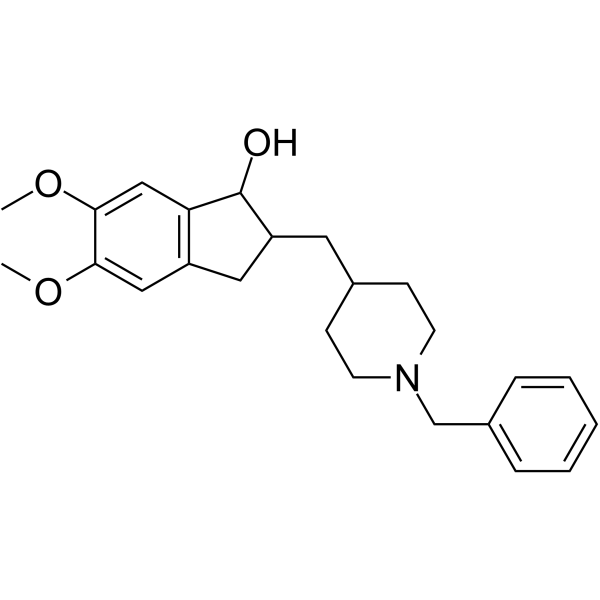
Dihydro Donepezil (Dihydro E2020) is a metabolite of Donepezil. Donepezil is a specific and potent AChE inhibitor with IC50s of 8.12 nM and 11.6 nM for bAChE and hAChE, respectively .
|
-
- HY-N7480A
-
|
|
Cholinesterase (ChE)
|
Neurological Disease
|
|
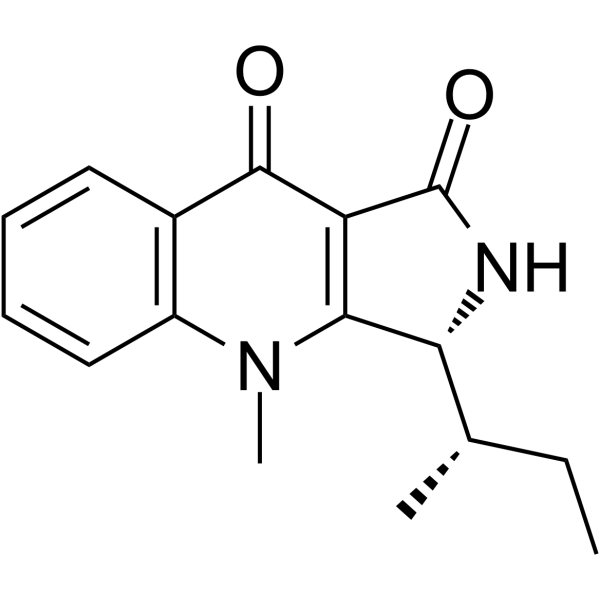
Quinolactacin A1 is a potent acetylcholinesterase (AChE) inhibitor from solid state fermentation of Penicillium citrinum 90648. Quinolactacin A1 can be used for the research of Alzheimer disease .
|
-
- HY-118165R
-
|
|
Reference Standards
Cholinesterase (ChE)
|
Neurological Disease
|
|
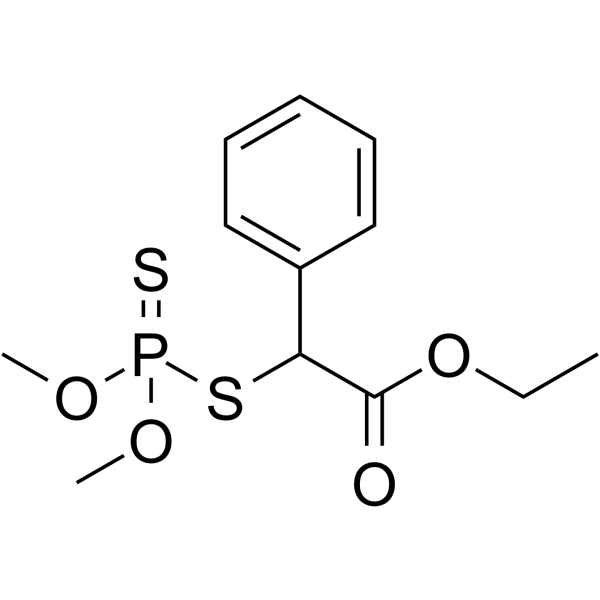
Phenthoate (Standard) is the analytical standard of Phenthoate. This product is intended for research and analytical applications. Phenthoate is an organophosphorus pesticide having low toxicity in animals. Phenthoate is also a AChE inhibitor .
|
-

- HY-151338
-
|
|
Cholinesterase (ChE)
|
Neurological Disease
|
|
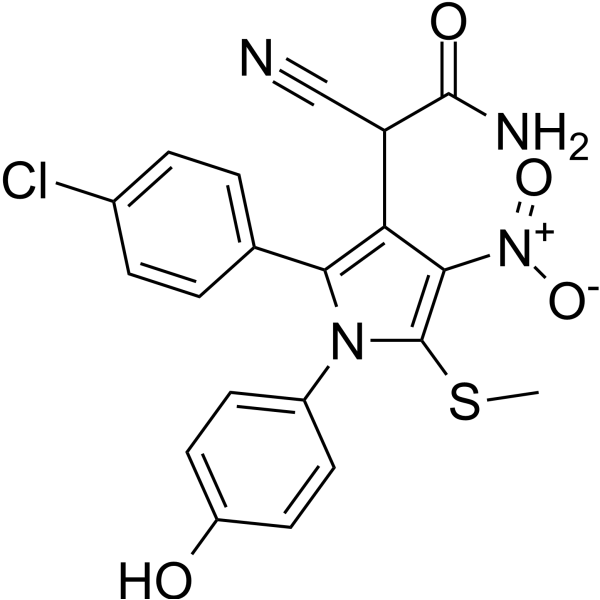
AChE-IN-25 is a potent, selective and uncompetitive acetylcholinesterase (AChE) inhibitor (IC50=2.95 µM). AChE-IN-25 can be used in Alzheimer's disease research .
|
-
- HY-N5076
-
|
|
Cholinesterase (ChE)
|
Infection
Inflammation/Immunology
Cancer
|
|
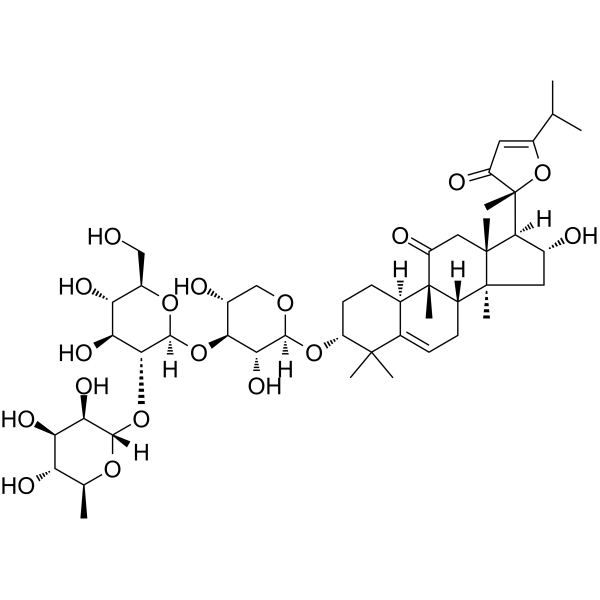
Picfeltarraenin IV, a triterpenoid obtained from Picriafel-terrae Lour (P.fel-terrae), is an acetylcholinesterase (AChE) inhibitor. Picfeltarraenin IV can be used for the treatment of herpes infections, cancer and inflammation .
|
-
- HY-159116
-
-

- HY-159148
-
|
|
Cholinesterase (ChE)
|
Others
|
|
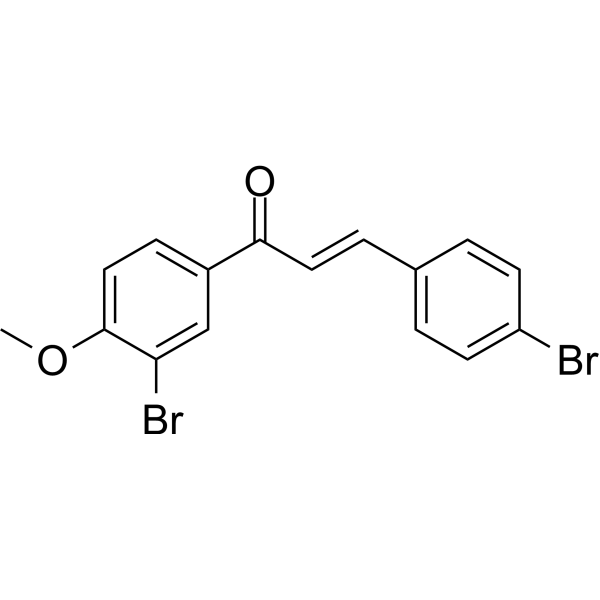
AChE-IN-70 (compound 4) is a AChE inhibitor. AChE-IN-70 shows larvicidal activity against mosquito larvae (Culex pipiens L.). and can be used for study of mosquito control .
|
-

- HY-W753485
-
-

- HY-161142
-
-
- HY-B0830R
-
|
|
Reference Standards
Cholinesterase (ChE)
|
Neurological Disease
|
|
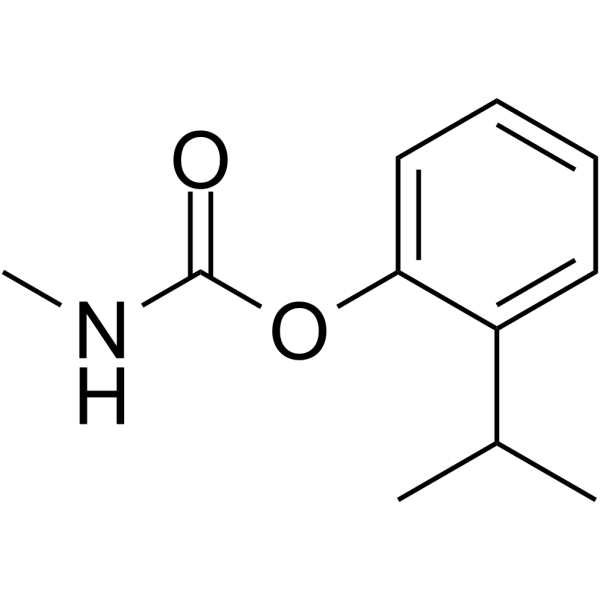
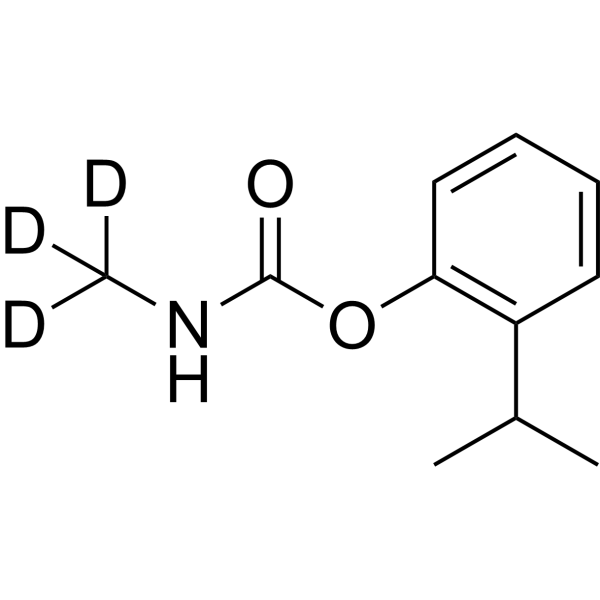
Isoprocarb (Standard) is the analytical standard of Isoprocarb. This product is intended for research and analytical applications. Isoprocarb is carbamate insecticide that widely used to control rice paddy lice and leafhopper. Isoprocarb is also an AChE inhibitor .
|
-

- HY-116026R
-
-

- HY-W049335
-
-

- HY-150545
-
|
|
Cholinesterase (ChE)
|
Neurological Disease
|
|
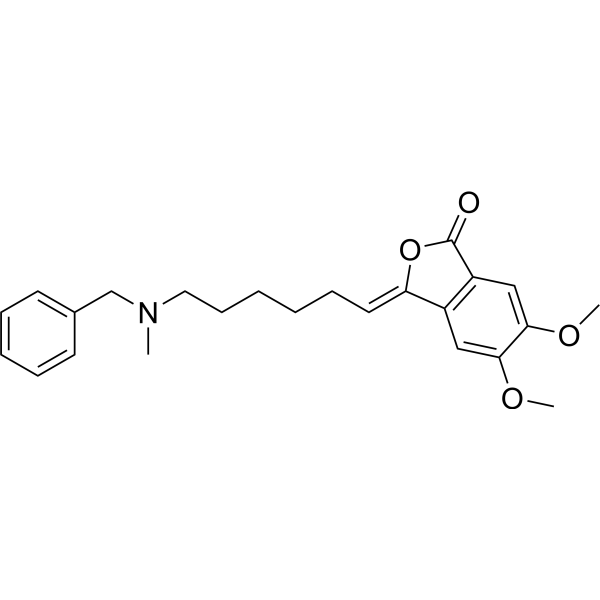
AChE-IN-21 (Compound I-8) is a potent, selective and orally active AChE inhibitor with an IC50 of 2.66 nM. AChE-IN-21 displays excellent BBB permeability in vitro .
|
-
- HY-I0020R
-
|
(-)-Narwedine (Standard); Narwedin (Standard)
|
Cholinesterase (ChE)
Reference Standards
|
Neurological Disease
|
|
Galanthaminone (Standard) is the analytical standard of Galanthaminone. This product is intended for research and analytical applications. Galanthaminone (Narwedin) is a competitive and reversible cholinesterase (AChE) inhibitor; is used for the treatment of mild to moderate Alzheimer's disease and various other memory impairments.
|
-

- HY-175006
-
|
|
Cholinesterase (ChE)
|
Neurological Disease
|
|
AChE-IN-91 (Compound 8u) is a AChE inhibitor with an IC50 of 0.05 μM. AChE-IN-91 has significant anticholinesterase activity, promising for neurological diseases like Alzheimer's disease (AD) research .
|
-

- HY-14566S1
-
|
E2020-d5 free base
|
Cholinesterase (ChE)
|
Neurological Disease
|
|
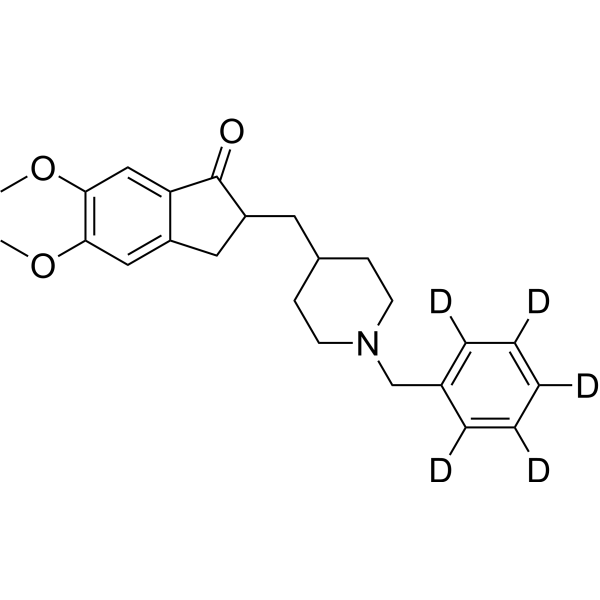
Donepezil-d5 is deuterium labeled Donepezil. Donepezil (E2020 free base) is a specific and potent AChE inhibitor with IC50s of 8.12 nM and 11.6 nM for bovine AChE and human AChE, respectively .
|
-
- HY-124140R
-
|
|
Reference Standards
Cholinesterase (ChE)
|
Others
|
|
Heliosupine (Standard) is the analytical standard of Heliosupine. This product is intended for research and analytical applications. Heliosupine is a pyrrolizidine alkaloid. Heliosupine is an acetylcholinesterase (AChE) inhibitor, with an IC50 0.57 mM. Heliosupine exhibits deterrent effects against generalist herbivores .
|
-

- HY-106412
-
|
S 9977 free base; S 9977-2 free base
|
Drug Derivative
Cholinesterase (ChE)
|
Neurological Disease
|
|
Stacofylline (S 9977 free base; S 9977-2 free base), a Xanthine (HY-W017389) derivative, is a potent AChE inhibitor with an IC50 of 5-50 nM. Stacofylline shows anti-amnesic and promnesic activities .
|
-

- HY-N0826R
-
-

- HY-119419S
-
|
|
Cholinesterase (ChE)
Parasite
Isotope-Labeled Compounds
|
Others
|
|
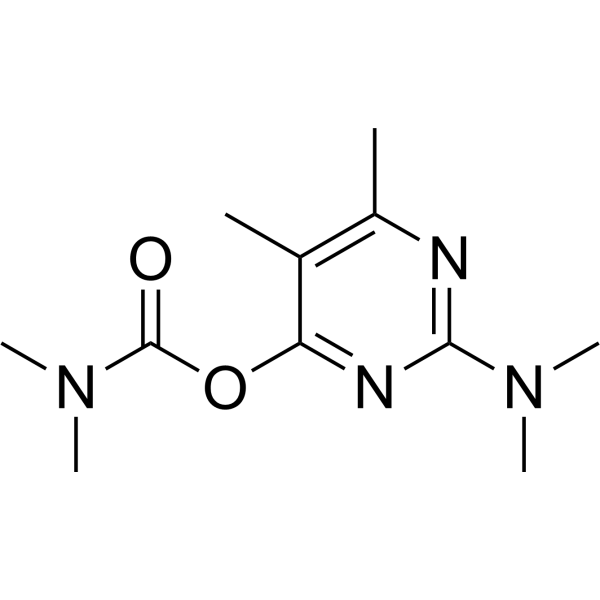
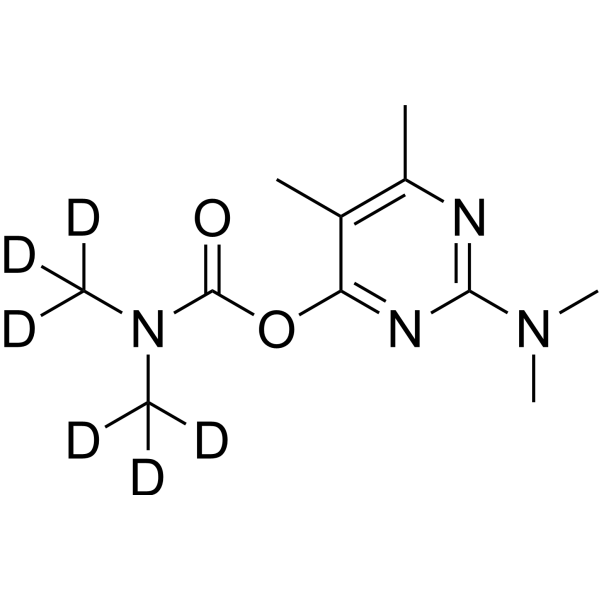
Pirimicarb-d6 is the deuterium labeled Pirimicarb (HY-119419). Pirimicarb is a fast-acting selective carbamate insecticide on a wide range of crops including cereals, sugar beet, potatoes, fruits and vegetables. Pirimicarb is an AChE inhibitor and an acaricide .
|
-
- HY-N13902
-
-

- HY-N13923
-
-

- HY-179620
-
-

- HY-165281
-
|
Tubocurine
|
Cholinesterase (ChE)
|
Neurological Disease
|
|
Chondrocurine (Tubocurine) is an alkaloid found in the roots of Cissampelos pareira Linn. Chondrocurine is an acetylcholinesterase (AChE) inhibitor with an IC50 of 7.46 μM .
|
-

- HY-162915
-
-

- HY-175474
-
-

- HY-185347
-
-

- HY-N19855
-
|
Geranicardic acid
|
Cholinesterase (ChE)
|
Neurological Disease
|
|
Merulinic acid (Geranicardic acid) is an acetylcholinesterase (AChE) inhibitor with an IC50 >94 μM against electric eel-derived AChE. Merulinic acid can be used for the research of alzheimer’s disease .
|
-

- HY-181119
-
|
|
Cholinesterase (ChE)
|
Neurological Disease
|
|
AChE-IN-106 is an AChE inhibitor. AChE-IN-106 shows no obvious cytotoxicity at low concentrations. AChE-IN-106 can be used for the research of Alzheimer's disease .
|
-

- HY-N16447
-
|
|
Cholinesterase (ChE)
|
Others
|
|
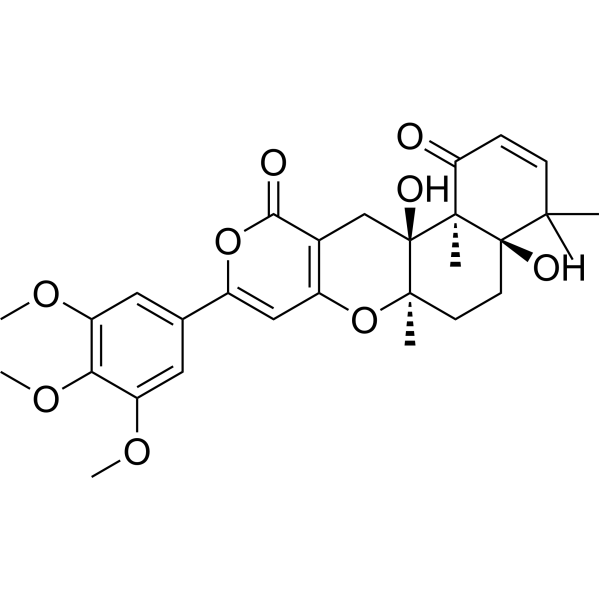
Territrem C is an acetylcholinesterase (AchE) inhibitor with an IC50 value of 0.23 μM. Territrem C, which belongs to α-pyrone meroterpenoids, can be isolated and produced from the fungus Penicillium sp. SK5GW1L .
|
-

- HY-183066
-
|
|
Insecticide
Cholinesterase (ChE)
|
Infection
|
|
AChE-IN-115 is an acetylcholinesterase (AChE) inhibitor. AChE-IN-115 forms stable complexes with AChE from Spodoptera litura (tobacco cutworm) and Tribolium castaneum (red flour beetle). AChE-IN-115 exhibits insecticidal activity .
|
-

- HY-W550259
-
|
Coumaphos oxon
|
Cholinesterase (ChE)
|
Others
|
|
Coroxon (Coumaphos oxon) is an oxidative metabolite of the organophosphate insecticide Coumaphos (HY-W653717) and an active AChE inhibitor with insecticidal and acaricidal properties. Coroxon can be hydrolyzed by phosphotriesterases of microorganisms such as Nocardia asteroides to produce the fluorescent product Chlorferon .
|
-

- HY-W643128
-
|
|
Cholinesterase (ChE)
|
Infection
|
|
Carlina oxide is an AChE inhibitor and antioxidant that kills Culex pipiens larvae (LC50=1.39 μg/mL). Carlina oxide is cytotoxic to vertebrate cells, human dermis, HCT116 and MDA-MB231 cell lines .
|
-

- HY-119419R
-
|
|
Reference Standards
Cholinesterase (ChE)
Parasite
|
Neurological Disease
|
|
Pirimicarb (Standard) is the analytical standard of Pirimicarb. This product is intended for research and analytical applications. Pirimicarb is a fast-acting selective carbamate insecticide on a wide range of crops including cereals, sugar beet, potatoes, fruits and vegetables. Pirimicarb is an AChE inhibitor and an acaricide .
|
-

- HY-B0815
-
|
|
Environmental Pollutants
Cholinesterase (ChE)
|
Neurological Disease
|
|
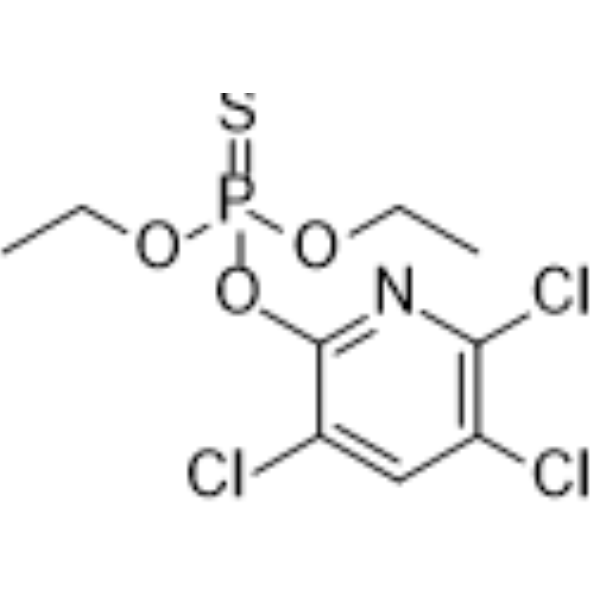
Chlorpyrifos is a neurotoxic insecticide that belongs to the class of thionite esters. Chlorpyrifos is also a AChE inhibitor that affects neurological function in insects, humans and other animals. Chlorpyrifos interferes with cell replication and differentiation, ultimately altering synaptic transmission in neurons .
|
-
- HY-14566R
-
|
E2020 free base (Standard)
|
Reference Standards
Cholinesterase (ChE)
|
Neurological Disease
Cancer
|
|
Donepezil (Standard) is the analytical standard of Donepezil. This product is intended for research and analytical applications. Donepezil (E2020 free base) is a specific and potent AChE inhibitor with IC50s of 8.12 nM and 11.6 nM for bovine AChE and human AChE, respectively .
|
-
- HY-185027
-
|
|
Cholinesterase (ChE)
iGluR
|
Neurological Disease
|
|
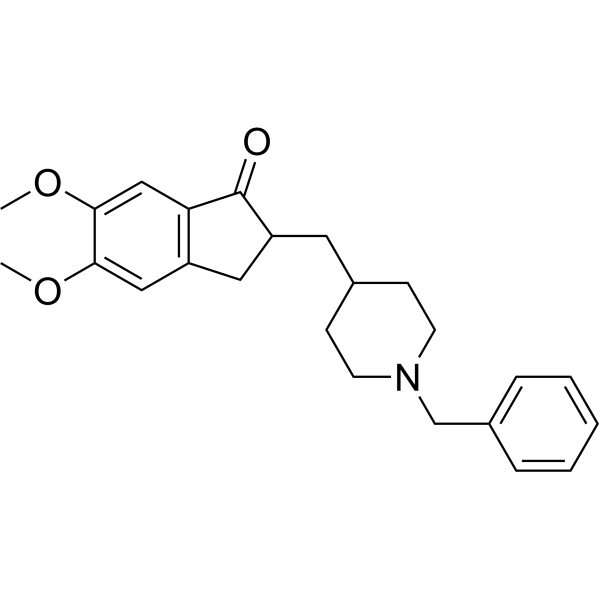
Memagal is an AchE inhibitor (IC50 = 1.16 nM) and a NMDAR antagonist (Ki = 4.6 μM). Memagal inhibits the neurotoxicity induced by NMDA (HY-17551), with its IC50 value being 0.28 nM. Memagal can be used for research on Alzheimer's disease .
|
-

- HY-B1206
-
|
|
Cholinesterase (ChE)
|
Infection
Neurological Disease
|
|
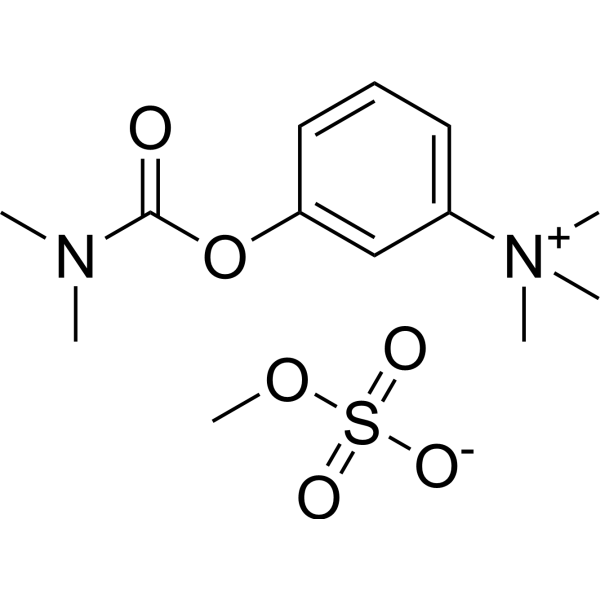
Neostigmine methyl sulfate is an AchE inhibitor. Neostigmine methyl sulfate increases endogenous acetylcholine levels, mediates antinociceptive effects, and alleviates heat-induced pain. Neostigmine methyl sulfate can be used in studies related to postoperative pain and sepsis .
|
-
- HY-176401
-
|
|
Cholinesterase (ChE)
|
Neurological Disease
|
|
AChE-IN-87 (Compound 8j) is an AChE inhibitor (IC50: 0.05 μM; Ki: 16.93 nM). AChE-IN-87 is non-cytotoxic to 3T3 cells. AChE-IN-87 can be used in the study of Alzheimer's disease (AD) .
|
-

- HY-151152
-
|
|
Cholinesterase (ChE)
|
Neurological Disease
|
|
AChE-IN-24 is a potent AChE inhibitor and can penetrate the BBB. AChE-IN-24 has the mighty inhibitory activity to hAChE with an IC50 value of 0.053 μM. AChE-IN-24 can be used for the research of Alzheimer s disease (AD) .
|
-
- HY-143291
-
|
|
Cholinesterase (ChE)
|
Neurological Disease
|
|
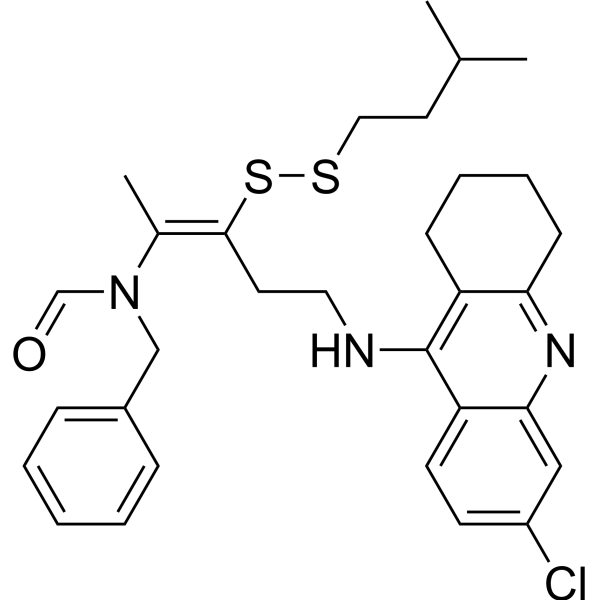
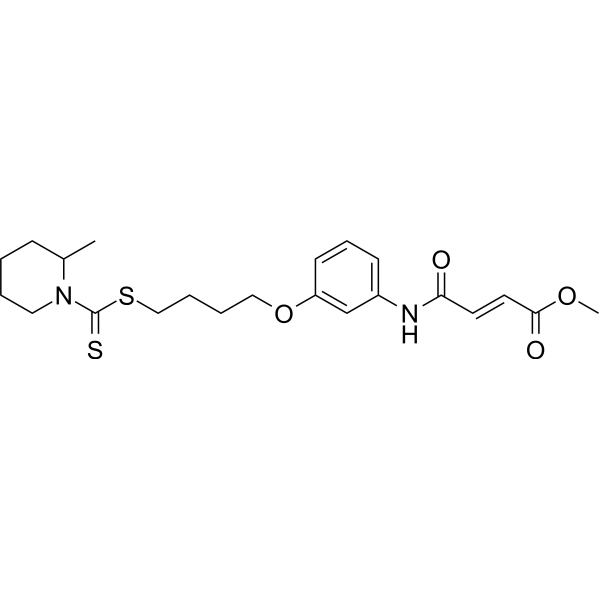
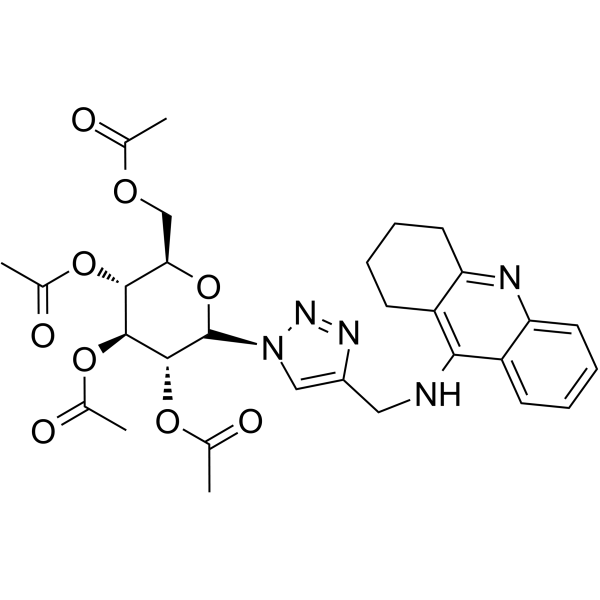
AChE-IN-9 is a Tacrine (HY-111338) glycoconjugate tethered with acetylated β-Glucose. AChE-IN-9 is also an AChE inhibitor with an IC50 value of 0.4 μM, with lower hepatotoxicity on healthy cells. Tacrine is used in Alzheimer's research .
|
-
- HY-W017423R
-
|
|
Reference Standards
Cholinesterase (ChE)
|
Neurological Disease
|
|
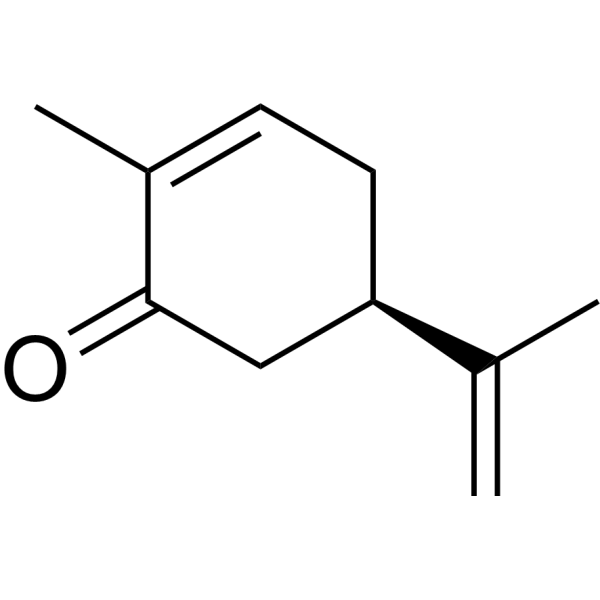
(-)-Carvone (Standard) is the analytical standard of (-)-Carvone. This product is intended for research and analytical applications. (-)-Carvone is an insect neurotoxin and a irreversible acetylcholinesterase (AChE) inhibitor. (-)-Carvone can be used as a bird repellent, inhibits larval growth, decreases pupatation rate, and increases mortality of larvae .
|
-

- HY-N0826
-
-
- HY-N6608
-
|
Eserine
|
Cholinesterase (ChE)
|
Neurological Disease
|
|
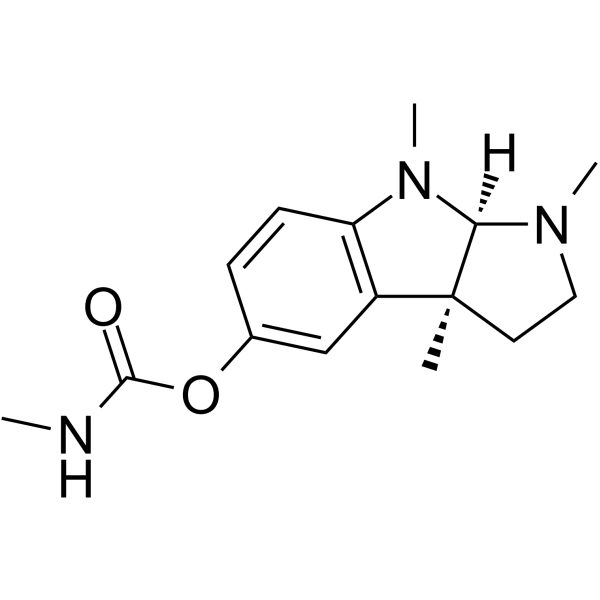
Physostigmine (Eserine) is a reversible acetylcholinesterase (AChE) inhibitor. Physostigmine can crosses the blood-brain barrier and stimulates central cholinergic neurotransmission. Physostigmine can reverse memory deficits in transgenic mice with Alzheimer's disease. Physostigmine is also an antidote for anticholinergic poisoning .
|
-
- HY-159943
-
|
|
Cholinesterase (ChE)
|
Neurological Disease
|
|
ROS151 is an AChE inhibitor, with IC50s of 14 nM (hAChE), 1.68 μM (eqBChE), 8.17 μM (hFAAH) respectively. ROS151 is also a chelator of Fe 3+ and Cu 2+. ROS151 can be used for research of Alzheimer's disease .
|
-

- HY-155713
-
|
|
Cholinesterase (ChE)
|
Neurological Disease
|
|
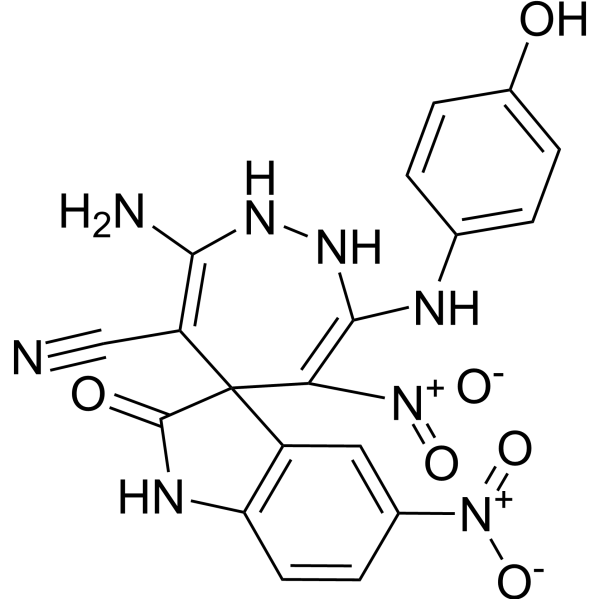
AChE-IN-34 (compound 5l) is a potent and selective AChE inhibitor with an IC50 value of 3.98 µM with no significant inhibition against BChE. AChE-IN-34 inhibits AChE with a Ki of 0.044 μM in a mixed mode (Acetylthiocholine substrate; 0.1-1 mM) .
|
-
- HY-W750404
-
|
|
Isotope-Labeled Compounds
Cholinesterase (ChE)
|
Neurological Disease
|
|
(-)-Carvone-d4 is the deuterium labeled (-)-Carvone (HY-W017423). (-)-Carvone is an insect neurotoxin and a irreversible acetylcholinesterase (AChE) inhibitor. (-)-Carvone can be used as a bird repellent, inhibits larval growth, decreases pupatation rate, and increases mortality of larvae .
|
-

- HY-183303
-
-

- HY-W017765
-
|
|
Cholinesterase (ChE)
|
Others
|
|
2,2'-Dihydroxy-1,1'-binaphthyl is an acetylcholinesterase (AChE) inhibitor with an IC50 value of 21.9 μM against human AChE. 2,2'-Dihydroxy-1,1'-binaphthyl exhibits cytotoxicity against Artemia nauplii .
|
-

- HY-157296
-
|
|
Cholinesterase (ChE)
|
Neurological Disease
|
|
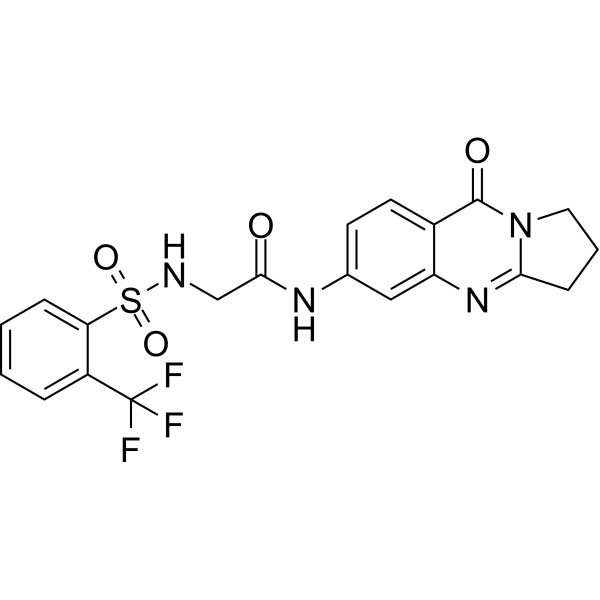
AChE-IN-47 (compound g17) is a AChE inhibitor with the IC50 of 0.24 μM. AChE-IN-47 inhibits amyloid β peptides self-aggregation. AChE-IN-47 displays neuroprotective effects and effectively suppresses the intracellular accumulation of reactive oxygen species .
|
-
- HY-75247R
-
-

- HY-B0034S
-
|
E2020-d5
|
Cholinesterase (ChE)
|
Neurological Disease
|
|
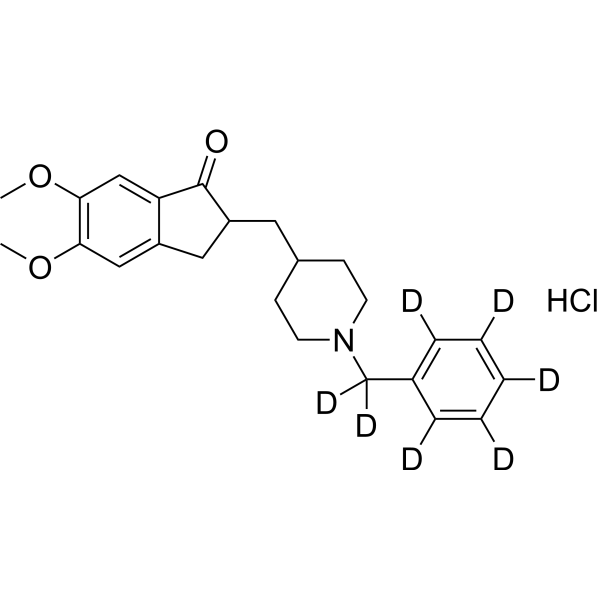
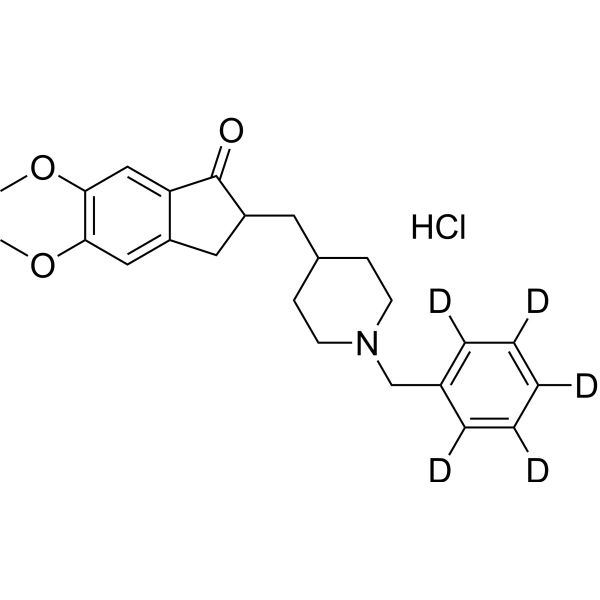
Donepezil-d5 (hydrochloride) is deuterium labeled Donepezil (Hydrochloride). Donepezil Hydrochloride (E2020) is a reversible, selective AChE inhibitor with an IC50 of 6.7 nM for AChE activity. Donepezil shows high selectivity for AChE over BuChE . Donepezil exhibits neuroprotective effect on Aβ42 neurotoxicity .
|
-
- HY-121467
-
|
Z-338 free base; YM443 free base
|
Cholinesterase (ChE)
|
Metabolic Disease
Inflammation/Immunology
|
|
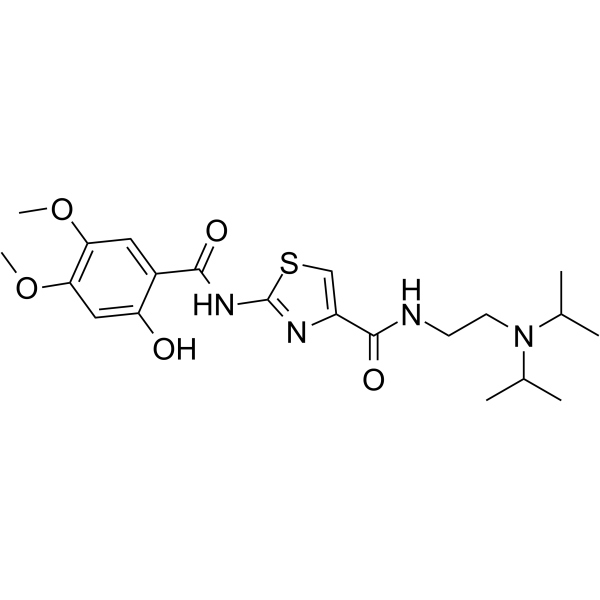
Acotiamide is an orally active, selective and reversible acetylcholinesterase (AChE) inhibitor, with an IC50 of 1.79 μM. Acotiamide can enhance gastric contractility and accelerate delayed gastric emptying. Acotiamide has the potential for the research of functional dyspepsia involving gastric motility dysfunction and intestinal inflammatory .
|
-
- HY-N12622
-
|
|
Cholinesterase (ChE)
|
Neurological Disease
|
|
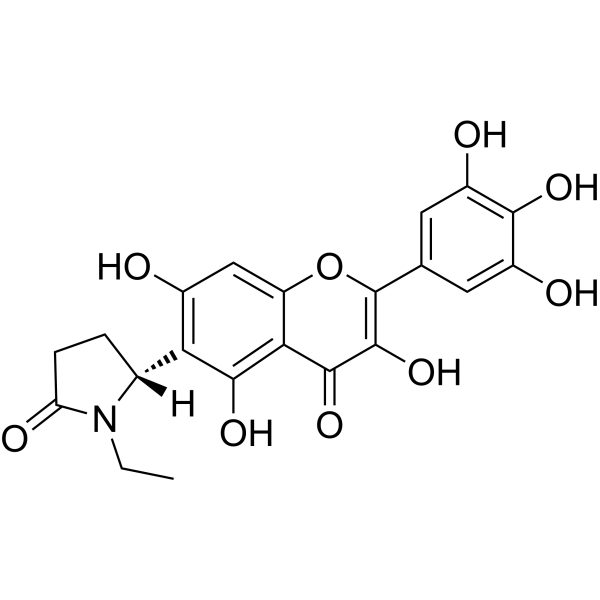
AChE-IN-58 (Compound 3) is an acetylcholinesterase (AChE) inhibitor. AChE-IN-58 can extend the mean lifespan, delay the Aβ1-42-induced paralysis, enhanc the locomotion, and alleviate glutamic acid (Glu)-induced neurotoxicity of CL4176 worms .
|
-
- HY-N2211R
-
|
|
Reference Standards
Cholinesterase (ChE)
|
Infection
Inflammation/Immunology
Cancer
|
|
Picfeltarraenin IB (Standard) is the analytical standard of Picfeltarraenin IB. This product is intended for research and analytical applications. Picfeltarraenin IB, a triterpenoid obtained from Picriafel-terrae Lour (P.fel-terrae), is an acetylcholinesterase (AChE) inhibitor. Picfeltarraenin IB can be used for the treatment of herpes infections, cancer and inflammation .
|
-

- HY-121467A
-
|
Z-338; YM443
|
Cholinesterase (ChE)
|
Others
Metabolic Disease
Inflammation/Immunology
|
|
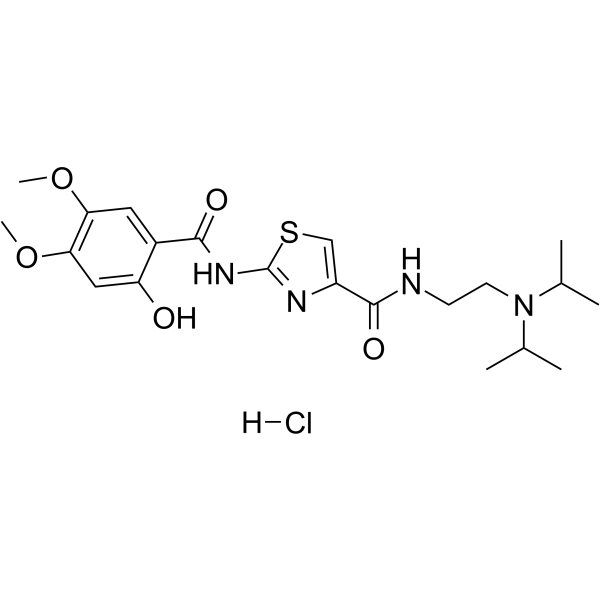
Acotiamide hydrochloride is an orally active, selective and reversible acetylcholinesterase (AChE) inhibitor, with an IC50 of 1.79 μM. Acotiamide hydrochloride can enhance gastric contractility and accelerate delayed gastric emptying. Acotiamide hydrochloride has the potential for the research of functional dyspepsia involving gastric motility dysfunction and intestinal inflammatory .
|
-
- HY-118928
-
|
Demethyl-CHF 2819
|
Cholinesterase (ChE)
|
Neurological Disease
|
|
Demethyl-Ganstigmine hydrochloride (Demethyl-CHF 2819) is an orally active AChE inhibitor. Demethyl-Ganstigmine hydrochloride promotes the release of sAPPα from neuroblastoma cells. Demethyl-Ganstigmine hydrochloride increases the concentration of acetylcholine in the prefrontal cortex of rats. Demethyl-Ganstigmine hydrochloride is used in research on neurological diseases such as Alzheimer's disease .
|
-

- HY-B0034S1
-
|
E2020-d4
|
Cholinesterase (ChE)
|
Neurological Disease
|
|
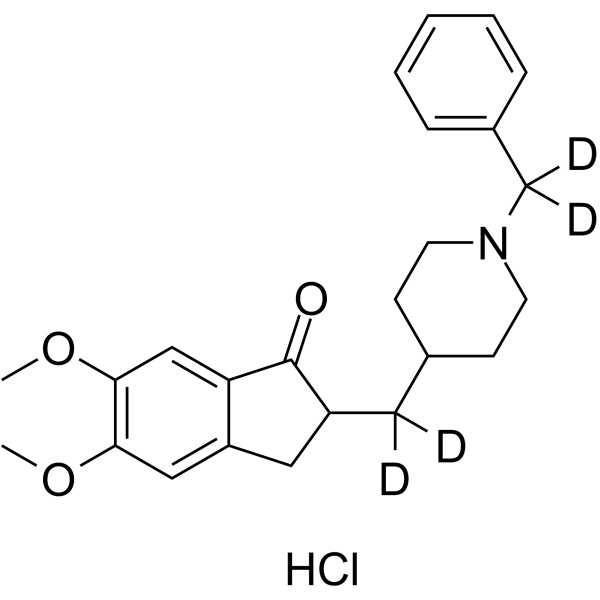
Donepezil-d4 (hydrochloride) is the deuterium labeled Donepezil hydrochloride. Donepezil Hydrochloride (E2020) is a reversible, selective AChE inhibitor with an IC50 of 6.7 nM for AChE activity. Donepezil shows high selectivity for AChE over BuChE . Donepezil exhibits neuroprotective effect on Aβ42 neurotoxicity .
|
-
- HY-111338
-
|
|
Cholinesterase (ChE)
|
Neurological Disease
|
|
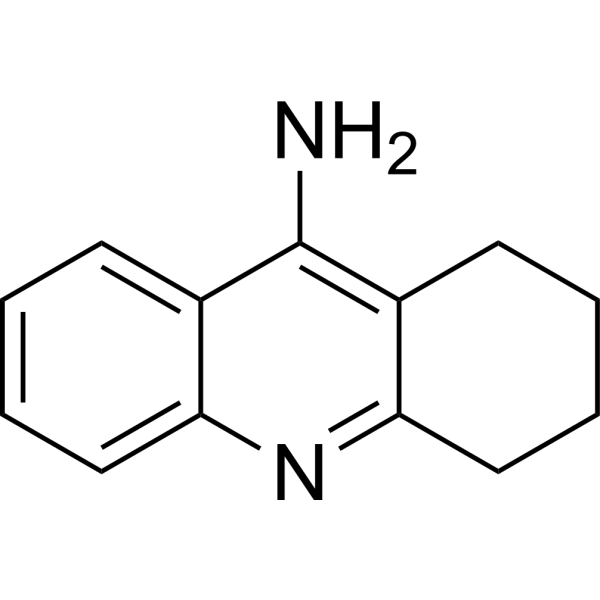
Tacrine is an effective oral acetylcholine (AChE) inhibitor (IC50 = 109 nM) and also acts as an active substrate for CYP1A2. Tacrine can restore cognitive dysfunction in elderly rats. Tacrine can cause liver toxicity and is used in research related to Alzheimer's disease .
|
-
- HY-162693
-
|
|
Cholinesterase (ChE)
|
Neurological Disease
|
|
AChE-IN-68 (compound 2l) is a potent and selective AChE inhibitor, with an IC50 value of 0.040 μM. AChE-IN-68 has high blood-brain barrier permeability. AChE-IN-68 can be used for the research of neurodegenerative disorders, particularly Alzheimer’s disease .
|
-

- HY-N2043R
-
|
|
Reference Standards
Cholinesterase (ChE)
|
Neurological Disease
|
|
Huperzine B (Standard) is the analytical standard of Huperzine B. This product is intended for research and analytical applications. Huperzine B is a Lycopodium alkaloid isolated from Huperzia serrata and a highly selective acetylcholinesterase (AChE) inhibitor. Huperzine B can be uesd to can be used to improve Alzheimer's disease .
|
-

- HY-N11641
-
|
|
Cholinesterase (ChE)
|
Neurological Disease
|
|
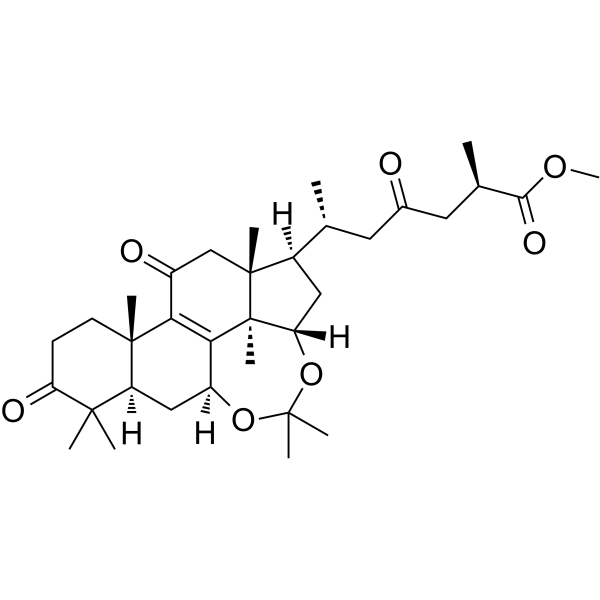
Methyl ganoderate A acetonide, a lanostane triterpene, is a natural product that could be isolated from the fruiting bodies of Ganoderma lucidum. Methyl ganoderate A acetonide is a potent AChE inhibitor with an IC50 value of 18.35 μM. Methyl ganoderate A acetonide can be used in research of Alzheimer’s disease (AD) .
|
-
- HY-161029
-
|
|
Cholinesterase (ChE)
|
Neurological Disease
|
|
T14-A24 is an orally active, reversible, competitive, and selective AChE inhibitor (Ki=22 nM, IC50=6 nM). T14-A24 has benign BBB penetration, remarkable neuroprotective effect, and safe toxicological profile .
|
-
- HY-182333
-
|
|
Cholinesterase (ChE)
|
Neurological Disease
|
|
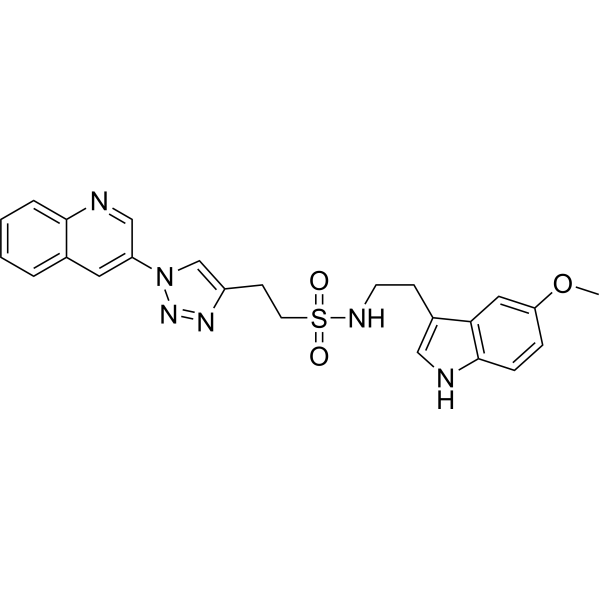
AChE-IN-112 is an acetylcholinesterase (AChE) inhibitor with an IC50 of 0.41 μM. AChE-IN-112 scavenges various reactive oxygen and reactive nitrogen species, including DPPH, ABTS, NO, hydroxyl and hydrogen peroxide free radicals. AChE-IN-112 can be used for the research of Alzheimer's disease .
|
-

- HY-B0732
-
|
HSR803
|
Cholinesterase (ChE)
Dopamine Receptor
Bacterial
|
Neurological Disease
|
|
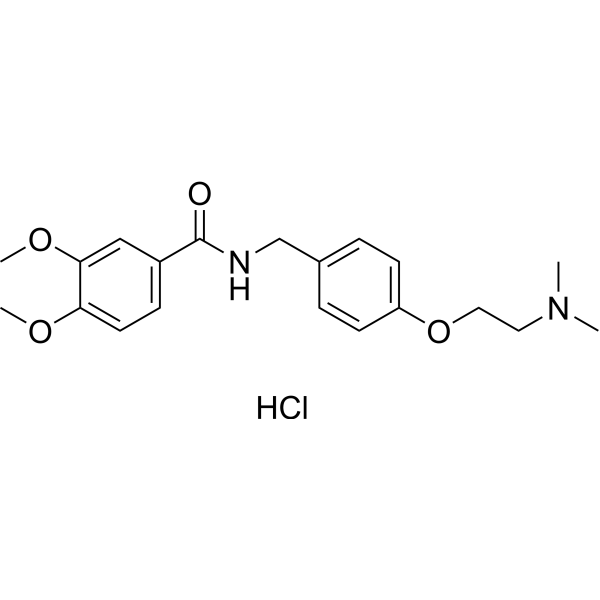
Itopride (HSR803) hydrochloride is a potent dopamine-2 antagonist and an acetylcholine esterase (AChE) inhibitor. Itopride hydrochloride enhances gastric motility through both antidopaminergic and anti-acetylcholinesterasic actions, can be used as a gastrointestinal prokinetic agent. Itopride can be used for researching gastro-esophageal reflux disease (GERD) .
|
-
- HY-B1266
-
|
Eserine salicylate
|
Cholinesterase (ChE)
|
Neurological Disease
|
|
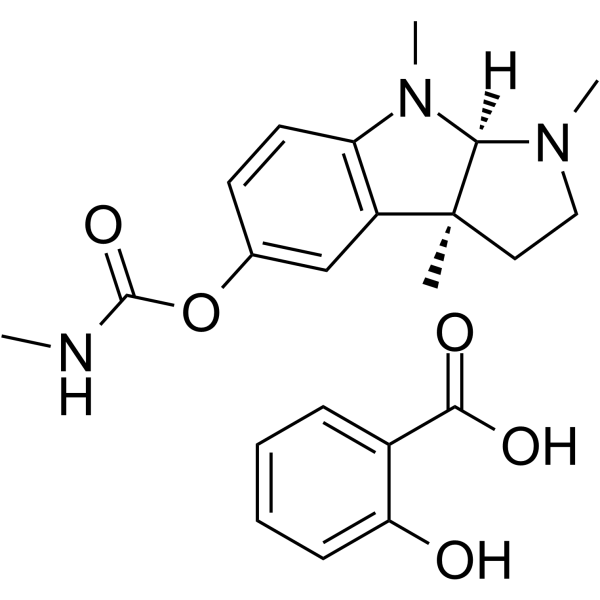
Physostigmine salicylate (Eserine salicylate) is a reversible acetylcholinesterase (AChE) inhibitor. Physostigmine salicylate crosses the blood-brain barrier and stimulates central cholinergic neurotransmission. Physostigmine salicylate can reverse memory deficits in transgenic mice with Alzheimer's disease. Physostigmine salicylate is also an antidote for anticholinergic poisoning .
|
-
- HY-14566S3
-
|
E2020-d4 free base
|
Isotope-Labeled Compounds
|
Neurological Disease
Cancer
|
|
Donepezil-d4 (E2020-d4 (free base)) is deuterium labeled Donepezil. Donepezil (E2020 free base) is a specific and potent AChE inhibitor with IC50s of 8.12 nM and 11.6 nM for bovine AChE and human AChE, respectively .
|
-

- HY-180225
-
|
|
Cholinesterase (ChE)
|
Neurological Disease
|
|
AChE-IN-101 (Compound 7a) is an AChE inhibitor (IC50s = 0.21 μM (EeAChE); 13 nM (HsAChE)). AChE-IN-101 ameliorates Scopolamine (HY-N0296)-induced cognitive impairment. AChE-IN-101 can be used in the research of Alzheimer's disease .
|
-

- HY-W727525
-
-

- HY-B0034R
-
|
E2020 (Standard)
|
Reference Standards
Cholinesterase (ChE)
|
Neurological Disease
Cancer
|
|
Donepezil (Hydrochloride) (Standard) is the analytical standard of Donepezil (Hydrochloride). This product is intended for research and analytical applications. Donepezil Hydrochloride (E2020) is a reversible, selective AChE inhibitor with an IC50 of 6.7 nM for AChE activity. Donepezil shows high selectivity for AChE over BuChE . Donepezil exhibits neuroprotective effect on Aβ42 neurotoxicity .
|
-

- HY-N9928
-
|
|
Cholinesterase (ChE)
|
Neurological Disease
|
|
Echinenone is an acetylcholinesterase (AChE) inhibitor (IC50=16.29 μg/mL) with anti-Aβ(25-35) activity. Echinenone can inhibit MDA content and increase superoxide dismutase (SOD), catalase (CAT) and glutathione peroxidase (GSH-Px) activities to cope with oxidative stress damage .
|
-

- HY-N2320
-
|
Eserine hemisulfate
|
Cholinesterase (ChE)
|
Neurological Disease
|
|
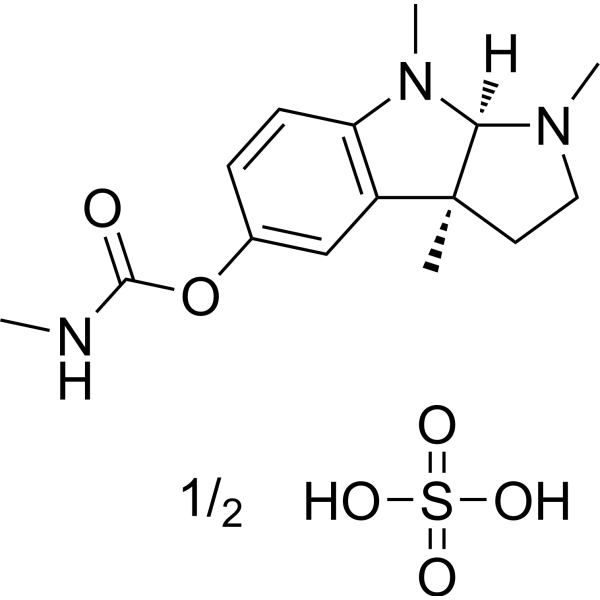
Physostigmine hemisulfate (Eserine hemisulfate) is a reversible acetylcholinesterase (AChE) inhibitor. Physostigmine hemisulfate can crosses the blood-brain barrier and stimulates central cholinergic neurotransmission. Physostigmine hemisulfate can reverse memory deficits in transgenic mice with Alzheimer's disease. Physostigmine hemisulfate is also an antidote for anticholinergic poisoning .
|
-
- HY-180243
-
|
|
Cholinesterase (ChE)
|
Neurological Disease
|
|
AChE-IN-102 (compound C8) is a potent, selective and competitive AChE inhibitor with a Ki of 7.55 nM and an IC50 of 15.25 nM. AChE-IN-102 shows selectivity over BuChE (IC50 = 21.15 nM, b>Ki = 6.17 nM). AChE-IN-102 can be used for Alzheimer’s disease research .
|
-

- HY-N6608S
-
|
Eserine-d3
|
Isotope-Labeled Compounds
Cholinesterase (ChE)
|
Neurological Disease
|
|
Physostigmine-d3 is the deuterium labeled Physostigmine. Physostigmine (Eserine) is a reversible acetylcholinesterase (AChE) inhibitor. Physostigmine can crosses the blood-brain barrier and stimulates central cholinergic neurotransmission. Physostigmine can reverse memory deficits in transgenic mice with Alzheimer's disease. Physostigmine is also an antidote for anticholinergic poisoning .
|
-
- HY-146762
-
-
- HY-N5077
-
|
|
Cholinesterase (ChE)
P-glycoprotein
|
Neurological Disease
Inflammation/Immunology
Cancer
|
|
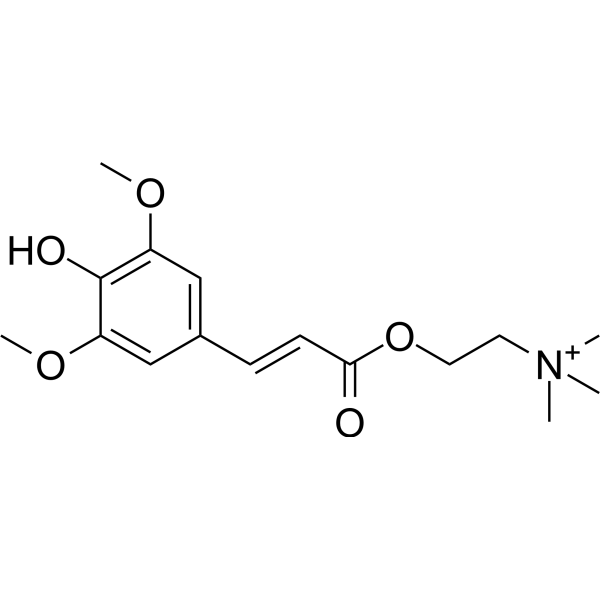
Sinapine is an alkaloid isolated from seeds of the cruciferous species. Sinapine exhibits anti-inflammatory, anti-oxidant, anti-tumor, anti-angiogenic and radio-protective effects. Sinapine is also an acetylcholinesterase (AChE) inhibitor and can be used for the research of Alzheimer’s disease, ataxia, myasthenia gravis, and Parkinson’s disease .
|
-
- HY-107922
-
|
Isothazine
|
Cholinesterase (ChE)
iGluR
mAChR
|
Neurological Disease
|
|
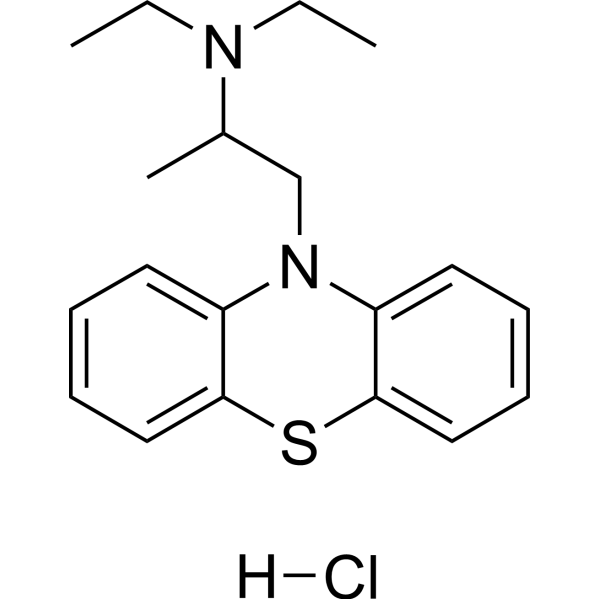
Ethopropazine (Isothazine) hydrochloride is a potent and selective BChE inhibitor, a poor AChE inhibitor and a non-selective mAChR and NMDA antagonist. Ethopropazine hydrochloride has anticholinergic, antihistamine, antiadrenergic actions and properties. Ethopropazine hydrochloride alleviates thermal hyperalgesia in a dose dependent manner. Ethopropazine hydrochloride can be used for the research of Parkinson’s disease .
|
-
- HY-155022
-
|
|
Cholinesterase (ChE)
|
Neurological Disease
|
|
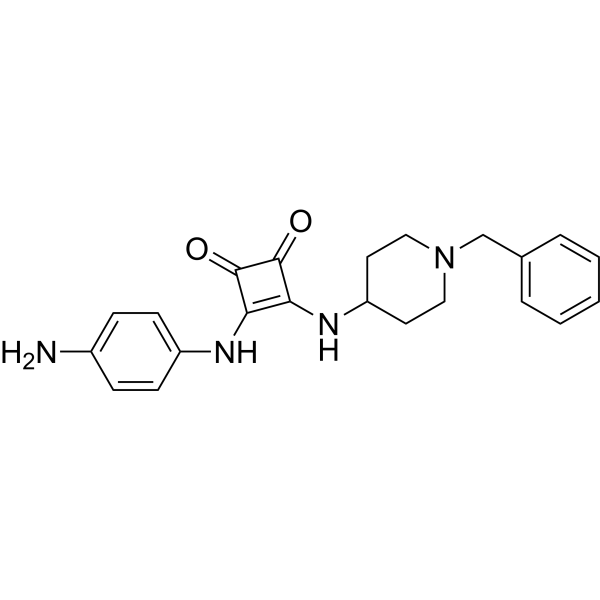
AChE-IN-30 is an AChE inhibitor with an IC50 value of 4.4 μM. AChE-IN-30 has neuroprotective activity, and inhibits H2O2-induced apoptosis by suppressing intracellular ROS accumulation. AChE-IN-30 can be used for research of Alzheimer's disease .
|
-
- HY-N5077R
-
-

- HY-103374
-
|
(-)-Eseroline phenylcarbamate; (-)-Phenserine
|
Cholinesterase (ChE)
Amyloid-β
|
Neurological Disease
|
|
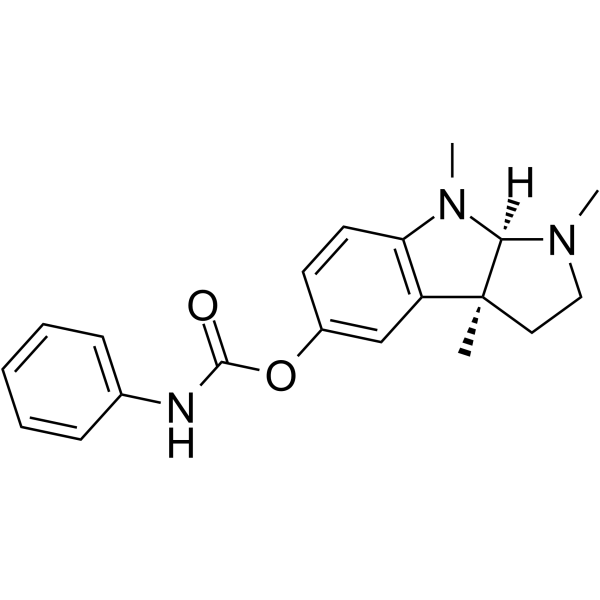
Phenserine ((-)-Eseroline phenylcarbamate) is a derivative of Physostigmine (HY-N6608) and is a potent, noncompetitive, long-acting and selective AChE inhibitor. Phenserine reduces β-amyloid precursor protein (APP) and β-amyloid peptide (Aβ) formation. Phenserine improves cognitive performance and attenuates the progression of Alzheimer's disease .
|
-
- HY-149087
-
-
- HY-162258
-
|
|
Cholinesterase (ChE)
|
Neurological Disease
|
|
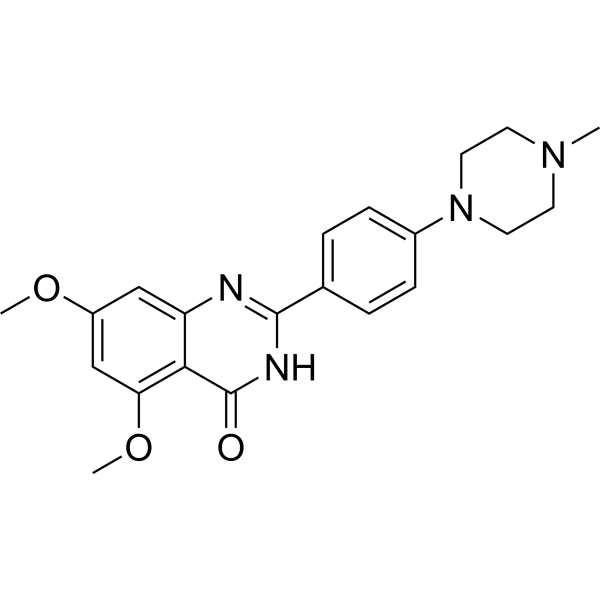
AChE-IN-57 (compound 5b(SP-2)) is a potent AChE inhibitor. AChE-IN-57 improves cognitive defects. AChE-IN-57 restores the biochemical mediators and inhibits reactive oxygen and nitrogen species implicated in the neuroinflammation mechanism. AChE-IN-57 has the potential for the research of Alzheimer .
|
-
- HY-N4027
-
|
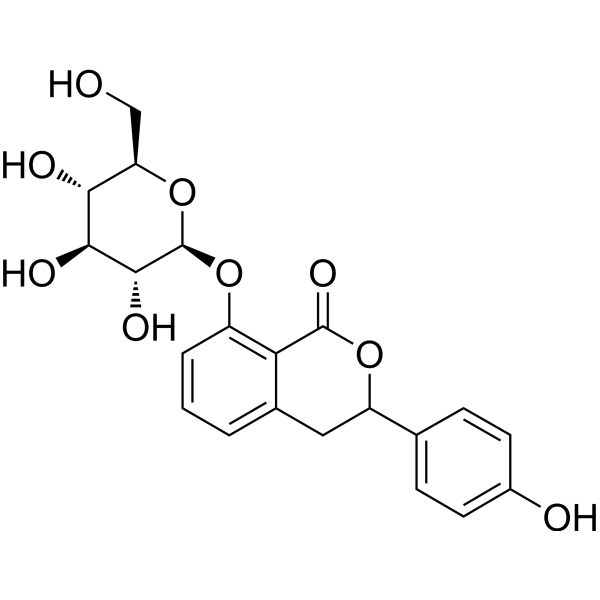
Hydrangenol 8-O-β-D-glucopyranoside
|
Cholinesterase (ChE)
|
Neurological Disease
|
|
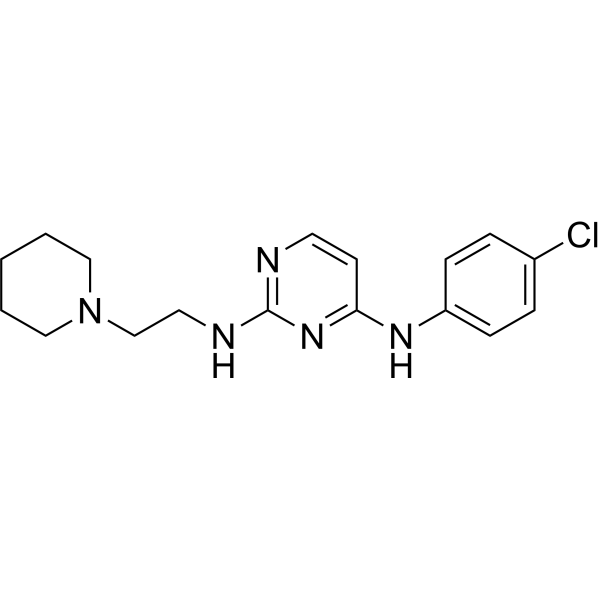
Hydrangenol 8-O-glucoside (Hydrangenol 8-O-β-D-glucopyranoside) can be isolated from Hydrangea macrophyllu. Hydrangenol 8-O-glucoside is an AChE inhibitor (IC50: 22.66 μM). Hydrangenol 8-O-glucoside inhibits passive cutaneous anaphylaxis (PCA) reaction .
|
-
- HY-B0732A
-
|
HSR803 free base
|
Cholinesterase (ChE)
Dopamine Receptor
Bacterial
|
Others
|
|
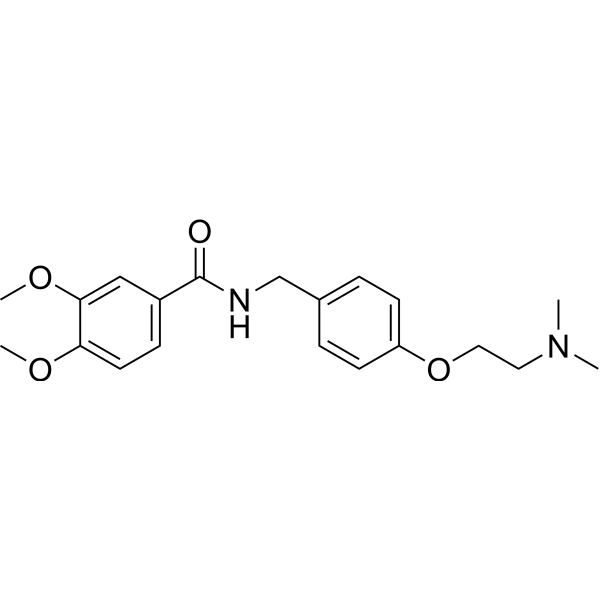
Itopride (HSR803 free base) is a potent and orally active dopamine-2 antagonist and an acetylcholine esterase (AChE) inhibitor. Itopride enhances gastric motility through both antidopaminergic and anti-acetylcholinesterasic actions, can be used as a gastrointestinal prokinetic agent. Itopride can be used for researching gastro-esophageal reflux disease (GERD) .
|
-
- HY-181744
-
|
|
Cholinesterase (ChE)
|
Neurological Disease
|
|
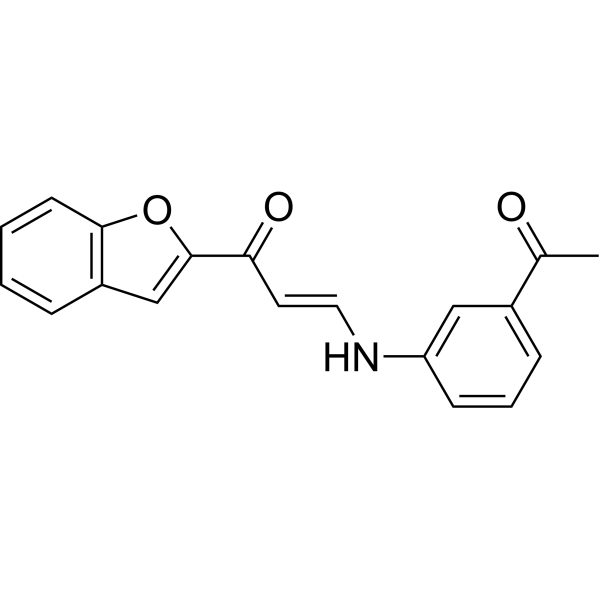
AChE-IN-108 is a potent mixed-type acetylcholinesterase (AChE) inhibitor with an in vitro IC50 of 0.17 nM. AChE-IN-108 acts on both free AChE and the enzyme-substrate complex to exert mixed-type inhibition. AChE-IN-108 can be used for the study of acetylcholinesterase inhibition in Alzheimer’s disease (AD) .
|
-

- HY-N11962A
-
|
|
Cholinesterase (ChE)
|
Neurological Disease
|
|
2,3,9,10-Tetrahydroxyberberine bromide is an acetylcholinesterase AChE inhibitor (IC50=7.8 μM). 2,3,9,10-Tetrahydroxyberberine bromide exhibits DPPH free radical scavenging activity (IC50=43 μM) and is applicable to research related to Alzheimer's disease .
|
-

- HY-149473
-
|
|
Cholinesterase (ChE)
|
Neurological Disease
|
|
AChE-IN-39 (Compound 7c) is an AChE inhibitor (IC50: 0.058 μM). AChE-IN-39 has DPPH scavenging activity. AChE-IN-39 improves the cognitive impairment in AlCl3-induced amnesia animal model. AChE-IN-39 can be used for research of Alzheimer's disease .
|
-
- HY-150728
-
|
|
Cholinesterase (ChE)
|
Neurological Disease
|
|
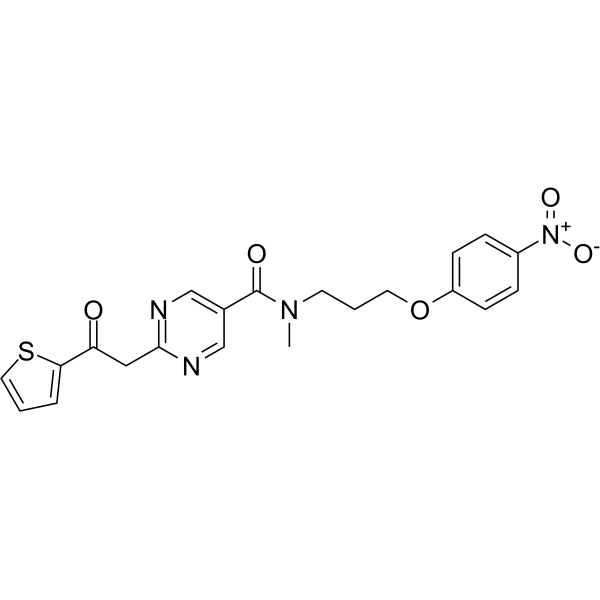
AChE-IN-22 (compound 10q) is a selective acetylcholinesterase (AChE) inhibitor against AChE and BuChE with the IC50 values of 0.88 μM and 10 μM, respectively. AChE-IN-22 can bind to both the CAS (catalytic active site) and PAS (peripheral anionic site) of AChE and has the potential for the research of Alzheimer's disease .
|
-
- HY-B2155
-
|
|
Cholinesterase (ChE)
|
Metabolic Disease
Inflammation/Immunology
|
|
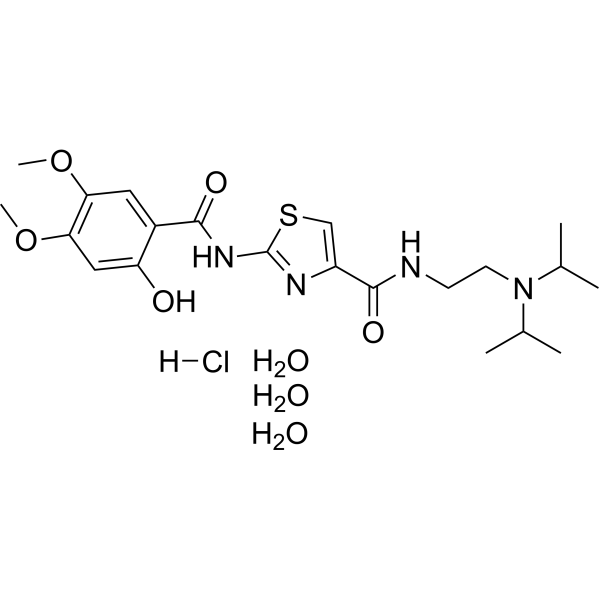
Acotiamide monohydrochloride trihydrate is an orally active, selective and reversible acetylcholinesterase (AChE) inhibitor, with IC50 of 1.79 μM. Acotiamide monohydrochloride trihydrate can enhance gastric contractility and accelerate delayed gastric emptying. Acotiamide monohydrochloride trihydrate has the potential for the research of functional dyspepsia involving gastric motility dysfunction and intestinal inflammatory .
|
-
- HY-175300
-
|
|
Cholinesterase (ChE)
|
Neurological Disease
|
|
AChE-IN-92 (Compound L4R1-3) is a highly selective acetylcholinesterase (AChE) inhibitor (IC50=4.6 nM). AChE-IN-92 blocks acetylcholine hydrolysis and elevates synaptic acetylcholine levels. AChE-IN-92 is promising for research of Alzheimer’s disease (AD) .
|
-

- HY-161842
-
|
|
Cholinesterase (ChE)
|
Neurological Disease
|
|
AChE-IN-67 (compound 8n) is a potent AChE inhibitor, with an IC50 of 0.033 μM. AChE-IN-67 exhibits activity similar to Donepezil (HY-14566). AChE-IN-67 exhibits high blood-brain barrier (BBB) permeability. AChE-IN-67 can be used for Alzheimer's disease research .
|
-

- HY-157978
-
|
|
Cholinesterase (ChE)
Amyloid-β
|
Neurological Disease
|
|
AChE-IN-59 (compounds 3b) is an AChE inhibitor, with an IC50 value of 0.05 μM. AChE-IN-59 can inhibit the aggregation of Aβ1-42, protect nerve cells and penetrate the blood-brain barrier well. AChE-IN-59 can be used for the research of Alzheimer's disease (AD) .
|
-
- HY-119292
-
|
|
Cholinesterase (ChE)
Amyloid-β
|
Neurological Disease
|
|
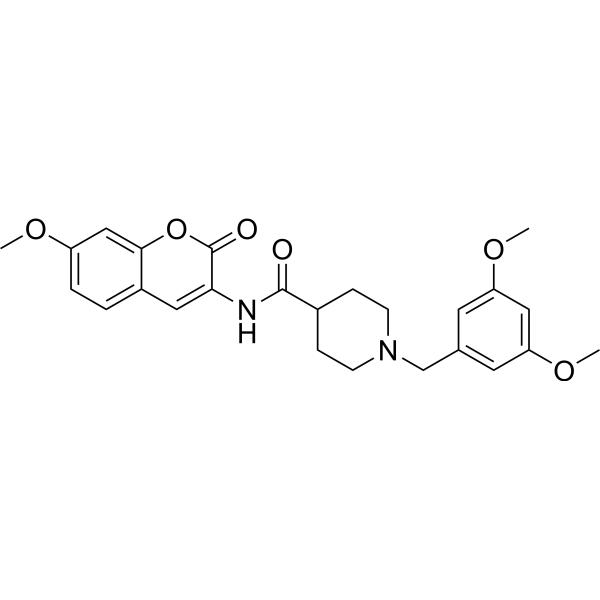
AP2238 is a dual-function acetylcholinesterase (AChE) inhibitor with Ki values for human AChE (HuAChE) and butyrylcholinesterase (BuChE) of 21.7 and 48.9 μM respectively. AP2238 blocks the pro-fibrotic interaction between the peripheral site of AChE and Aβ, and can inhibit Aβ aggregation. AP2238 can be used for the research of Alzheimer's disease .
|
-

- HY-W077226S
-
|
4-Amino-Alpha-diethyl amino-o-cresol-d10 dihydrochloride
|
Isotope-Labeled Compounds
Cholinesterase (ChE)
|
Neurological Disease
|
|
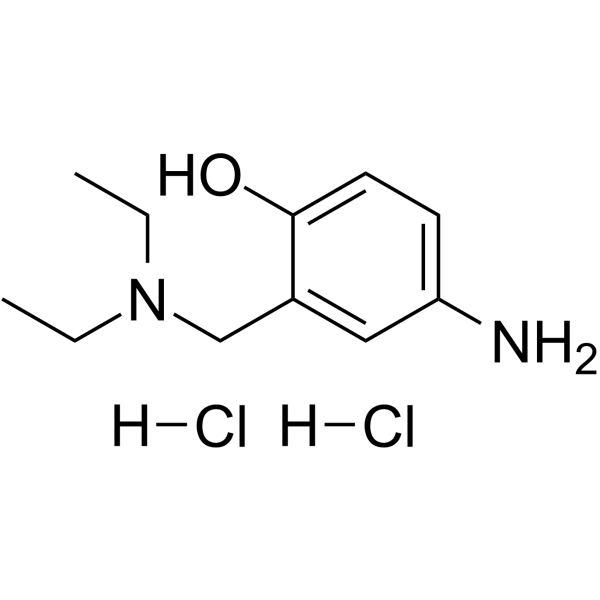
AChE-IN-23-d10 (4-Amino-Alpha-diethyl amino-o-cresol-d10 (dihydrochloride)) is the deuterium labeled AChE-IN-23 (HY-W077226). AChE-IN-23 (compound 3h) is an acetylcholinesterase (AChE) inhibitor with an IC50 value of 48.3 μM .
|
-

- HY-B0815R
-
|
|
Reference Standards
Cholinesterase (ChE)
|
Neurological Disease
|
|
Chlorpyrifos (Standard) is the analytical standard of Chlorpyrifos. This product is intended for research and analytical applications. Chlorpyrifos is a neurotoxic insecticide that belongs to the class of thionite esters. Chlorpyrifos is also a AChE inhibitor that affects neurological function in insects, humans and other animals. Chlorpyrifos interferes with cell replication and differentiation, ultimately altering synaptic transmission in neurons .
|
-

- HY-180552
-
|
|
Cholinesterase (ChE)
Monoamine Oxidase
|
Neurological Disease
|
|
AChE-IN-104 (compound 3e) is a potent acetylcholinesterase (AChE) inhibitor with an IC50 of 8.01 µM. AChE-IN-104 also inhibits BChE and MAO-A with IC50s of 65.41 µM and 1.51 µM, respectively. AChE-IN-104 can be used for Alzheimer’s disease (AD) research .
|
-

- HY-120970
-
|
|
Cholinesterase (ChE)
GABA Receptor
iGluR
|
Neurological Disease
|
|
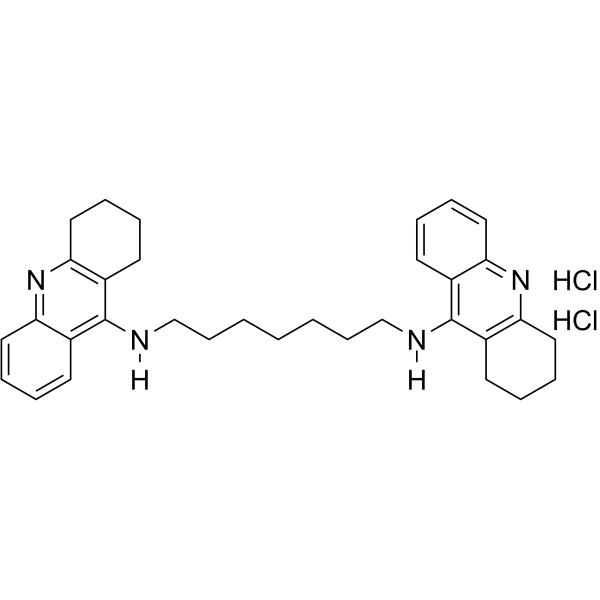
Bis(7)-tacrine dihydrochloride is a dimeric AChE inhibitor derived from tacrine. Bis(7)-tacrine dihydrochloride prevents glutamate-induced neuronal apoptosis by blocking NMDA receptors. Bis(7)-tacrine dihydrochloride is a potent GABAAreceptor antagonist. Bis(7)-tacrine dihydrochloride has the potential for the research of Alzheimer's disease .
|
-
- HY-147938
-
|
|
Cholinesterase (ChE)
Amyloid-β
|
Neurological Disease
|
|
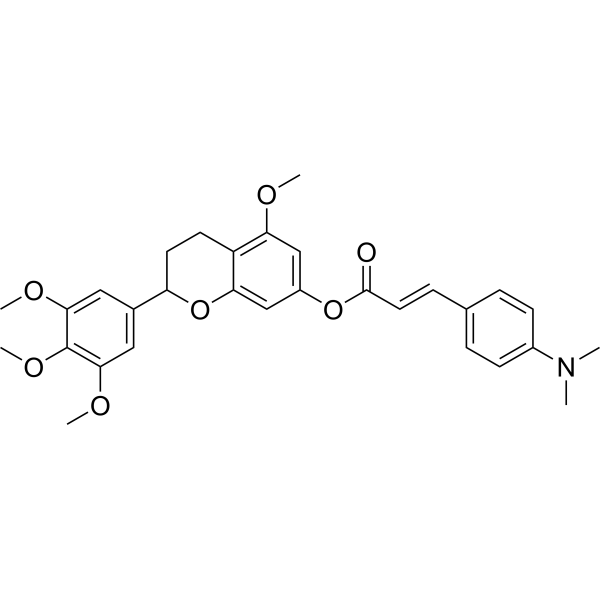
AChE-IN-19 (compound A15) is a highly potent AChE inhibitor with an IC50 value of 0.56 μM, also inhibits Aβ aggregation. AChE-IN-19 has potent neuroprotective activities and nearly no toxicity on SH-SY5Y cells. AChE-IN-19 can be used for researching Alzheimer's disease .
|
-
- HY-N5077B
-
|
|
Cholinesterase (ChE)
P-glycoprotein
|
Neurological Disease
Inflammation/Immunology
Cancer
|
|
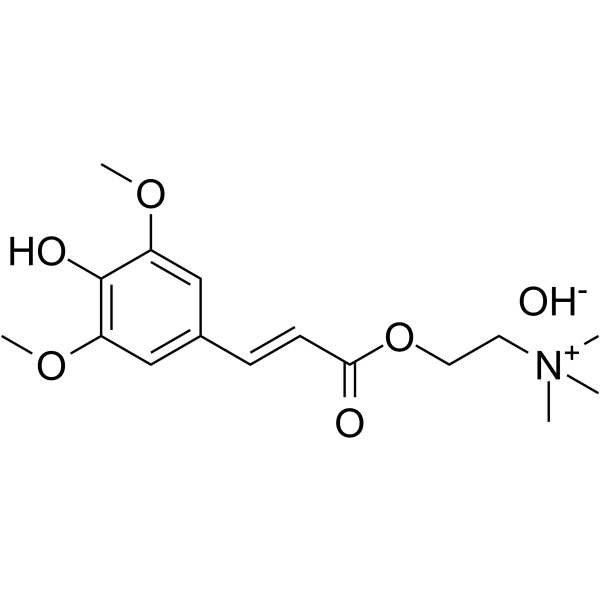
Sinapine hydroxide is an alkaloid isolated from seeds of the cruciferous species. Sinapine hydroxide exhibits anti-inflammatory, anti-oxidant, anti-tumor, anti-angiogenic and radio-protective effects. Sinapine hydroxide is also an acetylcholinesterase (AChE) inhibitor and can be used for the research of Alzheimer’s disease, ataxia, myasthenia gravis, and Parkinson’s disease .
|
-
- HY-103374A
-
|
(-)-Eseroline phenylcarbamate tartrate; (-)-Phenserine (+)-tartrate
|
Cholinesterase (ChE)
Amyloid-β
|
Neurological Disease
|
|
Phenserine tartrate ((-)-Eseroline phenylcarbamate) is a derivative of Physostigmine (HY-N6608) and is a potent, noncompetitive, long-acting and selective AChE inhibitor. Phenserine tartrate reduces β-amyloid precursor protein (APP) and β-amyloid peptide (Aβ) formation. Phenserine tartrate improves cognitive performance and attenuates the progression of Alzheimer's disease .
|
-

- HY-183949
-
|
|
Cholinesterase (ChE)
Reactive Oxygen Species (ROS)
|
Others
|
|
Insecticidal agent 33 is an AChE inhibitor with nematicidal activity. Insecticidal agent 33 impairs locomotor activity of Caenorhabditis elegans, and induces oxidative damage in Caenorhabditis elegans, including elevated reactive oxygen species (ROS) levels, lipofuscin accumulation, lipid deposition, and disrupted cellular homeostasis. Insecticidal agent 33 can be used for the research of plant-parasitic nematode infection .
|
-

- HY-N0923
-
|
(+)-Corydaline; Corydalin
|
Cholinesterase (ChE)
Enterovirus
Opioid Receptor
|
Neurological Disease
|
|
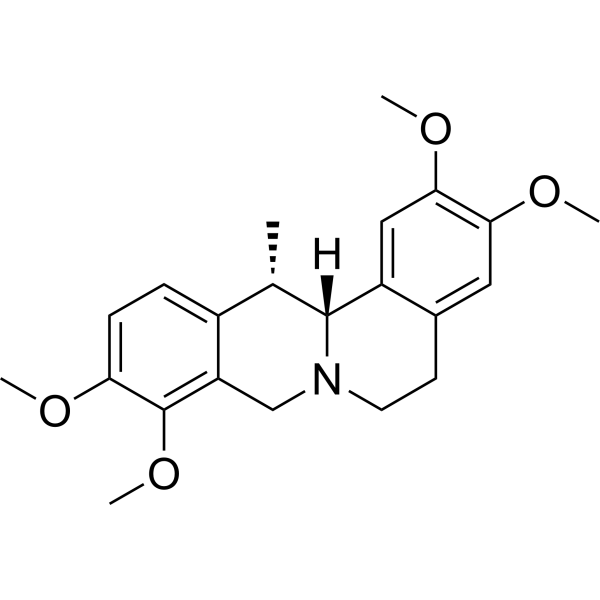
Corydaline ((+)-Corydaline), an isoquinoline alkaloid isolated from Corydalis yanhusuo, is an AChE inhibitor with an IC50 of 226 μM. Corydaline is a μ-opioid receptor (Ki of 1.23 μM) agonist and inhibits enterovirus 71 (EV71) replication (IC50 of 25.23 μM). Corydaline has anti-angiogenic, anti-allergic and gastric-emptying and antinociceptive activities .
|
-
- HY-N0450
-
|
|
P-glycoprotein
Cholinesterase (ChE)
|
Cancer
|
|
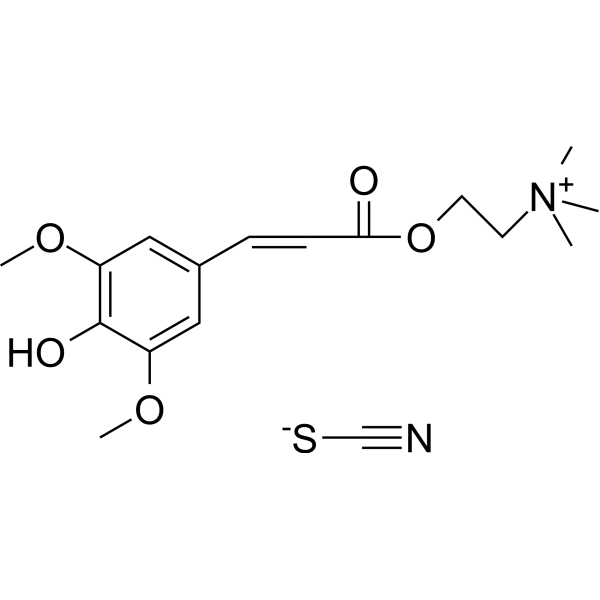
Sinapine thiocyanate is an alkaloid isolated from seeds of the cruciferous species. Sinapine thiocyanate exhibits anti-inflammatory, anti-oxidant, anti-tumor, anti-angiogenic and radio-protective effects. Sinapine thiocyanate is also an acetylcholinesterase (AChE) inhibitor and can be used for the research of Alzheimer’s disease, ataxia, myasthenia gravis, and Parkinson’s disease .
|
-
- HY-180113
-
|
|
Cholinesterase (ChE)
|
Neurological Disease
|
|
AChE-IN-100 (Compound 5n) is an AChE inhibitor with an IC50 of 2.38 nM. AChE-IN-100 shows superior ROS-scavenging capabilities. AChE-IN-100 has antioxidant capacity. AChE-IN-100 shows a significant neuroprotective effect against hydrogen peroxide-induced damage. AChE-IN-100 can be used in the research of Alzheimer’s diseases .
|
-

- HY-B0828
-
|
|
Parasite
Cholinesterase (ChE)
|
Others
|
|
Triazophos, a non-systemic insecticide and acaricide that acts as an acetylcholinesterase (AChE) inhibitor, covalently and irreversibly binds to the acetylcholine binding site, thus blocking the hydrolysis of acetylcholine and leading to hyperexcitability; it is effective against a variety of soil insects and mites, including aphids, thrips, midges, beetles, Lepidoptera larvae, cutworms, and spider mites in crops such as ornamentals, cotton, rice, maize, soybeans, oil palms, olives, and coffee.
|
-

- HY-170658
-
|
|
Autophagy
Amyloid-β
Reactive Oxygen Species (ROS)
|
Neurological Disease
Inflammation/Immunology
|
|
AChE-IN-80 (Compound 1) is an acetylcholinesterase (AChE) inhibitor. AChE-IN-80 can inhibit inflammation and the production of reactive oxygen species (ROS) in vitro- cultured neurons and microglia, trigger autophagy responses, and block the propagation of β-amyloid (Aβ) fibrils. AChE-IN-80 possesses antioxidant activity and neuroprotective effects and can be used in the study of Alzheimer's disease .
|
-

- HY-N10384
-
|
|
Cholinesterase (ChE)
|
Neurological Disease
|
|
AChE-IN-17 (compound 1) is a potent AChE inhibitor with an IC50 value of 28.98 μM. AChE-IN-17 can significantly prevent H2O2-induced PC12 cell death, exhibiting excellent neuroprotective effect. AChE-IN-17 can be used for researching neurodegenerative diseases (NDs) .
|
-
- HY-N18289
-
|
|
Cholinesterase (ChE)
|
Neurological Disease
|
|
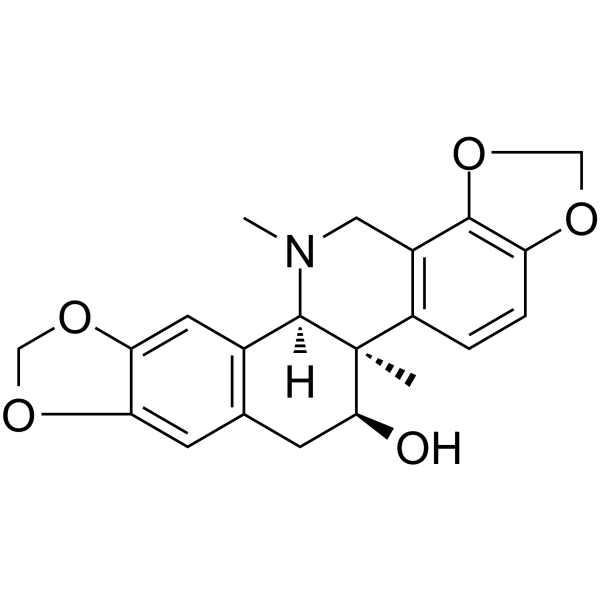
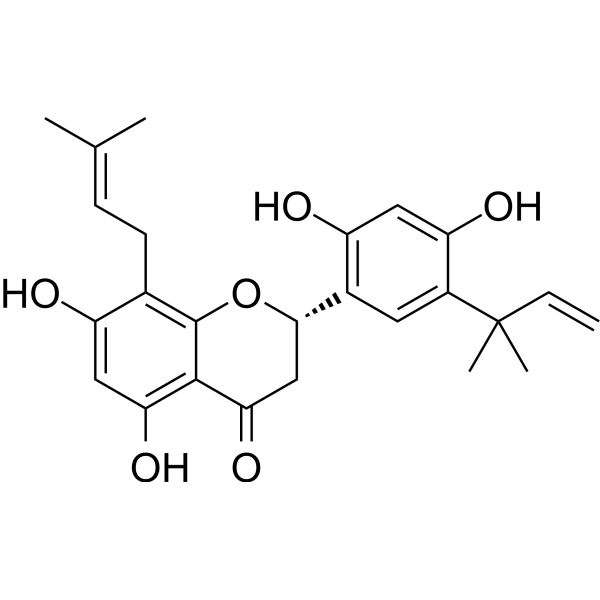
8-Hydroxydihydrochelerythrine is a benzophenanthridine alkaloid-derived, selective and competitive AChE inhibitor (IC50=0.61 μM) isolated from the roots of Zanthoxylum nitidum (Roxb.) DC. 8-Hydroxydihydrochelerythrine increases the content of acetylcholine in the synapses of cholinergic neurons and enhances cholinergic neurotransmission. 8-Hydroxydihydrochelerythrine is applicable to the research of neurodegenerative diseases with dementia such as Alzheimer's disease .
|
-

- HY-W165085
-
|
Decamethylenebispyridinium dibromide
|
Cholinesterase (ChE)
|
Neurological Disease
|
|
1,10-Bis(pyridinium)decane (Decamethylenebispyridinium dibromide) is an acetylcholinesterase (AChE) inhibitor with an IC50 of 25.8 nM. 1,10-Bis(pyridinium)decane acts as a bis-quaternary ligand that bridges the enzyme's catalytic site and peripheral site via its two pyridinium groups. 1,10-Bis(pyridinium)decane can be used for the research of alzheimer's disease .
|
-

- HY-147846
-
-
- HY-147952
-
|
|
Cholinesterase (ChE)
|
Neurological Disease
Inflammation/Immunology
|
|
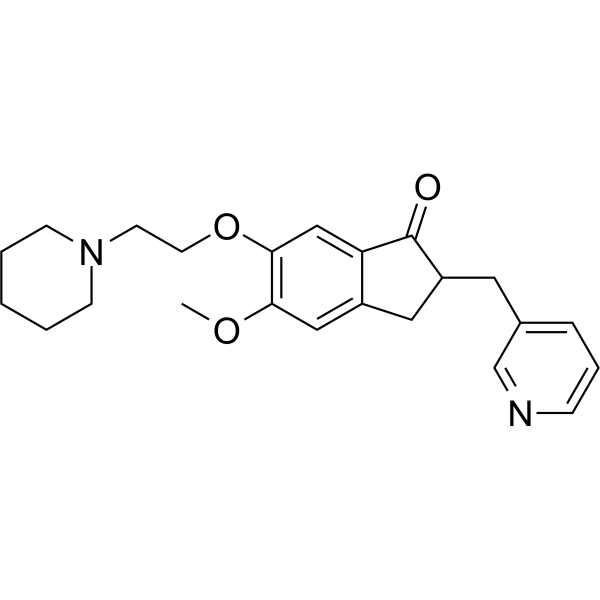
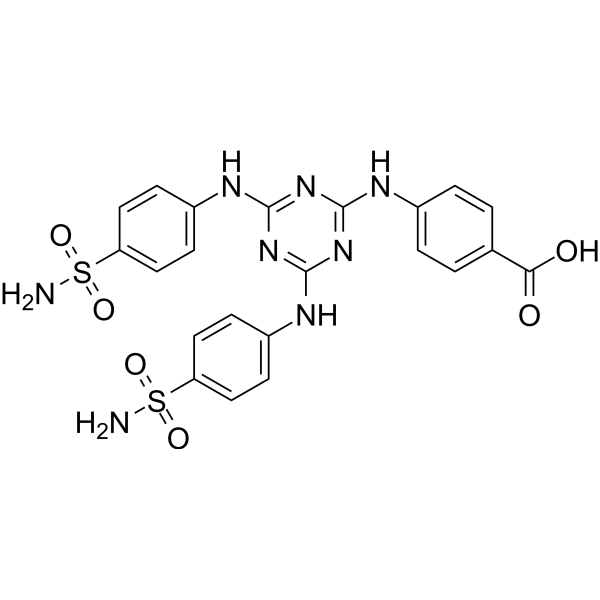
AChE-IN-20 (compound M26) is a potent AChE inhibitor with IC50 value of 397.32 nM and with Ki value of 335.76 nM. AChE-IN-20 shows inhibition potency against hCA I , hCA II and α-GLY with IC50 values of 84.14, 69.24 and 52.08 nM and with Ki values of 97.86, 76.23 and 57.93 nM, respectively .
|
-
- HY-111338R
-
|
|
Cholinesterase (ChE)
Reference Standards
|
Neurological Disease
|
|
Tacrine (Standard) is the analytical standard of Tacrine. This product is intended for research and analytical applications. Tacrine is an effective oral acetylcholine (AChE) inhibitor (IC50 = 109 nM) and also acts as an active substrate for CYP1A2. Tacrine can restore cognitive dysfunction in elderly rats. Tacrine can cause liver toxicity and is used in research related to Alzheimer's disease .
|
-

- HY-B0732R
-
|
HSR803 (Standard)
|
Reference Standards
Cholinesterase (ChE)
Dopamine Receptor
Bacterial
|
Neurological Disease
|
|
Itopride (hydrochloride) (Standard) is the analytical standard of Itopride (hydrochloride). This product is intended for research and analytical applications. Itopride (HSR803) hydrochloride is a potent dopamine-2 antagonist and an acetylcholine esterase (AChE) inhibitor. Itopride hydrochloride enhances gastric motility through both antidopaminergic and anti-acetylcholinesterasic actions, can be used as a gastrointestinal prokinetic agent. Itopride can be used for researching gastro-esophageal reflux disease (GERD) .
|
-

- HY-173144
-
-

- HY-175856
-
|
|
Cholinesterase (ChE)
|
Neurological Disease
|
|
AChE-IN-95 (Compound 7) is a highly selective competitive acetylcholinesterase (AChE) inhibitor (IC50=17.87 μM, Ki=19.48 μM). AChE-IN-95 exhibits strong cytotoxicity against SH-SY5Y neuroblastoma cells. AChE-IN-95 is promising for research of Alzheimer’s disease and neurodegenerative disorders .
|
-

- HY-174462
-
|
|
Cholinesterase (ChE)
|
Neurological Disease
|
|
AChE-IN-90 (Compound 5b) is an orally active, brain-penetrant and potent acetylcholinesterase (AChE) inhibitor with an IC50 value of 0.023 μM against human AChE and lower selectivity for butyrylcholinesterase (BuChE) (IC50 1.8 μM). AChE-IN-90 increases acetylcholine levels in the synaptic cleft. AChE-IN-90 is promising for research of neurodegenerative diseases such as Alzheimer's disease .
|
-

- HY-B0882
-
|
|
Cholinesterase (ChE)
|
Neurological Disease
Inflammation/Immunology
|
|
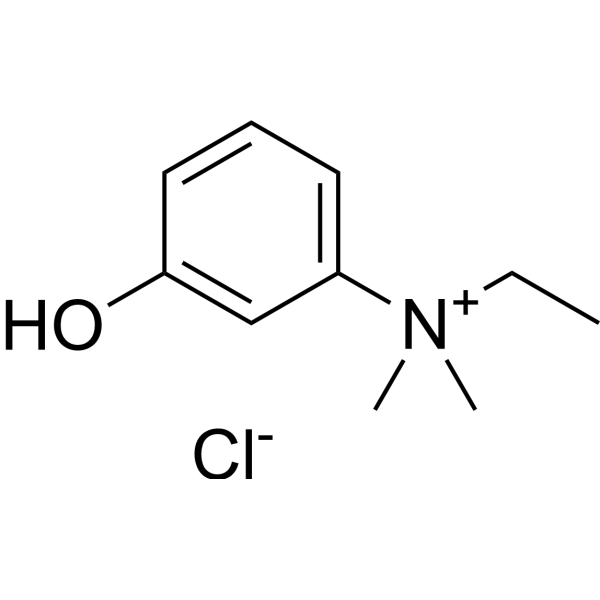
Edrophonium chloride is a short-acting acetylcholinesterase (AChE) inhibitor. Edrophonium chloride has Ki values of 0.2, 0.2, and 0.4 μM and IC50 values of 0.2, 0.05, and 0.5 μM for AChE in human erythrocytes, purified calf forebrain, and purified octopus brain, respectively. Edrophonium chloride can be used to detect early digitalis toxicity and in the study of myasthenia gravis .
|
-
- HY-A0009
-
|
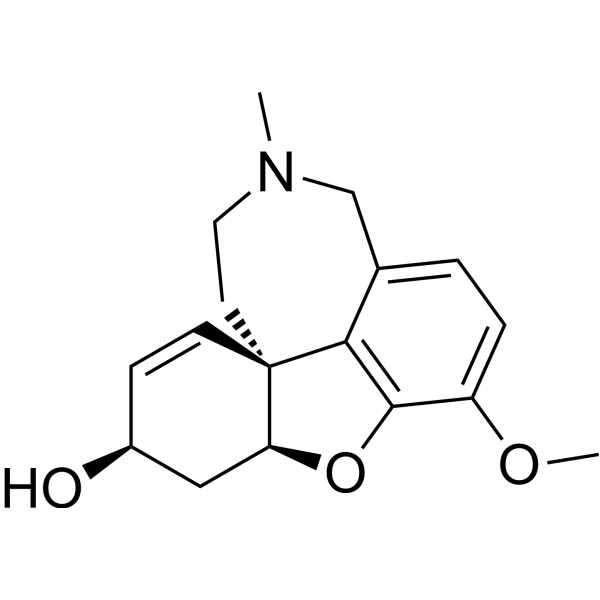
Galantamine hydrobromide
|
Cholinesterase (ChE)
nAChR
|
Neurological Disease
|
|
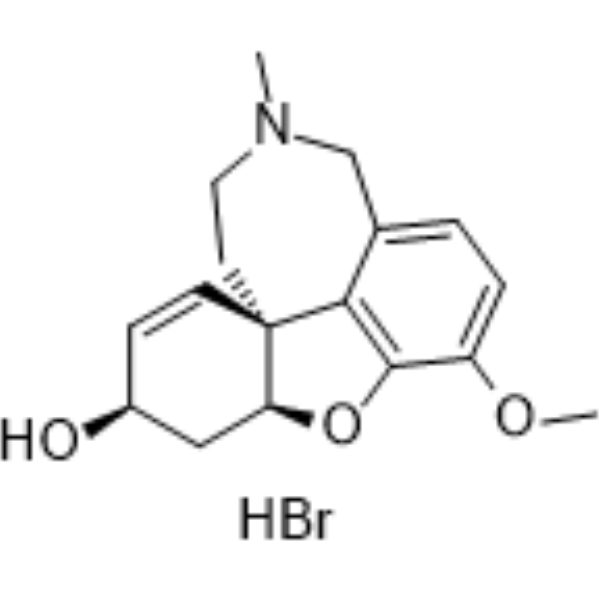
Galanthamine hydrobromide (Galantamine hydrobromide) is a selective, reversible, competitive, alkaloid AChE inhibitor, with an IC50 of 0.35 µM. Galanthamine hydrobromide is a potent allosteric potentiating ligand (APL) of human α3β4, α4β2, α6β4 nicotinic receptors ( nAChRs). Galanthamine hydrobromide is developed for the research of Alzheimer's disease (AD) .
|
-
- HY-129101
-
|
Eseroline fumarate
|
5-HT Receptor
|
Neurological Disease
|
|
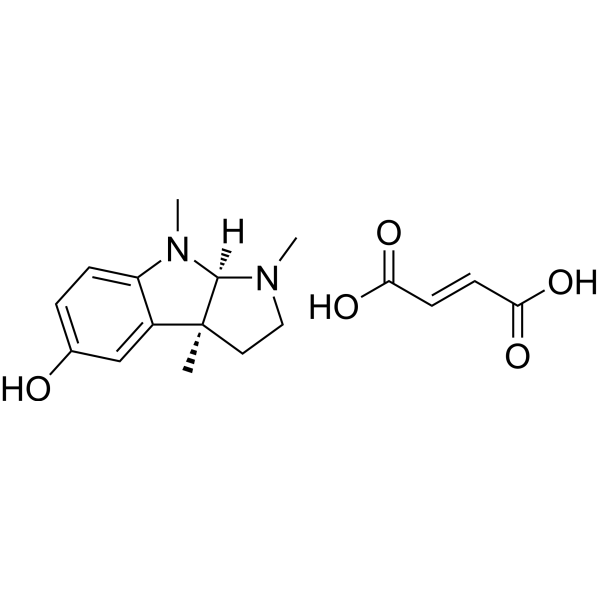
(-)-Eseroline fumarate is a metabolic of Physostigmine (HY-N6608), an AChE inhibitor. (-)-Eseroline fumarate elicits a leakage of lactic acid dehydrogenase (LDH) from cancer cells. (-)-Eseroline fumarate also induces the release of adenine nucleotides and 5-hydroxytryptamine (5-HT) from neuronal cells, thus induce cell death. (-)-Eseroline fumarate inhibits the electrically evoked twitches of the mouse vas deferens and of the guinea-pig ileum .
|
-
- HY-163126
-
|
|
Cholinesterase (ChE)
|
Cancer
|
|
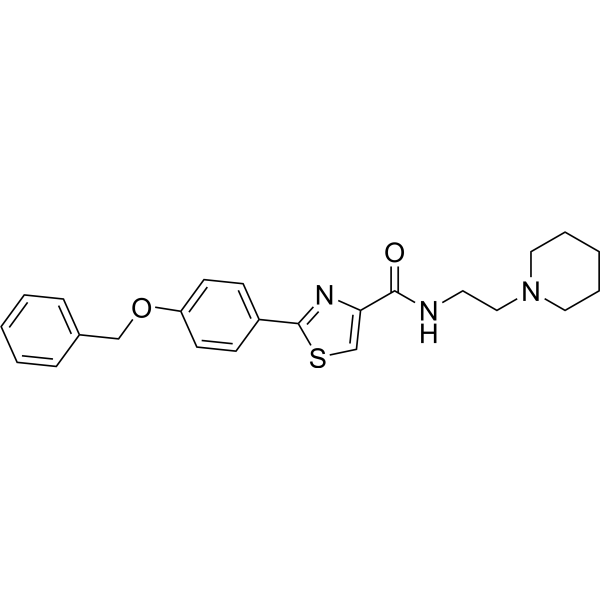
AChE-IN-52 (compound A6) is an acetylcholinesterase (AChE) inhibitor. AChE-IN-52 shows antitumor efficacy, especially against breast cancer MCF-7 cells. AChE-IN-52 significantly disrupts the amino acid metabolism and inhibits migration of MCF-7. AChE-IN-52 plays anticancer role by regulating Best1 and HIST1H2BJ .
|
-
- HY-B1266R
-
|
Eserine salicylate (Standard)
|
Reference Standards
Cholinesterase (ChE)
|
Neurological Disease
|
|
Physostigmine (salicylate) (Standard) is the analytical standard of Physostigmine (salicylate). This product is intended for research and analytical applications. Physostigmine salicylate (Eserine salicylate) is a reversible acetylcholinesterase (AChE) inhibitor. Physostigmine salicylate crosses the blood-brain barrier and stimulates central cholinergic neurotransmission. Physostigmine salicylate can reverse memory deficits in transgenic mice with Alzheimer's disease. Physostigmine salicylate is also an antidote for anticholinergic poisoning .
|
-

- HY-121467S1
-
|
Z-338 free base-d4; YM443 free base-d4
|
Isotope-Labeled Compounds
Cholinesterase (ChE)
|
Metabolic Disease
Inflammation/Immunology
|
|
Acotiamide-d4 (Z-338 (free base)-d4) is deuterium labeled Acotiamide. Acotiamide is an orally active, selective and reversible acetylcholinesterase (AChE) inhibitor, with an IC50 of 1.79 μM. Acotiamide can enhance gastric contractility and accelerate delayed gastric emptying. Acotiamide has the potential for the research of functional dyspepsia involving gastric motility dysfunction and intestinal inflammatory .
|
-

- HY-155366
-
|
|
Cholinesterase (ChE)
GSK-3
|
Neurological Disease
|
|
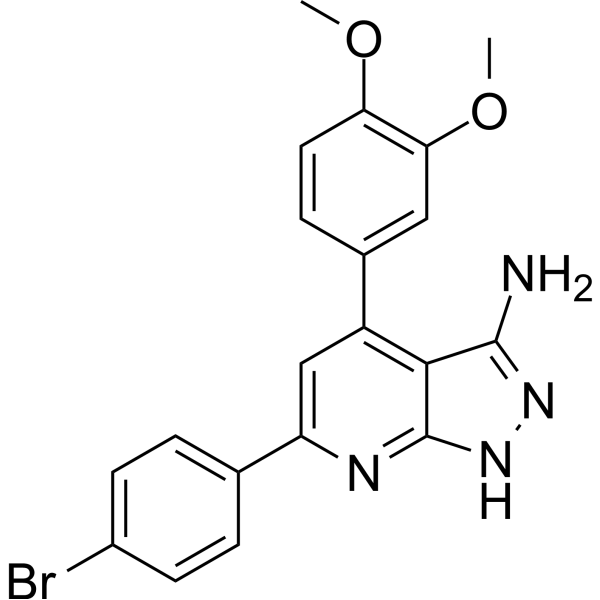
hAChE-IN-6 (compound 51) is a brain penetrant AChE inhibitor with an IC50 of 0.16 μM. hAChE-IN-6 also inhibits hBuChE and GSK3β with IC50 values of 0.69 μM and 0.26 μM, respectively. hAChE-IN-6 inhibits tau protein and Aβ1-42 self-aggregation, and can be used for Alzheimer's disease (AD) research .
|
-
- HY-19651B
-
|
TAK-147 fumarate
|
Cholinesterase (ChE)
|
Neurological Disease
|
|
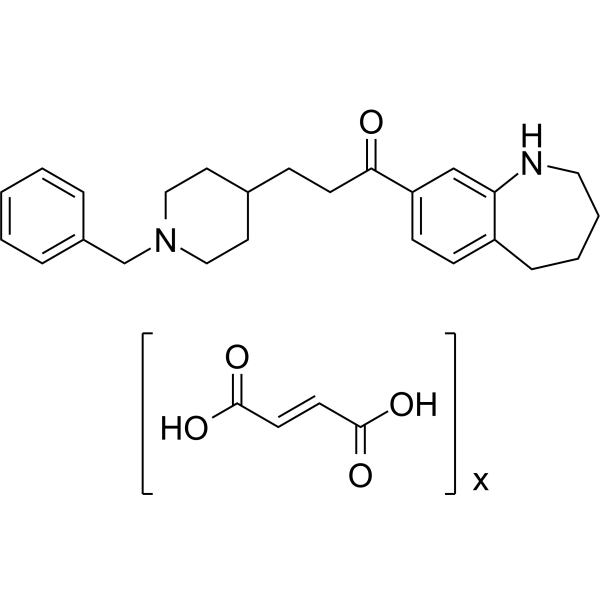
Zanapezil (TAK-147) fumarate is a potent, reversible and selective acetylcholine esterase (AChE) inhibitor. Zanapezil fumarate shows a potent and reversible inhibition of AChE activity in homogenates of the rat cerebral cortex (IC50=51.2 nM). Zanapezil fumarate shows a moderate inhibition of muscarinic M1 and M2 receptor binding with Ki values of 234 and 340 nM, respectively. Zanapezil fumarate can be used for the research of early stages of Alzheimer's disease (AD) .
|
-
- HY-19651A
-
|
TAK-147
|
Cholinesterase (ChE)
|
Neurological Disease
|
|
Zanapezil (TAK-147) is a potent, reversible and selective acetylcholine esterase (AChE) inhibitor. Zanapezil shows a potent and reversible inhibition of AChE activity in homogenates of the rat cerebral cortex (IC50=51.2 nM). Zanapezil shows a moderate inhibition of muscarinic M1 and M2 receptor binding with Ki values of 234 and 340 nM, respectively. Zanapezil can be used for the research of early stages of Alzheimer's disease (AD) .
|
-

- HY-107922R
-
|
Isothazine (Standard)
|
Reference Standards
Cholinesterase (ChE)
iGluR
mAChR
|
Neurological Disease
|
|
Ethopropazine (hydrochloride) (Standard) is the analytical standard of Ethopropazine (hydrochloride) (HY-107922). This product is intended for research and analytical applications. Ethopropazine (Isothazine) hydrochloride is a potent and selective BChE inhibitor, a poor AChE inhibitor and a non-selective mAChR and NMDA antagonist. Ethopropazine hydrochloride has anticholinergic, antihistamine, antiadrenergic actions and properties. Ethopropazine hydrochloride alleviates thermal hyperalgesia in a dose dependent manner. Ethopropazine hydrochloride can be used for the research of Parkinson’s disease .
|
-

- HY-103374B
-
|
(±)-Eseroline phenylcarbamate
|
Cholinesterase (ChE)
Amyloid-β
|
Neurological Disease
|
|
(±)Phenserine ((±)-Eseroline phenylcarbamate) is the racemic form of Phenserine (HY-103374). Phenserine is a derivative of Physostigmine (HY-N6608) and is an effective, non-competitive, long-acting and selective AChE inhibitor. Phenserine can reduce the formation of β-amyloid precursor protein (APP) and β-amyloid peptide (Aβ). Phenserine can improve cognitive ability and slow down the progression of Alzheimer's disease .
|
-

- HY-N0923R
-
|
(+)-Corydaline (Standard); Corydalin (Standard)
|
Reference Standards
Cholinesterase (ChE)
Enterovirus
Opioid Receptor
|
Neurological Disease
|
|
Corydaline (Standard) is the analytical standard of Corydaline. This product is intended for research and analytical applications. Corydaline ((+)-Corydaline), an isoquinoline alkaloid isolated from Corydalis yanhusuo, is an AChE inhibitor with an IC50 of 226 μM. Corydaline is a μ-opioid receptor (Ki of 1.23 μM) agonist and inhibits enterovirus 71 (EV71) replication (IC50 of 25.23 μM). Corydaline has anti-angiogenic, anti-allergic and gastric-emptying and antinociceptive activities .
|
-

- HY-100196AR
-
|
PQQ disodium salt (Standard); Methoxatin disodium salt (Standard)
|
Reference Standards
Endogenous Metabolite
|
Inflammation/Immunology
|
|
Triazophos (Standard) is the analytical standard of Triazophos. This product is intended for research and analytical applications. Triazophos, a non-systemic insecticide and acaricide that acts as an acetylcholinesterase (AChE) inhibitor, covalently and irreversibly binds to the acetylcholine binding site, thus blocking the hydrolysis of acetylcholine and leading to hyperexcitability; it is effective against a variety of soil insects and mites, including aphids, thrips, midges, beetles, Lepidoptera larvae, cutworms, and spider mites in crops such as ornamentals, cotton, rice, maize, soybeans, oil palms, olives, and coffee.
|
-

- HY-B2155R
-
|
|
Reference Standards
Cholinesterase (ChE)
|
Metabolic Disease
Inflammation/Immunology
|
|
Acotiamide (monohydrochloride trihydrate) (Standard) is the analytical standard of Acotiamide (monohydrochloride trihydrate). This product is intended for research and analytical applications. Acotiamide monohydrochloride trihydrate is an orally active, selective and reversible acetylcholinesterase (AChE) inhibitor, with IC50 of 1.79 μM. Acotiamide monohydrochloride trihydrate can enhance gastric contractility and accelerate delayed gastric emptying. Acotiamide monohydrochloride trihydrate has the potential for the research of functional dyspepsia involving gastric motility dysfunction and intestinal inflammatory .
|
-

- HY-A0009S
-
|
Galantamine-d3 hydrobromide
|
Isotope-Labeled Compounds
Cholinesterase (ChE)
nAChR
|
Neurological Disease
|
|
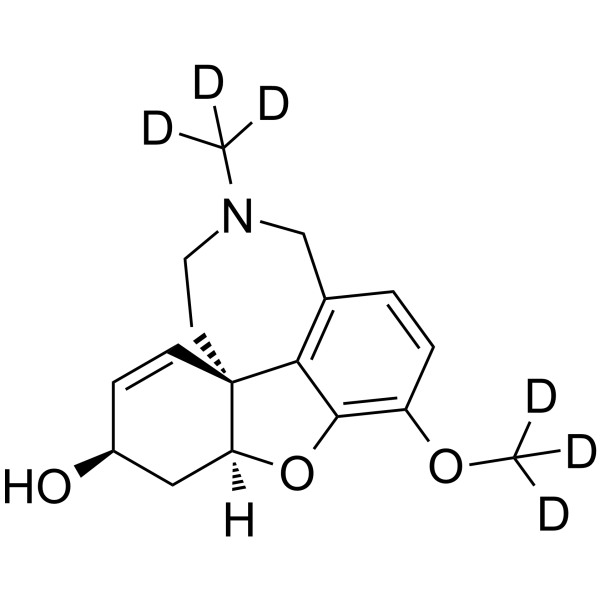
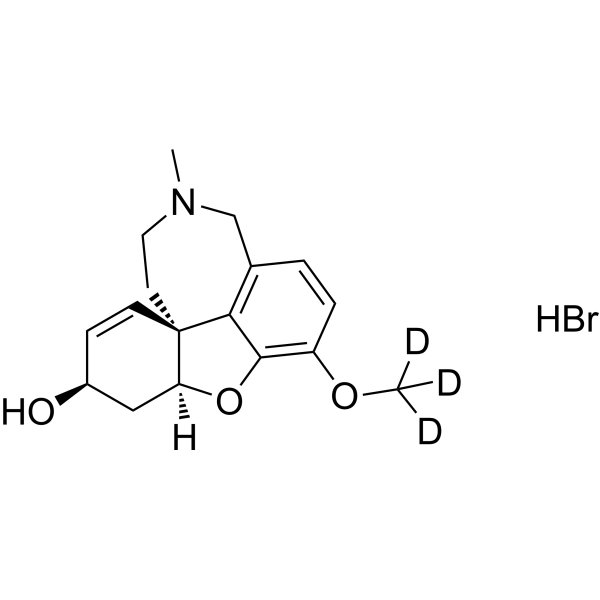
Galanthamine-d3 (hydrobromide) is deuterium labeled Galanthamine (hydrobromide). Galanthamine hydrobromide (Galantamine hydrobromide) is a selective, reversible, competitive, alkaloid AChE inhibitor, with an IC50 of 0.35 μM. Galanthamine hydrobromide is a potent allosteric potentiating ligand (APL) of human α3β4, α4β2, α6β4 nicotinic receptors ( nAChRs). Galanthamine hydrobromide is developed for the research of Alzheimer's disease (AD) .
|
-
- HY-N0450R
-
|
|
Reference Standards
P-glycoprotein
Cholinesterase (ChE)
|
Cancer
|
|
Sinapine (thiocyanate) (Standard) is the analytical standard of Sinapine (thiocyanate). This product is intended for research and analytical applications. Sinapine thiocyanate is an alkaloid isolated from seeds of the cruciferous species. Sinapine thiocyanate exhibits anti-inflammatory, anti-oxidant, anti-tumor, anti-angiogenic and radio-protective effects. Sinapine thiocyanate is also an acetylcholinesterase (AChE) inhibitor and can be used for the research of Alzheimer’s disease, ataxia, myasthenia gravis, and Parkinson’s disease .
|
-

- HY-144316
-
|
|
Cholinesterase (ChE)
GSK-3
|
Neurological Disease
|
|
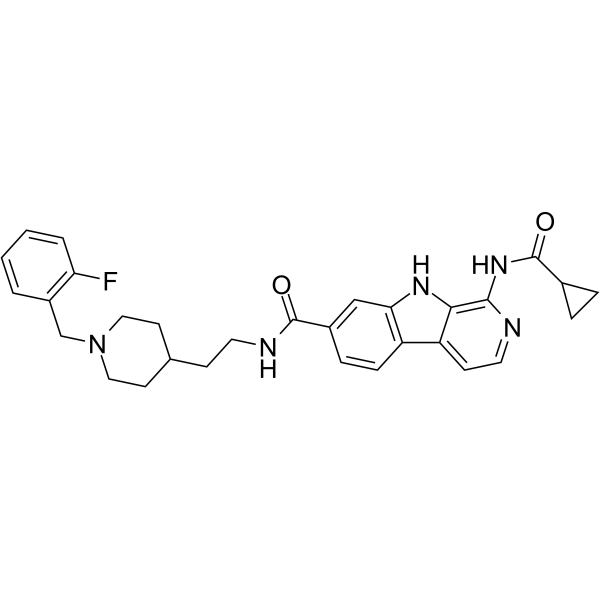
ZLWH-23 is a selective AChE inhibitor (IC50=0.27 μM) with GSK-3β inhibitory property (IC50=6.78 μM). ZLWH-23 possesses selectivity for AChE over BChE (IC50=20.82 μM) and for GSK-3β over multi-kinases. ZLWH-23 has the potential for the research of Alzheimer's disease .
|
-
- HY-175758
-
|
|
Cholinesterase (ChE)
Amyloid-β
|
Neurological Disease
|
|
AChE-IN-94 is an orally active and blood-brain barrier penetrable AChE inhibitor with an IC50 of 0.40 μM and Ki of 0.28 μM. AChE-IN-94 prevents self-induced and AChE-mediated Aβ1-42 aggregation. AChE-IN-94 alleviates cognitive/memory deficits in Scopolamine (HY-N0296)-induced amnesic model. AChE-IN-94 can be used for the study of Alzheimer's disease (AD) .
|
-

- HY-B0828R
-
|
|
Parasite
Reference Standards
|
Others
|
|
Triazophos (Standard) is the analytical standard of Triazophos. This product is intended for research and analytical applications. Triazophos, a non-systemic insecticide and acaricide that acts as an acetylcholinesterase (AChE) inhibitor, covalently and irreversibly binds to the acetylcholine binding site, thus blocking the hydrolysis of acetylcholine and leading to hyperexcitability; it is effective against a variety of soil insects and mites, including aphids, thrips, midges, beetles, Lepidoptera larvae, cutworms, and spider mites in crops such as ornamentals, cotton, rice, maize, soybeans, oil palms, olives, and coffee.
|
-

- HY-U00035R
-
|
|
Antibiotic
Reference Standards
Bacterial
|
Infection
|
|
Sinapine (thiocyanate) (Standard) is the analytical standard of Sinapine (thiocyanate). This product is intended for research and analytical applications. Sinapine thiocyanate is an alkaloid isolated from seeds of the cruciferous species. Sinapine thiocyanate exhibits anti-inflammatory, anti-oxidant, anti-tumor, anti-angiogenic and radio-protective effects. Sinapine thiocyanate is also an acetylcholinesterase (AChE) inhibitor and can be used for the research of Alzheimer’s disease, ataxia, myasthenia gravis, and Parkinson’s disease .
|
-

- HY-B0882S
-
|
|
Isotope-Labeled Compounds
Cholinesterase (ChE)
|
Neurological Disease
Inflammation/Immunology
|
|
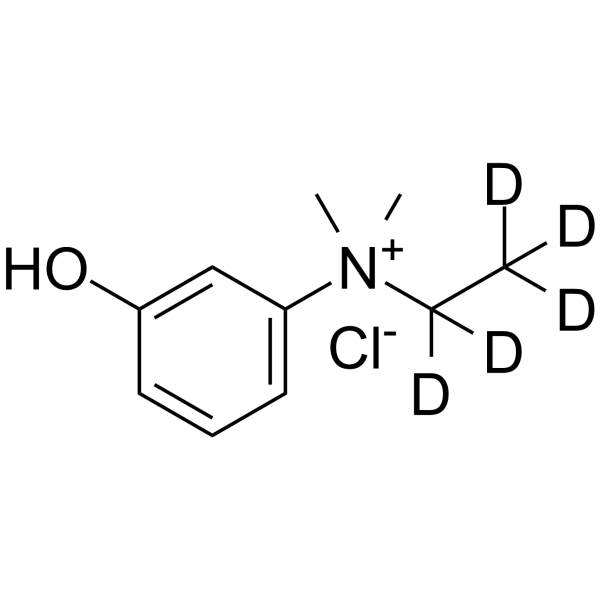
Edrophonium-d5 chloride is the deuterium labeled Edrophonium chloride (HY-B0882). Edrophonium chloride is a short-acting acetylcholinesterase (AChE) inhibitor. Edrophonium chloride has Ki values of 0.2, 0.2, and 0.4 μM and IC50 values of 0.2, 0.05, and 0.5 μM for AChE in human erythrocytes, purified calf forebrain, and purified octopus brain, respectively. Edrophonium chloride can be used to detect early digitalis toxicity and in the study of myasthenia gravis .
|
-
- HY-B0882R
-
|
|
Reference Standards
Cholinesterase (ChE)
|
Neurological Disease
Inflammation/Immunology
|
|
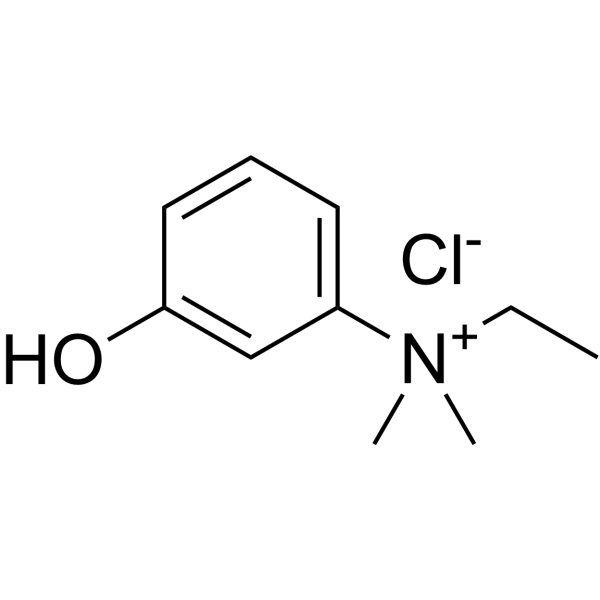
Edrophonium chloride (Standard) is the analytical standard of Edrophonium chloride (HY-B0882). This product is intended for research and analytical applications. Edrophonium chloride is a short-acting acetylcholinesterase (AChE) inhibitor. Edrophonium chloride has Ki values of 0.2, 0.2, and 0.4 μM and IC50 values of 0.2, 0.05, and 0.5 μM for AChE in human erythrocytes, purified calf forebrain, and purified octopus brain, respectively. Edrophonium chloride can be used to detect early digitalis toxicity and in the study of myasthenia gravis.
|
-
- HY-B1113
-
|
Dimpylate
|
Environmental Pollutants
Parasite
|
Infection
|
|
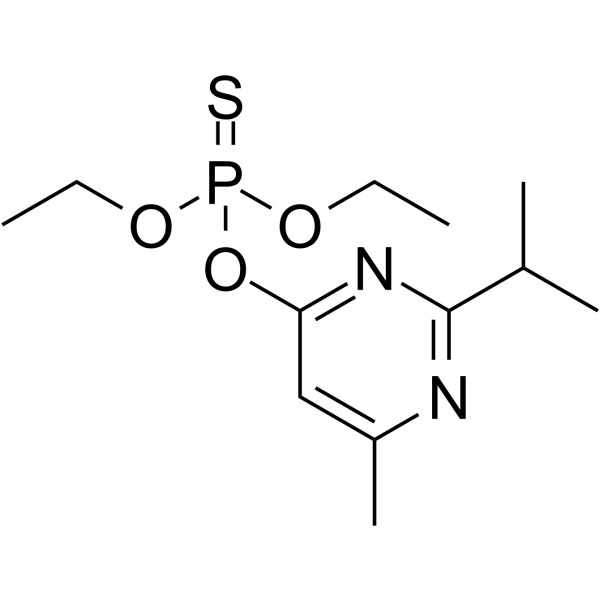
Diazinon is an orally active, irreversible AChE inhibitor and insecticide that can be absorbed through the digestive system, skin or respiratory tract. Diazinon inhibits AChE, leading to accumulation of acetylcholine, which in turn overstimulates ACh receptors and affects the nervous system. Diazinon also produces reactive oxygen species (ROS), which induce oxidative stress in various tissues. Diazinon is mainly used in the agricultural field as an insecticide and may have potential effects on human and animal health .
|
-
- HY-B0732AS
-
|
HSR803-d6 free base
|
Isotope-Labeled Compounds
Dopamine Receptor
Bacterial
Cholinesterase (ChE)
|
Others
|
|
Itopride-d6 (HSR803-d6 (free base)) is deuterium labeled Itopride. Itopride (HSR803 free base) is a potent and orally active dopamine-2 antagonist and an acetylcholine esterase (AChE) inhibitor. Itopride enhances gastric motility through both antidopaminergic and anti-acetylcholinesterasic actions, can be used as a gastrointestinal prokinetic agent. Itopride can be used for researching gastro-esophageal reflux disease (GERD) .
|
-

- HY-161466
-
|
|
Cholinesterase (ChE)
Amyloid-β
|
Neurological Disease
|
|
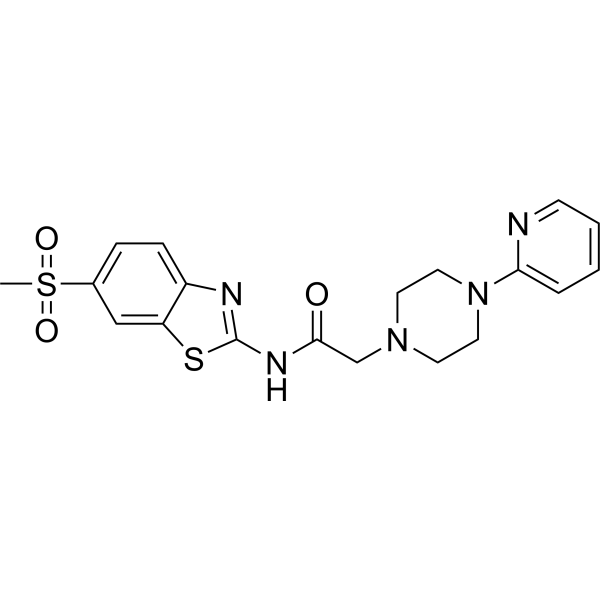
AChE-IN-62 (Compound 1) is an effective mixed and selective acetylcholinesterase (AChE) inhibitor with an IC50 value of 0.421 μM. AChE-IN-62 exhibits excellent blood-brain barrier permeability and neuroprotective effects. Additionally, AChE-IN-62 can inhibit the aggregation of Aβ1-42 with an IC50 value of 44.64 μM. AChE-IN-62 is also an effective multi-target-directed ligand (MTDL) that can be utilized in the research of Alzheimer's disease .
|
-
- HY-19651
-
|
TAK-147 free base
|
Cholinesterase (ChE)
|
Neurological Disease
|
|
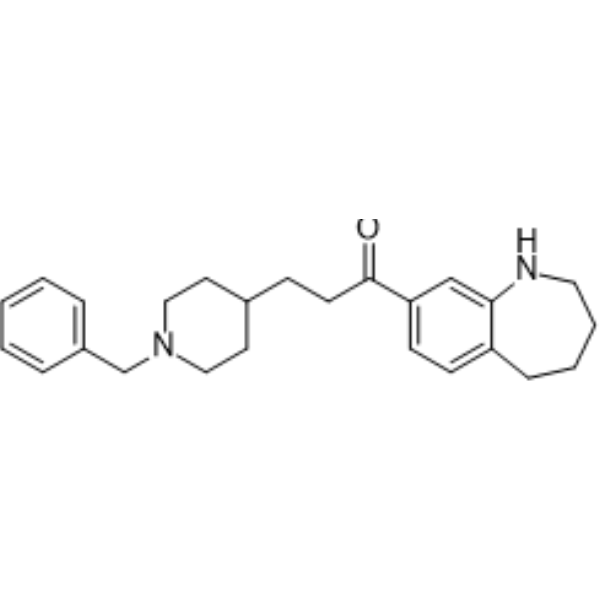
Zanapezil (TAK-147) free base is a potent, reversible and selective acetylcholine esterase (AChE) inhibitor. Zanapezil free base shows a potent and reversible inhibition of AChE activity in homogenates of the rat cerebral cortex (IC50=51.2 nM). Zanapezil free base shows a moderate inhibition of muscarinic M1 and M2 receptor binding with Ki values of 234 and 340 nM, respectively. Zanapezil free base can be used for the research of early stages of Alzheimer's disease (AD) .
|
-
- HY-16009B
-
|
(+)-Phenserine L-Tartrate; ANVS401 L-Tartrate
|
Amyloid-β
|
Neurological Disease
|
|
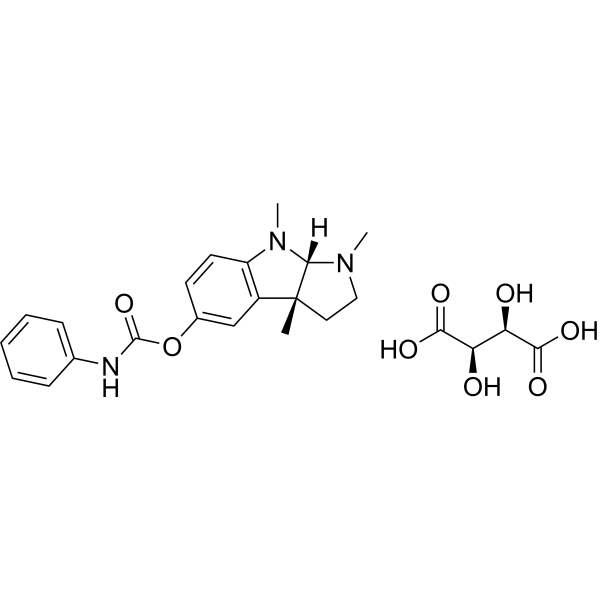
Buntanetap L-Tartrate (Phenserine L-Tartrate) is a selective AChE inhibitor (IC50 = 22.2 nM). Buntanetap is a multiple neurotoxic protein translation inhibitor with oral activity, including amyloid precursor protein (APP), α-synuclein (αSYN) and huntingtin protein (HTT). Buntanetap reduces the production of β-amyloid precursor protein by blocking its mRNA translation. Buntanetap has anti-inflammatory effects and can be used in the study of Alzheimer's disease and Parkinson's disease .
|
-
- HY-B2015
-
|
|
Environmental Pollutants
Insecticide
Parasite
Cholinesterase (ChE)
|
Infection
|
|
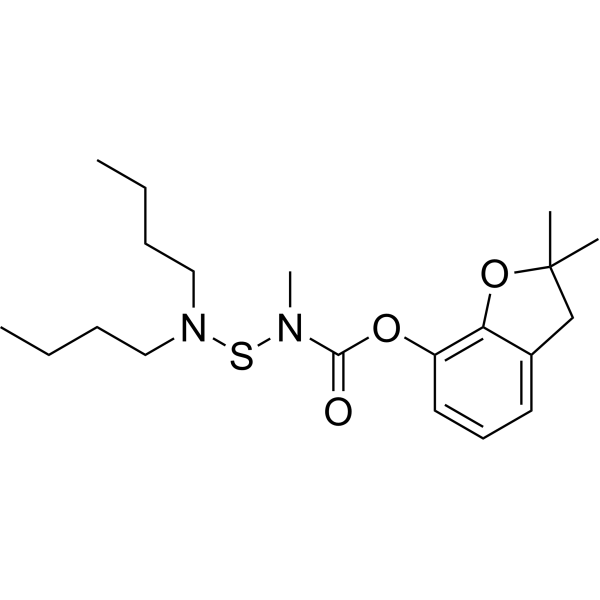
Carbosulfan is an orally active AChE inhibitor that hydrolyzes to Carbofuran in organisms to exert insecticidal effects. Carbosulfan exhibits broad-spectrum insecticidal activity, and it also induces severe oxidative stress by enhancing lipid peroxidation and impairing the antioxidant defense system. Carbosulfan causes reproductive toxicity in male rats and developmental disorders in their offspring. Carbosulfan shows persistence in paddy field environments and potential hazards to non-target organisms, and it is commonly used in studies related to reproductive toxicity and environmental risk assessment .
|
-
- HY-A0009R
-
|
Galantamine hydrobromide (Standard)
|
nAChR
Cholinesterase (ChE)
Reference Standards
|
Neurological Disease
|
|
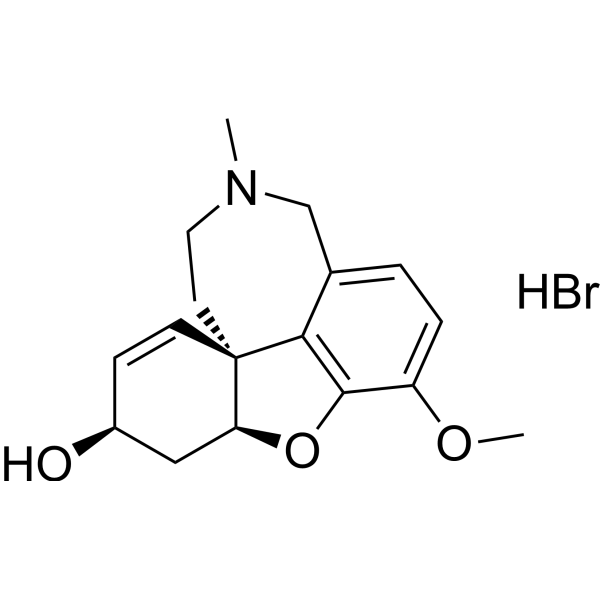
Galanthamine (hydrobromide) (Standard) is the analytical standard of Galanthamine (hydrobromide). This product is intended for research and analytical applications. Galanthamine hydrobromide (Galantamine hydrobromide) is a selective, reversible, competitive, alkaloid AChE inhibitor, with an IC50 of 0.35 µM. Galanthamine hydrobromide is a potent allosteric potentiating ligand (APL) of human α3β4, α4β2, α6β4 nicotinic receptors ( nAChRs). Galanthamine hydrobromide is developed for the research of Alzheimer's disease (AD) .
|
-
- HY-180946
-
|
|
Cholinesterase (ChE)
Reactive Oxygen Species (ROS)
Caspase
Keap1-Nrf2
|
Neurological Disease
|
|
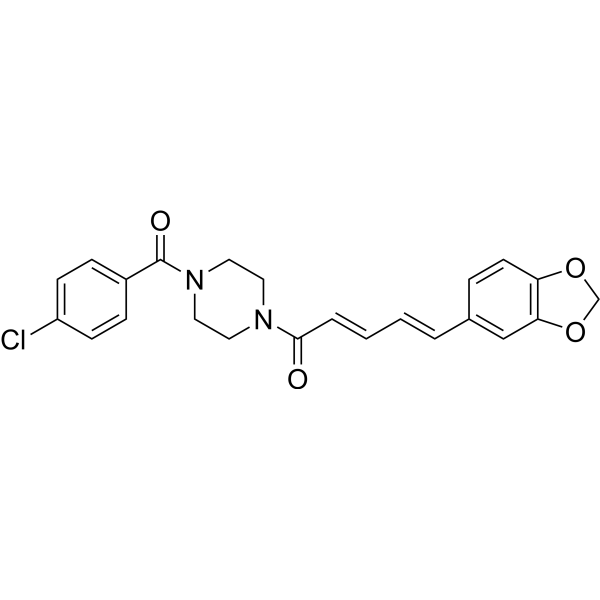
AChE-IN-105 (Compound C5) is a potent, mixed AChE inhibitor with an IC50 of 5.02 μM. AChE-IN-105 scavenges ROS, decreases Hydrogen peroxide-induced Caspase-3 activation, reduces activity of the Nrf2-ARE pathway. AChE-IN-105 prevents memory impairments in the Scopolamine (HY-N0296)-induced cognitive dysfunction zebrafish model. AChE-IN-105 has potent antioxidant activity. AChE-IN-105 can be used in the research of Alzheimer's disease .
|
-

- HY-149340
-
|
|
Cholinesterase (ChE)
|
Neurological Disease
|
|
PD07 is an orally active AChE inhibitor (IC50: 0.29 μM for hAChE). PD07 also inhibits ChEs, BACE1 (IC50: 13.42 μM), and Aβ1–42 aggregation in in vitro. PD07 is an antioxidant, and shows DPPH inhibitory activity (IC50: 26.46 μM). PD07 improves memory and cognition in Scopolamine (HY-N0296)-induced amnesia rats. PD07 can be used for research of Alzheimer’s disease .
|
-
- HY-181161
-
|
|
Cholinesterase (ChE)
|
Neurological Disease
|
|
AChE-IN-107 is a selective acetylcholinesterase (AChE) inhibitor with an IC50 of 0.22 μM and a Ki of 0.207 μM. AChE-IN-107 shows no inhibitory effect on equine serum BChE at 10 μM. AChE-IN-107 exhibits mixed-type inhibition of electric eel acetylcholinesterase, binding to both free enzyme and enzyme-substrate complex. AChE-IN-107 acts as a cytotoxin, reduces cell viability in hepatocellular carcinoma HepG2 cells.AChE-IN-107 can be used for the research of alzheimer's disease .
|
-

- HY-B0828S
-
|
Hostathion 40EC-d5; Hostathion-d5; Hostation-d5
|
Isotope-Labeled Compounds
Parasite
Cholinesterase (ChE)
|
Others
|
|
Triazophos-d5 (Hostathion 40EC-d5) is the deuterium labeled Triazophos(HY-B0828) . Triazophos, a non-systemic insecticide and acaricide that acts as an acetylcholinesterase (AChE) inhibitor, covalently and irreversibly binds to the acetylcholine binding site, thus blocking the hydrolysis of acetylcholine and leading to hyperexcitability; it is effective against a variety of soil insects and mites, including aphids, thrips, midges, beetles, Lepidoptera larvae, cutworms, and spider mites in crops such as ornamentals, cotton, rice, maize, soybeans, oil palms, olives, and coffee.
|
-

- HY-170925
-
|
|
Cholinesterase (ChE)
Apoptosis
|
Neurological Disease
|
|
AChE-IN-81 (compound 22) is a potent, irreversible and selective AChE inhibitor. AChE-IN-81 inhibits activity on AChE with inhibitory rates of 80.0%, with an IC50 of 3.7 μM. AChE-IN-81 binds to AChE with a binding affinity (Kd) of 5.37 μM. AChE-IN-81 effectively reduces in zebrafish brain cells. AChE-IN-81 exhibits potential neuroprotective activities on H2O2-induced SH-SY5Y cell injury model .
|
-

- HY-168241
-
|
|
Cholinesterase (ChE)
5-HT Receptor
|
Infection
|
|
Flucopride (Compound 4a) is an AChE inhibitor (IC50: 24 nM), and a partial 5-HT4R agonist (Ki: 9.6 nM for (h)5-HT4R). Flucopride promotes the non-amyloidogenic processing of APP in COS-7 transiently expressing (h)5-HT4R (EC50: 23.0 nM). Flucopride may has good gastrointestinal track (GIT) penetration, and blood-brain barrier (BBB) cross-membrane penetration (PAMPA assay) .
|
-

- HY-120131
-
|
|
Insecticide
Cholinesterase (ChE)
|
Neurological Disease
|
|
Cyanofenphos is an orally active organophosphate insecticide and brain AChE inhibitor with neurotoxicity. Cyanofenphos induces delayed neurotoxicity such as ataxia and paralysis. Cyanofenphos also causes symptoms including somnolence, reduced feed intake and weight loss in hens. Cyanofenphos has a unique self-antagonistic effect: repeated low-dose pre-treatment not only reduces subsequent acute toxicity, but also exacerbates delayed neurotoxicity and attenuates enzyme inhibition, with the protective effect peaking at 24 h after the last pre-treatment. Cyanofenphos is commonly used in studies related to delayed neurotoxicity .
|
-

- HY-162606
-
|
|
Monoamine Oxidase
Cholinesterase (ChE)
|
Neurological Disease
|
|
MAO-A/B-IN-3 (Compound 12) stands out as a key dual MAO-AChE inhibitor, displaying excellent multi-target efficacy against MAO-A, MAO-B, and AChE with IC50 values of 67 nM, 29 nM, and 1370 nM respectively. MAO-A/B-IN-3 is adept at altering the A site (hydrophobic ring) and C site (semicarbazone chain) within ketone amine-based MTDLs to bolster the inhibitory potential against MAO-A/B while notably diminishing activity against AChE. MAO-A/B-IN-3 is poised for research applications in the field of neurodegenerative diseases .
|
-

- HY-122203
-
|
|
mAChR
Cholinesterase (ChE)
|
Neurological Disease
|
|
PCS1055 dihydrochloride is a potent, selective and competitive muscarinic M4 receptor antagonist with an IC50 of 18.1 nM and a Kd of 5.72 nM. PCS1055 dihydrochloride inhibits radioligand [ 3H]-NMS binding to the M4 receptor with a Ki of 6.5 nM. PCS1055 dihydrochloride exhibits >100-fold selectivity over M1-, M3-, and M5-receptors and 30-fold selectivity at the M2 receptor. PCS1055 dihydrochloride is also a potent AChE inhibitor with IC50 s of 22 nM and 120 nM for electric eel and human AChE, respectively .
|
-
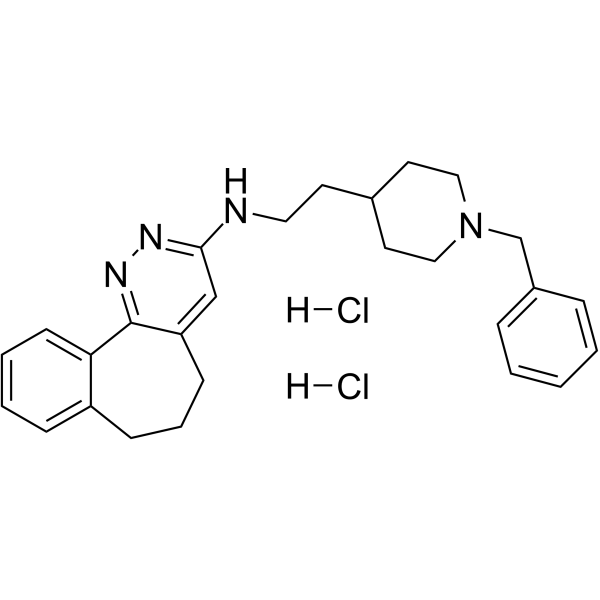
- HY-B2015S
-
|
|
Isotope-Labeled Compounds
Parasite
Insecticide
Cholinesterase (ChE)
|
Infection
|
|
Carbosulfan-d18 is the deuterium labeled Carbosulfan. Carbosulfan is an orally active AChE inhibitor that hydrolyzes to Carbofuran in organisms to exert insecticidal effects. Carbosulfan exhibits broad-spectrum insecticidal activity, and it also induces severe oxidative stress by enhancing lipid peroxidation and impairing the antioxidant defense system. Carbosulfan causes reproductive toxicity in male rats and developmental disorders in their offspring. Carbosulfan shows persistence in paddy field environments and potential hazards to non-target organisms, and it is commonly used in studies related to reproductive toxicity and environmental risk assessment .
|
-
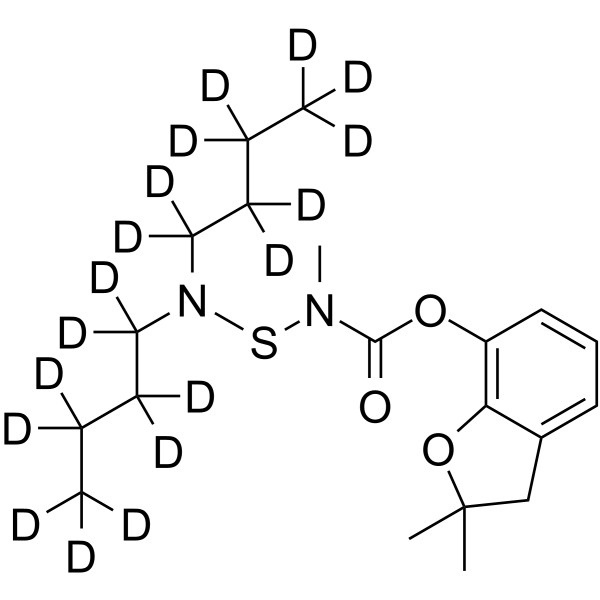
- HY-B2015R
-
|
|
Reference Standards
Parasite
Insecticide
Cholinesterase (ChE)
|
Infection
|
|
Carbosulfan (Standard) is the analytical standard of Carbosulfan. This product is intended for research and analytical applications. Carbosulfan is an orally active AChE inhibitor that hydrolyzes to Carbofuran in organisms to exert insecticidal effects. Carbosulfan exhibits broad-spectrum insecticidal activity, and it also induces severe oxidative stress by enhancing lipid peroxidation and impairing the antioxidant defense system. Carbosulfan causes reproductive toxicity in male rats and developmental disorders in their offspring. Carbosulfan shows persistence in paddy field environments and potential hazards to non-target organisms, and it is commonly used in studies related to reproductive toxicity and environmental risk assessment .
|
-

- HY-118275
-
|
|
Cholinesterase (ChE)
|
Neurological Disease
|
|
FK960 is a potential anti-dementia agent that reverses the reduction in cerebral blood flow (rCBF) caused by sensory stimulation by enhancing cholinergic neurotransmission. In macaque experiments, physostigmine (AChE inhibitor; HY-N6608) was able to completely eliminate the rCBF in the sensory cortex increased by vibrotactile stimulation. FK960 (1-1000 μg/kg) can restore the eliminated rCBF response, and the action time can last for 1 hour. However, FK960 cannot restore the rCBF response eliminated by HA-966 (NMDA modulator; HY-100822), indicating that its function is not dependent on non-glutamatergic neurotransmission.
|
-

- HY-W856819
-
|
|
Opioid Receptor
Cholinesterase (ChE)
Drug Metabolite
nAChR
|
Neurological Disease
|
|
Eseroline is a potent μ-opioid receptor agonist, which is the hydrolytic metabolite of Physostigmine (HY-N6608). Eseroline is a selective and competitive acetylcholinesterase (AChE) inhibitor, with its Ki values for AChE and BuChE being 0.1 μM and 200 μM respectively. Eseroline has nicotinic acetylcholine receptor allosteric enhancing ligand (nAChR-APL) activity, meaning it does not activate the receptor but significantly enhances the signal transduction of Ach triggered by the receptor. Eseroline is neurotoxic, causing cell membrane damage (LDH leakage) and energy metabolism collapse (ATP depletion). Eseroline can be used for the study of Alzheimer's disease .
|
-

- HY-170938
-
|
|
Cholinesterase (ChE)
Monoamine Oxidase
Beta-secretase
COX
LOX-1
|
Neurological Disease
|
|
AChE-IN-82 (compound 49) is an acetylcholinesterase (AChE) inhibitor. AChE-IN-82 inhibits eeAChE, eqBChE, hMAO-A, hMAO-B, and BACE-1 with IC50s of 0.072, 9.81, 14.52, 0.024, 2.42 μM, respectively. AChE-IN-82 inhibits COX-1, COX-2 and 5-LOX with IC50s of 60.41, 0.187, 0.18 μM, respectively. AChE-IN-82 shows an excellent neuroprotective effect by significantly reducing oxidative stress induced by H2 O2 .
|
-

- HY-B0916
-
|
|
Environmental Pollutants
MMP
Insecticide
Cholinesterase (ChE)
ERK
Keap1-Nrf2
Reactive Oxygen Species (ROS)
|
Infection
Neurological Disease
Cancer
|
|
Propoxur is a reversible, competitive, orally active AChE inhibitor that can cross the blood-brain barrier. Propoxur inhibits AChE activity to induce neurotoxicity, while promoting MMP-2 expression and enhancing tumor cell migration and invasion by inducing intracellular ROS generation and activating the ERK/Nrf2 signaling pathway. On the one hand, Propoxur inhibits AChE, leading to acetylcholine accumulation and causing neurological dysfunction; on the other hand, it promotes Nrf2 nuclear translocation through ROS-dependent ERK1/2 phosphorylation, and upregulates MMP-2 and other invasion-related proteins. Propoxur is also a carbamate insecticide used to combat turf, forestry, and household pests .
|
-
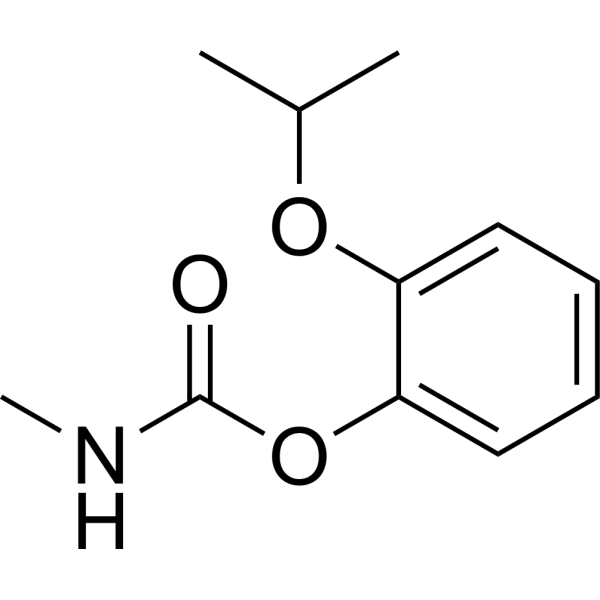
- HY-W750153
-
|
|
Isotope-Labeled Compounds
Insecticide
MMP
Cholinesterase (ChE)
Reactive Oxygen Species (ROS)
ERK
Keap1-Nrf2
|
Infection
Neurological Disease
Cancer
|
|
Propoxur-d7 is the deuterium labeled Propoxur. Propoxur is a reversible, competitive, orally active AChE inhibitor that can cross the blood-brain barrier. Propoxur inhibits AChE activity to induce neurotoxicity, while promoting MMP-2 expression and enhancing tumor cell migration and invasion by inducing intracellular ROS generation and activating the ERK/Nrf2 signaling pathway. On the one hand, Propoxur inhibits AChE, leading to acetylcholine accumulation and causing neurological dysfunction; on the other hand, it promotes Nrf2 nuclear translocation through ROS-dependent ERK1/2 phosphorylation, and upregulates MMP-2 and other invasion-related proteins. Propoxur is also a carbamate insecticide used to combat turf, forestry, and household pests .
|
-

- HY-B0916S
-
|
|
Isotope-Labeled Compounds
Insecticide
Cholinesterase (ChE)
MMP
Reactive Oxygen Species (ROS)
ERK
Keap1-Nrf2
|
Infection
Neurological Disease
Cancer
|
|
Propoxur-d3 is the deuterated form of Propoxur (HY-B0916). Propoxur is a reversible, competitive, orally active AChE inhibitor that can cross the blood-brain barrier. Propoxur inhibits AChE activity to induce neurotoxicity, while promoting MMP-2 expression and enhancing tumor cell migration and invasion by inducing intracellular ROS generation and activating the ERK/Nrf2 signaling pathway. On the one hand, Propoxur inhibits AChE, leading to acetylcholine accumulation and causing neurological dysfunction; on the other hand, it promotes Nrf2 nuclear translocation through ROS-dependent ERK1/2 phosphorylation, and upregulates MMP-2 and other invasion-related proteins. Propoxur is also a carbamate insecticide used to combat turf, forestry, and household pests .
|
-
- HY-B0916R
-
|
|
Reference Standards
MMP
Insecticide
Cholinesterase (ChE)
Reactive Oxygen Species (ROS)
ERK
Keap1-Nrf2
|
Infection
Neurological Disease
Cancer
|
|
Propoxue (Standard) is the analytical standard of Propoxue (HY-B0916). This product is intended for research and analytical applications. Propoxur is a reversible, competitive, orally active AChE inhibitor that can cross the blood-brain barrier. Propoxur inhibits AChE activity to induce neurotoxicity, while promoting MMP-2 expression and enhancing tumor cell migration and invasion by inducing intracellular ROS generation and activating the ERK/Nrf2 signaling pathway. On the one hand, Propoxur inhibits AChE, leading to acetylcholine accumulation and causing neurological dysfunction; on the other hand, it promotes Nrf2 nuclear translocation through ROS-dependent ERK1/2 phosphorylation, and upregulates MMP-2 and other invasion-related proteins. Propoxur is also a carbamate insecticide used to combat turf, forestry, and household pests .
|
-
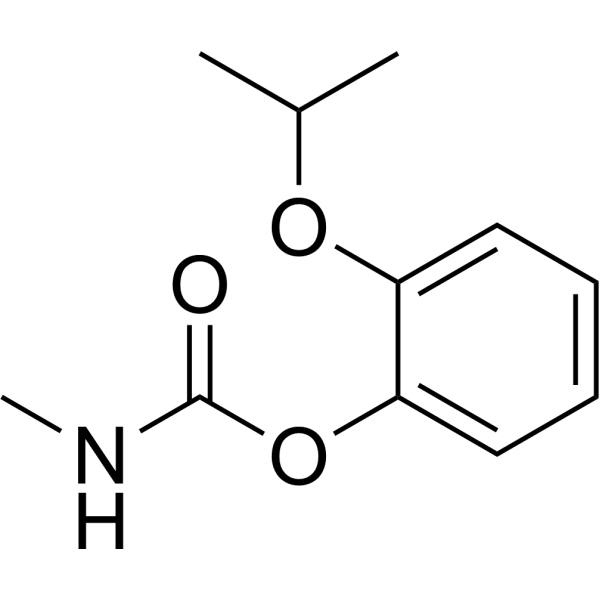
- HY-B1120
-
|
Temefos
|
Insecticide
Cholinesterase (ChE)
Dengue Virus
Flavivirus
|
Infection
|
Temephos (Temefos) is an orally active, blood-brain barrier-permeable organophosphate insecticide and AChE inhibitor. By irreversibly inhibiting AChE to induce cholinergic overactivation, Temephos effectively blocks larval development of Aedes aegypti (yellow fever mosquito) and Aedes albopictus (Asian tiger mosquito), and is commonly used in studies related to Dengue Virus, Zika Virus and other relevant pathogens. Temephos exhibits genotoxicity and neurodevelopmental toxicity, and may also cause liver injury, reproductive system abnormalities and cholinergic poisoning symptoms in mammals. Temephos tends to accumulate in adipose tissues and aquatic organisms, and is excreted via feces after metabolism through oxidation and hydrolysis. Note that CYP-mediated metabolic detoxification may reduce the actual larvicidal efficacy of Temephos against some mosquito species. Temephos can be used in research related to dengue fever, Zika virus disease, chikungunya and dracunculiasis .
|
-
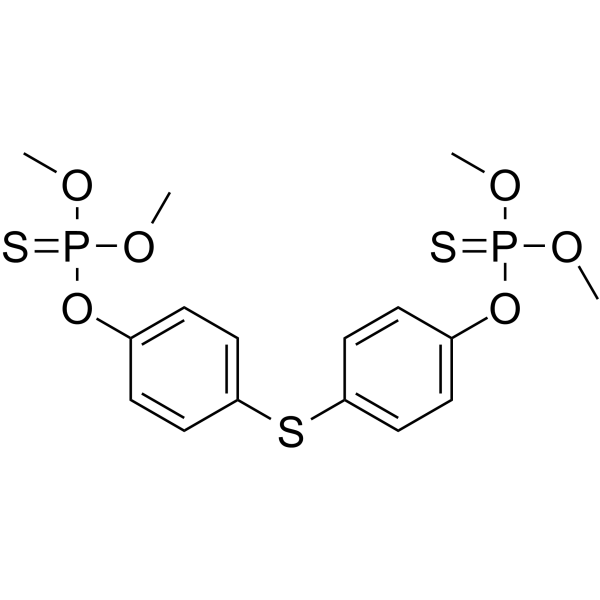
- HY-B1120S
-
|
Temefos-d12
|
Cholinesterase (ChE)
Dengue Virus
Flavivirus
Parasite
|
Infection
|
|
Temephos-d12 is the deuterium labeled Temephos. Temephos (Temefos) is an orally active, blood-brain barrier-permeable organophosphate insecticide and AChE inhibitor. By irreversibly inhibiting AChE to induce cholinergic overactivation, Temephos effectively blocks larval development of Aedes aegypti (yellow fever mosquito) and Aedes albopictus (Asian tiger mosquito), and is commonly used in studies related to Dengue Virus, Zika Virus and other relevant pathogens. Temephos exhibits genotoxicity and neurodevelopmental toxicity, and may also cause liver injury, reproductive system abnormalities and cholinergic poisoning symptoms in mammals. Temephos tends to accumulate in adipose tissues and aquatic organisms, and is excreted via feces after metabolism through oxidation and hydrolysis. Note that CYP-mediated metabolic detoxification may reduce the actual larvicidal efficacy of Temephos against some mosquito species. Temephos can be used in research related to dengue fever, Zika virus disease, chikungunya and dracunculiasis .
|
-
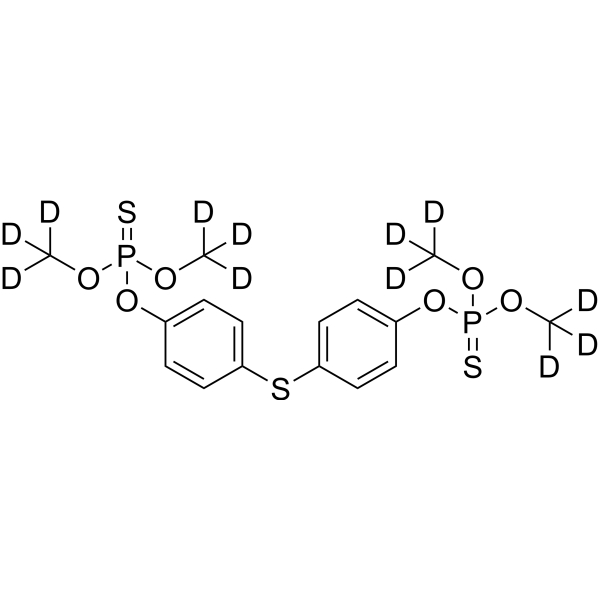
- HY-B1120R
-
|
Temefos (Standard)
|
Reference Standards
Insecticide
Cholinesterase (ChE)
Dengue Virus
Flavivirus
|
Infection
|
|
Temephos (Standard) is the analytical standard of Temephos. This product is intended for research and analytical applications. Temephos (Temefos) is an orally active, blood-brain barrier-permeable organophosphate insecticide and AChE inhibitor. By irreversibly inhibiting AChE to induce cholinergic overactivation, Temephos effectively blocks larval development of Aedes aegypti (yellow fever mosquito) and Aedes albopictus (Asian tiger mosquito), and is commonly used in studies related to Dengue Virus, Zika Virus and other relevant pathogens. Temephos exhibits genotoxicity and neurodevelopmental toxicity, and may also cause liver injury, reproductive system abnormalities and cholinergic poisoning symptoms in mammals. Temephos tends to accumulate in adipose tissues and aquatic organisms, and is excreted via feces after metabolism through oxidation and hydrolysis. Note that CYP-mediated metabolic detoxification may reduce the actual larvicidal efficacy of Temephos against some mosquito species. Temephos can be used in research related to dengue fever, Zika virus disease, chikungunya and dracunculiasis .
|
-

- HY-N10423
-
|
(-)-Cubebin
|
Cholinesterase (ChE)
Bacterial
Fungal
Parasite
p38 MAPK
|
Infection
Neurological Disease
Metabolic Disease
Inflammation/Immunology
Cancer
|
|
Cubebin ((-)-Cubebin), a dibenzyl butyrolactone lignan, is an orally active AChE inhibitor. Cubebin binds to active sites of NF-κB, TNF-α, and TGF-β1 via hydrogen and hydrophobic interactions, obstructing critical residues to inhibit pro-inflammatory or renal fibrosis-related activity. Cubebin enhances p38 MAPK phosphorylation to increase tyrosinase gene expression, stimulating melanogenesis via elevated tyrosinase activity, expression, and mRNA levels. Cubebin reduces oxidative stress via enhanced endogenous antioxidant enzyme activity and inhibited lipid peroxidation, regulates lipid metabolism, improves glycemic control, and exerts renoprotective effects via reduced renal dysfunction markers and improved renal architecture. Cubebin shows antimicrobial activity. Cubebin exerts larvicidal activity against Angiostrongylus cantonensis larvae, with no cytotoxicity toward monkey or human cell lines or Caenorhabditis elegans. Cubebin can be used for the research of diabetic nephropathy, melanoma, colon adenocarcinoma, neuroangiostrongyliasis, Alzheimer’s disease (AD) and depression .
|
-
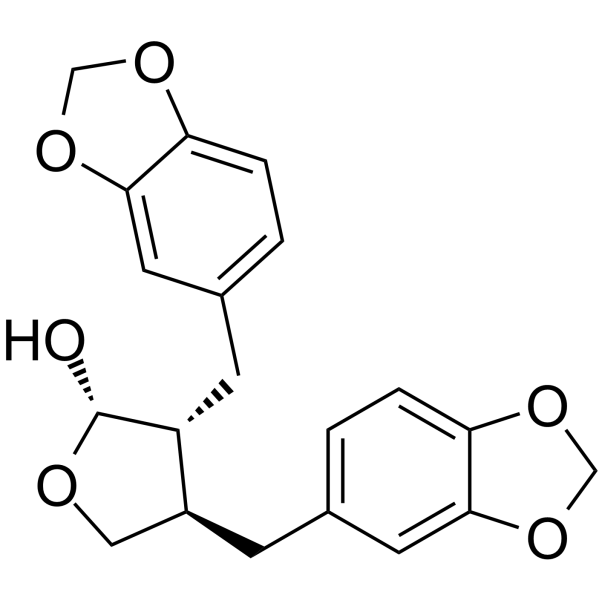
| Cat. No. |
Product Name |
Category |
Target |
Chemical Structure |
-
- HY-76299
-
-
-
- HY-N6608
-
-
-
- HY-N0826
-
-
-
- HY-N0923
-
-
-
- HY-A0009
-
|
Galantamine hydrobromide
|
Alkaloids
Other Alkaloids
Plants
Amaryllidaceae
|
Cholinesterase (ChE)
nAChR
|
|
Galanthamine hydrobromide (Galantamine hydrobromide) is a selective, reversible, competitive, alkaloid AChE inhibitor, with an IC50 of 0.35 µM. Galanthamine hydrobromide is a potent allosteric potentiating ligand (APL) of human α3β4, α4β2, α6β4 nicotinic receptors ( nAChRs). Galanthamine hydrobromide is developed for the research of Alzheimer's disease (AD) .
|
-
-
- HY-W017423
-
-
-
- HY-N5077
-
-
-
- HY-75247
-
-
-
- HY-N0450
-
-
-
- HY-N4261
-
-
-
- HY-76299R
-
-
-
- HY-N1474
-
-
-
- HY-N10423
-
|
(-)-Cubebin
|
Structural Classification
Classification of Application Fields
Lignans
Piperaceae
Piper cubeba L.f.
Phenylpropanoids
Plants
Inflammation/Immunology
Disease Research Fields
Source Classification
|
Cholinesterase (ChE)
Bacterial
Fungal
Parasite
p38 MAPK
|
|
Cubebin ((-)-Cubebin), a dibenzyl butyrolactone lignan, is an orally active AChE inhibitor. Cubebin binds to active sites of NF-κB, TNF-α, and TGF-β1 via hydrogen and hydrophobic interactions, obstructing critical residues to inhibit pro-inflammatory or renal fibrosis-related activity. Cubebin enhances p38 MAPK phosphorylation to increase tyrosinase gene expression, stimulating melanogenesis via elevated tyrosinase activity, expression, and mRNA levels. Cubebin reduces oxidative stress via enhanced endogenous antioxidant enzyme activity and inhibited lipid peroxidation, regulates lipid metabolism, improves glycemic control, and exerts renoprotective effects via reduced renal dysfunction markers and improved renal architecture. Cubebin shows antimicrobial activity. Cubebin exerts larvicidal activity against Angiostrongylus cantonensis larvae, with no cytotoxicity toward monkey or human cell lines or Caenorhabditis elegans. Cubebin can be used for the research of diabetic nephropathy, melanoma, colon adenocarcinoma, neuroangiostrongyliasis, Alzheimer’s disease (AD) and depression .
|
-
-
- HY-126765
-
-
-
- HY-N2211
-
-
-
- HY-N2043
-
-
-
- HY-N11641
-
|
|
Triterpenes
Microorganisms
Terpenoids
Source Classification
|
Cholinesterase (ChE)
|
|
Methyl ganoderate A acetonide, a lanostane triterpene, is a natural product that could be isolated from the fruiting bodies of Ganoderma lucidum. Methyl ganoderate A acetonide is a potent AChE inhibitor with an IC50 value of 18.35 μM. Methyl ganoderate A acetonide can be used in research of Alzheimer’s disease (AD) .
|
-
-
- HY-N8755
-
-
-
- HY-N6619A
-
-
-
- HY-N15414
-
-
-
- HY-N11711
-
-
-
- HY-131413
-
-
-
- HY-W643128
-
-
-
- HY-N2043R
-
-
-
- HY-N9928
-
-
-
- HY-N5077R
-
-
-
- HY-A0009R
-
|
Galantamine hydrobromide (Standard)
|
Structural Classification
Alkaloids
Other Alkaloids
Plants
Amaryllidaceae
Source Classification
|
nAChR
Cholinesterase (ChE)
Reference Standards
|
|
Galanthamine (hydrobromide) (Standard) is the analytical standard of Galanthamine (hydrobromide). This product is intended for research and analytical applications. Galanthamine hydrobromide (Galantamine hydrobromide) is a selective, reversible, competitive, alkaloid AChE inhibitor, with an IC50 of 0.35 µM. Galanthamine hydrobromide is a potent allosteric potentiating ligand (APL) of human α3β4, α4β2, α6β4 nicotinic receptors ( nAChRs). Galanthamine hydrobromide is developed for the research of Alzheimer's disease (AD) .
|
-
-
- HY-N2219
-
-
-
- HY-W782096
-
-
-
- HY-N13924
-
-
-
- HY-N12388
-
-
-
- HY-N10425
-
-
-
- HY-113626
-
-
-
- HY-N4261R
-
-
-
- HY-N6619
-
-
-
- HY-119592
-
-
-
- HY-N15707
-
-
-
- HY-124140
-
-
-
- HY-N15450
-
-
-
- HY-176242
-
-
-
- HY-N12423
-
-
-
- HY-N7480A
-
-
-
- HY-N5076
-
-
-
- HY-124140R
-
-
-
- HY-N0826R
-
-
-
- HY-W017423R
-
-
-
- HY-75247R
-
-
-
- HY-N12622
-
-
-
- HY-N2211R
-
-
-
- HY-N4027
-
-
- HY-N5077B
-
-
- HY-N0923R
-
-
- HY-100196AR
-
|
PQQ disodium salt (Standard); Methoxatin disodium salt (Standard)
|
Quinones
Structural Classification
Microorganisms
Benzene Quinones
Endogenous metabolite
Source Classification
|
Reference Standards
Endogenous Metabolite
|
|
Triazophos (Standard) is the analytical standard of Triazophos. This product is intended for research and analytical applications. Triazophos, a non-systemic insecticide and acaricide that acts as an acetylcholinesterase (AChE) inhibitor, covalently and irreversibly binds to the acetylcholine binding site, thus blocking the hydrolysis of acetylcholine and leading to hyperexcitability; it is effective against a variety of soil insects and mites, including aphids, thrips, midges, beetles, Lepidoptera larvae, cutworms, and spider mites in crops such as ornamentals, cotton, rice, maize, soybeans, oil palms, olives, and coffee.
|
-
- HY-N0450R
-
-
- HY-N13902
-
-
- HY-N13923
-
-
- HY-N19855
-
-
- HY-N16447
-
-
- HY-N18289
-
-
| Cat. No. |
Product Name |
Chemical Structure |
-
- HY-B0034S
-
|
|
|
Donepezil-d5 (hydrochloride) is deuterium labeled Donepezil (Hydrochloride). Donepezil Hydrochloride (E2020) is a reversible, selective AChE inhibitor with an IC50 of 6.7 nM for AChE activity. Donepezil shows high selectivity for AChE over BuChE . Donepezil exhibits neuroprotective effect on Aβ42 neurotoxicity .
|
-
-
- HY-76299S
-
|
|
|
Galanthamine-d6 (Galantamine-d6) is the deuterium labeled Galanthamine. Galanthamine is a potent acetylcholinesterase (AChE) inhibitor with an IC50 of 500 nM .
|
-
-
- HY-B0034S1
-
|
|
|
Donepezil-d4 (hydrochloride) is the deuterium labeled Donepezil hydrochloride. Donepezil Hydrochloride (E2020) is a reversible, selective AChE inhibitor with an IC50 of 6.7 nM for AChE activity. Donepezil shows high selectivity for AChE over BuChE . Donepezil exhibits neuroprotective effect on Aβ42 neurotoxicity .
|
-
-
- HY-14566S
-
|
|
|
Donepezil-d7 (hydrochloride) is the deuterium labeled Donepezil. Donepezil (E2020 free base) is a specific and potent AChE inhibitor with IC50s of 8.12 nM and 11.6 nM for bovine AChE and human AChE, respectively .
|
-
-
- HY-N6608S
-
|
|
|
Physostigmine-d3 is the deuterium labeled Physostigmine. Physostigmine (Eserine) is a reversible acetylcholinesterase (AChE) inhibitor. Physostigmine can crosses the blood-brain barrier and stimulates central cholinergic neurotransmission. Physostigmine can reverse memory deficits in transgenic mice with Alzheimer's disease. Physostigmine is also an antidote for anticholinergic poisoning .
|
-
-
- HY-B0882S
-
|
|
|
Edrophonium-d5 chloride is the deuterium labeled Edrophonium chloride (HY-B0882). Edrophonium chloride is a short-acting acetylcholinesterase (AChE) inhibitor. Edrophonium chloride has Ki values of 0.2, 0.2, and 0.4 μM and IC50 values of 0.2, 0.05, and 0.5 μM for AChE in human erythrocytes, purified calf forebrain, and purified octopus brain, respectively. Edrophonium chloride can be used to detect early digitalis toxicity and in the study of myasthenia gravis .
|
-
-
- HY-B0916S
-
|
|
|
Propoxur-d3 is the deuterated form of Propoxur (HY-B0916). Propoxur is a reversible, competitive, orally active AChE inhibitor that can cross the blood-brain barrier. Propoxur inhibits AChE activity to induce neurotoxicity, while promoting MMP-2 expression and enhancing tumor cell migration and invasion by inducing intracellular ROS generation and activating the ERK/Nrf2 signaling pathway. On the one hand, Propoxur inhibits AChE, leading to acetylcholine accumulation and causing neurological dysfunction; on the other hand, it promotes Nrf2 nuclear translocation through ROS-dependent ERK1/2 phosphorylation, and upregulates MMP-2 and other invasion-related proteins. Propoxur is also a carbamate insecticide used to combat turf, forestry, and household pests .
|
-
-
- HY-76299S1
-
|
|
|
Galanthamine-O-methyl-d3 is the deuterium labeled Galanthamine. Galanthamine is a potent acetylcholinesterase (AChE) inhibitor with an IC50 of 500 nM.
|
-
-
- HY-118165S
-
|
|
|
Phenthoate-d6 is deuterium labeled Phenthoate. Phenthoate is an organophosphorus pesticide having low toxicity in animals. Phenthoate is also a AChE inhibitor .
|
-
-
- HY-B0830S
-
|
|
|
Isoprocarb-d3 is deuterium labeled Isoprocarb. Isoprocarb is carbamate insecticide that widely used to control rice paddy lice and leafhopper. Isoprocarb is also an AChE inhibitor .
|
-
-
- HY-W753485
-
|
|
|
Profenofos-d3 is the deuterium labeled Profenofos (HY-B0832). Profenofos is an insecticida used on field crops, vegetables, and fruit crops. Profenofos is an acetylcholinesterase (AChE) inhibitor, with neurotoxicity .
|
-
-
- HY-14566S1
-
|
|
|
Donepezil-d5 is deuterium labeled Donepezil. Donepezil (E2020 free base) is a specific and potent AChE inhibitor with IC50s of 8.12 nM and 11.6 nM for bovine AChE and human AChE, respectively .
|
-
-
- HY-119419S
-
|
|
|
Pirimicarb-d6 is the deuterium labeled Pirimicarb (HY-119419). Pirimicarb is a fast-acting selective carbamate insecticide on a wide range of crops including cereals, sugar beet, potatoes, fruits and vegetables. Pirimicarb is an AChE inhibitor and an acaricide .
|
-
-
- HY-W750404
-
|
|
|
(-)-Carvone-d4 is the deuterium labeled (-)-Carvone (HY-W017423). (-)-Carvone is an insect neurotoxin and a irreversible acetylcholinesterase (AChE) inhibitor. (-)-Carvone can be used as a bird repellent, inhibits larval growth, decreases pupatation rate, and increases mortality of larvae .
|
-
-
- HY-14566S3
-
|
|
|
Donepezil-d4 (E2020-d4 (free base)) is deuterium labeled Donepezil. Donepezil (E2020 free base) is a specific and potent AChE inhibitor with IC50s of 8.12 nM and 11.6 nM for bovine AChE and human AChE, respectively .
|
-
-
- HY-W727525
-
|
|
|
Donepezil-d7 (E2020-d7 (free base)) is deuterium labeled Donepezil. Donepezil (E2020 free base) is a specific and potent AChE inhibitor with IC50s of 8.12 nM and 11.6 nM for bovine AChE and human AChE, respectively .
|
-
-
- HY-W077226S
-
|
|
|
AChE-IN-23-d10 (4-Amino-Alpha-diethyl amino-o-cresol-d10 (dihydrochloride)) is the deuterium labeled AChE-IN-23 (HY-W077226). AChE-IN-23 (compound 3h) is an acetylcholinesterase (AChE) inhibitor with an IC50 value of 48.3 μM .
|
-
-
- HY-121467S1
-
|
|
|
Acotiamide-d4 (Z-338 (free base)-d4) is deuterium labeled Acotiamide. Acotiamide is an orally active, selective and reversible acetylcholinesterase (AChE) inhibitor, with an IC50 of 1.79 μM. Acotiamide can enhance gastric contractility and accelerate delayed gastric emptying. Acotiamide has the potential for the research of functional dyspepsia involving gastric motility dysfunction and intestinal inflammatory .
|
-
-
- HY-A0009S
-
|
|
|
Galanthamine-d3 (hydrobromide) is deuterium labeled Galanthamine (hydrobromide). Galanthamine hydrobromide (Galantamine hydrobromide) is a selective, reversible, competitive, alkaloid AChE inhibitor, with an IC50 of 0.35 μM. Galanthamine hydrobromide is a potent allosteric potentiating ligand (APL) of human α3β4, α4β2, α6β4 nicotinic receptors ( nAChRs). Galanthamine hydrobromide is developed for the research of Alzheimer's disease (AD) .
|
-
-
- HY-B0732AS
-
|
|
|
Itopride-d6 (HSR803-d6 (free base)) is deuterium labeled Itopride. Itopride (HSR803 free base) is a potent and orally active dopamine-2 antagonist and an acetylcholine esterase (AChE) inhibitor. Itopride enhances gastric motility through both antidopaminergic and anti-acetylcholinesterasic actions, can be used as a gastrointestinal prokinetic agent. Itopride can be used for researching gastro-esophageal reflux disease (GERD) .
|
-
-
- HY-B2015S
-
|
|
|
Carbosulfan-d18 is the deuterium labeled Carbosulfan. Carbosulfan is an orally active AChE inhibitor that hydrolyzes to Carbofuran in organisms to exert insecticidal effects. Carbosulfan exhibits broad-spectrum insecticidal activity, and it also induces severe oxidative stress by enhancing lipid peroxidation and impairing the antioxidant defense system. Carbosulfan causes reproductive toxicity in male rats and developmental disorders in their offspring. Carbosulfan shows persistence in paddy field environments and potential hazards to non-target organisms, and it is commonly used in studies related to reproductive toxicity and environmental risk assessment .
|
-
-
- HY-B1120S
-
|
|
|
Temephos-d12 is the deuterium labeled Temephos. Temephos (Temefos) is an orally active, blood-brain barrier-permeable organophosphate insecticide and AChE inhibitor. By irreversibly inhibiting AChE to induce cholinergic overactivation, Temephos effectively blocks larval development of Aedes aegypti (yellow fever mosquito) and Aedes albopictus (Asian tiger mosquito), and is commonly used in studies related to Dengue Virus, Zika Virus and other relevant pathogens. Temephos exhibits genotoxicity and neurodevelopmental toxicity, and may also cause liver injury, reproductive system abnormalities and cholinergic poisoning symptoms in mammals. Temephos tends to accumulate in adipose tissues and aquatic organisms, and is excreted via feces after metabolism through oxidation and hydrolysis. Note that CYP-mediated metabolic detoxification may reduce the actual larvicidal efficacy of Temephos against some mosquito species. Temephos can be used in research related to dengue fever, Zika virus disease, chikungunya and dracunculiasis .
|
-
-
- HY-B0828S
-
|
|
|
Triazophos-d5 (Hostathion 40EC-d5) is the deuterium labeled Triazophos(HY-B0828) . Triazophos, a non-systemic insecticide and acaricide that acts as an acetylcholinesterase (AChE) inhibitor, covalently and irreversibly binds to the acetylcholine binding site, thus blocking the hydrolysis of acetylcholine and leading to hyperexcitability; it is effective against a variety of soil insects and mites, including aphids, thrips, midges, beetles, Lepidoptera larvae, cutworms, and spider mites in crops such as ornamentals, cotton, rice, maize, soybeans, oil palms, olives, and coffee.
|
-
-
- HY-W750153
-
|
|
|
Propoxur-d7 is the deuterium labeled Propoxur. Propoxur is a reversible, competitive, orally active AChE inhibitor that can cross the blood-brain barrier. Propoxur inhibits AChE activity to induce neurotoxicity, while promoting MMP-2 expression and enhancing tumor cell migration and invasion by inducing intracellular ROS generation and activating the ERK/Nrf2 signaling pathway. On the one hand, Propoxur inhibits AChE, leading to acetylcholine accumulation and causing neurological dysfunction; on the other hand, it promotes Nrf2 nuclear translocation through ROS-dependent ERK1/2 phosphorylation, and upregulates MMP-2 and other invasion-related proteins. Propoxur is also a carbamate insecticide used to combat turf, forestry, and household pests .
|
-
Your information is safe with us. * Required Fields.
Inquiry Information
- Product Name:
- Cat. No.:
- Quantity:
- MCE Japan Authorized Agent:








