



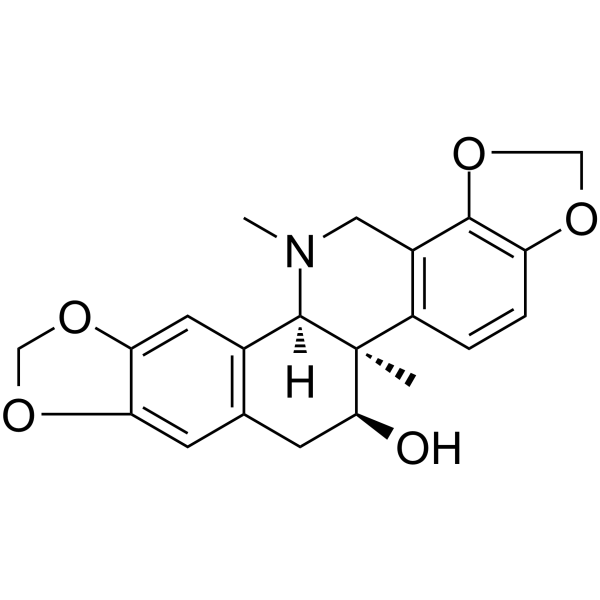
Corynoline
Based on 6 publication(s) in Google Scholar
Nur für Forschungszwecke. Wir verkaufen nicht an Patienten.
- Reinheit : 98.84%
- CAS. Nr.: 18797-79-0
- Formel: C21H21NO5
- Molecular Weight:367.40
-
Speicherung:Powder -20°C, 3 years , 4°C, 2 years ; In solvent -80°C, 6 months , -20°C, 1 month

To place orders, for customer services and technical support, please contact: MedChemExpress USA
Tel: 609-228-6898 E-mail: [email protected] [email protected]


-
 Biologische Aktivität
-
Chemical Information
-
Lösungsmittel & Löslichkeit
- Protokoll
- Reinheit & Dokumentation
- Verweise
-
 Help & FAQs


-
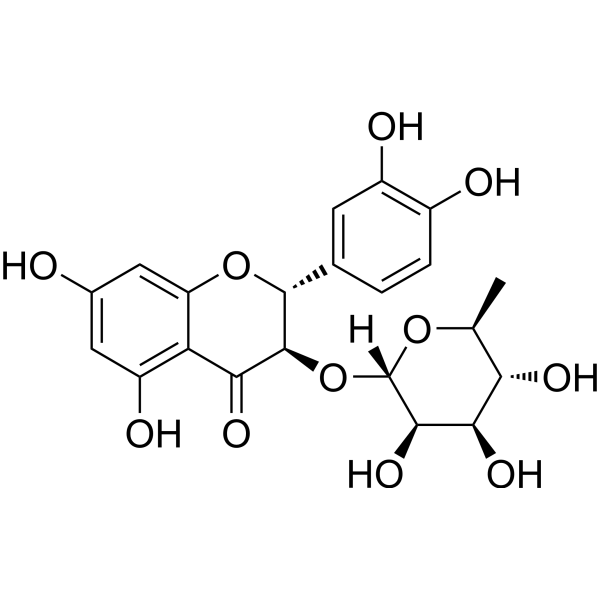
HY-N0509
AstilbinTNF Receptor Inhibitor -
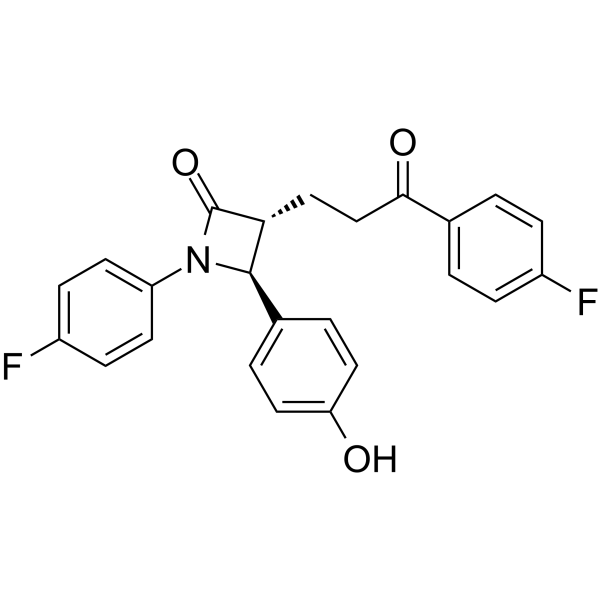
HY-133114
Ezetimibe ketoneNrf2 Activator/ROS Inhibitor -
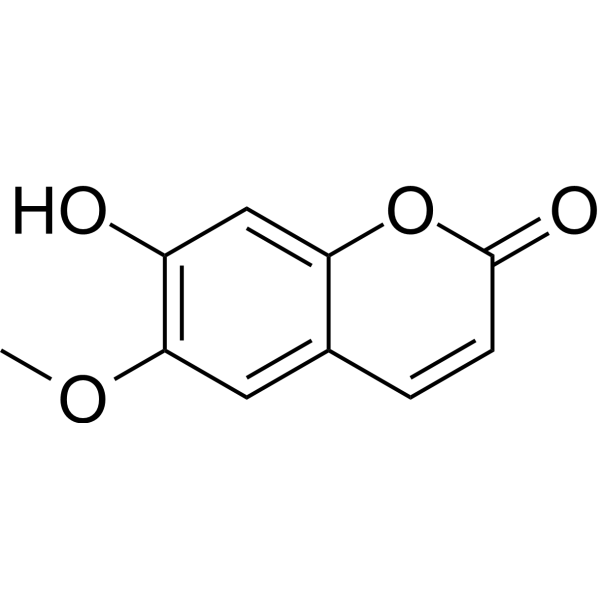
HY-N0342
ScopoletinCholinesterase (ChE) Inhibitor -
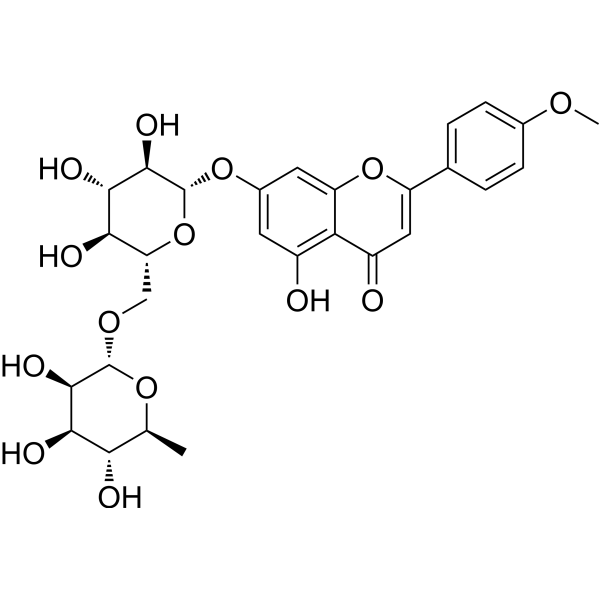
HY-N0528
LinarinAChE Inhibitor -

HY-N0342R
Scopoletin (Standard)Cholinesterase (ChE) Inhibitor -

HY-N0826R
Corynoline (Standard)AChE Inhibitor -
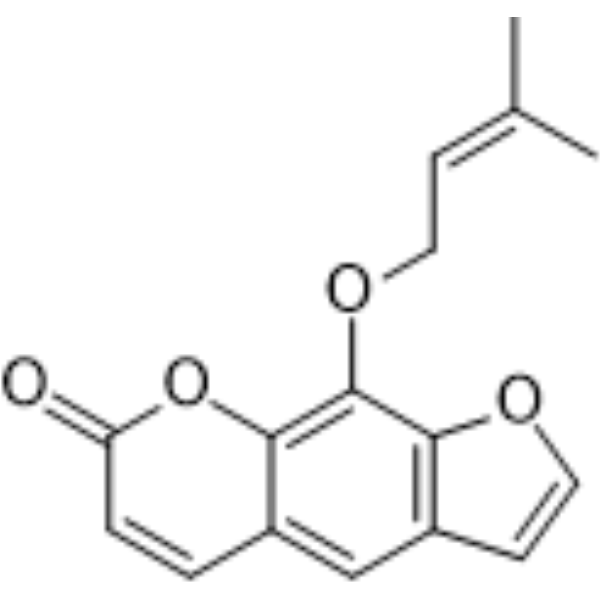
HY-N0285
ImperatorinCholinesterase (ChE) Inhibitor -
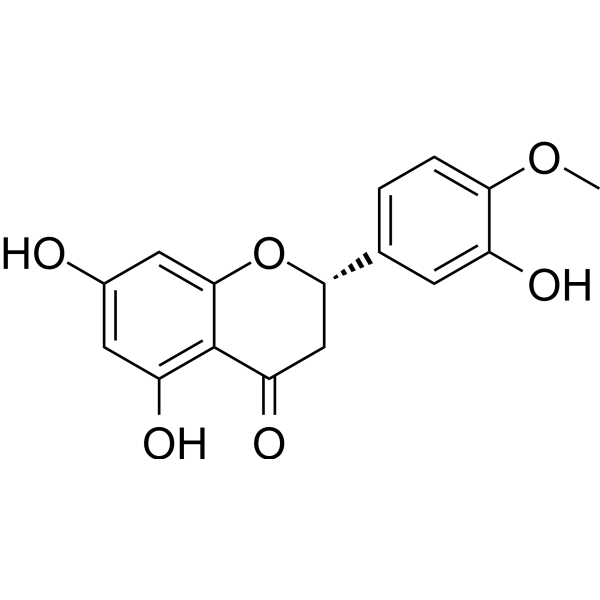
HY-N0168
HesperetinUGT Inhibitor -

HY-N0285R
Imperatorin (Standard)Cholinesterase (ChE) Inhibitor -
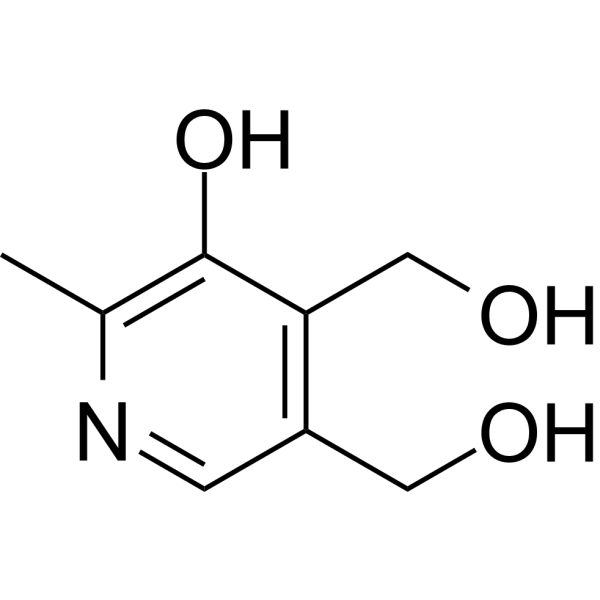
HY-B1328
PyridoxinePyridine Derivative -
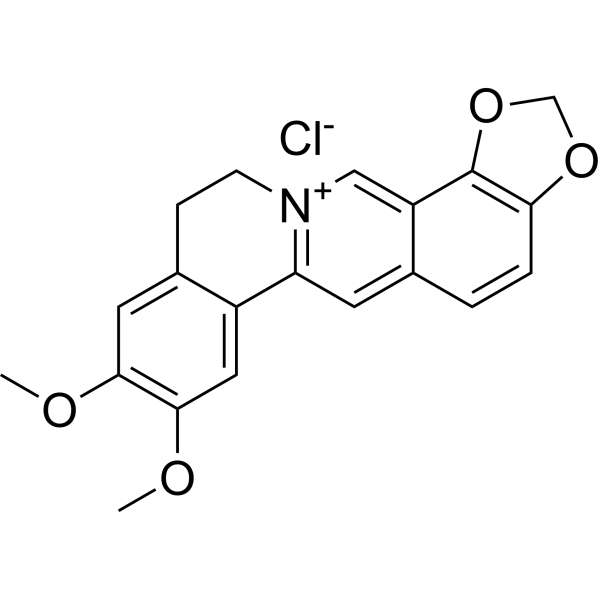
HY-N0226A
Epiberberine chlorideAChE/BChE Inhibitor -
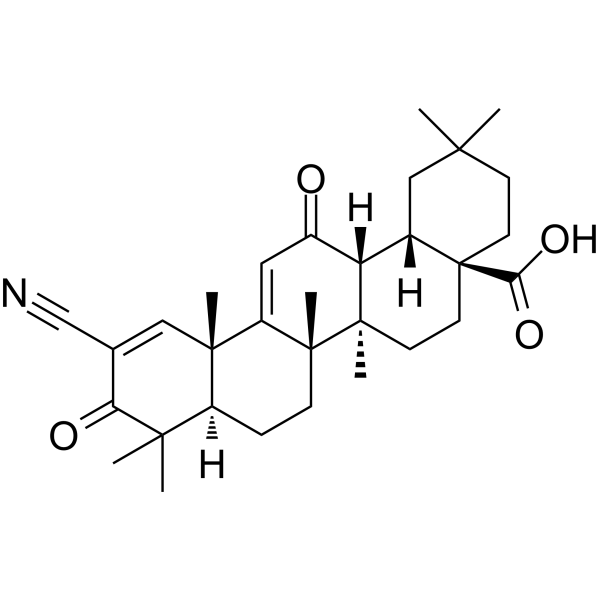
HY-14909
BardoxoloneNrf2 Activator
Publications Citing Use of MedChemExpress (MCE) Corynoline
More- Inflamm Res. 2024 Dec;73(12):2069-2085. [Abstract]
- J Gastroenterol. 2024 Nov;59(11):1037-1051. [Abstract]
- Antiviral Res. 2024 Aug:228:105955. [Abstract]
- Naunyn Schmiedebergs Arch Pharmacol. 2025 Dec 11. [Abstract]
- Immunopharmacol Immunotoxicol. 2023 Feb;45(1):26-34. [Abstract]
- Biomed Pharmacother. 2022 Jun:150:113075. [Abstract]
 Customer Validation & Images

-
Histological Imaging/Staining
-
WB
-
IHC
-
RT-PCR
-
IF
Alle Caspase Isoform-spezifische Produkte anzeigen
More

Biologische Aktivität
Beschreibung
|
AChE |
HO-1 |
IL-1β |
Caspase 3 |
Caspase 9 |
p-STAT3 |
Bcl-2 |
COX-2 |
Cellular Effect
|
Cell Line

|
Type | Value | Description | References |
|---|---|---|---|---|
| RAW264.7 | IC50 |
2.51 μM
Compound: 6
|
Antiinflammatory activity against mouse RAW264.7 cells assessed as inhibition of LPS induced nitric oxide production preincubated for 2 hrs followed by LPS challenge measured after 24 hrs by Griess reagent based assay
Antiinflammatory activity against mouse RAW264.7 cells assessed as inhibition of LPS induced nitric oxide production preincubated for 2 hrs followed by LPS challenge measured after 24 hrs by Griess reagent based assay
|
[PMID: 29853329] |
In Vitro
Corynoline (1-4 μM; 24 h) inhibits LPS (HY-D1056)-induced NO production in RAW264.7 cells, upregulates the levels of Nrf2, HO-1 and NQO1, and downregulates the expression of iNOS and COX-2[1].
Corynoline (1-4 μM; 24 h) downregulates LPS-induced IL-1β and TNF-α expression at both mRNA and protein levels in RAW264.7 cells in a dose-dependent manner[1].
Corynoline (1 μM; 24 h) inhibits LPS-induced phosphorylation of p38 and JNK in RAW264.7 cells[1].
Corynoline (5-40 μM; 24-48 h) inhibits the proliferation and induces apoptosis of U87 and LN229 glioblastoma cells[2].
Corynoline (10-20 μM; 10-14 days) inhibits the colony-forming ability of U87 glioblastoma cells[2].
MedChemExpress (MCE) has not independently confirmed the accuracy of these methods. They are for reference only.
-
Cell Line:RAW264.7 treated LPS (HY-D1056)
-
Concentration:1, 2, 4 μM
-
Incubation Time:24 h
-
Result:Upregulated the levels of Nrf2, HO-1 and NQO1, and downregulated the levels of iNOS and COX-2.
-
Cell Line:U87 glioblastoma cell line, LN229 glioblastoma cell line, human astrocyte (HA) cell line
-
Concentration:5, 10, 20, 40 μM
-
Incubation Time:24 h, 48 h
-
Result:Inhibited the viability of U87 and LN229 cells in a dose-dependent manner. Exhibited no significant toxicity towards HA cells.
-
Cell Line:U87 glioblastoma cell line, LN229 glioblastoma cell line
-
Concentration:10, 20 μM
-
Incubation Time:48 h
-
Result:Significantly reduced the percentage of Ki-67-positive cells in both U87 and LN229 cells. Reduced the proportion of Ki-67-positive cells to less than 50% at 20 μM.
-
Cell Line:U87 glioblastoma cell line, LN229 glioblastoma cell line
-
Concentration:10, 20 μM
-
Incubation Time:48 h
-
Result:Significantly increased the protein levels of cleaved caspase-9 and cleaved caspase-3 in both U87 and LN229 cells.
Inhibited STAT3 phosphorylation and Bcl-2 expression in a concentration-dependent manner in both U87 and LN229 cells. Upregulated the pro-apoptotic proteins Bak and Bax.
In Vivo
Corynoline (5-20 mg/kg; oral administration; single dose) exerts a significant dose-dependent antinociceptive and anti-inflammatory effect in various nociceptive and inflammatory models of male mice[3].
MedChemExpress (MCE) has not independently confirmed the accuracy of these methods. They are for reference only.
-
Animal Model:BALB/c nude (6 weeks old, 20-22 g, subcutaneously injected with GBM cells)[2]
-
Dosage:50 mg/kg
-
Administration:i.p.; daily; 21 days
-
Result:Significantly reduced tumor volume.
Decreased the percentage of Ki-67-positive cells; downregulated phosphorylated STAT3 and Bcl-2 protein levels.
Upregulated Bak, Bax, cleaved caspase-9, and cleaved caspase-3 protein levels in tumor tissues.
-
Animal Model:Swiss mice (male, 20-30 g)[3]
-
Dosage:5, 10, 20 mg/kg
-
Administration:p.o.; single dose
-
Result:Significantly increased the latency time of pain response in hot plate and tail immersion tests in a dose-dependent manner.
Reduced the number of abdominal writhing in acetic acid-induced model, the paw licking count in glutamate, capsaicin and formalin-induced models, and inhibited both the neurogenic phase and inflammatory phase of formalin-induced nociception.
Significantly suppressed carrageenan-induced paw edema, reduced the infiltration of leukocytes, mononuclear cells and polymorphonuclear cells in the peritoneal cavity induced by carrageenan, and down-regulated the levels of pro-inflammatory cytokines TNF-α, IL-1β and IL-6 in the air pouch model.


Chemical Information
-
CAS. Nr. 18797-79-0
-
Appearance Solid
-
Molecular Weight 367.40
-
Formel C21H21NO5
-
Color White to light yellow
-
SMILES
C[C@@]1(C(C=CC2=C3OCO2)=C3CN4C)[C@@]4([H])C(C=C(OCO5)C5=C6)=C6C[C@@H]1O
-
Structure Classification
-
Initial Source
-
Versand
Room temperature in continental US; may vary elsewhere.
-
Speicherung
Powder -20°C 3 years 4°C 2 years In solvent -80°C 6 months -20°C 1 month


Publications (6)
-
Journal Impact Factor
-
Most Recent
-
Inflamm Res
Corynoline alleviates hepatic ischemia-reperfusion injury by inhibiting NLRP3 inflammasome activation through enhancing Nrf2/HO-1 signaling. [Abstract]2024 Dec;73(12):2069-2085. PMID: 39294398 -
J Gastroenterol
Corynoline protects chronic pancreatitis via binding to PSMA2 and alleviating pancreatic fibrosis. [Abstract]2024 Nov;59(11):1037-1051. PMID: 39145797 -
Antiviral Res
Discovery of hepatitis B virus subviral particle biogenesis inhibitors from a bioactive compound library. [Abstract]2024 Aug:228:105955. PMID: 38964614 -
Naunyn Schmiedebergs Arch Pharmacol
Corynoline promotes apoptosis and inhibits proliferation of glioblastoma via regulating the STAT3/Bcl-2 signalling pathway. [Abstract]2025 Dec 11. PMID: 41379317 -
Immunopharmacol Immunotoxicol
Corynoline ameliorates dextran sulfate sodium-induced colitis in mice by modulating Nrf2/NF-κB pathway. [Abstract]2023 Feb;45(1):26-34. PMID: 35980837 -
Biomed Pharmacother
Corynoline protects ang II-induced hypertensive heart failure by increasing PPARα and Inhibiting NF-κB pathway. [Abstract]2022 Jun:150:113075. PMID: 35658238
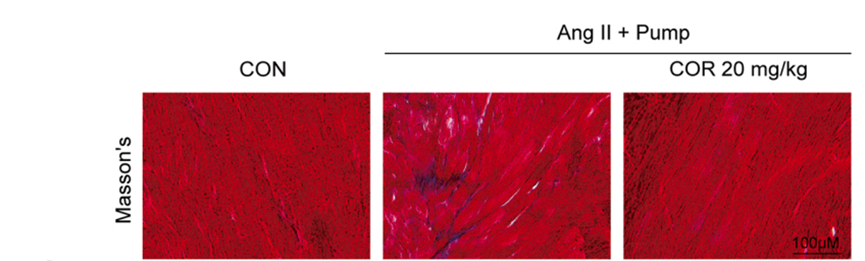
Corynoline purchased from MedChemExpress. Usage Cited in: Biomed Pharmacother. 2022 Jun:150:113075. [Abstract]
Representative micrographs of Masson Trichromestaining of interstitial fibrotic areas (%) from Masson Trichrome staining treated with Corynoline (COR) (20 mg/kg, i.g.).
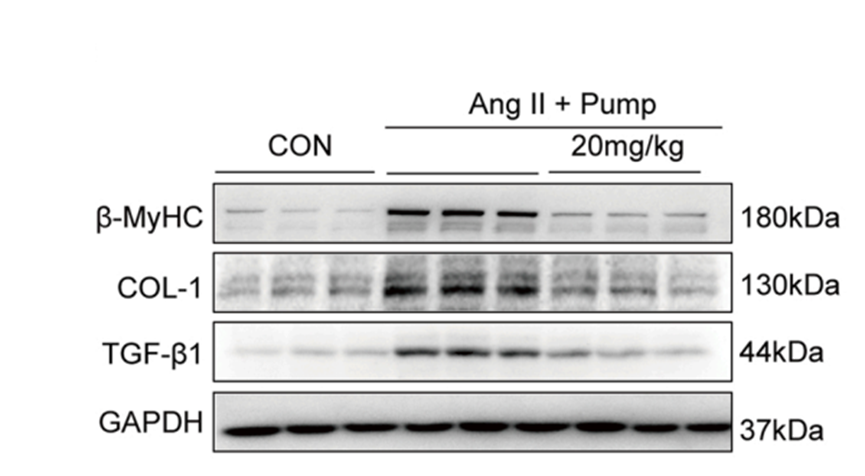
Corynoline purchased from MedChemExpress. Usage Cited in: Biomed Pharmacother. 2022 Jun:150:113075. [Abstract]
Western blot analysis of β-MyHC, COL-1, and TGF-β1 in heart tissues treated with Corynoline (COR) (20 mg/kg, i.g.).
Corynoline purchased from MedChemExpress. Usage Cited in: Biomed Pharmacother. 2022 Jun:150:113075. [Abstract]
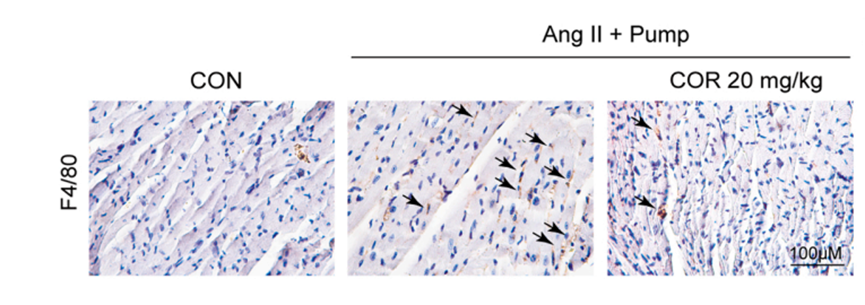
The heart was harvested to perform immunohistochemical staining for macrophage marker (F4/80) of F4/80-positive cells treated with Corynoline (COR) (20 mg/kg, i.g.).
Corynoline purchased from MedChemExpress. Usage Cited in: Biomed Pharmacother. 2022 Jun:150:113075. [Abstract]
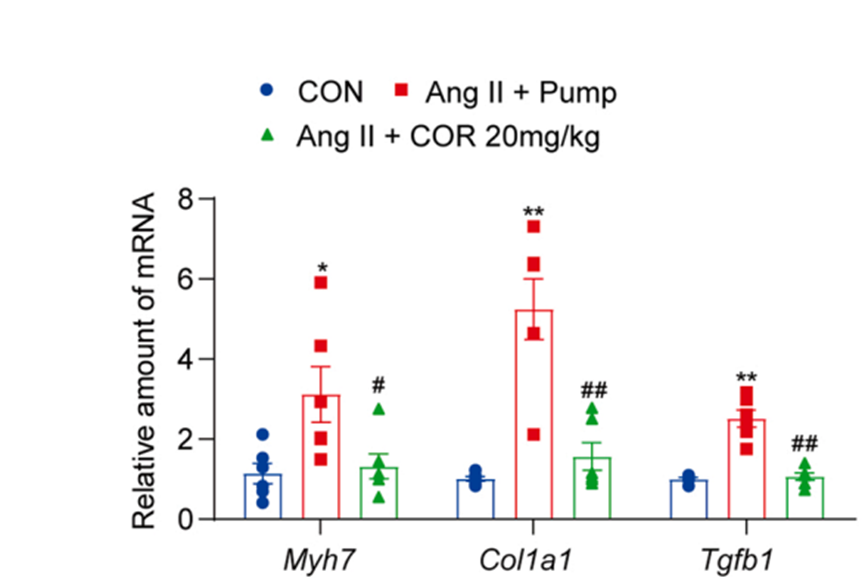
The mRNA levels of myh7, Col1a, and Tgfb1 were detected by RT-qPCR in the heart tissues treated with Corynoline (COR) (20 mg/kg, i.g.).
Corynoline purchased from MedChemExpress. Usage Cited in: Biomed Pharmacother. 2022 Jun:150:113075. [Abstract]
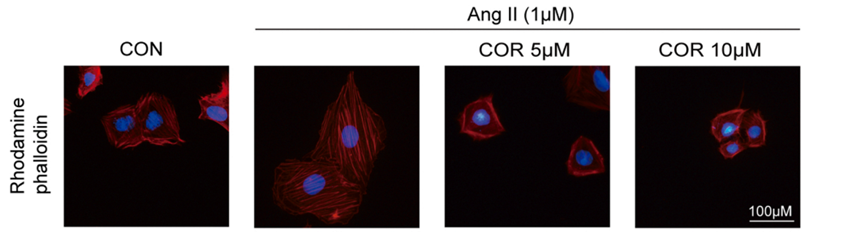
TRITC phalloidin (red) staining of H9c2 cells showing the effect of Corynoline (COR) (5, 10 μM) on Ang II-induced hypertrophic responses.


Lösungsmittel & Löslichkeit
In Vitro:
DMSO : 40 mg/mL (108.87 mM; Need ultrasonic; Hygroscopic DMSO has a significant impact on the solubility of product, please use newly opened DMSO)
Please refer to the solubility information to select the appropriate solvent. Once prepared, please aliquot and store the solution to prevent product inactivation from repeated freeze-thaw cycles.
Storage method and period of stock solution: -80°C, 6 months; -20°C, 1 month. When stored at -80°C, please use it within 6 months. When stored at -20°C, please use it within 1 month.
Please refer to the solubility information to select the appropriate solvent. Once prepared, please aliquot and store the solution to prevent product inactivation from repeated freeze-thaw cycles.
Storage method and period of stock solution: -80°C, 6 months; -20°C, 1 month. When stored at -80°C, please use it within 6 months. When stored at -20°C, please use it within 1 month.
Konzentration (Stammlösung) × Volumen (Stammlösung) = Konzentration (Ziellösung) × Volumen (Ziellösung)
In Vivo:
Select the appropriate dissolution method based on your experimental animal and administration route.
- For the following dissolution methods, please ensure to first prepare a clear stock solution using an In Vitro approach and then sequentially add co-solvents:
- To ensure reliable experimental results, the clarified stock solution can be appropriately stored based on storage conditions. As for the working solution for In Vivo experiments, it is recommended to prepare freshly and use it on the same day.
- The percentages shown for the solvents indicate their volumetric ratio in the final prepared solution. If precipitation or phase separation occurs during preparation, heat and/or sonication can be used to aid dissolution.
Add each solvent one by one: 10% DMSO 40% PEG300 5% Tween-80 45% Saline
Solubility: ≥ 4 mg/mL (10.89 mM); Clear solution
This protocol yields a clear solution of ≥ 4 mg/mL (saturation unknown).
Taking 1 mL working solution as an example, add 100 μL DMSO stock solution (40.0 mg/mL) to 400 μL PEG300, and mix evenly; then add 50 μL Tween-80 and mix evenly; then add 450 μL Saline to adjust the volume to 1 mL.
Preparation of Saline: Dissolve 0.9 g sodium chloride in ddH₂O and dilute to 100 mL to obtain a clear Saline solution.
Add each solvent one by one: 10% DMSO 90% (20% SBE-β-CD in Saline)
Solubility: ≥ 4 mg/mL (10.89 mM); Clear solution
This protocol yields a clear solution of ≥ 4 mg/mL (saturation unknown).
Taking 1 mL working solution as an example, add 100 μL DMSO stock solution (40.0 mg/mL) to 900 μL 20% SBE-β-CD in Saline, and mix evenly.
Preparation of 20% SBE-β-CD in Saline (4°C, storage for one week): 2 g SBE-β-CD powder is dissolved in 10 mL Saline, completely dissolve until clear.
In Vivo Dissolution Calculator
Please enter the basic information of animal experiments:
-
-
-
-
Recommended: Prepare an additional quantity of animals to account for potential losses during experiments.
Please enter your animal formula composition:
-
%DMSO +
Recommended: Keep the proportion of DMSO in working solution below 2% if your animal is weak.
-
%+
-
+%Tween-80 + +
-
%Saline +
The co-solvents required include: DMSO, . All of co-solvents are available by MedChemExpress (MCE). , Tween 80. All of co-solvents are available by MedChemExpress (MCE).
Working solution concentration: 0.22 mg/mL
Method for preparing stock solution: mg drug dissolved in μL DMSO. Stock solution concentration: mg/mL.
1. Take μL DMSO stock solution;
2. Add μL .
μL , mix evenly;
3. Then add μL Tween 80, mix evenly;
4. Then add μL
Please ensure that the stock solution in the first step is dissolved to a clear state, and add co-solvents in sequence. You can use ultrasonic heating (ultrasonic cleaner, recommended frequency 20-40 kHz), vortexing, etc. to assist dissolution.


Reinheit & Dokumentation
-
Data Sheet (287 KB)
-
SDS (394 KB)
- English - EN (394 KB)
- Français - FR (394 KB)
- Deutsch - DE (394 KB)
- Norwegian - NO (394 KB)
- Español - ES (394 KB)
- Swedish - SV (394 KB)
- Italian - IT (394 KB)
- Korean - KR (394 KB)
- Portuguese - PT (394 KB)
-
Handling Instructions (2659 KB)
Verweise
[1]. Kim DK. Inhibitory effect of corynoline isolated from the aerial parts of Corydalis incisa on the acetylcholinesterase. Arch Pharm Res. 2002 Dec;25(6):817-9. [Content Brief]
[2]. Yang C, et al. Corynoline Isolated from Corydalis bungeana Turcz. Exhibits Anti-Inflammatory Effects via Modulation of Nfr2 and MAPKs. Molecules. 2016;21(8):975. Published 2016 Jul 27. [Content Brief]
[3]. Xiong Y, et al. Corynoline promotes apoptosis and inhibits proliferation of glioblastoma via regulating the STAT3/Bcl-2 signalling pathway. Naunyn Schmiedebergs Arch Pharmacol. Published online December 11, 2025. [Content Brief]
[4]. Lei F, et al. Antinociceptive and Anti-inflammatory Effect of Corynoline in Different Nociceptive and Inflammatory Experimental Models. Appl Biochem Biotechnol. 2022;194(10):4783-4799. [Content Brief]


Complete Stock Solution Preparation Table
Please refer to the solubility information to select the appropriate solvent. Once prepared, please aliquot and store the solution to prevent product inactivation from repeated freeze-thaw cycles.
Storage method and period of stock solution: -80°C, 6 months; -20°C, 1 month. When stored at -80°C, please use it within 6 months. When stored at -20°C, please use it within 1 month.
| Optional Solvent | Concentration Solvent Mass | 1 mg | 5 mg | 10 mg | 25 mg |
|---|---|---|---|---|---|
| DMSO | 1 mM | 2.7218 mL | 13.6091 mL | 27.2183 mL | 68.0457 mL |
| 5 mM | 0.5444 mL | 2.7218 mL | 5.4437 mL | 13.6091 mL | |
| 10 mM | 0.2722 mL | 1.3609 mL | 2.7218 mL | 6.8046 mL | |
| 15 mM | 0.1815 mL | 0.9073 mL | 1.8146 mL | 4.5364 mL | |
| 20 mM | 0.1361 mL | 0.6805 mL | 1.3609 mL | 3.4023 mL | |
| 25 mM | 0.1089 mL | 0.5444 mL | 1.0887 mL | 2.7218 mL | |
| 30 mM | 0.0907 mL | 0.4536 mL | 0.9073 mL | 2.2682 mL | |
| 40 mM | 0.0680 mL | 0.3402 mL | 0.6805 mL | 1.7011 mL | |
| 50 mM | 0.0544 mL | 0.2722 mL | 0.5444 mL | 1.3609 mL | |
| 60 mM | 0.0454 mL | 0.2268 mL | 0.4536 mL | 1.1341 mL | |
| 80 mM | 0.0340 mL | 0.1701 mL | 0.3402 mL | 0.8506 mL | |
| 100 mM | 0.0272 mL | 0.1361 mL | 0.2722 mL | 0.6805 mL |


Corynoline Related Classifications
HY-N0826 Related Classifications
 Powered by Bioz
Keywords