



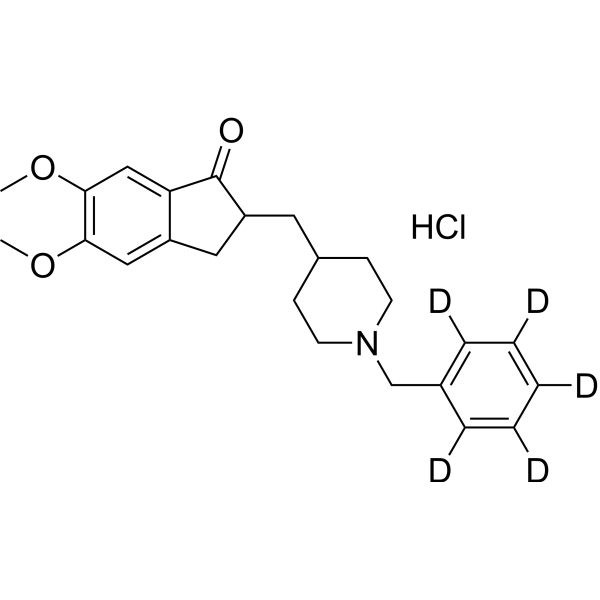
Donepezil-d5 hydrochloride

Based on 1 Customer Validation
Donepezil-d5 (hydrochloride) is deuterium labeled Donepezil (Hydrochloride). Donepezil Hydrochloride (E2020) is a reversible, selective AChE inhibitor with an IC50 of 6.7 nM for AChE activity. Donepezil shows high selectivity for AChE over BuChE. Donepezil exhibits neuroprotective effect on Aβ42 neurotoxicity.
For research use only. We do not sell to patients.
- Purity : 99.27%
- CAS No.: 1883548-90-0
- Formula: C24H25D5ClNO3
- Molecular Weight:420.98
-
Storage:
4°C, sealed storage, away from moisture
* In solvent : -80°C, 6 months; -20°C, 1 month (sealed storage, away from moisture)

To place orders, for customer services and technical support, please contact: MedChemExpress USA
Tel: 609-228-6898 E-mail: [email protected] [email protected]


-
 Biological Activity
-
Chemical Information
- Protocols
- Purity & Documentation
- References
-
 Help & FAQs


-
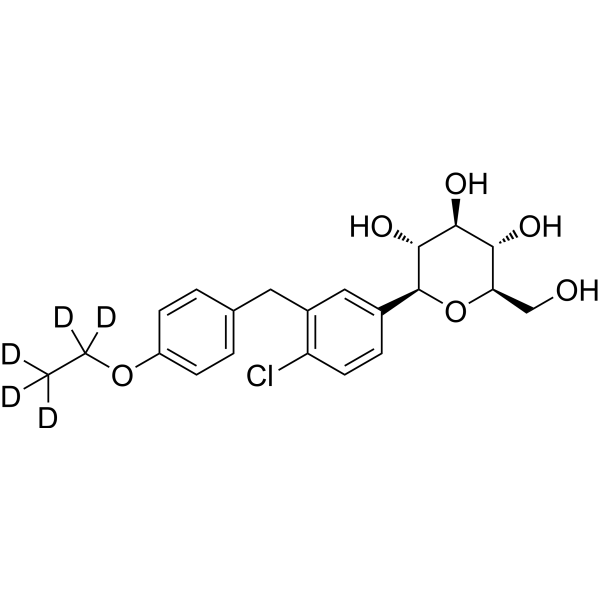
HY-10450S
Dapagliflozin-d5Stable Isotope -
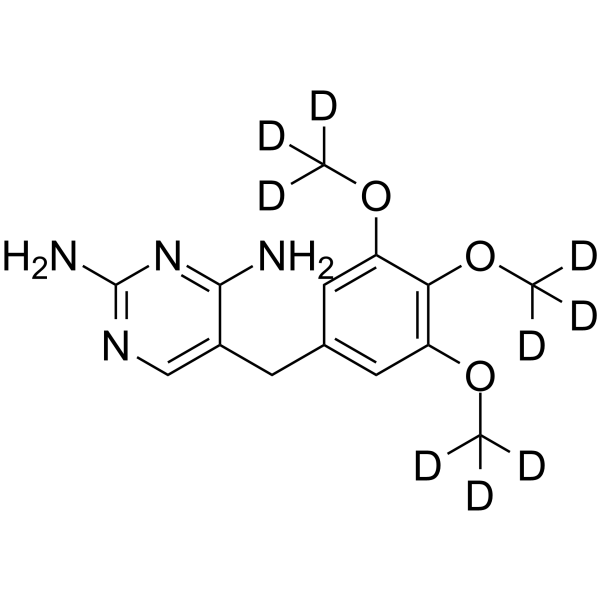
HY-B0510S
Trimethoprim-d9Stable Isotope -
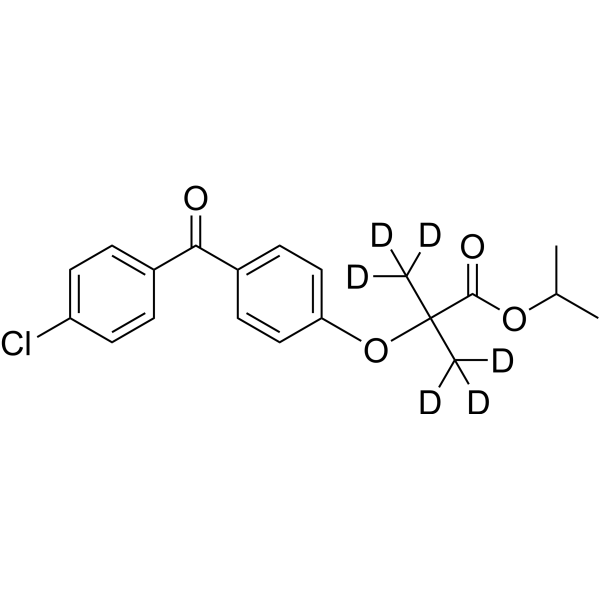
HY-17356S
Fenofibrate-d6Stable Isotope -
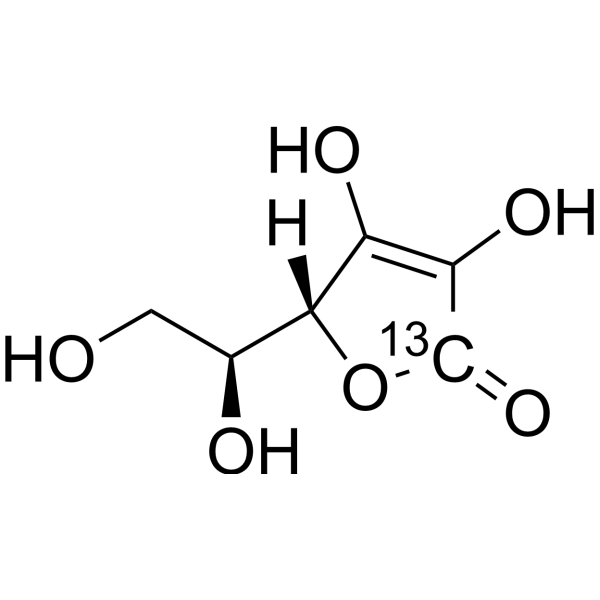
HY-B0166S1
L-Ascorbic acid-13CStable Isotope -
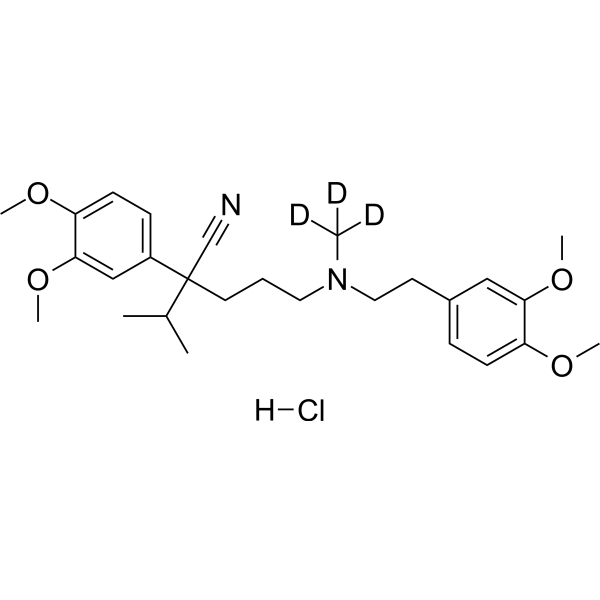
HY-A0064S
Verapamil-d3 hydrochlorideStable Isotope -
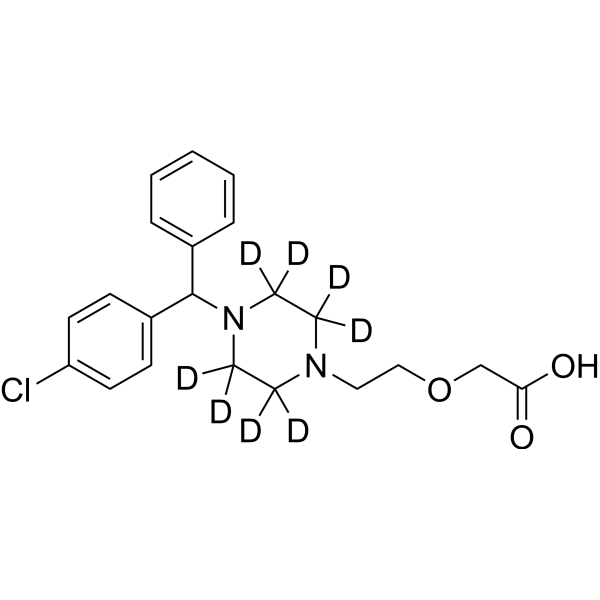
HY-17042S1
Cetirizine-d8H1-receptor Antagonist -
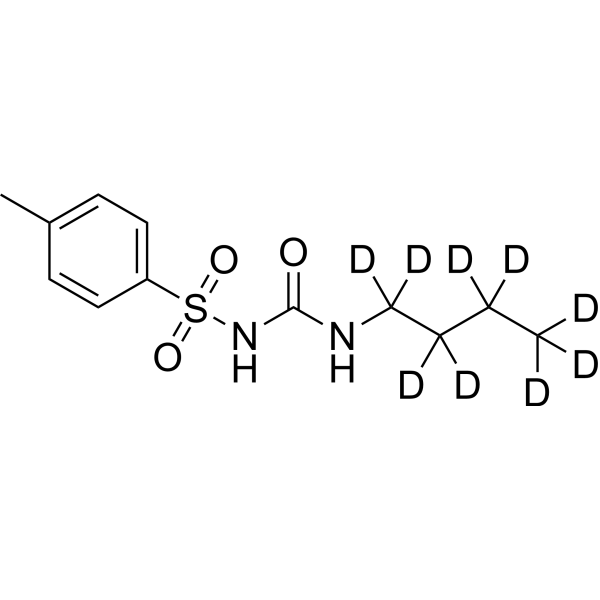
HY-B0401S
Tolbutamide-d9Stable Isotope -
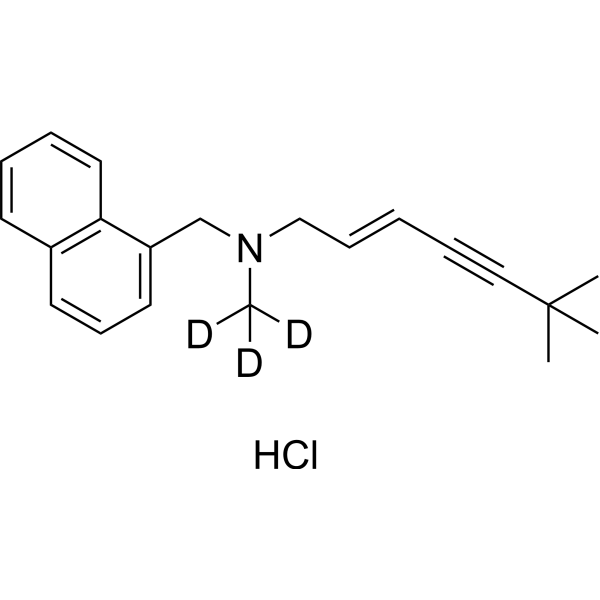
HY-17395S
Terbinafine-d3 hydrochlorideStable Isotope -
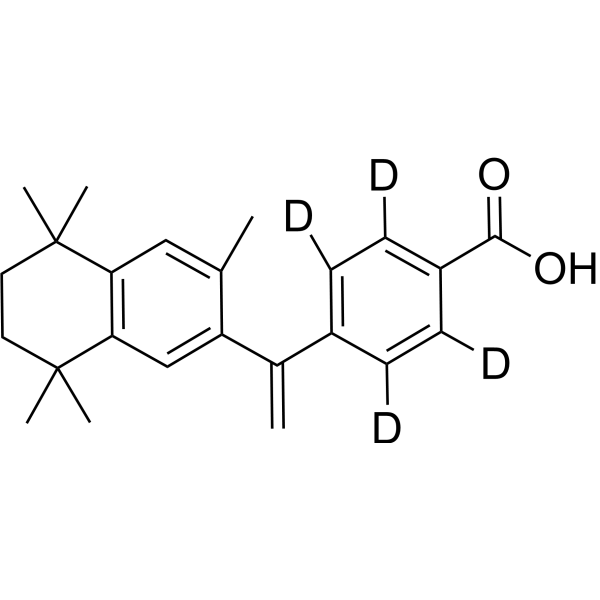
HY-14171S
Bexarotene-d4RXR Agonist -
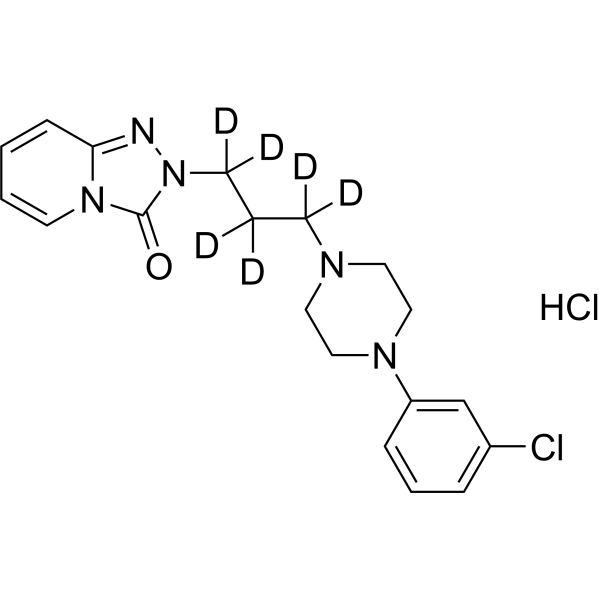
HY-B0478AS
Trazodone-d6 hydrochlorideStable Isotope -
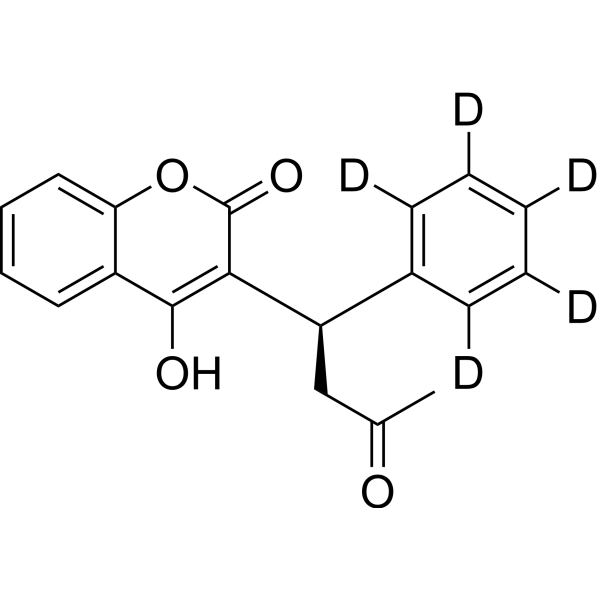
HY-W015998S
(R)-(+)-Warfarin-d5Stable Isotope -

HY-B0437AS
Sotalol-d6 hydrochlorideStable Isotope


Biological Activity
Description
In Vitro
Stable heavy isotopes of hydrogen, carbon, and other elements have been incorporated into drug molecules, largely as tracers for quantitation during the drug development process. Deuteration has gained attention because of its potential to affect the pharmacokinetic and metabolic profiles of drugs[1].
MedChemExpress (MCE) has not independently confirmed the accuracy of these methods. They are for reference only. Further protocols information, click here.
Application
1. This compound can be used as a tracer
2. This compound can be used as an internal standard for quantitative analysis by NMR, GC-MS, or LC-MS.


Chemical Information
-
CAS No. 1883548-90-0
-
Unlabeled CAS 120011-70-3
-
Appearance Solid
-
Molecular Weight 420.98
-
Formula C24H25D5ClNO3
-
Color White to off-white
-
SMILES
O=C1C(CC2=CC(OC)=C(C=C21)OC)CC3CCN(CC3)CC4=C(C([2H])=C(C([2H])=C4[2H])[2H])[2H].Cl
-
Synonyms
E2020-d5
-
Shipping
Room temperature in continental US; may vary elsewhere.
-
Storage
4°C, sealed storage, away from moisture
* In solvent : -80°C, 6 months; -20°C, 1 month (sealed storage, away from moisture)

Protocols
-
Neurotoxicity Study
This protocol assesses in vitro neurotoxicity by combining neuronal viability, mitochondrial/metabolic activity, neurite outgrowth, and optional neuronal network function readouts. Calcein-AM or resazurin/PrestoBlue readouts estimate viable or metabolically active cells; βIII-tubulin immunofluorescence detects neuronal morphology and neurite networks; TMRE detects mitochondrial membrane potential; and MEA recordings detect functional changes in neuronal network activity.
-
Cell Cytotoxicity Assay
Cytotoxicity assays are usually based on the assessment of cell membrane damage, which can also be indirectly detected by measuring cell viability. Detection methods include MTT assay, CKK-8 assay, LDH assay and ATP assay, etc.


Purity & Documentation
-
Data Sheet (269 KB)
-
SDS (393 KB)
- English - EN (393 KB)
- Français - FR (393 KB)
- Deutsch - DE (393 KB)
- Norwegian - NO (393 KB)
- Español - ES (393 KB)
- Swedish - SV (393 KB)
- Italian - IT (393 KB)
- Korean - KR (393 KB)
- Portuguese - PT (393 KB)
-
Handling Instructions (2659 KB)
References
[1]. Russak EM, et al. Impact of Deuterium Substitution on the Pharmacokinetics of Pharmaceuticals. Ann Pharmacother. 2019;53(2):211-216. [Content Brief]
[2]. H Ogura, et al. Comparison of inhibitory activities of donepezil and other cholinesterase inhibitors on acetylcholinesterase and butyrylcholinesterase in vitro. Methods Find Exp Clin Pharmacol. 2000 Oct;22(8):609-13. [Content Brief]
[3]. Min-Young Noh,et al. Neuroprotective effects of donepezil through inhibition of GSK-3 activity in amyloid-beta-induced neuronal cell death. J Neurochem. 2009 Mar;108(5):1116-25. [Content Brief]
[4]. Chang Yell Shin, et al. The Effects of Donepezil, an Acetylcholinesterase Inhibitor, on Impaired Learning and Memory in Rodents. Biomol Ther (Seoul). 2018 May 1;26(3):274-281. [Content Brief]

Calculators
Concentration (start) × Volume (start) = Concentration (final) × Volume (final)


Donepezil-d5 hydrochloride Related Classifications
HY-B0034S Related Classifications
 Powered by Bioz