



Profenofos
Based on 1 publication(s) in Google Scholar
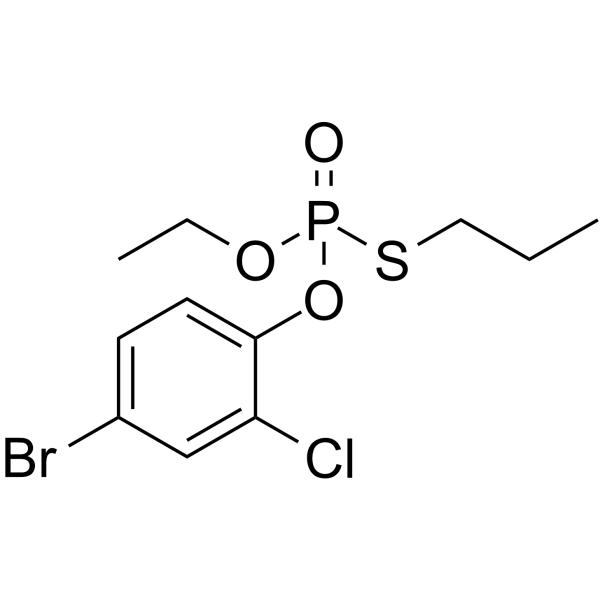
Profenofos is an insecticida used on field crops, vegetables, and fruit crops. Profenofos is an acetylcholinesterase (AChE) inhibitor, with neurotoxicity.
For research use only. We do not sell to patients.
- Purity : 96.07%
- CAS No.: 41198-08-7
- Formula: C11H15BrClO3PS
- Molecular Weight:373.63
-
Storage:
4°C, protect from light
* In solvent : -80°C, 6 months; -20°C, 1 month (protect from light)

To place orders, for customer services and technical support, please contact: MedChemExpress USA
Tel: 609-228-6898 E-mail: [email protected] [email protected]


-
 Biological Activity
-
Chemical Information
-
Solvent & Solubility
- Protocols
- Purity & Documentation
- References
-
 Help & FAQs


-
HY-10108
LY294002PI3K Inhibitor -

HY-B0832R
Profenofos (Standard)Insecticida -
HY-14566
DonepezilSpecific AChE Inhibitor -
HY-B0034
Donepezil HydrochlorideAChE Inhibitor -
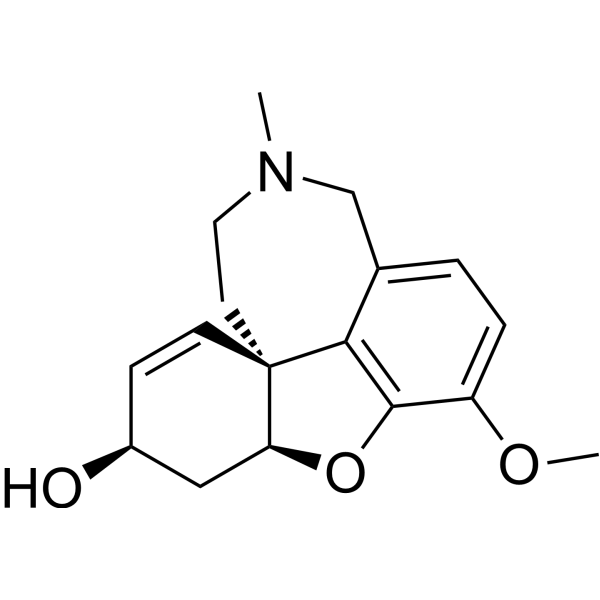
HY-76299
GalanthamineCholinesterase (ChE) Inhibitor -
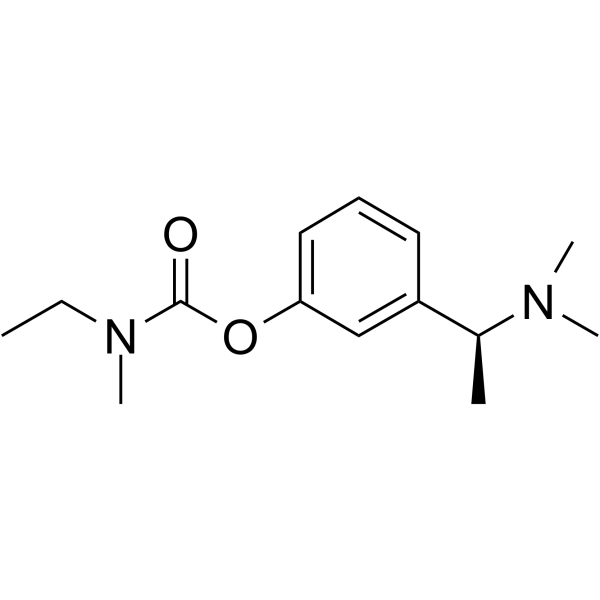
HY-17368
RivastigmineCholinesterase Inhibitor -
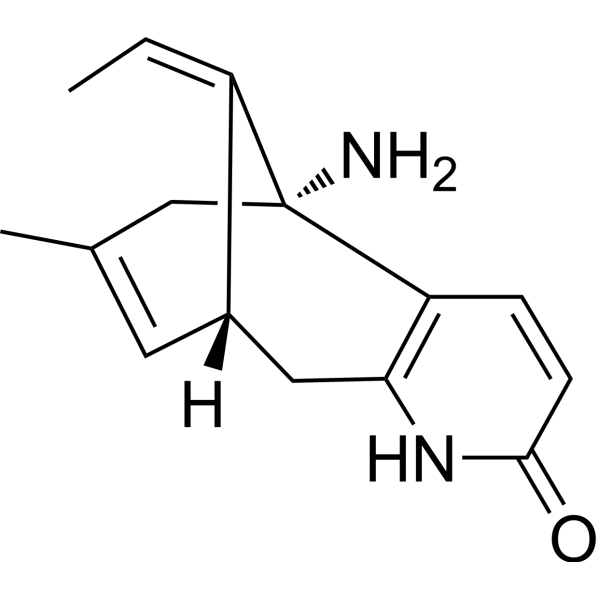
HY-17387
(-)-Huperzine AAChE/NMDA Receptor Inhibitor -
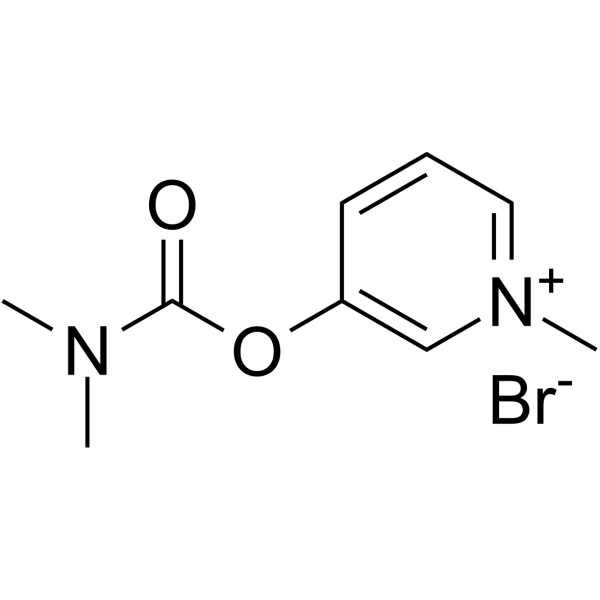
HY-B0207A
Pyridostigmine bromideCholinesterase (ChE) Inhibitor -
HY-B0841
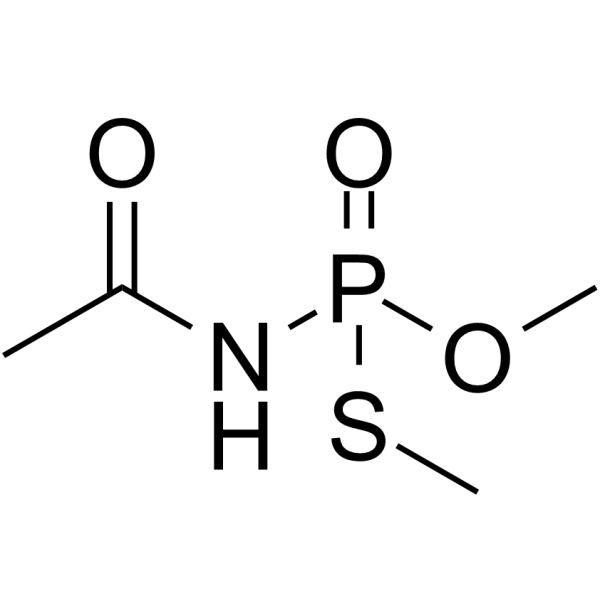
AcephateInsecticide -
HY-B1488
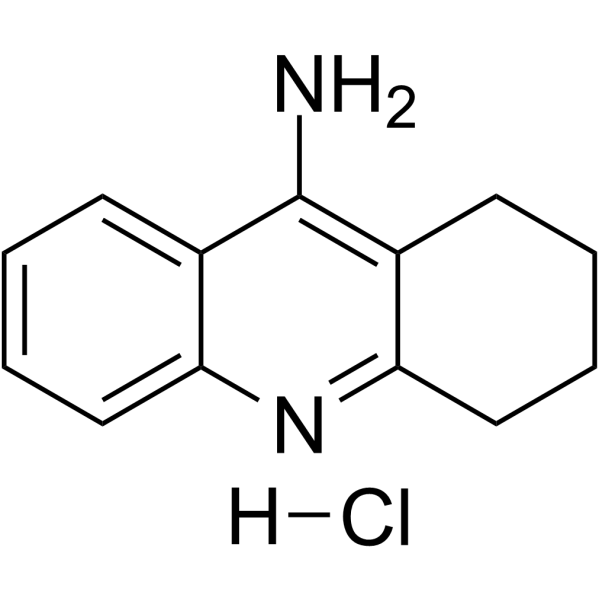
Tacrine hydrochlorideCholinesterase Inhibitor -
HY-11017
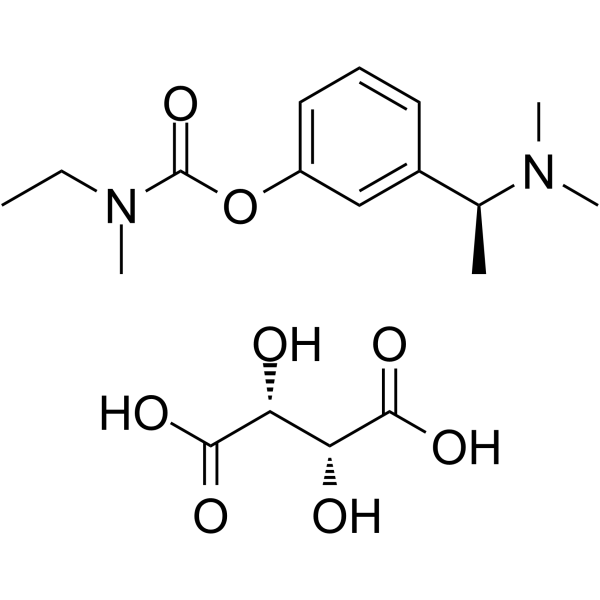
Rivastigmine tartrateCholinesterase Inhibitor -
HY-B0732
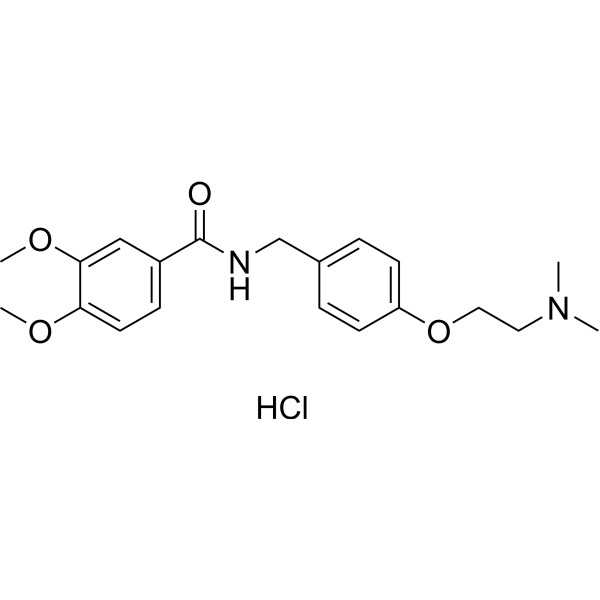
Itopride hydrochlorideAChE/D2DR Inhibitor
Publications Citing Use of MedChemExpress (MCE) Profenofos
More

Biological Activity
Description
IC50 & Target
|
AChE |
In Vitro
Profenofos (0-7 μM, 2-70 h) exhibits cytotoxicity in human peripheral blood lymphocytes, induces chromosome aberrations such as breaks, gaps and satellite junctions, and causes single-stranded DNA breakage[2].
MedChemExpress (MCE) has not independently confirmed the accuracy of these methods. They are for reference only.
-
Cell Line:human peripheral blood lymphocytes
-
Concentration:0-7 μM
-
Incubation Time:2 h
-
Result:Induced cytotoxicty.
In Vivo
MedChemExpress (MCE) has not independently confirmed the accuracy of these methods. They are for reference only.
-
Animal Model:Swiss mouse model[3]
-
Dosage:0.01-35 mg/kg
-
Administration:po, twice a week for 30-90 days
-
Result:Liver: Caused liver congestion, hepatocyte vacuolar degeneration, focal inflammatory cell infiltration, bile duct hyperplasia, hepatocyte necrosis, hepatocyte hypertrophy.
Kidney: Caused kidney perivascular edema, glomerular and tubular necrosis, tubular dilatation, glomerular atrophy.
Spleen: Caused spleen lymphocyte tissue disorder, lymphocyte depletion, red pulp macrophage increase, hemorrhage and hemosiderin deposition.
Brain: Resulted in pathological changes in the brain, including meningeal hemorrhage, vascular congestion, neuronal phagocytosis, satellite phenomenon, encephalomalacia, Purkinje cell degeneration, neuronal lysis, and nerve fiber demyelination.


Chemical Information
-
CAS No. 41198-08-7
-
Appearance Liquid (Density: 1.455 g/cm3)
-
Molecular Weight 373.63
-
Formula C11H15BrClO3PS
-
Color Colorless to light yellow
-
SMILES
O=P(OCC)(SCCC)OC1=CC=C(Br)C=C1Cl
-
Shipping
Room temperature in continental US; may vary elsewhere.
-
Storage
4°C, protect from light
* In solvent : -80°C, 6 months; -20°C, 1 month (protect from light)


Publications (1)
-
Journal Impact Factor
-
Most Recent
-
Anal Chem
Exposome-Scale Investigation of Cl-/Br-Containing Chemicals Using High-Resolution Mass Spectrometry, Multistage Machine Learning, and Cloud Computing. [Abstract]2025 Jun 3;97(21):11099-11109. PMID: 40401576


Solvent & Solubility
In Vitro:
DMSO : 50 mg/mL (133.82 mM; Need ultrasonic; Hygroscopic DMSO has a significant impact on the solubility of product, please use newly opened DMSO)
Please refer to the solubility information to select the appropriate solvent. Once prepared, please aliquot and store the solution to prevent product inactivation from repeated freeze-thaw cycles.
Storage method and period of stock solution: -80°C, 6 months; -20°C, 1 month (protect from light). When stored at -80°C, please use it within 6 months. When stored at -20°C, please use it within 1 month.
Please refer to the solubility information to select the appropriate solvent. Once prepared, please aliquot and store the solution to prevent product inactivation from repeated freeze-thaw cycles.
Storage method and period of stock solution: -80°C, 6 months; -20°C, 1 month (protect from light). When stored at -80°C, please use it within 6 months. When stored at -20°C, please use it within 1 month.
Concentration (start) × Volume (start) = Concentration (final) × Volume (final)
In Vivo:
Select the appropriate dissolution method based on your experimental animal and administration route.
- For the following dissolution methods, please ensure to first prepare a clear stock solution using an In Vitro approach and then sequentially add co-solvents:
- To ensure reliable experimental results, the clarified stock solution can be appropriately stored based on storage conditions. As for the working solution for In Vivo experiments, it is recommended to prepare freshly and use it on the same day.
- The percentages shown for the solvents indicate their volumetric ratio in the final prepared solution. If precipitation or phase separation occurs during preparation, heat and/or sonication can be used to aid dissolution.
Add each solvent one by one: 10% DMSO 40% PEG300 5% Tween-80 45% Saline
Solubility: 2.5 mg/mL (6.69 mM); Clear solution; Need ultrasonic
This protocol yields a clear solution of 2.5 mg/mL.
Taking 1 mL working solution as an example, add 100 μL DMSO stock solution (25.0 mg/mL) to 400 μL PEG300, and mix evenly; then add 50 μL Tween-80 and mix evenly; then add 450 μL Saline to adjust the volume to 1 mL.
Preparation of Saline: Dissolve 0.9 g sodium chloride in ddH₂O and dilute to 100 mL to obtain a clear Saline solution.
Add each solvent one by one: 10% DMSO 90% (20% SBE-β-CD in Saline)
Solubility: ≥ 2.5 mg/mL (6.69 mM); Clear solution
This protocol yields a clear solution of ≥ 2.5 mg/mL (saturation unknown).
Taking 1 mL working solution as an example, add 100 μL DMSO stock solution (25.0 mg/mL) to 900 μL 20% SBE-β-CD in Saline, and mix evenly.
Preparation of 20% SBE-β-CD in Saline (4°C, storage for one week): 2 g SBE-β-CD powder is dissolved in 10 mL Saline, completely dissolve until clear.
In Vivo Dissolution Calculator
Please enter the basic information of animal experiments:
-
-
-
-
Recommended: Prepare an additional quantity of animals to account for potential losses during experiments.
Please enter your animal formula composition:
-
%DMSO +
Recommended: Keep the proportion of DMSO in working solution below 2% if your animal is weak.
-
%+
-
+%Tween-80 + +
-
%Saline +
The co-solvents required include: DMSO, . All of co-solvents are available by MedChemExpress (MCE). , Tween 80. All of co-solvents are available by MedChemExpress (MCE).
Working solution concentration: 0.22 mg/mL
Method for preparing stock solution: mg drug dissolved in μL DMSO. Stock solution concentration: mg/mL. * In solvent : -80°C, 6 months; -20°C, 1 month (protect from light)
1. Take μL DMSO stock solution;
2. Add μL .
μL , mix evenly;
3. Then add μL Tween 80, mix evenly;
4. Then add μL
Please ensure that the stock solution in the first step is dissolved to a clear state, and add co-solvents in sequence. You can use ultrasonic heating (ultrasonic cleaner, recommended frequency 20-40 kHz), vortexing, etc. to assist dissolution.


Purity & Documentation
-
Data Sheet (276 KB)
-
SDS (597 KB)
- English - EN (597 KB)
- Français - FR (597 KB)
- Deutsch - DE (597 KB)
- Norwegian - NO (597 KB)
- Español - ES (597 KB)
- Swedish - SV (597 KB)
- Italian - IT (597 KB)
- Korean - KR (597 KB)
- Portuguese - PT (597 KB)
-
Handling Instructions (2659 KB)
References
[1]. Madhulika Kushwaha, et al. Kushwaha, M., et al.. Profenofos, an Acetylcholinesterase-Inhibiting Organophosphorus Pesticide: A Short Review of Its Usage, Toxicity, and Biodegradation. J Environ Qual.2016 Sep;45(5):1478-1489. [Content Brief]
[2]. Prabhavathy Das G, et al. Cytotoxicity and genotoxicity induced by the pesticide profenofos on cultured human peripheral blood lymphocytes. Drug Chem Toxicol. 2006;29(3):313-22. [Content Brief]


Complete Stock Solution Preparation Table
Please refer to the solubility information to select the appropriate solvent. Once prepared, please aliquot and store the solution to prevent product inactivation from repeated freeze-thaw cycles.
Storage method and period of stock solution: -80°C, 6 months; -20°C, 1 month (protect from light). When stored at -80°C, please use it within 6 months. When stored at -20°C, please use it within 1 month.
| Optional Solvent | Concentration Solvent Mass | 1 mg | 5 mg | 10 mg | 25 mg |
|---|---|---|---|---|---|
| DMSO | 1 mM | 2.6764 mL | 13.3822 mL | 26.7644 mL | 66.9111 mL |
| 5 mM | 0.5353 mL | 2.6764 mL | 5.3529 mL | 13.3822 mL | |
| 10 mM | 0.2676 mL | 1.3382 mL | 2.6764 mL | 6.6911 mL | |
| 15 mM | 0.1784 mL | 0.8921 mL | 1.7843 mL | 4.4607 mL | |
| 20 mM | 0.1338 mL | 0.6691 mL | 1.3382 mL | 3.3456 mL | |
| 25 mM | 0.1071 mL | 0.5353 mL | 1.0706 mL | 2.6764 mL | |
| 30 mM | 0.0892 mL | 0.4461 mL | 0.8921 mL | 2.2304 mL | |
| 40 mM | 0.0669 mL | 0.3346 mL | 0.6691 mL | 1.6728 mL | |
| 50 mM | 0.0535 mL | 0.2676 mL | 0.5353 mL | 1.3382 mL | |
| 60 mM | 0.0446 mL | 0.2230 mL | 0.4461 mL | 1.1152 mL | |
| 80 mM | 0.0335 mL | 0.1673 mL | 0.3346 mL | 0.8364 mL | |
| 100 mM | 0.0268 mL | 0.1338 mL | 0.2676 mL | 0.6691 mL |


Profenofos Related Classifications
HY-B0832 Related Classifications
 Powered by Bioz