
1. Search Result
Search Result
Results for "

blood disorders

" in MedChemExpress (MCE) Product Catalog:

200

Inhibitors & Agonists

8

Screening Libraries

1

Fluorescent Dyes

2

Biochemical Assay Reagents

5

Peptides

2

Inhibitory Antibodies

17

Natural
Products

21

Isotope-Labeled Compounds

2

Oligonucleotides

1

GMP Molecules

Cat. No. Product Name Target Research Areas Chemical Structure
  • HY-108841
    Raleukin
    50+ Cited Publications

    Kineret; Anakinra

    Interleukin Related Inflammation/Immunology Cancer
    Raleukin (AMG-719) is a recombinant, nonglycosylated human interleukin-1 receptor (IL-1R) antagonist. Raleukin significantly reduces neutrophil accumulation in blood vessels and brain infarct volume as well as improves motor coordination performance in ischemic stroke mice model. Anakinra can be used to study chronic inflammatory disorders like rheumatoid arthritis and cardiovascular recurrence post-myocardial infarction .
    Raleukin
  • HY-B0193A
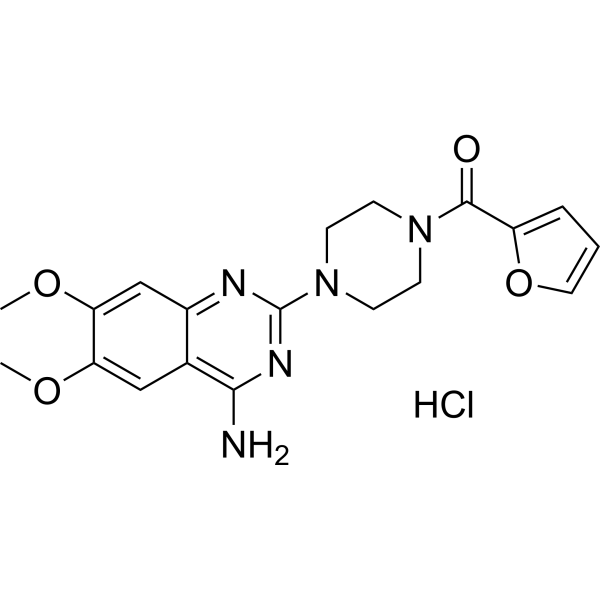
    Prazosin hydrochloride
    15+ Cited Publications

    Adrenergic Receptor Autophagy Cardiovascular Disease Endocrinology Cancer
    Prazosin hydrochloride is a well-tolerated, CNS-active α1-adrenergic receptor antagonist for the research of high blood pressure and alcohol use disorders . Prazosin hydrochloride potently inhibits Norepinephrine (NE)-stimulated 45Ca efflux with an IC50 of 0.15 nM .Prazosin hydrochloride inhibits organic cation transporters OCT-1 and OCT-3 with IC50s of 1.8, and 13 μM, respectively .
    Prazosin hydrochloride
  • HY-B1395
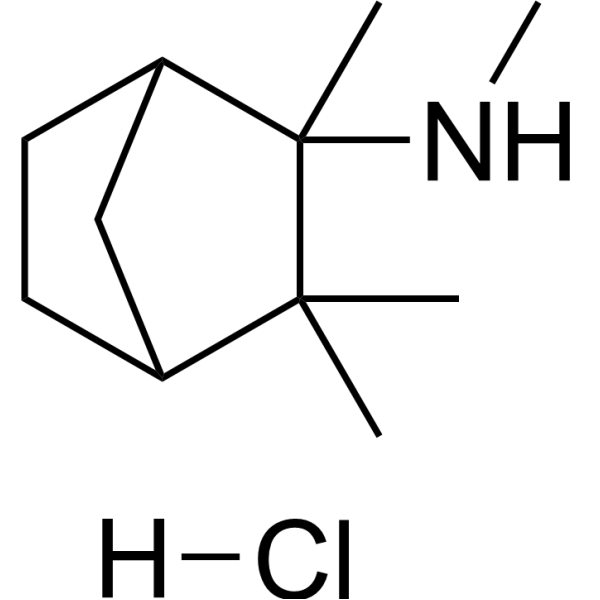
    Mecamylamine hydrochloride
    5 Publications Verification

    nAChR Histamine Receptor Cardiovascular Disease Neurological Disease
    Mecamylamine hydrochloride is an orally active, nonselective, noncompetitive nAChR antagonist. Mecamylamine hydrochloride is also a ganglionic blocker. Mecamylamine hydrochloride can across the blood-brain barrier. Mecamylamine hydrochloride can be used in the research of neuropsychiatric disorders, hypertension, antidepressant area .
    Mecamylamine hydrochloride
  • HY-13458

    L-DOPS; DOPS; SM5688

    Adrenergic Receptor Cardiovascular Disease Neurological Disease
    Droxidopa (L-DOPS; SM5688) is a potent, orally active norepinephrine precursor. Droxidopa increases standing blood pressure, ameliorates symptoms of orthostatic hypotension and improves standing ability. Droxidopa has the potential for the research of neurogenic orthostatic hypotension (nOH) and alternative ADHD (attention deficit hyperactivity disorder) .
    Droxidopa
  • HY-17416
    Guanfacine hydrochloride
    3 Publications Verification

    Adrenergic Receptor Cardiovascular Disease Infection Neurological Disease Metabolic Disease
    Guanfacine hydrochloride is an orally active and blood-brain barrier permeability noradrenergic α2A agonist and has high selective for the α2A receptor subtype. Guanfacine has effects in producing hypotension and sedation. Guanfacine can be used for the research of a variety of prefrontal cortex (PFC) cognitive disorders, including tourette's syndrome and attention deficit hyperactivity disorder (ADHD) .
    Guanfacine hydrochloride
  • HY-B0688
    Dapsone
    4 Publications Verification

    4,4′-Diaminodiphenyl sulfone; DDS

    Antibiotic Parasite Bacterial Reactive Oxygen Species (ROS) Infection Inflammation/Immunology
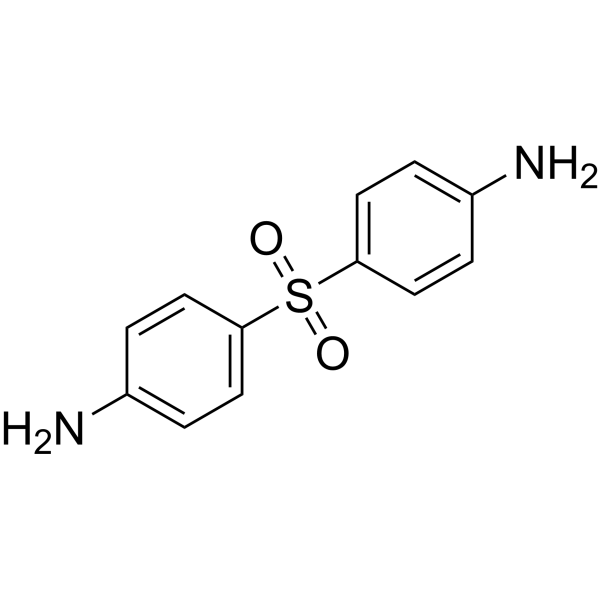
    Dapsone (4,4′-Diaminodiphenyl sulfone) is an orally active and blood-brain penetrant sulfonamide antibiotic with bacteriostatic, antimycobacterial and antiprotozoal activities . Dapsone?exerts effective antileprosy activity?and inhibits folate synthesis in cell extracts of?M. leprae. Dapsone is used for dermatologic disorder research, including leprosy, dermatitis herpetiformis, acne vulgaris et al .
    Dapsone
  • HY-W001083
    3-Hydroxyphenylacetic acid
    1 Publications Verification

    Endogenous Metabolite Ferroptosis Glutathione Peroxidase Aldehyde Dehydrogenase (ALDH) Apoptosis Reactive Oxygen Species (ROS) Keap1-Nrf2 Cardiovascular Disease Neurological Disease Metabolic Disease Inflammation/Immunology Cancer
    3-Hydroxyphenylacetic acid is an orally active flavonoid metabolite produced by intestinal flora, with blood pressure-lowering activity. 3-Hydroxyphenylacetic acid can also inhibit ferroptosis by upregulating the expression of GPX4, thereby improving spermatogenic dysfunction in aged mice. In addition, abnormal levels of 3-Hydroxyphenylacetic acid are closely related to certain diseases, such as autism spectrum disorders .
    3-Hydroxyphenylacetic acid
  • HY-B0349
    Meclizine dihydrochloride
    4 Publications Verification

    Meclozine dihydrochloride

    Histamine Receptor Apoptosis Neurological Disease Endocrinology Cancer
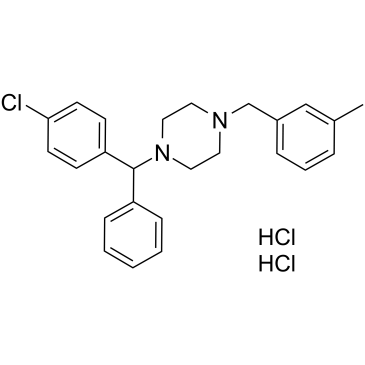
    Meclizine (Meclozine) dihydrochloride, an antihistamine, reversibly inhibits the interaction of histamine at the H1 receptors. Meclizine dihydrochloride is a member of the piperazine class of H1 antagonists. Meclizine dihydrochloride is an effective anti-motion sickness agent. Meclizine dihydrochloride crosses the blood-brain barrier. Meclizine dihydrochloride can be used for the research of polyQ toxicity disorders, such as Huntington's disease. Meclizine dihydrochloride is an agonist ligand for mouse constitutive androstane receptor (CAR) and an inverse agonist for Human CAR .
    Meclizine dihydrochloride
  • HY-P2824

    Bacterial Cardiovascular Disease
    Streptokinase, β-hemolytic streptococcus (Lancefield Group C) is a bacteria-derived protein and a plasminogen activator. Streptokinase is widely used for the research of the blood-clotting disorders. Streptokinase improves reperfusion blood flow after coronary artery occlusion .
    Streptokinase, β-hemolytic streptococcus (Lancefield Group C)
  • HY-10232
    THIP
    1 Publications Verification

    Gaboxadol

    GABA Receptor Neurological Disease
    THIP (Gaboxadol) is a selective extrasynaptic GABAA receptors (eGABARs) agonist (with blood-brain barrier permeability), shows an EC50 value of 13 μM for δ-GABAAR. THIP induces strong tense GABAA-mediated currents in layer 2/3 neurons, but shows on effect on miniature IPSCs. THIP can be used in studies of sleep disorders .
    THIP
  • HY-12152
    PNU-120596
    1 Publications Verification

    NSC 216666

    nAChR Neurological Disease Inflammation/Immunology
    PNU-120596 (NSC 216666) is a potent and selective α7 nAChR positive allosteric modulator (PMA) that can cross the blood-brain barrier, with an EC50 of 216 nM. PNU-120596 is inactive against α4β2, α3β4, and α9α10 nAChRs. PNU-120596 has the potential for psychiatric and neurological disorders research .
    PNU-120596
  • HY-76201
    Dexrazoxane hydrochloride
    15+ Cited Publications

    ICRF-187 hydrochloride; ADR-529 hydrochloride; NSC-169780 hydrochloride

    Apoptosis Ferroptosis Cardiovascular Disease Neurological Disease Inflammation/Immunology Cancer
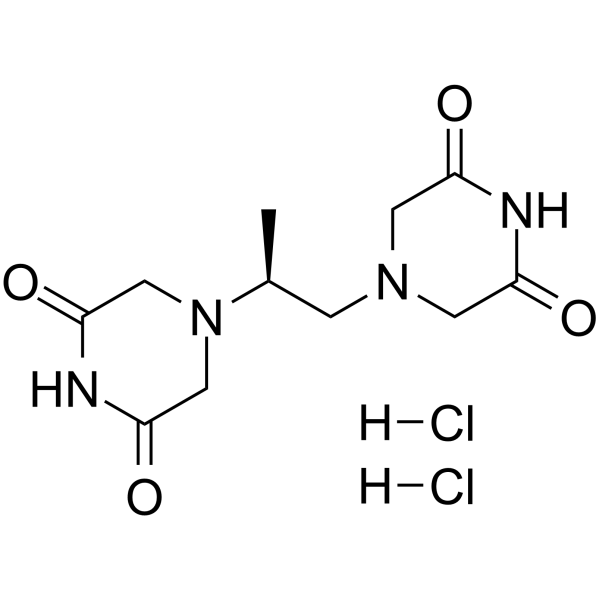
    Dexrazoxane hydrochloride (ICRF-187 hydrochloride) is a heart protectant that can help preserve ovarian function and fertility. Dexrazoxane hydrochloride has antioxidant and anti-inflammatory properties, can cross the blood-brain barrier, improves motor function disorders, and offers neuroprotective effects, making it useful in the study of neurodegenerative diseases .
    Dexrazoxane hydrochloride
  • HY-148417

    Serotonin Transporter Neurological Disease
    ZZL-7 is a fast-onset antidepressant agent. ZZL-7 works by disrupting the interaction between the serotonin transporter (SERT) and neuronal nitric oxide synthase (nNOS) in the dorsal raphe nucleus (DRN). ZZL-7 can cross the blood-brain barrier readily. ZZL-7 can be used for the research of major depressive disorder (MDD) .
    ZZL-7
  • HY-15722
    SB-222200
    5+ Cited Publications

    Neurokinin Receptor Neurological Disease Endocrinology
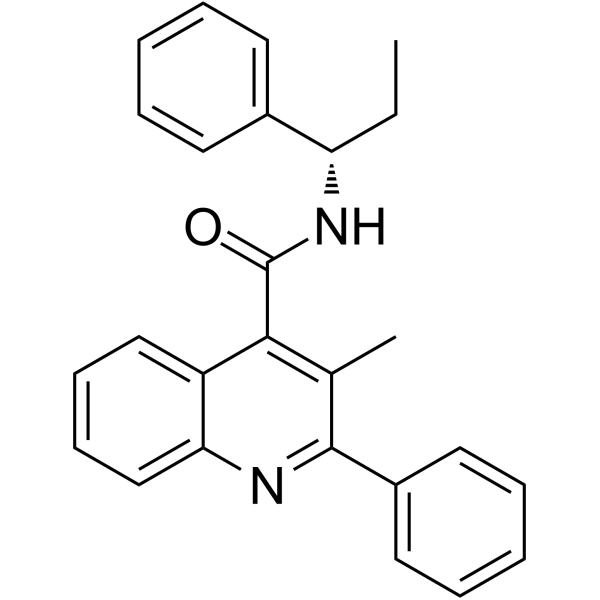
    SB-222200 is a potent, selective, orally active and blood-brain barrier (BBB) penetrant NK-3 receptor antagonist. SB-222200 is developed for central nervous system (CNS) disorders .
    SB-222200
  • HY-175199

    BPN-0026709

    Myosin Neurological Disease
    MT-228 (BPN-0026709) is a selective and blood-brain barrier permeable non-muscle myosin II inhibitor. MT-228 markedly improves tolerability by selectively targeting NMIIB (KI = 1.5 μM) over CMII (KI = 17 μM), and the sequence of SmMll MD is 83.6% identical to that of NMllB. MT-228 shows long-lasting efficacy in animal models of stimulant use disorder .
    MT-228
  • HY-34596

    Biochemical Assay Reagents Amyloid-β Neurological Disease Metabolic Disease
    4-Hydroxyindole is a type of hydroxyindole in which the 1H-indole at position 4 is substituted by a hydroxyl group. 4-Hydroxyindole serves as an important raw material or intermediate in the synthesis of pharmaceutical products and industrial polymers. 4-Hydroxyindole inhibits amyloid fibrillization and induces liver function impairment, thyroid abnormalities, and blood glucose fluctuations in mice. 4-Hydroxyindole holds potential for research in neurodegenerative diseases and metabolic disorders .
    4-Hydroxyindole
  • HY-B0416

    mAChR Adrenergic Receptor Neurological Disease
    Gallamine Triethiodide is a blood-brain barrier-permeable skeletal muscle relaxant. Gallamine Triethiodide induces skeletal muscle paralysis by blocking acetylcholine. Gallamine Triethiodide directly stimulates intracardiac β receptors. Gallamine Triethiodide prolongs the duration of afterdischarge in the cat cerebral cortex. Gallamine Triethiodide can be used in studies related to convulsive disorders .
    Gallamine Triethiodide
  • HY-135714

    EKZ-001

    HDAC Microtubule/Tubulin Neurological Disease Cancer
    Bavarostat (EKZ-001) is a blood-brain barrier-permeable, potent HDAC6 inhibitor and PET radiotracer, with an IC50 as low as 17 nM against human HDAC6. Bavarostat can be labeled with 18F and used as a probe to map HDAC6 distribution and measure target occupancy in the brains of non-human primates. Bavarostat also selectively modulates tubulin acetylation, but not histone acetylation. Bavarostat is applicable for research on Alzheimer's disease, other neurodegenerative disorders, and cancers .
    Bavarostat
  • HY-120332

    KH176 hydrochloride

    Reactive Oxygen Species (ROS) Metabolic Disease
    Sonlicromanol (KH176) hydrochloride, a chemical entity derivative of Trolox, is a blood-brain barrier permeable ROS-redox modulator. Sonlicromanol (KH176) hydrochloride is used in the study for mitochondrial disorders .
    Sonlicromanol hydrochloride
  • HY-147403S

    JNJ-61393215

    Orexin Receptor (OX Receptor) Isotope-Labeled Compounds Neurological Disease
    Tebideutorexant is an OX1R-selective inhibitor with oral bioavailability and blood-brain barrier permeability, with human OX1R pKi 8.17 and rat OX1R pKi 8.13.Tebideutorexant selectively modulates OX1R, with no significant functional effect on OX2R. Tebideutorexant can be used for the research of panic and anxiety disorders .
    Tebideutorexant
  • HY-153175

    RET Neurological Disease
    BT44 is a selective RET activator. BT44 can penetrate through the blood-brain barrier and can be used for the research of neurodegenerative disorders and diabetes mellitus .
    BT44
  • HY-111778

    Histone Methyltransferase Cancer
    EHMT2-IN-1 is a potent EHMT inhibitor, with IC50s of all <100 nM for EHMT1 peptide, EHMT2 peptide and cellular EHMT2. Used in the research of blood disorder or cancer .
    EHMT2-IN-1
  • HY-139464

    Nuclear Factor of activated T Cells (NFAT) Neurological Disease
    Q134R, a neuroprotective hydroxyquinoline derivative that suppresses nuclear factor of activated T cell (NFAT) signaling. Q134R can across blood-brain barrier. Q134R has the potential for Alzheimer's disease (AD) and aging-related disorders research .
    Q134R
  • HY-122347A

    GW823296 maleate

    Neurokinin Receptor Neurological Disease Inflammation/Immunology
    Orvepitant maleate (GW823296 maleate) is potent, selective, orally active and well-tolerated neurokinin-1 receptor (NK-1) antagonist with a pKi of 10.2 for human neurokinin-1 receptor. Orvepitant maleate can across the blood-brain barrier. Orvepitant maleate has the potential for depressive disorder and chronic refractory cough (CRC) treatment .
    Orvepitant maleate
  • HY-101834

    Orexin Receptor (OX Receptor) Others
    ACT-462206 is an orally active and potent dual Orexin 1/Orexin 2 receptor antagonist with IC50s of 60 nM (Orexin 1) and 11 nM (Orexin 2), respectively. ACT-462206 exhibits brain penetration properties, and can be used for insomnia, stress/anxiety-related disorders and addiction research .
    ACT-462206
  • HY-13340
    VU0152100
    1 Publications Verification

    VU152100

    mAChR Neurological Disease
    VU0152100 (VU152100) is a highly selective mAChR positive allosteric modulator (permeable to the blood-brain barrier). VU0152100 reverses Amphetamine-induced hypermotility in rats and increased levels of extracellular dopamine in nucleus accumbens and caudate-putamen. VU0152100 has good research potential in psychosis and cognitive impairment associated with mental disorders such as schizophrenia .
    VU0152100
  • HY-N15001

    GABA Receptor Neurological Disease
    Gabaculine is an amino acid neurotoxin and blood-brain barrier-permeable GABA transaminase inhibitor, with an IC50 of 1 μM in beef and Pseudomonas ovalis. Gabaculine elevates endogenous synaptic and brain GABA levels and enhances GABA activity. Gabaculine induces sedation, hypothermia, loss of righting reflex, and prevents convulsions in mice. Gabaculine is applicable to research related to neurological disorders .
    Gabaculine
  • HY-118858

    EAAT Neurological Disease Cancer
    UCPH-102 is a highly selective EAAT1 inhibitor with an IC50 of 0.43 µM. UCPH-102 exhibits a specific anti-proliferative effect on T-ALL cells. UCPH-102 also shows good blood-brain permeability, which can be used in studies of amyotrophic lateral sclerosis, Alzheimer’s disease, chronic pain and obsessive compulsive disorder .
    UCPH-102
  • HY-144604

    Formyl Peptide Receptor (FPR) Infection Neurological Disease
    FPR2 agonist 2 is a potent and CNS-penetrant FPR2 agonist with an EC50 of 0.13 μM, 1.1 μM for FPR2 and FPR1, respectively. FPR2 agonist 2 inhibits the production of pro-inflammatory cytokines, counterbalances the changes in mitochondrial function, and inhibits caspase-3 activity .
    FPR2 agonist 2
  • HY-153354

    Pyruvate Kinase Metabolic Disease
    PKR activator 4 (example 7A) is a potent pyruvate kinase R (PKR) activator. PKR activator 4 has the potential for the research of blood disorders .
    PKR activator 4
  • HY-Z8890

    Cholinesterase (ChE) Neurological Disease
    Norneostigmine is a potent inhibitor of AChE that can penetrate the blood-brain barrier. Norneostigmine can achieve a 50% inhibition rate of mouse brain AChE after 10 min treatment, which is close to the inhibitory effect of tetrahydroaminoacridine (57% at 10 min). Norneostigmine can be used to study memory disorders related to Alzheimer's disease and other memory disorders .
    Norneostigmine
  • HY-B1395A

    nAChR Histamine Receptor Cardiovascular Disease Neurological Disease
    Mecamylamine is an orally active, nonselective, noncompetitive nAChR antagonist. Mecamylamine is also a ganglionic blocker. Mecamylamine can across the blood-brain barrier. Mecamylamine can be used in the research of neuropsychiatric disorders, hypertension, antidepressant area .
    Mecamylamine
  • HY-13458A

    L-DOPS hydrochloride; DOPS hydrochloride; SM5688 hydrochloride

    Adrenergic Receptor Cardiovascular Disease Neurological Disease
    Droxidopa (L-DOPS) hydrochloride is a potent, orally active norepinephrine precursor. Droxidopa hydrochloride increases standing blood pressure, ameliorates symptoms of orthostatic hypotension and improves standing ability. Droxidopa hydrochloride has the potential for the research of neurogenic orthostatic hypotension (nOH) and alternative ADHD (attention deficit hyperactivity disorder) .
    Droxidopa hydrochloride
  • HY-150702

    MAGL Neurological Disease Inflammation/Immunology
    MAGLi 432 is a non-covalent, potent, highly selective, and reversible MAGL inhibitor. MAGLi 432 binds with high affinity to the MAGL active site, with IC50 values of 4.2 nM (human enzyme) and 3.1 nM (mouse enzyme). MAGLi 432 can be used in the research of chronic inflammation, blood–brain barrier dysfunction, neurological disorders such as multiple sclerosis, Alzheimer’s disease and Parkinson’s disease .
    MAGLi 432
  • HY-B0349A

    Meclozine

    Histamine Receptor Apoptosis Neurological Disease Inflammation/Immunology
    Meclizine (Meclozine), an antihistamine, reversibly inhibits the interaction of histamine at the H1 receptors. Meclizine is a member of the piperazine class of H1 antagonists. Meclizine is an effective anti-motion sickness agent. Meclizine crosses the blood–brain barrier. Meclizine is an agonist ligand for mouse constitutive androstane receptor (CAR) and an inverse agonist for Human CAR. Meclizine can be used for the research of polyQ toxicity disorders, such as Huntington's disease .
    Meclizine
  • HY-102043

    Phosphodiesterase (PDE) Neurological Disease
    PDM-631 is a selective and orally active PDE2A inhibitor with blood-brain barrier penetration. PDM-631 exhibits potent inhibitory activity against human and rat recombinant PDE2A with IC50 values of 1.5 nM and 4.2 nM, respectively. PDM-631 increases cGMP levels in the rat cerebral cortex. PDM-631 can be used for the study of schizophrenia and neurodegenerative disorders .
    PDM-631
  • HY-119386

    Sigma Receptor Calcium Channel Neurological Disease
    SAS-0132 is a selective Sigma 2 receptor (Sig2R) antagonist (Ki: 90 nM) that can cross the blood-brain barrier. SAS-0132 is capable of regulating intracellular Ca 2+ levels and modulating PGRMC1-related pathways. SAS-0132 exhibits neuroprotective activity and can improve cognitive impairment in Alzheimer's disease mice. SAS-0132 can be used in the research of neurocognitive disorders such as Alzheimer's disease .
    SAS-0132
  • HY-148322

    Sirtuin Infection Neurological Disease Metabolic Disease Inflammation/Immunology Cancer
    Sirtuin modulator 5 is a sirtuin modulating agent. Sirtuin modulator 5 can activate SIRT1 with a DC50 value of <50 μM. Sirtuin modulator 5 can be used for increasing the lifespan of a cell and used for the research of variety of diseases including, for example, diseases or disorders related to aging or stress, diabetes, obesity, neurodegenerative diseases, cardiovascular disease, blood clotting disorders, inflammation, cancer, and/or flushing as well as diseases or disorders that would benfit from increased mitochondrial activity .
    Sirtuin modulator 5
  • HY-W017933

    Octahydro-1H-isoindole; Perhydroisoindole; Hexahydroisoindoline

    Neurokinin Receptor Neurological Disease
    Octahydroisoindole (Perhydroisoindole) is a substance P antagonist that can cross the blood-brain barrier and is useful for the study of movement disorders associated with central nervous system diseases .
    Octahydroisoindole
  • HY-162660

    GPR88 Neurological Disease
    BI-9508 is a selective and cross the blood-brain barrier GPR88 agonist. BI-9508 has the potential for the research of neurological disorders .
    BI-9508
  • HY-118635

    Actebral

    Radionuclide-Drug Conjugates (RDCs) Neurological Disease
    Cyprodenate is an orally active and blood-brain barrier-penetrant stimulant. Cyprodenate can be labeled with 14C. Cyprodenate can be used in the research of psychiatric disorders .
    Cyprodenate
  • HY-B0007A

    GABA Receptor Neurological Disease
    (S)-Baclofen hydrochloride is a GABAB receptor agonist that crosses the blood-brain barrier and is orally active, with IC50 values ​​of 1.77 μM for GABAB and 1564 μM for GABAA. (S)-Baclofen hydrochloride can be used in research on muscle disorders such as spasticity .
    (S)-Baclofen hydrochloride
  • HY-138944

    SGLT Metabolic Disease
    SGLT1/2-IN-1 is a dual SGLT1/SGLT2 inhibitor extract from WO2015032272A1, compound 2 .
    SGLT1/2-IN-1
  • HY-110255
    AZD 2066
    1 Publications Verification

    mGluR Calcium Channel Trk Receptor Neurological Disease
    AZD-2066 is a selective, orally active and blood-brain barrier-permeating mGluR5 antagonist. AZD 2066 activates the BDNF/trkB signaling pathway. AZD 2066 can be used in the research of neuropathic pain, major depressive disorder and gastroesophageal reflux disease .
    AZD 2066
  • HY-14124

    Opioid Receptor Neurological Disease
    MK-5757 is a Nociceptin/Orphanin FQ Peptide Receptor antagonist. ORL1 antagonist 3 can improve cerebral blood flow disorders and ischemic damage, and alleviate abnormal neurological symptoms. ORL1 antagonist 3can be used for the research of neurological disease, such as traumatic brain injury .
    MK-5757
  • HY-120741

    Phosphodiesterase (PDE) Neurological Disease
    PF-04822163 is an orally active, selective, and blood-brain barrier permeable PDE1 inhibitor with IC50 values of 2 nM, 2.4 nM, and 7 nM for PDE1A, PDE1B, and PDE1C respectively. PF-04822163 can be used in the research of attention deficit hyperactivity disorder or Parkinson's disease .
    PF-04822163
  • HY-19918A
    Anatabine dicitrate
    1 Publications Verification

    NF-κB Amyloid-β nAChR Neurological Disease Inflammation/Immunology
    Anatabine dicitrate is a tobacco alkaloid that can cross the blood-brain barrier. Anatabine dicitrate is a potent α4β2 nAChR agonist. Anatabine dicitrate inhibits NF-κB activation lower amyloid-β (Aβ) production by preventing the β-cleavage of amyloid precursor protein (APP). Anatabine dicitrate has anti-inflammatory effects and has the potential for neurodegenerative disorders treatment .
    Anatabine dicitrate
  • HY-B0688S1

    4,4′-Diaminodiphenyl sulfone-d4; DDS-d4

    Isotope-Labeled Compounds Antibiotic Parasite Bacterial Reactive Oxygen Species (ROS) Infection Inflammation/Immunology
    Dapsone-d4 is the deuterium labeled Dapsone. Dapsone (4,4′-Diaminodiphenyl sulfone) is an orally active and blood-brain penetrant sulfonamide antibiotic with bacteriostatic, antimycobacterial and antiprotozoal activities . Dapsone?exerts effective antileprosy activity?and inhibits folate synthesis in cell extracts of?M. leprae. Dapsone is used for dermatologic disorder research, including leprosy, dermatitis herpetiformis, acne vulgaris et al .
    Dapsone-d4
  • HY-144607

    Opioid Receptor Neurological Disease
    Mu opioid receptor antagonist 2 (compound 25) is a potent, selective and blood-brain barrier (BBB) penetrant μ opioid receptor (MOR) antagonist with a Ki of 0.37 nM and an EC50 of 0.44 nM. Mu opioid receptor antagonist 2 has remarkable CNS antagonism against morphine, and precipitated fewer withdrawal symptoms than Naloxone. Mu opioid receptor antagonist 2 can be used for researching opioid use disorders (OUD) .
    Mu opioid receptor antagonist 2
  • HY-10232S

    Gaboxadol-d4

    Isotope-Labeled Compounds GABA Receptor Neurological Disease
    THIP-d4 (Gaboxadol-d4) is the deuterium labeled THIP (HY-10232). THIP (Gaboxadol) is a selective extrasynaptic GABAA receptors (eGABARs) agonist (with blood-brain barrier permeability), shows an EC50 value of 13 μM for δ-GABAAR. THIP induces strong tense GABAA-mediated currents in layer 2/3 neurons, but shows on effect on miniature IPSCs. THIP can be used in studies of sleep disorders .
    THIP-d4

Inquiry Online

Your information is safe with us. * Required Fields.

Salutation


Country or Region *

Applicant Name *


Organization Name *

Department *


Email Address *


Product Name *

Cat. No.


Requested quantity *

Phone Number *


Remarks

Inquiry Online

Inquiry Information

Product Name:
Cat. No.:
Quantity:
MCE Japan Authorized Agent:

