



GPR88
G Protein-Coupled Receptor 88
GPR88 is an orphan G protein-coupled receptor (GPCR) of the class A rhodopsin family. GPR88 was originally identified as a striatum-specific receptor (designated Strg/GPR88) in both human and rodents, though it is also expressed at low levels in the cerebral cortex, central extended amygdala, lateral, cortical, hypothalamus, and other brain regions.
The specific brain signaling pathways and physiologic functions of GPR88 are largely unknown because the endogenous hormone or transmitter for the receptor has not yet been identified. However, several lines of evidence suggest that GPR88 may provide an important role regulating the excitability of glutamatergic and GABAergic neurons as well as modulating responses to dopaminergic neurons, based on the particularly robust expression of GPR88 in medium spiny neurons (MSNs) in the striatum. Conversely, glutamatergic and dopaminergic depletion differentially alters Gpr88 mRNA levels in distinct MSN subpopulations, indicating neurotransmission regulates Gpr88 gene expression. Consequently, GPR88 is implicated in many behavioral functions and responses, including cognition, mood, movement control, and cued response reward learning.
All Product Categories
-
GPR88 Verwandte Produkte (14)
Verwandte Produkte (14)

- 1
-
RTI-13951-33 hydrochloride
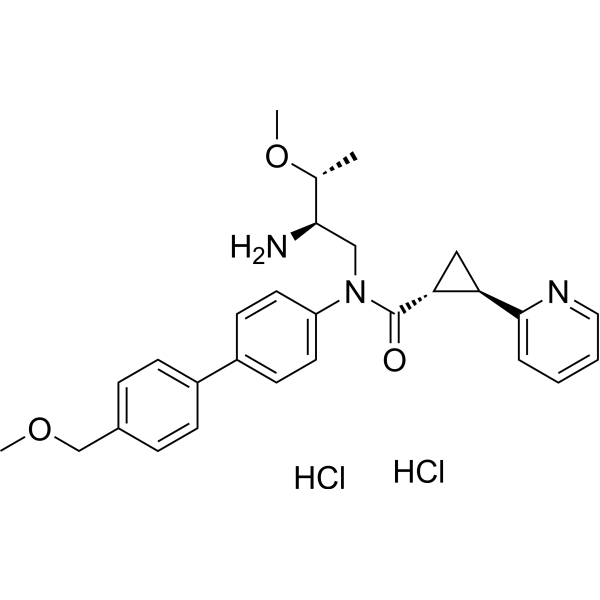 0 ImagesArt. -Nr.: HY-112612AReinheit: 98.50%
-
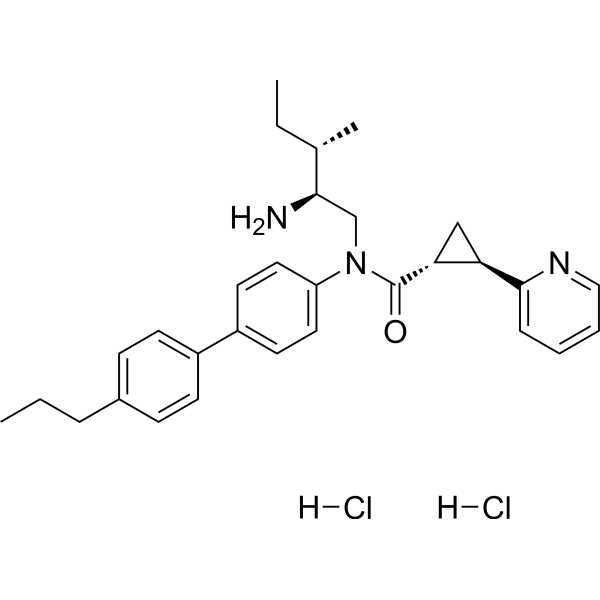
2-PCCA hydrochloride
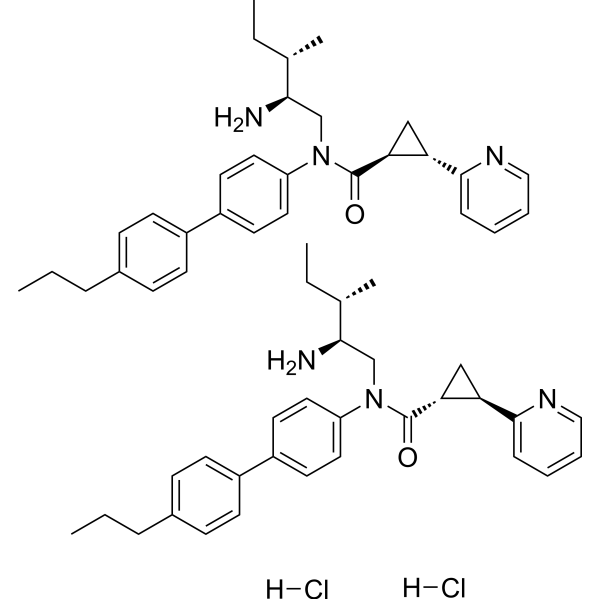 0 ImagesArt. -Nr.: HY-100013CReinheit: 99.11%2-PCCA hydrochloride is a GPR88 receptor agonist, and inhibits GPR88-mediated cAMP production, with an EC50 of 116 nM in HEK293 cells.
-
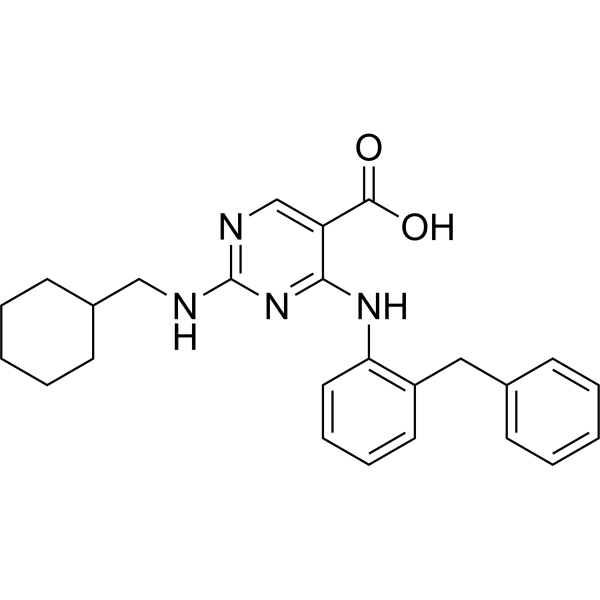
RTI-122 dihydrochloride
 0 ImagesArt. -Nr.: HY-167856AReinheit: 99.68%RTI-122 dihydrochloride is a selective, blood-brain barrier-permeable GPR88 agonist (cAMP EC50=11 nM), with EC50 values of 11.5 nM and 155 nM for human and mouse GPR88, respectively ([35S]GTPγS assay). By activating the GPR88 receptor to regulate the cAMP signaling pathway and G protein activity, RTI-122 dihydrochloride significantly attenuates Binge-like drinking, reduces alcohol intake, and decreases alcohol-seeking motivation. RTI-122 dihydrochloride blocks the reinstatement of alcohol-seeking behavior without affecting water or sucrose intake. RTI-122 dihydrochloride exhibits metabolic stability in mice (T1/2=5.8 h) and can be used to investigate alcohol use disorder.
-
2-PCCA
 0 ImagesArt. -Nr.: HY-100013CAS. Nr.: 1984859-71-32-PCCA is a racemic form of the GPR88 receptor agonist, and inhibits GPR88-mediated cAMP production, with an EC50 of 116 nM in HEK293 cells.
-
BI-9508
 0 ImagesArt. -Nr.: HY-162660CAS. Nr.: 3082554-75-1BI-9508 is a blood-brain barrier-penetrant GPR88 agonist. BI-9508 acts through activation of the Gi1 signaling pathway; it exists as atropisomers, with the more active isomer showing stronger agonist potency and lower P-glycoprotein efflux. BI-9508 can be used in GPR88-related central nervous system research.
-
RTI-13951-33
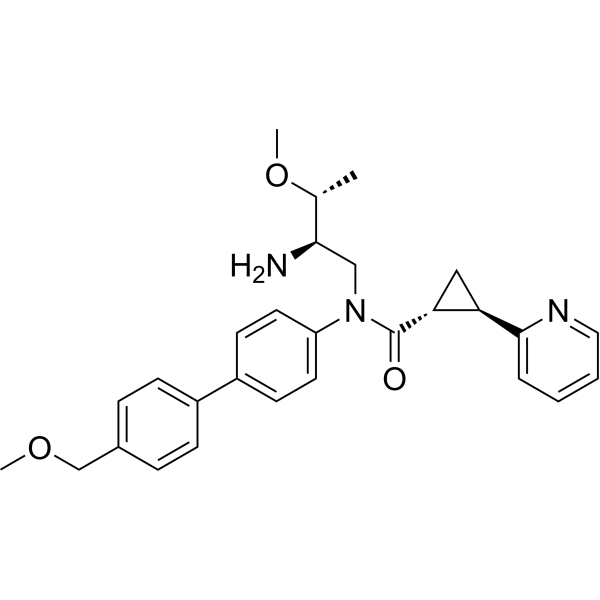 0 ImagesArt. -Nr.: HY-112612CAS. Nr.: 2244884-08-8
-
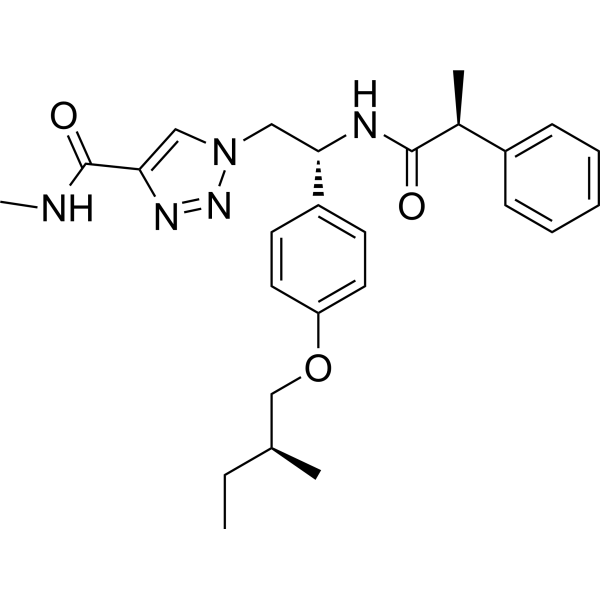
RTI-122
 0 ImagesArt. -Nr.: HY-167856CAS. Nr.: 3034664-39-3RTI-122 is a selective, blood-brain barrier-permeable GPR88 agonist (cAMP EC50=11 nM), with EC50 values of 11.5 nM and 155 nM for human and mouse GPR88, respectively ([35S]GTPγS assay). By activating the GPR88 receptor to regulate the cAMP signaling pathway and G protein activity, RTI-122 significantly attenuates Binge-like drinking, reduces alcohol intake, and decreases alcohol-seeking motivation. RTI-122 blocks the reinstatement of alcohol-seeking behavior without affecting water or sucrose intake. RTI-122 exhibits metabolic stability in mice (T1/2=5.8 h) and can be used to investigate alcohol use disorder.

-
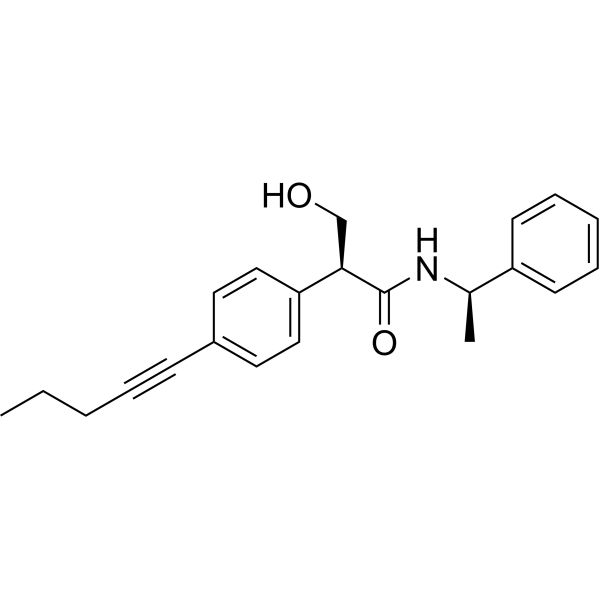
(1S,2S)-2-PCCA hydrochloride (Standard)
 0 ImagesArt. -Nr.: HY-100013B1RCAS. Nr.: 1609563-70-3(1S,2S)-2-PCCA (hydrochloride) (Standard) is the analytical standard of (1S,2S)-2-PCCA (hydrochloride) (HY-100013B1). This product is intended for research and analytical applications. (1S,2S)-2-PCCA hydrochloride is a less active diastereomer of 2-PCCA. 2-PCCA is a GPR88 receptor agonist, and inhibits GPR88-mediated cAMP production, with an EC50 of 116 nM in HEK293 cells.
-
(1R,2R)-2-PCCA hydrochloride (Standard)
 0 ImagesArt. -Nr.: HY-100013A1RCAS. Nr.: 1609563-71-4(1R,2R)-2-PCCA (hydrochloride) (Standard) is the analytical standard of (1R,2R)-2-PCCA (hydrochloride) (HY-100013A1). This product is intended for research and analytical applications. (1R,2R)-2-PCCA hydrochloride is a diastereomer of 2-PCCA, and acts as a potent GPR88 receptor agonist, with an EC50 of 3 nM in cell-free assay, and 603 nM in cell assay.
- 1



