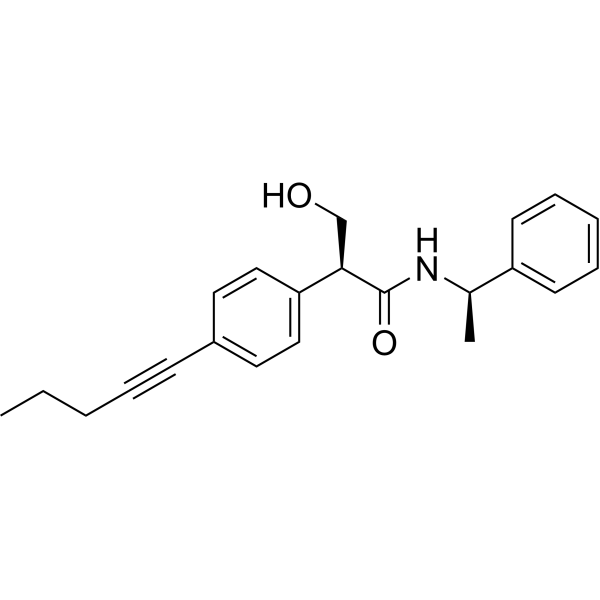
GPR88 Agonist
-
RTI-122 dihydrochloride
 0 ImagesCat. No.: HY-167856APurity: 99.68%
RTI-122 dihydrochloride is a selective, blood-brain barrier-permeable GPR88 agonist (cAMP EC50=11 nM), with EC50 values of 11.5 nM and 155 nM for human and mouse GPR88, respectively ([35S]GTPγS assay). By activating the GPR88 receptor to regulate the cAMP signaling pathway and G protein activity, RTI-122 dihydrochloride significantly attenuates Binge-like drinking, reduces alcohol intake, and decreases alcohol-seeking motivation. RTI-122 dihydrochloride blocks the reinstatement of alcohol-seeking behavior without affecting water or sucrose intake. RTI-122 dihydrochloride exhibits metabolic stability in mice (T1/2=5.8 h) and can be used to investigate alcohol use disorder.
-
BI-9508
 0 ImagesCat. No.: HY-162660CAS No.: 3082554-75-1
BI-9508 is a blood-brain barrier-penetrant GPR88 agonist. BI-9508 acts through activation of the Gi1 signaling pathway; it exists as atropisomers, with the more active isomer showing stronger agonist potency and lower P-glycoprotein efflux. BI-9508 can be used in GPR88-related central nervous system research.
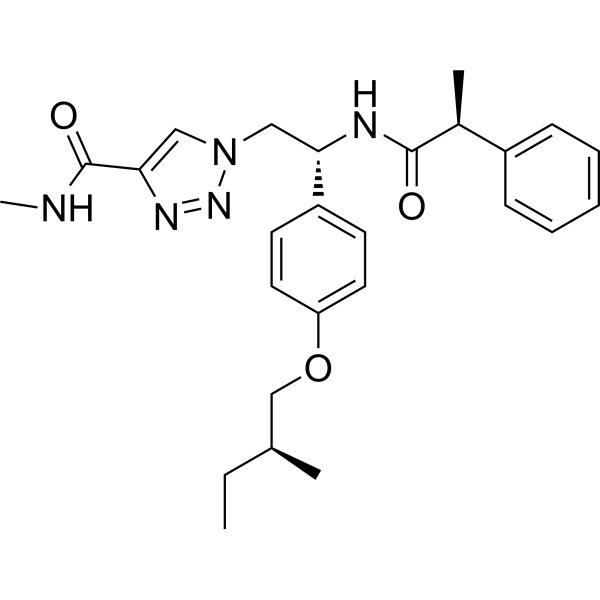
-
RTI-122
 0 ImagesCat. No.: HY-167856CAS No.: 3034664-39-3
RTI-122 is a selective, blood-brain barrier-permeable GPR88 agonist (cAMP EC50=11 nM), with EC50 values of 11.5 nM and 155 nM for human and mouse GPR88, respectively ([35S]GTPγS assay). By activating the GPR88 receptor to regulate the cAMP signaling pathway and G protein activity, RTI-122 significantly attenuates Binge-like drinking, reduces alcohol intake, and decreases alcohol-seeking motivation. RTI-122 blocks the reinstatement of alcohol-seeking behavior without affecting water or sucrose intake. RTI-122 exhibits metabolic stability in mice (T1/2=5.8 h) and can be used to investigate alcohol use disorder.
-
2-PCCA
 0 ImagesCat. No.: HY-100013CAS No.: 1984859-71-3
2-PCCA is a racemic form of the GPR88 receptor agonist, and inhibits GPR88-mediated cAMP production, with an EC50 of 116 nM in HEK293 cells.