Search Result
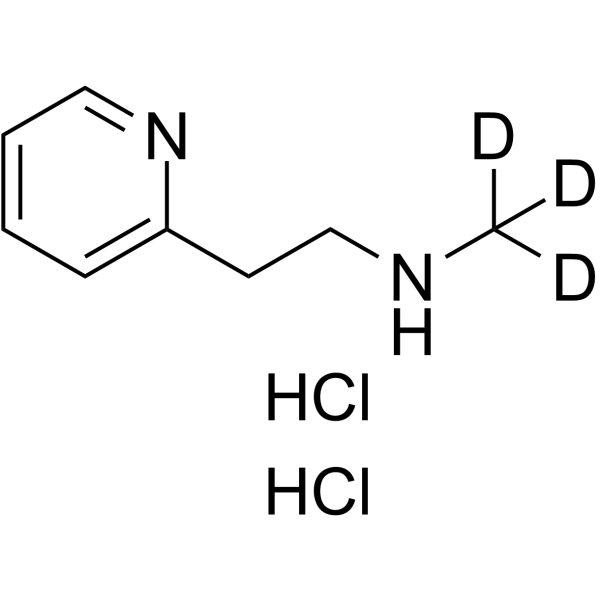
Results for "
H1 receptor antagonist
" in MedChemExpress (MCE) Product Catalog:
1
Biochemical Assay Reagents
63
Isotope-Labeled Compounds
| Cat. No. |
상품명 |
Target |
연구분야 |
Chemical Structure |
-
- HY-17042
-
|
|
Histamine Receptor
|
Inflammation/Immunology
Endocrinology
|
|
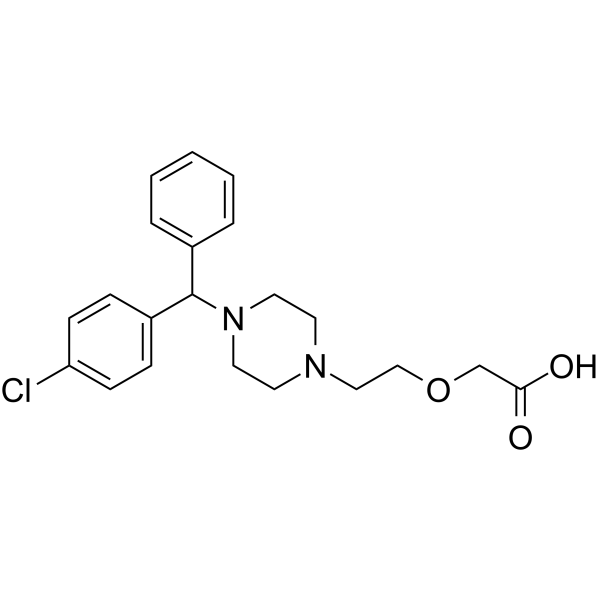
Cetirizine, a second-generation antihistamine and the carboxylated metabolite of hydroxyzine, is a specific, orally active and long-acting histamine H1-receptor antagonist. Cetirizine marks antiallergic properties and inhibits eosinophil chemotaxis during the allergic response .
|
-
-
- HY-B0303
-
-
-
- HY-B1281
-
|
Pyrilamine maleate
|
Histamine Receptor
|
Neurological Disease
Endocrinology
|
|
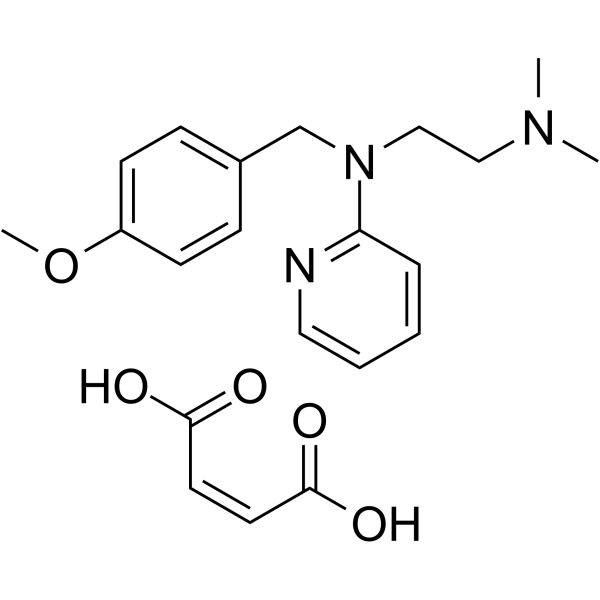
Mepyramine maleate, a first generation antihistamine, is an antagonist of histamine H1 receptor, with Kds of 0.8 nM, 5200 nM and >3000 nM for H1, H2, and H3 receptor, respectively, and a pKd of 9.4 for H1 receptor.
|
-
-
- HY-B0286A
-
-
-
- HY-B0303A
-
-
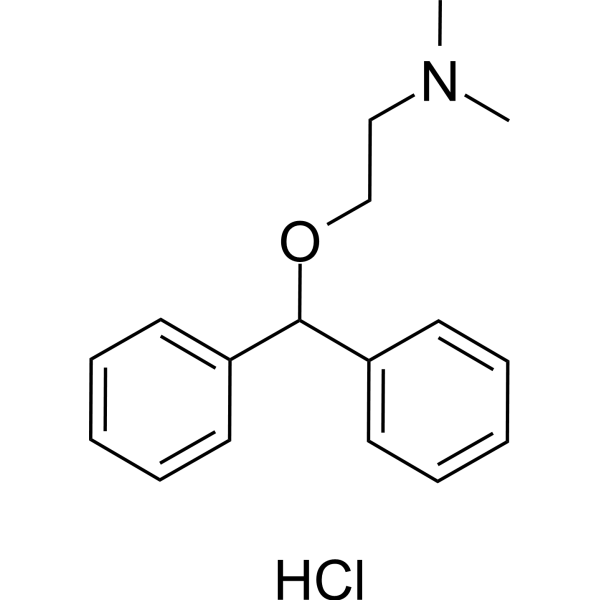
-
- HY-B0801
-
|
MDL-16455; Terfenadine carboxylate
|
Histamine Receptor
|
Inflammation/Immunology
Cancer
|
|
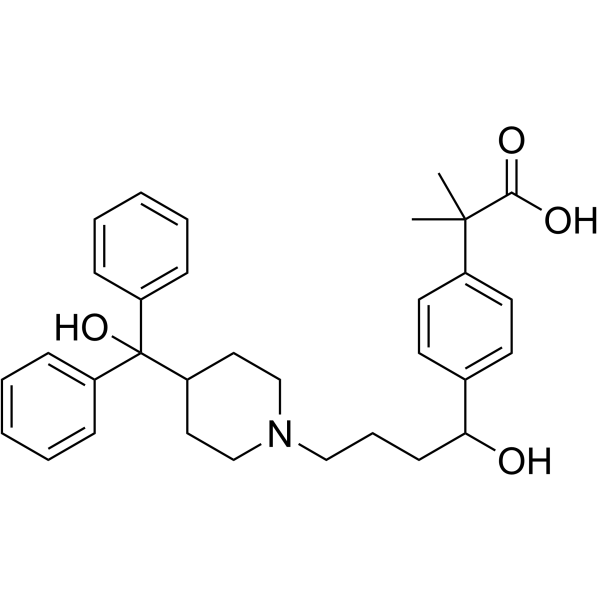
Fexofenadine (MDL-16455) is an orally active and nonsedative H1 receptor antagonist. Fexofenadine can be used in allergic rhinitis and chronic idiopathic urticarial research .
|
-
-
- HY-B0781
-
|
|
Histamine Receptor
mAChR
Adrenergic Receptor
|
Neurological Disease
Endocrinology
|
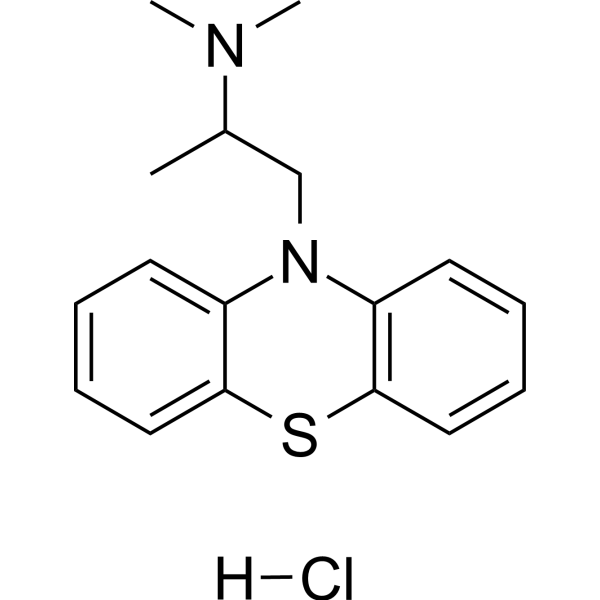
Promethazine hydrochloride is an orally active phenothiazine derivative with antihistaminic (H1), sedative, antiemetic, anticholinergic, and antimotion sickness properties. Promethazine hydrochloride is a potent H1 receptor antagonist and a mAChR antagonist. It also has a certain affinity for 5-HT2A and 5-HT2C receptors .
|
-
-
- HY-B0349
-
|
Meclozine dihydrochloride
|
Histamine Receptor
Apoptosis
|
Neurological Disease
Endocrinology
Cancer
|
|
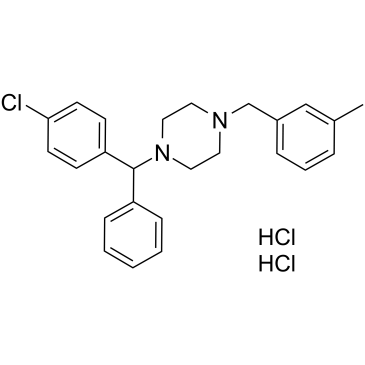
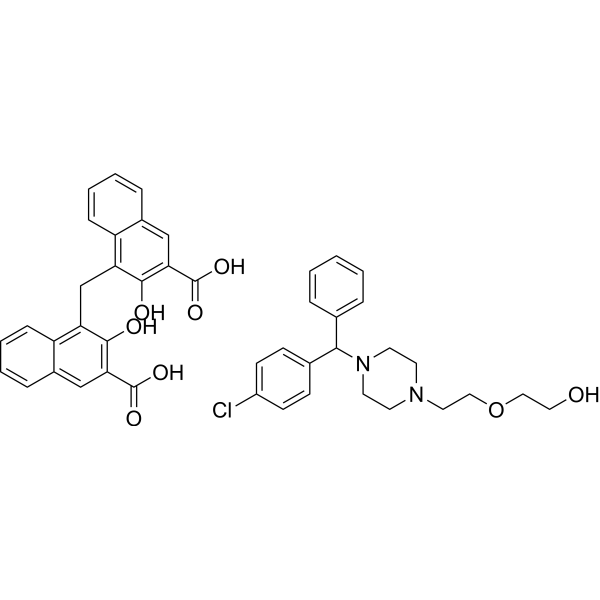
Meclizine (Meclozine) dihydrochloride, an antihistamine, reversibly inhibits the interaction of histamine at the H1 receptors. Meclizine dihydrochloride is a member of the piperazine class of H1 antagonists. Meclizine dihydrochloride is an effective anti-motion sickness agent. Meclizine dihydrochloride crosses the blood-brain barrier. Meclizine dihydrochloride can be used for the research of polyQ toxicity disorders, such as Huntington's disease. Meclizine dihydrochloride is an agonist ligand for mouse constitutive androstane receptor (CAR) and an inverse agonist for Human CAR .
|
-
-
- HY-B0801A
-
|
MDL-16455 hydrochloride; Terfenadine carboxylate hydrochloride
|
Histamine Receptor
|
Inflammation/Immunology
Cancer
|
|
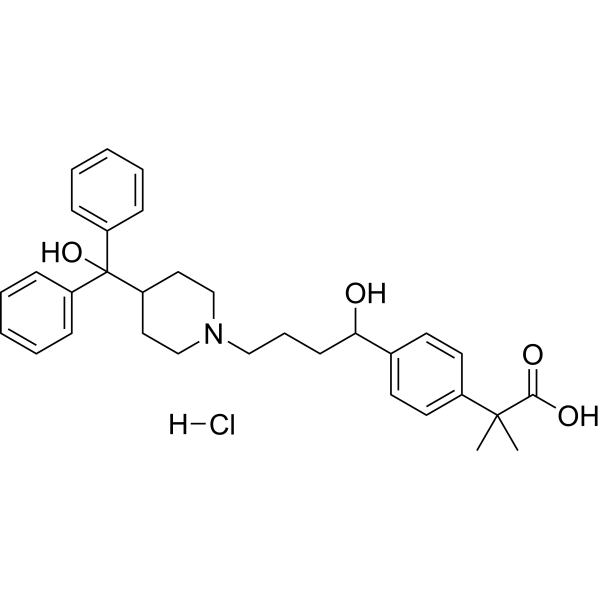
Fexofenadine (MDL-16455) hydrochloride is an orally active and nonsedative H1 receptor antagonist. Fexofenadine hydrochloride can be used in allergic rhinitis and chronic idiopathic urticarial research .
|
-
-
- HY-17042A
-
|
P071
|
Histamine Receptor
|
Inflammation/Immunology
Endocrinology
Cancer
|
|
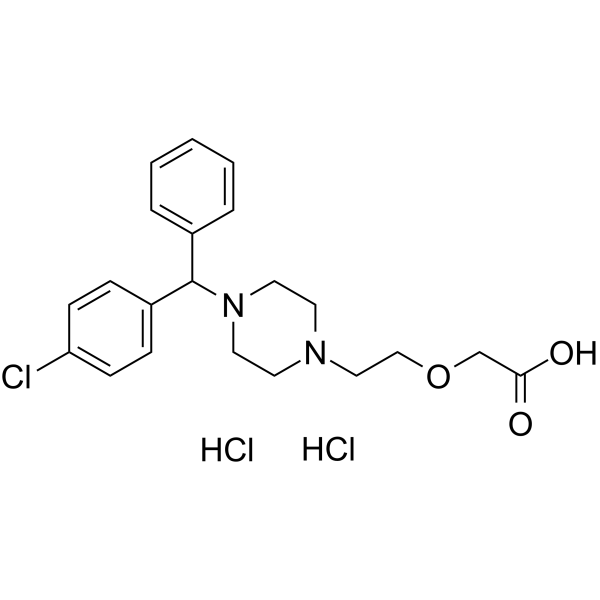
Cetirizine dihydrochloride, a second-generation antihistamine and the carboxylated metabolite of hydroxyzine, is a specific, orally active and long-acting histamine H1-receptor antagonist. Cetirizine dihydrochloride marks antiallergic properties and inhibits eosinophil chemotaxis during the allergic response .
|
-
-
- HY-W010841
-
|
(R)-Cetirizine dihydrochloride
|
Histamine Receptor
|
Inflammation/Immunology
Endocrinology
Cancer
|
|
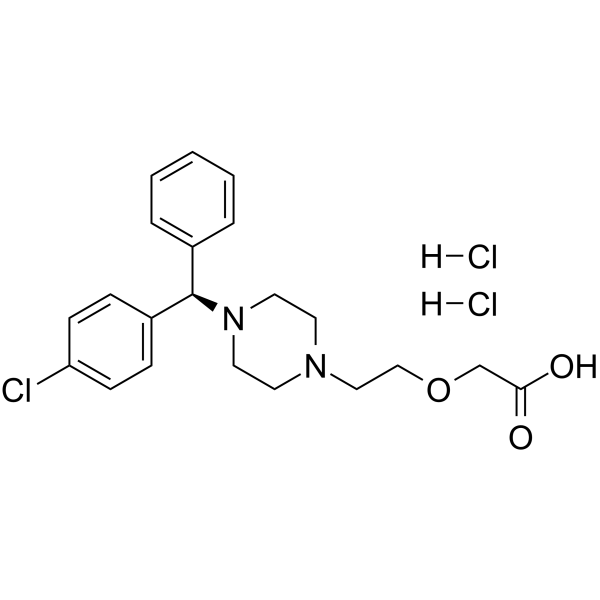
Levocetirizine dihydrochloride ((R)-Cetirizine dihydrochloride) is a third-generation peripheral H1-receptor antagonist. Levocetirizine dihydrochloride is an antihistaminic agent which is the R-enantiomer of Cetirizine. Levocetirizine dihydrochloride has a higher affinity for the histamine H1-receptor than (S)-Cetirizine and can effectively treat allergic rhinitis and chronic idiopathic urticaria .
|
-
-
- HY-B0524A
-
-
-
- HY-14447
-
|
|
Histamine Receptor
|
Inflammation/Immunology
Endocrinology
|
|
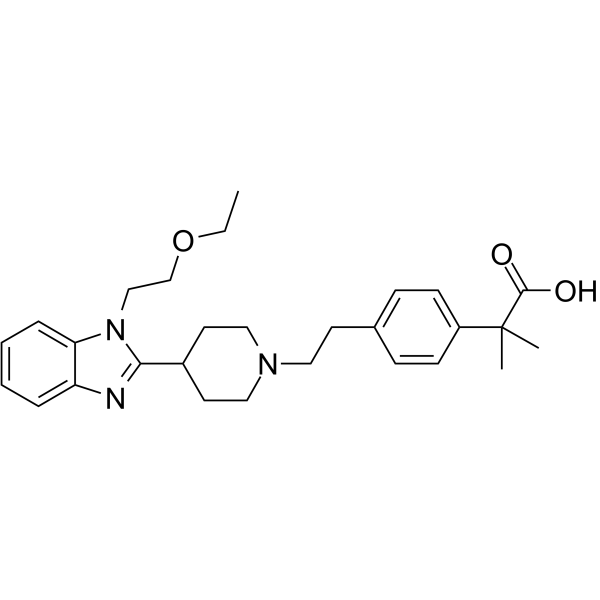
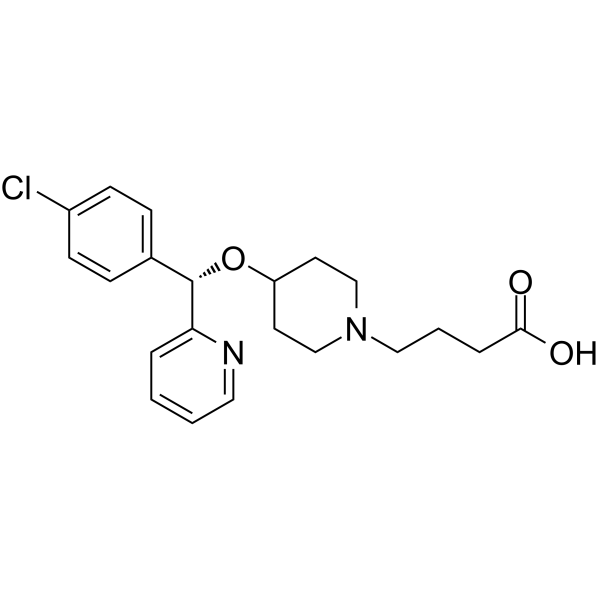
Bilastine is an oral histamine H1-receptor antagonist. Bilastine can be used for allergic rhinitis and urticaria studies, and it also improves diabetic nephropathy in mice, showing safety for the central nervous system .
|
-
-
- HY-B0548
-
|
|
Histamine Receptor
|
Inflammation/Immunology
Endocrinology
|
|
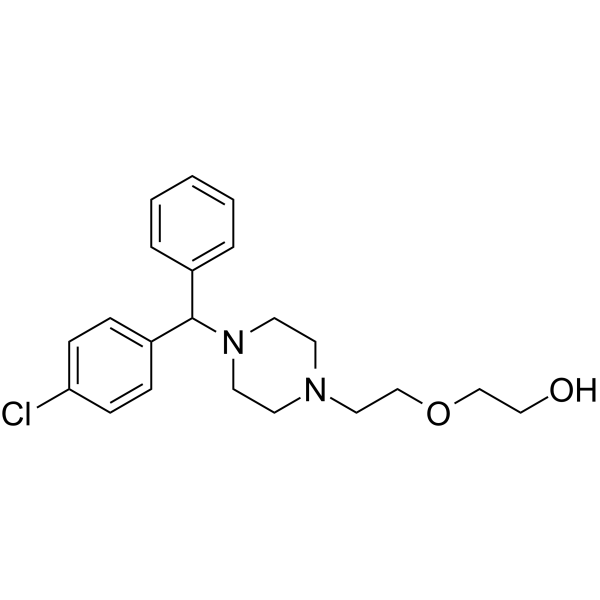
Hydroxyzine, a benzodiazepine antihistamine agent, acts as an orally active histamine H1-receptor and serotonin antagonist.
Hydroxyzine has anxiolytic effect and can be used for the research of generalised anxiety disorder .
|
-
-
- HY-B1303A
-
-
-
- HY-B0814
-
|
(R)-Cetirizine
|
Histamine Receptor
|
Inflammation/Immunology
Endocrinology
Cancer
|
|
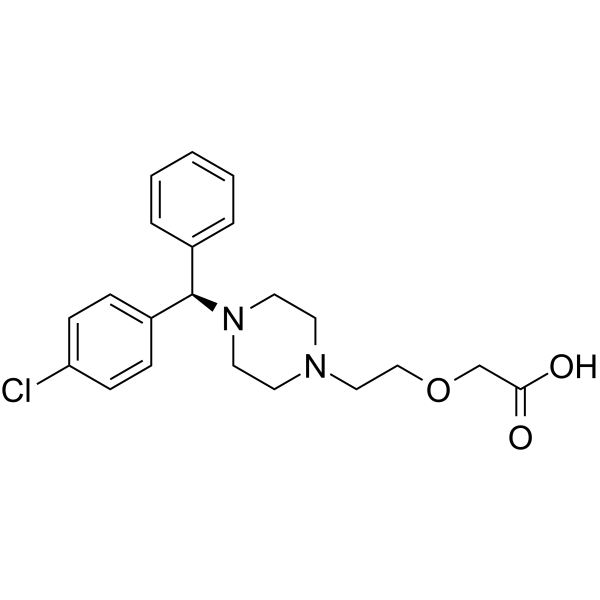
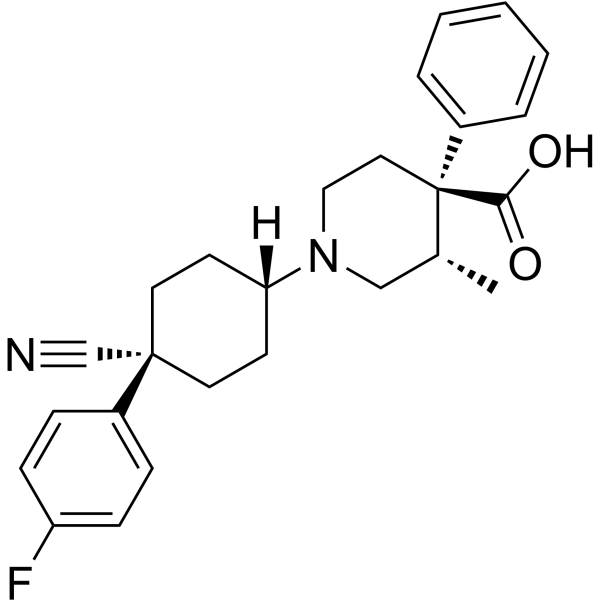
Levocetirizine ((R)-Cetirizine) is a third-generation peripheral H1-receptor antagonist. Levocetirizine is an antihistaminic agent which is the R-enantiomer of Cetirizine. Levocetirizine has a higher affinity for the histamine H1-receptor than (S)-Cetirizine and can effectively treat allergic rhinitis and chronic idiopathic urticaria .
|
-
-
- HY-B0548A
-
|
|
Histamine Receptor
|
Inflammation/Immunology
Endocrinology
|
|
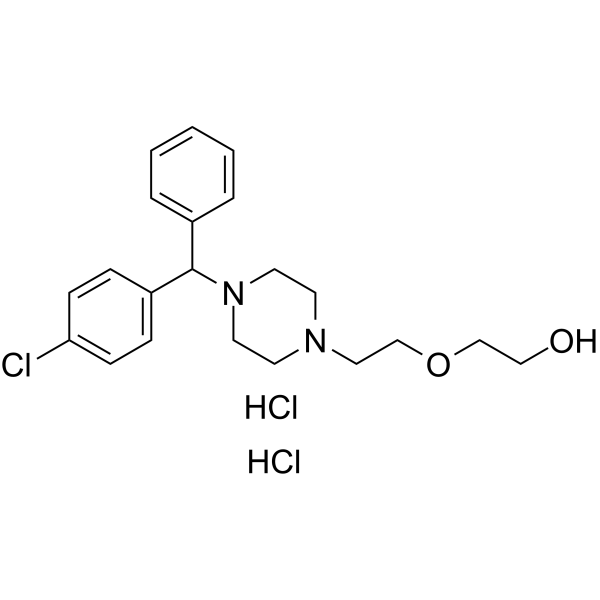
Hydroxyzine dihydrochloride, a benzodiazepine antihistamine agent, acts as a orally active histamine H1-receptor and serotonin antagonist. Hydroxyzine dihydrochloride has anxiolytic effect and can be used forthe research of generalised anxiety disorder .
|
-
-
- HY-14277A
-
|
R 50547 hydrochloride
|
Histamine Receptor
Neurotensin Receptor
Integrin
|
Inflammation/Immunology
|
|
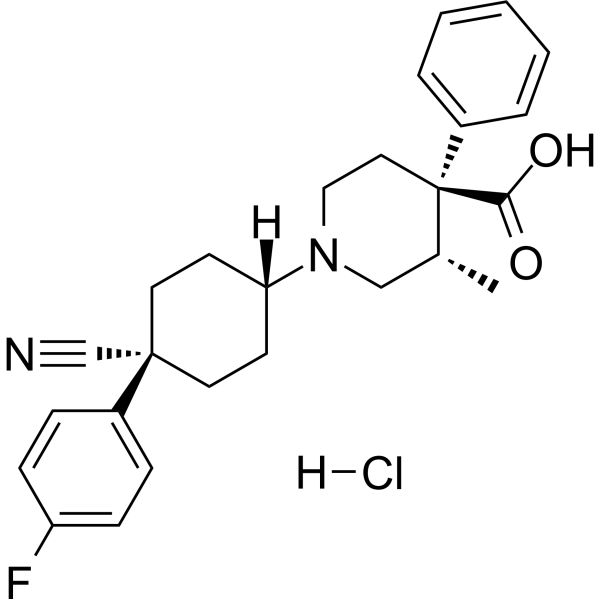
Levocabastine (R 50547) hydrochloride is a potent and selective histamine H1-receptor antagonist. Levocabastine hydrochloride is also a selective, high affinity neurotensin receptor subtype 2 (NTR2) antagonist, with a Ki of 17 nM for mNTR2. Levocabastine hydrochloride can act as a VLA-4 antagonist, interferes with conjunctival eosinophil infiltration in allergic conjunctivitis (AC) .
|
-
-
- HY-B1303
-
-
-
- HY-B0524
-
-
-
- HY-B0895
-
-
-
- HY-B1397
-
|
|
Histamine Receptor
|
Neurological Disease
|
|
Cyclizine, a piperazine-derivative, is a potent and selective histamine H1 receptor antagonist. Cyclizine can be used for the research of nausea, vomiting, and dizziness .
|
-

-
- HY-B1305
-
-
-
- HY-17039
-
|
R89674
|
Histamine Receptor
|
Inflammation/Immunology
Endocrinology
|
|
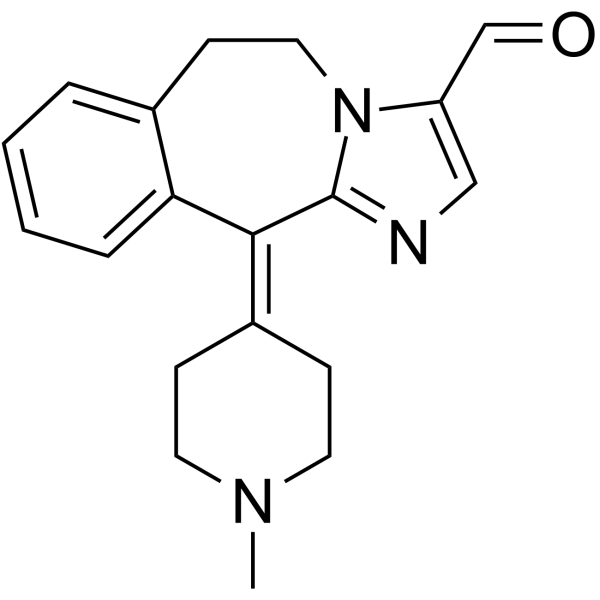
Alcaftadine (R89674) is a histamine H1 receptor antagonist, which is used to prevent eye irritation brought on by allergic conjunctivitis. Alcaftadine is a broad-spectrum antihistamine displaying a high affinity for histamine H1 and H2 receptors and a lower affinity for H4 receptors. Alcaftadine also exhibits modulatory action on immune cell recruitment and mast cell stabilizing effects .
|
-
-
- HY-B0303AS
-
-
-
- HY-105014
-
|
Norastemizole
|
Histamine Receptor
|
Inflammation/Immunology
|
|
Tecastemizole (Norastemizole), a major metabolite of Astemizole, is a potent and selective H1 receptor antagonist. Tecastemizole shows anti-inflammatory activities .
|
-
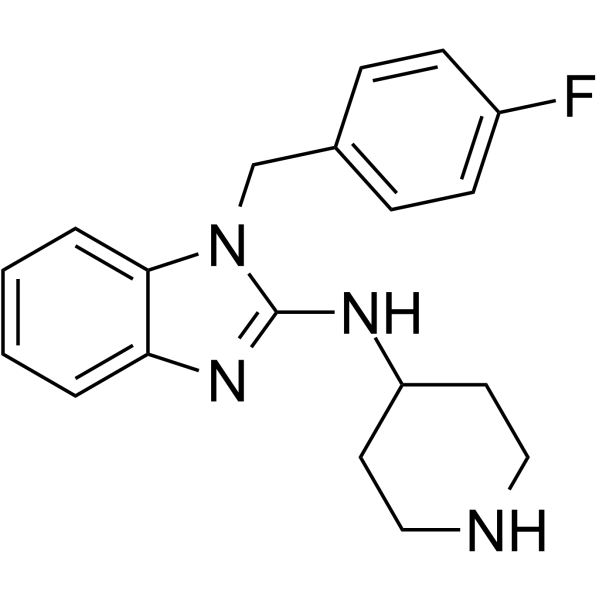
-
- HY-B0286AR
-
-
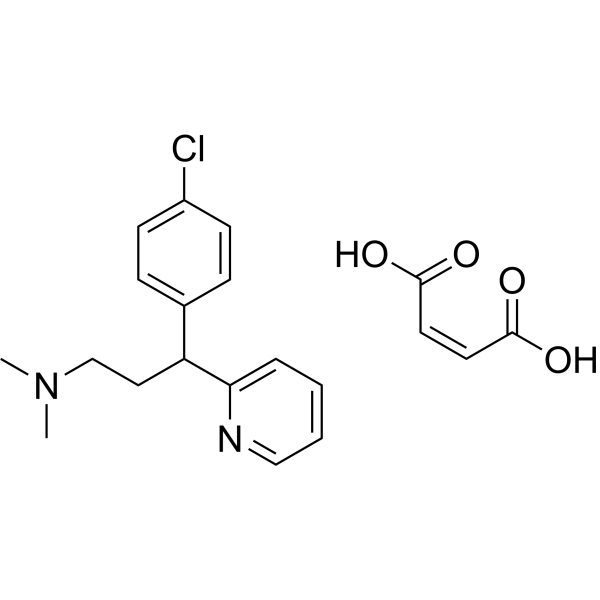
-
- HY-U00084
-
-
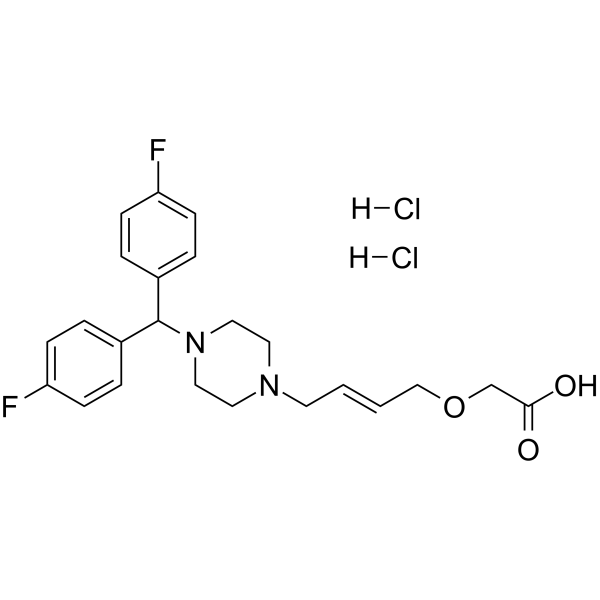
-
- HY-A0075
-
|
UCB 1402 dihydrochloride; NSC289116 dihydrochloride
|
Histamine Receptor
5-HT Receptor
|
Inflammation/Immunology
|
|
Decloxizine (UCB-1402; NSC289116) dihydrochloride is an orally active bronchodilator that can penetrate the blood-brain barrier. Decloxizine dihydrochloride is a piperazine-type H1 histamine receptor antagonist. Decloxizine dihydrochloride selectively blocks H1 histamine receptors, inhibiting histamine-induced capillary dilation, edema, and itching. Decloxizine dihydrochloride has some 5-HT2 receptor antagonistic activity. Decloxizine dihydrochloride can be used in studies of urticaria, allergic rhinitis, and bronchial asthma .
|
-
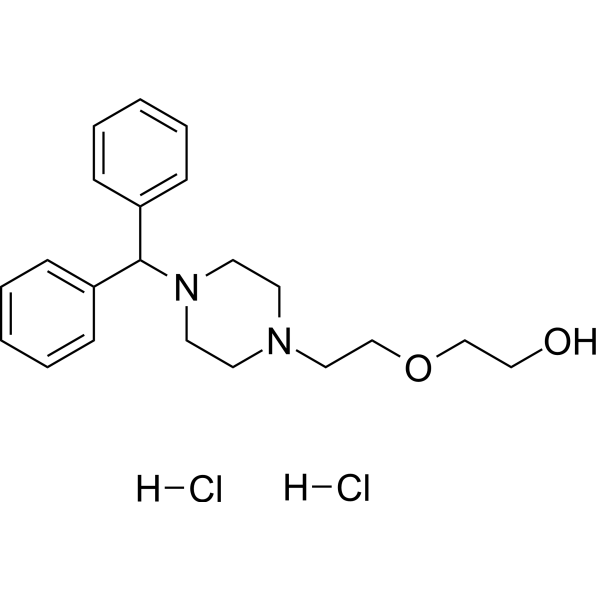
-
- HY-B0303AS1
-
-
-
- HY-119832B
-
|
(S)-EGIS-2062 free acid; (S)-EGYT-2062 free acid
|
Histamine Receptor
|
Inflammation/Immunology
|
|
(S)-Setastine ((S)-EGIS-2062 free acid) is a non-sedating, highly potent antagonist of H1 receptor-mediated responses. (S)-Setastine has a long-lasting antihistamine effect and good oral efficacy. (S)-Setastine can be used in the research of allergic diseases .
|
-

-
- HY-B1067A
-
|
Phenazoline
|
Histamine Receptor
|
Neurological Disease
Endocrinology
|
|
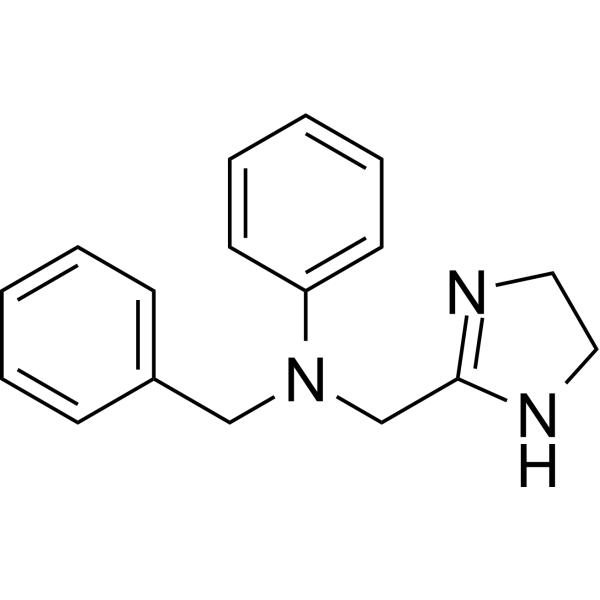
Antazoline (Phenazoline) is a histamine H1 receptor antagonist with anticholinergic and antiviral properties. Antazoline can prevent histamine from acting on target cells through a reversible competition effect on histamine receptor sites of these cells. Antazoline can exert an antiallegic effect and prevent the occurrence of physiological reactions from the effect of blocking as well as inhibiting H1 receptor. Antazoline can effectively reduce HBV DNA in the extracellular supernatant in a dose-dependent manner, with EC50 of 2.910 μmol/L in HepAD38 cells. Antazoline also has a significant inhibitory effect on HBV DNA in the extracellular supernatant of Huh7 cells (EC50 = 2.349 μmol/L). Antazoline has anti-arrhythmic effect in acute myocardial infarctions. Antazoline can be studied in research for cardiovascular diseases, and HBV .
|
-
-
- HY-W010841R
-
|
(R)-Cetirizine dihydrochloride (Standard)
|
Reference Standards
Histamine Receptor
|
Inflammation/Immunology
Endocrinology
|
|
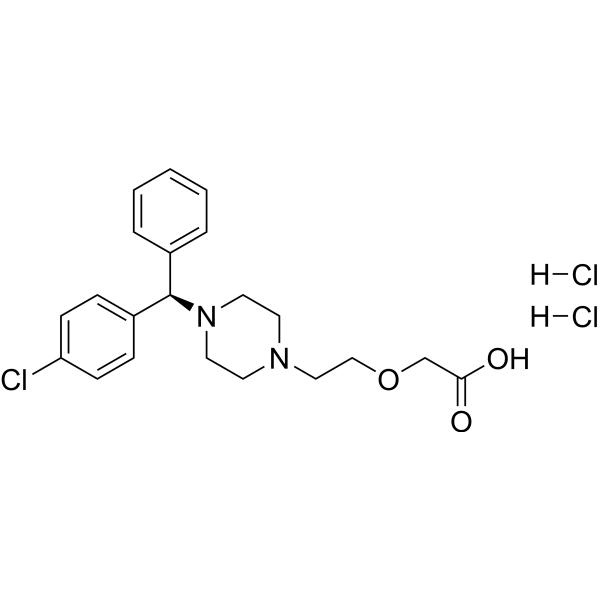
Levocetirizine (dihydrochloride) (Standard) is the analytical standard of Levocetirizine (dihydrochloride). This product is intended for research and analytical applications. Levocetirizine dihydrochloride ((R)-Cetirizine dihydrochloride) is a third-generation peripheral H1-receptor antagonist. Levocetirizine dihydrochloride is an antihistaminic agent which is the R-enantiomer of Cetirizine. Levocetirizine dihydrochloride has a higher affinity for the histamine H1-receptor than (S)-Cetirizine and can effectively treat allergic rhinitis and chronic idiopathic urticaria .
|
-
-
- HY-D0237
-
|
|
Histamine Receptor
|
Inflammation/Immunology
|
|
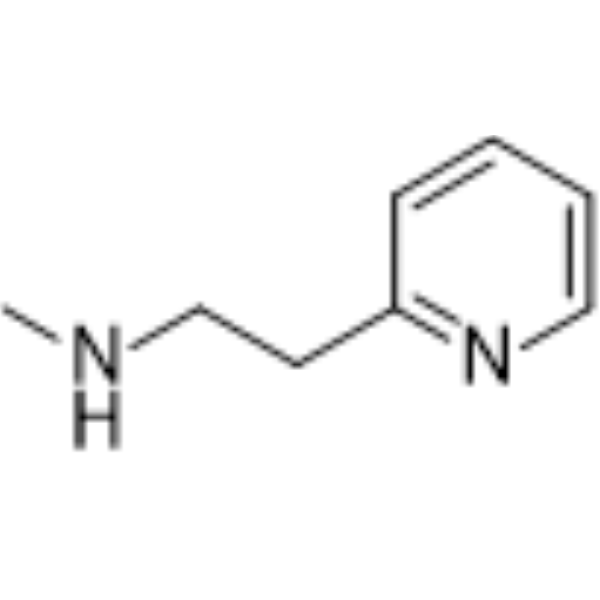
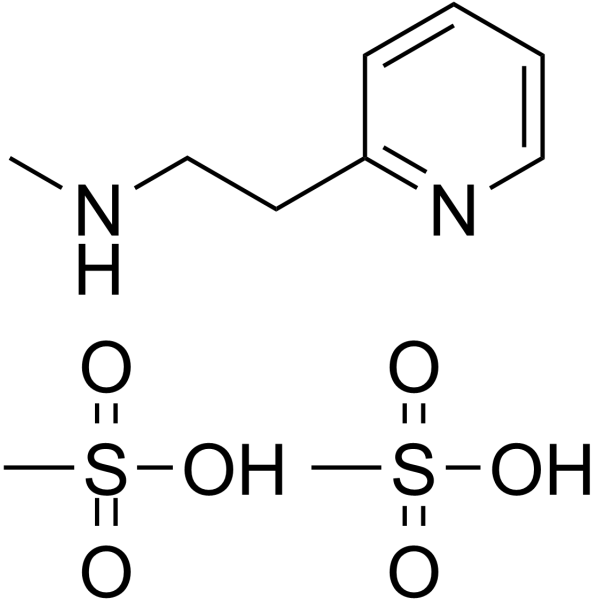
Betahistine mesylate is an orally active histamine H1 receptor agonist and a H3 receptor antagonist . Betahistine mesylate is used for the study of rheumatoid arthritis (RA) .
|
-
-
- HY-402545
-
-

-
- HY-B0539S3
-
-
-
- HY-B0814R
-
|
(R)-Cetirizine (Standard)
|
Histamine Receptor
Reference Standards
|
Inflammation/Immunology
Endocrinology
Cancer
|
|
Levocetirizine (Standard) is the analytical standard of Levocetirizine. This product is intended for research and analytical applications. Levocetirizine ((R)-Cetirizine) is a third-generation peripheral H1-receptor antagonist. Levocetirizine is an antihistaminic agent which is the R-enantiomer of Cetirizine. Levocetirizine has a higher affinity for the histamine H1-receptor than (S)-Cetirizine and can effectively treat allergic rhinitis and chronic idiopathic urticaria .
|
-

-
- HY-A0178
-
-
-
- HY-B0814S1
-
|
(R)-Cetirizine-d4
|
Isotope-Labeled Compounds
|
Inflammation/Immunology
|
|
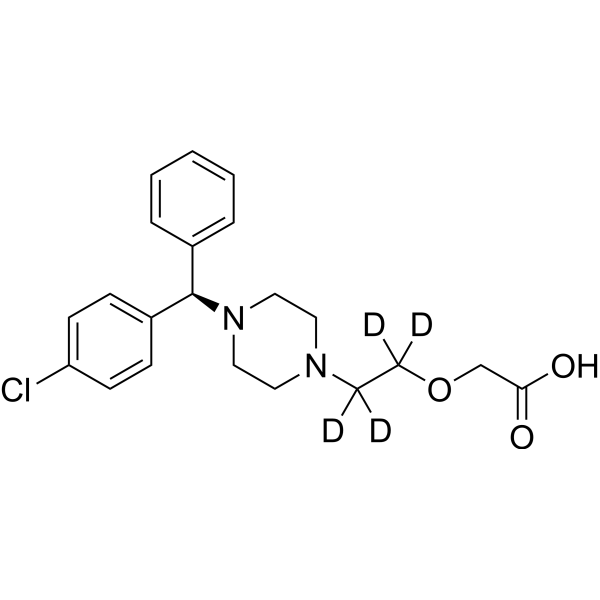
Levocetirizine-d4 ((R)-Cetirizine-d4) is the deuterium-labeled Levocetirizine (HY-B0814) . Levocetirizine ((R)-Cetirizine) is a third-generation peripheral H1-receptor antagonist. Levocetirizine is an antihistaminic agent which is the R-enantiomer of Cetirizine. Levocetirizine has a higher affinity for the histamine H1-receptor than (S)-Cetirizine and can effectively treat allergic rhinitis and chronic idiopathic urticaria .
|
-
-
- HY-122508
-
|
|
Drug Metabolite
|
Neurological Disease
|
|
Hydroxyebastine is an Ebastine (HY-B0674) (a histamine H1-receptor antagonist) metabolite. Hydroxyebastine is metabolized to Carebastine (HY-121356) by CYP2J2 and CYP3A4 .
|
-

-
- HY-117501
-
|
|
Histamine Receptor
|
Inflammation/Immunology
Cancer
|
|
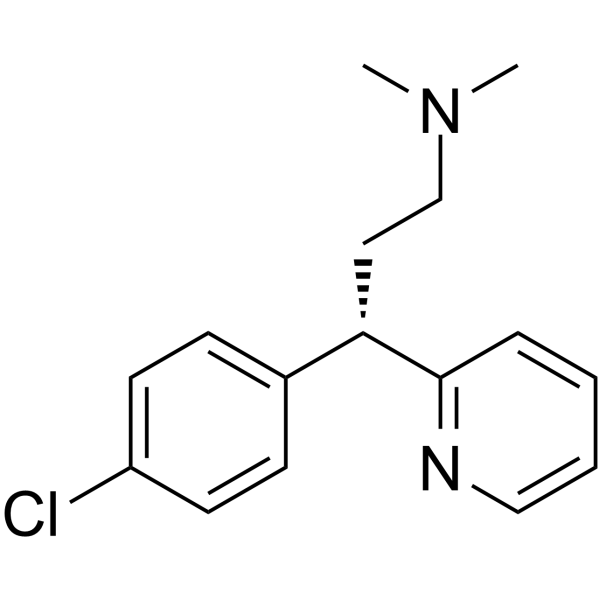
Dexchlorpheniramine is an potent and blood-brain barrier (BBB) penetrant histamine 1 (H1) receptor antagonist with anticholinergic properties. Dexchlorpheniramine can be used for researching allergies .
|
-
-
- HY-B1397B
-
|
|
Histamine Receptor
|
Neurological Disease
|
|
Cyclizine lactate, a piperazine-derivative, is a potent and selective histamine H1 receptor antagonist. Cyclizine lactate can be used for the research of nausea, vomiting, and dizziness .
|
-

-
- HY-B0349A
-
|
Meclozine
|
Histamine Receptor
Apoptosis
|
Neurological Disease
Inflammation/Immunology
|
|
Meclizine (Meclozine), an antihistamine, reversibly inhibits the interaction of histamine at the H1 receptors. Meclizine is a member of the piperazine class of H1 antagonists. Meclizine is an effective anti-motion sickness agent. Meclizine crosses the blood–brain barrier. Meclizine is an agonist ligand for mouse constitutive androstane receptor (CAR) and an inverse agonist for Human CAR. Meclizine can be used for the research of polyQ toxicity disorders, such as Huntington's disease .
|
-

-
- HY-14277
-
|
R 50547
|
Histamine Receptor
Neurotensin Receptor
Integrin
|
Inflammation/Immunology
|
|
Levocabastine (R 50547) is a potent and selective histamine H1-receptor antagonist. Levocabastine hydrochloride is also a selective, high affinity neurotensin receptor subtype 2 (NTR2) antagonist, with a Ki of 17 nM for mNTR2. Levocabastine can act as a VLA-4 antagonist, interferes with conjunctival eosinophil infiltration in allergic conjunctivitis (AC) .
|
-
-
- HY-B1281R
-
|
Pyrilamine maleate (Standard)
|
Reference Standards
Histamine Receptor
|
Neurological Disease
Endocrinology
|
|
Mepyramine maleate (Standard) is the analytical standard of Mepyramine maleate. This product is intended for research and analytical applications. Mepyramine maleate, a first generation antihistamine, is an antagonist of histamine H1 receptor, with Kds of 0.8 nM, 5200 nM and >3000 nM for H1, H2, and H3 receptor, respectively, and a pKd of 9.4 for H1 receptor.
|
-

-
- HY-14145
-
-

-
- HY-B0548S1
-
-
-
- HY-101830
-
-
-
- HY-105542
-
|
|
Histamine Receptor
|
Neurological Disease
|
|
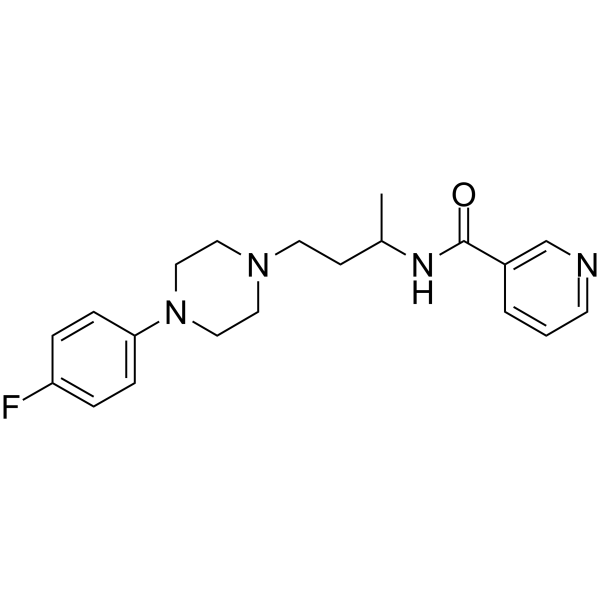
Niaprazine is a histamine H1-receptor antagonist. Niaprazine has antihistamine and antiserotonin activities and can be used for sleep disorder research .
|
-
-
- HY-W660701
-
-

- HY-131256
-
|
|
Histamine Receptor
|
Inflammation/Immunology
Endocrinology
|
|
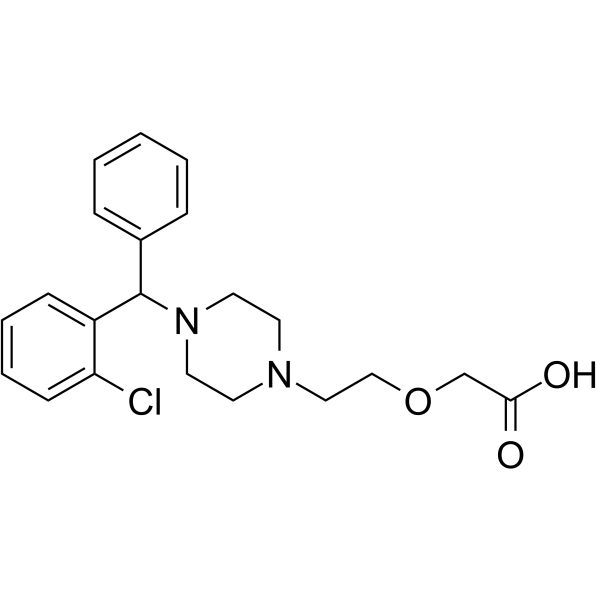
Cetirizine Impurity C is an impurity of Cetirizine. Cetirizine, a second-generation antihistamine and the carboxylated metabolite of hydroxyzine, is a specific, orally active and long-acting histamine H1-receptor antagonist [1] [2] .
|
-
- HY-12966
-
|
|
Histamine Receptor
|
Inflammation/Immunology
Endocrinology
|
|
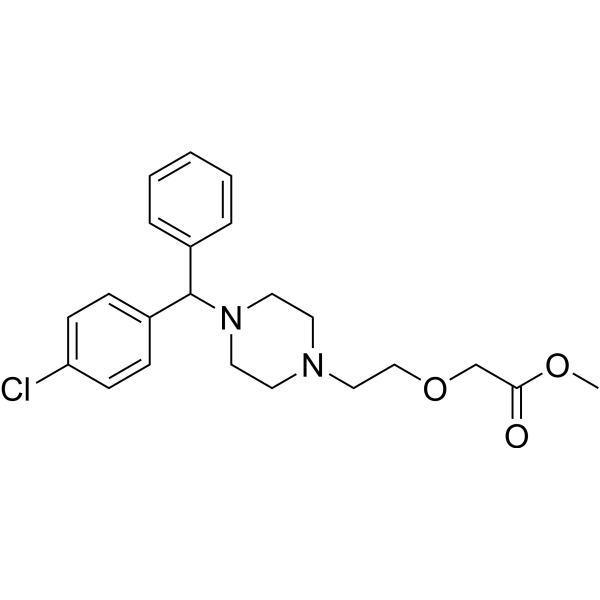
Cetirizine methyl ester is an impurity of Cetirizine (HY-17042). Cetirizine, a second-generation antihistamine and the carboxylated metabolite of hydroxyzine, is a specific, orally active and long-acting histamine H1-receptor antagonist .
|
-
- HY-17582
-
|
UCB-1402; NSC289116
|
Histamine Receptor
5-HT Receptor
|
Inflammation/Immunology
|
|
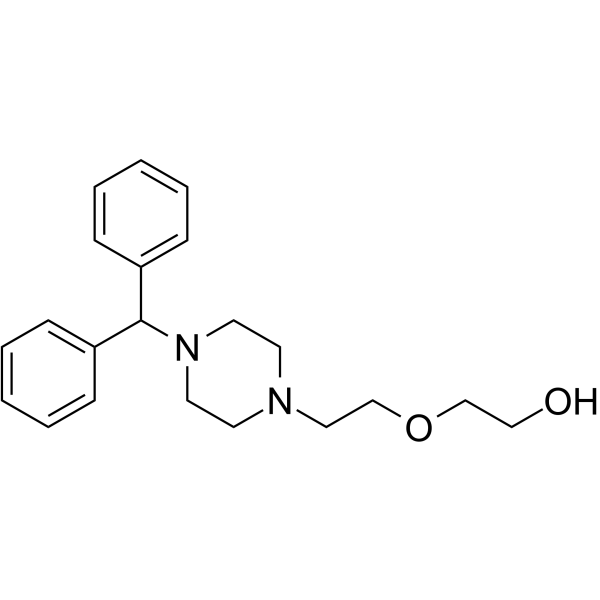
Decloxizine (UCB-1402; NSC289116) is an orally active bronchodilator that can penetrate the blood-brain barrier. Decloxizine is a piperazine-type H1 histamine receptor antagonist. Decloxizine selectively blocks H1 histamine receptors, inhibiting histamine-induced capillary dilation, edema, and itching. Decloxizine has some 5-HT2 receptor antagonistic activity. Decloxizine can be used in studies of urticaria, allergic rhinitis, and bronchial asthma .
|
-
- HY-B1397C
-
|
|
Histamine Receptor
|
Neurological Disease
|
|
Cyclizine hydrochloride, a piperazine-derivative, is a potent and selective histamine H1 receptor antagonist. Cyclizine hydrochloride can be used for the research of nausea, vomiting, and dizziness .
|
-

- HY-B1303R
-
|
Mebhydroline 1,5-naphthalenedisulfonate salt (Standard)
|
Reference Standards
Histamine Receptor
|
Inflammation/Immunology
Endocrinology
|
|
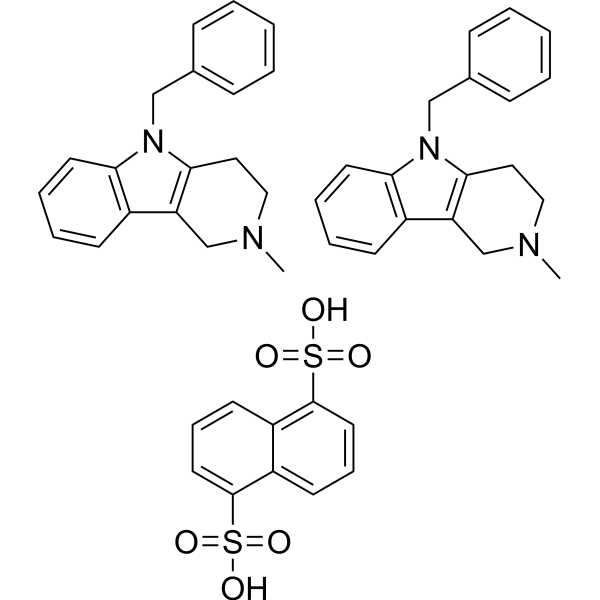
Mebhydrolin (napadisylate) (Standard) is the analytical standard of Mebhydrolin (napadisylate). This product is intended for research and analytical applications. Mebhydrolin napadisylate is a specific histamine H1 receptor antagonist.
|
-

- HY-14447R
-
-

- HY-B0781R
-
|
|
Reference Standards
Histamine Receptor
mAChR
Adrenergic Receptor
|
Neurological Disease
Endocrinology
|
Promethazine (hydrochloride) (Standard) is the analytical standard of Promethazine (hydrochloride). This product is intended for research and analytical applications. Promethazine hydrochloride is an orally active phenothiazine derivative with antihistaminic (H1), sedative, antiemetic, anticholinergic, and antimotion sickness properties. Promethazine hydrochloride is a potent H1 receptor antagonist and a mAChR antagonist. It also has a certain affinity for 5-HT2A and 5-HT2C receptors .
|
-

- HY-B1067B
-
|
Phenazoline phosphate
|
Histamine Receptor
|
Neurological Disease
Endocrinology
|
|
Antazoline phosphate is an H1 receptor antagonist that affects the activity of the central nervous system, has a potent antiarrhythmic effect .
Antazoline phosphate is a histamine H1 receptor antagonist with anticholinergic and antiviral properties. Antazoline phosphate can prevent histamine from acting on target cells through a reversible competition effect on histamine receptor sites of these cells. Antazoline phosphate can exert an antiallegic effect and prevent the occurrence of physiological reactions from the effect of blocking as well as inhibiting H1 receptor. Antazoline phosphate can effectively reduce HBV DNA in the extracellular supernatant in a dose-dependent manner, with EC50 of 2.910 μmol/L in HepAD38 cells. Antazoline phosphate also has a significant inhibitory effect on HBV DNA in the extracellular supernatant of Huh7 cells (EC50 = 2.349 μmol/L). Antazoline phosphate has anti-arrhythmic effect in acute myocardial infarctions. Antazoline phosphate can be studied in research for cardiovascular diseases, and HBV .
|
-

- HY-B1067AR
-
|
Phenazoline (Standard)
|
Reference Standards
Histamine Receptor
|
Neurological Disease
Endocrinology
|
|
Antazoline (Phenazoline) (Standard) is the analytical standard of Antazoline. This product is intended for research and analytical applications. Antazoline is a histamine H1 receptor antagonist with anticholinergic and antiviral properties. Antazoline can prevent histamine from acting on target cells through a reversible competition effect on histamine receptor sites of these cells. Antazoline can exert an antiallegic effect and prevent the occurrence of physiological reactions from the effect of blocking as well as inhibiting H1 receptor. Antazoline can effectively reduce HBV DNA in the extracellular supernatant in a dose-dependent manner, with EC50 of 2.910 μmol/L in HepAD38 cells. Antazoline also has a significant inhibitory effect on HBV DNA in the extracellular supernatant of Huh7 cells (EC50 = 2.349 μmol/L). Antazoline has anti-arrhythmic effect in acute myocardial infarctions. Antazoline can be studied in research for cardiovascular diseases, and HBV .
|
-

- HY-B1067BR
-
|
Phenazoline phosphate (Standard)
|
Reference Standards
Histamine Receptor
|
Neurological Disease
Endocrinology
|
|
Antazoline (phosphate) (Standard) is the analytical standard of Antazoline (phosphate). This product is intended for research and analytical applications. Antazoline phosphate is a histamine H1 receptor antagonist with anticholinergic and antiviral properties. Antazoline phosphate can prevent histamine from acting on target cells through a reversible competition effect on histamine receptor sites of these cells. Antazoline phosphate can exert an antiallegic effect and prevent the occurrence of physiological reactions from the effect of blocking as well as inhibiting H1 receptor. Antazoline phosphate can effectively reduce HBV DNA in the extracellular supernatant in a dose-dependent manner, with EC50 of 2.910 μmol/L in HepAD38 cells. Antazoline phosphate also has a significant inhibitory effect on HBV DNA in the extracellular supernatant of Huh7 cells (EC50 = 2.349 μmol/L). Antazoline phosphate has anti-arrhythmic effect in acute myocardial infarctions. Antazoline phosphate can be studied in research for cardiovascular diseases, and HBV .
|
-

- HY-100280
-
-
- HY-129783
-
-

- HY-U00018
-
-
- HY-B0539S1
-
-
- HY-B0539S
-
-
- HY-B0539R
-
-
- HY-101724
-
|
NNC-05-1869 hydrochloride
|
Histamine Receptor
|
Inflammation/Immunology
Endocrinology
|
|
ReN 1869 hydrochloride is a novel, selective histamine H1 receptor antagonist, which demonstrates affinity to the histamine H1 receptor (guinea pig brain) with Ki of 0.19±0.04 μM and the non-selective σ site (guinea pig brain) with Ki of 0.45 μM.
|
-
- HY-B0539S4
-
-
- HY-W701635
-
-

- HY-A0178A
-
-

- HY-B0814S
-
|
(R)-Cetirizine-d4 dihydrochloride
|
Isotope-Labeled Compounds
Histamine Receptor
|
Inflammation/Immunology
Endocrinology
|
|
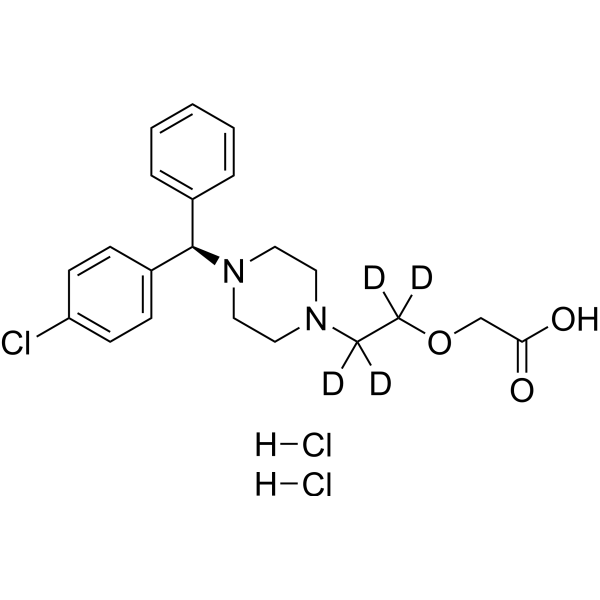
Levocetirizine-d4 (dihydrochloride) is the deuterium labeled Levocetirizine. Levocetirizine ((R)-Cetirizine) is a third-generation peripheral H1-receptor antagonist. Levocetirizine is an antihistaminic agent which is the R-enantiomer of Cetirizine. Levocetirizine has a higher affinity for the histamine H1-receptor than (S)-Cetirizine and can effectively treat allergic rhinitis and chronic idiopathic urticaria[1].
|
-
- HY-B0539S2
-
-
- HY-123829
-
-
- HY-Z9099
-
|
|
Drug Intermediate
|
Neurological Disease
|
|
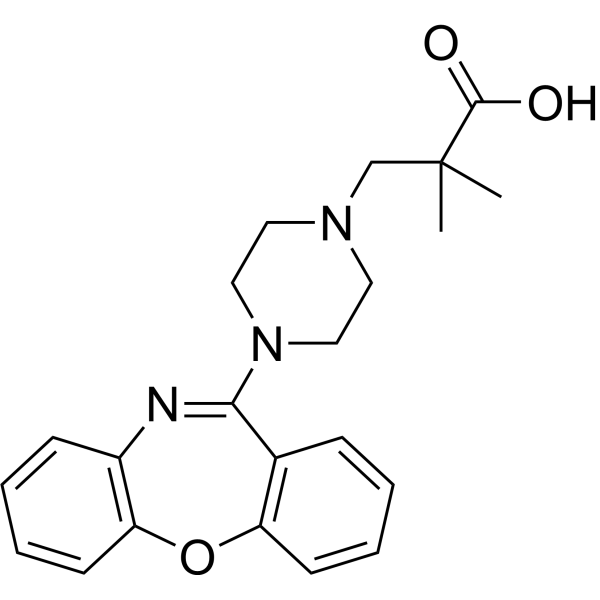
Isopromethazine hydrochloride is an impurity in the pharmaceutical preparations of Promethazine (HY-B1296). Promethazine is an N-substituted phenothiazine with the actions and the uses of the antihistamines (H1-receptor antagonists) .
|
-

- HY-B0548AS
-
-
- HY-17042B
-
|
(S)-P071
|
Histamine Receptor
|
Inflammation/Immunology
|
|
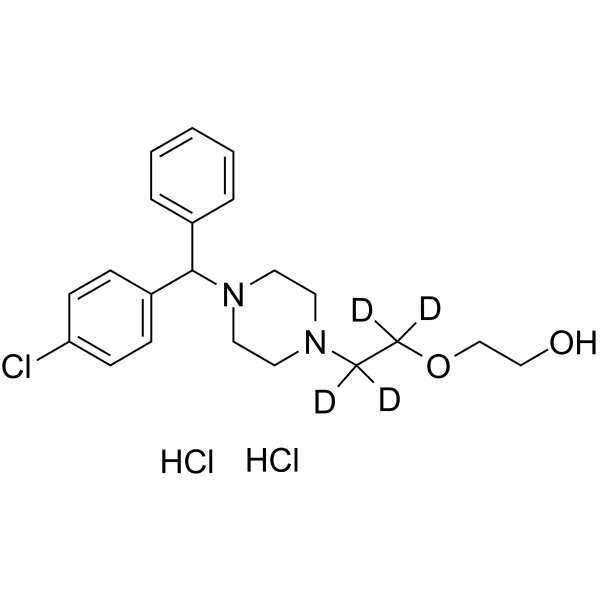
(S)-Cetirizine dihydrochloride ((S)-P071) is an orally active antagonist of the histamine H1 receptor with a Ki value of 39.1 nM. (S)-Cetirizine dihydrochloride exerts anti-allergic activity by binding to the histamine H1 receptor and blocking the action of histamine. (S)-Cetirizine dihydrochloride is promising for research of allergic diseases such as allergic rhinitis .
|
-

- HY-W653762
-
-

- HY-W653762A
-
-

- HY-B0781S1
-
|
|
Isotope-Labeled Compounds
mAChR
Adrenergic Receptor
Histamine Receptor
|
Neurological Disease
Endocrinology
|
Promethazine-d3 (hydrochloride) is deuterium labeled Promethazine (hydrochloride). Promethazine hydrochloride is an orally active phenothiazine derivative with antihistaminic (H1), sedative, antiemetic, anticholinergic, and antimotion sickness properties. Promethazine hydrochloride is a potent H1 receptor antagonist and a mAChR antagonist. It also has a certain affinity for 5-HT2A and 5-HT2C receptors .
|
-

- HY-W707972
-
|
|
Histamine Receptor
|
Neurological Disease
|
|
Methapyrilene fumarate is a histamine receptor H1 antagonist. Methapyrilene fumarate has sedative effects. Methapyrilene fumarate is being studied for its analgesic properties .
|
-

- HY-B1296S1
-
-
- HY-131256A
-
|
|
Histamine Receptor
|
Inflammation/Immunology
Endocrinology
|
|
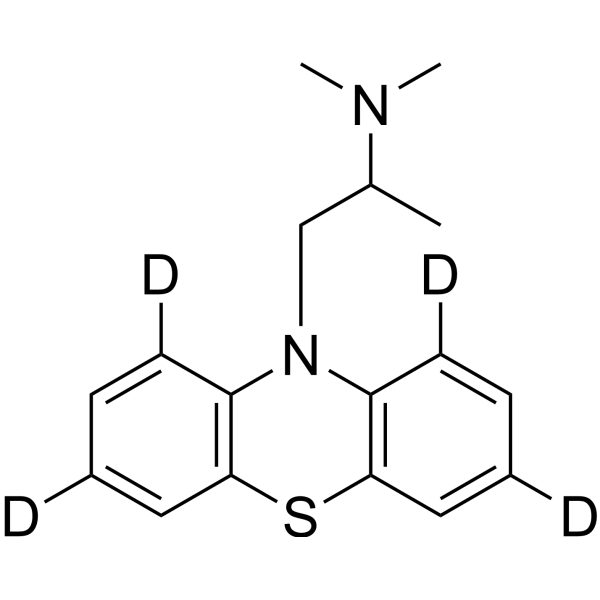
Cetirizine Impurity C dihydrochloride is an impurity of Cetirizine. Cetirizine, a second-generation antihistamine and the carboxylated metabolite of hydroxyzine, is a specific, orally active and long-acting histamine H1-receptor antagonist [1] [2] .
|
-
- HY-30234S
-
|
|
Histamine Receptor
HCV
TRP Channel
|
Cancer
|
|
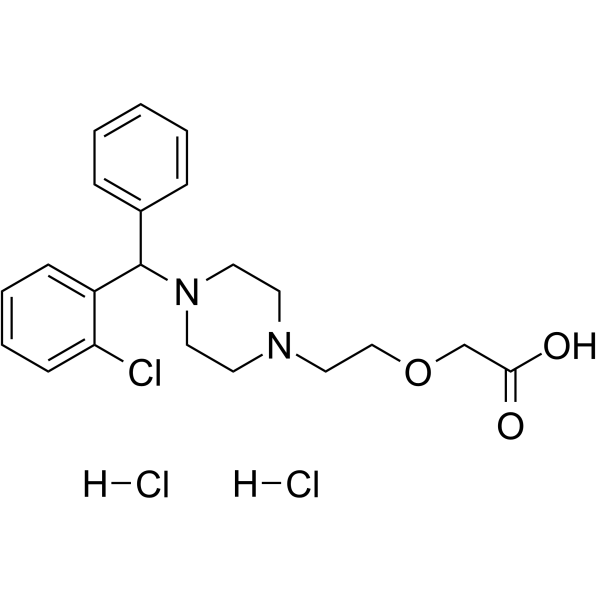
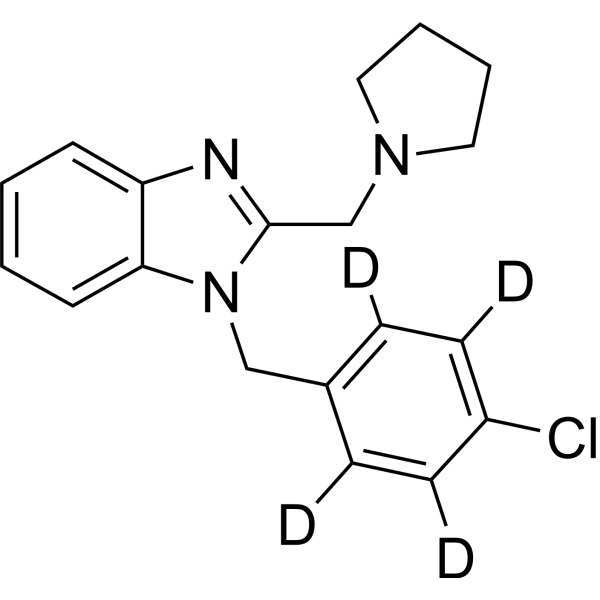
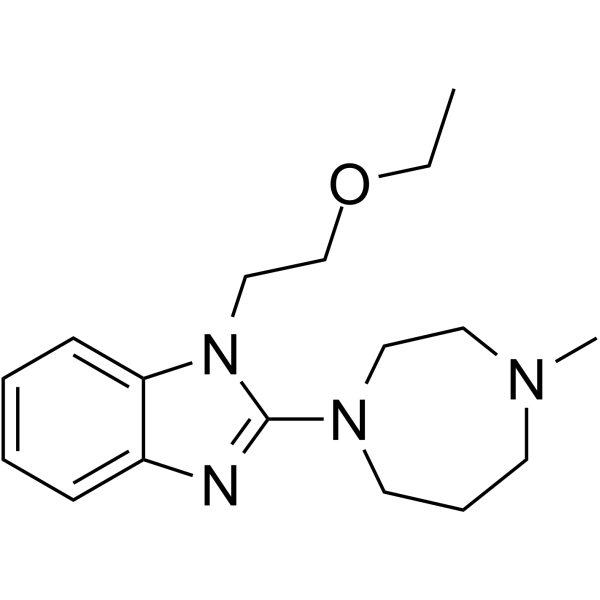
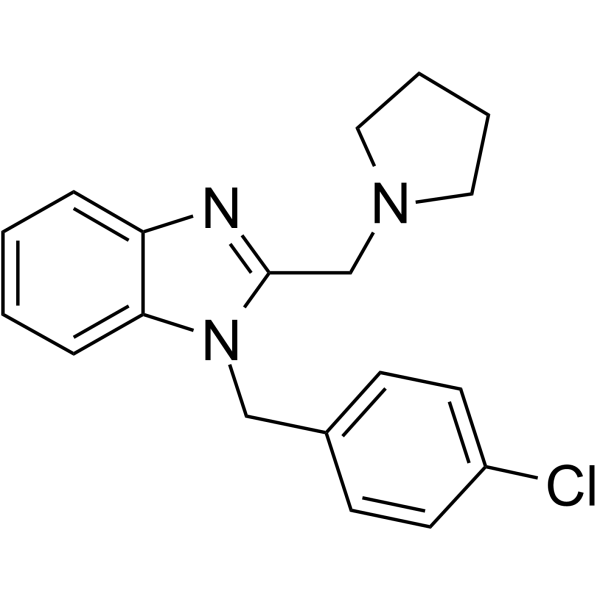
Clemizole-d4 is a deuterium labeled Clemizole. Clemizole is an H1 histamine receptor antagonist, is found to substantially inhibit HCV replication .
|
-
- HY-B0895R
-
-

- HY-B1397A
-
|
|
Histamine Receptor
|
Neurological Disease
|
|
Cyclizine dihydrochloride, a piperazine-derivative, is a potent and selective histamine H1 receptor antagonist. Cyclizine dihydrochloride can be used for the research of nausea, vomiting, and dizziness .
|
-

- HY-14447S
-
-
- HY-105542R
-
|
|
Reference Standards
Histamine Receptor
|
Neurological Disease
|
|
Niaprazine (Standard) is the analytical standard of Niaprazine. This product is intended for research and analytical applications. Niaprazine is a histamine H1-receptor antagonist. Niaprazine has antihistamine and antiserotonin activities and can be used for sleep disorder research .
|
-

- HY-101690
-
-
- HY-119913
-
|
Ahistan
|
Histamine Receptor
|
Neurological Disease
|
|
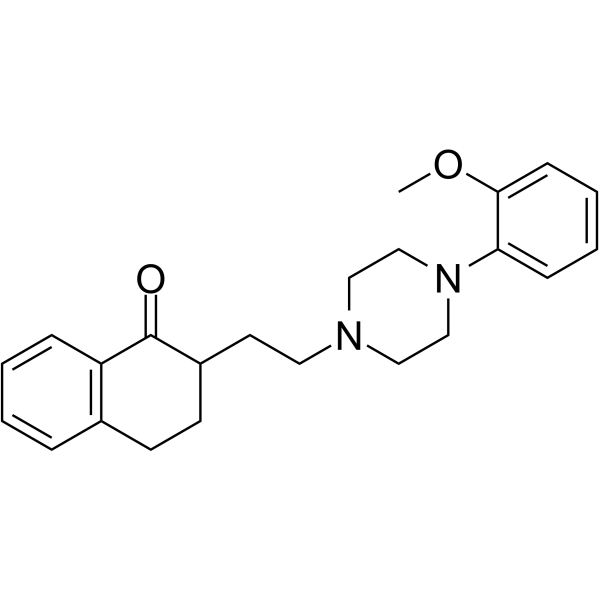
Dacemazine (Ahistan) is a phenothiazine derivative that acts as a histamine H1 receptor antagonist. Dacemazine exhibits local anesthetic activity and can alleviate spasms induced by acetylcholine and histamine .
|
-

- HY-17582R
-
|
UCB-1402 (Standard); NSC289116 (Standard)
|
Reference Standards
Histamine Receptor
5-HT Receptor
|
Metabolic Disease
Inflammation/Immunology
|
|
Decloxizine (UCB-1402; NSC289116) (Standard) is the analytical standard of Decloxizine. This product is intended for research and analytical applications.Decloxizine is an orally active bronchodilator that can penetrate the blood-brain barrier. Decloxizine is a piperazine-type H1 histamine receptor antagonist. Decloxizine selectively blocks H1 histamine receptors, inhibiting histamine-induced capillary dilation, edema, and itching. Decloxizine has some 5-HT2 receptor antagonistic activity. Decloxizine can be used in studies of urticaria, allergic rhinitis, and bronchial asthma.
|
-

- HY-B0349B
-
|
Meclozine dihydrochloride monohydrate
|
Histamine Receptor
Apoptosis
|
Neurological Disease
Inflammation/Immunology
|
|
Meclizine (Meclozine) dihydrochloride monohydrate, an antihistamine, reversibly inhibits the interaction of histamine at the H1 receptors. Meclizine dihydrochloride is a member of the piperazine class of H1 antagonists. Meclizine dihydrochloride monohydrate is an effective anti-motion sickness agent. Meclizine dihydrochloride monohydrate crosses the blood-brain barrier. Meclizine dihydrochloride monohydrate is an agonist ligand for mouse constitutive androstane receptor (CAR) and an inverse agonist for Human CAR. Meclizine dihydrochloride monohydrate can be used for the research of polyQ toxicity disorders, such as Huntington's disease .
|
-

- HY-131579
-
|
|
Drug Metabolite
|
Inflammation/Immunology
|
|
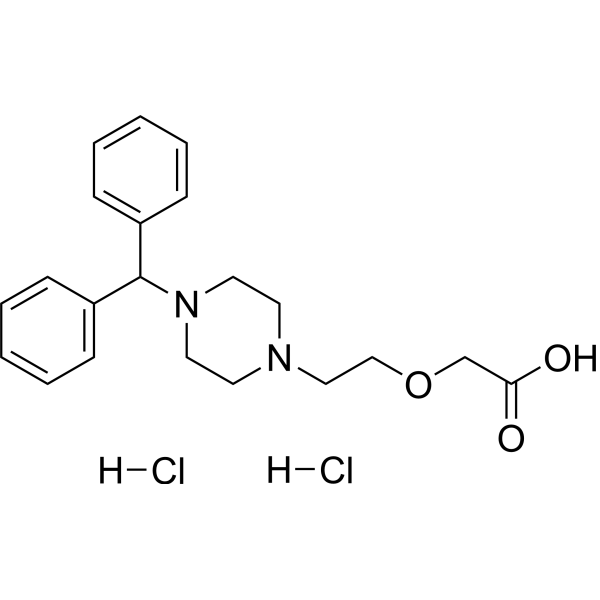
Deschloro Cetirizine Dihydrochloride is a Cetirizine impurity. Cetirizine, a second-generation antihistamine and the carboxylated metabolite of hydroxyzine, is a specific, orally active and long-acting histamine H1-receptor antagonist.
|
-
- HY-17039R
-
|
R89674 (Standard)
|
Reference Standards
Histamine Receptor
|
Inflammation/Immunology
Endocrinology
|
|
Alcaftadine (Standard) is the analytical standard of Alcaftadine. This product is intended for research and analytical applications. Alcaftadine (R89674) is a histamine H1 receptor antagonist, which is used to prevent eye irritation brought on by allergic conjunctivitis. Alcaftadine is a broad-spectrum antihistamine displaying a high affinity for histamine H1 and H2 receptors and a lower affinity for H4 receptors. Alcaftadine also exhibits modulatory action on immune cell recruitment and mast cell stabilizing effects .
|
-

- HY-B0524AS
-
-
- HY-B2101
-
-

- HY-178727
-
-

- HY-B1303AR
-
-

- HY-A0027S
-
-

- HY-101633
-
|
|
Histamine Receptor
|
Others
|
|
GSK-1004723 is a novel H1/H3 receptor antagonist with limited activity for the suppression of seasonal allergic rhinitis. GSK-1004723 is available as a suspension or solution for intranasal administration.
|
-

- HY-A0075R
-
|
UCB 1402 dihydrochloride (Standard); NSC289116 dihydrochloride (Standard)
|
Reference Standards
Histamine Receptor
5-HT Receptor
|
Metabolic Disease
Inflammation/Immunology
|
|
Decloxizine (UCB-1402; NSC289116) dihydrochloride (Standard) is the analytical standard of Decloxizine dihydrochloride. This product is intended for research and analytical applications. Decloxizine dihydrochloride is an orally active bronchodilator that can penetrate the blood-brain barrier. Decloxizine dihydrochloride is a piperazine-type H1 histamine receptor antagonist. Decloxizine dihydrochloride selectively blocks H1 histamine receptors, inhibiting histamine-induced capillary dilation, edema, and itching. Decloxizine dihydrochloride has some 5-HT2 receptor antagonistic activity. Decloxizine dihydrochloride can be used in studies of urticaria, allergic rhinitis, and bronchial asthma.
|
-

- HY-B0303AR
-
-
- HY-B0970
-
|
4-Diphenylmethoxy-1-methylpiperidine hydrochloride
|
Histamine Receptor
|
Neurological Disease
Endocrinology
|
|
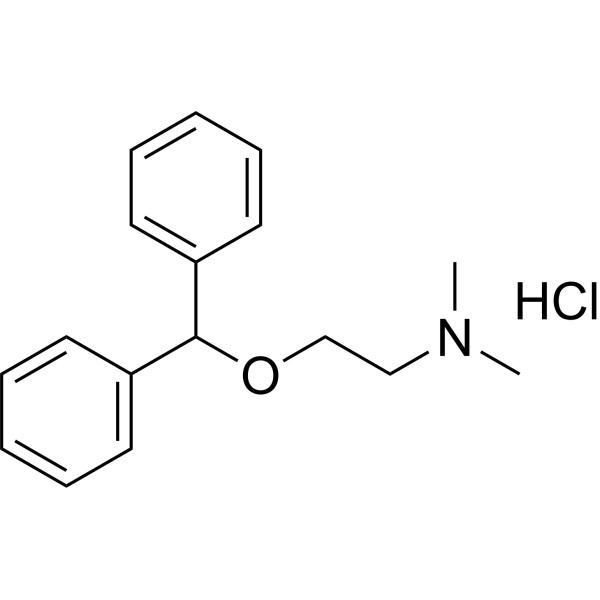
Diphenylpyraline hydrochloride is a potent histamine H1?receptor antagonist. Diphenylpyraline hydrochloride acts as an orally active antihistamine agent?with antimuscarinic and antiallergic effects. Diphenylpyraline hydrochloride can be used for the relief of allergic conditions including rhinitis and hay fever, and in pruritic skin disorders in vivo.
|
-
- HY-A0178AR
-
|
NSC 169186 (Standard)
|
Reference Standards
Endogenous Metabolite
Histamine Receptor
|
Inflammation/Immunology
|
|
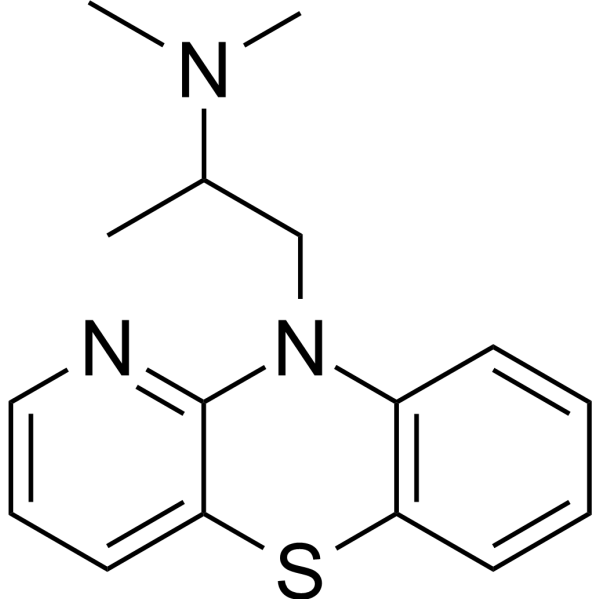
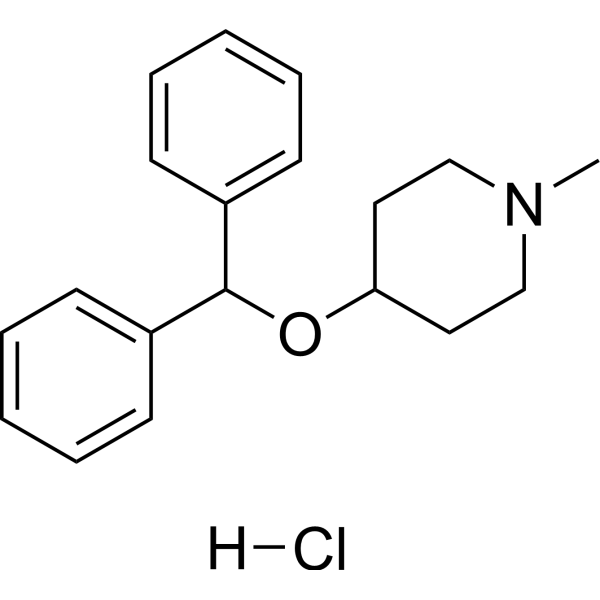
Isothipendyl (hydrochloride) (Standard) is the analytical standard of Isothipendyl (hydrochloride). This product is intended for research and analytical applications. Isothipendyl hydrochloride (), an azaphenothiazine derivative, is a potent histamine 1 (H1) receptor antagonist.othipendyl is a primary metabolite .
|
-

- HY-W750960R
-
|
|
Reference Standards
Antibiotic
|
Others
|
|
Isothipendyl (hydrochloride) (Standard) is the analytical standard of Isothipendyl (hydrochloride). This product is intended for research and analytical applications. Isothipendyl hydrochloride (), an azaphenothiazine derivative, is a potent histamine 1 (H1) receptor antagonist.othipendyl is a primary metabolite .
|
-

- HY-B0674
-
|
LAS-W 090; RP64305
|
Histamine Receptor
|
Inflammation/Immunology
Endocrinology
|
|
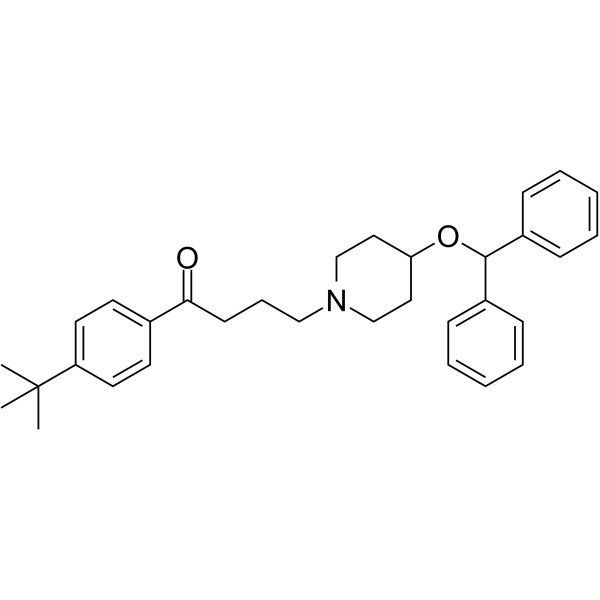
Ebastine (LAS-W 090) is an orally active, second-generation histamine H1 receptor antagonist. Ebastine can be used for the symptoms of allergic rhinitis and chronic idiopathic urticaria research .
|
-
- HY-19443
-
-
- HY-100660A
-
|
|
Drug Metabolite
|
Others
|
|
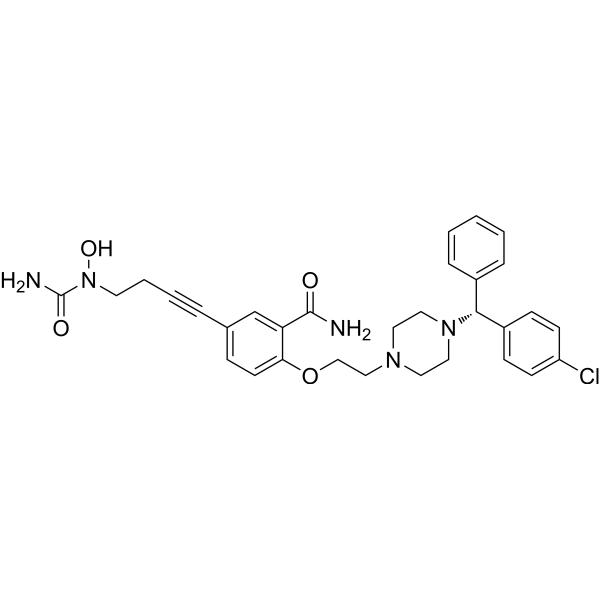
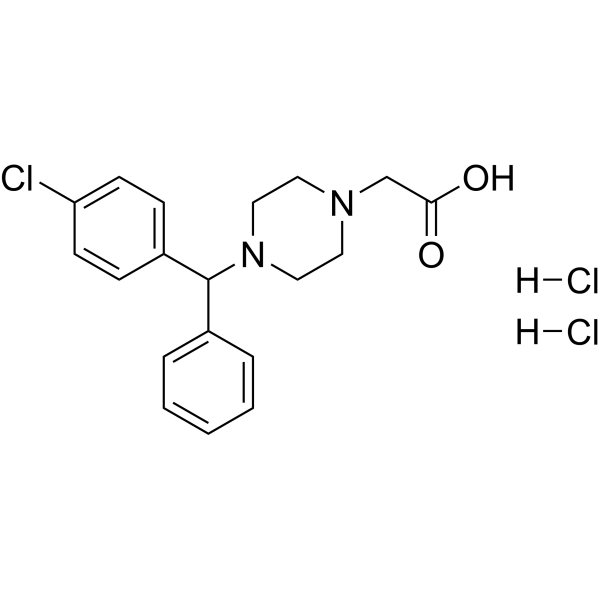
Cetirizine Impurity B dihydrochloride is an impurity of Cetirizine dihydrochloride. Cetirizine, a second-generation antihistamine, is a specific, orally active and long-acting histamine H1-receptor antagonist. Cetirizine marks antiallergic properties and inhibits eosinophil chemotaxis during the allergic response .
|
-
- HY-135740
-
-

- HY-100661
-
|
|
Histamine Receptor
|
Inflammation/Immunology
Endocrinology
|
|
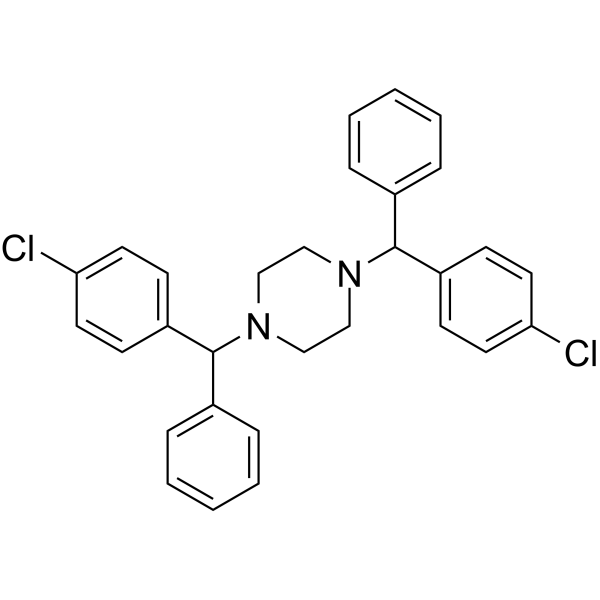
Cetirizine Impurity D is an impurity of Cetirizine. Cetirizine, a second-generation antihistamine, is a specific, orally active and long-acting histamine H1-receptor antagonist. Cetirizine marks antiallergic properties and inhibits eosinophil chemotaxis during the allergic response .
|
-
- HY-B0303R
-
-

- HY-Z9101
-
|
|
Histamine Receptor
|
Neurological Disease
|
|
Promethazine sulfoxide is a metabolite of the histamine H1 receptor antagonist Promethazine (HY-B1296). It is formed from promethazine by the cytochrome P450 (CYP) isoform CYP2D6.
|
-

- HY-A0019
-
|
9-Hydroxyrisperidone
|
Drug Metabolite
Dopamine Receptor
5-HT Receptor
Adrenergic Receptor
|
Neurological Disease
|
|
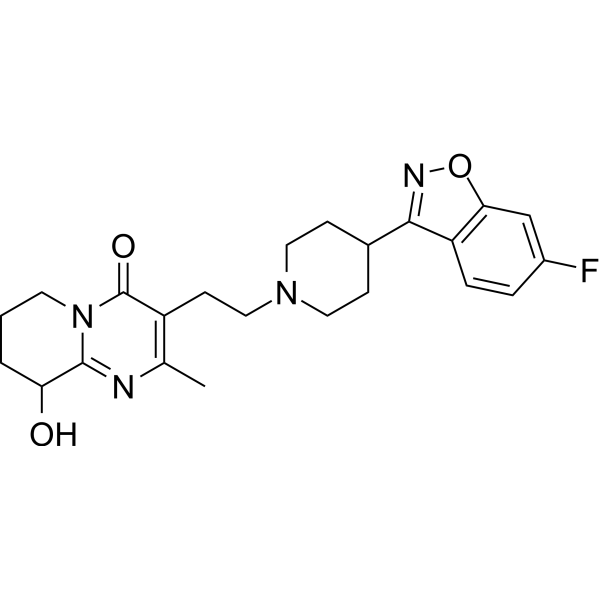
Paliperidone (9-Hydroxyrisperidone), the major active metabolite of Risperidone, is a dopamine D2 antagonist and 5-HT2A antagonist. Paliperidone is also active as an antagonist at α1 and α2 adrenergic receptors and H1-histaminergic receptors. Paliperidone, a antipsychotic agent, shows efficacy against schizophrenia .
|
-
- HY-101830R
-
-

- HY-B1305R
-
|
|
Reference Standards
FAK
Histamine Receptor
VEGFR
|
Endocrinology
Cancer
|
|
Chloropyramine hydrochloride (Standard) is the analytical standard of Chloropyramine hydrochloride. This product is intended for research and analytical applications. Chloropyramine hydrochloride is a histamine receptor H1 antagonist which can also inhibit the biochemical function of VEGFR-3 and FAK.
|
-

- HY-119995
-
|
|
Apoptosis
Histamine Receptor
|
Cardiovascular Disease
Cancer
|
|
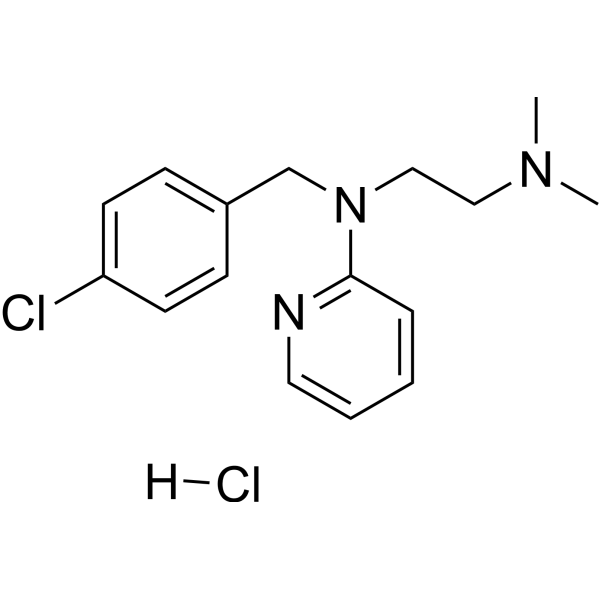
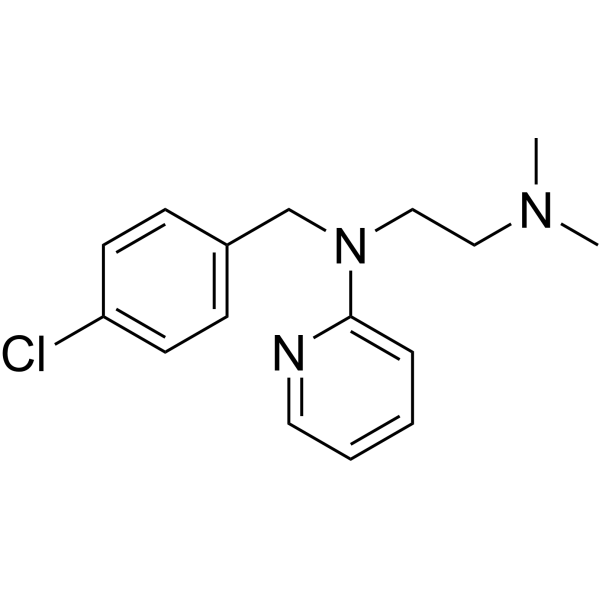
Chloropyramine is competitive reversible H1 receptor antagonist. Chloropyramine also has anti-tumour activity in breast cancer. Chloropyramine can be used for the research of allergic conditions, such as conjunctivitis and bronchial asthma .
|
-
- HY-12752
-
|
Trimeprazine
|
Histamine Receptor
|
Neurological Disease
Inflammation/Immunology
Cancer
|
|
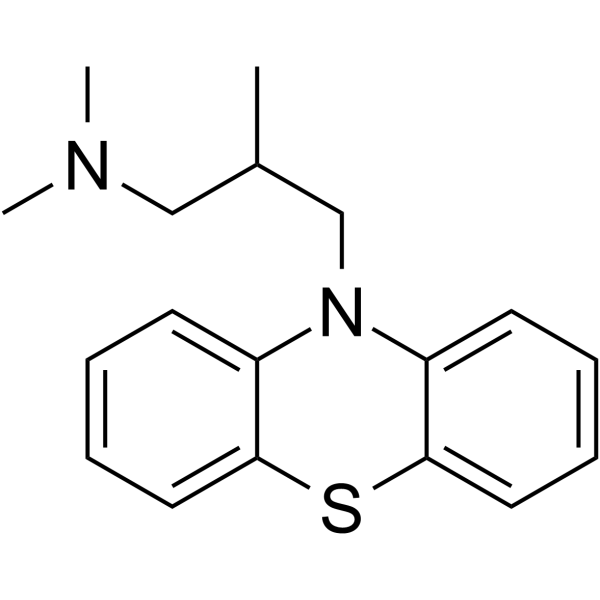
Alimemazine is a phenothiazine derivative that is generally used as an antipruritic agent and also a hemagglutinin (HA)-receptor antagonist.Alimemazine (Trimeprazine) is also acts as a partial agonist against the histamine H1 receptor (H1R) and other GPCRs. Alimemazine displays antiserotonin, antispasmodic, and antiemetic properties .
|
-
- HY-D0237R
-
|
|
Reference Standards
Histamine Receptor
|
Inflammation/Immunology
|
|
Betahistine (mesylate) (Standard) is the analytical standard of Betahistine (mesylate). This product is intended for research and analytical applications. Betahistine mesylate is an orally active histamine H1 receptor agonist and a H3 receptor antagonist . Betahistine mesylate is used for the study of rheumatoid arthritis (RA) .
|
-

- HY-B0524AR
-
-

- HY-B1794
-
-
- HY-B1317A
-
|
Neohetramine hydrochloride
|
Histamine Receptor
|
Inflammation/Immunology
|
|
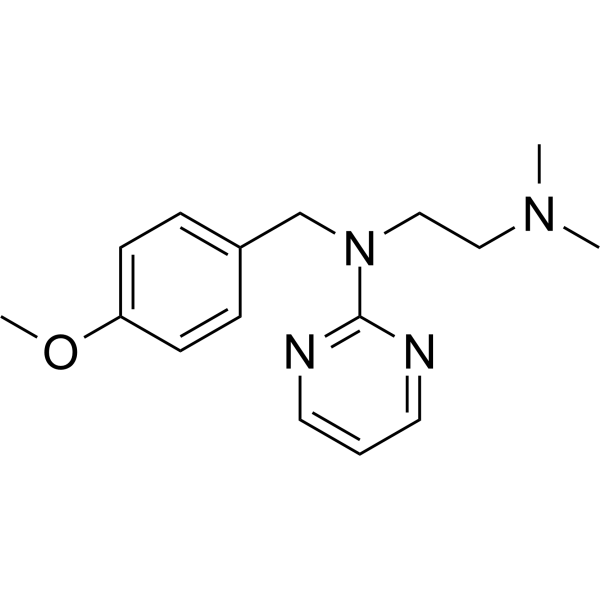
Thonzylamine hydrochloride is an orally active H1 histamine receptor antagonist with good antihistaminic and antianaphylactic properties. Thonzylamine hydrochloride can be used for the research of hypersensitivity diseases, nasal congestion, allergic conjunctivitis and other allergic diseases .
|
-

- HY-B1317
-
|
Neohetramine
|
Histamine Receptor
|
Inflammation/Immunology
|
|
Thonzylamine is an orally active H1 histamine receptor antagonist with good antihistaminic and antianaphylactic properties. Thonzylamine can be used for the research of hypersensitivity diseases, nasal congestion, allergic conjunctivitis and other allergic diseases .
|
-
- HY-105014R
-
|
Norastemizole (Standard)
|
Reference Standards
Histamine Receptor
|
Inflammation/Immunology
|
|
Tecastemizole (Standard) is the analytical standard of Tecastemizole. This product is intended for research and analytical applications. Tecastemizole (Norastemizole), a major metabolite of Astemizole, is a potent and selective H1 receptor antagonist. Tecastemizole shows anti-inflammatory activities .
|
-

- HY-N6772R
-
|
|
Reference Standards
Autophagy
|
Cancer
|
|
Antazoline (phosphate) (Standard) is the analytical standard of Antazoline (phosphate). This product is intended for research and analytical applications. Antazoline phosphate is an H1 receptor antagonist that affects the activity of the central nervous system, has a potent antiarrhythmic effect .
|
-

- HY-107495
-
|
NSC19005
|
MOFs
Histamine Receptor
|
Inflammation/Immunology
|
|
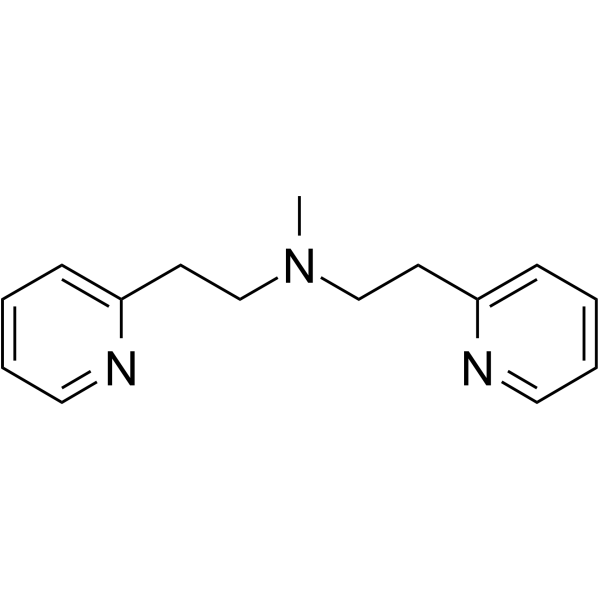
Betahistine EP Impurity C (NSC19005) is an impurity of Betahistine . Betahistine is a potent, orally active and well-tolerated histamine H1 receptor agonist and H3 receptor antagonist used for the study of rheumatoid arthritis (RA) .
|
-
- HY-B1589
-
|
|
Histamine Receptor
|
Infection
Inflammation/Immunology
|
|
(±)-Carbinoxamine is a blood-brain barrier-permeable histamine H1 receptor antagonist. (±)-Carbinoxamine blocks the action of histamine on H1 receptors, reducing symptoms such as sneezing, rhinitis, rhinorrhea, erythema, pruritus and urticaria. (±)-Carbinoxamine inhibits influenza virus entry into cells via endocytosis, targets the early stage of the viral life cycle, and simultaneously reduces viral replication levels in the lungs, alleviating pathological damage and inflammatory responses in lung tissues. (±)-Carbinoxamine can be used in research on allergic rhinitis, influenza, etc.
|
-

- HY-B1589A
-
|
|
Histamine Receptor
Influenza Virus
|
Infection
Inflammation/Immunology
|
|
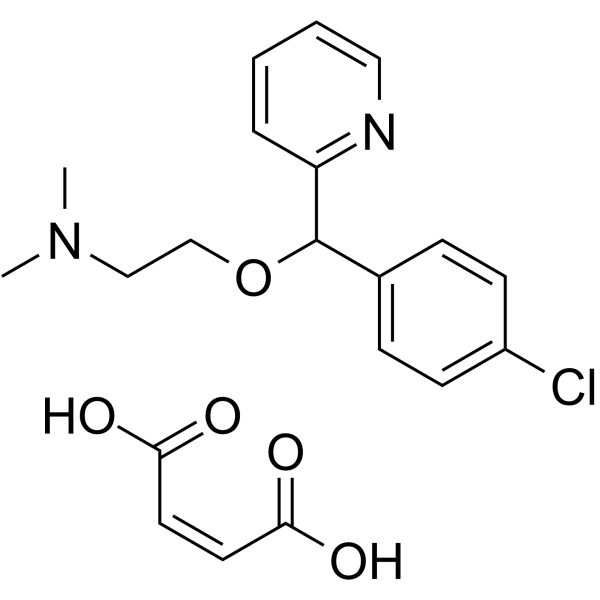
Carbinoxamine maleate salt is a blood-brain barrier-permeable histamine H1 receptor antagonist. Carbinoxamine maleate salt blocks the action of histamine on H1 receptors, reducing symptoms such as sneezing, rhinitis, rhinorrhea, erythema, pruritus and urticaria. Carbinoxamine maleate salt inhibits influenza virus entry into cells via endocytosis, targets the early stage of the viral life cycle, and simultaneously reduces viral replication levels in the lungs, alleviating pathological damage and inflammatory responses in lung tissues. Carbinoxamine maleate salt can be used in research on allergic rhinitis, influenza, etc.
|
-
- HY-B0349R
-
|
Meclozine dihydrochloride (Standard)
|
Reference Standards
Histamine Receptor
Apoptosis
|
Neurological Disease
Endocrinology
Cancer
|
|
Meclizine (dihydrochloride) (Standard) is the analytical standard of Meclizine (dihydrochloride). This product is intended for research and analytical applications. Meclizine (Meclozine) dihydrochloride, an antihistamine, reversibly inhibits the interaction of histamine at the H1 receptors. Meclizine dihydrochloride is a member of the piperazine class of H1 antagonists. Meclizine dihydrochloride is an effective anti-motion sickness agent. Meclizine dihydrochloride crosses the blood-brain barrier. Meclizine dihydrochloride can be used for the research of polyQ toxicity disorders, such as Huntington's disease. Meclizine dihydrochloride is an agonist ligand for mouse constitutive androstane receptor (CAR) and an inverse agonist for Human CAR .
|
-

- HY-124626
-
|
|
Histamine Receptor
|
Inflammation/Immunology
|
(R)-(+)-Mequitazine is a histamine H1 receptor antagonist that mainly undergoes bio-transformation via human liver microsomes, resulting in hydroxylated and S-oxidized metabolites. (R)-(+)-Mequitazine competitively binds to the H1 receptors in gastrointestinal, vascular, and respiratory effect cells, thus blocking the endogenous activity of histamine. (R)-(+)-Mequitazine has an inhibitory effect on CYP3A-catalyzed midazolam 1’-hydroxylase. (R)-(+)-Mequitazine can be used in the study of various allergic diseases .
|
-

- HY-B0298A
-
|
HS-592 fumarate; Meclastine fumarate
|
Histamine Receptor
Apoptosis
mAChR
Pyroptosis
Keap1-Nrf2
p62
Autophagy
mTOR
IKK
|
Neurological Disease
Metabolic Disease
|
|
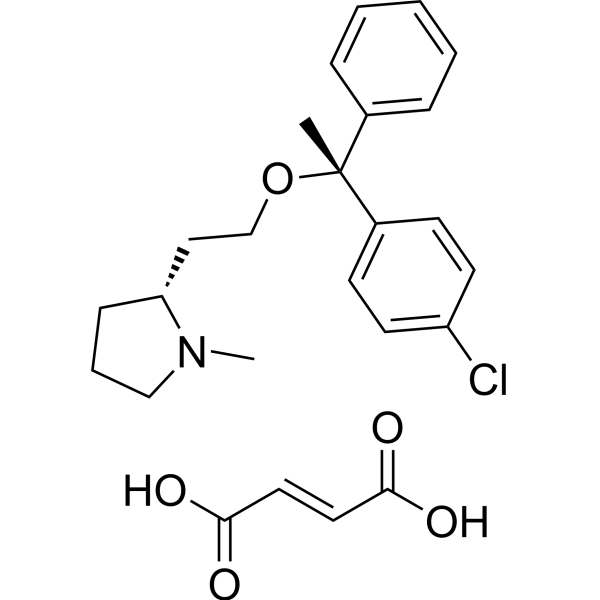
Clemastine (HS-592; Meclastine) fumarate is an orally active, blood-brain barrier-permeable H1 histamine receptor (H1 histamine receptor) antagonist with potent antiallergic effects. Clemastine fumarate also antagonizes muscarinic acetylcholine receptors (mAChR), particularly the M1 and M4 subtypes. In addition to antihistamine effects, Clemastine fumarate exhibits multiple pharmacological activities, especially in promoting central nervous system remyelination, activating autophagy and pyroptosis, exerting anti-apoptotic and neuroprotective effects, and suppressing inflammation .
|
-
- HY-B0298
-
|
HS-592; Meclastine
|
Histamine Receptor
mAChR
Autophagy
Apoptosis
Keap1-Nrf2
p62
mTOR
Pyroptosis
IKK
|
Cardiovascular Disease
Neurological Disease
Inflammation/Immunology
|
|
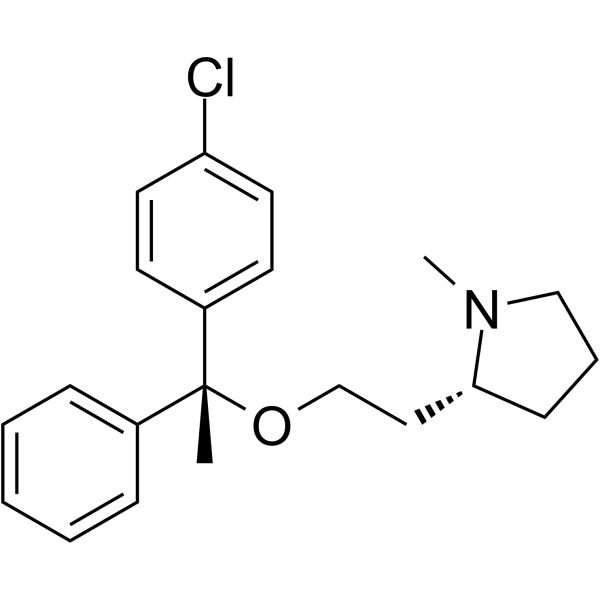
Clemastine (HS-592; Meclastine) is an orally active, blood-brain barrier-permeable H1 histamine receptor (H1 histamine receptor) antagonist with potent antiallergic effects. Clemastine also antagonizes muscarinic acetylcholine receptors (mAChR), particularly the M1 and M4 subtypes. In addition to antihistamine effects, Clemastine exhibits multiple pharmacological activities, especially in promoting central nervous system remyelination, activating autophagy and pyroptosis, exerting anti-apoptotic and neuroprotective effects, and suppressing inflammation .
|
-
- HY-14447S1
-
-

- HY-B1397S
-
-

- HY-162231
-
|
|
Histamine Receptor
mAChR
|
Inflammation/Immunology
|
|
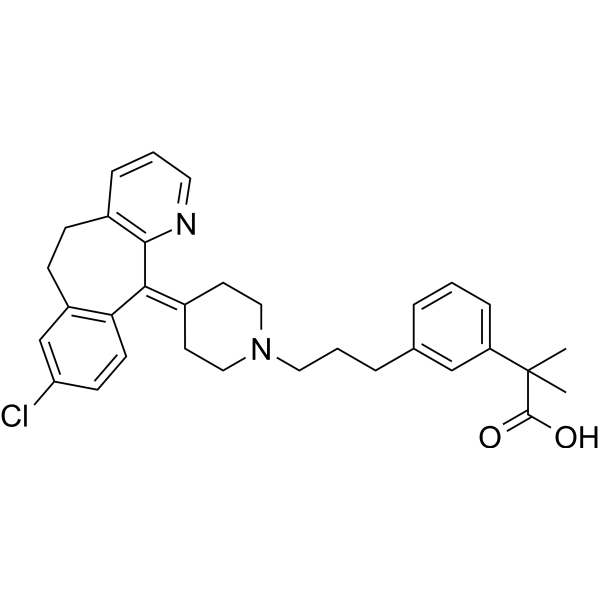
HY-078020 (compound III-4) is a selective, orally active antagonist for histamine H1 receptor with an IC50 of 24.12 nM. HY-078020 exhibits an anti-inflammatory effect in allergic diseases .
|
-
- HY-107559
-
|
|
Histamine Receptor
|
Neurological Disease
|
|
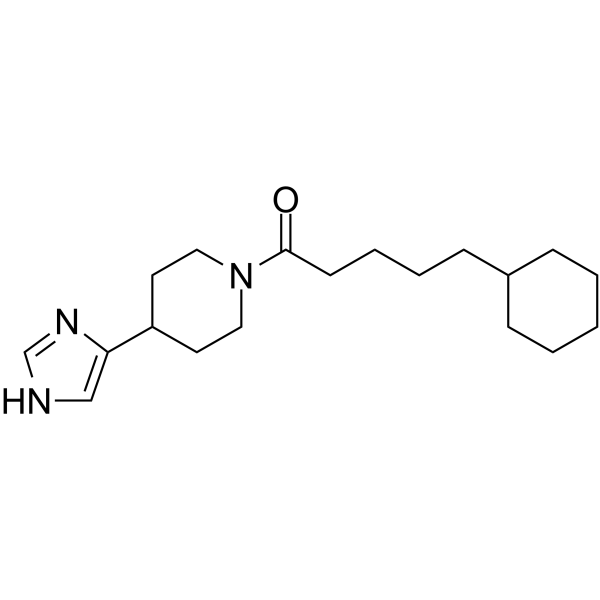
GT-2016 is a potent, selective, and brain penetrant histamine H3 receptor antagonist with a Ki of 43.8 nM. GT-2016 displays selectivity against H1 and H2 receptors, and has non-active against histamine methyltransferase .
|
-
- HY-164430
-
|
BU-E-50
|
Histamine Receptor
|
Cardiovascular Disease
|
|
Arpromidine (BU-E-50) is the agonist for histamine H2 receptor and the antagonist for histamine H1 receptor. Arpromidine exhibits positive inotropic effect with less risks in causing arrhythmias. Arpromidine can be used in research of congestive heart failure .
|
-

- HY-B0524AS1
-
-
- HY-17042AS
-
|
|
Isotope-Labeled Compounds
Histamine Receptor
|
Inflammation/Immunology
|
|
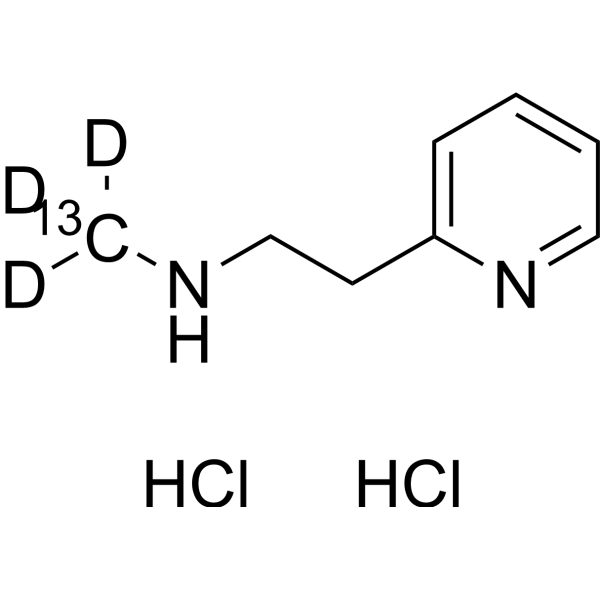
Cetirizine-d4 (dihydrochloride) is a deuterium labeled Cetirizine. Cetirizine, a second-generation antihistamine and the carboxylated metabolite of hydroxyzine, is a specific, orally active and long-acting histamine H1-receptor antagonist. Cetirizine marks antiallergic properties and inhibits eosinophil chemotaxis during the allergic response .
|
-
- HY-17042S1
-
|
|
Histamine Receptor
|
Inflammation/Immunology
|
|
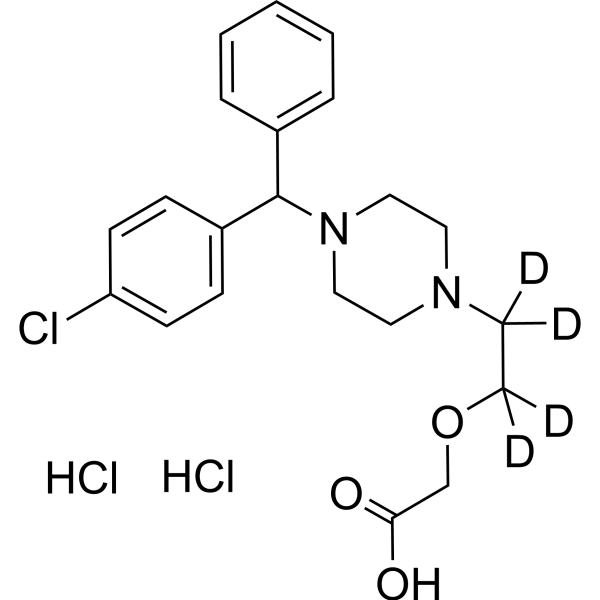
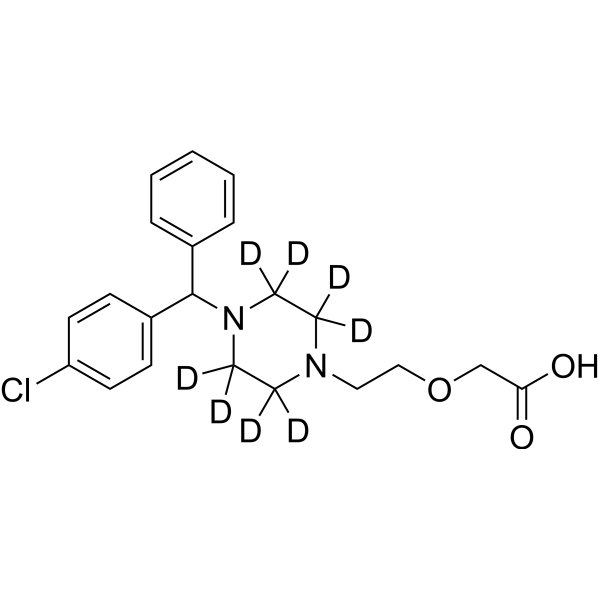
Cetirizine-d8 is a deuterium labeled Cetirizine. Cetirizine, a second-generation antihistamine and the carboxylated metabolite of hydroxyzine, is a specific, orally active and long-acting histamine H1-receptor antagonist. Cetirizine marks antiallergic properties and inhibits eosinophil chemotaxis during the allergic response .
|
-
- HY-17042AS1
-
|
|
Isotope-Labeled Compounds
Histamine Receptor
|
Inflammation/Immunology
|
|
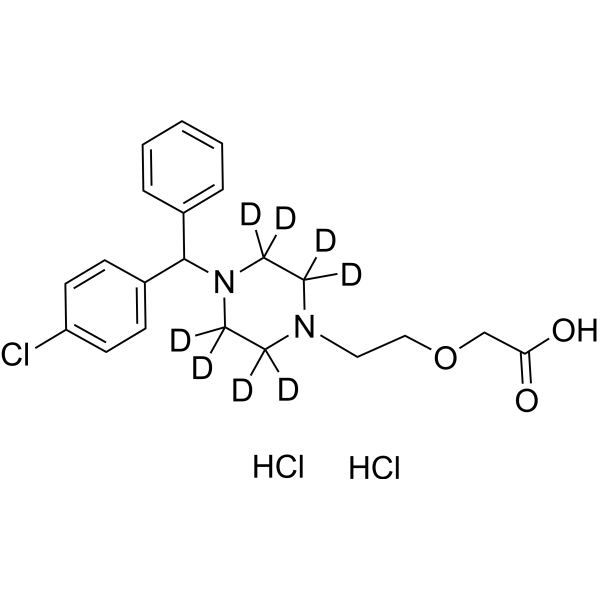
Cetirizine-d8 (dihydrochloride) is a deuterium labeled Cetirizine. Cetirizine, a second-generation antihistamine and the carboxylated metabolite of hydroxyzine, is a specific, orally active and long-acting histamine H1-receptor antagonist. Cetirizine marks antiallergic properties and inhibits eosinophil chemotaxis during the allergic response .
|
-
- HY-123205
-
-
- HY-101232
-
|
ICI 125211
|
Histamine Receptor
|
Cardiovascular Disease
|
|
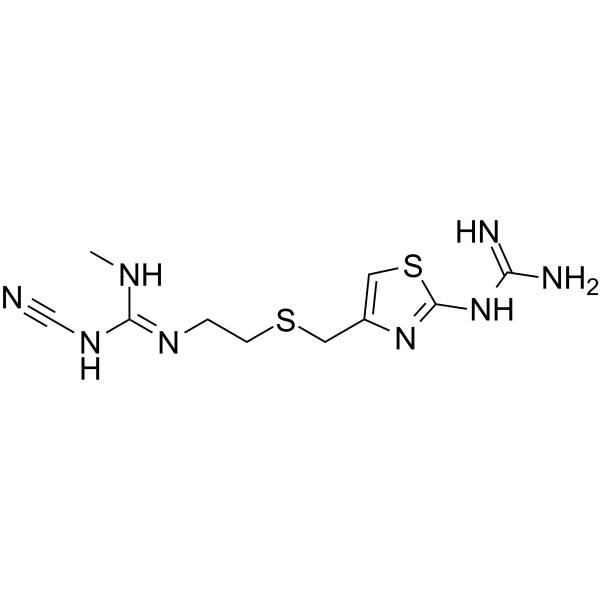
Tiotidine (ICI 125211) is a potent and selective antagonist of histamine H2-receptor (pA2=7.3-7.8 for guinea-pig right atrium). Tiotidine has low affinity for both the H1 and the H3 receptors .
|
-
- HY-106465
-
-

- HY-B1794A
-
|
|
Dopamine Receptor
Histamine Receptor
Bacterial
Amyloid-β
|
Infection
Neurological Disease
|
|
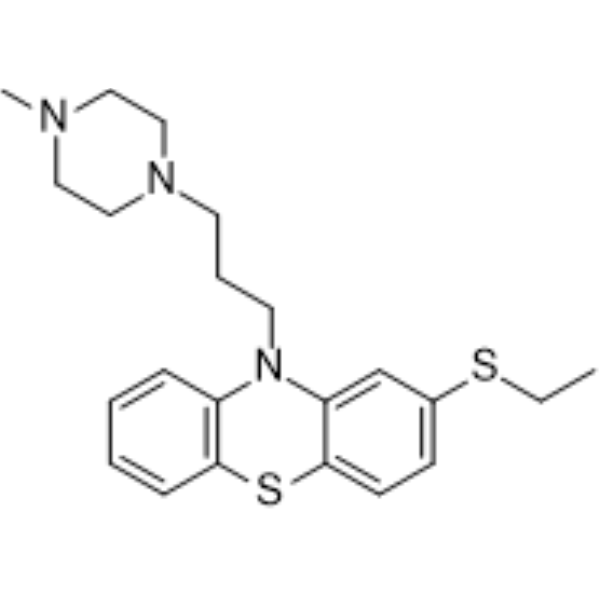
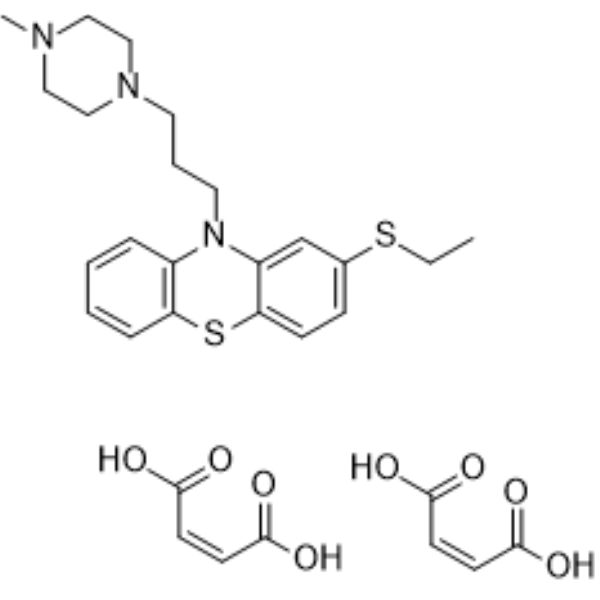
Thiethylperazine dimaleate, a phenothiazine derivate, is an orally active and potent dopamine D2-receptor and histamine H1-receptor antagonist. Thiethylperazine dimaleate is also a selective ABCC1activator that reduces amyloid-β (Aβ) load in mice. Thiethylperazine dimaleate has anti-emetic, antipsychotic and antimicrobial effects .
|
-
- HY-121356
-
-
- HY-12532
-
|
R 43512
|
Histamine Receptor
Potassium Channel
|
Inflammation/Immunology
Endocrinology
|
|
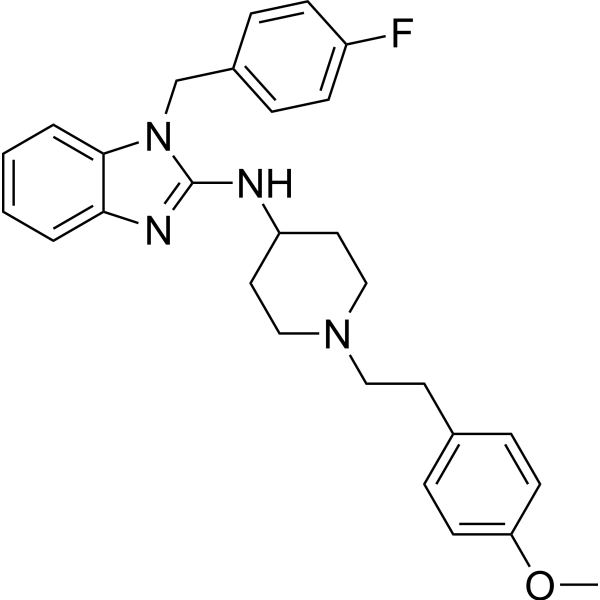
Astemizole (R 43512), a second-generation antihistamine agent to diminish allergic symptoms with a long duration of action, is a histamine H1-receptor antagonist, with an IC50 of 4 nM. Astemizole also shows potent hERG K + channel blocking activity with an IC50 of 0.9 nM. Astemizole has antipruritic effects .
|
-
- HY-17042S
-
|
|
Histamine Receptor
|
Inflammation/Immunology
|
|
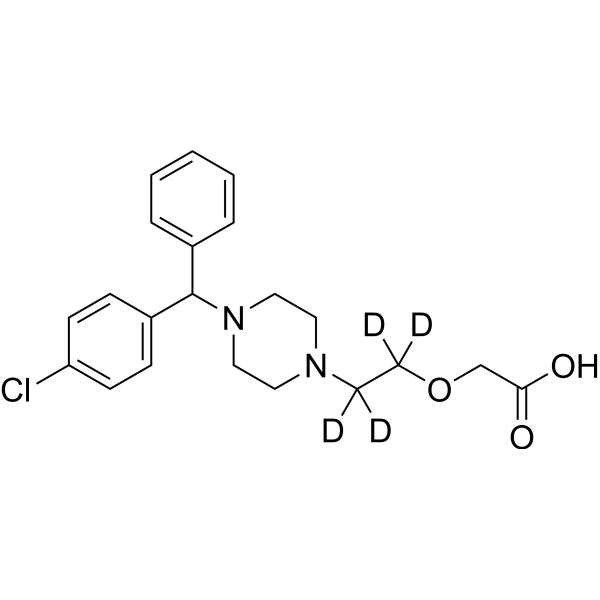
Cetirizine-d4 is a deuterium labeled Cetirizine. Cetirizine, a second-generation antihistamine and the carboxylated metabolite of hydroxyzine, is a specific, orally active and long-acting histamine H1-receptor antagonist. Cetirizine marks antiallergic properties and inhibits eosinophil chemotaxis during the allergic response[1][2][3].
|
-
- HY-B0478
-
|
AF-1161
|
5-HT Receptor
Serotonin Transporter
Histamine Receptor
Adrenergic Receptor
|
Neurological Disease
|
|
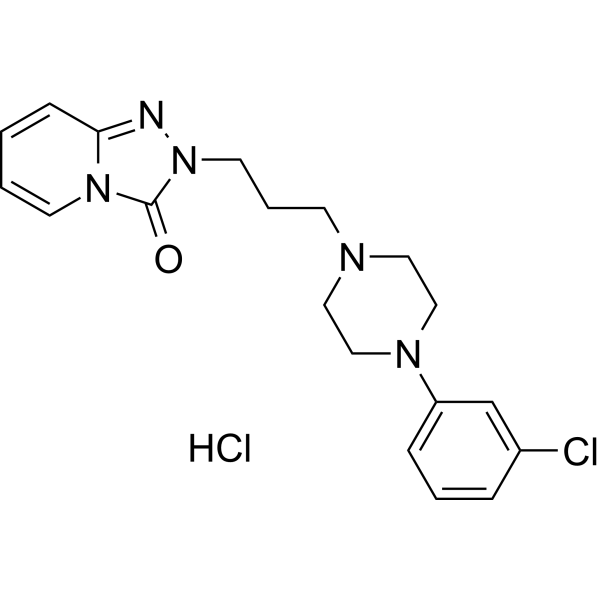
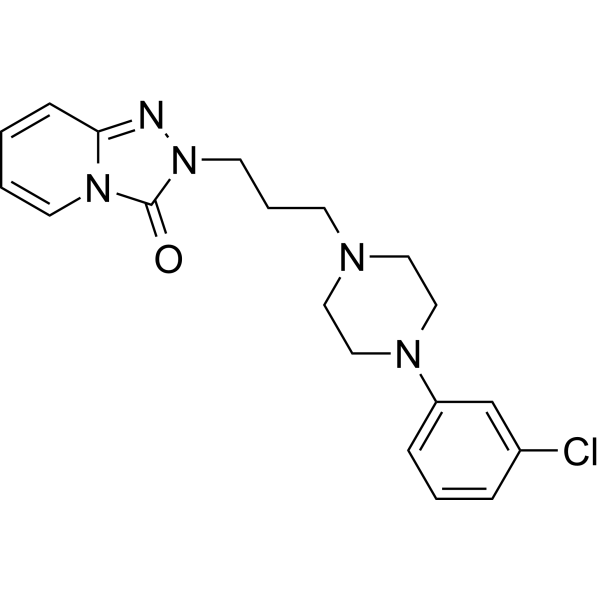
Trazodone hydrochloride (AF-1161) is a triazolopyridine derivative that belongs to the class of serotonin receptor antagonists and reuptake inhibitors (SARIs). Trazodone hydrochloride has anti-depressant and anti-insomnious activity. Trazodone hydrochloride exerts antagonistic properties against a1- and a2-adrenergic receptors and histamine H1 receptors, with minimal anticholinergic effects .
|
-
- HY-B0349S
-
-

- HY-14277AR
-
|
R 50547 hydrochloride (Standard)
|
Reference Standards
Histamine Receptor
Neurotensin Receptor
Integrin
|
Inflammation/Immunology
|
|
Levocabastine (hydrochloride) (Standard) is the analytical standard of Levocabastine (hydrochloride). This product is intended for research and analytical applications. Levocabastine (R 50547) hydrochloride is a potent and selective histamine H1-receptor antagonist. Levocabastine hydrochloride is also a selective, high affinity neurotensin receptor subtype 2 (NTR2) antagonist, with a Ki of 17 nM for mNTR2. Levocabastine hydrochloride can act as a VLA-4 antagonist, interferes with conjunctival eosinophil infiltration in allergic conjunctivitis (AC) .
|
-

- HY-B0548AS2
-
|
|
Isotope-Labeled Compounds
Histamine Receptor
|
Inflammation/Immunology
Endocrinology
|
|
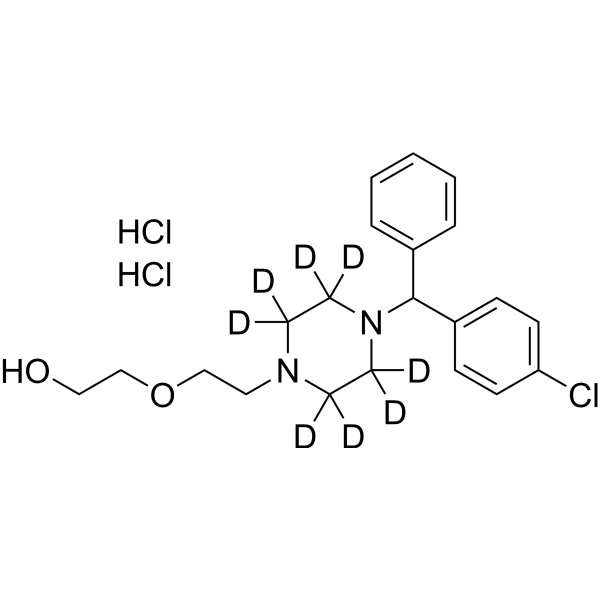
Hydroxyzine-d8 (dihydrochloride) is the deuterium labeled Hydroxyzine dihydrochloride. Hydroxyzine dihydrochloride, a benzodiazepine antihistamine agent, acts as a orally active histamine?H1-receptor and serotonin antagonist. Hydroxyzine dihydrochloride has anxiolytic effect and can be used forthe research of generalised anxiety disorder .
|
-
- HY-B0548AS1
-
|
Vistaril-d4' dihydrochloride; Atarax-d4' dihydrochloride
|
Histamine Receptor
|
Inflammation/Immunology
Endocrinology
|
|
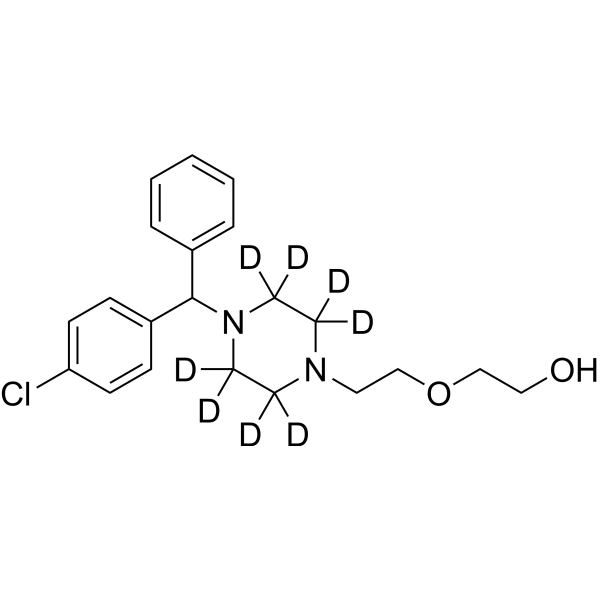
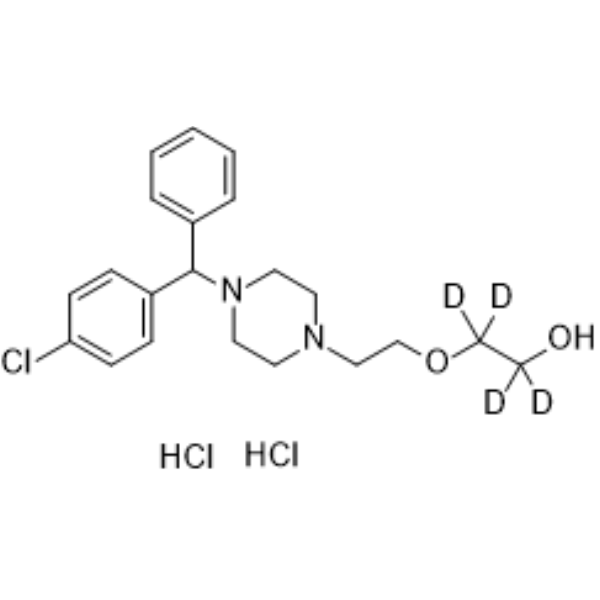
Hydroxyzine-d4 (dihydrochloride) is the deuterium labeled Hydroxyzine dihydrochloride. Hydroxyzine dihydrochloride, a benzodiazepine antihistamine agent, acts as a orally active histamine?H1-receptor and serotonin antagonist. Hydroxyzine dihydrochloride has anxiolytic effect and can be used forthe research of generalised anxiety disorder .
|
-
- HY-B0801S2
-
|
MDL-16455-d3; Terfenadine carboxylate-d3
|
Histamine Receptor
|
Inflammation/Immunology
|
|
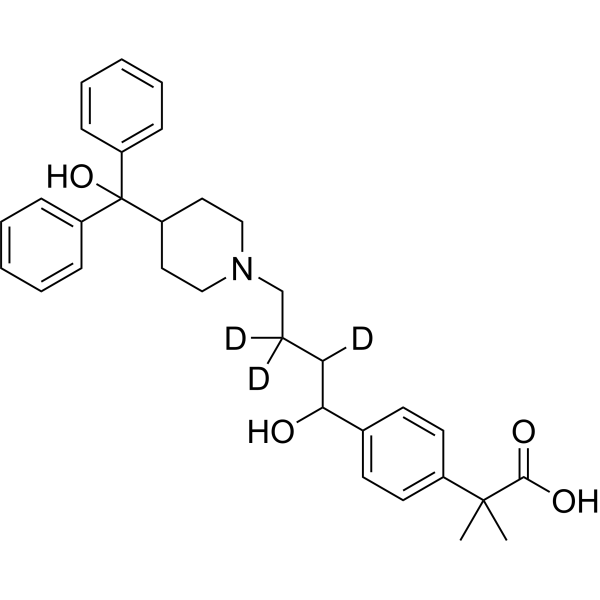
Fexofenadine-d3 is the deuterium labeled Fexofenadine . Fexofenadine (MDL-16455) is an orally active and nonsedative H1 receptor antagonist. Fexofenadine can be used in allergic rhinitis and chronic idiopathic urticarial research .
|
-
- HY-108411
-
|
|
Histamine Receptor
|
Inflammation/Immunology
|
|
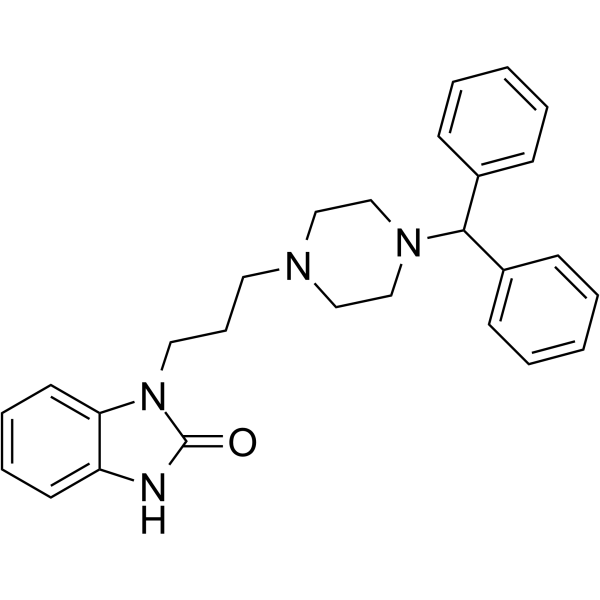
Emedastine is an orally active, selective and high affinity histamine H1 receptor antagonist with a Ki value of 1.3 nM. Emedastine is a benzimidazole derivative with potent antiallergic properties and used for allergic rhinitis, allergic skin diseases and allergic conjunctivitis .
|
-
- HY-30234A
-
-
- HY-A0019S
-
|
|
Dopamine Receptor
5-HT Receptor
Adrenergic Receptor
|
Neurological Disease
|
|
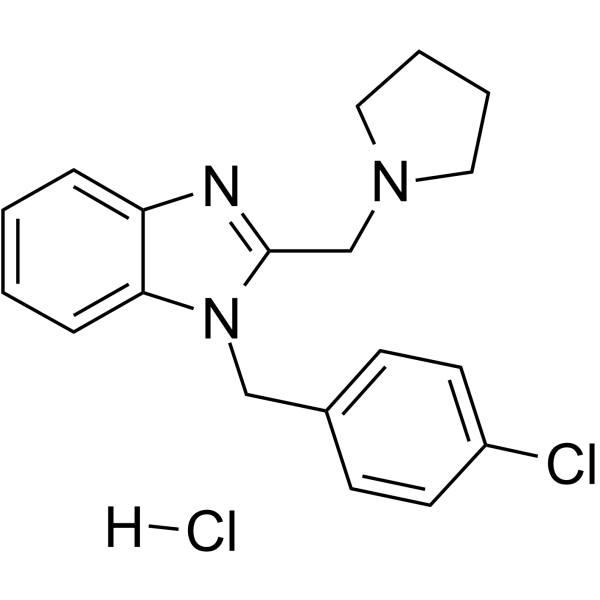
Paliperidone-d4 is the deuterium labeled Paliperidone. Paliperidone (9-Hydroxyrisperidone), the major active metabolite of Risperidone, is a dopamine D2 antagonist and 5-HT2A antagonist. Paliperidone is also active as an antagonist at α1 and α2 adrenergic receptors and H1-histaminergic receptors. Paliperidone, a antipsychotic agent, shows efficacy against schizophrenia .
|
-
- HY-17042R
-
|
|
Reference Standards
Histamine Receptor
|
Inflammation/Immunology
Endocrinology
Cancer
|
|
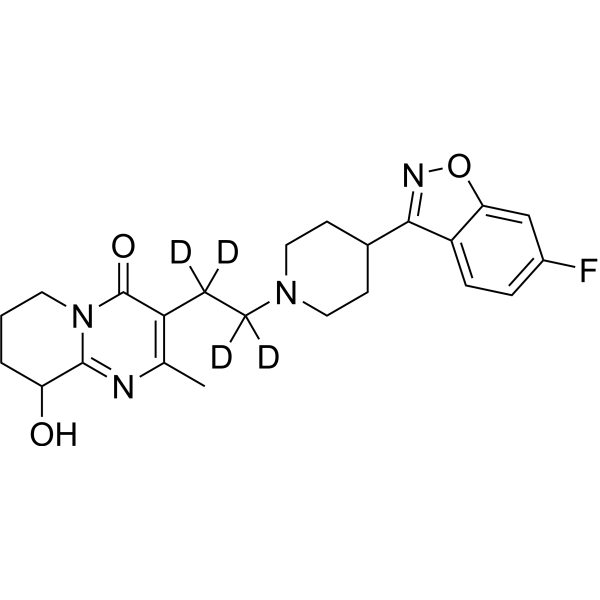
Cetirizine (Standard) is the analytical standard of Cetirizine. This product is intended for research and analytical applications. Cetirizine, a second-generation antihistamine and the carboxylated metabolite of hydroxyzine, is a specific, orally active and long-acting histamine H1-receptor antagonist. Cetirizine marks antiallergic properties and inhibits eosinophil chemotaxis during the allergic response .
|
-

- HY-17042AR
-
|
P071 (Standard)
|
Reference Standards
Histamine Receptor
|
Inflammation/Immunology
Endocrinology
Cancer
|
|
Cetirizine (dihydrochloride) (Standard) is the analytical standard of Cetirizine (dihydrochloride). This product is intended for research and analytical applications. Cetirizine dihydrochloride, a second-generation antihistamine and the carboxylated metabolite of hydroxyzine, is a specific, orally active and long-acting histamine H1-receptor antagonist. Cetirizine dihydrochloride marks antiallergic properties and inhibits eosinophil chemotaxis during the allergic response .
|
-

- HY-B0298AS
-
|
HS-592-d5 fumarate; Meclastine-d5 fumarate
|
Isotope-Labeled Compounds
Histamine Receptor
Apoptosis
mAChR
Pyroptosis
Keap1-Nrf2
p62
Autophagy
mTOR
IKK
|
Neurological Disease
Metabolic Disease
|
|
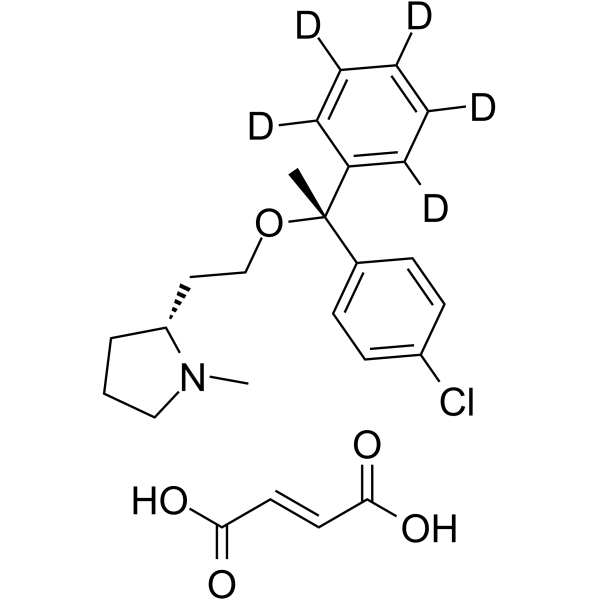
Clemastine (HS-592; Meclastine)-d5 fumarate is the deuterium labeled Clemastine fumarate. Clemastine fumarate is an orally active, blood-brain barrier-permeable H1 histamine receptor (H1 histamine receptor) antagonist with potent antiallergic effects. Clemastine fumarate also antagonizes muscarinic acetylcholine receptors (mAChR), particularly the M1 and M4 subtypes. In addition to antihistamine effects, Clemastine fumarate exhibits multiple pharmacological activities, especially in promoting central nervous system remyelination, activating autophagy and pyroptosis, exerting anti-apoptotic and neuroprotective effects, and suppressing inflammation .
|
-
- HY-B0478A
-
|
AF-1161 free base
|
5-HT Receptor
Serotonin Transporter
Histamine Receptor
Adrenergic Receptor
|
Neurological Disease
|
|
Trazodone (AF-1161 free base) is a triazolopyridine derivative that belongs to the class of serotonin receptor antagonists and reuptake inhibitors (SARIs). Trazodone has anti-depressant and anti-insomnious activity. Trazodone exerts antagonistic properties against a1- and a2-adrenergic receptors and histamine H1 receptors, with minimal anticholinergic effects .
|
-
- HY-B0781S
-
|
|
Histamine Receptor
|
Neurological Disease
Endocrinology
|
|
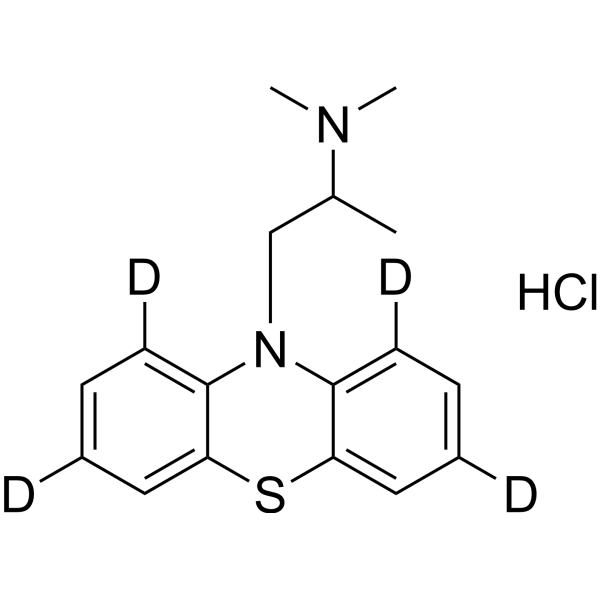
Promethazine-d4 (hydrochloride) is the deuterium labeled Promethazine hydrochloride. Promethazine hydrochloride is the first-generation antihistamine; strong antagonist of the H1 receptor and moderate mACh receptor antagonist, moderate affinity for 5-HT2A, 5-HT2C, D2 and α1-adrenergic receptors.
|
-
- HY-B1589AS
-
|
|
Isotope-Labeled Compounds
Histamine Receptor
Influenza Virus
|
Neurological Disease
Endocrinology
|
|
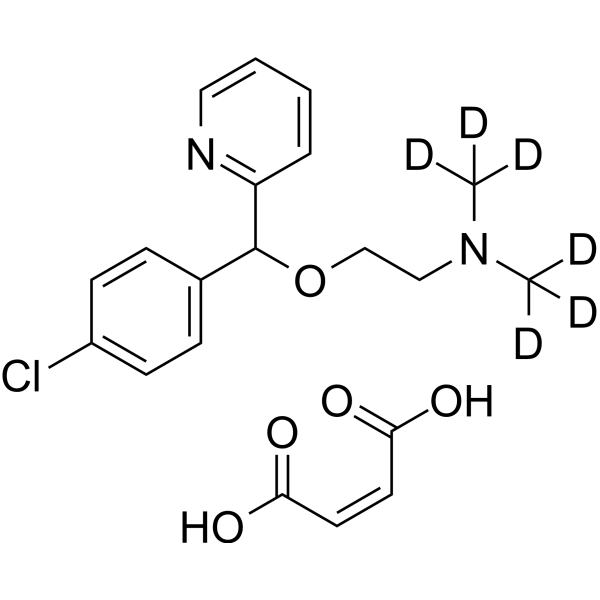
Carbinoxamine-d6 (maleate) is the deuterium labeled Carbinoxamine maleate salt. Carbinoxamine maleate salt is a blood-brain barrier-permeable histamine H1 receptor antagonist. Carbinoxamine maleate salt blocks the action of histamine on H1 receptors, reducing symptoms such as sneezing, rhinitis, rhinorrhea, erythema, pruritus and urticaria. Carbinoxamine maleate salt inhibits influenza virus entry into cells via endocytosis, targets the early stage of the viral life cycle, and simultaneously reduces viral replication levels in the lungs, alleviating pathological damage and inflammatory responses in lung tissues. Carbinoxamine maleate salt can be used in research on allergic rhinitis, influenza, etc.
|
-
- HY-B0548R
-
|
|
Reference Standards
Histamine Receptor
|
Inflammation/Immunology
Endocrinology
|
|
Hydroxyzine (Standard) is the analytical standard of Hydroxyzine. This product is intended for research and analytical applications. Hydroxyzine, a benzodiazepine antihistamine agent, acts as an orally active histamine H1-receptor and serotonin antagonist. Hydroxyzine has anxiolytic effect and can be used for the research of generalised anxiety disorder .
|
-

- HY-30234
-
-
- HY-I0021
-
|
|
Histamine Receptor
|
Inflammation/Immunology
Endocrinology
|
|
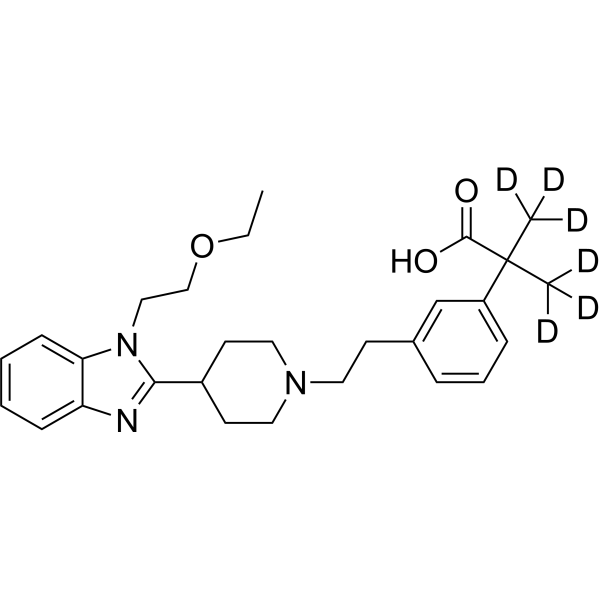
Bepotastine is a selective and orally active second-generation histamine H1 receptor antagonist, can suppress the expression of nerve growth factor (NGF). Bepotastine has the potential for allergic rhinitis, allergic conjunctivitis and urticaria/pruritus research .
|
-
- HY-B0674S
-
-
- HY-107431
-
|
|
Histamine Receptor
|
Inflammation/Immunology
|
|
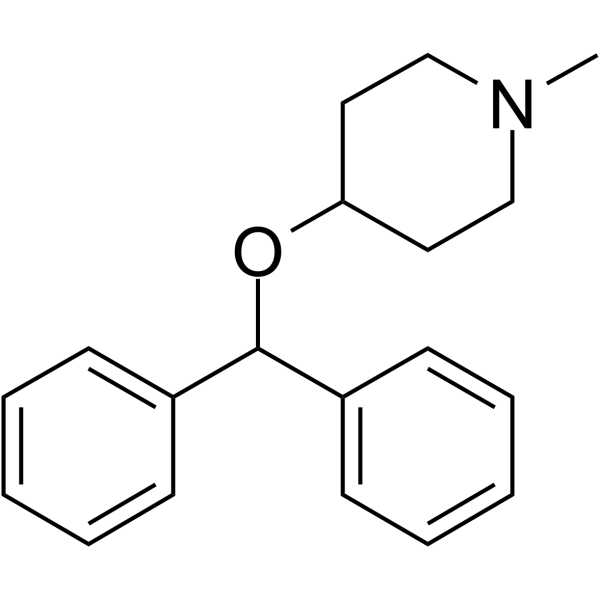
Diphenylpyraline is a potent histamine H1 receptor antagonist. Diphenylpyraline acts as an orally active antihistamine agent with antimuscarinic and antiallergic effects. Diphenylpyraline can be used for the research of allergic diseases, including rhinitis and hay fever, and pruritic skin disorders et.al .
|
-
- HY-A0188
-
-

- HY-A0019R
-
|
9-Hydroxyrisperidone (Standard)
|
Drug Metabolite
Reference Standards
Dopamine Receptor
5-HT Receptor
Adrenergic Receptor
|
Neurological Disease
|
|
Paliperidone (Standard) is the analytical standard of Paliperidone. This product is intended for research and analytical applications. Paliperidone (9-Hydroxyrisperidone), the major active metabolite of Risperidone, is a dopamine D2 antagonist and 5-HT2A antagonist. Paliperidone is also active as an antagonist at α1 and α2 adrenergic receptors and H1-histaminergic receptors. Paliperidone, a antipsychotic agent, shows efficacy against schizophrenia .
|
-

- HY-107431R
-
|
|
Reference Standards
Histamine Receptor
|
Inflammation/Immunology
|
|
Diphenylpyraline (Standard) is the analytical standard of Diphenylpyraline. This product is intended for research and analytical applications. Diphenylpyraline is a potent histamine H1?receptor antagonist. Diphenylpyraline acts as an orally active antihistamine agent?with antimuscarinic and antiallergic effects. Diphenylpyraline can be used for the research of allergic diseases, including rhinitis and hay fever, and pruritic skin disorders et.al .
|
-

- HY-167633
-
|
|
mGluR
Histamine Receptor
|
Neurological Disease
|
|
Oxomemazine hydrochloride is a phenothiazine-based histamine H1-receptor blocker with pronounced antimuscarinic properties. Oxomemazine hydrochloride is a selective antagonist for muscarinic M1 receptor, displays about 20-fold difference in the affinity for high (Ki= 84 nM, M1 receptor) and low (Ki= 1.65 μM, M2 receptor) affinity sites [1]. Oxomemazine hydrochloride an antihistamine and anticholinergic agent used for the study of cough treatment .
|
-

- HY-B0801R
-
|
MDL-16455 (Standard); Terfenadine carboxylate (Standard)
|
Histamine Receptor
Reference Standards
|
Inflammation/Immunology
Cancer
|
|
Fexofenadine (Standard) is the analytical standard of Fexofenadine. This product is intended for research and analytical applications. Fexofenadine (MDL-16455) is an orally active and nonsedative H1 receptor antagonist. Fexofenadine can be used in allergic rhinitis and chronic idiopathic urticarial research .
|
-

- HY-I0021A
-
|
|
Histamine Receptor
|
Inflammation/Immunology
Endocrinology
|
|
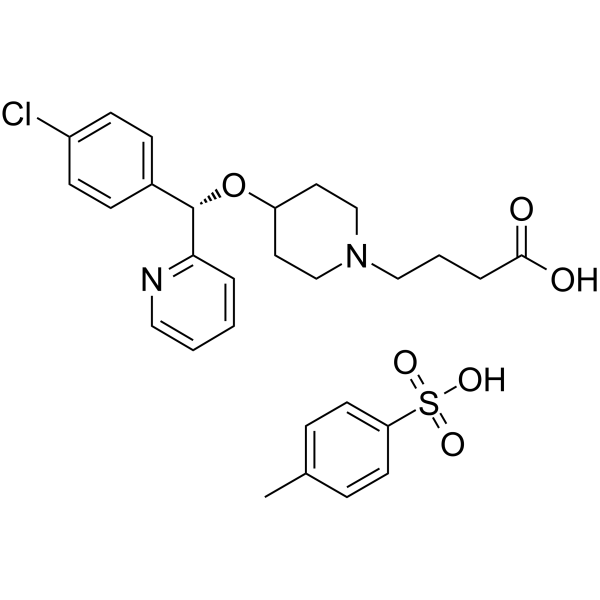
Bepotastine tosylate is a selective and orally active second-generation histamine H1 receptor antagonist. Bepotastine tosylate can suppress the expression of nerve growth factor (NGF). Bepotastine tosylate can be used in studies of allergic rhinitis, allergic conjunctivitis and urticaria/pruritus .
|
-
- HY-N1514R
-
|
|
Reference Standards
P-glycoprotein
|
Cancer
|
|
Doxylamine (succinate) (Standard) is the analytical standard of Doxylamine (succinate). This product is intended for research and analytical applications. Doxylamine (succinate), a first generation antihistamine, is a histamine (H1) receptor antagonist. Doxylamine is also a local analgesic agent and effective hypnotic agent .
|
-

- HY-B2178
-
|
|
Histamine Receptor
|
Inflammation/Immunology
|
|
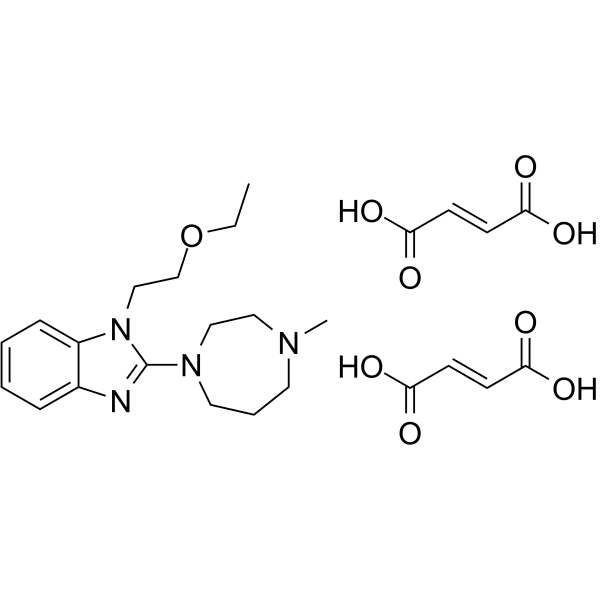
Emedastine difumarate is an orally active, selective and high affinity histamine H1 receptor antagonist with a Ki value of 1.3 nM. Emedastine difumarate is a benzimidazole derivative with potent antiallergic properties and used for allergic rhinitis, allergic skin diseases and allergic conjunctivitis .
|
-
- HY-B0801AR
-
|
MDL-16455 hydrochloride (Standard); Terfenadine carboxylate hydrochloride (Standard)
|
Reference Standards
Histamine Receptor
|
Inflammation/Immunology
|
|
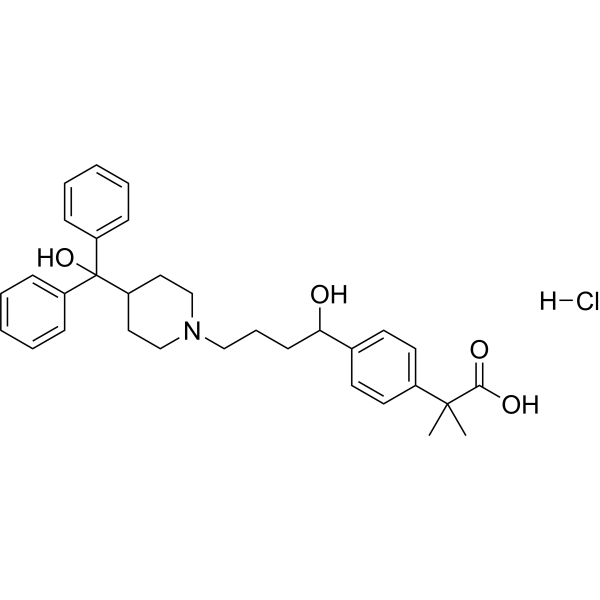
Fexofenadine (hydrochloride) (Standard) is the analytical standard of Fexofenadine (hydrochloride). This product is intended for research and analytical applications. Fexofenadine (MDL-16455) hydrochloride is an orally active and nonsedative H1 receptor antagonist. Fexofenadine hydrochloride can be used in allergic rhinitis and chronic idiopathic urticarial research .
|
-
- HY-B0298AR
-
|
HS-592 fumarate (Standard); Meclastine fumarate (Standard)
|
Reference Standards
Histamine Receptor
Apoptosis
mAChR
Pyroptosis
Keap1-Nrf2
p62
Autophagy
mTOR
IKK
|
Neurological Disease
Metabolic Disease
|
|
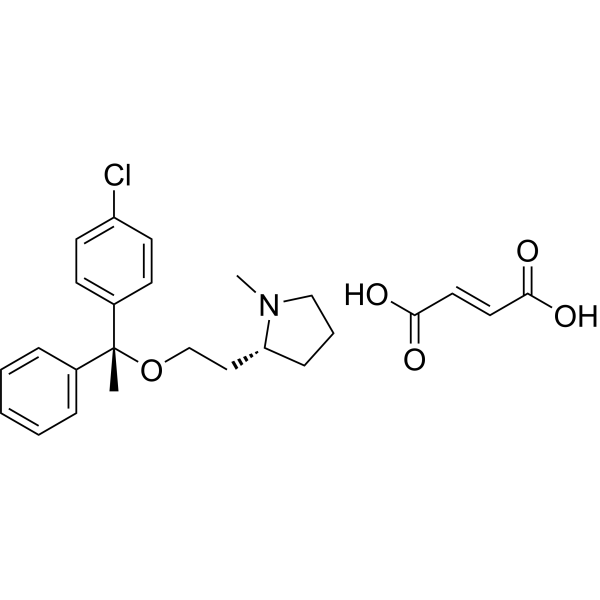
Clemastine (HS-592; Meclastine) fumarate (Standard) is the analytical standard of Clemastine fumarate. This product is intended for research and analytical applications. Clemastine fumarate is an orally active, blood-brain barrier-permeable H1 histamine receptor (H1 histamine receptor) antagonist with potent antiallergic effects. Clemastine fumarate also antagonizes muscarinic acetylcholine receptors (mAChR), particularly the M1 and M4 subtypes. In addition to antihistamine effects, Clemastine fumarate exhibits multiple pharmacological activities, especially in promoting central nervous system remyelination, activating autophagy and pyroptosis, exerting anti-apoptotic and neuroprotective effects, and suppressing inflammation .
|
-
- HY-B0548AR
-
|
|
Reference Standards
Histamine Receptor
|
Inflammation/Immunology
Endocrinology
|
|
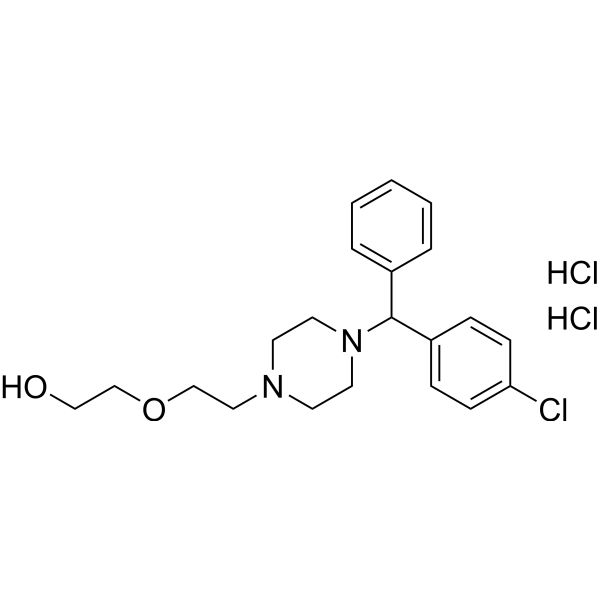
Hydroxyzine (dihydrochloride) (Standard) is the analytical standard of Hydroxyzine (dihydrochloride). This product is intended for research and analytical applications. Hydroxyzine dihydrochloride, a benzodiazepine antihistamine agent, acts as a orally active histamine H1-receptor and serotonin antagonist. Hydroxyzine dihydrochloride has anxiolytic effect and can be used forthe research of generalised anxiety disorder .
|
-
- HY-B1589S
-
|
|
Isotope-Labeled Compounds
Histamine Receptor
Influenza Virus
|
Infection
Inflammation/Immunology
|
|
(±)-Carbinoxamine-d6 is the deuterium labeled (±)-Carbinoxamine (HY-B1589) . (±)-Carbinoxamine is a blood-brain barrier-permeable histamine H1 receptor antagonist. (±)-Carbinoxamine blocks the action of histamine on H1 receptors, reducing symptoms such as sneezing, rhinitis, rhinorrhea, erythema, pruritus and urticaria. (±)-Carbinoxamine inhibits influenza virus entry into cells via endocytosis, targets the early stage of the viral life cycle, and simultaneously reduces viral replication levels in the lungs, alleviating pathological damage and inflammatory responses in lung tissues. (±)-Carbinoxamine can be used in research on allergic rhinitis, influenza, etc.
|
-
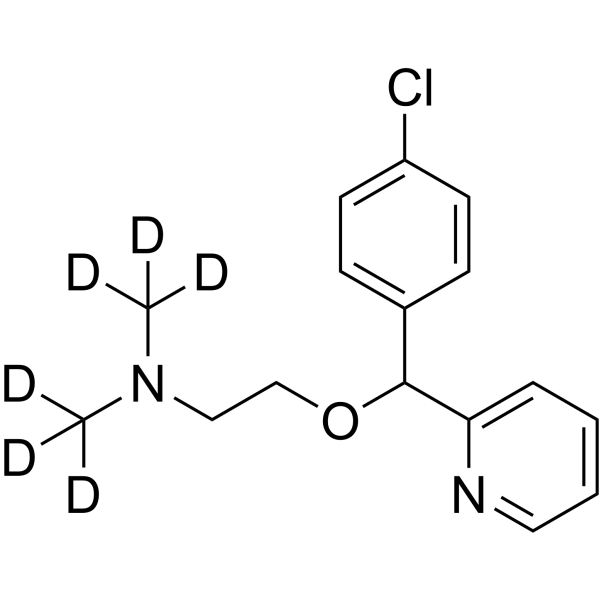
- HY-B1794R
-
|
|
Dopamine Receptor
Histamine Receptor
Bacterial
Amyloid-β
Reference Standards
|
Infection
Neurological Disease
|
|
Thiethylperazine (Standard) is the analytical standard of Thiethylperazine. This product is intended for research and analytical applications. Thiethylperazine, a phenothiazine derivate, is an orally active and potent dopamine D2-receptor and histamine H1-receptor antagonist. Thiethylperazine is also a selective ABCC1activator that reduces amyloid-β (Aβ) load in mice. Thiethylperazine has anti-emetic, antipsychotic and antimicrobial effects .
|
-

- HY-78924
-
-
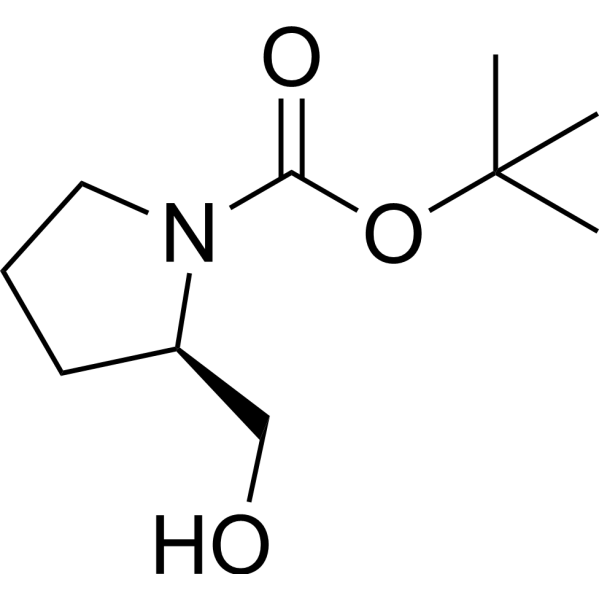
- HY-A0015
-
|
|
Histamine Receptor
|
Inflammation/Immunology
Endocrinology
|
|
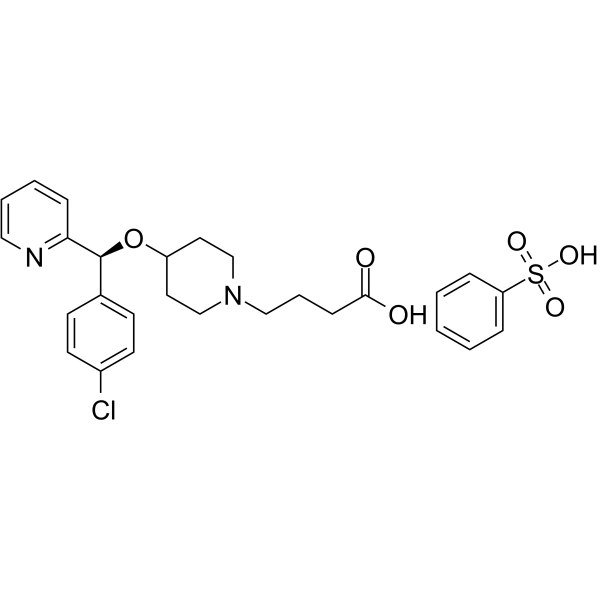
Bepotastine besilate is a selective and orally active second-generation histamine H1 receptor antagonist, can suppress the expression of nerve growth factor (NGF). Bepotastine besilate has the potential for allergic rhinitis, allergic conjunctivitis and urticaria/pruritus research .
|
-
- HY-B0674R
-
|
LAS-W 090 (Standard); RP64305 (Standard)
|
Reference Standards
Histamine Receptor
|
Inflammation/Immunology
Endocrinology
|
|
Ebastine (Standard) is the analytical standard of Ebastine. This product is intended for research and analytical applications. Ebastine (LAS-W 090) is an orally active, second-generation histamine H1 receptor antagonist. Ebastine can be used for the symptoms of allergic rhinitis and chronic idiopathic urticaria research .
|
-

- HY-12532S
-
-

- HY-10791
-
-
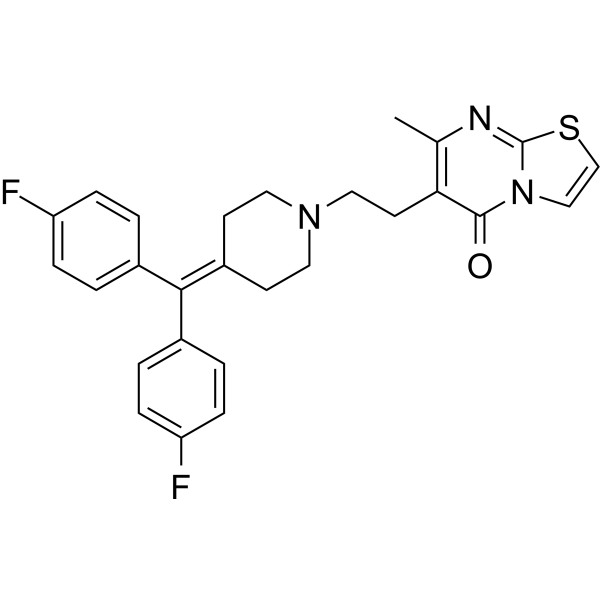
- HY-B0674S1
-
-
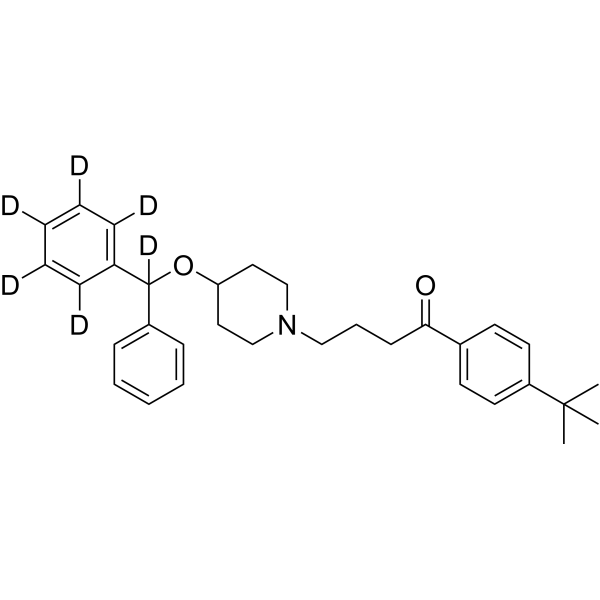
- HY-B0801S4
-
|
MDL-16455-d3-1; Terfenadine carboxylate-d3-1
|
Histamine Receptor
Isotope-Labeled Compounds
|
Inflammation/Immunology
|
|
Fexofenadine-d3-1 fumarate is deuterated labeled Fexofenadine (HY-B0801). Fexofenadine (MDL-16455) is an orally active and nonsedative H1 receptor antagonist. Fexofenadine can be used in allergic rhinitis and chronic idiopathic urticarial research .
|
-
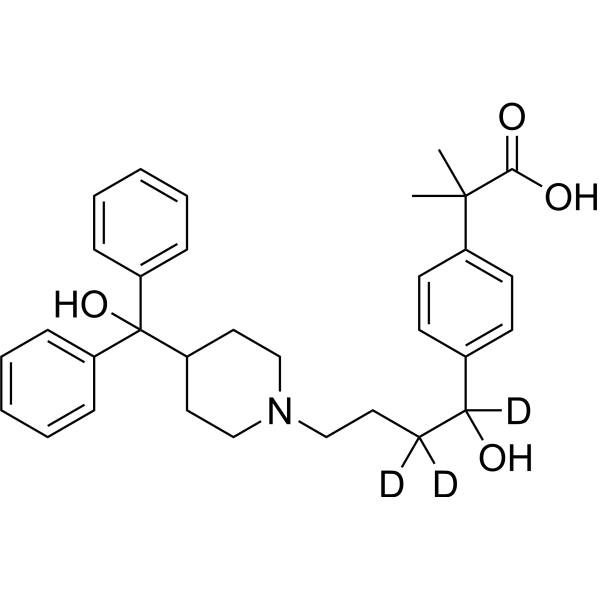
- HY-B1794S
-
-

- HY-B1589AR
-
|
|
Reference Standards
Histamine Receptor
Influenza Virus
|
Infection
Inflammation/Immunology
|
|
Carbinoxamine maleate salt (Standard) is the analytical standard of Carbinoxamine maleate salt (HY-B1589A). This product is intended for research and analytical applications. Carbinoxamine maleate salt is a blood-brain barrier-permeable histamine H1 receptor antagonist. Carbinoxamine maleate salt blocks the action of histamine on H1 receptors, reducing symptoms such as sneezing, rhinitis, rhinorrhea, erythema, pruritus and urticaria. Carbinoxamine maleate salt inhibits influenza virus entry into cells via endocytosis, targets the early stage of the viral life cycle, and simultaneously reduces viral replication levels in the lungs, alleviating pathological damage and inflammatory responses in lung tissues. Carbinoxamine maleate salt can be used in research on allergic rhinitis, influenza, etc.
|
-

- HY-123676
-
|
PNU-101387G mesylate; U-101387G mesylate
|
Dopamine Receptor
|
Neurological Disease
|
|
Sonepiprazole mesylate is a selective D4 dopamine antagonist with Kis of 3.6, 10.1, 5147, and 7430 nM for rD4-Dopamine, hD4.2-Dopamine, rD2-Dopamine, and Histamine-H1 receptors, respectively .
|
-

- HY-12394
-
|
Dosulepin; Dothep
|
Histamine Receptor
5-HT Receptor
|
Neurological Disease
|
|
Dothiepin (Dosulepin; Dothep) is an antidepressant agent with sedative/anxiolytic activity. Dothiepin is an inhibitor preferring of noradrenaline uptake than serotonin uptake. Dothiepin facilitates noradrenergic neurotransmission via inhibiting the neuronal uptake. Dothiepin is also an antagonist of histamine H1-receptor without cardiotoxicity. Dothiepin exhibits significant analgesic activity in psychogenic facial pain,idiopathic fibromyalgia syndrome or rheumatoid arthritis .
|
-
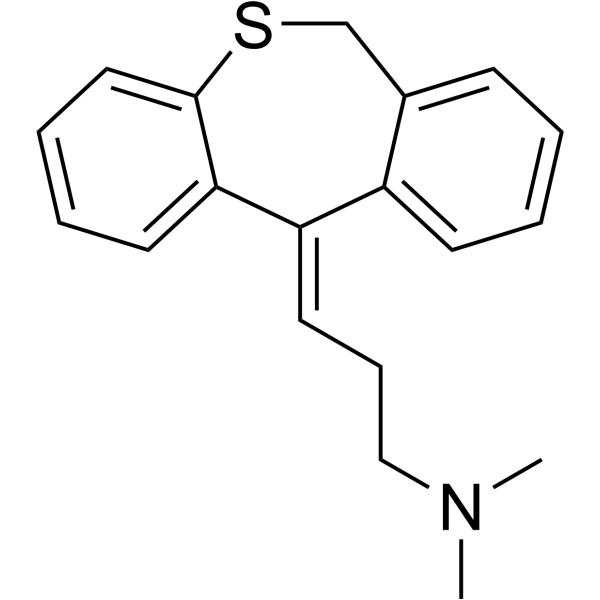
- HY-100661R
-
|
|
Reference Standards
Histamine Receptor
|
Inflammation/Immunology
Endocrinology
|
|
Cetirizine Impurity D (Standard) is the analytical standard of Cetirizine Impurity D. This product is intended for research and analytical applications. Cetirizine Impurity D is an impurity of Cetirizine. Cetirizine, a second-generation antihistamine, is a specific, orally active and long-acting histamine H1-receptor antagonist. Cetirizine marks antiallergic properties and inhibits eosinophil chemotaxis during the allergic response .
|
-

- HY-101232R
-
|
ICI 125211 (Standard)
|
Reference Standards
Histamine Receptor
|
Cardiovascular Disease
|
|
Tiotidine (Standard) is the analytical standard of Tiotidine. This product is intended for research and analytical applications. Tiotidine (ICI 125211) is a potent and selective antagonist of histamine H2-receptor (pA2=7.3-7.8 for guinea-pig right atrium). Tiotidine has low affinity for both the H1 and the H3 receptors .
|
-

- HY-B0725S
-
|
|
Histamine Receptor
Cytochrome P450
|
Neurological Disease
|
|
Doxepin-d3 (hydrochloride) is a deuterium labeled Doxepin Hydrochloride. Doxepin hydrochloride is an orally active tricyclic antidepressant. Doxepin hydrochloride is a potent and selective histamine receptor H1 antagonist. Doxepin hydrochloride is also a potent CYP450 inhibitor and significantly inhibits CYP450 2C19 and 1A2 .
|
-
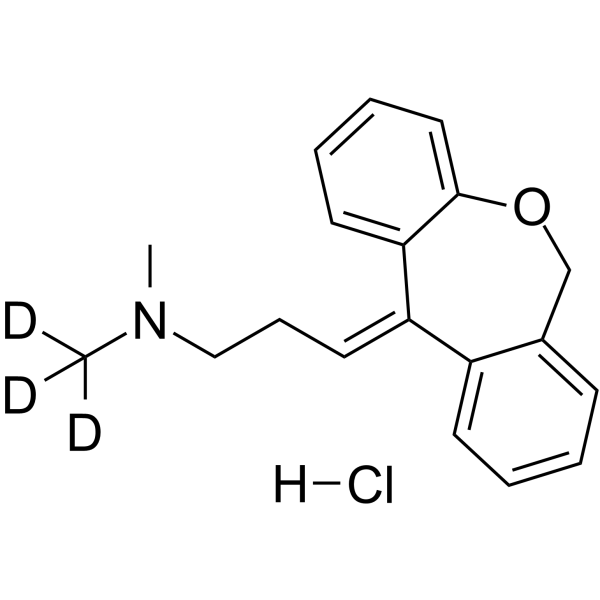
- HY-Z6838
-
|
|
Drug Intermediate
|
Inflammation/Immunology
|
|
1-[3-(4-tert-Butylbenzoyl)propyl]-4-hydroxypiperidine is an intermediate of Ebastine (HY-B0674). Ebastine is an orally active, second-generation histamine H1 receptor antagonist. Ebastine can be used for the symptoms of allergic rhinitis and chronic idiopathic urticaria research.
|
-
![1-[3-(4-tert-Butylbenzoyl)propyl]-4-hydroxypiperidine](//file.medchemexpress.com/product_pic/hy-z6838.gif)
- HY-136587
-
|
|
Histamine Receptor
mGluR
|
Inflammation/Immunology
|
|
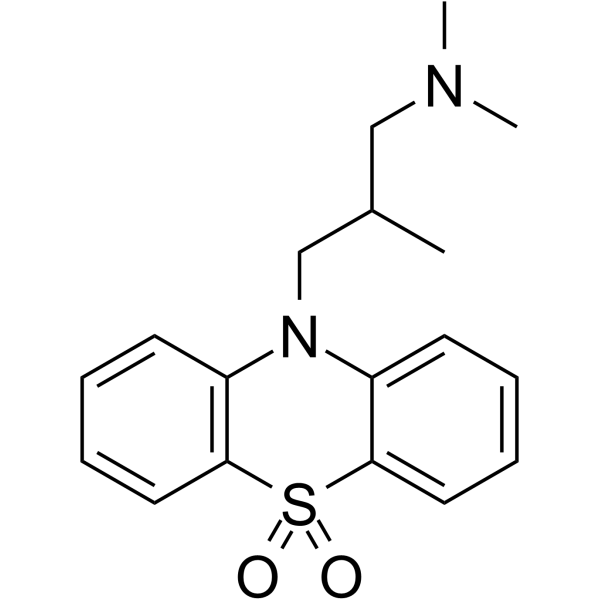
Oxomemazine is a phenothiazine-based histamine H1-receptor blocker. Oxomemazine is a selective antagonist for muscarinic M1 receptor, displays about 20-fold difference in the affinity for high (Ki = 84 nM, M1 receptor) and low (Ki = 1.65 μM, M2 receptor) affinity sites. Oxomemazine is an antihistamine and anticholinergic agent used for the study of cough treatment. Oxomemazine is protective against anaphylactic microshock in guinea pigs .
|
-
- HY-12752BS
-
|
Trimeprazine-d6 hydrochloride
|
Histamine Receptor
Isotope-Labeled Compounds
|
Neurological Disease
Inflammation/Immunology
Cancer
|
|
Alimemazine-d6 hydrochloride (Trimeprazine-d6 hydrochloride) is the deuterium labeled Alimemazine (HY-12752). Alimemazine is a phenothiazine derivative that is generally used as an antipruritic agent and also a hemagglutinin (HA)-receptor antagonist.Alimemazine (Trimeprazine) is also acts as a partial agonist against the histamine H1 receptor (H1R) and other GPCRs. Alimemazine displays antiserotonin, antispasmodic, and antiemetic properties .
|
-

- HY-12532R
-
|
R 43512 (Standard)
|
Reference Standards
Histamine Receptor
Potassium Channel
|
Inflammation/Immunology
Endocrinology
|
|
Astemizole (Standard) is the analytical standard of Astemizole. This product is intended for research and analytical applications. Astemizole (R 43512), a second-generation antihistamine agent to diminish allergic symptoms with a long duration of action, is a histamine H1-receptor antagonist, with an IC50 of 4 nM. Astemizole also shows potent hERG K + channel blocking activity with an IC50 of 0.9 nM. Astemizole has antipruritic effects .
|
-

- HY-121356S
-
|
|
Isotope-Labeled Compounds
Histamine Receptor
|
Endocrinology
Cancer
|
|
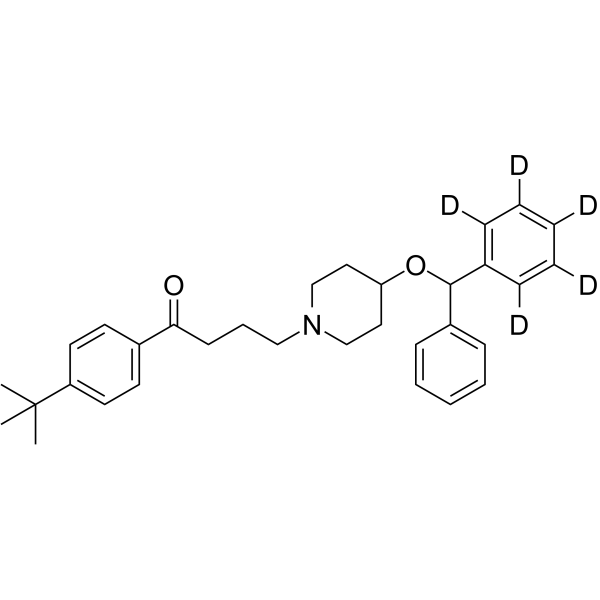
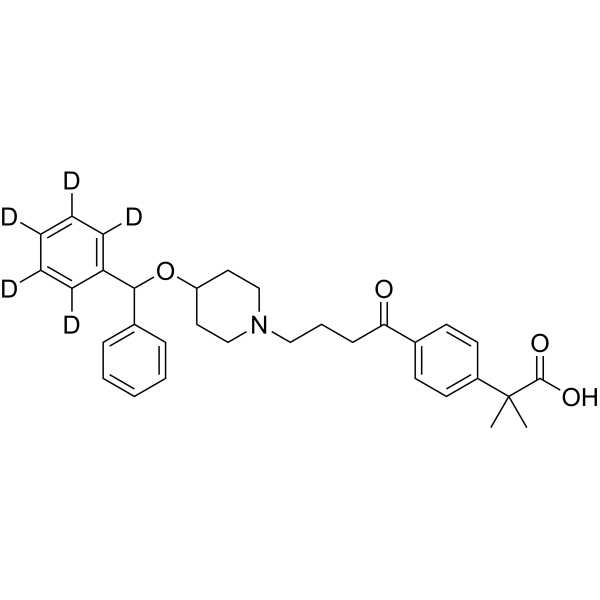
Carebastine-d5 is the deuterium labeled Carebastine. Carebastine is the active metabolite of Ebastine. Carebastine is a histamine H1 receptor antagonist. Carebastine inhibits VEGF-induced HUVEC and HPAEC proliferation, migration and angiogenesis in a dose-dependent manner . Carebastine suppresses the expression of macrophage migration inhibitory factor .
|
-
- HY-B1317R
-
|
Neohetramine (Standard)
|
Reference Standards
Histamine Receptor
|
Inflammation/Immunology
|
|
Thonzylamine (Standard) is the analytical standard of Thonzylamine. This product is intended for research and analytical applications. Thonzylamine is an orally active H1 histamine receptor antagonist, exhibits good antihistaminic and antianaphylactic properties. Thonzylamine can be used for the research of hypersensitivity diseases, nasal congestion, allergic conjunctivitis and other allergic diseases .
|
-

- HY-B1794AR
-
|
|
Dopamine Receptor
Histamine Receptor
Bacterial
Amyloid-β
Reference Standards
|
Infection
Neurological Disease
|
|
Thiethylperazine (dimaleate) (Standard) is the analytical standard of Thiethylperazine (dimaleate). This product is intended for research and analytical applications. Thiethylperazine dimaleate, a phenothiazine derivate, is an orally active and potent dopamine D2-receptor and histamine H1-receptor antagonist. Thiethylperazine dimaleate is also a selective ABCC1activator that reduces amyloid-β (Aβ) load in mice. Thiethylperazine dimaleate has anti-emetic, antipsychotic and antimicrobial effects .
|
-

- HY-124517
-
|
|
Histamine Receptor
Adrenergic Receptor
|
Neurological Disease
Inflammation/Immunology
|
|
Burimamide is a blocker of histamine H2-receptor. Burimamide inhibits gastric acid secretion evoked by Pentagastrin (HY-A0261) or Gastrin. Burimamide also has alpha-adrenoceptor blocking activity. Burimamide in combination with the H1-receptor antagonist Mepyramine (HY-B1281) shows anti-inflammatory activity in a rat paw edema model induced by Compound 48/80 (HY-115768) .
|
-

- HY-121356S1
-
|
|
Isotope-Labeled Compounds
Histamine Receptor
|
Endocrinology
Cancer
|
|
Carebastine-d5 Methyl Ester is the deuterium labeled Carebastine. Carebastine is the active metabolite of Ebastine. Carebastine is a histamine H1 receptor antagonist. Carebastine inhibits VEGF-induced HUVEC and HPAEC proliferation, migration and angiogenesis in a dose-dependent manner . Carebastine suppresses the expression of macrophage migration inhibitory factor .
|
-
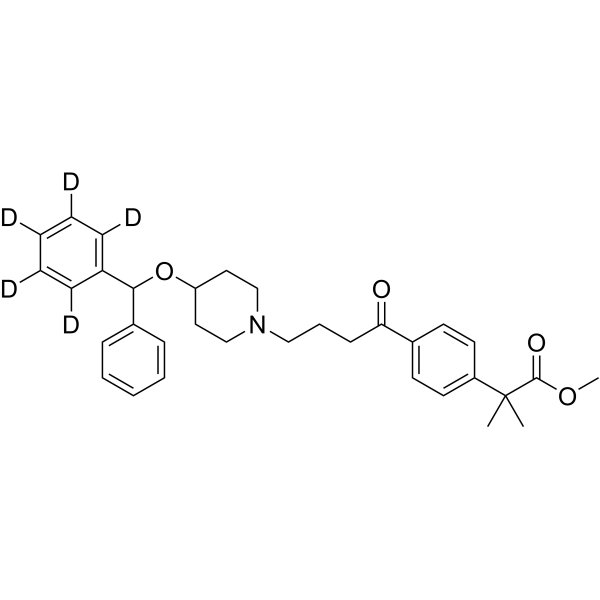
- HY-B0164
-
|
|
Histamine Receptor
|
Inflammation/Immunology
|
|
Mizolastine is an orally active, high affinity and specific peripheral histamine H1 receptor antagonist (second generation antihistamine). Mizolastine effectively inhibits mRNA expression of VEGF165, VEGF120, TNF-α and KC. Mizolastine can be used in studies of allergic rhinitis and chronic idiopathic urticarial .
|
-
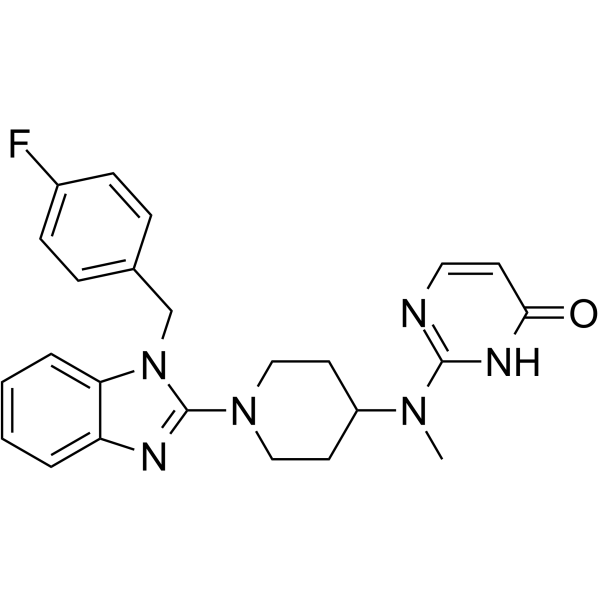
- HY-B0164A
-
|
|
Histamine Receptor
|
Inflammation/Immunology
|
|
Mizolastine dihydrochloride is an orally active, high affinity and specific peripheral histamine H1 receptor antagonist (second generation antihistamine). Mizolastine dihydrochloride effectively inhibits mRNA expression of VEGF165, VEGF120, TNF-α and KC. Mizolastine dihydrochloride can be used in studies of allergic rhinitis and chronic idiopathic urticarial .
|
-
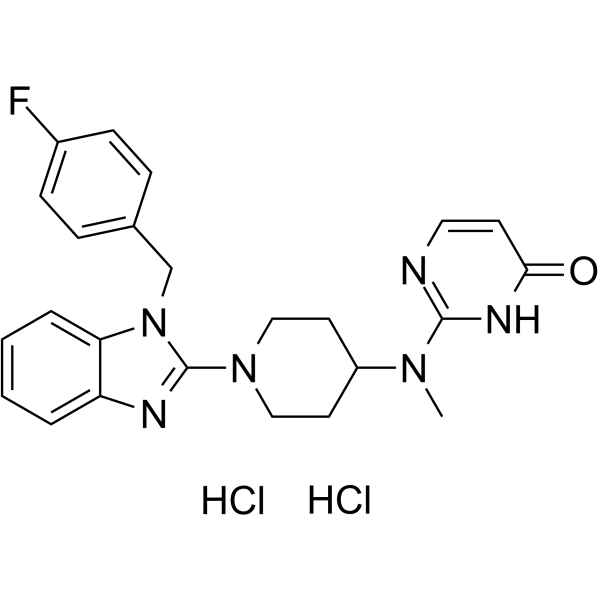
- HY-32329
-
|
Org-8282
|
5-HT Receptor
Adrenergic Receptor
|
Neurological Disease
|
|
Setiptiline (Org-8282) is a serotonin receptor antagonist. Setiptiline is a tetracyclic antidepressant (TeCA) which acts as a noradrenergic and specific serotonergic antidepressant (NaSSA). Setiptiline acts as a norepinephrine reuptake inhibitor, α2-adrenergic receptor antagonist, and serotonin receptor antagonist, likely at the 5-HT2A, 5-HT2C, and/or 5-HT3 subtypes, as well as an H1 receptor inverse agonist/antihistamine.
|
-
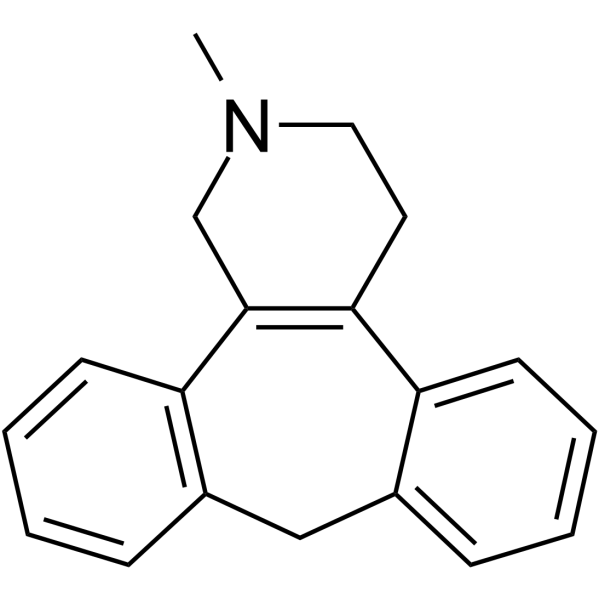
- HY-147336
-
|
|
Drug Metabolite
|
Infection
Cardiovascular Disease
Metabolic Disease
Inflammation/Immunology
|
|
Desmethylazelastine is a main active metabolite of Azelastine that is oxidatively metabolized by the cytochrome P450 enzyme system with a protein binding rate of 97% and an elimination half-life of 54 hours. Azelastine is an orally active, selective and high-affinity histamine H1-receptor antagonist. Azelastine can be used in studies of allergic rhinitis, asthma, diabetic hyperlipidemic and SARS-CoV-2 .
|
-
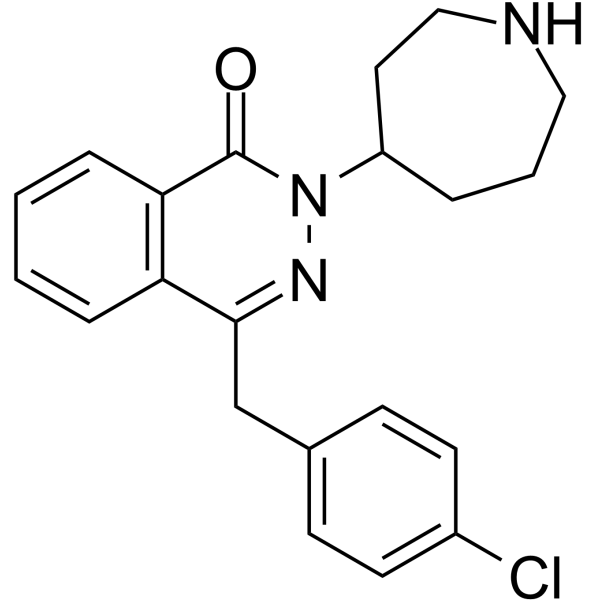
- HY-B0478AR
-
|
AF-1161 free base (Standard)
|
Reference Standards
5-HT Receptor
Histamine Receptor
Adrenergic Receptor
Serotonin Transporter
|
Neurological Disease
|
|
Trazodone (AF-1161 free base) (Standard) is the analytical standard of Trazodone. This product is intended for research and analytical applications. Trazodone is a triazolopyridine derivative that belongs to the class of serotonin receptor antagonists and reuptake inhibitors (SARIs). Trazodone has anti-depressant and anti-insomnious activity. Trazodone exerts antagonistic properties against a1- and a2-adrenergic receptors and histamine H1 receptors, with minimal anticholinergic effects .
|
-

- HY-B1067
-
|
Phenazoline hydrochloride
|
Histamine Receptor
HBV
|
Neurological Disease
Endocrinology
|
|
Antazoline hydrochloride is a histamine H1 receptor antagonist with anticholinergic and antiviral properties. Antazoline hydrochloride can prevent histamine from acting on target cells through a reversible competition effect on histamine receptor sites of these cells. Antazoline hydrochloride can exert an antiallegic effect and prevent the occurrence of physiological reactions from the effect of blocking as well as inhibiting H1 receptor. Antazoline hydrochloride can effectively reduce HBV DNA in the extracellular supernatant in a dose-dependent manner, with EC50 of 2.910 μmol/L in HepAD38 cells. Antazoline hydrochloride also has a significant inhibitory effect on HBV DNA in the extracellular supernatant of Huh7 cells (EC50 = 2.349 μmol/L). Antazoline hydrochloride has anti-arrhythmic effect in acute myocardial infarctions. Antazoline hydrochloride can be studied in research for cardiovascular diseases, and HBV .
|
-
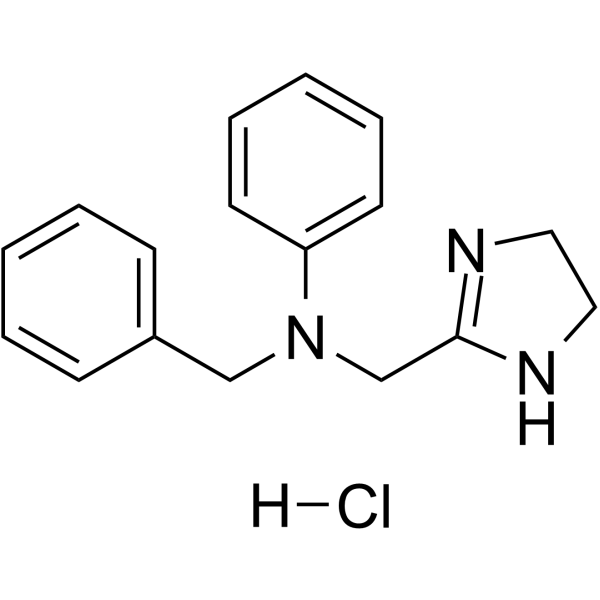
- HY-108411R
-
|
|
Reference Standards
Histamine Receptor
|
Inflammation/Immunology
|
|
Emedastine (Standard) is the analytical standard of Emedastine. This product is intended for research and analytical applications. Emedastine is an orally active, selective and high affinity histamine H1 receptor antagonist with a Ki value of 1.3 nM. Emedastine is a benzimidazole derivative with potent antiallergic properties and used for allergic rhinitis, allergic skin diseases and allergic conjunctivitis .
|
-

- HY-B1193
-
-
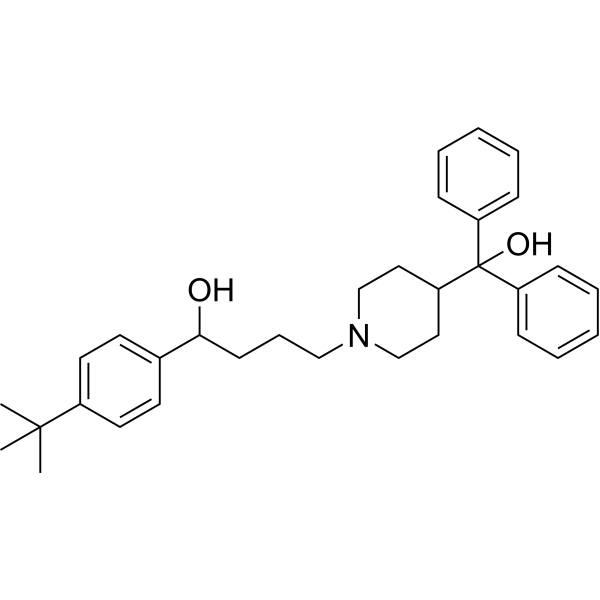
- HY-14328
-
|
PNU-101387G; U-101387G
|
Dopamine Receptor
|
Neurological Disease
|
|
Sonepiprazole (PNU-101387G) is a selective D4 dopamine antagonist with Kis of 3.6, 10.1, 5147, and 7430 nM for rD4-Dopamine, hD4.2-Dopamine, rD2-Dopamine, and Histamine-H1 receptors, respectively .
|
-
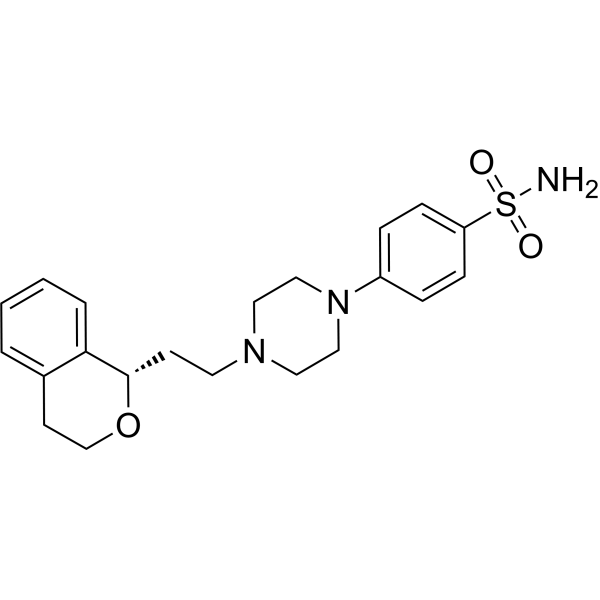
- HY-14328A
-
|
PNU-101387G hydrochloride; U-101387G hydrochloride
|
Dopamine Receptor
|
Neurological Disease
|
|
Sonepiprazole (PNU-101387G) hydrochloride is a selective D4 dopamine antagonist with Kis of 3.6, 10.1, 5147, and 7430 nM for rD4-Dopamine, hD4.2-Dopamine, rD2-Dopamine, and Histamine-H1 receptors, respectively .
|
-

- HY-A0027A
-
|
|
Histamine Receptor
Phosphodiesterase (PDE)
|
Inflammation/Immunology
|
|
Fenspiride, an orally active non-steroidal antiinflammatory agent, is an antagonist of H1-histamine receptor. Fenspiride inhibites phosphodiesterase 3 (PDE3), phosphodiesterase 4 (PDE4) and phosphodiesterase 5 (PDE5) activities with -log IC50 values of 3.44, 4.16 and approximately 3.8, respectively. Fenspiride can be used for the research of respiratory diseases .
|
-
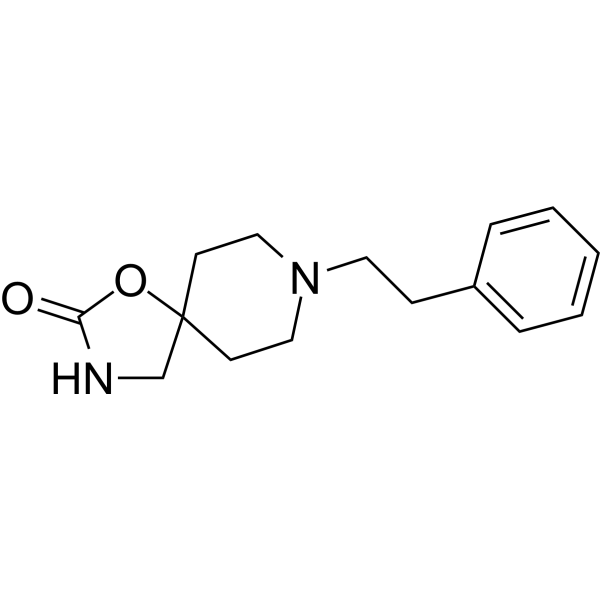
- HY-A0027
-
|
|
Histamine Receptor
Phosphodiesterase (PDE)
|
Inflammation/Immunology
Endocrinology
|
|
Fenspiride, an orally active non-steroidal antiinflammatory agent, is an antagonist of H1-histamine receptor. Fenspiride inhibites phosphodiesterase 3 (PDE3), phosphodiesterase 4 (PDE4) and phosphodiesterase 5 (PDE5) activities with -log IC50 values of 3.44, 4.16 and approximately 3.8, respectively. Fenspiride can be used for the research of respiratory diseases .
|
-
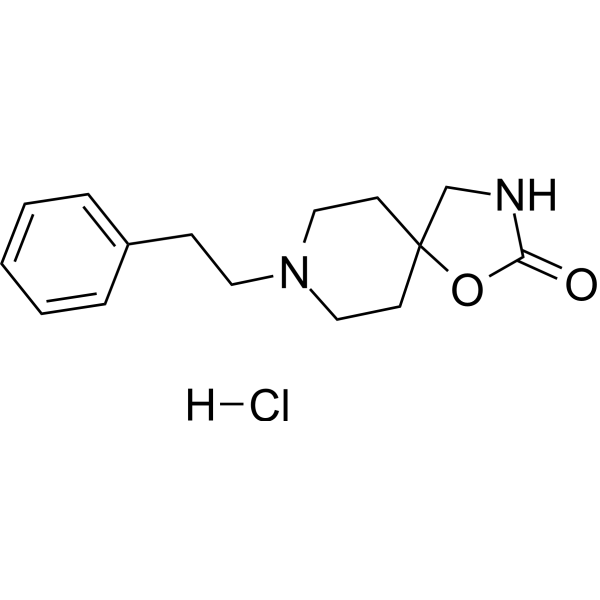
- HY-123205R
-
|
KW-4354 (Standard)
|
Reference Standards
Histamine Receptor
P2X Receptor
5-HT Receptor
Apoptosis
PERK
p38 MAPK
COX
|
Inflammation/Immunology
|
|
Oxatomide (Standard) (KW-4354 (Standard)) is the analytical standard of Oxatomide (HY-123205). This product is intended for research and analytical applications. Oxatomide (KW-4354) is an orally active dual antagonist of the H1-histamine receptor and the P2X7 receptor, as well as an inhibitor of serotonin. Oxatomide possesses antihistaminic, antiallergic and anti-inflammatory activities. Oxatomide can be used in the research of allergic diseases .
|
-

- HY-107495R
-
|
NSC19005 (Standard)
|
Reference Standards
Histamine Receptor
|
Inflammation/Immunology
|
|
Betahistine EP Impurity C (Standard) is the analytical standard of Betahistine EP Impurity C. This product is intended for research and analytical applications. Betahistine EP Impurity C (NSC19005) is an impurity of Betahistine . Betahistine is a potent, orally active and well-tolerated histamine H1 receptor agonist and H3 receptor antagonist used for the study of rheumatoid arthritis (RA) .
|
-

- HY-133727
-
|
|
Histamine Receptor
Potassium Channel
|
Cardiovascular Disease
Inflammation/Immunology
|
|
Terfenadine N-oxide, an N-oxide derivative of Terfenadine (HY-B1193), is a histamine H1 receptor antagonist (IC50 = 2.73 μM) and an hERG potassium channel inhibitor (IC50 = 0.698 μM). Terfenadine N-oxide is can be used for the research of histamine-related allergic diseases and hERG channel-associated arrhythmias .
|
-

- HY-B0971
-
|
Prophenpyridamine maleate; Tripoton maleate
|
Histamine Receptor
Apoptosis
|
Inflammation/Immunology
Endocrinology
|
|
Pheniramine (Prophenpyridamine; Tripoton) maleate is a first-generation histamine H1 receptor antagonist, acts on the central nervous system (CNS) with sedative and hypnotic effect. Pheniramine maleate displays antitumor effect and induces leukemia cells apoptosis. Pheniramine maleate is also a safe and effective local agent that can suppress or relieve pain, with antipruritic effects .
|
-
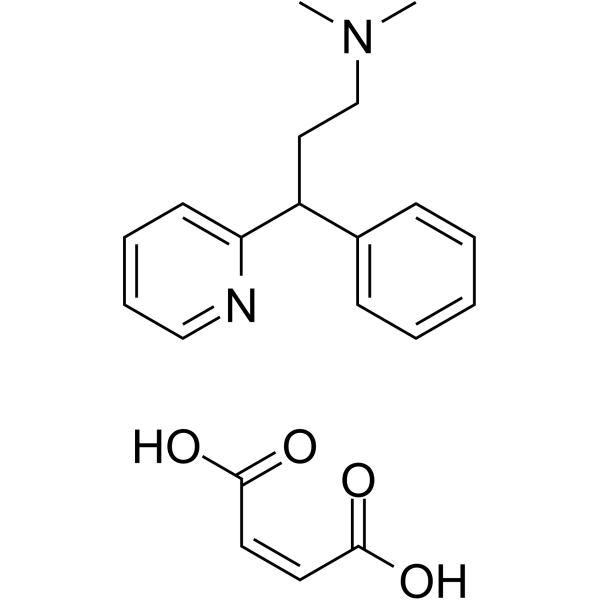
- HY-B0971A
-
|
Prophenpyridamine; Tripoton; Pheniramine solution
|
Histamine Receptor
Apoptosis
|
Inflammation/Immunology
Cancer
|
|
Pheniramine (Prophenpyridamine;Tripoton) is a first-generation histamine H1 receptor antagonist, acts on the central nervous system (CNS) with sedative and hypnotic effect. Pheniramine displays antitumor effect and induces leukemia cells apoptosis. Pheniramine is also a safe and effective local agent that can suppress or relieve pain, with antipruritic effects .
|
-

- HY-108411S
-
|
|
Isotope-Labeled Compounds
Histamine Receptor
|
Inflammation/Immunology
|
|
Emedastine- 13C,d3 fumarate is the 13C- and deuterium labeled Emedastine. Emedastine is an orally active, selective and high affinity histamine H1 receptor antagonist with a Ki value of 1.3 nM. Emedastine is a benzimidazole derivative with potent antiallergic properties and used for allergic rhinitis, allergic skin diseases and allergic conjunctivitis .
|
-
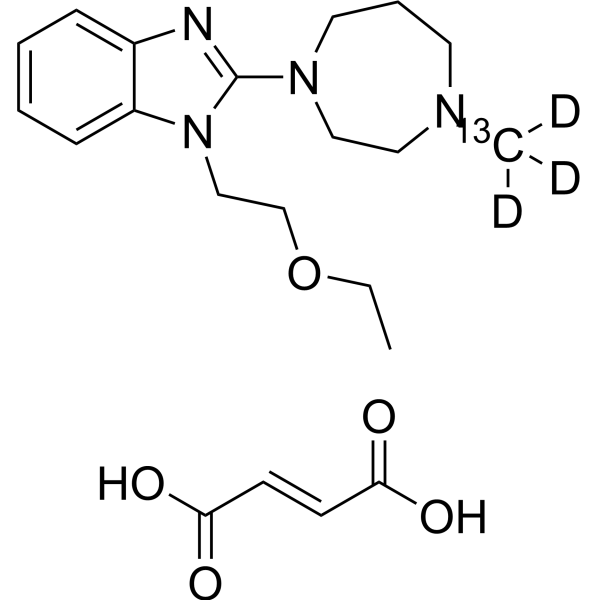
- HY-I0021R
-
|
|
Histamine Receptor
Reference Standards
|
Inflammation/Immunology
Endocrinology
|
|
Bepotastine (Standard) is the analytical standard of Bepotastine. This product is intended for research and analytical applications. Bepotastine is a selective and orally active second-generation histamine H1 receptor antagonist, can suppress the expression of nerve growth factor (NGF). Bepotastine has the potential for allergic rhinitis, allergic conjunctivitis and urticaria/pruritus research .
|
-

- HY-32329A
-
|
MO-8282
|
5-HT Receptor
|
Neurological Disease
|
|
Setiptiline maleate (MO-8282 maleate) is a serotonin receptor antagonist. Setiptiline maleate is a tetracyclic antidepressant (TeCA) which acts as a noradrenergic and specific serotonergic antidepressant (NaSSA). Setiptiline maleate acts as a norepinephrine reuptake inhibitor, α2-adrenergic receptor antagonist, and serotonin receptor antagonist, likely at the 5-HT2A, 5-HT2C, and/or 5-HT3 subtypes, as well as an H1 receptor inverse agonist/antihistamine .
|
-
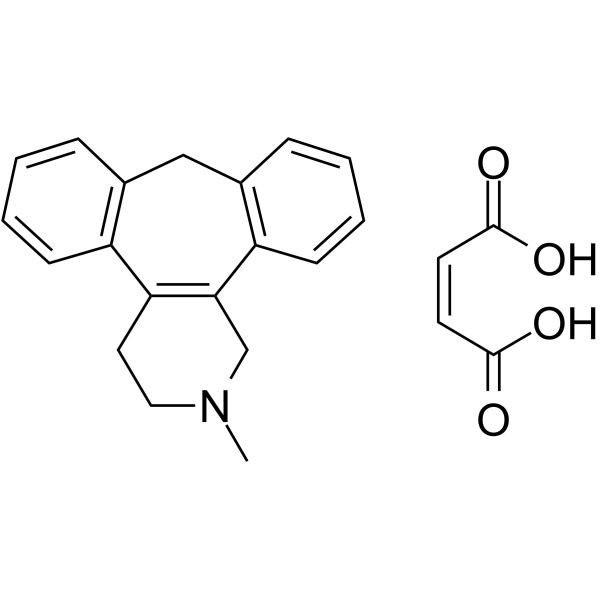
- HY-165378
-
|
(E)-Dosulepin hydrochloride; (E)-Dothep hydrochloride
|
Histamine Receptor
|
Neurological Disease
|
|
(E)-Dothiepin ((E)-Dosulepin;(E)-Dothep) hydrochloride is an antidepressant agent with sedative/anxiolytic activity. (E)-Dothiepin hydrochloride is an inhibitor preferring of noradrenaline uptake than serotonin uptake. (E)-Dothiepin hydrochloride facilitates noradrenergic neurotransmission via inhibiting the neuronal uptake. (E)-Dothiepin hydrochloride is also an antagonist of histamine H1-receptor without cardiotoxicity. (E)-Dothiepin hydrochloride exhibits significant analgesic activity in psychogenic facial pain,idiopathic fibromyalgia syndrome or rheumatoid arthritis .
|
-

- HY-17428
-
|
|
Histamine Receptor
|
Neurological Disease
Inflammation/Immunology
|
|
Tripelennamine hydrochloride is a histamine H1-receptor antagonist. Tripelennamine hydrochloride effectively reverses histamine-induced bronchoconstriction, increased transpulmonary pressure, elevated pulmonary vascular resistance and reduced dynamic compliance. Tripelennamine hydrochloride does not significantly affect arterial hypoxemia, hemoglobin desaturation and hypercapnia in horses undergoing short-term high-intensity exercise. Tripelennamine hydrochloride exhibits local and central analgesic activity. Tripelennamine hydrochloride can be used in studies related to emphysema, urticaria and acute laminitis .
|
-
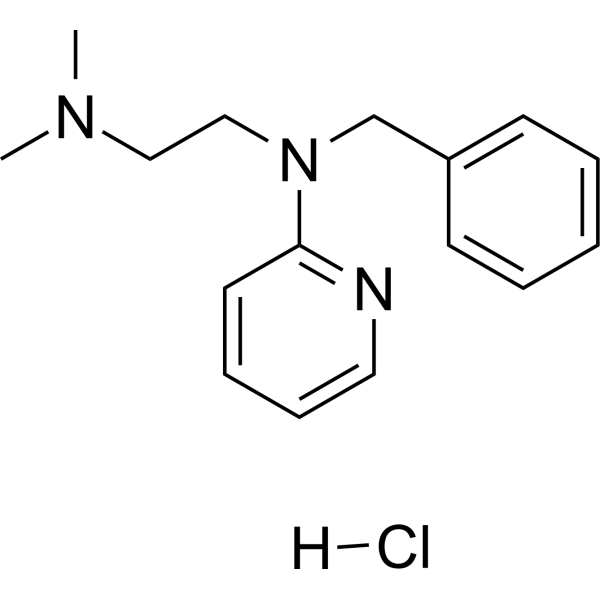
- HY-17428A
-
|
|
Histamine Receptor
|
Neurological Disease
Inflammation/Immunology
|
|
Tripelennamine is a histamine H1-receptor antagonist. Tripelennamine effectively reverses histamine-induced bronchoconstriction, increased transpulmonary pressure, elevated pulmonary vascular resistance and reduced dynamic compliance. Tripelennamine does not significantly affect arterial hypoxemia, hemoglobin desaturation and hypercapnia in horses undergoing short-term high-intensity exercise. Tripelennamine exhibits local and central analgesic activity. Tripelennamine can be used in studies related to emphysema, urticaria and acute laminitis .
|
-
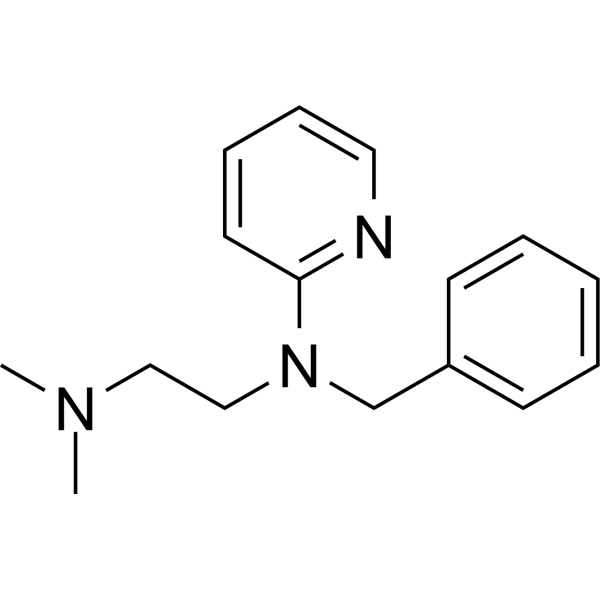
- HY-10791R
-
-

- HY-A0015S
-
|
|
Isotope-Labeled Compounds
Histamine Receptor
|
Inflammation/Immunology
Endocrinology
|
|
Bepotastine-d6(besylate) is deuterium labeled Bepotastine (besilate). Bepotastine besilate is a selective and orally active second-generation histamine H1 receptor antagonist, can suppress the expression of nerve growth factor (NGF). Bepotastine besilate has the potential for allergic rhinitis, allergic conjunctivitis and urticaria/pruritus research .
|
-

- HY-B2178R
-
|
|
Reference Standards
Histamine Receptor
|
Inflammation/Immunology
|
|
Emedastine (difumarate) (Standard) is the analytical standard of Emedastine (difumarate). This product is intended for research and analytical applications. Emedastine difumarate is an orally active, selective and high affinity histamine H1 receptor antagonist with a Ki value of 1.3 nM. Emedastine difumarate is a benzimidazole derivative with potent antiallergic properties and used for allergic rhinitis, allergic skin diseases and allergic conjunctivitis .
|
-

- HY-B0640S
-
-
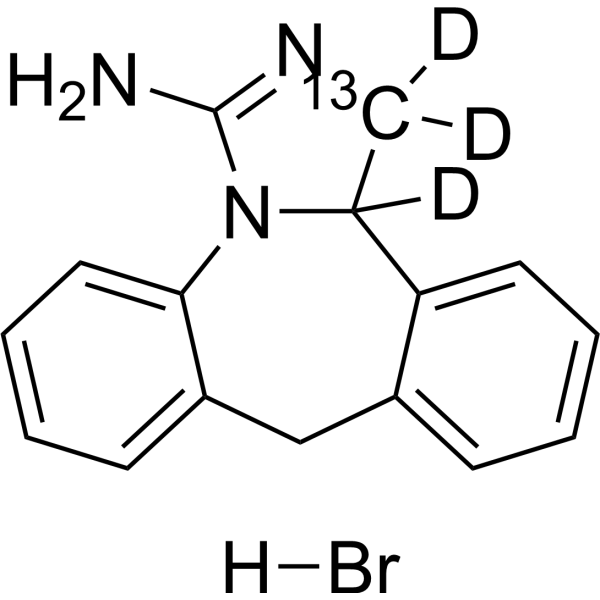
- HY-A0015R
-
|
|
Reference Standards
Histamine Receptor
|
Inflammation/Immunology
Endocrinology
|
|
Bepotastine (besilate) (Standard) is the analytical standard of Bepotastine (besilate). This product is intended for research and analytical applications. Bepotastine besilate is a selective and orally active second-generation histamine H1 receptor antagonist, can suppress the expression of nerve growth factor (NGF). Bepotastine besilate has the potential for allergic rhinitis, allergic conjunctivitis and urticaria/pruritus research .
|
-

- HY-17428B
-
|
|
Histamine Receptor
|
Neurological Disease
Inflammation/Immunology
|
|
Tripelennamine citrate is a histamine H1-receptor antagonist. Tripelennamine citrate effectively reverses histamine-induced bronchoconstriction, increased transpulmonary pressure, elevated pulmonary vascular resistance and reduced dynamic compliance. Tripelennamine citrate does not significantly affect arterial hypoxemia, hemoglobin desaturation and hypercapnia in horses undergoing short-term high-intensity exercise. Tripelennamine citrate exhibits local and central analgesic activity. Tripelennamine citrate can be used in studies related to emphysema, urticaria and acute laminitis .
|
-
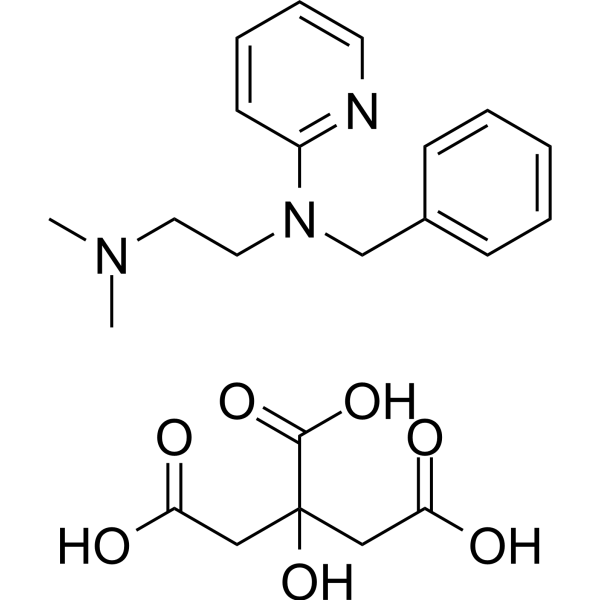
- HY-136587R
-
|
|
Reference Standards
Histamine Receptor
mGluR
|
Inflammation/Immunology
|
|
Oxomemazine (Standard) is the analytical standard of Oxomemazine (HY-136587). This product is intended for research and analytical applications. Oxomemazine is a phenothiazine-based histamine H1-receptor blocker. Oxomemazine is a selective antagonist for muscarinic M1 receptor, displays about 20-fold difference in the affinity for high (Ki = 84 nM, M1 receptor) and low (Ki = 1.65 μM, M2 receptor) affinity sites. Oxomemazine is an antihistamine and anticholinergic agent used for the study of cough treatment. Oxomemazine is protective against anaphylactic microshock in guinea pigs .
|
-

- HY-107647
-
|
|
mAChR
Histamine Receptor
|
Inflammation/Immunology
|
|
(S)-(+)-Dimethindene maleate, an enantiomer, is a potent M2-selective muscarinic receptor antagonist (pA2 = 7.86/7.74; pKi = 7.78). (S)-(+)-Dimethindene maleate shows lower affinities for the muscarinic M1 (pA2 = 6.83/6.36; pKi = 7.08), the M3 (pA2 = 6.92/6.96; pKi = 6.70) and the M4 receptors (pKi = 7.00), respectively. (S)-(+)-Dimethindene maleate also is a histamine H1 receptor antagonist (pA2 = 7.48) .
|
-
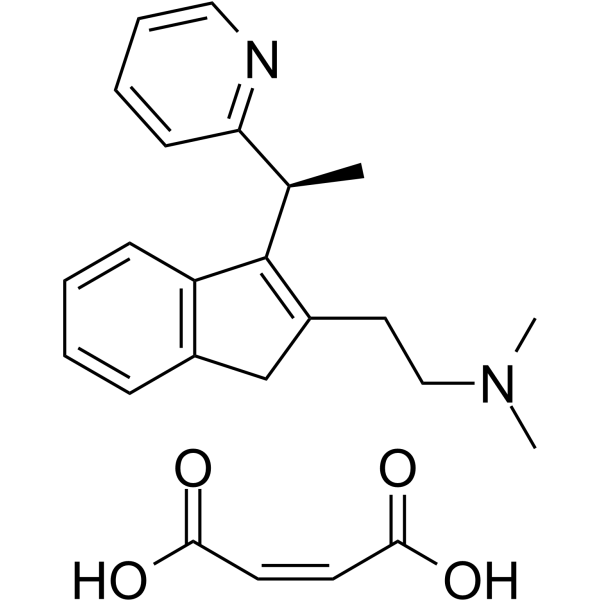
- HY-32329S
-
|
|
Isotope-Labeled Compounds
5-HT Receptor
Adrenergic Receptor
|
Neurological Disease
|
|
Setiptiline-d3 is the deuterium labeled Setiptiline. Setiptiline (Org-8282) is a serotonin receptor antagonist. Setiptiline is a tetracyclic antidepressant (TeCA) which acts as a noradrenergic and specific serotonergic antidepressant (NaSSA). Setiptiline acts as a norepinephrine reuptake inhibitor, α2-adrenergic receptor antagonist, and serotonin receptor antagonist, likely at the 5-HT2A, 5-HT2C, and/or 5-HT3 subtypes, as well as an H1 receptor inverse agonist/antihistamine .
|
-
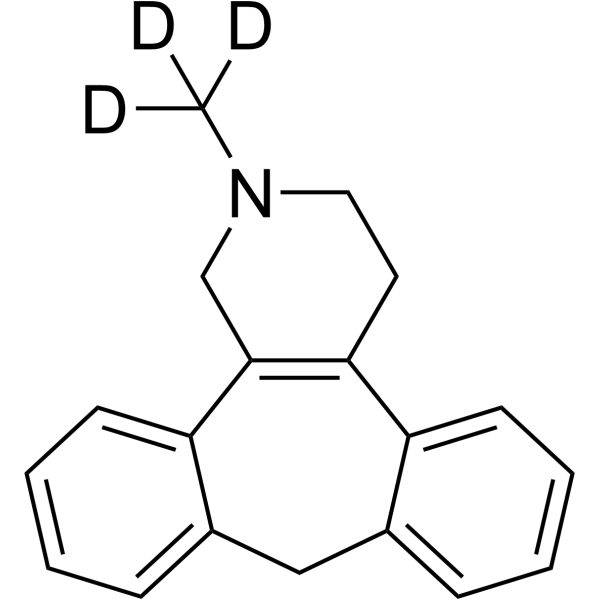
- HY-32329R
-
|
Org-8282 (Standard)
|
5-HT Receptor
Adrenergic Receptor
Reference Standards
|
Neurological Disease
|
|
Setiptiline (Standard) is the analytical standard of Setiptiline. This product is intended for research and analytical applications. Setiptiline (Org-8282) is a serotonin receptor antagonist. Setiptiline is a tetracyclic antidepressant (TeCA) which acts as a noradrenergic and specific serotonergic antidepressant (NaSSA). Setiptiline acts as a norepinephrine reuptake inhibitor, α2-adrenergic receptor antagonist, and serotonin receptor antagonist, likely at the 5-HT2A, 5-HT2C, and/or 5-HT3 subtypes, as well as an H1 receptor inverse agonist/antihistamine.
|
-

- HY-A0027AS
-
|
|
Isotope-Labeled Compounds
Histamine Receptor
Phosphodiesterase (PDE)
|
Inflammation/Immunology
|
|
Fenspiride-d5 is the deuterium labeled Fenspiride. Fenspiride, an orally active non-steroidal antiinflammatory agent, is an antagonist of H1-histamine receptor. Fenspiride inhibites phosphodiesterase 3 (PDE3), phosphodiesterase 4 (PDE4) and phosphodiesterase 5 (PDE5) activities with -log IC50 values of 3.44, 4.16 and approximately 3.8, respectively. Fenspiride can be used for the research of respiratory diseases .
|
-
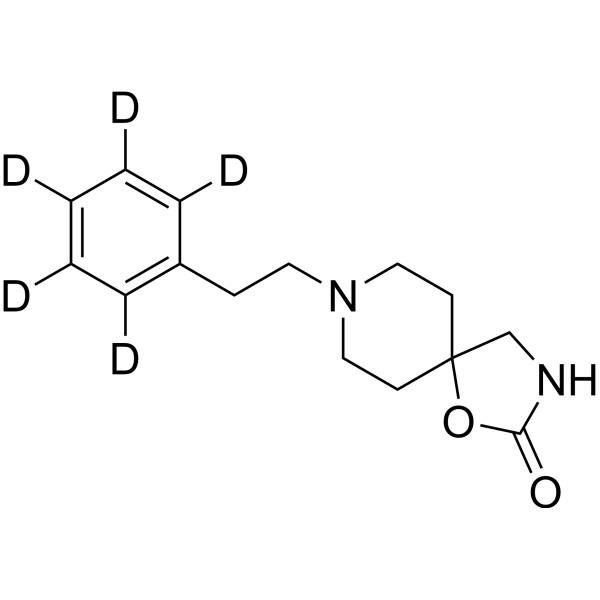
- HY-A0027R
-
|
|
Histamine Receptor
Phosphodiesterase (PDE)
Reference Standards
|
Inflammation/Immunology
Endocrinology
|
|
Fenspiride (hydrochloride) (Standard) is the analytical standard of Fenspiride (hydrochloride). This product is intended for research and analytical applications. Fenspiride, an orally active non-steroidal antiinflammatory agent, is an antagonist of H1-histamine receptor. Fenspiride inhibites phosphodiesterase 3 (PDE3), phosphodiesterase 4 (PDE4) and phosphodiesterase 5 (PDE5) activities with -log IC50 values of 3.44, 4.16 and approximately 3.8, respectively. Fenspiride can be used for the research of respiratory diseases .
|
-

- HY-B1067R
-
|
Phenazoline hydrochloride (Standard)
|
Reference Standards
Histamine Receptor
HBV
|
Neurological Disease
Endocrinology
|
|
Antazoline (hydrochloride) (Standard) is the analytical standard of Antazoline (hydrochloride). This product is intended for research and analytical applications. Antazoline hydrochloride is a histamine H1 receptor antagonist with anticholinergic and antiviral properties. Antazoline hydrochloride can prevent histamine from acting on target cells through a reversible competition effect on histamine receptor sites of these cells. Antazoline hydrochloride can exert an antiallegic effect and prevent the occurrence of physiological reactions from the effect of blocking as well as inhibiting H1 receptor. Antazoline hydrochloride can effectively reduce HBV DNA in the extracellular supernatant in a dose-dependent manner, with EC50 of 2.910 μmol/L in HepAD38 cells. Antazoline hydrochloride also has a significant inhibitory effect on HBV DNA in the extracellular supernatant of Huh7 cells (EC50 = 2.349 μmol/L). Antazoline hydrochloride has anti-arrhythmic effect in acute myocardial infarctions. Antazoline hydrochloride can be studied in research for cardiovascular diseases, and HBV .
|
-

- HY-A0015A
-
|
|
Histamine Receptor
|
Inflammation/Immunology
Endocrinology
|
|
(Rac)-Bepotastine (besilate) is the isomer of Bepotastine (besilate) (HY-A0015), and can be used as an experimental control. Bepotastine besilate is a selective and orally active second-generation histamine H1 receptor antagonist, can suppress the expression of nerve growth factor (NGF). Bepotastine besilate has the potential for allergic rhinitis, allergic conjunctivitis and urticaria/pruritus research .
|
-
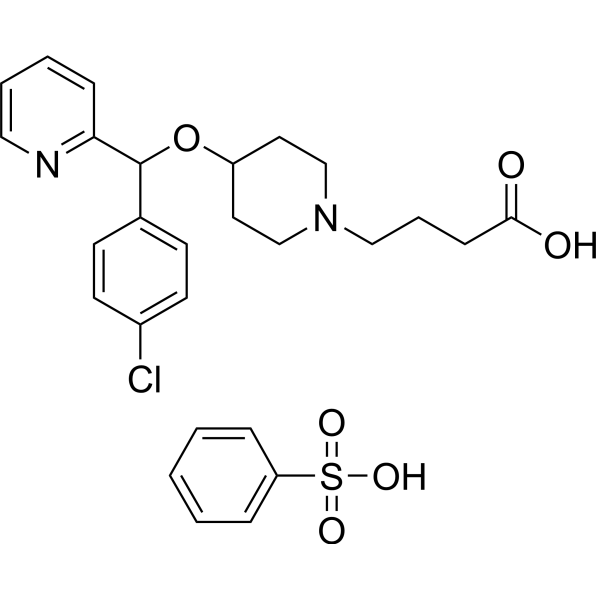
- HY-B0164R
-
|
|
Reference Standards
Histamine Receptor
|
Inflammation/Immunology
|
|
Mizolastine (Standard) is the analytical standard of Mizolastine. This product is intended for research and analytical applications. Mizolastine is an orally active, high affinity and specific peripheral histamine H1 receptor antagonist (second generation antihistamine). Mizolastine effectively inhibits mRNA expression of VEGF165, VEGF120, TNF-α and KC. Mizolastine can be used in studies of allergic rhinitis and chronic idiopathic urticarial .
|
-

- HY-B0352
-
-
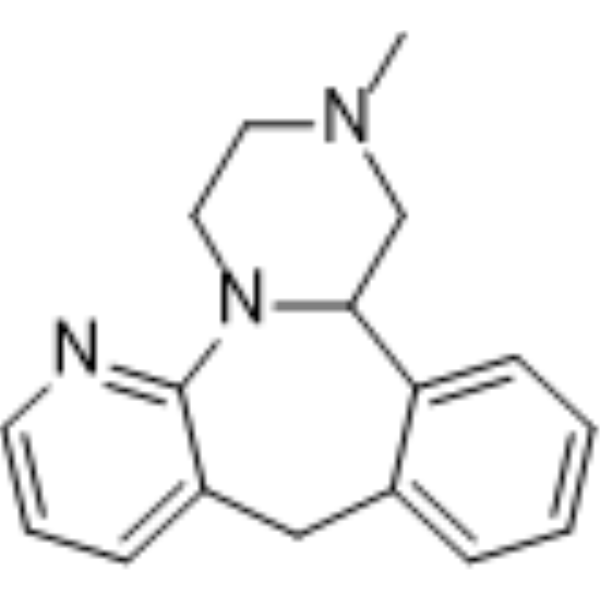
- HY-B1193S
-
-

- HY-B1193R
-
-

- HY-103093
-
|
|
5-HT Receptor
Histamine Receptor
Adrenergic Receptor
Dopamine Receptor
|
Neurological Disease
|
|
Zotepine, an antipsychotic agent, is a potent antagonist of 5-HT2A, 5-HT2C, Histamine H1, α1-adrenergic and Dopamine D2 receptors, with Kds of 2.6 nM, 3.2 nM, 3.3 nM, 7.3 nM and 8 nM, respectively. Zotepine exhibits antidepressive and anxiolytic effects in vivo .
|
-
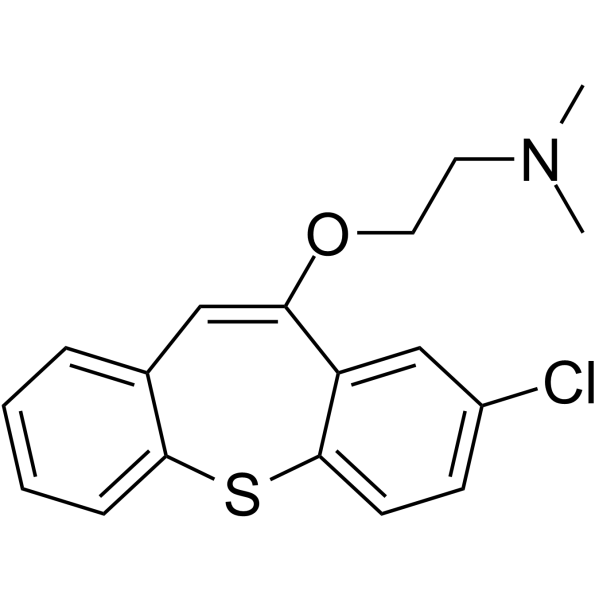
- HY-32329AR
-
|
MO-8282 (Standard)
|
5-HT Receptor
Reference Standards
|
Neurological Disease
|
|
Setiptiline (maleate) (Standard) is the analytical standard of Setiptiline (maleate). This product is intended for research and analytical applications. Setiptiline maleate (MO-8282 maleate) is a serotonin receptor antagonist. Setiptiline maleate is a tetracyclic antidepressant (TeCA) which acts as a noradrenergic and specific serotonergic antidepressant (NaSSA). Setiptiline maleate acts as a norepinephrine reuptake inhibitor, α2-adrenergic receptor antagonist, and serotonin receptor antagonist, likely at the 5-HT2A, 5-HT2C, and/or 5-HT3 subtypes, as well as an H1 receptor inverse agonist/antihistamine .
|
-

- HY-B0188A
-
|
Org GB 94
|
Histamine Receptor
Opioid Receptor
ERK
p38 MAPK
|
Neurological Disease
Metabolic Disease
|
|
Mianserin hydrochloride (Org GB 94) is an orally active H1 receptor antagonist. Mianserin hydrochloride can activate κ-opioid receptor and octopamine receptor. Mianserin hydrochloride increases ERK1/2 and CREB phosphorylation, and antagonizes full κ-opioid agonist and Dynorphin A (HY-P1333)-induced MAPK phosphorylation. Mianserin hydrochloride modulates social and exploratory behaviour, raises electroconvulsive thresholds. Mianserin hydrochloride can be used for the research of neurological disease, such as depression and epilepsy .
|
-
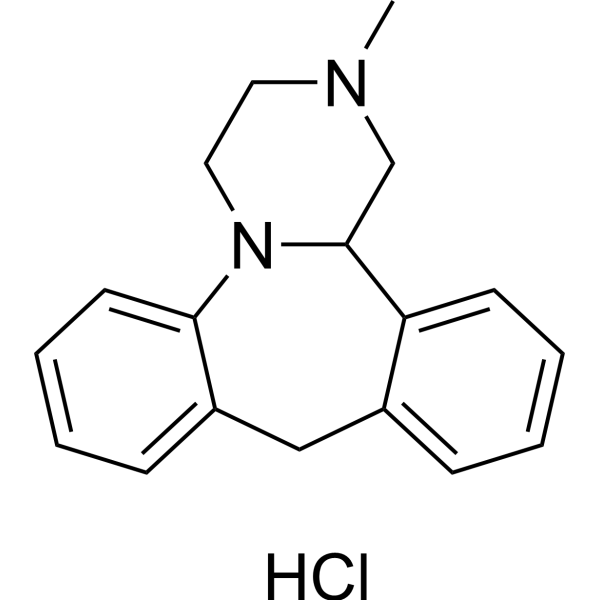
- HY-B0188
-
|
Mianserine
|
Histamine Receptor
Opioid Receptor
ERK
p38 MAPK
|
Neurological Disease
|
|
Mianserin (Mianserine) is an orally active H1 receptor antagonist. Mianserin can activate κ-opioid receptor and octopamine receptor. Mianserin increases ERK1/2 and CREB phosphorylation, and antagonizes full κ-opioid agonist and Dynorphin A (HY-P1333)-induced MAPK phosphorylation. Mianserin modulates social and exploratory behaviour, raises electroconvulsive thresholds. Mianserin can be used for the research of neurological disease, such as depression and epilepsy .
|
-
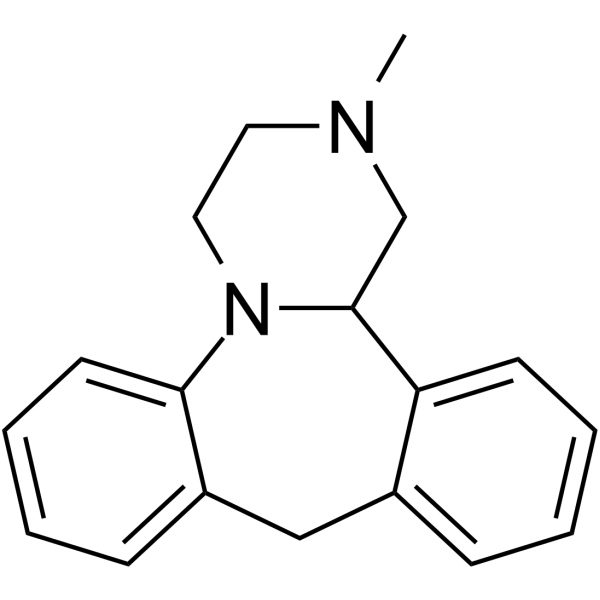
- HY-W062109
-
|
|
Histamine Receptor
CXCR
|
Inflammation/Immunology
|
|
Olopatadine (ALO4943A; KW4679) is an orally active histamine H1 receptor antagonist and mast cell stabilizer. Olopatadine exerts antiallergic effects by blocking histamine H1 receptor-mediated activities. Olopatadine inhibits exocytosis, chemokine release, F-actin polymerization, CXCL10-induced calcium influx, and T cell chemotactic activity. Olopatadine also reduces the expression levels of CXCR3 on the surface of CD4 + and CD8 + T cells. Olopatadine inhibits scratching behavior, improves dermatitis scores, and suppresses intraepidermal neurite outgrowth. Olopatadine simultaneously decreases the levels of inflammatory markers, growth factors, histamine, and specific IgE, while increasing the expression of ErbB3A/HER3A. Olopatadine can be used in research related to seasonal pollinosis, chronic rhinitis, urticaria, allergic conjunctivitis, alopecia areata, and atopic dermatitis .
|
-
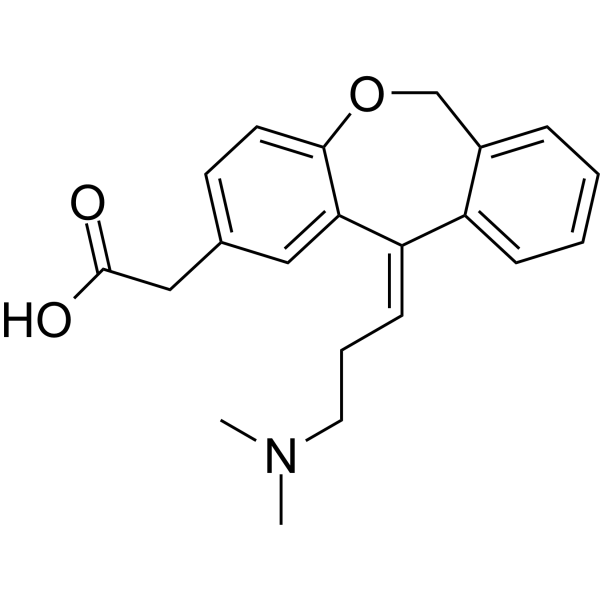
- HY-B0426A
-
|
ALO4943A; KW4679
|
Histamine Receptor
CXCR
|
Infection
Neurological Disease
Metabolic Disease
Inflammation/Immunology
|
|
Olopatadine hydrochloride (ALO4943A; KW4679) is an orally active histamine H1 receptor antagonist and mast cell stabilizer. Olopatadine hydrochloride exerts antiallergic effects by blocking histamine H1 receptor-mediated activities. Olopatadine hydrochloride inhibits exocytosis, chemokine release, F-actin polymerization, CXCL10-induced calcium influx, and T cell chemotactic activity. Olopatadine hydrochloride also reduces the expression levels of CXCR3 on the surface of CD4 + and CD8 + T cells. Olopatadine hydrochloride inhibits scratching behavior, improves dermatitis scores, and suppresses intraepidermal neurite outgrowth. Olopatadine hydrochloride simultaneously decreases the levels of inflammatory markers, growth factors, histamine, and specific IgE, while increasing the expression of ErbB3A/HER3A. Olopatadine hydrochloride can be used in research related to seasonal pollinosis, chronic rhinitis, urticaria, allergic conjunctivitis, alopecia areata, and atopic dermatitis .
|
-
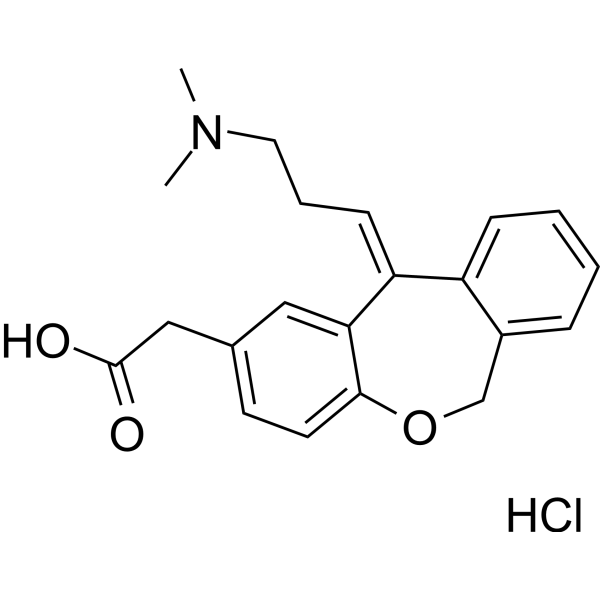
- HY-B0480A
-
-
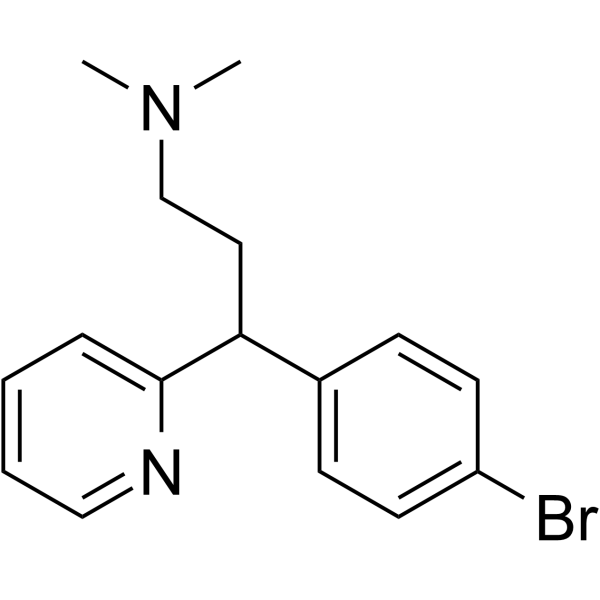
- HY-N7814R
-
|
|
Reference Standards
Endogenous Metabolite
|
Others
|
|
Pheniramine (maleate) (Standard) is the analytical standard of Pheniramine (maleate). This product is intended for research and analytical applications. Pheniramine (Prophenpyridamine; Tripoton) maleate is a first-generation histamine H1 receptor antagonist, acts on the central nervous system (CNS) with sedative and hypnotic effect. Pheniramine maleate displays antitumor effect and induces leukemia cells apoptosis. Pheniramine maleate is also a safe and effective local agent that can suppress or relieve pain, with antipruritic effects .
|
-

- HY-B0971AR
-
|
Prophenpyridamine (Standard); Tripoton (Standard); Pheniramine solution (Standard)
|
Reference Standards
Histamine Receptor
Apoptosis
|
Inflammation/Immunology
Cancer
|
|
Pheniramine (Standard) is the analytical standard of Pheniramine. This product is intended for research and analytical applications. Pheniramine (Prophenpyridamine;Tripoton) is a first-generation histamine H1 receptor antagonist, acts on the central nervous system (CNS) with sedative and hypnotic effect. Pheniramine displays antitumor effect and induces leukemia cells apoptosis. Pheniramine is also a safe and effective local agent that can suppress or relieve pain, with antipruritic effects .
|
-

- HY-B0971R
-
|
Prophenpyridamine maleate (Standard); Tripoton maleate (Standard); Pheniramine maleate (Standard)
|
Reference Standards
Histamine Receptor
Apoptosis
|
Inflammation/Immunology
Endocrinology
|
|
Pheniramine (maleate) (Standard) is the analytical standard of Pheniramine (maleate). This product is intended for research and analytical applications. Pheniramine (Prophenpyridamine; Tripoton) maleate is a first-generation histamine H1 receptor antagonist, acts on the central nervous system (CNS) with sedative and hypnotic effect. Pheniramine maleate displays antitumor effect and induces leukemia cells apoptosis. Pheniramine maleate is also a safe and effective local agent that can suppress or relieve pain, with antipruritic effects .
|
-

- HY-121311
-
|
|
Serotonin Transporter
Adrenergic Receptor
|
Cardiovascular Disease
|
|
Metrenperone is an inhibitor for 5-HT2 receptor. Metrenperone exhibits α1 and α2 antagonist activity as well as anti-H1 and anti-dopaminergic efficacy. Metrenperone can lower the blood pressure, enhances bradycardia in peripheral ischemia, inhibits serotonin-induced platelet aggregation, and antagonizes serotonin-mediated vasoconstriction. Metrenperone promotes the repair of acutely damaged collagen tissue .
|
-

- HY-B0480
-
|
(±)-Brompheniramine maleate
|
Histamine Receptor
mAChR
Potassium Channel
Sodium Channel
Calcium Channel
|
Neurological Disease
Inflammation/Immunology
Endocrinology
|
|
Brompheniramine ((±)-Brompheniramine) maleate is a potent and orally active antihistamine of the alkylamine class. Brompheniramine maleate is a selective histamine H1 receptor antagonist with a Kd of 6.06 nM. Brompheniramine maleate can block the hERG channels, calcium channels, and sodium channels with IC50s of 0.90 μM, 16.12 μM and 21.26 μM, respectively. Brompheniramine maleate has anticholinergic, antidepressant and anesthetic properties and can be used for allergic rhinitis research .
|
-
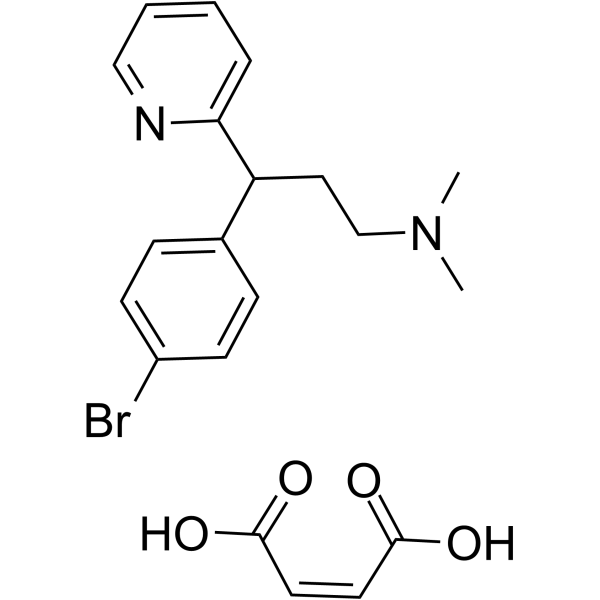
- HY-182296
-
|
|
Histamine Receptor
|
Inflammation/Immunology
|
|
SCH 79687 is an orally active histamine H3 receptor antagonist, with a Ki of 1.9 nM in rats and 13 nM in guinea pigs. SCH 79687 acts as a competitive antagonist against (R)-α-methylhistamine. SCH 79687 attenuates the inhibitory effect of (R)-α-methylhistamine-induced sympathetic hypertensive responses in guinea pigs. When used in combination with H1 antagonists, SCH 79687 inhibits Compound 48/80 (HY-115768)-induced nasal congestion in cats. SCH 79687 can be used for the research of allergic rhinitis .
|
-

- HY-17428R
-
|
|
Reference Standards
Histamine Receptor
|
Neurological Disease
Inflammation/Immunology
|
|
Tripelennamine hydrochloride (Standard) is the analytical standard of Tripelennamine hydrochloride (HY-17428). This product is intended for research and analytical applications. Tripelennamine hydrochloride is a histamine H1-receptor antagonist. Tripelennamine hydrochloride effectively reverses histamine-induced bronchoconstriction, increased transpulmonary pressure, elevated pulmonary vascular resistance and reduced dynamic compliance. Tripelennamine hydrochloride does not significantly affect arterial hypoxemia, hemoglobin desaturation and hypercapnia in horses undergoing short-term high-intensity exercise. Tripelennamine hydrochloride exhibits local and central analgesic activity. Tripelennamine hydrochloride can be used in studies related to emphysema, urticaria and acute laminitis .
|
-
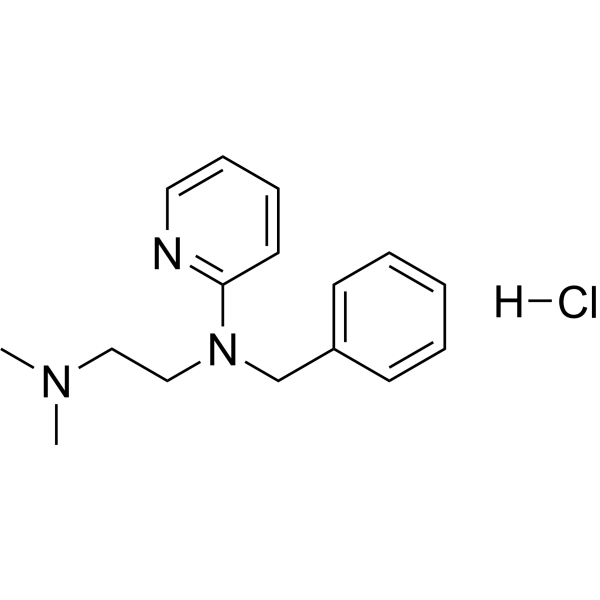
- HY-B0352S2
-
-
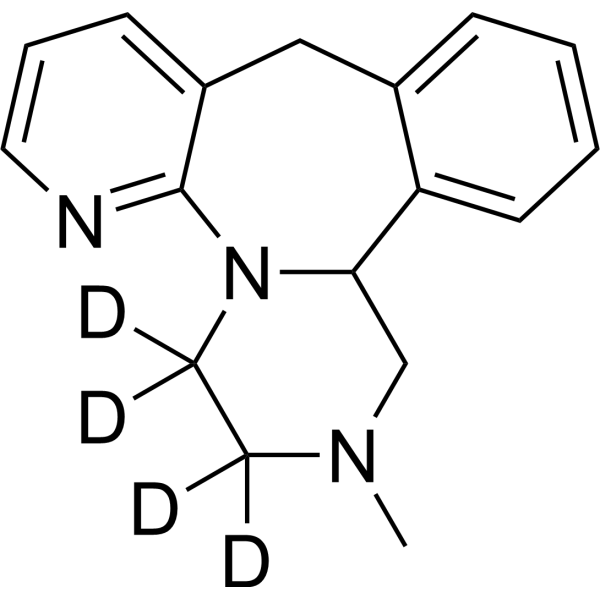
- HY-W062109S
-
|
|
Isotope-Labeled Compounds
Histamine Receptor
CXCR
|
Inflammation/Immunology
|
|
Olopatadine-d6 is the deuterium labeled Olopatadine. Olopatadine hydrochloride (ALO4943A; KW4679) is an orally active histamine H1 receptor antagonist and mast cell stabilizer. Olopatadine hydrochloride exerts antiallergic effects by blocking histamine H1 receptor-mediated activities. Olopatadine hydrochloride inhibits exocytosis, chemokine release, F-actin polymerization, CXCL10-induced calcium influx, and T cell chemotactic activity. Olopatadine hydrochloride also reduces the expression levels of CXCR3 on the surface of CD4 + and CD8 + T cells. Olopatadine hydrochloride inhibits scratching behavior, improves dermatitis scores, and suppresses intraepidermal neurite outgrowth. Olopatadine hydrochloride simultaneously decreases the levels of inflammatory markers, growth factors, histamine, and specific IgE, while increasing the expression of ErbB3A/HER3A. Olopatadine hydrochloride can be used in research related to seasonal pollinosis, chronic rhinitis, urticaria, allergic conjunctivitis, alopecia areata, and atopic dermatitis .
|
-
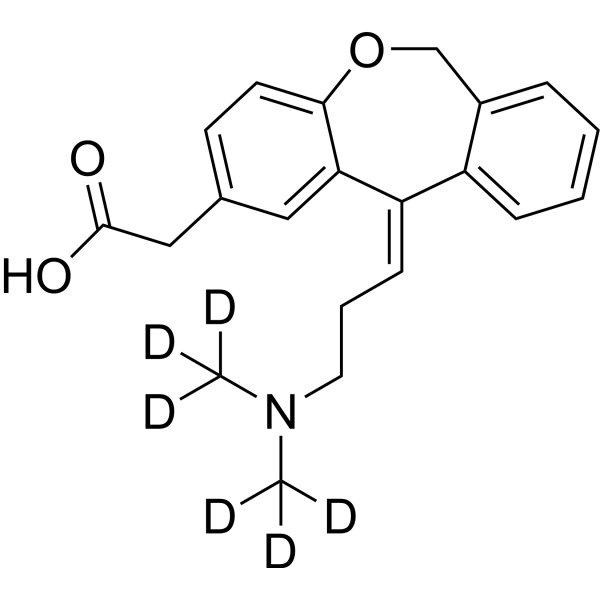
- HY-B0352R
-
-
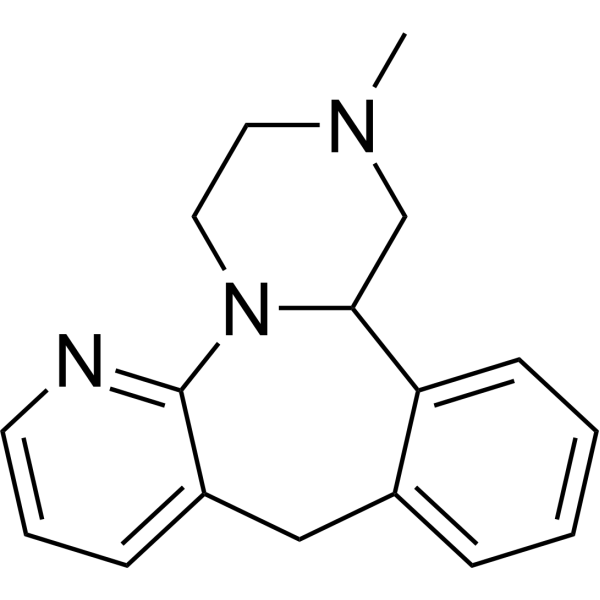
- HY-B0352S3
-
-
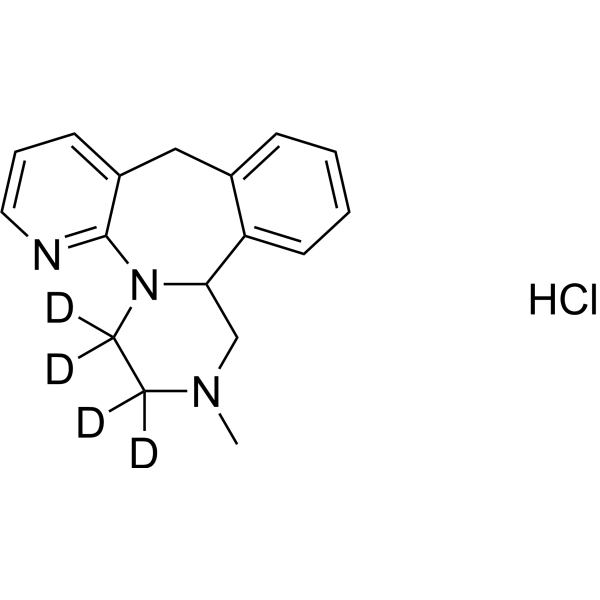
- HY-107647R
-
|
|
Reference Standards
mAChR
Histamine Receptor
|
Inflammation/Immunology
|
|
(S)-(+)-Dimethindene maleate (Standard) is the analytical standard of (S)-(+)-Dimethindene (maleate) (HY-107647). This product is intended for research and analytical applications. (S)-(+)-Dimethindene maleate, an enantiomer, is a potent M2-selective muscarinic receptor antagonist (pA2 = 7.86/7.74; pKi = 7.78). (S)-(+)-Dimethindene maleate shows lower affinities for the muscarinic M1 (pA2 = 6.83/6.36; pKi = 7.08), the M3 (pA2 = 6.92/6.96; pKi = 6.70) and the M4 receptors (pKi = 7.00), respectively. (S)-(+)-Dimethindene maleate also is a histamine H1 receptor antagonist (pA2 = 7.48) .
|
-

- HY-182736
-
|
|
CCR
Histamine Receptor
Calcium Channel
|
Inflammation/Immunology
|
|
YM-344484 is an orally active dual antagonist of chemokine CCR3 receptor and histamine histamine H1 receptor. YM-344484 inhibits ligand-induced Ca 2+ influx, chemotaxis of CCR3-expressing cells, histamine-induced Ca 2+ influx, increased vascular permeability and eosinophil accumulation. YM-344484 suppresses vascular permeability and inhibits eosinophil infiltration in a mouse asthma model. YM-344484 can be used in research related to asthma, allergic rhinitis and atopic dermatitis .
|
-

- HY-B0188AS
-
|
Org GB 94-d3
|
Isotope-Labeled Compounds
Histamine Receptor
Opioid Receptor
ERK
p38 MAPK
|
Neurological Disease
Metabolic Disease
|
|
Mianserin-d3 hydrochloride is the deuterium labeled Mianserin. Mianserin (Mianserine) is an orally active H1 receptor antagonist. Mianserin can activate κ-opioid receptor and octopamine receptor. Mianserin increases ERK1/2 and CREB phosphorylation, and antagonizes full κ-opioid agonist and Dynorphin A (HY-P1333)-induced MAPK phosphorylation. Mianserin modulates social and exploratory behaviour, raises electroconvulsive thresholds. Mianserin can be used for the research of neurological disease, such as depression and epilepsy .
|
-
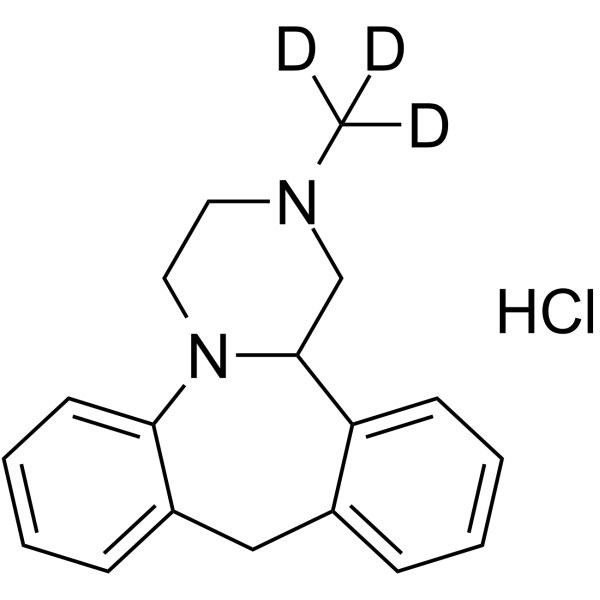
- HY-B0426AS
-
|
|
Isotope-Labeled Compounds
Histamine Receptor
CXCR
|
Inflammation/Immunology
Endocrinology
|
|
Olopatadine-d3 hydrochloride (ALO4943A-d3) is the deuterium labeled Olopatadine hydrochloride. Olopatadine hydrochloride (ALO4943A; KW4679) is an orally active histamine H1 receptor antagonist and mast cell stabilizer. Olopatadine hydrochloride exerts antiallergic effects by blocking histamine H1 receptor-mediated activities. Olopatadine hydrochloride inhibits exocytosis, chemokine release, F-actin polymerization, CXCL10-induced calcium influx, and T cell chemotactic activity. Olopatadine hydrochloride also reduces the expression levels of CXCR3 on the surface of CD4 + and CD8 + T cells. Olopatadine hydrochloride inhibits scratching behavior, improves dermatitis scores, and suppresses intraepidermal neurite outgrowth. Olopatadine hydrochloride simultaneously decreases the levels of inflammatory markers, growth factors, histamine, and specific IgE, while increasing the expression of ErbB3A/HER3A. Olopatadine hydrochloride can be used in research related to seasonal pollinosis, chronic rhinitis, urticaria, allergic conjunctivitis, alopecia areata, and atopic dermatitis .
|
-
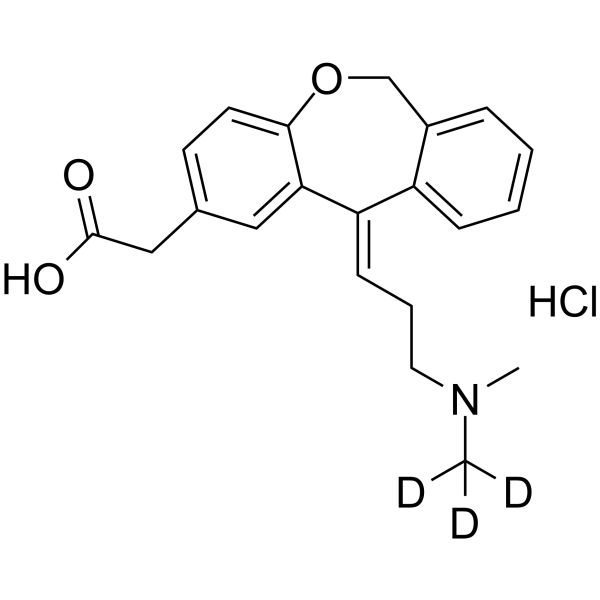
- HY-B0426AR
-
|
ALO4943A (Standard); KW4679 (Standard)
|
Reference Standards
Histamine Receptor
CXCR
|
Inflammation/Immunology
Endocrinology
|
|
Olopatadine (hydrochloride) (Standard) is the analytical standard of Olopatadine (hydrochloride). This product is intended for research and analytical applications. Olopatadine hydrochloride (ALO4943A; KW4679) is an orally active histamine H1 receptor antagonist and mast cell stabilizer. Olopatadine hydrochloride exerts antiallergic effects by blocking histamine H1 receptor-mediated activities. Olopatadine hydrochloride inhibits exocytosis, chemokine release, F-actin polymerization, CXCL10-induced calcium influx, and T cell chemotactic activity. Olopatadine hydrochloride also reduces the expression levels of CXCR3 on the surface of CD4 + and CD8 + T cells. Olopatadine hydrochloride inhibits scratching behavior, improves dermatitis scores, and suppresses intraepidermal neurite outgrowth. Olopatadine hydrochloride simultaneously decreases the levels of inflammatory markers, growth factors, histamine, and specific IgE, while increasing the expression of ErbB3A/HER3A. Olopatadine hydrochloride can be used in research related to seasonal pollinosis, chronic rhinitis, urticaria, allergic conjunctivitis, alopecia areata, and atopic dermatitis .
|
-
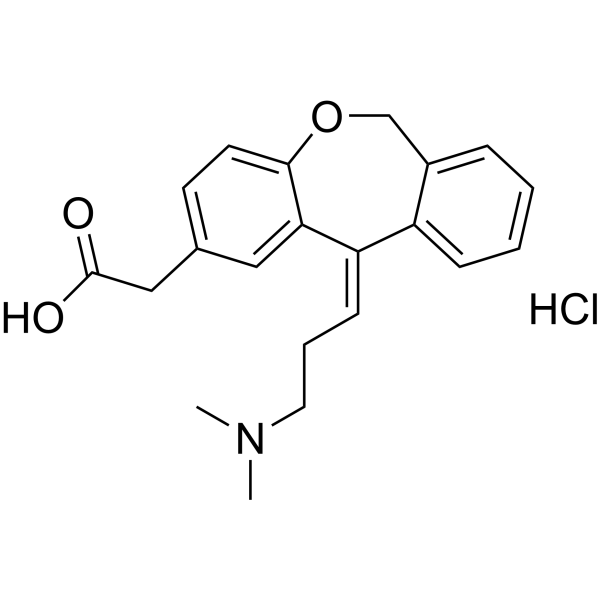
- HY-103093R
-
|
|
Reference Standards
5-HT Receptor
Histamine Receptor
Adrenergic Receptor
Dopamine Receptor
|
Neurological Disease
|
|
Zotepine (Standard) is the analytical standard of Zotepine. This product is intended for research and analytical applications. Zotepine, an antipsychotic agent, is a potent antagonist of 5-HT2A, 5-HT2C, Histamine H1, α1-adrenergic and Dopamine D2 receptors, with Kds of 2.6 nM, 3.2 nM, 3.3 nM, 7.3 nM and 8 nM, respectively. Zotepine exhibits antidepressive and anxiolytic effects in vivo .
|
-

- HY-B0539
-
Desloratadine
Maximum Cited Publications
13 Publications Verification
Sch34117
|
Histamine Receptor
TNF Receptor
Leukotriene Receptor
|
Inflammation/Immunology
|
|
Desloratadine (Sch34117) is an orally active and selective H1 receptor antagonist (Ki=0.9 nM) with anti-inflammatory and anti-allergic activities. Desloratadine inhibits the release of histamine and LTC4 from human basophils and targets the regulatory signals of IL-4 and IL-13 production in basophils. Desloratadine significantly alleviates SAR symptoms in patients with concurrent asthma and can be used in the study of seasonal allergic rhinitis and chronic idiopathic urticaria .
|
-
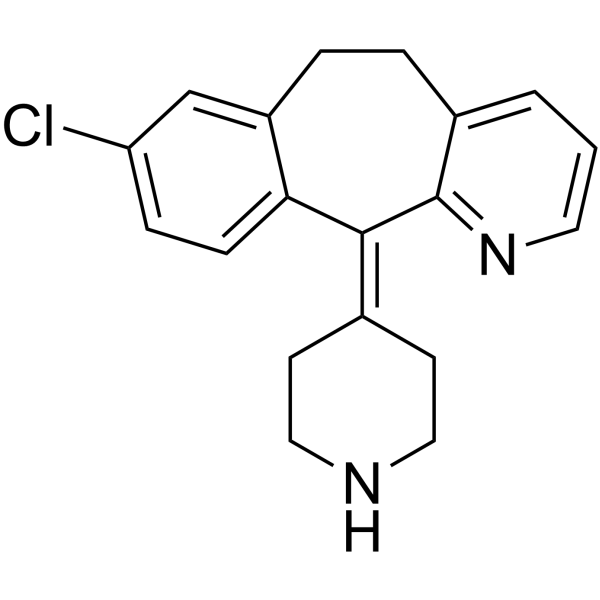
- HY-W744038
-
|
|
Isotope-Labeled Compounds
Dopamine Receptor
Histamine Receptor
Adrenergic Receptor
5-HT Receptor
|
Neurological Disease
|
|
Zotepine-d6 is the deuterium labeled Zotepine (HY-103093). Zotepine, an antipsychotic agent, is a potent antagonist of 5-HT2A, 5-HT2C, Histamine H1, α1-adrenergic and Dopamine D2 receptors, with Kds of 2.6 nM, 3.2 nM, 3.3 nM, 7.3 nM and 8 nM, respectively. Zotepine exhibits antidepressive and anxiolytic effects in vivo .
|
-

- HY-B0480AR
-
|
(±)-Brompheniramine (Standard)
|
Reference Standards
Histamine Receptor
mAChR
Potassium Channel
Sodium Channel
Calcium Channel
|
Neurological Disease
Inflammation/Immunology
Endocrinology
|
|
Brompheniramine (Standard) is the analytical standard of Brompheniramine. This product is intended for research and analytical applications. Brompheniramine ((±)-Brompheniramine) is a potent and orally active antihistamine of the alkylamine class. Brompheniramine is a selective histamine H1 receptor antagonist with a Kd of 6.06 nM. Brompheniramine can block the hERG channels, calcium channels, and sodium channels with IC50s of 0.90 μM, 16.12 μM and 21.26 μM, respectively. Brompheniramine has anticholinergic, antidepressant and anesthetic properties and can be used for allergic rhinitis research [4].
|
-

- HY-B0480R
-
|
(±)-Brompheniramine maleate (Standard)
|
Reference Standards
Histamine Receptor
mAChR
Potassium Channel
Sodium Channel
Calcium Channel
|
Neurological Disease
Inflammation/Immunology
Endocrinology
|
|
Brompheniramine (maleate) (Standard) is the analytical standard of Brompheniramine (maleate). This product is intended for research and analytical applications. Brompheniramine ((±)-Brompheniramine) maleate is a potent and orally active antihistamine of the alkylamine class. Brompheniramine maleate is a selective histamine H1 receptor antagonist with a Kd of 6.06 nM. Brompheniramine maleate can block the hERG channels, calcium channels, and sodium channels with IC50s of 0.90 μM, 16.12 μM and 21.26 μM, respectively. Brompheniramine maleate has anticholinergic, antidepressant and anesthetic properties and can be used for allergic rhinitis research .
|
-

- HY-B0188AR
-
|
Org GB 94 (Standard)
|
Reference Standards
Histamine Receptor
Opioid Receptor
ERK
p38 MAPK
|
Neurological Disease
Metabolic Disease
|
|
Mianserin hydrochloride (Org GB 94) (Standard) is the analytical standard of Mianserin hydrochloride. This product is intended for research and analytical applications. Mianserin hydrochloride is an orally active H1 receptor antagonist. Mianserin hydrochloride can activate κ-opioid receptor and octopamine receptor. Mianserin hydrochloride increases ERK1/2 and CREB phosphorylation, and antagonizes full κ-opioid agonist and Dynorphin A (HY-P1333)-induced MAPK phosphorylation. Mianserin hydrochloride modulates social and exploratory behaviour, raises electroconvulsive thresholds. Mianserin hydrochloride can be used for the research of neurological disease, such as depression and epilepsy .
|
-

- HY-B0188S
-
|
Mianserine-d3
|
Histamine Receptor
Isotope-Labeled Compounds
Opioid Receptor
ERK
p38 MAPK
|
Neurological Disease
|
|
Mianserin-d3 is the deuterium labeled Mianserin (HY-B0188). Mianserin (Mianserine) is an orally active H1 receptor antagonist. Mianserin can activate κ-opioid receptor and octopamine receptor. Mianserin increases ERK1/2 and CREB phosphorylation, and antagonizes full κ-opioid agonist and Dynorphin A (HY-P1333)-induced MAPK phosphorylation. Mianserin modulates social and exploratory behaviour, raises electroconvulsive thresholds. Mianserin can be used for the research of neurological disease, such as depression and epilepsy .
|
-
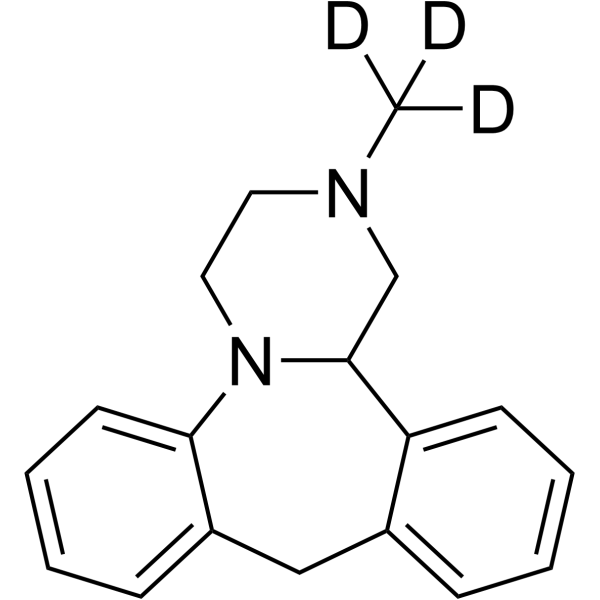
- HY-101094
-
|
R79598
|
5-HT Receptor
Dopamine Receptor
|
Neurological Disease
|
|
Ocaperidone is an effective antipsychotic agent, acting as a potent 5-HT2 and dopamine D2 antagonist, and a 5-HT1A agonist, with Kis of 0.14 nM, 0.46 nM, 0.75 nM, 1.6 nM and 5.4 nM for 5-HT2, a1-adrenergic receptor, dopamine D2, histamine H1 and a2-adrenergic receptor, respectively, and a pEC50 and pKi of 7.60 and 8.08 for h5-HT1A.
|
-
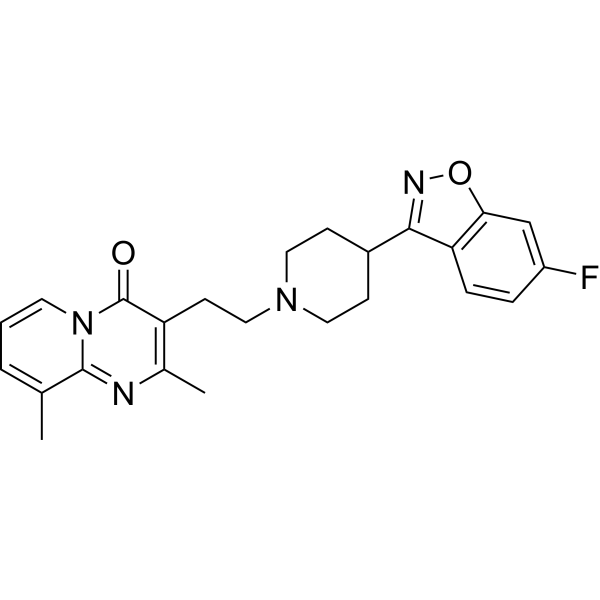
- HY-B0725
-
|
|
Histamine Receptor
Cytochrome P450
|
Neurological Disease
Cancer
|
|
Doxepin hydrochloride is an orally active tricyclic antidepressant agent. Doxepin hydrochloride is a potent and selective histamine receptor H1 antagonist. Doxepin hydrochloride is also a potent CYP450 inhibitor and significantly inhibits CYP450 2C19 and 1A2 . Doxepin inhibits reuptake of serotonin and norepinephrine as a tricyclic antidepressant .. Doxepin has therapeutic effects in atopic dermatitis,chronic urticarial,can improve cognitive processes, protect central nervous system .. Doxepin has also been proposed as a protective factor against oxidative stress ..
|
-
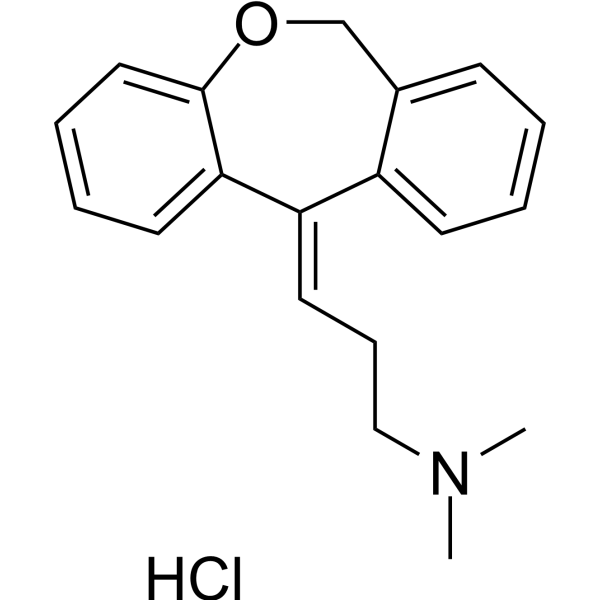
- HY-148825
-
-
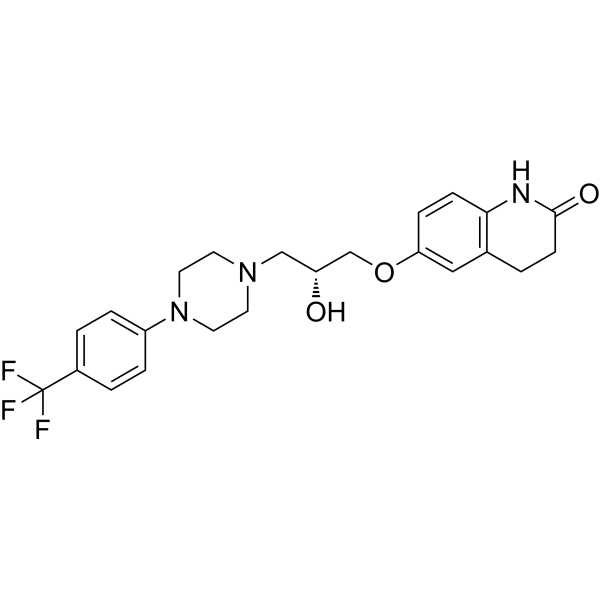
- HY-14541A
-
|
LY170053 hydrochloride
|
5-HT Receptor
Dopamine Receptor
mAChR
Adrenergic Receptor
Autophagy
Mitophagy
Apoptosis
|
Neurological Disease
Cancer
|
|
Olanzapine hydrochloride is a selective, orally active monoaminergic antagonist with high affinity binding to serotonin H1, 5HT2A/2C, 5HT3, 5HT6 (Ki=7, 4, 11, 57, and 5 nM, respectively), dopamine D1-4 (Ki=11 to 31 nM), muscarinic M1-5 (Ki=1.9-25 nM), and adrenergic α1 receptor (Ki=19 nM). Olanzapine hydrochloride is an atypical antipsychotic .
|
-

- HY-B0640A
-
|
WAL801 hydrochloride
|
Histamine Receptor
Transmembrane Glycoprotein
Interleukin Related
|
Cardiovascular Disease
Neurological Disease
Inflammation/Immunology
Cancer
|
|
Epinastine hydrochloride (WAL801 hydrochloride) is a selective and orally active histamine H1 receptor antagonist, CD96/PVR inhibitor and mast cell stabilizer. Epinastine hydrochloride has high affinity for neuronal octopamine receptors in locusts (Ki = 2 nM) and honeybees (Ki = 1.1 nM). Epinastine hydrochloride inhibits TARC, IL-8, and IL-4. Epinastine hydrochloride activates anti-colon cancer immunity and inhibits Substance P (HY-P0201)-induced scratching behavior and increased vascular permeability. Epinastine hydrochloride can be used in the research of allergic diseases .
|
-
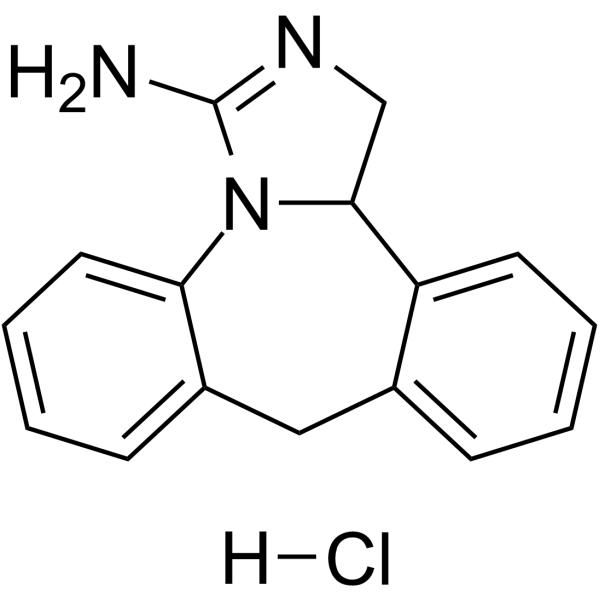
- HY-B0640
-
-
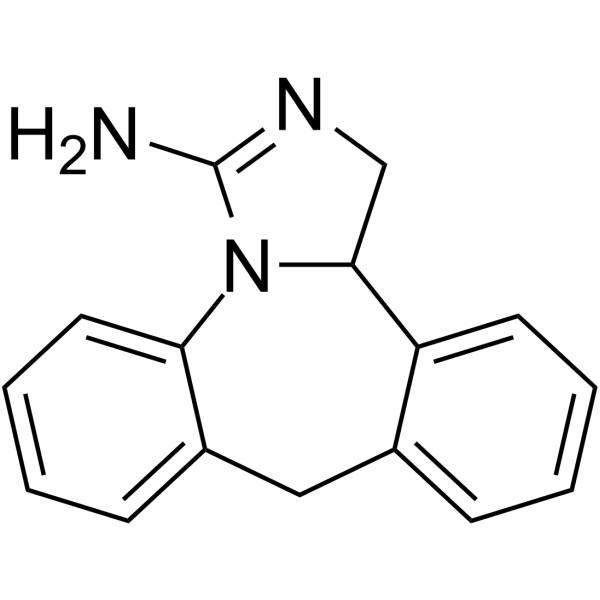
- HY-118807A
-
|
Pyrilamine hydrochloride
|
Histamine Receptor
Potassium Channel
|
Neurological Disease
Inflammation/Immunology
|
|
Mepyramine hydrochloride (Pyrilamine hydrochloride) is a selective histamine H1 receptor antagonist and KCNQ channel inhibitor, with an IC50 of 12.5 μM against KCNQ2/Q3. Mepyramine hydrochloride shows no activity against allergic asthma in mice when used alone, but modulates the effect of JNJ 7777120 (HY-13508) on allergic asthma in mice; it inhibits the development of morphine physical dependence and increases histamine levels in mouse brains. Mepyramine hydrochloride can be used in studies related to seizures, convulsions, allergic asthma and morphine physical dependence .
|
-

- HY-W516880
-
|
O-Demethylastemizole
|
Drug Metabolite
Parasite
Histamine Receptor
Potassium Channel
|
Infection
Cardiovascular Disease
|
|
Desmethylastemizole (O-Demethylastemizole) , a metabolite of Astemizole (HY-12532), is a β-hematin (βH) inhibitor. Desmethylastemizole has an antiplasmodium activity against P. falciparum with IC50 of 0.12, 0.11 and 0.06 μM for Pf3D7, PfDd2, and PfItG strains, respectively. Desmethylastemizole is also a Histamine H1 receptor antagonist. Desmethylastemizole significantly blocks hERG K + channels and also inhibits histone-lysine N-methyltransferase EZH2 activity. Desmethylastemizole can be used for long QT syndrome and malaria research .
|
-

- HY-14541
-
Olanzapine
Maximum Cited Publications
14 Publications Verification
LY170053
|
5-HT Receptor
Dopamine Receptor
mAChR
Adrenergic Receptor
Autophagy
Mitophagy
Apoptosis
|
Neurological Disease
Cancer
|
|
Olanzapine (LY170053) is a selective, orally active monoaminergic antagonist with high affinity binding to serotonin H1, 5HT2A/2C, 5HT3, 5HT6 (Ki=7, 4, 11, 57, and 5 nM, respectively), dopamine D1-4 (Ki=11 to 31 nM), muscarinic M1-5 (Ki=1.9-25 nM), and adrenergic α1 receptor (Ki=19 nM). Olanzapine is an atypical antipsychotic .
|
-
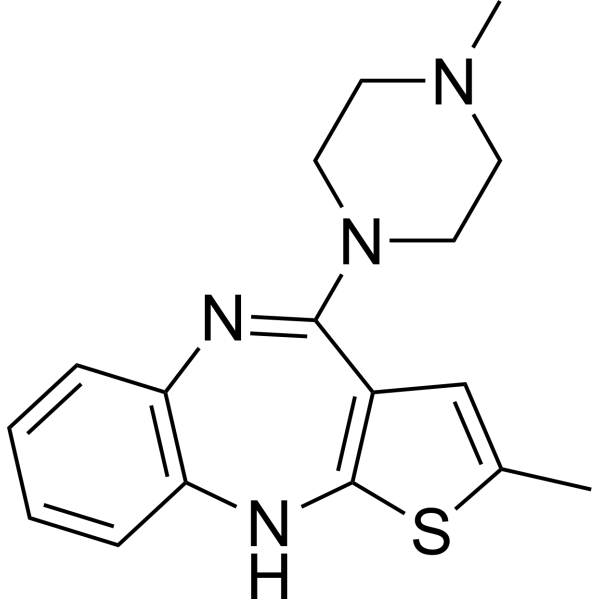
- HY-B0426AS2
-
|
ALO4943A-d6 hydrochloride; KW4679-d6 hydrochloride
|
Isotope-Labeled Compounds
Histamine Receptor
CXCR
|
Inflammation/Immunology
|
|
Olopatadine-d6 (ALO4943A-d6; KW4679-d6) hydrochloride is deuterium-labeled Olopatadine (hydrochloride) (HY-B0426A). Olopatadine hydrochloride (ALO4943A; KW4679) is an orally active histamine H1 receptor antagonist and mast cell stabilizer. Olopatadine hydrochloride exerts antiallergic effects by blocking histamine H1 receptor-mediated activities. Olopatadine hydrochloride inhibits exocytosis, chemokine release, F-actin polymerization, CXCL10-induced calcium influx, and T cell chemotactic activity. Olopatadine hydrochloride also reduces the expression levels of CXCR3 on the surface of CD4 + and CD8 + T cells. Olopatadine hydrochloride inhibits scratching behavior, improves dermatitis scores, and suppresses intraepidermal neurite outgrowth. Olopatadine hydrochloride simultaneously decreases the levels of inflammatory markers, growth factors, histamine, and specific IgE, while increasing the expression of ErbB3A/HER3A. Olopatadine hydrochloride can be used in research related to seasonal pollinosis, chronic rhinitis, urticaria, allergic conjunctivitis, alopecia areata, and atopic dermatitis .
|
-

- HY-B1101
-
|
Pimetixene
|
5-HT Receptor
Histamine Receptor
|
Neurological Disease
Endocrinology
|
|
Pimethixene is antihistamine and antiserotonergic compound, acts as an antimigraine agent.
Pimethixene is a highly potent antagonist of 5-HT1A, 5-HT2A, 5-HT2B, 5-HT2C, histamine H1, dopamine D2 and D4.4 as well as muscarinic M1 and M2 receptors, with pKis of 7.63, 10.22, 10.44, 8.42, 10.14, 8.19, 7.54, 8.61 and 9.38, respectively .
|
-
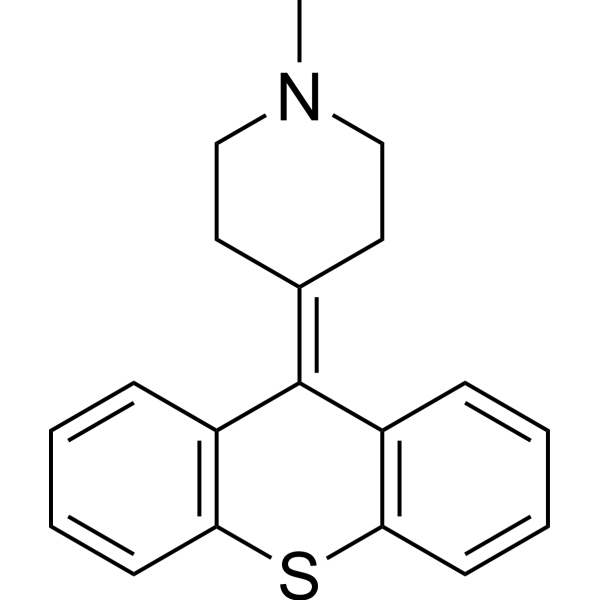
- HY-B1101A
-
|
Pimetixene maleate
|
5-HT Receptor
Histamine Receptor
|
Neurological Disease
Endocrinology
|
|
Pimethixene maleate is antihistamine and antiserotonergic compound, acts as an antimigraine agent.
Pimethixene maleate is a highly potent antagonist of 5-HT1A, 5-HT2A, 5-HT2B, 5-HT2C, histamine H1, dopamine D2 and D4.4 as well as muscarinic M1 and M2 receptors, with pKis of 7.63, 10.22, 10.44, 8.42, 10.14, 8.19, 7.54, 8.61 and 9.38, respectively .
|
-
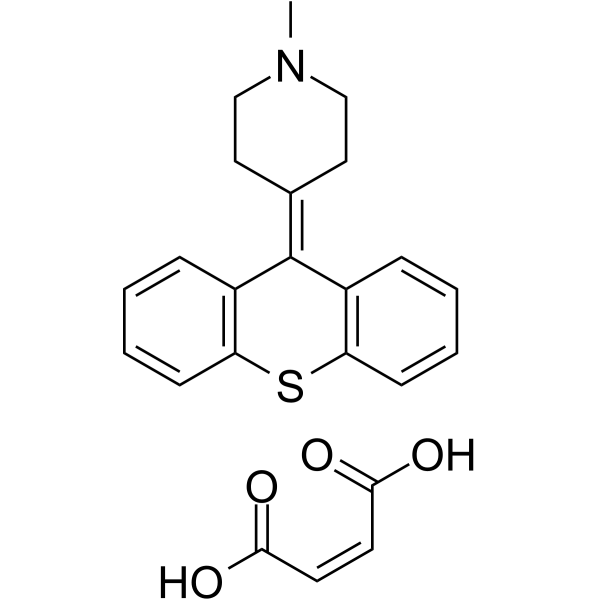
- HY-14541S2
-
|
LY170053-d8
|
Isotope-Labeled Compounds
Apoptosis
Dopamine Receptor
Autophagy
mAChR
Mitophagy
5-HT Receptor
Adrenergic Receptor
|
Neurological Disease
|
|
Olanzapine-d8 is a deuterated labeled Olanzapine . Olanzapine (LY170053) is a selective, orally active monoaminergic antagonist with high affinity binding to serotonin H1, 5HT2A/2C, 5HT3, 5HT6 (Ki=7, 4, 11, 57, and 5 nM, respectively), dopamine D1-4 (Ki=11 to 31 nM), muscarinic M1-5 (Ki=1.9-25 nM), and adrenergic α1 receptor (Ki=19 nM). Olanzapine is an atypical antipsychotic .
|
-

- HY-B0725R
-
|
|
Reference Standards
Histamine Receptor
Cytochrome P450
|
Neurological Disease
Cancer
|
|
Doxepin (Hydrochloride) (Standard) is the analytical standard of Doxepin (Hydrochloride). This product is intended for research and analytical applications. Doxepin hydrochloride is an orally active tricyclic antidepressant agent. Doxepin hydrochloride is a potent and selective histamine receptor H1 antagonist. Doxepin hydrochloride is also a potent CYP450 inhibitor and significantly inhibits CYP450 2C19 and 1A2 . Doxepin inhibits reuptake of serotonin and norepinephrine as a tricyclic antidepressant .. Doxepin has therapeutic effects in atopic dermatitis,chronic urticarial,can improve cognitive processes, protect central nervous system .. Doxepin has also been proposed as a protective factor against oxidative stress ..
|
-
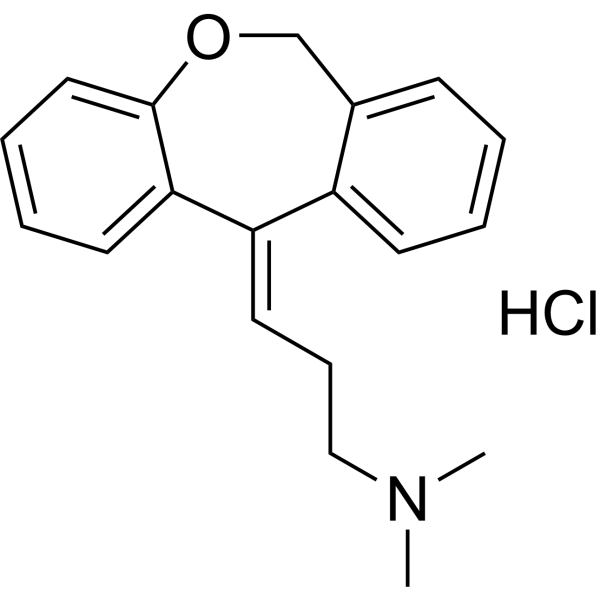
- HY-A0069A
-
|
|
Histamine Receptor
Cytochrome P450
|
Neurological Disease
Metabolic Disease
|
|
Doxylamine is a first-generation antihistamine and acts as a histamine H1 receptor antagonist. Doxylamine is orally active, possessing analgesic and hypnotic activities. Doxylamine enhances the activities of CYP2B, CYP2A, CYP3A and thyroxine-glucuronosyltransferase via promoting substrate hydroxylation and thyroxine metabolic pathways. Doxylamine decreases serum thyroxine (T4) level and elevates serum thyroid-stimulating hormone (TSH) level. Doxylamine induces liver enlargement and increases the activities of hepatic microsomal cytochrome P450, cytochrome b5 and NADPH-cytochrome c reductase. Doxylamine can be used for the research of nausea, allergy, insomnia .
|
-

- HY-14541R
-
|
LY170053 (Standard)
|
Reference Standards
5-HT Receptor
Dopamine Receptor
mAChR
Adrenergic Receptor
Autophagy
Mitophagy
Apoptosis
|
Neurological Disease
Cancer
|
|
Olanzapine (Standard) is the analytical standard of Olanzapine. This product is intended for research and analytical applications. Olanzapine (LY170053) is a selective, orally active monoaminergic antagonist with high affinity binding to serotonin H1, 5HT2A/2C, 5HT3, 5HT6 (Ki=7, 4, 11, 57, and 5 nM, respectively), dopamine D1-4 (Ki=11 to 31 nM), muscarinic M1-5 (Ki=1.9-25 nM), and adrenergic α1 receptor (Ki=19 nM). Olanzapine is an atypical antipsychotic .
|
-
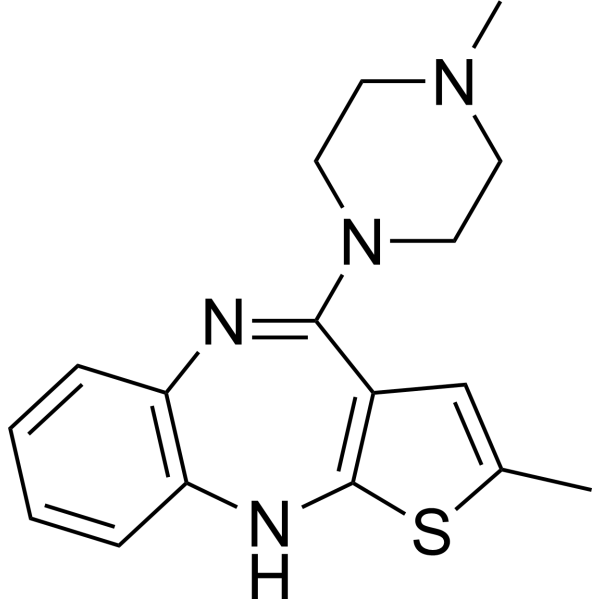
- HY-101094R
-
|
R79598 (Standard)
|
5-HT Receptor
Reference Standards
Dopamine Receptor
|
Neurological Disease
|
|
Ocaperidone (Standard) is the analytical standard of Ocaperidone (HY-101094). This product is intended for research and analytical applications. Ocaperidone is an effective antipsychotic agent, acting as a potent 5-HT2 and dopamine D2 antagonist, and a 5-HT1A agonist, with Kis of 0.14 nM, 0.46 nM, 0.75 nM, 1.6 nM and 5.4 nM for 5-HT2, a1-adrenergic receptor, dopamine D2, histamine H1 and a2-adrenergic receptor, respectively, and a pEC50 and pKi of 7.60 and 8.08 for h5-HT1A.
|
-

- HY-B0640AR
-
|
WAL801 hydrochloride (Standard)
|
Reference Standards
Histamine Receptor
Transmembrane Glycoprotein
Interleukin Related
|
Cardiovascular Disease
Neurological Disease
Inflammation/Immunology
Cancer
|
|
Epinastine (hydrochloride) (Standard) is the analytical standard of Epinastine hydrochloride (HY-B0640A). This product is intended for research and analytical applications. Epinastine hydrochloride (WAL801 hydrochloride) is a selective and orally active histamine H1 receptor antagonist, CD96/PVR inhibitor and mast cell stabilizer. Epinastine hydrochloride has high affinity for neuronal octopamine receptors in locusts (Ki = 2 nM) and honeybees (Ki = 1.1 nM). Epinastine hydrochloride inhibits TARC, IL-8, and IL-4. Epinastine hydrochloride activates anti-colon cancer immunity and inhibits Substance P (HY-P0201)-induced scratching behavior and increased vascular permeability. Epinastine hydrochloride can be used in the research of allergic diseases .
|
-
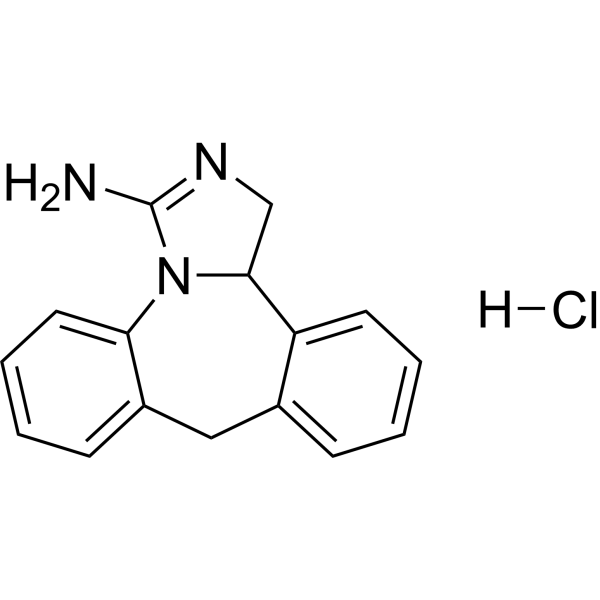
- HY-10564
-
|
MCI-9042
|
5-HT Receptor
|
Cardiovascular Disease
|
|
Sarpogrelate hydrochloride (MCI-9042) is a selective 5-HT2R antagonist, with pKis of 8.52, 6.57, and 7.43 for 5-HT2A, 5-HT2B, and 5-HT2C receptors, respectively. Sarpogrelate hydrochloride displays selectivity over 5-HT1, 5-HT3, 5-HT4, α1-, α2- and β-adrenoreceptor, histamine H1, H2 and muscarinic M3 receptors. Sarpogrelate hydrochloride can be used for the research of vascular disease associated with thrombosis .
|
-
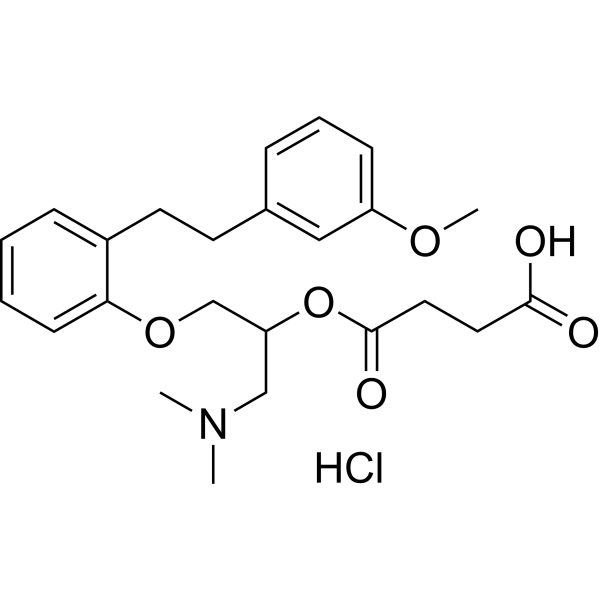
- HY-B2169
-
|
|
5-HT Receptor
Dopamine Receptor
Adrenergic Receptor
Cytochrome P450
|
Neurological Disease
|
|
Melperone is a butyrophenone with atypical antipsychotic properties. Melperone is a multireceptor antagonist with Kds of 102 nM, 180 nM, 180 nM, and 150 nM for 5-HT2A, dopamine D2, α1-adrenergic, and α2-adrenergic receptors, respectively. Melperone has weak binding to histamine H1, 5-HT2C, 5-HT1A, 5-HT1D, and muscarinic receptors, with Kd values of 580 nM, 2100 nM, 2200 nM, 3400 nM, >10000 nM, respectively. Melperone is also a CYP2D6 inhibitor. Melperone can be used for the study of schizophrenia, and agitation in the elderly .
|
-
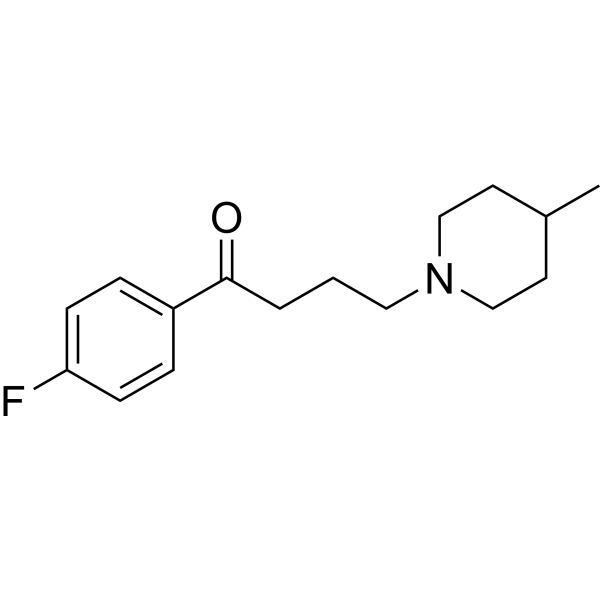
- HY-103109
-
|
|
5-HT Receptor
Dopamine Receptor
Adrenergic Receptor
Cytochrome P450
|
Neurological Disease
|
|
Melperone hydrochloride is a butyrophenone with atypical antipsychotic properties. Melperone hydrochloride is a multireceptor antagonist with Kds of 102 nM, 180 nM, 180 nM, and 150 nM for 5-HT2A, dopamine D2, α1-adrenergic, and α2-adrenergic receptors, respectively. Melperone hydrochloride has weak binding to histamine H1, 5-HT2C, 5-HT1A, 5-HT1D, and muscarinic receptors, with Kd values of 580 nM, 2100 nM, 2200 nM, 3400 nM, >10000 nM, respectively. Melperone hydrochloride is also a CYP2D6 inhibitor. Melperone hydrochloride can be used for the study of schizophrenia, and agitation in the elderly .
|
-

- HY-14541S
-
|
LY170053-d3
|
Isotope-Labeled Compounds
5-HT Receptor
Dopamine Receptor
mAChR
Adrenergic Receptor
Autophagy
Mitophagy
Apoptosis
|
Neurological Disease
Cancer
|
|
Olanzapine-d3 (LY170053-d3) is the deuterium labeled Olanzapine. Olanzapine is a selective, orally active monoaminergic antagonist with high affinity binding to serotonin H1, 5HT2A/2C, 5HT3, 5HT6 (Ki=7, 4, 11, 57, and 5 nM, respectively), dopamine D1-4 (Ki=11 to 31 nM), muscarinic M1-5 (Ki=1.9-25 nM), and adrenergic α1 receptors (Ki=19 nM). Olanzapine is an atypical antipsychotic .
|
-
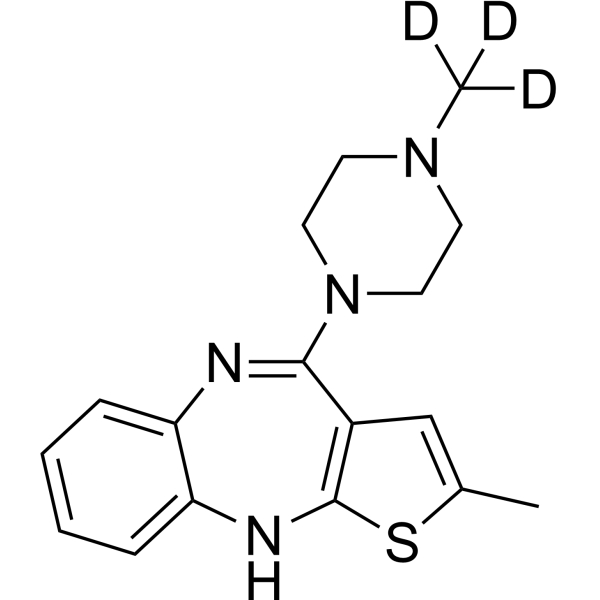
- HY-A0069
-
|
|
Histamine Receptor
Cytochrome P450
|
Neurological Disease
Metabolic Disease
|
|
Doxylamine succinate is a first-generation antihistamine and acts as a histamine H1 receptor antagonist. Doxylamine succinate is orally active, possessing analgesic and hypnotic activities. Doxylamine succinate enhances the activities of CYP2B, CYP2A, CYP3A and thyroxine-glucuronosyltransferase via promoting substrate hydroxylation and thyroxine metabolic pathways. Doxylamine succinate decreases serum thyroxine (T4) level and elevates serum thyroid-stimulating hormone (TSH) level. Doxylamine succinate induces liver enlargement and increases the activities of hepatic microsomal cytochrome P450, cytochrome b5 and NADPH-cytochrome c reductase. Doxylamine succinate can be used for the research of nausea, allergy, insomnia .
|
-
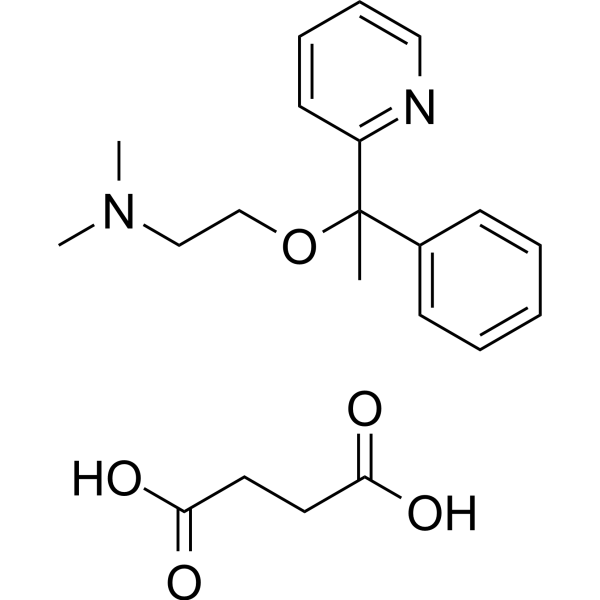
- HY-117046
-
|
|
5-HT Receptor
Histamine Receptor
Adrenergic Receptor
|
Neurological Disease
|
|
AVN-101 is a potent, brain-penetrant and orally active 5-HT7 receptor antagonist (Ki of 153 pM), with slightly lesser potency toward 5-HT6, 5-HT2A, and 5HT-2C receptors (Ki values of 2.04 nM, 1.56 nM, and 1.17 nM, respectively). AVN-101 also exhibits a rather high affinity toward histamine H1 (Ki of 0.58 nM) and adrenergic α2A, α2B, and α2C (Ki= 0.41-3.6 nM) receptors. AVN-101 can be studied in such diseases as general anxiety disorders, depression, schizophrenia, Alzheimer’s disease, and multiple sclerosis .
|
-

- HY-117046A
-
|
|
5-HT Receptor
Histamine Receptor
Adrenergic Receptor
|
Neurological Disease
|
|
AVN-101 hydrochloride is a potent, brain-penetrant and orally active 5-HT7 receptor antagonist (Ki of 153 pM), with slightly lesser potency toward 5-HT6, 5-HT2A, and 5HT-2C receptors (Ki values of 2.04 nM, 1.56 nM, and 1.17 nM, respectively). AVN-101 hydrochloride also exhibits a rather high affinity toward histamine H1 (Ki of 0.58 nM) and adrenergic α2A, α2B, and α2C (Ki= 0.41-3.6 nM) receptors. AVN-101 hydrochloride can be studied in such diseases as general anxiety disorders, depression, schizophrenia, Alzheimer’s disease, and multiple sclerosis .
|
-
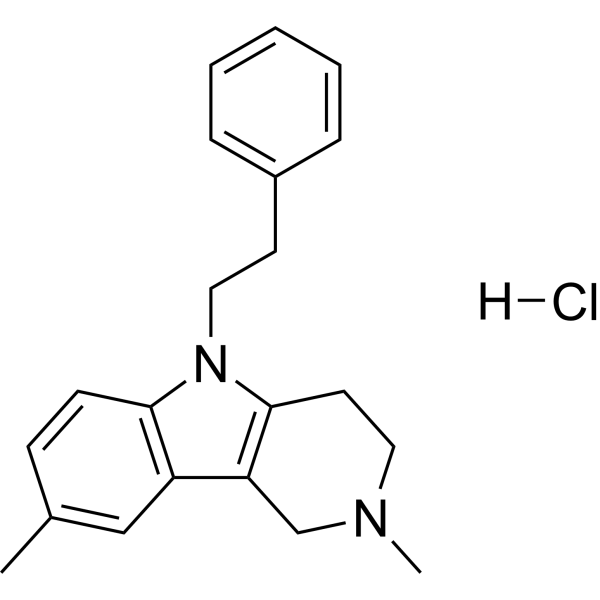
- HY-B1101AR
-
|
Pimetixene maleate (Standard)
|
Reference Standards
5-HT Receptor
Histamine Receptor
|
Neurological Disease
Endocrinology
|
|
Pimethixene maleate (Standard) is the analytical standard of Pimethixene maleate. This product is intended for research and analytical applications. Pimethixene maleate is antihistamine and antiserotonergic compound, acts as an antimigraine agent.
Pimethixene maleate is a highly potent antagonist of 5-HT1A, 5-HT2A, 5-HT2B, 5-HT2C, histamine H1, dopamine D2 and D4.4 as well as muscarinic M1 and M2 receptors, with pKis of 7.63, 10.22, 10.44, 8.42, 10.14, 8.19, 7.54, 8.61 and 9.38, respectively .
|
-

- HY-B2169R
-
|
|
5-HT Receptor
Reference Standards
Dopamine Receptor
Adrenergic Receptor
Cytochrome P450
|
Neurological Disease
|
|
Melperone (Standard) is the analytical standard of Melperone (HY-B2169). This product is intended for research and analytical applications. Melperone is a butyrophenone with atypical antipsychotic properties. Melperone is a multireceptor antagonist with Kds of 102 nM, 180 nM, 180 nM, and 150 nM for 5-HT2A, dopamine D2, α1-adrenergic, and α2-adrenergic receptors, respectively. Melperone has weak binding to histamine H1, 5-HT2C, 5-HT1A, 5-HT1D, and muscarinic receptors, with Kd values of 580 nM, 2100 nM, 2200 nM, 3400 nM, >10000 nM, respectively. Melperone is also a CYP2D6 inhibitor. Melperone can be used for the study of schizophrenia, and agitation in the elderly.
|
-

- HY-B2169S2
-
|
|
Isotope-Labeled Compounds
5-HT Receptor
Dopamine Receptor
Adrenergic Receptor
Cytochrome P450
|
Neurological Disease
|
|
Melperone-d4 hydrochloride is the deuterium labeled Melperone hydrochloride (HY-103109) . Melperone hydrochloride is a butyrophenone with atypical antipsychotic properties. Melperone hydrochloride is a multireceptor antagonist with Kds of 102 nM, 180 nM, 180 nM, and 150 nM for 5-HT2A, dopamine D2, α1-adrenergic, and α2-adrenergic receptors, respectively. Melperone hydrochloride has weak binding to histamine H1, 5-HT2C, 5-HT1A, 5-HT1D, and muscarinic receptors, with Kd values of 580 nM, 2100 nM, 2200 nM, 3400 nM, >10000 nM, respectively. Melperone hydrochloride is also a CYP2D6 inhibitor. Melperone hydrochloride can be used for the study of schizophrenia, and agitation in the elderly .
|
-
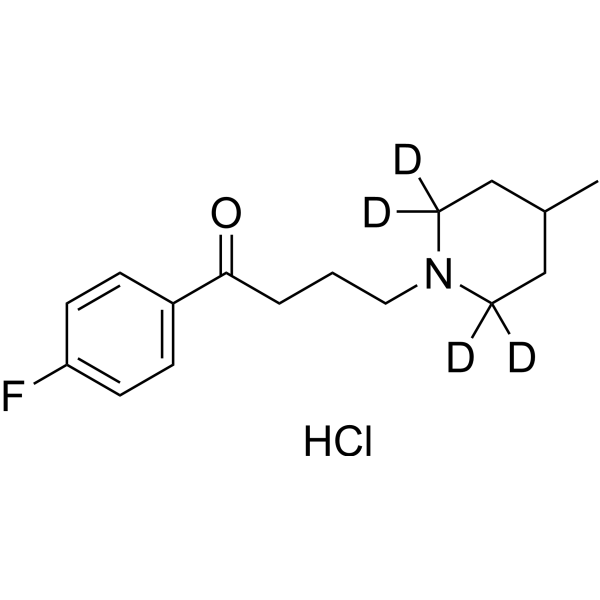
- HY-10564S
-
|
MCI-9042-d3
|
Isotope-Labeled Compounds
5-HT Receptor
|
Cardiovascular Disease
|
|
Sarpogrelate-d3 (hydrochloride) is the deuterium labeled Sarpogrelate hydrochloride. Sarpogrelate hydrochloride (MCI-9042) is a selective 5-HT2R antagonist, with pKis of 8.52, 6.57, and 7.43 for 5-HT2A, 5-HT2B, and 5-HT2C receptors, respectively. Sarpogrelate hydrochloride displays selectivity over 5-HT1, 5-HT3, 5-HT4, α1-, α2- and β-adrenoreceptor, histamine H1, H2 and muscarinic M3 receptors. Sarpogrelate hydrochloride can be used for the research of vascular disease associated with thrombosis .
|
-
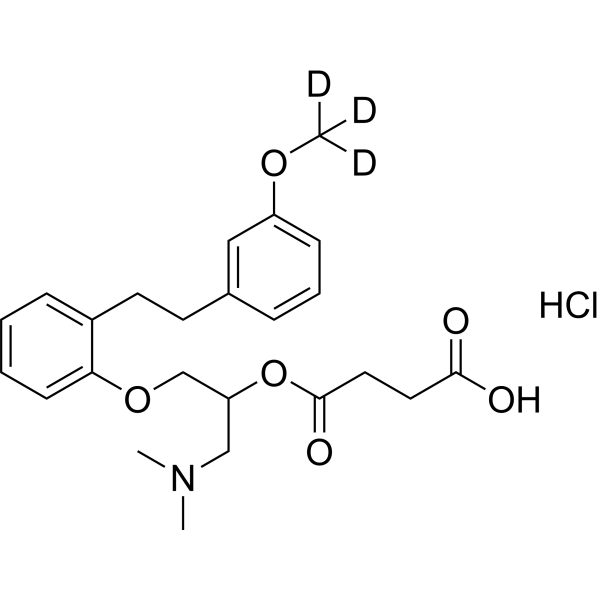
- HY-10564R
-
|
MCI-9042 (Standard)
|
Reference Standards
5-HT Receptor
|
Cardiovascular Disease
|
|
Sarpogrelate (hydrochloride) (Standard) is the analytical standard of Sarpogrelate (hydrochloride). This product is intended for research and analytical applications. Sarpogrelate hydrochloride (MCI-9042) is a selective 5-HT2R antagonist, with pKis of 8.52, 6.57, and 7.43 for 5-HT2A, 5-HT2B, and 5-HT2C receptors, respectively. Sarpogrelate hydrochloride displays selectivity over 5-HT1, 5-HT3, 5-HT4, α1-, α2- and β-adrenoreceptor, histamine H1, H2 and muscarinic M3 receptors. Sarpogrelate hydrochloride can be used for the research of vascular disease associated with thrombosis .
|
-

- HY-A0069AS
-
|
|
Isotope-Labeled Compounds
Histamine Receptor
Cytochrome P450
|
Neurological Disease
Metabolic Disease
|
|
Doxylamine-d5 is deuterium labeled Doxylamine (HY-A0069A). Doxylamine is a first-generation antihistamine and acts as a histamine H1 receptor antagonist. Doxylamine is orally active, possessing analgesic and hypnotic activities. Doxylamine enhances the activities of CYP2B, CYP2A, CYP3A and thyroxine-glucuronosyltransferase via promoting substrate hydroxylation and thyroxine metabolic pathways. Doxylamine decreases serum thyroxine (T4) level and elevates serum thyroid-stimulating hormone (TSH) level. Doxylamine induces liver enlargement and increases the activities of hepatic microsomal cytochrome P450, cytochrome b5 and NADPH-cytochrome c reductase. Doxylamine can be used for the research of nausea, allergy, insomnia .
|
-

- HY-10564S1
-
|
MCI-9042-d4
|
Isotope-Labeled Compounds
5-HT Receptor
|
Cardiovascular Disease
|
|
Sarpogrelate-d4 (MCI-9042-d4) hydrochloride is deuterium labeled Sarpogrelate (hydrochloride). Sarpogrelate hydrochloride (MCI-9042) is a selective 5-HT2R antagonist, with pKis of 8.52, 6.57, and 7.43 for 5-HT2A, 5-HT2B, and 5-HT2C receptors, respectively. Sarpogrelate hydrochloride displays selectivity over 5-HT1, 5-HT3, 5-HT4, α1-, α2- and β-adrenoreceptor, histamine H1, H2 and muscarinic M3 receptors. Sarpogrelate hydrochloride can be used for the research of vascular disease associated with thrombosis .
|
-

- HY-A0069S
-
|
|
Isotope-Labeled Compounds
Histamine Receptor
Cytochrome P450
|
Neurological Disease
Metabolic Disease
|
|
Doxylamine-d5 succinate is deuterium labeled Doxylamine succinate (HY-A0069A). Doxylamine succinate is a first-generation antihistamine and acts as a histamine H1 receptor antagonist. Doxylamine succinate is orally active, possessing analgesic and hypnotic activities. Doxylamine succinate enhances the activities of CYP2B, CYP2A, CYP3A and thyroxine-glucuronosyltransferase via promoting substrate hydroxylation and thyroxine metabolic pathways. Doxylamine succinate decreases serum thyroxine (T4) level and elevates serum thyroid-stimulating hormone (TSH) level. Doxylamine succinate induces liver enlargement and increases the activities of hepatic microsomal cytochrome P450, cytochrome b5 and NADPH-cytochrome c reductase. Doxylamine succinate can be used for the research of nausea, allergy, insomnia .
|
-
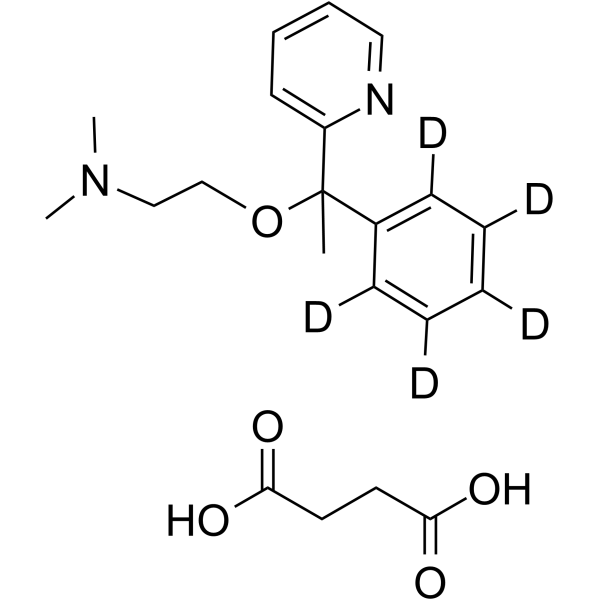
- HY-A0069R
-
|
|
Reference Standards
Histamine Receptor
Cytochrome P450
|
Neurological Disease
Metabolic Disease
|
|
Doxylamine succinate (Standard) is the analytical standard of Doxylamine succinate (HY-A0069). This product is intended for research and analytical applications. Doxylamine succinate is a first-generation antihistamine and acts as a histamine H1 receptor antagonist. Doxylamine succinate is orally active, possessing analgesic and hypnotic activities. Doxylamine succinate enhances the activities of CYP2B, CYP2A, CYP3A and thyroxine-glucuronosyltransferase via promoting substrate hydroxylation and thyroxine metabolic pathways. Doxylamine succinate decreases serum thyroxine (T4) level and elevates serum thyroid-stimulating hormone (TSH) level. Doxylamine succinate induces liver enlargement and increases the activities of hepatic microsomal cytochrome P450, cytochrome b5 and NADPH-cytochrome c reductase. Doxylamine succinate can be used for the research of nausea, allergy, insomnia .
|
-

- HY-111501
-
|
|
Histamine Receptor
|
Inflammation/Immunology
Endocrinology
|
|
H4R antagonist 1 is a potent and highly selective histamine H4 receptor (H4R) antagonist with an IC50 of 27 nM. H4R antagonist 1 does not show any noticeable binding affinity to other subtypes of histamine receptors, H1R, H2R, and H3R .
|
-
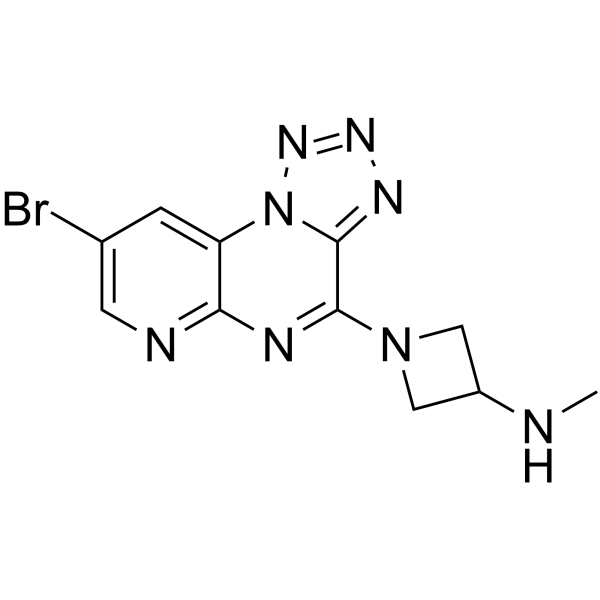
- HY-101179
-
-
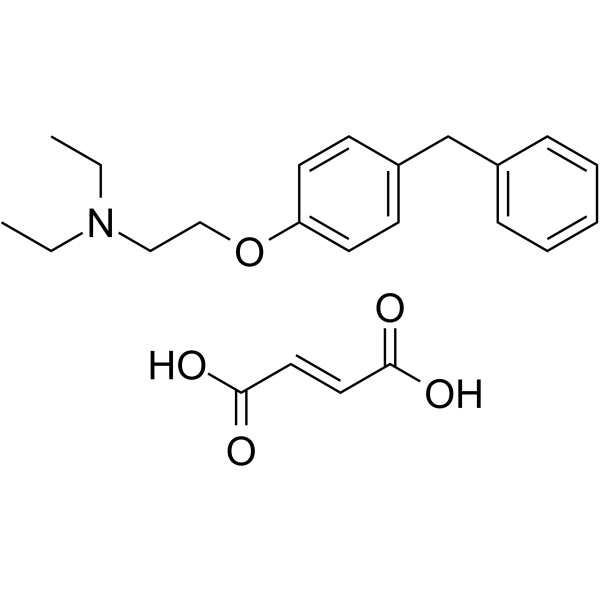
- HY-119854
-
|
AY-28228
|
Adrenergic Receptor
5-HT Receptor
Histamine Receptor
|
Cardiovascular Disease
Neurological Disease
|
|
Atiprosine (AY-28228) is an orally effective selective α1-adrenergic receptor antagonist with a pA2 value of 8.11. Atiprosine exhibits antagonistic activity against α2-adrenergic receptors (α1-adrenergic receptor), 5-HT₂ receptors (5-HT₂ receptor), and H₁ receptors (H₁ receptor). The pA2 values for these receptors are 6.04, 6.87, and 7.32 respectively. Atiprosine has antihypertensive and hypotensive effects in rats, dogs, and monkeys. It can be used for research on cardiovascular and mental disorders.
|
-

- HY-101179R
-
-

- HY-167886
-
|
|
Angiotensin Receptor
|
Cardiovascular Disease
|
|
GA 0113 is a potent and orally active angiotensin II (Ang II) AT1-receptor antagonist. GA 0113 inhibits the Ang II (HY-13948)-induced pressor response with ID50 of 0.032 mg/kg and dose-dependently increases plasma renin activity for 48 h .
|
-

- HY-103149
-
|
SB-216641 hydrochloride
|
5-HT Receptor
|
Neurological Disease
|
|
SB-216641A (SB-216641 hydrochloride) is a selective antagonist of 5-HT1B/D receptor. SB-216641A shows high affinity and selectivity for h5-HT1B receptors over h5-HT1D receptors. SB-216641A inhibits the function of SKF-99101H .
|
-
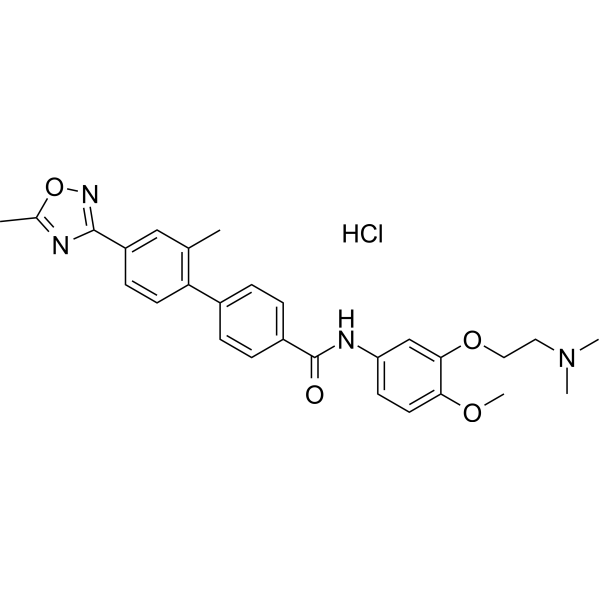
- HY-12882
-
|
NP-120; RC-61-91
|
iGluR
Adrenergic Receptor
Potassium Channel
Calcium Channel
Influenza Virus
|
Infection
Neurological Disease
|
|
Ifenprodil (NP-120), a cerebral vasodilator, is a noncompetitive NMDA receptor antagonist. Ifenprodil exerts high affinity at NR1A/NR2B receptors (IC50=0.34 μM) over 400-fold than at NR1A/NR2A receptors (IC50=146 μM) . Ifenprodil is an α1 adrenergic receptor antagonist. Ifenprodil inhibits GIRK (Kir3), reduces inward currents through the basal GIRK activity. Ifenprodil has reliable inhibitory effects against A/H1N1 strains (EC50 of 6.6 µM). Ifenprodil has neuroprotective, anticonvulsant and antinociceptive effects. Ifenprodil can be used for the study of cerebrovascular diseases and peripheral arterial obliterative disease .
|
-

- HY-12882A
-
|
NP-120 tartrate; RC-61-91 tartrate
|
iGluR
Adrenergic Receptor
Potassium Channel
Calcium Channel
Influenza Virus
|
Infection
Neurological Disease
|
|
Ifenprodil (NP-120) tartrate, a cerebral vasodilator, is a noncompetitive NMDA receptor antagonist. Ifenprodil tartrate exerts high affinity at NR1A/NR2B receptors (IC50=0.34 μM) over 400-fold than at NR1A/NR2A receptors (IC50=146 μM) . Ifenprodil tartrate is an α1 adrenergic receptor antagonist. Ifenprodil tartrate inhibits GIRK (Kir3), reduces inward currents through the basal GIRK activity. Ifenprodil tartrate has reliable inhibitory effects against A/H1N1 strains (EC50 of 6.6 µM). Ifenprodil tartrate has neuroprotective, anticonvulsant and antinociceptive effects. Ifenprodil tartrate can be used for the study of cerebrovascular diseases and peripheral arterial obliterative disease .
|
-
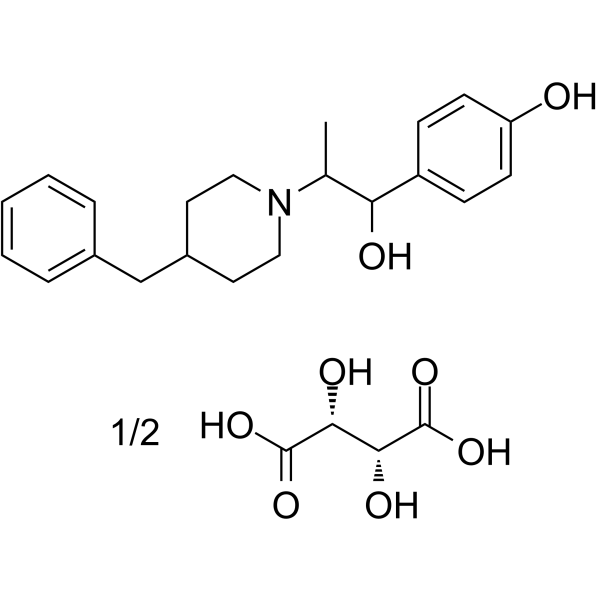
-
- HY-78924
-
|
|
Biochemical Assay Reagents
|
|
N-Boc-D-prolinol is a protected chiral proline derivative. N-Boc-D-prolinol facilitates the synthesis of highly selective histamine H1 and H3 receptor antagonists. N-Boc-D-prolinol can be used in the research of allergic rhinitis .
|
| Cat. No. |
상품명 |
Category |
Target |
Chemical Structure |
-
- HY-17042
-
-
-
- HY-B0539
-
-
-
- HY-B0303
-
-
-
- HY-B0303A
-
-
-
- HY-A0019
-
-
-
- HY-B0188A
-
-
-
- HY-12882A
-
-
-
- HY-B0426A
-
|
ALO4943A; KW4679
|
Structural Classification
Alkaloids
Classification of Application Fields
Ketones, Aldehydes, Acids
Other Alkaloids
Endogenous metabolite
Inflammation/Immunology
Disease Research Fields
Source Classification
|
Histamine Receptor
CXCR
|
|
Olopatadine hydrochloride (ALO4943A; KW4679) is an orally active histamine H1 receptor antagonist and mast cell stabilizer. Olopatadine hydrochloride exerts antiallergic effects by blocking histamine H1 receptor-mediated activities. Olopatadine hydrochloride inhibits exocytosis, chemokine release, F-actin polymerization, CXCL10-induced calcium influx, and T cell chemotactic activity. Olopatadine hydrochloride also reduces the expression levels of CXCR3 on the surface of CD4 + and CD8 + T cells. Olopatadine hydrochloride inhibits scratching behavior, improves dermatitis scores, and suppresses intraepidermal neurite outgrowth. Olopatadine hydrochloride simultaneously decreases the levels of inflammatory markers, growth factors, histamine, and specific IgE, while increasing the expression of ErbB3A/HER3A. Olopatadine hydrochloride can be used in research related to seasonal pollinosis, chronic rhinitis, urticaria, allergic conjunctivitis, alopecia areata, and atopic dermatitis .
|
-
-
- HY-17428
-
-
-
- HY-A0027
-
-
-
- HY-W062109
-
|
|
Structural Classification
Alkaloids
Classification of Application Fields
Other Alkaloids
Endogenous metabolite
Inflammation/Immunology
Disease Research Fields
Source Classification
|
Histamine Receptor
CXCR
|
|
Olopatadine (ALO4943A; KW4679) is an orally active histamine H1 receptor antagonist and mast cell stabilizer. Olopatadine exerts antiallergic effects by blocking histamine H1 receptor-mediated activities. Olopatadine inhibits exocytosis, chemokine release, F-actin polymerization, CXCL10-induced calcium influx, and T cell chemotactic activity. Olopatadine also reduces the expression levels of CXCR3 on the surface of CD4 + and CD8 + T cells. Olopatadine inhibits scratching behavior, improves dermatitis scores, and suppresses intraepidermal neurite outgrowth. Olopatadine simultaneously decreases the levels of inflammatory markers, growth factors, histamine, and specific IgE, while increasing the expression of ErbB3A/HER3A. Olopatadine can be used in research related to seasonal pollinosis, chronic rhinitis, urticaria, allergic conjunctivitis, alopecia areata, and atopic dermatitis .
|
-
-
- HY-B0303R
-
-
-
- HY-A0178
-
-
-
- HY-B0188AR
-
|
Org GB 94 (Standard)
|
Alkaloids
Structural Classification
Leguminosae
Other Alkaloids
Crotalaria pallida Ait.
Plants
Source Classification
|
Reference Standards
Histamine Receptor
Opioid Receptor
ERK
p38 MAPK
|
|
Mianserin hydrochloride (Org GB 94) (Standard) is the analytical standard of Mianserin hydrochloride. This product is intended for research and analytical applications. Mianserin hydrochloride is an orally active H1 receptor antagonist. Mianserin hydrochloride can activate κ-opioid receptor and octopamine receptor. Mianserin hydrochloride increases ERK1/2 and CREB phosphorylation, and antagonizes full κ-opioid agonist and Dynorphin A (HY-P1333)-induced MAPK phosphorylation. Mianserin hydrochloride modulates social and exploratory behaviour, raises electroconvulsive thresholds. Mianserin hydrochloride can be used for the research of neurological disease, such as depression and epilepsy .
|
-
-
- HY-B0426AR
-
|
ALO4943A (Standard); KW4679 (Standard)
|
Structural Classification
Alkaloids
Ketones, Aldehydes, Acids
Other Alkaloids
Endogenous metabolite
Source Classification
|
Reference Standards
Histamine Receptor
CXCR
|
|
Olopatadine (hydrochloride) (Standard) is the analytical standard of Olopatadine (hydrochloride). This product is intended for research and analytical applications. Olopatadine hydrochloride (ALO4943A; KW4679) is an orally active histamine H1 receptor antagonist and mast cell stabilizer. Olopatadine hydrochloride exerts antiallergic effects by blocking histamine H1 receptor-mediated activities. Olopatadine hydrochloride inhibits exocytosis, chemokine release, F-actin polymerization, CXCL10-induced calcium influx, and T cell chemotactic activity. Olopatadine hydrochloride also reduces the expression levels of CXCR3 on the surface of CD4 + and CD8 + T cells. Olopatadine hydrochloride inhibits scratching behavior, improves dermatitis scores, and suppresses intraepidermal neurite outgrowth. Olopatadine hydrochloride simultaneously decreases the levels of inflammatory markers, growth factors, histamine, and specific IgE, while increasing the expression of ErbB3A/HER3A. Olopatadine hydrochloride can be used in research related to seasonal pollinosis, chronic rhinitis, urticaria, allergic conjunctivitis, alopecia areata, and atopic dermatitis .
|
-
-
- HY-B0539R
-
-
-
- HY-N6772R
-
-
-
- HY-17042R
-
-
-
- HY-A0019R
-
-
-
- HY-N1514R
-
-
-
- HY-17428A
-
-
-
- HY-17428B
-
-
-
- HY-N7814R
-
|
|
Structural Classification
Microorganisms
Ketones, Aldehydes, Acids
Source Classification
|
Reference Standards
Endogenous Metabolite
|
|
Pheniramine (maleate) (Standard) is the analytical standard of Pheniramine (maleate). This product is intended for research and analytical applications. Pheniramine (Prophenpyridamine; Tripoton) maleate is a first-generation histamine H1 receptor antagonist, acts on the central nervous system (CNS) with sedative and hypnotic effect. Pheniramine maleate displays antitumor effect and induces leukemia cells apoptosis. Pheniramine maleate is also a safe and effective local agent that can suppress or relieve pain, with antipruritic effects .
|
-
-
- HY-17428R
-
|
|
Structural Classification
Alkaloids
Pyridine Alkaloids
Endogenous metabolite
Source Classification
|
Reference Standards
Histamine Receptor
|
|
Tripelennamine hydrochloride (Standard) is the analytical standard of Tripelennamine hydrochloride (HY-17428). This product is intended for research and analytical applications. Tripelennamine hydrochloride is a histamine H1-receptor antagonist. Tripelennamine hydrochloride effectively reverses histamine-induced bronchoconstriction, increased transpulmonary pressure, elevated pulmonary vascular resistance and reduced dynamic compliance. Tripelennamine hydrochloride does not significantly affect arterial hypoxemia, hemoglobin desaturation and hypercapnia in horses undergoing short-term high-intensity exercise. Tripelennamine hydrochloride exhibits local and central analgesic activity. Tripelennamine hydrochloride can be used in studies related to emphysema, urticaria and acute laminitis .
|
-
| Cat. No. |
상품명 |
Chemical Structure |
-
- HY-B0303AS
-
|
|
|
Diphenhydramine-d6 (hydrochloride) is the deuterium labeled Diphenhydramine hydrochloride. Diphenhydramine hydrochloride is a first-generation histamine H1-receptor antagonist with anti-cholinergic effect. Diphenhydramine hydrochloride can across the ovine blood-brain barrier (BBB) .
|
-
-
- HY-B0303AS1
-
|
|
|
Diphenhydramine-d5 (hydrochloride) is the deuterium labeled Diphenhydramine hydrochloride. Diphenhydramine hydrochloride is a first-generation histamine H1-receptor antagonist with anti-cholinergic effect. Diphenhydramine hydrochloride can across the ovine blood-brain barrier (BBB) .
|
-
-
- HY-17042S1
-
|
|
|
Cetirizine-d8 is a deuterium labeled Cetirizine. Cetirizine, a second-generation antihistamine and the carboxylated metabolite of hydroxyzine, is a specific, orally active and long-acting histamine H1-receptor antagonist. Cetirizine marks antiallergic properties and inhibits eosinophil chemotaxis during the allergic response .
|
-
-
- HY-B0781S
-
|
|
|
Promethazine-d4 (hydrochloride) is the deuterium labeled Promethazine hydrochloride. Promethazine hydrochloride is the first-generation antihistamine; strong antagonist of the H1 receptor and moderate mACh receptor antagonist, moderate affinity for 5-HT2A, 5-HT2C, D2 and α1-adrenergic receptors.
|
-
-
- HY-14541S
-
|
|
|
Olanzapine-d3 (LY170053-d3) is the deuterium labeled Olanzapine. Olanzapine is a selective, orally active monoaminergic antagonist with high affinity binding to serotonin H1, 5HT2A/2C, 5HT3, 5HT6 (Ki=7, 4, 11, 57, and 5 nM, respectively), dopamine D1-4 (Ki=11 to 31 nM), muscarinic M1-5 (Ki=1.9-25 nM), and adrenergic α1 receptors (Ki=19 nM). Olanzapine is an atypical antipsychotic .
|
-
-
- HY-B0539S3
-
|
|
|
Desloratadine-d5 is deuterium labeled Desloratadine. Desloratadine (Sch34117) is the orally active major metabolite of the nonsedating H1-antihistamine Loratadine. Desloratadine is a selective H1-receptor antagonist that has anti-allergic and anti-inflammatory activities .
|
-
-
- HY-B0814S1
-
|
|
|
Levocetirizine-d4 ((R)-Cetirizine-d4) is the deuterium-labeled Levocetirizine (HY-B0814) . Levocetirizine ((R)-Cetirizine) is a third-generation peripheral H1-receptor antagonist. Levocetirizine is an antihistaminic agent which is the R-enantiomer of Cetirizine. Levocetirizine has a higher affinity for the histamine H1-receptor than (S)-Cetirizine and can effectively treat allergic rhinitis and chronic idiopathic urticaria .
|
-
-
- HY-A0019S
-
|
|
|
Paliperidone-d4 is the deuterium labeled Paliperidone. Paliperidone (9-Hydroxyrisperidone), the major active metabolite of Risperidone, is a dopamine D2 antagonist and 5-HT2A antagonist. Paliperidone is also active as an antagonist at α1 and α2 adrenergic receptors and H1-histaminergic receptors. Paliperidone, a antipsychotic agent, shows efficacy against schizophrenia .
|
-
-
- HY-12532S
-
|
|
|
Astemizole-d3 is the deuterium labeled Astemizole. Astemizole (R 43512), a second-generation antihistamine drug to diminish allergic symptoms with a long duration of action, is a histamine H1-receptor antagonist, with an IC50 of 4 nM. Astemizole also shows potent hERG K+ channel blocking activity with an IC50 of 0.9 nM. Astemizole has antipruritic effects .
|
-
-
- HY-B0725S
-
|
|
|
Doxepin-d3 (hydrochloride) is a deuterium labeled Doxepin Hydrochloride. Doxepin hydrochloride is an orally active tricyclic antidepressant. Doxepin hydrochloride is a potent and selective histamine receptor H1 antagonist. Doxepin hydrochloride is also a potent CYP450 inhibitor and significantly inhibits CYP450 2C19 and 1A2 .
|
-
-
- HY-W062109S
-
|
|
|
Olopatadine-d6 is the deuterium labeled Olopatadine. Olopatadine hydrochloride (ALO4943A; KW4679) is an orally active histamine H1 receptor antagonist and mast cell stabilizer. Olopatadine hydrochloride exerts antiallergic effects by blocking histamine H1 receptor-mediated activities. Olopatadine hydrochloride inhibits exocytosis, chemokine release, F-actin polymerization, CXCL10-induced calcium influx, and T cell chemotactic activity. Olopatadine hydrochloride also reduces the expression levels of CXCR3 on the surface of CD4 + and CD8 + T cells. Olopatadine hydrochloride inhibits scratching behavior, improves dermatitis scores, and suppresses intraepidermal neurite outgrowth. Olopatadine hydrochloride simultaneously decreases the levels of inflammatory markers, growth factors, histamine, and specific IgE, while increasing the expression of ErbB3A/HER3A. Olopatadine hydrochloride can be used in research related to seasonal pollinosis, chronic rhinitis, urticaria, allergic conjunctivitis, alopecia areata, and atopic dermatitis .
|
-
-
- HY-B0188S
-
|
|
|
Mianserin-d3 is the deuterium labeled Mianserin (HY-B0188). Mianserin (Mianserine) is an orally active H1 receptor antagonist. Mianserin can activate κ-opioid receptor and octopamine receptor. Mianserin increases ERK1/2 and CREB phosphorylation, and antagonizes full κ-opioid agonist and Dynorphin A (HY-P1333)-induced MAPK phosphorylation. Mianserin modulates social and exploratory behaviour, raises electroconvulsive thresholds. Mianserin can be used for the research of neurological disease, such as depression and epilepsy .
|
-
-
- HY-B0548S1
-
|
|
|
Hydroxyzine-d8 is deuterium labeled Hydroxyzine. Hydroxyzine is a histamine H1-receptor antagonist .
|
-
-
- HY-17042S
-
|
|
|
Cetirizine-d4 is a deuterium labeled Cetirizine. Cetirizine, a second-generation antihistamine and the carboxylated metabolite of hydroxyzine, is a specific, orally active and long-acting histamine H1-receptor antagonist. Cetirizine marks antiallergic properties and inhibits eosinophil chemotaxis during the allergic response[1][2][3].
|
-
-
- HY-B0548AS1
-
|
|
|
Hydroxyzine-d4 (dihydrochloride) is the deuterium labeled Hydroxyzine dihydrochloride. Hydroxyzine dihydrochloride, a benzodiazepine antihistamine agent, acts as a orally active histamine?H1-receptor and serotonin antagonist. Hydroxyzine dihydrochloride has anxiolytic effect and can be used forthe research of generalised anxiety disorder .
|
-
-
- HY-B0640S
-
|
|
|
Epinastine- 13C,d3 (hydrobromide) is the 13C- and deuterium labeled Epinastine. Epinastine (WAL801) is an antihistamine and mast cell stabilizer. Epinastine is a potent, selective and orally-active histamine H1 receptor antagonist. Epinastine also inhibits IL-8 release and has an antiallergic action .
|
-
-
- HY-B0352S3
-
|
|
|
Mirtazapine-d4 hydrochloride is deuterated labeled Mirtazapine (HY-B0352). Mirtazapine (Org3770) is a potent and orally active noradrenergic and specific serotonergic antidepressant (NaSSA) agent. Mirtazapine is also a 5-HT2, 5-HT3, histamine H1 receptor and α2-adrenoceptor antagonist with pKi values of 8.05, 8.1, 9.3 and 6.95, respectively .
|
-
-
- HY-B0188AS
-
|
|
|
Mianserin-d3 hydrochloride is the deuterium labeled Mianserin. Mianserin (Mianserine) is an orally active H1 receptor antagonist. Mianserin can activate κ-opioid receptor and octopamine receptor. Mianserin increases ERK1/2 and CREB phosphorylation, and antagonizes full κ-opioid agonist and Dynorphin A (HY-P1333)-induced MAPK phosphorylation. Mianserin modulates social and exploratory behaviour, raises electroconvulsive thresholds. Mianserin can be used for the research of neurological disease, such as depression and epilepsy .
|
-
-
- HY-B0426AS
-
|
|
|
Olopatadine-d3 hydrochloride (ALO4943A-d3) is the deuterium labeled Olopatadine hydrochloride. Olopatadine hydrochloride (ALO4943A; KW4679) is an orally active histamine H1 receptor antagonist and mast cell stabilizer. Olopatadine hydrochloride exerts antiallergic effects by blocking histamine H1 receptor-mediated activities. Olopatadine hydrochloride inhibits exocytosis, chemokine release, F-actin polymerization, CXCL10-induced calcium influx, and T cell chemotactic activity. Olopatadine hydrochloride also reduces the expression levels of CXCR3 on the surface of CD4 + and CD8 + T cells. Olopatadine hydrochloride inhibits scratching behavior, improves dermatitis scores, and suppresses intraepidermal neurite outgrowth. Olopatadine hydrochloride simultaneously decreases the levels of inflammatory markers, growth factors, histamine, and specific IgE, while increasing the expression of ErbB3A/HER3A. Olopatadine hydrochloride can be used in research related to seasonal pollinosis, chronic rhinitis, urticaria, allergic conjunctivitis, alopecia areata, and atopic dermatitis .
|
-
-
- HY-B2169S2
-
|
|
|
Melperone-d4 hydrochloride is the deuterium labeled Melperone hydrochloride (HY-103109) . Melperone hydrochloride is a butyrophenone with atypical antipsychotic properties. Melperone hydrochloride is a multireceptor antagonist with Kds of 102 nM, 180 nM, 180 nM, and 150 nM for 5-HT2A, dopamine D2, α1-adrenergic, and α2-adrenergic receptors, respectively. Melperone hydrochloride has weak binding to histamine H1, 5-HT2C, 5-HT1A, 5-HT1D, and muscarinic receptors, with Kd values of 580 nM, 2100 nM, 2200 nM, 3400 nM, >10000 nM, respectively. Melperone hydrochloride is also a CYP2D6 inhibitor. Melperone hydrochloride can be used for the study of schizophrenia, and agitation in the elderly .
|
-
-
- HY-B0539S1
-
|
|
|
Desloratadine-d9 is the deuterium labeled Desloratadine. Desloratadine (Sch34117) is the orally active major metabolite of the nonsedating H1-antihistamine Loratadine. Desloratadine is a selective H1-receptor antagonist that has anti-allergic and anti-inflammatory activities .
|
-
-
- HY-B0539S
-
|
|
|
Desloratadine-d4 is the deuterium labeled Desloratadine. Desloratadine (Sch34117) is the orally active major metabolite of the nonsedating H1-antihistamine Loratadine. Desloratadine is a selective H1-receptor antagonist that has anti-allergic and anti-inflammatory activities[1][2].
|
-
-
- HY-B0539S4
-
|
|
|
Desloratadine-d4 hydrobromide is deuterated labeled Desloratadine (HY-B0539). Desloratadine (Sch34117) is the orally active major metabolite of the nonsedating H1-antihistamine Loratadine. Desloratadine is a selective H1-receptor antagonist that has anti-allergic and anti-inflammatory activities .
|
-
-
- HY-B0814S
-
|
|
|
Levocetirizine-d4 (dihydrochloride) is the deuterium labeled Levocetirizine. Levocetirizine ((R)-Cetirizine) is a third-generation peripheral H1-receptor antagonist. Levocetirizine is an antihistaminic agent which is the R-enantiomer of Cetirizine. Levocetirizine has a higher affinity for the histamine H1-receptor than (S)-Cetirizine and can effectively treat allergic rhinitis and chronic idiopathic urticaria[1].
|
-
-
- HY-B0539S2
-
|
|
|
Desloratadine-3,3,5,5-d4 is the deuterium labeled Desloratadine. Desloratadine (Sch34117) is the orally active major metabolite of the nonsedating H1-antihistamine Loratadine. Desloratadine is a selective H1-receptor antagonist that has anti-allergic and anti-inflammatory activities[1][2].
|
-
-
- HY-B0548AS
-
|
|
|
Hydroxyzine-d4 (dihydrochloride) is deuterium labeled Hydroxyzine. Hydroxyzine is a heterocyclic histamine H1-receptor antagonist. Hydroxyzine has anticholinergic, anxiolytic and analgesic properties .
|
-
-
- HY-B0781S1
-
|
|
Promethazine-d3 (hydrochloride) is deuterium labeled Promethazine (hydrochloride). Promethazine hydrochloride is an orally active phenothiazine derivative with antihistaminic (H1), sedative, antiemetic, anticholinergic, and antimotion sickness properties. Promethazine hydrochloride is a potent H1 receptor antagonist and a mAChR antagonist. It also has a certain affinity for 5-HT2A and 5-HT2C receptors .
|
-
-
- HY-B1296S1
-
|
|
|
Promethazine-d4 is a deuterated-labeled promethazine (HY-B0781). Promethazine is an orally active H1 receptor and mAChR antagonist with antihistamine (H1), sedative, antiemetic, anticholinergic, and anti-motion sickness properties .
|
-
-
- HY-30234S
-
|
|
|
Clemizole-d4 is a deuterium labeled Clemizole. Clemizole is an H1 histamine receptor antagonist, is found to substantially inhibit HCV replication .
|
-
-
- HY-14447S
-
|
|
|
Bilastine-d6 is the deuterium labeled Bilastine. Bilastine is a selective histamine H1 receptor antagonist used for treatment of allergic rhinoconjunctivitis and urticaria .
|
-
-
- HY-B0524AS
-
|
|
|
Betahistine-d3 (dihydrochloride) is the deuterium labeled Betahistine dihydrochloride. Betahistine dihydrochloride is an orally active histamine H1 receptor agonist and a H3 receptor antagonist . Betahistine dihydrochloride is used for the study of rheumatoid arthritis (RA) .
|
-
-
- HY-14447S1
-
|
|
|
Bilastine-d4 is deuterium labeled Bilastine. Bilastine is an oral histamine H1-receptor antagonist. Bilastine can be used for allergic rhinitis and urticaria studies, and it also improves diabetic nephropathy in mice, showing safety for the central nervous system .
|
-
-
- HY-B1397S
-
|
|
|
Cyclizine-d3 is deuterium labeled Cyclizine. Cyclizine, a piperazine-derivative, is a potent and selective histamine H1 receptor antagonist. Cyclizine can be used for the research of nausea, vomiting, and dizziness .
|
-
-
- HY-B0524AS1
-
|
|
|
Betahistine- 13C,d3 (dihydrochloride) is the 13C- and deuterium labeled Betahistine (dihydrochloride). Betahistine dihydrochloride is an orally active histamine H1 receptor agonist and a H3 receptor antagonist . Betahistine dihydrochloride is used for the study of rheumatoid arthritis (RA) .
|
-
-
- HY-17042AS1
-
|
|
|
Cetirizine-d8 (dihydrochloride) is a deuterium labeled Cetirizine. Cetirizine, a second-generation antihistamine and the carboxylated metabolite of hydroxyzine, is a specific, orally active and long-acting histamine H1-receptor antagonist. Cetirizine marks antiallergic properties and inhibits eosinophil chemotaxis during the allergic response .
|
-
-
- HY-17042AS
-
|
|
|
Cetirizine-d4 (dihydrochloride) is a deuterium labeled Cetirizine. Cetirizine, a second-generation antihistamine and the carboxylated metabolite of hydroxyzine, is a specific, orally active and long-acting histamine H1-receptor antagonist. Cetirizine marks antiallergic properties and inhibits eosinophil chemotaxis during the allergic response .
|
-
-
- HY-B0349S
-
|
|
|
Meclizine-d8 is a deuterium labeled Meclizine. Meclizine is a histamine H1 receptor antagonist and has the potential to treat nausea and motion sickness. Meclizine is an agonist ligand for mouse constitutive androstane receptor (CAR) and an inverse agonist for Human CAR .
|
-
-
- HY-B0548AS2
-
|
|
|
Hydroxyzine-d8 (dihydrochloride) is the deuterium labeled Hydroxyzine dihydrochloride. Hydroxyzine dihydrochloride, a benzodiazepine antihistamine agent, acts as a orally active histamine?H1-receptor and serotonin antagonist. Hydroxyzine dihydrochloride has anxiolytic effect and can be used forthe research of generalised anxiety disorder .
|
-
-
- HY-B0801S2
-
|
|
|
Fexofenadine-d3 is the deuterium labeled Fexofenadine . Fexofenadine (MDL-16455) is an orally active and nonsedative H1 receptor antagonist. Fexofenadine can be used in allergic rhinitis and chronic idiopathic urticarial research .
|
-
-
- HY-B0298AS
-
1 Publications Verification
|
|
Clemastine (HS-592; Meclastine)-d5 fumarate is the deuterium labeled Clemastine fumarate. Clemastine fumarate is an orally active, blood-brain barrier-permeable H1 histamine receptor (H1 histamine receptor) antagonist with potent antiallergic effects. Clemastine fumarate also antagonizes muscarinic acetylcholine receptors (mAChR), particularly the M1 and M4 subtypes. In addition to antihistamine effects, Clemastine fumarate exhibits multiple pharmacological activities, especially in promoting central nervous system remyelination, activating autophagy and pyroptosis, exerting anti-apoptotic and neuroprotective effects, and suppressing inflammation .
|
-
-
- HY-B1589AS
-
|
|
|
Carbinoxamine-d6 (maleate) is the deuterium labeled Carbinoxamine maleate salt. Carbinoxamine maleate salt is a blood-brain barrier-permeable histamine H1 receptor antagonist. Carbinoxamine maleate salt blocks the action of histamine on H1 receptors, reducing symptoms such as sneezing, rhinitis, rhinorrhea, erythema, pruritus and urticaria. Carbinoxamine maleate salt inhibits influenza virus entry into cells via endocytosis, targets the early stage of the viral life cycle, and simultaneously reduces viral replication levels in the lungs, alleviating pathological damage and inflammatory responses in lung tissues. Carbinoxamine maleate salt can be used in research on allergic rhinitis, influenza, etc.
|
-
-
- HY-B0674S
-
|
|
|
Ebastine-d5 is the deuterium labeled Ebastine. Ebastine (LAS-W 090) is an orally active, second-generation histamine H1 receptor antagonist. Ebastine can be used for the symptoms of allergic rhinitis and chronic idiopathic urticaria research .
|
-
-
- HY-B0674S1
-
|
|
|
Ebastine-d6 is deuterated labeled Ebastine (HY-B0674). Ebastine (LAS-W 090) is an orally active, second-generation histamine H1 receptor antagonist. Ebastine can be used for the symptoms of allergic rhinitis and chronic idiopathic urticaria research .
|
-
-
- HY-B0801S4
-
|
|
|
Fexofenadine-d3-1 fumarate is deuterated labeled Fexofenadine (HY-B0801). Fexofenadine (MDL-16455) is an orally active and nonsedative H1 receptor antagonist. Fexofenadine can be used in allergic rhinitis and chronic idiopathic urticarial research .
|
-
-
- HY-B1794S
-
|
|
|
Thiethylperazine-d3 is the deuterium labeled Thiethylperazinee (HY-B1794). Thiethylperazine, a phenothiazine derivate, is an orally active and potent dopamine D2-receptor and histamine H1-receptor antagonist. Thiethylperazine is also a selective ABCC1activator that reduces amyloid-β (Aβ) load in mice. Thiethylperazine has anti-emetic, antipsychotic and antimicrobial effects .
|
-
-
- HY-12752BS
-
|
|
|
Alimemazine-d6 hydrochloride (Trimeprazine-d6 hydrochloride) is the deuterium labeled Alimemazine (HY-12752). Alimemazine is a phenothiazine derivative that is generally used as an antipruritic agent and also a hemagglutinin (HA)-receptor antagonist.Alimemazine (Trimeprazine) is also acts as a partial agonist against the histamine H1 receptor (H1R) and other GPCRs. Alimemazine displays antiserotonin, antispasmodic, and antiemetic properties .
|
-
-
- HY-121356S
-
|
|
|
Carebastine-d5 is the deuterium labeled Carebastine. Carebastine is the active metabolite of Ebastine. Carebastine is a histamine H1 receptor antagonist. Carebastine inhibits VEGF-induced HUVEC and HPAEC proliferation, migration and angiogenesis in a dose-dependent manner . Carebastine suppresses the expression of macrophage migration inhibitory factor .
|
-
-
- HY-121356S1
-
|
|
|
Carebastine-d5 Methyl Ester is the deuterium labeled Carebastine. Carebastine is the active metabolite of Ebastine. Carebastine is a histamine H1 receptor antagonist. Carebastine inhibits VEGF-induced HUVEC and HPAEC proliferation, migration and angiogenesis in a dose-dependent manner . Carebastine suppresses the expression of macrophage migration inhibitory factor .
|
-
-
- HY-108411S
-
|
|
|
Emedastine- 13C,d3 fumarate is the 13C- and deuterium labeled Emedastine. Emedastine is an orally active, selective and high affinity histamine H1 receptor antagonist with a Ki value of 1.3 nM. Emedastine is a benzimidazole derivative with potent antiallergic properties and used for allergic rhinitis, allergic skin diseases and allergic conjunctivitis .
|
-
-
- HY-A0015S
-
|
|
|
Bepotastine-d6(besylate) is deuterium labeled Bepotastine (besilate). Bepotastine besilate is a selective and orally active second-generation histamine H1 receptor antagonist, can suppress the expression of nerve growth factor (NGF). Bepotastine besilate has the potential for allergic rhinitis, allergic conjunctivitis and urticaria/pruritus research .
|
-
- HY-32329S
-
|
|
|
Setiptiline-d3 is the deuterium labeled Setiptiline. Setiptiline (Org-8282) is a serotonin receptor antagonist. Setiptiline is a tetracyclic antidepressant (TeCA) which acts as a noradrenergic and specific serotonergic antidepressant (NaSSA). Setiptiline acts as a norepinephrine reuptake inhibitor, α2-adrenergic receptor antagonist, and serotonin receptor antagonist, likely at the 5-HT2A, 5-HT2C, and/or 5-HT3 subtypes, as well as an H1 receptor inverse agonist/antihistamine .
|
-
- HY-A0027AS
-
|
|
|
Fenspiride-d5 is the deuterium labeled Fenspiride. Fenspiride, an orally active non-steroidal antiinflammatory agent, is an antagonist of H1-histamine receptor. Fenspiride inhibites phosphodiesterase 3 (PDE3), phosphodiesterase 4 (PDE4) and phosphodiesterase 5 (PDE5) activities with -log IC50 values of 3.44, 4.16 and approximately 3.8, respectively. Fenspiride can be used for the research of respiratory diseases .
|
-
- HY-B1193S
-
|
|
|
Terfenadine-d3 ((±)-Terfenadine-d3) is the deuterium labeled Terfenadine. Terfenadine ((±)-Terfenadine) is a potent open-channel blocker of hERG with an IC50 of 204 nM . Terfenadine, an H1 histamine receptor antagonist, acts as a potent apoptosis inducer in melanoma cells through modulation of Ca2+ homeostasis. Terfenadine induces ROS-dependent apoptosis, simultaneously activates Caspase-4, -2, -9[2].
|
-
- HY-B0352S2
-
|
|
|
Mirtazapine-d4 is deuterium labeled Mirtazapine. Mirtazapine (Org3770) is a potent and orally active noradrenergic and specific serotonergic antidepressant (NaSSA) agent. Mirtazapine is also a 5-HT2, 5-HT3, histamine H1 receptor and α2-adrenoceptor antagonist with pKi values of 8.05, 8.1, 9.3 and 6.95, respectively .
|
-
- HY-W744038
-
|
|
|
Zotepine-d6 is the deuterium labeled Zotepine (HY-103093). Zotepine, an antipsychotic agent, is a potent antagonist of 5-HT2A, 5-HT2C, Histamine H1, α1-adrenergic and Dopamine D2 receptors, with Kds of 2.6 nM, 3.2 nM, 3.3 nM, 7.3 nM and 8 nM, respectively. Zotepine exhibits antidepressive and anxiolytic effects in vivo .
|
-
- HY-B0426AS2
-
|
|
|
Olopatadine-d6 (ALO4943A-d6; KW4679-d6) hydrochloride is deuterium-labeled Olopatadine (hydrochloride) (HY-B0426A). Olopatadine hydrochloride (ALO4943A; KW4679) is an orally active histamine H1 receptor antagonist and mast cell stabilizer. Olopatadine hydrochloride exerts antiallergic effects by blocking histamine H1 receptor-mediated activities. Olopatadine hydrochloride inhibits exocytosis, chemokine release, F-actin polymerization, CXCL10-induced calcium influx, and T cell chemotactic activity. Olopatadine hydrochloride also reduces the expression levels of CXCR3 on the surface of CD4 + and CD8 + T cells. Olopatadine hydrochloride inhibits scratching behavior, improves dermatitis scores, and suppresses intraepidermal neurite outgrowth. Olopatadine hydrochloride simultaneously decreases the levels of inflammatory markers, growth factors, histamine, and specific IgE, while increasing the expression of ErbB3A/HER3A. Olopatadine hydrochloride can be used in research related to seasonal pollinosis, chronic rhinitis, urticaria, allergic conjunctivitis, alopecia areata, and atopic dermatitis .
|
-
- HY-14541S2
-
|
|
|
Olanzapine-d8 is a deuterated labeled Olanzapine . Olanzapine (LY170053) is a selective, orally active monoaminergic antagonist with high affinity binding to serotonin H1, 5HT2A/2C, 5HT3, 5HT6 (Ki=7, 4, 11, 57, and 5 nM, respectively), dopamine D1-4 (Ki=11 to 31 nM), muscarinic M1-5 (Ki=1.9-25 nM), and adrenergic α1 receptor (Ki=19 nM). Olanzapine is an atypical antipsychotic .
|
-
- HY-10564S
-
|
|
|
Sarpogrelate-d3 (hydrochloride) is the deuterium labeled Sarpogrelate hydrochloride. Sarpogrelate hydrochloride (MCI-9042) is a selective 5-HT2R antagonist, with pKis of 8.52, 6.57, and 7.43 for 5-HT2A, 5-HT2B, and 5-HT2C receptors, respectively. Sarpogrelate hydrochloride displays selectivity over 5-HT1, 5-HT3, 5-HT4, α1-, α2- and β-adrenoreceptor, histamine H1, H2 and muscarinic M3 receptors. Sarpogrelate hydrochloride can be used for the research of vascular disease associated with thrombosis .
|
-
- HY-A0069AS
-
|
|
|
Doxylamine-d5 is deuterium labeled Doxylamine (HY-A0069A). Doxylamine is a first-generation antihistamine and acts as a histamine H1 receptor antagonist. Doxylamine is orally active, possessing analgesic and hypnotic activities. Doxylamine enhances the activities of CYP2B, CYP2A, CYP3A and thyroxine-glucuronosyltransferase via promoting substrate hydroxylation and thyroxine metabolic pathways. Doxylamine decreases serum thyroxine (T4) level and elevates serum thyroid-stimulating hormone (TSH) level. Doxylamine induces liver enlargement and increases the activities of hepatic microsomal cytochrome P450, cytochrome b5 and NADPH-cytochrome c reductase. Doxylamine can be used for the research of nausea, allergy, insomnia .
|
-
- HY-10564S1
-
|
|
|
Sarpogrelate-d4 (MCI-9042-d4) hydrochloride is deuterium labeled Sarpogrelate (hydrochloride). Sarpogrelate hydrochloride (MCI-9042) is a selective 5-HT2R antagonist, with pKis of 8.52, 6.57, and 7.43 for 5-HT2A, 5-HT2B, and 5-HT2C receptors, respectively. Sarpogrelate hydrochloride displays selectivity over 5-HT1, 5-HT3, 5-HT4, α1-, α2- and β-adrenoreceptor, histamine H1, H2 and muscarinic M3 receptors. Sarpogrelate hydrochloride can be used for the research of vascular disease associated with thrombosis .
|
-
- HY-A0069S
-
|
|
|
Doxylamine-d5 succinate is deuterium labeled Doxylamine succinate (HY-A0069A). Doxylamine succinate is a first-generation antihistamine and acts as a histamine H1 receptor antagonist. Doxylamine succinate is orally active, possessing analgesic and hypnotic activities. Doxylamine succinate enhances the activities of CYP2B, CYP2A, CYP3A and thyroxine-glucuronosyltransferase via promoting substrate hydroxylation and thyroxine metabolic pathways. Doxylamine succinate decreases serum thyroxine (T4) level and elevates serum thyroid-stimulating hormone (TSH) level. Doxylamine succinate induces liver enlargement and increases the activities of hepatic microsomal cytochrome P450, cytochrome b5 and NADPH-cytochrome c reductase. Doxylamine succinate can be used for the research of nausea, allergy, insomnia .
|
-
- HY-A0027S
-
|
|
|
Fenspiride-d5 hydrochloride is the deuterium labeled Fenspiride hydrochloride (HY-A0027). Fenspiride hydrochloride is an α adrenergic and H1 histamine receptor antagonist .
|
-
- HY-B1589S
-
|
|
|
(±)-Carbinoxamine-d6 is the deuterium labeled (±)-Carbinoxamine (HY-B1589) . (±)-Carbinoxamine is a blood-brain barrier-permeable histamine H1 receptor antagonist. (±)-Carbinoxamine blocks the action of histamine on H1 receptors, reducing symptoms such as sneezing, rhinitis, rhinorrhea, erythema, pruritus and urticaria. (±)-Carbinoxamine inhibits influenza virus entry into cells via endocytosis, targets the early stage of the viral life cycle, and simultaneously reduces viral replication levels in the lungs, alleviating pathological damage and inflammatory responses in lung tissues. (±)-Carbinoxamine can be used in research on allergic rhinitis, influenza, etc.
|
-
Your information is safe with us. * Required Fields.
Inquiry Information
- 상품명:
- Cat. No.:
- 수량:
- MCE Japan Authorized Agent:





![1-[3-(4-tert-Butylbenzoyl)propyl]-4-hydroxypiperidine](http://file.medchemexpress.com/product_pic/hy-z6838.gif)





