



Diphenhydramine
Based on 9 publication(s) in Google Scholar
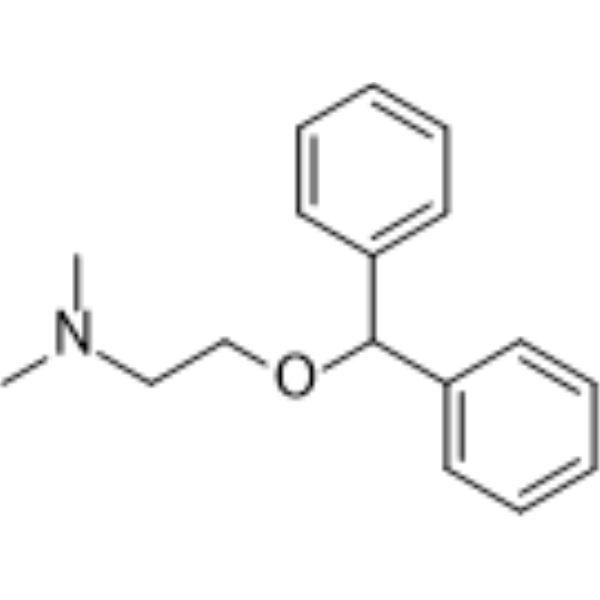
Diphenhydramine is a first-generation histamine H1-receptor antagonist with anti-cholinergic effect. Diphenhydramine hydrochloride can across the ovine blood-brain barrier (BBB) .
For research use only. We do not sell to patients.
- Purity : 99.85%
- CAS No.: 58-73-1
- Formula: C17H21NO
- Molecular Weight:255.35
-
Storage:Pure form -20°C, 3 years , 4°C, 2 years ; In solvent -80°C, 6 months , -20°C, 1 month

To place orders, for customer services and technical support, please contact: MedChemExpress USA
Tel: 609-228-6898 E-mail: [email protected] [email protected]


-
 Biological Activity
-
Chemical Information
-
Solvent & Solubility
- Purity & Documentation
- References
-
 Help & FAQs


-
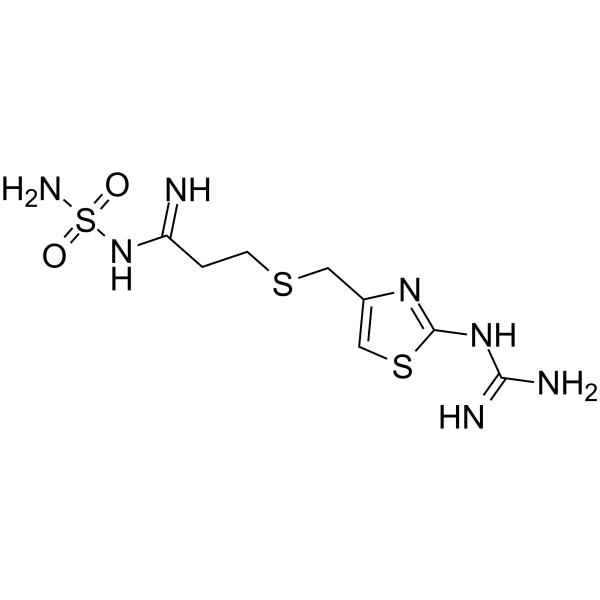
HY-B0377
FamotidineHistamine H2 Receptor Antagonist -
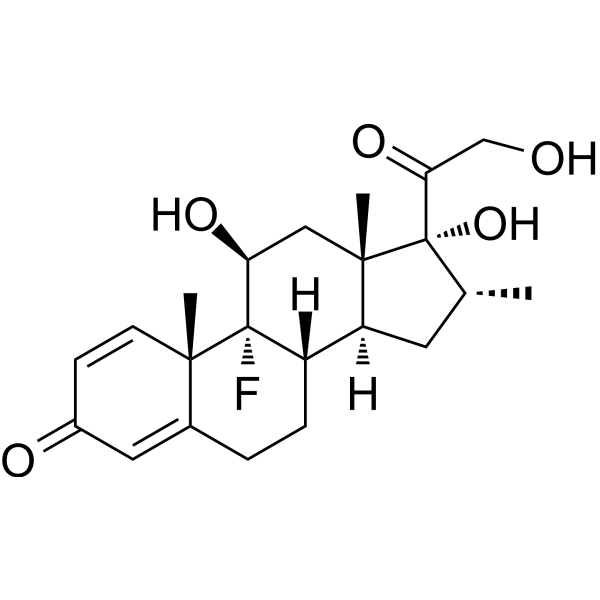
HY-14648
DexamethasoneGR Agonist -
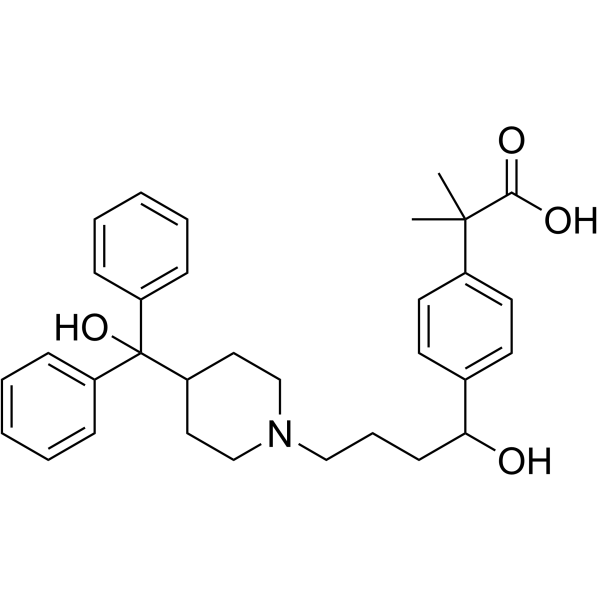
HY-B0801
FexofenadineH1R Antagonist -
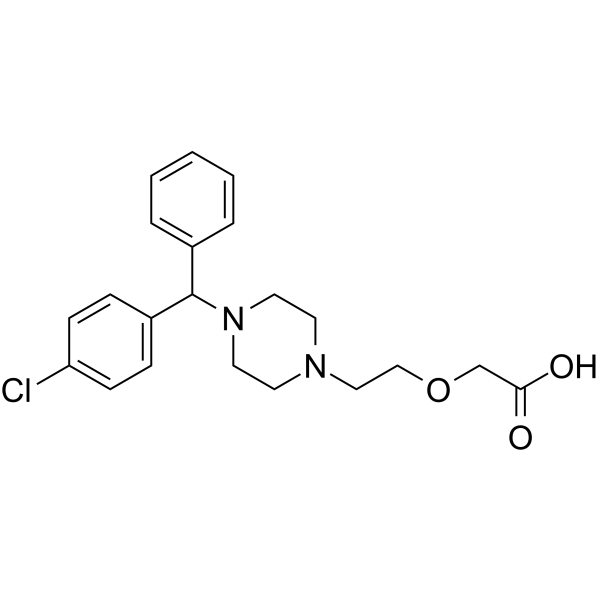
HY-17042
CetirizineH1-receptor Antagonist -
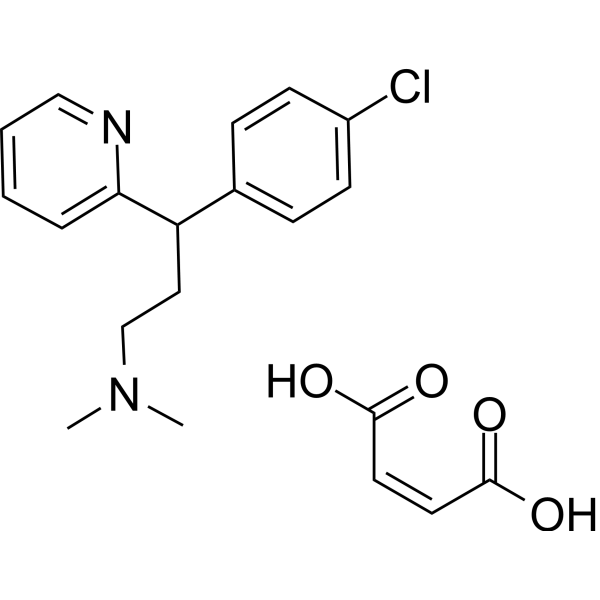
HY-B0286A
Chlorpheniramine maleateHistamine H1 Receptor Antagonist -

HY-B0303R
Diphenhydramine (Standard)Antihistamine -
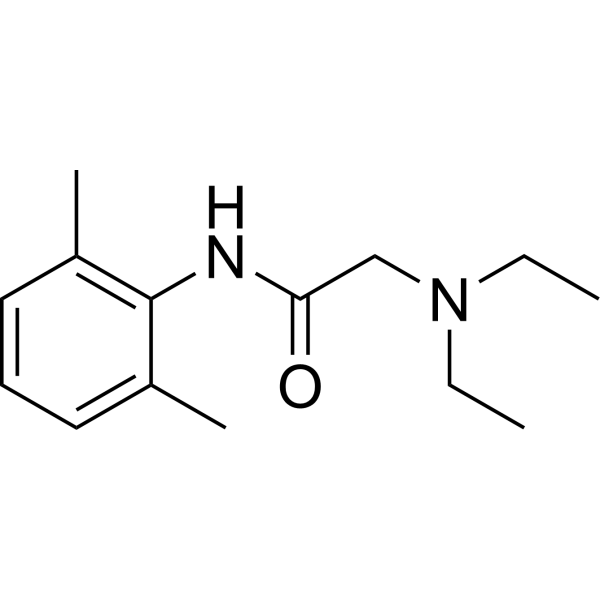
HY-B0185
LidocaineNa+ Channel Blocker -
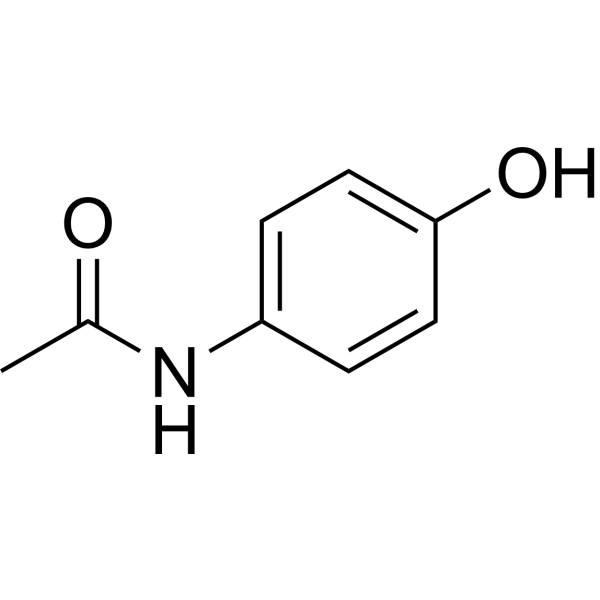
HY-66005
AcetaminophenCOX-2 Inhibitor -
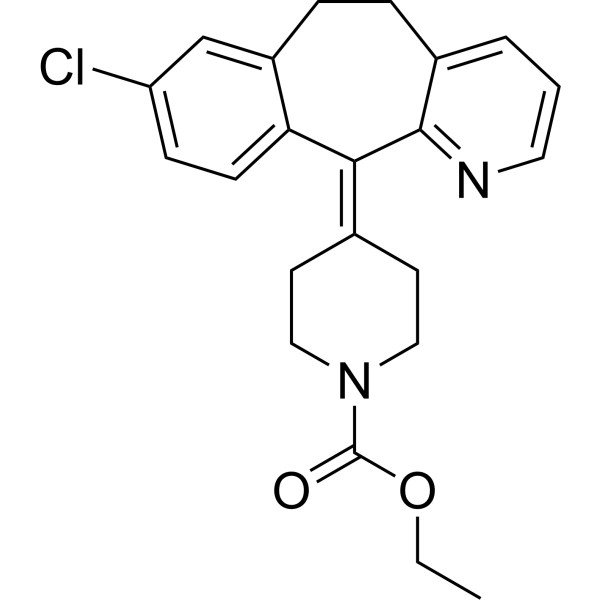
HY-17043
LoratadineInfluenza Virus Inhibitor -
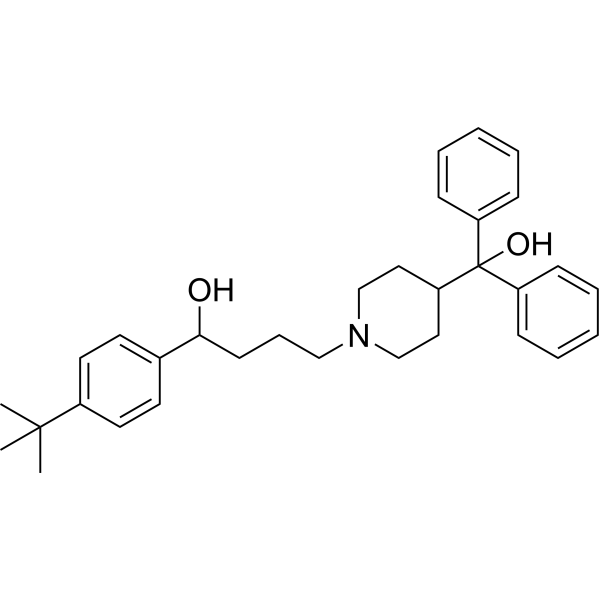
HY-B1193
TerfenadineCaspase Activator -
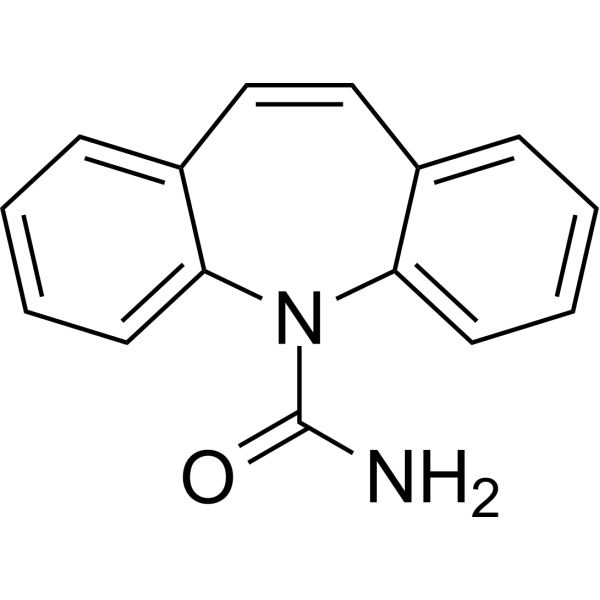
HY-B0246
CarbamazepineAnticonvulsant -
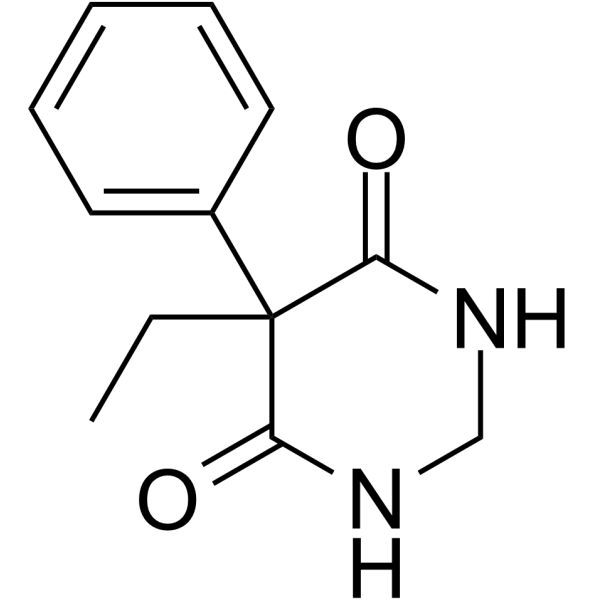
HY-B0339
PrimidoneTRPM3 Inhibitor
Publications Citing Use of MedChemExpress (MCE) Diphenhydramine
More- Acta Pharmacol Sin. 2024 Oct;45(10):2061-2076. [Abstract]
- Cell Rep. 2022 Nov 8;41(6):111615. [Abstract]
- Cell Rep Methods. 2023 Oct 23;3(10):100599. [Abstract]
- Am J Physiol Cell Physiol. 2026 Jun 18. [Abstract]
- Pharm Res. 2025 Oct 27. [Abstract]
- Pharmacol Res Perspect. 2021 Oct;9(5):e00879. [Abstract]
- Res Sq. 2026 Mar 10.
- bioRxiv. 2025 Sep 10:2025.09.05.673576. [Abstract]
- Chemosphere. 2019 Jun:225:378-387. [Abstract]
All Histamine Receptor Isoforms
MoreAll iGluR Isoforms
More

Biological Activity
Description
IC50 & Target
|
H1 Receptor |
NMDA Receptor 24.6 μM (IC50) |
Cellular Effect
|
Cell Line

|
Type | Value | Description | References |
|---|---|---|---|---|
| HEK293 | IC50 |
41 μM
Compound: Diphenhydramine
|
Inhibition of sodium current measured using whole-cell patch clamp experiments in HEK-293 cells stably transfected with hNaV1.5 cDNA
Inhibition of sodium current measured using whole-cell patch clamp experiments in HEK-293 cells stably transfected with hNaV1.5 cDNA
|
[PMID: 21300721] |
| HEK293 | IC50 |
>500 μM
Compound: Table 1, R42C1
|
Inhibition of ORAl1/2/3 in HEK293 cells assessed as inhibition of Ca2+ influx after 10 mins by FLIPR assay in presence of thapsigargin
Inhibition of ORAl1/2/3 in HEK293 cells assessed as inhibition of Ca2+ influx after 10 mins by FLIPR assay in presence of thapsigargin
|
[PMID: 23602525] |
| HEK293 | IC50 |
>500 μM
Compound: Table 1, R42C1
|
Inhibition of ORAl1/2/3 in HEK293 cells assessed as inhibition of Cd2+ influx after 10 mins by FLIPR assay in presence of thapsigargin
Inhibition of ORAl1/2/3 in HEK293 cells assessed as inhibition of Cd2+ influx after 10 mins by FLIPR assay in presence of thapsigargin
|
[PMID: 23602525] |
| MDCK | IC50 |
24 μM
Compound: Diphenhydramine
|
TP_TRANSPORTER: inhibition of TEA uptake (TEA: 50 uM) in OCT1-expressing MDCK cells
TP_TRANSPORTER: inhibition of TEA uptake (TEA: 50 uM) in OCT1-expressing MDCK cells
|
[PMID: 11758759] |
| MDCK | IC50 |
32 μM
Compound: Diphenhydramine
|
TP_TRANSPORTER: inhibition of TEA uptake (TEA: 50 uM) in OCT2-expressing MDCK cells
TP_TRANSPORTER: inhibition of TEA uptake (TEA: 50 uM) in OCT2-expressing MDCK cells
|
[PMID: 11758759] |
| Ventricular myocyte | IC50 |
228 μM
Compound: Diphenhydramine
|
Inhibition of calcium current (ICaL) measured using whole-cell patch clamp experiments in isolated guinea pig ventricular myocytes
Inhibition of calcium current (ICaL) measured using whole-cell patch clamp experiments in isolated guinea pig ventricular myocytes
|
[PMID: 21300721] |
| Ventricular myocyte | IC50 |
228 μM
Compound: Diphenhydramine
|
Inhibition of L-type calcium channel measured using whole-cell patch clamp in guinea pig ventricular myocytes
Inhibition of L-type calcium channel measured using whole-cell patch clamp in guinea pig ventricular myocytes
|
[PMID: 22761000] |
In Vitro
Diphenhydramine (1-300 μM, 30 s) can block NMDA-activated membrane currents. This property can be responsible for or add to its sedative, analgesic and memory related effects[2].
MedChemExpress (MCE) has not independently confirmed the accuracy of these methods. They are for reference only.
-
Cell Line:Human TsA cells
-
Concentration:1-300 μM
-
Incubation Time:10-30 s
-
Result:Did not discriminate between different GluN2 receptor subunits.
The IC50 value of Diphenhydramine against GluN1/GluN2B was 24.6 µM.
The IC50 values of Diphenhydramine against GluN1/GluN2A and GluN1_A652C/GluN2A were 24.4 µM and 89.6 µM, respectively, indicating that the receptor modification reduces sensitivity for diphenhydramine.
The inhibitory potency of Diphenhydramine did not be overcome with increasing NMDA concentrations.
The inhibitory potency of Diphenhydramine did not increase with increasing agonist concentration.
In Vivo
Diphenhydramine (20 mg/kg, i.p.) can improve the kidney injury induced by Cisplatin (CDDP) (HY-17394) in mice, and does not affect the anti-tumor efficacy of Cisplatin[4].
Pharmacokinetic parameters for diphenhydramine after single oral or intravenous administration of diphenhydramine HCl (5 mg/kg) to six healthy dogs by using a noncompartmental model with first-order elimination[3]
| Route | Dose (mg/kg) | AUClast (ng·h/mL) | C0 (ng/Ml) | CL (Ml/h/kg) | T1/2 (h) | Kel (1/h) | MRT (h) | Vss_obs (mL/kg) | Cmax (ng/mL) | Tmax (h) | Vz (mL/kg) | F (%) |
| i.v. | 5 | 391.20 | 266.10 | 2833.04 | 1.89 | 0.45 | 2.47 | 6582.36 | / | / | / | / |
| p.o. | 5 | 153.80 | / | / | 4.98 | 0.59 | 6.97 | / | 35.80 | 1.30 | 180157.36 | 7.75 |