



Antazoline

Based on 1 Customer Validation
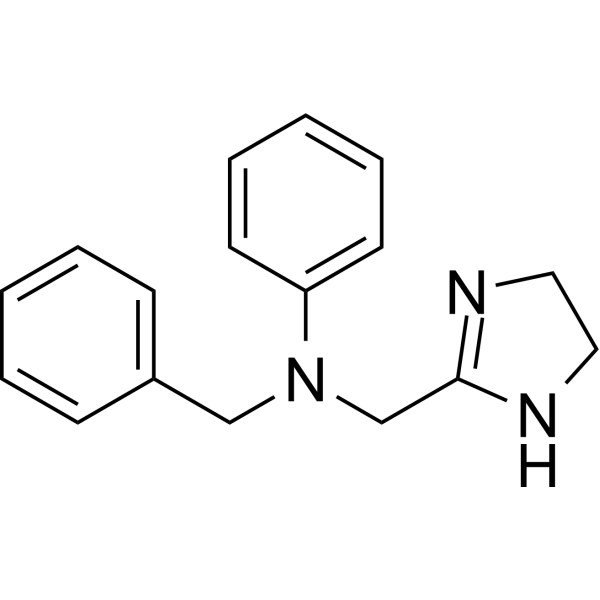
Antazoline (Phenazoline) is a histamine H1 receptor antagonist with anticholinergic and antiviral properties. Antazoline can prevent histamine from acting on target cells through a reversible competition effect on histamine receptor sites of these cells. Antazoline can exert an antiallegic effect and prevent the occurrence of physiological reactions from the effect of blocking as well as inhibiting H1 receptor. Antazoline can effectively reduce HBV DNA in the extracellular supernatant in a dose-dependent manner, with EC50 of 2.910 μmol/L in HepAD38 cells. Antazoline also has a significant inhibitory effect on HBV DNA in the extracellular supernatant of Huh7 cells (EC50 = 2.349 μmol/L). Antazoline has anti-arrhythmic effect in acute myocardial infarctions. Antazoline can be studied in research for cardiovascular diseases, and HBV.
Nur für Forschungszwecke. Wir verkaufen nicht an Patienten.
- Reinheit : 99.70%
- CAS. Nr.: 91-75-8
- Formel: C17H19N3
- Molecular Weight:265.35
-
Speicherung:
4°C, protect from light
* In solvent : -80°C, 6 months; -20°C, 1 month (protect from light)

To place orders, for customer services and technical support, please contact: MedChemExpress USA
Tel: 609-228-6898 E-mail: [email protected] [email protected]


-
 Biologische Aktivität
-
Chemical Information
-
Lösungsmittel & Löslichkeit
- Protokoll
- Reinheit & Dokumentation
- Verweise
-
 Help & FAQs


-

HY-B1067AR
Antazoline (Standard)H1 Receptor Antagonist -
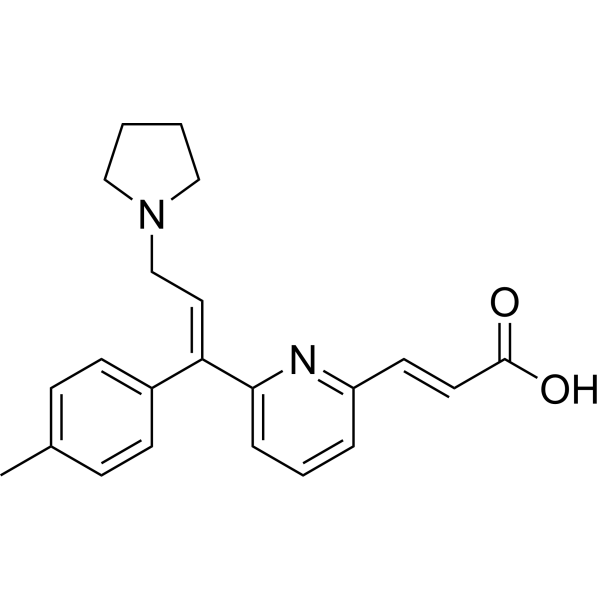
HY-B1510
AcrivastineHistamine Receptor Inhibitor -
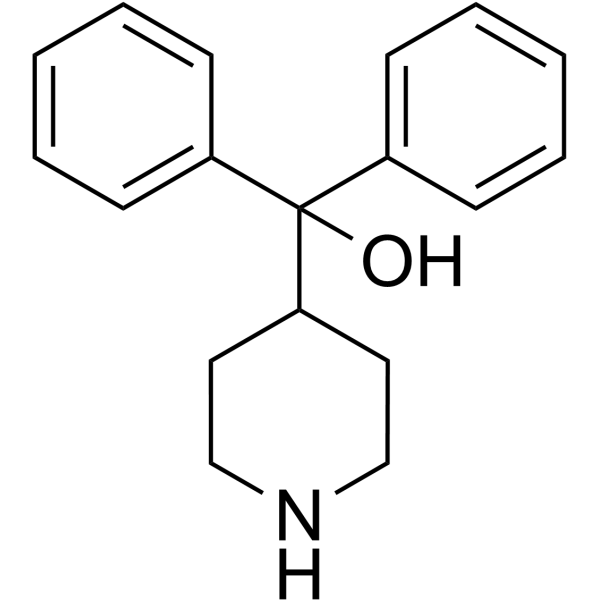
HY-B0530
AzacyclonolCentral Depressant Agent -
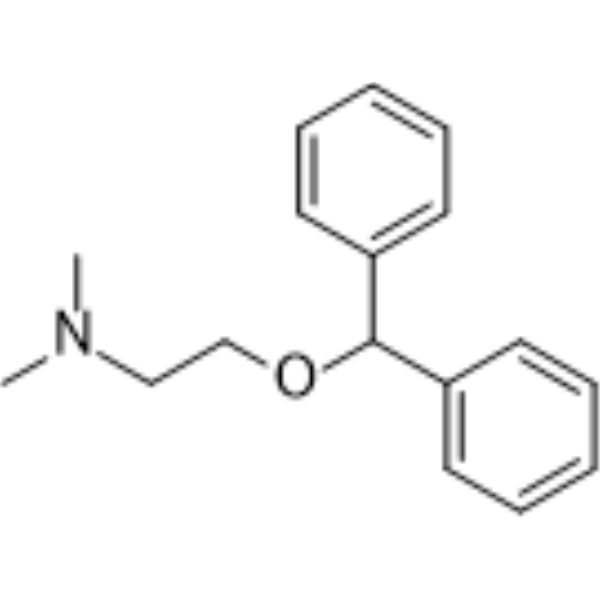
HY-B0303
DiphenhydramineAntihistamine -

HY-B0303R
Diphenhydramine (Standard)Antihistamine -
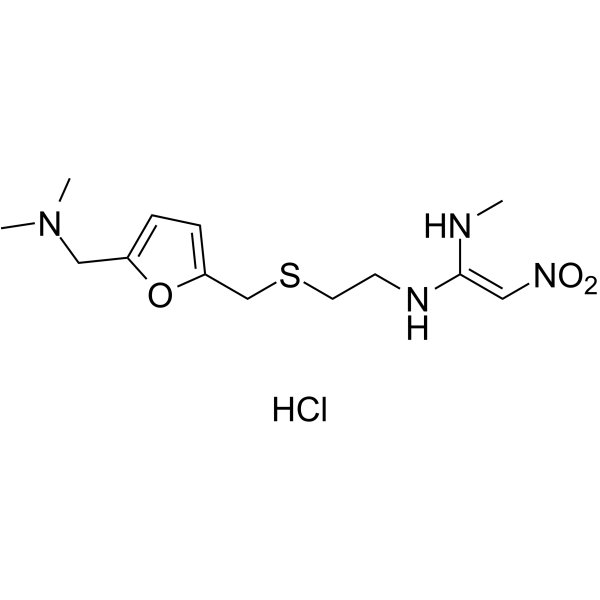
HY-B0281A
Ranitidine hydrochlorideHistamine H2-Receptor Antagonist -
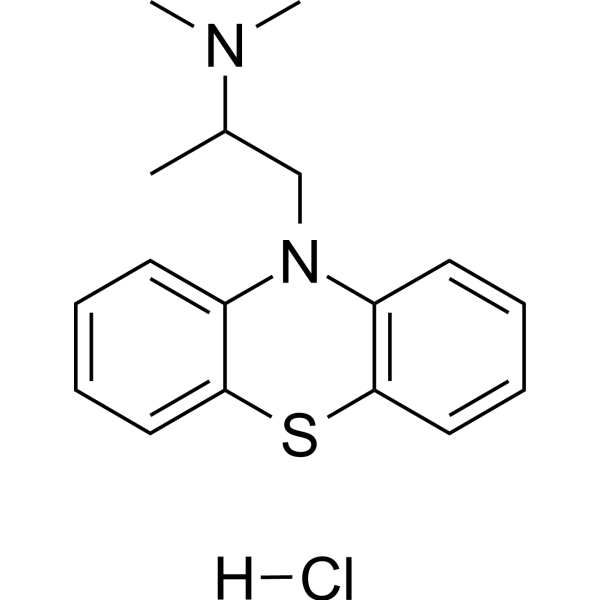
HY-B0781
Promethazine hydrochlorideHistamine Receptor Antagonist -
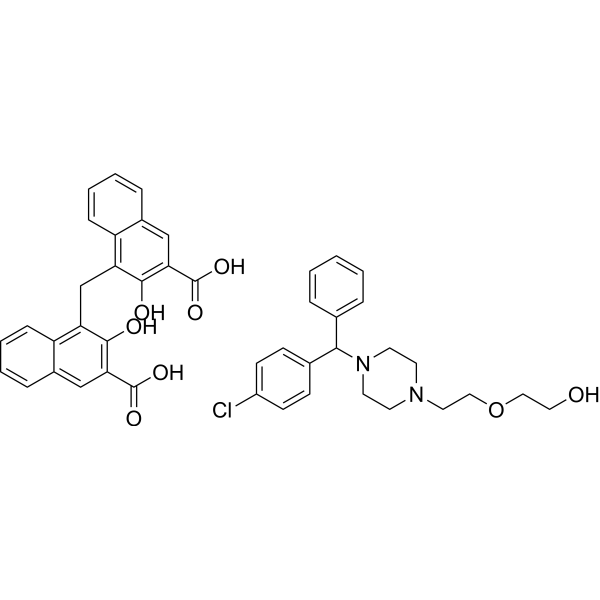
HY-B0895
Hydroxyzine pamoateHistamine Receptor Antagonist -
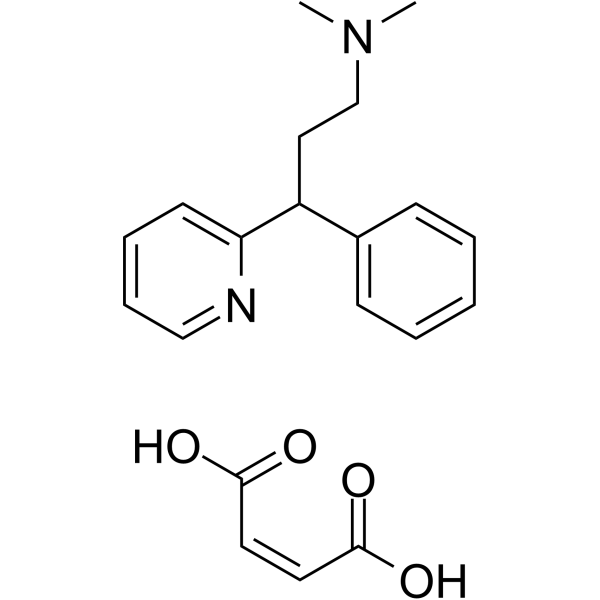
HY-B0971
Pheniramine maleateH1 Receptor Antagonist -

HY-B0530R
Azacyclonol (Standard)Central Depressant Agent -

HY-B1510R
Acrivastine (Standard)Histamine Receptor Inhibitor -

HY-B0281AR
Ranitidine hydrochloride (Standard)Standard of Ranitidine hydrochloride
Alle Histamine Receptor Isoform-spezifische Produkte anzeigen
More

Biologische Aktivität
Beschreibung
IC50 & Target
|
H1 Receptor |
In Vitro
Antazoline (Phenazoline) shows good inhibitory effect on HBV DNA in the supernatant of HepAD38 and Huh7 cells with the value of EC50 is 2.910 μmol/L and 2.349 μmol/L, respectively[2].
MedChemExpress (MCE) has not independently confirmed the accuracy of these methods. They are for reference only.
-
Cell Line:HepAD38 cells
-
Concentration:10μmol/L
-
Incubation Time:5 days
-
Result:Exhibited no significant cytotoxicity at a concentration of 10μmol/L and had a dose-dependent inhibition of HBV DNA in the supernatant.
-
Cell Line:Huh7 cells
-
Concentration:30 μmol/L, 10 μmol/L, 3.33 μmol/L, 1.1 μmol/L, 0.370 μmol/L, and 0.123 μmol/L
-
Incubation Time:4 days
-
Result:Had a significant inhibitory effect on HBV DNA in supernatants in a dose-dependent manner.
In Vivo
MedChemExpress (MCE) has not independently confirmed the accuracy of these methods. They are for reference only.
-
Animal Model:Swiss mice[3]
-
Dosage:0.01 mL/g
-
Administration:Antazoline (IP; 0.01 ml/g; 30min)
-
Result:Showed some proconvulsive activity.


Chemical Information
-
CAS. Nr. 91-75-8
-
Appearance Solid
-
Molecular Weight 265.35
-
Formel C17H19N3
-
Color White to off-white
-
SMILES
C1(CN(C2=CC=CC=C2)CC3=CC=CC=C3)=NCCN1
-
Synonyms
Phenazoline
-
Versand
Room temperature in continental US; may vary elsewhere.
-
Speicherung
4°C, protect from light
* In solvent : -80°C, 6 months; -20°C, 1 month (protect from light)


Lösungsmittel & Löslichkeit
In Vitro:
DMSO : 50 mg/mL (188.43 mM; Need ultrasonic; Hygroscopic DMSO has a significant impact on the solubility of product, please use newly opened DMSO)
Please refer to the solubility information to select the appropriate solvent. Once prepared, please aliquot and store the solution to prevent product inactivation from repeated freeze-thaw cycles.
Storage method and period of stock solution: -80°C, 6 months; -20°C, 1 month (protect from light). When stored at -80°C, please use it within 6 months. When stored at -20°C, please use it within 1 month.
Please refer to the solubility information to select the appropriate solvent. Once prepared, please aliquot and store the solution to prevent product inactivation from repeated freeze-thaw cycles.
Storage method and period of stock solution: -80°C, 6 months; -20°C, 1 month (protect from light). When stored at -80°C, please use it within 6 months. When stored at -20°C, please use it within 1 month.
Konzentration (Stammlösung) × Volumen (Stammlösung) = Konzentration (Ziellösung) × Volumen (Ziellösung)
In Vivo:
Select the appropriate dissolution method based on your experimental animal and administration route.
- For the following dissolution methods, please ensure to first prepare a clear stock solution using an In Vitro approach and then sequentially add co-solvents:
- To ensure reliable experimental results, the clarified stock solution can be appropriately stored based on storage conditions. As for the working solution for In Vivo experiments, it is recommended to prepare freshly and use it on the same day.
- The percentages shown for the solvents indicate their volumetric ratio in the final prepared solution. If precipitation or phase separation occurs during preparation, heat and/or sonication can be used to aid dissolution.
Add each solvent one by one: 10% DMSO 40% PEG300 5% Tween-80 45% Saline
Solubility: ≥ 2.5 mg/mL (9.42 mM); Clear solution
This protocol yields a clear solution of ≥ 2.5 mg/mL (saturation unknown).
Taking 1 mL working solution as an example, add 100 μL DMSO stock solution (25.0 mg/mL) to 400 μL PEG300, and mix evenly; then add 50 μL Tween-80 and mix evenly; then add 450 μL Saline to adjust the volume to 1 mL.
Preparation of Saline: Dissolve 0.9 g sodium chloride in ddH₂O and dilute to 100 mL to obtain a clear Saline solution.
Add each solvent one by one: 10% DMSO 90% (20% SBE-β-CD in Saline)
Solubility: ≥ 2.5 mg/mL (9.42 mM); Clear solution
This protocol yields a clear solution of ≥ 2.5 mg/mL (saturation unknown).
Taking 1 mL working solution as an example, add 100 μL DMSO stock solution (25.0 mg/mL) to 900 μL 20% SBE-β-CD in Saline, and mix evenly.
Preparation of 20% SBE-β-CD in Saline (4°C, storage for one week): 2 g SBE-β-CD powder is dissolved in 10 mL Saline, completely dissolve until clear.
In Vivo Dissolution Calculator
Please enter the basic information of animal experiments:
-
-
-
-
Recommended: Prepare an additional quantity of animals to account for potential losses during experiments.
Please enter your animal formula composition:
-
%DMSO +
Recommended: Keep the proportion of DMSO in working solution below 2% if your animal is weak.
-
%+
-
+%Tween-80 + +
-
%Saline +
The co-solvents required include: DMSO, . All of co-solvents are available by MedChemExpress (MCE). , Tween 80. All of co-solvents are available by MedChemExpress (MCE).
Working solution concentration: 0.22 mg/mL
Method for preparing stock solution: mg drug dissolved in μL DMSO. Stock solution concentration: mg/mL. * In solvent : -80°C, 6 months; -20°C, 1 month (protect from light)
1. Take μL DMSO stock solution;
2. Add μL .
μL , mix evenly;
3. Then add μL Tween 80, mix evenly;
4. Then add μL
Please ensure that the stock solution in the first step is dissolved to a clear state, and add co-solvents in sequence. You can use ultrasonic heating (ultrasonic cleaner, recommended frequency 20-40 kHz), vortexing, etc. to assist dissolution.


Reinheit & Dokumentation
-
Data Sheet (277 KB)
-
SDS (396 KB)
- English - EN (396 KB)
- Français - FR (396 KB)
- Deutsch - DE (396 KB)
- Norwegian - NO (396 KB)
- Español - ES (396 KB)
- Swedish - SV (396 KB)
- Italian - IT (396 KB)
- Korean - KR (396 KB)
- Portuguese - PT (396 KB)
-
Handling Instructions (2659 KB)
Verweise
[1]. Wang, R., et al., (2013). Determination of antazoline hydrochloride in rat plasma and excreta by reversed-phase ion-pair chromatography and its application to pharmacokinetics. Biomedical chromatography : BMC, 27(12), 1595–1602. [Content Brief]
[2]. Li, J., et al., (2021). Repurposing of Antazoline Hydrochloride as an Inhibitor of Hepatitis B Virus DNA Secretion. Virologica Sinica, 36(3), 501–509. [Content Brief]
[3]. Gehring, D. A., & Kehler, J. G. (1970). Conversion of atrial fibrillation with antazoline hydrochloride (Arithmin). Angiology, 21(1), 11–17. [Content Brief]


Complete Stock Solution Preparation Table
Please refer to the solubility information to select the appropriate solvent. Once prepared, please aliquot and store the solution to prevent product inactivation from repeated freeze-thaw cycles.
Storage method and period of stock solution: -80°C, 6 months; -20°C, 1 month (protect from light). When stored at -80°C, please use it within 6 months. When stored at -20°C, please use it within 1 month.
| Optional Solvent | Concentration Solvent Mass | 1 mg | 5 mg | 10 mg | 25 mg |
|---|---|---|---|---|---|
| DMSO | 1 mM | 3.7686 mL | 18.8430 mL | 37.6861 mL | 94.2152 mL |
| 5 mM | 0.7537 mL | 3.7686 mL | 7.5372 mL | 18.8430 mL | |
| 10 mM | 0.3769 mL | 1.8843 mL | 3.7686 mL | 9.4215 mL | |
| 15 mM | 0.2512 mL | 1.2562 mL | 2.5124 mL | 6.2810 mL | |
| 20 mM | 0.1884 mL | 0.9422 mL | 1.8843 mL | 4.7108 mL | |
| 25 mM | 0.1507 mL | 0.7537 mL | 1.5074 mL | 3.7686 mL | |
| 30 mM | 0.1256 mL | 0.6281 mL | 1.2562 mL | 3.1405 mL | |
| 40 mM | 0.0942 mL | 0.4711 mL | 0.9422 mL | 2.3554 mL | |
| 50 mM | 0.0754 mL | 0.3769 mL | 0.7537 mL | 1.8843 mL | |
| 60 mM | 0.0628 mL | 0.3141 mL | 0.6281 mL | 1.5703 mL | |
| 80 mM | 0.0471 mL | 0.2355 mL | 0.4711 mL | 1.1777 mL | |
| 100 mM | 0.0377 mL | 0.1884 mL | 0.3769 mL | 0.9422 mL |


Antazoline Related Classifications
HY-B1067A Related Classifications
 Powered by Bioz