



Levocabastine hydrochloride
Based on 1 publication(s) in Google Scholar
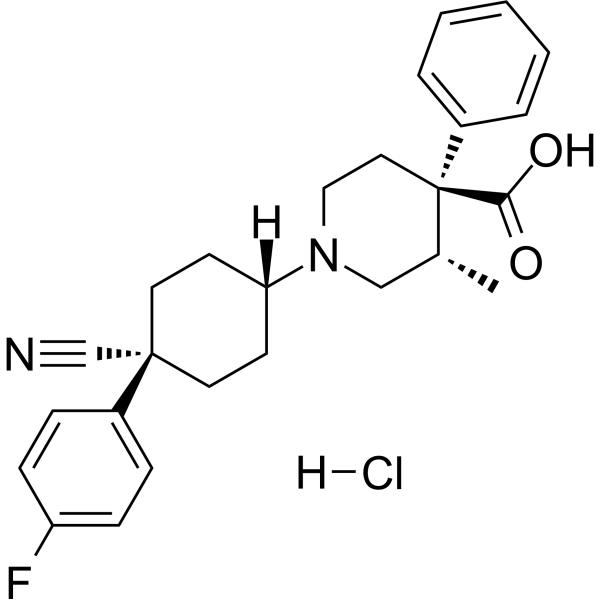
Levocabastine (R 50547) hydrochloride is a potent and selective histamine H1-receptor antagonist. Levocabastine hydrochloride is also a selective, high affinity neurotensin receptor subtype 2 (NTR2) antagonist, with a Ki of 17 nM for mNTR2. Levocabastine hydrochloride can act as a VLA-4 antagonist, interferes with conjunctival eosinophil infiltration in allergic conjunctivitis (AC).
For research use only. We do not sell to patients.
- Purity : 99.37%
- CAS No.: 79547-78-7
- Formula: C26H30ClFN2O2
- Molecular Weight:456.98
-
Storage:
-20°C, sealed storage, away from moisture
* In solvent : -80°C, 6 months; -20°C, 1 month (sealed storage, away from moisture)

To place orders, for customer services and technical support, please contact: MedChemExpress USA
Tel: 609-228-6898 E-mail: [email protected] [email protected]


-
 Biological Activity
-
Chemical Information
- Purity & Documentation
- References
-
 Help & FAQs


-

HY-14277AR
Levocabastine hydrochloride (Standard)VLA-4 Antagonist -
HY-12802
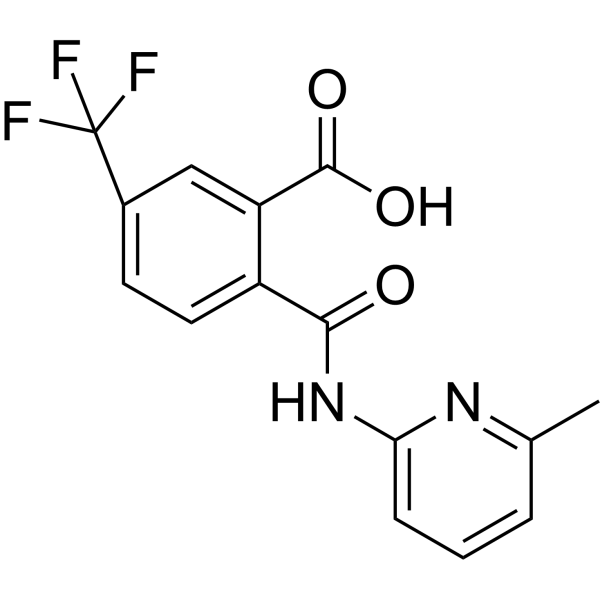
AF38469Sortilin Inhibitor -
HY-137322
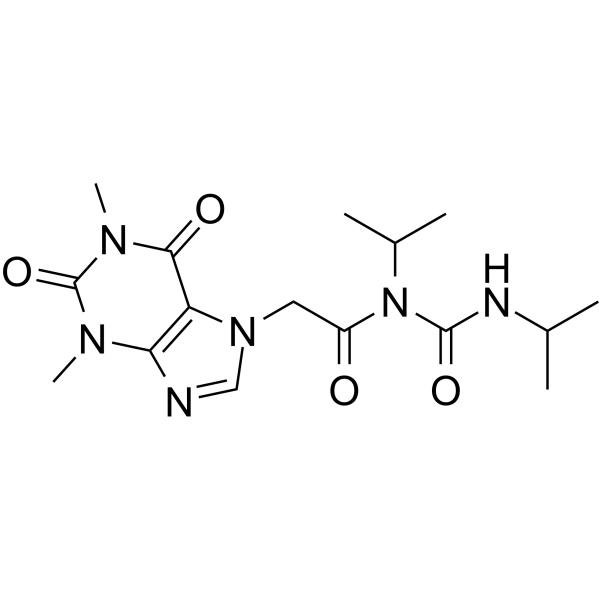
THX-Bp75NTR Antagonist -
HY-115213
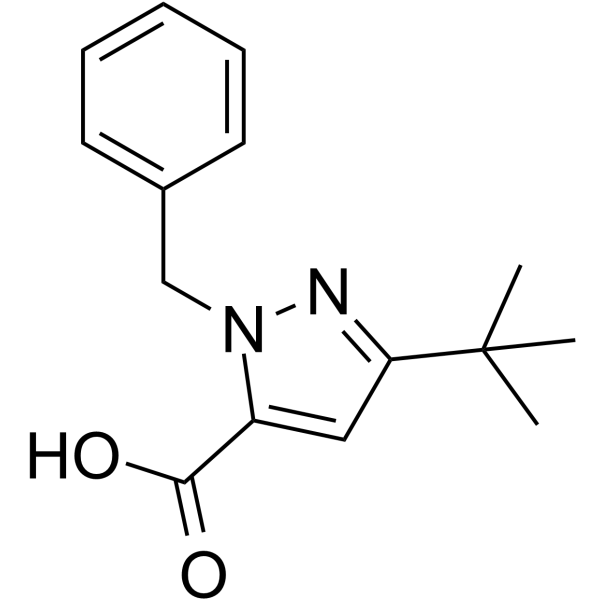
SORT-PGRN interaction inhibitor 1Sortilin-Progranulin Interaction Inhibitor -
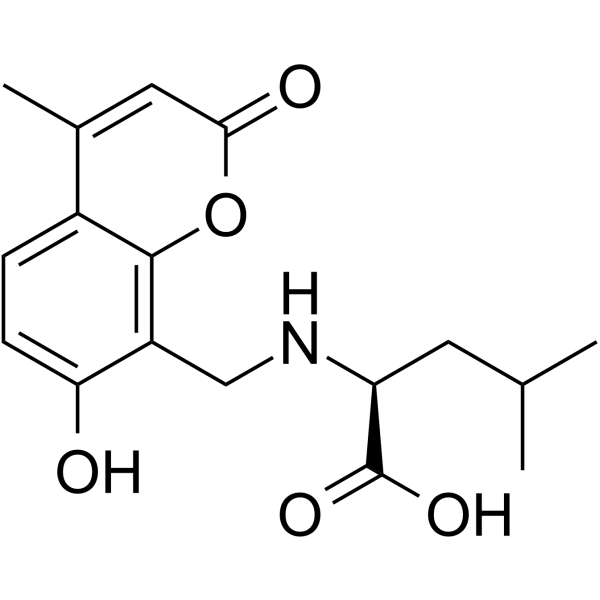
HY-124673
AF40431Sortilin Ligand -
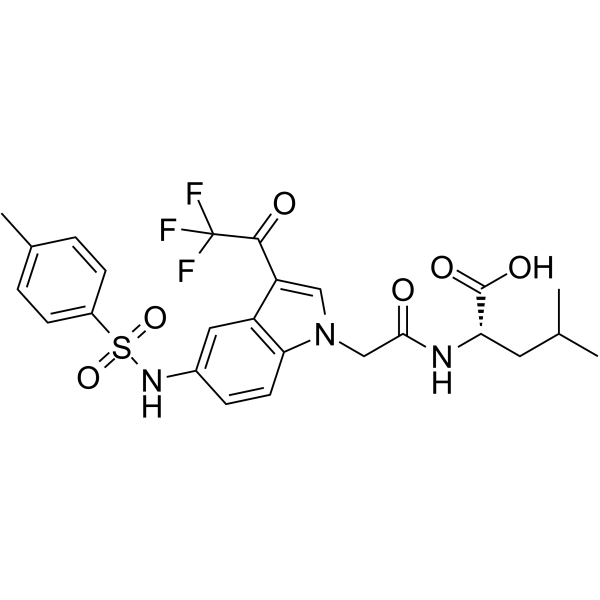
HY-12436
NTRC-824NTS2 Antagonist -
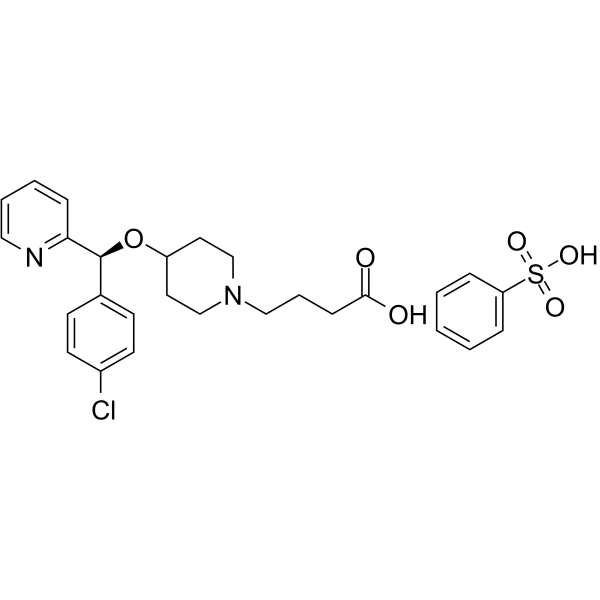
HY-A0015
Bepotastine besilateHistamine H1 Receptor Antagonist -
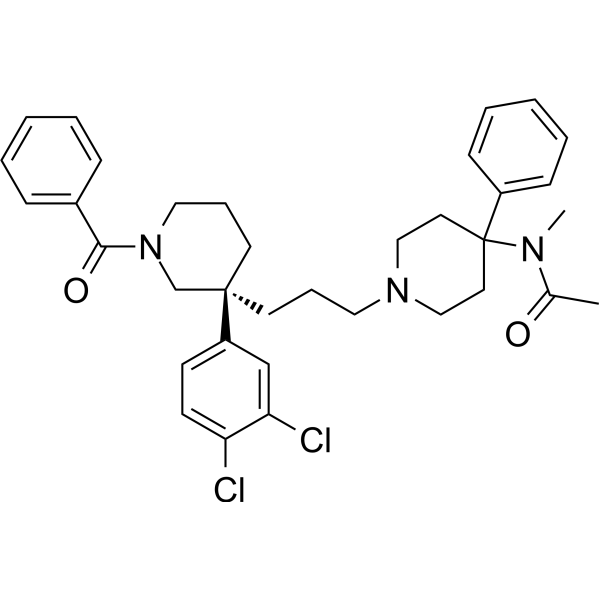
HY-14551B
(S)-OsanetantNK3 Receptor Antagonist -

HY-A0015R
Bepotastine besilate (Standard)Histamine H1 Receptor Antagonist
Publications Citing Use of MedChemExpress (MCE) Levocabastine hydrochloride
MoreAll Histamine Receptor Isoforms
More

Biological Activity
Description
IC50 & Target
[1]|
H1 Receptor |
NTR2 17 nM (Ki) |
In Vitro
Levocabastine (0-1000 μM; HEK-293 cells) hydrochloride causes inhibition of 125I-FN binding to the SPA bead-associated α4β1 integrin in a concentration-dependent manner with an IC50 of 406.2μm[3].
Levocabastine (0-1000 μM; 30 min; Jurkat cells and EoL-1 cells) hydrochloride inhibits α4β1 integrin/VCAM-1-mediated cell adhesion in vitro. Levocabastine inhibits α4β1 integrindependent adhesion of Jurkat cells to VCAM-1 with an IC50 of 395.6 μM, and the adhesion of EoL-1 cells with an IC50 of 403.6 μM. Moreover, Levocabastine inhibits adhesion of human eosinophils to VCAM-1-coated wells (IC50=443.7 μM)[3].
MedChemExpress (MCE) has not independently confirmed the accuracy of these methods. They are for reference only. .
In Vivo
Levocabastine (0.05 mg/kg; i.p.; once; male C57BL/6J mice) hydrochloride blocks anti-stress effect ofβ-LT on mouse behavior[2].
Levocabastine (500 μg/eye; drops eye; once; ovalbumin-sensitized guinea pigs) hydrochloride induces allergic conjunctivitis (AC) and a significant increase of conjunctival VLA-4[3].
MedChemExpress (MCE) has not independently confirmed the accuracy of these methods. They are for reference only.
-
Animal Model:Guinea-pig with Parainfluenza-3 (PI-3) virus[1]
-
Dosage:0.25 mg/kg
-
Administration:Intraperitoneal injection; twice a day for five days
-
Result:Suppressed the influx of broncho-alveolar cells and increased in albumin content.
-
Animal Model:Male C57BL/6J mice (8-9 weeks old)[2]
-
Dosage:0.05 mg/kg; 30 mg/kg (β-LT)
-
Administration:Intraperitoneal injection; once
-
Result:Blocked the anxiolytic effect ofβ-LT and decreased the number of head-dips.
-
Animal Model:Ovalbumin-sensitized guinea pigs[3]
-
Dosage:500 µg/eye
-
Administration:drops eye, once
-
Result:Produced a noteworthy protection from allergic conjunctivitis (AC) and prevented the conjuctival elevation of VLA-4 as well as conjunctival eosinophil infiltration.


Chemical Information
-
CAS No. 79547-78-7
-
Appearance Solid
-
Molecular Weight 456.98
-
Formula C26H30ClFN2O2
-
Color White to off-white
-
SMILES
OC([C@@]1(C2=CC=CC=C2)[C@@H](CN([C@]3([H])CC[C@](CC3)(C4=CC=C(C=C4)F)C#N)CC1)C)=O.[H]Cl
-
Synonyms
R 50547 hydrochloride
-
Shipping
Room temperature in continental US; may vary elsewhere.
-
Storage
-20°C, sealed storage, away from moisture
* In solvent : -80°C, 6 months; -20°C, 1 month (sealed storage, away from moisture)


Publications (1)
-
Journal Impact Factor
-
Most Recent


Purity & Documentation
-
Data Sheet (280 KB)
-
SDS (394 KB)
- English - EN (394 KB)
- Français - FR (394 KB)
- Deutsch - DE (394 KB)
- Norwegian - NO (394 KB)
- Español - ES (394 KB)
- Swedish - SV (394 KB)
- Italian - IT (394 KB)
- Korean - KR (394 KB)
- Portuguese - PT (394 KB)
-
Handling Instructions (2659 KB)
References
[1]. Folkerts G, et, al. Virus-induced airway hyperresponsiveness in the guinea-pig: possible involvement of histamine and inflammatory cells. Br J Pharmacol. 1993 Apr;108(4):1083-93. [Content Brief]
[2]. Yamauchi R, et, al. Effect of beta-lactotensin on acute stress and fear memory. Peptides. 2006 Dec;27(12):3176-82. [Content Brief]
[3]. Qasem AR, et, al. Contribution of alpha4beta1 integrin to the antiallergic effect of levocabastine. Biochem Pharmacol. 2008 Sep 15;76(6):751-62. [Content Brief]

Calculators
Concentration (start) × Volume (start) = Concentration (final) × Volume (final)


Levocabastine hydrochloride Related Classifications
HY-14277A Related Classifications
 Powered by Bioz