



Epinastine hydrochloride

Based on 1 Customer Validation
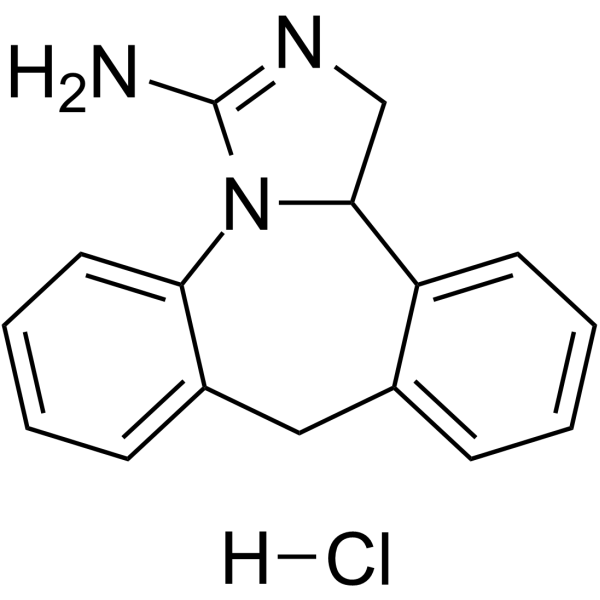
Epinastine hydrochloride (WAL801 hydrochloride) is a selective and orally active histamine H1 receptor antagonist, CD96/PVR inhibitor and mast cell stabilizer. Epinastine hydrochloride has high affinity for neuronal octopamine receptors in locusts (Ki = 2 nM) and honeybees (Ki = 1.1 nM). Epinastine hydrochloride inhibits TARC, IL-8, and IL-4. Epinastine hydrochloride activates anti-colon cancer immunity and inhibits Substance P (HY-P0201)-induced scratching behavior and increased vascular permeability. Epinastine hydrochloride can be used in the research of allergic diseases.
For research use only. We do not sell to patients.
- Purity : 99.86%
- CAS No.: 108929-04-0
- Formula: C16H16ClN3
- Molecular Weight:285.77
-
Storage:
4°C, sealed storage, away from moisture
* In solvent : -80°C, 6 months; -20°C, 1 month (sealed storage, away from moisture)

To place orders, for customer services and technical support, please contact: MedChemExpress USA
Tel: 609-228-6898 E-mail: [email protected] [email protected]


-
 Biological Activity
-
Chemical Information
-
Solvent & Solubility
- Protocols
- Purity & Documentation
- References
-
 Help & FAQs


-
HY-B0640AR
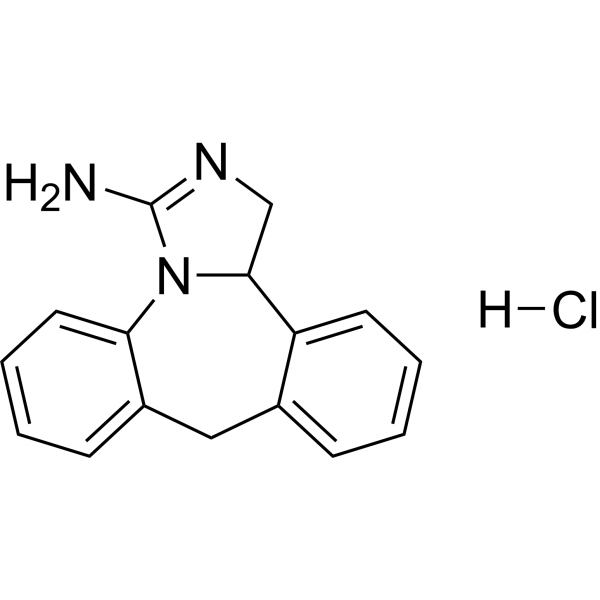
Epinastine hydrochloride (Standard)Standard Of Epinastine Hydrochloride -
HY-10219
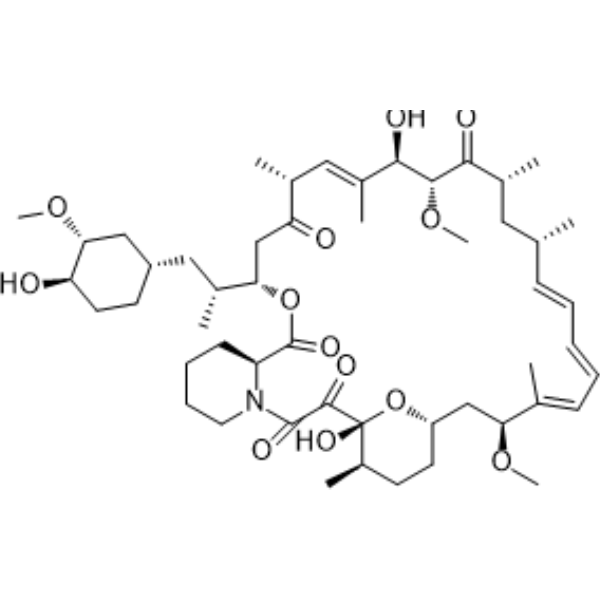
RapamycinmTOR Inhibitor -

HY-10219G
Rapamycin (GMP)mTOR Inhibitor -

HY-10219R
Rapamycin (Standard)Reference Standard -
HY-13571
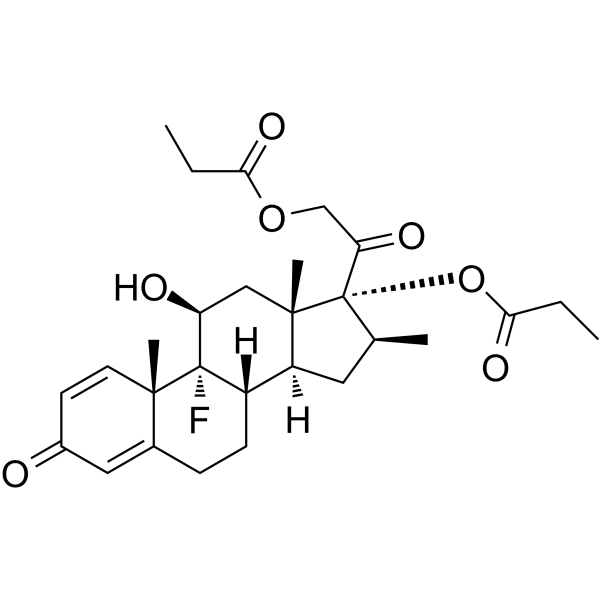
Betamethasone dipropionateGlucocorticoid Receptor Modulator -
HY-B0426A
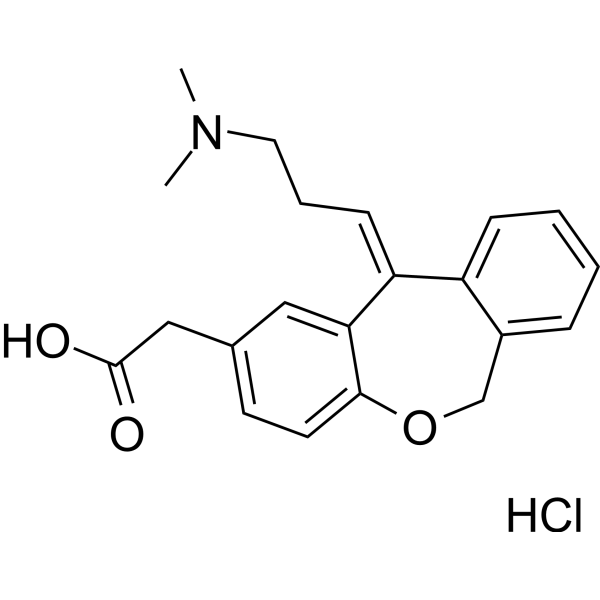
Olopatadine hydrochlorideHistamine H1 Receptor Antagonist, Mast Cell Stabilizer -
HY-10219GL
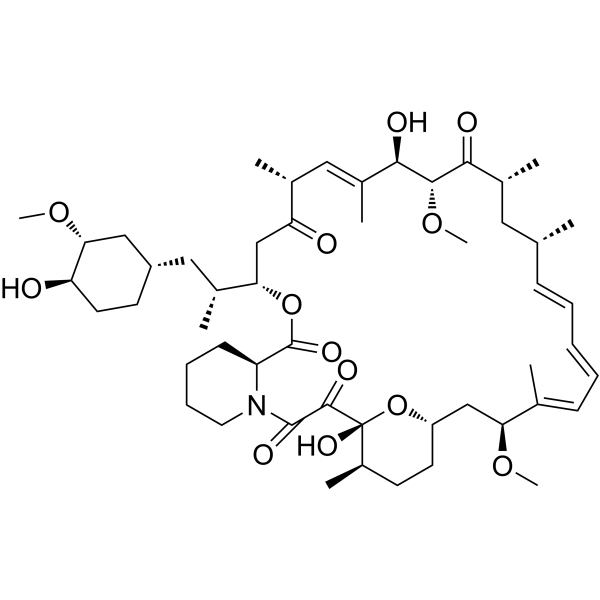
Rapamycin (GMP Like)mTOR Inhibitor -
HY-B0426AR
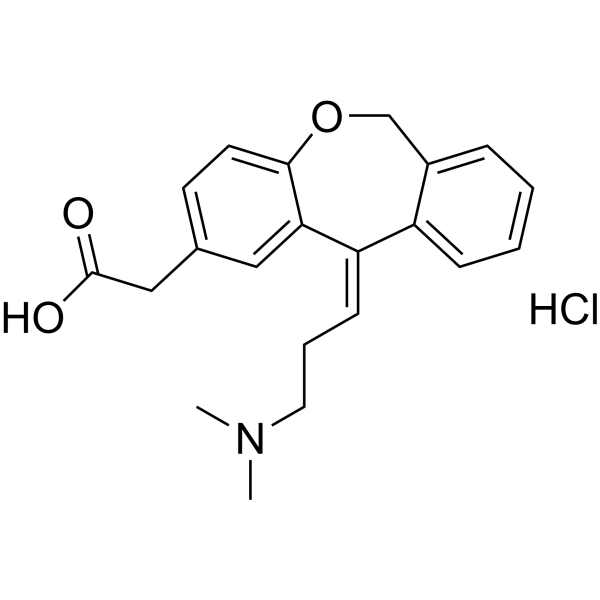
Olopatadine hydrochloride (Standard)Histamine Receptor Blocker -

HY-13571R
Betamethasone dipropionate (Standard)Glucocorticoid Receptor Modulator
All Histamine Receptor Isoforms
More

Biological Activity
Description
|
H1 Receptor |
IL-8 |
IL-4 |
In Vitro
Epinastine (50-100 μM) hydrochloride inhibits histamine release from rat peritoneal mast cells induced by antigen-antibody reaction[1].
Epinastine hydrochloride shows high affinity for neuronal octopamine receptors in locusts (Ki = 2 nM) and honeybees (Ki = 1.1 nM), specifically displaces [3H]NC-5Z binding to these receptors[2].
Epinastine (1-25 μg/mL; 3-24 h) hydrochloride dose- and time-dependently suppresses constitutive and Calcium ionophore-induced IL-8 release from human eosinophils of atopic patients[3].
Epinastine hydrochloride (1 μM; preincubation for 15 min, then incubation for 19 h) tends to inhibit PHA (HY-N7038)-induced IL-4 mRNA expression in peripheral blood mononuclear cells (PBMC) from asthmatic patients[4].
Epinastine hydrochloride (0.1 μM - 10 μM; 24 h) inhibits IgE secretion from rat IgE-producing hybridoma FE-3 cells[5].
MedChemExpress (MCE) has not independently confirmed the accuracy of these methods. They are for reference only. Further protocols information, click here.
-
Cell Line:Human peripheral blood mononuclear cells (PBMC) from asthmatic patients
-
Concentration:1 μM
-
Incubation Time:15 min (preincubation) + 19 h (incubation with PHA/HDM)
-
Result:Tended to inhibit PHA-induced IL-4 mRNA expression (1.26 vs 0.74).
Had no significant effect on HDM-induced IL-4 mRNA expression.
In Vivo
Epinastine (2-6 mg/kg; i.p.; 14 days) hydrochloride significantly inhibits tumor growth in C57BL/6N mice bearing MC38 tumors, enhances infiltration and IFN-γ secretion of CD8+ T cells and NK cells in tumor tissues, and has no toxicity to major organs[8].
MedChemExpress (MCE) has not independently confirmed the accuracy of these methods. They are for reference only.


Chemical Information
-
CAS No. 108929-04-0
-
Appearance Solid
-
Molecular Weight 285.77
-
Formula C16H16ClN3
-
Color White to off-white
-
SMILES
NC1=NCC2N1C3=CC=CC=C3CC4=CC=CC=C24.[H]Cl
-
Synonyms
WAL801 hydrochloride
-
Shipping
Room temperature in continental US; may vary elsewhere.
-
Storage
4°C, sealed storage, away from moisture
* In solvent : -80°C, 6 months; -20°C, 1 month (sealed storage, away from moisture)


Solvent & Solubility
In Vitro:
H2O : 100 mg/mL (349.93 mM; Need ultrasonic)
DMSO : 50 mg/mL (174.97 mM; Need ultrasonic; Hygroscopic DMSO has a significant impact on the solubility of product, please use newly opened DMSO)
Please refer to the solubility information to select the appropriate solvent. Once prepared, please aliquot and store the solution to prevent product inactivation from repeated freeze-thaw cycles.
Storage method and period of stock solution: -80°C, 6 months; -20°C, 1 month (sealed storage, away from moisture). When stored at -80°C, please use it within 6 months. When stored at -20°C, please use it within 1 month.
* Note: If you choose water as the stock solution, please dilute it to the working solution, then filter and sterilize it with a 0.22 μm filter before use.
Please refer to the solubility information to select the appropriate solvent. Once prepared, please aliquot and store the solution to prevent product inactivation from repeated freeze-thaw cycles.
Storage method and period of stock solution: -80°C, 6 months; -20°C, 1 month (sealed storage, away from moisture). When stored at -80°C, please use it within 6 months. When stored at -20°C, please use it within 1 month.
* Note: If you choose water as the stock solution, please dilute it to the working solution, then filter and sterilize it with a 0.22 μm filter before use.
Concentration (start) × Volume (start) = Concentration (final) × Volume (final)
In Vivo:
Select the appropriate dissolution method based on your experimental animal and administration route.
- For the following dissolution methods, please ensure to first prepare a clear stock solution using an In Vitro approach and then sequentially add co-solvents:
- To ensure reliable experimental results, the clarified stock solution can be appropriately stored based on storage conditions. As for the working solution for In Vivo experiments, it is recommended to prepare freshly and use it on the same day.
- The percentages shown for the solvents indicate their volumetric ratio in the final prepared solution. If precipitation or phase separation occurs during preparation, heat and/or sonication can be used to aid dissolution.
Add each solvent one by one: 10% DMSO 40% PEG300 5% Tween-80 45% Saline
Solubility: ≥ 2.08 mg/mL (7.28 mM); Clear solution
This protocol yields a clear solution of ≥ 2.08 mg/mL (saturation unknown).
Taking 1 mL working solution as an example, add 100 μL DMSO stock solution (20.8 mg/mL) to 400 μL PEG300, and mix evenly; then add 50 μL Tween-80 and mix evenly; then add 450 μL Saline to adjust the volume to 1 mL.
Preparation of Saline: Dissolve 0.9 g sodium chloride in ddH₂O and dilute to 100 mL to obtain a clear Saline solution.
Add each solvent one by one: 10% DMSO 90% (20% SBE-β-CD in Saline)
Solubility: ≥ 2.08 mg/mL (7.28 mM); Clear solution
This protocol yields a clear solution of ≥ 2.08 mg/mL (saturation unknown).
Taking 1 mL working solution as an example, add 100 μL DMSO stock solution (20.8 mg/mL) to 900 μL 20% SBE-β-CD in Saline, and mix evenly.
Preparation of 20% SBE-β-CD in Saline (4°C, storage for one week): 2 g SBE-β-CD powder is dissolved in 10 mL Saline, completely dissolve until clear.
For the following dissolution methods, please prepare the working solution directly:
It is recommended to prepare fresh solutions and use them promptly within a short period of time.
The percentages shown for the solvents indicate their volumetric ratio in the final prepared solution. If precipitation or phase separation occurs during preparation, heat and/or sonication can be used to aid dissolution.
Add each solvent one by one: PBS
Solubility: 20 mg/mL (69.99 mM); Clear solution; Need ultrasonic
In Vivo Dissolution Calculator
Please enter the basic information of animal experiments:
-
-
-
-
Recommended: Prepare an additional quantity of animals to account for potential losses during experiments.
Working solution concentration: 0.22 mg/mL
This product has good water solubility, please refer to the measured solubility data in water/PBS/Saline for details.

Protocols
-
Transepithelial/transendothelial electrical resistance assay
TEER measures electrical resistance across epithelial or endothelial monolayers cultured on permeable supports, and the readout reflects ionic conductance through the cell barrier, especially the paracellular pathway regulated by junctional integrity. TEER can be measured without destroying the monolayer and is commonly used before or during transport, permeability, barrier-disruption, and barrier-maturation experiments. TEER values are influenced by biological maturation and technical conditions; reported factors include temperature, medium formulation, passage number, electrode geometry, membrane properties, and junctional length during early monolayer maturation. Therefore, TEER should be interpreted with blank-insert subtraction, area normalization, repeated readings, and, when possible, orthogonal barrier readouts such as FITC-dextran flux or tight-junction staining.
-
Research Protocol for Cancer Immunology
Cancer immunology studies how the immune system recognizes, suppresses, edits, or fails to eliminate malignant cells through tumor antigen release, antigen presentation, T-cell priming, immune trafficking, tumor-cell killing, and feedback inhibition in the tumor microenvironment. The cancer-immunity cycle links tumor antigenicity, dendritic-cell priming, CD8+ T-cell infiltration, cytotoxic function, and immune-checkpoint regulation to tumor rejection or immune escape. Immune-checkpoint pathways such as PD-1/PD-L1 and CTLA-4 suppress antitumor T-cell activity and can be therapeutically blocked, but many tumors remain resistant because of poor antigen presentation, weak T-cell infiltration, suppressive myeloid cells, regulatory T cells, and tumor-intrinsic immune-exclusion programs. Unresolved questions include which immune-cell states predict response, how tumor-intrinsic pathways exclude immune cells, how myeloid suppression limits checkpoint blockade, and which combination strategies


Purity & Documentation
-
Data Sheet (289 KB)
-
SDS (479 KB)
- English - EN (479 KB)
- Français - FR (479 KB)
- Deutsch - DE (479 KB)
- Norwegian - NO (479 KB)
- Español - ES (479 KB)
- Swedish - SV (479 KB)
- Italian - IT (479 KB)
- Korean - KR (479 KB)
- Portuguese - PT (479 KB)
-
Handling Instructions (2659 KB)
References
[1]. C Kamei, et al. Antiallergic effect of epinastine (WAL 801 CL) on immediate hypersensitivity reactions: (I). Elucidation of the mechanism for histamine release inhibition. Immunopharmacol Immunotoxicol. 1992;14(1-2):191-205. [Content Brief]
[2]. T Roeder, et al. Epinastine, a highly specific antagonist of insect neuronal octopamine receptors. ur J Pharmacol. 1998 May 22;349(2-3):171-7. [Content Brief]
[3]. T Kohyama, et al. A novel antiallergic drug epinastine inhibits IL-8 release from human eosinophils. Biochem Biophys Res Commun. 1997 Jan 3;230(1):125-8. [Content Brief]
[4]. Nakagawa T, et al. Modulatory effects of epinastine hydrochloride on IL-4 mRNA expression by peripheral blood mononuclear cells. Int Arch Allergy Immunol. 1997 May-Jul;113(1-3):321-2. [Content Brief]
[5]. Hanashiro K, et al. Antiallergic drugs, azelastine hydrochloride and epinastine hydrochloride, inhibit ongoing IgE secretion of rat IgE-producing hybridoma FE-3 cells. Eur J Pharmacol. 2006 Oct 10;547(1-3):174-83. [Content Brief]
[6]. Kanai K, et al. Suppressive activity of epinastine hydrochloride on TARC production from human peripheral blood CD4+ T cells in-vitro. J Pharm Pharmacol. 2005 Aug;57(8):1027-36. [Content Brief]
[7]. Inagaki N, et al. Evaluation of anti-scratch properties of oxatomide and epinastine in mice. Eur J Pharmacol. 2000 Jul 14;400(1):73-9. [Content Brief]
[8]. Zhang X, et al. Identification of Epinastine as CD96/PVR inhibitor for cancer immunotherapy. BMC Biol. 2025 Jan 27;23(1):27. [Content Brief]


Complete Stock Solution Preparation Table
Please refer to the solubility information to select the appropriate solvent. Once prepared, please aliquot and store the solution to prevent product inactivation from repeated freeze-thaw cycles.
Storage method and period of stock solution: -80°C, 6 months; -20°C, 1 month (sealed storage, away from moisture). When stored at -80°C, please use it within 6 months. When stored at -20°C, please use it within 1 month.
| Optional Solvent | Concentration Solvent Mass | 1 mg | 5 mg | 10 mg | 25 mg |
|---|---|---|---|---|---|
| DMSO / H2O | 1 mM | 3.4993 mL | 17.4966 mL | 34.9932 mL | 87.4829 mL |
| 5 mM | 0.6999 mL | 3.4993 mL | 6.9986 mL | 17.4966 mL | |
| 10 mM | 0.3499 mL | 1.7497 mL | 3.4993 mL | 8.7483 mL | |
| 15 mM | 0.2333 mL | 1.1664 mL | 2.3329 mL | 5.8322 mL | |
| 20 mM | 0.1750 mL | 0.8748 mL | 1.7497 mL | 4.3741 mL | |
| 25 mM | 0.1400 mL | 0.6999 mL | 1.3997 mL | 3.4993 mL | |
| 30 mM | 0.1166 mL | 0.5832 mL | 1.1664 mL | 2.9161 mL | |
| 40 mM | 0.0875 mL | 0.4374 mL | 0.8748 mL | 2.1871 mL | |
| 50 mM | 0.0700 mL | 0.3499 mL | 0.6999 mL | 1.7497 mL | |
| 60 mM | 0.0583 mL | 0.2916 mL | 0.5832 mL | 1.4580 mL | |
| 80 mM | 0.0437 mL | 0.2187 mL | 0.4374 mL | 1.0935 mL | |
| 100 mM | 0.0350 mL | 0.1750 mL | 0.3499 mL | 0.8748 mL |
* Note: If you choose water as the stock solution, please dilute it to the working solution, then filter and sterilize it with a 0.22 μm filter before use.


Epinastine hydrochloride Related Classifications
HY-B0640A Related Classifications
 Powered by Bioz