



Doxepin Hydrochloride
Based on 7 publication(s) in Google Scholar
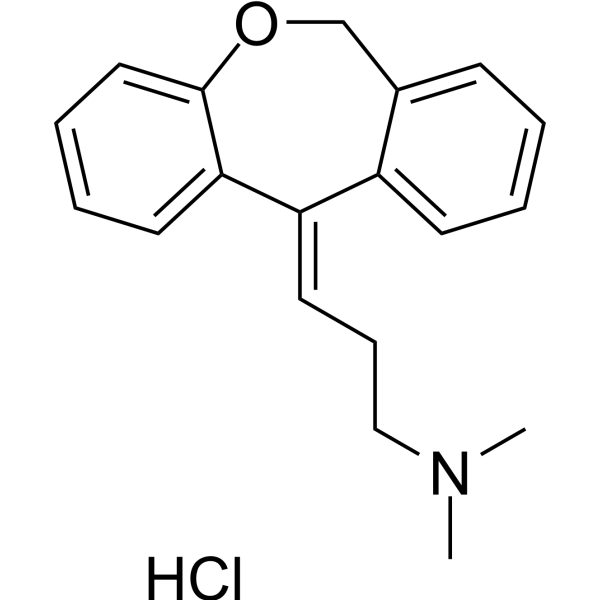
Doxepin Hydrochloride is an orally active, blood-brain barrier penetrant tricyclic antidepressant with multiple activities including hypnosis, sedation, analgesia and vasodilation. Doxepin Hydrochloride enhances the expression of PSD-95 and synapsin 1 via the PI3K/AKT/mTOR signaling pathway, and is metabolized to DesmethylDoxepin Hydrochloride in vivo. Doxepin Hydrochloride can be used in research related to various diseases such as depression, anxiety, obesity and atopic dermatitis.
For research use only. We do not sell to patients.
- Purity : 99.64%
- CAS No.: 1229-29-4
- Formula: C19H22ClNO
- Molecular Weight:315.84
-
Storage:
4°C, sealed storage, away from moisture
* In solvent : -80°C, 6 months; -20°C, 1 month (sealed storage, away from moisture)

To place orders, for customer services and technical support, please contact: MedChemExpress USA
Tel: 609-228-6898 E-mail: [email protected] [email protected]


-
 Biological Activity
-
Chemical Information
-
Solvent & Solubility
- Protocols
- Purity & Documentation
- References
-
 Help & FAQs


-
HY-B0527A
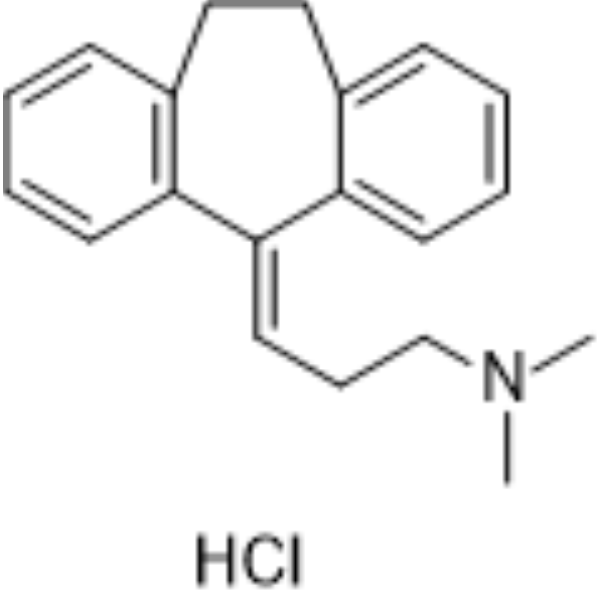
Amitriptyline hydrochlorideSERT/NET Inhibitor -
HY-B0176A
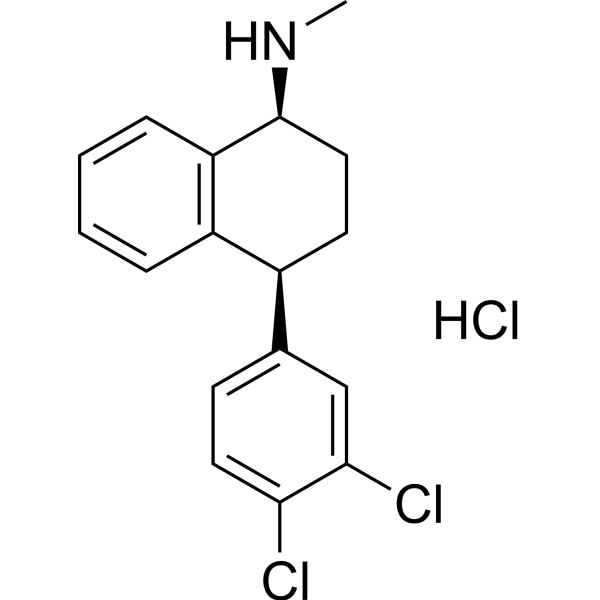
Sertraline hydrochlorideSSRI -
HY-B0991
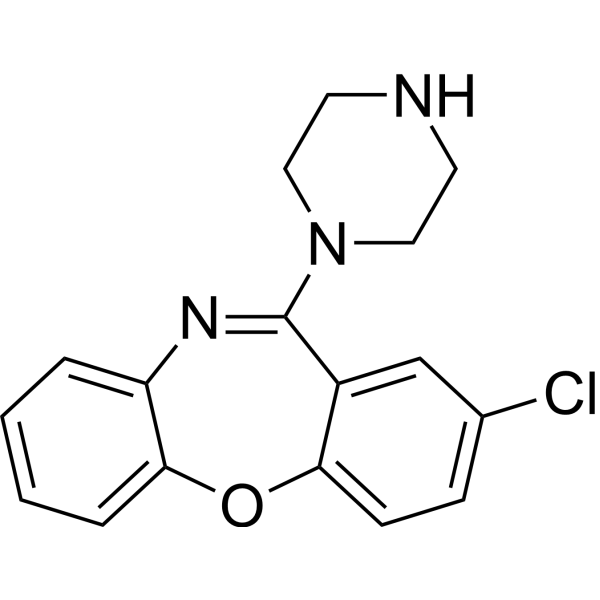
AmoxapineTetracyclic Antidepressant -
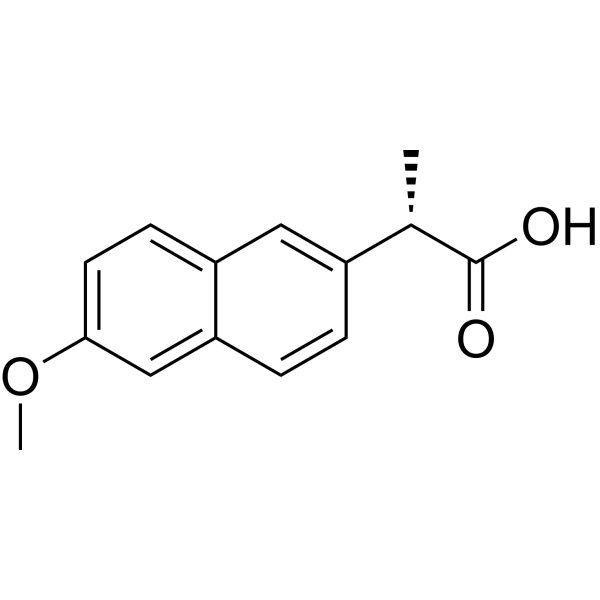
HY-15030
NaproxenCOX Inhibitor -
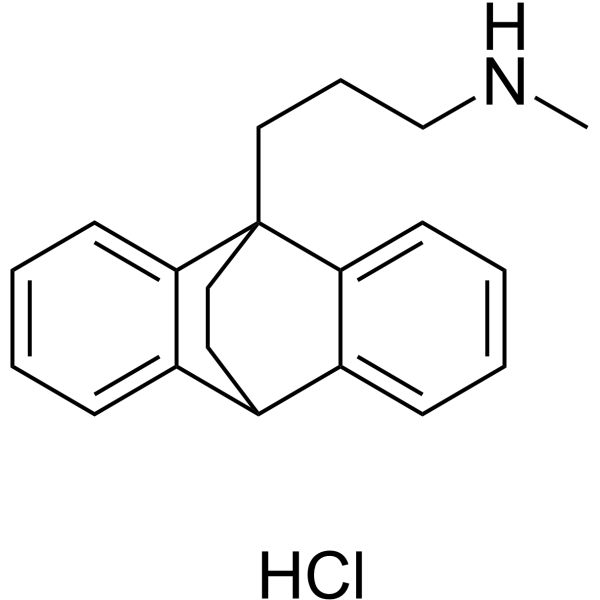
HY-B0444
Maprotiline hydrochlorideAutophagy Inducer -
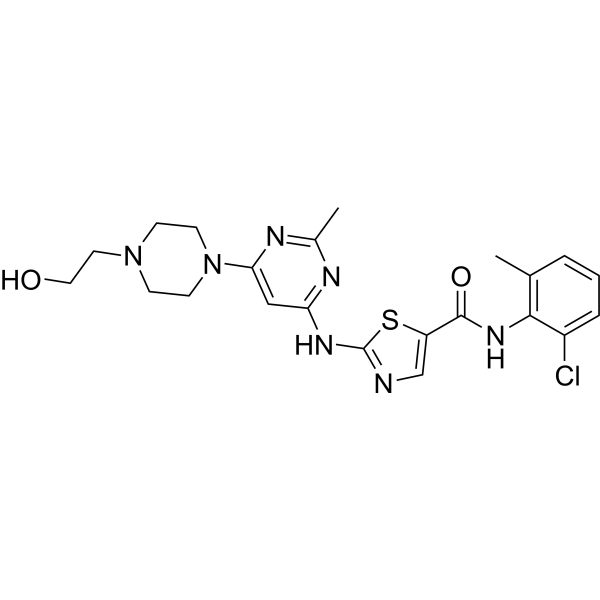
HY-10181
DasatinibSrc/Bcr-Abl Inhibitor -
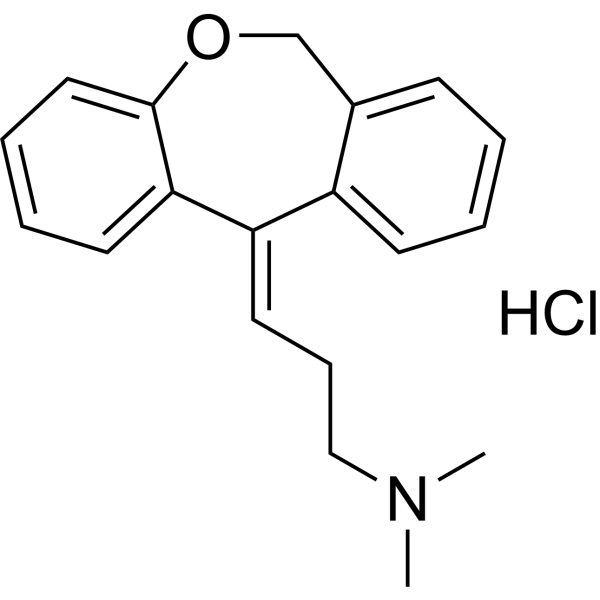
HY-B0725R
Doxepin Hydrochloride (Standard)Reference Standard -
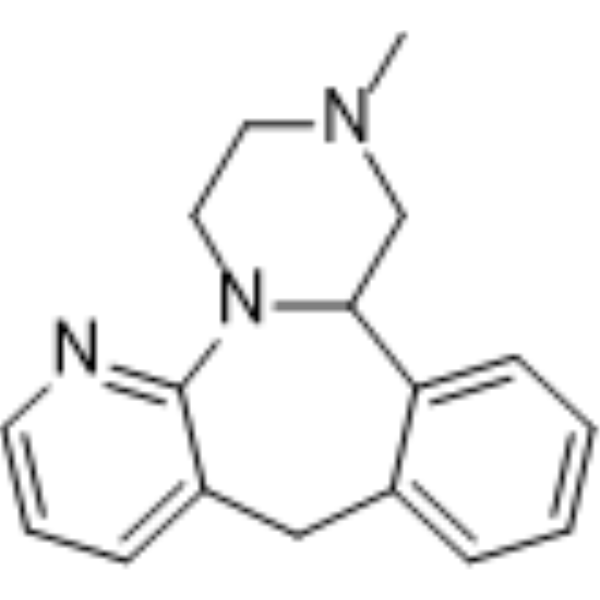
HY-B0352
MirtazapineNaSSA Agent -
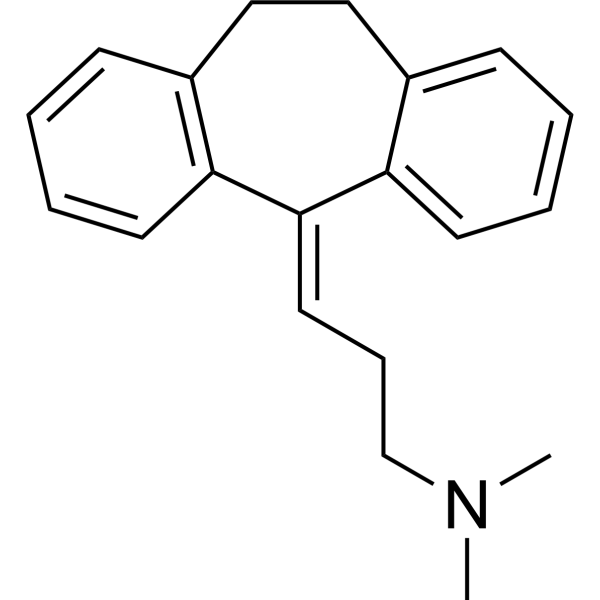
HY-B0527
AmitriptylineSERT/NET Inhibitor -
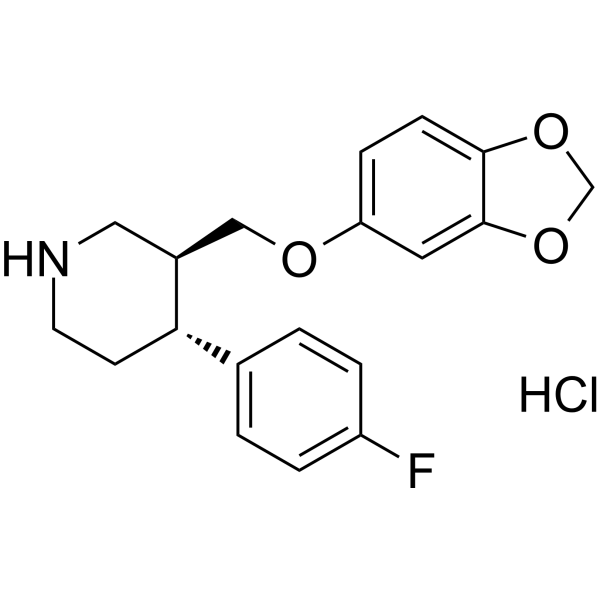
HY-B0492
Paroxetine hydrochloride5-HT Inhibitor -
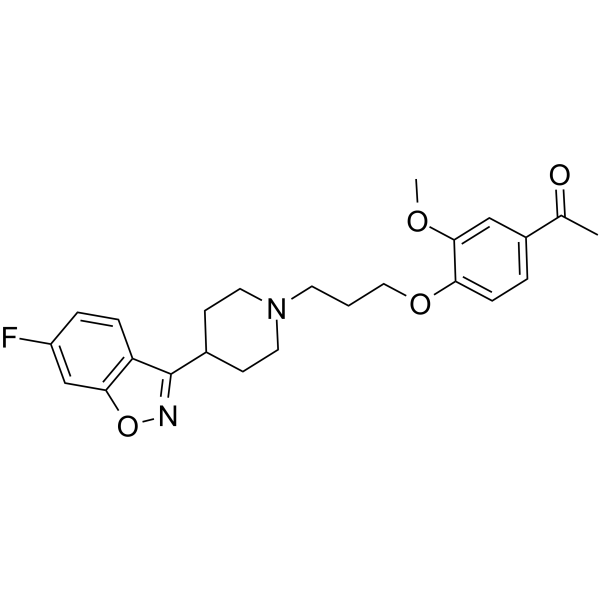
HY-17410
IloperidoneD2/5-HT2 Receptor Antagonist -
HY-B0168A
Milnacipran hydrochlorideSerotonin and Norepinephrine Reuptake Inhibitor
Publications Citing Use of MedChemExpress (MCE) Doxepin Hydrochloride
More- Nat Commun. 2022 Nov 10;13(1):6796. [Abstract]
- Cell Commun Signal. 2023 May 25;21(1):123. [Abstract]
- Int J Pharm. 2026 Feb 18:126680. [Abstract]
- Antiviral Res. 2025 Dec:244:106307. [Abstract]
- Pharm Res. 2025 Aug;42(8):1315-1329. [Abstract]
- Virus Res. 2022 Aug:317:198816. [Abstract]
- J Appl Toxicol. 2023 Oct;43(10):1421-1435. [Abstract]


Biological Activity
Description
IC50 & Target
|
Akt |
mTOR |
In Vitro
Doxepin Hydrochloride exerts protective effects by upregulating the expression of PSD-95 and synapsin 1 through activating the PI3K/AKT/mTOR signaling pathway[1].
Doxepin Hydrochloride is almost ineffective in inhibiting serotonin (5-HT) uptake in rat platelets[2].
MedChemExpress (MCE) has not independently confirmed the accuracy of these methods. They are for reference only.
In Vivo
Doxepin Hydrochloride (4.65-24.00 mg/kg; intraperitoneal injection; single administration; 5-120 minutes before electroshock) exerts dose- and time-dependent anticonvulsant activity against maximal electroshock-induced seizures in mice, with the peak efficacy observed at 5 minutes after intraperitoneal administration and an ED50 of 6.6 mg/kg[4].
Doxepin Hydrochloride (6.70-11.63 mg/kg; i.p.; single administration; 5 minutes prior to Isoniazid (HY-B0329) challenge) exhibits anticonvulsant activity against isoniazid-induced seizures in Mus musculus mice, with an ED50 of 8.8 mg/kg and a protective index of 3.0[4].
Doxepin Hydrochloride (3.88-8.04 mg/kg; intraperitoneal injection; single administration; 5 minutes prior to 3-mercaptopropionic acid challenge) exhibits anticonvulsant activity against 3-mercaptopropionic acid-induced seizures in mice, with an ED50 of 5.1 mg/kg and a protective index of 5.2[4].
Doxepin Hydrochloride (4.65-8.04 mg/kg; i.p.; single administration; 5 min prior to Bicuculline (HY-N0219) challenge) exhibits anticonvulsant activity against Bicuculline-induced seizures in mice, with an ED50 of 5.9 mg/kg and a protective index of 4.5[4].
Doxepin Hydrochloride (3.23-5.58 mg/kg; i.p.; single administration; 5 min prior to thiosemicarbazide challenge) exhibits the strongest anticonvulsant activity against thiosemicarbazide-induced seizures in mice, with an ED50 of 4.3 mg/kg and a protective index of 6.1[4].
Doxepin Hydrochloride (24.11-72.00 mg/kg; intraperitoneal injection; single administration; 5-120 minutes before rotarod test) induces time-dependent neurotoxicity in mice by impairing motor coordination, with toxicity peaking at 5 minutes after intraperitoneal administration and a TD50 of 26.4 mg/kg[4].
MedChemExpress (MCE) has not independently confirmed the accuracy of these methods. They are for reference only.
Clinical Trial
| NCT Number | Sponsor | Condition | Start Date |
Phase

|
|---|---|---|---|---|
| NCT01329991 | Plexxikon| | 2011-05 | PHASE1 |


Chemical Information
-
CAS No. 1229-29-4
-
Appearance Solid
-
Molecular Weight 315.84
-
Formula C19H22ClNO
-
Color White to off-white
-
SMILES
CN(C)CC/C=C1C2=CC=CC=C2OCC3=CC=CC=C/13.Cl
-
Shipping
Room temperature in continental US; may vary elsewhere.
-
Storage
4°C, sealed storage, away from moisture
* In solvent : -80°C, 6 months; -20°C, 1 month (sealed storage, away from moisture)


Publications (7)
-
Journal Impact Factor
-
Most Recent
-
Nat Commun
Maprotiline restores ER homeostasis and rescues neurodegeneration via Histamine Receptor H1 inhibition in retinal ganglion cells. [Abstract]2022 Nov 10;13(1):6796. PMID: 36357388 -
Cell Commun Signal
Tricyclic antidepressants induce liver inflammation by targeting NLRP3 inflammasome activation. [Abstract]2023 May 25;21(1):123. PMID: 37231437 -
Int J Pharm
2026 Feb 18:126680. PMID: 41720364 -
Antiviral Res
Repurposed doxepin targeting host AXL kinase to disrupt viral 2C-mediated immune evasion in Coxsackievirus B infection. [Abstract]2025 Dec:244:106307. PMID: 41197812 -
Pharm Res
Investigation of the Binding Characteristics of Agonists and Various Antagonists Targeting Histamine 1 Receptor. [Abstract]2025 Aug;42(8):1315-1329. PMID: 40760405 -
Virus Res
2022 Aug:317:198816. PMID: 35598772 -
J Appl Toxicol
Inhibitory interaction of flavonoids with organic cation transporter 2 and their structure-activity relationships for predicting nephroprotective effects. [Abstract]2023 Oct;43(10):1421-1435. PMID: 37057715


Solvent & Solubility
In Vitro:
DMSO : ≥ 100 mg/mL (316.62 mM; Hygroscopic DMSO has a significant impact on the solubility of product, please use newly opened DMSO)
H2O : ≥ 50 mg/mL (158.31 mM)
* "≥" means soluble, but saturation unknown.
Please refer to the solubility information to select the appropriate solvent. Once prepared, please aliquot and store the solution to prevent product inactivation from repeated freeze-thaw cycles.
Storage method and period of stock solution: -80°C, 6 months; -20°C, 1 month (sealed storage, away from moisture). When stored at -80°C, please use it within 6 months. When stored at -20°C, please use it within 1 month.
* Note: If you choose water as the stock solution, please dilute it to the working solution, then filter and sterilize it with a 0.22 μm filter before use.
Please refer to the solubility information to select the appropriate solvent. Once prepared, please aliquot and store the solution to prevent product inactivation from repeated freeze-thaw cycles.
Storage method and period of stock solution: -80°C, 6 months; -20°C, 1 month (sealed storage, away from moisture). When stored at -80°C, please use it within 6 months. When stored at -20°C, please use it within 1 month.
* Note: If you choose water as the stock solution, please dilute it to the working solution, then filter and sterilize it with a 0.22 μm filter before use.
Concentration (start) × Volume (start) = Concentration (final) × Volume (final)
In Vivo:
Select the appropriate dissolution method based on your experimental animal and administration route.
- For the following dissolution methods, please ensure to first prepare a clear stock solution using an In Vitro approach and then sequentially add co-solvents:
- To ensure reliable experimental results, the clarified stock solution can be appropriately stored based on storage conditions. As for the working solution for In Vivo experiments, it is recommended to prepare freshly and use it on the same day.
- The percentages shown for the solvents indicate their volumetric ratio in the final prepared solution. If precipitation or phase separation occurs during preparation, heat and/or sonication can be used to aid dissolution.
Add each solvent one by one: 10% DMSO 40% PEG300 5% Tween-80 45% Saline
Solubility: ≥ 2.5 mg/mL (7.92 mM); Clear solution
This protocol yields a clear solution of ≥ 2.5 mg/mL (saturation unknown).
Taking 1 mL working solution as an example, add 100 μL DMSO stock solution (25.0 mg/mL) to 400 μL PEG300, and mix evenly; then add 50 μL Tween-80 and mix evenly; then add 450 μL Saline to adjust the volume to 1 mL.
Preparation of Saline: Dissolve 0.9 g sodium chloride in ddH₂O and dilute to 100 mL to obtain a clear Saline solution.
Add each solvent one by one: 10% DMSO 90% (20% SBE-β-CD in Saline)
Solubility: ≥ 2.5 mg/mL (7.92 mM); Clear solution
This protocol yields a clear solution of ≥ 2.5 mg/mL (saturation unknown).
Taking 1 mL working solution as an example, add 100 μL DMSO stock solution (25.0 mg/mL) to 900 μL 20% SBE-β-CD in Saline, and mix evenly.
Preparation of 20% SBE-β-CD in Saline (4°C, storage for one week): 2 g SBE-β-CD powder is dissolved in 10 mL Saline, completely dissolve until clear.
For the following dissolution methods, please prepare the working solution directly:
It is recommended to prepare fresh solutions and use them promptly within a short period of time.
The percentages shown for the solvents indicate their volumetric ratio in the final prepared solution. If precipitation or phase separation occurs during preparation, heat and/or sonication can be used to aid dissolution.
Add each solvent one by one: PBS
Solubility: 140 mg/mL (443.26 mM); Clear solution; Need ultrasonic
In Vivo Dissolution Calculator
Please enter the basic information of animal experiments:
-
-
-
-
Recommended: Prepare an additional quantity of animals to account for potential losses during experiments.
Working solution concentration: 0.22 mg/mL
This product has good water solubility, please refer to the measured solubility data in water/PBS/Saline for details.


Purity & Documentation
-
Data Sheet (303 KB)
-
SDS (644 KB)
- English - EN (644 KB)
- Français - FR (644 KB)
- Deutsch - DE (644 KB)
- Norwegian - NO (644 KB)
- Español - ES (644 KB)
- Swedish - SV (644 KB)
- Italian - IT (644 KB)
- Korean - KR (644 KB)
- Portuguese - PT (644 KB)
-
Handling Instructions (2659 KB)
References


Complete Stock Solution Preparation Table
Please refer to the solubility information to select the appropriate solvent. Once prepared, please aliquot and store the solution to prevent product inactivation from repeated freeze-thaw cycles.
Storage method and period of stock solution: -80°C, 6 months; -20°C, 1 month (sealed storage, away from moisture). When stored at -80°C, please use it within 6 months. When stored at -20°C, please use it within 1 month.
| Optional Solvent | Concentration Solvent Mass | 1 mg | 5 mg | 10 mg | 25 mg |
|---|---|---|---|---|---|
| H2O / DMSO | 1 mM | 3.1662 mL | 15.8308 mL | 31.6616 mL | 79.1540 mL |
| 5 mM | 0.6332 mL | 3.1662 mL | 6.3323 mL | 15.8308 mL | |
| 10 mM | 0.3166 mL | 1.5831 mL | 3.1662 mL | 7.9154 mL | |
| 15 mM | 0.2111 mL | 1.0554 mL | 2.1108 mL | 5.2769 mL | |
| 20 mM | 0.1583 mL | 0.7915 mL | 1.5831 mL | 3.9577 mL | |
| 25 mM | 0.1266 mL | 0.6332 mL | 1.2665 mL | 3.1662 mL | |
| 30 mM | 0.1055 mL | 0.5277 mL | 1.0554 mL | 2.6385 mL | |
| 40 mM | 0.0792 mL | 0.3958 mL | 0.7915 mL | 1.9789 mL | |
| 50 mM | 0.0633 mL | 0.3166 mL | 0.6332 mL | 1.5831 mL | |
| 60 mM | 0.0528 mL | 0.2638 mL | 0.5277 mL | 1.3192 mL | |
| 80 mM | 0.0396 mL | 0.1979 mL | 0.3958 mL | 0.9894 mL | |
| 100 mM | 0.0317 mL | 0.1583 mL | 0.3166 mL | 0.7915 mL |
* Note: If you choose water as the stock solution, please dilute it to the working solution, then filter and sterilize it with a 0.22 μm filter before use.


Doxepin Hydrochloride Related Classifications
HY-B0725 Related Classifications
 Powered by Bioz
Keywords
- Doxepin
- 1229-29-4
- Akt
- mTOR
- Drug Intermediate
- histamine H1 receptors
- guinea pig muscarinic acetylcholine receptor
- rat muscarinic acetylcholine receptor
- norepinephrine
- serotonin
- 5-hydroxytryptamine receptors
- human serotonin transporter
- alpha1-adrenergic receptors
- adenylate cyclase
- monoamine oxidase B
- Inhibitor
- inhibitor
- inhibit