



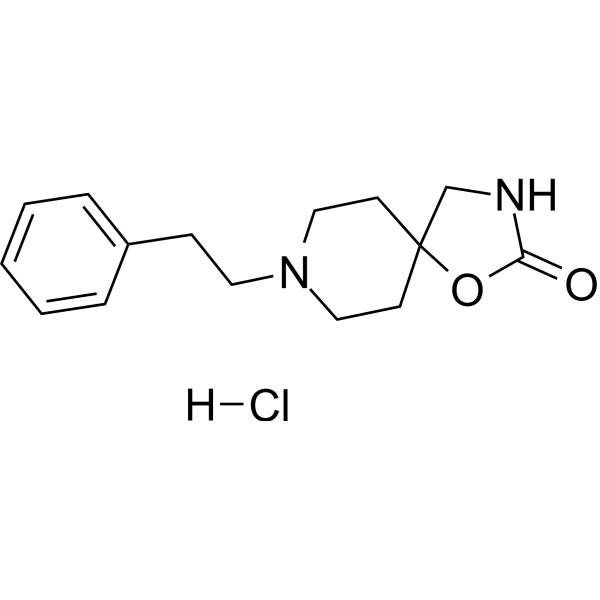
Fenspiride hydrochloride

Based on 1 Customer Validation
Fenspiride, an orally active non-steroidal antiinflammatory agent, is an antagonist of H1-histamine receptor. Fenspiride inhibites phosphodiesterase 3 (PDE3), phosphodiesterase 4 (PDE4) and phosphodiesterase 5 (PDE5) activities with -log IC50 values of 3.44, 4.16 and approximately 3.8, respectively. Fenspiride can be used for the research of respiratory diseases.
商品は「研究用試薬」です。人や動物の医療用・臨床診断用・食品用の製品ではありません。
研究用途以外に使用した場合、当社は一切の責任を負いかねます。
- 純度 : 99.70%
- CAS 番号: 5053-08-7
- 分子式: C15H21ClN2O2
- 分子量:296.79
-
保管条件:
4°C, sealed storage, away from moisture
* In solvent : -80°C, 6 months; -20°C, 1 month (sealed storage, away from moisture)

To place orders, for customer services and technical support, please contact: MedChemExpress USA
Tel: 609-228-6898 E-mail: [email protected] [email protected]


-
 生物活性
生物活性
-
化学情報
-
溶剤 & 溶解度
- 純度とドキュメンテーション
- 参考文献
-
 Help & FAQs


-
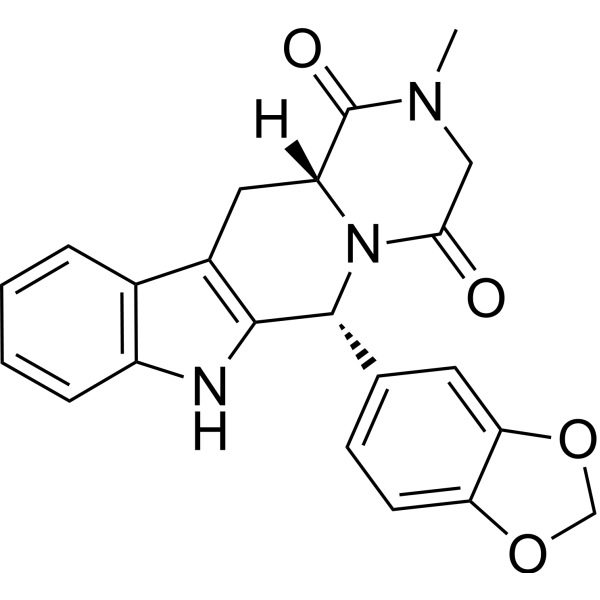
HY-90009A
TadalafilPDE5 Inhibitor -
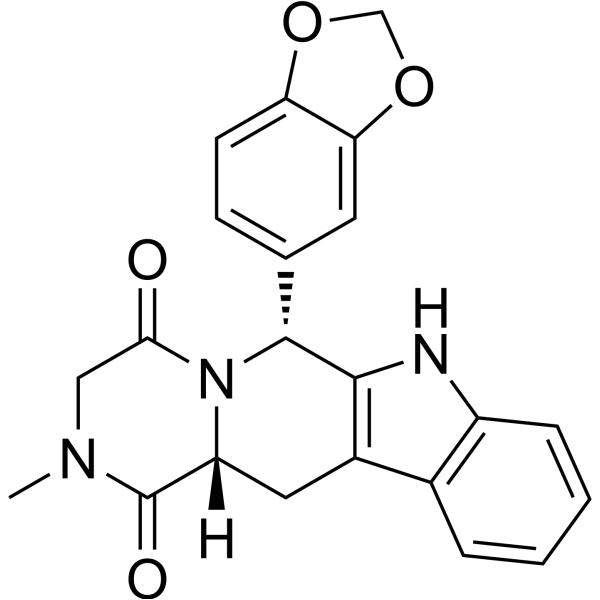
HY-90009AR
Tadalafil (Standard)PDE5 Inhibitor -
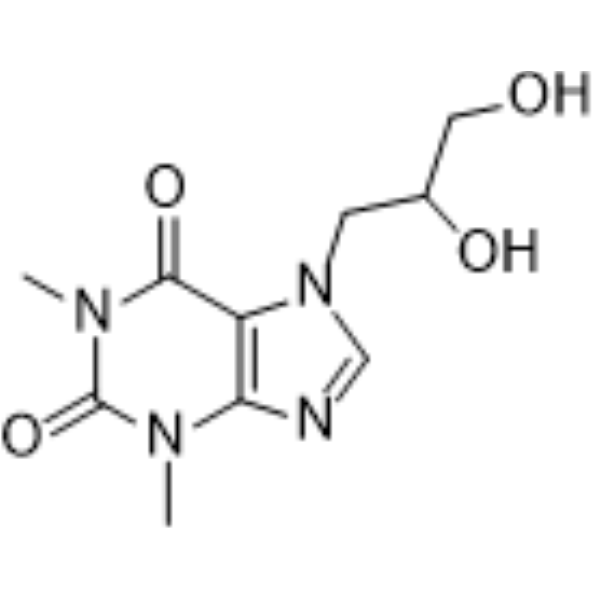
HY-B0128
DiphyllinePDE Inhibitor -

HY-A0027R
Fenspiride hydrochloride (Standard)PDE3/PDE4/PDE5/HRH1 Inhibitor -
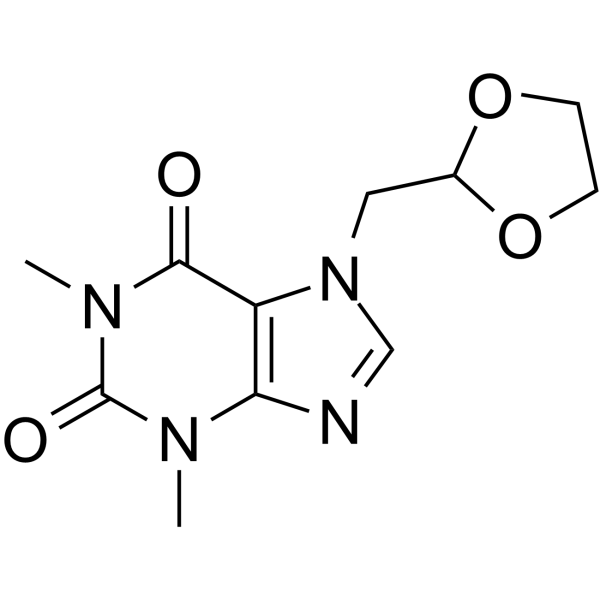
HY-B0004
DoxofyllinePDE IV Inhibitor/A1AR Antagonist -
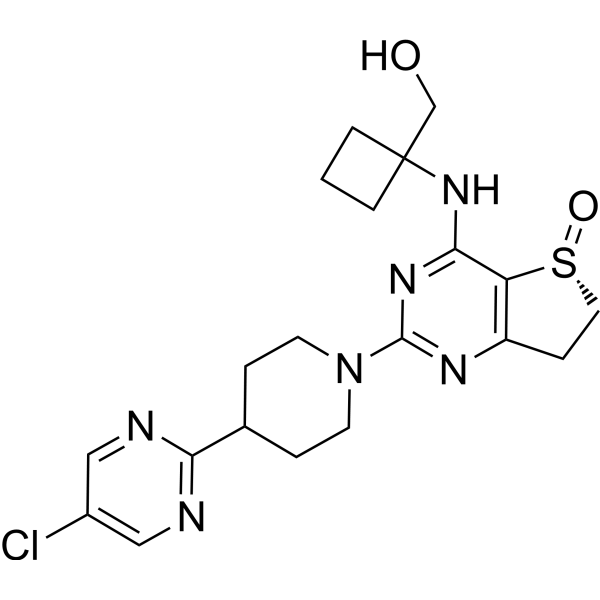
HY-153192
NerandomilastPDE4B Inhibitor -
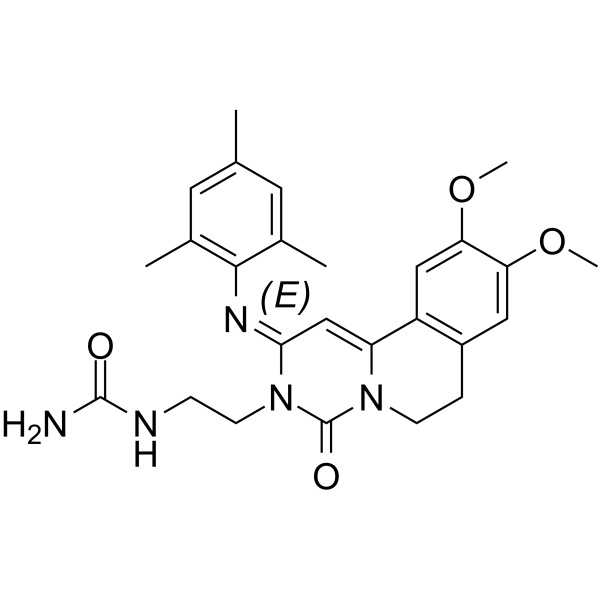
HY-119708
EnsifentrinePDE3/PDE4 Inhibitor -
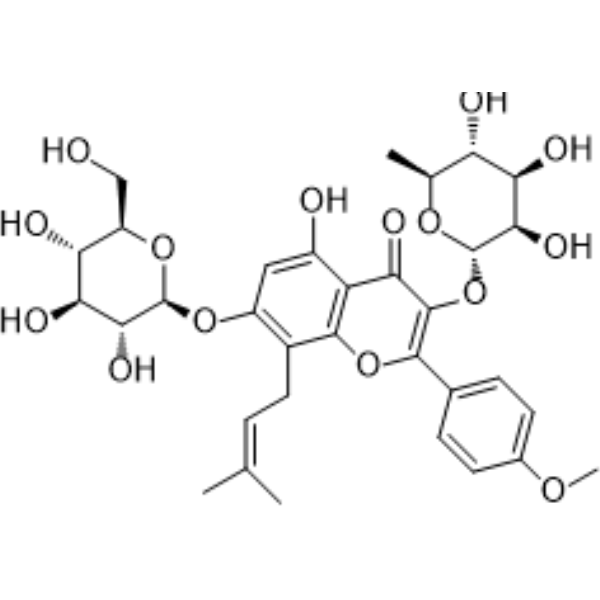
HY-N0014
IcariinPPAR Activator -
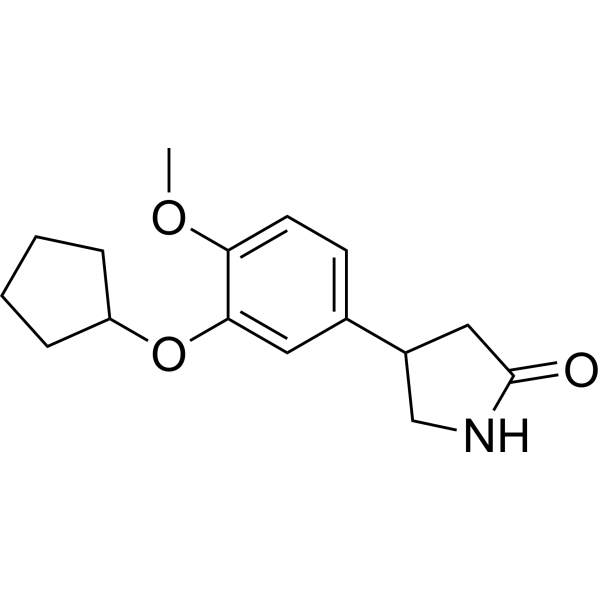
HY-16900
RolipramPDE4 Inhibitor -
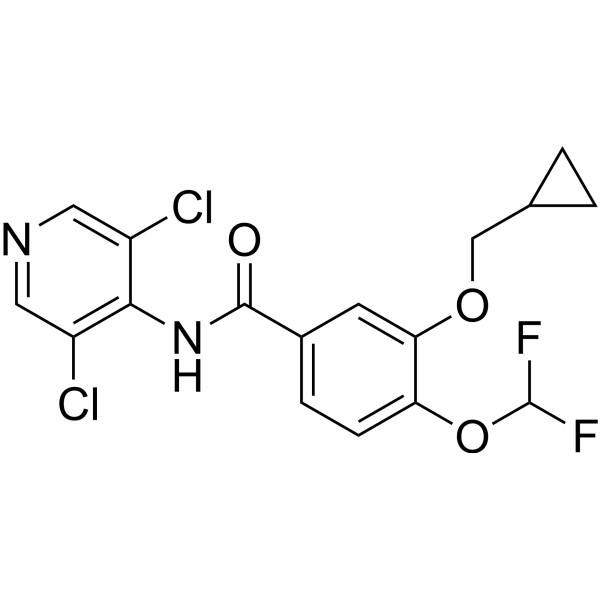
HY-15455
RoflumilastPDE4 Inhibitor -
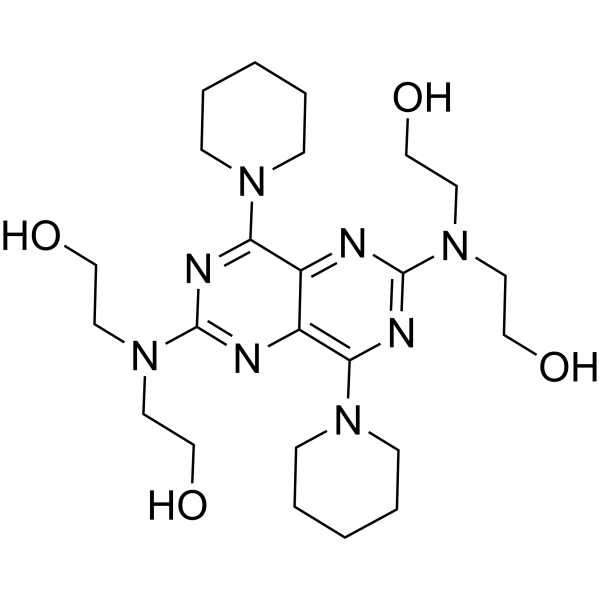
HY-B0312
DipyridamolePDE Inhibitor -
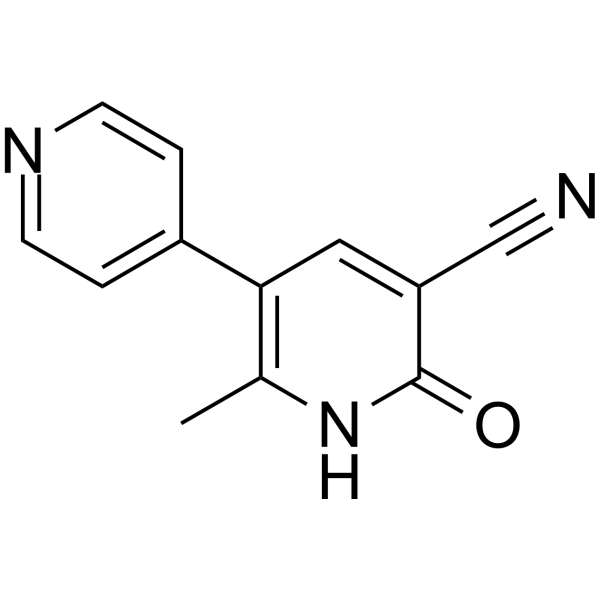
HY-14252
Milrinone
Histamine Receptor アイソフォーム固有の製品をすべて表示
More

生物活性
製品説明
IC50 & Target
[2]|
H1 Receptor |
PDE3 |
PDE4 |
PDE5 |
体外実験
Fenspiride (around 100 μM) inhibits histamine-induced contraction of isolated guinea pig trachea[2].
Fenspiride (≤1000 μM) produces less than 25% inhibition of phosphodiesterase 1 and phosphodiesterase 2 activities[2].
MedChemExpress (MCE) has not independently confirmed the accuracy of these methods. They are for reference only. .
体内実験
Fenspiride (60 mg/kg; p.o. for 3 days) reduces the lipopolysaccharide-induced primed stimulation of alveolar macrophages[3].
Fenspiride (60 mg/kg; p.o. for 3 days) reduces the increased serum concentrations of extracellular type II phospholipase A 2, the intensity of the neutrophilic alveolar invasion and the lethality due to the lipopolysaccharide[3].
MedChemExpress (MCE) has not independently confirmed the accuracy of these methods. They are for reference only.
-
Animal Model:Lipopolysaccharide-treated Male Dunkin-Hartley guinea-pigs weighing 400-600 g[3]
-
Dosage:60 mg/kg
-
Administration:Orally for 3 days; pretreated
-
Result:Reduced the lipopolysaccharide-induced early rise of tumor necrosis factor concentrations in serum (4.2 vs. 2.3 ng/ml) and in the BALF (55.7 vs. 19.7 ng/ml).
Reduced the lipopolysaccharide-induced primed stimulation of alveolar macrophages, (1551.5 vs 771.5 pg/μg protein, P<0.05 for thromboxane B2 and 12.6 vs. 3.6 pg/μg protein, P<0.05 for leukotriene C4).
Reduced the increased serum concentrations of extracellular type II phospholipase A 2 (3.9 vs. 1.2 nmol/ml per min), the intensity of the neutrophilic alveolar invasion and the lethality due to the lipopolysaccharide.


化学情報
-
CAS 番号 5053-08-7
-
性状 Solid
-
分子量 296.79
-
分子式 C15H21ClN2O2
-
Color White to off-white
-
SMILES
O=C1OC2(CCN(CCC3=CC=CC=C3)CC2)CN1.Cl
-
輸送条件
Room temperature in continental US; may vary elsewhere.
-
保管条件
4°C, sealed storage, away from moisture
* In solvent : -80°C, 6 months; -20°C, 1 month (sealed storage, away from moisture)


溶剤 & 溶解度
体外:
H2O : 50 mg/mL (168.47 mM; Need ultrasonic)
DMSO : 33.33 mg/mL (112.30 mM; Need ultrasonic; Hygroscopic DMSO has a significant impact on the solubility of product, please use newly opened DMSO)
Please refer to the solubility information to select the appropriate solvent. Once prepared, please aliquot and store the solution to prevent product inactivation from repeated freeze-thaw cycles.
Storage method and period of stock solution: -80°C, 6 months; -20°C, 1 month (sealed storage, away from moisture). When stored at -80°C, please use it within 6 months. When stored at -20°C, please use it within 1 month.
* Note: If you choose water as the stock solution, please dilute it to the working solution, then filter and sterilize it with a 0.22 μm filter before use.
Please refer to the solubility information to select the appropriate solvent. Once prepared, please aliquot and store the solution to prevent product inactivation from repeated freeze-thaw cycles.
Storage method and period of stock solution: -80°C, 6 months; -20°C, 1 month (sealed storage, away from moisture). When stored at -80°C, please use it within 6 months. When stored at -20°C, please use it within 1 month.
* Note: If you choose water as the stock solution, please dilute it to the working solution, then filter and sterilize it with a 0.22 μm filter before use.
濃度 (開始) × 体積 (開始) = 濃度 (終了) × 体積 (終了)
体内:
Select the appropriate dissolution method based on your experimental animal and administration route.
- For the following dissolution methods, please ensure to first prepare a clear stock solution using an In Vitro approach and then sequentially add co-solvents:
- To ensure reliable experimental results, the clarified stock solution can be appropriately stored based on storage conditions. As for the working solution for In Vivo experiments, it is recommended to prepare freshly and use it on the same day.
- The percentages shown for the solvents indicate their volumetric ratio in the final prepared solution. If precipitation or phase separation occurs during preparation, heat and/or sonication can be used to aid dissolution.
Add each solvent one by one: 10% DMSO 40% PEG300 5% Tween-80 45% Saline
Solubility: ≥ 2.75 mg/mL (9.27 mM); Clear solution
This protocol yields a clear solution of ≥ 2.75 mg/mL (saturation unknown).
Taking 1 mL working solution as an example, add 100 μL DMSO stock solution (27.5 mg/mL) to 400 μL PEG300, and mix evenly; then add 50 μL Tween-80 and mix evenly; then add 450 μL Saline to adjust the volume to 1 mL.
Preparation of Saline: Dissolve 0.9 g sodium chloride in ddH₂O and dilute to 100 mL to obtain a clear Saline solution.
Add each solvent one by one: 10% DMSO 90% (20% SBE-β-CD in Saline)
Solubility: ≥ 2.75 mg/mL (9.27 mM); Clear solution
This protocol yields a clear solution of ≥ 2.75 mg/mL (saturation unknown).
Taking 1 mL working solution as an example, add 100 μL DMSO stock solution (27.5 mg/mL) to 900 μL 20% SBE-β-CD in Saline, and mix evenly.
Preparation of 20% SBE-β-CD in Saline (4°C, storage for one week): 2 g SBE-β-CD powder is dissolved in 10 mL Saline, completely dissolve until clear.
For the following dissolution methods, please prepare the working solution directly:
It is recommended to prepare fresh solutions and use them promptly within a short period of time.
The percentages shown for the solvents indicate their volumetric ratio in the final prepared solution. If precipitation or phase separation occurs during preparation, heat and/or sonication can be used to aid dissolution.
Add each solvent one by one: PBS
Solubility: 120 mg/mL (404.33 mM); Clear solution; Need ultrasonic
In Vivo Dissolution Calculator
Please enter the basic information of animal experiments:
-
-
-
-
Recommended: Prepare an additional quantity of animals to account for potential losses during experiments.
Working solution concentration: 0.22 mg/mL
This product has good water solubility, please refer to the measured solubility data in water/PBS/Saline for details.


純度とドキュメンテーション
-
データシート (274 KB)
-
SDS (393 KB)
- English - EN (393 KB)
- Français - FR (393 KB)
- Deutsch - DE (393 KB)
- Norwegian - NO (393 KB)
- Español - ES (393 KB)
- Swedish - SV (393 KB)
- Italian - IT (393 KB)
- Korean - KR (393 KB)
- Portuguese - PT (393 KB)
-
取扱説明書 (2659 KB)
参考文献
[1]. Matuszewska A, et al. Long-term administration of fenspiride has no negative impact on bone mineral density and bone turnover in young growing rats. Adv Clin Exp Med. 2019 Jun;28(6):771-776. [Content Brief]
[2]. Cortijo J, et al. Effects of fenspiride on human bronchial cyclic nucleotide phosphodiesterase isoenzymes: functional and biochemical study. Eur J Pharmacol. 1998 Jan 2;341(1):79-86. [Content Brief]
[3]. De Castro CM, et al. Fenspiride: an anti-inflammatory drug with potential benefits in the treatment of endotoxemia. Eur J Pharmacol. 1995 Dec 29;294(2-3):669-76. [Content Brief]


Complete Stock Solution Preparation Table
Please refer to the solubility information to select the appropriate solvent. Once prepared, please aliquot and store the solution to prevent product inactivation from repeated freeze-thaw cycles.
Storage method and period of stock solution: -80°C, 6 months; -20°C, 1 month (sealed storage, away from moisture). When stored at -80°C, please use it within 6 months. When stored at -20°C, please use it within 1 month.
| Optional Solvent | Concentration Solvent Mass | 1 mg | 5 mg | 10 mg | 25 mg |
|---|---|---|---|---|---|
| DMSO / H2O | 1 mM | 3.3694 mL | 16.8469 mL | 33.6939 mL | 84.2346 mL |
| 5 mM | 0.6739 mL | 3.3694 mL | 6.7388 mL | 16.8469 mL | |
| 10 mM | 0.3369 mL | 1.6847 mL | 3.3694 mL | 8.4235 mL | |
| 15 mM | 0.2246 mL | 1.1231 mL | 2.2463 mL | 5.6156 mL | |
| 20 mM | 0.1685 mL | 0.8423 mL | 1.6847 mL | 4.2117 mL | |
| 25 mM | 0.1348 mL | 0.6739 mL | 1.3478 mL | 3.3694 mL | |
| 30 mM | 0.1123 mL | 0.5616 mL | 1.1231 mL | 2.8078 mL | |
| 40 mM | 0.0842 mL | 0.4212 mL | 0.8423 mL | 2.1059 mL | |
| 50 mM | 0.0674 mL | 0.3369 mL | 0.6739 mL | 1.6847 mL | |
| 60 mM | 0.0562 mL | 0.2808 mL | 0.5616 mL | 1.4039 mL | |
| 80 mM | 0.0421 mL | 0.2106 mL | 0.4212 mL | 1.0529 mL | |
| 100 mM | 0.0337 mL | 0.1685 mL | 0.3369 mL | 0.8423 mL |
* Note: If you choose water as the stock solution, please dilute it to the working solution, then filter and sterilize it with a 0.22 μm filter before use.


Fenspiride hydrochloride 関連分類
HY-A0027 関連分類
 Powered by Bioz