Search Result
Results for "
Enzyme Inhibition
" in MedChemExpress (MCE) Product Catalog:
3
Biochemical Assay Reagents
20
Isotope-Labeled Compounds
| Cat. No. |
Product Name |
Target |
Research Areas |
Chemical Structure |
-
- HY-A0004
-
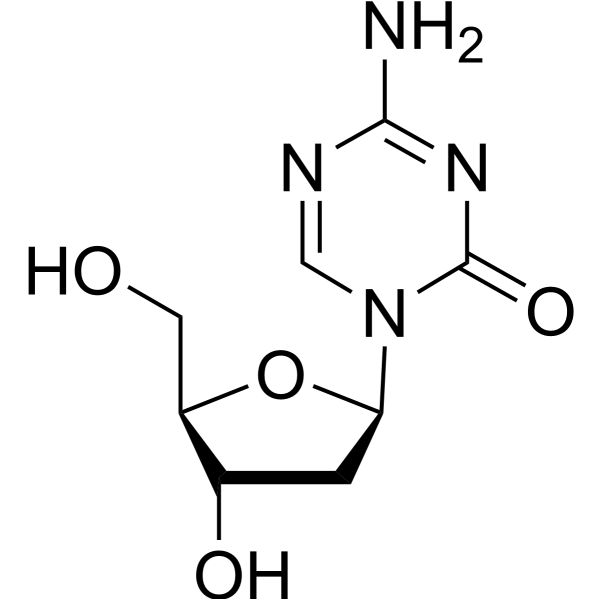
Decitabine
Maximum Cited Publications
168 Publications Verification
5-Aza-2'-deoxycytidine; 5-AZA-CdR; NSC 127716
|
DNA Methyltransferase
Apoptosis
Nucleoside Antimetabolite/Analog
|
Cancer
|
|
Decitabine (NSC 127716) is an orally active deoxycytidine analogue antimetabolite and a DNA methyltransferase inhibitor. Decitabine incorporates into DNA in place of cytosine can covalently trap DNA methyltransferase to DNA causing irreversible inhibition of the enzyme. Decitabine induces cell G2/M arrest and cell apoptosis. Decitabine has potent anticancer activity .
|
-
-
- HY-P1923
-
|
L-ASNase
|
Apoptosis
DNA/RNA Synthesis
|
Cancer
|
|
L-Asparaginase (L-ASNase) is a deamidating enzyme that catalyses the hydrolysis of L-asparagine and L-glutamine, and can be used for the research of acute lymphoblastic leukemia. L-Asparaginase depletes L-asparagine from plasma resulting in inhibition of RNA and DNA synthesis with the subsequent blastic cell apoptosis .
|
-
-
- HY-76200
-
|
UK-109496
|
Fungal
Bacterial
|
Infection
Neurological Disease
Cancer
|
|
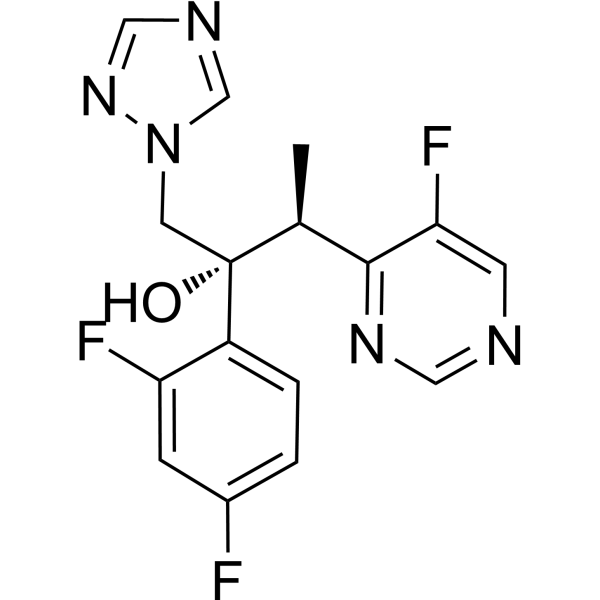
Voriconazole (UK-109496) is a second-generation, broad-spectrum triazole antifungal agent that inhibits fungal ergosterol biosynthesis. Voriconazole exerts its antifungal activity by inhibition of 14-α-lanosterol demethylation, which is mediated by fungal cytochrome P450 enzymes. Voriconazole can penetrate the blood brain barrier (BBB) .
|
-
-
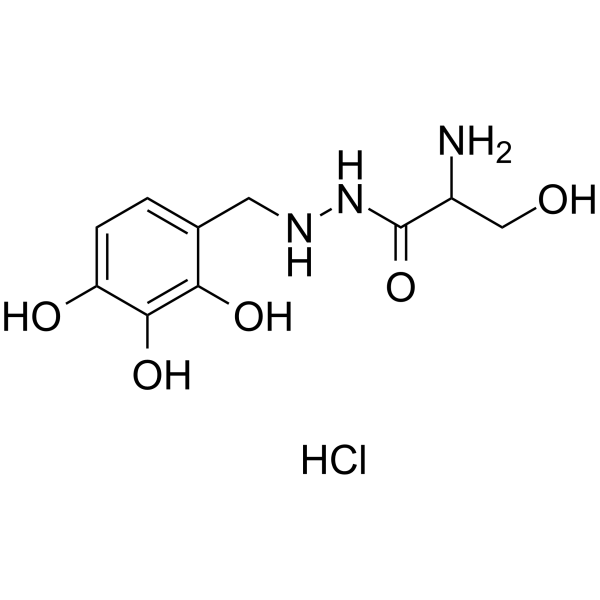
- HY-B0404A
-
|
Ro 4-4602 hydrochloride
|
Pyruvate Kinase
|
Neurological Disease
Cancer
|
|
Benserazide hydrochloride (Serazide) is an aromatic L-amino acid decarboxylase (AADC) and L-DOPA decarboxylase inhibitor. Benserazide hydrochloride is also a PKM2 inhibitor. Benserazide hydrochloride directly binds to and blocks PKM2 enzyme activity, leading to inhibition of aerobic glycolysis concurrent up-regulation of OXPHOS. Benserazide hydrochloride can be used for the study of Parkinson's disease and melanoma .
|
-
-
- HY-P2802
-
|
α-D-Glucosidase, Yeast
|
Glycosidase
|
Metabolic Disease
|
|
α-Glucosidase, Yeast (α-D-Glucosidase, Yeast), a carbohydrate hydrolyzing enzyme, catalyzes the liberation of α-glucose from the non-reducing end of the substrate. α-Glucosidase can facilitate the absorption of glucose by the small intestine. Inhibition of α-Glucosidase is an effective management of non-insulin-dependent diabetes mellitus (NIDDM) .
|
-
-
- HY-119726
-
|
APX001; E1211
|
Fungal
|
Infection
Inflammation/Immunology
Cancer
|
|
Fosmanogepix (APX001) is a broad-spectrum agent against invasive fungal infections. Fosmanogepix (APX001) targets the conserved Gwt1 enzyme required for the localization of glycosylphosphatidylinositol-anchored mannoproteins in fungi. This inhibition prevents the appropriate localization of cell wall mannoproteins, which compromises cell wall integrity, biofilm formation, germ tube formation, and fungal growth. Fosmanogepix (APX001) can be used for invasive fungal infections research .
|
-
-
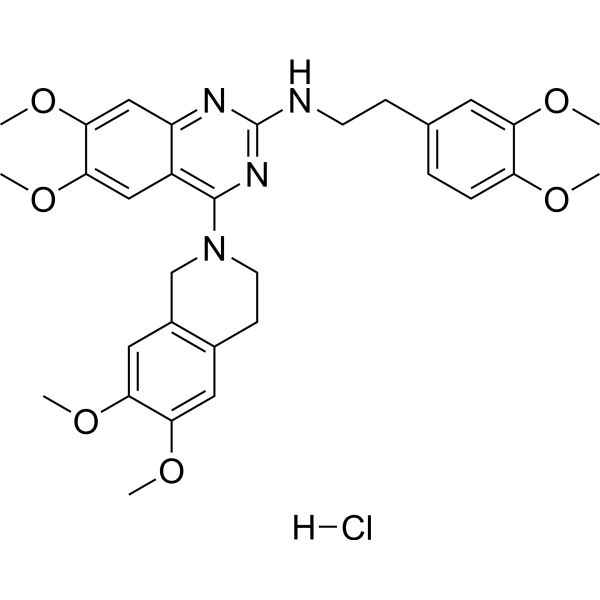
- HY-17543
-
|
|
Deubiquitinase
|
Cancer
|
|
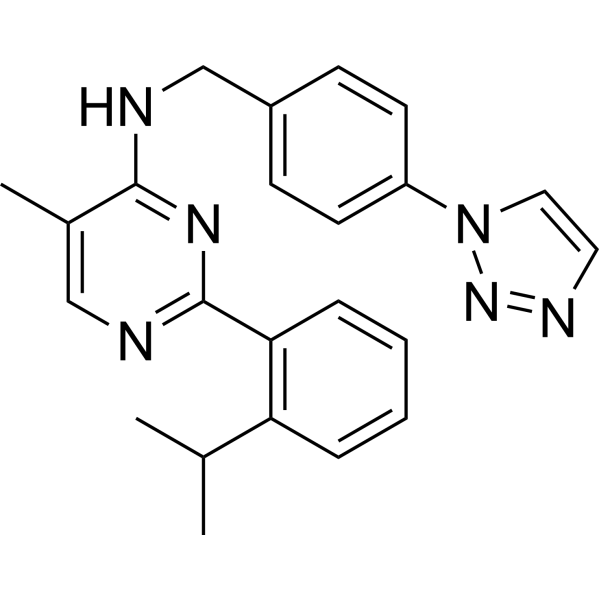
ML-323 is a reversible, potent USP1-UAF1 inhibitor with IC50 of 76 nM in a Ub-Rho assay. The measured inhibition constants of ML-323 for the free enzyme (Ki) is 68 nM.
|
-
-
- HY-N2010
-
-
-
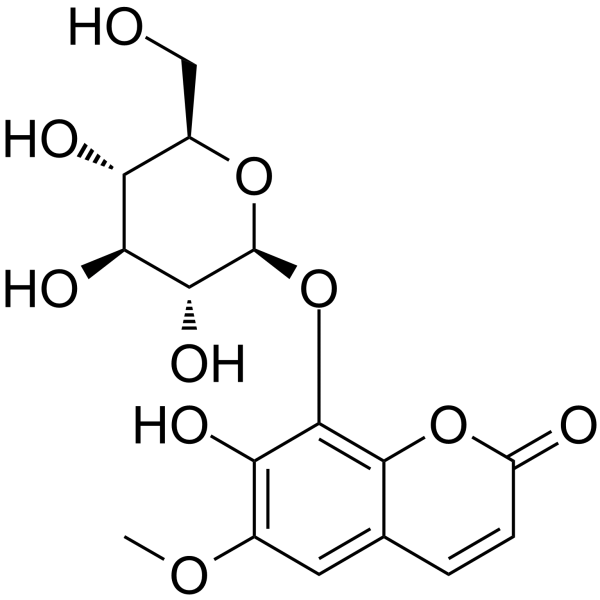
- HY-N0579
-
Fraxin
5 Publications Verification
Fraxoside
|
Phosphodiesterase (PDE)
|
Inflammation/Immunology
|
|
Fraxin isolated from Cortex Fraxini, is a glucoside of fraxetin and reported to exert potent anti-oxidative stress action , anti-inflammatory and antimetastatic properties. Fraxin shows its antioxidative effect through inhibition of cyclo AMP phosphodiesterase enzyme .
|
-
-
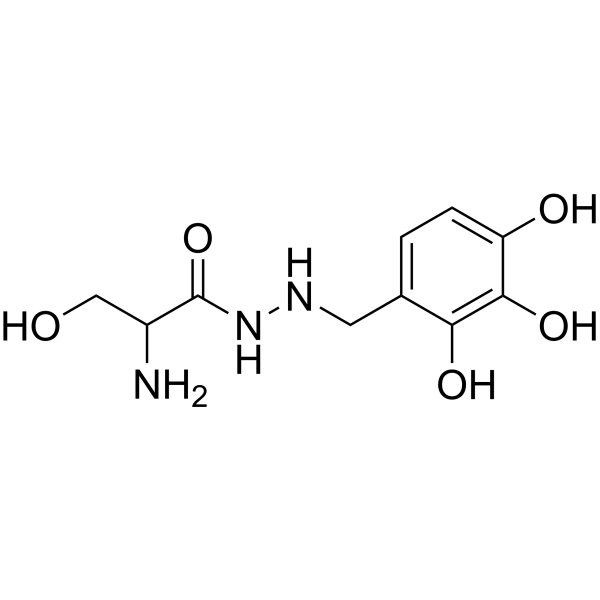
- HY-121275
-
|
Ro 4-4602
|
Pyruvate Kinase
|
Neurological Disease
Cancer
|
|
Benserazide is an aromatic L-amino acid decarboxylase (AADC) and L-DOPA decarboxylase inhibitor. Benserazide is also a PKM2 inhibitor. Benserazide directly binds to and blocks PKM2 enzyme activity, leading to inhibition of aerobic glycolysis concurrent up-regulation of OXPHOS. Benserazide can be used for the study of Parkinson's disease and melanoma .
|
-
-
- HY-P2994
-
|
3-HBDH
|
Endogenous Metabolite
|
Metabolic Disease
|
|
3-Hydroxybutyrate dehydrogenase (3-HBDH), a mitochondrial enzyme, is a key enzyme in the ketone body metabolism pathway. 3-Hydroxybutyrate dehydrogenase is the last enzyme for ketone synthesis in the liver and the first enzyme for ketone breakdown in extracellular tissues. The absence of 3-Hydroxybutyrate dehydrogenase leads to the inhibition of fatty acid oxidation in the liver during fasting in mice, resulting in lipid accumulation and the development of fatty liver .
|
-
-
- HY-160912
-
|
|
ELOVL
|
Metabolic Disease
|
|
ELOVL6-IN-5 is an orally active and selective elongase enzyme of long-chain fatty acid family 6 (ELOVL6) inhibitor with IC50 values of 85 nM and 38 nM for human and mouse ELOVL6, respectively. ELOVL6-IN-5 shows >60-fold selectivity over other ELOVL family enzymes (ELOVL1, 2, 3, 5) and no effect on other lipid synthesis enzymes like ACC1, ACC2. ELOVL6-IN-5 reduces hepatic fatty acid composition ratio of C18 to C16 in diet-induced obesity (DIO) and KKAy mice. ELOVL6 inhibition by ELOVL6-IN-5 does not improve insulin resistance. ELOVL6-IN-5 can be used for the research of metabolic disease .
|
-
-
- HY-P990952
-
|
OMS906
|
Ser/Thr Protease
Complement System
|
Metabolic Disease
Inflammation/Immunology
|
|
Zaltenibart (OMS906) is an IgG4 humanized monoclonal antibody and MASP-3 inhibitor. By inhibiting MASP-3, Zaltenibart achieves upstream inhibition of the alternative complement pathway. MASP-3 is an upstream activator of Factor D (Factor D), a key enzyme in the alternative complement pathway. Zaltenibart prevents both intravascular hemolysis and extravascular hemolysis. Zaltenibart is applicable to research related to paroxysmal nocturnal hemoglobinuria .
|
-
-
- HY-112179
-
GSK180
2 Publications Verification
|
KMO
|
Inflammation/Immunology
|
|
GSK180 is a selective, competitive, and potent inhibitor of kynurenine-3-monooxygenase (KMO), a key enzyme of tryptophan metabolism (IC50, ~6 nM), but shows negligible activity against other enzymes on the tryptophan pathway. GSK180 rapidly changes levels of kynurenine pathway metabolites, and acts as a useful tool to probe the therapeutic potential of KMO inhibition .
|
-
-
- HY-145270
-
|
|
ELOVL
|
Metabolic Disease
|
|
ELOVL1-IN-2 is an elongation of very long chain fatty acid 1 (ELOVL1) enzyme inhibitor, ELOVL1-IN-2 shows weak ELOVL1 inhibition (IC50=21 μM) and moderate potency in a primary cellular assay (HEK293 C26 IC50=6.7 μM) .
|
-
-
- HY-P2776
-
|
|
Endogenous Metabolite
|
Metabolic Disease
|
|
Hexokinase (ScHEX1) (EC 2.7.1.1) is a glycolytic enzyme hexokinase that is inhibited by n-acetylglucosamine. Inhibition of Hexokinase (ScHEX1) by n-acetylglucosamine leads to its separation from the mitochondrial outer membrane, resulting in activation of NLRP3 inflammasome .
|
-
-
- HY-76200S
-
|
UK-109496-d3
|
Fungal
|
Infection
|
|
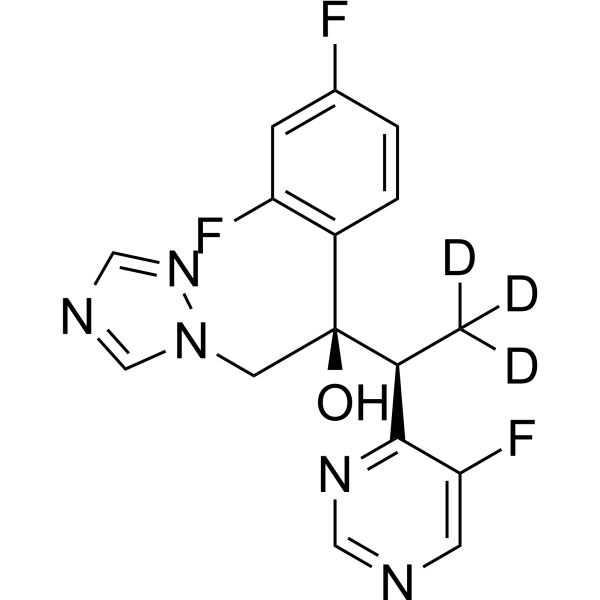
Voriconazole-d3 is the deuterium labeled Voriconazole. Voriconazole (UK-109496) is a second-generation, broad-spectrum triazole antifungal agent that inhibits fungal ergosterol biosynthesis. Voriconazole exerts its antifungal activity by inhibition of 14-α-lanosterol demethylation, which is mediated by fungal cytochrome P450 enzymes .
|
-
-
- HY-107030
-
-
-
- HY-B0580A
-
|
(-)-Ketorolac
|
COX
|
Inflammation/Immunology
|
|
(S)-Ketorolac is a nonsteroidal anti-inflammatory agent. (S)-ketorolac exhibits potent COX1 and COX2 enzyme inhibition .
|
-
-
- HY-119737
-
-
-
- HY-W001857
-
|
N-Hydroxyoctanamide; Caprylhydroxamic acid
|
Biochemical Assay Reagents
Bacterial
|
Others
|
|
Octanohydroxamic acid (N-Hydroxyoctanamide; Caprylhydroxamic acid) can be used as an extractant for alkaloids, which are used in pharmaceutical and natural product research. Octanohydroxamic acid may also be involved in the inhibition of certain enzymes, such as hydroxamate hydrolases.
|
-
-
- HY-W041193
-
|
|
MMP
Lipoxygenase
Tyrosinase
|
Infection
Inflammation/Immunology
Cancer
|
|
3-Hydroxy-2-pyrone (Compound 12d) is a metalloenzyme inhibitor. 3-Hydroxy-2-pyrone shows an inhibition rate of approximately 50% for matrix metalloproteinases (MMP) and the inhibition rate for non-heme iron enzyme 5-lipoxygenase (5-LOX) was over 70% at 1 mM. 3-Hydroxy-2-pyrone also has certain inhibitory activity against copper-dependent enzyme tyrosinase. 3-Hydroxy-2-pyrone can be used for the research of cancer, infection and inflammation .
|
-
-
- HY-W009454
-
|
4-Nitopheyl Sulfate potassium
|
Fluorescent Dye
|
Others
|
|
Potassium p-nitrophenyl sulfate (4-Nitophenyl Sulfate potassium) serves as a chromogenic substrate for arylsulfatases. Potassium p-nitrophenyl sulfate releases nitrophenol under the cleavage action of arylsulfatases, and the activity of arylsulfatases can be quantitatively determined via colorimetric detection at 400 nm. Potassium p-nitrophenyl sulfate is commonly used in enzyme inhibition assays and metabolite analog-related studies .
|
-
-
- HY-70003
-
|
CPG2 Inhibitor
|
Carboxypeptidase
|
Cancer
|
|
Carboxypeptidase G2 (CPG2) Inhibitor is a novel CPG2 inhibitor with an Ki of 0.3 μM. Carboxypeptidase G2 (CPG2) Inhibitor effectively neutralizes the CPG2 activity in non-tumor sites, allowing for earlier administration of the drug and forming a complementary strategy with antibody clearance strategies. Carboxypeptidase G2 (CPG2) Inhibitor can be used for the study of antibody-directed enzyme prodrug therapy (ADEPT) .
|
-
-
- HY-117318
-
|
|
Phosphodiesterase (PDE)
|
Infection
|
|
PDE12-IN-1 is a potent and selective PDE12 inhibitor with a pIC50 value for enzyme inhibition of 9.1. PDE12-IN-1 increases 2′,5′-linked adenylate polymers (2-5A) levels, and the pEC50 value is 7.7. PDE12-IN-1 shows antiviral activity .
|
-
-
- HY-116804
-
|
|
Histone Methyltransferase
|
Cancer
|
|
ZLD1039 is a potent, highly selective, and orally bioavailable EZH2 inhibitor. ZLD1039 shows potent and concentration-dependent inhibition of PRC2 enzymatic activity against EZH2 wild-type as well as Y641F, and A677G mutant enzymes with IC50 values of 5.6, 15, and 4.0 nM, respectively. ZLD1039 inhibits breast tumor growth and metastasis .
|
-
-
- HY-130199
-
|
Parellic acid
|
Others
|
Metabolic Disease
|
|
Psoromic acid is a potent and selective RabGGTase (Rab geranylgeranyl transferase) inhibitor with an IC50 value of 1.3 µM. Psoromic acid is an antioxidative agent. Psoromic acid exhibits a competitive type of HMGR inhibition and mixed type of ACE (angiotensin converting enzyme) inhibition .
|
-
-
- HY-N2074
-
|
|
Lipoxygenase
|
Inflammation/Immunology
|
|
Picrinine, an akuammiline alkaloid, is isolated from the leaves of Alstonia scholaris. Picrinine exhibits anti-inflammatory activity through inhibition of the 5-lipoxygenase enzyme .
|
-
-
- HY-148190
-
|
CGT-8012
|
Dipeptidyl Peptidase
|
Endocrinology
|
|
Sheng Gelieting (CGT-8012) is a dipeptidy peptidase-IV enzyme (DP-IV) inhibitor. Sheng Gelieting has great DP-IV inhibition activity with an IC50 value of 87 nM. Sheng Gelieting can be used for curing or preventing diseases relevant to the dipeptidy peptidase-IV enzyme, such as the diabetes, particularly the II-type diabete .
|
-
-
- HY-131605B
-
|
GCV-TP disodium
|
CMV
DNA/RNA Synthesis
|
Infection
Cancer
|
|
Ganciclovir triphosphate (GCV-TP) disodium is a synthetic 2'-deoxyguanosine analog with activity in inhibiting human cytomegalovirus (CMV) replication. Ganciclovir triphosphate disodium is effective against CMV infection by binding to viral DNA polymerase and interfering with viral DNA synthesis. Ganciclovir triphosphate disodium has an IC50 of 0.01 μM against CMV strains from humans, monkeys, mice, and guinea pigs. Ganciclovir triphosphate disodium has also been used in gene-directed enzyme prodrug inhibition for cancer inhibition .
|
-
-
- HY-P2862
-
|
|
Biochemical Assay Reagents
|
Others
|
|
Enolase is a glycolytic enzyme present in the cell wall of S. cerevisiae. Enolase exhibits specific affinity to imported tRNA and can facilitate formation of preMsk1p-tRNA complex. Enolase can be overproduced in tumor cells where rate of glycolysis is increased. Enolase depletion can lead to tRNA inhibition in vivo .
|
-
-
- HY-W587663
-
|
|
Dihydrofolate reductase (DHFR)
|
Infection
|
|
4 '-DTMP is a DHFR inhibitor with Ki of 5.1 nM (DHFR WT) and 34.3 nM (DHFR L28R), respectively. 4 '-DTMP carries a polar modification that induces additional local interactions with the enzyme. In particular, the hairpin structure on the M20 ring is related to the internal communication of the DHFR. 4 '-DTMP has potential inhibition of E.coli .
|
-
-
- HY-133116
-
|
|
Adrenergic Receptor
|
Neurological Disease
|
|
4-Hydroxyatomoxetine is an active metabolite of Atomoxetine. 4-Hydroxyatomoxetine is metabolized by the enzyme cytochrome P450 2D6 (CYP2D6). Atomoxetine hydrochloride is a potent and selective noradrenalin re-uptake inhibitor (Ki values are 5 nM, 77 nM and 1451 nM for inhibition of radioligand binding to human NET, SERT and DAT respectively) .
|
-
-
- HY-76200R
-
|
UK-109496 (Standard)
|
Reference Standards
Fungal
Bacterial
|
Infection
Cancer
|
|
Voriconazole (Standard) is the analytical standard of Voriconazole. This product is intended for research and analytical applications. Voriconazole (UK-109496) is a second-generation, broad-spectrum triazole antifungal agent that inhibits fungal ergosterol biosynthesis. Voriconazole exerts its antifungal activity by inhibition of 14-α-lanosterol demethylation, which is mediated by fungal cytochrome P450 enzymes .
|
-
-
- HY-131605
-
|
GCV-TP
|
Endogenous Metabolite
CMV
DNA/RNA Synthesis
|
Infection
Cancer
|
|
Ganciclovir triphosphate (GCV-TP) is a synthetic 2'-deoxyguanosine analog with activity in inhibiting human cytomegalovirus (CMV) replication. Ganciclovir triphosphate is effective against CMV infection by binding to viral DNA polymerase and interfering with viral DNA synthesis. Ganciclovir triphosphate has an IC50 of 0.01 μM against CMV strains from humans, monkeys, mice, and guinea pigs. Ganciclovir triphosphate has also been used in gene-directed enzyme prodrug inhibition for cancer inhibition .
|
-
-
- HY-129923
-
|
|
Cytochrome P450
|
Neurological Disease
|
|
(R)-Omeprazole sodium is a gastric acid resistant compound with activity to inhibit gastric acid secretion. (R)-Omeprazole sodium is metabolized in vivo, and its metabolism is primarily affected by cytochrome P450 enzymes. The interaction between (R)-Omeprazole sodium and mannitol may affect its bioavailability in formulations. (R)-Omeprazole sodium exhibits reversible direct and metabolism-dependent inhibition of CYP2C19 .
|
-
-
- HY-162238
-
|
|
Parasite
|
Infection
|
|
OSM-S-106 is a pro-inhibitor and that inhibition of PfAsnRS occurs via enzyme-mediated production of an Asn-OSM-S-106 adduct. OSM-S-106 inhibits protein translation and activates the amino acid starvation response. OSM-S-106 exhibits selective activity against Plasmodium blood and liver stages and low intrinsic clearance by human microsomes .
|
-
-
- HY-D1460
-
|
|
Bacterial
β-glucuronidase
|
Infection
|
|
Fluorescein Di-β-D-Glucuronide is an orally active fluorescent probe substrate and an indicator of β-glucuronidase (βG) activity in intestinal bacteria. Fluorescein Di-β-D-Glucuronide can be used for non-invasive time-lapse optical imaging of βG activity in intestinal bacteria in nude mice. Fluorescein Di-β-D-Glucuronide supports the quantitative analysis of bacterial βG enzyme activity and inhibition .
|
-
-
- HY-124781
-
|
|
Bacterial
Antibiotic
|
Infection
|
|
ML406 is a small molecule probe that shows anti-tubercular activity via M.tuberculosis BioA (DAPA synthase) enzyme inhibition with an IC50 of 30 nM. M.tuberculosis BioA is an enzyme involved in biotin biosynthesis in M.tuberculosis .
|
-
-
- HY-100796
-
|
Vatensol
|
Dopamine β-hydroxylase
|
Cardiovascular Disease
|
|
Guanoclor is an antihypertensive compound. Guanoclor is an adrenergic neurone-blocking agent, which also interferes with noradrenaline synthesis by inhibition of the enzyme dopamine beta-hydroxylase .
|
-
-
- HY-14829F
-
|
5-epi-Isofagomine
|
Glycosidase
|
Metabolic Disease
|
|
L-Afegostat (5-epi-Isofagomine) is a glycosidase inhibitor. L-Afegostat is an iminosugar that can be used for the synthesis of carbohydrates. L-Afegostat shows enzyme inhibition to β-Glucosidase with an Ki of 30 μM .
|
-
-
- HY-144738
-
|
|
Epoxide Hydrolase
FAAH
|
Inflammation/Immunology
|
|
Dual FAAH/sEH-IN-1 (compound 3) is a high affinity dual sEH (soluble epoxide hydrolase) and FAAH (fatty acid amide hydrolase) inhibitor, with IC50 values of 9.6 and 7 nM, respectively. Dual FAAH/sEH-IN-1 shows antinociception against the inflammatory phase .
|
-
-
- HY-P11331
-
|
|
Proteasome
|
Others
|
|
Az-NC-002 is a Proteasome trypsin-like site (β2) and immunoproteasome β2i-specific active probe. Az-NC-002 has weak off-target effects with no significant inhibition for Cathepsin D (HY-P2750), but this inhibition reacts outside of the active site or influence on a small fraction of the enzyme .
|
-
-
- HY-143898
-
|
|
Pim
|
Cancer
|
|
PIM1-IN-4 (Compound 8) is a potent inhibitor of PIM1. PIM1-IN-4 reveals strong inhibition of five other enzymes, i.e., SGK-1, PKA, CaMK-1, GSK3β, and MSK1. PIM1-IN-4 has the potential for the research of cancer diseases .
|
-
-
- HY-B0404AS
-
|
Ro 4-4602-d3 hydrochloride
|
Isotope-Labeled Compounds
Pyruvate Kinase
|
Neurological Disease
Cancer
|
|
Benserazide-d3 (hydrochloride) is the deuterium labeled Benserazide hydrochloride (HY-B0404A). Benserazide hydrochloride (Serazide) is an aromatic L-amino acid decarboxylase (AADC) and L-DOPA decarboxylase inhibitor. Benserazide hydrochloride is also a PKM2 inhibitor. Benserazide hydrochloride directly binds to and blocks PKM2 enzyme activity, leading to inhibition of aerobic glycolysis concurrent up-regulation of OXPHOS. Benserazide hydrochloride can be used for the study of Parkinson's disease and melanoma .
|
-
-
- HY-178365
-
-
-
- HY-120281
-
|
|
MEK
PI3K
Akt
Apoptosis
Caspase
|
Cancer
|
|
ST-168 is an orally active MEK/PI3K inhibitor with an IC50 of 182 nM against MEK1 and IC50 values of 69.2, 41.7, 1482 and 2293 nM against PI3Kα, PI3Kδ, PI3Kβ and PI3Kγ respectively. ST-168 completely inhibits the phosphorylation of ERK1/2 and AKT and induces cancer cell death in a 3D tumor sphere model. ST-168 demonstrates significant antitumor effects in the A375 melanoma mouse model. ST-168 improves the ocular toxicity profile of MEK inhibitors, showing lower caspase activation levels, indicating reduced apoptosis induction. ST-168 can be used in melanoma research .
|
-
-
- HY-W032848
-
|
Y-3642
|
COX
|
Inflammation/Immunology
|
|
Tinoridine (Y-3642) is an orally active non-steroidal anti-inflammatory agent with potent antiperoxidative ability and radical scavenger activity. Tinoridine acts function by inhibiting COX enzyme, involves in hepatotoxicity inhibition. .
|
-
-
- HY-B0690
-
-
-
- HY-76200B
-
|
UK-109496 camphorsulfonate
|
Fungal
Bacterial
|
Infection
Cancer
|
|
Voriconazole (UK-109496) camphorsulfonate is a second-generation, broad-spectrum triazole antifungal agent that inhibits fungal ergosterol biosynthesis. Voriconazole camphorsulfonate exerts its antifungal activity by inhibition of 14-α-lanosterol demethylation, which is mediated by fungal cytochrome P450 enzymes .
|
-
- HY-146410
-
|
|
Angiotensin Receptor
|
Others
|
|
AT2R antagonist 1 (compound 21) is a potent and high selective AT2R (angiotensin II AT2 receptor) ligand. AT2R antagonist 1 exhibits a fair AT2R affinity, with a Ki of 29 nM. AT2R antagonist 1 also inhibits common agent-metabolizing CYP enzymes. AT2R antagonist 1 shows high stability in human, rat and mouse liver microsomes .
|
-
- HY-10572A
-
|
(R)-DMP 266; (R)-EFV; (R)-L-743726
|
Reverse Transcriptase
|
Infection
|
|
(R)-Efavirenz ((R)-DMP 266) is a non-nucleoside reverse transcriptase inhibitor that acts by non-competitive inhibition of the viral enzyme. (R)-Efavirenz can be metabolized by CYP2B6 to 8-hydroxyefavirenz in a highly stereoselective manner. (R)-Efavirenz is promising to be a useful probe for the CYP2B6 active site and catalytic mechanisms .
|
-
- HY-19885
-
|
|
Bacterial
Dihydrofolate reductase (DHFR)
|
Infection
|
|
AR-102 has inhibitory activity towards Staphylococcus aureus. AR-102 exhibits a competitive potent inhibition of the F98Y mutant DHFR (Ki = 0.22 nM). AR-102 has been determined as ternary complex with NADPH in both wild-type S. aureus DHFR and the TMP-resistant F98Y mutant enzyme .
|
-
- HY-119726A
-
|
APX001 (tautomerism); E1211 (tautomerism)
|
Fungal
|
Infection
Inflammation/Immunology
|
|
Fosmanogepix tautomerism (APX001 tautomerism) is a broad-spectrum and orally active anti-invasive fungal compound. Fosmanogepix tautomerism targets the conserved Gwt1 enzyme required for the localization of glycosylphosphatidylinositol-anchored mannoproteins in fungi, and inhibition prevents proper localization of cell wall mannoproteins, thereby impairing cell wall integrity, biofilm formation, germ tube formation, and fungal growth. Fosmanogepix tautomerism can be used to study invasive fungal infections .
|
-
- HY-161514
-
|
|
Xanthine Oxidase
|
Metabolic Disease
|
|
Xanthine oxidase-IN-15 (Compound 6c) is a selective inhibitor of Xanthine oxidase (XO) (IC50=0.13 μM). Xanthine oxidase-IN-15 inhibits XO catalysis by forming a stable interaction with the active site of XO. Xanthine oxidase-IN-15 is mainly used in the study of hyperuricemia and gout .
|
-
- HY-163495
-
-
- HY-121328
-
|
S-2852F
|
Parasite
|
Infection
Neurological Disease
|
|
Empenthrin (S-2852F) is a synthetic pyrethroid. Empenthrin can be used in insecticides. Empenthrin shows a clear species-specificity in the inhibitory effect on the Pentobarbital (PTB)-metabolizing enzyme(s). Empenthrin prolongs PTB induced-sleeping time in mice through an inhibition of the PTB-metabolizing enzyme(s) in the liver, an effect that does not occur in rats. Empenthrin shows a clear species-specificity in the inhibitory effect on the PTB-metabolizing enzyme(s) .
|
-
- HY-133078
-
|
|
Cytochrome P450
|
Cancer
|
|
Thienyldecyl isothiocyanate is an analog of thienylbutyl isothiocyanate that, like many isothiocyanates, demonstrates antiproliferative activity against cancer cells presumably by modulation of xenobiotic-metabolizing enzymes, such as by inhibition of cytochrome P450, and/or by induction of phase II detoxifying enzymes.
|
-
- HY-124334
-
|
|
Antibiotic
Bacterial
|
Infection
|
|
L-161240 is an antibiotic, which exhibits antibacterial activity against Escherichia coli, through inhibition of LpxC enzyme (Ki is 50 nM) .
|
-
- HY-144717
-
|
|
Phosphatase
|
Metabolic Disease
|
|
PTP1B-IN-18 is an orally active complete mixed type protein tyrosine phosphatase 1B (PTP1B) inhibitor with a Ki of 35.2 μM. PTP1B-IN-18 can be used for type 2 diabetes research .
|
-
- HY-147730
-
|
|
HDAC
|
Cancer
|
|
A variety of compounds were designed and synthesized by modifying cap groups. The enzyme inhibition test showed that compound 12C had broad-spectrum enzyme inhibitory activity, and compounds 9m and 9q were more inclined to inhibit HDAC6, showing a certain selective inhibitory activity among the representative subtypes.
|
-
- HY-124781R
-
|
|
Reference Standards
Bacterial
Antibiotic
|
Infection
|
|
ML406 (Standard) is the analytical standard of ML406. This product is intended for research and analytical applications. ML406 is a small molecule probe that shows anti-tubercular activity via M.tuberculosis BioA (DAPA synthase) enzyme inhibition with an IC50 of 30 nM. M.tuberculosis BioA is an enzyme involved in biotin biosynthesis in M.tuberculosis[1].
|
-
- HY-107030R
-
|
EMD-15700 (Standard)
|
Aldehyde Dehydrogenase (ALDH)
Reference Standards
|
Metabolic Disease
|
|
Nitrefazole (Standard) is the analytical standard of Nitrefazole. This product is intended for research and analytical applications. Nitrefazole is a 4-nitroimidazole derivative with strong and long lasting inhibition of aldehyde dehydrogenase (ALDH), an enzyme involved in the metabolism of alcohol.
|
-
- HY-B1543
-
-
- HY-170236
-
|
|
NO Synthase
|
Neurological Disease
|
|
nNOS-IN-5 (Compound 9) is a potent human neuronal NOS (nNOS) inhibitor (Ki = 22 nM). nNOS-IN-5 exhibits excellent selectivity, with a 900-fold preference for human nNOS over human endothelial NOS (eNOS). nNOS-IN-5 can be used for neurodegenerative diseases study, such as Alzheimer's disease and Parkinson’s disease .
|
-
- HY-120865
-
|
|
NO Synthase
|
Inflammation/Immunology
|
|
1,3-PBIT is a potent inhibitor of iNOS with a Ki of 47 nM compared to Ki values for eNOS and nNOS are 9 and 0.25 μM, respectively, for the purified human enzymes. Its inhibition in whole cells is greatly diminished, presumably to poor membrane permeability.
|
-
- HY-N2074R
-
|
|
Reference Standards
Lipoxygenase
|
Inflammation/Immunology
|
|
Picrinine (Standard) is the analytical standard of Picrinine. This product is intended for research and analytical applications. Picrinine, an akuammiline alkaloid, is isolated from the leaves of Alstonia scholaris. Picrinine exhibits anti-inflammatory activity through inhibition of the 5-lipoxygenase enzyme .
|
-
- HY-119737R
-
|
|
Reference Standards
Acetolactate Synthase (ALS)
|
Metabolic Disease
|
|
Chlorsulfuron (Standard) is the analytical standard of Chlorsulfuron. This product is intended for research and analytical applications. Chlorsulfuron blocks the biosynthesis of the amino acids valine and isoleucine in plants. Chlorsulfuron completely alleviates herbicide-induced growth inhibition. The site of action of Chlorsulfuron is the enzyme acetolactate synthase .
|
-
- HY-12390S
-
|
|
Isotope-Labeled Compounds
|
Neurological Disease
|
|
Lofepramine-d3 (Lopramine-d3) is the deuterium labeled Lofepramine. Lofepramine (Lopramine) is a potent tricyclic antidepressant and is extensively metabolised to Desipramine. The antidepressant activity of Lofepramine stems from the facilitation of noradrenergic neurotransmission by uptake inhibition. Lofepramine may also potentiate serotoninergic neurotransmission by inhibition of the neuronal uptake of serotonin and the enzyme tryptophan pyrrolase. Lofepramine has significant anxiolytic efficacy in addition to its antidepressant properties .
|
-
- HY-P10346
-
|
Smooth-Muscle Myosin Light-Chain Kinase (796-815)
|
Myosin
|
Cardiovascular Disease
Inflammation/Immunology
|
|
smMLCK peptide is a specific inhibitor of smooth muscle myosin light chain kinase (smMLCK). The smMLCK peptide mimics the substrate and competitively inhibits the binding of the actual substrate to the enzyme, thereby inhibiting the kinase activity. This inhibition prevents the phosphorylation of the myosin light chain, thus inhibiting muscle contraction .
|
-
- HY-115312
-
|
|
Na+/K+ ATPase
|
Others
|
|
Ro 18-5364 is an inhibitor of gastric H+/K+ ATPase, which has the effect of inhibiting the activity of the enzyme. Ro 18-5364 has a very strong inhibitory effect on gastric mucosal H+/K+ ATPase, and the inhibitory effect is more significant at low pH. At the same time, there is no selectivity difference between the two enantiomers of H+/K+ ATPase, and its inhibitory effect can be studied and verified by a variety of experimental methods, including inhibition of enzyme activity, proton transport, and studies on its binding.
|
-
- HY-144718
-
|
|
Phosphatase
|
Metabolic Disease
|
|
PTP1B-IN-17 (Compound 45), a potential selective benzimidazole derivative, acts as a protein tyrosine phosphatase 1B (PTP1B) inhibitor with a Ki of 30.2 μM. PTP1B-IN-17 can be used for the research of type 2 diabetes.
|
-
- HY-144716
-
|
|
Phosphatase
|
Metabolic Disease
|
|
PTP1B-IN-19 (Compound 43), a potential selective benzimidazole derivative, acts as a protein tyrosine phosphatase 1B (PTP1B) inhibitor with a Ki of 23.3 μM. PTP1B-IN-19 can be used for the research of type 2 diabetes.
|
-
- HY-144713
-
|
|
Phosphatase
|
Metabolic Disease
|
|
PTP1B-IN-16 (Compound 46), a potential selective benzimidazole derivative, acts as a protein tyrosine phosphatase 1B (PTP1B) inhibitor with a Ki of 12.6 μM. PTP1B-IN-16 can be used for the research of type 2 diabetes.
|
-
- HY-N0579R
-
|
Fraxoside (Standard)
|
Reference Standards
Phosphodiesterase (PDE)
|
Inflammation/Immunology
|
|
Fraxin (Standard) is the analytical standard of Fraxin. This product is intended for research and analytical applications. Fraxin isolated from Cortex Fraxini, is a glucoside of fraxetin and reported to exert potent anti-oxidative stress action , anti-inflammatory and antimetastatic properties. Fraxin shows its antioxidative effect through inhibition of cyclo AMP phosphodiesterase enzyme .
|
-
- HY-147720
-
|
|
γ-secretase
|
Neurological Disease
|
|
γ-Secretase modulator 11 (1o) showed high potency in vitro and brain exposure, inducing brain a β 42 levels were significantly reduced and showed undetectable inhibition of cytochrome P450 enzymes. In addition, compound 1o showed excellent anti cognitive deficit effect in AD model mice.
|
-
- HY-152252
-
|
|
Bacterial
Fungal
|
Infection
|
|
Antibacterial agent 133 (4l) is an antimicrobial agent that has shown anti-Candida activity, particularly through LMD enzyme inhibition. Antibacterial agent 133 shows MIC90 values of 1.95 μg/mL against Candida albicans ATCC 24433, Candida smoothis ATCC 90030 and Candida subtilis ATCC 22019 .
|
-
- HY-147691
-
|
|
Glutathione Peroxidase
Potassium Channel
|
Inflammation/Immunology
|
|
MPO-IN-5 (compound 1) is a potent, irreversible MPO (myeloperoxidase) inhibitor. MPO-IN-5 inhibits MPO peroxidation and hERG binding, with IC50 values of 0.22 and 2.8 μM, respectively. MPO-IN-5 shows rapid kinetics of inhibition, with enzyme inactivation rate (kinact/Ki) of 23000 M −1s −1 .
|
-
- HY-N2010R
-
|
Gallincin (Standard); NSC 363001 (Standard)
|
Reference Standards
Bacterial
HIV
Reactive Oxygen Species (ROS)
|
Infection
Cardiovascular Disease
Cancer
|
|
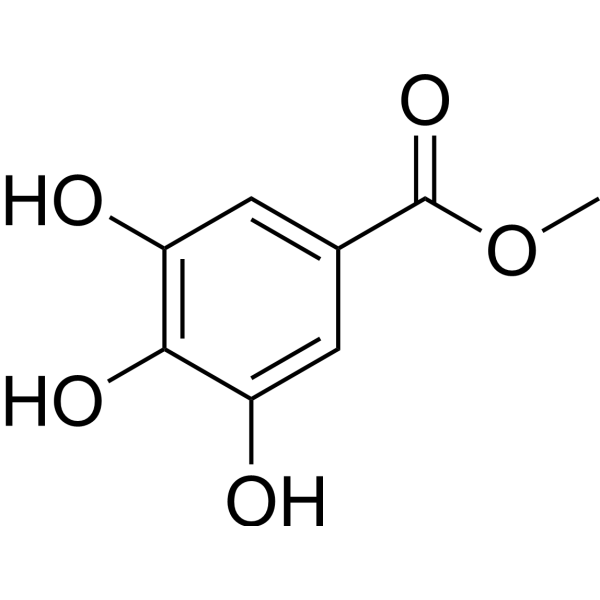
Methyl gallate (Standard) is the analytical standard of Methyl gallate. This product is intended for research and analytical applications. Methyl gallate is a plant phenolic with antioxidant, anticancer, and anti-inflammatory activities. Methyl gallate also shows bacterial inhibition activity. Methyl gallate also has anti-HIV-1 and HIV-1 enzyme inhibitory activities.
|
-
- HY-16731
-
|
EVT 302; RG1577; RO4602522
|
Monoamine Oxidase
Reactive Oxygen Species (ROS)
|
Neurological Disease
|
|
Sembragiline (EVT 302) is a potent, selective and reversible monoamine oxidase B (MAO-B) inhibitor. Sembragiline reduces the metabolism of dopamine and other amine neurotransmitters by inhibiting the activity of the MAO-B enzyme, thereby potentially increasing the concentration of these neurotransmitters in the brain. Inhibition of the MAO-B enzyme also reduces the formation of toxic reactive oxygen species (ROS) that play a role in the pathological process of AD. Sembragiline has good oral activity and blood-brain barrier permeability. Sembragiline can be used in studies of AD, especially in patients with AD who show increased MAO-B activity .
|
-
- HY-W699238
-
|
|
Biochemical Assay Reagents
|
|
|
S-(-)-Aminoglutethimide D-tartrate is an aromatase inhibitor with activity that blocks adrenal steroidogenesis. S-(-)-Aminoglutethimide D-tartrate can be used to inhibit steroid-related diseases. S-(-)-Aminoglutethimide D-tartrate is often used clinically to control certain types of cancer. S-(-)-Aminoglutethimide D-tartrate effectively reduces testosterone and estrogen levels through an enzyme inhibition mechanism.
|
-
- HY-116138
-
|
|
EGFR
|
Others
|
|
RG-14467 is an epidermal growth factor receptor tyrosine kinase inhibitor with activity that inhibits enzyme activity. RG-14467 has similar inhibition kinetics to Lavendustin-A, with a dissociation constant of 3.4μM for the initial rapidly formed complex and an overall dissociation constant estimated to be less than or equal to 30nM, and is a partially competitive inhibitor for ATP.
|
-
- HY-B0690S
-
-
- HY-130244
-
|
|
Beta-secretase
|
Neurological Disease
|
|
BACE1-IN-5 (Compound 15) is a β-site amyloid precursor protein cleaving enzyme 1 (BACE1) inhibitor with an IC50 of 9.1 nM, and also inhibits cellular amyloid-β (Aβ) with an IC50 of 0.82 nM. BACE1-IN-5 has a medicinal chemistry that improves hERG inhibition and P-gp efflux .
|
-
- HY-143897
-
|
|
Pim
Apoptosis
|
Cancer
|
|
PIM1-IN-3 (Compound HL8) is a potent inhibitor of PIM1. PIM1-IN-3 shows selective inhibition for the PIM-1 enzyme. PIM1-IN-3 induces apoptosis efficiently in Colo320 cells. PIM1-IN-3 has the potential for the research of cancer diseases .
|
-
- HY-10287A
-
|
|
Dipeptidyl Peptidase
|
Metabolic Disease
|
|
Gosogliptin hydrochloride is the hydrochloride of Gosogliptin (HY-10287). Gosogliptin (PF-00734200) is a potent, orally active, selective, and competitive inhibitor of DPP-IV, the enzyme mainly responsible for the degradation of the incretin peptides GLP-1 and glucose-dependent insulinotropic polypeptide. Gosogliptin demonstrates rapid and reversible inhibition of plasma DPP-4 activity. Gosogliptin stimulates insulin secretion and improves glucose tolerance .
|
-
- HY-W422288
-
|
(Rac)-Ketoconazol; (Rac)-R 41400
|
Fungal
Cytochrome P450
|
Infection
|
|
(Rac)-Ketoconazole ((Rac)-R 41400) is an antifungal imidazole compound with oral activity. (Rac)-Ketoconazole interferes with ergosterol synthesis by inhibiting cytochrome P450-dependent 14α-sterol demethylase (CYP51), a key enzyme on the fungal cell membrane, leading to membrane dysfunction and ultimately inhibition of fungal growth and reproduction. (Rac)-Ketoconazole is indicated for studies of fungal infections .
|
-
- HY-176270
-
|
|
17β-HSD
|
Neurological Disease
Cancer
|
|
ESC1002755 is a 17β-HSD10 inhibitor with an IC50 of 19 nM. ESC1002755 has significant enzyme specificity with non-/uncompetitive inhibition against the cofactor NADH. ESC1002755 shows minimal cytotoxicity towards the HEK293 at 50 μM. ESC1002755 is promising for Alzheimer’s disease and hormone-dependent cancers (such as prostate, bone and colorectal cancer) research .
|
-
- HY-19397
-
|
|
Potassium Channel
Cytochrome P450
|
Neurological Disease
|
|
BMS-223131 (Compound 1) is a potent maxi-K potassium channel opener. BMS-223131 has a strong inhibitory effect on the CYP2C9 enzyme (IC50 = 1.7 μM) and also shows varying degrees of inhibition on other common CYP enzymes such as CYP1A2, CYP2C19, CYP2D6, and CYP3A4. BMS-223131 can enhance the outward current mediated by maxi-K, by promoting K + efflux to hyperpolarize the cell membrane and reducing Ca 2+ influx. BMS-223131 can be used for the research of neurological disease, such as stroke .
|
-
- HY-170650
-
|
|
Phospholipase
Cholinesterase (ChE)
Bacterial
|
Infection
Inflammation/Immunology
|
|
SMase-IN-1 (Compound 4) is a bacterial sphingomyelinase enzyme (SMase) inhibitor (IC50 value for B. cereus SMase is 6.43 µM). SMase-IN-1 also inhibits eqBuChE (59.50% inhibition rate at 50 µM concentration). SMase-IN-1 forms a complex with Cu 2+ in biometal interactions. SMase-IN-1 reduces B. cereus-induced hemolysis on sheep erythrocytes .
|
-
- HY-158177
-
|
|
EGFR
|
Cancer
|
|
EGFR T790M/L858R-IN-6 (compound 53), a pyrimidine compound, is a potent EGFR T790M/L858R inhibitor. EGFR T790M/L858R-IN-6 shows 90.88% enzyme activity inhibition with 0.05 μM .
|
-
- HY-181744
-
|
|
Cholinesterase (ChE)
|
Neurological Disease
|
|
AChE-IN-108 is a potent mixed-type acetylcholinesterase (AChE) inhibitor with an in vitro IC50 of 0.17 nM. AChE-IN-108 acts on both free AChE and the enzyme-substrate complex to exert mixed-type inhibition. AChE-IN-108 can be used for the study of acetylcholinesterase inhibition in Alzheimer’s disease (AD) .
|
-
- HY-P1998
-
|
|
Others
|
Others
|
|
Pepsinostreptin is an enzyme inhibitor with the activity of inhibiting pepsin. Pepsinostreptin can form a 1:1 complex with pepsin and significantly inhibit its activity. The activity of pepsinostreptin makes it have important application potential in the study of protease inhibition and related biological processes .
|
-
- HY-182708
-
|
|
Cytochrome P450
|
Metabolic Disease
|
|
CGS 18320B is a human placental microsomal aromatase inhibitor with a Ki of 0.16 nM. CGS 18320B interacts reversibly with the enzyme's active site to block estrogen biosynthesis from androstenedione. CGS 18320B can be used for the research of aromatase inhibition and estrogen biosynthesis regulation .
|
-
- HY-182483
-
|
|
Phosphatase
|
Metabolic Disease
|
|
Ethyl-3,4-dephostatin is a Protein tyrosine phosphatase 1B (PTP1B) inhibitor with an IC50 of 0.58 μg/mL. Ethyl-3,4-dephostatin can be used in studies of PTP1B-related enzyme inhibition mechanisms .
|
-
- HY-181161
-
|
|
Cholinesterase (ChE)
|
Neurological Disease
|
|
AChE-IN-107 is a selective acetylcholinesterase (AChE) inhibitor with an IC50 of 0.22 μM and a Ki of 0.207 μM. AChE-IN-107 shows no inhibitory effect on equine serum BChE at 10 μM. AChE-IN-107 exhibits mixed-type inhibition of electric eel acetylcholinesterase, binding to both free enzyme and enzyme-substrate complex. AChE-IN-107 acts as a cytotoxin, reduces cell viability in hepatocellular carcinoma HepG2 cells.AChE-IN-107 can be used for the research of alzheimer's disease .
|
-
- HY-113600
-
|
|
Endogenous Metabolite
|
Others
|
|
H-0106 dihydrochloride is a ROCK inhibitor with potent intraocular pressure (IOP)-lowering activity. H-0106 dihydrochloride can effectively inhibit ROCK enzyme. H-0106 dihydrochloride demonstrated significant IOP-lowering effects in monkey eyes. Studies with H-0106 dihydrochloride suggest that there may not be a direct relationship between ROCK inhibition and IOP reduction .
|
-
- HY-15957
-
|
|
Fatty Acid Synthase (FASN)
|
Cancer
|
|
FASN-IN-7 is a potent and orally active inhibitor of human Fatty Acid Synthase (FASN). FASN-IN-7 shows enzyme inhibition on full length FASN and the FASN KR domain with IC50 values of 28 and 54 nM. FASN-IN-7 effectively inhibits proliferation of multiple cancer cell types. FASN-IN-7 increases malonyl-CoA levels and decreases palmitate levels in tumor tissues .
|
-
- HY-50876A
-
|
FK866 hydrochloride; APO866 hydrochloride
|
NAMPT
Autophagy
Apoptosis
mTOR
p38 MAPK
ERK
|
Inflammation/Immunology
Cancer
|
|
Daporinad (FK866) hydrochloride is a non-competitive inhibitor of nicotinamide phosphoribosyltransferase (Nampt), with a Ki value of 0.3 nM. Daporinad hydrochloride depletes NAD+ and ATP levels, inhibits mTORC1 and MAPK/ERK pathways, and activates TFEB to induce autophagy. Daporinad hydrochloride causes the depletion of the endoplasmic reticulum Ca²⁺ pool, ultimately weakening the mitogen-induced Ca²⁺ signal and the activation and function of T cells. Daporinad hydrochloride induces cell cycle arrest and apoptosis, and inhibits cell proliferation. Daporinad hydrochloride can be used for the study of myeloma, liver cancer, and immunosuppression .
|
-
- HY-182680
-
|
|
Phospholipase
|
Inflammation/Immunology
|
|
Manoalogue is an irreversible secretory phospholipase A2 (sPLA2) inhibitor. Manoalogue covalently modifies K94 of bee venom phospholipase A2 (bvPLA2) to inactivate the enzyme and shows selective inhibition on bvPLA2. Manoalogue can suppress PLA2-mediated contractions of guinea pig lung pleural strips. Manoalogue is used for sPLA2 mechanism and respiratory physiology research .
|
-
- HY-A0004R
-
|
5-Aza-2'-deoxycytidine (Standard); 5-AZA-CdR (Standard); NSC 127716 (Standard)
|
Reference Standards
DNA Methyltransferase
Apoptosis
Nucleoside Antimetabolite/Analog
|
Cancer
|
|
Decitabine (Standard) is the analytical standard of Decitabine. This product is intended for research and analytical applications. Decitabine (NSC 127716) is an orally active deoxycytidine analogue antimetabolite and a DNA methyltransferase inhibitor. Decitabine incorporates into DNA in place of cytosine can covalently trap DNA methyltransferase to DNA causing irreversible inhibition of the enzyme. Decitabine induces cell G2/M arrest and cell apoptosis. Decitabine has potent anticancer activity .
|
-
- HY-158368
-
|
|
Apoptosis
Reactive Oxygen Species (ROS)
|
Cancer
|
|
PRDX1-IN-2 (compound 15) is a selective inhibitor of the antioxidant enzyme Peroxiredoxin 1 (PRDX1) (IC50=0.35 μM). PRDX1-IN-2 decreases the mitochondria membrane potential of SW620 cells, probably due to ROS induced by PRDX1 inhibition, leading to cell apoptosis. PRDX1-IN-2 can be used for colorectal cancer research .
|
-
- HY-149987
-
|
KHK-IN-3
|
Ketohexokinase
|
Cardiovascular Disease
Metabolic Disease
Inflammation/Immunology
|
|
KHK-IN-3 (Example 1) is a ketohexokinase (KHK) inhibitor. KHK-IN-3 can be used in the study of kidney disease, nonalcoholic steatohepatitis (NASH), diabetes and heart failure. KHK is a rate-limiting enzyme and fructokinase involved in fructose metabolism. KHK catalyzes the phosphorylation of fructose to fructose-1-phosphate (FIP) at the expense of ATP. The lack of feedback inhibition of fructose metabolism triggers the accumulation of downstream intermediates such as lipogenesis, gluconeogenesis, and oxidative phosphorylation .
|
-
- HY-118061
-
|
|
Bacterial
|
Infection
|
|
VCC234718 is a molecule with mycobacterial growth inhibitory activity, specifically targeting Mycobacterium tuberculosis (Mtb). The primary molecular target of VCC234718 is inosine monophosphate dehydrogenase (GuaB2), and it inhibits the growth of Mtb by affecting the function of this enzyme. VCC234718 inhibits GuaB2 with a K value of 100 nM and exhibits non-competitive inhibition with IMP and NAD+. VCC234718 exerts its inhibitory effect by directly interacting with IMP and binding at the NAD+ site .
|
-
- HY-183249
-
|
|
Acetyl-CoA synthetase
Fungal
|
Infection
|
|
Ac-CoA Synthase-IN-2 is an Ac-CoA Synthase (ACS) inhibitor and antifungal agent. Ac-CoA Synthase-IN-2 binds in the ATP/acetyl-AMP pocket of fungal and human ACS enzymes to exert competitive inhibition with ATP, and inhibits Cryptococcus neoformans CnKbc1-mediated acetoacetate-to-aceto-acetyl CoA conversion. Ac-CoA Synthase-IN-2 can be used for the research of fungal infections .
|
-
- HY-117247
-
|
|
DNA/RNA Synthesis
|
Infection
|
|
5,6,7,8-Tetrahydro-8-deazahomofolic acid is a potential thymidylate synthase (TS) inhibitor with inhibitory activity against other folate-related enzymes. 5,6,7,8-Tetrahydro-8-deazahomofolic acid showed mild growth inhibition against enterococci, lactic acid bacteria, and L1210 cells in culture. 5,6,7,8-Tetrahydro-8-deazahomofolic acid also showed weak inhibition against thymidylate synthase, dihydrofolate reductase, glycyl-ribonucleoside aminotransferase, and aminoimidazole-carboxyacyl-ribonucleoside aminotransferase. 5,6,7,8-Tetrahydro-8-deazahomofolic acid showed low substrate activity for thymidylate synthase .
|
-
- HY-136818
-
|
|
Histamine Receptor
|
Endocrinology
|
|
DA 4643 (hydrochloride) is an H2 receptor antagonist with the chemical name 2-guanidino-4 (3-methylaminomethyleneiminophenyl) thiazole dihydrochloride. It has a weak interaction with cytochrome P-450 and has a less inhibitory effect on P-450 than cimetidine and tiotidine. DA 4643 (hydrochloride) is able to inhibit both enzymatic and non-enzymatic lipid peroxidation reactions. This inhibition may not be achieved by inhibiting agent metabolizing enzymes, but rather due to the antioxidant properties of the compound itself. Compared with other H2 receptor antagonists such as cimetidine, ranitidine and tiotidine, DA 4643 (hydrochloride) shows a unique effect in lipid peroxidation inhibition. These properties make DA 4643 (hydrochloride) a potential H2 receptor antagonist with multiple mechanisms of action.
|
-
- HY-119879
-
|
CP-73049
|
Antibiotic
Bacterial
|
Infection
|
|
Binfloxacin (CP-73049) is a fluoroquinolone antibiotic. Binfloxacin does not inhibit the metabolism of theophylline, so it is safer to be used in combination with theophylline and other drugs metabolized by P450 1A2. Binfloxacin can be used in studies of bacterial infections .
|
-
- HY-161064
-
|
|
Dihydrofolate reductase (DHFR)
|
Cancer
|
|
DHFR-IN-15 (compound 34) is a dihydrofolate reductase (DHFR) inhibitor with potential anticancer activity. DHFR-IN-15 effectively binds to DHFR in cells, reducing DHFR levels to 10 nM .
|
-
- HY-161063
-
-
- HY-175020
-
|
|
Fatty Acid Synthase (FASN)
Apoptosis
Bcl-2 Family
|
Cancer
|
|
QNX-10 is a fatty acid synthase (FASN) inhibitor (IC50 = 0.7 μM) with anticancer activity. QNX-10 exhibits potent FASN inhibition and cytotoxicity against colorectal and breast cancer cells. QNX-10 induces apoptosis and cell cycle arrest in S phase by upregulating the pro-apoptotic protein Bax and downregulating the anti-apoptotic protein Bcl-xL. QNX-10 can be used to investigate anticancer therapies targeting FASN enzymes .
|
-
- HY-N2045
-
|
|
Environmental Pollutants
Apoptosis
Akt
Cytochrome P450
PI3K
|
Neurological Disease
|
|
Musk ketone is a widely used artificial fragrance. Musk ketone is also a cytochrome P450 enzyme inducer. Musk ketone shows mutagenic and comutagenic effects in Hep G2 cells and induces neural stem cell proliferation and differentiation in cerebral ischemia via activation of the PI3K/Akt signaling pathway. In the brain, musk ketone is neuroprotective against stroke injury through inhibition of cell apoptosis .
|
-
- HY-B0404AR
-
|
Ro 4-4602 hydrochloride (Standard)
|
Reference Standards
Pyruvate Kinase
|
Neurological Disease
Cancer
|
|
Benserazide hydrochloride (Standard) (Serazide (Standard)) is the analytical standard of Benserazide hydrochloride (HY-B0404A). This product is intended for research and analytical applications. Benserazide hydrochloride (Serazide) is an aromatic L-amino acid decarboxylase (AADC) and L-DOPA decarboxylase inhibitor. Benserazide hydrochloride is also a PKM2 inhibitor. Benserazide hydrochloride directly binds to and blocks PKM2 enzyme activity, leading to inhibition of aerobic glycolysis concurrent up-regulation of OXPHOS. Benserazide hydrochloride can be used for the study of Parkinson's disease and melanoma .
|
-
- HY-144381
-
|
|
Bacterial
|
Infection
|
|
Glutamate-5-kinase-IN-1 (compound 50) is a potent glutamate-5-kinase (G5K) inhibitor with an MIC (minimum inhibitory concentration) of 4.1 μM. Glutamate-5-kinase-IN-1 shows G5K inhibition by alters the ATP binding site architecture for enzyme recognition. Glutamate-5-kinase-IN-1 has the potential for the research of anti-TB agents .
|
-
- HY-W011258
-
|
L-Tyrosyl-L-phenylalanine
|
Xanthine Oxidase
Angiotensin-converting Enzyme (ACE)
|
Inflammation/Immunology
Cancer
|
|
H-Tyr-Phe-OH (L-Tyrosyl-L-phenylalanine) is an orally active inhibitor of Angiotensin converting enzyme (ACE), with an inhibiton rate of 48% at 50 μM. H-Tyr-Phe-OH can be used as an biomarker for differentiating benign thyroid nodules (BTN) from thyroid cancer (TC). H-Tyr-Phe-OH exhibits xanthine oxidase inhibition (uric acid lowering) activity and serves as regulator in IL-8 production in neutrophil-like cells .
|
-
- HY-W195933
-
|
|
Endogenous Metabolite
|
|
|
6-Aminopyridine-3-thioamide is a compound with anti-tumor activity that can inhibit the activity of specific enzymes, thereby affecting cell proliferation and survival. 6-Aminopyridine-3-thioamide has also been studied for the inhibition of neurodegenerative diseases and has shown the potential to improve neurological function. The structural characteristics of 6-Aminopyridine-3-thioamide make it an important bioactive molecule in compound development.
|
-
- HY-129923R
-
|
|
HBV
Reference Standards
|
Neurological Disease
|
|
(R)-Omeprazole (sodium) (Standard) is the analytical standard of (R)-Omeprazole (sodium). This product is intended for research and analytical applications. (R)-Omeprazole sodium is a gastric acid resistant compound with activity to inhibit gastric acid secretion. (R)-Omeprazole sodium is metabolized in vivo, and its metabolism is primarily affected by cytochrome P450 enzymes. The interaction between (R)-Omeprazole sodium and mannitol may affect its bioavailability in formulations. (R)-Omeprazole sodium exhibits reversible direct and metabolism-dependent inhibition of CYP2C19 .
|
-
- HY-134338R
-
|
|
Reference Standards
Parasite
|
Others
|
|
(R)-Omeprazole (sodium) (Standard) is the analytical standard of (R)-Omeprazole (sodium). This product is intended for research and analytical applications. (R)-Omeprazole sodium is a gastric acid resistant compound with activity to inhibit gastric acid secretion. (R)-Omeprazole sodium is metabolized in vivo, and its metabolism is primarily affected by cytochrome P450 enzymes. The interaction between (R)-Omeprazole sodium and mannitol may affect its bioavailability in formulations. (R)-Omeprazole sodium exhibits reversible direct and metabolism-dependent inhibition of CYP2C19 .
|
-
- HY-P2848A
-
|
|
Toll-like Receptor (TLR)
|
Infection
Metabolic Disease
|
|
Cholesterol oxidase, Rhodococcus sp. is a key enzyme in the cholesterol degradation process. It catalyzes the isomerization and oxidation of cholesterol mediated by the coenzyme FAD. Research indicates that cholesterol oxidase plays a crucial role in the pathogenicity of Mycobacterium tuberculosis by modulating the host macrophage immune response through inhibition of the Toll-like receptor 2 (TLR2) signaling pathway, thereby enhancing the survival of Mycobacterium tuberculosis. Cholesterol oxidase, from Rhodococcus sp., shows potential for research in the field of tuberculosis .
|
-
- HY-176074
-
|
|
Prostaglandin Receptor
|
Others
|
|
U-46619 Glycine methyl ester has a modification at the C-1 position of U-46619, which uniquely alter its binding properties to the TP receptor or any of the PGH2-metabolizing enzymes. U-46619 is a stable analog of the endoperoxide PGH2. U-46619 is also an agonist of TP receptor. U-46619 can change the shape of platelet, aggregation and contraction of vascular smooth muscle. U-46619 Glycine methyl ester can be studied in research to explore the inhibition of various enzymes in the arachidonic acid metabolic pathway. U-46619 Glycine methyl ester can also act as a lipophilic prodrug form of U-46619 that alters its distribution and pharmacokinetic properties .
|
-
- HY-111191
-
|
|
Adrenergic Receptor
|
Neurological Disease
|
|
ONO-2952 is a potent, selective and orally active translocator protein 18 kDa (TSPO) antagonist with Ki of 0.33-9.30 nM for rat and human TSPO. ONO-2952 is more selective for TSPO than other receptors, transporters, ion channels and enzymes. ONO-2952 exerts its anti-stress effects through inhibition of excessive activation of noradrenergic system in the brain without the amnesic effect. ONO-2952 has the potential for irritable bowel syndrome treatment .
|
-
- HY-N0354
-
|
|
Environmental Pollutants
Virus Protease
|
Infection
Metabolic Disease
Inflammation/Immunology
Cancer
|
|
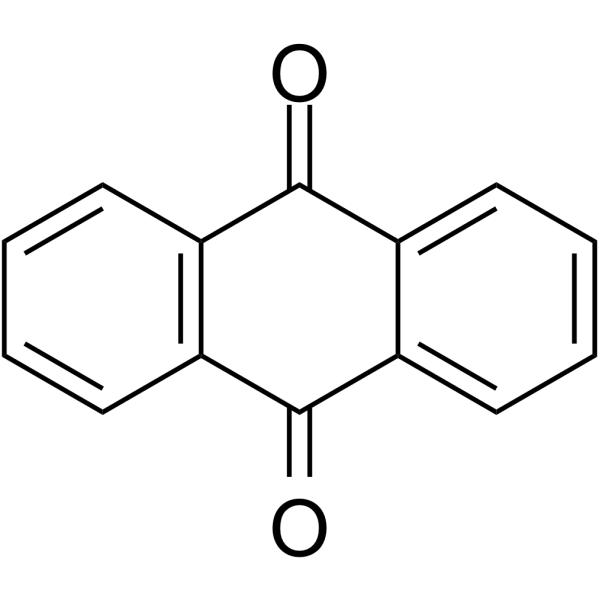
Anthraquinone is used as a precursor for dye formation and agrochemicals, existing in different organisms, such as bacteria, fungi, plants, and some animals. Anthraquinone has biological activities: anticancer, antiinflammatory, diuretic, antiarthritic, antifungal, antibacterial, antimalarial and antioxidant. Anthraquinone also plays an important role in the primary metabolism of plants by acting on the electron transport chain through the inhibition of energy transfer in the photosynthetic process. Anthraquinone can intercalates into DNA and inhibits the topoisomerase II (topo II) enzyme, resulting in cell death via Apoptosis .
|
-
- HY-D0162
-
|
MCCK1
|
Fungal
IKK
NF-κB
Apoptosis
|
Infection
Cancer
|
|
Malachite green hemioxalate (MCCK1) is a triphenylmethane dye which can be used to detect the release of phosphate in enzymatic reactions. Malachite green hemioxalate has antibacterial activity, which is attributed to inhibition of intracellular enzymes, insertion into DNA and/or interaction with cell membranes. Malachite green hemioxalate is also a potent and selective inhibitor of IKBKE, and inhibits its downstream targets such as IκBα, p65 and IRF3. Malachite green hemioxalate exhibits antitumor activity in vitro and in vivo .
|
-
- HY-A0004S
-
|
5-Aza-2'-deoxycytidine-13C5; 5-AZA-CdR-13C5; NSC 127716-13C5
|
Isotope-Labeled Compounds
DNA Methyltransferase
Nucleoside Antimetabolite/Analog
Apoptosis
|
Cancer
|
|
Decitabine- 13C5 (5-Aza-2'-deoxycytidine- 13C5) is 13C labeled Decitabine. Decitabine (NSC 127716) is an orally active deoxycytidine analogue antimetabolite and a DNA methyltransferase inhibitor. Decitabine incorporates into DNA in place of cytosine can covalently trap DNA methyltransferase to DNA causing irreversible inhibition of the enzyme. Decitabine induces cell G2/M arrest and cell apoptosis. Decitabine has potent anticancer activity .
|
-
- HY-W050154R
-
|
|
Reference Standards
Parasite
Tyrosinase
NF-κB
CDK
|
Infection
Inflammation/Immunology
Cancer
|
|
Kojic acid (Standard) is the analytical standard of Kojic acid. This product is intended for research and analytical applications. Kojic acid is a substance produced by Aspergillus oryzae, with various biological activities including antitumor, insecticidal, antibacterial, antioxidant, and radioprotective effects. Kojic acid exhibits tyrosinase inhibition activity by capturing copper ions that bind to the active site of tyrosinase, preventing its activation. Tyrosinase is a key enzyme in the biosynthesis of melanin, so kojic acid can block melanin production. Additionally, kojic acid shows potential inhibition of NF-κB activity in human keratinocytes, which may also be related to the anti-melanogenic effect induced by kojic acid. Kojic acid is effective when administered orally and can also be absorbed transdermally. Nano-carrier systems prepared with kojic acid demonstrate effective delivery of anticancer drugs. Kojic acid holds promise for research in cancer, infectious diseases, and skin whitening among other fields .
|
-
- HY-114564
-
|
E5510
|
Prostaglandin Receptor
|
Cardiovascular Disease
|
|
Satigrel (E5510) is a potent inhibitor of platelet aggregation. Satigrel inhibits collagen- and arachidonic acid-induced platelet aggregation through preventing thromboxane A2 synthesis by selective inhibition of the target enzyme, PGHS1, which exists in platelets. Satigrel inhibits PGHS1 (IC50: 0.081 μM) and PGHS2 (IC50: 5.9 μM). Satigrel is against Type III PDE, Type V and Type II (IC50: 15.7 μM, 39.8 μM and 62.4 μM, respectively) .
|
-
- HY-N8161
-
|
Kaempferol 3,7-diglucoside
|
Glycosidase
Cholinesterase (ChE)
|
Neurological Disease
|
|
Kaempferol-3,7-di-O-β-glucoside (Kaempferol 3,7-diglucoside), a flavonol, possesses enzyme inhibition property towards α-amylase, α-glucosidase and Acetylcholinesterase. Kaempferol-3,7-di-O-β-glucoside protects differentiating neuronal cells, SH-SY5Y from Amyloid β peptide-induced injury. Kaempferol-3,7-di-O-β-glucoside has the potential for Alzheimer's research .
|
-
- HY-169217
-
|
|
Cytochrome P450
|
Cancer
|
|
CYP3A4-IN-4 (compound Δ,Λ-3), a Ru(II) Ir(III) Conjugate, is a photoactive inhibitor of the major human drug metabolizing enzyme CYP3A4. CYP3A4-IN-4 containing the [Ru(tpy)(Me2bpy)] photocaging group showed an IC50 of 2.2 μM for inhibition of microsomal CYP3A4 under light conditions (λirr=530 nm, tirr=15 min) .
|
-
- HY-108347A
-
|
|
P-glycoprotein
BCRP
|
Metabolic Disease
|
|
CP-100356 is an orally active dual MDR1 (P-gp)/BCRP inhibitor, with an IC50s of 0.5 and 1.5 µM for inhibiting MDR1-mediated Calcein-AM transport and BCRP-mediated Prazosin transport, respectively. CP-100356 is also a weak inhibitor of OATP1B1 (IC50 = ∼66 µM). CP-100356 is devoid of inhibition against MRP2 and major human P450 enzymes (IC50 > 15 µM) .
|
-
- HY-161449
-
|
|
11β-HSD
|
Metabolic Disease
|
|
JTT-654 is an orally active, potent and selective11β-Hydroxysteroid dehydrogenase type 1 (11β-HSD1) inhibitor. The IC50 of JTT-654 for 11β-HSD1 is 4.65, 0.97, and 0.74 nM in human, rat, and mouse recombinant enzymes, respectively. JTT-654 showed competitive inhibition against human recombinant enzyme. The IC50 value for human 11β-HSD2 is > 30 μM (human 11β-HSD2 is responsible for the reverse reaction against human 11β-HSD1). JTT-654 ameliorates insulin resistance and non-obese type 2 diabetes by inhibiting adipose tissue and liver 11β-HSD1 .
|
-
- HY-178955
-
|
|
EGFR
HSP
PI3K
Caspase
Apoptosis
CDK
ERK
Akt
|
Cancer
|
|
EGFR-IN-182 (Compound 4) is an EGFR inhibitor with an IC50 value of 199 nM. EGFR-IN-182 inhibits HSP90 and PI3K, with IC50 values of 5.007 and 13.596 μM respectively. EGFR-IN-182 exhibits strong anti-proliferative activity against MCF-7 and MDA-MB-231 cells. EGFR-IN-182 downregulates Cyclin D1, inducing cell cycle arrest; it enhances the activity of caspase-9, inducing cell apoptosis. EGFR-IN-182 downregulates the expressions of ERK and AKT. EGFR-IN-182 can be used for research on breast cancer .
|
-
- HY-W064918
-
|
|
Bacterial
|
Infection
|
|
NITD-304 is an orally active anti-tuberculosis agent. NITD-304 exerts inhibitory and bactericidal activities gainst Mycobacterium tuberculosis and multidrug-resistant Mycobacterium tuberculosis. NITD-304 inhibits mycobacterial cell wall biosynthesis and demonstrates synergistic or additive growth inhibitory activity with select antibacterial agents. NITD-304 shows low risk of cardiotoxicity and drug-drug interactions, with no inhibition of major cytochrome P-450 enzymes or hERG channel. NITD-304 can be used for the research of tuberculosis and multidrug-resistant tuberculosis .
|
-
- HY-181263
-
|
|
SARS-CoV
Virus Protease
|
Infection
|
|
Jun13698 is a SARS-CoV-2 main protease (M pro) inhibitor with Ki values of 65.6 nM, 510.0 nM, and 117.5 nM against the wild-type, E166V, and E166A mutants, respectively. Jun13698 forms stable complexes with wild-type and mutant M pro to mediate enzyme inhibition. Jun13698 exhibits antiviral activity against SARS-CoV-2 variants carrying the E166V/A mutation. Jun13698 is applicable to COVID-19-related research .
|
-
- HY-150260
-
|
|
Bacterial
|
Infection
|
|
SA09-Cu is a noncompetitive and potent NDM-1 inhibitor with an IC50 of 9.6 nM. SA09-Cu can convert NDM-1 into an inactive state by oxidizing the Zn(II)-thiolate site of the enzyme and avoids to be reduced by intracellular thiols of bacteria. SA09-Cu exhibits excellent inhibition against a series of clinical NDM-1-producing carbapenem-resistant Enterobacteriaceae (CRE) in restoring the Meropenem (HY-13678) effect, and slows down the development of carbapenem resistance .
|
-
- HY-120131
-
|
|
Insecticide
Cholinesterase (ChE)
|
Neurological Disease
|
|
Cyanofenphos is an orally active organophosphate insecticide and brain AChE inhibitor with neurotoxicity. Cyanofenphos induces delayed neurotoxicity such as ataxia and paralysis. Cyanofenphos also causes symptoms including somnolence, reduced feed intake and weight loss in hens. Cyanofenphos has a unique self-antagonistic effect: repeated low-dose pre-treatment not only reduces subsequent acute toxicity, but also exacerbates delayed neurotoxicity and attenuates enzyme inhibition, with the protective effect peaking at 24 h after the last pre-treatment. Cyanofenphos is commonly used in studies related to delayed neurotoxicity .
|
-
- HY-108347
-
|
|
P-glycoprotein
BCRP
|
Metabolic Disease
|
|
CP-100356 hydrochloride is an orally active dual MDR1 (P-gp)/BCRP inhibitor, with an IC50s of 0.5 and 1.5 µM for inhibiting MDR1-mediated Calcein-AM transport and BCRP-mediated Prazosin transport, respectively. CP-100356 hydrochloride is also a weak inhibitor of OATP1B1 (IC50=∼66 µM). CP-100356 hydrochloride is devoid of inhibition against MRP2 and major human P450 enzymes (IC50>15 µM) .
|
-
- HY-P11367
-
|
|
Fluorescent Dye
Ser/Thr Protease
|
Infection
Metabolic Disease
|
|
Boc-Ala-Gly-Pro-Arg-AMC is a synthetic fluorescent substrate, widely used for the detection of protease activity. Boc-Ala-Gly-Pro-Arg-AMC can be used to detect the activity of serine proteases and the oligopeptide enzyme B of Trypanosoma brucei .
|
-
- HY-117593
-
|
|
P-glycoprotein
Cytochrome P450
Drug Isomer
|
Cancer
|
|
NSC 23925B is a P-glycoprotein (P-gp) inhibitor, as well as the most biologically active isomer of NSC23925 (HY-19626), which reverses and prevents P-glycoprotein-mediated multidrug resistance in cancer cells. NSC 23925B shows weak inhibition against most CYP450 enzymes (IC50 > 10 μM), and exhibits moderate inhibitory activity against CYP2B6 and CYP2D6 with IC50 values of 8.589 μM and 1.407 μM, respectively. NSC 23925B can be used for the research of multidrug-resistant cancers .
|
-
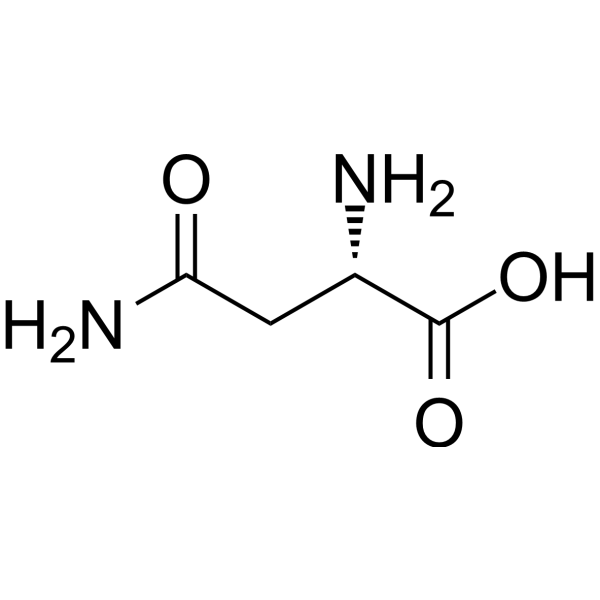
- HY-N0667
-
|
(-)-Asparagine; Asn; Asparamide
|
Endogenous Metabolite
Apoptosis
DNA/RNA Synthesis
|
Inflammation/Immunology
|
|
L-Asparagine is an essential amino acid for leukemic cells and a substrate for L-Asparaginase. L-Asparaginase is a potent anti-leukemic enzyme that promotes asparagine (Asn) and glutamine (Gln) depletion and inhibits protein biosynthesis in lymphoblasts. Removal of L-asparagine from plasma by L-Asparaginase results in inhibition of RNA and DNA synthesis and subsequent apoptosis. L-Asparaginase has cell-killing ability in vitro and in vivo, and selectively inhibits the growth of cancer cells with low asparagine synthetase (AASNS) expression. L-Asparagine can be used as a biomarker and sensor for the study of childhood acute lymphoblastic leukemia .
|
-
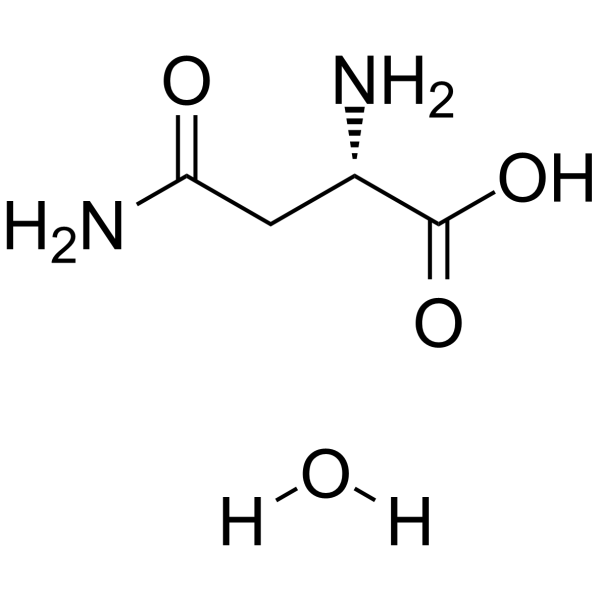
- HY-W017443
-
|
|
Endogenous Metabolite
Apoptosis
DNA/RNA Synthesis
|
Neurological Disease
Metabolic Disease
Inflammation/Immunology
Cancer
|
|
L-Asparagine monohydrate is an essential amino acid for leukemic cells and a substrate for L-Asparaginase. L-Asparaginase is a potent anti-leukemic enzyme that promotes asparagine (Asn) and glutamine (Gln) depletion and inhibits protein biosynthesis in lymphoblasts. Removal of L-asparagine from plasma by L-Asparaginase results in inhibition of RNA and DNA synthesis and subsequent apoptosis. L-Asparaginase has cell-killing ability in vitro and in vivo, and selectively inhibits the growth of cancer cells with low asparagine synthetase (AASNS) expression. L-Asparagine monohydrate can be used as a biomarker and sensor for the study of childhood acute lymphoblastic leukemia .
|
-
- HY-122026
-
|
PF-367
|
GSK-3
|
Neurological Disease
|
|
PF-04802367 (PF-367) is a highly selective GSK-3 inhibitor with an IC50 of 2.1 nM based on a recombinant human GSK-3β enzyme assay and 1.1 nM based on ADP-Glo assay. PF-04802367 shows desirable central nervous system (CNS) properties and potency. PF-04802367 is equally effective at inhibition of the two known GSK-3 isoforms (GSK-3α and GSK-3β) with IC50 values of 10.0 and 9.0 nM in mobility shift assays, respectively .
|
-
- HY-180898
-
|
|
DGK
ERK
IFNAR
Interleukin Related
Molecular Glues
|
Inflammation/Immunology
|
|
AHL-7160 is a covalent DGKα inhibitor that possesses dual functions of enzyme activity inhibition (IC₅₀ ≈ 12 nM) and molecular gel-mediated degradation. AHL-7160 can rapidly recruit endogenous DGKα to the cell membrane (EC₅₀ = 39 nM), and this effect has isozyme selectivity. AHL-7160 can stereospecifically block phosphatidylcholine acid (PA) production mediated by DGKα (IC₅₀ = 340 nM). AHL-7160 enhances T cell activation and promotes anti-tumor immune responses. AHL-7160 can be used for research on immunotherapy .
|
-
- HY-178479
-
|
|
Indoleamine 2,3-Dioxygenase (IDO)
Cytochrome P450
|
Inflammation/Immunology
Cancer
|
|
IDO1-IN-30 (Compound (R)-100) is a potent and highly selective IDO1 inhibitor. IDO1-IN-30 has an IC50 of 4.8 nM to IDO1 in SKOV3 cells. IDO1-IN-30 does not show significant cytotoxicity at 25 µM in HepG2 cells. IDO1-IN-30 can eliminate inhibition of CYP450 enzymes (such as 3A4, 2C9, 2D6). IDO1-IN-30 can be used for research on cancer and inflammatory conditions .
|
-
- HY-Y1139
-
|
Heptanedioic acid; 1,5-Pentanedicarboxylic acid; 1,7-Heptanedioic acid
|
Endogenous Metabolite
PROTAC Linkers
|
Metabolic Disease
|
|
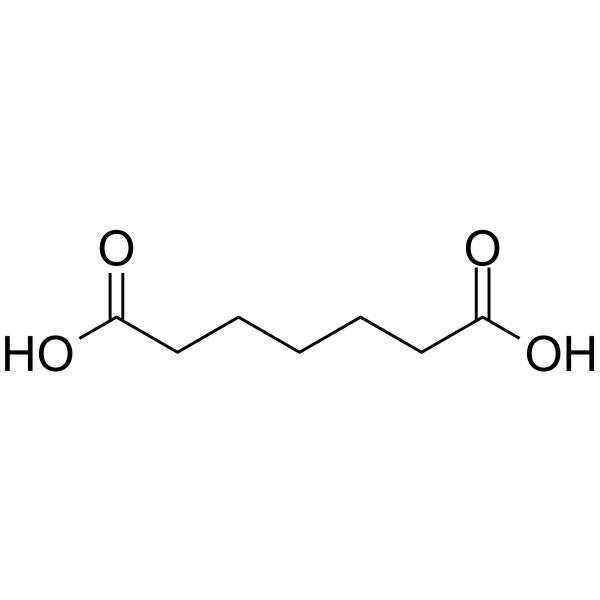
Pimelic acid (Heptanedioic acid; 1,5-Pentanedicarboxylic acid) is a seven-carbon α,ω-dicarboxylic acid and a downstream product of fatty acid synthesis. Pimelic acid is a key precursor in biotin biosynthesis. Pimelic acid can be converted to pimelic acid-CoA by the BioW enzyme, thereby bypassing exogenous biotin requirements to support growth in various biotinytrophic bacteria and fungi, and reversing antibiotic-induced inhibition of biotin synthesis. Furthermore, Pimelic acid has been proposed as a highly specific biomarker for oxygen-induced retinopathy in mice. Pimelic acid can be used to study retinopathy of preterm infants, oxygen-induced retinopathy, and microbial biotin metabolism .
|
-
- HY-17509
-
|
SC 046; SC 46; SC 59046
|
COX
Apoptosis
|
Neurological Disease
Inflammation/Immunology
Cancer
|
|
Deracoxib (SC 046; SC 59046), an orally active COX-2 inhibitor, is a veterinary nonsteroidal anti-inflammatory agent used exclusively in dogs. Deracoxib inhibits the COX-2 enzyme to reduce the production of prostaglandins, effectively controlling pain and inflammation after canine soft tissue surgery. Deracoxib reduces the inhibition of COX-1 and lowers the risk of gastrointestinal side effects. Deracoxib induces tumor cell cycle arrest and apoptosis, and shows anti-tumor activity in canine osteosarcoma, breast tumors and bladder transitional cell carcinomas .
|
-
- HY-D0162R
-
|
MCCK1 (Standard)
|
Reference Standards
Fungal
IKK
NF-κB
Apoptosis
|
Infection
Cancer
|
|
Malachite green hemioxalate (Standard) is the analytical standard of Malachite green hemioxalate (HY-D0162). This product is intended for research and analytical applications. Malachite green hemioxalate is a triphenylmethane dye which can be used to detect the release of phosphate in enzymatic reactions. Malachite green hemioxalate has antimicrobial activity, which is attributed to inhibition of intracellular enzymes, intercalation into DNA, and/or interaction with cellular membranes. Malachite green hemioxalate is also a potent and selective inhibitor of IKBKE, and inhibits its downstream targets such as IκBα, p65 and IRF3. Malachite green hemioxalate exhibits antitumor activity in vitro and in vivo.
|
-
- HY-142035
-
|
|
Mitochondrial Metabolism
|
Neurological Disease
Metabolic Disease
Inflammation/Immunology
Cancer
|
|
N-Propargylglycine is a brain-penetrant and orally active PRODH inhibitor. N-Propargylglycine covalently modifies enzyme-bound FAD and active site lysine, causing enzyme structural distortion, protein decay, and irreversible inhibition of proline and 4-hydroxyproline catabolism. N-Propargylglycine induces UPRmt, upregulates mitochondrial chaperones and YME1L1, enhances mitochondrial proteostasis, blocks astrocytic L-proline consumption, and abolishes L-proline’s ATP-maintaining and viability-protective effects. N-Propargylglycine stimulates neural processes, increases brain proline, hydroxyproline, and sarcosine levels, partially normalizes Huntington’s disease whole brain transcriptomes. N-Propargylglycine reduces hyperoxaluria, prevents calcium oxalate stone formation, reduces kidney tubular damage, and restores weight and survival in Grhpr knockout mice. N-Propargylglycine can be used for the research of breast cancer, neurodegenerative disorders, Huntington’s disease, and primary hyperoxaluria type 2 .
|
-
- HY-179654
-
|
|
HDAC
Apoptosis
|
Cancer
|
|
ST13, an ortho-hydroxyanilide, is a selective, slow- and tight-binding HDAC1 and HDAC2 inhibitor with IC50s of 23 nM and 49 nM, respectively. ST13 shows a weak inhibition of HDAC3 (IC50 = 4.30 μM) and HDAC6 (IC50 > 10 μM). The induced fit mechanism of ST13 proceeds through a two-step process: first, the enzyme and inhibitor rapidly form a collision complex (EI), which then slowly transforms into the stable complex E*I. ST13 induces apoptosis in cancer cells. ST13 can be used for the study of melanoma and triple-negative breast .
|
-
- HY-174400
-
|
|
SGLT
SOD
Na+/H+ Exchanger (NHE)
Autophagy
|
Cardiovascular Disease
|
|
SGLT2-IN-2 (Compound E9) is an inhibitor of SGLT2. SGLT2-IN-2 significantly enhances the inhibition of SGLT2, NHE1, and SOD enzyme activity. SGLT2-IN-2 has protective effect on the glucose-free DMEM-induced injured cardiomyocytes. SGLT2-IN-2 significantly improves cardiac function in TAC-induced HF mice and inhibits cardiomyocyte hypertrophy as well as collagen deposition. SGLT2-IN-2 can ameliorate myocardial tissue damage and enhance mitochondrial autophagy in injured cardiomyocytes, thereby increasing survival rates in HF mice .
|
-
- HY-161649
-
|
|
Cytochrome P450
Aryl Hydrocarbon Receptor
|
Cancer
|
|
hCYP1B1-IN-2 (compound 3n) is a potent human cytochrome P450 1B1 enzyme hCYP1B1 inhibitor. hCYP1B1-IN-2 shows the extremely potent anti-hCYP1B1 activity (IC50=0.040 nM) and blocks AhR transcription activity. hCYP1B1-IN-2 potently inhibits hCYP1B1 via a mix inhibition manner, showing a Ki value of 21.71 pM .
|
-
- HY-W243460
-
|
|
Biochemical Assay Reagents
|
Others
|
|
EDTA copper (II) disodium salt, 97% is a negatively charged copper (II)-ethylenediaminetetraacetic acid chelate and also an adsorption substrate. EDTA copper (II) disodium salt, 97% forms amide bonds with chitosan amino groups in weakly acidic (pH 3-5) solutions, while it forms the CuEDTA (OH) 3− hydroxyl complex in strongly alkaline (pH > 12) solutions. EDTA copper (II) disodium salt, 97% can be adsorbed onto granular activated carbon, with electrostatic interactions dominating its pH-dependent adsorption behavior. EDTA copper (II) disodium salt, 97% can be used to eliminate the inhibition of enzyme-catalyzed reactions caused by trace heavy metals .
|
-
- HY-17509R
-
|
SC 046 (Standard); SC 46 (Standard); SC 59046 (Standard)
|
Reference Standards
COX
Apoptosis
|
Neurological Disease
Inflammation/Immunology
Cancer
|
|
Deracoxib (SC 046; SC 59046) (Standard) is the analytical standard of Deracoxib (HY-17509). This product is intended for research and analytical applications. Deracoxib, an orally active COX-2 inhibitor, is a veterinary nonsteroidal anti-inflammatory agent used exclusively in dogs. Deracoxib inhibits the COX-2 enzyme to reduce the production of prostaglandins, effectively controlling pain and inflammation after canine soft tissue surgery. Deracoxib reduces the inhibition of COX-1 and lowers the risk of gastrointestinal side effects. Deracoxib induces tumor cell cycle arrest and apoptosis, and shows anti-tumor activity in canine osteosarcoma, breast tumors and bladder transitional cell carcinomas
|
-
- HY-D0837
-
|
Glyoxaline; 1,3-Diaza-2,4-cyclopentadiene
|
MOFs
Ser/Thr Protease
Thrombopoietin Receptor
|
Neurological Disease
Inflammation/Immunology
|
|
Imidazole (Glyoxaline; 1,3-Diaza-2,4-cyclopentadiene) is a heterocyclic aromatic compound. Imidazole bearing molecules have been used as corrosion, acetylcholinesterase (AChEI) and xanthine oxidase (XO) inhibitors, performing biological activities such as antifungal, antituberculosis, anti-inflammatory, antioxidant, and analgesic, amongst many others. Imidazole inhibits the enzymatic conversion of the endoperoxides (PGG2 and PGH2) to thromboxane A2 by platelet microsomes. Imidazole derivatives exhibits inhibition on SARS-CoV-2 3CL Pro enzyme, which is promising for research in the field of Alzheimer’s disease, gout, COVID-19 and thrombo-embolic disease .
|
-
- HY-17509S
-
|
SC 046-d3; SC 46-d3; SC 59046-d3
|
Isotope-Labeled Compounds
COX
Apoptosis
|
Neurological Disease
Inflammation/Immunology
Cancer
|
|
Deracoxib-d3 (SC 046-d3; SC 59046-d3) is the deuterium labeled Deracoxib (HY-17509). Deracoxib, an orally active COX-2 inhibitor, is a veterinary nonsteroidal anti-inflammatory agent used exclusively in dogs. Deracoxib inhibits the COX-2 enzyme to reduce the production of prostaglandins, effectively controlling pain and inflammation after canine soft tissue surgery. Deracoxib reduces the inhibition of COX-1 and lowers the risk of gastrointestinal side effects. Deracoxib induces tumor cell cycle arrest and apoptosis, and shows anti-tumor activity in canine osteosarcoma, breast tumors and bladder transitional cell carcinomas.
|
-
- HY-W703540
-
|
SC 046-d4; SC 46-d4; SC 59046-d4
|
Isotope-Labeled Compounds
Apoptosis
COX
|
Neurological Disease
Inflammation/Immunology
Cancer
|
|
Deracoxib-d4 (SC 046-d4; SC 59046--d4) is deuterium labeled Deracoxib (HY-17509). Deracoxib, an orally active COX-2 inhibitor, is a veterinary nonsteroidal anti-inflammatory agent used exclusively in dogs. Deracoxib inhibits the COX-2 enzyme to reduce the production of prostaglandins, effectively controlling pain and inflammation after canine soft tissue surgery. Deracoxib reduces the inhibition of COX-1 and lowers the risk of gastrointestinal side effects. Deracoxib induces tumor cell cycle arrest and apoptosis, and shows anti-tumor activity in canine osteosarcoma, breast tumors and bladder transitional cell carcinomas.
|
-
- HY-108347R
-
|
|
Reference Standards
P-glycoprotein
BCRP
|
Metabolic Disease
|
|
CP-100356 hydrochloride (Standard) is the analytical standard of CP-100356 (hydrochloride) (HY-108347). This product is intended for research and analytical applications. CP-100356 hydrochloride is an orally active dual MDR1 (P-gp)/BCRP inhibitor, with an IC50s of 0.5 and 1.5 µM for inhibiting MDR1-mediated Calcein-AM transport and BCRP-mediated Prazosin transport, respectively. CP-100356 hydrochloride is also a weak inhibitor of OATP1B1 (IC50=∼66 µM). CP-100356 hydrochloride is devoid of inhibition against MRP2 and major human P450 enzymes (IC50>15 µM) .
|
-
- HY-N0667S5
-
|
|
Isotope-Labeled Compounds
Endogenous Metabolite
Apoptosis
DNA/RNA Synthesis
|
Inflammation/Immunology
|
|
L-Asparagine-d3 hydrate is the deuterium labeled L-Asparagine (HY-N0667). L-Asparagine is an essential amino acid for leukemic cells and a substrate for L-Asparaginase. L-Asparaginase is a potent anti-leukemic enzyme that promotes asparagine (Asn) and glutamine (Gln) depletion and inhibits protein biosynthesis in lymphoblasts. Removal of L-asparagine from plasma by L-Asparaginase results in inhibition of RNA and DNA synthesis and subsequent apoptosis. L-Asparaginase has cell-killing ability in vitro and in vivo, and selectively inhibits the growth of cancer cells with low asparagine synthetase (AASNS) expression. L-Asparagine can be used as a biomarker and sensor for the study of childhood acute lymphoblastic leukemia .
|
-
- HY-113137
-
|
|
Endogenous Metabolite
|
Cancer
|
|
N2,N2-Dimethylguanosine is a methylated modified nucleoside present in RNA and serves as a structural modification component of tRNA. N2,N2-Dimethylguanosine inhibits reverse transcriptase-mediated cDNA synthesis and is one of the key modifications affecting sequencing efficiency in high-throughput RNA sequencing. N2,N2-Dimethylguanosine can be selectively demethylated at one methyl group by AlkB mutant enzymes (such as D135S/L118V) and converted to N2-methylguanosine, thereby reducing the inhibition of reverse transcription .
|
-
- HY-N0667S1
-
|
|
Isotope-Labeled Compounds
Endogenous Metabolite
Apoptosis
DNA/RNA Synthesis
|
Inflammation/Immunology
|
|
L-Asparagine- 15N2,d8 is the 15N- and deuterium labeled L-Asparagine (HY-N0667). L-Asparagine is an essential amino acid for leukemic cells and a substrate for L-Asparaginase. L-Asparaginase is a potent anti-leukemic enzyme that promotes asparagine (Asn) and glutamine (Gln) depletion and inhibits protein biosynthesis in lymphoblasts. Removal of L-asparagine from plasma by L-Asparaginase results in inhibition of RNA and DNA synthesis and subsequent apoptosis. L-Asparaginase has cell-killing ability in vitro and in vivo, and selectively inhibits the growth of cancer cells with low asparagine synthetase (AASNS) expression. L-Asparagine can be used as a biomarker and sensor for the study of childhood acute lymphoblastic leukemia .
|
-
- HY-B1341
-
|
Enidrel; SC-4642; NSC 15432
|
Endogenous Metabolite
Progesterone Receptor
|
Cancer
|
|
Norethynodrel (Enidrel; SC-4642) is an orally active progestogen analog that reduces estrogen-like effects and enhances progestogen-like responses in endometrial stromal cells. Norethynodrel also promotes cell maturation and predecidual cell formation by inducing organelle hyperplasia and glycogen accumulation. Norethynodrel competitively inhibits drug-metabolizing enzymes in rat liver microsomes, thereby prolonging Pentobarbital sleep time, while exhibiting multiple effects including reduced body weight gain, attenuated heart rate elevation and ovulation inhibition. In mouse models, Norethynodrel significantly increases the incidence of mammary adenocarcinoma, cervical cancer and pituitary tumors. Norethynodrel can be used for mechanism research on related diseases such as mammary adenocarcinoma, cervical cancer, ovarian tubular adenoma and pituitary adenoma .
|
-
- HY-W663179
-
|
|
Parasite
Cytochrome P450
|
Infection
|
|
DNDI-VL-2098 is an orally active antileishmanial agent. DNDI-VL-2098 exhibits high permeability, in vitro metabolic stability, and selective inhibition of CYP2C19 (IC50=0.47 μM). DNDI-VL-2098 does not affect the activities of other major CYP enzymes (CYP1A2, CYP2C9, CYP2D6 and CYP3A4) at concentrations up to 12.5 μM. It shows favorable pharmacokinetic properties in multiple animal models including mice, hamsters, rats and dogs. DNDI-VL-2098 is characterized by moderate to high plasma protein binding and can be used for the research of visceral leishmaniasis .
|
-
- HY-182407
-
|
|
Angiotensin-converting Enzyme (ACE)
|
Cardiovascular Disease
|
|
CV 5975 is an orally active angiotensin converting enzyme (ACE) competitive inhibitor with a rabbit lung ACE IC50 of 3.1 nM and Ki values of 2.6 nM. CV 5975 inhibits ACE in plasma, aorta, kidney, and brain, intensifying inhibition with repeated administration. CV 5975 inhibits Angiotensin I (HY-P1032)-induced pressor responses and ileum contraction, and augments bradykinin-induced ileum contraction and depressor responses. CV 5975 reduces blood pressure via ACE-independent mechanisms, with sustained action across multiple hypertensive and normotensive animal models, intensified by repeated dosing or Hydrochlorothiazide (HY-B0252) co-administration. CV 5975 can be used for the research of hypertension .
|
-
- HY-N0667R
-
|
(-)-Asparagine (Standard); Asn (Standard); Asparamide (Standard)
|
Reference Standards
Endogenous Metabolite
Apoptosis
DNA/RNA Synthesis
|
Inflammation/Immunology
|
|
L-Asparagine (Standard) is the analytical standard of L-Asparagine (HY-N0667). This product is intended for research and analytical applications. L-Asparagine is an essential amino acid for leukemic cells and a substrate for L-Asparaginase. L-Asparaginase is a potent anti-leukemic enzyme that promotes asparagine (Asn) and glutamine (Gln) depletion and inhibits protein biosynthesis in lymphoblasts. Removal of L-asparagine from plasma by L-Asparaginase results in inhibition of RNA and DNA synthesis and subsequent apoptosis. L-Asparaginase has cell-killing ability in vitro and in vivo, and selectively inhibits the growth of cancer cells with low asparagine synthetase (AASNS) expression. L-Asparagine can be used as a biomarker and sensor for the study of childhood acute lymphoblastic leukemia .
|
-
- HY-N0667S4
-
|
(-)-Asparagine-4-13C monohydrate; Asn-4-13C monohydrate; Asparamide-4-13C monohydrate
|
Isotope-Labeled Compounds
Endogenous Metabolite
Apoptosis
DNA/RNA Synthesis
|
Inflammation/Immunology
|
|
L-Asparagine-4- 13C monohydrate is the 13C-labeled L-Asparagine monohydrate (HY-W017443).L-Asparagine monohydrate is an essential amino acid for leukemic cells and a substrate for L-Asparaginase. L-Asparaginase is a potent anti-leukemic enzyme that promotes asparagine (Asn) and glutamine (Gln) depletion and inhibits protein biosynthesis in lymphoblasts. Removal of L-asparagine from plasma by L-Asparaginase results in inhibition of RNA and DNA synthesis and subsequent apoptosis. L-Asparaginase has cell-killing ability in vitro and in vivo, and selectively inhibits the growth of cancer cells with low asparagine synthetase (AASNS) expression. L-Asparagine monohydrate can be used as a biomarker and sensor for the study of childhood acute lymphoblastic leukemia .
|
-
- HY-W017443R
-
|
|
Reference Standards
Endogenous Metabolite
Apoptosis
DNA/RNA Synthesis
|
Neurological Disease
Metabolic Disease
Inflammation/Immunology
Cancer
|
|
L-Asparagine monohydrate (Standard) is the analytical standard of L-Asparagine monohydrate (HY-W017443). This product is intended for research and analytical applications. L-Asparagine monohydrate is an essential amino acid for leukemic cells and a substrate for L-Asparaginase. L-Asparaginase is a potent anti-leukemic enzyme that promotes asparagine (Asn) and glutamine (Gln) depletion and inhibits protein biosynthesis in lymphoblasts. Removal of L-asparagine from plasma by L-Asparaginase results in inhibition of RNA and DNA synthesis and subsequent apoptosis. L-Asparaginase has cell-killing ability in vitro and in vivo, and selectively inhibits the growth of cancer cells with low asparagine synthetase (AASNS) expression. L-Asparagine monohydrate can be used as a biomarker and sensor for the study of childhood acute lymphoblastic leukemia .
|
-
- HY-W699983
-
|
Glyoxaline-15N2; 1,3-Diaza-2,4-cyclopentadiene-15N2
|
Isotope-Labeled Compounds
Thrombopoietin Receptor
Ser/Thr Protease
Xanthine Oxidase
|
Neurological Disease
Inflammation/Immunology
|
|
Imidazole- 15N2 (Glyoxaline- 15N2) is 15N labeled Imidazole. Imidazole (Glyoxaline; 1,3-Diaza-2,4-cyclopentadiene) is a heterocyclic aromatic compound. Imidazole bearing molecules have been used as corrosion, acetylcholinesterase (AChEI) and xanthine oxidase (XO) inhibitors, performing biological activities such as antifungal, antituberculosis, anti-inflammatory, antioxidant, and analgesic, amongst many others. Imidazole inhibits the enzymatic conversion of the endoperoxides (PGG2 and PGH2) to thromboxane A2 by platelet microsomes. Imidazole derivatives exhibits inhibition on SARS-CoV-2 3CL Pro enzyme, which is promising for research in the field of Alzheimer’s disease, gout, COVID-19 and thrombo-embolic disease .
|
-
- HY-D0837R
-
|
Glyoxaline (Standard); 1,3-Diaza-2,4-cyclopentadiene (Standard)
|
Xanthine Oxidase
Reference Standards
Ser/Thr Protease
Thrombopoietin Receptor
|
Neurological Disease
Inflammation/Immunology
|
|
Imidazole (Standard) is the analytical standard of Imidazole. This product is intended for research and analytical applications. Imidazole (Glyoxaline; 1,3-Diaza-2,4-cyclopentadiene) is a heterocyclic aromatic compound. Imidazole bearing molecules have been used as corrosion, acetylcholinesterase (AChEI) and xanthine oxidase (XO) inhibitors, performing biological activities such as antifungal, antituberculosis, anti-inflammatory, antioxidant, and analgesic, amongst many others. Imidazole inhibits the enzymatic conversion of the endoperoxides (PGG2 and PGH2) to thromboxane A2 by platelet microsomes. Imidazole derivatives exhibits inhibition on SARS-CoV-2 3CLPro enzyme, which is promising for research in the field of Alzheimer’s disease, gout, COVID-19 and thrombo-embolic disease .
|
-
- HY-N0667S2
-
|
(-)-Asparagine-15N2 monohydrate; Asn-15N2 monohydrate; Asparamide-15N2 monohydrate
|
Isotope-Labeled Compounds
Endogenous Metabolite
Apoptosis
DNA/RNA Synthesis
|
Inflammation/Immunology
|
|
L-Asparagine- 15N2 monohydrate is the 15N-labeled L-Asparagine monohydrate (HY-W017443). L-Asparagine monohydrate is an essential amino acid for leukemic cells and a substrate for L-Asparaginase. L-Asparaginase is a potent anti-leukemic enzyme that promotes asparagine (Asn) and glutamine (Gln) depletion and inhibits protein biosynthesis in lymphoblasts. Removal of L-asparagine from plasma by L-Asparaginase results in inhibition of RNA and DNA synthesis and subsequent apoptosis. L-Asparaginase has cell-killing ability in vitro and in vivo, and selectively inhibits the growth of cancer cells with low asparagine synthetase (AASNS) expression. L-Asparagine monohydrate can be used as a biomarker and sensor for the study of childhood acute lymphoblastic leukemia .
|
-
- HY-W017443S1
-
|
|
Isotope-Labeled Compounds
Endogenous Metabolite
Apoptosis
DNA/RNA Synthesis
|
Neurological Disease
Metabolic Disease
Inflammation/Immunology
Cancer
|
|
L-Asparagine-amide- 15N monohydrate is the 15N-labeled L-Asparagine monohydrate (HY-W017443). L-Asparagine monohydrate is an essential amino acid for leukemic cells and a substrate for L-Asparaginase. L-Asparaginase is a potent anti-leukemic enzyme that promotes asparagine (Asn) and glutamine (Gln) depletion and inhibits protein biosynthesis in lymphoblasts. Removal of L-asparagine from plasma by L-Asparaginase results in inhibition of RNA and DNA synthesis and subsequent apoptosis. L-Asparaginase has cell-killing ability in vitro and in vivo, and selectively inhibits the growth of cancer cells with low asparagine synthetase (AASNS) expression. L-Asparagine monohydrate can be used as a biomarker and sensor for the study of childhood acute lymphoblastic leukemia .
|
-
- HY-W017443S4
-
|
|
Isotope-Labeled Compounds
Endogenous Metabolite
Apoptosis
DNA/RNA Synthesis
|
Neurological Disease
Metabolic Disease
Inflammation/Immunology
Cancer
|
|
L-Asparagine-1,2,3,4- 13C4 monohydrate is the 13C labeled labeled L-Asparagine monohydrate (HY-W017443). L-Asparagine monohydrate is an essential amino acid for leukemic cells and a substrate for L-Asparaginase. L-Asparaginase is a potent anti-leukemic enzyme that promotes asparagine (Asn) and glutamine (Gln) depletion and inhibits protein biosynthesis in lymphoblasts. Removal of L-asparagine from plasma by L-Asparaginase results in inhibition of RNA and DNA synthesis and subsequent apoptosis. L-Asparaginase has cell-killing ability in vitro and in vivo, and selectively inhibits the growth of cancer cells with low asparagine synthetase (AASNS) expression. L-Asparagine monohydrate can be used as a biomarker and sensor for the study of childhood acute lymphoblastic leukemia .
|
-
- HY-N0667S3
-
|
(-)-Asparagine-13C4 monohydrate; Asn-13C4 monohydrate; Asparamide-13C4 monohydrate
|
Isotope-Labeled Compounds
Endogenous Metabolite
Apoptosis
DNA/RNA Synthesis
|
Inflammation/Immunology
|
|
L-Asparagine- 13C4 monohydrate is the 13C-labeled L-Asparagine monohydrate (HY-W017443). L-Asparagine monohydrate is an essential amino acid for leukemic cells and a substrate for L-Asparaginase. L-Asparaginase is a potent anti-leukemic enzyme that promotes asparagine (Asn) and glutamine (Gln) depletion and inhibits protein biosynthesis in lymphoblasts. Removal of L-asparagine from plasma by L-Asparaginase results in inhibition of RNA and DNA synthesis and subsequent apoptosis. L-Asparaginase has cell-killing ability in vitro and in vivo, and selectively inhibits the growth of cancer cells with low asparagine synthetase (AASNS) expression. L-Asparagine monohydrate can be used as a biomarker and sensor for the study of childhood acute lymphoblastic leukemia .
|
-
- HY-W017443S
-
|
|
Isotope-Labeled Compounds
Endogenous Metabolite
Apoptosis
DNA/RNA Synthesis
|
Neurological Disease
Metabolic Disease
Inflammation/Immunology
Cancer
|
|
L-Asparagine- 13C4, 15N2 monohydrateis the 13C-labeled and 15N-labeled L-Asparagine monohydrate (HY-W017443). L-Asparagine monohydrate is an essential amino acid for leukemic cells and a substrate for L-Asparaginase. L-Asparaginase is a potent anti-leukemic enzyme that promotes asparagine (Asn) and glutamine (Gln) depletion and inhibits protein biosynthesis in lymphoblasts. Removal of L-asparagine from plasma by L-Asparaginase results in inhibition of RNA and DNA synthesis and subsequent apoptosis. L-Asparaginase has cell-killing ability in vitro and in vivo, and selectively inhibits the growth of cancer cells with low asparagine synthetase (AASNS) expression. L-Asparagine monohydrate can be used as a biomarker and sensor for the study of childhood acute lymphoblastic leukemia .
|
-
- HY-W017443S3
-
|
|
Isotope-Labeled Compounds
Endogenous Metabolite
Apoptosis
DNA/RNA Synthesis
|
Neurological Disease
Metabolic Disease
Inflammation/Immunology
Cancer
|
|
L-Asparagine- 15N2,d3 monohydrate is the deuterium and 15N-labeled L-Asparagine monohydrate (HY-W017443). L-Asparagine monohydrate is an essential amino acid for leukemic cells and a substrate for L-Asparaginase. L-Asparaginase is a potent anti-leukemic enzyme that promotes asparagine (Asn) and glutamine (Gln) depletion and inhibits protein biosynthesis in lymphoblasts. Removal of L-asparagine from plasma by L-Asparaginase results in inhibition of RNA and DNA synthesis and subsequent apoptosis. L-Asparaginase has cell-killing ability in vitro and in vivo, and selectively inhibits the growth of cancer cells with low asparagine synthetase (AASNS) expression. L-Asparagine monohydrate can be used as a biomarker and sensor for the study of childhood acute lymphoblastic leukemia .
|
-
- HY-171837A
-
|
|
TNF Receptor
Interleukin Related
SOD
|
Inflammation/Immunology
|
|
t9,t11,c15-CLNA is a conjugated linolenic acid (CLNA) isomer produced by Lactobacillus plantarum ZS2058. t9,t11,c15-CLNA has the main activities of anti-inflammatory, antioxidant and improving intestinal barrier function. The regulatory mechanism of t9,t11,c15-CLNA includes upregulation of tight junction proteins, inhibition of pro-inflammatory cytokines (such as TNF-α, IL-6) and activation of antioxidant enzymes (such as SOD, CAT). t9,t11,c15-CLNA can be used in the study of inflammatory bowel diseases (such as colitis) .
|
-
- HY-N0667S
-
|
|
Isotope-Labeled Compounds
Endogenous Metabolite
Apoptosis
DNA/RNA Synthesis
|
Inflammation/Immunology
|
|
L-Asparagine- 13C4, 15N2,d8 is the 13C-labeled and 15N-labeled L-Asparagine (HY-N0667). L-Asparagine is an essential amino acid for leukemic cells and a substrate for L-Asparaginase. L-Asparaginase is a potent anti-leukemic enzyme that promotes asparagine (Asn) and glutamine (Gln) depletion and inhibits protein biosynthesis in lymphoblasts. Removal of L-asparagine from plasma by L-Asparaginase results in inhibition of RNA and DNA synthesis and subsequent apoptosis. L-Asparaginase has cell-killing ability in vitro and in vivo, and selectively inhibits the growth of cancer cells with low asparagine synthetase (AASNS) expression. L-Asparagine can be used as a biomarker and sensor for the study of childhood acute lymphoblastic leukemia .
|
-
- HY-N0667S7
-
|
(-)-Asparagine-13C4,15N2; Asn-13C4,15N2; Asparamide-13C4,15N2
|
Isotope-Labeled Compounds
Endogenous Metabolite
Apoptosis
DNA/RNA Synthesis
|
Inflammation/Immunology
|
|
L-Asparagine- 13C4, 15N2 ((-)-Asparagine- 13C4, 15N2) is the 13C and 15N-labeled L-Asparagine (HY-N0667). L-Asparagine is an essential amino acid for leukemic cells and a substrate for L-Asparaginase. L-Asparaginase is a potent anti-leukemic enzyme that promotes asparagine (Asn) and glutamine (Gln) depletion and inhibits protein biosynthesis in lymphoblasts. Removal of L-asparagine from plasma by L-Asparaginase results in inhibition of RNA and DNA synthesis and subsequent apoptosis. L-Asparaginase has cell-killing ability in vitro and in vivo, and selectively inhibits the growth of cancer cells with low asparagine synthetase (AASNS) expression. L-Asparagine can be used as a biomarker and sensor for the study of childhood acute lymphoblastic leukemia .
|
-
- HY-W017443S2
-
|
|
Isotope-Labeled Compounds
Endogenous Metabolite
Apoptosis
DNA/RNA Synthesis
|
Neurological Disease
Metabolic Disease
Inflammation/Immunology
Cancer
|
|
L-Asparagine- 13C4, 15N2,d3 monohydrate is the deuterium, 13C-, and 15N-labeled L-Asparagine monohydrate (HY-W017443). L-Asparagine monohydrate is an essential amino acid for leukemic cells and a substrate for L-Asparaginase. L-Asparaginase is a potent anti-leukemic enzyme that promotes asparagine (Asn) and glutamine (Gln) depletion and inhibits protein biosynthesis in lymphoblasts. Removal of L-asparagine from plasma by L-Asparaginase results in inhibition of RNA and DNA synthesis and subsequent apoptosis. L-Asparaginase has cell-killing ability in vitro and in vivo, and selectively inhibits the growth of cancer cells with low asparagine synthetase (AASNS) expression. L-Asparagine monohydrate can be used as a biomarker and sensor for the study of childhood acute lymphoblastic leukemia .
|
-
-
-
HY-L044
-
|
|
572 compounds
|
|
Nucleoside and nucleotide analogues are synthetic, chemically modified compounds that have been developed to mimic their physiological counterparts in order to exploit cellular metabolism and subsequently be incorporated into DNA and RNA to inhibit cellular division and viral replication. In addition to their incorporation into nucleic acids, nucleoside and nucleotide analogues can interact with and inhibit essential enzymes such as human and viral polymerases (that is, DNA-dependent DNA polymerases, RNA-dependent DNA polymerases or RNA-dependent RNA polymerases), kinases, ribonucleotide reductase, DNA methyltransferases, purine and pyrimidine nucleoside phosphorylase and thymidylate synthase. These actions of nucleoside and nucleotide analogues have potential therapeutic benefits — for example, in the inhibition of cancer cell growth, the inhibition of viral replication as well as other indications.
MCE offers a unique collection of 572 nucleotide compounds including nucleotide, nucleoside and their structural analogues. MCE Nucleotide Compound Library is a useful tool to discover anti-cancer and antiviral drugs for high throughput screening (HTS) and high content screening (HCS).
|
-
-
HY-L922
-
|
|
25000 compounds
|
|
A diverse compound library with favorable ADMET properties (Absorption, Distribution, Metabolism, Excretion, and Toxicity) is crucial in drug discovery. Early evaluation of ADMET properties allows for the exclusion of molecules with unfavorable profiles at the initial stages, thereby reducing the risk of late-stage development failures, lowering R&D costs, and accelerating optimization of lead compounds.
Based on predictions from ADMET-related AI algorithms, the compounds in this library are predicted to exhibit favorable oral bioavailability (F > 30%), reasonable plasma protein binding (PPB < 98%), minimized CYP3A4 inhibition potential (inhibition probability < 50%, CYP3A4 is the most critical drug-metabolizing enzyme in the cytochrome P450 family) , low toxicity profiles, with 140 potentially toxic substructures pre-identified and excluded via substructure searching to eliminate compounds containing hazardous fragments. The diversity library enables broad applicability in high-throughput screening (HTS) and high-content screening (HCS).
|
-
-
HY-L130
-
|
|
627 compounds
|
|
Non-steroidal anti-inflammatory drugs (NSAIDs) are members of a therapeutic drug class with potent anti-inflammatory, analgesic and antipyretic activity, and are among the most widely used drugs worldwide. The most prominent NSAIDs are aspirin, ibuprofen, and naproxen.
The main mechanism of action of NSAIDs is the inhibition of the enzyme cyclooxygenase (COX), based on which NSAIDs can be classified into two types: non-selective and COX-2 selective. Most NSAIDs are non-selective and inhibit both COX-1 and COX-2 activity.
MCE offers a unique collection of 627 non-steroidal compounds with identified anti-inflammatory activity. MCE non-steroidal anti-inflammatory library is a useful tool for the study of anti-inflammatory drugs and pharmacology.
|
-
-
HY-L067
-
|
|
752 compounds
|
|
Antibiotics are types of antimicrobial products used for the treatment and prevention of bacterial infections. Antibiotics can kill or inhibit bacterial growth. Although the target of an antibiotic is bacteria, some antibiotics also attack fungi and protozoans. However, antibiotics rarely have an effect on viruses. The major mechanism underlying antibiotics is the inhibition or regulation of enzymes involved in cell wall biosynthesis, nucleic acid metabolism and repair, protein synthesis, or disruption of membrane structure. Many of these cellular functions targeted by antibiotics are most active in multiplying cells. Since there is often overlap in these functions between prokaryotic bacterial cells and eukaryotic mammalian cells, it is not surprising that some antibiotics have also been found to be useful as anticancer agents.
MCE supplies a unique collection of 752 antibiotics, including penicillins, cephalosporins, tetracyclines, macrolides, etc. MCE Antibiotics Library is a useful tool for anti-bacterial or anti-cancer drugs discovery.
|
| Cat. No. |
Product Name |
Type |
-
- HY-D0162
-
|
MCCK1
|
Fluorescent Dyes
|
|
Malachite green hemioxalate (MCCK1) is a triphenylmethane dye which can be used to detect the release of phosphate in enzymatic reactions. Malachite green hemioxalate has antibacterial activity, which is attributed to inhibition of intracellular enzymes, insertion into DNA and/or interaction with cell membranes. Malachite green hemioxalate is also a potent and selective inhibitor of IKBKE, and inhibits its downstream targets such as IκBα, p65 and IRF3. Malachite green hemioxalate exhibits antitumor activity in vitro and in vivo .
|
-
- HY-D1460
-
|
|
Fluorescent Dyes
|
|
Fluorescein Di-β-D-Glucuronide is an orally active fluorescent probe substrate and an indicator of β-glucuronidase (βG) activity in intestinal bacteria. Fluorescein Di-β-D-Glucuronide can be used for non-invasive time-lapse optical imaging of βG activity in intestinal bacteria in nude mice. Fluorescein Di-β-D-Glucuronide supports the quantitative analysis of bacterial βG enzyme activity and inhibition .
|
-
- HY-D0162R
-
|
MCCK1 (Standard)
|
Fluorescent Dyes
|
|
Malachite green hemioxalate (Standard) is the analytical standard of Malachite green hemioxalate (HY-D0162). This product is intended for research and analytical applications. Malachite green hemioxalate is a triphenylmethane dye which can be used to detect the release of phosphate in enzymatic reactions. Malachite green hemioxalate has antimicrobial activity, which is attributed to inhibition of intracellular enzymes, intercalation into DNA, and/or interaction with cellular membranes. Malachite green hemioxalate is also a potent and selective inhibitor of IKBKE, and inhibits its downstream targets such as IκBα, p65 and IRF3. Malachite green hemioxalate exhibits antitumor activity in vitro and in vivo.
|
| Cat. No. |
Product Name |
Type |
-
- HY-D0837
-
|
Glyoxaline; 1,3-Diaza-2,4-cyclopentadiene
|
Biochemical Assay Reagents
|
|
Imidazole (Glyoxaline; 1,3-Diaza-2,4-cyclopentadiene) is a heterocyclic aromatic compound. Imidazole bearing molecules have been used as corrosion, acetylcholinesterase (AChEI) and xanthine oxidase (XO) inhibitors, performing biological activities such as antifungal, antituberculosis, anti-inflammatory, antioxidant, and analgesic, amongst many others. Imidazole inhibits the enzymatic conversion of the endoperoxides (PGG2 and PGH2) to thromboxane A2 by platelet microsomes. Imidazole derivatives exhibits inhibition on SARS-CoV-2 3CL Pro enzyme, which is promising for research in the field of Alzheimer’s disease, gout, COVID-19 and thrombo-embolic disease .
|
-
- HY-D0837R
-
|
Glyoxaline (Standard); 1,3-Diaza-2,4-cyclopentadiene (Standard)
|
Biochemical Assay Reagents
|
|
Imidazole (Standard) is the analytical standard of Imidazole. This product is intended for research and analytical applications. Imidazole (Glyoxaline; 1,3-Diaza-2,4-cyclopentadiene) is a heterocyclic aromatic compound. Imidazole bearing molecules have been used as corrosion, acetylcholinesterase (AChEI) and xanthine oxidase (XO) inhibitors, performing biological activities such as antifungal, antituberculosis, anti-inflammatory, antioxidant, and analgesic, amongst many others. Imidazole inhibits the enzymatic conversion of the endoperoxides (PGG2 and PGH2) to thromboxane A2 by platelet microsomes. Imidazole derivatives exhibits inhibition on SARS-CoV-2 3CLPro enzyme, which is promising for research in the field of Alzheimer’s disease, gout, COVID-19 and thrombo-embolic disease .
|
-
- HY-W699238
-
|
|
Biochemical Assay Reagents
|
|
S-(-)-Aminoglutethimide D-tartrate is an aromatase inhibitor with activity that blocks adrenal steroidogenesis. S-(-)-Aminoglutethimide D-tartrate can be used to inhibit steroid-related diseases. S-(-)-Aminoglutethimide D-tartrate is often used clinically to control certain types of cancer. S-(-)-Aminoglutethimide D-tartrate effectively reduces testosterone and estrogen levels through an enzyme inhibition mechanism.
|
| Cat. No. |
Product Name |
Target |
Research Area |
-
- HY-P10244F
-
|
|
Peptides
|
Infection
|
|
Biotin-YVAD-FMK is an inhibitor for vacuolar processing enzyme (VPE), with a 64% inhibition at 5 μM. Biotin-YVAD-FMK is an irreversible substrate for caspase 1 .
|
-
- HY-W011258
-
|
L-Tyrosyl-L-phenylalanine
|
Xanthine Oxidase
Angiotensin-converting Enzyme (ACE)
|
Inflammation/Immunology
Cancer
|
|
H-Tyr-Phe-OH (L-Tyrosyl-L-phenylalanine) is an orally active inhibitor of Angiotensin converting enzyme (ACE), with an inhibiton rate of 48% at 50 μM. H-Tyr-Phe-OH can be used as an biomarker for differentiating benign thyroid nodules (BTN) from thyroid cancer (TC). H-Tyr-Phe-OH exhibits xanthine oxidase inhibition (uric acid lowering) activity and serves as regulator in IL-8 production in neutrophil-like cells .
|
-
- HY-P11331
-
|
|
Proteasome
|
Others
|
|
Az-NC-002 is a Proteasome trypsin-like site (β2) and immunoproteasome β2i-specific active probe. Az-NC-002 has weak off-target effects with no significant inhibition for Cathepsin D (HY-P2750), but this inhibition reacts outside of the active site or influence on a small fraction of the enzyme .
|
-
- HY-P4594
-
|
|
Peptides
|
Others
|
|
Z-Phe-His-Leu is the substrate of plasma converting enzyme, with enhanced discriminating power at peak converting enzyme inhibition .
|
-
- HY-P10346
-
|
Smooth-Muscle Myosin Light-Chain Kinase (796-815)
|
Myosin
|
Cardiovascular Disease
Inflammation/Immunology
|
|
smMLCK peptide is a specific inhibitor of smooth muscle myosin light chain kinase (smMLCK). The smMLCK peptide mimics the substrate and competitively inhibits the binding of the actual substrate to the enzyme, thereby inhibiting the kinase activity. This inhibition prevents the phosphorylation of the myosin light chain, thus inhibiting muscle contraction .
|
-
- HY-P11367
-
|
|
Fluorescent Dye
Ser/Thr Protease
|
Infection
Metabolic Disease
|
|
Boc-Ala-Gly-Pro-Arg-AMC is a synthetic fluorescent substrate, widely used for the detection of protease activity. Boc-Ala-Gly-Pro-Arg-AMC can be used to detect the activity of serine proteases and the oligopeptide enzyme B of Trypanosoma brucei .
|
| Cat. No. |
Product Name |
Target |
Research Area |
Image |
-
- HY-P990952
-
|
OMS906
|
Ser/Thr Protease
Complement System
|
Metabolic Disease
Inflammation/Immunology
|
|
Zaltenibart (OMS906) is an IgG4 humanized monoclonal antibody and MASP-3 inhibitor. By inhibiting MASP-3, Zaltenibart achieves upstream inhibition of the alternative complement pathway. MASP-3 is an upstream activator of Factor D (Factor D), a key enzyme in the alternative complement pathway. Zaltenibart prevents both intravascular hemolysis and extravascular hemolysis. Zaltenibart is applicable to research related to paroxysmal nocturnal hemoglobinuria .
|
-
(5)
| Cat. No. |
Product Name |
Category |
Target |
Chemical Structure |
-
- HY-N0667
-
-
-
- HY-N2010
-
-
-
- HY-N0579
-
-
-
- HY-N0354
-
|
|
Seeds of Cassia tora Linn.
Quinones
Structural Classification
other families
Classification of Application Fields
Leguminosae
Anthraquinones
Other Diseases
Plants
Disease Research Fields
Source Classification
|
Environmental Pollutants
Virus Protease
|
|
Anthraquinone is used as a precursor for dye formation and agrochemicals, existing in different organisms, such as bacteria, fungi, plants, and some animals. Anthraquinone has biological activities: anticancer, antiinflammatory, diuretic, antiarthritic, antifungal, antibacterial, antimalarial and antioxidant. Anthraquinone also plays an important role in the primary metabolism of plants by acting on the electron transport chain through the inhibition of energy transfer in the photosynthetic process. Anthraquinone can intercalates into DNA and inhibits the topoisomerase II (topo II) enzyme, resulting in cell death via Apoptosis .
|
-
-
- HY-W017443
-
-
-
- HY-Y1139
-
|
Heptanedioic acid; 1,5-Pentanedicarboxylic acid; 1,7-Heptanedioic acid
|
Structural Classification
Immune System Disorder
Classification of Application Fields
Ketones, Aldehydes, Acids
Disease markers
Metabolic Disease
Endogenous metabolite
Disease Research Fields
Source Classification
|
Endogenous Metabolite
PROTAC Linkers
|
|
Pimelic acid (Heptanedioic acid; 1,5-Pentanedicarboxylic acid) is a seven-carbon α,ω-dicarboxylic acid and a downstream product of fatty acid synthesis. Pimelic acid is a key precursor in biotin biosynthesis. Pimelic acid can be converted to pimelic acid-CoA by the BioW enzyme, thereby bypassing exogenous biotin requirements to support growth in various biotinytrophic bacteria and fungi, and reversing antibiotic-induced inhibition of biotin synthesis. Furthermore, Pimelic acid has been proposed as a highly specific biomarker for oxygen-induced retinopathy in mice. Pimelic acid can be used to study retinopathy of preterm infants, oxygen-induced retinopathy, and microbial biotin metabolism .
|
-
-
- HY-113137
-
-
-
- HY-W041193
-
-
-
- HY-N8161
-
-
-
- HY-130199
-
-
-
- HY-N2074
-
-
-
- HY-76200R
-
|
UK-109496 (Standard)
|
Microorganisms
Source Classification
|
Reference Standards
Fungal
Bacterial
|
|
Voriconazole (Standard) is the analytical standard of Voriconazole. This product is intended for research and analytical applications. Voriconazole (UK-109496) is a second-generation, broad-spectrum triazole antifungal agent that inhibits fungal ergosterol biosynthesis. Voriconazole exerts its antifungal activity by inhibition of 14-α-lanosterol demethylation, which is mediated by fungal cytochrome P450 enzymes .
|
-
-
- HY-N0667R
-
-
-
- HY-B1341
-
|
Enidrel; SC-4642; NSC 15432
|
Structural Classification
Classification of Application Fields
Endogenous metabolite
Disease Research Fields
Endocrinology
Steroids
Source Classification
|
Endogenous Metabolite
Progesterone Receptor
|
|
Norethynodrel (Enidrel; SC-4642) is an orally active progestogen analog that reduces estrogen-like effects and enhances progestogen-like responses in endometrial stromal cells. Norethynodrel also promotes cell maturation and predecidual cell formation by inducing organelle hyperplasia and glycogen accumulation. Norethynodrel competitively inhibits drug-metabolizing enzymes in rat liver microsomes, thereby prolonging Pentobarbital sleep time, while exhibiting multiple effects including reduced body weight gain, attenuated heart rate elevation and ovulation inhibition. In mouse models, Norethynodrel significantly increases the incidence of mammary adenocarcinoma, cervical cancer and pituitary tumors. Norethynodrel can be used for mechanism research on related diseases such as mammary adenocarcinoma, cervical cancer, ovarian tubular adenoma and pituitary adenoma .
|
-
-
- HY-W050154R
-
|
|
Structural Classification
Human Gut Microbiota Metabolites
Microorganisms
Ketones, Aldehydes, Acids
Endogenous metabolite
Source Classification
|
Reference Standards
Parasite
Tyrosinase
NF-κB
CDK
|
|
Kojic acid (Standard) is the analytical standard of Kojic acid. This product is intended for research and analytical applications. Kojic acid is a substance produced by Aspergillus oryzae, with various biological activities including antitumor, insecticidal, antibacterial, antioxidant, and radioprotective effects. Kojic acid exhibits tyrosinase inhibition activity by capturing copper ions that bind to the active site of tyrosinase, preventing its activation. Tyrosinase is a key enzyme in the biosynthesis of melanin, so kojic acid can block melanin production. Additionally, kojic acid shows potential inhibition of NF-κB activity in human keratinocytes, which may also be related to the anti-melanogenic effect induced by kojic acid. Kojic acid is effective when administered orally and can also be absorbed transdermally. Nano-carrier systems prepared with kojic acid demonstrate effective delivery of anticancer drugs. Kojic acid holds promise for research in cancer, infectious diseases, and skin whitening among other fields .
|
-
-
- HY-W017443R
-
|
|
Structural Classification
Amino acids
Endogenous metabolite
Source Classification
|
Reference Standards
Endogenous Metabolite
Apoptosis
DNA/RNA Synthesis
|
|
L-Asparagine monohydrate (Standard) is the analytical standard of L-Asparagine monohydrate (HY-W017443). This product is intended for research and analytical applications. L-Asparagine monohydrate is an essential amino acid for leukemic cells and a substrate for L-Asparaginase. L-Asparaginase is a potent anti-leukemic enzyme that promotes asparagine (Asn) and glutamine (Gln) depletion and inhibits protein biosynthesis in lymphoblasts. Removal of L-asparagine from plasma by L-Asparaginase results in inhibition of RNA and DNA synthesis and subsequent apoptosis. L-Asparaginase has cell-killing ability in vitro and in vivo, and selectively inhibits the growth of cancer cells with low asparagine synthetase (AASNS) expression. L-Asparagine monohydrate can be used as a biomarker and sensor for the study of childhood acute lymphoblastic leukemia .
|
-
-
- HY-N2074R
-
-
-
- HY-N0579R
-
-
-
- HY-N2010R
-
-
-
- HY-P1998
-
|
|
Natural Products
Microorganisms
Source Classification
|
Others
|
|
Pepsinostreptin is an enzyme inhibitor with the activity of inhibiting pepsin. Pepsinostreptin can form a 1:1 complex with pepsin and significantly inhibit its activity. The activity of pepsinostreptin makes it have important application potential in the study of protease inhibition and related biological processes .
|
-
| Cat. No. |
Product Name |
Chemical Structure |
-
- HY-N0667S2
-
1 Publications Verification
|
|
L-Asparagine- 15N2 monohydrate is the 15N-labeled L-Asparagine monohydrate (HY-W017443). L-Asparagine monohydrate is an essential amino acid for leukemic cells and a substrate for L-Asparaginase. L-Asparaginase is a potent anti-leukemic enzyme that promotes asparagine (Asn) and glutamine (Gln) depletion and inhibits protein biosynthesis in lymphoblasts. Removal of L-asparagine from plasma by L-Asparaginase results in inhibition of RNA and DNA synthesis and subsequent apoptosis. L-Asparaginase has cell-killing ability in vitro and in vivo, and selectively inhibits the growth of cancer cells with low asparagine synthetase (AASNS) expression. L-Asparagine monohydrate can be used as a biomarker and sensor for the study of childhood acute lymphoblastic leukemia .
|
-
-
- HY-76200S
-
2 Publications Verification
|
|
Voriconazole-d3 is the deuterium labeled Voriconazole. Voriconazole (UK-109496) is a second-generation, broad-spectrum triazole antifungal agent that inhibits fungal ergosterol biosynthesis. Voriconazole exerts its antifungal activity by inhibition of 14-α-lanosterol demethylation, which is mediated by fungal cytochrome P450 enzymes .
|
-
-
- HY-N0667S5
-
1 Publications Verification
|
|
L-Asparagine-d3 hydrate is the deuterium labeled L-Asparagine (HY-N0667). L-Asparagine is an essential amino acid for leukemic cells and a substrate for L-Asparaginase. L-Asparaginase is a potent anti-leukemic enzyme that promotes asparagine (Asn) and glutamine (Gln) depletion and inhibits protein biosynthesis in lymphoblasts. Removal of L-asparagine from plasma by L-Asparaginase results in inhibition of RNA and DNA synthesis and subsequent apoptosis. L-Asparaginase has cell-killing ability in vitro and in vivo, and selectively inhibits the growth of cancer cells with low asparagine synthetase (AASNS) expression. L-Asparagine can be used as a biomarker and sensor for the study of childhood acute lymphoblastic leukemia .
|
-
-
- HY-W017443S
-
|
|
|
L-Asparagine- 13C4, 15N2 monohydrateis the 13C-labeled and 15N-labeled L-Asparagine monohydrate (HY-W017443). L-Asparagine monohydrate is an essential amino acid for leukemic cells and a substrate for L-Asparaginase. L-Asparaginase is a potent anti-leukemic enzyme that promotes asparagine (Asn) and glutamine (Gln) depletion and inhibits protein biosynthesis in lymphoblasts. Removal of L-asparagine from plasma by L-Asparaginase results in inhibition of RNA and DNA synthesis and subsequent apoptosis. L-Asparaginase has cell-killing ability in vitro and in vivo, and selectively inhibits the growth of cancer cells with low asparagine synthetase (AASNS) expression. L-Asparagine monohydrate can be used as a biomarker and sensor for the study of childhood acute lymphoblastic leukemia .
|
-
-
- HY-N0667S3
-
|
|
|
L-Asparagine- 13C4 monohydrate is the 13C-labeled L-Asparagine monohydrate (HY-W017443). L-Asparagine monohydrate is an essential amino acid for leukemic cells and a substrate for L-Asparaginase. L-Asparaginase is a potent anti-leukemic enzyme that promotes asparagine (Asn) and glutamine (Gln) depletion and inhibits protein biosynthesis in lymphoblasts. Removal of L-asparagine from plasma by L-Asparaginase results in inhibition of RNA and DNA synthesis and subsequent apoptosis. L-Asparaginase has cell-killing ability in vitro and in vivo, and selectively inhibits the growth of cancer cells with low asparagine synthetase (AASNS) expression. L-Asparagine monohydrate can be used as a biomarker and sensor for the study of childhood acute lymphoblastic leukemia .
|
-
-
- HY-B0404AS
-
|
|
|
Benserazide-d3 (hydrochloride) is the deuterium labeled Benserazide hydrochloride (HY-B0404A). Benserazide hydrochloride (Serazide) is an aromatic L-amino acid decarboxylase (AADC) and L-DOPA decarboxylase inhibitor. Benserazide hydrochloride is also a PKM2 inhibitor. Benserazide hydrochloride directly binds to and blocks PKM2 enzyme activity, leading to inhibition of aerobic glycolysis concurrent up-regulation of OXPHOS. Benserazide hydrochloride can be used for the study of Parkinson's disease and melanoma .
|
-
-
- HY-17509S
-
|
|
|
Deracoxib-d3 (SC 046-d3; SC 59046-d3) is the deuterium labeled Deracoxib (HY-17509). Deracoxib, an orally active COX-2 inhibitor, is a veterinary nonsteroidal anti-inflammatory agent used exclusively in dogs. Deracoxib inhibits the COX-2 enzyme to reduce the production of prostaglandins, effectively controlling pain and inflammation after canine soft tissue surgery. Deracoxib reduces the inhibition of COX-1 and lowers the risk of gastrointestinal side effects. Deracoxib induces tumor cell cycle arrest and apoptosis, and shows anti-tumor activity in canine osteosarcoma, breast tumors and bladder transitional cell carcinomas.
|
-
-
- HY-W017443S1
-
|
|
|
L-Asparagine-amide- 15N monohydrate is the 15N-labeled L-Asparagine monohydrate (HY-W017443). L-Asparagine monohydrate is an essential amino acid for leukemic cells and a substrate for L-Asparaginase. L-Asparaginase is a potent anti-leukemic enzyme that promotes asparagine (Asn) and glutamine (Gln) depletion and inhibits protein biosynthesis in lymphoblasts. Removal of L-asparagine from plasma by L-Asparaginase results in inhibition of RNA and DNA synthesis and subsequent apoptosis. L-Asparaginase has cell-killing ability in vitro and in vivo, and selectively inhibits the growth of cancer cells with low asparagine synthetase (AASNS) expression. L-Asparagine monohydrate can be used as a biomarker and sensor for the study of childhood acute lymphoblastic leukemia .
|
-
-
- HY-N0667S7
-
|
|
|
L-Asparagine- 13C4, 15N2 ((-)-Asparagine- 13C4, 15N2) is the 13C and 15N-labeled L-Asparagine (HY-N0667). L-Asparagine is an essential amino acid for leukemic cells and a substrate for L-Asparaginase. L-Asparaginase is a potent anti-leukemic enzyme that promotes asparagine (Asn) and glutamine (Gln) depletion and inhibits protein biosynthesis in lymphoblasts. Removal of L-asparagine from plasma by L-Asparaginase results in inhibition of RNA and DNA synthesis and subsequent apoptosis. L-Asparaginase has cell-killing ability in vitro and in vivo, and selectively inhibits the growth of cancer cells with low asparagine synthetase (AASNS) expression. L-Asparagine can be used as a biomarker and sensor for the study of childhood acute lymphoblastic leukemia .
|
-
-
- HY-12390S
-
|
|
|
Lofepramine-d3 (Lopramine-d3) is the deuterium labeled Lofepramine. Lofepramine (Lopramine) is a potent tricyclic antidepressant and is extensively metabolised to Desipramine. The antidepressant activity of Lofepramine stems from the facilitation of noradrenergic neurotransmission by uptake inhibition. Lofepramine may also potentiate serotoninergic neurotransmission by inhibition of the neuronal uptake of serotonin and the enzyme tryptophan pyrrolase. Lofepramine has significant anxiolytic efficacy in addition to its antidepressant properties .
|
-
-
- HY-B0690S
-
|
|
|
Fosinopril-d5 (SQ28555-d5 (free acid)) is deuterium labeled Fosinopril. Fosinopril (SQ28555 free acid) is the ester proagent of angiotensin-converting enzyme (ACE) inhibitor with an IC50 value of 0.18 μM. Fosinopril demonstrates a non-competitive inhibition effect on ACE activity with an Ki value of 1.675 μM .
|
-
-
- HY-A0004S
-
|
|
|
Decitabine- 13C5 (5-Aza-2'-deoxycytidine- 13C5) is 13C labeled Decitabine. Decitabine (NSC 127716) is an orally active deoxycytidine analogue antimetabolite and a DNA methyltransferase inhibitor. Decitabine incorporates into DNA in place of cytosine can covalently trap DNA methyltransferase to DNA causing irreversible inhibition of the enzyme. Decitabine induces cell G2/M arrest and cell apoptosis. Decitabine has potent anticancer activity .
|
-
-
- HY-W703540
-
|
|
|
Deracoxib-d4 (SC 046-d4; SC 59046--d4) is deuterium labeled Deracoxib (HY-17509). Deracoxib, an orally active COX-2 inhibitor, is a veterinary nonsteroidal anti-inflammatory agent used exclusively in dogs. Deracoxib inhibits the COX-2 enzyme to reduce the production of prostaglandins, effectively controlling pain and inflammation after canine soft tissue surgery. Deracoxib reduces the inhibition of COX-1 and lowers the risk of gastrointestinal side effects. Deracoxib induces tumor cell cycle arrest and apoptosis, and shows anti-tumor activity in canine osteosarcoma, breast tumors and bladder transitional cell carcinomas.
|
-
-
- HY-W699983
-
|
|
|
Imidazole- 15N2 (Glyoxaline- 15N2) is 15N labeled Imidazole. Imidazole (Glyoxaline; 1,3-Diaza-2,4-cyclopentadiene) is a heterocyclic aromatic compound. Imidazole bearing molecules have been used as corrosion, acetylcholinesterase (AChEI) and xanthine oxidase (XO) inhibitors, performing biological activities such as antifungal, antituberculosis, anti-inflammatory, antioxidant, and analgesic, amongst many others. Imidazole inhibits the enzymatic conversion of the endoperoxides (PGG2 and PGH2) to thromboxane A2 by platelet microsomes. Imidazole derivatives exhibits inhibition on SARS-CoV-2 3CL Pro enzyme, which is promising for research in the field of Alzheimer’s disease, gout, COVID-19 and thrombo-embolic disease .
|
-
-
- HY-N0667S1
-
|
|
|
L-Asparagine- 15N2,d8 is the 15N- and deuterium labeled L-Asparagine (HY-N0667). L-Asparagine is an essential amino acid for leukemic cells and a substrate for L-Asparaginase. L-Asparaginase is a potent anti-leukemic enzyme that promotes asparagine (Asn) and glutamine (Gln) depletion and inhibits protein biosynthesis in lymphoblasts. Removal of L-asparagine from plasma by L-Asparaginase results in inhibition of RNA and DNA synthesis and subsequent apoptosis. L-Asparaginase has cell-killing ability in vitro and in vivo, and selectively inhibits the growth of cancer cells with low asparagine synthetase (AASNS) expression. L-Asparagine can be used as a biomarker and sensor for the study of childhood acute lymphoblastic leukemia .
|
-
-
- HY-N0667S4
-
|
|
|
L-Asparagine-4- 13C monohydrate is the 13C-labeled L-Asparagine monohydrate (HY-W017443).L-Asparagine monohydrate is an essential amino acid for leukemic cells and a substrate for L-Asparaginase. L-Asparaginase is a potent anti-leukemic enzyme that promotes asparagine (Asn) and glutamine (Gln) depletion and inhibits protein biosynthesis in lymphoblasts. Removal of L-asparagine from plasma by L-Asparaginase results in inhibition of RNA and DNA synthesis and subsequent apoptosis. L-Asparaginase has cell-killing ability in vitro and in vivo, and selectively inhibits the growth of cancer cells with low asparagine synthetase (AASNS) expression. L-Asparagine monohydrate can be used as a biomarker and sensor for the study of childhood acute lymphoblastic leukemia .
|
-
-
- HY-W017443S4
-
|
|
|
L-Asparagine-1,2,3,4- 13C4 monohydrate is the 13C labeled labeled L-Asparagine monohydrate (HY-W017443). L-Asparagine monohydrate is an essential amino acid for leukemic cells and a substrate for L-Asparaginase. L-Asparaginase is a potent anti-leukemic enzyme that promotes asparagine (Asn) and glutamine (Gln) depletion and inhibits protein biosynthesis in lymphoblasts. Removal of L-asparagine from plasma by L-Asparaginase results in inhibition of RNA and DNA synthesis and subsequent apoptosis. L-Asparaginase has cell-killing ability in vitro and in vivo, and selectively inhibits the growth of cancer cells with low asparagine synthetase (AASNS) expression. L-Asparagine monohydrate can be used as a biomarker and sensor for the study of childhood acute lymphoblastic leukemia .
|
-
-
- HY-N0667S
-
|
|
|
L-Asparagine- 13C4, 15N2,d8 is the 13C-labeled and 15N-labeled L-Asparagine (HY-N0667). L-Asparagine is an essential amino acid for leukemic cells and a substrate for L-Asparaginase. L-Asparaginase is a potent anti-leukemic enzyme that promotes asparagine (Asn) and glutamine (Gln) depletion and inhibits protein biosynthesis in lymphoblasts. Removal of L-asparagine from plasma by L-Asparaginase results in inhibition of RNA and DNA synthesis and subsequent apoptosis. L-Asparaginase has cell-killing ability in vitro and in vivo, and selectively inhibits the growth of cancer cells with low asparagine synthetase (AASNS) expression. L-Asparagine can be used as a biomarker and sensor for the study of childhood acute lymphoblastic leukemia .
|
-
-
- HY-W017443S2
-
|
|
|
L-Asparagine- 13C4, 15N2,d3 monohydrate is the deuterium, 13C-, and 15N-labeled L-Asparagine monohydrate (HY-W017443). L-Asparagine monohydrate is an essential amino acid for leukemic cells and a substrate for L-Asparaginase. L-Asparaginase is a potent anti-leukemic enzyme that promotes asparagine (Asn) and glutamine (Gln) depletion and inhibits protein biosynthesis in lymphoblasts. Removal of L-asparagine from plasma by L-Asparaginase results in inhibition of RNA and DNA synthesis and subsequent apoptosis. L-Asparaginase has cell-killing ability in vitro and in vivo, and selectively inhibits the growth of cancer cells with low asparagine synthetase (AASNS) expression. L-Asparagine monohydrate can be used as a biomarker and sensor for the study of childhood acute lymphoblastic leukemia .
|
-
-
- HY-W017443S3
-
|
|
|
L-Asparagine- 15N2,d3 monohydrate is the deuterium and 15N-labeled L-Asparagine monohydrate (HY-W017443). L-Asparagine monohydrate is an essential amino acid for leukemic cells and a substrate for L-Asparaginase. L-Asparaginase is a potent anti-leukemic enzyme that promotes asparagine (Asn) and glutamine (Gln) depletion and inhibits protein biosynthesis in lymphoblasts. Removal of L-asparagine from plasma by L-Asparaginase results in inhibition of RNA and DNA synthesis and subsequent apoptosis. L-Asparaginase has cell-killing ability in vitro and in vivo, and selectively inhibits the growth of cancer cells with low asparagine synthetase (AASNS) expression. L-Asparagine monohydrate can be used as a biomarker and sensor for the study of childhood acute lymphoblastic leukemia .
|
-
| Cat. No. |
Product Name |
|
Classification |
-
- HY-142035
-
|
|
|
Alkynes
|
|
N-Propargylglycine is a brain-penetrant and orally active PRODH inhibitor. N-Propargylglycine covalently modifies enzyme-bound FAD and active site lysine, causing enzyme structural distortion, protein decay, and irreversible inhibition of proline and 4-hydroxyproline catabolism. N-Propargylglycine induces UPRmt, upregulates mitochondrial chaperones and YME1L1, enhances mitochondrial proteostasis, blocks astrocytic L-proline consumption, and abolishes L-proline’s ATP-maintaining and viability-protective effects. N-Propargylglycine stimulates neural processes, increases brain proline, hydroxyproline, and sarcosine levels, partially normalizes Huntington’s disease whole brain transcriptomes. N-Propargylglycine reduces hyperoxaluria, prevents calcium oxalate stone formation, reduces kidney tubular damage, and restores weight and survival in Grhpr knockout mice. N-Propargylglycine can be used for the research of breast cancer, neurodegenerative disorders, Huntington’s disease, and primary hyperoxaluria type 2 .
|
-
- HY-B1341
-
|
Enidrel; SC-4642; NSC 15432
|
|
Alkynes
|
|
Norethynodrel (Enidrel; SC-4642) is an orally active progestogen analog that reduces estrogen-like effects and enhances progestogen-like responses in endometrial stromal cells. Norethynodrel also promotes cell maturation and predecidual cell formation by inducing organelle hyperplasia and glycogen accumulation. Norethynodrel competitively inhibits drug-metabolizing enzymes in rat liver microsomes, thereby prolonging Pentobarbital sleep time, while exhibiting multiple effects including reduced body weight gain, attenuated heart rate elevation and ovulation inhibition. In mouse models, Norethynodrel significantly increases the incidence of mammary adenocarcinoma, cervical cancer and pituitary tumors. Norethynodrel can be used for mechanism research on related diseases such as mammary adenocarcinoma, cervical cancer, ovarian tubular adenoma and pituitary adenoma .
|
-
- HY-P11331
-
|
|
|
Azide
|
|
Az-NC-002 is a Proteasome trypsin-like site (β2) and immunoproteasome β2i-specific active probe. Az-NC-002 has weak off-target effects with no significant inhibition for Cathepsin D (HY-P2750), but this inhibition reacts outside of the active site or influence on a small fraction of the enzyme .
|
| Cat. No. |
Product Name |
|
Classification |
-
- HY-N0667
-
|
(-)-Asparagine; Asn; Asparamide
|
|
Freeze-drying Protective Agents
Solubilizing Agents
|
|
L-Asparagine is an essential amino acid for leukemic cells and a substrate for L-Asparaginase. L-Asparaginase is a potent anti-leukemic enzyme that promotes asparagine (Asn) and glutamine (Gln) depletion and inhibits protein biosynthesis in lymphoblasts. Removal of L-asparagine from plasma by L-Asparaginase results in inhibition of RNA and DNA synthesis and subsequent apoptosis. L-Asparaginase has cell-killing ability in vitro and in vivo, and selectively inhibits the growth of cancer cells with low asparagine synthetase (AASNS) expression. L-Asparagine can be used as a biomarker and sensor for the study of childhood acute lymphoblastic leukemia .
|
Your information is safe with us. * Required Fields.
Inquiry Information
- Product Name:
- Cat. No.:
- Quantity:
- MCE Japan Authorized Agent:

