



Chlorsulfuron
Based on 1 publication(s) in Google Scholar
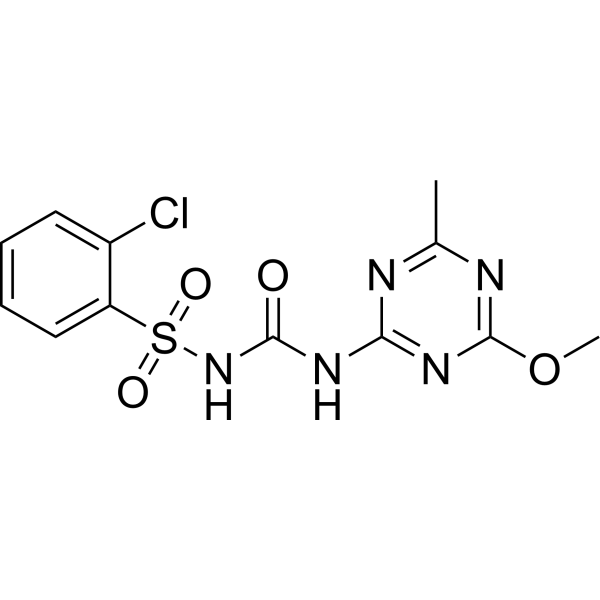
Chlorsulfuron is an acetolactate synthase inhibitor and selective systemic herbicide. Chlorsulfuron blocks the synthesis of branched-chain amino acids (valine and isoleucine), thereby inhibiting protein synthesis, cell growth, and cell division. Chlorsulfuron blocks G1 and G2 phase cell cycle progression in plant root tip cells without directly interfering with mitosis or DNA synthesis. Chlorsulfuron completely inhibits germination of non-target terrestrial plants and is highly toxic to aquatic macrophytes. Chlorsulfuron has low toxicity to mammals, birds and bees, and moderate toxicity to fish and aquatic invertebrates. Chlorsulfuron can be used in studies related to herbicides, plant cell cycles and ecotoxicology.
Nos produits utilisent uniquement pour la recherche. Nous ne vendons pas aux patients.
- Pureté : 99.95%
- CAS No.: 64902-72-3
- Formule: C12H12ClN5O4S
- Masse moléculaire:357.77
-
Stockage:Powder -20°C, 3 years , 4°C, 2 years ; In solvent -80°C, 6 months , -20°C, 1 month

To place orders, for customer services and technical support, please contact: MedChemExpress USA
Tel: 609-228-6898 E-mail: [email protected] [email protected]


-
 Activité biologique
-
Chemical Information
-
Solvant et solubilité
- Protocole
- Pureté et documentation
- Références
-
 Help & FAQs



Publications Citing Use of MedChemExpress (MCE) Chlorsulfuron
More

Activité biologique
Description
In Vitro
Chlorsulfuron (28 nM) prevents the resumption of mitotic progression in excised root tip cells of pea (Pisum sativum L. cv Alaska) after cutting-induced reduction of mitotic activity[1].
Chlorsulfuron (28 nM) reduces the mitotic entry rate to nearly 0% at 8 h post-treatment in pea root tips that are cultured and equilibrated for 24 h after excision, and this inhibitory effect does not recover during the 24 h of continuous observation[1].
Chlorsulfuron (0.047 lb a.i./ac) completely inhibits the germination of Isatis indigotica*[2].
Chlorsulfuron (0.00025 mg/L; 4 weeks) inhibits the growth of Potamogeton pectinatus[2].
Chlorsulfuron (0.0004-0.0007 mg a.i./L; 96 h) shows high toxicity to duckweed, with an EC50 of 0.0007 mg a.i./L and a critical safety threshold of 0.0004 mg a.i./L[2].
Chlorsulfuron (0.001 mg a.i./L; 16 days) reduces the diversity of freshwater algal communities consisting of 63 species[2].
Chlorsulfuron (0.25-2.0 ppb; 4 weeks) exerts adverse effects on the growth and survival of Potamogeton pectinatus plants at all tested concentrations, causing 100% mortality at the concentration of 2.0 ppb[3].
MedChemExpress (MCE) has not independently confirmed the accuracy of these methods. They are for reference only. Further protocols information, click here.
In Vivo
Chlorsulfuron (1363-5545 mg a.i./kg BW; oral gavage; single administration) exhibits low acute oral toxicity in rats and guinea pigs[2].
Chlorsulfuron (75-200 mg a.i./kg BW-day; oral gavage; daily; administered during pregnancy) causes weight loss in pregnant rabbits at high doses, while no effects are observed at medium and low doses[2].
Continuous administration of Chlorsulfuron (5-25 mg/kg body weight/day based on active ingredient; administered via feeding; daily dosing; for 90 days to 2 years) at high doses for 90 days causes changes in hematological parameters in brown rats (Rattus norvegicus), while continuous administration at the same doses for 2 years reduces body weight in male rats; no adverse effects are observed at low doses[2].
Chlorsulfuron (99-5000 mg/kg BW-day; administered via feeding; daily dosing; for 5-14 days, 1 generation; single dosing; for 8 days) shows low acute and chronic toxicity to mallards, with no adverse effects observed[2].
Chlorsulfuron (100-5000 mg/kg BW-day; oral administration via feed; daily; 5-14 days, 27 weeks; single dose; 8 days) shows low acute toxicity to northern bobwhite quails. No adverse reactions are observed at high doses, but reproductive toxicity occurs upon exposure at 560 mg/kg BW-day for 27 weeks, while no toxic effects are detected at low doses[2].
Chlorsulfuron (1.6-25 μg/bee administered via thoracic injection; single dose; 48 h) exhibits mild acute contact toxicity to honeybees[2].
Chlorsulfuron (40 mg/L; aqueous solution exposure; continuous exposure; 96 h) exhibits moderate acute toxicity to brown trout[2].
Chlorsulfuron (31.4-64.8 mg/L; aqueous solution exposure; continuous; 77 days) exerts adverse effects on rainbow trout fry at high concentrations, while no effects are observed at low concentrations[2].
Chlorsulfuron (50-300 mg/L; aqueous solution exposure for 96 h) shows moderate acute toxicity to warm-water fish, with its 96-h LC50 value greater than 50 mg/L[2].
Chlorsulfuron (aqueous solution exposure; continuous exposure; 48 h) exhibits moderate acute toxicity to Daphnia magna, with a 48 h LC50 of 368.9 mg/L[2].
Chlorsulfuron (20-36 mg/L; aqueous solution exposure; continuous treatment; 21 days) exerts chronic adverse effects on Ceriodaphnia dubia at high concentrations, while no effects are observed at low concentrations[2].
MedChemExpress (MCE) has not independently confirmed the accuracy of these methods. They are for reference only.
-
Animal Model:Leporidae sp.[2]
-
Dosage:3400 mg a.i./kg BW
-
Administration:dermal; single exposure; 24 hours
-
Result:Observed no adverse effects from acute dermal exposure.
Determined the acute dermal LD50 is greater than 3400 mg a.i./kg BW.
-
Animal Model:Rattus norvegicus[2]
-
Dosage:5545 mg a.i./kg BW
-
Administration:oral gavage; single dose
-
Result:Determined the oral LD50 is 5545 mg a.i./kg BW, meaning this single dose caused 50% mortality in male rats.
-
Animal Model:Cavia sp.[2]
-
Dosage:1363 mg a.i./kg BW
-
Administration:oral gavage; single dose
-
Result:Determined the oral LD50 is 1363 mg a.i./kg BW, meaning this single dose caused 50% mortality in guinea pigs.
-
Animal Model:Leporidae sp. (pregnant)[2]
-
Dosage:200 mg a.i./kg BW-day; 75 mg a.i./kg BW-day
-
Administration:oral gavage; daily; during pregnancy
-
Result:Caused maternal toxicity (weight loss) at 200 mg a.i./kg BW-day, while observed no adverse effects at 75 mg a.i./kg BW-day.
Noted no treatment-related effects on pregnancy rates or fertility parameters at either dose.
-
Animal Model:Rattus norvegicus[2]
-
Dosage:25 mg a.i./kg BW-day; 5 mg a.i./kg BW-day
-
Administration:dietary; daily; 90 days; 2 years
-
Result:Caused adverse effects to blood parameters at 25 mg a.i./kg BW-day in the 90-day study, while observed no effects at 5 mg a.i./kg BW-day.
Observed decreased body weight in male rats at 25 mg a.i./kg BW-day in the 2-year study, with no effects observed at 5 mg a.i./kg BW-day.
-
Animal Model:Anas platyrhynchos[2]
-
Dosage:500 mg/kg BW-day; >1500 mg/kg BW; 5000 mg/kg BW-day; 99 mg/kg BW-day
-
Administration:dietary; daily; 5 days, 1 generation; oral; daily; 14 days; single dose; 8 days
-
Result:Observed no toxic effects at 500 mg/kg BW-day in the 5-day dietary study, with an LD50 greater than 1500 mg/kg BW over 8 days.
Observed no adverse effects at 5000 mg/kg BW-day in the 14-day oral study.
Observed no reproductive effects at 99 mg/kg BW-day in the 1-generation dietary study.
-
Animal Model:Colinus virginianus[2]
-
Dosage:3394 mg/kg BW-day; >16970 mg/kg BW; 5000 mg/kg BW-day; 560 mg/kg BW-day; 100 mg/kg BW-day
-
Administration:dietary; daily; 5 days, 27 weeks; oral; daily; 14 days; single dose; 8 days
-
Result:Observed no toxic effects at 3394 mg/kg BW-day in the 5-day dietary study, with an LD50 greater than 16970 mg/kg BW over 8 days.
Observed no adverse effects at 5000 mg/kg BW-day in the 14-day oral study.
Caused reproductive toxicity at 560 mg/kg BW-day in the 27-week dietary study, while observed no effects at 100 mg/kg BW-day.
-
Animal Model:Apis mellifera[2]
-
Dosage:>25 μg/bee; <1.6 μg/bee
-
Administration:direct thoracic application; single dose; 48 hours
-
Result:Determined the acute contact LD50 is greater than 25 μg/bee, with no observed effects at doses below 1.6 μg/bee.
-
Animal Model:Salmo trutta (coldwater fish)[2]
-
Dosage:40 mg/L
-
Administration:aqueous exposure; continuous; 96 hours
-
Result:Determined the acute LC50 is 40 mg/L, meaning this concentration caused 50% mortality over 96 hours.
-
Animal Model:Oncorhynchus mykiss (coldwater fish fry, early life stages)[2]
-
Dosage:64.8 mg/L; 31.4 mg/L
-
Administration:aqueous exposure; continuous; 77 days
-
Result:Caused adverse effects to early life stages at 64.8 mg/L, while observed no adverse effects at 31.4 mg/L.
-
Animal Model:Pimephales promelas, Lepomis macrochirus, Ictalurus punctatus (warmwater fish)[2]
-
Dosage:>50 mg/L to >300 mg/L
-
Administration:aqueous exposure; continuous; 96 hours
-
Result:Determined acute LC50 values ranged from greater than 50 mg/L to greater than 300 mg/L across species, with no mortality observed at these concentrations.
-
Animal Model:Daphnia magna (aquatic invertebrate)[2]
-
Dosage:368.9 mg/L
-
Administration:aqueous exposure; continuous; 48 hours
-
Result:Determined the acute LC50 is 368.9 mg/L, meaning this concentration caused 50% mortality over 48 hours.
-
Animal Model:Ceriodaphnia dubia (aquatic invertebrate)[2]
-
Dosage:36 mg/L; 20 mg/L
-
Administration:aqueous exposure; continuous; 21 days
-
Result:Determined the lowest-observed-adverse-effect level (LOAEL) was 36 mg/L, while the no-observed-adverse-effect level (NOAEL) was 20 mg/L over the 21-day life-cycle study.


Chemical Information
-
CAS No. 64902-72-3
-
Appearance Solid
-
Masse moléculaire 357.77
-
Formule C12H12ClN5O4S
-
Color White to off-white
-
SMILES
O=S(C1=CC=CC=C1Cl)(NC(NC2=NC(OC)=NC(C)=N2)=O)=O
-
Livraison
Room temperature in continental US; may vary elsewhere.
-
Stockage
Powder -20°C 3 years 4°C 2 years In solvent -80°C 6 months -20°C 1 month


Publications (1)
-
Journal Impact Factor
-
Most Recent
-
ACS Environ Au
Machine Learning-Assisted Recognition of Environmental Sulfur-Containing Chemicals in Nontargeted Mass Spectrometry Analysis of Inadequate Mass Resolution. [Abstract]2025 Aug 5;5(6):573-582. PMID: 41277996


Solvant et solubilité
In Vitro:
DMSO : 100 mg/mL (279.51 mM; Need ultrasonic; Hygroscopic DMSO has a significant impact on the solubility of product, please use newly opened DMSO)
Please refer to the solubility information to select the appropriate solvent. Once prepared, please aliquot and store the solution to prevent product inactivation from repeated freeze-thaw cycles.
Storage method and period of stock solution: -80°C, 6 months; -20°C, 1 month. When stored at -80°C, please use it within 6 months. When stored at -20°C, please use it within 1 month.
Please refer to the solubility information to select the appropriate solvent. Once prepared, please aliquot and store the solution to prevent product inactivation from repeated freeze-thaw cycles.
Storage method and period of stock solution: -80°C, 6 months; -20°C, 1 month. When stored at -80°C, please use it within 6 months. When stored at -20°C, please use it within 1 month.
Concentration (start) × Volume (start) = Concentration (final) × Volume (final)
In Vivo:
Select the appropriate dissolution method based on your experimental animal and administration route.
- For the following dissolution methods, please ensure to first prepare a clear stock solution using an In Vitro approach and then sequentially add co-solvents:
- To ensure reliable experimental results, the clarified stock solution can be appropriately stored based on storage conditions. As for the working solution for In Vivo experiments, it is recommended to prepare freshly and use it on the same day.
- The percentages shown for the solvents indicate their volumetric ratio in the final prepared solution. If precipitation or phase separation occurs during preparation, heat and/or sonication can be used to aid dissolution.
Add each solvent one by one: 10% DMSO 40% PEG300 5% Tween-80 45% Saline
Solubility: ≥ 2.5 mg/mL (6.99 mM); Clear solution
This protocol yields a clear solution of ≥ 2.5 mg/mL (saturation unknown).
Taking 1 mL working solution as an example, add 100 μL DMSO stock solution (25.0 mg/mL) to 400 μL PEG300, and mix evenly; then add 50 μL Tween-80 and mix evenly; then add 450 μL Saline to adjust the volume to 1 mL.
Preparation of Saline: Dissolve 0.9 g sodium chloride in ddH₂O and dilute to 100 mL to obtain a clear Saline solution.
Add each solvent one by one: 10% DMSO 90% (20% SBE-β-CD in Saline)
Solubility: ≥ 2.5 mg/mL (6.99 mM); Clear solution
This protocol yields a clear solution of ≥ 2.5 mg/mL (saturation unknown).
Taking 1 mL working solution as an example, add 100 μL DMSO stock solution (25.0 mg/mL) to 900 μL 20% SBE-β-CD in Saline, and mix evenly.
Preparation of 20% SBE-β-CD in Saline (4°C, storage for one week): 2 g SBE-β-CD powder is dissolved in 10 mL Saline, completely dissolve until clear.
In Vivo Dissolution Calculator
Please enter the basic information of animal experiments:
-
-
-
-
Recommended: Prepare an additional quantity of animals to account for potential losses during experiments.
Please enter your animal formula composition:
-
%DMSO +
Recommended: Keep the proportion of DMSO in working solution below 2% if your animal is weak.
-
%+
-
+%Tween-80 + +
-
%Saline +
The co-solvents required include: DMSO, . All of co-solvents are available by MedChemExpress (MCE). , Tween 80. All of co-solvents are available by MedChemExpress (MCE).
Working solution concentration: 0.22 mg/mL
Method for preparing stock solution: mg drug dissolved in μL DMSO. Stock solution concentration: mg/mL.
1. Take μL DMSO stock solution;
2. Add μL .
μL , mix evenly;
3. Then add μL Tween 80, mix evenly;
4. Then add μL
Please ensure that the stock solution in the first step is dissolved to a clear state, and add co-solvents in sequence. You can use ultrasonic heating (ultrasonic cleaner, recommended frequency 20-40 kHz), vortexing, etc. to assist dissolution.

Protocole
-
BrdU Incorporation Assay
Bromodeoxyuridine (BrdU) incorporation assay is based on the principle that BrdU, a thymidine analog, is incorporated into newly synthesized DNA during the S phase of the cell cycle, thereby serving as a marker of DNA replication and cellular proliferation. Incorporated BrdU can be detected using anti-BrdU antibodies following DNA denaturation, enabling visualization or quantification of proliferating cells through immunochemical detection methods such as immunofluorescence or immunohistochemistry.
-
Somatic Cell Culture
A method of simulating the in vivo environment in vitro to maintain the cell growth, differentation and main functions.
-
CFSE Dye Dilution Proliferation Assay
The CFSE (carboxyfluorescein diacetate succinimidyl ester) dye dilution proliferation assay is based on the covalent labeling of intracellular proteins by a cell-permeant fluorescent dye that becomes fluorescent upon intracellular ester cleavage and then is stably retained within cells. As labeled cells divide, the dye is partitioned equally between daughter cells, resulting in a stepwise halving of fluorescence intensity that can be quantified by flow cytometry to determine the number of cell divisions undergone by each cell population. This fluorescence dilution approach enables quantitative tracking of lymphocyte proliferation at the single-cell level over multiple rounds of division. CFSE-based proliferation analysis has been widely applied to measure antigen-driven lymphocyte expansion in vitro, where discrete fluorescence peaks correspond to successive cell divisions and allow reconstruction of proliferative history within heterogeneous populations.
-
Dye-dilution cell tracking and proliferation staining
Dye-dilution cell tracking assays quantify cell proliferation by covalently labeling intracellular proteins with a stable fluorescent dye that is equally partitioned between daughter cells during mitosis, resulting in stepwise halving of fluorescence intensity with each cell division as measured by flow cytometry histograms. Carboxyfluorescein diacetate succinimidyl ester (CFSE) is a prototypical dye that diffuses into cells, is enzymatically converted into a fluorescent compound, and then covalently binds intracellular amine groups, producing long-lived fluorescence suitable for tracking multiple rounds of division in vitro and in vivo. Successive generations of dividing cells form discrete peaks of decreasing fluorescence intensity, enabling estimation of proliferation history, precursor frequency, and division index within heterogeneous populations. Alternative dyes such as CellTrace Violet (CTV) and far-red membrane dyes (e. g. , PKH26) follow the same dilution principle but differ
-
CCK-8/WST-8 Cell Proliferation Assay
The CCK-8/WST-8 assay is based on the reduction of the water-soluble tetrazolium salt WST-8 to a water-soluble formazan product by cellular dehydrogenases in metabolically active cells, where the generated formazan amount is proportional to the number of living cells and is quantified by measuring absorbance in the visible range, providing a colorimetric readout for cell viability and proliferation assessment. This class of tetrazolium-based assays improves upon earlier MTT-based systems by producing a water-soluble formazan, eliminating the need for organic solubilization steps and enabling direct spectrophotometric measurement in culture medium.
-
Protocol for Cell Cycle
Cell-cycle analysis by flow cytometry measures DNA content in single cells to estimate the fraction of cells in G0/G1, S, and G2/M phases. Propidium iodide intercalates into DNA, and after RNA removal with RNase, fluorescence intensity reflects cellular DNA content: 2N cells are assigned to G0/G1, cells between 2N and 4N to S phase, and 4N cells to G2/M. DNA-content analysis alone cannot reliably separate G0 from G1 or G2 from M. Ki-67 can distinguish quiescent G0 cells from cycling cells, EdU or BrdU incorporation marks active DNA synthesis in S phase, and phospho-histone H3 staining identifies mitotic cells within the 4N population.
-
Cell Counting-Based Growth Curve Assay
Cell counting-based growth curve assays quantify cell proliferation by directly measuring changes in viable cell number over time using manual or automated counting methods such as hemocytometer-based counting or instrument-assisted cell enumeration, enabling construction of growth curves that reflect population expansion dynamics in response to culture conditions. A widely used approach is trypan blue exclusion with hemocytometer counting, where membrane-compromised (non-viable) cells take up the dye, allowing discrimination between viable and non-viable cells while simultaneously enabling total cell number quantification. Repeated sampling across time points allows estimation of proliferation rate, growth phases, and comparative growth kinetics between experimental conditions.
-
Cell Viability Determination by MTT Colorimetric Assay
The following protocol uses the MTT colorimetric assay as a classic literature-established method for assessing cell viability/metabolic activity in cultured mammalian cells. MTT[3-(4,5-dimethylthiazol-2-yl)-2,5-diphenyltetrazolium bromide] is reduced by metabolically active cells to a colored formazan product; the amount of formazan is quantified spectrophotometrically and provides an indirect measure of metabolically active viable cells. Importantly, MTT reduction reflects cellular oxidoreductase/metabolic activity rather than an absolute direct count of living cells, so changes in cellular metabolism can alter the signal independently of cell number.
-
EdU Incorporation Assay (Click Chemistry-Based DNA Synthesis Measurement)
The EdU incorporation assay measures DNA synthesis by adding the thymidine analog 5-ethynyl-2′-deoxyuridine to cells or tissues, where it is incorporated into newly synthesized DNA during S phase. Incorporated EdU is detected by copper-catalyzed azide-alkyne cycloaddition, in which a fluorescent azide covalently reacts with the ethynyl group on EdU, allowing S-phase cells to be detected by fluorescence microscopy, flow cytometry, or high-content imaging. EdU detection does not require DNA denaturation or anti-BrdU antibody access, which preserves sample structure and improves compatibility with immunostaining and multiparameter cytometry compared with BrdU-based detection. EdU can be cytotoxic in a cell-type- and exposure-dependent manner, so pulse duration, concentration, and continuous-labeling designs should be validated for each cell type.
-
Flow cytometric DNA-content cell-cycle staining
Flow cytometric DNA-content cell-cycle staining measures the fluorescence intensity of DNA-bound fluorochromes in single cells or nuclei to estimate DNA content distributions, allowing assignment of populations to G0/G1, S, and G2/M phases by DNA histogram deconvolution. Propidium iodide (PI) intercalates into DNA, and PI fluorescence is proportional to cellular DNA content when staining is performed under conditions that make DNA accessible and minimize non-DNA signal. Cells with G2/M DNA content are expected to show approximately twice the fluorescence intensity of G0/G1 cells, while S-phase cells occupy intermediate fluorescence values. PI-based DNA-content analysis can also detect cells with fractional DNA content, often reported as sub-G1, when DNA fragmentation and extraction during staining reduce retained DNA signal in apoptotic cells. DAPI is an alternative DNA fluorochrome for univariate DNA-content analysis, while bivariate approaches combining DNA content with proliferation
-
Protocol for Cell Counting and Cell Density Analysis
Cell counting and cell-density analysis estimate the number of cells in a known volume or field area. Manual hemocytometer counting uses a chamber of defined geometry to convert counted cells into cells/mL, while automated counters and image-analysis workflows detect cell objects from optical, brightfield, fluorescence, impedance, or digital-image features. Trypan blue viability counting is based on dye exclusion: viable cells with intact membranes exclude dye, while non-viable cells with compromised membranes stain blue. The readout is total cell density, viable-cell density, dead-cell density, and percent viability. Cell density can also be estimated from microscopy images by counting objects per image area, from flow cytometry using calibrated volume or reference particles, or from in situ microscopy in bioreactors after calibration against reference methods such as hemocytometer or flow cytometry.
-
Protocol for Fluorescence In Situ Hybridization (FISH)
Fluorescence in situ hybridization detects specific DNA or RNA sequences inside fixed cells or tissue sections by hybridizing fluorescently labeled nucleic-acid probes to complementary target sequences, allowing the target’s copy number, chromosomal position, spatial distribution, or transcript abundance to be visualized microscopically. DNA-FISH detects genomic loci, chromosomal gains/losses, amplifications, deletions, and rearrangements, while RNA-FISH detects RNA molecules or transcript localization; in cancer cells, mouse tumors, neurons, organoids, macrophages, or drug-screening samples, the readout is fluorescent puncta, fusion/split signals, or localized RNA signal interpreted relative to validated controls.
-
MTT Cell Proliferation Assay
The MTT assay is a colorimetric endpoint assay for estimating viable cell number, cell growth, cytotoxicity, or cell activation in cultured mammalian cells. Living cells reduce the yellow tetrazolium salt MTT into purple/blue formazan, while dead cells do not generate the same signal; the resulting color can be quantified with a multiwell spectrophotometer. MTT reduction is commonly interpreted as a readout of metabolic activity that often correlates with viable cell number, but it should not be treated as a direct cell-counting method unless the assay is optimized for the cell type and experimental condition. Studies show that MTT reduction can involve mitochondrial and non-mitochondrial reducing systems, and formazan may accumulate in intracellular lipid droplets rather than simply marking mitochondria.


Pureté et documentation
-
Fiche technique (299 KB)
-
SDS (398 KB)
- English - EN (398 KB)
- Français - FR (398 KB)
- Deutsch - DE (398 KB)
- Norwegian - NO (398 KB)
- Español - ES (398 KB)
- Swedish - SV (398 KB)
- Italian - IT (398 KB)
- Korean - KR (398 KB)
- Portuguese - PT (398 KB)
-
Instruction de manipulation (2659 KB)
Références
[1]. Rost TL, et al. Reversal of chlorsulfuron-induced inhibition of mitotic entry by isoleucine and valine. Plant physiology. 1985 Feb;77(2):481-2. [Content Brief]
[3]. Coyner A, et al. Effect of chlorsulfuron on growth of submerged aquatic macrophyte Potamogeton pectinatus (sago pondweed). Environmental pollution (Barking, Essex : 1987). 2001;111(3):453-5. [Content Brief]


Complete Stock Solution Preparation Table
Please refer to the solubility information to select the appropriate solvent. Once prepared, please aliquot and store the solution to prevent product inactivation from repeated freeze-thaw cycles.
Storage method and period of stock solution: -80°C, 6 months; -20°C, 1 month. When stored at -80°C, please use it within 6 months. When stored at -20°C, please use it within 1 month.
| Optional Solvent | Concentration Solvent Mass | 1 mg | 5 mg | 10 mg | 25 mg |
|---|---|---|---|---|---|
| DMSO | 1 mM | 2.7951 mL | 13.9755 mL | 27.9509 mL | 69.8773 mL |
| 5 mM | 0.5590 mL | 2.7951 mL | 5.5902 mL | 13.9755 mL | |
| 10 mM | 0.2795 mL | 1.3975 mL | 2.7951 mL | 6.9877 mL | |
| 15 mM | 0.1863 mL | 0.9317 mL | 1.8634 mL | 4.6585 mL | |
| 20 mM | 0.1398 mL | 0.6988 mL | 1.3975 mL | 3.4939 mL | |
| 25 mM | 0.1118 mL | 0.5590 mL | 1.1180 mL | 2.7951 mL | |
| 30 mM | 0.0932 mL | 0.4658 mL | 0.9317 mL | 2.3292 mL | |
| 40 mM | 0.0699 mL | 0.3494 mL | 0.6988 mL | 1.7469 mL | |
| 50 mM | 0.0559 mL | 0.2795 mL | 0.5590 mL | 1.3975 mL | |
| 60 mM | 0.0466 mL | 0.2329 mL | 0.4658 mL | 1.1646 mL | |
| 80 mM | 0.0349 mL | 0.1747 mL | 0.3494 mL | 0.8735 mL | |
| 100 mM | 0.0280 mL | 0.1398 mL | 0.2795 mL | 0.6988 mL |


Chlorsulfuron Related Classifications
HY-119737 Related Classifications
 Powered by Bioz