



Fosmanogepix

Based on 1 Customer Validation
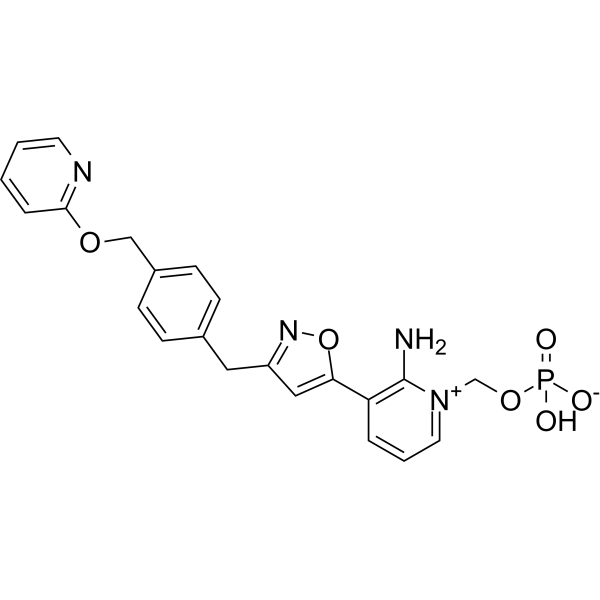
Fosmanogepix (APX001) is a broad-spectrum agent against invasive fungal infections. Fosmanogepix (APX001) targets the conserved Gwt1 enzyme required for the localization of glycosylphosphatidylinositol-anchored mannoproteins in fungi. This inhibition prevents the appropriate localization of cell wall mannoproteins, which compromises cell wall integrity, biofilm formation, germ tube formation, and fungal growth. Fosmanogepix (APX001) can be used for invasive fungal infections research.
Para uso exclusivo en investigación. No vendemos a pacientes.
- Pureza : 99.26%
- No. CAS: 2091769-17-2
- Fòrmula: C22H21N4O6P
- Peso molecular:468.40
-
Almacenamiento:Powder -20°C, 3 years , 4°C, 2 years ; In solvent -80°C, 2 years , -20°C, 1 year

To place orders, for customer services and technical support, please contact: MedChemExpress USA
Tel: 609-228-6898 E-mail: [email protected] [email protected]


-
 Actividad biológica
-
Chemical Information
-
Solvente y solubilidad
- Protocolo
- Pureza y Documentación
- Referencias
-
 Help & FAQs


-
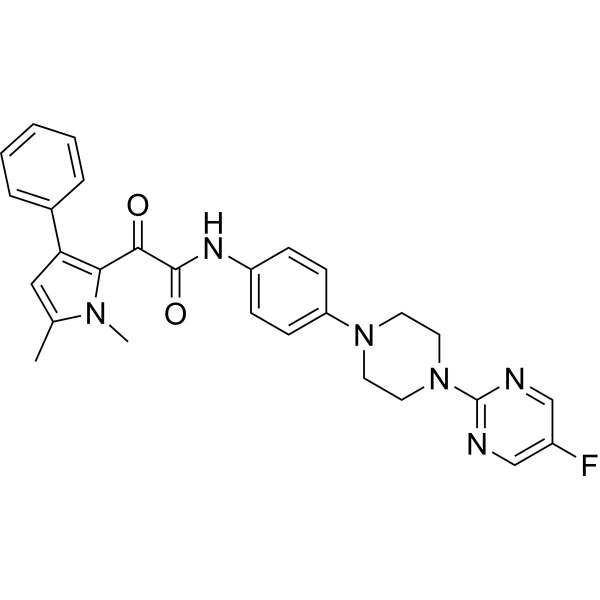
HY-104029
OlorofimDHODH Inhibitor -
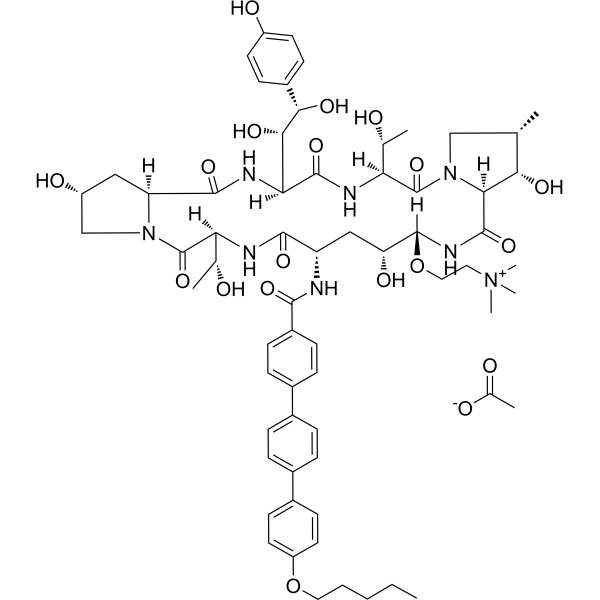
HY-108009A
Rezafungin acetateEchinocandin -
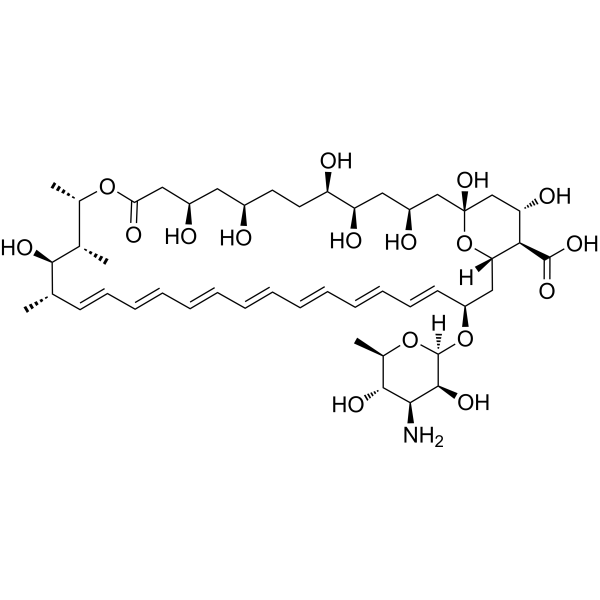
HY-B0221
Amphotericin BAntifungal Agent -
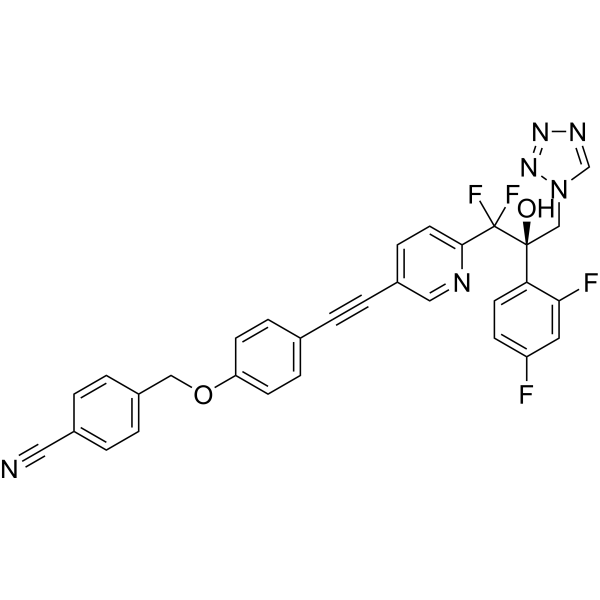
HY-123777
VT-1598Fungal CYP51 Inhibitor -
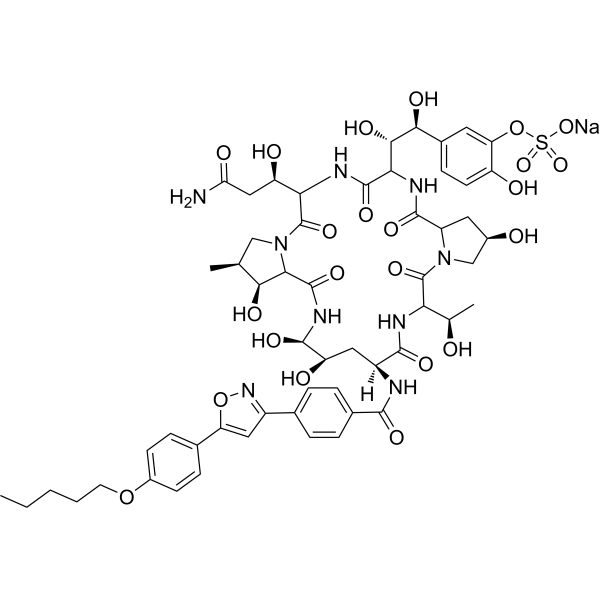
HY-16321
Micafungin sodiumAntifungal Agent -
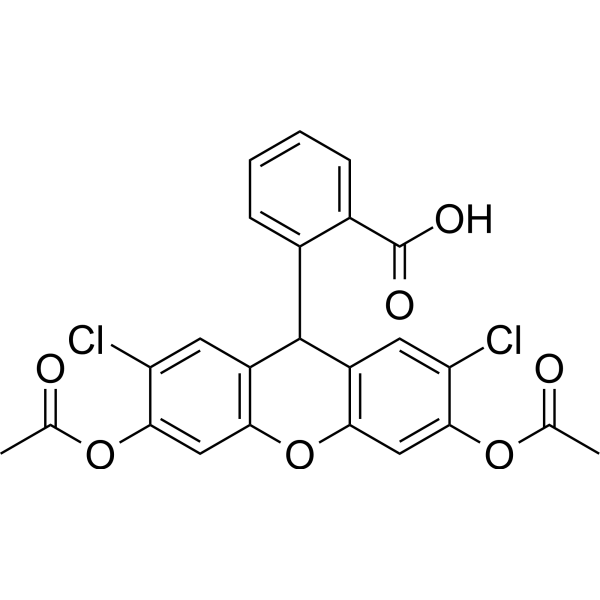
HY-D0940
H2DCFDAROS-Sensitive Probe -
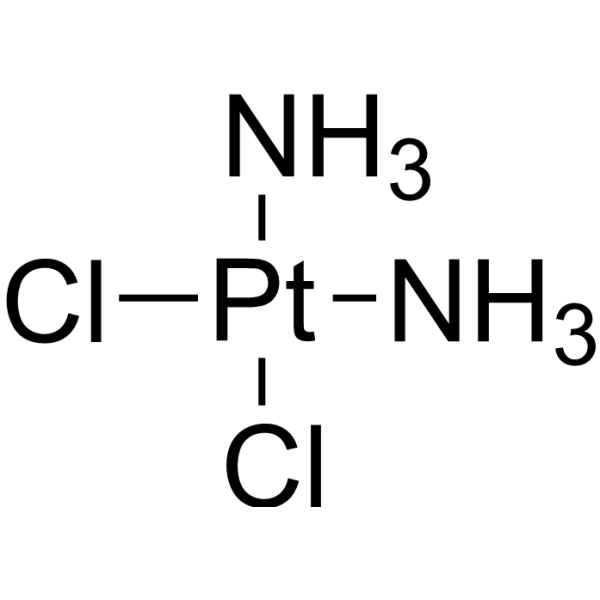
HY-17394
CisplatinDNA Alkylator -

HY-107126A
Ibrexafungerp citrateβ-1,3-glucan Inhibitor -
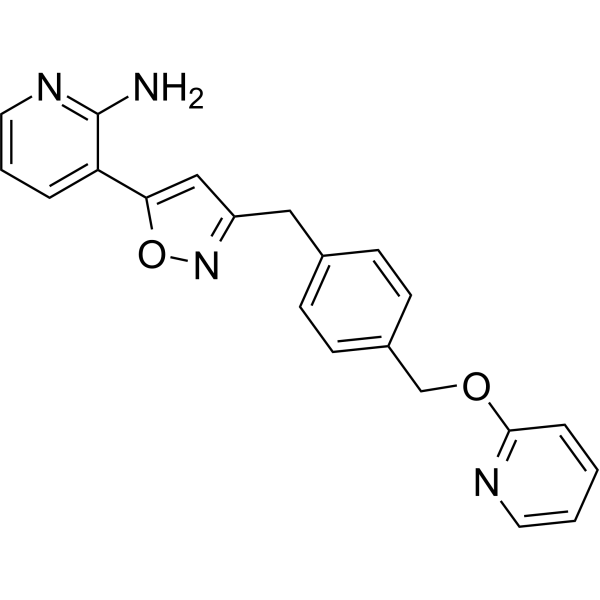
HY-18233
ManogepixAntifungal Agent -
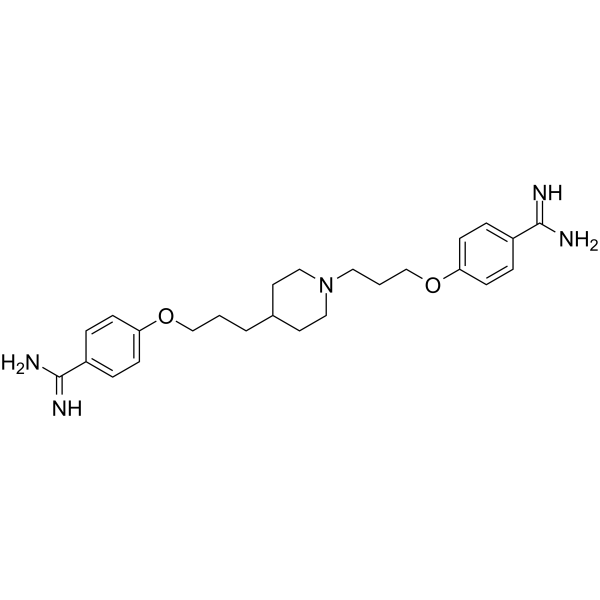
HY-114220
T-2307Antifungal Agent -
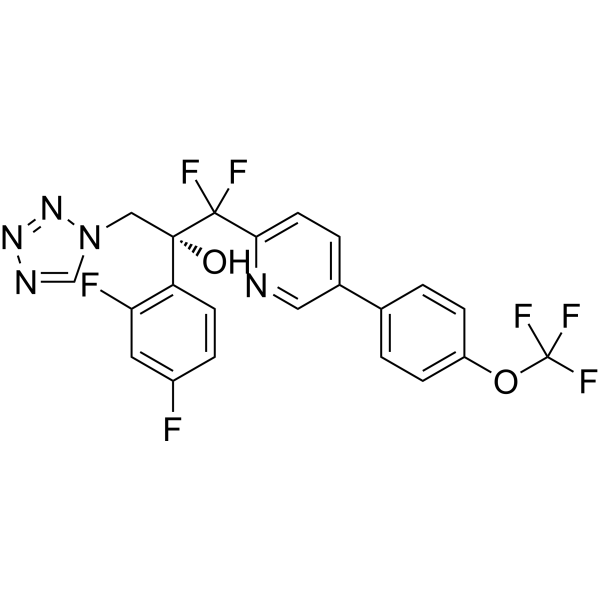
HY-109040
QuilseconazoleAntifungal Agent -
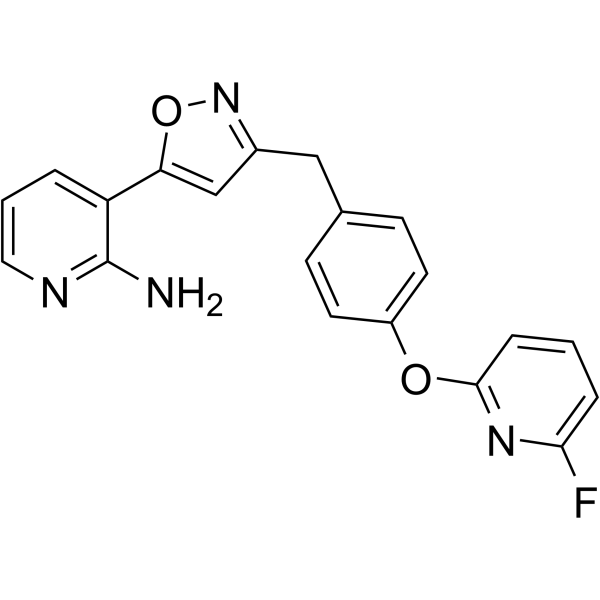
HY-147110
APX2039Gwt1 Protein Inhibitor


Actividad biológica
Descripciòn
IC50 & Target
Gwt1[1]
In Vitro
Fosmanogepix (APX001) (2-0.002 μg/ml, 40-72 h) inhibited the growth of C. neoformans, C. gattii, Candida albicans, and Aspergillus fumigatus with MIC or minimum effective concentration (MEC) values ranging from 0.008-0.25 μg/ml[1].
MedChemExpress (MCE) has not independently confirmed the accuracy of these methods. They are for reference only.
In Vivo
Fosmanogepix (APX001) (100 mg/kg for Oral gavage) is the driver of efficacy in CD-1 mice[1].
MedChemExpress (MCE) has not independently confirmed the accuracy of these methods. They are for reference only.
-
Animal Model:murine model of cryptococcal meningitis[1]
-
Dosage:390 mg/kg
-
Administration:Oral gavage (p.o.)
-
Result:Observed significant differences (P < 0.05) fungal burden and reduced the fungal burden compared to untreated control in the lung tissue.
Reduced the fungal burden of 0.78 log10 CFU/g compared with control group in brain tissue.
-
Animal Model:CD-1 mice[1]
-
Dosage:100 mg/kg
-
Administration:Intraperitoneal injection (i.p.)
-
Result:Extended the half-life of the active moiety, APX001A, from 1.3 to 8.8 h, resulting in a 9-fold increase in the area under the curve (AUC).


Chemical Information
-
No. CAS 2091769-17-2
-
Appearance Solid
-
Peso molecular 468.40
-
Fòrmula C22H21N4O6P
-
Color White to yellow
-
SMILES
O=P(OC[N+]1=CC=CC(C2=CC(CC3=CC=C(COC4=NC=CC=C4)C=C3)=NO2)=C1N)(O)[O-]
-
Synonyms
APX001; E1211
-
Envío
Room temperature in continental US; may vary elsewhere.
-
Almacenamiento
Powder -20°C 3 years 4°C 2 years In solvent -80°C 2 years -20°C 1 year


Solvente y solubilidad
In Vitro:
1 M HCl : 50 mg/mL (106.75 mM; Need ultrasonic)
DMSO : 5 mg/mL (10.67 mM; ultrasonic and adjust pH to 3 with HCl; Hygroscopic DMSO has a significant impact on the solubility of product, please use newly opened DMSO)
Please refer to the solubility information to select the appropriate solvent. Once prepared, please aliquot and store the solution to prevent product inactivation from repeated freeze-thaw cycles.
Storage method and period of stock solution: -80°C, 2 years; -20°C, 1 year. When stored at -80°C, please use it within 2 years. When stored at -20°C, please use it within 1 year.
Please refer to the solubility information to select the appropriate solvent. Once prepared, please aliquot and store the solution to prevent product inactivation from repeated freeze-thaw cycles.
Storage method and period of stock solution: -80°C, 2 years; -20°C, 1 year. When stored at -80°C, please use it within 2 years. When stored at -20°C, please use it within 1 year.
Concentration (start) × Volume (start) = Concentration (final) × Volume (final)
In Vivo:
Select the appropriate dissolution method based on your experimental animal and administration route.
- For the following dissolution methods, please ensure to first prepare a clear stock solution using an In Vitro approach and then sequentially add co-solvents:
- To ensure reliable experimental results, the clarified stock solution can be appropriately stored based on storage conditions. As for the working solution for In Vivo experiments, it is recommended to prepare freshly and use it on the same day.
- The percentages shown for the solvents indicate their volumetric ratio in the final prepared solution. If precipitation or phase separation occurs during preparation, heat and/or sonication can be used to aid dissolution.
Add each solvent one by one: 10% DMSO 40% PEG300 5% Tween-80 45% Saline
Solubility: ≥ 2.5 mg/mL (5.34 mM); Clear solution
This protocol yields a clear solution of ≥ 2.5 mg/mL (saturation unknown).
Taking 1 mL working solution as an example, add 100 μL DMSO stock solution (25.0 mg/mL) to 400 μL PEG300, and mix evenly; then add 50 μL Tween-80 and mix evenly; then add 450 μL Saline to adjust the volume to 1 mL.
Preparation of Saline: Dissolve 0.9 g sodium chloride in ddH₂O and dilute to 100 mL to obtain a clear Saline solution.
Add each solvent one by one: 10% DMSO 90% (20% SBE-β-CD in Saline)
Solubility: ≥ 2.5 mg/mL (5.34 mM); Clear solution
This protocol yields a clear solution of ≥ 2.5 mg/mL (saturation unknown).
Taking 1 mL working solution as an example, add 100 μL DMSO stock solution (25.0 mg/mL) to 900 μL 20% SBE-β-CD in Saline, and mix evenly.
Preparation of 20% SBE-β-CD in Saline (4°C, storage for one week): 2 g SBE-β-CD powder is dissolved in 10 mL Saline, completely dissolve until clear.
In Vivo Dissolution Calculator
Please enter the basic information of animal experiments:
-
-
-
-
Recommended: Prepare an additional quantity of animals to account for potential losses during experiments.
Please enter your animal formula composition:
-
%DMSO +
Recommended: Keep the proportion of DMSO in working solution below 2% if your animal is weak.
-
%+
-
+%Tween-80 + +
-
%Saline +
The co-solvents required include: DMSO, . All of co-solvents are available by MedChemExpress (MCE). , Tween 80. All of co-solvents are available by MedChemExpress (MCE).
Working solution concentration: 0.22 mg/mL
Method for preparing stock solution: mg drug dissolved in μL DMSO. Stock solution concentration: mg/mL.
1. Take μL DMSO stock solution;
2. Add μL .
μL , mix evenly;
3. Then add μL Tween 80, mix evenly;
4. Then add μL
Please ensure that the stock solution in the first step is dissolved to a clear state, and add co-solvents in sequence. You can use ultrasonic heating (ultrasonic cleaner, recommended frequency 20-40 kHz), vortexing, etc. to assist dissolution.


Pureza y Documentación
-
Ficha de datos (274 KB)
-
SDS (252 KB)
- English - EN (252 KB)
- Français - FR (252 KB)
- Deutsch - DE (252 KB)
- Norwegian - NO (252 KB)
- Español - ES (252 KB)
- Swedish - SV (252 KB)
- Italian - IT (252 KB)
- Korean - KR (252 KB)
- Portuguese - PT (252 KB)
-
Instrucciones de manejo (2659 KB)
Referencias
[1]. Shaw KJ, et al. In Vitro and In Vivo Evaluation of APX001A/APX001 and Other Gwt1 Inhibitors against Cryptococcus. Antimicrob Agents Chemother. 2018 Jul 27;62(8). pii: e00523-18. [Content Brief]
[2]. Gebremariam T, et al. APX001 Is Effective in the Treatment of Murine Invasive Pulmonary Aspergillosis. Antimicrob Agents Chemother. 2019 Jan 29;63(2). pii: e01713-18. [Content Brief]
[3]. Shaw KJ, et al. In Vitro and In Vivo Evaluation of APX001A/APX001 and Other Gwt1 Inhibitors against Cryptococcus. Antimicrob Agents Chemother. 2018 Jul 27;62(8):e00523-18. [Content Brief]


Complete Stock Solution Preparation Table
Please refer to the solubility information to select the appropriate solvent. Once prepared, please aliquot and store the solution to prevent product inactivation from repeated freeze-thaw cycles.
Storage method and period of stock solution: -80°C, 2 years; -20°C, 1 year. When stored at -80°C, please use it within 2 years. When stored at -20°C, please use it within 1 year.
| Optional Solvent | Concentration Solvent Mass | 1 mg | 5 mg | 10 mg | 25 mg |
|---|---|---|---|---|---|
| DMSO / 1 M HCl | 1 mM | 2.1349 mL | 10.6746 mL | 21.3493 mL | 53.3732 mL |
| 5 mM | 0.4270 mL | 2.1349 mL | 4.2699 mL | 10.6746 mL | |
| 10 mM | 0.2135 mL | 1.0675 mL | 2.1349 mL | 5.3373 mL | |
| 1 M HCl | 15 mM | 0.1423 mL | 0.7116 mL | 1.4233 mL | 3.5582 mL |
| 20 mM | 0.1067 mL | 0.5337 mL | 1.0675 mL | 2.6687 mL | |
| 25 mM | 0.0854 mL | 0.4270 mL | 0.8540 mL | 2.1349 mL | |
| 30 mM | 0.0712 mL | 0.3558 mL | 0.7116 mL | 1.7791 mL | |
| 40 mM | 0.0534 mL | 0.2669 mL | 0.5337 mL | 1.3343 mL | |
| 50 mM | 0.0427 mL | 0.2135 mL | 0.4270 mL | 1.0675 mL | |
| 60 mM | 0.0356 mL | 0.1779 mL | 0.3558 mL | 0.8896 mL | |
| 80 mM | 0.0267 mL | 0.1334 mL | 0.2669 mL | 0.6672 mL | |
| 100 mM | 0.0213 mL | 0.1067 mL | 0.2135 mL | 0.5337 mL |


Fosmanogepix Related Classifications
HY-119726 Related Classifications
 Powered by Bioz