



Meningitis
-
Meningitis (5)

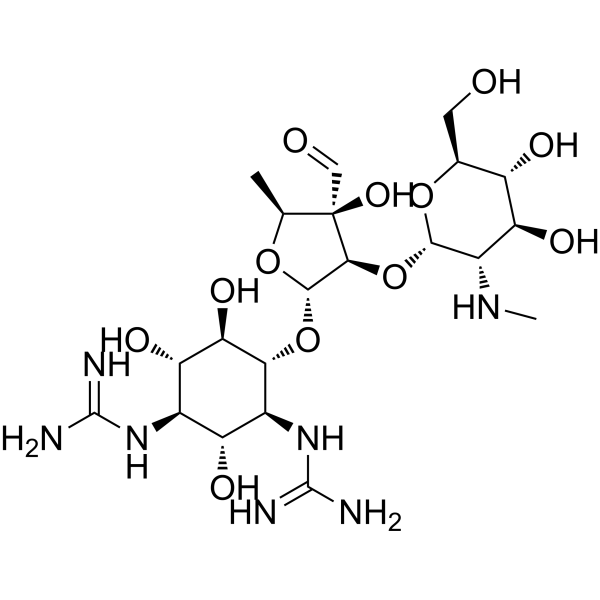
- Formula: C21H39N7O12
- Molecular Weight: 581.57
Streptomycin (Agrept) is an effective antibiotic against M. tuberculosis, is used for the research of tuberculosis (TB). Streptomycin also is a bacteriocidal agent that can be used for the research of a number of bacterial infections. Streptomycin can bind strongly to nucleic acids, interferes and blocks protein synthesis while permitting continued RNA and DNA synthesis. Streptomycin, as a common antibiotic used in culture media, also is a blocker of stretch-activated and mechanosensitive ion channels in neurons and cardiac myocytes .

β-N-Acetylhexosaminidase, Streptococcus pneumoniae is a cell surface virulence factor of Streptococcus pneumoniae, which contains two synergistically acting GH20 domains (with higher activity in GH20-2). β-N-Acetylhexosaminidase, Streptococcus pneumoniae specifically recognizes and hydrolyzes substrates with β(1,2) glycosidic bonds via Trp-443 and Tyr-482 residues. β-N-Acetylhexosaminidase, Streptococcus pneumoniae catalyzes the hydrolysis of β(1,2)-linked N-acetylglucosamine groups and related disaccharides, and promotes persistent colonization of bacteria in the airway by modifying host defense molecules and releasing monosaccharides for bacterial growth. β-N-Acetylhexosaminidase, Streptococcus pneumoniae can be used in studies related to Streptococcus pneumoniae infection, acute pneumonia, otitis media and meningitis.

- Formula: C8H14O8
- Molecular Weight: 238.19
KDO (3-Deoxy-D-manno-2-octulosonic acid) is a characteristic monosaccharide component of capsular polysaccharides of Gram-negative bacteria and meningococcal lipooligosaccharide (LOS), and can also be present in the polysaccharide components of Nelumbo nucifera. KDO together with lipid A constitutes the LOS inner core and is an essential molecule for CD14/TLR4-mediated proinflammatory signaling. KDO can be used in research related to meningococcal disease and inflammation.

- Formula: C9H15NO3S
- Molecular Weight: 217.29
D-Captopril is a NDM-1 inhibitor and a competitive BlaB inhibitor, with an IC50 value of 21.8 µM against NDM-1 and a Ki of 70-100 µM against BlaB. D-Captopril synergistically reduces the minimum inhibitory concentration of Meropenem (HY-13678) against NDM-1-expressing bacteria. D-Captopril binds to BcII via its thiolate sulfur atom and carboxylate group, altering metal ion occupancy and modulating Cd2+ binding affinity. D-Captopril can be used in the research of neonatal meningitis, sepsis and bacterial infections.

- Formula: C28H30F3N3O2
- Molecular Weight: 497.55
Antifungal agent 141, a Phenoxazine (HY-34463) derivative, is an antifungal agent. Antifungal agent shows potent antifungal activity in Cryptococcus neoformans and Candida albicans with MIC values of 2 and 4 µg/mL. Antifungal agent 141 can be used for the research of cryptococcal meningitis.



