



Norethynodrel
Norethynodrel (Enidrel; SC-4642) is an orally active progestogen analog that reduces estrogen-like effects and enhances progestogen-like responses in endometrial stromal cells. Norethynodrel also promotes cell maturation and predecidual cell formation by inducing organelle hyperplasia and glycogen accumulation. Norethynodrel competitively inhibits drug-metabolizing enzymes in rat liver microsomes, thereby prolonging Pentobarbital sleep time, while exhibiting multiple effects including reduced body weight gain, attenuated heart rate elevation and ovulation inhibition. In mouse models, Norethynodrel significantly increases the incidence of mammary adenocarcinoma, cervical cancer and pituitary tumors. Norethynodrel can be used for mechanism research on related diseases such as mammary adenocarcinoma, cervical cancer, ovarian tubular adenoma and pituitary adenoma.
For research use only. We do not sell to patients.
- CAS No.: 68-23-5
- Formula: C20H26O2
- Molecular Weight:298.42
-
Storage:Powder -20°C, 3 years , 4°C, 2 years ; In solvent -80°C, 6 months , -20°C, 1 month

To place orders, for customer services and technical support, please contact: MedChemExpress USA
Tel: 609-228-6898 E-mail: [email protected] [email protected]


-
 Biological Activity
-
Chemical Information
-
Solvent & Solubility
- Protocols
- Purity & Documentation
- References
-
 Help & FAQs


-

HY-B0487
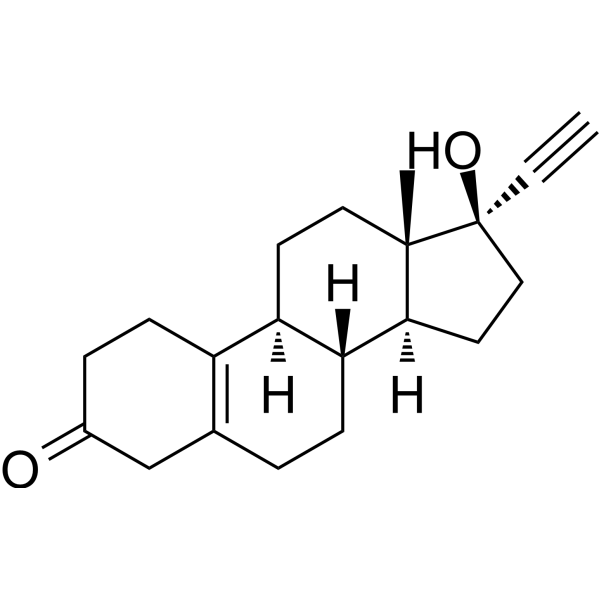
EthisteroneSteroidal Estrogen -
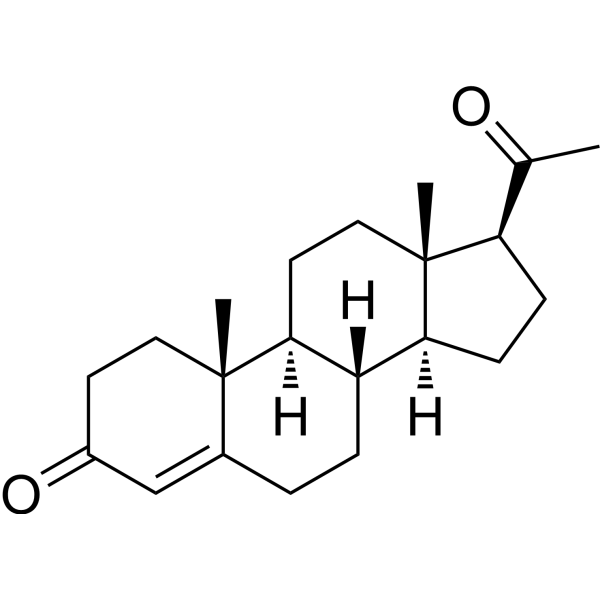
HY-N0437
ProgesteroneEndogenous Metabolite -
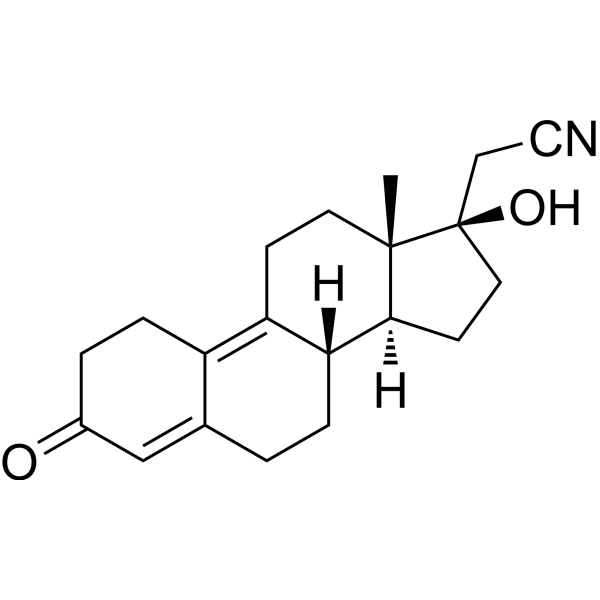
HY-B0084
DienogestProgesterone Receptor Agonist -
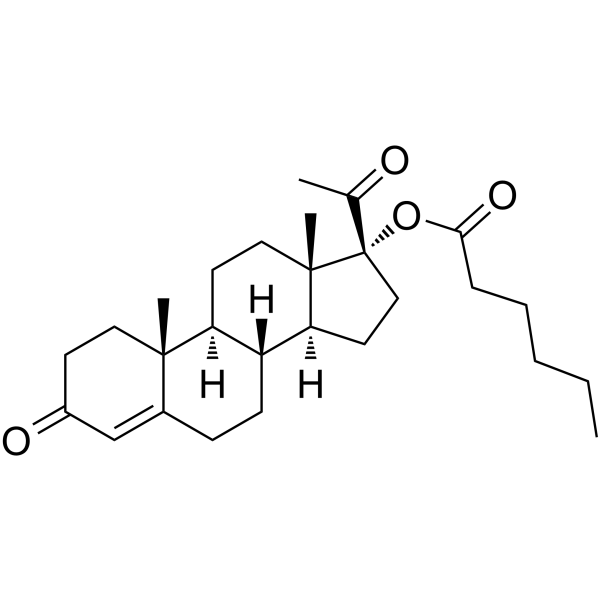
HY-B0742
Hydroxyprogesterone caproateProgesterone Receptor Ligand -
HY-B0111
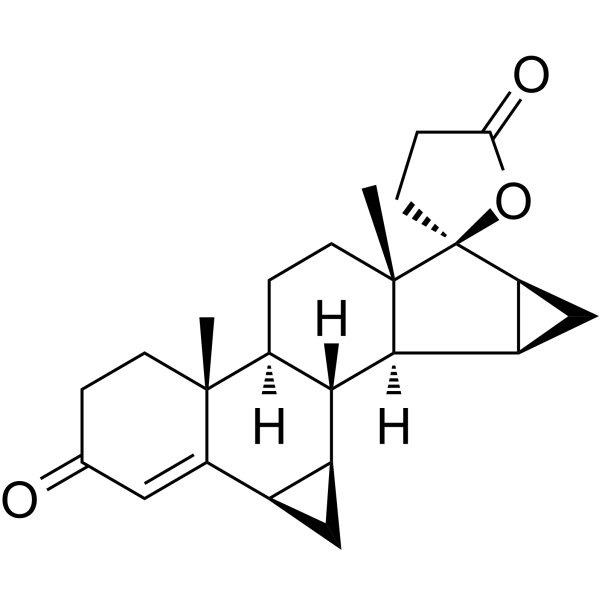
DrospirenoneProgesterone Receptor Agonist -
HY-A0285
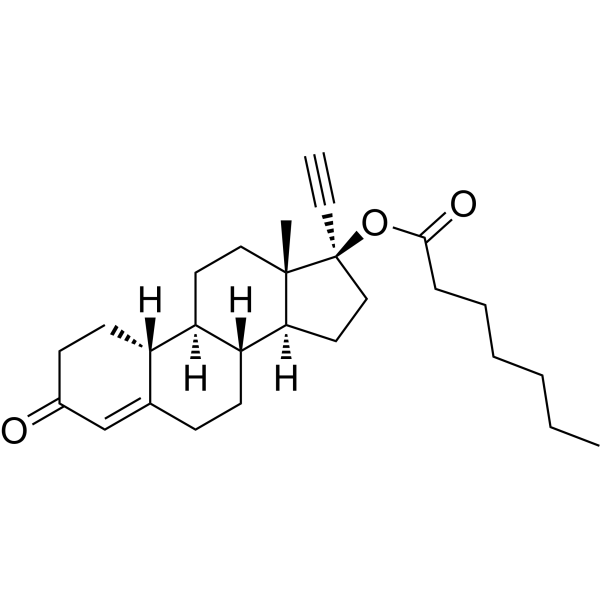
Norethisterone enanthateParenteral Progestogen -
HY-N0437R
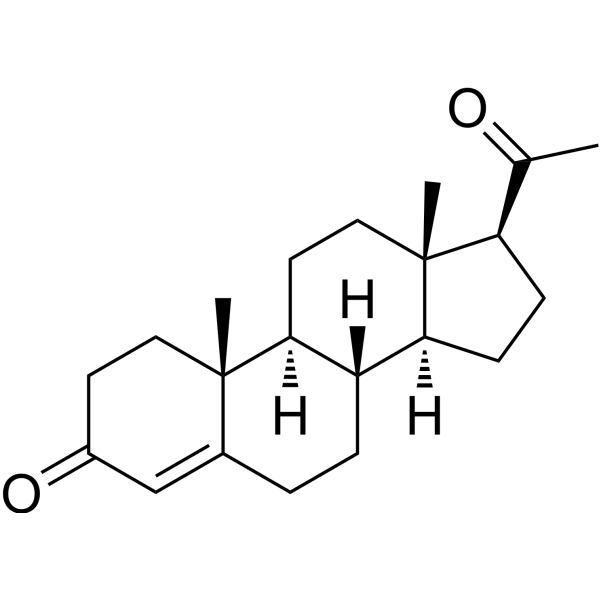
Progesterone (Standard) -
HY-B0742R
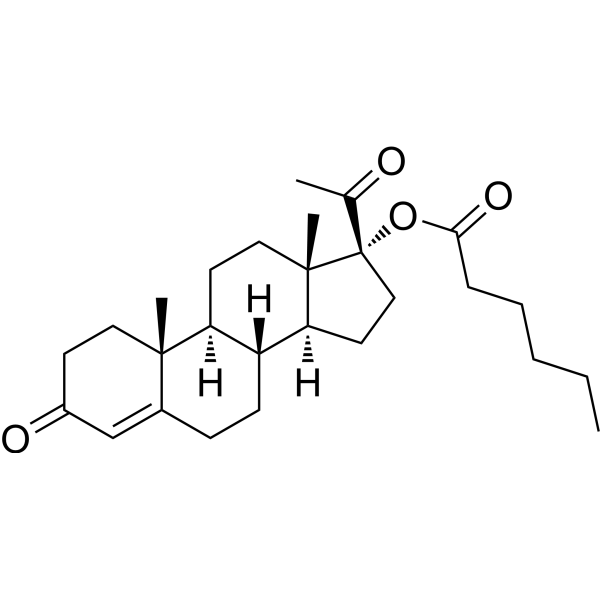
Hydroxyprogesterone caproate (Standard) -
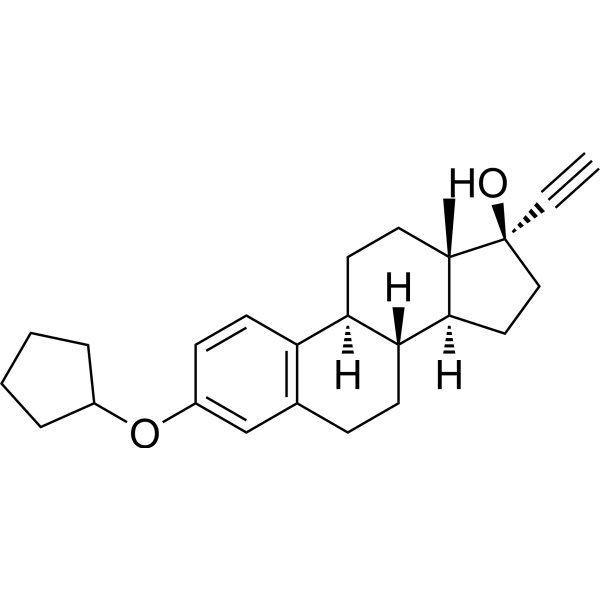
HY-B1012
QuinestrolSynthetic Estrogen -
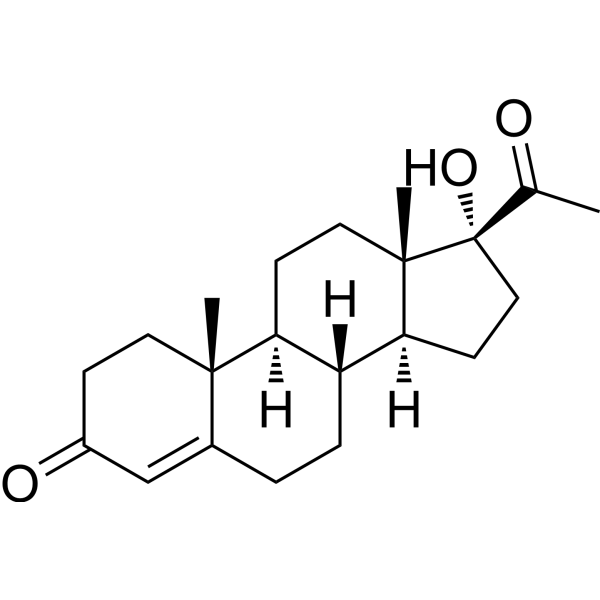
HY-B0891
17α-HydroxyprogesteroneSteroid Hormone -
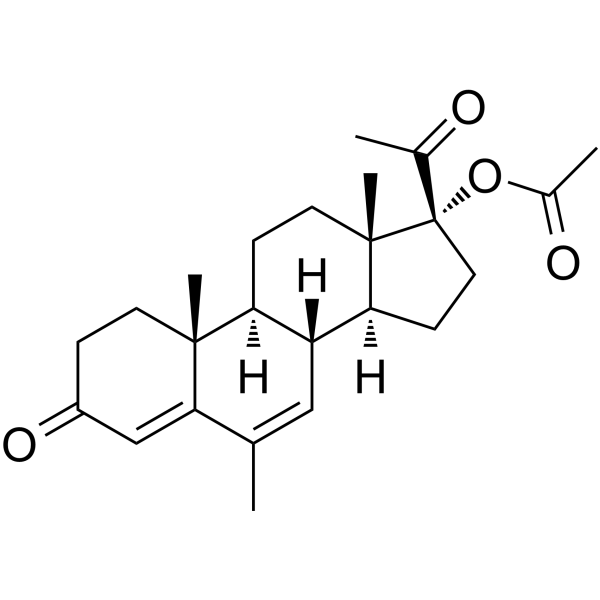
HY-13676
Megestrol acetateProgesteronal Agent -
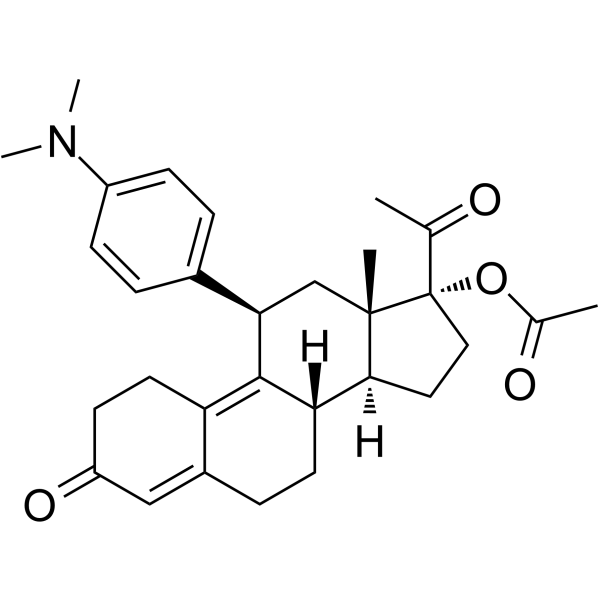
HY-16508
Ulipristal acetateSelective Progesterone Receptor Modulator
All Endogenous Metabolite Isoforms
More

Biological Activity
Description
In Vitro
Norethynodrel (10-100 μM; 20 h) weakly inhibits Sprague-Dawley rat hepatic microsomal pentobarbital hydroxylation (Ki=24 μM), aminopyrine N-demethylation, and aniline p-hydroxylation in vitro, with greater inhibition observed at 100 μM than at 10 μM[3].
Norethynodrel (10-100 μM) acts as a Type I substrate for Sprague-Dawley rat hepatic microsomal cytochrome P-450, exhibiting a spectral dissociation constant (Ks) of 24 μM and a maximum difference absorbance (ΔAmax) of 0.029[3].
MedChemExpress (MCE) has not independently confirmed the accuracy of these methods. They are for reference only.
In Vivo
Norethynodrel (10-50 mg/kg; p.o.; single dose) significantly increases pentobarbital-induced sleep duration in male Sprague-Dawley rats, with sleep times of 134 minutes and 221 minutes respectively, indicating inhibition of hepatic pentobarbital metabolism[3].
Norethynodrel (10-50 mg/kg; p.o.; daily; 4 days) does not induce hepatic microsomal enzymes in male Sprague-Dawley rats, but significantly reduces daily body weight gain[3].
Norethynodrel (165 μg/kg/day; s.c.; continuous; 20 weeks) contributes a minor, statistically significant attenuation of isoproterenol-induced heart rate increases in female rats at specific time points, with ethinyl estradiol driving the primary attenuation effect[4].
MedChemExpress (MCE) has not independently confirmed the accuracy of these methods. They are for reference only.
-
Animal Model:A/J Mice (female, virgin, initial weight 15-25 g, spontaneous mammary tumor model)[2]
-
Dosage:500 μg/20 g body weight (weeks 1-2); 250 μg/20 g body weight (weeks 3-5); 125 μg/20 g body weight (remainder up to 106 weeks)
-
Administration:s.c.; twice weekly; up to 106 weeks
-
Result:Reduced mean body weight throughout treatment compared to controls.
Increased mammary gland development mean score to 3.86.
Induced hyperplastic alveolar nodules (HAN) in over half of treated mice, compared to 1 nodule in controls.
Developed 8 type B mammary adenocarcinomas.
Developed 6 cervical carcinomas.
Caused suppressed ovulation, increased lipid-laden interstitial cells, ceroid pigment deposition, increased mean ovarian weight, and 5 ovarian tubular adenomas in ovaries.
Induced cystic glandular development with endometrial connective tissue hyalinization in uteri, more prominent than in controls.
Caused enlarged zona fasciculata cells with increased lipid content, and ceroid-containing cells at the corticomedullary boundary in all but 2 treated mice in adrenals.
Showed no pituitary cytological alterations or neoplasms.
-
Animal Model:Sprague-Dawley (male, 110-180 g)[3]
-
Dosage:10 mg/kg; 50 mg/kg
-
Administration:p.o.; daily; 4 days
-
Result:Did not alter pentobarbital-induced sleep duration measured 24 hours after the last dose.
Caused no changes in hepatic microsomal protein per gram liver, cytochrome P-450 concentration, or cytochrome P-450 reductase activity.
Significantly decreased daily body weight gain, with weight gain suppressed relative to control rats across the 5-day monitoring period.
-
Animal Model:Blue Spruce Farms rats (Sprague-Dawley derived) (female, 260-320 g)[4]
-
Dosage:165 μg/kg/day
-
Administration:s.c.; continuous; 20 weeks
-
Result:Observed a significant column effect on absolute heart rate at 50 and 60 minutes after isoproterenol administration.
Showed no significant interaction between norethynodrel and ethinyl estradiol throughout the treatment period.
Demonstrated a significant row effect on the change in heart rate from baseline only at 10 minutes post-isoproterenol.
Exhibited a significant interaction between norethynodrel and ethinyl estradiol on change in heart rate from baseline at 10 minutes post-isoproterenol.


Chemical Information
-
CAS No. 68-23-5
-
Appearance Solid
-
Molecular Weight 298.42
-
Formula C20H26O2
-
Color White to off-white
-
SMILES
C#C[C@]1(O)CC[C@@]2([H])[C@]3([H])CCC4=C(CCC(C4)=O)[C@@]3([H])CC[C@]12C
-
Synonyms
Enidrel; SC-4642; NSC 15432
-
Structure Classification
-
Initial Source
-
Shipping
Room temperature in continental US; may vary elsewhere.
-
Storage
Powder -20°C 3 years 4°C 2 years In solvent -80°C 6 months -20°C 1 month


Solvent & Solubility
In Vitro:
DMSO : 1.6 mg/mL (5.36 mM; Need ultrasonic and warming; Hygroscopic DMSO has a significant impact on the solubility of product, please use newly opened DMSO)
Please refer to the solubility information to select the appropriate solvent. Once prepared, please aliquot and store the solution to prevent product inactivation from repeated freeze-thaw cycles.
Storage method and period of stock solution: -80°C, 6 months; -20°C, 1 month. When stored at -80°C, please use it within 6 months. When stored at -20°C, please use it within 1 month.
Please refer to the solubility information to select the appropriate solvent. Once prepared, please aliquot and store the solution to prevent product inactivation from repeated freeze-thaw cycles.
Storage method and period of stock solution: -80°C, 6 months; -20°C, 1 month. When stored at -80°C, please use it within 6 months. When stored at -20°C, please use it within 1 month.
Concentration (start) × Volume (start) = Concentration (final) × Volume (final)


Purity & Documentation
-
Data Sheet (281 KB)
-
SDS (393 KB)
- English - EN (393 KB)
- Français - FR (393 KB)
- Deutsch - DE (393 KB)
- Norwegian - NO (393 KB)
- Español - ES (393 KB)
- Swedish - SV (393 KB)
- Italian - IT (393 KB)
- Korean - KR (393 KB)
- Portuguese - PT (393 KB)
-
Handling Instructions (2659 KB)
References


Complete Stock Solution Preparation Table
Please refer to the solubility information to select the appropriate solvent. Once prepared, please aliquot and store the solution to prevent product inactivation from repeated freeze-thaw cycles.
Storage method and period of stock solution: -80°C, 6 months; -20°C, 1 month. When stored at -80°C, please use it within 6 months. When stored at -20°C, please use it within 1 month.
| Optional Solvent | Concentration Solvent Mass | 1 mg | 5 mg | 10 mg | 25 mg |
|---|---|---|---|---|---|
| DMSO | 1 mM | 3.3510 mL | 16.7549 mL | 33.5098 mL | 83.7745 mL |
| 5 mM | 0.6702 mL | 3.3510 mL | 6.7020 mL | 16.7549 mL |


Norethynodrel Related Classifications
HY-B1341 Related Classifications
 Powered by Bioz
Keywords
- Norethynodrel
- 68-23-5
- Enidrel
- SC-4642
- NSC 15432
- SC4642
- SC 4642
- SC-4642
- NSC15432
- NSC 15432
- NSC-15432
- Endogenous Metabolite
- Progesterone Receptor
- mammary adenocarcinomas
- Sprague-Dawley rat
- hypophyseal neoplasms
- A/J mice
- predecidual cell formation
- cervical carcinoma
- hyperplastic alveolar nodules
- mammary lobulo-alveolar development
- rat hepatic microsomal drug metabolizing enzyme
- endometrial stromal cells
- Inhibitor
- inhibitor
- inhibit