



Malachite green hemioxalate
Based on 1 publication(s) in Google Scholar
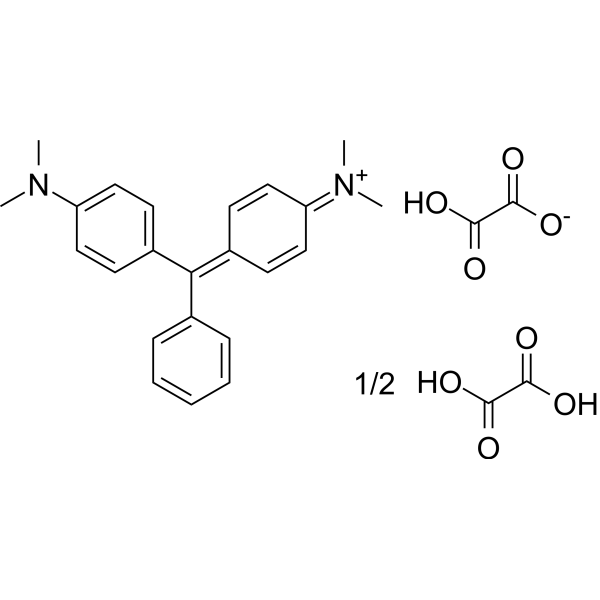
Malachite green hemioxalate (MCCK1) is a triphenylmethane dye which can be used to detect the release of phosphate in enzymatic reactions. Malachite green hemioxalate has antibacterial activity, which is attributed to inhibition of intracellular enzymes, insertion into DNA and/or interaction with cell membranes. Malachite green hemioxalate is also a potent and selective inhibitor of IKBKE, and inhibits its downstream targets such as IκBα, p65 and IRF3. Malachite green hemioxalate exhibits antitumor activity in vitro and in vivo.
For research use only. We do not sell to patients.
- Purity : 98.0%
- CAS No.: 2437-29-8
- Formula: C23H25N2.1/2C2H2O4.C2HO4
- Molecular Weight:463.50
-
Storage:
4°C, protect from light, stored under nitrogen
* In solvent : -80°C, 6 months; -20°C, 1 month (protect from light, stored under nitrogen)

To place orders, for customer services and technical support, please contact: MedChemExpress USA
Tel: 609-228-6898 E-mail: [email protected] [email protected]


-
 Biological Activity
-
Chemical Information
-
Solvent & Solubility
- Protocols
- Purity & Documentation
- References
-
 Help & FAQs


-
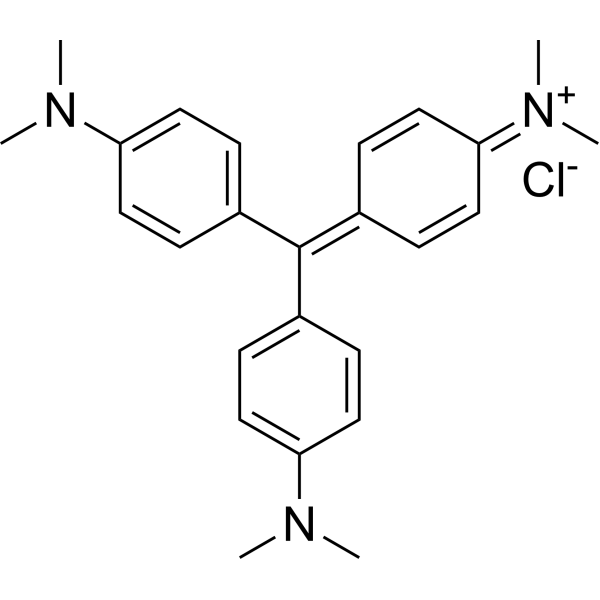
HY-B0324A
Crystal VioletFluorochrome -

HY-DY2001
Crystal Violet (solution)Fluorochrome -

HY-D0162R
Malachite green hemioxalate (Standard)IKBKE Inhibitor -
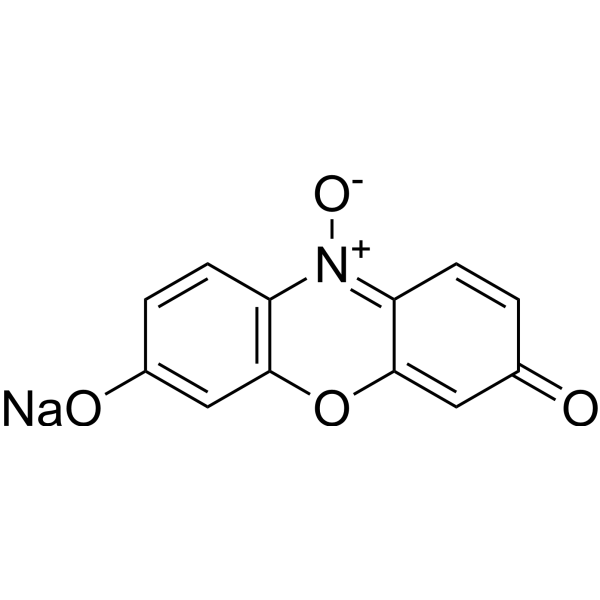
HY-111391
Resazurin sodiumBacterial Inhibitor -
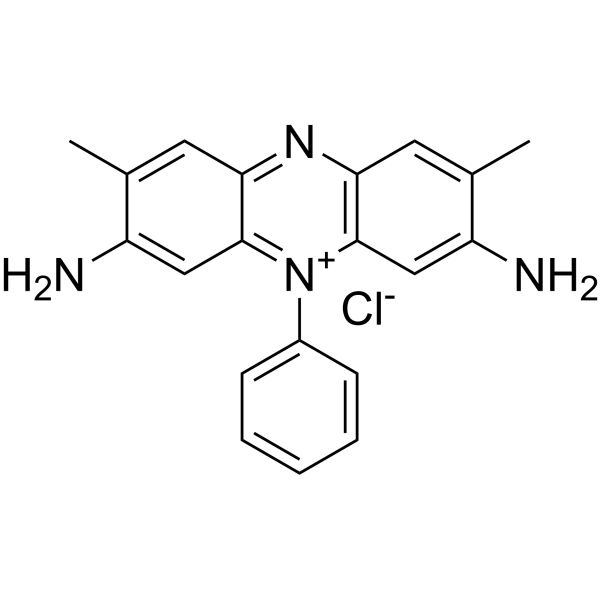
HY-D0215
SafraninSpectroscopic Probe/Indicator -
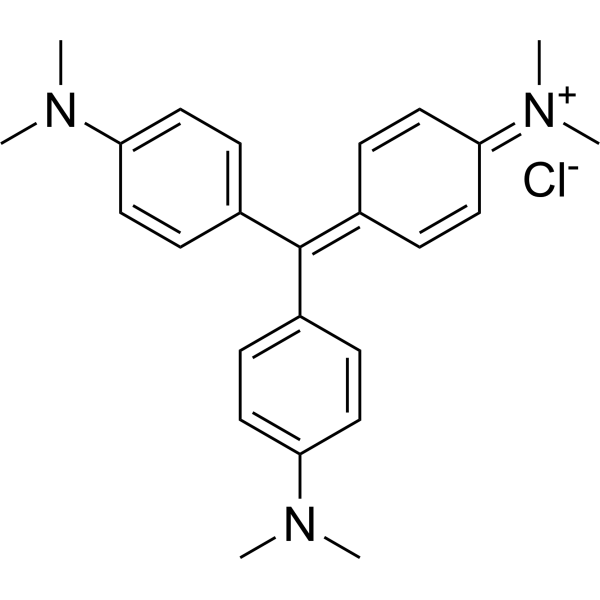
HY-W110794
Crystal violet, IND (0.0-2.0)Biochemical Assay Reagent -
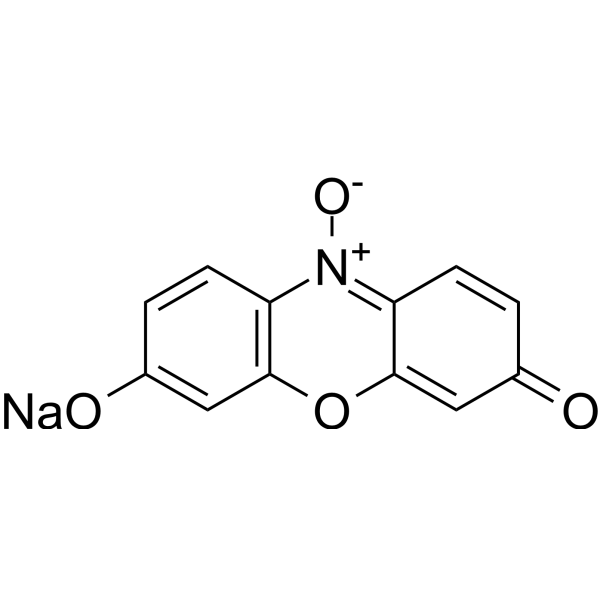
HY-111391A
Resazurin sodium, indicatorBiochemical Assay Reagent -
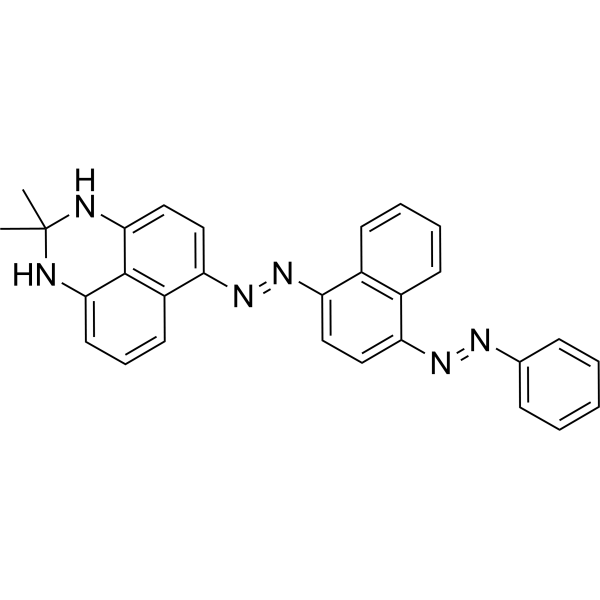
HY-D0213
Sudan Black BFat-soluble Diazo Dye -
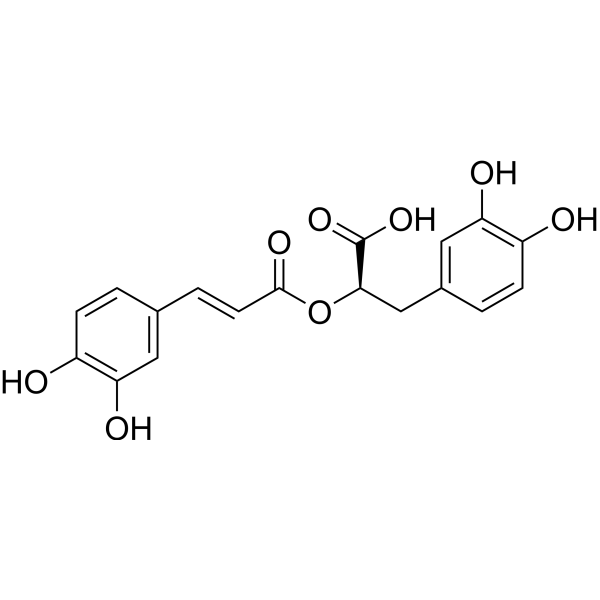
HY-N0529
Rosmarinic acidAnti-Inflammatory Agent -
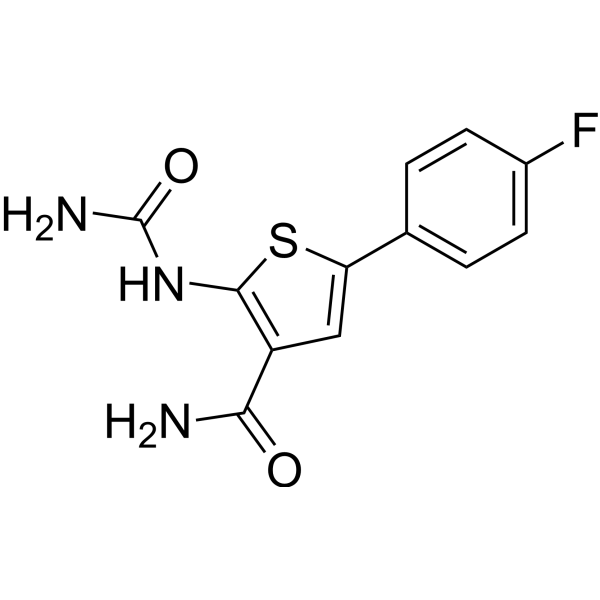
HY-10074
TPCA-1IKK-2 Inhibitor -
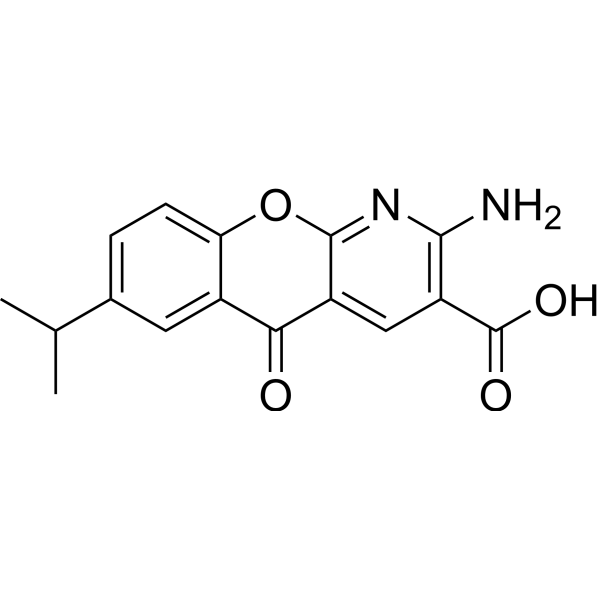
HY-B0713
AmlexanoxIKK Inhibitor -
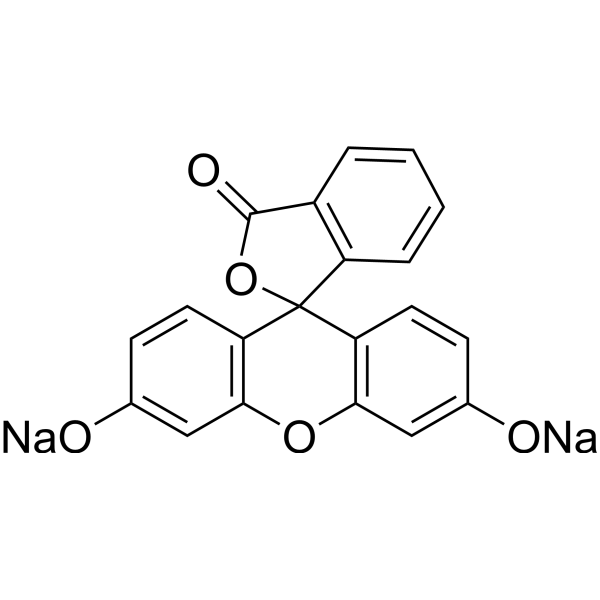
HY-D0208
Fluorescein sodiumFluorescent Tracer
Publications Citing Use of MedChemExpress (MCE) Malachite green hemioxalate
More

Biological Activity
Description
IC50 & Target
IKBKE[3]
In Vitro
Malachite green hemioxalate (5 μM; treated for 12 h) inhibits the growth of pCMV-3B-Myc-IKBKE stably transfected NIH3T3 cells, while having no significant effect on pCMV-3B transfected NIH3T3 cells[13,14,25].
Malachite green hemioxalate (2-5 μM) can effectively inhibit the phosphorylation of MBP by IKBKE in a dose-dependent manner in an in vitro kinase assay using MBP as a substrate[2].
Malachite green hemioxalate (2.5 μM; treated for 2 h) significantly reduces the luciferase activities of NF-κB and IFN-β reporter genes in HEK293 cells transfected with reporter plasmids fused with NF-κB and IFN-β promoters and the luciferase gene[2].
Malachite green hemioxalate (0.1-2.5 μM; treated for 2 h) significantly decreases the activation/phosphorylation levels of p65, IκBα, and IRF3 in a dose-dependent manner in HeLa cells expressing myc - tagged IKBKE[2].
Malachite green hemioxalate (1-5 μM; treated for 72 h) has a significant inhibitory effect on cell lines with high IKBKE expression, resulting in a low cell viability, while having a weak inhibitory effect on cell lines with low IKBKE expression, resulting in a high cell viability in various cancer cell lines including breast, ovarian, lung, and colorectal cancer cell lines[2].
Malachite green hemioxalate (5 μM; treated for 48 h) shows that cell lines with high IKBKE expression have a higher apoptosis rate and a higher level of cleaved PARP in various cancer cell lines including breast, ovarian, lung, and colorectal cancer cell lines through Annexin V/PI flow cytometry and WB detection[2].
The crystal of Malachite green hemioxalate is vivid shiny emerald green and the solution is a similar colour at pH 2. The colour changes with increasing pH to blue and above pH 6 the leucoform precipitates. This colour change has been used in the colorimetric determination of phosphates. If living tissue is added immediately there is no precipitation even through the pH remains neutral, and the solution is stable for at least 24 h[1].
Guide (The following is our recommended protocol. This protocol is only a guide and should be modified according to your specific needs).
The leaves of ryegrass[1]
1. Sections are cut from fresh leaf tissue with a hand-held razor blade and fixed in 1% glutaraldehyde with 0.1% Malachite green hemioxalate for 30 min. The sections are then infiltrated with 1% osmium tetroxide for 10 min, washed and mounted in water.
2. Sections from fresh leaf tissue are stained with a saturated solution of Sudan B Black in 70% ethanol for 5 min, washed in 70% ethanol and mounted in glycerol.
Sections are viewed with a X100 oil planapochromatic objective and X6.3 eyepiece.
Observation with an optical microscope.
MedChemExpress (MCE) has not independently confirmed the accuracy of these methods. They are for reference only.
-
Cell Line:Breast cancer cell lines (BT474, MCF7, MDA-231, MDA-435, MDA-468, T47D), Colon cancer cell lines (HCT116, HT29), Lung cancer cell lines (A549, H292, H1299, H1703, H4006), Ovarian cancer cell lines (OVCAR3, OVCAR 2008), HEK293, HeLa cells
-
Concentration:1 μM, 2 μM, 2.5 μM, 5 μM
-
Incubation Time:72 h
-
Result:Cell lines with high IKBKE expression (such as MDA-468, HT29, OVCAR3) had a significantly lower viability compared to cell lines with low IKBKE expression (such as HCT116, OV2008).
-
Cell Line:MDA-468, HT29, OVCAR3, MCF7, HCT116, OV2008 cells Cell lines with high IKBKE expression showed a higher apoptosis rate.
-
Concentration:5 μM
-
Incubation Time:48 h
-
Result:Cell lines with high IKBKE expression (such as MDA-468, HT29, OVCAR3) had a significantly lower viability compared to cell lines with low IKBKE expression (such as HCT116, OV2008).
-
Cell Line:MDA-468, HT29, OVCAR3, MCF7, HCT116, OV2008 cells Cell lines with high IKBKE expression showed a higher apoptosis rate.
-
Concentration:0.1 μM, 0.5 μM, 1 μM, 2.5 μM
-
Incubation Time:2 h
-
Result:Decreased the phosphorylation levels of p65, IκBα, and IRF3 in HeLa cells expressing myc-tagged IKBKE.
In Vivo
Female and male B6C3F1 mice and Fischer 344 rats are fed up to 1200 ppm Malachite green hemioxalate for 28 days to determine the toxicity and metabolism of the dyes. Hepatocyte vacuolization is present in rats administered Malachite green hemioxalate. Malachite green hemioxalate is metabolized to primary and secondary arylamines in the tissues of rodentse for the adverse effects associated with exposure to malachite green[3].
MedChemExpress (MCE) has not independently confirmed the accuracy of these methods. They are for reference only.
-
Animal Model:8-week-old NOD/SCID mice, tumor cells (Colon cancer (IKBKE-high HT29 and IKBKE-low HCT116) and ovary cancer (IKBKE-high OVCAR3 and IKBKE-low OV2008) cells) were mixed in Matrigel and injected subcutaneously or intracranially[2]
-
Dosage:10 mg/kg
-
Administration:Intraperitoneal injection, every other day for 6 weeks
-
Result:Significantly inhibits the growth of tumors derived from cancer cells with high IKBKE expression, while having no significant inhibitory effect on the growth of tumors derived from cancer cells with low IKBKE expression.
Significantly promoted apoptosis of IKBKE-high xenograft tumor cells, as indicated by increased TUNEL-positive cells and higher expression of Caspase-3, and also suppressed the proliferation of these cells.


Chemical Information
-
CAS No. 2437-29-8
-
Appearance Solid
-
Molecular Weight 463.50
-
Formula C23H25N2.1/2C2H2O4.C2HO4
-
Color Green to dark green
-
SMILES
C/[N+](C)=C1C=C/C(C=C/1)=C(C2=CC=C(N(C)C)C=C2)\C3=CC=CC=C3.O=C(O)C([O-])=O.O=C(O)C(O)=O.[1/2]
-
Synonyms
MCCK1
-
Shipping
Room temperature in continental US; may vary elsewhere.
-
Storage
4°C, protect from light, stored under nitrogen
* In solvent : -80°C, 6 months; -20°C, 1 month (protect from light, stored under nitrogen)


Publications (1)
-
Journal Impact Factor
-
Most Recent
-
Mol Ther Oncolytics
TRIM22 orchestrates the proliferation of GBMs and the benefits of TMZ by coordinating the modification and degradation of RIG-I. [Abstract]2022 Aug 25:26:413-428. PMID: 36159777


Solvent & Solubility
In Vitro:
DMSO : ≥ 10 mg/mL (21.57 mM; Hygroscopic DMSO has a significant impact on the solubility of product, please use newly opened DMSO)
* "≥" means soluble, but saturation unknown.
Please refer to the solubility information to select the appropriate solvent. Once prepared, please aliquot and store the solution to prevent product inactivation from repeated freeze-thaw cycles.
Storage method and period of stock solution: -80°C, 6 months; -20°C, 1 month (protect from light, stored under nitrogen). When stored at -80°C, please use it within 6 months. When stored at -20°C, please use it within 1 month.
Please refer to the solubility information to select the appropriate solvent. Once prepared, please aliquot and store the solution to prevent product inactivation from repeated freeze-thaw cycles.
Storage method and period of stock solution: -80°C, 6 months; -20°C, 1 month (protect from light, stored under nitrogen). When stored at -80°C, please use it within 6 months. When stored at -20°C, please use it within 1 month.
Concentration (start) × Volume (start) = Concentration (final) × Volume (final)


Purity & Documentation
-
Data Sheet (282 KB)
-
SDS (890 KB)
- English - EN (890 KB)
- Français - FR (890 KB)
- Deutsch - DE (890 KB)
- Norwegian - NO (890 KB)
- Español - ES (890 KB)
- Swedish - SV (890 KB)
- Italian - IT (890 KB)
- Korean - KR (890 KB)
- Portuguese - PT (890 KB)
-
Handling Instructions (2659 KB)
References
[2]. Liu T, et, al. Identification of an IKBKE inhibitor with antitumor activity in cancer cells overexpressing IKBKE. Cytokine. 2019 Apr; 116: 78-87. [Content Brief]
[3]. Culp SJ, et al. Toxicity and metabolism of malachite green and leucomalachite green during short-term feeding to Fischer 344 rats and B6C3F1 mice. Chem Biol Interact. 1999 Nov 1;122(3):153-70. [Content Brief]


Complete Stock Solution Preparation Table
Please refer to the solubility information to select the appropriate solvent. Once prepared, please aliquot and store the solution to prevent product inactivation from repeated freeze-thaw cycles.
Storage method and period of stock solution: -80°C, 6 months; -20°C, 1 month (protect from light, stored under nitrogen). When stored at -80°C, please use it within 6 months. When stored at -20°C, please use it within 1 month.
| Optional Solvent | Concentration Solvent Mass | 1 mg | 5 mg | 10 mg | 25 mg |
|---|---|---|---|---|---|
| DMSO | 1 mM | 2.1575 mL | 10.7875 mL | 21.5750 mL | 53.9374 mL |
| 5 mM | 0.4315 mL | 2.1575 mL | 4.3150 mL | 10.7875 mL | |
| 10 mM | 0.2157 mL | 1.0787 mL | 2.1575 mL | 5.3937 mL | |
| 15 mM | 0.1438 mL | 0.7192 mL | 1.4383 mL | 3.5958 mL | |
| 20 mM | 0.1079 mL | 0.5394 mL | 1.0787 mL | 2.6969 mL |


Malachite green hemioxalate Related Classifications
HY-D0162 Related Classifications
 Powered by Bioz