



Ketohexokinase
KHK
Ketohexokinase (KHK), a member of the ribokinase superfamily of kinases, catalyzes the conversion of fructose to fructose-1-phosphate in an ATP- and K+- dependent manner. This reaction is the rate-limiting first step in the fructose metabolic pathway. The Ketohexokinase gene gives rise to two isoforms, KHK-A and KHK-C, through alternative splicing. KHK-C, mainly expressed in the liver and small intestine, is responsible for the majority of fructose metabolism in these tissues, playing a key role in normal fructose-induced lipogenesis and other metabolic processes. In contrast, KHK-A, ubiquitously expressed in most tissues, has a relatively low enzymatic activity for fructose phosphorylation under physiological conditions. Dysregulation of Ketohexokinase activity, especially over-activation in the context of high fructose intake, is closely associated with a variety of metabolic disorders, including obesity, diabetes, non-alcoholic fatty liver disease (NAFLD), and non-alcoholic steatohepatitis (NASH) [1][2][3].
References:
- [1]. Kim J, et al. Ketohexokinase-A acts as a nuclear protein kinase that mediates fructose-induced metastasis in breast cancer. Nat Commun. 2020 Oct 28;11(1):5436. [Content Brief]
- [2]. Gutierrez JA, et al. Pharmacologic inhibition of ketohexokinase prevents fructose-induced metabolic dysfunction. Mol Metab. 2021 Jun;48:101196. [Content Brief]
- [3]. Diggle CP, et al. Ketohexokinase: expression and localization of the principal fructose-metabolizing enzyme. J Histochem Cytochem. 2009 Aug;57(8):763-74. [Content Brief]
Ketohexokinase Isoform Specific Products
All Product Categories
-
Ketohexokinase Related Products (17)
Related Products (17)

-
Ketohexokinase Isoform Comparison
- 1
-
KHK-IN-1 hydrochloride
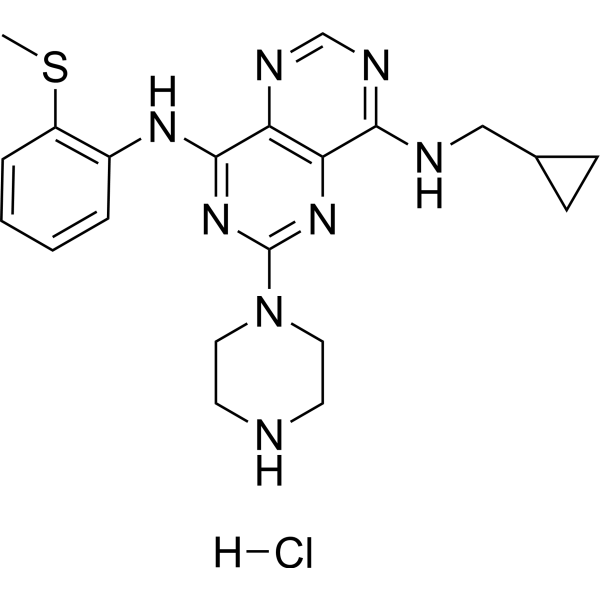 0 ImagesKHK-IN-1 hydrochloride (compound 8) is a selective and cell membrane permeable ketohexokinase (KHK) inhibitor (IC50=12 nM; F=34%). KHK-IN-1 hydrochloride inhibits the production of F1P in HepG2 cell lysates (IC50=400 nM). KHK-IN-1 hydrochloride has potential for the study of diabetes and obesity.
-
KHK-IN-2
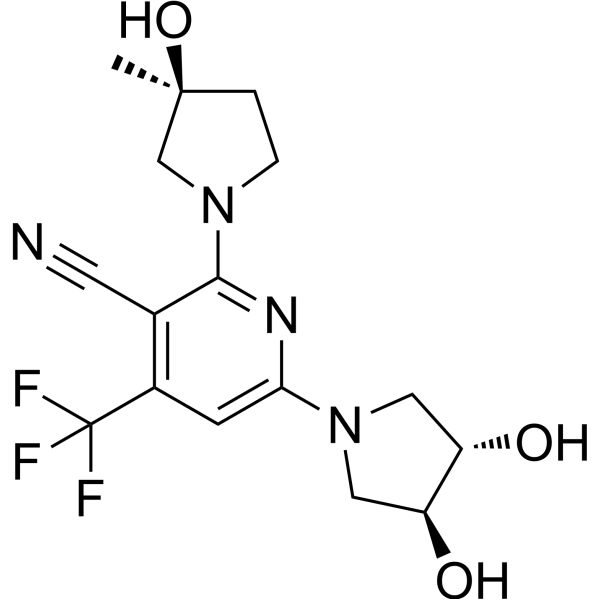 0 ImagesKHK-IN-2 is a potent and selective ketohexokinase (KHK) inhibitor with an IC50 of 0.45 μM.
-
LY3522348
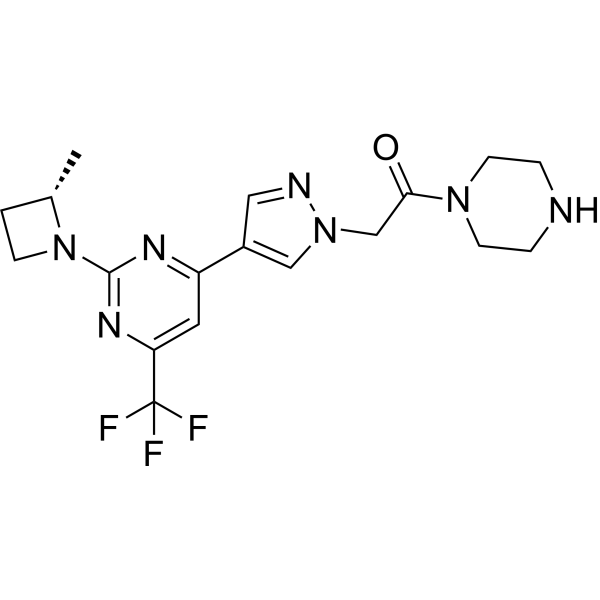 0 ImagesSynonyms: KHK-IN-3KHK-IN-3 (Example 1) is a ketohexokinase (KHK) inhibitor. KHK-IN-3 can be used in the study of kidney disease, nonalcoholic steatohepatitis (NASH), diabetes and heart failure. KHK is a rate-limiting enzyme and fructokinase involved in fructose metabolism. KHK catalyzes the phosphorylation of fructose to fructose-1-phosphate (FIP) at the expense of ATP. The lack of feedback inhibition of fructose metabolism triggers the accumulation of downstream intermediates such as lipogenesis, gluconeogenesis, and oxidative phosphorylation.
-
PF-06835919
 0 ImagesSynonyms: Ketohexokinase inhibitor 1PF-06835919 (Ketohexokinase inhibitor 1) is a ketohexokinase (KHK) inhibitor, with IC50 values of 0.028 μM and 0.17 μM against human KHK-C and KHK-A, respectively, and an IC50 value of 0.21 μM against rat KHK. PF-06835919 blocks fructose (HY-N0395) phosphorylation and fructose metabolism. PF-06835919 can be used for research on metabolic dysfunction-associated steatotic liver disease, type 2 diabetes, hereditary fructose intolerance, and related conditions.
-
BI-9787
 0 ImagesBI-9787 is a zwitterionic inhibitior for ketohexokinase, with an IC50 of 12 and 12.8 nM for hKHK-A and hKHK-C. BI-9787 exhibits good metabolic stability in rat hepatocyte and good pharmacokinetic characteristics in rats.
-
KHK-IN-1
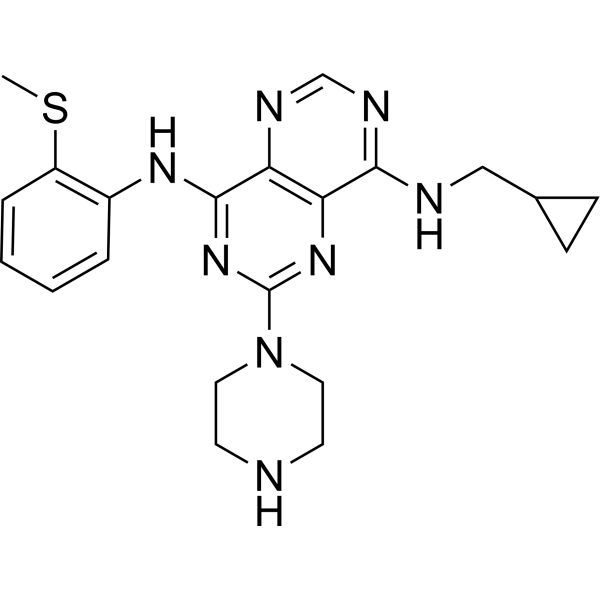 0 ImagesKHK-IN-1 (compound 8) is a selective and cell membrane permeable ketohexokinase (KHK) inhibitor (IC50=12 nM; F=34%). KHK-IN-1 inhibits the production of F1P in HepG2 cell lysates (IC50=400 nM). KHK-IN-1 has potential for the study of diabetes and obesity.
-
(αR)-BI-9787
 0 Images(αR)-BI-9787 is the epimer of BI-9787 (HY-161993). BI-9787 is a zwitterionic inhibitior for ketohexokinase.
-
GS-1291269
 0 ImagesCat. No.: HY-180921CAS No.: 2845278-33-1GS-1291269 is a potent and neutral ketohexokinase (KHK) inhibitor, with IC50s of 0.38 and 2.1 nM against KHK-C and KHK-A, respectively. GS-1291269 demonstrates liver and kidney fructose-1-phosphate (F1P) reduction in a fructose challenge model in rats. GS-1291269 can be used for kidney disease and metabolic-dysfunction-associated steatotic liver disease (MASLD) research.
-
Senvesiran sodium
 0 ImagesCat. No.: HY-177664ASenvesiran sodium, a siRNA, is a ketohexokinase synthesis reducer.
-
Senvesiran sodium scrambled negative control
 0 ImagesCat. No.: HY-177664BSenvesiran sodium scrambled negative control is the sequence scrambled negative control of Senvesiran sodium.
-
Senvesiran
 0 ImagesCat. No.: HY-177664CAS No.: 2894810-55-8Senvesiran, a siRNA, is a ketohexokinase synthesis reducer.
-
KHK-IN-5
 0 ImagesCat. No.: HY-163886CAS No.: 3043939-40-5KHK-IN-5 (Compound 18) is a KHK inhibitor. KHK-IN-5 can be used for the research of nonalcoholic fatty liver disease (NAFLD), nonalcoholic steatohepatitis (NASH), and type 2 diabetes (T2DM).
-
KHK-IN-7
 0 ImagesCat. No.: HY-172610KHK-IN-7 (compound 2) is a ketohexokinase (KHK) inhibitor. KHK-IN-7 can be used for study of metabolic disorders.
-
KHK-IN-8
 0 ImagesCat. No.: HY-208737CAS No.: 3108075-72-2KHK-IN-8 is a selective KHK inhibitor, with an IC50 of 13.0 nM against hKHK-C and an IC50 of 22.7 nM against hKHK-A. KHK-IN-8 is applicable to research on non-alcoholic steatohepatitis, type 2 diabetes and obesity.
-
KHK-IN-6
 0 ImagesCat. No.: HY-162982CAS No.: 3043939-56-3KHK-IN-6 (compund 33) is a KHK inhibitor with IC50 of 0.6 nM.
-
KHK-IN-2 (Standard)
 0 ImagesCat. No.: HY-103478RCAS No.: 2135304-43-5KHK-IN-2 (Standard) is the analytical standard of KHK-IN-2 (HY-103478). This product is intended for research and analytical applications. KHK-IN-2 is a potent and selective ketohexokinase (KHK) inhibitor with an IC50 of 0.45 μM.
-
KHK-IN-4
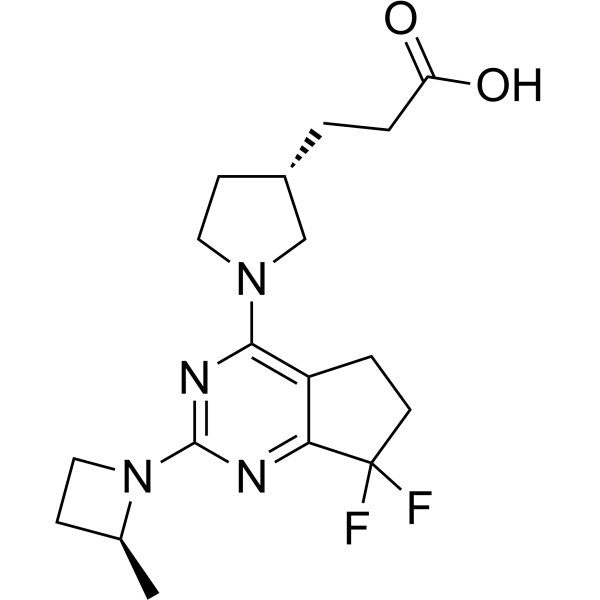 0 ImagesCat. No.: HY-149605CAS No.: 3034829-40-5KHK-IN-4 (compound 14) is a potent ketohexokinase (KHK) inhibitor. KHK-IN-4 can be used for fructose metabolic disease research.
- 1



