
Search Result
Results for "
C-terminal
" in MedChemExpress (MCE) Product Catalog:
-
- HY-P3208
-
|
|
Biochemical Assay Reagents
|
Others
|
|
Endoproteinase Lys-C is a protease that cleaves proteins on the C-terminal side of lysine residues and is commonly used for protein sequencing .
|
-
-
- HY-18637
-
|
|
Deubiquitinase
Apoptosis
|
Neurological Disease
|
|
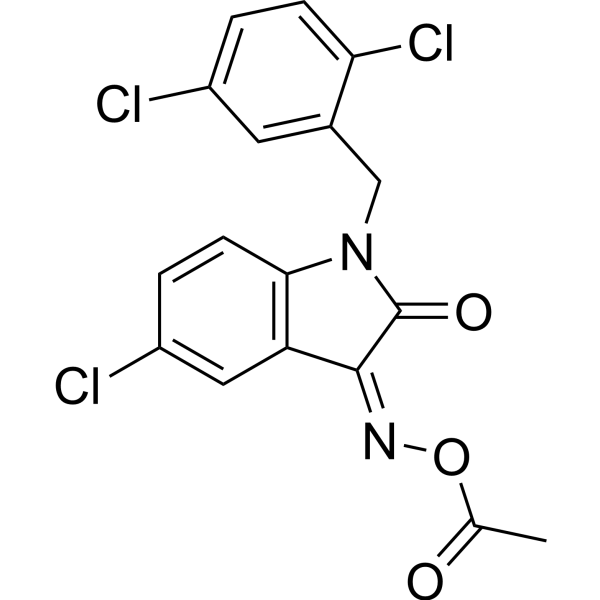
LDN-57444 is a reversible, competitive and site-directed inhibitor of ubiquitin C-terminal hydrolase L1 (UCH-L1), with an IC50 of 0.88 μM and a Ki of 0.40 μM; LDN-57444 also suppresses UCH-L3 activity, with an IC50 of 25 μM.
|
-
-
- HY-P3208A
-
|
|
Biochemical Assay Reagents
|
Others
|
|
Endoproteinase Lys-C (Tag-free) is a protease that cleaves proteins on the C-terminal side of lysine residues and is commonly used for protein sequencing .
|
-
-
- HY-128350
-
|
|
Farnesyl Transferase
|
Cancer
|
|
FGTI-2734 is a RAS C-terminal mimetic dual farnesyl transferase (FT) and geranylgeranyl transferase-1 (GGT-1) inhibitor with IC50s of 250 nM and 520 nM for FT and GGT-1, respectively. FGTI-2734 can prevent membrane localization of KRAS, hence solving KRAS resistance problem and thwarting mutant KRAS patient-derived pancreatic tumors .
|
-
-
- HY-173432
-
|
|
ACSL Family
Ferroptosis
|
Neurological Disease
Cancer
|
|
LIBX-A401 is a selective long-chain acyl-CoA synthetase 4 (ACSL4) inhibitor with a human IC50 values of 0.38 μM and a Kd of 0.72 μM. LIBX-A401 binds to ACSL4 in an ATP-dependent manner, stabilizes the C-terminal domain, alters the fatty acid gate region, and interacts with residues A329 and Q302 within the fatty acid binding site. LIBX-A401 exhibits anti-ferroptosis properties in cells. LIBX-A401 can be used for the researches of cancer and parkinson's disease .
|
-
-
- HY-115467
-
|
|
HSP
|
Metabolic Disease
|
|
MitoBloCK-10 (MB-10) is the first small molecule modulator to attenuate protein-associated motor (PAM) complex activity. MitoBloCK-10 (MB-10) inhibits Tim44 (C-terminal domain) binding to the precursor and to Hsp70 .
|
-
-
- HY-145102
-
|
|
HSP
Apoptosis
|
Cancer
|
|
NCT-58 is a potent inhibitor of C-terminal HSP90. NCT-58 does not induce the heat shock response (HSR) due to its targeting of the C-terminal region and elicits anti-tumor activity via the simultaneous downregulation of HER family members as well as inhibition of Akt phosphorylation. NCT-58 kills Trastuzumab-resistant breast cancer stem-like cells. NCT-58 induces apoptosis in HER2-positive breast cancer cells .
|
-
-
- HY-18638
-
|
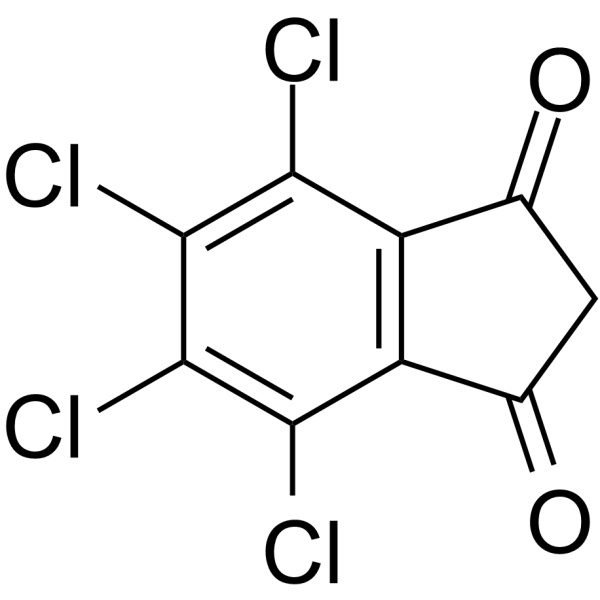
4,5,6,7-Tetrachloroindan-1,3-dione
|
Deubiquitinase
|
Neurological Disease
|
|
TCID (4,5,6,7-Tetrachloroindan-1,3-dione) is a potent and selective neuronal ubiquitin C-terminal hydrolase (UCH-L3) inhibitor with an IC50 of 0.6 μM . TCID diminishes glycine transporter GlyT2 ubiquitination in brainstem and spinal cord primary neurons .
|
-
-
- HY-103076
-
EZ-482
1 Publications Verification
|
Apolipoprotein
|
Neurological Disease
|
|
EZ-482, a novel ligand of apolipoprotein (apoE), binds to sites on apoE in the C-terminal domain with Kds of 5-10 μM for apoE3 and apoE4. EZ-482 binds to apoE4 by a unique N-terminal allosteric effect. EZ482 has the potential for Alzheimer’s diseas .
|
-
-
- HY-128350A
-
|
|
Farnesyl Transferase
γ-Glutamyl Transferase (GGT)
|
Cancer
|
|
FGTI-2734 mesylate is a RAS C-terminal mimetic dual farnesyl transferase (FT) and geranylgeranyl transferase-1 (GGT) inhibitor with IC50s of 250 nM and 520 nM for FT and GGT, respectively. FGTI-2734 mesylate can prevent membrane localization of KRAS, hence solving KRAS resistance problem and thwarting mutant KRAS patient-derived pancreatic tumors .
|
-
-
- HY-P2746
-
|
EC 3.4.2.2
|
Endogenous Metabolite
|
Metabolic Disease
|
|
Carboxypeptidase B, Porcine pancreas (EC 3.4.2.2) is a peptide exonuclease that can specifically degrade peptide chains. Carboxypeptidase B is progressively degraded from the C-terminal to release free amino acids. Carboxypeptidase B hydrolyzes only peptide bonds with basic amino acids (such as arginine and lysine) as C-terminal residues .
|
-
-
- HY-130254
-
|
|
Src
|
Inflammation/Immunology
Cancer
|
|
CSK-IN-1 (compound 13) is a potent, orally active c-terminal Src kinase (CSK) with IC50 values below 3 nM and 4 nM in CSK HTRF and Caliper assay, respectively. CSK-IN-1 shows the ability to increase T cell proliferation induced by T cell receptor signaling .
|
-
-
- HY-129847
-
|
|
Amino Acid Derivatives
|
Others
|
|
Alitame is a nonnutritive high-intensity sweetener, 2000 times sweeter than sucrose with no bitter or metallic aftertaste. Alitame is composed of L-aspartic acid, D-alanine, and a C-terminal amide moiety .
|
-
-
- HY-P1465
-
-
-
- HY-W088929
-
|
|
Amino Acid Derivatives
|
Others
|
|
H-Glu(OtBu)-NH2 hydrochloride is a specialized amino acid derivative that is crucial for the synthesis of peptides bearing a C-terminal glutamine amide.
|
-
-
- HY-P0199
-
-
-
- HY-NP002E
-
|
|
Biochemical Assay Reagents
|
Others
|
|
Porcine Serum Albumin is a serum albumin protein that contains a flexible C-terminal region. Porcine Serum Albumin can serve both as a pork allergen and as a biomarker for detecting pork .
|
-
-
- HY-162919
-
|
|
CDK
Apoptosis
c-Myc
|
Cancer
|
|
YK-2168 is a potent and selective CDK9 inhibitor with an IC50 of 5.9 nM. YK-2168 inhibits phosphorylation of the CDK9 substrate pS2-RNA Pol II C-terminal domain. YK-2168 induces apoptosis in tumor cells, suppresses expression of CDK9-regulated genes including MYC and Mcl1, and inhibits tumor growth in CDX mice models. YK-2168 can be used for the research of cancer, such as leukemia .
|
-
-
- HY-125556
-
|
Cholecystokinin tetrapeptide; CCK-4
|
Cholecystokinin Receptor
|
Metabolic Disease
|
|
Tetragastrin (Cholecystokinin tetrapeptide; CCK-4) is the C-terminal tetrapeptide of gastrin. Tetragastrin can stimulate gastric secretion . Tetragastrin is a Cholecystokinin (CCK-4) receptor agonist . Gastric mucosal protection .
|
-
-
- HY-52101A
-
FMK
4 Publications Verification
|
Ribosomal S6 Kinase (RSK)
|
Cancer
|
|
FMK is a an irreversible RSK2 kinase inhibitor, that covalently modifies the C-terminal kinase domain of RSK.
|
-
-
- HY-E70201
-
|
EC 3.4.2.2 (MS grade)
|
Endogenous Metabolite
|
Others
|
|
Carboxypeptidase B (MS grade) is a peptide exonuclease that can specifically degrade peptide chains. Carboxypeptidase B (MS grade) is progressively degraded from the C-terminal to release free amino acids. Carboxypeptidase B (MS grade) hydrolyzes only peptide bonds with basic amino acids (such as arginine and lysine) as C-terminal residues .
|
-
-
- HY-121687
-
|
α-(Hydroxyimino)benzenepropanoic acid
|
DNA/RNA Synthesis
|
Cancer
|
|
HIPP (α-(Hydroxyimino)benzenepropanoic acid) is an inhibitor for human C-terminal binding protein (CtBP), with IC50 of 745 nM and a Kd of 1.3 μM .
|
-
-
- HY-116749
-
|
BBSKE
|
TrxR
|
Cancer
|
|
Ethaselen (BBSKE) is an orally active, selective thioredoxin reductase (TrxR) inhibitor with IC50s of 0.5 and 0.35 μM for the wild-type human TrxR1 and rat TrxR1, respectively. Ethaselen specifically binds to the unique selenocysteine-cysteine redox pair in the C-terminal active site of mammalian TrxR1. Ethaselen, an organoselenium compound, is a potent antitumor candidate that exerts potent inhibition on non-small cell lung cancer (NSCLC) by targeting TrxR .
|
-
-
- HY-173352
-
|
|
Deubiquitinase
|
Cancer
|
|
USP7 activator 1 (compound MS-8) is an activator of USP7 by engaging the allosteric C-terminal binding pocket of USP7 .
|
-
-
- HY-161781
-
-
-
- HY-P0312
-
|
|
c-Myc
|
Cancer
|
|
c-Myc Peptide (TFA) is a synthetic peptide corresponding to the C-terminal amino acids (410-419) of human c-myc protein, and participates in regulation of growth-related gene transcription.
|
-
-
- HY-P0144
-
|
|
CD47
Apoptosis
|
Inflammation/Immunology
|
|
Thrombospondin-1 (1016-1023) (human, bovine, mouse), is the C-terminal end of the native sequence of Thrombospondin-1 (TSP-1), is a CD47 agonist peptide .
|
-
-
- HY-P2980
-
|
EC 3.4.2.1
|
Endogenous Metabolite
|
Others
|
|
Carboxypeptidase A, Bovine pancreas (EC 3.4.2.1) is a zinc-containing metalloprotease, is often used in biochemical studies. Carboxypeptidase A catalyzes the hydrolysis of the peptide bonds that are adjacent to the C-terminal end of a polypeptide chain. Carboxypeptidase A is a prototypical enzyme for metalloproteases that plays important roles in biological systems .
|
-
-
- HY-157508
-
|
|
p97
|
Others
|
|
VCP Activator 1 is a VCP activator that dose-dependently stimulates VCP ATPase activity. VCP Activator 1 binds an allosteric pocket near the C-terminus. In addition, VCP Activator 1 binding site can also be occupied by a phenylalanine residue in the VCP C-terminal tail .
|
-
-
- HY-E70574
-
|
|
Biochemical Assay Reagents
|
Others
|
|
Trypsin/Lys-C complex protease (MS grade) combines Trypsin and Lys-C, two recombinant proteases, to achieve efficient peptide bond hydrolysis. Trypsin specifically cleaves the C-terminal peptide bonds of arginine (R) and lysine (K), while Lys-C specifically cleaves the C-terminal peptide bonds of lysine (K). This combination overcomes issues such as the slower digestion rate of lysine and arginine by rTrypsin, PTM changes on lysine, or hydrophobic C-termini (such as proline) that can lead to missed cleavage. Trypsin/Lys-C complex protease (MS grade) can be used to process complex protein samples that are difficult to enzymatically digest. Trypsin/Lys-C complex protease (MS grade) can be used for protein characterization, single-cell proteomics and large cohort proteomics studies.
|
-
-
- HY-P1845
-
|
|
Amino Acid Derivatives
|
Neurological Disease
|
|
PACAP-38 (31-38), human, mouse, rat is a fragment containing the C-terminal 31-38 fragment of PACAP (1-38), human, ovine, rat (HY-P0221). PACAP-38 (31-38), human, mouse, rat does not bind to the PACAP receptor .
|
-
-
- HY-P5124
-
|
KLVFF
|
Amyloid-β
|
Neurological Disease
|
|
β-Amyloid peptide(16-20) is a amino acid sequences (KLVFF) of Amyloid-β (Abeta). β-Amyloid peptide(16-20) is an effective inhibitor of Abeta fibril formation, with RG-/-GR-NH2 residues added at N- and C-terminal ends to aid solubility) .
|
-
-
- HY-N1455
-
|
Panaxynol; Carotatoxin
|
HSP
Apoptosis
|
Cancer
|
|
Falcarinol (Panaxynol) is a natural, orally active Hsp90 inhibitor targeting both the N-terminal and C-terminal of Hsp90 with limited toxicities. Falcarinol (Panaxynol) induces apoptosis . Falcarinol is a click chemistry reagent, it contains an Alkyne group and can undergo copper-catalyzed azide-alkyne cycloaddition (CuAAc) with molecules containing Azide groups.
|
-
-
- HY-P3101
-
|
|
GCGR
|
Cardiovascular Disease
Metabolic Disease
|
|
GLP-1(28-36)amide, a C-terminal nonapeptide of GLP-1, is a major product derived from the cleavage of GLP-1 by the neutral endopeptidase (NEP). GLP-1(28-36)amide is an antioxidant and targets to mitochondrion, inhibits mitochondrial permeability transition (MPT). GLP-1(28-36)amide has anti-diabetic and cardioprotection effects .
|
-
-
- HY-P1492
-
-
-
- HY-12989
-
-
-
- HY-W015461
-
|
DL-α-Aminocaprylic acid; DL-2-Aminocaprylic acid
|
Bacterial
|
Infection
|
|
2-Aminooctanoic acid (DL-α-Aminocaprylic acid) is a fatty acid with an amino functional group that can be directly coupled at both the C-terminal and N-terminal with antimicrobial peptides (AMP) derived from lactoferrin B to enhance antibacterial activity .
|
-
-
- HY-115539
-
|
|
Wnt
β-catenin
Histone Acetyltransferase
|
Cancer
|
|
Windorphen is a Wnt/β-catenin signal inhibitor that specifically targets the function of the c-terminal transactivation domain of β-catenin-1 but not β-catenin-2. Windorphen selectively targets p300, disrupting the association of the mammalian β-catenin with p300 but not CBP .
|
-
-
- HY-P1465A
-
-
-
- HY-P3418
-
|
|
CCR
ERK
|
Inflammation/Immunology
|
|
CKLF1-C27, a C-terminal peptide of CKLF1, binds to CCR4 receptor and activates ERK1/2 pathway. CKLF1-C27 can abrogate the effect of CKLF1 on cells by competing for CCR4 receptor. CKLF1-C27 shows great effect on promoting proliferation on HUVECs. CKLF1-C27 has the potential for psoriasis research .
|
-
-
- HY-P10300
-
|
IL-8 (54-72)
|
CXCR
|
Inflammation/Immunology
|
|
CXCL8 (54-72) is a C-terminal peptide based on the chemokine CXCL8. CXCL8 (54-72) has an interaction between a long and highly positively charged C-terminal region and a negative charge on the GAG that binds to the GAG. CXCL8 (54-72) can inhibit the adhesion and migration of neutrophils and adhesion of endothelial cells. CXCL8 (54-72) can be used to study chemokines in inflammatory response .
|
-
-
- HY-D1726
-
|
|
Deubiquitinase
|
Cancer
|
|
8RK59, a Bodipy probe, is a potent UCHL1 (ubiquitin C-terminal hydrolase L1) inhibitor, with an IC50 close to 1 μM. 8RK59 could penetrate and label living cells. BodipyFL-alkyne is coupled to the azide of 8RK64 (HY-148254) using copper(I)-mediated click chemistry, resulting in compound 8RK59 .
|
-
-
- HY-P10078
-
-
-
- HY-161378
-
|
|
Deubiquitinase
|
Cancer
|
|
UCHL1-IN-1 (Compound 46) is an inhibitor for Ubiquitin C-terminal Hydrolase L1 (UCHL1), with an IC50 of 5.1 μM. UCHL1-IN-1 can be used for cancer research .
|
-
-
- HY-NP002H
-
|
|
Biochemical Assay Reagents
|
Others
|
|
Porcine Serum Albumin (globulin free) is a serum albumin protein containing a flexible C-terminal region. Porcine Serum Albumin (globulin free) induces the production of anti-PSA IgG antibodies in rats and triggers severe immune responses upon secondary administration .
|
-
-
- HY-P1845A
-
|
|
Amino Acid Derivatives
|
Neurological Disease
|
|
PACAP-38 (31-38), human, mouse, rat TFA is a fragment containing the C-terminal 31-38 fragment of PACAP (1-38), human, ovine, rat (HY-P0221). PACAP-38 (31-38), human, mouse, rat TFA does not bind to the PACAP receptor .
|
-
-
- HY-P11345
-
|
|
Biochemical Assay Reagents
|
Others
|
|
VPS35 c-terminal peptide is a peptide that can bind to VPS35. VPS35 c-terminal peptide can be used in immunoprecipitation experiments to specifically elute VPS35 and its interacting proteins, facilitating the identification of VPS35-interacting molecules .
|
-
-
- HY-103323
-
|
|
FAP
|
Others
|
|
Fas C-Terminal Tripeptide is a C-terminal tripeptide of Fas. Fas C-Terminal Tripeptide shows the inhibitory effect on Fas/FAP-1 binding .
|
-
-
- HY-P2932A
-
|
|
Cholecystokinin Receptor
|
Neurological Disease
|
|
Cholecystokinin-33 free acid is an analogue of Cholecystokinin (HY-P2932). C-terminal amidation is important for binding of Cholecystokinin to its receptors, and removing the amide group would decrease Cholecystokinin activity. Cholecystokinin-33 free acid can be used to study C-terminal amidation of Cholecystokinin-33 .
|
-
-
- HY-P2643
-
-
- HY-P3888
-
-
- HY-P3890A
-
|
|
Neurokinin Receptor
|
Neurological Disease
|
|
Substance P (5-11) TFA TFA, the C-terminal heptapeptide of Substance P (HY-P0201), is a neuropeptide. Substance P (5-11) TFA TFA binds to NK-1 tachykinin receptor .
|
-
- HY-P4798
-
|
Human PTHrP(107-111) amide
|
PTHR
|
Others
|
|
Osteostatin (1-5) amide (human, bovine, dog, horse, mouse, rabbit, rat) (Human PTHrP (107-111) amide) is a C-terminal parathyroid hormone-related protein fragment that can inhibit bone resorption .
|
-
- HY-P10247
-
|
|
Mitochondrial Metabolism
|
Neurological Disease
|
|
Amyloid precursor C-terminal peptide is cleaved from the C-terminus of Amyloid Precursor Protein (APP). Amyloid precursor C-terminal peptide accumulation causes mitochondrial morphology alteration and basal mitophagy failure, which indicates that amyloid precursor protein C-terminal peptide may correspond to an etiological trigger of Alzheimer’s disease (AD) pathology .
|
-
- HY-P3901
-
|
|
Somatostatin Receptor
|
Neurological Disease
|
|
[Leu8,D-Trp22,Tyr25] Somatostatin-28 is the analog of Somatostatin-28. Somatostatin-28 is a intestinal peptide containing somatostatin in its C-terminal portion .
|
-
- HY-116254
-
|
|
Farnesyl Transferase
|
Others
|
|
L-739750 is a selective protein farnesyltransferase (PFTase) inhibitor (IC50: 0.4 nM). PFTase utilizes farnesyl diphosphate to farnesylate the cysteine residue of protein substrates having a C-terminal CAAX motif. L-739750 is a selective CAAX peptidomimetic .
|
-
- HY-P1841
-
|
|
Endogenous Metabolite
Apoptosis
|
Metabolic Disease
|
|
Glucagon-Like Peptide (GLP) II, human is a 33-amino acid peptide derived from the C-terminal of proglucagon and mainly produced by the intestinal L cells. Glucagon-Like Peptide (GLP) II, human stimulates intestinal mucosal growth and decreases apoptosis of enterocytes .
|
-
- HY-P11286
-
|
|
Complement System
|
Cancer
|
|
A7RC is a multifunctional peptide used in tumor-targeted therapy, with Cysteine added to the C-terminal of the A7R peptide (sequence: ATWLPPR). A7R (HY-P1663) is a ligand of the NRP-1 receptor, regulating intracellular signal transduction related to tumor vascularization and tumor growth .
|
-
- HY-P5182A
-
|
|
Potassium Channel
|
Inflammation/Immunology
|
|
HsTX1 (TFA) toxin, from the scorpion Heterometrus spinnifer, is a 34-residue, C-terminally amidated peptide cross-linked by four disulfide bridges. HsTX1 (TFA) is an the inhibitor of potassium channel, with IC50 for Kv1.3 of 12 pM and inhibits TEM cell activation and attenuates inflammation in autoimmunity .
|
-
- HY-P2627
-
-
- HY-W269700
-
|
L-Isoleucyl-L-leucine
|
Drug Intermediate
|
Neurological Disease
|
|
Ile-Leu-OH (L-Isoleucyl-L-leucine) is a hydrophobic dipeptide fragment and is a component of the neurotensin C-terminal heptapeptide Pro-Arg-Arg-Pro-Tyr-Ile-LeuOH .
|
-
- HY-P1257
-
|
|
Insulin Receptor
Neurotensin Receptor
|
Metabolic Disease
|
|
Xenin-8, a C-terminal octapeptide, is a biologically active fragment of Xenin. Xenin is a 25-amino acid peptide of the neurotensin/xenopsin family. Xenin-8 stimulates basal insulin secretion and potentiates the insulin response to glucose in a dose-dependent manner (EC50=0.16 nM) .
|
-
- HY-P1766
-
|
|
CGRP Receptor
|
Cardiovascular Disease
|
|
Adrenomedullin (11-50), rat is the C-terminal fragment (11-50) of rat adrenomedullin. Rat adrenomedullin induces a selective arterial vasodilation via CGRP1 receptors .
|
-
- HY-18205
-
-
- HY-P3890
-
-
- HY-E70660
-
|
|
CDK
|
Cancer
|
|
CDK13/CycK Recombinant Human Active Protein Kinase is a RNA polymerase II C-terminal domain kinases. CDK13 interacts with the splicing factor SRSF1 and to regulate alternative splicing of HIV .
|
-
- HY-P10612A
-
|
|
Bacterial
|
Infection
Inflammation/Immunology
|
|
Tetanus toxin (1301-1315) (C. tetani) is a C-terminal peptide fragment of tetanus toxin heavy chain from C. tetani. Tetanus toxin (1301-1315) (C. tetani) can be used for the researches of infection and immunology .
|
-
- HY-171755
-
|
|
HSP
|
Cancer
|
|
Hsp90-IN-40 (Compound 15b) is a heat shock protein 90 (Hsp90) C-terminal inhibitor. Hsp90-IN-40 exhibits antiproliferative activity against SKBr3 and MCF-7 breast cancer cells (IC50 of 2.57 µM and 2.43 µM, respectively). Hsp90-IN-40 inhibits cancer cell growth by inhibiting the Hsp90 C-terminal function, leading to Hsp90-dependent protein degradation. Hsp90-IN-40 can be used in breast cancer research .
|
-
- HY-D2259
-
|
|
E1/E2/E3 Enzyme
Ligands for E3 Ligase
|
Others
|
|
PFI-7 is a probe, which binds to human GID4 (KD is 79 nM), and antagonizes the binding of Pro/N-degrons. PFI-7 can be utilized in C-terminal to LisH (CTLH) complex research and development of targeted protein degradation .
|
-
- HY-118916
-
|
|
Farnesyl Transferase
|
Cancer
|
|
FTI-2148 is a RAS C-terminal mimetic dual farnesyl transferase (FT-1) and geranylgeranyl transferase-1 (GGT-1) inhibitor with IC50s of 1.4 nM and 1.7 μM, respectively .
|
-
- HY-118916A
-
|
|
Farnesyl Transferase
|
Cancer
|
|
FTI-2148 diTFA is a RAS C-terminal mimetic dual farnesyl transferase (FT-1) and geranylgeranyl transferase-1 (GGT-1) inhibitor with IC50s of 1.4 nM and 1.7 μM, respectively .
|
-
- HY-P3889
-
|
|
Neurokinin Receptor
|
Neurological Disease
|
|
Substance P (6-11) is the C-terminal hexapeptideamide of Substance P (HY-P0201). Substance P (6-11) binds to NK-1 tachykinin receptor. Substance P (6-11) shows depolarization of motoneurons and a hypotensive effect .
|
-
- HY-170553
-
|
|
α-synuclein
|
Neurological Disease
|
|
ZPD-2 inhibits the aggregation of C-terminally truncated and full-length α-synuclein. ZPD-2 inhibits the formation and fibrillation of α-Syn, thereby preventing its propagation. ZPD-2 can be used in research of Parkinson's disease .
|
-
- HY-E70659
-
|
|
CDK
|
Cancer
|
|
CDK12/CycK Recombinant Human Active Protein Kinase is a cyclin-dependent kinase that phosphorylates the C-terminal domain (CTD) of RNA polymerase II (Pol II), thereby regulating different phases of the transcription cycle from transcription initiation to elongation and termination .
|
-
- HY-P10828
-
|
|
Virus Protease
|
Infection
Inflammation/Immunology
|
|
MAPI is a polypeptide irreversible 3C cysteine protease (SV3CP) inhibitor. MAPI inhibits SV3CP by covalently binding its C-terminal Michael-acceptor extension to the active site thiol of SV3CP Cys 139. MAPI is promising for research of noroviruses infection .
|
-
- HY-P5923
-
|
|
CXCR
|
Inflammation/Immunology
|
|
E70K is a CXCL8 C-terminal peptide with a substitution of glutamic acid (E) 70 with lysine (K). E70K can reduce neutrophil adhesion and migration during inflammation .
|
-
- HY-P1257A
-
|
|
Neurotensin Receptor
|
Metabolic Disease
|
|
Xenin-8 TFA, a C-terminal octapeptide, is a biologically active fragment of Xenin. Xenin is a 25-amino acid peptide of the neurotensin/xenopsin family. Xenin-8 TFA stimulates basal insulin secretion and potentiates the insulin response to glucose in a dose-dependent manner (EC50=0.16 nM) .
|
-
- HY-P10527
-
|
|
Src
|
Others
|
|
CSK substrate is a specific substrate for C-terminal Src kinase (CSK), which binds CSK and downregulates the Src family members. CSK substrate preferentially phosphorylates certain amino acid residues that are distinct from the conserved Src C-terminal sequence .
|
-
- HY-P3101A
-
|
|
GCGR
|
Cardiovascular Disease
Metabolic Disease
|
|
GLP-1(28-36)amide TFA, a C-terminal nonapeptide of GLP-1, is a major product derived from the cleavage of GLP-1 by the neutral endopeptidase (NEP). GLP-1(28-36)amide TFA is an antioxidant and targets to mitochondrion, inhibits mitochondrial permeability transition (MPT). GLP-1(28-36)amide TFA has anti-diabetic and cardioprotection effects .
|
-
- HY-P3418A
-
|
|
CCR
ERK
|
Inflammation/Immunology
|
|
CKLF1-C27, a C-terminal peptide of CKLF1, binds to CCR4 receptor and activates ERK1/2 pathway. CKLF1-C27 can abrogate the effect of CKLF1 on cells by competing for CCR4 receptor. CKLF1-C27 shows great effect on promoting proliferation on HUVECs. CKLF1-C27 has the potential for psoriasis research .
|
-
- HY-P10262
-
-
- HY-P4746
-
|
|
Bacterial
|
Infection
|
|
LL-37 FKR is the C-terminal fragment of LL-37. LL-37 FKR plays an important role in antibacterial performance .
|
-
- HY-P1896
-
|
|
HSP
|
Infection
Neurological Disease
Cancer
|
|
Hsp70-derived octapeptide is a conserved octapeptide of the C-terminal end of Hsp70, which physically interacts with tetratricopeptide repeat (TPR) motifs .
|
-
- HY-P3578
-
|
|
Insulin Receptor
|
Endocrinology
|
|
Gastric Inhibitory Polypeptide (1-30), porcine lacks the C-terminal 12 amino acid residues of natural gastric inhibitory polypeptide (GIP), exhibits biologic activity by potentiating the release of insulin and somatostatin .
|
-
- HY-P11185
-
|
|
HSP
|
Cancer
|
|
Hsp90β decapeptide is a C-terminal peptide of Hsp90β, which contains conserved TPR-domain MEEVD. Hsp90β decapeptide is able to bind tightly the Tah1 protein with a Kd of 1.0 μM .
|
-
- HY-P1191
-
|
TI-JIP; JIP-1 peptide; JIPtide
|
JNK
|
Others
|
|
JIP-1(153-163) (TI-JIP) is a peptide inhibitor of c-JNK, based on residues 153-163 of JNK-interacting protein-1 (JIP-1) (Modifications: Phe-11 = C-terminal amide) .
|
-
- HY-169198
-
|
|
α-synuclein
|
Neurological Disease
|
|
GSD-16-24 is a lead compound that binds directly to the C-terminal IDR of α-syn monomers and fibrils, thereby preventing fibrils from binding to the receptor. GSD-16-24 can be used in Parkinson's research .
|
-
- HY-P5202
-
|
|
Amino Acid Derivatives
|
Others
|
|
H-Gly-Gly-Arg-AMC is a fluorogenic peptidyl-AMC substrate containing C-terminal 7-amino-4-methylcoumarin (AMC). H-Gly-Gly-Arg-AMC is a suitable for monitoring continuous thrombin generation (TGT) .
|
-
- HY-P1191A
-
|
TI-JIP TFA; JIP-1 peptide TFA; JIPtide TFA
|
JNK
|
Others
|
|
JIP-1(153-163) TFA (TI-JIP TFA) is a peptide inhibitor of c-JNK, based on residues 153-163 of JNK-interacting protein-1 (JIP-1) (Modifications: Phe-11 = C-terminal amide) .
|
-
- HY-P10290
-
|
|
Neuropeptide Y Receptor
|
Neurological Disease
|
|
Neuropeptide Y (human) free acid is the deamidated form of Neuropeptide Y (human, rat, mouse) (HY-P0198). The amidation of Neuropeptide Y C-terminal tyrosine is critical for its function. Non-amidated Neuropeptide Y fails to elicit G protein signaling .
|
-
- HY-P5323
-
|
|
Bacterial
|
Others
|
|
Dabcyl-AGHDAHASET-Edans is a biological active peptide. (This is a type I signal peptidase (SPase1) substrate peptide labeled with EDANS/ DABCYL FRET pair, and contains a crucial cleavage site derived from the C-terminal region of the Staphylococcus epidermidis pre-SceD protein. Abs/Em = 340/490 nm.)
|
-
- HY-P5182
-
|
|
Potassium Channel
|
Inflammation/Immunology
|
|
HsTX1, from the scorpion Heterometrus spinnifer, is a 34-residue, C-terminally amidated peptide cross-linked by four disulfide bridges. HsTX1, an the inhibitor of potassium channel, with IC50 for Kv1.3 of 12 pM inhibits TEM cell activation and attenuates inflammation in autoimmunity .
|
-
- HY-162478
-
|
|
Phosphatase
|
Cancer
|
|
GR-28 is an inhibitor for small C-terminal domain phosphatase 1 (SCP1). GR-28 inhibits the transcriptional activity of repressor element-1 silencing transcription factor (REST), inhibits the proliferation of glioblastoma cells (IC50 is 2.9 and 10.1 µM, for cells A172 and T98G) .
|
-
- HY-117192
-
|
|
HSP
Fungal
|
Infection
|
|
NSC145366 monohydrochloride is a Hsp90 C-terminal inhibitor. NSC145366 monohydrochloride directly interacts with the C-terminus of Hsp90 and inhibits its chaperone activity. NSC145366 monohydrochloride strongly inhibits the growth of Saccharomyces cerevisiae cog7Δ and cog8Δ strains .
|
-
- HY-P2746A
-
|
|
Carboxypeptidase
|
Others
|
|
Carboxypeptidase-B rat (EC 3.4.17.2) catalyzes the hydrolysis of the basic amino acids, lysine, arginine, and ornithine from the C-terminal position of polypeptides. Carboxypeptidase-B rat (EC 3.4.17.2) may be used for sequence analysis by successive cleavage of C-terminal basic amino acids.
|
-
- HY-103076R
-
|
|
Apolipoprotein
Reference Standards
|
Neurological Disease
|
|
EZ-482 (Standard) is the analytical standard of EZ-482 (HY-103076). This product is intended for research and analytical applications. EZ-482, a novel ligand of apolipoprotein (apoE), binds to sites on apoE in the C-terminal domain with Kds of 5-10 μM for apoE3 and apoE4. EZ-482 binds to apoE4 by a unique N-terminal allosteric effect. EZ482 has the potential for Alzheimer’s diseas .
|
-
- HY-P2759A
-
|
|
TrxR
|
Metabolic Disease
|
|
Thioredoxin Reductase, E. coli (EC 1.8.1.9) is an E. coli-derived thioredoxin reductase (TrxR) that, compared to mammalian TrxR, lacks the redox active site-the C-terminal -Cys-SeCys-.
|
-
- HY-182277
-
|
|
HIV Integrase
HIV
|
Infection
|
|
GSK-1264 is an HIV-1 integrase inhibitor. GSK-1264 binds to a site spanning the HIV-1 integrase catalytic core domain and C-terminal domain, mediates formation of an open polymer of HIV-1 integrase dimers via inhibitor-bridged contacts between adjacent dimers. GSK-1264 disrupts late-stage HIV replication by interfering with viral particle assembly. GSK-1264 stimulates inappropriate polymerization of HIV-1 integrase. GSK-1264 can be used for the research of HIV infection .
|
-
- HY-E70981
-
|
|
Biochemical Assay Reagents
|
Metabolic Disease
|
|
Alanine Racemase, Bacillus stearothermophilus (EC 5.1.1.1) is involved in alanine, aspartate and D-alanine metabolism. Alanine Racemase, Bacillus stearothermophilus (EC 5.1.1.1) monomer is composed of two domains, an eight-stranded α/β barrel at the N-terminus and a C-terminal domain.
|
-
- HY-183941
-
|
|
PAK
|
Cancer
|
|
SPU-106 is a p21 activated kinase 4 (PAK4) inhibitor with a target IC50 of 21.36 μM. SPU-106 selectively binds to the C-terminal kinase domain of PAK4 to inhibit its kinase activity. SPU-106 inhibits the PAK4/LIMK1/cofilin and PAK4/SCG10 signaling pathways. SPU-106 inhibits invasion of gastric cancer cells and lacks cytotoxicity against cancer cells. SPU-106 can be used for the research of gastric cancer .
|
-
- HY-162832
-
|
|
Amyloid-β
|
Neurological Disease
|
|
Amyloid-β-IN-1 (compound 13) is a synthetic peptide containing the hydrophobic C-terminal region "VVIA-NH2" and its reverse sequence "AIVV-NH2" of Aβ42, which is an Aβ inhibitor. Amyloid-β-IN-1 can inhibit Aβ aggregation and has neuroprotective effects .
|
-
- HY-P5391
-
|
|
Bacterial
|
Others
|
|
LL-37(17-32) is a biological active peptide. (This peptide is an active segment of LL-37, a peptide derived from the C-terminal domain of human cathelicidin antimicrobial peptide. It has been reported that the LL17-32 peptide exhibits reversal effect on ABCG2-mediated multidrug resistance in cancer cell lines.)
|
-
- HY-P0307B
-
|
|
Biochemical Assay Reagents
|
Neurological Disease
|
|
Penetratin-Cys is a cell-penetrating peptide derived from Antennapedia Peptide (HY-P0307) via C-terminal cysteine modification. Penetratin-Cys acts as a cytotoxin and reduces the viability of differentiated neuronal cells. Penetratin-Cys localizes to the perinuclear region and binds to the Golgi apparatus. Penetratin-Cys can be used in research related to neurological disorders .
|
-
- HY-P5461
-
|
|
Bacterial
|
Others
|
|
CHRG01 is a biological active peptide. (CHRG01 is derived from human b-defensin 3 (hBD3) C-terminal amino acids 54 to 67, with all Cys residues substituted with Ser. This substitution removes all disulfide bond linkages within the sequence. CHRG01, like hBD3, displays electrostatic-dependent antimicrobial properties.)
|
-
- HY-P5771
-
|
|
Sodium Channel
|
Neurological Disease
|
|
Jingzhaotoxin-IX, a C-terminally amidated peptide composed of 35 amino acid residues, is a neurotoxin. Jingzhaotoxin-IX inhibits voltage-gated sodium channels (both tetrodotoxin-resistant and tetrodotoxin-sensitive isoforms) and Kv2.1 channel. Jingzhaotoxin-IX has no effect on delayed rectifier potassium channel Kv1.1, 1.2 and 1.3 .
|
-
- HY-P10034
-
|
Pss-PT
|
Endogenous Metabolite
|
Endocrinology
|
|
Pheromonotropin (Pseudaletia separata) (Pss-PT) is an armyworm (Pseudaletia separata) pheromone with the C-terminal pentapeptide FXPRL-amide. Pheromonotropin (Pseudaletia separata) belongs to the PK/PBAN family and stimulates sex pheromone biosynthesis in moths, mediating feeding (intestinal muscle contraction), development (embryonic diapause, pupal diapause, and pupation), and defense against natural enemy insects wait .
|
-
- HY-P5201S
-
|
|
Isotope-Labeled Compounds
|
Others
|
|
VTSEGAGLQLQK-13C6,15N2 is the 13C and 15N labeled VTSEGAGLQLQK. VTSEGAGLQLQK is an amino acid sequence in the C-terminal region of recombinant human alpha-acid glucosidase (rhGAA). VTSEGAGLQLQK can be used to bind anti-drug antibodies (ADA) in plasma and quantitatively analyze the therapeutic effect .
|
-
- HY-W269700S
-
|
L-Isoleucyl-L-leucine-13C6,15N
|
Isotope-Labeled Compounds
Drug Intermediate
|
Neurological Disease
|
|
Ile-(Leu-13C6,15N)-OH TFA is 13C- and 15N-labeled Ile-Leu-OH (HY-W269700). Ile-Leu-OH is a hydrophobic dipeptide fragment and is a component of the neurotensin C-terminal heptapeptide Pro-Arg-Arg-Pro-Tyr-Ile-LeuOH .
|
-
- HY-135046
-
|
|
DNA/RNA Synthesis
|
Neurological Disease
Inflammation/Immunology
Cancer
|
|
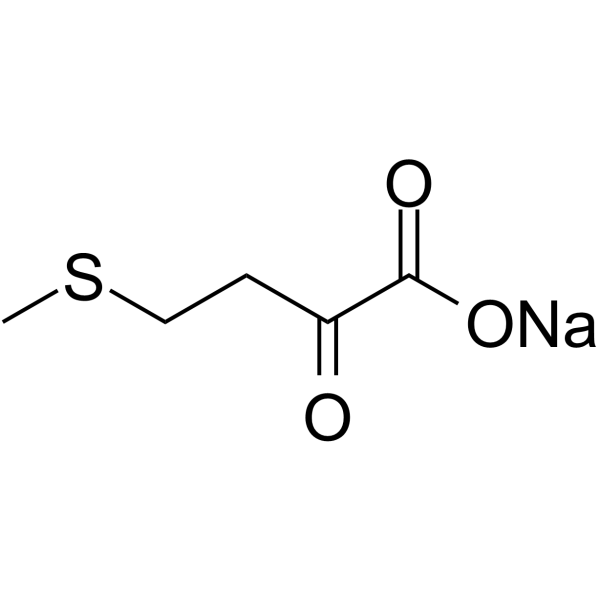
MTOB sodium is a potent C-terminal binding protein (CtBP) inhibitor. MTOB sodium attenuates repetitive head injury-elicited neurologic dysfunction and neuroinflammation via inhibition of the transactivation activity of CtBP1 and CtBP2. MTOB sodium antagonizes the transcriptional regulatory activity of CtBP1 and CtBP2 by eviction from their target promoters in breast cancer cell lines .
|
-
- HY-P5370
-
|
|
Amyloid-β
|
Others
|
|
Scrambled β-amyloid (1-40) is a biological active peptide. (Aβ (1-40) together with Aβ (1-42) are two major C-terminal variants of the Aβ protein constituting the majority of Aβs. These undergo post-secretory aggregation and deposition in the Alzheimer’s disease brain. This peptide is the scrambled sequence of Abeta 1-40 HY-P0265)
|
-
- HY-P11314
-
|
|
Amyloid-β
|
Cardiovascular Disease
Neurological Disease
|
|
ABri, 34 amino acids long, is an Amyloid subunit with certain degree of N- and C-terminal heterogeneity and no sequence identity to any known amyloid protein. ABri is devoid of glycine, methionine, proline, aspartic acid, tryptophane, tyrosine and glutamine, featuring pyroglutamate at its N-terminus. ABri can be used for cerebral hemorrhages, ischemic infarction and Alzheimer disease research .
|
-
- HY-P5201S1
-
|
|
Isotope-Labeled Compounds
|
Others
|
|
VTSEGAGLQLQK-13C6,15N2 (TFA) is the 13C- and 15N-labeled VTSEGAGLQLQK. VTSEGAGLQLQK is an amino acid sequence in the C-terminal region of recombinant human alpha-acid glucosidase (rhGAA), which can be used to bind anti-drug antibodies in plasma and quantitatively analyze the therapeutic effect .
|
-
- HY-151894
-
|
|
Epigenetic Reader Domain
|
Cancer
|
|
I-BET432 is a BET inhibitor. I-BET432 inhibits BRD4 N-terminal bromodomain (BD1) and the C-terminal bromodomain (BD2) with pIC50 values of 7.5 and 7.2, respectively. I-BET432 can be used as an oral candidate quality molecule for the research of multiple oncology and inflammatory diseases .
|
-
- HY-P1769
-
|
|
Angiotensin Receptor
|
Metabolic Disease
Endocrinology
|
|
Angiotensin II (5-8), human is an endogenous C-terminal fragment of the peptide vasoconstrictor angiotensin II . Angiotensin II binds the AT II type 1 (AT1) receptor, stimulating GPCRs in vascular smooth muscle cells and increasing intracellular Ca 2+ levels. Angiotensin II also acts at the Na +/H + exchanger in the proximal tubules of the kidney .
|
-
- HY-P2782A
-
|
|
Endogenous Metabolite
|
Metabolic Disease
|
|
Chloramphenicol Acetyltransferase, Escherichia coli is a bacterial enzyme that detoxifies the antibiotic chloramphenicol and is responsible for chloramphenicol resistance in bacteria. Chloramphenicol Acetyltransferase, Escherichia coli covalently attaches an acetyl group from acetyl-CoA to chloramphenicol, which prevents chloramphenicol from binding to ribosomes. A histidine residue, located in the C-terminal section of Chloramphenicol Acetyltransferase, Escherichia coli, plays a central role in its catalytic mechanism.
|
-
- HY-P5423D
-
|
|
Exosomes
|
Others
|
|
Ahx-GALA-Cys is a GALA peptide (HY-P5423) derivative with an N-terminal 6-aminohexanoic acid (Ahx) linker and a C-terminal cysteine residue. Ahx-GALA-Cys possesses strong covalent coupling capacity, which can be used to conjugate fluorophores and targeting ligands for investigating the surface functionalization of small extracellular vesicles (sEV) and lysosomal escape .
|
-
- HY-P990833
-
|
|
Mesothelin
|
Cancer
|
|
Anti-Mesothelin Antibody (YP218) is a kind of rabbit IgG chimeric antibody, targeting to human Mesothelin. Anti-Mesothelin Antibody (YP218) reacts with a epitope in the C-terminal end close to the tumor cell surface of human mesothelin (MSLN). Anti-Mesothelin Antibody (YP218) can be used for the research of cancer, such as A431/H9 tumor .
|
-
- HY-P2537
-
|
|
HIV
Apelin Receptor (APJ)
|
Others
|
|
Apelin-12 is one of the most potent C-terminal fragments of the polypeptide that possesses a high affinity to orphan receptor APJ receptor. Apelin-12 is involved in the regulation of body fluid homeostasis and in the central control of feeding. Apelin-12 blocks HIV-1 entry through APJ receptor. Apelin-12 exerts neuroprotective effect .
|
-
- HY-P10886
-
|
|
Gap Junction Protein
Claudin
|
Inflammation/Immunology
|
|
Zifogaptide is a gap junction protein channel regulator. Zifogaptide mimics the PDZ-binding motif at the C-terminal of Claudin C and competitively interferes with the interaction between Claudin–TJP1 (ZO-1) scaffold. Zifogaptide can promote epithelial cell migration, reduce scar formation, and accelerate wound healing. Zifogaptide can be used for radiation dermatitis, skin injuries, etc .
|
-
- HY-E70958
-
|
|
Carboxypeptidase
|
Metabolic Disease
|
|
Carboxypeptidase G, Pseudomonas sp. (EC 3.4.17.11) is a lysosomal thiol-dependent protease that stepwise cleaves γ-glutamylpteroyl polyγ-glutamic acid to generate pteroyl-α-glutamic acid (folic acid) and free glutamic acid. Carboxypeptidase G is highly specific for the γ-glutamyl bond but not for the C-terminal amino acid of the leaving group. Carboxypeptidase G can be activated by Zn 2+ ions.
|
-
- HY-181062
-
|
|
HSP
Apoptosis
Autophagy
ULK
RIP kinase
CDK
|
Cancer
|
|
VWK147 is a second-generation HSP90 C-terminal domain (CTD) inhibitor. VWK147 targets the CTD dimerization interface, prevents HSP90 CTD dimerization, disrupts co-chaperone PPID binding to HSP90 CTD, and inhibits HSP90 chaperone function dependent on dimerization. VWK147 reduces protein levels of HSP90 client proteins ULK1, RIPK1, and CDK4 without inducing a heat shock response. VWK147 induces cell death, including apoptosis, in Cisplatin (HY-17394)-sensitive and -resistant urothelial carcinoma cells. VWK147 induces LC3-II accumulation, inhibits autophagosome-lysosome fusion to block canonical autophagy, and induces non-canonical LC3 lipidation independent of ULK1 and PIK3C3 complexes. VWK147 can be used for the research of urothelial carcinoma .
|
-
- HY-P0096
-
|
|
Tyrosinase
Sirtuin
|
Inflammation/Immunology
Endocrinology
|
|
Decapeptide-12, a small oligopeptide, is a tyrosinase inhibitor that interacts with C-terminal residue of tyrosinase (Kd: 61.1 μM). Decapeptide-12 is a competitive inhibitor of mushroom tyrosinase (IC50: 40 μM). Decapeptide-12 also increases transcription of SIRT. Decapeptide-12 reduces melanin content in melanocytes. Decapeptide-12 is used for the research of melanogenesis, senescence, inflammation .
|
-
- HY-162900
-
|
|
HSP
|
Cancer
|
|
HSP90-IN-32 is a Hsp90 C-terminal inhibitor that displays anti-proliferative activities against SKMel173, SKMel103, SKMel19 and A375 cells with IC50 values of 1.01 μM, 0.782 μM, 0.607 μM and 1.413 μM , respectively. HSP90-IN-32 is promising for research of anti-cancer agents .
|
-
- HY-153244
-
MFH290
1 Publications Verification
|
CDK
|
Cancer
|
|
MFH290 is a potent and highly selective cyclin-dependent kinase 12/13 (CDK12/13) covalent inhibitor. MFH290 forms a covalent bond with Cys-1039 of CDK12 and exhibits excellent kinome selectivity and inhibits the phosphorylation of serine-2 in the C-terminal domain (CTD) of RNA-polymerase II (Pol II). MFH290 is used for cancer research .
|
-
- HY-P5497
-
|
|
HIV
|
Others
|
|
C34 peptide is a biological active peptide. (This C34 peptide, also known as HR2, belongs to the helical region of gp41 of HIV, C-terminal heptad repeat 2 (HR2) defined as C helix or C peptide. It is known that HIV-1 enters cells by membrane fusion, C34 gp41 peptide is a potent inhibitors of HIV-1 fusion.)
|
-
- HY-P991534
-
|
|
Amyloid-β
|
Neurological Disease
|
|
PF-04382923 is a humanized IgG2Δa monoclonal antibody. PF-04382923 binds with high affinity to the free C-terminal regions of the amyloid-β peptides Aβ1-40 and Aβ1-42. PF-04382923 is indicated for the study of geographic atrophy (GA) associated with dry age-related macular degeneration (ARMD) .
|
-
- HY-P5693
-
|
|
Bacterial
CMV
HSV
|
Infection
|
|
HBA(111-142), an antimicrobial peptide, is a C-terminal 32-mer fragment of alpha-hemoglobin. HBA(111-142) has antibacterial activity against the ESKAPE panel of pathogens. HBA(111-142) forms amyloid fibrils, and has antiviral activities. HBA(111-142) inhibits measles and herpes viruses (HSV-1, HSV-2, HCMV) .
|
-
- HY-P990986
-
|
|
Interleukin Related
|
Inflammation/Immunology
Cancer
|
|
Efdelikofusp alfa is a bispecific Fc fusion protein. Efdelikofusp alfa is formed by fusing the N-terminal extracellular domain of human CD80 (B7.1) with the Fc fragment of human immunoglobulin G4 (IgG4), and is linked to an interleukin-2 variant (IL-2v) as the C-terminal part. Efdelikofusp alfa exhibits potential immunostimulatory, immune checkpoint inhibitory, and antitumor activities.
|
-
- HY-P990992
-
|
GI-102
|
Interleukin Related
|
Inflammation/Immunology
Cancer
|
|
Efzilonkofusp alfa is a bispecific Fc fusion protein. Efzilonkofusp alfa is formed by fusing the N-terminal extracellular domain of human CD80 (B7.1) with the Fc fragment of human immunoglobulin G4 (IgG4), and is linked to an interleukin-2 variant (IL-2v) as the C-terminal part. Efzilonkofusp alfa exhibits potential immunostimulatory, immune checkpoint inhibitory, and antitumor activities.
|
-
- HY-178366
-
|
|
Influenza Virus
|
Infection
|
|
PAC/NP-IN-1 (Compound 30) is a dual-target anti-influenza agent that specifically binds to nucleoprotein (NP) and the C-terminal domain of PA protein (PAc). PAC/NP-IN-1 inhibits influenza A virus A/WSN/33 (H1N1) (EC50 = 3.63 μM, IC50 = 3.08 μM). PAC/NP-IN-1 can be used for the study of influenza infection .
|
-
- HY-P3431
-
|
|
iGluR
|
Neurological Disease
|
|
VSGLNPSLWSIFGLQFILLWLVSGSRHYLW is a 30-amino-acid peptide mimicking the C-terminal domain of α2δ-1, termed as α2δ-1Tat peptide. VSGLNPSLWSIFGLQFILLWLVSGSRHYLW can effectively interrupt the α2δ-1 - NMDAR interaction in vitro and in vivo. VSGLNPSLWSIFGLQFILLWLVSGSRHYLW can be used for researching neuropathic pain .
|
-
- HY-175238
-
|
|
ATP Synthase
DNA/RNA Synthesis
|
Neurological Disease
Cancer
|
|
KI-DX-014 is a DDX21 inhibitor with high RNA-binding inhibitory activity (IC50 of 3.31 μM). KI-DX-014 targets DDX21’s intrinsically disordered C-terminal domain, inhibits DDX21-structured RNA interaction, modulates DDX21’s RNA-dependent ATPase activity, and disrupts DDX21 biomolecular condensate formation. KI-DX-014 attenuates in vitro P-TEFb release from the 7SK snRNP complex, suppresses P-TEFb-dependent RNA polymerase II CTD phosphorylation, and induces developmental defects in zebrafish embryos. KI-DX-014 acts as a chemical probe for dissecting DDX21 functions in normal physiology and disease states. KI-DX-014 can be used for cancers and neurodegenerative disorders research .
|
-
- HY-P3982
-
|
|
CCR
|
Inflammation/Immunology
|
|
CKLF1-C19 is the C-terminal peptide of human chemokine-like factor 1 (CKLF1). CKLF1-C19 interacts with CCR4, and inhibits chemotaxis induced by both CKLF1 and CCL17. CKLF1-C19 can suppress allergic lung inflammation via inhibiting chemotaxis mediated by CCR3 and CCR4 .
|
-
- HY-P5506
-
|
|
Complement System
|
Others
|
|
C5a Receptor agonist, W5Cha (Peptide 1) is a selective complement C5a receptor (C5aR) agonist (EC50=0.2 μM), a hexapeptide derived from the C-terminus of C5a with specific amino acid modifications. C5a Receptor agonist, W5Cha is able to interact with the Arg-206 site of the C5a receptor through its C-terminal arginine, thereby activating the receptor .
|
-
- HY-P5351A
-
|
|
Transmembrane Glycoprotein
|
Inflammation/Immunology
Cancer
|
|
Hyaluronan-binding peptide, biotin labeled TFA is a biological active peptide. (This peptide is a hyaluronan-binding peptide biotinylated through a C-terminal GGGSK linker. Hyaluronan (HA) is a nonsulfated glycosaminoglycan expressed in the extracellular matrix and on cell surfaces. HA plays a role in fertilization, embryonic development, wound healing, angiogenesis, leukocyte trafficking to inflamed tissues, and cancer metastasis. This peptide has been shown to block HA binding to CD44 receptors and inhibit T cell proliferation.) .
|
-
- HY-P5947
-
|
|
HIV
|
Neurological Disease
|
|
Tat-HA-NR2B9 contains a fragment of the cellmembrane transduction domain of HIV-1 Tat, a influenza virus hemagglutinin (HA) epitope-tag, and the C-terminal 9 amino acids of NR2B (NR2B9c). Tat-HA-NR2B9 reduces infarct size and improves neurological functions in ischemia-induced cerebral injury in the rats
|
-
- HY-P3431A
-
|
|
iGluR
|
Neurological Disease
|
|
VSGLNPSLWSIFGLQFILLWLVSGSRHYLW (TFA) is a 30-amino-acid peptide mimicking the C-terminal domain of α2δ-1, termed as α2δ-1Tat peptide. VSGLNPSLWSIFGLQFILLWLVSGSRHYLW can effectively interrupt the α2δ-1 - NMDAR interaction in vitro and in vivo. VSGLNPSLWSIFGLQFILLWLVSGSRHYLW can be used for researching neuropathic pain .
|
-
- HY-155192
-
|
|
Galectin
|
Inflammation/Immunology
Cancer
|
|
Galectin-3/galectin-8-IN-2 (Compound 57) is a dual Galectin-3 and galectin-8 C-terminal domain inhibitor, with Kd values of 12.8 μM and 2.06 μM respectively. Galectin-3/galectin-8-IN-2 inhibits the MRC-5 lung fibroblast cells migration. Galectin-3/galectin-8-IN-2 can be used for research of cancer and tissue fibrosis .
|
-
- HY-P10251
-
|
|
HIV
|
Infection
|
|
HIV gp120 (318-327) is a short sequence of the HIV-1 strain IIIB envelope peptide (rgpgrafvti) that corresponds to the conserved C-terminal region of the glycoprotein. HIV gp120 (318-327) is part of the HIV vaccine V3 peptide epitope, also known as the I10 peptide. However, HIV gp120 (318-327) lacks the A2 anchor residues recognized by epitope-specific CTLs but has structural features that confer promiscuous A2 binding .
|
-
- HY-148673
-
|
AZD0780; PCSK9-IN-12
|
PCSK9
|
Cardiovascular Disease
Metabolic Disease
|
|
Laroprovstat (AZD0780) is an orall active PCSK9 inhibitor. PCSK9-IN-12 has bind affinity for PCSK9 with a Kd value of <200 nM. Laroprovstat binds to a pocket in the PCSK9 C-terminal domain and does not affect the PCSK9-LDL receptor (LDLR) interaction. Laroprovstat inhibits lysosomal trafficking of PSCK9-LDLR complexes and prevents PCSK9-induced LDLR degradation. Laroprovstat can be used for the research of hypercholesterolemia .
|
-
- HY-118161
-
|
beta-1-Adamantylaspartic acid
|
Biochemical Assay Reagents
|
Others
|
|
1-Adamantylaspartate is a newly developed β-β-1-imidopropionic acid used to synthesize the C-terminal octapeptide of the β subunit of human chorionic gonadotropin (hCG) and the hexadecapeptide of the α subunit of the insulin receptor (30-55) by conventional solution methods and solid phase methods, aiming to inhibit the formation of asparagine during the synthesis of asparagyl peptides. Studies have shown that β-β-1-imidopropionic acid is an effective protector of the β-carboxyl function of aspartic acid residues.
|
-
- HY-155191
-
|
|
Galectin
|
Inflammation/Immunology
Cancer
|
|
Galectin-3/galectin-8-IN-1 (Compound 53) is a dual Galectin-3 and galectin-8 C-terminal domain inhibitor, with Kd values of 4.12 μM and 6.04 μM respectively. Galectin-3/galectin-8-IN-1 inhibits the MRC-5 lung fibroblast cells migration. Galectin-3/galectin-8-IN-1 can be used for research of cancer and tissue fibrosis .
|
-
- HY-107024
-
|
OGP(10-14); Historphin
|
Src
|
Others
|
|
Osteogenic Growth Peptide (10-14) (OGP(10-14)), the C-terminal truncated pentapeptide of osteogenic growth peptide (OGP), retains the full OGP-like activity. Osteogenic Growth Peptide (10-14) is responsible for the binding to the OGP receptor and activates an intracellular Gi-protein-MAP kinase signaling pathway. Osteogenic Growth Peptide (10-14) is a potent mitogen and stimulator of osteogenesis and hematopoiesis. Osteogenic Growth Peptide (10-14) acts as a Src inhibitor .
|
-
- HY-P1059
-
|
|
iGluR
|
Neurological Disease
|
|
Pep2-AVKI is a selective peptide inhibitor of the binding of the AMPA receptor subunit (GluR2) at the C-terminal PDZ site to C-kinase (PICK1). Pep2-AVKI does not affect the binding of (AMPA-type glutamate receptor) GluA2 to GRIP or ABP. Pep2-AVKI does not increase the amplitude of AMPA currents. pep2-AVKI can be used to study neurological diseases .
|
-
- HY-P3733
-
|
|
Endothelin Receptor
|
Cardiovascular Disease
|
|
Big Endothelin-1 (22-38), human is derived from human, is the 22-38 fragment of Big Endothelin-1 (ET-1) (1-38). Big ET-1 (1-38) is a propeptide of ET-1, which has potent and long-lasting vasoconstrictor effects, equips a specific enzymatic cleavage of the 38 amino acid chain to form ET-1 (1-21) and the C-terminal fragment Big ET-1 (22-38) .
|
-
- HY-112393
-
|
|
HIV
Src
PKA
PKC
|
Infection
|
|
TX-1918 is an inhibitor for eukaryotic elongation factor 2 kinase (eEF2-K) and Src kinase with IC50 of 0.44 and 4.4 μM, respectively. TX-1918 exhibits cytotoxicity in cell HepG2 and HCT116, with IC50 of 2.07 and 230 μM, respectively. TX-1918 inhibits the C-terminal domain of HIV-1 CA (CA CTD)(IC50 =3.81 μM), and inhibits the viral replication (IC50 =15.16 μM) .
|
-
- HY-P1210
-
|
|
Melanocortin Receptor
|
Endocrinology
|
|
Lys-γ3-MSH(human) is a melanocortin peptide derived from the C-terminal of the fragment of pro-opiomelanocortin (POMC). Lys-γ3-MSH(human) potentiates the steroidogenic response of the rat adrenal to adrenocorticotrophin (ACTH). Lys-γ3-MSH(human) is a potent stimulator of lipolysis with an apparent EC50 of 3.56 nM. Lys-γ3-MSH(human) can activate hormone sensitive lipase (HSL) and Perilipin A resulting in lipolysis .
|
-
- HY-P2712
-
|
Chemerin148–156, mouse
|
Chemerin Receptor
|
Cardiovascular Disease
Neurological Disease
Inflammation/Immunology
|
|
Chemerin-9, mouse (Chemerin148-156, mouse) is a C-terminal nonapeptide of chemerin. Chemerin-9, mouse is a ligand for ChemR23 (EC50 = 42 nM). Chemerin-9, mouse reduces basal lipolysis in primary mouse white adipocytes(IC50 = 3.3 nM). Chemerin-9, mouse enhances memory and relieves Aβ1-42-induced memory impairment in AD mice. Chemerin-9, mouse also inhibits atherogenesis .
|
-
- HY-P1128A
-
|
|
Neuropeptide Y Receptor
|
Metabolic Disease
|
|
Galanin (swine) TFA, a neuropeptide, consists of 29 amino acids and contains a C-terminal amidated glycine. Galanin (swine) inhibits basal and stimulated insulin secretion both in vivo and in vitro under a variety of experimental conditions. Galanin (swine) TFA is a galanin receptor agonist with pKis of 9.63, 9.49, 9.02, 8.98, 8.01 and 8.14 at human GAL1, rat GAL1, human GAL2, rat GAL2, human GAL3 and rat GAL3 respectively .
|
-
- HY-P1128
-
|
|
Neuropeptide Y Receptor
|
Metabolic Disease
|
|
Galanin (swine), a neuropeptide, consists of 29 amino acids and contains a C-terminal amidated glycine. Galanin (swine) inhibits basal and stimulated insulin secretion both in vivo and in vitro under a variety of experimental conditions. Galanin (swine) is a galanin receptor agonist with pKis of 9.63, 9.49, 9.02, 8.98, 8.01 and 8.14 at human GAL1, rat GAL1, human GAL2, rat GAL2, human GAL3 and rat GAL3 respectively .
|
-
- HY-P1210A
-
|
|
Melanocortin Receptor
|
Endocrinology
|
|
Lys-γ3-MSH(human) TFA is a melanocortin peptide derived from the C-terminal of the fragment of pro-opiomelanocortin (POMC). Lys-γ3-MSH(human) TFA potentiates the steroidogenic response of the rat adrenal to adrenocorticotrophin (ACTH). Lys-γ3-MSH(human) TFA is a potent stimulator of lipolysis with an apparent EC50 of 3.56 nM. Lys-γ3-MSH(human) TFA can activate hormone sensitive lipase (HSL) and Perilipin A resulting in lipolysis .
|
-
- HY-129724
-
-
- HY-P1056
-
|
|
iGluR
|
Neurological Disease
|
|
pep2-SVKI is a selective peptide inhibitor. pep2-SVKI inhibits the binding of AMPA-type glutamate receptor (GluA2) (C-terminal PDZ site) to glutamate receptor interacting protein (GRIP), AMPA receptor binding protein (ABP), and C-kinase interacting protein (PICK1). pep2-SVKI increases the amplitude of AMPA receptor-mediated currents and blocks long-term depression (LTD). pep2-SVKI can be used to study neurological diseases .
|
-
- HY-129724A
-
|
ACTH-(11-13) acetate; Lys-Pro-Val acetate; H-Lys-Pro-Val-OH acetate
|
Melanocortin Receptor
NF-κB
Bacterial
Interleukin Related
Apoptosis
|
Infection
Neurological Disease
Metabolic Disease
Inflammation/Immunology
|
|
α-MSH (11-13) (ACTH-(11-13)) acetate is a C-terminal tripeptide of α-MSH that can cross the blood-brain barrier. α-MSH (11-13) acetate exhibits antipyretic, anti-inflammatory, and antibacterial activities. α-MSH (11-13) acetate also exerts neuroprotective effects after traumatic brain injury by inhibiting excessive activation of microglia and reducing neuronal apoptosis. α-MSH (11-13) acetate can be used in research related to traumatic brain injury, fever, and bacterial infections .
|
-
- HY-185260
-
|
|
Liposome
|
Cancer
|
|
AA76-lipid (Compound aa76) is a compound with a C-terminal arginine and histidine. AA76-lipid can be used to prepare pancreas-targeted lipid nanoparticles AH-LNP. After assembling with proteins, the increased size of AH-LNP promotes Capsule-filter-mediated selective accumulation in the pancreas and receptor-mediated endocytosis, thereby enhancing pancreas-targeting ability. AA76-lipid enables highly pancreas-selective delivery of mRNA. AA76-lipid can be used in the research of pancreatic cancer .
|
-
- HY-171786
-
|
|
CDK
|
Cancer
|
|
CDK12-IN-8 (Compound Cpd143) is an orally active and highly selective inhibitor of cyclin-dependent kinase 12 (CDK12). CDK12-IN-8 inhibits CDK12-mediated phosphorylation of the C-terminal domain (CTD) serine 2 of RNA polymerase II, interfering with gene transcription elongation and DNA damage repair pathways. CDK12-IN-8 is promising for research of cancers with high CDK12 expression such as small cell lung cancer and triple-negative breast cancer .
|
-
- HY-122815
-
|
Fusicoccin A
|
Apoptosis
|
Cancer
|
|
Fusicoccin (Fusicoccin A), a fungal pytotoxin, is a stabilizer of specific 14-3-3 protein-protein interactions. Fusicoccin sabilizes H +-ATPase/14-3-3 cmplex in pants, maintaining the enzyme in activated state. Fusicoccin also stabilizes 14-3-3 protein interactions with binding partners containing a C-terminal 14-3-3 recognition motif (a mode 3 motif), such as ERα, GPIbα, TASK3, CTFR, and p53. Fusicoccin induces apoptosis in cancer cells and has anticancer activity .
|
-
- HY-P11092
-
|
|
Endogenous Metabolite
|
Neurological Disease
|
|
TLQP-62 (mouse,rat) is a secreted C-terminal peptide that can be derived from protein VGF. TLQP-62 activates the BDNF-TrkB signaling pathway, inducing acute, transient phosphorylation of TrkB receptor and downstream CREB (Ser133) phosphorylation. TLQP-62 demonstrates excellent efficacy in promoting long-term fear memory formationin wild-type mice and reversing memory impairment in VGF heterozygous knock-out mice. TLQP-62 can be used for the study of memory-related neurological disorders (e.g., Alzheimer’s disease, frontotemporal dementia) .
|
-
- HY-124689
-
|
|
Arp2/3 Complex
|
Metabolic Disease
Cancer
|
|
TR-100 is a small molecule inhibitor of tumor-associated troponin (Tpm). TR-100 affects the interaction of Tpm3.1 with actin filaments by binding to the C-terminal of Tpm3.1, thereby affecting the stability and function of the actin filaments. This mechanism of action allows TR-100 to specifically affect actin filaments in cancer cells without compromising heart muscle function. TR-100 can be used to study the role of Tpm3.1 in cancer cell proliferation and survival and the effects of Tpm3.1 on insulin-stimulated glucose uptake and insulin secretion .
|
-
- HY-123035
-
|
|
HSP
Akt
EGFR
|
Endocrinology
|
|
Gamendazole, an indazole carboxylic acid (ICA), is an orally active, selective HSP90AB1 (HSP90BETA) and EEF1A1 (eEF1A) inhibitor. Gamendazole binds to the C-terminal nucleotide binding pocket of HSP90 and cause downregulation of clients AKT1 and ERBB2, but stabilizes the HSP90 heterocomplex. Gamendazole specifically inhibits the actin bundling function of EEF1A1, but does not bind to the nucleotide docking pocket nor inhibits the ribosome charging or protein translation functions of EEF1A1. Gamendazole, an antispermatogenic compound with antifertility effects, has the potential for reversible non-hormonal male contraceptive agent research .
|
-
- HY-112626
-
|
|
CDK
|
Cancer
|
|
CDK12-IN-2 is a potent, selective and nanomolar CDK12 inhibitor (IC50=52 nM) with good physicochemical properties. CDK12-IN-2 is also a strong CDK13 inhibitor due to CDK13 is the closest homologue of CDK12. CDK12-IN-2 shows excellent kinase selectivity for CDK12 over CDK2, 9, 8, and 7. CDK12-IN-2 inhibits the phosphorylation of Ser2 in the C-terminal domain of RNA polymerase II. CDK12-IN-2 can be used an excellent chemical probe for functional studies of CDK12 .
|
-
- HY-160695
-
|
|
Ligands for E3 Ligase
Molecular Glues
|
Cancer
|
|
PT-179 is an orthogonal Thalidomide (HY-14658) derivative that targets cereblon without causing off-target degradation effects. PT-179 is able to specifically bind CRBN, form a ternary complex with a target protein fused to a zinc finger (ZF) degron, and mediate the degradation of the tagged protein. For example, PT-179 binds to the ubiquitin ligase substrate receptor cereblon by forming a complex with SD40 and efficiently degrades proteins N- or C-terminally fused to SD40 or SD36 (DC50 for eGFP: 4.5 nM and 14.3 nM). PT-179 can be used to develop compact protein degradation tagging platforms .
|
-
- HY-132580
-
|
BIIB067; ISIS-SOD1Rx; ISIS 333611
|
SOD
|
Neurological Disease
|
|
Tofersen (BIIB067) is an antisense oligonucleotide and SOD1 mRNA inhibitor with an IC50 of 320 pM. Tofersen mediates RNase H-dependent degradation of SOD1 mRNA to reduce SOD1 protein levels in cerebrospinal fluid and serum. Tofersen downregulates cerebrospinal fluid neurofilament light chain, neurofilament heavy chain, amyloid-beta 1-40, amyloid-beta 1-42, neuropeptide Y, ubiquitin C-terminal hydrolase L1, neuropentraxins 1, 2, R, corticotropin-releasing hormone, IL-15, and serum neurofilament light chain, neurofilament heavy chain. Tofersen can be used for the research of superoxide dismutase 1-associated amyotrophic lateral sclerosis .
|
-
- HY-W704574
-
|
|
Carboxypeptidase
Bradykinin Receptor
Interleukin Related
|
Cardiovascular Disease
Metabolic Disease
|
|
Mergetpa is a reversible Arg-carboxypeptidase inhibitor with high affinity. Mergetpa reduces B1R. Mergetpa blocks the overexpression of IL-1β protein and mRNA in glucose-fed rats. Mergetpa significantly increases the expression of IL-1β protein in the renal cortex. Mergetpa is used to block the conversion of kinins and B2 receptor antagonists into metabolites lacking the C-terminal arginine. Mergetpa inhibits the time-dependent enhancement of the response of isolated rabbit aorta to bradykinin. Mergetpa preserves the chemotactic activity of full-length SDF-1α on cells. Mergetpa reverses hyperglycemia, excessive weight gain, elevated levels of oxidative stress markers and overexpression of inflammatory markers in glucose-fed rats .
|
-
- HY-159834
-
|
SLC-D011
|
DNA/RNA Synthesis
|
Others
|
|
Progerinin (SLC-D011) is an orally active progerin-lamin A binding inhibitor. Progerinin selectively binds to the C-terminal region of progerin, disrupting its interaction with lamin A and promoting progerin degradation while sparing wild-type lamin A, B, and C. Progerinin ameliorates nuclear deformation, increases H3K9me3 levels, and reduces progerin expression in HGPS patient-derived fibroblasts. Progerinin extends lifespan in Lmna G609G/G609G mice and Lmna G609G/+ mice, improves body weight, hair morphology, cardiac function, and histological phenotypes. Progerinin can be used for the study of Hutchinson-Gilford progeria syndrome (HGPS) .
|
-
- HY-120821
-
|
ES2
|
Exosomes
|
Others
|
|
Endosidin-2 (ES2) is a selective inhibitor targeting the conserved exosome subunit EXO70. Endosidin-2 binds to the C-terminal domain of EXO70, inhibiting exocytosis and endosomal recycling, while promoting vacuolar trafficking in plant cells. Endosidin-2 interferes with the EXO70-mediated vesicle-to-plasma membrane anchoring process, leading to abnormal aggregation of auxin transporters (such as PIN2) in the cytoplasm and redirected to vacuolar degradation, while causing abnormal Golgi structure (such as cup-shaped or ring-shaped vesicles cisternae formation). Endosidin-2 can inhibit exocytosis in plant and mammalian cells and is mainly used to study the dynamic regulation of membrane trafficking (such as polar growth, vesicle sorting) .
|
-
- HY-P4933
-
|
Tau-F protein (255-314)
|
Tau Protein
|
Neurological Disease
|
|
Tau Peptide (255-314) (Repeat 2 Domain) (human) (Tau-F protein (255-314)) is a polypeptide. Tau Peptide (255-314) (human) is the 255-314 fragment of Tau-F (also known as Tau-4, the 2N4 isoform), a major isoform of the Tau protein. Tau Peptide (255-314) (human) contains two core driving sequences for Tau aggregation, namely PHF6* (275-280, VQIINK) and PHF6 (306-311, VQIVYK), and spans the C-terminal half of repeat domain R1, the entire repeat domain R2, and the N-terminal half of repeat domain R3 within the microtubule-binding region (MTBR).
|
-
- HY-174499
-
|
|
mRNA
|
Others
|
|
Cas9 Nickase D10A mRNA expresses a version of the Streptococcus pyogenes SF370 Cas9 protein (CRISPR Associated Protein 9) that contains a D10A amino acid substitution. This mRNA also contains a C-terminal nuclear localization signal followed by a HA tag.Cas9 functions as part of the CRISPR (clustered regularly interspaced short palindromic repeats) genome editing system. In the CRISPR system, an RNA guide sequence targets the site of interest and the Cas9 protein is employed to perform the DNA cleavage. While wild-type Cas9 creates a double-stranded break at the target site, Cas9 nickase creates a single-stranded break. This favors homology-directed repair and decreases the occurrence of non-homologous end joining.
|
-
- HY-132580A
-
|
BIIB067 sodium; ISIS-SOD1Rx sodium; ISIS 333611 sodium
|
SOD
|
Neurological Disease
|
|
Tofersen (BIIB067) sodium is an antisense oligonucleotide and SOD1 mRNA inhibitor with an IC50 of 320 pM. Tofersen sodium mediates RNase H-dependent degradation of SOD1 mRNA to reduce SOD1 protein levels in cerebrospinal fluid and serum. Tofersen sodium downregulates cerebrospinal fluid neurofilament light chain, neurofilament heavy chain, amyloid-beta 1-40, amyloid-beta 1-42, neuropeptide Y, ubiquitin C-terminal hydrolase L1, neuropentraxins 1, 2, R, corticotropin-releasing hormone, IL-15, and serum neurofilament light chain, neurofilament heavy chain. Tofersen sodium can be used for the research of superoxide dismutase 1-associated amyotrophic lateral sclerosis .
|
-
- HY-118962
-
|
|
CCR
HIV
|
Infection
|
|
E913 is a CCR5 antagonist that competes with the binding of antibodies to CCR5 which recognize the C-terminal half of the second extracellular loop (ECL2B) of CCR5. E913 can specifically block the binding of macrophage inflammatory protein-1alpha (MIP-1alpha) to CCR5 (IC50 = 0.002 μM) and MIP-1alpha-elicited cellular Ca 2+ mobilization (IC50 = 0.02 μM). E913 inhibits the replication of laboratory and primary R5 HIV-1 strains as well as various multidrug-resistant monocyte/macrophage tropic (R5) HIV-1 (IC50 = 0.03-0.06 μM). E913 can be used for the research of infection, such as HIV-1 infection .
|
-
- HY-132580S
-
|
BIIB067-d27; ISIS-SOD1Rx-d27; ISIS 333611-d27
|
Isotope-Labeled Compounds
SOD
|
Neurological Disease
|
|
Tofersen-d27 (BIIB067-d27) is the deuterium labeled Tofersen (HY-132580). Tofersen (BIIB067) is an antisense oligonucleotide and SOD1 mRNA inhibitor with an IC50 of 320 pM. Tofersen mediates RNase H-dependent degradation of SOD1 mRNA to reduce SOD1 protein levels in cerebrospinal fluid and serum. Tofersen downregulates cerebrospinal fluid neurofilament light chain, neurofilament heavy chain, amyloid-beta 1-40, amyloid-beta 1-42, neuropeptide Y, ubiquitin C-terminal hydrolase L1, neuropentraxins 1, 2, R, corticotropin-releasing hormone, IL-15, and serum neurofilament light chain, neurofilament heavy chain. Tofersen can be used for the research of superoxide dismutase 1-associated amyotrophic lateral sclerosis.
|
-
- HY-P2535
-
|
GLP-1 (7-36)-Lys(biotin)-amide
|
GLP Receptor
|
Metabolic Disease
|
|
Glucagon-Like Peptide 1 (GLP-1) (7-36)-Lys (Biotin), amide, human is an C-terminal-labelled biotinylated GLP-1 (7-36) amide.
|
-
- HY-P991959
-
|
|
CTLA-4
|
Inflammation/Immunology
Cancer
|
|
JMW-3B3 is a humanized IgG1λ monoclonal antibody targeting CTLA-4. JMW-3B3 selectively binds the unique C-terminal sequence of sCTLA-4 to block its immunoregulatory and immunosuppressive activity without cross-reacting with full-length CTLA-4 receptor. JMW-3B3 enhances cytokine profiles in PBMC cultures responding to lupus autoantigen-derived peptides. JMW-3B3 enhances IFN-γ production in anti-CD3 stimulated PBMC from melanoma patients at low anti-CD3 doses. JMW-3B3 can be used for the research of systemic lupus erythematosus and malignant melanoma.
|
-
- HY-165413
-
|
|
HIF/HIF Prolyl-Hydroxylase
VEGFR
|
Cancer
|
|
KST012174 hydrochloride is a potent HIF-1α-p300/CBP interaction inhibitor with an IC50 of 107 μM. KST012174 hydrochloride completely blocks the binding of HIF-1α to p300 protein at a concentration of 100 μM, without affecting the expression stability of HIF-1α protein itself. By directly interfering with the binding between the C-terminal transactivation domain (C-TAD) of HIF-1α and the CH1 domain of p300, KST012174 inhibits the transcriptional activation function of HIF-1α, thereby significantly downregulating the mRNA expression level of its downstream target gene VEGF and exerting core activity in inhibiting tumor angiogenesis. KST012174 hydrochloride is applicable for research on cancer occurrence and development as well as hypoxia pathway-targeted strategies .
|
-
- HY-P0175A
-
|
740YPDGFR TFA; PDGFR 740Y-P TFA
|
PI3K
Autophagy
|
Cancer
|
|
740 Y-P TFA is a potent and cell-permeable PI3K activator. 740 Y-P TFA readily binds GST fusion proteins containing both the N- and C- terminal SH2 domains of p85 but fails to bind GST alone .
|
-
- HY-P0175
-
740 Y-P
Maximum Cited Publications
241 Publications Verification
740YPDGFR; PDGFR 740Y-P
|
PI3K
Autophagy
|
Cancer
|
|
740 Y-P (740YPDGFR; PDGFR 740Y-P) is a potent and cell-permeable PI3K activator. 740 Y-P readily binds GST fusion proteins containing both the N- and C- terminal SH2 domains of p85 but fails to bind GST alone .
|
-
- HY-P5984A
-
|
|
mTOR
|
Others
|
|
Thioether-cyclized helix B peptide, CHBP (TFA) is the TFA form of Thioether-cyclized helix B peptide, CHBP (HY-P5984). Thioether-cyclized helix B peptide, CHBP (TFA) can improve metabolic stability and renoprotective effect through inducing autophagy via inhibition of mTORC1 and activation of mTORC2 .
|
-
- HY-P5984
-
|
|
mTOR
|
Others
|
|
Thioether-cyclized helix B peptide, CHBP can improve metabolic stability and renoprotective effect through inducing autophagy via inhibition of mTORC1 and activation of mTORC2 .
|
-
- HY-P2237
-
-
- HY-179735
-
|
|
Ligands for E3 Ligase
|
Cancer
|
|
CRBN ligand-192 is an E3 ligand that can be used for the synthesis of PROTACs, such as PROTAC BRD4 Degrader-41 (HY-179734). PROTAC BRD4 Degrader-41 is a potent BRD4 PROTAC degrader with anti-cancer activity .
|
-
- HY-133512
-
|
|
Phosphatase
|
Cancer
|
|
NCGC00249987 is a highly selective and allosteric Tyr phosphatase activity of Eya2 inhibitor with IC50s of 3 μM and 6.9 μM for Eya2 ED and MBP-Eya2 FL. NCGC00249987 specifically targets migration, invadopodia formation, and invasion of lung cancer cells .
|
-
- HY-P11398
-
|
|
Bacterial
HIV
Fungal
DNA Alkylator/Crosslinker
|
Infection
Cancer
|
|
Tachyplesin II is a broad-spectrum cationic antimicrobial peptide. Tachyplesin II has significant inhibitory effects on Gram-positive bacteria, Gram-negative bacteria, and some fungi. Tachyplesin II binds to bacterial membrane lipopolysaccharides through its positive charge, disrupting membrane integrity and causing leakage of cellular contents. Tachyplesin II can bind to DNA grooves, inhibiting microbial replication, and also suppressing HIV-1 replication and the proliferation of liver cancer cells .
|
-
- HY-177192
-
|
DMPS
|
Biochemical Assay Reagents
|
Others
|
|
1,2-Dimyristoyl-sn-glycero-3-phosphoserine (DMPS) is an anionic, negatively charged phosphatidylserine phospholipid. 1,2-Dimyristoyl-sn-glycero-3-phosphoserine acts as an internal standard for liquid chromatography/mass spectrometry analyses .
|
-
- HY-163944
-
|
|
DNA/RNA Synthesis
Molecular Glues
CDK
Apoptosis
RAD51
ATM/ATR
PARP
|
Cancer
|
LL-K12-18 is a CDK12 kinase inhibitor and a dual-site molecular glue. LL-K12-18 inhibits human CDK12 with an IC50 value of 283.9 nM, and selectively degrades cyclin K via the ubiquitin-proteasome system by stabilizing the CDK12-DDB1 complex. LL-K12-18 downregulates DNA damage response genes, reduces the phosphorylation level of CTD Ser2 in RNA polymerase II, and modulates biomarkers such as ATM, RAD51, γ-H2AX and cleaved PARP, thereby effectively inducing apoptosis and inhibiting proliferation of breast cancer cells. LL-K12-18 exhibits high target selectivity and serves as a research tool for studies on triple-negative breast cancer .
|
-
- HY-P2917
-
|
GyK
|
Nuclear Hormone Receptor 4A/NR4A
|
Metabolic Disease
Inflammation/Immunology
|
|
Glycerol kinase, microorganism (GyK) acts as a NR4A1 inhibitor with enzymatic activity. It directly binds to and inhibits the transcription factor NR4A1, thereby negatively regulating hepatic gluconeogenesis and reducing blood glucose levels. Glycerol kinase, microorganism positively regulates UCP1 expression via partial dependence on the β-adrenergic receptor-cAMP-CREB pathway, promotes browning of white adipose tissue and thermogenesis, and further modulates intracellular fatty acid composition and energy metabolism. In diabetic mouse models, overexpression of Glycerol kinase effectively antagonizes NR4A1-induced hyperglycemia, demonstrating potential for improving glucose homeostasis. Glycerol kinase, microorganism can be used for studies on diabetes and obesity .
|
-
- HY-182312
-
|
|
CDK
Apoptosis
|
Cancer
|
|
CTX-439 is an orally active, ATP-competitive small-molecule inhibitor of CDK12 and CDK13, with an IC50 of 3.1 nM and a Kd of 0.38 nM against CDK12, and an IC50 of 9.2 nM against CDK13. CTX-439 induces DNA damage and apoptosis in tumor cells. CTX-439 is applicable for the research of breast cancer and ovarian cancer .
|
-
- HY-180425
-
|
|
Amylin Receptor
Apoptosis
|
Metabolic Disease
|
|
Cloridarol is a human islet amyloid peptide (hIAPP) inhibitor that prevents its abnormal misfolding and aggregation. Cloridarol can increase cell viability, inhibit apoptosis, and protect islet β-cells from hIAPP-induced cell toxicity. Cloridarol can be used for the research of type 2 diabetes (T2D) .
|
-
- HY-P992484
-
|
|
Tau Protein
|
Neurological Disease
|
|
VY7523 is a monoclonal antibody and a selective inhibitor of pathological Tau. VY7523 reduces the propagation of pathogenic Tau in transgenic mouse models. VY7523 can be used in the research of Alzheimer's disease. The isotype control is Human IgG4 (S228P) kappa, Isotype Control (HY-P99003) .
|
-
- HY-103078
-
|
|
HIV
Reverse Transcriptase
|
Infection
|
|
I-XW-053 is a specific anti-HIV-1 capsid inhibitor (IC50=164.2 μM). By binding to the CA NTD-NTD hexamerization interface and the R173 region of CTD (Kd=66.3 μM), I-XW-053 disrupts capsid function and reduces polymerization levels. I-XW-053 effectively blocks HIV-1 uncoating, inhibits reverse transcription and early replication, and exhibits broad-spectrum activity against primary HIV-1 isolates in peripheral blood mononuclear cells. I-XW-053 can be widely used in studies related to HIV-1 infection .
|
-
- HY-NP008
-
|
|
Lipocalin Family
|
Inflammation/Immunology
|
|
β-Lactoglobulin, a major whey protein, is a small globular protein from the lipocalin family. β-Lactoglobulin is an important source of the essential and branched-chain amino acids (leucine, isoleucine, and valine). β-Lactoglobulin shows antioxidant properties, because it contains two disulfide bonds and one free thiol group. β-Lactoglobulin is a ligand transport agent. β-Lactoglobulin is one of the major allergens in milk and can be utilized in the research for developing safe hypoallergenic dairy products .
|
-
-
- HY-D1726
-
|
|
蛍光色素
|
|
8RK59, a Bodipy probe, is a potent UCHL1 (ubiquitin C-terminal hydrolase L1) inhibitor, with an IC50 close to 1 μM. 8RK59 could penetrate and label living cells. BodipyFL-alkyne is coupled to the azide of 8RK64 (HY-148254) using copper(I)-mediated click chemistry, resulting in compound 8RK59 .
|
-
- HY-D2259
-
|
|
蛍光色素
|
|
PFI-7 is a probe, which binds to human GID4 (KD is 79 nM), and antagonizes the binding of Pro/N-degrons. PFI-7 can be utilized in C-terminal to LisH (CTLH) complex research and development of targeted protein degradation .
|
-
- HY-NP008
-
|
|
生化学アッセイ試薬
|
|
β-Lactoglobulin, a major whey protein, is a small globular protein from the lipocalin family. β-Lactoglobulin is an important source of the essential and branched-chain amino acids (leucine, isoleucine, and valine). β-Lactoglobulin shows antioxidant properties, because it contains two disulfide bonds and one free thiol group. β-Lactoglobulin is a ligand transport agent. β-Lactoglobulin is one of the major allergens in milk and can be utilized in the research for developing safe hypoallergenic dairy products .
|
-
- HY-NP002E
-
|
|
生化学アッセイ試薬
|
|
Porcine Serum Albumin is a serum albumin protein that contains a flexible C-terminal region. Porcine Serum Albumin can serve both as a pork allergen and as a biomarker for detecting pork .
|
-
- HY-NP002H
-
|
|
生化学アッセイ試薬
|
|
Porcine Serum Albumin (globulin free) is a serum albumin protein containing a flexible C-terminal region. Porcine Serum Albumin (globulin free) induces the production of anti-PSA IgG antibodies in rats and triggers severe immune responses upon secondary administration .
|
-
- HY-P1465
-
-
- HY-P0199
-
-
- HY-129724A
-
|
ACTH-(11-13) acetate; Lys-Pro-Val acetate; H-Lys-Pro-Val-OH acetate
|
Melanocortin Receptor
NF-κB
Bacterial
Interleukin Related
Apoptosis
|
Infection
Neurological Disease
Metabolic Disease
Inflammation/Immunology
|
|
α-MSH (11-13) (ACTH-(11-13)) acetate is a C-terminal tripeptide of α-MSH that can cross the blood-brain barrier. α-MSH (11-13) acetate exhibits antipyretic, anti-inflammatory, and antibacterial activities. α-MSH (11-13) acetate also exerts neuroprotective effects after traumatic brain injury by inhibiting excessive activation of microglia and reducing neuronal apoptosis. α-MSH (11-13) acetate can be used in research related to traumatic brain injury, fever, and bacterial infections .
|
-
- HY-125556
-
|
Cholecystokinin tetrapeptide; CCK-4
|
Cholecystokinin Receptor
|
Metabolic Disease
|
|
Tetragastrin (Cholecystokinin tetrapeptide; CCK-4) is the C-terminal tetrapeptide of gastrin. Tetragastrin can stimulate gastric secretion . Tetragastrin is a Cholecystokinin (CCK-4) receptor agonist . Gastric mucosal protection .
|
-
- HY-P0312
-
|
|
c-Myc
|
Cancer
|
|
c-Myc Peptide (TFA) is a synthetic peptide corresponding to the C-terminal amino acids (410-419) of human c-myc protein, and participates in regulation of growth-related gene transcription.
|
-
- HY-P0144
-
|
|
CD47
Apoptosis
|
Inflammation/Immunology
|
|
Thrombospondin-1 (1016-1023) (human, bovine, mouse), is the C-terminal end of the native sequence of Thrombospondin-1 (TSP-1), is a CD47 agonist peptide .
|
-
- HY-P4796
-
|
Proglucagon (33-69)
|
ペプチド
|
Metabolic Disease
|
|
Oxyntomodulin (human, mouse, rat) (Proglucagon (33-69)) is a product of the glucagon precursor. Oxyntomodulin (human, mouse, rat) contains the entire glucagon sequence plus a C-terminal octapeptide, comprising in total 37 amino acids.
|
-
- HY-P1845
-
|
|
Amino Acid Derivatives
|
Neurological Disease
|
|
PACAP-38 (31-38), human, mouse, rat is a fragment containing the C-terminal 31-38 fragment of PACAP (1-38), human, ovine, rat (HY-P0221). PACAP-38 (31-38), human, mouse, rat does not bind to the PACAP receptor .
|
-
- HY-P5124
-
|
KLVFF
|
Amyloid-β
|
Neurological Disease
|
|
β-Amyloid peptide(16-20) is a amino acid sequences (KLVFF) of Amyloid-β (Abeta). β-Amyloid peptide(16-20) is an effective inhibitor of Abeta fibril formation, with RG-/-GR-NH2 residues added at N- and C-terminal ends to aid solubility) .
|
-
- HY-P5506
-
|
|
Complement System
|
Others
|
|
C5a Receptor agonist, W5Cha (Peptide 1) is a selective complement C5a receptor (C5aR) agonist (EC50=0.2 μM), a hexapeptide derived from the C-terminus of C5a with specific amino acid modifications. C5a Receptor agonist, W5Cha is able to interact with the Arg-206 site of the C5a receptor through its C-terminal arginine, thereby activating the receptor .
|
-
- HY-107024
-
|
OGP(10-14); Historphin
|
Src
|
Others
|
|
Osteogenic Growth Peptide (10-14) (OGP(10-14)), the C-terminal truncated pentapeptide of osteogenic growth peptide (OGP), retains the full OGP-like activity. Osteogenic Growth Peptide (10-14) is responsible for the binding to the OGP receptor and activates an intracellular Gi-protein-MAP kinase signaling pathway. Osteogenic Growth Peptide (10-14) is a potent mitogen and stimulator of osteogenesis and hematopoiesis. Osteogenic Growth Peptide (10-14) acts as a Src inhibitor .
|
-
- HY-P3101
-
|
|
GCGR
|
Cardiovascular Disease
Metabolic Disease
|
|
GLP-1(28-36)amide, a C-terminal nonapeptide of GLP-1, is a major product derived from the cleavage of GLP-1 by the neutral endopeptidase (NEP). GLP-1(28-36)amide is an antioxidant and targets to mitochondrion, inhibits mitochondrial permeability transition (MPT). GLP-1(28-36)amide has anti-diabetic and cardioprotection effects .
|
-
- HY-P1492
-
-
- HY-P2531
-
|
|
ペプチド
|
Others
|
|
OVA (329-337) is a 9-aa core epitope (329–337) located in the C-terminal end of the OVA peptide .
|
-
- HY-P5391
-
|
|
Bacterial
|
Others
|
|
LL-37(17-32) is a biological active peptide. (This peptide is an active segment of LL-37, a peptide derived from the C-terminal domain of human cathelicidin antimicrobial peptide. It has been reported that the LL17-32 peptide exhibits reversal effect on ABCG2-mediated multidrug resistance in cancer cell lines.)
|
-
- HY-P1769
-
|
|
Angiotensin Receptor
|
Metabolic Disease
Endocrinology
|
|
Angiotensin II (5-8), human is an endogenous C-terminal fragment of the peptide vasoconstrictor angiotensin II . Angiotensin II binds the AT II type 1 (AT1) receptor, stimulating GPCRs in vascular smooth muscle cells and increasing intracellular Ca 2+ levels. Angiotensin II also acts at the Na +/H + exchanger in the proximal tubules of the kidney .
|
-
- HY-P3982
-
|
|
CCR
|
Inflammation/Immunology
|
|
CKLF1-C19 is the C-terminal peptide of human chemokine-like factor 1 (CKLF1). CKLF1-C19 interacts with CCR4, and inhibits chemotaxis induced by both CKLF1 and CCL17. CKLF1-C19 can suppress allergic lung inflammation via inhibiting chemotaxis mediated by CCR3 and CCR4 .
|
-
- HY-P5481
-
|
|
ペプチド
|
Others
|
|
DABCYL-LPETG-EDANS is a biological active peptide. (This 5-amino acid peptide is a sortase substrate, C-terminal sorting signal. Sortase cleaves surface proteins at the LPXTG motif and catalyzes the formation of an amide bond between the carboxyl group of threonine and the amino group of cell-wall crossbridges. Sortases are a family of Gram-positive transpeptidases responsible for anchoring surface protein virulence factors to the peptidoglycan cell wall layer. Cleavage of this FRET substrate by sortase reveals the fluorescent signal, Abs/Em = 340/490 nm.)
|
-
- HY-P1465A
-
-
- HY-P3418
-
|
|
CCR
ERK
|
Inflammation/Immunology
|
|
CKLF1-C27, a C-terminal peptide of CKLF1, binds to CCR4 receptor and activates ERK1/2 pathway. CKLF1-C27 can abrogate the effect of CKLF1 on cells by competing for CCR4 receptor. CKLF1-C27 shows great effect on promoting proliferation on HUVECs. CKLF1-C27 has the potential for psoriasis research .
|
-
- HY-P10300
-
|
IL-8 (54-72)
|
CXCR
|
Inflammation/Immunology
|
|
CXCL8 (54-72) is a C-terminal peptide based on the chemokine CXCL8. CXCL8 (54-72) has an interaction between a long and highly positively charged C-terminal region and a negative charge on the GAG that binds to the GAG. CXCL8 (54-72) can inhibit the adhesion and migration of neutrophils and adhesion of endothelial cells. CXCL8 (54-72) can be used to study chemokines in inflammatory response .
|
-
- HY-P10886
-
|
|
Gap Junction Protein
Claudin
|
Inflammation/Immunology
|
|
Zifogaptide is a gap junction protein channel regulator. Zifogaptide mimics the PDZ-binding motif at the C-terminal of Claudin C and competitively interferes with the interaction between Claudin–TJP1 (ZO-1) scaffold. Zifogaptide can promote epithelial cell migration, reduce scar formation, and accelerate wound healing. Zifogaptide can be used for radiation dermatitis, skin injuries, etc .
|
-
- HY-P0096
-
|
|
Tyrosinase
Sirtuin
|
Inflammation/Immunology
Endocrinology
|
|
Decapeptide-12, a small oligopeptide, is a tyrosinase inhibitor that interacts with C-terminal residue of tyrosinase (Kd: 61.1 μM). Decapeptide-12 is a competitive inhibitor of mushroom tyrosinase (IC50: 40 μM). Decapeptide-12 also increases transcription of SIRT. Decapeptide-12 reduces melanin content in melanocytes. Decapeptide-12 is used for the research of melanogenesis, senescence, inflammation .
|
-
- HY-P5351A
-
|
|
Transmembrane Glycoprotein
|
Inflammation/Immunology
Cancer
|
|
Hyaluronan-binding peptide, biotin labeled TFA is a biological active peptide. (This peptide is a hyaluronan-binding peptide biotinylated through a C-terminal GGGSK linker. Hyaluronan (HA) is a nonsulfated glycosaminoglycan expressed in the extracellular matrix and on cell surfaces. HA plays a role in fertilization, embryonic development, wound healing, angiogenesis, leukocyte trafficking to inflamed tissues, and cancer metastasis. This peptide has been shown to block HA binding to CD44 receptors and inhibit T cell proliferation.) .
|
-
- HY-129724
-
-
- HY-P4933
-
|
Tau-F protein (255-314)
|
Tau Protein
|
Neurological Disease
|
|
Tau Peptide (255-314) (Repeat 2 Domain) (human) (Tau-F protein (255-314)) is a polypeptide. Tau Peptide (255-314) (human) is the 255-314 fragment of Tau-F (also known as Tau-4, the 2N4 isoform), a major isoform of the Tau protein. Tau Peptide (255-314) (human) contains two core driving sequences for Tau aggregation, namely PHF6* (275-280, VQIINK) and PHF6 (306-311, VQIVYK), and spans the C-terminal half of repeat domain R1, the entire repeat domain R2, and the N-terminal half of repeat domain R3 within the microtubule-binding region (MTBR).
|
-
- HY-P10078
-
-
- HY-P1509
-
|
|
ペプチド
|
Neurological Disease
|
|
Rhodopsin Epitope Tag is a 9-amino acid peptide localized within the C-terminal region of bovine rhodopsin . Rhodopsin Epitope Tag is widely used as an epitope tag and can be recognized by a number of anti-rhodopsin antibodies.
|
-
- HY-P1845A
-
|
|
Amino Acid Derivatives
|
Neurological Disease
|
|
PACAP-38 (31-38), human, mouse, rat TFA is a fragment containing the C-terminal 31-38 fragment of PACAP (1-38), human, ovine, rat (HY-P0221). PACAP-38 (31-38), human, mouse, rat TFA does not bind to the PACAP receptor .
|
-
- HY-P11345
-
|
|
Biochemical Assay Reagents
|
Others
|
|
VPS35 c-terminal peptide is a peptide that can bind to VPS35. VPS35 c-terminal peptide can be used in immunoprecipitation experiments to specifically elute VPS35 and its interacting proteins, facilitating the identification of VPS35-interacting molecules .
|
-
- HY-W140249
-
|
|
ペプチド
|
Cardiovascular Disease
|
|
Angiogenin Fragment (108-123) is a C-terminal segment 108-123 of Angiogenin that inhibits the enzymatic and biological activities of Angiogenin .
|
-
- HY-P2932A
-
|
|
Cholecystokinin Receptor
|
Neurological Disease
|
|
Cholecystokinin-33 free acid is an analogue of Cholecystokinin (HY-P2932). C-terminal amidation is important for binding of Cholecystokinin to its receptors, and removing the amide group would decrease Cholecystokinin activity. Cholecystokinin-33 free acid can be used to study C-terminal amidation of Cholecystokinin-33 .
|
-
- HY-P2643
-
-
- HY-P4834
-
|
|
ペプチド
|
Inflammation/Immunology
|
|
Acetyl-α-MSH (11-13) is the acetylated C-terminal tripeptide of α-MSH with antipyretic and anti-inflammatory activities .
|
-
- HY-P3888
-
-
- HY-P4903
-
|
|
ペプチド
|
Cancer
|
|
RGD-targeted Proapoptotic Peptide is a peptide. The C-terminal RGD-4C peptide (ACDCRGDCFC) binds preferentially to integrins at sites of tumor angiogenesis.
|
-
- HY-P3890A
-
|
|
Neurokinin Receptor
|
Neurological Disease
|
|
Substance P (5-11) TFA TFA, the C-terminal heptapeptide of Substance P (HY-P0201), is a neuropeptide. Substance P (5-11) TFA TFA binds to NK-1 tachykinin receptor .
|
-
- HY-P4798
-
|
Human PTHrP(107-111) amide
|
PTHR
|
Others
|
|
Osteostatin (1-5) amide (human, bovine, dog, horse, mouse, rabbit, rat) (Human PTHrP (107-111) amide) is a C-terminal parathyroid hormone-related protein fragment that can inhibit bone resorption .
|
-
- HY-P10247
-
|
|
Mitochondrial Metabolism
|
Neurological Disease
|
|
Amyloid precursor C-terminal peptide is cleaved from the C-terminus of Amyloid Precursor Protein (APP). Amyloid precursor C-terminal peptide accumulation causes mitochondrial morphology alteration and basal mitophagy failure, which indicates that amyloid precursor protein C-terminal peptide may correspond to an etiological trigger of Alzheimer’s disease (AD) pathology .
|
-
- HY-P3901
-
|
|
Somatostatin Receptor
|
Neurological Disease
|
|
[Leu8,D-Trp22,Tyr25] Somatostatin-28 is the analog of Somatostatin-28. Somatostatin-28 is a intestinal peptide containing somatostatin in its C-terminal portion .
|
-
- HY-P1841
-
|
|
Endogenous Metabolite
Apoptosis
|
Metabolic Disease
|
|
Glucagon-Like Peptide (GLP) II, human is a 33-amino acid peptide derived from the C-terminal of proglucagon and mainly produced by the intestinal L cells. Glucagon-Like Peptide (GLP) II, human stimulates intestinal mucosal growth and decreases apoptosis of enterocytes .
|
-
- HY-P11286
-
|
|
Complement System
|
Cancer
|
|
A7RC is a multifunctional peptide used in tumor-targeted therapy, with Cysteine added to the C-terminal of the A7R peptide (sequence: ATWLPPR). A7R (HY-P1663) is a ligand of the NRP-1 receptor, regulating intracellular signal transduction related to tumor vascularization and tumor growth .
|
-
- HY-P5182A
-
|
|
Potassium Channel
|
Inflammation/Immunology
|
|
HsTX1 (TFA) toxin, from the scorpion Heterometrus spinnifer, is a 34-residue, C-terminally amidated peptide cross-linked by four disulfide bridges. HsTX1 (TFA) is an the inhibitor of potassium channel, with IC50 for Kv1.3 of 12 pM and inhibits TEM cell activation and attenuates inflammation in autoimmunity .
|
-
- HY-P2537
-
|
|
HIV
Apelin Receptor (APJ)
|
Others
|
|
Apelin-12 is one of the most potent C-terminal fragments of the polypeptide that possesses a high affinity to orphan receptor APJ receptor. Apelin-12 is involved in the regulation of body fluid homeostasis and in the central control of feeding. Apelin-12 blocks HIV-1 entry through APJ receptor. Apelin-12 exerts neuroprotective effect .
|
-
- HY-P3733
-
|
|
Endothelin Receptor
|
Cardiovascular Disease
|
|
Big Endothelin-1 (22-38), human is derived from human, is the 22-38 fragment of Big Endothelin-1 (ET-1) (1-38). Big ET-1 (1-38) is a propeptide of ET-1, which has potent and long-lasting vasoconstrictor effects, equips a specific enzymatic cleavage of the 38 amino acid chain to form ET-1 (1-21) and the C-terminal fragment Big ET-1 (22-38) .
|
-
- HY-P2627
-
-
- HY-W269700
-
|
L-Isoleucyl-L-leucine
|
Drug Intermediate
|
Neurological Disease
|
|
Ile-Leu-OH (L-Isoleucyl-L-leucine) is a hydrophobic dipeptide fragment and is a component of the neurotensin C-terminal heptapeptide Pro-Arg-Arg-Pro-Tyr-Ile-LeuOH .
|
-
- HY-P1257
-
|
|
Insulin Receptor
Neurotensin Receptor
|
Metabolic Disease
|
|
Xenin-8, a C-terminal octapeptide, is a biologically active fragment of Xenin. Xenin is a 25-amino acid peptide of the neurotensin/xenopsin family. Xenin-8 stimulates basal insulin secretion and potentiates the insulin response to glucose in a dose-dependent manner (EC50=0.16 nM) .
|
-
- HY-P1766
-
|
|
CGRP Receptor
|
Cardiovascular Disease
|
|
Adrenomedullin (11-50), rat is the C-terminal fragment (11-50) of rat adrenomedullin. Rat adrenomedullin induces a selective arterial vasodilation via CGRP1 receptors .
|
-
- HY-P3890
-
- HY-P10612A
-
|
|
Bacterial
|
Infection
Inflammation/Immunology
|
|
Tetanus toxin (1301-1315) (C. tetani) is a C-terminal peptide fragment of tetanus toxin heavy chain from C. tetani. Tetanus toxin (1301-1315) (C. tetani) can be used for the researches of infection and immunology .
|
- HY-P3889
-
|
|
Neurokinin Receptor
|
Neurological Disease
|
|
Substance P (6-11) is the C-terminal hexapeptideamide of Substance P (HY-P0201). Substance P (6-11) binds to NK-1 tachykinin receptor. Substance P (6-11) shows depolarization of motoneurons and a hypotensive effect .
|
- HY-P10828
-
|
|
Virus Protease
|
Infection
Inflammation/Immunology
|
|
MAPI is a polypeptide irreversible 3C cysteine protease (SV3CP) inhibitor. MAPI inhibits SV3CP by covalently binding its C-terminal Michael-acceptor extension to the active site thiol of SV3CP Cys 139. MAPI is promising for research of noroviruses infection .
|
- HY-P5497
-
|
|
HIV
|
Others
|
|
C34 peptide is a biological active peptide. (This C34 peptide, also known as HR2, belongs to the helical region of gp41 of HIV, C-terminal heptad repeat 2 (HR2) defined as C helix or C peptide. It is known that HIV-1 enters cells by membrane fusion, C34 gp41 peptide is a potent inhibitors of HIV-1 fusion.)
|
- HY-P3431
-
|
|
iGluR
|
Neurological Disease
|
|
VSGLNPSLWSIFGLQFILLWLVSGSRHYLW is a 30-amino-acid peptide mimicking the C-terminal domain of α2δ-1, termed as α2δ-1Tat peptide. VSGLNPSLWSIFGLQFILLWLVSGSRHYLW can effectively interrupt the α2δ-1 - NMDAR interaction in vitro and in vivo. VSGLNPSLWSIFGLQFILLWLVSGSRHYLW can be used for researching neuropathic pain .
|
- HY-P5351
-
|
|
ペプチド
|
Others
|
|
Hyaluronan-binding peptide, biotin labeled is a biological active peptide. (This peptide is a hyaluronan-binding peptide biotinylated through a C-terminal GGGSK linker. Hyaluronan (HA) is a nonsulfated glycosaminoglycan expressed in the extracellular matrix and on cell surfaces. HA plays a role in fertilization, embryonic development, wound healing, angiogenesis, leukocyte trafficking to inflamed tissues, and cancer metastasis. This peptide has been shown to block HA binding to CD44 receptors and inhibit T cell proliferation.)
|
- HY-P2712
-
|
Chemerin148–156, mouse
|
Chemerin Receptor
|
Cardiovascular Disease
Neurological Disease
Inflammation/Immunology
|
|
Chemerin-9, mouse (Chemerin148-156, mouse) is a C-terminal nonapeptide of chemerin. Chemerin-9, mouse is a ligand for ChemR23 (EC50 = 42 nM). Chemerin-9, mouse reduces basal lipolysis in primary mouse white adipocytes(IC50 = 3.3 nM). Chemerin-9, mouse enhances memory and relieves Aβ1-42-induced memory impairment in AD mice. Chemerin-9, mouse also inhibits atherogenesis .
|
- HY-P5923
-
|
|
CXCR
|
Inflammation/Immunology
|
|
E70K is a CXCL8 C-terminal peptide with a substitution of glutamic acid (E) 70 with lysine (K). E70K can reduce neutrophil adhesion and migration during inflammation .
|
- HY-106128
-
|
BN 52080
|
ペプチド
|
Infection
|
|
Lagatide (BN 52080), a heptapeptide, is a short C-terminal analog of sorbin. Lagatide has proabsorptive and antisecretory effect in the different parts of the intestine. Lagatide can be used for the research of chronic diarrhea .
|
- HY-P10504
-
|
CEP1
|
ペプチド
|
Others
|
|
C-Terminally encoded peptide 1 (CEP1) is a small secreted peptide hormone. C-Terminally encoded peptide 1 is involved in regulating plant growth and abiotic stresses through cellular communication. C-Terminally encoded peptide 1 can be used in the study of plant growth and development .
|
- HY-P1257A
-
|
|
Neurotensin Receptor
|
Metabolic Disease
|
|
Xenin-8 TFA, a C-terminal octapeptide, is a biologically active fragment of Xenin. Xenin is a 25-amino acid peptide of the neurotensin/xenopsin family. Xenin-8 TFA stimulates basal insulin secretion and potentiates the insulin response to glucose in a dose-dependent manner (EC50=0.16 nM) .
|
- HY-P10527
-
|
|
Src
|
Others
|
|
CSK substrate is a specific substrate for C-terminal Src kinase (CSK), which binds CSK and downregulates the Src family members. CSK substrate preferentially phosphorylates certain amino acid residues that are distinct from the conserved Src C-terminal sequence .
|
- HY-P4077
-
|
Penetratin amide
|
ペプチド
|
Others
|
|
Antennapedia Peptide, amide is a C-terminal amide cell-penetrating peptide .
|
- HY-P3101A
-
|
|
GCGR
|
Cardiovascular Disease
Metabolic Disease
|
|
GLP-1(28-36)amide TFA, a C-terminal nonapeptide of GLP-1, is a major product derived from the cleavage of GLP-1 by the neutral endopeptidase (NEP). GLP-1(28-36)amide TFA is an antioxidant and targets to mitochondrion, inhibits mitochondrial permeability transition (MPT). GLP-1(28-36)amide TFA has anti-diabetic and cardioprotection effects .
|
- HY-P3315
-
|
RV001
|
ペプチド
|
Inflammation/Immunology
Cancer
|
|
Onilcamotide (RV001) is a C-terminal peptide of RhoC protein. Onilcamotide is a cancer vaccine and has potential immunomodulating and antineoplastic activities .
|
- HY-P3418A
-
|
|
CCR
ERK
|
Inflammation/Immunology
|
|
CKLF1-C27, a C-terminal peptide of CKLF1, binds to CCR4 receptor and activates ERK1/2 pathway. CKLF1-C27 can abrogate the effect of CKLF1 on cells by competing for CCR4 receptor. CKLF1-C27 shows great effect on promoting proliferation on HUVECs. CKLF1-C27 has the potential for psoriasis research .
|
- HY-P10262
-
- HY-P4746
-
|
|
Bacterial
|
Infection
|
|
LL-37 FKR is the C-terminal fragment of LL-37. LL-37 FKR plays an important role in antibacterial performance .
|
- HY-P1896
-
|
|
HSP
|
Infection
Neurological Disease
Cancer
|
|
Hsp70-derived octapeptide is a conserved octapeptide of the C-terminal end of Hsp70, which physically interacts with tetratricopeptide repeat (TPR) motifs .
|
- HY-P3578
-
|
|
Insulin Receptor
|
Endocrinology
|
|
Gastric Inhibitory Polypeptide (1-30), porcine lacks the C-terminal 12 amino acid residues of natural gastric inhibitory polypeptide (GIP), exhibits biologic activity by potentiating the release of insulin and somatostatin .
|
- HY-P11185
-
|
|
HSP
|
Cancer
|
|
Hsp90β decapeptide is a C-terminal peptide of Hsp90β, which contains conserved TPR-domain MEEVD. Hsp90β decapeptide is able to bind tightly the Tah1 protein with a Kd of 1.0 μM .
|
- HY-P1191
-
|
TI-JIP; JIP-1 peptide; JIPtide
|
JNK
|
Others
|
|
JIP-1(153-163) (TI-JIP) is a peptide inhibitor of c-JNK, based on residues 153-163 of JNK-interacting protein-1 (JIP-1) (Modifications: Phe-11 = C-terminal amide) .
|
- HY-P5202
-
|
|
Amino Acid Derivatives
|
Others
|
|
H-Gly-Gly-Arg-AMC is a fluorogenic peptidyl-AMC substrate containing C-terminal 7-amino-4-methylcoumarin (AMC). H-Gly-Gly-Arg-AMC is a suitable for monitoring continuous thrombin generation (TGT) .
|
- HY-P1191A
-
|
TI-JIP TFA; JIP-1 peptide TFA; JIPtide TFA
|
JNK
|
Others
|
|
JIP-1(153-163) TFA (TI-JIP TFA) is a peptide inhibitor of c-JNK, based on residues 153-163 of JNK-interacting protein-1 (JIP-1) (Modifications: Phe-11 = C-terminal amide) .
|
- HY-P10290
-
|
|
Neuropeptide Y Receptor
|
Neurological Disease
|
|
Neuropeptide Y (human) free acid is the deamidated form of Neuropeptide Y (human, rat, mouse) (HY-P0198). The amidation of Neuropeptide Y C-terminal tyrosine is critical for its function. Non-amidated Neuropeptide Y fails to elicit G protein signaling .
|
- HY-P5323
-
|
|
Bacterial
|
Others
|
|
Dabcyl-AGHDAHASET-Edans is a biological active peptide. (This is a type I signal peptidase (SPase1) substrate peptide labeled with EDANS/ DABCYL FRET pair, and contains a crucial cleavage site derived from the C-terminal region of the Staphylococcus epidermidis pre-SceD protein. Abs/Em = 340/490 nm.)
|
- HY-P5182
-
|
|
Potassium Channel
|
Inflammation/Immunology
|
|
HsTX1, from the scorpion Heterometrus spinnifer, is a 34-residue, C-terminally amidated peptide cross-linked by four disulfide bridges. HsTX1, an the inhibitor of potassium channel, with IC50 for Kv1.3 of 12 pM inhibits TEM cell activation and attenuates inflammation in autoimmunity .
|
- HY-P5461
-
|
|
Bacterial
|
Others
|
|
CHRG01 is a biological active peptide. (CHRG01 is derived from human b-defensin 3 (hBD3) C-terminal amino acids 54 to 67, with all Cys residues substituted with Ser. This substitution removes all disulfide bond linkages within the sequence. CHRG01, like hBD3, displays electrostatic-dependent antimicrobial properties.)
|
- HY-P5771
-
|
|
Sodium Channel
|
Neurological Disease
|
|
Jingzhaotoxin-IX, a C-terminally amidated peptide composed of 35 amino acid residues, is a neurotoxin. Jingzhaotoxin-IX inhibits voltage-gated sodium channels (both tetrodotoxin-resistant and tetrodotoxin-sensitive isoforms) and Kv2.1 channel. Jingzhaotoxin-IX has no effect on delayed rectifier potassium channel Kv1.1, 1.2 and 1.3 .
|
- HY-P10034
-
|
Pss-PT
|
Endogenous Metabolite
|
Endocrinology
|
|
Pheromonotropin (Pseudaletia separata) (Pss-PT) is an armyworm (Pseudaletia separata) pheromone with the C-terminal pentapeptide FXPRL-amide. Pheromonotropin (Pseudaletia separata) belongs to the PK/PBAN family and stimulates sex pheromone biosynthesis in moths, mediating feeding (intestinal muscle contraction), development (embryonic diapause, pupal diapause, and pupation), and defense against natural enemy insects wait .
|
- HY-P5370
-
|
|
Amyloid-β
|
Others
|
|
Scrambled β-amyloid (1-40) is a biological active peptide. (Aβ (1-40) together with Aβ (1-42) are two major C-terminal variants of the Aβ protein constituting the majority of Aβs. These undergo post-secretory aggregation and deposition in the Alzheimer’s disease brain. This peptide is the scrambled sequence of Abeta 1-40 HY-P0265)
|
- HY-P11314
-
|
|
Amyloid-β
|
Cardiovascular Disease
Neurological Disease
|
|
ABri, 34 amino acids long, is an Amyloid subunit with certain degree of N- and C-terminal heterogeneity and no sequence identity to any known amyloid protein. ABri is devoid of glycine, methionine, proline, aspartic acid, tryptophane, tyrosine and glutamine, featuring pyroglutamate at its N-terminus. ABri can be used for cerebral hemorrhages, ischemic infarction and Alzheimer disease research .
|
- HY-P5201S1
-
|
|
Isotope-Labeled Compounds
|
Others
|
|
VTSEGAGLQLQK-13C6,15N2 (TFA) is the 13C- and 15N-labeled VTSEGAGLQLQK. VTSEGAGLQLQK is an amino acid sequence in the C-terminal region of recombinant human alpha-acid glucosidase (rhGAA), which can be used to bind anti-drug antibodies in plasma and quantitatively analyze the therapeutic effect .
|
- HY-P5527F
-
|
|
ペプチド
|
Others
|
|
FAM-CSKtide is a biological active peptide. (This is a FAM labeled peptide substrate (Abs/Em = 494/521 nm) for C-terminal Src kinase (Csk) and many other kinases such as Axl, cKit, ERBB4, Fes, Flt3, IGF-1 R, MET, MUSK, PYK2, Ret, TIE2, TrkA, VEGF-R1 and VEGF-R2.)
|
- HY-P5693
-
|
|
Bacterial
CMV
HSV
|
Infection
|
|
HBA(111-142), an antimicrobial peptide, is a C-terminal 32-mer fragment of alpha-hemoglobin. HBA(111-142) has antibacterial activity against the ESKAPE panel of pathogens. HBA(111-142) forms amyloid fibrils, and has antiviral activities. HBA(111-142) inhibits measles and herpes viruses (HSV-1, HSV-2, HCMV) .
|
- HY-P5947
-
|
|
HIV
|
Neurological Disease
|
|
Tat-HA-NR2B9 contains a fragment of the cellmembrane transduction domain of HIV-1 Tat, a influenza virus hemagglutinin (HA) epitope-tag, and the C-terminal 9 amino acids of NR2B (NR2B9c). Tat-HA-NR2B9 reduces infarct size and improves neurological functions in ischemia-induced cerebral injury in the rats
|
- HY-P3431A
-
|
|
iGluR
|
Neurological Disease
|
|
VSGLNPSLWSIFGLQFILLWLVSGSRHYLW (TFA) is a 30-amino-acid peptide mimicking the C-terminal domain of α2δ-1, termed as α2δ-1Tat peptide. VSGLNPSLWSIFGLQFILLWLVSGSRHYLW can effectively interrupt the α2δ-1 - NMDAR interaction in vitro and in vivo. VSGLNPSLWSIFGLQFILLWLVSGSRHYLW can be used for researching neuropathic pain .
|
- HY-P10251
-
|
|
HIV
|
Infection
|
|
HIV gp120 (318-327) is a short sequence of the HIV-1 strain IIIB envelope peptide (rgpgrafvti) that corresponds to the conserved C-terminal region of the glycoprotein. HIV gp120 (318-327) is part of the HIV vaccine V3 peptide epitope, also known as the I10 peptide. However, HIV gp120 (318-327) lacks the A2 anchor residues recognized by epitope-specific CTLs but has structural features that confer promiscuous A2 binding .
|
- HY-P1128
-
|
|
Neuropeptide Y Receptor
|
Metabolic Disease
|
|
Galanin (swine), a neuropeptide, consists of 29 amino acids and contains a C-terminal amidated glycine. Galanin (swine) inhibits basal and stimulated insulin secretion both in vivo and in vitro under a variety of experimental conditions. Galanin (swine) is a galanin receptor agonist with pKis of 9.63, 9.49, 9.02, 8.98, 8.01 and 8.14 at human GAL1, rat GAL1, human GAL2, rat GAL2, human GAL3 and rat GAL3 respectively .
|
- HY-P1210
-
|
|
Melanocortin Receptor
|
Endocrinology
|
|
Lys-γ3-MSH(human) is a melanocortin peptide derived from the C-terminal of the fragment of pro-opiomelanocortin (POMC). Lys-γ3-MSH(human) potentiates the steroidogenic response of the rat adrenal to adrenocorticotrophin (ACTH). Lys-γ3-MSH(human) is a potent stimulator of lipolysis with an apparent EC50 of 3.56 nM. Lys-γ3-MSH(human) can activate hormone sensitive lipase (HSL) and Perilipin A resulting in lipolysis .
|
- HY-P1128A
-
|
|
Neuropeptide Y Receptor
|
Metabolic Disease
|
|
Galanin (swine) TFA, a neuropeptide, consists of 29 amino acids and contains a C-terminal amidated glycine. Galanin (swine) inhibits basal and stimulated insulin secretion both in vivo and in vitro under a variety of experimental conditions. Galanin (swine) TFA is a galanin receptor agonist with pKis of 9.63, 9.49, 9.02, 8.98, 8.01 and 8.14 at human GAL1, rat GAL1, human GAL2, rat GAL2, human GAL3 and rat GAL3 respectively .
|
- HY-P1210A
-
|
|
Melanocortin Receptor
|
Endocrinology
|
|
Lys-γ3-MSH(human) TFA is a melanocortin peptide derived from the C-terminal of the fragment of pro-opiomelanocortin (POMC). Lys-γ3-MSH(human) TFA potentiates the steroidogenic response of the rat adrenal to adrenocorticotrophin (ACTH). Lys-γ3-MSH(human) TFA is a potent stimulator of lipolysis with an apparent EC50 of 3.56 nM. Lys-γ3-MSH(human) TFA can activate hormone sensitive lipase (HSL) and Perilipin A resulting in lipolysis .
|
- HY-P11092
-
|
|
Endogenous Metabolite
|
Neurological Disease
|
|
TLQP-62 (mouse,rat) is a secreted C-terminal peptide that can be derived from protein VGF. TLQP-62 activates the BDNF-TrkB signaling pathway, inducing acute, transient phosphorylation of TrkB receptor and downstream CREB (Ser133) phosphorylation. TLQP-62 demonstrates excellent efficacy in promoting long-term fear memory formationin wild-type mice and reversing memory impairment in VGF heterozygous knock-out mice. TLQP-62 can be used for the study of memory-related neurological disorders (e.g., Alzheimer’s disease, frontotemporal dementia) .
|
- HY-P3829
-
|
|
ペプチド
|
Metabolic Disease
|
|
Beacon (47-73) is a C-terminal peptide fragment 47-73 of Beacon, and Beacon is a protein of 73 amino acid. Beacon (47-73) can be used for metabolic syndrome research .
|
- HY-P4269
-
|
|
ペプチド
|
Cardiovascular Disease
|
|
Glycylglycylcysteine is a Thrombin Activatable Fibrinolysis Inhibitor (TAFI) inhibitor with a Ki of 0.99 μM and a IC50 of 9.4 μM in TAFI substrate assays. TAFI is a basic carboxypeptidase that functions as a fibrinolysis inhibitor through the cleavage of C-terminal lysine on partially degraded fibrin .
|
- HY-P0307B
-
|
|
Biochemical Assay Reagents
|
Neurological Disease
|
|
Penetratin-Cys is a cell-penetrating peptide derived from Antennapedia Peptide (HY-P0307) via C-terminal cysteine modification. Penetratin-Cys acts as a cytotoxin and reduces the viability of differentiated neuronal cells. Penetratin-Cys localizes to the perinuclear region and binds to the Golgi apparatus. Penetratin-Cys can be used in research related to neurological disorders .
|
- HY-P5423D
-
|
|
Exosomes
|
Others
|
|
Ahx-GALA-Cys is a GALA peptide (HY-P5423) derivative with an N-terminal 6-aminohexanoic acid (Ahx) linker and a C-terminal cysteine residue. Ahx-GALA-Cys possesses strong covalent coupling capacity, which can be used to conjugate fluorophores and targeting ligands for investigating the surface functionalization of small extracellular vesicles (sEV) and lysosomal escape .
|
- HY-P1059
-
|
|
iGluR
|
Neurological Disease
|
|
Pep2-AVKI is a selective peptide inhibitor of the binding of the AMPA receptor subunit (GluR2) at the C-terminal PDZ site to C-kinase (PICK1). Pep2-AVKI does not affect the binding of (AMPA-type glutamate receptor) GluA2 to GRIP or ABP. Pep2-AVKI does not increase the amplitude of AMPA currents. pep2-AVKI can be used to study neurological diseases .
|
- HY-P1056
-
|
|
iGluR
|
Neurological Disease
|
|
pep2-SVKI is a selective peptide inhibitor. pep2-SVKI inhibits the binding of AMPA-type glutamate receptor (GluA2) (C-terminal PDZ site) to glutamate receptor interacting protein (GRIP), AMPA receptor binding protein (ABP), and C-kinase interacting protein (PICK1). pep2-SVKI increases the amplitude of AMPA receptor-mediated currents and blocks long-term depression (LTD). pep2-SVKI can be used to study neurological diseases .
|
- HY-P5519
-
|
|
ペプチド
|
Others
|
|
[Thr28, Nle31]-Cholecystokinin (25-33) is a biological active peptide. (Cholecystokinin (CCK) acts both as a hormone and a neurotransmitter and is found in the GI system and the central nervous system. It is a satiety peptide that inhibits food intake.This Cholecystokinin (CCK) analog retains all the bioactivities of CCK8, but was found to be remarkably more stable in acidic media and unaffected by air oxidation due to Met replacements (Thr 28 and Nle31 were substituted for Methionine). The predominant conformation contains a gamma-turn centered on Thr4, separated by Gly5 from a helical segment that comprises the C-terminal residues.)
|
- HY-P2535
-
|
GLP-1 (7-36)-Lys(biotin)-amide
|
GLP Receptor
|
Metabolic Disease
|
|
Glucagon-Like Peptide 1 (GLP-1) (7-36)-Lys (Biotin), amide, human is an C-terminal-labelled biotinylated GLP-1 (7-36) amide.
|
- HY-P0175A
-
|
740YPDGFR TFA; PDGFR 740Y-P TFA
|
PI3K
Autophagy
|
Cancer
|
|
740 Y-P TFA is a potent and cell-permeable PI3K activator. 740 Y-P TFA readily binds GST fusion proteins containing both the N- and C- terminal SH2 domains of p85 but fails to bind GST alone .
|
- HY-P0175
-
740 Y-P
Maximum Cited Publications
241 Publications Verification
740YPDGFR; PDGFR 740Y-P
|
PI3K
Autophagy
|
Cancer
|
|
740 Y-P (740YPDGFR; PDGFR 740Y-P) is a potent and cell-permeable PI3K activator. 740 Y-P readily binds GST fusion proteins containing both the N- and C- terminal SH2 domains of p85 but fails to bind GST alone .
|
- HY-P5984A
-
|
|
mTOR
|
Others
|
|
Thioether-cyclized helix B peptide, CHBP (TFA) is the TFA form of Thioether-cyclized helix B peptide, CHBP (HY-P5984). Thioether-cyclized helix B peptide, CHBP (TFA) can improve metabolic stability and renoprotective effect through inducing autophagy via inhibition of mTORC1 and activation of mTORC2 .
|
- HY-P5984
-
|
|
mTOR
|
Others
|
|
Thioether-cyclized helix B peptide, CHBP can improve metabolic stability and renoprotective effect through inducing autophagy via inhibition of mTORC1 and activation of mTORC2 .
|
- HY-P2237
-
- HY-P11398
-
|
|
Bacterial
HIV
Fungal
DNA Alkylator/Crosslinker
|
Infection
Cancer
|
|
Tachyplesin II is a broad-spectrum cationic antimicrobial peptide. Tachyplesin II has significant inhibitory effects on Gram-positive bacteria, Gram-negative bacteria, and some fungi. Tachyplesin II binds to bacterial membrane lipopolysaccharides through its positive charge, disrupting membrane integrity and causing leakage of cellular contents. Tachyplesin II can bind to DNA grooves, inhibiting microbial replication, and also suppressing HIV-1 replication and the proliferation of liver cancer cells .
|
| 製品番号 |
製品名 |
Target |
研究分野 |
Image |
-
- HY-P990833
-
|
|
Mesothelin
|
Cancer
|
|
Anti-Mesothelin Antibody (YP218) is a kind of rabbit IgG chimeric antibody, targeting to human Mesothelin. Anti-Mesothelin Antibody (YP218) reacts with a epitope in the C-terminal end close to the tumor cell surface of human mesothelin (MSLN). Anti-Mesothelin Antibody (YP218) can be used for the research of cancer, such as A431/H9 tumor .
|
-
(5)
-
- HY-P990986
-
|
|
Interleukin Related
|
Inflammation/Immunology
Cancer
|
|
Efdelikofusp alfa is a bispecific Fc fusion protein. Efdelikofusp alfa is formed by fusing the N-terminal extracellular domain of human CD80 (B7.1) with the Fc fragment of human immunoglobulin G4 (IgG4), and is linked to an interleukin-2 variant (IL-2v) as the C-terminal part. Efdelikofusp alfa exhibits potential immunostimulatory, immune checkpoint inhibitory, and antitumor activities.
|
-
(5)
-
- HY-P990992
-
|
GI-102
|
Interleukin Related
|
Inflammation/Immunology
Cancer
|
|
Efzilonkofusp alfa is a bispecific Fc fusion protein. Efzilonkofusp alfa is formed by fusing the N-terminal extracellular domain of human CD80 (B7.1) with the Fc fragment of human immunoglobulin G4 (IgG4), and is linked to an interleukin-2 variant (IL-2v) as the C-terminal part. Efzilonkofusp alfa exhibits potential immunostimulatory, immune checkpoint inhibitory, and antitumor activities.
|
-
(5)
-
- HY-P991534
-
|
|
Amyloid-β
|
Neurological Disease
|
|
PF-04382923 is a humanized IgG2Δa monoclonal antibody. PF-04382923 binds with high affinity to the free C-terminal regions of the amyloid-β peptides Aβ1-40 and Aβ1-42. PF-04382923 is indicated for the study of geographic atrophy (GA) associated with dry age-related macular degeneration (ARMD) .
|
-
(5)
-
- HY-P991959
-
|
|
CTLA-4
|
Inflammation/Immunology
Cancer
|
|
JMW-3B3 is a humanized IgG1λ monoclonal antibody targeting CTLA-4. JMW-3B3 selectively binds the unique C-terminal sequence of sCTLA-4 to block its immunoregulatory and immunosuppressive activity without cross-reacting with full-length CTLA-4 receptor. JMW-3B3 enhances cytokine profiles in PBMC cultures responding to lupus autoantigen-derived peptides. JMW-3B3 enhances IFN-γ production in anti-CD3 stimulated PBMC from melanoma patients at low anti-CD3 doses. JMW-3B3 can be used for the research of systemic lupus erythematosus and malignant melanoma.
|
-
(5)
-
- HY-P992484
-
|
|
Tau Protein
|
Neurological Disease
|
|
VY7523 is a monoclonal antibody and a selective inhibitor of pathological Tau. VY7523 reduces the propagation of pathogenic Tau in transgenic mouse models. VY7523 can be used in the research of Alzheimer's disease. The isotype control is Human IgG4 (S228P) kappa, Isotype Control (HY-P99003) .
|
-
(5)
| 製品番号 |
製品名 |
Category |
Target |
構造式 |
-
- HY-132580S
-
|
|
|
Tofersen-d27 (BIIB067-d27) is the deuterium labeled Tofersen (HY-132580). Tofersen (BIIB067) is an antisense oligonucleotide and SOD1 mRNA inhibitor with an IC50 of 320 pM. Tofersen mediates RNase H-dependent degradation of SOD1 mRNA to reduce SOD1 protein levels in cerebrospinal fluid and serum. Tofersen downregulates cerebrospinal fluid neurofilament light chain, neurofilament heavy chain, amyloid-beta 1-40, amyloid-beta 1-42, neuropeptide Y, ubiquitin C-terminal hydrolase L1, neuropentraxins 1, 2, R, corticotropin-releasing hormone, IL-15, and serum neurofilament light chain, neurofilament heavy chain. Tofersen can be used for the research of superoxide dismutase 1-associated amyotrophic lateral sclerosis.
|
-
-
- HY-P5201S
-
|
|
|
VTSEGAGLQLQK-13C6,15N2 is the 13C and 15N labeled VTSEGAGLQLQK. VTSEGAGLQLQK is an amino acid sequence in the C-terminal region of recombinant human alpha-acid glucosidase (rhGAA). VTSEGAGLQLQK can be used to bind anti-drug antibodies (ADA) in plasma and quantitatively analyze the therapeutic effect .
|
-
-
- HY-W269700S
-
|
|
|
Ile-(Leu-13C6,15N)-OH TFA is 13C- and 15N-labeled Ile-Leu-OH (HY-W269700). Ile-Leu-OH is a hydrophobic dipeptide fragment and is a component of the neurotensin C-terminal heptapeptide Pro-Arg-Arg-Pro-Tyr-Ile-LeuOH .
|
-
-
- HY-P5201S1
-
|
|
|
VTSEGAGLQLQK-13C6,15N2 (TFA) is the 13C- and 15N-labeled VTSEGAGLQLQK. VTSEGAGLQLQK is an amino acid sequence in the C-terminal region of recombinant human alpha-acid glucosidase (rhGAA), which can be used to bind anti-drug antibodies in plasma and quantitatively analyze the therapeutic effect .
|
-
-
- HY-132580
-
|
BIIB067; ISIS-SOD1Rx; ISIS 333611
|
|
Antisense Oligonucleotides
|
|
Tofersen (BIIB067) is an antisense oligonucleotide and SOD1 mRNA inhibitor with an IC50 of 320 pM. Tofersen mediates RNase H-dependent degradation of SOD1 mRNA to reduce SOD1 protein levels in cerebrospinal fluid and serum. Tofersen downregulates cerebrospinal fluid neurofilament light chain, neurofilament heavy chain, amyloid-beta 1-40, amyloid-beta 1-42, neuropeptide Y, ubiquitin C-terminal hydrolase L1, neuropentraxins 1, 2, R, corticotropin-releasing hormone, IL-15, and serum neurofilament light chain, neurofilament heavy chain. Tofersen can be used for the research of superoxide dismutase 1-associated amyotrophic lateral sclerosis .
|
-
- HY-132580A
-
|
BIIB067 sodium; ISIS-SOD1Rx sodium; ISIS 333611 sodium
|
|
Antisense Oligonucleotides
|
|
Tofersen (BIIB067) sodium is an antisense oligonucleotide and SOD1 mRNA inhibitor with an IC50 of 320 pM. Tofersen sodium mediates RNase H-dependent degradation of SOD1 mRNA to reduce SOD1 protein levels in cerebrospinal fluid and serum. Tofersen sodium downregulates cerebrospinal fluid neurofilament light chain, neurofilament heavy chain, amyloid-beta 1-40, amyloid-beta 1-42, neuropeptide Y, ubiquitin C-terminal hydrolase L1, neuropentraxins 1, 2, R, corticotropin-releasing hormone, IL-15, and serum neurofilament light chain, neurofilament heavy chain. Tofersen sodium can be used for the research of superoxide dismutase 1-associated amyotrophic lateral sclerosis .
|
-
- HY-174499
-
|
|
|
mRNA
Gene Editing
|
|
Cas9 Nickase D10A mRNA expresses a version of the Streptococcus pyogenes SF370 Cas9 protein (CRISPR Associated Protein 9) that contains a D10A amino acid substitution. This mRNA also contains a C-terminal nuclear localization signal followed by a HA tag.Cas9 functions as part of the CRISPR (clustered regularly interspaced short palindromic repeats) genome editing system. In the CRISPR system, an RNA guide sequence targets the site of interest and the Cas9 protein is employed to perform the DNA cleavage. While wild-type Cas9 creates a double-stranded break at the target site, Cas9 nickase creates a single-stranded break. This favors homology-directed repair and decreases the occurrence of non-homologous end joining.
|
-
- HY-132580S
-
|
BIIB067-d27; ISIS-SOD1Rx-d27; ISIS 333611-d27
|
|
Antisense Oligonucleotides
|
|
Tofersen-d27 (BIIB067-d27) is the deuterium labeled Tofersen (HY-132580). Tofersen (BIIB067) is an antisense oligonucleotide and SOD1 mRNA inhibitor with an IC50 of 320 pM. Tofersen mediates RNase H-dependent degradation of SOD1 mRNA to reduce SOD1 protein levels in cerebrospinal fluid and serum. Tofersen downregulates cerebrospinal fluid neurofilament light chain, neurofilament heavy chain, amyloid-beta 1-40, amyloid-beta 1-42, neuropeptide Y, ubiquitin C-terminal hydrolase L1, neuropentraxins 1, 2, R, corticotropin-releasing hormone, IL-15, and serum neurofilament light chain, neurofilament heavy chain. Tofersen can be used for the research of superoxide dismutase 1-associated amyotrophic lateral sclerosis.
|
入力情報は安全に管理されます. ※ 必須入力項目.
Inquiry Information
- 製品名:
- 製品番号:
- 数量:
- MCE 日本正規代理店:

