



GLP-1(28-36)amide

Based on 1 Customer Validation
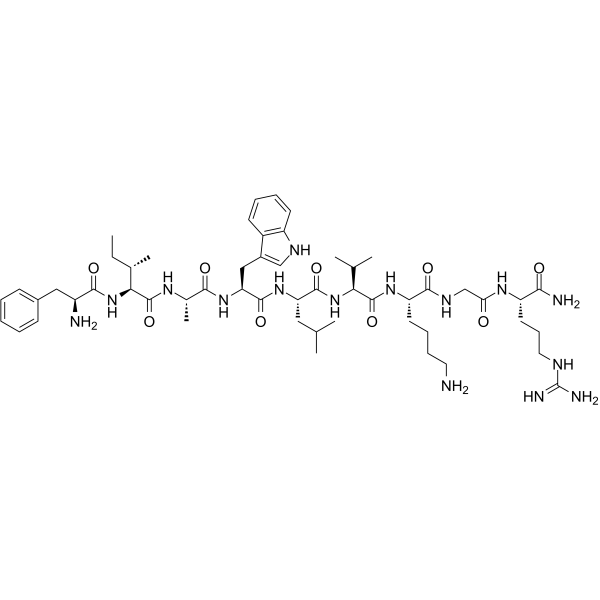
GLP-1(28-36)amide, a C-terminal nonapeptide of GLP-1, is a major product derived from the cleavage of GLP-1 by the neutral endopeptidase (NEP). GLP-1(28-36)amide is an antioxidant and targets to mitochondrion, inhibits mitochondrial permeability transition (MPT). GLP-1(28-36)amide has anti-diabetic and cardioprotection effects.
For research use only. We do not sell to patients.
- Purity : 98.85%
- CAS No.: 1225021-13-5
- Formula: C54H85N15O9
- Molecular Weight:1088.35
-
Storage:
Sealed storage, away from moisture and light.
Powder -80°C, 2 years , -20°C, 1 year* In solvent : -80°C, 6 months; -20°C, 1 month (sealed storage, away from moisture and light)

To place orders, for customer services and technical support, please contact: MedChemExpress USA
Tel: 609-228-6898 E-mail: [email protected] [email protected]


-
 Biological Activity
-
Chemical Information
-
Solvent & Solubility
- Protocols
- Purity & Documentation
- References
-
 Help & FAQs


-
HY-P3102
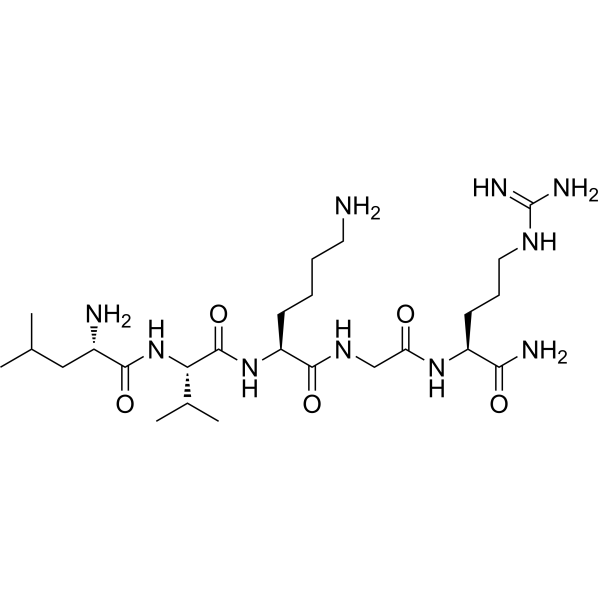
GLP-1(32-36)amidePentapeptide -
HY-P1141
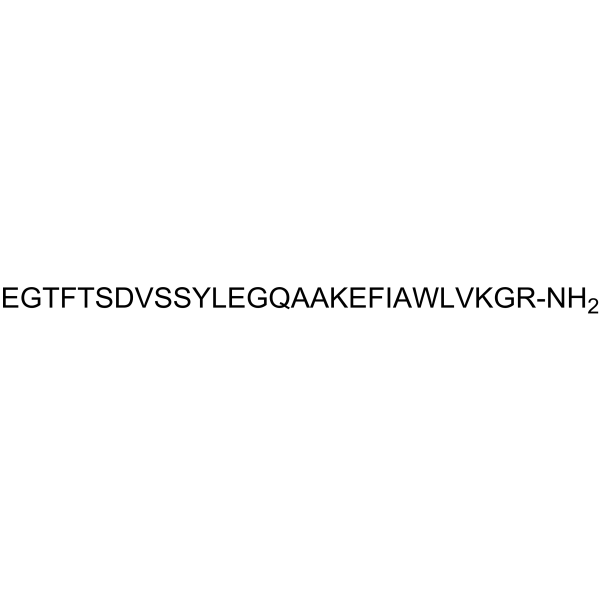
GLP-1(9-36)amideGLP-1 Receptor Antagonist -
HY-P1145
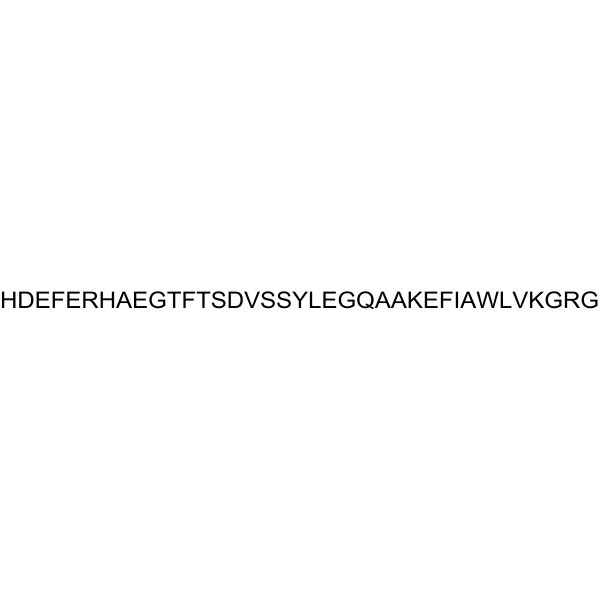
Glucagon-like peptide 1 (1-37), humanGCGR Agonist -
HY-101116
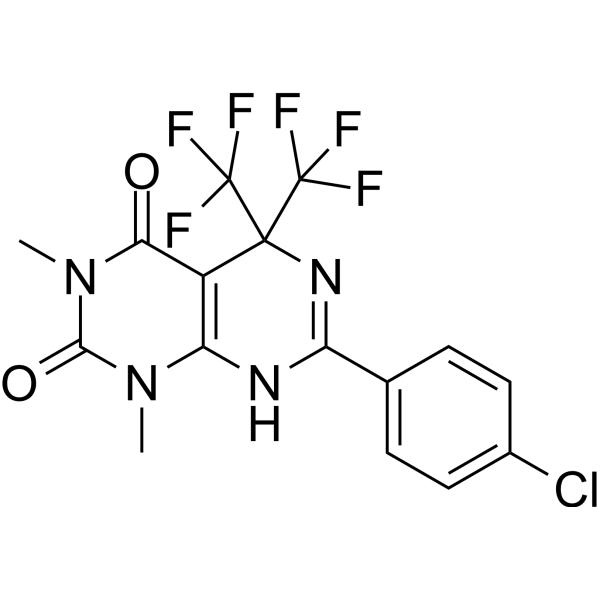
GLP-1R Antagonist 1GLP-1R Antagonist -
HY-P1226
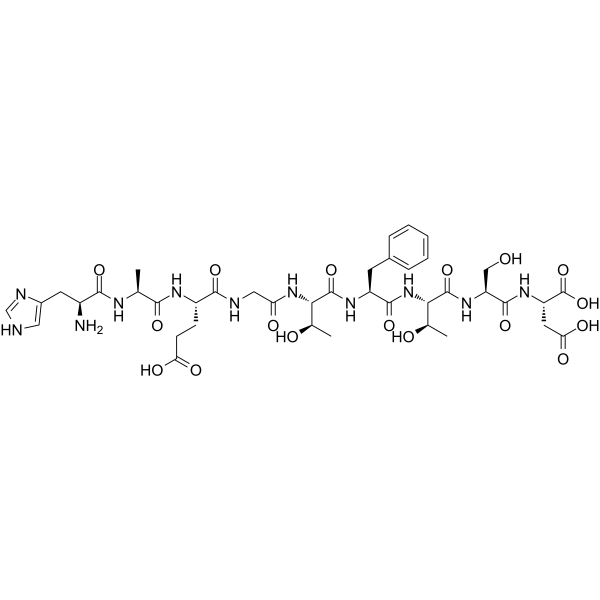
HAEGTFTSDResidue Peptide of GLP-1 -
HY-P1228
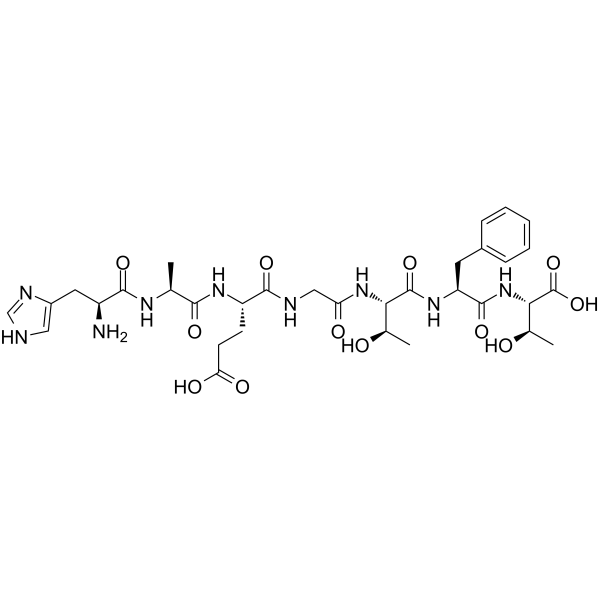
HAEGTFT -
HY-P1223
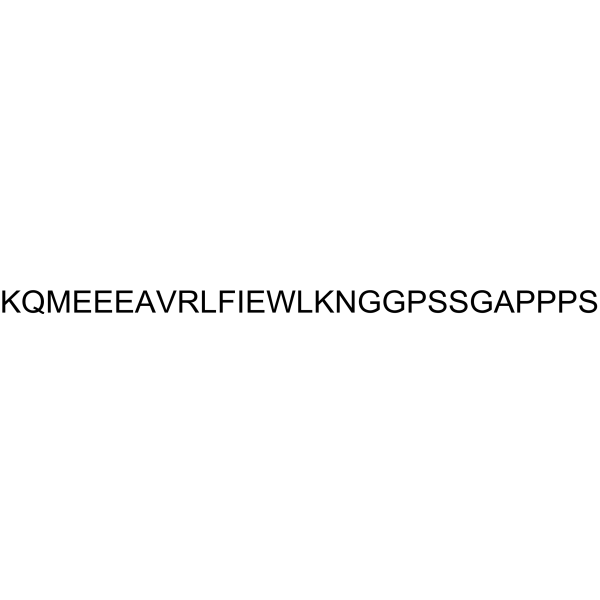
Exendin-3/4 (59-86)Exendin-4 Derivative -
HY-P0054A
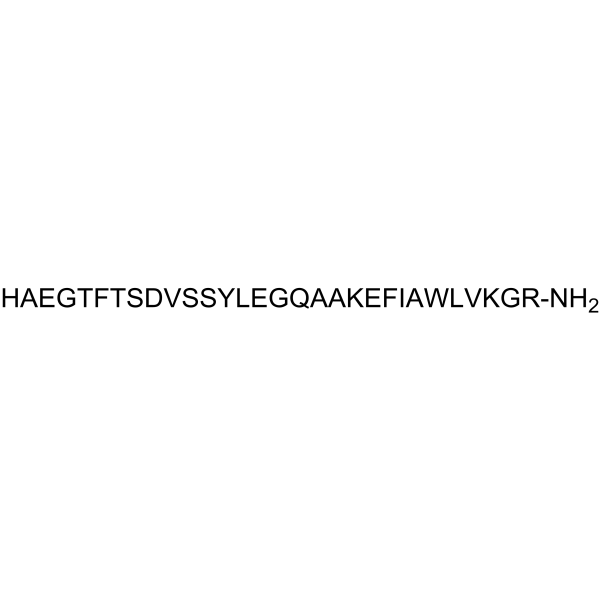
GLP-1(7-36), amideGCGR Agonist -
HY-P1224
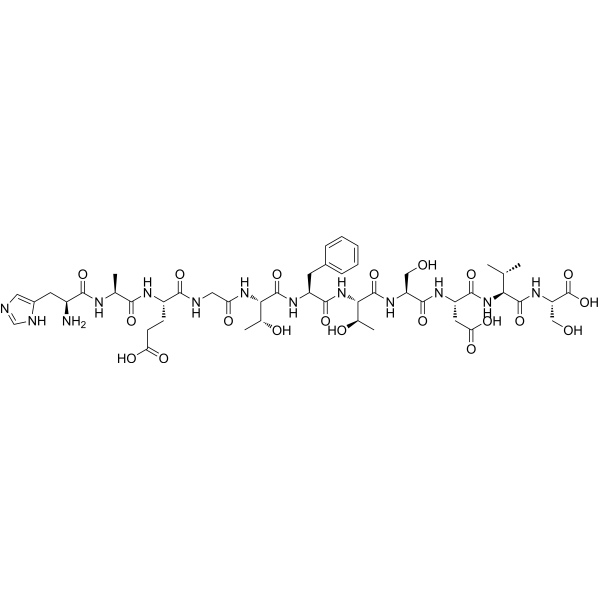
HAEGTFTSDVSGLP-1 Derivative -
HY-P0054
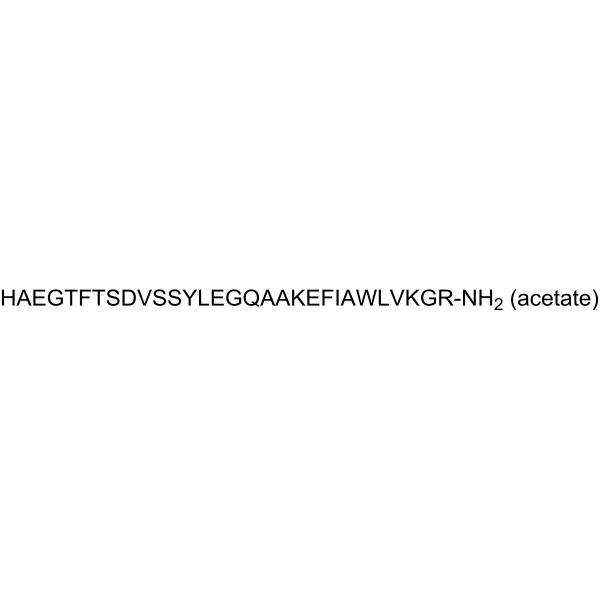
GLP-1(7-36), amide acetateInsulinotropic Peptide -

HY-P3506
RetatrutideGCGR/GIPR/GLP-1R Agonist -

HY-P3375
MazdutideGLP-1R/GCGR Agonist


Biological Activity
Description
In Vitro
Different from DPP-IV, NEP, which cleaves GLP-1(7-36)amide or GLP-1(9-36)amide to generate GLP-1(28-36)amide, is widely distributed in endothelial cells, vascular smooth muscle cells, cardiac cells and renal epithelial cells[1].
GLP-1(28-36)amide (100 nM) treatment on hepatocytes for 24 hours directly modulates mitochondrial oxidative metabolism, such as gluconeogenesis in mitochondria of hepatocytes[1].
The plasma half-life of GLP-1(28-36)amide is longer in human hepatocytes (t1/2 = 24 min) than that in mouse hepatocytes (t1/2 = 13 min)[1].
MedChemExpress (MCE) has not independently confirmed the accuracy of these methods. They are for reference only. Further protocols information, click here.
In Vivo
The intraperitoneal injection of 18 nmol/kg GLP-1(28-36)amide once daily for 9 weeks show cytoprotective effect on pancreatic β cells by increasing mass and promoting proliferation in a β-cell injury diabetic mouse model[1].
An in vivo study in high-fat diet-fed mice indicates that a six-week administration of 18.5 nmol/kg GLP-1(28-36)amide improved hepatic glucose disposal, which is associated with increased cAMP levels and phosphorylation of PKA target[1].
Administered GLP-1(28-36)amide for 20 min to male C57BL6/J mice (10-12 week old), then isolated hearts underwent 30 min of global ischemia and 40 min of reperfusion, the recovery of left ventricular developed pressure (LVDP) is significantly greater in GLP-1(28-36)amide group compared to vehicle-treated hearts[1].
MedChemExpress (MCE) has not independently confirmed the accuracy of these methods. They are for reference only.


Chemical Information
-
CAS No. 1225021-13-5
-
Appearance Solid
-
Molecular Weight 1088.35
-
Formula C54H85N15O9
-
Color White to off-white
-
Sequence
Phe-Ile-Ala-Trp-Leu-Val-Lys-Gly-Arg-NH2
-
Sequence Shortening
FIAWLVKGR-NH2
-
Shipping
Room temperature in continental US; may vary elsewhere.
-
Storage
Sealed storage, away from moisture and light
Powder -80°C 2 years -20°C 1 year * In solvent : -80°C, 6 months; -20°C, 1 month (sealed storage, away from moisture and light)


Solvent & Solubility
In Vitro:
DMSO : 33.33 mg/mL (30.62 mM; Need ultrasonic; Hygroscopic DMSO has a significant impact on the solubility of product, please use newly opened DMSO)
Please refer to the solubility information to select the appropriate solvent. Once prepared, please aliquot and store the solution to prevent product inactivation from repeated freeze-thaw cycles.
Storage method and period of stock solution: -80°C, 6 months; -20°C, 1 month (sealed storage, away from moisture and light). When stored at -80°C, please use it within 6 months. When stored at -20°C, please use it within 1 month.
Please refer to the solubility information to select the appropriate solvent. Once prepared, please aliquot and store the solution to prevent product inactivation from repeated freeze-thaw cycles.
Storage method and period of stock solution: -80°C, 6 months; -20°C, 1 month (sealed storage, away from moisture and light). When stored at -80°C, please use it within 6 months. When stored at -20°C, please use it within 1 month.
Concentration (start) × Volume (start) = Concentration (final) × Volume (final)
In Vivo:
Select the appropriate dissolution method based on your experimental animal and administration route.
- For the following dissolution methods, please ensure to first prepare a clear stock solution using an In Vitro approach and then sequentially add co-solvents:
- To ensure reliable experimental results, the clarified stock solution can be appropriately stored based on storage conditions. As for the working solution for In Vivo experiments, it is recommended to prepare freshly and use it on the same day.
- The percentages shown for the solvents indicate their volumetric ratio in the final prepared solution. If precipitation or phase separation occurs during preparation, heat and/or sonication can be used to aid dissolution.
Add each solvent one by one: 10% DMSO 40% PEG300 5% Tween-80 45% Saline
Solubility: ≥ 2.5 mg/mL (2.30 mM); Clear solution
This protocol yields a clear solution of ≥ 2.5 mg/mL (saturation unknown).
Taking 1 mL working solution as an example, add 100 μL DMSO stock solution (25.0 mg/mL) to 400 μL PEG300, and mix evenly; then add 50 μL Tween-80 and mix evenly; then add 450 μL Saline to adjust the volume to 1 mL.
Preparation of Saline: Dissolve 0.9 g sodium chloride in ddH₂O and dilute to 100 mL to obtain a clear Saline solution.
In Vivo Dissolution Calculator
Please enter the basic information of animal experiments:
-
-
-
-
Recommended: Prepare an additional quantity of animals to account for potential losses during experiments.
Please enter your animal formula composition:
-
%DMSO +
Recommended: Keep the proportion of DMSO in working solution below 2% if your animal is weak.
-
%+
-
+%Tween-80 + +
-
%Saline +
The co-solvents required include: DMSO, . All of co-solvents are available by MedChemExpress (MCE). , Tween 80. All of co-solvents are available by MedChemExpress (MCE).
Working solution concentration: 0.22 mg/mL
Method for preparing stock solution: mg drug dissolved in μL DMSO. Stock solution concentration: mg/mL. * In solvent : -80°C, 6 months; -20°C, 1 month (sealed storage, away from moisture and light)
1. Take μL DMSO stock solution;
2. Add μL .
μL , mix evenly;
3. Then add μL Tween 80, mix evenly;
4. Then add μL
Please ensure that the stock solution in the first step is dissolved to a clear state, and add co-solvents in sequence. You can use ultrasonic heating (ultrasonic cleaner, recommended frequency 20-40 kHz), vortexing, etc. to assist dissolution.

Protocols
-
Transepithelial/transendothelial electrical resistance assay
TEER measures electrical resistance across epithelial or endothelial monolayers cultured on permeable supports, and the readout reflects ionic conductance through the cell barrier, especially the paracellular pathway regulated by junctional integrity. TEER can be measured without destroying the monolayer and is commonly used before or during transport, permeability, barrier-disruption, and barrier-maturation experiments. TEER values are influenced by biological maturation and technical conditions; reported factors include temperature, medium formulation, passage number, electrode geometry, membrane properties, and junctional length during early monolayer maturation. Therefore, TEER should be interpreted with blank-insert subtraction, area normalization, repeated readings, and, when possible, orthogonal barrier readouts such as FITC-dextran flux or tight-junction staining.


Purity & Documentation
-
Data Sheet (274 KB)
-
SDS (252 KB)
- English - EN (252 KB)
- Français - FR (252 KB)
- Deutsch - DE (252 KB)
- Norwegian - NO (252 KB)
- Español - ES (252 KB)
- Swedish - SV (252 KB)
- Italian - IT (252 KB)
- Korean - KR (252 KB)
- Portuguese - PT (252 KB)
-
Handling Instructions (2659 KB)
References


Complete Stock Solution Preparation Table
Please refer to the solubility information to select the appropriate solvent. Once prepared, please aliquot and store the solution to prevent product inactivation from repeated freeze-thaw cycles.
Storage method and period of stock solution: -80°C, 6 months; -20°C, 1 month (sealed storage, away from moisture and light). When stored at -80°C, please use it within 6 months. When stored at -20°C, please use it within 1 month.
| Optional Solvent | Concentration Solvent Mass | 1 mg | 5 mg | 10 mg | 25 mg |
|---|---|---|---|---|---|
| DMSO | 1 mM | 0.9188 mL | 4.5941 mL | 9.1882 mL | 22.9706 mL |
| 5 mM | 0.1838 mL | 0.9188 mL | 1.8376 mL | 4.5941 mL | |
| 10 mM | 0.0919 mL | 0.4594 mL | 0.9188 mL | 2.2971 mL | |
| 15 mM | 0.0613 mL | 0.3063 mL | 0.6125 mL | 1.5314 mL | |
| 20 mM | 0.0459 mL | 0.2297 mL | 0.4594 mL | 1.1485 mL | |
| 25 mM | 0.0368 mL | 0.1838 mL | 0.3675 mL | 0.9188 mL | |
| 30 mM | 0.0306 mL | 0.1531 mL | 0.3063 mL | 0.7657 mL |


GLP-1(28-36)amide Related Classifications
HY-P3101 Related Classifications
 Powered by Bioz