


1. Search Result
Search Result
Results for "

Saccharomyces cerevisiae

" in MedChemExpress (MCE) Product Catalog:

152

Inhibitors & Agonists

11

Biochemical Assay Reagents

10

Peptides

63

Natural
Products

11

Recombinant Proteins

10

Isotope-Labeled Compounds

2

Oligonucleotides

Cat. No. Product Name Target Research Areas Chemical Structure
  • HY-N0771
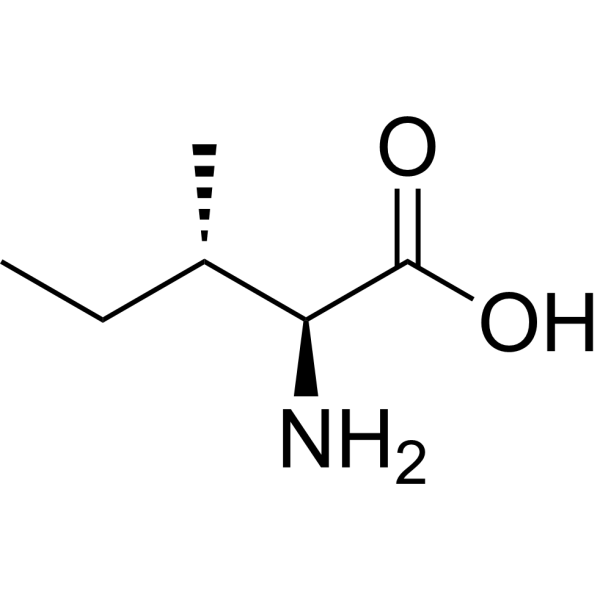
    L-Isoleucine
    5+ Cited Publications

    Endogenous Metabolite Cardiovascular Disease Metabolic Disease Inflammation/Immunology
    L-Isoleucine is an orally active branched chain amino acid, which is the L-enantiomer of isoleucine. L-Isoleucine has a role as a Saccharomyces cerevisiae metabolite, an Escherichia coli metabolite, a plant metabolite, a human metabolite, an algal metabolite and a mouse metabolite. L-Isoleucine regulates the inflammatory response to protect against pathogens in vivo and in vitro .
    L-Isoleucine
  • HY-N1132A
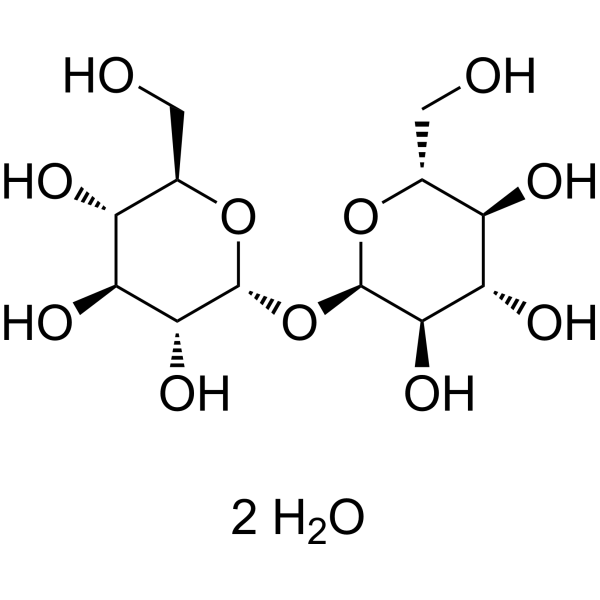
    D-(+)-Trehalose dihydrate
    Maximum Cited Publications
    9 Publications Verification

    D-Trehalose dihydrate; α,α-Trehalose dihydrate

    Endogenous Metabolite Others
    D-(+)-Trehalose dihydrate, isolated from Saccharomyces cerevisiae, can be used as a food ingredient and pharmaceutical excipient.
    D-(+)-Trehalose dihydrate
  • HY-W250113
    Zymosan A
    2 Publications Verification

    Zymosan A from Saccharomyces cerevisiae

    Toll-like Receptor (TLR) Inflammation/Immunology
    Zymosan A (Zymosan A from Saccharomyces cerevisiae) is a TLR2 agonist, that targeting TLRs can prevent and suppress IR-induced intestinal injury. Zymosan A exhibits a significant radioprotective effect, and protects IR-induced intestinal injury in mice. Zymosan A promotes the regeneration of intestinal stem cells (ISCs), after IR injury .
    Zymosan A
  • HY-153126

    Biochemical Assay Reagents Bacterial Infection Metabolic Disease
    Yeast extract is a concentrate of the soluble components of yeast, especially Saccharomyces cerevisiae. Yeast extract is rich in nutritional components such as partially hydrolyzed proteins, free amino acids, B vitamins, and minerals. As a food ingredient, Yeast extract has both nutritional and flavoring properties. Yeast extract can also promote wound healing .
    Yeast extract
  • HY-Y0989
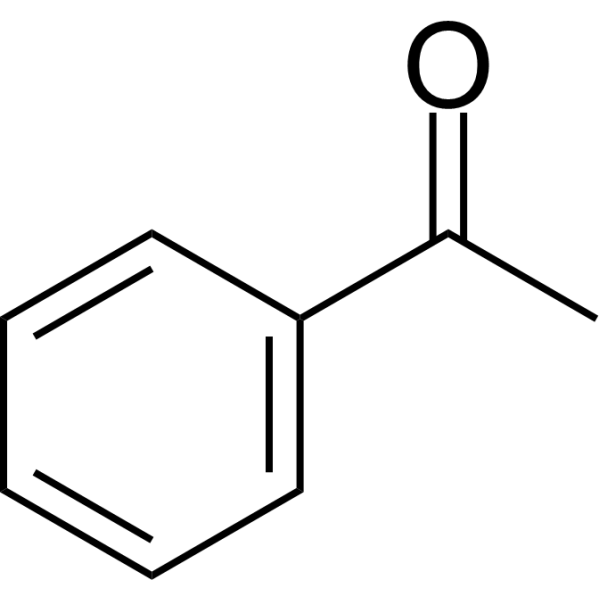
    Acetophenone
    1 Publications Verification

    1-Phenylethan-1-One

    Environmental Pollutants Drug Intermediate Fungal Others
    Acetophenone (1-Phenylethan-1-One) is an organic compound with simple structure. Acetophenone can be bioreduced to phenylethanol (PEA) .
    Acetophenone
  • HY-122122
    ML-60218
    5+ Cited Publications

    DNA/RNA Synthesis Infection Cancer
    ML-60218 is a broad-spectrum RNA pol III inhibitor, with IC50s of 32 and 27 μM for Saccharomyces cerevisiae and human. ML-60218 disrupts already assembled viroplasms and to hamper the formation of new ones without the need for de novo transcription of cellular RNAs .
    ML-60218
  • HY-W712327

    Biochemical Assay Reagents Others
    D-Xylulose 5-phosphate sodium is a pentose phosphate ester and an essential intermediate metabolite in the pentose phosphate pathway (PPP) and the non-oxidative phase of the pentose phosphate pathway. D-xylulose-5-phosphate sodium can be efficiently synthesized through the phosphorylation of D-xylulose catalyzed by D-xylulokinase (XKS1 from Saccharomyces cerevisiae), with ATP regeneration facilitated by the phosphoenolpyruvate (PEP)/pyruvate kinase (PK) system .
    D-Xylulose 5-phosphate sodium
  • HY-P2992

    PPase

    Fungal Infection
    Inorganic pyrophosphatase is a ubiquitous enzyme that converts pyrophosphate (PPi) to phosphate and, in this way, controls numerous biosynthetic reactions that produce PPi as a byproduct. Inorganic pyrophosphatase, Saccharomyces cerevisiae is an Inorganic pyrophosphatase isolated from Saccharomyces cerevisiae .
    Inorganic pyrophosphatase, Saccharomyces cerevisiae
  • HY-135484

    Biochemical Assay Reagents Metabolic Disease
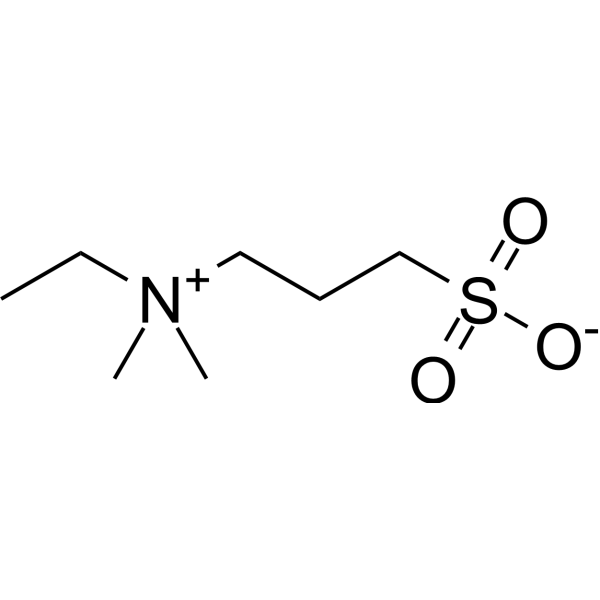
    NDSB-195 is protein stabilizer that enhances the dynamics of the β4-α2 loop of ubiquitin. NDSB-195 stabilizes Saccharomyces cerevisiae ubiquitin against guanidium chloride denaturation, increasing the onset temperature of heat denaturation in the presence of the denaturant .
    NDSB-195
  • HY-W129633

    DCIP sodium hydrate; DPIP sodium hydrate

    Biochemical Assay Reagents Others
    2,6-Dichlorophenolindophenol (DCIP; DPIP) sodium hydrate is a redox chromogenic indicator with a redox potential of +217 mV relative to SHE, and it acts as a substrate for reduction reactions. During the metabolic process of nutrient consumption by Saccharomyces cerevisiae, 2,6-Dichlorophenolindophenol sodium hydrate is reduced from dark blue to colorless, resulting in a decrease in absorbance. 2,6-Dichlorophenolindophenol sodium hydrate is widely used in spectrophotometric biochemical oxygen demand determination and preclinical colorimetric toxicity analysis for heavy metal ion detection based on Saccharomyces cerevisiae .
    2,6-Dichlorophenolindophenol sodium hydrate
  • HY-100582
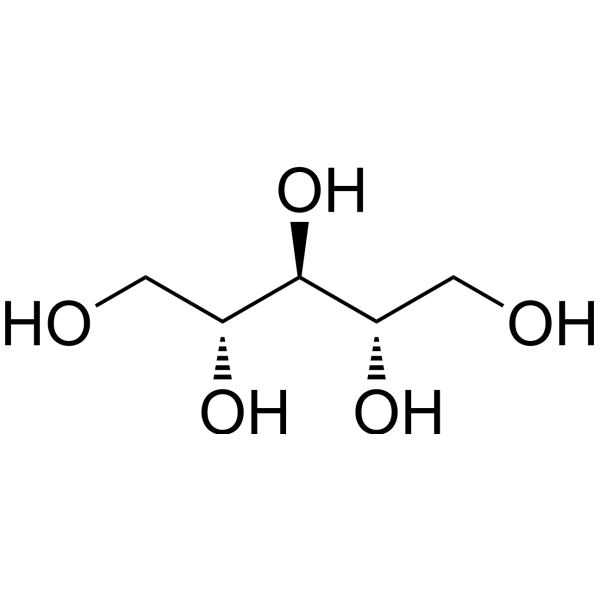
    Ribitol
    3 Publications Verification

    Adonitol; Adonite

    Endogenous Metabolite Others
    Ribitol is a crystalline pentose alcohol formed by the reduction of ribose. Enhancing the flux of D-glucose to the pentose phosphate pathway in Saccharomyces cerevisiae for the production of D-ribose and ribitol.
    Ribitol
  • HY-N0419
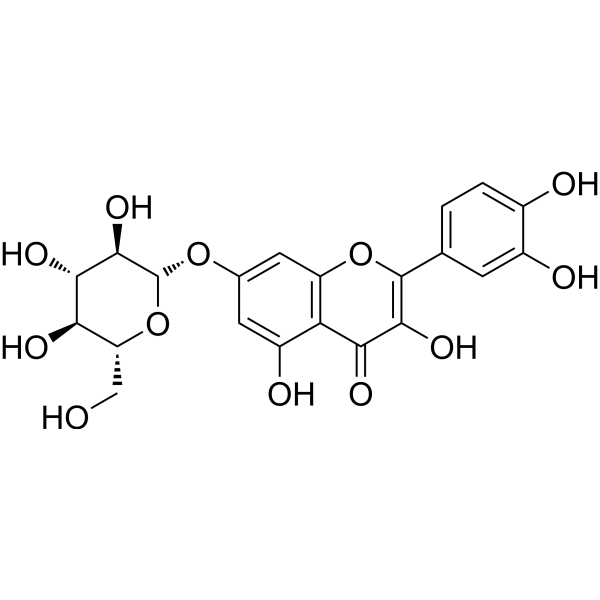
    Quercimeritrin
    2 Publications Verification

    Quercetin-7-O-β-D-glucopyranoside

    Glycosidase c-Kit MMP VEGFR Aurora Kinase Metabolic Disease Cancer
    Quercimeritrin (Quercetin-7-O-β-D-glucopyranoside) is an orally active α-glucosidase inhibitor (with an IC50 of 79.88 μM against the Saccharomyces cerevisiae enzyme) and a P-gp substrate, with anti-angiogenic and antioxidant activities. Quercimeritrin does not cross the blood-brain barrier and does not inhibit cytochrome P450 enzymes. Quercimeritrin precisely binds to and inhibits the active sites of c-Kit, MMP-2, Aurora-A kinases and α-glucosidase, thereby disrupting target functions. Quercimeritrin effectively regulates postprandial blood glucose and also exhibits significant anti-angiogenic activity, which inhibits endothelial cell proliferation and microvascular growth. Quercimeritrin can be used in the research of diabetes and breast cancer .
    Quercimeritrin
  • HY-P2740

    EC 1.1.1.1

    Endogenous Metabolite Metabolic Disease
    Alcohol dehydrogenase, Saccharomyces cerevisiae is a dimeric protein in the cytosol of cells. Alcohol dehydrogenase, the key enzyme for alcohol consumption in the body, is the highest expressed in the liver and participates in the detoxification mechanism of environmental alcohol .
    Alcohol dehydrogenase, Saccharomyces cerevisiae
  • HY-W000800

    Bacterial Infection
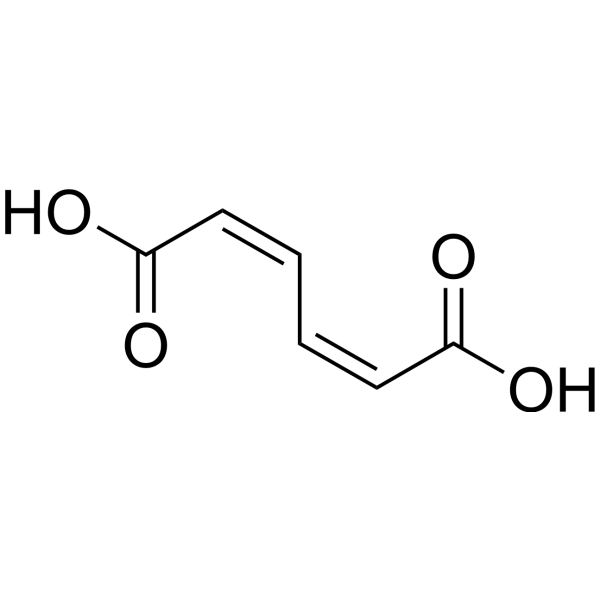
    cis,cis-Muconic acid is a dicarboxylic acid produced by Saccharomyces cerevisiae. cis,cis-Muconic acid shows pH-dependent toxicity against Saccharomyces cerevisiae CEN.PK113-7D. cis,cis-Muconic acid can be used as intermediate for the production of various plastics and polymers .
    cis,cis-Muconic acid
  • HY-P10304

    Cyclo(Pro-Arg)

    Fungal Others
    Cyclo(Arg-Pro) (Cyclo(Pro-Arg)) is an inhibitor for chitinase. Cyclo(Arg-Pro) inhibits cell separation of Saccharomyces cerevisiae, without affecting its growth. Cyclo(Arg-Pro) inhibits the morphological change of Candida albicans from yeast form to filamentous form .
    Cyclo(Arg-Pro)
  • HY-N7814
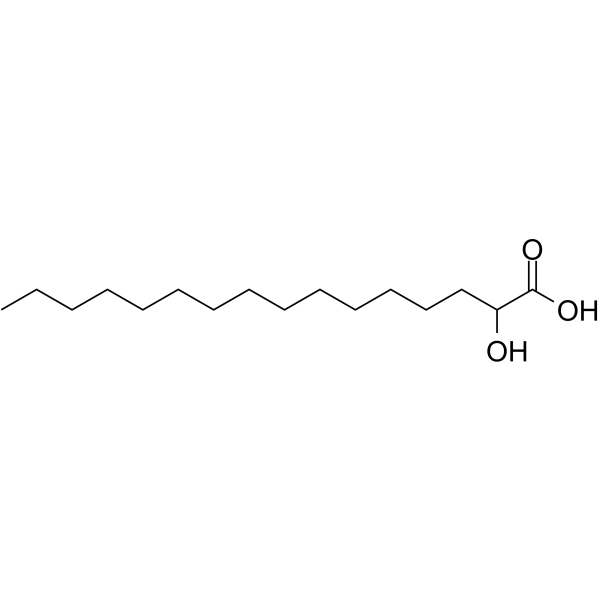
    2-Hydroxypalmitic acid
    1 Publications Verification

    Endogenous Metabolite Drug Intermediate Infection
    2-Hydroxypalmitic acid is an intermediate in the phytosphingosine metabolic pathway. 2-Hydroxypalmitic acid is exclusively incorporated into sphingolipids and not used for other lipids. 2-Hydroxypalmitic acid promotes the production of odd-carbon phosphatidylcholine species. 2-Hydroxypalmitic acid is applicable to studies of Saccharomyces cerevisiae infection .
    2-Hydroxypalmitic acid
  • HY-107823

    Cholesterol 3-acetate; Cholesterin acetate; Cholesterol 3β-acetate

    Endogenous Metabolite Others
    Cholesteryl acetate (Cholesterol 3-acetate) is a cholesterol ester that is exported from Saccharomyces cerevisiae via a Pry1-dependent mechanism. Cholesteryl acetate binds to the CAP superfamily protein Pry1 via interactions dependent on Pry1’s caveolin-binding motif .
    Cholesteryl acetate
  • HY-N0771R

    Reference Standards Endogenous Metabolite Cardiovascular Disease Metabolic Disease Inflammation/Immunology
    L-Isoleucine (Standard) is the analytical standard of L-Isoleucine. This product is intended for research and analytical applications. L-Isoleucine is an orally active branched chain amino acid, which is the L-enantiomer of isoleucine. L-Isoleucine has a role as a Saccharomyces cerevisiae metabolite, an Escherichia coli metabolite, a plant metabolite, a human metabolite, an algal metabolite and a mouse metabolite. L-Isoleucine regulates the inflammatory response to protect against pathogens in vivo and in vitro .
    L-Isoleucine (Standard)
  • HY-W012874

    H-D-Thr-OH

    Fructose-1,6-bisphosphate aldolase Endogenous Metabolite Drug Intermediate Metabolic Disease
    D-Threonine (H-D-Thr-OH) is one of the important unnatural amino acids used as chiral building blocks in pharmaceutical drugs. D-Threonine is a metabolite of Saccharomyces cerevisiae. D-Threonine is cleaved into glycine and acetaldehyde by the catalytic action of D-threonine aldolase .
    D-Threonine
  • HY-W007626

    Fungal Infection
    3,5-Dimethoxybenzaldehyde is an antifungal agent. 3,5-Dimethoxybenzaldehyde exhibits antifungal activity against Saccharomyces cerevisiae cell wall integrity mutants (slt2Δ and bck1Δ) and Aspergillus fumigatus MAPK mutants (sakAΔ and mpkCΔ) .
    3,5-Dimethoxybenzaldehyde
  • HY-W049970

    Environmental Pollutants Bacterial Infection
    Carvacrol methyl ether is a carvacrol derivative isolated from plant essential oils. Carvacrol methyl ether essentially lost its antibacterial activity, exhibiting only a weak inhibitory effect on Saccharomyces cerevisiae at the highest tested concentration of 3 g/L .
    Carvacrol methyl ether
  • HY-P2124

    Antibiotic Bacterial Infection
    Cyclo(L-Trp-L-Trp) is an antibiotic, and shows antimicrobial activity. Cyclo(L-Trp-L-Trp) can inhibit A. baumannii, as well as Candida albicans, Bacillus subtilis, Micrococcus luteus, Saccharomyces cerevisiae, Aspergillus niger, Staphylococcus aureus. Cyclo(L-Trp-L-Trp) can be used in microbial infection research .
    Cyclo(L-Trp-L-Trp)
  • HY-N1132S

    D-Trehalose-d14; α,α-Trehalose-d14

    Isotope-Labeled Compounds Endogenous Metabolite Others
    D-(+)-Trehalose-d14 is the deuterium labeled D-(+)-Trehalose. D-(+)-Trehalose, isolated from Saccharomyces cerevisiae, can be used as a food ingredient and pharmaceutical excipi .
    D-(+)-Trehalose-d14
  • HY-N1132AR

    D-Trehalose dihydrate (Standard); α,α-Trehalose dihydrate (Standard)

    Reference Standards Endogenous Metabolite Others
    D-(+)-Trehalose dihydrate (Standard) is the analytical standard of D-(+)-Trehalose dihydrate. This product is intended for research and analytical applications. D-(+)-Trehalose dihydrate, isolated from Saccharomyces cerevisiae, can be used as a food ingredient and pharmaceutical excipient.
    D-(+)-Trehalose dihydrate (Standard)
  • HY-100582R

    Adonitol (Standard); Adonite (Standard)

    Reference Standards Endogenous Metabolite Others
    Ribitol (Standard) is the analytical standard of Ribitol. This product is intended for research and analytical applications. Ribitol is a crystalline pentose alcohol formed by the reduction of ribose. Enhancing the flux of D-glucose to the pentose phosphate pathway in Saccharomyces cerevisiae for the production of D-ribose and ribitol.
    Ribitol (Standard)
  • HY-113143A

    Endogenous Metabolite Infection Metabolic Disease Inflammation/Immunology
    Galactose 1-phosphate Potassium salt acts as a competitive substrate inhibitor of galactose-1-phosphate uridylyltransferase (GALT). Galactose 1-phosphate Potassium salt is a competitive inhibitor of Phosphoglucomutase, yet the rate at which this enzyme converts Galactose 1-phosphate to Galactose-6-phosphate is 400 times slower than the rate of converting Glucose-1-phosphate. Galactose 1-phosphate Potassium salt can be used in studies related to Saccharomyces cerevisiae infection and type I galactosemia .
    Galactose 1-phosphate Potassium salt
  • HY-125857B

    Biochemical Assay Reagents Apoptosis Caspase Metabolic Disease
    Cytochrome C (Saccharomyces cerevisiae) is a type C cytochrome located in the intermembrane space of the mitochondria. As an electron carrier, Cytochrome C (Saccharomyces cerevisiae) transfers electrons between complex III (cytochrome c reductase) and complex IV (cytochrome c oxidase, CIV) of the respiratory chain. Cytochrome C (Saccharomyces cerevisiae) can play a crucial role in triggering apoptosis by being released from the mitochondria into the cytosol .
    Cytochrome C (Saccharomyces cerevisiae)
  • HY-108398B

    Endogenous Metabolite Metabolic Disease
    11(Z),14(Z),17(Z)-Eicosatrienoic acid is an unsaturated fatty acid that can maintain the continued replication of functional mitochondria in Saccharomyces cerevisiae (KD115) .
    11(Z),14(Z),17(Z)-Eicosatrienoic acid
  • HY-N7626

    Fungal Glycosidase Infection
    Eleutherol is a naphthalene isolated from E. americana with antifungal activities . Eleutherol is against yeasts Candida albicans, C. tropicalis, Saccharomyces cerevisiae and Cryptococcus neoformans with MIC values between 7.8 µg/mL and 250 µg/mL . Eleutherol inhibits α-glucosidase function with an IC50>1.00 mM .
    Eleutherol
  • HY-P10304A

    Cyclo(Pro-Arg) TFA

    Fungal Infection
    Cyclo (Arg-Pro) TFA is a chitinase inhibitor. Cyclo (Arg-Pro) TFA disrupts cell separation and morphological transition of yeast by inhibiting chitinase activity. Cyclo (Arg-Pro) TFA prevents cell separation of Saccharomyces cerevisiae, leading to the formation of grape-like cell clusters, without inhibiting cell growth. Cyclo (Arg-Pro) TFA blocks the morphological transition of Candida albicans from yeast form to hyphal form, without inhibiting cell growth .
    Cyclo(Arg-Pro) TFA
  • HY-128425A
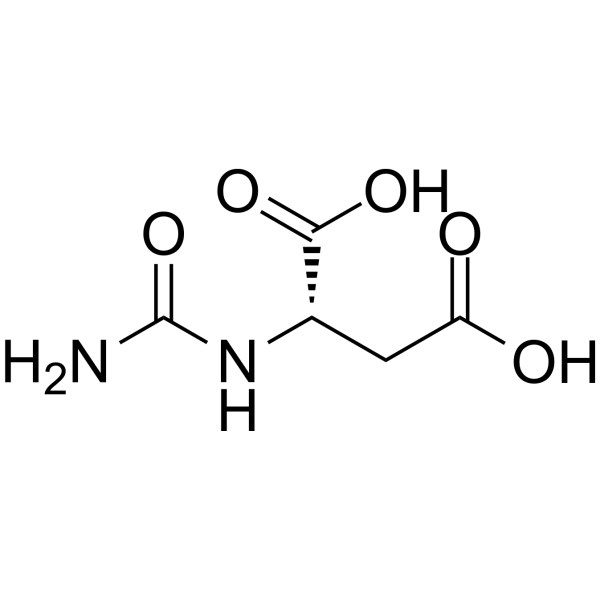
    N-Carbamoyl-L-aspartic acid
    1 Publications Verification

    L-Ureidosuccinic acid

    Fungal Infection
    N-Carbamoyl-L-aspartic acid (L-Ureidosuccinic acid) is an important pyrimidine metabolic precursor and intermediate metabolite. N-Carbamoyl-L-aspartic acid reverses the growth inhibition of Ura + strains induced by 2-thiouracil (with growth rate increasing linearly with its concentration), but fails to support the growth of uracil-requiring Ura - strains. N-Carbamoyl-L-aspartic acid inhibits the cell growth of *Saccharomyces cerevisiae* by suppressing the purine biosynthetic pathway at a pre-step of 5-aminoimidazole nucleotide synthesis. The growth inhibitory effect of N-Carbamoyl-L-aspartic acid on yeast can be alleviated by purines, and the sensitivity of strains is closely related to the activity level of dihydroorotase .
    N-Carbamoyl-L-aspartic acid
  • HY-N7683

    Glycosidase Metabolic Disease
    Prunetin 5-O-β-D-glucopyranoside is an isoflavone. Prunetin 5-O-β-D-glucopyranoside can be isolated from the pedicels of Prunus avium and Prunus cerasus. Prunetin 5-O-β-D-glucopyranoside acts as a non-competitive α-glucosidase inhibitor, with a IC50 of 56.05 μg/mL and a Ki of 121 μg/mL against Saccharomyces cerevisiae α-glucosidase. Prunetin 5-O-β-D-glucopyranoside can be used in studies related to type 2 diabetes .
    Prunetin 5-O-β-D-glucopyranoside
  • HY-Y0319D

    Endogenous Metabolite AMPK Reactive Oxygen Species (ROS) Caspase Fungal PPAR Infection Neurological Disease Metabolic Disease Inflammation/Immunology Cancer
    Acetic acid lead is a carboxylic acid and short-chain fatty acid (SCFAs). Magnesium acetate tetrahydrate activates AMPK, increases ROS, cleaved caspase 9, PPARα, downregulates SREBP-1c, ChREBP expression. Acetic acid lead exhibits antifungal activity against Saccharomyces cerevisiae W303-1A. Acetic acid lead regulates energy metabolism. Acetic acid lead has anticancer activity against gastric cancer. Acetic acid lead induces writhing reaction and ulcerative colitis. Acetic acid lead can be used in the researches for gastric cancer, ulcerative colitis, hepatic steatosis, and pain .
    Acetic acid lead
  • HY-N6952R
    Geraniol (Standard)
    2 Publications Verification

    Reference Standards Fungal Endogenous Metabolite Infection
    Geraniol (Standard) is the analytical standard of Geraniol. This product is intended for research and analytical applications. Geraniol, an olefinic terpene, was found to inhibit growth of Candida albicans and Saccharomyces cerevisiae strains .
    Geraniol (Standard)
  • HY-100582S

    Adonitol-1-13C; Adonite-1-13C

    Isotope-Labeled Compounds Endogenous Metabolite Others
    Ribitol-1- 13C is the 13C labeled Ribitol. Ribitol is a crystalline pentose alcohol formed by the reduction of ribose. Enhancing the flux of D-glucose to the pentose phosphate pathway in Saccharomyces cerevisiae for the production of D-ribose and ribitol .
    Ribitol-1-13C
  • HY-163462

    Fungal Infection
    Poacic Acid is a plant-derived stilbenoid with an antifungal activity. Poacic Acid localizes to the yeast cell wall and disrupts the production and assembly of β-1,3-glucan in the fungal cell walls. Poacic Acid exhibits fungicidal activity to Saccharomyces cerevisiae and plasma membrane-compromised Candida albicans mutants .
    Poacic acid
  • HY-E70122

    Others Others
    Uridylate kinase is a member of the nucleoside mono-phosphate (NMP) kinase family and catalyzes the reaction ATP+NMP ADP+NDP with moderate specificity for UMP .
    Uridylate kinase
  • HY-P10304C

    Fungal Infection
    Cyclo(Pro-dArg) is an inhibitor of chitinase. Cyclo(Pro-dArg) inhibits the cell separation of Saccharomyces cerevisiae but does not affect its growth. Cyclo(Pro-dArg) inhibits the transition of Candida albicans from yeast to filamentous morphology.
    Cyclo(Pro-dArg)
  • HY-W013166

    N-Biotinylaminoethyl methanethiosulfonate

    Biochemical Assay Reagents Others
    MTSEA-biotin is a biotin-conjugated 2-aminoethyl-methanethiosulfonate that can be used to specifically label modified nucleosides. MTSEA-biotin binds 4-thiouridine (s4U) to visualize newly transcribed tRNA in Saccharomyces cerevisiae cells .
    MTSEA-biotin
  • HY-121817

    Aldehyde Dehydrogenase (ALDH) Drug Intermediate Amyloid-β Infection Neurological Disease
    Sulfiram is a very weak aldehyde dehydrogenase (ALDH) inhibitor, with an IC50 value of 413 μM against Saccharomyces cerevisiae ALDH. As a photochemical precursor, Sulfiram undergoes photoconversion to form Disulfiram (HY-B0240), a potent ALDH inhibitor. Sulfiram inhibits the dimerization of the extracellular domain fragment (amino acid residues 230-624) of amyloid precursor protein (APP), alters the monomer-dimer equilibrium, induces conformational changes in the fragment, and enhances the production of sAPPα via α-cleavage of APP. Sulfiram can be used in research related to scabies and Alzheimer's disease .
    Sulfiram
  • HY-W089230

    N,N'-Di-tert-butoxycarbonyl-L-histidine

    Amino Acid Derivatives Others
    Boc-His(Boc)-OH (N,N'-Di-tert-butoxycarbonyl-L-histidine) is an amino acid derivative with an Fmoc protecting group, which can be used to synthesize the dodecapeptide α-mating factor of Saccharomyces cerevisiae .
    Boc-His(Boc)-OH
  • HY-129260

    3-Amino-3-deoxyglucose

    Fungal Infection
    Kanosamine (3-Amino-3-deoxyglucose) is an antibiotic against Saccharomyces cerevisiae and human pathogenic fungi Candida albicans. Kanosamine exhibits antifungal activity through inhibition of cell wall synthesis and inhibition of GlcN-6-P synthase with phosphorylated kanosamine-6-phosphate in cytoplasma .
    Kanosamine
  • HY-135445

    21-Norrapamycin

    Fungal Infection
    Prolylrapamycin (21-Norrapamycin) is the derivative of Rapamycin (HY-10219). Prolylrapamycin exhibits antifungal activity, that inhibits Candida albicans, Saccharomyces cerevisiae, and Fusarium oxysporum with MIC of 0.125-2 μg/mL .
    Prolylrapamycin
  • HY-113143

    Endogenous Metabolite Infection Metabolic Disease
    Galactose 1-phosphate acts as a competitive substrate inhibitor of galactose-1-phosphate uridylyltransferase (GALT). Galactose 1-phosphate is a competitive inhibitor of Phosphoglucomutase, yet the rate at which this enzyme converts Galactose 1-phosphate to Galactose-6-phosphate is 400 times slower than the rate of converting Glucose-1-phosphate. Galactose 1-phosphate can be used in studies related to Saccharomyces cerevisiae infection and type I galactosemia .
    Galactose 1-phosphate
  • HY-142003

    Fungal Infection
    27-O-Demethylrapamycin, a Rapamycin (HY-10219) derivative, is an antifungal agent. 27-O-Demethylrapamycin inhibits Candida albicans, Saccharomyces cerevisiae, and Fusarium oxysporum .
    27-O-Demethylrapamycin
  • HY-123510

    Fungal Others
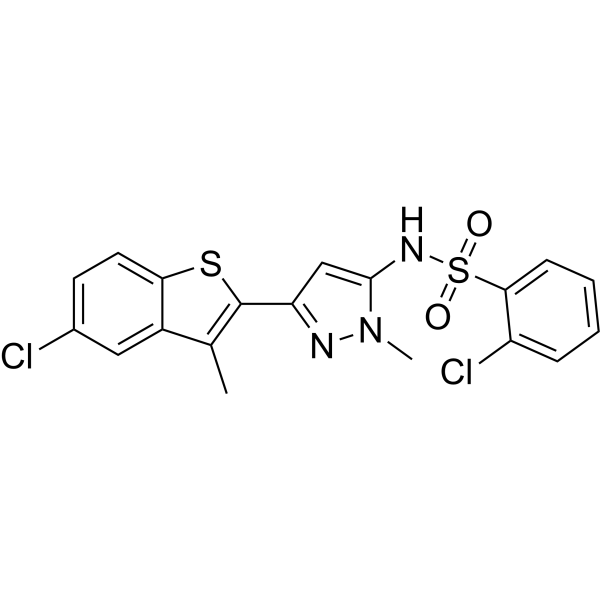
    NSC-670224 is toxic to Saccharomyces cerevisiae at low micromolar concentration (LC50: 3.2 μM) .
    NSC-670224
  • HY-W768324

    Adonitol-13C5; Adonite-13C5

    Isotope-Labeled Compounds Endogenous Metabolite Others
    Ribitol- 13C5 (Adonitol- 13C5) is the 13C-labeled Ribitol (HY-100582). Ribitol is a crystalline pentose alcohol formed by the reduction of ribose. Enhancing the flux of D-glucose to the pentose phosphate pathway in Saccharomyces cerevisiae for the production of D-ribose and ribitol.
    Ribitol-13C5
  • HY-115127

    m-Methoxytoluene; m-Methylanisole

    Endogenous Metabolite Bacterial Infection Others
    Methylanisole (m-Methoxytoluene; m-MetHYlanisole) is a volatile metabolite produced by Penicillium strains growing on barley. 3-Methylanisole serves as a precursor for the biotechnological production of vanillin .
    3-Methylanisole
  • HY-122228

    Cellulose Synthase Others
    Cestrin is a cellulose Synthase 1 (CESA1) inhibitor. Cestrin inhibits cell elongation and reduces cellulose content and interferes with the trafficking of cellulose synthase complexes and their associated proteins KORRIGAN1 and POM2/CSI1 .
    Cestrin
  • HY-178330

    Others Topoisomerase Infection
    IKE16 is a fungi-selective eukaryotic topoisomerase II inhibitor, with an IC50 value of 13.68 μM. IKE16 suppresses both the DNA relaxation activity and the decatenation activity of yTOPOII selectively. IKE16 shows moderate activity against standard fungal strains (Candida albicans ATCC 10231, Saccharomyces cerevisiae ATCC 89763) with a minimum inhibitory concentration (MIC) of 2 μg/mL against S. cerevisiae ATCC 89763. IKE16 exhibits high cytotoxicity against human cells, with an EC50 of 0.07 μM in HepG2 and 0.045 μM in HEK-293. IKE16 can be used for the study of antifungal infection .
    IKE16

Inquiry Online

Your information is safe with us. * Required Fields.

Salutation


Country or Region *

Applicant Name *


Organization Name *

Department *


Email Address *


Product Name *

Cat. No.


Requested quantity *

Phone Number *


Remarks

Inquiry Online

Inquiry Information

Product Name:
Cat. No.:
Quantity:
MCE Japan Authorized Agent:

