



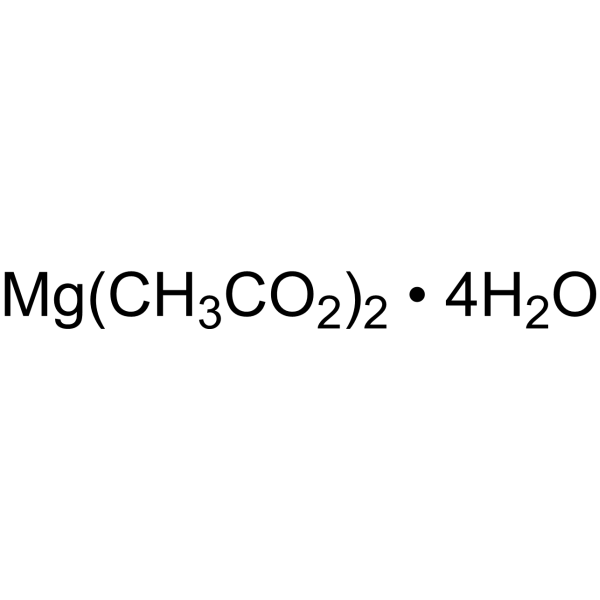
Magnesium acetate tetrahydrate

Based on 1 Customer Validation
Magnesium acetate tetrahydrate is a carboxylic acid and short-chain fatty acid (SCFAs). Magnesium acetate tetrahydrate activates AMPK, increases ROS, cleaved caspase 9, PPARα, downregulates SREBP-1c, ChREBP expression. Magnesium acetate tetrahydrate exhibits antifungal activity against Saccharomyces cerevisiae W303-1A. Magnesium acetate tetrahydrate regulates energy metabolism. Magnesium acetate tetrahydrate has anticancer activity against gastric cancer. Magnesium acetate tetrahydrate induces writhing reaction and ulcerative colitis. Magnesium acetate tetrahydrate can be used in the researches for gastric cancer, ulcerative colitis, hepatic steatosis, and pain.
For research use only. We do not sell to patients.
- Purity : 99.47%
- CAS No.: 16674-78-5
- Formula: C4H14MgO8
- Molecular Weight:214.45
-
Storage:
Store at room temperature 3 years.
In solvent -80°C, 2 years , -20°C, 1 year

To place orders, for customer services and technical support, please contact: MedChemExpress USA
Tel: 609-228-6898 E-mail: [email protected] [email protected]


-
 Biological Activity
-
Chemical Information
-
Solvent & Solubility
- Purity & Documentation
- References
-
 Help & FAQs


-

HY-Y0319B
Acetic acid (potassium 99%) -

HY-Y0319B1
Potassium acetate, for molecular biology -
HY-17567
Heparin -
HY-D0861
EGTA -
HY-B1776
Spermidine -
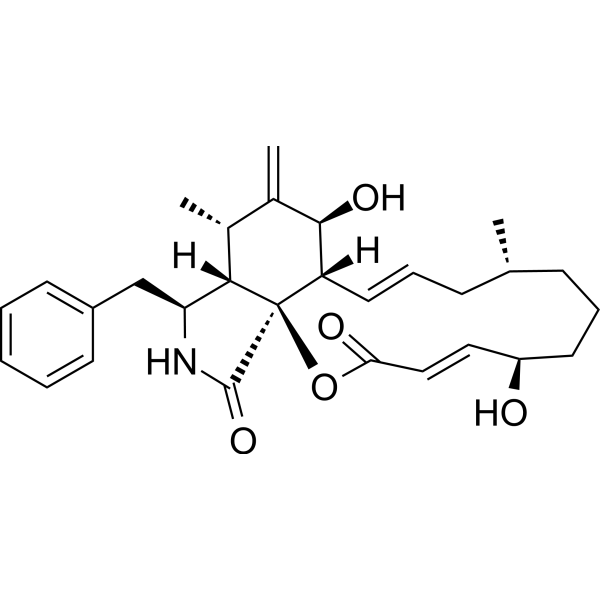
HY-16928
Cytochalasin B -
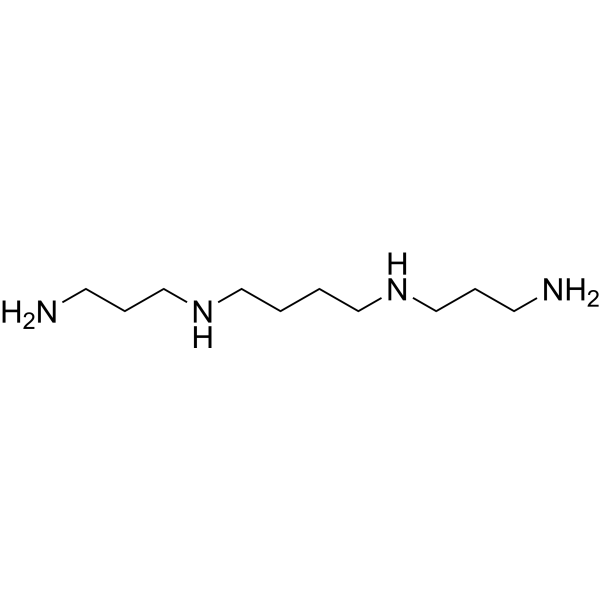
HY-B1777
Spermine -
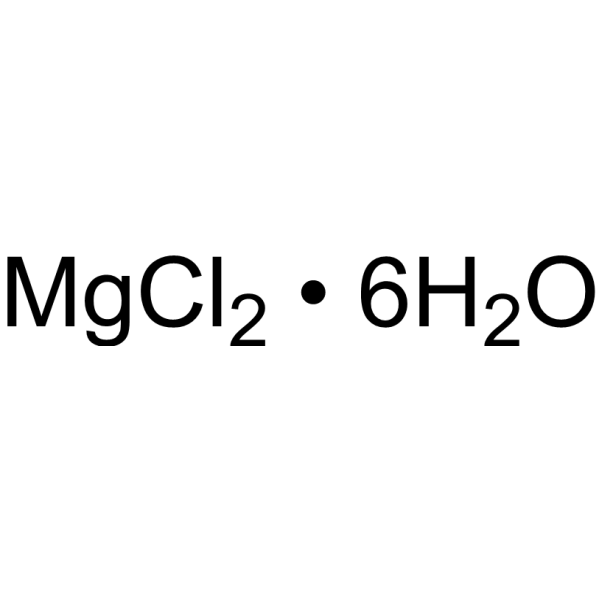
HY-W019981B
Magnesium chloride hexahydrate, for molecular biology -
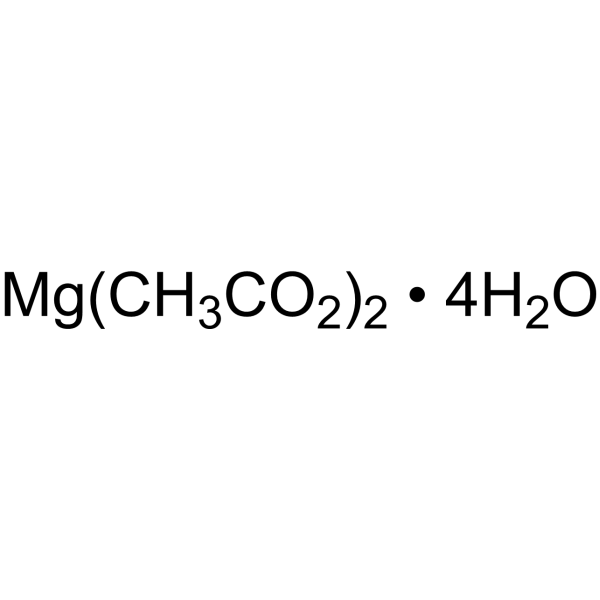
HY-Y0319G1
Magnesium acetate tetrahydrate, for molecular biology -
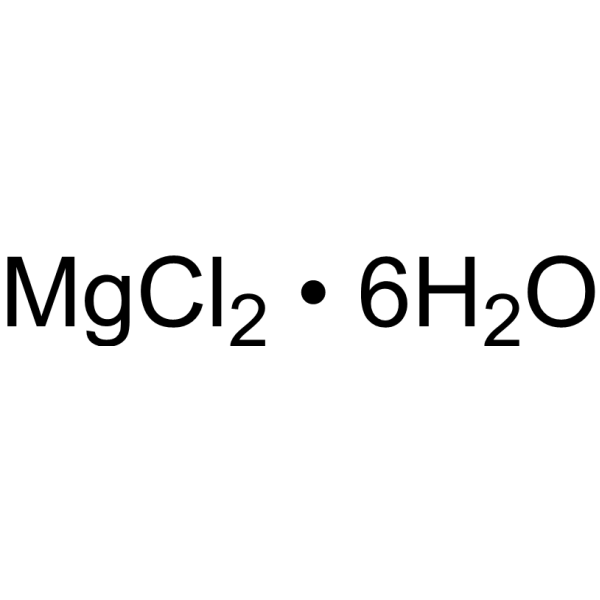
HY-W019981C
Magnesium chloride hexahydrate, for cell culture -
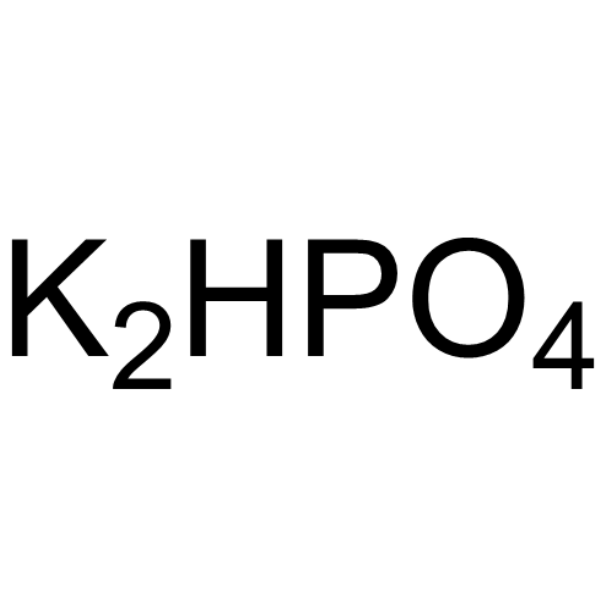
HY-W019883
Dipotassium hydrogen phosphate -

HY-Y1110H
Magnesium chloride anhydrous, suitable for insect cell culture


Biological Activity
Description
|
Microbial Metabolite |
Human Endogenous Metabolite |
PPARα |
Caspase 9 |
In Vitro
Magnesium acetate tetrahydrate (Acetic acid; 2-5 µM; 24 h) induces cancer cell-selective death in gastric cancer cells (RGK1) via oxidative stress, while having minor effects on normal gastric mucosal cells (RGM1)[3].
Magnesium acetate tetrahydrate (Acetic acid; 20-200 mM; 200 min) induces programmed cell death in Saccharomyces cerevisiae W303-1A[4].
Magnesium acetate tetrahydrate (Acetic acid; 5 mM; 15 d) suppresses the increase in disaccharidase activity (sucrase, maltase, trehalase, lactase) in Caco-2 cells without affecting cell growth or glucose transport[5].
Magnesium acetate tetrahydrate (Acetic acid; 8-7.2 mM; 3 h) activates the AMPKα signaling pathway by consuming ATP to increase the AMP/ATP ratio in bovine hepatocytes, upregulating lipid oxidation genes, downregulating lipogenic genes, and reducing intracellular triglyceride content[6].
MedChemExpress (MCE) has not independently confirmed the accuracy of these methods. They are for reference only.
-
Cell Line:Rat gastric mucosal cells (RGM1), cancerous gastric mucosal cells (RGK1)
-
Concentration:0, 1, 2, 5, 10, 20 µM
-
Incubation Time:24 h
-
Result:Increased monocarboxylic transporter 1 (MCT1) and cleaved caspase 9 in RGK1 cells.
Showed minor effects in RGM1 cells.
-
Cell Line:Bovine hepatocytes
-
Concentration:1.8 mM, 3.6 mM, 7.2 mM
-
Incubation Time:3 h
-
Result:Increased AMPKα phosphorylation and activity, upregulated PPARα expression, downregulated SREBP-1c and ChREBP expression.
In Vivo
Magnesium acetate tetrahydrate Acetic acid (Acetic acid; 5% v/v; rectal instillation) induces ulcerative colitis in mice, causing weight loss, diarrhea, colonic inflammation, and tissue damage[8].
MedChemExpress (MCE) has not independently confirmed the accuracy of these methods. They are for reference only.


Chemical Information
-
CAS No. 16674-78-5
-
Appearance Solid
-
Molecular Weight 214.45
-
Formula C4H14MgO8
-
Color White to off-white
-
SMILES
[Mg].O=C(O)C.O
-
Shipping
Room temperature in continental US; may vary elsewhere.
-
Storage
Store at room temperature 3 years
In solvent -80°C 2 years -20°C 1 year


Solvent & Solubility
In Vitro:
DMSO : 100 mg/mL (466.31 mM; Need ultrasonic; Hygroscopic DMSO has a significant impact on the solubility of product, please use newly opened DMSO)
Please refer to the solubility information to select the appropriate solvent. Once prepared, please aliquot and store the solution to prevent product inactivation from repeated freeze-thaw cycles.
Storage method and period of stock solution: -80°C, 2 years; -20°C, 1 year. When stored at -80°C, please use it within 2 years. When stored at -20°C, please use it within 1 year.
Please refer to the solubility information to select the appropriate solvent. Once prepared, please aliquot and store the solution to prevent product inactivation from repeated freeze-thaw cycles.
Storage method and period of stock solution: -80°C, 2 years; -20°C, 1 year. When stored at -80°C, please use it within 2 years. When stored at -20°C, please use it within 1 year.
Concentration (start) × Volume (start) = Concentration (final) × Volume (final)
In Vivo:
Select the appropriate dissolution method based on your experimental animal and administration route.
- For the following dissolution methods, please ensure to first prepare a clear stock solution using an In Vitro approach and then sequentially add co-solvents:
- To ensure reliable experimental results, the clarified stock solution can be appropriately stored based on storage conditions. As for the working solution for In Vivo experiments, it is recommended to prepare freshly and use it on the same day.
- The percentages shown for the solvents indicate their volumetric ratio in the final prepared solution. If precipitation or phase separation occurs during preparation, heat and/or sonication can be used to aid dissolution.
Add each solvent one by one: 10% DMSO 40% PEG300 5% Tween-80 45% Saline
Solubility: ≥ 2.5 mg/mL (11.66 mM); Clear solution
This protocol yields a clear solution of ≥ 2.5 mg/mL (saturation unknown).
Taking 1 mL working solution as an example, add 100 μL DMSO stock solution (25.0 mg/mL) to 400 μL PEG300, and mix evenly; then add 50 μL Tween-80 and mix evenly; then add 450 μL Saline to adjust the volume to 1 mL.
Preparation of Saline: Dissolve 0.9 g sodium chloride in ddH₂O and dilute to 100 mL to obtain a clear Saline solution.
Add each solvent one by one: 10% DMSO 90% (20% SBE-β-CD in Saline)
Solubility: ≥ 2.5 mg/mL (11.66 mM); Clear solution
This protocol yields a clear solution of ≥ 2.5 mg/mL (saturation unknown).
Taking 1 mL working solution as an example, add 100 μL DMSO stock solution (25.0 mg/mL) to 900 μL 20% SBE-β-CD in Saline, and mix evenly.
Preparation of 20% SBE-β-CD in Saline (4°C, storage for one week): 2 g SBE-β-CD powder is dissolved in 10 mL Saline, completely dissolve until clear.
In Vivo Dissolution Calculator
Please enter the basic information of animal experiments:
-
-
-
-
Recommended: Prepare an additional quantity of animals to account for potential losses during experiments.
Please enter your animal formula composition:
-
%DMSO +
Recommended: Keep the proportion of DMSO in working solution below 2% if your animal is weak.
-
%+
-
+%Tween-80 + +
-
%Saline +
The co-solvents required include: DMSO, . All of co-solvents are available by MedChemExpress (MCE). , Tween 80. All of co-solvents are available by MedChemExpress (MCE).
Working solution concentration: 0.22 mg/mL
Method for preparing stock solution: mg drug dissolved in μL DMSO. Stock solution concentration: mg/mL.
1. Take μL DMSO stock solution;
2. Add μL .
μL , mix evenly;
3. Then add μL Tween 80, mix evenly;
4. Then add μL
Please ensure that the stock solution in the first step is dissolved to a clear state, and add co-solvents in sequence. You can use ultrasonic heating (ultrasonic cleaner, recommended frequency 20-40 kHz), vortexing, etc. to assist dissolution.


Purity & Documentation
-
Data Sheet (277 KB)
-
SDS (251 KB)
- English - EN (251 KB)
- Français - FR (251 KB)
- Deutsch - DE (251 KB)
- Norwegian - NO (251 KB)
- Español - ES (251 KB)
- Swedish - SV (251 KB)
- Italian - IT (251 KB)
- Korean - KR (251 KB)
- Portuguese - PT (251 KB)
-
Handling Instructions (2659 KB)
References
[1]. Syka JE, et al. Peptide and protein sequence analysis by electron transfer dissociation mass spectrometry. Proc Natl Acad Sci U S A. 2004 Jun 29;101(26):9528-33. [Content Brief]
[3]. Terasaki M, et al. Acetic acid is an oxidative stressor in gastric cancer cells. J Clin Biochem Nutr. 2018 Jul;63(1):36-41. [Content Brief]
[4]. Ludovico P, et al. Saccharomyces cerevisiae commits to a programmed cell death process in response to acetic acid. Microbiology (Reading). 2001 Sep;147(Pt 9):2409-2415. [Content Brief]
[5]. Ogawa N, et al. Acetic acid suppresses the increase in disaccharidase activity that occurs during culture of caco-2 cells. J Nutr. 2000 Mar;130(3):507-13. [Content Brief]
[6]. Li X, et al. Acetic acid activates the AMP-activated protein kinase signaling pathway to regulate lipid metabolism in bovine hepatocytes. PLoS One. 2013 Jul 4;8(7):e67880. [Content Brief]
[7]. Stevenson GW, et al. Targeting pain-suppressed behaviors in preclinical assays of pain and analgesia: effects of morphine on acetic acid-suppressed feeding in C57BL/6J mice. J Pain. 2006 Jun;7(6):408-16. [Content Brief]
[8]. Niu X, et al. Protective effect of sanguinarine against acetic acid-induced ulcerative colitis in mice. Toxicol Appl Pharmacol. 2013 Mar 15;267(3):256-65. [Content Brief]
[9]. Granado-Serrano AB, et al. Faecal bacterial and short-chain fatty acids signature in hypercholesterolemia. Sci Rep. 2019 Feb 11;9(1):1772. [Content Brief]


Complete Stock Solution Preparation Table
Please refer to the solubility information to select the appropriate solvent. Once prepared, please aliquot and store the solution to prevent product inactivation from repeated freeze-thaw cycles.
Storage method and period of stock solution: -80°C, 2 years; -20°C, 1 year. When stored at -80°C, please use it within 2 years. When stored at -20°C, please use it within 1 year.
| Optional Solvent | Concentration Solvent Mass | 1 mg | 5 mg | 10 mg | 25 mg |
|---|---|---|---|---|---|
| DMSO | 1 mM | 4.6631 mL | 23.3155 mL | 46.6309 mL | 116.5773 mL |
| 5 mM | 0.9326 mL | 4.6631 mL | 9.3262 mL | 23.3155 mL | |
| 10 mM | 0.4663 mL | 2.3315 mL | 4.6631 mL | 11.6577 mL | |
| 15 mM | 0.3109 mL | 1.5544 mL | 3.1087 mL | 7.7718 mL | |
| 20 mM | 0.2332 mL | 1.1658 mL | 2.3315 mL | 5.8289 mL | |
| 25 mM | 0.1865 mL | 0.9326 mL | 1.8652 mL | 4.6631 mL | |
| 30 mM | 0.1554 mL | 0.7772 mL | 1.5544 mL | 3.8859 mL | |
| 40 mM | 0.1166 mL | 0.5829 mL | 1.1658 mL | 2.9144 mL | |
| 50 mM | 0.0933 mL | 0.4663 mL | 0.9326 mL | 2.3315 mL | |
| 60 mM | 0.0777 mL | 0.3886 mL | 0.7772 mL | 1.9430 mL | |
| 80 mM | 0.0583 mL | 0.2914 mL | 0.5829 mL | 1.4572 mL | |
| 100 mM | 0.0466 mL | 0.2332 mL | 0.4663 mL | 1.1658 mL |


Magnesium acetate tetrahydrate Related Classifications
HY-Y0319G Related Classifications
 Powered by Bioz