



Cytochrome C (Saccharomyces cerevisiae)
Cytochrome C (Saccharomyces cerevisiae) is a type C cytochrome located in the intermembrane space of the mitochondria. As an electron carrier, Cytochrome C (Saccharomyces cerevisiae) transfers electrons between complex III (cytochrome c reductase) and complex IV (cytochrome c oxidase, CIV) of the respiratory chain. Cytochrome C (Saccharomyces cerevisiae) can play a crucial role in triggering apoptosis by being released from the mitochondria into the cytosol.
For research use only. We do not sell to patients.
- CAS No.: 9007-43-6
-
Storage:
Please store the product under the recommended conditions in the Certificate of Analysis.


To place orders, for customer services and technical support, please contact: MedChemExpress USA
Tel: 609-228-6898 E-mail: [email protected] [email protected]


-
 Biological Activity
-
Chemical Information
- Purity & Documentation
- References
-
 Help & FAQs


-

HY-125857
Cytochrome C -

HY-125857A
Cytochrome C (equine heart) -

HY-125857C
Cytochrome C (bovine heart) -

HY-P1156
Insulin(cattle) -
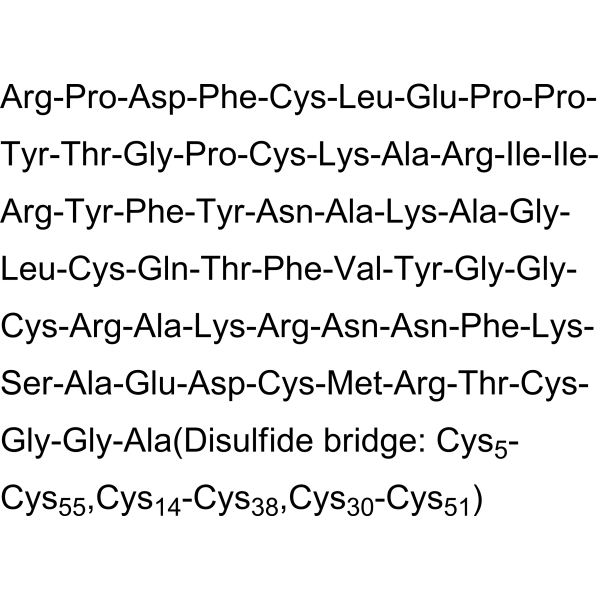
HY-P0017
Aprotinin -

HY-P1956
HSA Protein -
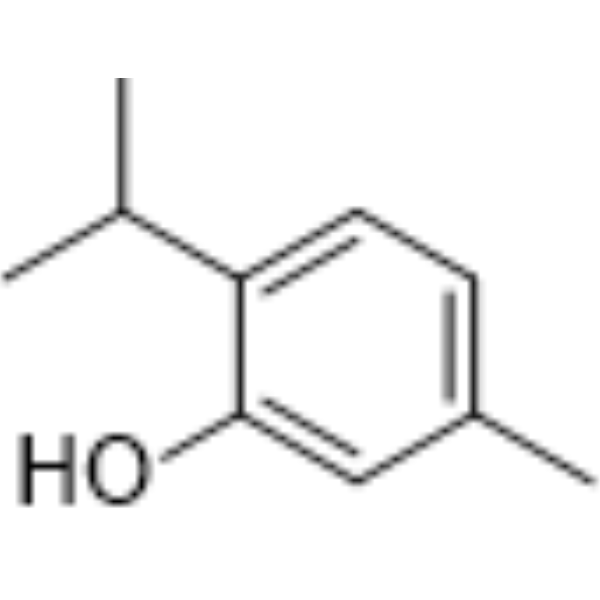
HY-N6810
Thymol -
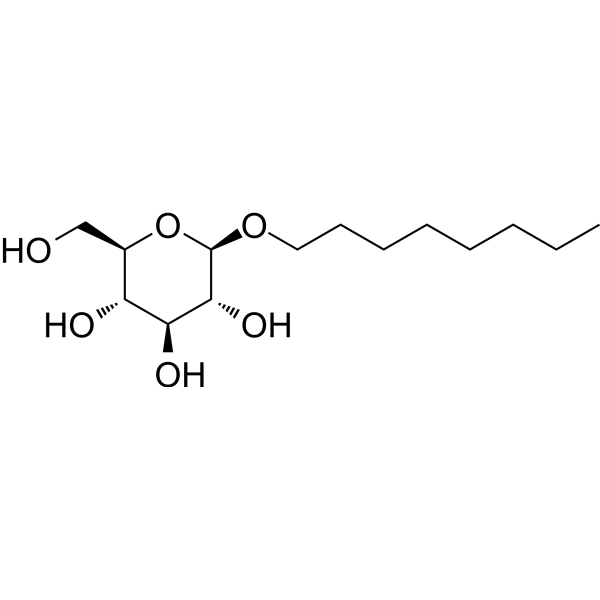
HY-116285
n-Octyl β-D-glucopyranoside -

HY-125865
Casein -

HY-P1956A
HSA Protein (Cell culture grade, Endotoxin<0.125 EU/mg) -

HY-N6810R
Thymol (Standard) -

HY-E70203
Recombinant aprotinin
All Caspase Isoforms
More

Biological Activity
Description
In Vitro
Cytochrome C (Saccharomyces cerevisiae) exhibits a significant enhancement in the enzymatic activity of yeast chain-like complex IV (CIV) when it is modified with phosphorylation mimetic. This indicates that its activity can be regulated by its own phosphorylation status, and this phosphorylation-dependent regulatory function requires the participation of the respiratory supercomplex factor 1 (Rcf1) of the hypoxia-inducible gene domain (HIGD) protein family[2].
Cytochrome C (Saccharomyces cerevisiae) is released from the intermembrane space of the mitochondria into the cytoplasm when the cell receives an apoptotic signal. In the cytoplasm, it no longer performs its normal respiratory function but instead acts as a crucial apoptotic signaling molecule, binding to apoptotic protease activating factor-1 (APAF-1), initiating the caspase cascade reaction, and ultimately leading to cell apoptosis[3].
MedChemExpress (MCE) has not independently confirmed the accuracy of these methods. They are for reference only.


Chemical Information
-
CAS No. 9007-43-6
-
SMILES
[Cytochrome C (Saccharomyces cerevisiae)]
-
Shipping
Room temperature in continental US; may vary elsewhere.
-
Storage
Please store the product under the recommended conditions in the Certificate of Analysis.


Purity & Documentation
References
[1]. Corvest V, et al. c-type cytochrome assembly in Saccharomyces cerevisiae: a key residue for apocytochrome c1/lyase interaction. Genetics. 2010 Oct;186(2):561-71. [Content Brief]
[2]. Timón-Gómez A, et al. HIGD-Driven Regulation of Cytochrome c Oxidase Biogenesis and Function. Cells. 2020 Dec 6;9(12):2620. [Content Brief]

Calculators
Concentration (start) × Volume (start) = Concentration (final) × Volume (final)


Cytochrome C (Saccharomyces cerevisiae) Related Classifications
HY-125857B Related Classifications
 Powered by Bioz