



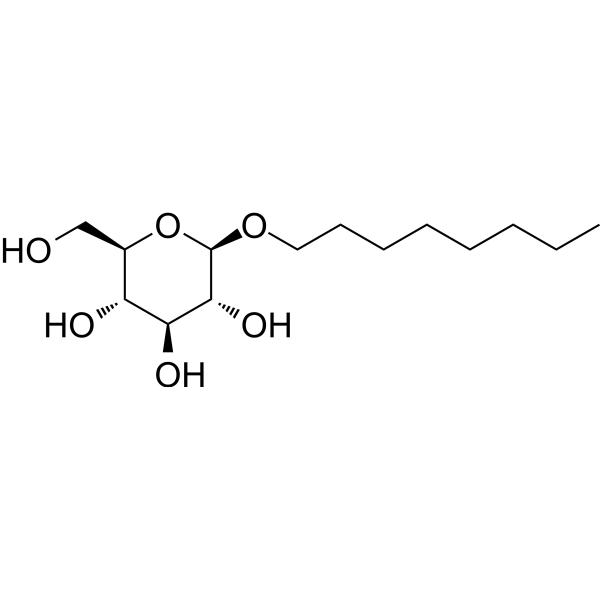
n-Octyl β-D-glucopyranoside
Based on 3 publication(s) in Google Scholar
n-Octyl-β-d-glucopyranoside is a non-ionic detergent, it can be widely used in the research of biotechnical, biochemical applications, solubilization and crystallization of membrane proteins. n-Octyl-β-d-glucopyranoside can completely inhibit cavitation-induced cell lysis in vitro.
For research use only. We do not sell to patients.
- Purity: 99.93%
- CAS No.: 29836-26-8
- Formula: C14H28O6
- Molecular Weight:292.37
-
Storage:Powder -20°C, 3 years , 4°C, 2 years ; In solvent -80°C, 6 months , -20°C, 1 month

To place orders, for customer services and technical support, please contact: MedChemExpress USA
Tel: 609-228-6898 E-mail: [email protected] [email protected]


-
 Biological Activity
-
Chemical Information
-
Solvent & Solubility
- Purity & Documentation
- References
-
 Help & FAQs


-
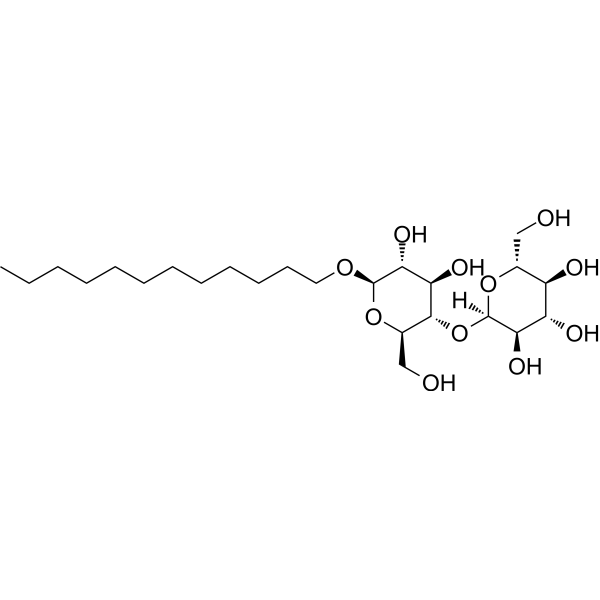
HY-128974
N-Dodecyl-β-D-maltoside -
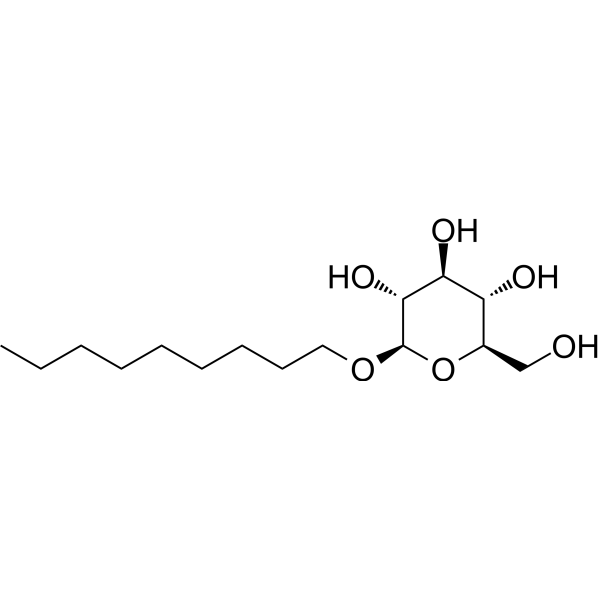
HY-W015993
Nonyl β-D-glucopyranoside -
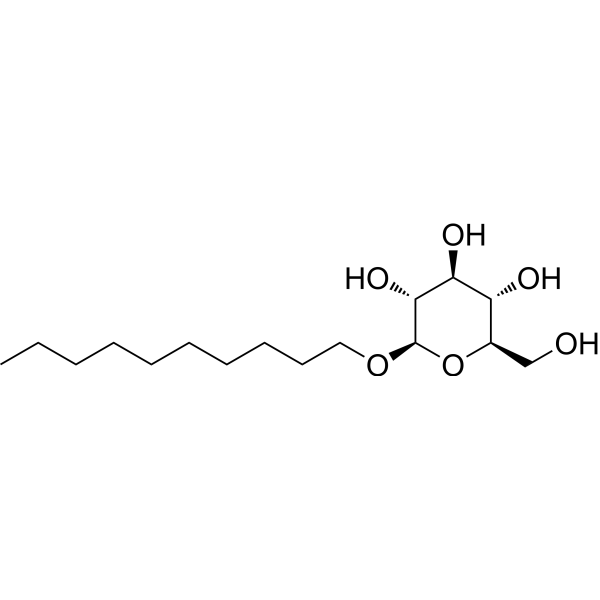
HY-W127628
Decyl β-D-glucopyranoside -
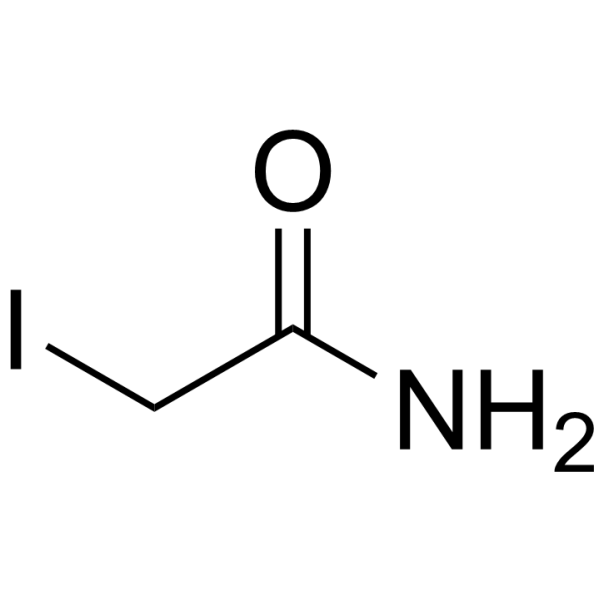
HY-34477
2-Iodoacetamide -
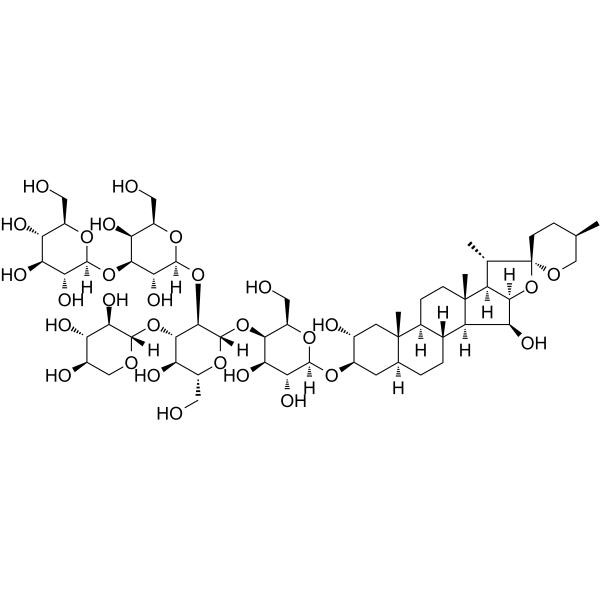
HY-N4000
Digitonin -
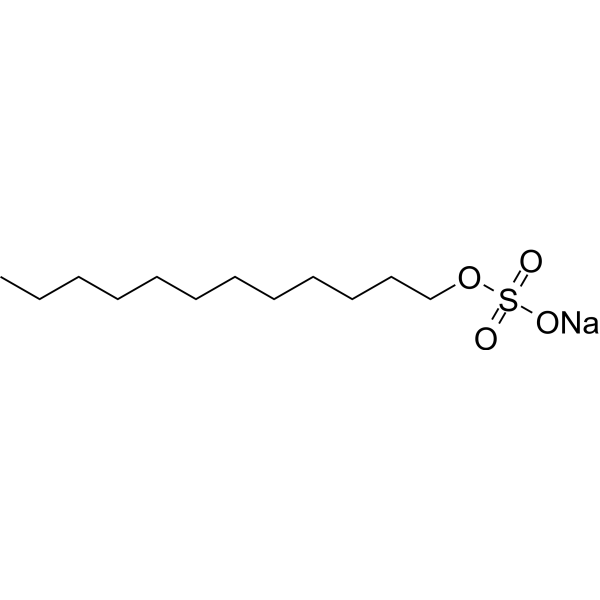
HY-Y0316B
Sodium dodecyl sulfate for electrophoresis -
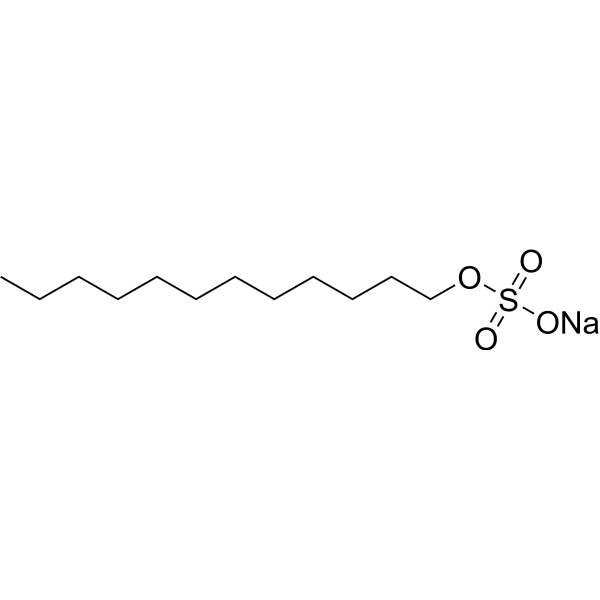
HY-Y0316
Sodium dodecyl sulfate -
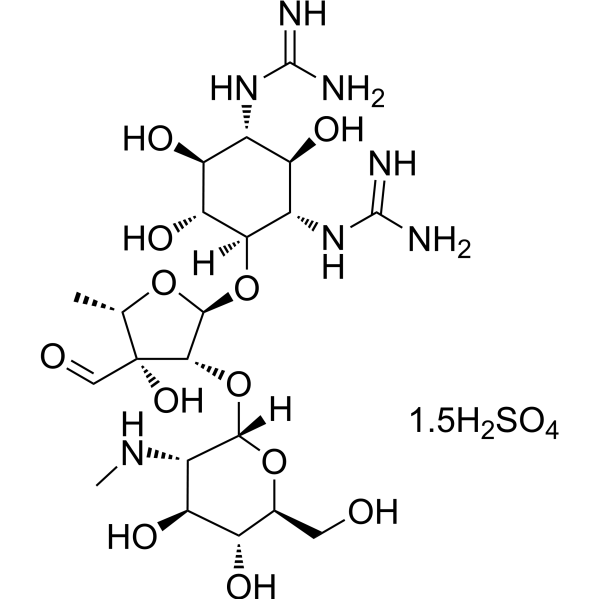
HY-B0472
Streptomycin sulfate -
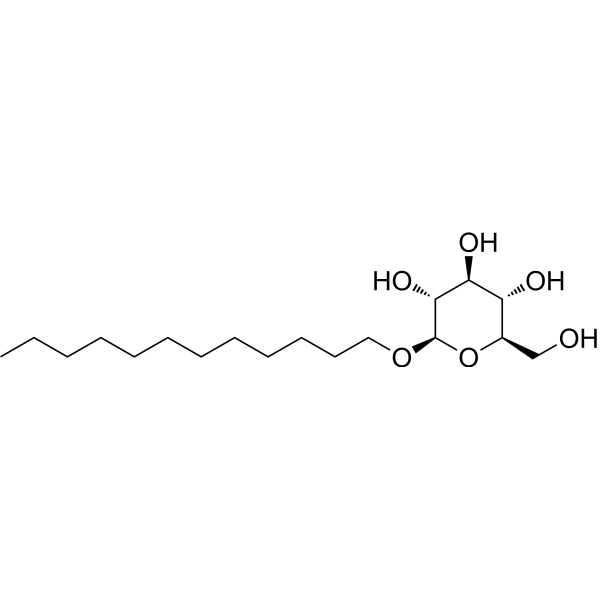
HY-W142692
Dodecyl β-D-glucopyranoside -
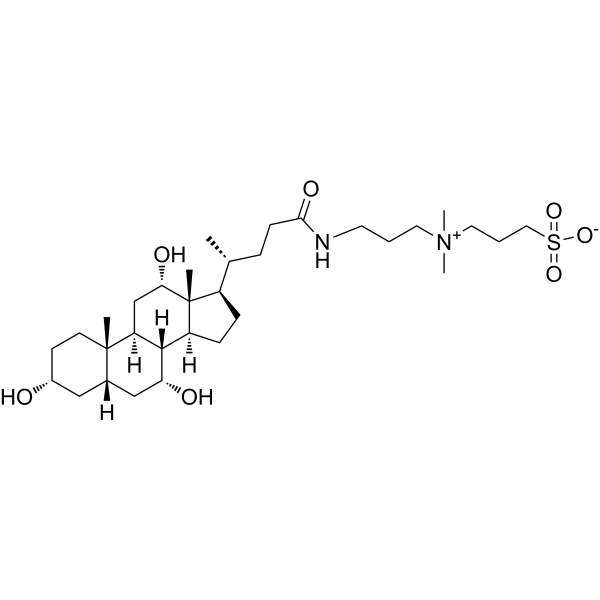
HY-15435
CHAPS -
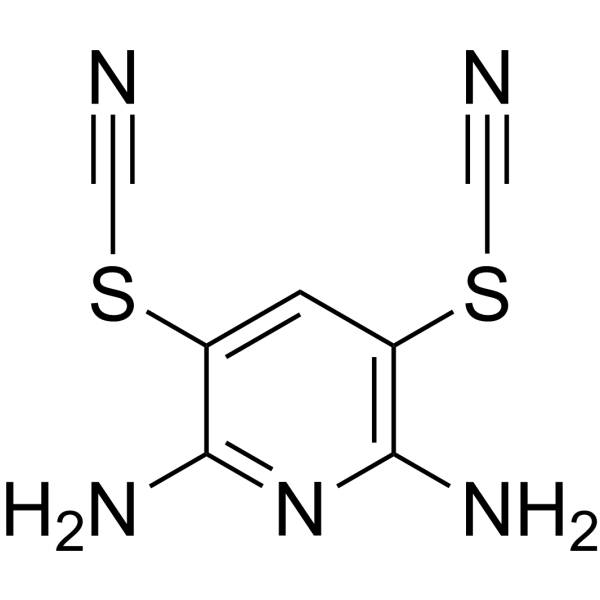
HY-13814
PR-619 -
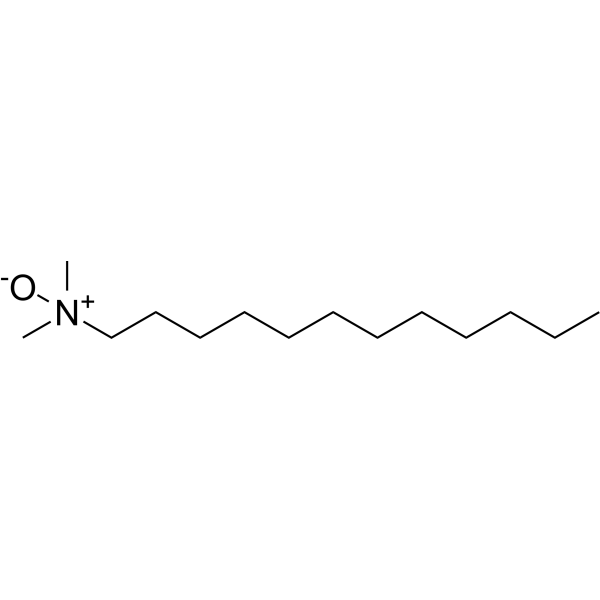
HY-W127785
N,N-Dimethyldodecylamine N-oxide
Publications Citing Use of MedChemExpress (MCE) n-Octyl β-D-glucopyranoside
More

Biological Activity
Description
Cellular Effect
|
Cell Line

|
Type | Value | Description | References |
|---|---|---|---|---|
| WI-38 | CC50 |
>100 μM
Compound: 2, BTB11967
|
Cytotoxicity against human WI38 cells assessed as reduction in cellular DNA level preincubated for 2 hrs before viral infection measured after 7 days by real time PCR assay
Cytotoxicity against human WI38 cells assessed as reduction in cellular DNA level preincubated for 2 hrs before viral infection measured after 7 days by real time PCR assay
|
[PMID: 17893158] |
| WI-38 | EC50 |
>100 μM
Compound: 2, BTB11967
|
Antiviral activity against BKV Gardner ATCC VR837 infected in human WI38 cells assessed as reduction in viral DNA level preincubated for 2 hrs before viral infection measured after 7 days by real time PCR assay
Antiviral activity against BKV Gardner ATCC VR837 infected in human WI38 cells assessed as reduction in viral DNA level preincubated for 2 hrs before viral infection measured after 7 days by real time PCR assay
|
[PMID: 17893158] |
In Vitro
Suspensions of HL-60 cells are exposed to 1.057 MHz unfocused ultrasound for 5-15 s with various additions of alkyl glucopyranosides. 2 mM n-Octyl β-D-glucopyranoside (OGP) added to the medium resultes in 100% survival of the cells after 5 s exposure under conditions which produces 35%-100% cell lysis without the additive[3].
Variation of the concentration of n-Octyl β-D-glucopyranoside for 0.5 MPa exposure produced increased cavitation and lysis at 1 mM relative to 0 mM, but decreased cavitation at 5 mM[3].
MedChemExpress (MCE) has not independently confirmed the accuracy of these methods. They are for reference only.


Chemical Information
-
CAS No. 29836-26-8
-
Appearance Solid
-
Molecular Weight 292.37
-
Formula C14H28O6
-
Color White to off-white
-
SMILES
O[C@H]([C@H]([C@@H]([C@@H](CO)O1)O)O)[C@@H]1OCCCCCCCC
-
Shipping
Room temperature in continental US; may vary elsewhere.
-
Storage
Powder -20°C 3 years 4°C 2 years In solvent -80°C 6 months -20°C 1 month


Publications (3)
-
Journal Impact Factor
-
Most Recent
-
Autophagy
Metabolic stress induces a double-positive feedback loop between AMPK and SQSTM1/p62 conferring dual activation of AMPK and NFE2L2/NRF2 to synergize antioxidant defense. [Abstract]2024 Nov;20(11):2490-2510. PMID: 38953310 -
Acta Pharm Sin B
2025 Aug;15(8):4078-4095. PMID: 40893681 -
Chem Biodivers
Dehydrogenated and Aromatized ent-Cleistanthane Diterpenoids From the Roots of Glochidion philippicum. [Abstract]2025 Oct;22(10):e01481. PMID: 40460281


Solvent & Solubility
In Vitro:
H2O : 100 mg/mL (342.03 mM; Need ultrasonic)
DMSO : 100 mg/mL (342.03 mM; Need ultrasonic; Hygroscopic DMSO has a significant impact on the solubility of product, please use newly opened DMSO)
Please refer to the solubility information to select the appropriate solvent. Once prepared, please aliquot and store the solution to prevent product inactivation from repeated freeze-thaw cycles.
Storage method and period of stock solution: -80°C, 6 months; -20°C, 1 month. When stored at -80°C, please use it within 6 months. When stored at -20°C, please use it within 1 month.
* Note: If you choose water as the stock solution, please dilute it to the working solution, then filter and sterilize it with a 0.22 μm filter before use.
Please refer to the solubility information to select the appropriate solvent. Once prepared, please aliquot and store the solution to prevent product inactivation from repeated freeze-thaw cycles.
Storage method and period of stock solution: -80°C, 6 months; -20°C, 1 month. When stored at -80°C, please use it within 6 months. When stored at -20°C, please use it within 1 month.
* Note: If you choose water as the stock solution, please dilute it to the working solution, then filter and sterilize it with a 0.22 μm filter before use.
Concentration (start) × Volume (start) = Concentration (final) × Volume (final)
In Vivo:
Select the appropriate dissolution method based on your experimental animal and administration route.
- For the following dissolution methods, please ensure to first prepare a clear stock solution using an In Vitro approach and then sequentially add co-solvents:
- To ensure reliable experimental results, the clarified stock solution can be appropriately stored based on storage conditions. As for the working solution for In Vivo experiments, it is recommended to prepare freshly and use it on the same day.
- The percentages shown for the solvents indicate their volumetric ratio in the final prepared solution. If precipitation or phase separation occurs during preparation, heat and/or sonication can be used to aid dissolution.
Add each solvent one by one: 10% DMSO 40% PEG300 5% Tween-80 45% Saline
Solubility: ≥ 2.5 mg/mL (8.55 mM); Clear solution
This protocol yields a clear solution of ≥ 2.5 mg/mL (saturation unknown).
Taking 1 mL working solution as an example, add 100 μL DMSO stock solution (25.0 mg/mL) to 400 μL PEG300, and mix evenly; then add 50 μL Tween-80 and mix evenly; then add 450 μL Saline to adjust the volume to 1 mL.
Preparation of Saline: Dissolve 0.9 g sodium chloride in ddH₂O and dilute to 100 mL to obtain a clear Saline solution.
Add each solvent one by one: 10% DMSO 90% (20% SBE-β-CD in Saline)
Solubility: ≥ 2.5 mg/mL (8.55 mM); Clear solution
This protocol yields a clear solution of ≥ 2.5 mg/mL (saturation unknown).
Taking 1 mL working solution as an example, add 100 μL DMSO stock solution (25.0 mg/mL) to 900 μL 20% SBE-β-CD in Saline, and mix evenly.
Preparation of 20% SBE-β-CD in Saline (4°C, storage for one week): 2 g SBE-β-CD powder is dissolved in 10 mL Saline, completely dissolve until clear.
In Vivo Dissolution Calculator
Please enter the basic information of animal experiments:
-
-
-
-
Recommended: Prepare an additional quantity of animals to account for potential losses during experiments.
Working solution concentration: 0.22 mg/mL
This product has good water solubility, please refer to the measured solubility data in water/PBS/Saline for details.


Purity & Documentation
-
Data Sheet (272 KB)
-
SDS (396 KB)
- English - EN (396 KB)
- Français - FR (396 KB)
- Deutsch - DE (396 KB)
- Norwegian - NO (396 KB)
- Español - ES (396 KB)
- Swedish - SV (396 KB)
- Italian - IT (396 KB)
- Korean - KR (396 KB)
- Portuguese - PT (396 KB)
-
Handling Instructions (2659 KB)
References
[1]. Konidala P, et al. Molecular dynamics characterization of n-octyl-beta-D-glucopyranoside micelle structure in aqueous solution. J Mol Graph Model. 2006 Sep;25(1):77-86. [Content Brief]
[2]. Gould RJ, et al. Effects of octyl beta-glucoside on insulin binding to solubilized membrane receptors. Biochemistry. 1981 Nov 24;20(24):6776-81. [Content Brief]
[3]. Douglas L Miller, et al. The influence of octyl β-D-glucopyranoside on cell lysis induced by ultrasonic cavitation. J Acoust Soc Am. 2011 Nov;130(5):3482-8. [Content Brief]


Complete Stock Solution Preparation Table
Please refer to the solubility information to select the appropriate solvent. Once prepared, please aliquot and store the solution to prevent product inactivation from repeated freeze-thaw cycles.
Storage method and period of stock solution: -80°C, 6 months; -20°C, 1 month. When stored at -80°C, please use it within 6 months. When stored at -20°C, please use it within 1 month.
| Optional Solvent | Concentration Solvent Mass | 1 mg | 5 mg | 10 mg | 25 mg |
|---|---|---|---|---|---|
| H2O / DMSO | 1 mM | 3.4203 mL | 17.1016 mL | 34.2032 mL | 85.5081 mL |
| 5 mM | 0.6841 mL | 3.4203 mL | 6.8406 mL | 17.1016 mL | |
| 10 mM | 0.3420 mL | 1.7102 mL | 3.4203 mL | 8.5508 mL | |
| 15 mM | 0.2280 mL | 1.1401 mL | 2.2802 mL | 5.7005 mL | |
| 20 mM | 0.1710 mL | 0.8551 mL | 1.7102 mL | 4.2754 mL | |
| 25 mM | 0.1368 mL | 0.6841 mL | 1.3681 mL | 3.4203 mL | |
| 30 mM | 0.1140 mL | 0.5701 mL | 1.1401 mL | 2.8503 mL | |
| 40 mM | 0.0855 mL | 0.4275 mL | 0.8551 mL | 2.1377 mL | |
| 50 mM | 0.0684 mL | 0.3420 mL | 0.6841 mL | 1.7102 mL | |
| 60 mM | 0.0570 mL | 0.2850 mL | 0.5701 mL | 1.4251 mL | |
| 80 mM | 0.0428 mL | 0.2138 mL | 0.4275 mL | 1.0689 mL | |
| 100 mM | 0.0342 mL | 0.1710 mL | 0.3420 mL | 0.8551 mL |
* Note: If you choose water as the stock solution, please dilute it to the working solution, then filter and sterilize it with a 0.22 μm filter before use.


n-Octyl β-D-glucopyranoside Related Classifications
HY-116285 Related Classifications
 Powered by Bioz