



Zymosan A
Based on 2 publication(s) in Google Scholar
Zymosan A (Zymosan A from Saccharomyces cerevisiae) is a TLR2 agonist, that targeting TLRs can prevent and suppress IR-induced intestinal injury. Zymosan A exhibits a significant radioprotective effect, and protects IR-induced intestinal injury in mice. Zymosan A promotes the regeneration of intestinal stem cells (ISCs), after IR injury.
For research use only. We do not sell to patients.
- Assay : 82.2%
- CAS No.: 58856-93-2
-
Storage:
4°C, sealed storage, away from moisture
* In solvent : -80°C, 6 months; -20°C, 1 month (sealed storage, away from moisture)

To place orders, for customer services and technical support, please contact: MedChemExpress USA
Tel: 609-228-6898 E-mail: [email protected] [email protected]


-
 Biological Activity
-
Chemical Information
-
Solvent & Solubility
- Purity & Documentation
- References
-
 Help & FAQs


-
HY-13740
ResiquimodTLR7/8 Agonist -
HY-P1180A
Pam3CSK4 TFATLR1/2 Agonist -
HY-119109
LaminaranImmunotherapy Agent -
HY-107202
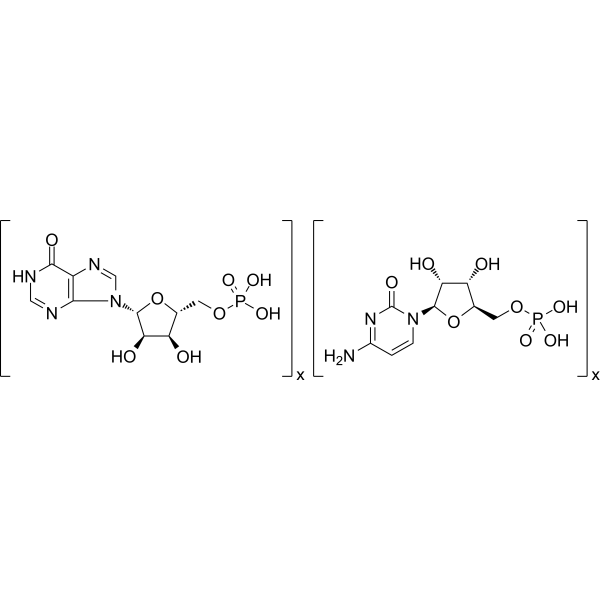
Polyinosinic-polycytidylic acidTLR-3 Agonist -
HY-D1056
Lipopolysaccharides, from E. coli O55:B5Endotoxin -
HY-18739
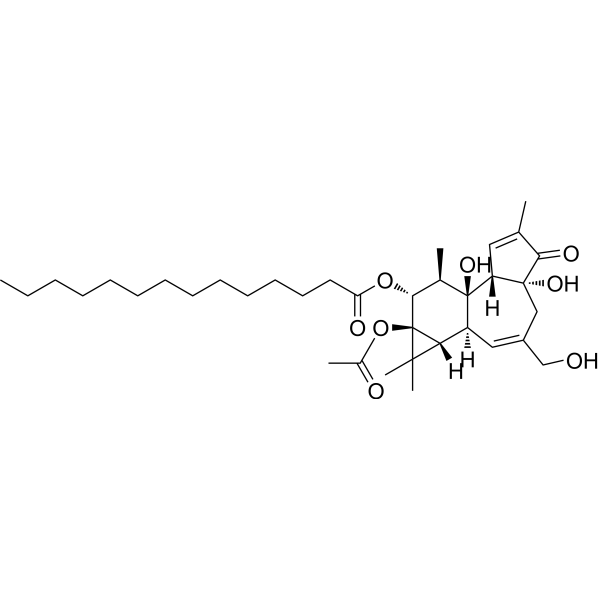
Phorbol 12-myristate 13-acetatePKC Activator -
HY-139413
β-D-GlucanNon-digestible Polysaccharide -
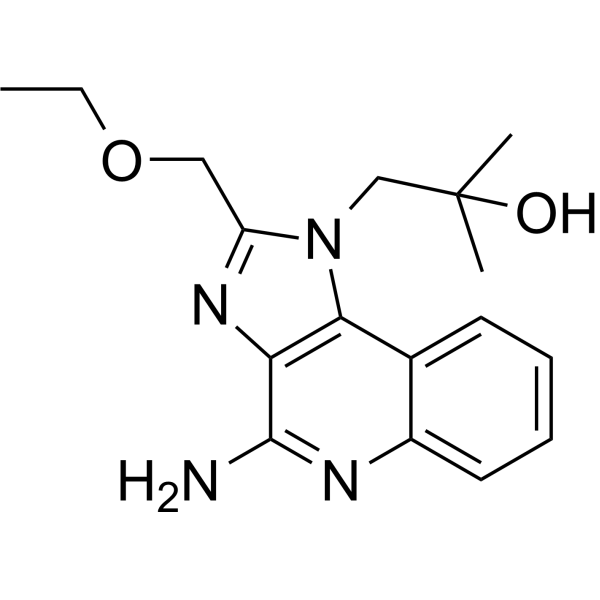
HY-13740G
Resiquimod (GMP)TLR7/TLR8 Agonist (GMP) -
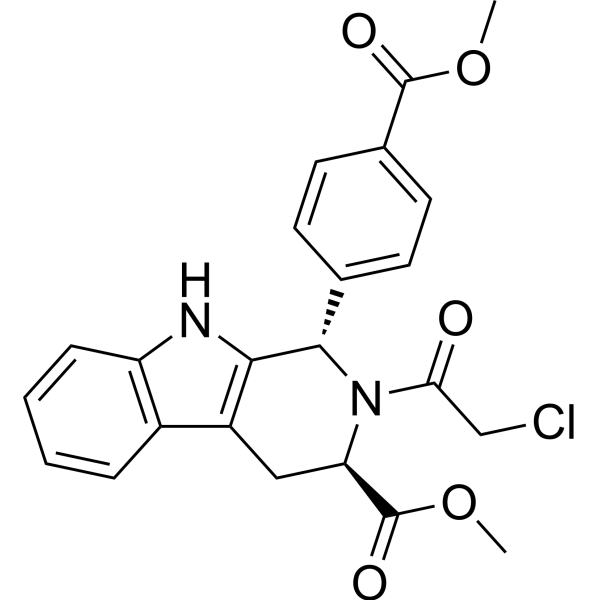
HY-100218A
RSL3GPX4 Inhibitor -
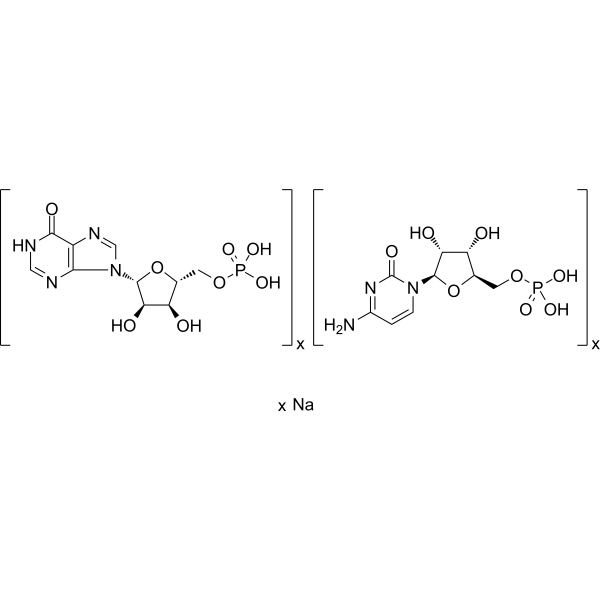
HY-135748
Polyinosinic-polycytidylic acid sodiumTLR3 Agonist -
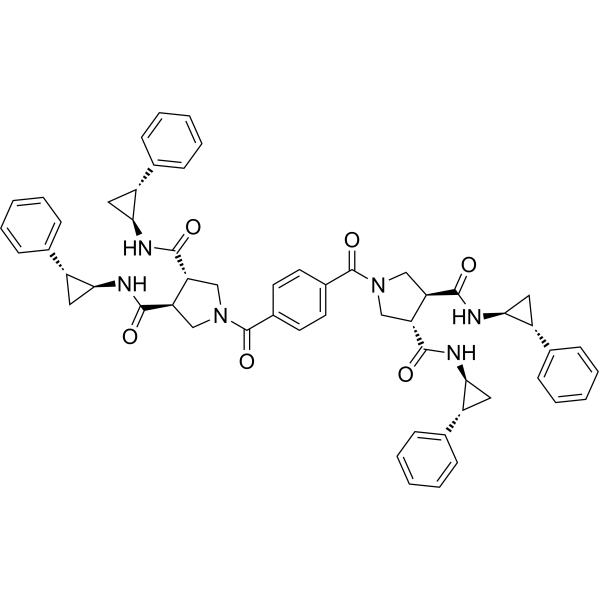
HY-123942
DiprovocimTLR1/TLR2 Agonist -
HY-A0004
DecitabineDNMT Inhibitor
Publications Citing Use of MedChemExpress (MCE) Zymosan A
More

Biological Activity
Description
In Vivo
-
Animal Model:20.0 Gy abdominal irradiation (ABI) model in mice[1]
-
Dosage:25.0 mg/kg, dissolved in NS
-
Administration:IP; injection at 12 and 2 h before IR
-
Result:Significantly reduced the degree of bleeding and edema in the intestinal tissue.
Induced Disease Models
Please do not refer to only one article to determine the experimental conditions. It is recommended to determine the optimal experimental conditions (animal strain, age, dosage, frequency and cycle, detection time and indicators, etc.) through preliminary experiments before the formal experiment.
Zymosan A (25.0 mg/kg; IP at 12 and 2 h before IR) mitigates IR-induced intestinal injury in mice[1]. Zymosan A can be used in animal modeling to create peritonitis models.
Administration: 100 or 500 mg/kg • i.p.
(2) Preparation of Zymosan A Suspension: Weigh Zymosan A and sterilise for 30 minutes with UV light, add sterile filtered saline and vortex thoroughly, store at room temperature overnight and vortex again before use to ensure thorough mixing.
(3) Rectal temperature and ECG were recorded hourly 4 and 24 hours after Zymosan A injection, respectively.
MedChemExpress (MCE) has not independently confirmed the accuracy of these methods. They are for reference only.


Chemical Information
-
CAS No. 58856-93-2
-
Appearance Solid
-
Color Off-white to light yellow
-
SMILES
[Zymosan A]
-
Synonyms
Zymosan A from Saccharomyces cerevisiae
-
Shipping
Room temperature in continental US; may vary elsewhere.
-
Storage
4°C, sealed storage, away from moisture
* In solvent : -80°C, 6 months; -20°C, 1 month (sealed storage, away from moisture)


Publications (2)
-
Journal Impact Factor
-
Most Recent
-
Sci China Life Sci
Targeting STING oligomerization with licochalcone D ameliorates STING-driven inflammatory diseases. [Abstract]2024 Dec;67(12):2664-2677. PMID: 39190126 -
iScience
Protective effect of Zymosan-A against radiation-induced premature ovarian insufficiency in a murine model. [Abstract]2026 Feb 14;29(4):115027. PMID: 41858627


Solvent & Solubility
In Vitro:
DMSO : 1.94 mg/mL (ultrasonic and warming and adjust pH to 4 with HCl and heat to 60°C; Hygroscopic DMSO has a significant impact on the solubility of product, please use newly opened DMSO)
H2O : < 0.1 mg/mL (insoluble)
In Vivo:
For the following dissolution methods, please prepare the working solution directly:
It is recommended to prepare fresh solutions and use them promptly within a short period of time.
The percentages shown for the solvents indicate their volumetric ratio in the final prepared solution. If precipitation or phase separation occurs during preparation, heat and/or sonication can be used to aid dissolution.
Add each solvent one by one: Saline
Solubility: 2 mg/mL; Suspended solution; Need ultrasonic


Purity & Documentation
-
Data Sheet (275 KB)
-
SDS (393 KB)
- English - EN (393 KB)
- Français - FR (393 KB)
- Deutsch - DE (393 KB)
- Norwegian - NO (393 KB)
- Español - ES (393 KB)
- Swedish - SV (393 KB)
- Italian - IT (393 KB)
- Korean - KR (393 KB)
- Portuguese - PT (393 KB)
-
Handling Instructions (2659 KB)
References
[1]. Du J, et al. Zymosan-A promotes the regeneration of intestinal stem cells by upregulating ASCL2. Cell Death Dis. 2022 Oct 20;13(10):884. [Content Brief]
[2]. Monroe LL, et al. Zymosan-Induced Peritonitis: Effects on Cardiac Function, Temperature Regulation, Translocation of Bacteria, and Role of Dectin-1. Shock. 2016 Dec;46(6):723-730. [Content Brief]

Calculators
Concentration (start) × Volume (start) = Concentration (final) × Volume (final)


Zymosan A Related Classifications
HY-W250113 Related Classifications
 Powered by Bioz
Keywords