



Peritonitis
-
Peritonitis (18)

- 1
Zymosan A (Zymosan A from Saccharomyces cerevisiae) is a TLR2 agonist, that targeting TLRs can prevent and suppress IR-induced intestinal injury. Zymosan A exhibits a significant radioprotective effect, and protects IR-induced intestinal injury in mice. Zymosan A promotes the regeneration of intestinal stem cells (ISCs), after IR injury.
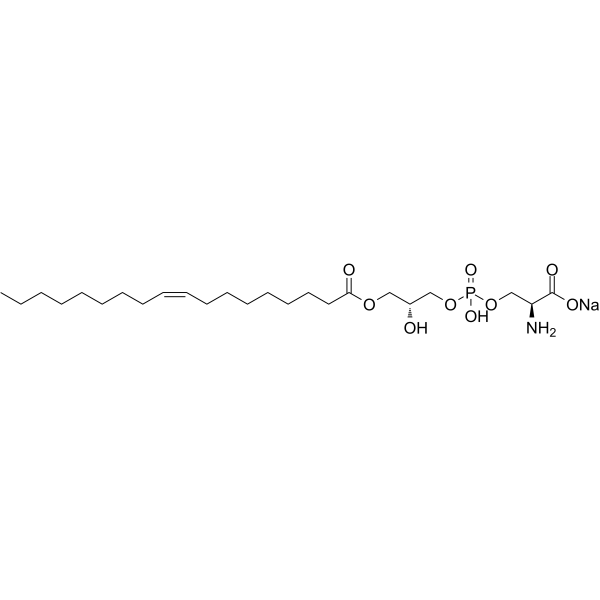
- Formula: C24H45NNaO9P
- Molecular Weight: 545.58
Oleoyl-2-hydroxy-sn-glycero-3-phospho-L-serine sodium (18:1 Lyso-PS) is a modified PS product generated following NADPH oxidase activation and Lyso-PS signal transduction. 1-Oleoyl-2-hydroxy-sn-glycero-3-phospho-L-serine sodium signals through macrophage G2A to enhance the phagocytic uptake of PS-dependent apoptotic (apoptosis) neutrophils and PS-exposed activated neutrophils. 1-Oleoyl-2-hydroxy-sn-glycero-3-phospho-L-serine sodium enhances macrophage phagocytic uptake of apoptotic cells, carboxylate-modified microspheres, and PS-exposed non-apoptotic activated neutrophils. 1-Oleoyl-2-hydroxy-sn-glycero-3-phospho-L-serine sodium serves as an acyl acceptor substrate for the lysophosphatidyltransferase At1g78690p to generate diacylphosphatidylserine. 1-Oleoyl-2-hydroxy-sn-glycero-3-phospho-L-serine sodium reduces the secretion of IL-8 and decreases the proportion of viable colon cancer cells. 1-Oleoyl-2-hydroxy-sn-glycero-3-phospho-L-serine sodium is applicable to studies on peritonitis and inflammatory bowel disease.

- Formula: C19H23F3N4O
- Molecular Weight: 380.41
NP3-253 is an orally active and brain-penetranted NLRP3 inflammasome inhibitor. NP3-253 functions as a molecular glue that prevents NACHT-subdomain rearrangements, locking NLRP3 in an inactive conformation. NP3-253 inhibits production of pro-inflammatory cytokines IL-1β and IL-18. NP3-253 can be used for the research of inflammation and neurological disease, suah as peritonitis.
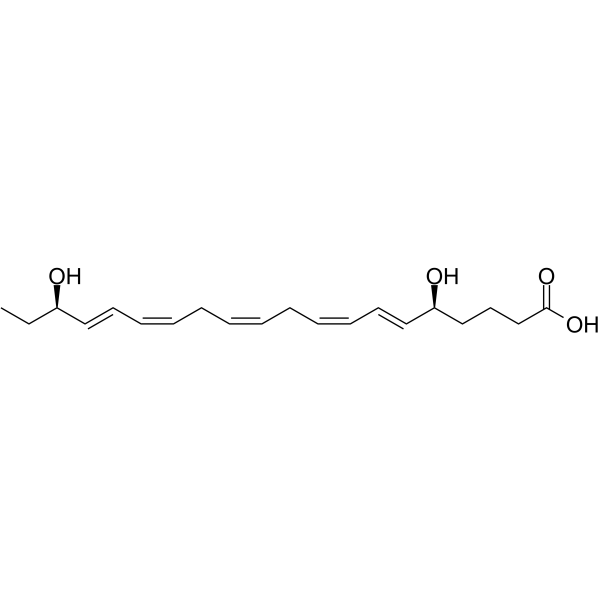
- Formula: C20H30O4
- Molecular Weight: 334.45
Resolvin E2 ((-)-Resolvin E2) is an endogenous lipid mediator produced from eicosapentaenoic acid (EPA) under the catalysis of 5-lipoxygenase (5-LOX), and its production increases in hypoxic environments. Resolvin E2 antagonizes BLT1, partially activates ChemR23, and promotes ubiquitin-proteasome-mediated degradation of COX-2. Resolvin E2 reduces the production of prostaglandin E2, blocks polymorphonuclear leukocyte infiltration, and promotes the resolution of airway inflammation. Resolvin E2 ameliorates lipopolysaccharide (LPS) (HY-D1056)-induced depressive-like behaviors. Resolvin E2 can be used in research related to depression, murine peritonitis, neonatal asthma, and other conditions.

- Formula: C28H35F3N4O4
- Molecular Weight: 548.60
ZY39 is a SaClpP agonist. ZY39 promotes the enzymatic hydrolysis of SaClpP and HsClpP in vitro. ZY39 inhibits the growth of Staphylococcus aureus strains. ZY39 reduces the load of Staphylococcus aureus in organs and ascites in mouse peritonitis models and zebrafish infection models, and improves the survival rate of model animals. ZY39 can be used in studies related to Staphylococcus aureus infection, such as peritonitis.

- Formula: C₂₀H₃₀O₃
- Molecular Weight: 318.45
12 (S)-HEPE is an oxidation product of Eicosapentaenoic acid (HY-B0660). 12 (S)-HEPE activates p38α, GSKβ, CREB, and ERK1/2. 12 (S)-HEPE induces DNA synthesis. 12 (S)-HEPE leads to activation of the PI3K-mTORC2-Akt signaling pathway and translocation of Glut4 to the plasma membrane. 12 (S)-HEPE increases glucose uptake. 12 (S)-HEPE reduces body weight gain in HFD mice. 12 (S)-HEPE can be used in research on colorectal cancer, zymosan-induced peritonitis, diabetes, and obesity.

- Formula: C25H44NO7P
- Molecular Weight: 501.59
2-ARA-LysoPtdEtn (1-Lyso-2-arachidonoyl-sn-glycero-3-phosphoethanolamine) is an orally active polyunsaturated acyl lysophosphatidylethanolamine. 2-ARA-LysoPtdEtn diminishes formation of LTC4, LTB4, and 12-HETE. 2-ARA-LysoPtdEtn lowers levels of IL-1β, IL-6, TNF-α, and NO. 2-ARA-LysoPtdEtn augments IL-10 levels and upgrades formation of 15-HETE and LXA4. 2-ARA-LysoPtdEtn can be used for the research of peritonitis.

- Formula: C95H150N32O23
- Molecular Weight: 2108.41
Apidaecin IA is a basic peptide. Apidaecin IA inhibits the enzymatic activity of DnaK. Apidaecin IA induces bacterial cell death. Apidaecin IA can be used in research related to peritonitis and bacterial infections.

- Formula: C95H150N32O23·xC2H4O2
- Molecular Weight: 2108.41 (free base)
Apidaecin IA acetate is a basic peptide. Apidaecin IA acetate inhibits the enzymatic activity of DnaK. Apidaecin IA acetate induces bacterial cell death. Apidaecin IA acetate can be used in research related to peritonitis and bacterial infections.
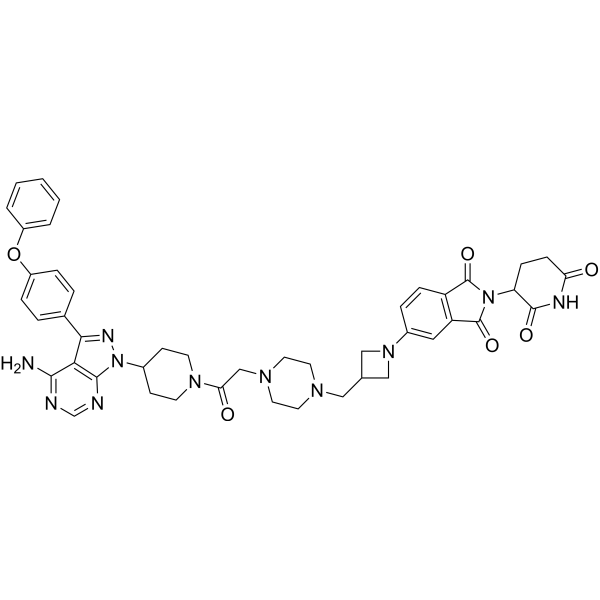
- Formula: C45H47N11O6
- Molecular Weight: 837.92
PROTAC BTK Degrader-6 is an orally active PROTAC-based BTK degrader with a DC50 of 3.18 nM. PROTAC BTK Degrader-6 induces BTK degradation via proteasomal degradation, ubiquitination, and CRBN ligase recruitment pathways. PROTAC BTK Degrader-6 inhibits NF-κB activation, mRNA expression of IL-1β and IL-6, as well as the secretion of pro-inflammatory cytokines. PROTAC BTK Degrader-6 reduces inflammatory responses in a zymosan-induced mouse model of peritonitis. PROTAC BTK Degrader-6 can be used in peritonitis-related research.

- Formula: C29H35N5O6S
- Molecular Weight: 581.68
PAV-104 (MAV-104) is a host-targeted, pan-respiratory viral assembly inhibitor. PAV-104 targets a small subset of the host protein 14-3-3 within a transient multi-protein complex. PAV-104 inhibits SARS-CoV-2 replication by blocking post-entry viral assembly/budding through interaction with viral nucleocapsid (N) protein and interference with its oligomerization. PAV-104 is orally active in cats and shows favorable pharmacokinetic properties in rats. PAV-104 can be used for the study of COVID-19 and other respiratory viral infections, including Feline Infectious Peritonitis (FIP).

- Formula: C114H154N38O16S2
- Molecular Weight: 2376.82
SAP 2.8 peptide is an antimicrobial peptide. SAP 2.8 peptide induces bacterial membrane rupture and permeabilization, triggers an increase in intracellular ROS production, and causes bacterial death. SAP 2.8 peptide inhibits bacterial biofilm formation and disrupts established biofilms. SAP 2.8 peptide reduces bacterial load in animal models. SAP 2.8 peptide can be used for research on bacterial infections, skin and soft tissue infections, and peritonitis.

OI-3 is a monoclonal antibody targeting CD146 (MCAM). OI-3 specifically binds to CD146 on the surface of human mesothelioma cells and undergoes endocytosis; both chimeric (chOI-3) and murine (mOI-3) variants possess this activity. When conjugated with 212Pb to form 212Pb-TCMC-OI-3, OI-3 acts as a cytotoxic agent that delivers α-emitting radionuclides to induce targeted cytotoxicity. OI-3 can be used in research related to malignant peritoneal mesothelioma.

- Formula: C10H5Cl5N2O2
- Molecular Weight: 362.42
ODZ10117 is a STAT3 and NLRP3 inhibitor with a human STAT3 SH2 domain IC50 of 7.5 μM. ODZ10117 binds to the STAT3 SH2 domain, suppressing tyrosine phosphorylation, dimerization, nuclear translocation, and transcriptional activity. ODZ10117 binds to NLRP3, impairs NEK7 interaction, prevents inflammasome formation, and inhibits caspase-1 and IL-1β cleavage.ODZ10117 reduces MSU (HY-B2130A)-induced IL-1β release, lowers LPS (HY-D1056)-induced sepsis mortality, and exhibits anti-inflammatory effects. ODZ10117 induces apoptosis, suppresses breast cancer cell migration and invasion, reduces tumor growth and lung metastasis, and extends survival in breast cancer models. ODZ10117 can be used for the research of Monosodium urate (HY-B2130A)-induced peritonitis, LPS-induced sepsis, breast cancer, glioblastoma, and Alzheimer's disease.

- Formula: C19H26O3S
- Molecular Weight: 334.47
S-Petasin is a phosphodiesterase (PDE) inhibitor with IC50 values of 25.5 μM and 17.5 μM for PDE3 and PDE4, respectively. S-Petasin inhibits cholesterol side-chain cleavage enzyme, 11β-hydroxylase, PPAR-γ, and iNOS induction at RNA and protein levels. S-Petasin induces apoptosis, activates caspases, cleaves PARP, modulates mitochondrial membrane permeability, and regulates BCL2/BAX, p53, Bcl-XL, MMP-2, MMP-9, p21, CDK4, and cyclin D1 expression. S-Petasin reduces inflammatory cell accumulation, cytokine and IgE levels, and enhances serum IgG2a levels. S-Petasin relaxes isolated sensitized guinea pig trachealis and exhibits gastrointestinal anti-spasmodic activity. S-Petasin reduces tonsillitis severity and asthmatic attack frequency. S-Petasin can be used for the research of prostate cancer, obesity, melanoma, allergic asthma, asthma, and peritonitis.

- Formula: C22H20O6
- Molecular Weight: 380.39
O-Demethylrotenone is a rotenone (HY-B1756) derivative and a photodegradation product of rotenone that induces acute intraperitoneal toxicity. The acute intraperitoneal LD50 of O-Demethylrotenone in Mus musculus is 8.0 mg/kg.

- Formula: C27H32F4N4O3
- Molecular Weight: 536.56
ZY36 is a SaClpP agonist with an EC50 of 1.01 μM against Staphylococcus aureus. ZY36 activates SaClpP-mediated proteolysis. ZY36 inhibits the growth of Staphylococcus aureus. ZY36 is applicable to studies related to Staphylococcus aureus infections, such as peritonitis.

- Formula: C28H35F3N4O3
- Molecular Weight: 532.60
ZY38 is a SaClpP agonist that activates SaClpP-mediated α-casein hydrolysis with an EC50 of 1.52 μM. ZY38 exhibits bactericidal activity against Staphylococcus aureus. ZY38 is applicable to studies related to Staphylococcus aureus infections, such as peritonitis.
- 1



