
Search Result
Results for "
cytotoxins
" in MedChemExpress (MCE) Product Catalog:
6
Biochemical Assay Reagents
6
Isotope-Labeled Compounds
| Cat. No. |
Product Name |
Target |
Research Areas |
Chemical Structure |
-
- HY-13062
-
|
Daunomycin hydrochloride; RP 13057 hydrochloride; Rubidomycin hydrochloride
|
Topoisomerase
DNA/RNA Synthesis
ADC Payload
Bacterial
Autophagy
Apoptosis
Antibiotic
|
Infection
Neurological Disease
Cancer
|
|
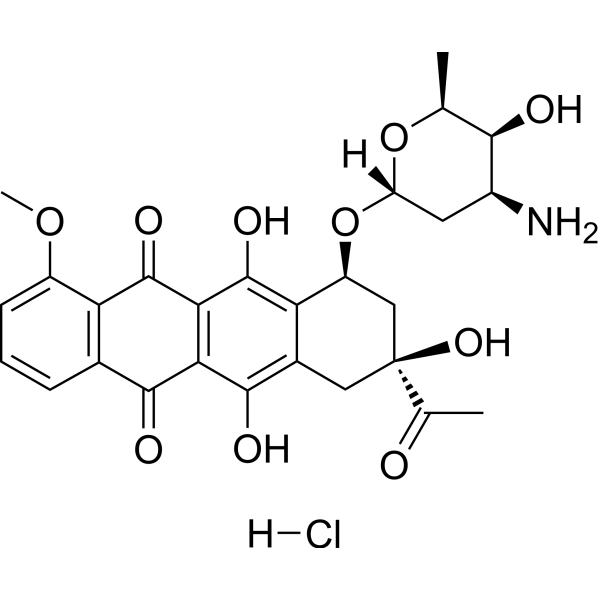
Daunorubicin (Daunomycin) hydrochloride is a topoisomerase II inhibitor with potent anti-tumor activity. Daunorubicin hydrochloride inhibits DNA and RNA synthesis. Daunorubicin hydrochloride is a cytotoxin that inhibits cancer cell viability and induces apoptosis and necrosis. Daunorubicin hydrochloride is also an anthracycline antibiotic. Daunorubicin hydrochloride can be used in the research of infection and variety of cancers, including leukemia, non-Hodgkin lymphomas, Ewing's sarcoma, Wilms' tumor .
|
-
-
- HY-13062A
-
Daunorubicin
Maximum Cited Publications
37 Publications Verification
Daunomycin; RP 13057; Rubidomycin
|
Topoisomerase
DNA/RNA Synthesis
ADC Payload
Autophagy
Bacterial
Antibiotic
Apoptosis
|
Infection
Neurological Disease
Cancer
|
|
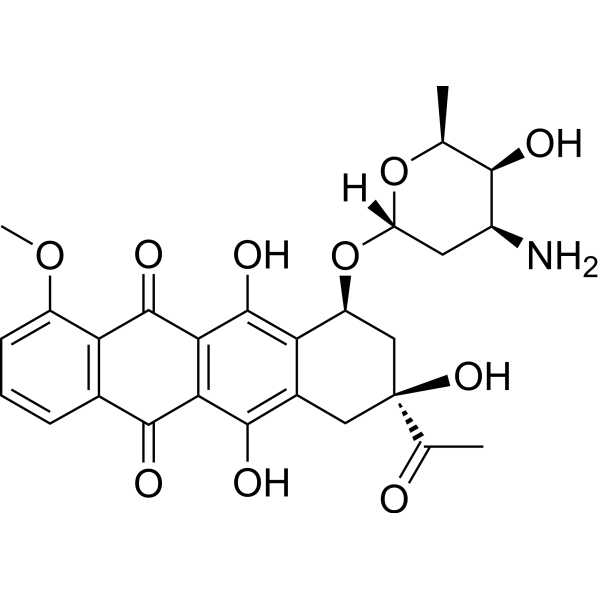
Daunorubicin (Daunomycin) is a topoisomerase II inhibitor with potent anti-tumor activity. Daunorubicin inhibits DNA and RNA synthesis. Daunorubicin is a cytotoxin that inhibits cancer cell viability and induces apoptosis and necrosis. Daunorubicin is also an anthracycline antibiotic. Daunorubicin can be used in the research of infection and variety of cancers, including leukemia, non-Hodgkin lymphomas, Ewing's sarcoma, Wilms' tumor .
|
-
-
- HY-78738
-
|
|
ADC Linker
|
Cancer
|
|
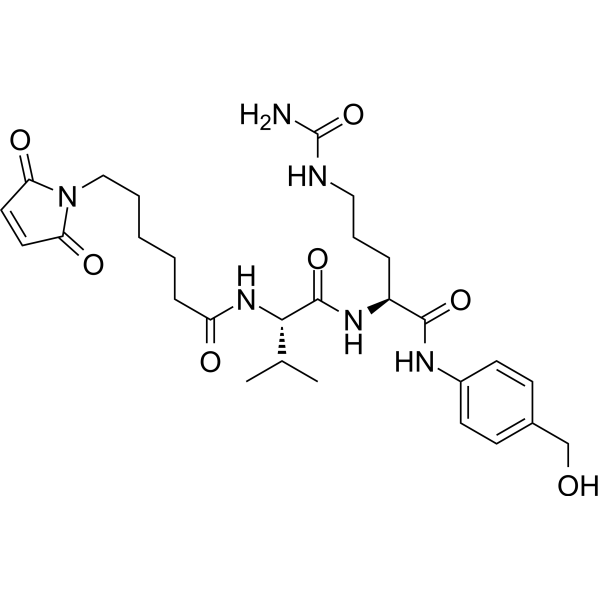
MC-Val-Cit-PAB is a cleavable ADC Linker that forms part of VcMMAE (HY-15575). VcMMAE is Drug-Linker Conjugates for ADCs. The ADC Cytotoxin in VcMMAE is MMAE, a tubulin polymerization inhibitor.
|
-
-
- HY-15583
-
|
|
ADC Payload
Microtubule/Tubulin
|
Cancer
|
|
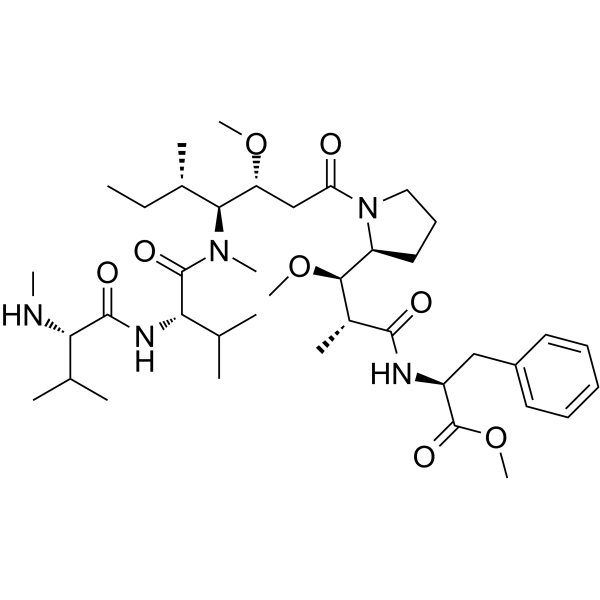
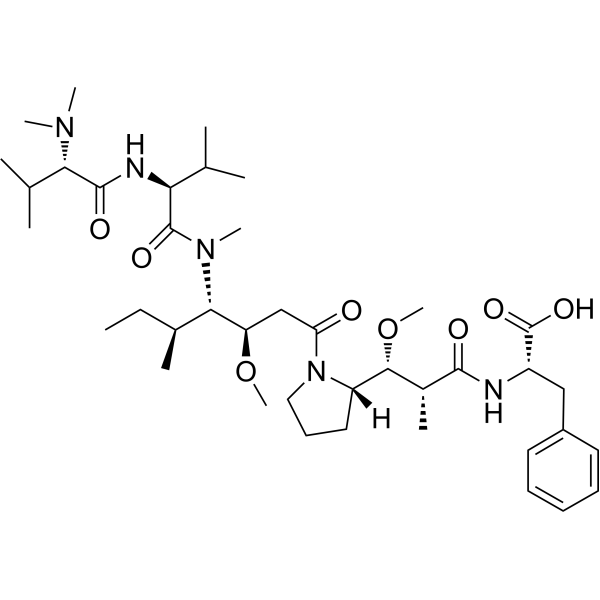
Auristatin F is a potent cytotoxin in antibo-conjugated agents and an analogue of MMAF. Auristatin F is a potent microtubule inhibitor and vascular damaging agent (VDA). Auristatin F inhibits cell division by preventing tubulin aggregation.Auristatin F can be used in antibody-drug conjugates (ADC) .
|
-
-
- HY-153892
-
-
-
- HY-P99956
-
|
VLS-101; MK-2140
|
Antibody-Drug Conjugates (ADCs)
Apoptosis
|
Cancer
|
|
Zilovertamab vedotin (VLS-101) is a novel antibody-drug conjugate comprising the humanized monoclonal antibody zilovertamab and and the anti-microtubule cytotoxin monomethyl vedotin. Zilovertamab vedotin binding to tumor cell ROR1 results in rapid internalization, trafficking to lysosomes, antibody–agent conjugate cleavage, and monomethyl vedotin release. Zilovertamab vedotin induces apoptosis. Zilovertamab vedotin can be used in research of cancer .
|
-
-
- HY-15995
-
|
TubA
|
Antibiotic
Microtubule/Tubulin
ADC Payload
Mitosis
|
Cancer
|
|
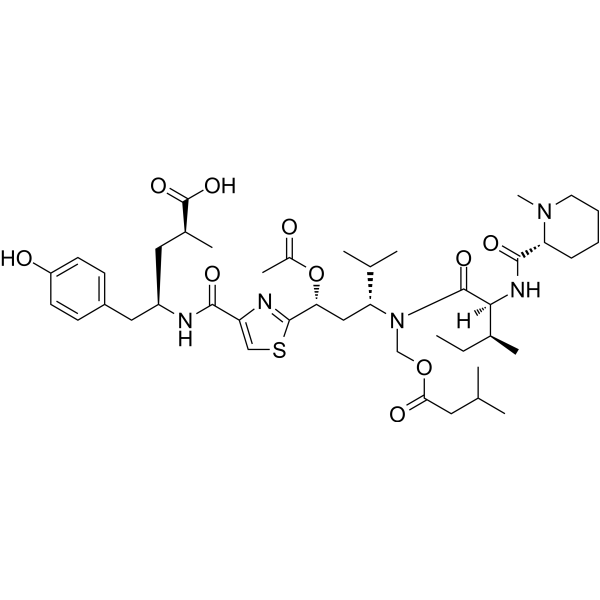
Tubulysin A (TubA) is an anticancer and antiangiogenic agent with anti-microtubule, anti-mitosis and anti-proliferative activity against a variety of cancer cells with IC50 values in the pmol range. It can induce apoptosis of cancer cells and has no effect on normal cells. Tubulysins are a group of potent cytotoxins consisting of nine members (A-I). Tubulysin A can synthesize ADC as ADC Cytotoxin .
|
-
-
- HY-126687
-
|
|
Drug-Linker Conjugates for ADC
|
Cancer
|
|
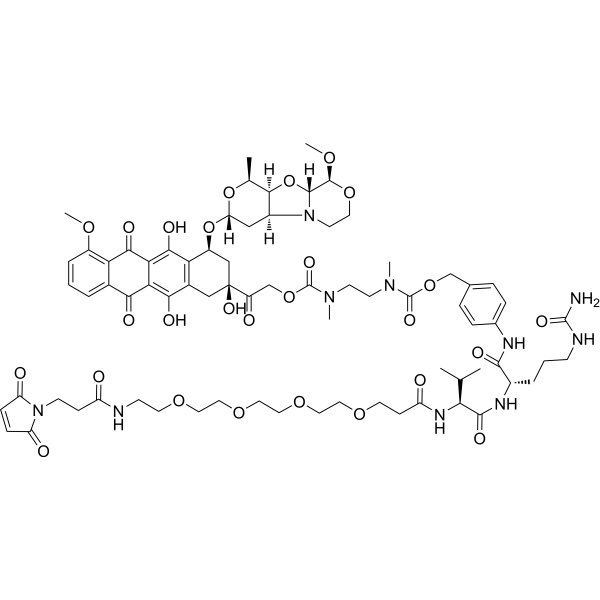
Mal-PEG4-VC-PAB-DMEA-PNU-159682, a agent-linker conjugate for ADC, consists the ADC linker Mal-PEG4-VC-PAB and a potent ADC cytotoxin DMEA-PNU-159682. DMEA-PNU-159682 includes metabolites of nemorubicin (MMDX) from liver microsomes and ADC cytotoxin PNU-159682 .
|
-
-
- HY-117371
-
|
(-)-Hemiasterlin; Milnamide B
|
ADC Payload
|
Cancer
|
|
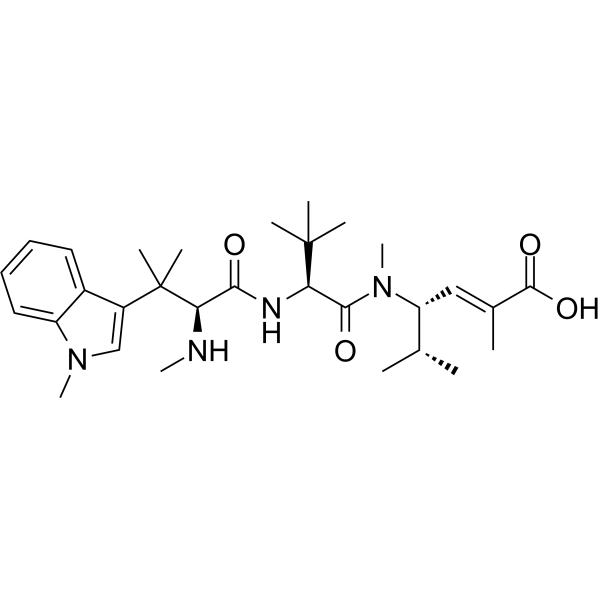
Hemiasterlin ((-)-Hemiasterlin) is an antimitotic marine natural product with potent anticancer effects. Hemiasterlin can be used as a cytotoxic payload (ADC Cytotoxin) in antibody-drug conjugates (ADCs) .
|
-
-
- HY-19791
-
|
N-Acetyl-Calicheamicin γ; N-Acetyl-γ-calicheamicin
|
ADC Payload
DNA/RNA Synthesis
Antibiotic
Bacterial
|
Infection
Cancer
|
|
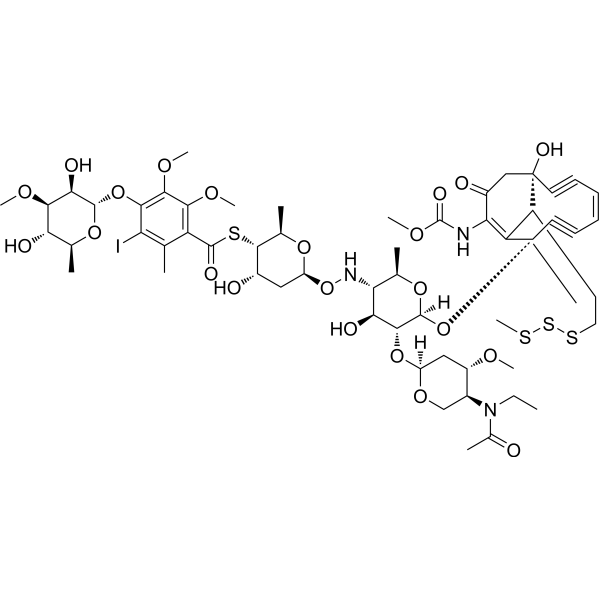
N-Acetyl-Calicheamicin (N-Acetyl-Calicheamicin γ), an enediyne anti-tumor antibiotic, is an ADC cytotoxin. N-Acetyl-Calicheamicin can induce DNA damage, and can be used in the synthesis of ADC .
|
-
-
- HY-131081
-
|
|
DNA/RNA Synthesis
ADC Payload
|
Cancer
|
|
γ-Amanitin an ADC cytotoxin and isolated from the mushroom. γ-Amanitin inhibits RNA polymerase II and disrupts synthesis of mRNA. γ-Amanitin shows similar effects to α-Amanitin and β-Amanitin. γ-Amanitin competitively binds to monoclonal antibody (mAb), with an IC50 of 163.1 ng/mL. γ-Amanitin is toxic to a variety of cells .
|
-
-
- HY-W021377
-
|
|
ADC Payload
Drug Intermediate
|
Cancer
|
|
Exatecan Intermediate 2 (Compound B) is an intermediate of Exatecan (DX-8951, HY-13631). Exatecan is an anticancer agent belonging to the class of camptothecin analogs. Exatecan interferes with the proliferation and division of tumor cells by interacting with DNA, thereby inhibiting tumor growth. Exatecan is primarily used for research of a variety of cancers including ovarian, lung and breast cancers .
|
-
-
- HY-78931
-
|
|
ADC Linker
|
Cancer
|
|
Boc-Dap-NE is an intermediate in the synthesis of Monomethyl auristatin E (HY-15162), which is an inhibitor of tubulin polymerization. Monomethyl auristatin E can be used to synthesize Antibody-Drug Conjugates (ADCs) as ADC Cytotoxin.
|
-
-
- HY-161252
-
|
|
ADC Payload
|
Cancer
|
|
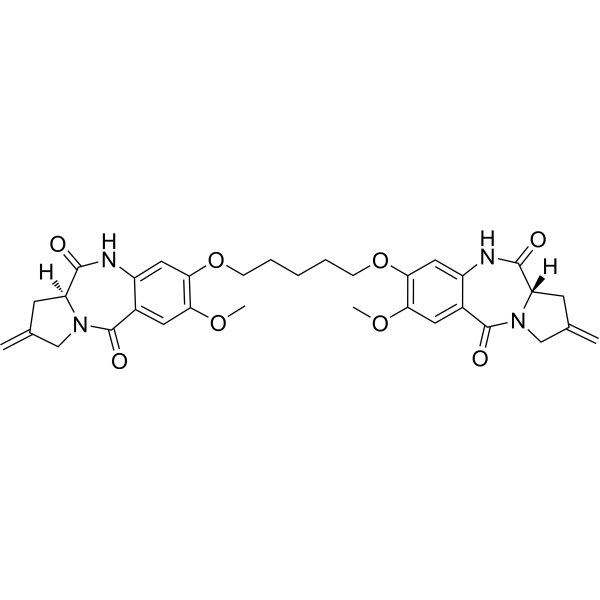
PBD-monoamide, a modified PBD (pyrrolobenzodiazepine) dimer, is an ADC Cytotoxin. PBD-monoamide can be used for synthesis of DHES0815A (an HER2 ADC). PBD-monoamide has DNA-binding activity and reduces cell viability .
|
-
-
- HY-160945
-
|
|
ADC Payload
N-myristoyltransferase
|
Cancer
|
|
NMT-IN-7 is a N-myristoyl transferase (NMT) inhibitor, with IC50s of 2.1 nM for HsNMT1M, 0.6 nM for SU-DHL-10 cell. NMT-IN-7 can be used as a ADC cytotoxin .
|
-
-
- HY-156513
-
|
7-Hydroxyethyl carbamate-(10Me-11F-Camptothecin)
|
ADC Payload
|
Cancer
|
|
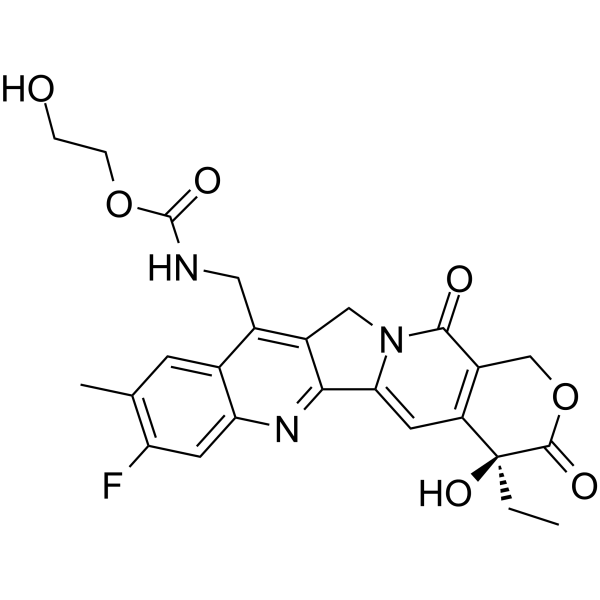
ZD06519 (7-Hydroxyethyl carbamate-(10Me-11F-Camptothecin)) is a camptothecin (HY-16560) analogue and a topoisomerase I inhibitor. ZD06519 is an ADC cytotoxin with a strong bystander effect, inhibiting a variety of malignancies such as HER2-positive and FRα-overexpressing tumors. ZD06519 inhibits DNA cleavage, relaxation, and reconnection processes, inducing tumor cell death. ZD06519 can be used for ADC synthesis and cancer research .
|
-
-
- HY-145149
-
|
|
ADC Payload
|
Cancer
|
|
Duostatin 5 is a ADC Cytotoxin designed based on MMAF (HY-15579) and can be used to synthesize ADCs. The preparation of Duostatin 5 has the advantages of fewer synthetic steps, simple operation, less difficulty in quality control, and more stable chemical synthesis process. Duostatin 5 can be linked to the antibody targeting 5T4 (ZV05) by cross-linking with interchain cysteines through a disubstituted C-Lock linker. Duostatin 5 is a click chemistry reagent. It contains an azide group and can undergo copper-catalyzed azide-alkyne cycloaddition (CuAAc) with molecules containing alkyne groups. It can also undergo ring strain-driven alkyne-azide cycloaddition (SPAAC) with molecules containing DBCO or BCN groups[1][2].
|
-
-
- HY-156617
-
|
|
ADC Payload
Topoisomerase
|
Cancer
|
|
Cyclopropaneacetamide-Exatecan is an Exatecan (HY-13631) analogue and an ADC Cytotoxin. Cyclopropaneacetamide-Exatecan can be used to synthesize ADC molecules for cancer research .
|
-
-
- HY-N7053
-
|
|
ADC Payload
Microtubule/Tubulin
|
Cancer
|
|
Tubulysin M is a highly cytotoxic anti-microtubule toxin (anti-microtubule toxins) that is synthesized as an ADC cytotoxin (ADC Cytotoxin). Tubulysin M can be isolated from the myxobacteria Archangium geophyra and Angiococcus disciformis. Tubulysin M displays extremely potent cytotoxic activity in mammalian cells, including multidrug-resistant cell lines, with IC50 values in the low nanomolar range. Tubulysin M inhibits microtubule/tubulin polymerization and leads to cell cycle arrest and apoptosis .
|
-
-
- HY-126691
-
|
|
Drug-Linker Conjugates for ADC
|
Cancer
|
|
DBCO-PEG4-VC-PAB-DMEA-PNU-159682, a agent-linker conjugate for ADC, consists the ADC linker DBCO-PEG4-VC-PAB and a potent ADC cytotoxin DMEA-PNU-159682. DMEA-PNU-159682 includes metabolites of nemorubicin (MMDX) from liver microsomes and ADC cytotoxin PNU-159682. DBCO-PEG4-VC-PAB-DMEA-PNU-159682 is a click chemistry reagent, it contains a DBCO group that can undergo strain-promoted alkyne-azide cycloaddition (SPAAC) with molecules containing Azide groups.
|
-
-
- HY-43565
-
|
|
ADC Payload
Topoisomerase
|
Cancer
|
|
Exatecan intermediate 9 is an intermediate for the synthesis of Exatecan (HY-13631). Exatecan (DX-8951) is a common toxin component in ADC preparation (ADC Cytotoxin) and an inhibitor of DNA topoisomerase I (IC50=2.2 μM) .
|
-
-
- HY-144880
-
|
3-Aminophenyl Hemiasterlin
|
ADC Payload
Microtubule/Tubulin
P-glycoprotein
|
Cancer
|
|
SC209 (3-Aminophenyl Hemiasterlin) is a 3-aminophenyl hemiasterlin derivative that serves as a cytotoxin for ADCs, targeting tubulin. SC209 has reduced potential for drug efflux via P-glycoprotein 1 drug pump compared with other tubulin-targeting payloads. SC209 exhibits antitumor activity and can be used in the synthesis of ADC molecules .
|
-
-
- HY-100128
-
-
-
- HY-147408
-
|
SHR9265
|
Topoisomerase
ADC Payload
|
Cancer
|
|
Rezetecan (SHR9265) is a topoisomerase I inhibitor. In addition, Rezetecan can be used to synthesize Trastuzumab rezetecan, an antineoplastic agent. Rezetecán can be used as a cytotoxic payload (ADC Cytotoxin) in antibody-drug conjugates (ADCs) .
|
-
-
- HY-79635
-
|
|
Bacterial
Endogenous Metabolite
|
Infection
|
|
Methyl indole-3-carboxylate is a Sorangium metabolite. Methyl indole-3-carboxylate shows weak activity against Gram-positive Nocardia sp with a MIC of 33.3 μg/mL .
|
-
-
- HY-148211
-
|
|
ADC Linker
|
Cancer
|
|
Tetrazine-PEG7-amine hydrochloride is a cleavable 7 unit PEG ADC linker used in the synthesis of antibody-drug conjugates (ADCs) . Tetrazine-PEG7-amine (hydrochloride) is a click chemistry reagent, it contains a Tetrazine group that can undergo an inverse electron demand Diels-Alder reaction (iEDDA) with molecules containing TCO groups.
|
-
-
- HY-164378
-
|
|
ADC Payload
|
Cancer
|
|
Hydrotecan is a Camptothecin (HY-16560) derivative that can be used as an ADC cytotoxin. Hydrotecan can be used to synthesize ADC molecules .
|
-
-
- HY-157407
-
-
-
- HY-148818
-
|
|
ADC Payload
|
Others
|
|
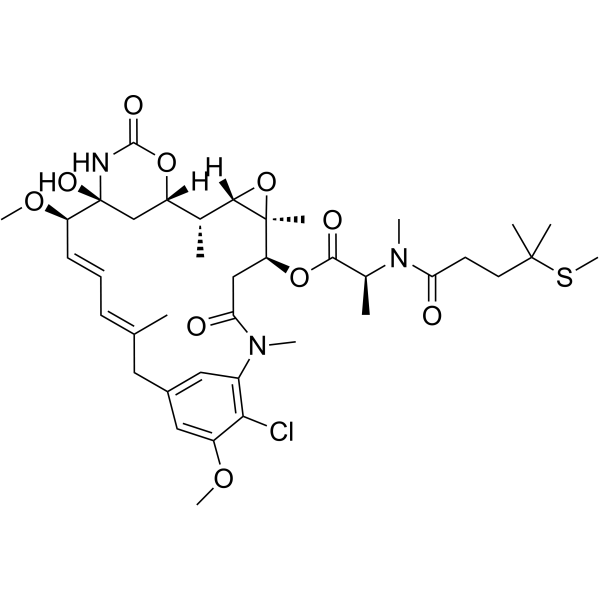
S-Me-DM4 is a metabolite of DM4 S-methylated by intracellular enzyme. DM4 (HY-100503) is a microtubule-depolymerizing maytansinoid with strong cytotoxicity. DM4 can be used as an ADC Cytotoxin molecule .
|
-
-
- HY-14572
-
|
SN 27858
|
DNA Alkylator/Crosslinker
Drug Metabolite
|
Cancer
|
|
PR-104A (SN 27858) is the alcohol metabolite of phosphate proagent PR-104. PR-104A is a hypoxia-selective DNA cross-linking agent/DNA-damaging agent and cytotoxin. Antitumor Activity . PR-104A is metabolized under hypoxia by the 1-electron NADPH:cytochrome P450 oxidoreductase. PR-104A can be used for the research of relapsed/refractory T-lineage acute lymphoblastic leukemia (T-ALL) .
|
-
-
- HY-W021377B
-
|
|
ADC Payload
Drug Intermediate
|
Cancer
|
|
Exatecan Intermediate 4 (Compound 14f) is an intermediate of Exatecan (DX-8951, HY-13631). Exatecan is an anticancer agent belonging to the class of camptothecin analogs. Exatecan interferes with the proliferation and division of tumor cells by interacting with DNA, thereby inhibiting tumor growth. Exatecan is primarily used for research of a variety of cancers including ovarian, lung and breast cancers .
|
-
-
- HY-136313
-
-
-
- HY-79255
-
|
|
ADC Payload
Microtubule/Tubulin
|
Cancer
|
|
Fmoc-MMAF-OMe is an anticancer agent and tubulin polymerization inhibitor with an Fmoc protecting group. The active ingredient of Fmoc-MMAF-OMe, MMAF (HY-15579), is the cytotoxic (ADC Cytotoxin) component of classic antibody drug conjugates (ADCs) .
|
-
-
- HY-P99334
-
|
Anti-Human CD70 Recombinant Antibody; SGN-75
|
Antibody-Drug Conjugates (ADCs)
Microtubule/Tubulin
|
Cancer
|
|
Vorsetuzumab mafodotin (SGN-75) is an Auristatin-based anti-CD70 antibody-drug conjugate (ADC). Vorsetuzumab mafodotin consists of a humanized monoclonal antibody, Vorsetuzumab and an ADC cytotoxin MMAF. Vorsetuzumab mafodotin has antineoplastic activity .
|
-
-
- HY-W021377A
-
|
|
ADC Payload
Drug Intermediate
|
Cancer
|
|
Exatecan Intermediate 2 hydrochloride (Compound B) is an intermediate of Exatecan (DX-8951, HY-13631). Exatecan is an anticancer agent belonging to the class of camptothecin analogs. Exatecan interferes with the proliferation and division of tumor cells by interacting with DNA, thereby inhibiting tumor growth. Exatecan is primarily used for research of a variety of cancers including ovarian, lung and breast cancers .
|
-
-
- HY-129355
-
-
-
- HY-100861
-
-
-
- HY-153185
-
|
|
ADC Payload
Topoisomerase
|
Cancer
|
|
Decyclohexanamine-Exatecan (compound a) is a Camptothecin derivative, with a structure containing Exatecan (HY-13631), which can be used as a ADC cytotoxin .
|
-
-
- HY-N2348
-
|
|
ADC Payload
Microtubule/Tubulin
|
Cancer
|
|
Tubulysin D is a highly cytotoxic anti-microtubule toxin (anti-microtubule toxins) that is synthesized as an ADC cytotoxin (ADC Cytotoxin). Tubulysin D can be isolated from the myxobacteria Archangium geophyra and Angiococcus disciformis. Tubulysin D displays extremely potent cytotoxic activity in mammalian cells, including multidrug-resistant cell lines, with IC50 values in the low nanomolar range. Tubulysin D inhibits microtubule/Tubulin polymerization and leads to cell cycle arrest and apoptosis .
|
-
-
- HY-78932A
-
|
|
ADC Linker
|
Cancer
|
|
Dap-NE hydrochloride is a dipeptide hydrochloride and a cleavable ADC Linker.Dap-NE hydrochloride can be used to connect Antibody and toxin molecules (Cytotoxin) to synthesize Antibody-Drug Conjugates (ADCs) .
|
-
-
- HY-156687
-
|
|
Drug-Linker Conjugates for ADC
|
Cancer
|
|
GGFG-Eribulin (Compound GGFG) is a Drug-Linker Conjugates for ADC. GGFG-Eribulin consists of the ADC Cytotoxin Eribulin (HY-13442) and a linker. GGFG-Eribulin can be used for synthesis of ADCs .
|
-
-
- HY-171508
-
|
|
Drug-Linker Conjugates for ADC
|
Cancer
|
|
Mal-PNU-159682 is a Drug-Linker Conjugates for ADC, composes of ADC linker (maleimide) and ADC cytotoxin PNU-159682 (HY-16700), and has anti-tumor activity .
|
-
-
- HY-156849
-
|
|
ADC Payload
Topoisomerase
|
Cancer
|
|
Exatecan-methylacetamide-OH (compound 6) is a Exatecan derivative with anticancer effects. Exatecan-methylacetamide-OH is an ADC cytotoxin that can be used to synthesize Antibody-Drug Conjugates (ADCs) (CN112125915A; compound 6) .
|
-
-
- HY-100503
-
|
|
ADC Payload
|
Cancer
|
|
Maytansinoid DM4 is a thiol-containing maytansine derivative with highly potent cytotoxicity. Maytansinoid DM4 can be used as a cytotoxic moiety of ADC .
|
-
-
- HY-W101718
-
|
|
ADC Linker
|
Cancer
|
|
Fmoc-N-(2-Boc-aminoethyl)-Gly-OH is a Fmoc-protected glycine derivative that can be used in antibody agent coupling (ADC) synthesis. ADC consists of antibodies that are linked to ADC cytotoxins via ADC junctions .
|
-
-
- HY-19829
-
|
|
ADC Payload
Bacterial
Antibiotic
|
Infection
Cancer
|
|
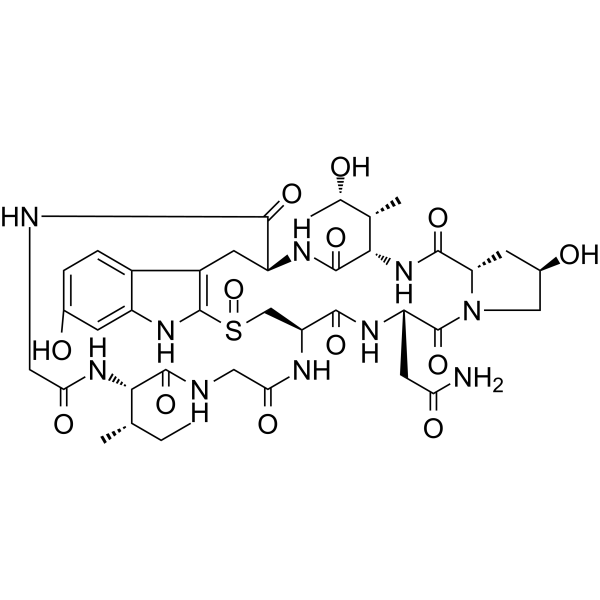
Sandramycin ia a cyclic depsipeptide antibiotic isolated from cultured broth of a Nocardioides sp. Sandramycin is also a DNA intercalator that potently binds DNA and is an ADC cytotoxin. Sandramycin is active against Gram-positive bacteria and has potent antitumor activity .
|
-
-
- HY-W190923
-
-
-
- HY-126665
-
|
|
ADC Payload
|
Cancer
|
|
DMEA-PNU-159682 (molecule D12) is a ADC cytotoxin molecule including metabolites of nemorubicin (MMDX) from liver microsomes and a potent ADCs cytotoxin PNU-159682 .
|
-
-
- HY-129379
-
|
|
ADC Payload
|
Cancer
|
|
DC0-NH2 is an effector moiety for ADC and a simplified analog of DC1 with better stability. DC0-NH2 is about 1000-fold more cytotoxic than commonly used anticancer agents (ex. Doxorubicin). DC0-NH2 can bind to the minor groove of DNA, followed by alkylation of adenine residues by its propabenzindole (CBI) component .
|
-
-
- HY-131058
-
|
|
ADC Payload
|
Cancer
|
|
Muscotoxin A is an ADC cytotoxin. Muscotoxin A is a cytotoxic lipopeptide that permeabilizes mammalian cell membranes and induces necrotic cell death .
|
-
- HY-126689
-
|
|
Drug-Linker Conjugates for ADC
|
Cancer
|
|
Mal-Phe-C4-VC-PAB-DMEA-PNU-159682, a agent-linker conjugate for ADC, consists the ADC linker Mal-Phe-C4-VC-PAB and a potent ADC cytotoxin DMEA-PNU-159682. DMEA-PNU-159682 includes metabolites of nemorubicin (MMDX) from liver microsomes and ADC cytotoxin PNU-159682 .
|
-
- HY-135125
-
|
|
ADC Payload
|
Cancer
|
|
DC4, an ADC cytotoxin, can be used in the synthesis of antibody-drug conjugate (ADC). DC4 can be used for the targeted treatment of cancer .
|
-
- HY-N7052
-
|
|
ADC Payload
Microtubule/Tubulin
|
Cancer
|
|
Tubulysin I is a highly cytotoxic anti-microtubule toxin (anti-microtubule toxins) that is synthesized as an ADC cytotoxin (ADC Cytotoxin). Tubulysin I can be isolated from the myxobacteria Archangium geophyra and Angiococcus disciformis. Tubulysin I displays extremely potent cytotoxic activity in mammalian cells, including multidrug-resistant cell lines, with IC50 values in the low nanomolar range. Tubulysin I inhibits microtubule/tubulin polymerization and leads to cell cycle arrest and apoptosis .
|
-
- HY-N7050
-
|
|
ADC Payload
Microtubule/Tubulin
|
Cancer
|
|
Tubulysin G is a highly cytotoxic anti-microtubule toxin (anti-microtubule toxins) that is synthesized as an ADC cytotoxin (ADC Cytotoxin). Tubulysin G can be isolated from the myxobacteria Archangium geophyra and Angiococcus disciformis. Tubulysin G displays extremely potent cytotoxic activity in mammalian cells, including multidrug-resistant cell lines, with IC50 values in the low nanomolar range. Tubulysin G inhibits microtubule/tubulin polymerization and leads to cell cycle arrest and apoptosis .
|
-
- HY-N2347
-
|
|
ADC Payload
Microtubule/Tubulin
|
Cancer
|
|
Tubulysin C is a highly cytotoxic anti-microtubule toxin (anti-microtubule toxins) that is synthesized as an ADC cytotoxin (ADC Cytotoxin). Tubulysin C can be isolated from the myxobacteria Archangium geophyra and Angiococcus disciformis. Tubulysin C displays extremely potent cytotoxic activity in mammalian cells, including multidrug-resistant cell lines, with IC50 values in the low nanomolar range. Tubulysin C inhibits microtubule/Tubulin polymerization and leads to cell cycle arrest and apoptosis .
|
-
- HY-174277
-
|
|
ADC Payload
Topoisomerase
|
Cancer
|
|
Antitumor agent-203 (例7) is a derivative of Exatecan (DX-8951) (HY-13631) and can be used to prepare antibody-drug conjugates (ADCs), as the ADC Cytotoxin .
|
-
- HY-112899
-
|
|
ADC Payload
DNA Alkylator/Crosslinker
|
Cancer
|
|
DC1, an analogue of the minor groove-binding DNA alkylator CC-1065, is a ADC Cytotoxin. DC1 can be used in synthesis of antibody-drug conjugates for the targeted treatment of cancer.
|
-
- HY-79254
-
|
|
ADC Payload
|
Cancer
|
|
MMAF intermediate 2 is an intermediate for the synthesis of MMAF (HY-15579). MMAF (Monomethylauristatin F) is a potent inhibitor of tubulin polymerization and the cytotoxic (ADC Cytotoxin) component of classic antibody drug conjugates (ADCs), such as Vorsetuzumab mafodotin and SGN-CD19A .
|
-
- HY-131055
-
|
|
ADC Payload
PI3K
Apoptosis
|
Cancer
|
|
Mytoxin B is an ADC cytotoxin. Mytoxin B is a satratoxin-type trichothecene macrolide and is similar to the effect of LY294002 (HY-10108). Mytoxin B induces cell apoptosis via PI3K/Akt pathway .
|
-
- HY-126665A
-
|
|
ADC Payload
|
Cancer
|
|
DMEA-PNU-159682 (molecule D12) dichloroacetate is an ADC cytotoxin molecule including metabolites of nemorubicin (MMDX) from liver microsomes and a potent ADCs cytotoxin PNU-159682 .
|
-
- HY-178289
-
|
|
Drug-Linker Conjugates for ADC
|
Cancer
|
|
Fmoc-Val-Lys(Boc)-PAB-Exatecan (Compound 39-7) is a Drug-Linker Conjugates for ADC. Fmoc-Val-Lys(Boc)-PAB-Exatecan consists of the ADC Cytotoxin Exatecan (HY-13631) and a linker PAB-Val-Lys-Boc (HY-138651). Fmoc-Val-Lys(Boc)-PAB-Exatecan can be used for synthesis of ADCs .
|
-
- HY-178260
-
|
|
Drug-Linker Conjugates for ADC
|
Cancer
|
|
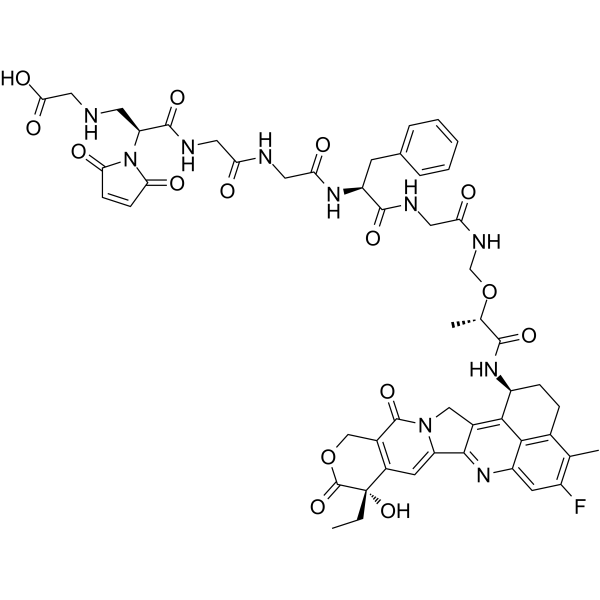
LM-D01 is a Drug-Linker Conjugates for ADC. LM-D01 consists of the ADC Cytotoxin Exatecan-3-amine (HY-178265) and a linker MC-GGFG-NH-CH2-O-propionic acid (HY-178266). LM-D01 can be used for synthesis of ADCs .
|
-
- HY-108876
-
|
Daunomycincitrate; RP 13057citrate; Rubidomycincitrate
|
Topoisomerase
DNA/RNA Synthesis
ADC Payload
Autophagy
Bacterial
Antibiotic
Apoptosis
|
Infection
Neurological Disease
Cancer
|
|
Daunorubicin (Daunomycin) citrate is a topoisomerase II inhibitor with potent anti-tumor activity. Daunorubicin citrate inhibits DNA and RNA synthesis. Daunorubicin citrate is a cytotoxin that inhibits cancer cell viability and induces apoptosis and necrosis. Daunorubicin citrate is also an anthracycline antibiotic. Daunorubicin citrate can be used in the research of infection and variety of cancers, including leukemia, non-Hodgkin lymphomas, Ewing's sarcoma, Wilms' tumor .
|
-
- HY-13062R
-
|
Daunomycin hydrochloride (Standard); RP 13057 hydrochloride (Standard); Rubidomycin hydrochloride (Standard)
|
Reference Standards
Topoisomerase
DNA/RNA Synthesis
ADC Payload
Bacterial
Autophagy
Apoptosis
Antibiotic
|
Infection
Neurological Disease
Cancer
|
|
Daunorubicin (hydrochloride) (Standard) is the analytical standard of Daunorubicin (hydrochloride). This product is intended for research and analytical applications. Daunorubicin (Daunomycin) hydrochloride is a topoisomerase II inhibitor with potent anti-tumor activity. Daunorubicin hydrochloride inhibits DNA and RNA synthesis. Daunorubicin hydrochloride is a cytotoxin that inhibits cancer cell viability and induces apoptosis and necrosis. Daunorubicin hydrochloride is also an anthracycline antibiotic. Daunorubicin hydrochloride can be used in the research of infection and variety of cancers, including leukemia, non-Hodgkin lymphomas, Ewing's sarcoma, Wilms' tumor .
|
-
- HY-47858
-
-
- HY-P99881
-
|
ABBV 176
|
Antibody-Drug Conjugates (ADCs)
|
Cancer
|
|
Rolinsatamab talirine (ABBV 176) is a prolactin receptor (PRLR)-targeting antibody-drug conjugate (ADC), compoused of Rolinsatamab (HY-P99238) and SGD-1882 (HY-101127). Rolinsatamab talirine binds to PRLR to deliver a cytotoxin to tumor cells. Rolinsatamab talirine induces DNA damage, and exhibits cytotoxicity against multiple breast tumor models, including triple negative and low PRLR-expressing models. Rolinsatamab talirine demonstrates enhanced anti-tumor activity in several breast cancer models. Rolinsatamab talirine can be used for the research of breast cancer, hepatocellular carcinoma, ovarian cancer, endometrial cancer, prostate cancer, colorectal cancer, adrenocortical carcinoma, and solid tumors .
|
-
- HY-N2346
-
|
|
ADC Payload
Microtubule/Tubulin
|
Cancer
|
|
Tubulysin E is a highly cytotoxic anti-microtubule toxin (anti-microtubule toxins) that is synthesized as an ADC cytotoxin (ADC Cytotoxin). Tubulysin E can be isolated from the myxobacteria Archangium geophyra and Angiococcus disciformis. Tubulysin E displays extremely potent cytotoxic activity in mammalian cells, including multidrug-resistant cell lines, with IC50 values in the low nanomolar range. Tubulysin E inhibits microtubule/Tubulin polymerization and leads to cell cycle arrest and apoptosis .
|
-
- HY-N7049
-
|
|
ADC Payload
Microtubule/Tubulin
|
Cancer
|
|
Tubulysin F is a highly cytotoxic anti-microtubule toxin (anti-microtubule toxins) that is synthesized as an ADC cytotoxin (ADC Cytotoxin). Tubulysin F can be isolated from the myxobacteria Archangium geophyra and Angiococcus disciformis. Tubulysin F displays extremely potent cytotoxic activity in mammalian cells, including multidrug-resistant cell lines, with IC50 values in the low nanomolar range. Tubulysin F inhibits microtubule/Tubulin polymerization and leads to cell cycle arrest and apoptosis .
|
-
- HY-N7051
-
|
|
ADC Payload
Microtubule/Tubulin
|
Cancer
|
|
Tubulysin H is a highly cytotoxic anti-microtubule toxin (anti-microtubule toxins) that is synthesized as an ADC cytotoxin (ADC Cytotoxin). Tubulysin H can be isolated from the myxobacteria Archangium geophyra and Angiococcus disciformis. Tubulysin H displays extremely potent cytotoxic activity in mammalian cells, including multidrug-resistant cell lines, with IC50 values in the low nanomolar range. Tubulysin H inhibits microtubule/tubulin polymerization and leads to cell cycle arrest and apoptosis .
|
-
- HY-126692
-
|
|
Drug-Linker Conjugates for ADC
|
Cancer
|
|
Mal-VC-PAB-ABAEP-Azonafide is a agent-linker conjugate for ADC with with potent antitumor activity by using Azonafide (a cytotoxin), linked via the ADC linker Mal-VC-PAB .
|
-
- HY-126678
-
|
Dimethyl-PBD dimer
|
ADC Payload
|
Cancer
|
|
Dimethyl-SGD-1882 (Dimethyl-PBD dimer) is a highly potent DNA alkylator, and is used as an antibody-drug conjugate (ADC) cytotoxin. PBD Dimer is a DNA alkylator which inhibits DNA replication .
|
-
- HY-48878
-
|
|
ADC Payload
Topoisomerase
|
Cancer
|
|
Exatecan analog 36 is a analog of Exatecan (HY-13631). Exatecan (DX-8951) is a common toxin component in ADC preparation (ADC Cytotoxin) and an inhibitor of DNA topoisomerase I (IC50=2.2 μM) .
|
-
- HY-156516A
-
|
|
ADC Payload
Topoisomerase
|
Cancer
|
|
10NH2-11F-Camptothecin TFA is a Camptothecin (HY-16560) analogue that serves as an ADC cytotoxin for the synthesis of antibody-drug conjugates (ADCs). 10NH2-11F-Camptothecin TFA has anticancer effects (WO2022246576A1; compound 140) .
|
-
- HY-400056
-
|
|
ADC Payload
|
Cancer
|
|
SC209 intermediate-2 (Compound A9) is an intermediate of the ADC cytotoxin SC209 (HY-144880). SC209 intermediate-2 is an ADC Linker .
|
-
- HY-117630
-
|
|
Drug Intermediate
|
Cancer
|
|
RB-6145 is an orally active pro-drug of the hypoxic cell radiosensitizer RSU 1069. RB-6145 acts a hypoxic cell radiosensitizer and cytotoxin but reduces systemic toxicity in mice .
|
-
- HY-15583S
-
|
|
Isotope-Labeled Compounds
ADC Payload
Microtubule/Tubulin
|
Cancer
|
|
Auristatin F-d8 is deuterium labeled Auristatin F (HY-15583). Auristatin F is a potent cytotoxin in antibo-conjugated agents and an analogue of MMAF. Auristatin F is a potent microtubule inhibitor and vascular damaging agent (VDA). Auristatin F inhibits cell division by preventing tubulin aggregation.Auristatin F can be used in antibody-drug conjugates (ADC) .
|
-
- HY-146722
-
|
|
Bacterial
DNA/RNA Synthesis
|
Infection
|
|
Antibacterial agent 89 is a potent antibacterial agent. Antibacterial agent 89 shows anti-clostridial activity. Antibacterial agent 89 inhibits the release of cytotoxins and the β’CH-σ interaction. Antibacterial agent 89 disrupts the process of bacterial transcription .
|
-
- HY-130959
-
|
|
ADC Payload
Microtubule/Tubulin
|
Cancer
|
|
Tubulysin IM-2 is a microtubule/Tubulin inhibitor that can act as an ADC cytotoxin (ADC Cytotoxin) and an anti-microtubule toxin (anti-microtubule toxins). Used for ADC synthesis.
|
-
- HY-130960
-
|
|
ADC Payload
Microtubule/Tubulin
|
Cancer
|
|
Tubulysin IM-3 is a microtubule/Tubulin inhibitor that can act as an ADC cytotoxin (ADC Cytotoxin) and an anti-microtubule toxin (anti-microtubule toxins). Used for ADC synthesis.
|
-
- HY-130958
-
|
|
ADC Payload
Microtubule/Tubulin
|
Cancer
|
|
Tubulysin IM-1 is a microtubule/Tubulin inhibitor that can act as an ADC cytotoxin (ADC Cytotoxin) and an anti-microtubule toxin (anti-microtubule toxins). Used for ADC synthesis .
|
-
- HY-129360A
-
|
|
ADC Linker
|
Cancer
|
|
Ala-Ala-Asn-PAB TFA is a peptide cleavable ADC linker for antibody-drug conjugates (ADCs) .
|
-
- HY-79258
-
-
- HY-W021377C
-
|
|
ADC Payload
Drug Intermediate
|
Cancer
|
|
Exatecan Intermediate 4 dihydrochloride (Compound 14f) is an intermediate of Exatecan (DX-8951, HY-13631). Exatecan is an anticancer agent belonging to the class of camptothecin analogs. Exatecan interferes with the proliferation and division of tumor cells by interacting with DNA, thereby inhibiting tumor growth. Exatecan is primarily used for research of a variety of cancers including ovarian, lung and breast cancers .
|
-
- HY-79635R
-
|
|
Reference Standards
Bacterial
Endogenous Metabolite
|
Infection
|
|
Methyl indole-3-carboxylate (Standard) is an analytical standard of Methyl indole-3-carboxylate (HY-79635). This product is intended for research and analytical applications. Methyl indole-3-carboxylate is a Sorangium metabolite. Methyl indole-3-carboxylate shows weak activity against Gram-positive Nocardia sp with a MIC of 33.3 μg/mL .
|
-
- HY-148193
-
|
|
ADC Payload
Microtubule/Tubulin
|
Cancer
|
|
Tubulin polymerization-IN-38 is an analogue of Tubulysin (HY-128914), a potent anticancer agent. Tubulin polymerization-IN-38 inhibits tubulin polymerization (tubulin polymerisation), thereby inducing apoptosis (apoptosis). Tubulysin series products are potent anti-microtubule toxins (anti-microtubule toxins) and can be used as ADC cytotoxins (ADC Cytotoxin) to synthesize ADCs .
|
-
- HY-148555
-
-
- HY-141594
-
|
|
Microtubule/Tubulin
|
Cancer
|
|
Modified MMAF, an ADC cytotoxin, can be used in the synthesis of Antibody-drug Conjugate (ADC). Modified MMAF can be used for the targeted research of cancer .
|
-
- HY-128896
-
-
- HY-400684
-
|
|
Bacterial
|
Cancer
|
|
Tubulysin A intermediate-1 is an intermediate in the synthesis of the cytotoxic peptide Tubulysin A (HY-15995). Tubulysin A (TubA) is an antibiotic, anti-microtubule toxins, and apoptosis inducer isolated from myxobacteria. Tubulysin A has anti-angiogenic, anti-microtubule, anti-mitotic, and anti-proliferative activities. Tubulysin A arrests cells in the G2/M phase, effectively inhibits tubulin polymerization, and induces depolymerization of detached microtubules. Tubulysin A acts as an ADC cytotoxin (ADC Cytotoxin) to synthesize ADC .
|
-
- HY-147179
-
|
|
ADC Payload
|
Inflammation/Immunology
|
|
INX-SM-56 is a cytotoxin that can be used for the synthesis of anti-VISTA antibody agent conjugate. VISTA: V-region Immunoglobulin-containing Suppressor of T cell Activation .
|
-
- HY-130997
-
|
|
ADC Payload
HSP
|
Infection
Cancer
|
|
17-GMB-APA-GA is an ADC Cytotoxin. 17-GMB-APA-GA is a potent HSP90 inhibitor and used for latent T. gondii infection research .
|
-
- HY-NP015
-
|
|
Bacterial
|
Infection
|
|
SLT/SLT-IIe (O139) protein is a cytotoxin that can be isolated from enterotoxigenic E. coli (ETEC). SLT/SLT-IIe (O139) protein causes edema in pigs .
|
-
- HY-160702
-
|
|
Drug-Linker Conjugates for ADC
|
Cancer
|
|
DMBA-SIL-Mal-MMAE is a cytotoxin-linker conjugate for ADC with potent antitumor activity by using the anti-mitotic agent, monomethyl auristatin E (MMAE, a tubulin inhibitor), linked DMBA-SIL-Mal .
|
-
- HY-49861
-
|
|
ADC Payload
Topoisomerase
|
Cancer
|
|
Exatecan intermediate 11 is an intermediate for the synthesis of Exatecan (HY-13631). Exatecan (DX-8951) is a common toxin component in ADC preparation (ADC Cytotoxin) and an inhibitor of DNA topoisomerase I (IC50=2.2 μM) .
|
-
- HY-400316
-
|
|
ADC Payload
Topoisomerase
|
Cancer
|
|
Exatecan intermediate 8 is an intermediate for the synthesis of Exatecan (HY-13631). Exatecan (DX-8951) is a common toxin component in ADC preparation (ADC Cytotoxin) and an inhibitor of DNA topoisomerase I (IC50=2.2 μM) .
|
-
- HY-183263
-
|
|
ADC Payload
N-myristoyltransferase
|
Cancer
|
|
MYX1715 analog 1 is an analog of MYX1715 (HY-164285). MYX1715 analog 1 is an N-myristoyltransferase (NMT) inhibitor that inhibits protein myristoylation modification. MYX1715 analog 1 can be conjugated to targeting antibodies via cleavable or non-cleavable linkers for use as an ADC cytotoxin. MYX1715 analog 1 is used in the development of drugs targeting tumor-associated antigens .
|
-
- HY-162068
-
|
|
Drug Derivative
|
Cancer
|
|
Auristatin23, a conjugate of Auristatin F (HY-15583), is a cytotoxin. Auristatin23 exhibit cytotoxic activities towards targeted cells, including abnormal cells such as cancer cells, that are MDR+ .
|
-
- HY-13631G
-
|
|
ADC Payload
Topoisomerase
|
Cancer
|
|
Exatecan analog 13 is a analog of Exatecan (HY-13631). Exatecan (DX-8951) is a common toxin component in ADC preparation (ADC Cytotoxin) and an inhibitor of DNA topoisomerase I (IC50 = 2.2 μM) .
|
-
- HY-P11779
-
-
- HY-P11779A
-
-
- HY-79253
-
|
|
ADC Payload
|
Cancer
|
|
MMAF intermediate 1 is an intermediate in the synthesis of MMAF (HY-15579). MMAF (Monomethylauristatin F) is a potent inhibitor of tubulin polymerization and the cytotoxic (ADC Cytotoxin) component of classic antibody drug conjugates (ADCs), such as Vorsetuzumab mafodotin and SGN-CD19A .
|
-
- HY-41047
-
|
|
Apoptosis
|
Cancer
|
|
Taltobulin intermediate-1 is an intermediate in the synthesis of Taltobulin (HY-15584). Taltobulin is a common toxin component in ADC preparation (ADC Cytotoxin), and it is also a powerful tubulin (Microtubule/Tubulin) inhibitor. Taltobulin disrupts tubulin polymerization, induces mitotic arrest, and induces apoptosis .
|
-
- HY-41061
-
|
|
Apoptosis
|
Cancer
|
|
D-Boc Valine methyl ester is an intermediate in the synthesis of Taltobulin (HY-15584). Taltobulin is a common toxin component in ADC preparation (ADC Cytotoxin), and it is also a powerful tubulin (Microtubule/Tubulin) inhibitor. Taltobulin disrupts tubulin polymerization, induces mitotic arrest, and induces apoptosis .
|
-
- HY-41069
-
|
|
Apoptosis
|
Cancer
|
|
Taltobulin intermediate-7 is an intermediate in the synthesis of Taltobulin (HY-15584). Taltobulin is a common toxin component in ADC preparation (ADC Cytotoxin), and it is also a powerful tubulin (Microtubule/Tubulin) inhibitor. Taltobulin disrupts tubulin polymerization, induces mitotic arrest, and induces apoptosis .
|
-
- HY-41066
-
|
|
Apoptosis
|
Cancer
|
|
Taltobulin intermediate-5 is an intermediate in the synthesis of Taltobulin (HY-15584). Taltobulin is a common toxin component in ADC preparation (ADC Cytotoxin), and it is also a powerful tubulin (Microtubule/Tubulin) inhibitor. Taltobulin disrupts tubulin polymerization, induces mitotic arrest, and induces apoptosis .
|
-
- HY-46004
-
|
|
Apoptosis
|
Cancer
|
|
Taltobulin intermediate-10 is an intermediate in the synthesis of Taltobulin (HY-15584). Taltobulin is a common toxin component in ADC preparation (ADC Cytotoxin), and it is also a powerful tubulin (Microtubule/Tubulin) inhibitor. Taltobulin disrupts tubulin polymerization, induces mitotic arrest, and induces apoptosis .
|
-
- HY-41055
-
|
|
ADC Payload
|
Cancer
|
|
Taltobulin intermediate-4 is an intermediate in the synthesis of Taltobulin (HY-15584). Taltobulin is a common toxin component in ADC preparation (ADC Cytotoxin), and it is also a powerful tubulin (Microtubule/Tubulin) inhibitor. Taltobulin disrupts tubulin polymerization, induces mitotic arrest, and induces apoptosis .
|
-
- HY-41070
-
|
|
Microtubule/Tubulin
ADC Payload
|
Cancer
|
|
Taltobulin intermediate-8 is an intermediate in the synthesis of Taltobulin (HY-15584). Taltobulin is a common toxin component in ADC preparation (ADC Cytotoxin), and it is also a powerful tubulin (Microtubule/Tubulin) inhibitor. Taltobulin disrupts tubulin polymerization, induces mitotic arrest, and induces apoptosis .
|
-
- HY-46005
-
|
|
Apoptosis
|
Cancer
|
|
Taltobulin intermediate-11 is an intermediate in the synthesis of Taltobulin (HY-15584). Taltobulin is a common toxin component in ADC preparation (ADC Cytotoxin), and it is also a powerful tubulin (Microtubule/Tubulin) inhibitor. Taltobulin disrupts tubulin polymerization, induces mitotic arrest, and induces apoptosis .
|
-
- HY-46006
-
|
|
Apoptosis
|
Cancer
|
|
Taltobulin intermediate-12 is an intermediate in the synthesis of Taltobulin (HY-15584). Taltobulin is a common toxin component in ADC preparation (ADC Cytotoxin), and it is also a powerful tubulin (Microtubule/Tubulin) inhibitor. Taltobulin disrupts tubulin polymerization, induces mitotic arrest, and induces apoptosis .
|
-
- HY-41043
-
|
|
Apoptosis
|
Cancer
|
|
Taltobulin intermediate-2 is an intermediate in the synthesis of Taltobulin (HY-15584). Taltobulin is a common toxin component in ADC preparation (ADC Cytotoxin), and it is also a powerful tubulin (Microtubule/Tubulin) inhibitor. Taltobulin disrupts tubulin polymerization, induces mitotic arrest, and induces apoptosis .
|
-
- HY-41054
-
|
|
Apoptosis
|
Cancer
|
|
Taltobulin intermediate-3 is an intermediate in the synthesis of Taltobulin (HY-15584). Taltobulin is a common toxin component in ADC preparation (ADC Cytotoxin), and it is also a powerful tubulin (Microtubule/Tubulin) inhibitor. Taltobulin disrupts tubulin polymerization, induces mitotic arrest, and induces apoptosis .
|
-
- HY-41067
-
|
|
Apoptosis
|
Cancer
|
|
Taltobulin intermediate-6 is an intermediate in the synthesis of Taltobulin (HY-15584). Taltobulin is a common toxin component in ADC preparation (ADC Cytotoxin), and it is also a powerful tubulin (Microtubule/Tubulin) inhibitor. Taltobulin disrupts tubulin polymerization, induces mitotic arrest, and induces apoptosis .
|
-
- HY-19826
-
|
|
DNA Methyltransferase
ADC Payload
Autophagy
Apoptosis
|
Cancer
|
|
Isofistularin-3 is a direct, DNA-competitive DNMT1 inhibitor, with an IC50 of 13.5 μM. Isofistularin-3, as a DNA demethylating agent, induces cell cycle arrest and sensitization to TRAIL in cancer cells. Isofistularin-3 can be used as an ADC cytotoxin .
|
-
- HY-41045
-
|
|
Apoptosis
|
Cancer
|
|
(Rac)-Taltobulin intermediate-1 is an intermediate in the synthesis of Taltobulin (HY-15584). Taltobulin is a common toxin component in ADC preparation (ADC Cytotoxin), and it is also a powerful tubulin (Microtubule/Tubulin) inhibitor. Taltobulin disrupts tubulin polymerization, induces mitotic arrest, and induces apoptosis .
|
-
- HY-164860
-
|
|
Glucocorticoid Receptor
ADC Payload
|
Inflammation/Immunology
|
|
Glucocorticoid receptor agonist-5 (compound 4), a glucocorticoid molecule, is a potent glucocorticoid receptor agonist. Glucocorticoid receptor agonist-5 shows anti-inflammatory and immunosuppressive activity. Glucocorticoid receptor agonist-5 is used as an ADC Cytotoxin for antibody-drug conjugate .
|
-
- HY-13562
-
|
AQ4N
|
NO Synthase
|
Cancer
|
|
Banoxantrone (AQ4N), as a prototype hypoxia selective cytotoxin, can be reduced to AQ4, a potent topoisomerase II inhibitor. Banoxantrone selectively kills hypoxic cells via an iNOS-dependent mechanism. Banoxantrone shows a potent cytotoxicity and hypoxia-selective effect enhanced by radiation .
|
-
- HY-78908
-
|
|
Microtubule/Tubulin
|
Cancer
|
|
Monomethyl auristatin E intermediate-11 is an intermediate reactant in the synthesis of Monomethyl auristatin E (HY-15162). Monomethyl auristatin E (MMAE) is a microtubule/tubulin inhibitor with anticancer activity. MMAE is widely used as the cytotoxic component (ADC Cytotoxin) of antibody-drug conjugates (ADCs) .
|
-
- HY-33048
-
|
|
Microtubule/Tubulin
|
Cancer
|
|
Monomethyl auristatin E intermediate-1 is an intermediate reagent in the synthesis of Monomethyl auristatin E (HY-15162). Monomethyl auristatin E (MMAE) is a microtubule/tubulin inhibitor with anticancer activity. MMAE is widely used as the cytotoxic component (ADC Cytotoxin) of antibody-drug conjugates (ADCs) .
|
-
- HY-78903
-
|
|
Microtubule/Tubulin
Drug Intermediate
|
Cancer
|
|
Monomethyl auristatin E intermediate-9 is an intermediate reagent in the synthesis of Monomethyl auristatin E (HY-15162). Monomethyl auristatin E (MMAE) is a microtubule/tubulin inhibitor with anticancer activity. MMAE is widely used as the cytotoxic component (ADC Cytotoxin) of antibody-drug conjugates (ADCs) .
|
-
- HY-N16420
-
|
|
DNA/RNA Synthesis
Apoptosis
|
Cancer
|
|
Illudin B is a DNA-targeting cytotoxin that forms interstrand DNA crosslinks via covalent binding, disrupting DNA replication and transcription. Illudin B induces cell cycle arrest and apoptosis, showing toxicity against multiple tumor cells (e.g., leukemia, breast, lung cancer) .
|
-
- HY-78901A
-
|
|
Microtubule/Tubulin
|
Cancer
|
|
Monomethyl auristatin E intermediate-8 is an intermediate reagent in the synthesis of Monomethyl auristatin E (HY-15162). Monomethyl auristatin E (MMAE) is a microtubule/tubulin inhibitor with anticancer activity. MMAE is widely used as the cytotoxic component (ADC Cytotoxin) of antibody-drug conjugates (ADCs) .
|
-
- HY-78911
-
|
|
Microtubule/Tubulin
|
Cancer
|
|
Monomethyl auristatin E intermediate-13 is an intermediate reagent in the synthesis of Monomethyl auristatin E (HY-15162). Monomethyl auristatin E (MMAE) is a microtubule/tubulin inhibitor with anticancer activity. MMAE is widely used as the cytotoxic component (ADC Cytotoxin) of antibody-drug conjugates (ADCs) .
|
-
- HY-79196
-
|
|
Microtubule/Tubulin
|
Cancer
|
|
Monomethyl auristatin E intermediate-15 is an intermediate reagent in the synthesis of Monomethyl auristatin E (HY-15162). Monomethyl auristatin E (MMAE) is a microtubule/tubulin inhibitor with anticancer activity. MMAE is widely used as the cytotoxic component (ADC Cytotoxin) of antibody-drug conjugates (ADCs) .
|
-
- HY-79198
-
|
|
Microtubule/Tubulin
Drug Intermediate
ADC Payload
|
Cancer
|
|
Monomethyl auristatin E intermediate-16 is an intermediate reagent in the synthesis of Monomethyl auristatin E (HY-15162). Monomethyl auristatin E (MMAE) is a microtubule/tubulin inhibitor with anticancer activity. MMAE is widely used as the cytotoxic component (ADC Cytotoxin) of antibody-drug conjugates (ADCs) .
|
-
- HY-78910
-
|
|
Microtubule/Tubulin
|
Cancer
|
|
Monomethyl auristatin E intermediate-12 is an intermediate reagent in the synthesis of Monomethyl auristatin E (HY-15162). Monomethyl auristatin E (MMAE) is a microtubule/tubulin inhibitor with anticancer activity. MMAE is widely used as the cytotoxic component (ADC Cytotoxin) of antibody-drug conjugates (ADCs) .
|
-
- HY-78903A
-
|
|
Microtubule/Tubulin
|
Cancer
|
|
Monomethyl auristatin E intermediate-10 is an intermediate reagent in the synthesis of Monomethyl auristatin E (HY-15162). Monomethyl auristatin E (MMAE) is a microtubule/tubulin inhibitor with anticancer activity. MMAE is widely used as the cytotoxic component (ADC Cytotoxin) of antibody-drug conjugates (ADCs) .
|
-
- HY-43147
-
|
|
Microtubule/Tubulin
|
Cancer
|
|
Monomethyl auristatin E intermediate-4 is an intermediate reagent in the synthesis of Monomethyl auristatin E (HY-15162). Monomethyl auristatin E (MMAE) is a microtubule/tubulin inhibitor with anticancer activity. MMAE is widely used as the cytotoxic component (ADC Cytotoxin) of antibody-drug conjugates (ADCs) .
|
-
- HY-78899
-
|
|
Microtubule/Tubulin
Drug Intermediate
|
Cancer
|
|
Monomethyl auristatin E intermediate-6 is an intermediate reagent in the synthesis of Monomethyl auristatin E (HY-15162). Monomethyl auristatin E (MMAE) is a microtubule/tubulin inhibitor with anticancer activity. MMAE is widely used as the cytotoxic component (ADC Cytotoxin) of antibody-drug conjugates (ADCs) .
|
-
- HY-78901
-
|
|
Microtubule/Tubulin
|
Cancer
|
|
Monomethyl auristatin E intermediate-7 is an intermediate reagent in the synthesis of Monomethyl auristatin E (HY-15162). Monomethyl auristatin E (MMAE) is a microtubule/tubulin inhibitor with anticancer activity. MMAE is widely used as the cytotoxic component (ADC Cytotoxin) of antibody-drug conjugates (ADCs) .
|
-
- HY-79205
-
|
|
Microtubule/Tubulin
|
Cancer
|
|
Monomethyl auristatin E intermediate-17 is an intermediate reagent in the synthesis of Monomethyl auristatin E (HY-15162). Monomethyl auristatin E (MMAE) is a microtubule/tubulin inhibitor with anticancer activity. MMAE is widely used as the cytotoxic component (ADC Cytotoxin) of antibody-drug conjugates (ADCs) .
|
-
- HY-49413
-
|
|
Microtubule/Tubulin
|
Cancer
|
|
Monomethyl auristatin E intermediate-2 is an intermediate reagent in the synthesis of Monomethyl auristatin E (HY-15162). Monomethyl auristatin E (MMAE) is a microtubule/tubulin inhibitor with anticancer activity. MMAE is widely used as the cytotoxic component (ADC Cytotoxin) of antibody-drug conjugates (ADCs) .
|
-
- HY-43149
-
|
|
Microtubule/Tubulin
|
Cancer
|
|
Monomethyl auristatin E intermediate-5 is an intermediate reagent in the synthesis of Monomethyl auristatin E (HY-15162). Monomethyl auristatin E (MMAE) is a microtubule/tubulin inhibitor with anticancer activity. MMAE is widely used as the cytotoxic component (ADC Cytotoxin) of antibody-drug conjugates (ADCs) .
|
-
- HY-78913
-
|
|
ADC Payload
|
Cancer
|
|
Monomethyl auristatin E intermediate-14 is an intermediate reagent in the synthesis of Monomethyl auristatin E (HY-15162). Monomethyl auristatin E (MMAE) is a microtubule/tubulin inhibitor with anticancer activity. MMAE is widely used as the cytotoxic component (ADC Cytotoxin) of antibody-drug conjugates (ADCs) .
|
-
- HY-43146
-
|
|
Microtubule/Tubulin
|
Cancer
|
|
Monomethyl auristatin E intermediate-3 is an intermediate reagent in the synthesis of Monomethyl auristatin E (HY-15162). Monomethyl auristatin E (MMAE) is a microtubule/tubulin inhibitor with anticancer activity. MMAE is widely used as the cytotoxic component (ADC Cytotoxin) of antibody-drug conjugates (ADCs) .
|
-
- HY-N8036
-
|
|
Others
|
Cancer
|
|
(2R,3R)-Pterosin L 3-O-β-D-glucopyranoside is an glucoside compound found in the aerial parts of Pteris multifida. (2R,3R)-Pterosin L 3-O-β-D-glucopyranoside shows cytotoxicity against cancer cells. (2R,3R)-Pterosin L 3-O-β-D-glucopyranoside can be used for the research of cancer, such as human epidermoid carcinoma .
|
-
- HY-P1126
-
|
DLS 15
|
Microtubule/Tubulin
ADC Payload
Apoptosis
|
Cancer
|
|
Dolastatin 15 (DLS 15), a depsipeptide derived from Dolabella auricularia, is a potent antimitotic agent structurally related to the antitubulin agent Dolastatin 10. Dolastatin 15 induces cell cycle arrest and apoptosis in multiple myeloma cells. Dolastatin 15 can be used as an ADC cytotoxin .
|
-
- HY-126688
-
|
|
Drug-Linker Conjugates for ADC
|
Cancer
|
|
Mal-C2-Gly3-EDA-PNU-159682, a agent-linker conjugate for ADC, consists a cleavable ADC linker Mal-C2-Gly3-EDA and a potent ADC cytotoxin PNU-159682.
|
-
- HY-43565C
-
|
|
Drug Intermediate
|
Cancer
|
|
(1S,9R)-Ac-Exatecan is an intermediate for the synthesis of Exatecan (HY-13631). Exatecan (DX-8951) is a common toxin component in ADC preparation (ADC Cytotoxin) and an inhibitor of DNA topoisomerase I (IC50=2.2 μM) .
|
-
- HY-156686
-
|
|
ADC Payload
Topoisomerase
|
Cancer
|
|
NH2-methylpropanamide-Exatecan TFA is a methylpropanamide-modified Exatecan (HY-13631), which is the common ADC Cytotoxin used in the synthesis of ADC. Exatecan is a DNA topoisomerase I inhibitor, with an IC50 of 2.2 μM (0.975 μg/mL), and can be used in cancer research .
|
-
- HY-153601
-
|
|
Drug-Linker Conjugates for ADC
DNA/RNA Synthesis
|
Cancer
|
|
MC-VC-PAB-Cyclohexanediamine-Thailanstatin A is a Spliceostatin (HY-16466) analog, and a drug-linker conjugates for ADC, consisting of ADC Cytotoxin Thailanstatin A (HY-129589) and cleavable ADC linker (MC-vc-PAB). MC-VC-PAB-Cyclohexanediamine-Thailanstatin A can be used for ADC synthesis .
|
-
- HY-126493
-
-
- HY-157501
-
|
|
Drug-Linker Conjugates for ADC
|
Cancer
|
|
PC6-VC-PAB-MMAE is a Drug-Linker Conjugates for ADC. PC6-VC-PAB-MMAE consists of the ADC Cytotoxin MMAE (HY-15162) and a linker. PC6-VC-PAB-MMAE can be used for synthesis of ADCs .
|
-
- HY-16700
-
|
|
ADC Payload
Topoisomerase
|
Cancer
|
|
PNU-159682, a metabolite of the anthracycline Nemorubicin, is a highly potent DNA topoisomerase II inhibitor with excellent cytotoxicity. PNU-159682 acts as a more potent and tolerated ADC cytotoxin than Doxorubicin for ADC synthesis. PNU-159682 can be used in EDV-nanocell technology to overcome agent resistance.
|
-
- HY-148870
-
|
|
ADC Payload
|
Cancer
|
|
Maytansinoid B is a kind of ADC Cytotoxin. Maytansinoid B can be used to conjugates with antibodies to form antibody-drug conjugates (ADCs). Maytansinoids are known as antimitotic agents, binding to tubulin and inhibiting microtubule assembly. Maytansinoids induces G2/M arrest in the cell cycle to induce apoptosis .
|
-
- HY-156516
-
|
|
ADC Payload
Topoisomerase
|
Cancer
|
|
10NH2-11F-Camptothecin is a Camptothecin (HY-16560) analogue that serves as an ADC cytotoxin for the synthesis of antibody-drug conjugates (ADCs). 10NH2-11F-Camptothecin can inhibit tumor growth and is used in cancer research .
|
-
- HY-78738G
-
|
|
ADC Linker
|
Cancer
|
|
MC-Val-Cit-PAB GMP is a GMP grade MC-Val-Cit-PAB (HY-78738). MC-Val-Cit-PAB is an intermediate in the synthesis of VcMMAE (HY-15575), which is a Drug-Linker Conjugates for ADC. Monomethyl auristatin E can be used to inhibit Microtubule/Tubulin as ADC Cytotoxin.
|
-
- HY-176927
-
|
|
Drug-Linker Conjugates for ADC
|
Cancer
|
|
ADC-VI (Compound 6) is a conjugate of a toxic molecule and a linker, in which the cytotoxin carried by CPD6 is Deruxtecan (HY-13631E). Tricyclene is used to form an antibody-drug conjugate (ADC) by a chemical conjugation reaction through linking with an anti-FGFR2b antibody .
|
-
- HY-171507
-
|
|
Drug-Linker Conjugates for ADC
|
Cancer
|
|
Mal-Val-Ala-amide-(3)PEA-PNU-159682 is a Drug-Linker Conjugates for ADC, composes of ADC linker (Mal-Val-Ala-amide-(3)PEA) and ADC cytotoxin PNU-159682 (HY-16700), and has anti-tumor activity .
|
-
- HY-Y0030
-
|
3-hydroxypyridine-2-carboxylic acid
|
Biochemical Assay Reagents
|
Infection
Cancer
|
|
3-Hydroxypicolinic acid is a heterocyclic carboxylic acid ligand and cytotoxin, with a MIC90 of >25 μg/mL against Mycobacterium tuberculosis H37Rv. 3-Hydroxypicolinic acid inhibits the growth of cancer cells and normal fibroblasts. 3-Hydroxypicolinic acid is applicable to research related to chronic myeloid leukemia, human lung adenocarcinoma, and tuberculosis .
|
-
- HY-P10775
-
|
|
Peptide-Drug Conjugates (PDCs)
MMP
|
Cancer
|
|
BT1769 is a MT1-MMP-targeted (KD = 3.35 nM) Bicycle toxin conjugate. BT1769 can be used in the study for osteosarcoma. BT1769 consists of a novel bicyclic targeting peptide that selectively binds MT1-MMP; a cytotoxin MMAE; and an enzymatically cleavable dipeptide linker .
|
-
- HY-78931G
-
|
|
ADC Linker
|
Cancer
|
|
Boc-Dap-NE (GMP) is Boc-Dap-NE (HY-78931) produced by using GMP guidelines. Boc-Dap-NE is an intermediate in the synthesis of Monomethyl auristatin E (HY-15162), which is an inhibitor of tubulin polymerization. Monomethyl auristatin E can be used to synthesize Antibody-Drug Conjugates (ADCs) as ADC Cytotoxin.
|
-
- HY-106338
-
|
|
Bacterial
ADC Payload
Parasite
|
Infection
Cancer
|
|
Polyketomycin is a tetracyclic quinone glycoside antibiotic isolated from Streptomyces sp. or Streptomyces diastatochromogenes. Polyketomycin inhibits growth of Gram-positive bacteria, and its MIC values is less than 0.2 µg/mL. Polyketomycin has antibacterial, anticancer, antimalarial activities .
|
-
- HY-78899A
-
|
|
Microtubule/Tubulin
|
Cancer
|
|
(4R,5S)-Monomethyl auristatin E intermediate-6 is an intermediate reagent in the synthesis of Monomethyl auristatin E (HY-15162). Monomethyl auristatin E (MMAE) is a microtubule/tubulin inhibitor with anticancer activity. MMAE is widely used as the cytotoxic component (ADC Cytotoxin) of antibody-drug conjugates (ADCs) .
|
-
- HY-78931F
-
|
|
Drug Intermediate
|
Cancer
|
|
(R,S,S,S,R)-Boc-Dap-NE is an isomer of the dipeptide Boc-Dap-NE (HY-78931). Boc-Dap-NE is an intermediate in the synthesis of Monomethyl auristatin E (HY-15162), which is an inhibitor of tubulin polymerization. Monomethyl auristatin E can be used to synthesize Antibody-Drug Conjugates (ADCs) as ADC Cytotoxin.
|
-
- HY-100128R
-
|
|
Microtubule/Tubulin
Reference Standards
ADC Payload
|
Cancer
|
|
DM1-SMe (Standard) is the analytical standard of DM1-SMe (HY-100128). This product is intended for research and analytical applications. DM1-SMe is an unconjugated form of the Maytansinoid in IMGN901. DM1-SMe is the microtubule inhibitor and can be used as the ADC cytotoxin .
|
-
- HY-78931C
-
|
|
Drug Intermediate
|
Cancer
|
|
(S,S,R,S,R)-Boc-Dap-NE is an isomer of the dipeptide Boc-Dap-NE (HY-78931). Boc-Dap-NE is an intermediate in the synthesis of Monomethyl auristatin E (HY-15162), which is an inhibitor of tubulin polymerization. Monomethyl auristatin E can be used to synthesize Antibody-Drug Conjugates (ADCs) as ADC Cytotoxin.
|
-
- HY-116852
-
|
|
Microtubule/Tubulin
Apoptosis
|
Cancer
|
|
Thiocolchicine, a derivative modified in the C Ring of Colchicine (HY-16569) with enhanced biological properties. Thiocolchicine is a potent inhibitor of tubulin polymerization (IC50=2.5 µM) and competitively binds to tubulin with a Ki of 0.7 µM. Thiocolchicine induces cell apoptosis . Thiocolchicine can be used as an ADC cytotoxin in ADC technology.
|
-
- HY-126666
-
|
|
ADC Payload
|
Inflammation/Immunology
Cancer
|
|
PNU-159682 carboxylic acid (Compound 53) is a potent ADCs cytotoxin and encodes a member of the C-type lectin/C-type lectin-like domain (CTL/CTLD) superfamily. PNU-159682 carboxylic acid has protein fold and diverse functions, such as cell adhesion, cell-cell signalling, glycoprotein turnover, and roles in inflammation and immune response .
|
-
- HY-78931E
-
|
|
Drug Intermediate
|
Cancer
|
|
(R,S,R,S,R)-Boc-Dap-NE is an isomer of the dipeptide Boc-Dap-NE (HY-78931). Boc-Dap-NE is an intermediate in the synthesis of Monomethyl auristatin E (HY-15162), which is an inhibitor of tubulin polymerization. Monomethyl auristatin E can be used to synthesize Antibody-Drug Conjugates (ADCs) as ADC Cytotoxin.
|
-
- HY-P0307B
-
|
|
Biochemical Assay Reagents
|
Neurological Disease
|
|
Penetratin-Cys is a cell-penetrating peptide derived from Antennapedia Peptide (HY-P0307) via C-terminal cysteine modification. Penetratin-Cys acts as a cytotoxin and reduces the viability of differentiated neuronal cells. Penetratin-Cys localizes to the perinuclear region and binds to the Golgi apparatus. Penetratin-Cys can be used in research related to neurological disorders .
|
-
- HY-79490
-
|
|
ADC Payload
Topoisomerase
|
Cancer
|
|
Ac-Exatecan is acetylation-modified Exatecan (HY-13631). Exatecan is a common toxin component in ADC preparation (ADC cytotoxin) and an inhibitor of DNA topoisomerase I (IC50 = 2.2 μM). Exatecan has antitumor activity. Exatecan can be used as a payload for ADC. Exatecan is effective against P-glycoprotein mediated multi-drug resistant cells .
|
-
- HY-159576
-
|
O-Me B1939; O-Me E7389; O-Me ER-086526
|
ADC Payload
|
Cancer
|
O-Me Eribulin is a derivative of Eribulin and is an ADC cytotoxin that can be used for ADC synthesis. O-Me Eribulin can inhibit the cell viability of SKBR3, MDA-MB-468, and A549 cells, with IC50 values of 0.2052, 0.1827, and 0.5151 nM, respectively. O-Me Eribulin can be used for tumor research .
|
-
- HY-128910
-
|
|
Drug-Linker Conjugates for ADC
Microtubule/Tubulin
|
Cancer
|
|
MC-VC(S)-PABQ-Tubulysin M is a synthetic ADC drug-linker conjugate composed of the tubulin polymerization inhibitor Tubulysin M (an ADC Cytotoxin) (HY-N7053) and MC-VC(S)- PABQ (an ADC linker) is connected. MC-VC(S)-PABQ-Tubulysin M is effective against multidrug-resistant lymphoma cell lines and tumors .
|
-
- HY-N18083
-
|
|
Drug Derivative
|
Cancer
|
|
Gweicurculactone is a sesquiterpene and cytotoxin found in the root tuber of Curcuma wenyujin Y. H. Chen et C. Ling. Gweicurculactone exerts cytotoxic effects against human promyelocytic leukemia, hepatocellular carcinoma, chronic myelogenous leukemia, epidermoid carcinoma, and breast adenocarcinoma cells. Gweicurculactone can be used for the research of leukemia, hepatocellular carcinoma, epidermoid carcinoma of the mouth, breast adenocarcinoma .
|
-
- HY-158199
-
|
|
ADC Linker
|
Cancer
|
|
BCN-HS-PEG2-bis(PNP) (Compound 62) is a p-nitrophenyl-containing ADC linker that can be used to further couple ADC cytotoxins with peptide linkers. BCN-HS-PEG2-bis(PNP) can conjugate with vc-PABC-MMAE (HY-15162) to form Drug-Linker Conjugates for ADC .
|
-
- HY-78931B
-
|
|
Drug Intermediate
|
Cancer
|
|
(S,S,S,S,R)-Boc-Dap-NE is the inactive isomer of Boc-Dap-NE (HY-78931), and can be used as an experimental control. Boc-Dap-NE, is an intermediate in the synthesis of Monomethyl auristatin E (HY-15162), which is an inhibitor of tubulin polymerization. Monomethyl auristatin E can be used to synthesize Antibody-Drug Conjugates (ADCs) as ADC Cytotoxin.
|
-
- HY-79256
-
|
Monomethyl auristatin F methyl ester
|
ADC Payload
|
Cancer
|
|
MMAF-Ome, an antitubulin agent, is also an ADC cytotoxin. MMAF-Ome inhibits several tumor cell lines with IC50s of 0.056 nM, 0.166 nM, 0.183 nM, and 0.449 nM for MDAMB435/5T4, MDAMB361DYT2, MDAMB468, and Raji (5T4 -) cell lines, respectively.
|
-
- HY-78931A
-
|
|
Drug Intermediate
|
Cancer
|
|
(R,S,S,R,S)-Boc-Dap-NE is the inactive isomer of Boc-Dap-NE (HY-78931), and can be used as an experimental control. Boc-Dap-NE, is an intermediate in the synthesis of Monomethyl auristatin E (HY-15162), which is an inhibitor of tubulin polymerization. Monomethyl auristatin E can be used to synthesize Antibody-Drug Conjugates (ADCs) as ADC Cytotoxin.
|
-
- HY-156517
-
|
|
ADC Payload
Topoisomerase
|
Cancer
|
|
7Ethanol-10NH2-11F-Camptothecin is a Camptothecin (HY-16560) analogue that serves as an ADC cytotoxin for the synthesis of antibody-drug conjugates (ADCs). 7Ethanol-10NH2-11F-Camptothecin can inhibit tumor growth and is used in cancer research .
|
-
- HY-164310
-
|
|
Microtubule/Tubulin
Drug-Linker Conjugates for ADC
|
Cancer
|
|
TCO-PEG3-Glu-Val-Cit-PABC-MMAF is a linker-drug conjugate, which is consisted of a click pair TCO, a spacer PEG, a cleavable linker Glu-Val-Cit, a PBAC group and a cytotoxin MMAF (HY-15579). TCO-PEG3-Glu-Val-Cit-PABC-MMAF can be used for synthesis of dual drug ADC .
|
-
- HY-116852S
-
|
|
Microtubule/Tubulin
Apoptosis
|
Cancer
|
|
Thiocolchicine-d3 is deuterium labeled Thiocolchicine. Thiocolchicine, a derivative modified in the C Ring of Colchicine (HY-16569) with enhanced biological properties. Thiocolchicine is a potent inhibitor of tubulin polymerization (IC50=2.5 μM) and competitively binds to tubulin with a Ki of 0.7 μM. Thiocolchicine induces cell apoptosis . Thiocolchicine can be used as an ADC cytotoxin in ADC technology.
|
-
- HY-15582
-
|
|
Microtubule/Tubulin
ADC Payload
|
Cancer
|
|
Auristatin E is a cytotoxic microtubule polymerization inhibitor with potent and selective antitumor activity. Auristatin E is a cytotoxin in antibody-drug conjugates (ADC). Auristatin E inhibits cell division by blocking the polymerisation of tubulin, promising for research in B-cell malignancies. Auristatin E, a synthetic analogue of the Dolastatin 10 (HY-15580), is linear peptides comprised of four amino acids .
|
-
- HY-N18186
-
|
|
Others
|
Cancer
|
|
Neojiangyouaconitine is a diterpenoid alkaloid cytotoxin isolated from Aconitum soongaricum var. pubescens. Neojiangyouaconitine exhibits cytotoxic activity against human breast cancer, prostate cancer and lung cancer cells, with weak inhibitory effect on HeLa cells. Neojiangyouaconitine has the ability to kill specific tumor cell lines and can be applied to the research on the mechanisms of related cancers such as breast cancer, prostate cancer and lung cancer .
|
-
- HY-16700G
-
|
|
ADC Payload
Topoisomerase
|
Cancer
|
|
PNU-159682 GMP is a GMP grade PNU-159682 (HY-16700). PNU-159682, a metabolite of the anthracycline Nemorubicin, is a highly potent DNA topoisomerase II inhibitor with excellent cytotoxicity. PNU-159682 acts as a more potent and tolerated ADC cytotoxin than Doxorubicin for ADC synthesis. PNU-159682 can be used in EDV-nanocell technology to overcome agent resistance.
|
-
- HY-185397
-
|
|
Drug-Linker Conjugates for ADC
Topoisomerase
|
Cancer
|
|
2-MSP(4-OMe)-5-HA-PEG8-VA-Exatecan is a Drug-linker conjugates for ADC consisting of the ADC Cytotoxin Exatecan (HY-13631) and a linker. 2-MSP(4-OMe)-5-HA-PEG8-VA-Exatecan can be used for synthesis of ADCs .
|
-
- HY-129356
-
|
|
Antibiotic
ADC Payload
DNA Alkylator/Crosslinker
Apoptosis
|
Cancer
|
|
Seco-Duocarmycin SA is a DNA alkylator. Seco-Duocarmycin SA is an antitumor antibiotic (IC50 = 10 pM). Seco-Duocarmycin SA can induce a concentration-dependent increase in apoptotic cell death. Seco-Duocarmycin SA can lead to significant cell cycle arrest in S and G2/M phases. Seco-Duocarmycin SA acts as an ADC cytotoxin for antibody-drug conjugates .
|
-
- HY-Y0030R
-
|
3-hydroxypyridine-2-carboxylic acid (Standard)
|
Reference Standards
Biochemical Assay Reagents
Drug Intermediate
|
Infection
|
|
3-Hydroxypicolinic acid (Standard) is an analytical standard for 3-Hydroxypicolinic acid. This product is for research and analytical applications. 3-Hydroxypicolinic acid is a heterocyclic carboxylic acid ligand and cytotoxin, with a MIC90 of >25 μg/mL against Mycobacterium tuberculosis H37Rv. 3-Hydroxypicolinic acid inhibits the growth of cancer cells and normal fibroblasts. 3-Hydroxypicolinic acid is applicable to research related to chronic myeloid leukemia, human lung adenocarcinoma, and tuberculosis .
|
-
- HY-112898
-
|
|
ADC Payload
|
Cancer
|
|
DC1Sme, a DC1 derivative, exhibits IC50 values of 22 pM, 10 pM, 32 pM and 250 pM for Ramos, Namalwa, HL60/s and COLO 205 cancer cells, respectively. DC1, an analogue of the minor groove-binding DNA alkylator CC-1065, is a ADC Cytotoxin. DC1 can be used in synthesis of antibody-drug conjugates for the targeted treatment of cancer.
|
-
- HY-N17588
-
|
|
Others
|
Cancer
|
|
9-O-Angeloyl-8-methoxythymol is a thymol derivative and cytotoxin, with a IC50 value of 13.1 μg/mL against human myeloid leukemia cells, a IC50 value of 31.8 μg/mL against human lymphoblastic leukemia cells, and a IC50 >40 μg/mL against colon cancer and lymphoma cells. 9-O-Angeloyl-8-methoxythymol is applicable to leukemia-related research .
|
-
- HY-114936
-
|
AR-054
|
Bacterial
ADC Payload
Antibiotic
Mitochondrial Metabolism
|
Infection
Neurological Disease
Cancer
|
|
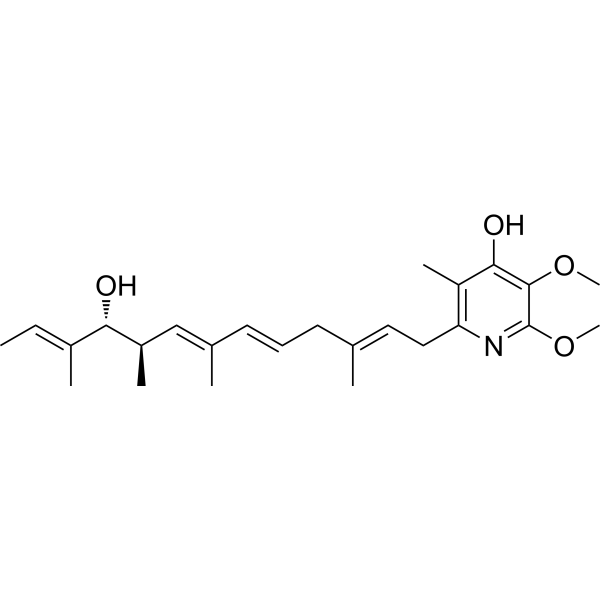
Piericidin A (AR-054) is a natural mitochondrial NADH-ubiquinone oxidoreductase (complex I) inhibitor. Piericidin A is a potent neurotoxin and inhibits mitochondrial respiration by disrupting the electron transport system through its action on NADH-ubiquinone reductase. Piericidin A is also a potential quorum-sensing inhibitor that suppresses the expression of the virulence genes of Erwinia carotovora subsp. atroseptica (Eca). Piericidin A is an ADC cytotoxin and has anti-bacterial, anticancer, insecticidal activity .
|
-
- HY-W319584
-
|
|
Drug Derivative
|
Cancer
|
|
AMP-404 is an Imexon (HY-15385)-derived antitumor agent with dual functions as a cytotoxin and growth inhibitor. AMP-404 exerts significant cytotoxic effects against various sensitive, drug-resistant and primary human tumor cells, including myeloma, breast cancer, melanoma, ovarian cancer and sarcoma cells. AMP-404 effectively inhibits the growth of rat PIE 2-3 sarcoma in vivo and exhibits remarkable in vivo efficacy .
|
-
- HY-P992171
-
|
HuBa-1-3D
|
ADC Antibody
EGFR
|
Neurological Disease
Cancer
|
|
ADCT-701 Antibody is a humanized IgG1 antibody against hDLK-1 and an ADC antibody. ADCT-701 Antibody can be conjugated with the PBD dimer cytotoxin SG3199 (HY-101161) via the cleavable Val-Ala (HY-W007035) linker to construct the ADC ADCT-701. ADCT-701 Antibody can be used in the research of neuroblastoma, hepatocellular carcinoma, small cell lung cancer, and rhabdomyosarcoma .
|
-
- HY-W654130
-
|
Daunomycin-13C,d3; RP 13057-13C,d3; Rubidomycin-13C,d3
|
Isotope-Labeled Compounds
Bacterial
ADC Payload
Apoptosis
Antibiotic
Topoisomerase
Autophagy
DNA/RNA Synthesis
|
Infection
|
|
Daunorubicin- 13C,d3 is 13C and deuterium labeled Daunorubicin. Daunorubicin (Daunomycin) is a topoisomerase II inhibitor with potent anti-tumor activity. Daunorubicin inhibits DNA and RNA synthesis. Daunorubicin is a cytotoxin that inhibits cancer cell viability and induces apoptosis and necrosis. Daunorubicin is also an anthracycline antibiotic. Daunorubicin can be used in the research of infection and variety of cancers, including leukemia, non-Hodgkin lymphomas, Ewing's sarcoma, Wilms' tumor .
|
-
- HY-N18126
-
|
|
Others
|
Cancer
|
|
13b,14-Dihydrorutaecarpine is a cytotoxin derived from dihydrorutaecarpine. 13b,14-Dihydrorutaecarpine exerts selective cytotoxicity against central nervous system (CNS) and prostate cancer cell lines (GI50=0.02 μM and 0.2 μM). 13b,14-Dihydrorutaecarpine can be used in the research of central nervous system (CNS) cancer, ovarian cancer, prostate cancer and renal cancer .
|
-
- HY-132160
-
|
|
ADC Payload
|
Cancer
|
|
7-Aminomethyl-10-methyl-11-fluoro camptothecin is a cytotoxin of MC-AAA-NHCH2OCH2COO-7-aminomethyl-10-methyl-11-fluoro camptothecin (HY-132158). 7-Aminomethyl-10-methyl-11-fluoro camptothecin can be used for the synthesis of camptothecin antibody-drug conjugate (ADC) .
|
-
- HY-132160A
-
|
|
ADC Payload
|
Cancer
|
|
7-Aminomethyl-10-methyl-11-fluoro camptothecin TFA is a cytotoxin of MC-AAA-NHCH2OCH2COO-7-aminomethyl-10-methyl-11-fluoro camptothecin (HY-132158). 7-Aminomethyl-10-methyl-11-fluoro camptothecin TFA can be used for the synthesis of camptothecin antibody-drug conjugate (ADC) .
|
-
- HY-15582S
-
|
|
Isotope-Labeled Compounds
Microtubule/Tubulin
ADC Payload
|
Cancer
|
|
Auristatin E-d8 is the deuterium labeled Auristatin E (HY-15582). Auristatin E is a cytotoxic microtubule polymerization inhibitor with potent and selective antitumor activity. Auristatin E is a cytotoxin in antibody-drug conjugates (ADC). Auristatin E inhibits cell division by blocking the polymerisation of tubulin, promising for research in B-cell malignancies. Auristatin E, a synthetic analogue of the Dolastatin 10 (HY-15580), is linear peptides comprised of four amino acids .
|
-
- HY-N8013
-
|
|
Others
|
Cancer
|
|
5-O,8-Dimethylophiopogonanone B is a homoisoflavanone found in the tuberous roots of Ophiopogon japonicus. 5-O,8-Dimethylophiopogonanone B shows cytotoxicity against cancer cells. 5-O,8-Dimethylophiopogonanone B can be used for the research of cancer, such as breast cancer .
|
-
- HY-178290
-
|
|
Drug-Linker Conjugates for ADC
Drug Intermediate
|
Cancer
|
|
MC-Gly-Gly-Phe-Exatecan analog 38 (Compound L-II-4) is part of an antibody-drug conjugate (ADC), consisting of an ADC toxicant molecule and an ADC linker. MC-Gly-Gly-Phe-Exatecan analog 38 can be used to synthesize ADCs (such as ADC-II-15 and ADC-III-13). MC-Gly-Gly-Phe-Exatecan analog 38 can also be used in cancer research (ADC Cytotoxin: HY-178315, ADC Linker: HY-44235) .
|
-
- HY-181992
-
|
|
Drug-Linker Conjugates for ADC
|
Inflammation/Immunology
Cancer
|
|
Mal-PEG4-Val-Cit-PAB-MSA-2 is a Drug-Linker Conjugates for ADC. Mal-PEG4-Val-Cit-PAB-MSA-2 consists of the ADC Cytotoxin MSA-2 (HY-136927) and a linker Mal-PEG4-Val-Cit-PAB-OH (HY-140143). Mal-PEG4-Val-Cit-PAB-MSA-2 can be used for synthesis of ADCs .
|
-
- HY-177880
-
|
|
Drug-Linker Conjugates for ADC
|
Cancer
|
|
2-MSP-5-HA-VC-PAB-MMAE (Compound B-1) is a Drug-Linker Conjugates for ADC. 2-MSP-5-HA-VC-PAB-MMAE consists of the ADC Cytotoxin Monomethyl auristatin E (HY-15162) and a linker 2-MSP-5-HA-VC-PAB-OH (HY-177905). 2-MSP-5-HA-VC-PAB-MMAE can be used for synthesis of ADCs .
|
-
- HY-181161
-
|
|
Cholinesterase (ChE)
|
Neurological Disease
|
|
AChE-IN-107 is a selective acetylcholinesterase (AChE) inhibitor with an IC50 of 0.22 μM and a Ki of 0.207 μM. AChE-IN-107 shows no inhibitory effect on equine serum BChE at 10 μM. AChE-IN-107 exhibits mixed-type inhibition of electric eel acetylcholinesterase, binding to both free enzyme and enzyme-substrate complex. AChE-IN-107 acts as a cytotoxin, reduces cell viability in hepatocellular carcinoma HepG2 cells.AChE-IN-107 can be used for the research of alzheimer's disease .
|
-
- HY-N17904
-
|
|
Others
|
Cancer
|
|
Pulsatilloside D is a triterpene glycoside. Pulsatilloside D induces cytotoxicity in cancer cells. Pulsatilloside D can be used for the research of leukemia and cervical cancer .
|
-
- HY-118722
-
|
|
DNA/RNA Synthesis
Cytochrome P450
|
Cancer
|
|
RB-90740 is a type of biological reducing agent. RB-90740 is activated through metabolic reduction and generates cytotoxic products, thereby selectively killing tumor cells (usually in a hypoxic environment). RB-90740 has selective toxicity towards hypoxic cells, which is mainly achieved by causing DNA strand breaks and activating reducing enzymes (such as Cytochrome P450). RB-90740 does not initially exhibit cytotoxicity similar to its in vitro properties in hypoxic cells in mouse models. RB-90740 can be used to study the tumor physiological environment
|
-
- HY-13062AS
-
|
Daunomycin-13C,d3 TFA); RP 13057-13C,d3 TFA; Rubidomycin-13C,d3 TFA
|
Isotope-Labeled Compounds
Antibiotic
Apoptosis
ADC Payload
DNA/RNA Synthesis
Autophagy
Topoisomerase
Bacterial
|
Infection
Neurological Disease
Cancer
|
|
Daunorubicin- 13C,d3 TFA (Daunomycin- 13C,d3 TFA) is the deuterium and 13C-labeled Daunorubicin TFA. Daunorubicin (Daunomycin) is a topoisomerase II inhibitor with potent anti-tumor activity. Daunorubicin inhibits DNA and RNA synthesis. Daunorubicin is a cytotoxin that inhibits cancer cell viability and induces apoptosis and necrosis. Daunorubicin is also an anthracycline antibiotic. Daunorubicin can be used in the research of infection and variety of cancers, including leukemia, non-Hodgkin lymphomas, Ewing's sarcoma, Wilms' tumor .
|
-
- HY-156617A
-
|
SHR169265
|
ADC Payload
Topoisomerase
|
Cancer
|
(αR)-Cyclopropaneacetamide-Exatecan (SHR169265) is a DNA Topoisomerase I inhibitor with enhanced membrane permeability (with an IC50 of 1.34 μM against the human DNA Topoisomerase I). (αR)-Cyclopropaneacetamide-Exatecan exerts cytotoxic effects by inhibiting the enzymatic activity of Topoisomerase I, and this anticancer effect is independent of the expression level of HER2. (αR)-Cyclopropaneacetamide-Exatecan is an ADC Cytotoxin derived from Exatecan (HY-13631), which can be used in research related to advanced cancers such as breast cancer, gastric cancer, colorectal cancer and non-small cell lung cancer .
|
-
- HY-N3968
-
|
GTN; (R)-(+)-Goniothalamin
|
Apoptosis
Insecticide
Bacterial
Fungal
Reactive Oxygen Species (ROS)
|
Infection
Inflammation/Immunology
Cancer
|
|
Goniothalamin (GTN) is a styryl lactone. Goniothalamin exhibits insecticidal, anti-tumor and antibacterial activities. Goniothalamin induces cell cycle arrest and apoptosis in tumor cells. Goniothalamin acts as a larvicide against Culex quinquefasciatus larvae and as a cytotoxin against brine shrimp larvae. Goniothalamin functions as an antibacterial agent against Gram-positive and Gram-negative bacteria, and also acts as an antifungal agent against pathogens including Candida albicans, Trichophyton rubrum and Trichophyton mentagrophytes. Goniothalamin is applicable to research related to breast cancer, lymphatic filariasis, bacterial infections and fungal infections .
|
-
- HY-159563
-
|
|
Drug-Linker Conjugates for ADC
|
Cancer
|
|
Mal-va-mac-SN38 is a drug-linker conjugate for ADC. Mal-va-mac-SN38 contains a ADC cytotoxin SN-38 (HY-13704) and a linker (HY-126364). Mal-va-mac-SN38 can rapidly and covalently bind with endogenous albumin in vivo, resulting in the formation of HSA-va-mac-SN38. Mal-va-mac-SN38 demonstrates exceptional stability in human plasma, and has anti-tumor and anti-metastasis effect .
|
-
- HY-185494
-
|
|
Drug-Linker Conjugates for ADC
DNA Alkylator/Crosslinker
|
Cancer
|
|
Mal-Val-Lys-PAB-CBI-PBD dimer is a Drug-Linker Conjugates for ADC. Mal-Val-Lys-PAB-CBI-PBD dimer consists of the ADC Cytotoxin CBI-PBD dimer and a linker Mal-Val-Lys-PAB. Mal-Val-Lys-PAB-CBI-PBD dimer exhibits alkylating activity at A-T-rich DNA minor groove adenine residues, disrupting DNA integrity. Mal-Val-Lys-PAB-CBI-PBD dimer induces cancer cell growth inhibition and cellular death. Mal-Val-Lys-PAB-CBI-PBD dimer can be used for the research of cancer .
|
-
- HY-144501
-
|
|
Toll-like Receptor (TLR)
PD-1/PD-L1
|
Inflammation/Immunology
Cancer
|
|
D18 is an immune modulator. D18 acts as a TLR7/8 dual agonist (EC50 = 24 nM for hTLR7 and 10 nM for hTLR8, respectively). D18 increases PD-L1 expression through epigenetic regulation, thus sensitizing tumors to PD-1/PD-L1 blockade. D18 is a ADC cytotoxin uesd for the systhesis of ADC HE-S2 (HY-144497). D18 has strong immune activation and anti-tumor activity. D18 commonly used in cancer research, such as colon cancer .
|
-
- HY-W116336B
-
|
|
Biochemical Assay Reagents
Fungal
Bacterial
|
Infection
Cancer
|
|
Zinc oxide, 99.99% metals basis is a versatile wide-bandgap semiconductor with superior comprehensive properties. Zinc oxide, 99.99% metals basis serves as raw material for Schottky diodes, functional nanostructures, sensors, energy harvesters and photocatalysts for hydrogen production. Zinc oxide, 99.99% metals basis acts as a non-toxic antibacterial agent and selective cytotoxin against multiple bacteria, fungi and spores. Zinc oxide, 99.99% metals basis induces cancer cell death. Zinc oxide, 99.99% metals basis is applicable to drug delivery, biosensing, bioimaging and researches on cancer, microbial infections and skin diseases .
|
-
- HY-N18272
-
|
|
Others
|
Cancer
|
|
1α-Benzoyloxy-3α-acetoxyl-7α-hydroxy-12β-ethoxynimbolinin is a nimbolinin-type limonoid and cytotoxin, found in the fruits of Melia toosendan. 1α-Benzoyloxy-3α-acetoxyl-7α-hydroxy-12β-ethoxynimbolinin exhibits in vitro cytotoxicity against human hepatocellular carcinoma, human lung cancer, and human breast cancer cells. 1α-Benzoyloxy-3α-acetoxyl-7α-hydroxy-12β-ethoxynimbolinin can be used for the research of hepatocellular carcinoma, lung cancer, breast cancer .
|
-
- HY-W116336D
-
|
|
Biochemical Assay Reagents
Fungal
Bacterial
|
Infection
Cancer
|
|
Zinc oxide, <100 nm particle size is a nitrate reductase modulator and growth promoter with plant stress resistance activity and oral toxicity. Zinc oxide, <100 nm particle size acts as a nutrient source for maize plants. By enhancing nitrate reductase activity and reducing free proline levels, it significantly improves plant height, root length and dry matter weight of maize, and its growth-promoting effect is comparable to that of traditional zinc sulfate fertilizer. Zinc oxide, <100 nm particle size induces anemia-related and persistent tissue inflammatory damage, leading to obvious histopathological adverse reactions in the stomach, pancreas, eyes and prostate of rats. Zinc oxide, <100 nm particle size acts as a non-toxic antibacterial agent and selective cytotoxin against multiple bacteria, fungi and spores .
|
-
- HY-171509
-
|
|
Drug-Linker Conjugates for ADC
Apoptosis
|
Cancer
|
|
Mal-N(Me)-C6-N(Me)-PNU-159682 (Compound 27), an agent-linker conjugate for ADC, consists the ADC linker Mal-N(Me)-C6-N(Me) and a potent ADC cytotoxin PNU-159682. Mal-N(Me)-C6-N(Me)-PNU-159682 (Compound 27) selectively delivers the payload to CD46-expressing cells, where the linker is cleaved by cathepsin B to release PNU-159682, inducing DNA damage and apoptosis. Mal-N(Me)-C6-N(Me)-PNU-159682 shows durable tumor regression in xenograft (PDX) models of non-small cell lung cancer (NSCLC) and colorectal cancer (CRC) .
|
-
- HY-N17349
-
|
|
Endogenous Metabolite
|
Cancer
|
|
(23S,24R)-Dimethylcholest-7-ene-3b,5a,6b-triol (compound 3) is a cytotoxin that can be found in the marine bryozoan Bugula neritina. (23S,24R)-Dimethylcholest-7-ene-3b,5a,6b-triol shows weak cytotoxicity against SGC7901 cell with an IC50 value of 111.8 μM. (23S,24R)-Dimethylcholest-7-ene-3b,5a,6b-triol can be used for the research of hepatocellular carcinoma, gastric carcinoma .
|
-
- HY-N17311
-
|
|
Others
|
Cancer
|
|
(22E,24R)-5α,6α-Epoxyergosta-8,22-diene-3β,7β-diol (Compound 3) is an ergosterol. (22E,24R)-5α,6α-Epoxyergosta-8,22-diene-3β,7β-diol can be isolated from A. subjunquillea. (22E,24R)-5α,6α-Epoxyergosta-8,22-diene-3β,7β-diol can be used in the research of non-small cell lung cancer, ovarian cancer, melanoma, and colon cancer .
|
-
- HY-145149S
-
|
|
Isotope-Labeled Compounds
ADC Payload
|
Cancer
|
|
Duostatin 5- 13C,d3 is the 13C-labeled Duostatin 5 (HY-145149). Duostatin 5 is a ADC Cytotoxin designed based on MMAF (HY-15579) and can be used to synthesize ADCs. The preparation of Duostatin 5 has the advantages of fewer synthetic steps, simple operation, less difficulty in quality control, and more stable chemical synthesis process. Duostatin 5 can be linked to the antibody targeting 5T4 (ZV05) by cross-linking with interchain cysteines through a disubstituted C-Lock linker. Duostatin 5 is a click chemistry reagent. It contains an azide group and can undergo copper-catalyzed azide-alkyne cycloaddition (CuAAc) with molecules containing alkyne groups. It can also undergo ring strain-driven alkyne-azide cycloaddition (SPAAC) with molecules containing DBCO or BCN groups[1][2].
|
-
- HY-171718
-
|
|
DNA Alkylator/Crosslinker
ADC Payload
|
Cancer
|
|
seco-CBI-PBD dimer is a CBI-PBD heterodimer and a minor groove DNA crosslinker. seco-CBI-PBD dimer exhibits cytotoxicity against human tumor cells at sub-pM to low nM levels, shows low sensitivity to P-glycoprotein-mediated drug resistance, and can serve as an ADC payload. seco-CBI-PBD dimer can be used in studies of uterine cancer, breast cancer, non-small cell lung cancer, etc.
|
-
- HY-185483
-
|
|
Antibody-Drug Conjugates (ADCs)
Transmembrane Glycoprotein
Microtubule/Tubulin
|
Cancer
|
|
AMG-172 is an antibody-drug conjugate (ADC) composed of a fully human IgG1 monoclonal anti-CD27L antibody conjugated to DM1 (HY-19792) via the non-cleavable linker MCC. AMG-172 releases the intracellular active component Lysine-MCC-DM through catabolism. Lysine-MCC-DM inhibits the assembly and disassembly dynamics of Microtubule and induces cell arrest at metaphase. AMG-172 can be used for research on relapsed/refractory clear cell renal cell carcinoma .
|
-
- HY-164992
-
|
MRG002; Trastuzumab MMAE
|
Antibody-Drug Conjugates (ADCs)
EGFR
Microtubule/Tubulin
|
Cancer
|
|
Trastuzumab vedotin (MRG002; Trastuzumab MMAE) is an antibody-drug conjugate and cytotoxin targeting HER2, with a Kd of 7.50E-11 M for human HER2. After binding to HER2, Trastuzumab vedotin undergoes internalization and lysosomal trafficking, delivering a cytotoxic payload to HER2-expressing cells and inducing tumor regression in in vivo xenograft models with HER2-expressing tumors. The anti-tumor activity of Trastuzumab vedotin is enhanced when used in combination with anti-PD-1 antibodies, and it exhibits preclinical anti-tumor activity in drug-resistant breast cancer, gastric cancer, and urothelial carcinoma PDX models. Trastuzumab vedotin has low antibody-dependent cellular cytotoxicity activity and can be used in studies related to HER2-positive breast cancer, HER2-positive gastric cancer, and unresectable locally advanced or metastatic HER2-positive urothelial carcinoma .
|
-
-
-
HY-L023
-
|
|
116 compounds
|
|
Antibody-Drug Conjugates (ADCs), a new class of treatment for cancer, are composed with a monoclonal antibody, a linker and a cytotoxic agent also referred to as a payload. To date, several ADCs have received market approval and more than 60 ADCs are currently in clinical trials. ADCs are one of the fastest growing classes of oncology drugs worldwide.
The payload or cytotoxic agent is the most important unit in the ADC. ADC has the capability to kill cancer cell depending on the potency of the payload. MCE provides 116 highly potent cytotoxins that contain auristatin derivatives, maytansinoids, calicheamicin, duocarmycin, pyrrolobenzodiazepines (PBDs), etc.
|
| Cat. No. |
Product Name |
Type |
-
- HY-164992
-
|
MRG002; Trastuzumab MMAE
|
Fluorescent Dyes
|
|
Trastuzumab vedotin (MRG002; Trastuzumab MMAE) is an antibody-drug conjugate and cytotoxin targeting HER2, with a Kd of 7.50E-11 M for human HER2. After binding to HER2, Trastuzumab vedotin undergoes internalization and lysosomal trafficking, delivering a cytotoxic payload to HER2-expressing cells and inducing tumor regression in in vivo xenograft models with HER2-expressing tumors. The anti-tumor activity of Trastuzumab vedotin is enhanced when used in combination with anti-PD-1 antibodies, and it exhibits preclinical anti-tumor activity in drug-resistant breast cancer, gastric cancer, and urothelial carcinoma PDX models. Trastuzumab vedotin has low antibody-dependent cellular cytotoxicity activity and can be used in studies related to HER2-positive breast cancer, HER2-positive gastric cancer, and unresectable locally advanced or metastatic HER2-positive urothelial carcinoma .
|
-
- HY-78738G
-
|
|
Fluorescent Dyes
|
|
MC-Val-Cit-PAB GMP is a GMP grade MC-Val-Cit-PAB (HY-78738). MC-Val-Cit-PAB is an intermediate in the synthesis of VcMMAE (HY-15575), which is a Drug-Linker Conjugates for ADC. Monomethyl auristatin E can be used to inhibit Microtubule/Tubulin as ADC Cytotoxin.
|
-
- HY-16700G
-
|
|
Fluorescent Dyes
|
|
PNU-159682 GMP is a GMP grade PNU-159682 (HY-16700). PNU-159682, a metabolite of the anthracycline Nemorubicin, is a highly potent DNA topoisomerase II inhibitor with excellent cytotoxicity. PNU-159682 acts as a more potent and tolerated ADC cytotoxin than Doxorubicin for ADC synthesis. PNU-159682 can be used in EDV-nanocell technology to overcome agent resistance.
|
-
- HY-78931G
-
|
|
Fluorescent Dyes
|
|
Boc-Dap-NE (GMP) is Boc-Dap-NE (HY-78931) produced by using GMP guidelines. Boc-Dap-NE is an intermediate in the synthesis of Monomethyl auristatin E (HY-15162), which is an inhibitor of tubulin polymerization. Monomethyl auristatin E can be used to synthesize Antibody-Drug Conjugates (ADCs) as ADC Cytotoxin.
|
| Cat. No. |
Product Name |
Type |
-
- HY-W116336D
-
|
|
Biochemical Assay Reagents
|
|
Zinc oxide, <100 nm particle size is a nitrate reductase modulator and growth promoter with plant stress resistance activity and oral toxicity. Zinc oxide, <100 nm particle size acts as a nutrient source for maize plants. By enhancing nitrate reductase activity and reducing free proline levels, it significantly improves plant height, root length and dry matter weight of maize, and its growth-promoting effect is comparable to that of traditional zinc sulfate fertilizer. Zinc oxide, <100 nm particle size induces anemia-related and persistent tissue inflammatory damage, leading to obvious histopathological adverse reactions in the stomach, pancreas, eyes and prostate of rats. Zinc oxide, <100 nm particle size acts as a non-toxic antibacterial agent and selective cytotoxin against multiple bacteria, fungi and spores .
|
-
- HY-78738G
-
|
|
Biochemical Assay Reagents
|
|
MC-Val-Cit-PAB GMP is a GMP grade MC-Val-Cit-PAB (HY-78738). MC-Val-Cit-PAB is an intermediate in the synthesis of VcMMAE (HY-15575), which is a Drug-Linker Conjugates for ADC. Monomethyl auristatin E can be used to inhibit Microtubule/Tubulin as ADC Cytotoxin.
|
-
- HY-W116336B
-
|
|
Biochemical Assay Reagents
|
|
Zinc oxide, 99.99% metals basis is a versatile wide-bandgap semiconductor with superior comprehensive properties. Zinc oxide, 99.99% metals basis serves as raw material for Schottky diodes, functional nanostructures, sensors, energy harvesters and photocatalysts for hydrogen production. Zinc oxide, 99.99% metals basis acts as a non-toxic antibacterial agent and selective cytotoxin against multiple bacteria, fungi and spores. Zinc oxide, 99.99% metals basis induces cancer cell death. Zinc oxide, 99.99% metals basis is applicable to drug delivery, biosensing, bioimaging and researches on cancer, microbial infections and skin diseases .
|
-
- HY-16700G
-
|
|
Biochemical Assay Reagents
|
|
PNU-159682 GMP is a GMP grade PNU-159682 (HY-16700). PNU-159682, a metabolite of the anthracycline Nemorubicin, is a highly potent DNA topoisomerase II inhibitor with excellent cytotoxicity. PNU-159682 acts as a more potent and tolerated ADC cytotoxin than Doxorubicin for ADC synthesis. PNU-159682 can be used in EDV-nanocell technology to overcome agent resistance.
|
-
- HY-NP015
-
|
|
Biochemical Assay Reagents
|
|
SLT/SLT-IIe (O139) protein is a cytotoxin that can be isolated from enterotoxigenic E. coli (ETEC). SLT/SLT-IIe (O139) protein causes edema in pigs .
|
-
- HY-78931G
-
|
|
Biochemical Assay Reagents
|
|
Boc-Dap-NE (GMP) is Boc-Dap-NE (HY-78931) produced by using GMP guidelines. Boc-Dap-NE is an intermediate in the synthesis of Monomethyl auristatin E (HY-15162), which is an inhibitor of tubulin polymerization. Monomethyl auristatin E can be used to synthesize Antibody-Drug Conjugates (ADCs) as ADC Cytotoxin.
|
| Cat. No. |
Product Name |
Target |
Research Area |
-
- HY-P1126
-
|
DLS 15
|
Microtubule/Tubulin
ADC Payload
Apoptosis
|
Cancer
|
|
Dolastatin 15 (DLS 15), a depsipeptide derived from Dolabella auricularia, is a potent antimitotic agent structurally related to the antitubulin agent Dolastatin 10. Dolastatin 15 induces cell cycle arrest and apoptosis in multiple myeloma cells. Dolastatin 15 can be used as an ADC cytotoxin .
|
-
- HY-P10775
-
|
|
Peptide-Drug Conjugates (PDCs)
MMP
|
Cancer
|
|
BT1769 is a MT1-MMP-targeted (KD = 3.35 nM) Bicycle toxin conjugate. BT1769 can be used in the study for osteosarcoma. BT1769 consists of a novel bicyclic targeting peptide that selectively binds MT1-MMP; a cytotoxin MMAE; and an enzymatically cleavable dipeptide linker .
|
-
- HY-P11779
-
-
- HY-P11779A
-
-
- HY-P0307B
-
|
|
Biochemical Assay Reagents
|
Neurological Disease
|
|
Penetratin-Cys is a cell-penetrating peptide derived from Antennapedia Peptide (HY-P0307) via C-terminal cysteine modification. Penetratin-Cys acts as a cytotoxin and reduces the viability of differentiated neuronal cells. Penetratin-Cys localizes to the perinuclear region and binds to the Golgi apparatus. Penetratin-Cys can be used in research related to neurological disorders .
|
| Cat. No. |
Product Name |
Target |
Research Area |
Image |
-
- HY-P99956
-
|
VLS-101; MK-2140
|
Antibody-Drug Conjugates (ADCs)
Apoptosis
|
Cancer
|
|
Zilovertamab vedotin (VLS-101) is a novel antibody-drug conjugate comprising the humanized monoclonal antibody zilovertamab and and the anti-microtubule cytotoxin monomethyl vedotin. Zilovertamab vedotin binding to tumor cell ROR1 results in rapid internalization, trafficking to lysosomes, antibody–agent conjugate cleavage, and monomethyl vedotin release. Zilovertamab vedotin induces apoptosis. Zilovertamab vedotin can be used in research of cancer .
|
-
(5)
-
- HY-P99334
-
|
Anti-Human CD70 Recombinant Antibody; SGN-75
|
Antibody-Drug Conjugates (ADCs)
Microtubule/Tubulin
|
Cancer
|
|
Vorsetuzumab mafodotin (SGN-75) is an Auristatin-based anti-CD70 antibody-drug conjugate (ADC). Vorsetuzumab mafodotin consists of a humanized monoclonal antibody, Vorsetuzumab and an ADC cytotoxin MMAF. Vorsetuzumab mafodotin has antineoplastic activity .
|
-
(5)
-
- HY-P99881
-
|
ABBV 176
|
Antibody-Drug Conjugates (ADCs)
|
Cancer
|
|
Rolinsatamab talirine (ABBV 176) is a prolactin receptor (PRLR)-targeting antibody-drug conjugate (ADC), compoused of Rolinsatamab (HY-P99238) and SGD-1882 (HY-101127). Rolinsatamab talirine binds to PRLR to deliver a cytotoxin to tumor cells. Rolinsatamab talirine induces DNA damage, and exhibits cytotoxicity against multiple breast tumor models, including triple negative and low PRLR-expressing models. Rolinsatamab talirine demonstrates enhanced anti-tumor activity in several breast cancer models. Rolinsatamab talirine can be used for the research of breast cancer, hepatocellular carcinoma, ovarian cancer, endometrial cancer, prostate cancer, colorectal cancer, adrenocortical carcinoma, and solid tumors .
|
-
(5)
-
- HY-P992171
-
|
HuBa-1-3D
|
ADC Antibody
EGFR
|
Neurological Disease
Cancer
|
|
ADCT-701 Antibody is a humanized IgG1 antibody against hDLK-1 and an ADC antibody. ADCT-701 Antibody can be conjugated with the PBD dimer cytotoxin SG3199 (HY-101161) via the cleavable Val-Ala (HY-W007035) linker to construct the ADC ADCT-701. ADCT-701 Antibody can be used in the research of neuroblastoma, hepatocellular carcinoma, small cell lung cancer, and rhabdomyosarcoma .
|
-
(5)
| Cat. No. |
Product Name |
Category |
Target |
Chemical Structure |
-
- HY-13062
-
-
-
- HY-13062A
-
-
-
- HY-117371
-
-
-
- HY-131081
-
-
-
- HY-114936
-
-
-
- HY-N7053
-
-
-
- HY-Y0030
-
-
-
- HY-79635
-
-
-
- HY-N3968
-
|
GTN; (R)-(+)-Goniothalamin
|
Structural Classification
Natural Products
Lythraceae
Plants
Lythrum salicaria L.
Source Classification
|
Apoptosis
Insecticide
Bacterial
Fungal
Reactive Oxygen Species (ROS)
|
|
Goniothalamin (GTN) is a styryl lactone. Goniothalamin exhibits insecticidal, anti-tumor and antibacterial activities. Goniothalamin induces cell cycle arrest and apoptosis in tumor cells. Goniothalamin acts as a larvicide against Culex quinquefasciatus larvae and as a cytotoxin against brine shrimp larvae. Goniothalamin functions as an antibacterial agent against Gram-positive and Gram-negative bacteria, and also acts as an antifungal agent against pathogens including Candida albicans, Trichophyton rubrum and Trichophyton mentagrophytes. Goniothalamin is applicable to research related to breast cancer, lymphatic filariasis, bacterial infections and fungal infections .
|
-
-
- HY-N2348
-
-
-
- HY-19829
-
-
-
- HY-N7052
-
-
-
- HY-N7050
-
-
-
- HY-N2347
-
-
-
- HY-N16420
-
-
-
- HY-13062R
-
|
Daunomycin hydrochloride (Standard); RP 13057 hydrochloride (Standard); Rubidomycin hydrochloride (Standard)
|
Quinones
Structural Classification
Microorganisms
Anthraquinones
Phenols
Polyphenols
Source Classification
|
Reference Standards
Topoisomerase
DNA/RNA Synthesis
ADC Payload
Bacterial
Autophagy
Apoptosis
Antibiotic
|
|
Daunorubicin (hydrochloride) (Standard) is the analytical standard of Daunorubicin (hydrochloride). This product is intended for research and analytical applications. Daunorubicin (Daunomycin) hydrochloride is a topoisomerase II inhibitor with potent anti-tumor activity. Daunorubicin hydrochloride inhibits DNA and RNA synthesis. Daunorubicin hydrochloride is a cytotoxin that inhibits cancer cell viability and induces apoptosis and necrosis. Daunorubicin hydrochloride is also an anthracycline antibiotic. Daunorubicin hydrochloride can be used in the research of infection and variety of cancers, including leukemia, non-Hodgkin lymphomas, Ewing's sarcoma, Wilms' tumor .
|
-
-
- HY-N2346
-
-
-
- HY-N7049
-
-
-
- HY-N7051
-
-
-
- HY-106338
-
-
-
- HY-Y0030R
-
-
-
- HY-79635R
-
-
-
- HY-N8036
-
-
-
- HY-N18083
-
-
-
- HY-N18186
-
-
-
- HY-N17588
-
-
-
- HY-N18126
-
-
-
- HY-N8013
-
-
-
- HY-N17904
-
-
-
- HY-N18272
-
|
|
Structural Classification
Natural Products
Melia azedarach Linn.
Plants
Meliaceae
Source Classification
|
Others
|
|
1α-Benzoyloxy-3α-acetoxyl-7α-hydroxy-12β-ethoxynimbolinin is a nimbolinin-type limonoid and cytotoxin, found in the fruits of Melia toosendan. 1α-Benzoyloxy-3α-acetoxyl-7α-hydroxy-12β-ethoxynimbolinin exhibits in vitro cytotoxicity against human hepatocellular carcinoma, human lung cancer, and human breast cancer cells. 1α-Benzoyloxy-3α-acetoxyl-7α-hydroxy-12β-ethoxynimbolinin can be used for the research of hepatocellular carcinoma, lung cancer, breast cancer .
|
-
-
- HY-N17349
-
|
|
Structural Classification
Tetracyclic Triterpenoids
Animals
Terpenoids
Source Classification
|
Endogenous Metabolite
|
|
(23S,24R)-Dimethylcholest-7-ene-3b,5a,6b-triol (compound 3) is a cytotoxin that can be found in the marine bryozoan Bugula neritina. (23S,24R)-Dimethylcholest-7-ene-3b,5a,6b-triol shows weak cytotoxicity against SGC7901 cell with an IC50 value of 111.8 μM. (23S,24R)-Dimethylcholest-7-ene-3b,5a,6b-triol can be used for the research of hepatocellular carcinoma, gastric carcinoma .
|
-
-
- HY-N17311
-
|
|
Structural Classification
Microorganisms
Steroids
Source Classification
|
Others
|
|
(22E,24R)-5α,6α-Epoxyergosta-8,22-diene-3β,7β-diol (Compound 3) is an ergosterol. (22E,24R)-5α,6α-Epoxyergosta-8,22-diene-3β,7β-diol can be isolated from A. subjunquillea. (22E,24R)-5α,6α-Epoxyergosta-8,22-diene-3β,7β-diol can be used in the research of non-small cell lung cancer, ovarian cancer, melanoma, and colon cancer .
|
-
| Cat. No. |
Product Name |
Chemical Structure |
-
- HY-15582S
-
|
|
|
Auristatin E-d8 is the deuterium labeled Auristatin E (HY-15582). Auristatin E is a cytotoxic microtubule polymerization inhibitor with potent and selective antitumor activity. Auristatin E is a cytotoxin in antibody-drug conjugates (ADC). Auristatin E inhibits cell division by blocking the polymerisation of tubulin, promising for research in B-cell malignancies. Auristatin E, a synthetic analogue of the Dolastatin 10 (HY-15580), is linear peptides comprised of four amino acids .
|
-
-
- HY-W654130
-
|
|
|
Daunorubicin- 13C,d3 is 13C and deuterium labeled Daunorubicin. Daunorubicin (Daunomycin) is a topoisomerase II inhibitor with potent anti-tumor activity. Daunorubicin inhibits DNA and RNA synthesis. Daunorubicin is a cytotoxin that inhibits cancer cell viability and induces apoptosis and necrosis. Daunorubicin is also an anthracycline antibiotic. Daunorubicin can be used in the research of infection and variety of cancers, including leukemia, non-Hodgkin lymphomas, Ewing's sarcoma, Wilms' tumor .
|
-
-
- HY-15583S
-
|
|
|
Auristatin F-d8 is deuterium labeled Auristatin F (HY-15583). Auristatin F is a potent cytotoxin in antibo-conjugated agents and an analogue of MMAF. Auristatin F is a potent microtubule inhibitor and vascular damaging agent (VDA). Auristatin F inhibits cell division by preventing tubulin aggregation.Auristatin F can be used in antibody-drug conjugates (ADC) .
|
-
-
- HY-116852S
-
|
|
|
Thiocolchicine-d3 is deuterium labeled Thiocolchicine. Thiocolchicine, a derivative modified in the C Ring of Colchicine (HY-16569) with enhanced biological properties. Thiocolchicine is a potent inhibitor of tubulin polymerization (IC50=2.5 μM) and competitively binds to tubulin with a Ki of 0.7 μM. Thiocolchicine induces cell apoptosis . Thiocolchicine can be used as an ADC cytotoxin in ADC technology.
|
-
-
- HY-13062AS
-
|
|
|
Daunorubicin- 13C,d3 TFA (Daunomycin- 13C,d3 TFA) is the deuterium and 13C-labeled Daunorubicin TFA. Daunorubicin (Daunomycin) is a topoisomerase II inhibitor with potent anti-tumor activity. Daunorubicin inhibits DNA and RNA synthesis. Daunorubicin is a cytotoxin that inhibits cancer cell viability and induces apoptosis and necrosis. Daunorubicin is also an anthracycline antibiotic. Daunorubicin can be used in the research of infection and variety of cancers, including leukemia, non-Hodgkin lymphomas, Ewing's sarcoma, Wilms' tumor .
|
-
-
- HY-145149S
-
|
|
|
Duostatin 5- 13C,d3 is the 13C-labeled Duostatin 5 (HY-145149). Duostatin 5 is a ADC Cytotoxin designed based on MMAF (HY-15579) and can be used to synthesize ADCs. The preparation of Duostatin 5 has the advantages of fewer synthetic steps, simple operation, less difficulty in quality control, and more stable chemical synthesis process. Duostatin 5 can be linked to the antibody targeting 5T4 (ZV05) by cross-linking with interchain cysteines through a disubstituted C-Lock linker. Duostatin 5 is a click chemistry reagent. It contains an azide group and can undergo copper-catalyzed azide-alkyne cycloaddition (CuAAc) with molecules containing alkyne groups. It can also undergo ring strain-driven alkyne-azide cycloaddition (SPAAC) with molecules containing DBCO or BCN groups[1][2].
|
-
| Cat. No. |
Product Name |
|
Classification |
-
- HY-145149
-
|
|
|
Azide
ADC Synthesis
|
|
Duostatin 5 is a ADC Cytotoxin designed based on MMAF (HY-15579) and can be used to synthesize ADCs. The preparation of Duostatin 5 has the advantages of fewer synthetic steps, simple operation, less difficulty in quality control, and more stable chemical synthesis process. Duostatin 5 can be linked to the antibody targeting 5T4 (ZV05) by cross-linking with interchain cysteines through a disubstituted C-Lock linker. Duostatin 5 is a click chemistry reagent. It contains an azide group and can undergo copper-catalyzed azide-alkyne cycloaddition (CuAAc) with molecules containing alkyne groups. It can also undergo ring strain-driven alkyne-azide cycloaddition (SPAAC) with molecules containing DBCO or BCN groups[1][2].
|
-
- HY-126691
-
|
|
|
DBCO
ADC Synthesis
|
|
DBCO-PEG4-VC-PAB-DMEA-PNU-159682, a agent-linker conjugate for ADC, consists the ADC linker DBCO-PEG4-VC-PAB and a potent ADC cytotoxin DMEA-PNU-159682. DMEA-PNU-159682 includes metabolites of nemorubicin (MMDX) from liver microsomes and ADC cytotoxin PNU-159682. DBCO-PEG4-VC-PAB-DMEA-PNU-159682 is a click chemistry reagent, it contains a DBCO group that can undergo strain-promoted alkyne-azide cycloaddition (SPAAC) with molecules containing Azide groups.
|
-
- HY-148211
-
|
|
|
ADC Synthesis
Tetrazine
|
|
Tetrazine-PEG7-amine hydrochloride is a cleavable 7 unit PEG ADC linker used in the synthesis of antibody-drug conjugates (ADCs) . Tetrazine-PEG7-amine (hydrochloride) is a click chemistry reagent, it contains a Tetrazine group that can undergo an inverse electron demand Diels-Alder reaction (iEDDA) with molecules containing TCO groups.
|
-
- HY-157407
-
|
|
|
Alkynes
|
|
Cyclooctyne-O-amido-PEG4-VC-PAB-Gly-Gly-NH-O-CO-Exatecan is a drug-linker conjugate for ADC (ADC Cytotoxin: Exatecan) .
|
-
- HY-158199
-
|
|
|
BCN
|
|
BCN-HS-PEG2-bis(PNP) (Compound 62) is a p-nitrophenyl-containing ADC linker that can be used to further couple ADC cytotoxins with peptide linkers. BCN-HS-PEG2-bis(PNP) can conjugate with vc-PABC-MMAE (HY-15162) to form Drug-Linker Conjugates for ADC .
|
| Cat. No. |
Product Name |
Target |
Research Areas |
Chemical Structure |
-
- HY-78738G
-
|
|
ADC Linker
|
Cancer
|
|
MC-Val-Cit-PAB GMP is a GMP grade MC-Val-Cit-PAB (HY-78738). MC-Val-Cit-PAB is an intermediate in the synthesis of VcMMAE (HY-15575), which is a Drug-Linker Conjugates for ADC. Monomethyl auristatin E can be used to inhibit Microtubule/Tubulin as ADC Cytotoxin.
|
-
-
- HY-78931G
-
|
|
ADC Linker
|
Cancer
|
|
Boc-Dap-NE (GMP) is Boc-Dap-NE (HY-78931) produced by using GMP guidelines. Boc-Dap-NE is an intermediate in the synthesis of Monomethyl auristatin E (HY-15162), which is an inhibitor of tubulin polymerization. Monomethyl auristatin E can be used to synthesize Antibody-Drug Conjugates (ADCs) as ADC Cytotoxin.
|
-
-
- HY-16700G
-
|
|
ADC Payload
Topoisomerase
|
Cancer
|
|
PNU-159682 GMP is a GMP grade PNU-159682 (HY-16700). PNU-159682, a metabolite of the anthracycline Nemorubicin, is a highly potent DNA topoisomerase II inhibitor with excellent cytotoxicity. PNU-159682 acts as a more potent and tolerated ADC cytotoxin than Doxorubicin for ADC synthesis. PNU-159682 can be used in EDV-nanocell technology to overcome agent resistance.
|
-
Your information is safe with us. * Required Fields.
Inquiry Information
- Product Name:
- Cat. No.:
- Quantity:
- MCE Japan Authorized Agent:

