1. Search Result
Search Result
Results for "

acetylcholine inhibitor

" in MedChemExpress (MCE) Product Catalog:

198

Inhibitors & Agonists

3

Biochemical Assay Reagents

15

Peptides

30

Natural
Products

21

Isotope-Labeled Compounds

1

Click Chemistry

1

Oligonucleotides

Targets Recommended:
Cat. No. Product Name Target Research Areas Chemical Structure
  • HY-B0282
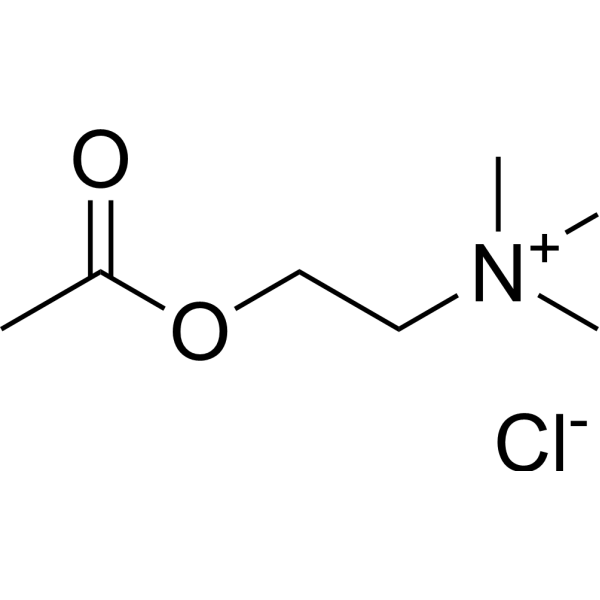
    Acetylcholine chloride
    20+ Cited Publications

    ACh chloride

    nAChR Calcium Channel Endogenous Metabolite Infection Neurological Disease Cancer
    Acetylcholine chloride (ACh chloride), a neurotransmitter, is a potent and BBB-permeable cholinergic agonist. Acetylcholine chloride is a modulator of the activity of dopaminergic (DAergic) neurons through the stimulation of nicotinic acetylcholine receptors (nAChRs) . Acetylcholine chloride inhibits p53 mutant peptide aggregation in vitro .
    Acetylcholine chloride
  • HY-B1205
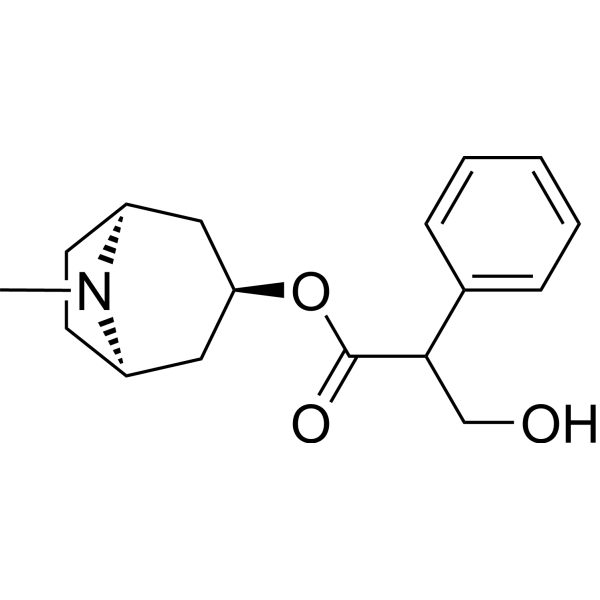
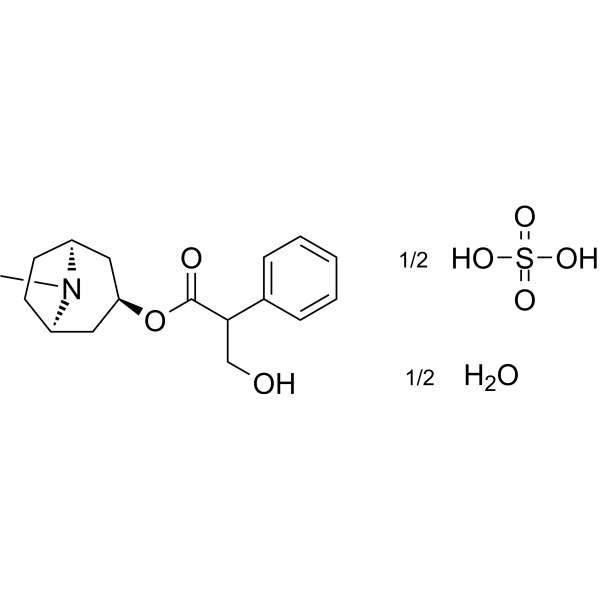
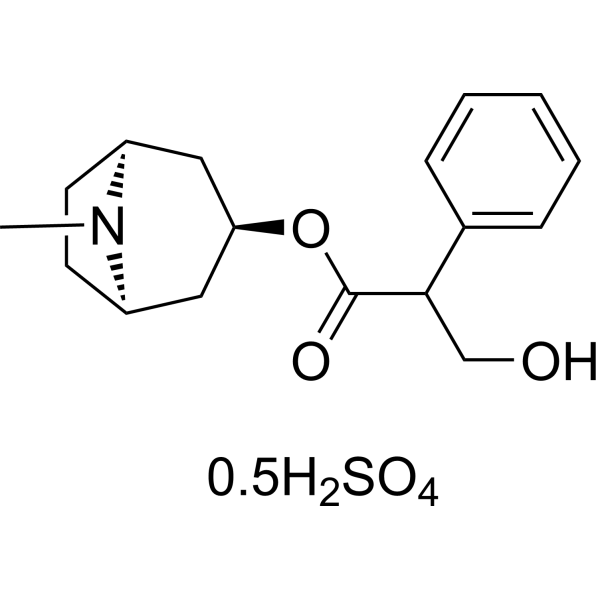
    Atropine
    20+ Cited Publications

    Tropine tropate; DL-Hyoscyamine

    Environmental Pollutants Endogenous Metabolite mAChR Cardiovascular Disease Neurological Disease Cancer
    Atropine (Tropine tropate) is a competitive muscarinic acetylcholine receptor (mAChR) antagonist with IC50 values of 0.39 and 0.71 nM for Human mAChR M4 and Chicken mAChR M4, respectively. Atropine inhibits ACh-induced relaxations in human pulmonary veins. Atropine can be used for research of anti-myopia and bradycardia .
    Atropine
  • HY-P0033
    Argireline
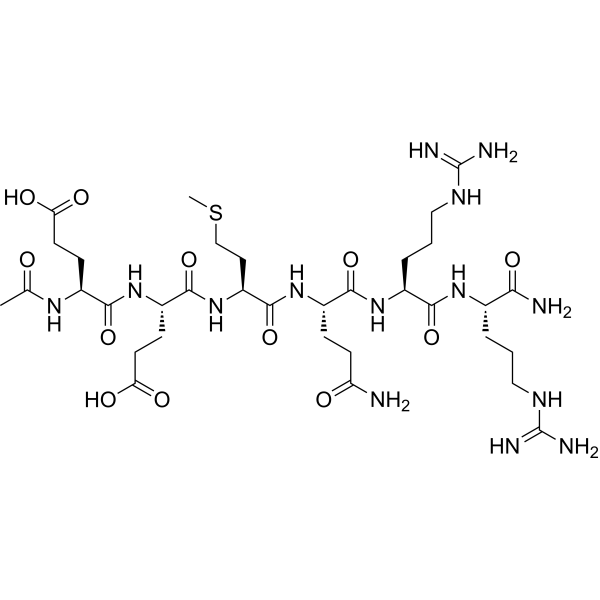
    2 Publications Verification

    Acetyl hexapeptide-3; Acetyl hexapeptide-8

    Calcium Channel Neurological Disease
    Argireline (Acetyl hexapeptide-3) is a non-toxic, skin-permeable, antiwrinkle peptide. Argireline significantly inhibits Ca 2+ dependent neurotransmitter release (acetylcholine) at the neuromuscular junction. Argireline has antiwrinkle and anti-aging activity .
    Argireline
  • HY-13204A

    KL 373

    mAChR Neurological Disease
    Biperiden (KL 373) is a non-selective muscarinic receptor antagonist that competitively binds to M1 muscarinic receptors, thereby inhibiting acetylcholine and enhancing dopamine signaling in the central nervous system. Biperiden has the potential for the research of Parkinson's disease and other related psychiatric disorders .
    Biperiden
  • HY-P0084

    SRIF-14; Somatostatin-14

    Endogenous Metabolite Cardiovascular Disease Neurological Disease
    Cyclic somatostatin (SRIF-14) is a growth hormone-release inhibiting factor used in the research of severe, acute hemorrhages of gastroduodenal ulcers. Cyclic somatostatin is a neuropeptide co-stored with acetylcholine in the cardiac parasympathetic innervation, exerts influences directly on contraction of ventricular cardiomyocytes. Cyclic somatostatin inhibits the contractile response of isoprenaline with an IC50 value of 13 nM. Cyclic somatostatin can be used for the research of cardiovascular disease .
    Cyclic somatostatin
  • HY-B0282S

    ACh-d4 chloride

    nAChR Calcium Channel Endogenous Metabolite Neurological Disease Cancer
    Acetylcholine-d4 (chloride) is the deuterium labeled Acetylcholine chloride. Acetylcholine chloride (ACh chloride), a neurotransmitter, is a potent and BBB-permeable cholinergic agonist. Acetylcholine chloride is a modulator of the activity of dopaminergic (DAergic) neurons through the stimulation of nicotinic acetylcholine receptors (nAChRs) . Acetylcholine chloride inhibits p53 mutant peptide aggregation in vitro .
    Acetylcholine-d4 chloride
  • HY-13596
    Cisatracurium besylate
    1 Publications Verification

    51W89 besylate; Cisatracurium besilate

    nAChR Autophagy Neurological Disease Cancer
    Cisatracurium besylate (51W89) is a nondepolarizing neuromuscular blocking agent, antagonizing the action of acetylcholine by inhibiting neuromuscular transmission.
    Cisatracurium besylate
  • HY-B0118A

    ORG NC 45

    nAChR Neurological Disease Cancer
    Vecuronium (ORG NC 45) bromide is a non-depolarizing neuromuscular blocking agent that also acts as a nicotinic acetylcholine receptor (nAChR) inhibitor, a muscle relaxant, and can be used for pre-surgical anesthesia .
    Vecuronium bromide
  • HY-B0423
    Neostigmine Bromide
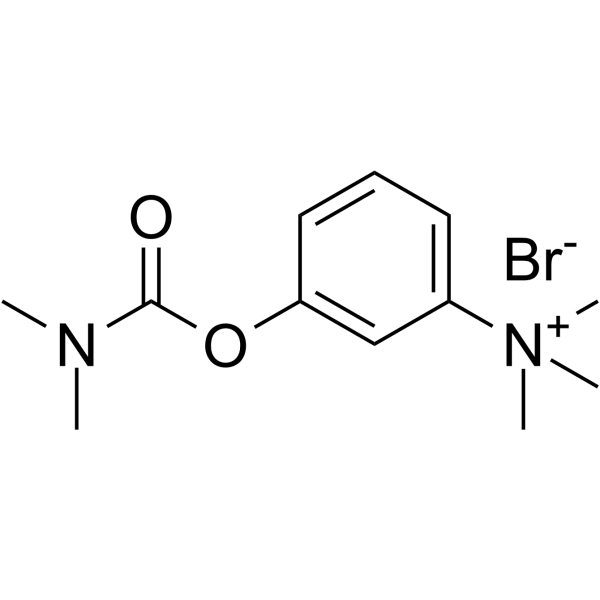
    1 Publications Verification

    Eustigmin bromide; Neoserine bromide

    Cholinesterase (ChE) Neurological Disease
    Neostigmine (Eustigmin) Bromide is an orally active and reversible cholinesterase inhibitor that acts on myasthenia gravis to prolong and intensify the muscarinic and nicotinic effects of acetylcholine. Neostigmine Bromide can be used in anesthesia to reverse the neuromuscular blockade produced by competitive neuromuscular blockers .
    Neostigmine Bromide
  • HY-111338
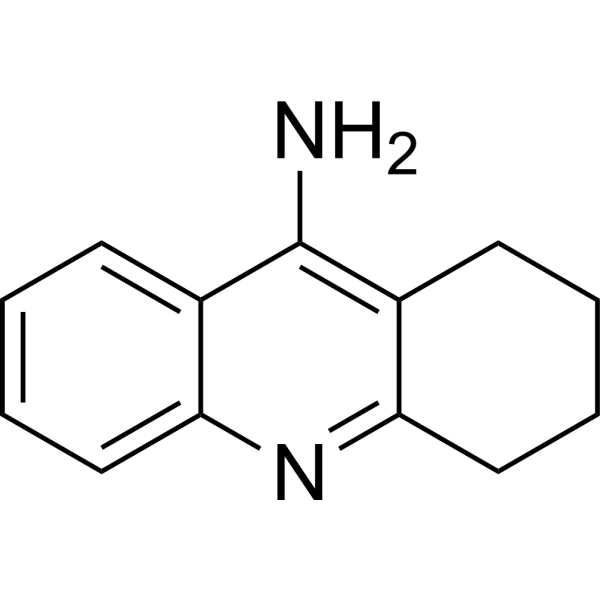
    Tacrine
    5+ Cited Publications

    Cholinesterase (ChE) Neurological Disease
    Tacrine is an effective oral acetylcholine (AChE) inhibitor (IC50 = 109 nM) and also acts as an active substrate for CYP1A2. Tacrine can restore cognitive dysfunction in elderly rats. Tacrine can cause liver toxicity and is used in research related to Alzheimer's disease .
    Tacrine
  • HY-P0102

    nAChR Neurological Disease Metabolic Disease
    Dipeptide diaminobutyroyl benzylamide diacetate, a Wagerlin-1-mimicking peptide, is a nAChR antagonist. Dipeptide diaminobutyroyl benzylamide diacetate mimics Waglerin-1 to block neuromuscular junction nicotinic acetylcholine receptors, partially inhibits neuronal signal transduction, and relaxes muscles. Dipeptide diaminobutyroyl benzylamide diacetate reduces appearance of facial wrinkles linked to repeated muscle movement.Dipeptide diaminobutyroyl benzylamide diacetate can be used for the research of mild-to-moderate fine and coarse periocular and perioral wrinkles and periorbital ageing .
    Dipeptide diaminobutyroyl benzylamide diacetate
  • HY-B2152

    Hemicholinium dibromide

    Cholinesterase (ChE) Neurological Disease
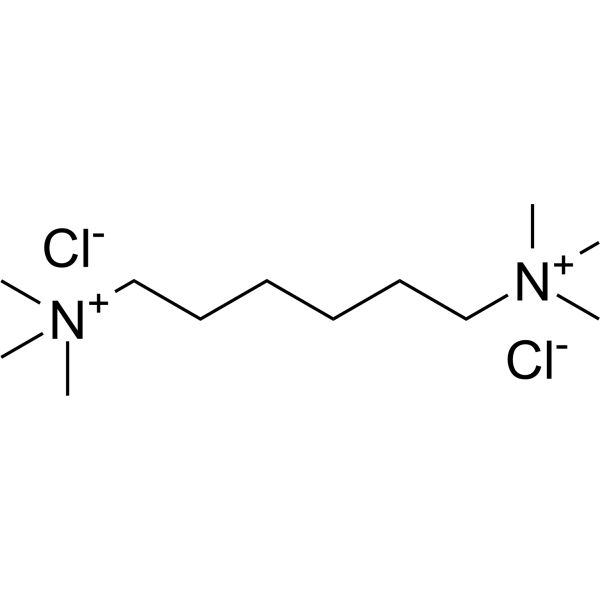
    Hemicholinium 3 is a competitive inhibitor of the high affinity choline transporter (HACU) with a Ki value of 25 nM. Hemicholinium 3, a neuromuscular blocking agent which inhibits the synthesis and the release of acetylcholine (ACh) . Hemicholinium 3 inhibits the Epibatidine-evoked contraction and [ 3H]acetylcholine release with IC50s of 897 nM and 693 nM, respectively .
    Hemicholinium 3
  • HY-103182

    Adenosine Receptor Others
    PSB-1115 is a selective A2B Adenosine Receptor antagonist. PSB-1115 inhibits the 2,4,6-trinitrobenzenesulfonic acid (TNBS)-induced contraction inhibition of acetylcholine (ACh) .
    PSB-1115
  • HY-13204

    KL 373 hydrochloride

    mAChR Neurological Disease
    Biperiden (KL 373) hydrochloride is a non-selective muscarinic receptor antagonist that competitively binds to M1 muscarinic receptors, thereby inhibiting acetylcholine and enhancing dopamine signaling in the central nervous system. Biperiden hydrochloride has the potential for the research of Parkinson's disease and other related psychiatric disorders .
    Biperiden hydrochloride
  • HY-B1315

    Environmental Pollutants Apoptosis Insecticide Cholinesterase (ChE) Reactive Oxygen Species (ROS) Neurological Disease Inflammation/Immunology
    Carbaryl is the inhibitor for acetylcholinesterase that inhibits the degradation of acetylcholine in the synaptic cleft, leads to the accumulation of acetylcholine and causes neurotoxicity. Carbaryl can be used as an insecticide .
    Carbaryl
  • HY-B1700A

    nAChR Neurological Disease
    Mivacurium dichloride is a benzylisoquinoline derivative and is a short-acting non-depolarizing neuromuscular blocking agent and skeletal muscle relaxant. Mivacurium dichloride couples with the nAChR to reduce or inhibit the depolarizing effect of acetylcholine on the terminal disc of the muscle cell .
    Mivacurium dichloride
  • HY-B0732

    HSR803

    Cholinesterase (ChE) Dopamine Receptor Bacterial Neurological Disease
    Itopride (HSR803) hydrochloride is a potent dopamine-2 antagonist and an acetylcholine esterase (AChE) inhibitor. Itopride hydrochloride enhances gastric motility through both antidopaminergic and anti-acetylcholinesterasic actions, can be used as a gastrointestinal prokinetic agent. Itopride can be used for researching gastro-esophageal reflux disease (GERD) .
    Itopride hydrochloride
  • HY-101086
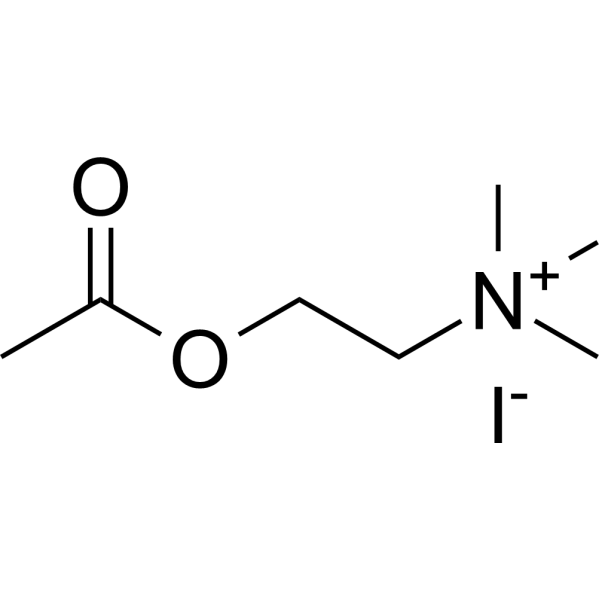
    Acetylcholine iodide
    20+ Cited Publications

    ACh iodide

    Endogenous Metabolite mAChR Neurological Disease Endocrinology
    Acetylcholine iodide is a muscarinic receptor modulator. Acetylcholine iodide specifically binds to muscarinic receptors, inhibits sodium absorption, and induces chloride secretion. Acetylcholine iodide changes intestinal ion transport, enhances intestinal secretory function, induces or maintains mammary gland development and lactation. Acetylcholine iodide can be used for intestinal ion transport regulation and mammary gland physiological function research .
    Acetylcholine iodide
  • HY-B0429

    nAChR Neurological Disease
    Pancuronium dibromide, a bis-quaternary steroid, is a neuromuscular relaxant. Pancuronium dibromide inhibits neuromuscular transmission by competing with acetylcholine for binding sites on nACh receptors. Pancuronium dibromide also inhibits cardiac muscarinic receptors and has a sympathomimetic action .
    Pancuronium dibromide
  • HY-B1813A
    (±)-Vesamicol hydrochloride
    1 Publications Verification

    (±)-AH5183 hydrochloride

    Sigma Receptor Neurological Disease
    (±)-Vesamicol hydrochloride ((±)-AH5183 hydrochloride) is a potent vesicular acetylcholine transport inhibitor with a Ki of 2 nM. (±)-Vesamicol hydrochloride also displays high affinity for σ1 and σ2 receptors with Kis of 26 nM and 34 nM, respectively .
    (±)-Vesamicol hydrochloride
  • HY-B1206
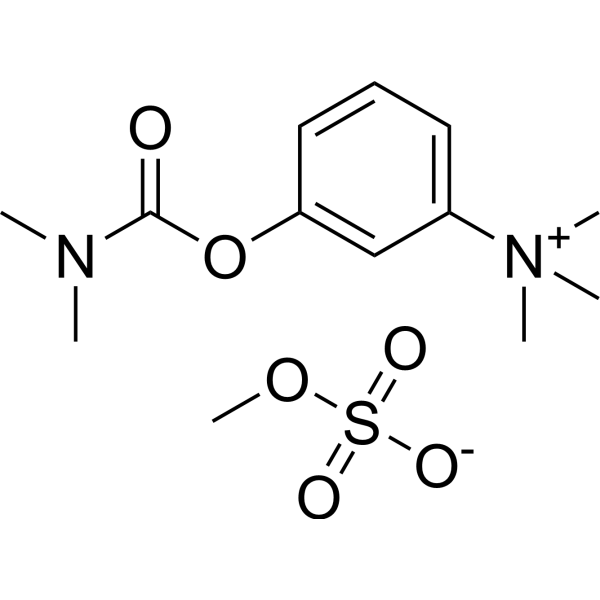
    Neostigmine (methyl sulfate)
    1 Publications Verification

    Cholinesterase (ChE) Infection Neurological Disease
    Neostigmine methyl sulfate is an AchE inhibitor. Neostigmine methyl sulfate increases endogenous acetylcholine levels, mediates antinociceptive effects, and alleviates heat-induced pain. Neostigmine methyl sulfate can be used in studies related to postoperative pain and sepsis .
    Neostigmine (methyl sulfate)
  • HY-107416

    U-57908

    DAGL Acyltransferase mAChR COX Phospholipase Neurological Disease Metabolic Disease
    RHC 80267 (U-57908) is a potent and selective inhibitor of diacylglycerol lipase (DAGL) (with IC50 of 4 μM in canine platelets). RHC-80267 inhibits cholinesterase activity with an IC50 of 4 μM, thereby enhancing the relaxation evoked by acetylcholine. RHC 80267 also inhibits COX and the hydrolysis of phosphatidylcholine (PC) .
    RHC 80267
  • HY-159829

    NBI-1117568; HTL-0016878

    mAChR Neurological Disease
    Direclidine (NBI-1117568, HTL-0016878) is a selective orthosteric agonist targeting the muscarinic acetylcholine M4 receptor, exhibiting very low affinity for M1, M2, M3, and M5 receptors. It binds to the orthosteric site of the M4 receptor in a non-covalent, competitive manner. Direclidine specifically activates the M4 receptor, inhibiting the release of acetylcholine from striatal cholinergic interneurons, thereby regulating the balance of the dopaminergic system and reducing psychiatric symptoms associated with excessive dopamine release. Direclidine can improve symptoms associated with neuropsychiatric disorders and is used in research on schizophrenia and other neuropsychiatric disorders .
    Direclidine
  • HY-B0282S1

    ACh-d9 chloride

    nAChR Calcium Channel Endogenous Metabolite Neurological Disease Cancer
    Acetylcholine-d9 (chloride) is the deuterium labeled Acetylcholine chloride. Acetylcholine chloride (ACh chloride), a neurotransmitter, is a potent and BBB-permeable cholinergic agonist. Acetylcholine chloride is a modulator of the activity of dopaminergic (DAergic) neurons through the stimulation of nicotinic acetylcholine receptors (nAChRs) . Acetylcholine chloride inhibits p53 mutant peptide aggregation in vitro .
    Acetylcholine-d9 chloride
  • HY-B2070

    mAChR Inflammation/Immunology
    Methylbenactyzium Bromide is a muscarinic acetylcholine receptor (mAChR) inhibitor.
    Methylbenactyzium Bromide
  • HY-B0570
    Decamethonium Bromide
    1 Publications Verification

    nAChR Neurological Disease
    Decamethonium Bromide is an acetylcholine receptor inhibitor and muscle relaxant. Decamethonium Bromide first induces depolarization of skeletal muscles, and then binds to postsynaptic acetylcholine receptors to induce persistent paralysis .\n
    Decamethonium Bromide
  • HY-W020468
    Linopirdine
    2 Publications Verification

    DuP 996

    Potassium Channel TRP Channel Neurological Disease
    Linopirdine (DuP 996) is an orally active, selective M-type K + current (IM; Kv7; KCNQ Channels) inhibitor with an IC50 of 2.4 μM. Linopirdine is a TRPV1 agonist. Linopirdine, a putative cognition enhancing agent, increases acetylcholine release in rat brain tissue .
    Linopirdine
  • HY-B1343

    Cholinesterase (ChE) Neurological Disease
    Pridinol mesylate is an orally active, blood-brain permeable, muscarinic acetylcholine receptor (mAChR)-directed muscle relaxant. Pridinol mesylate reduces the conduction of impulses to spinal motor neurons and exerts muscle relaxant activity. Pridinol mesylate inhibits skeletal muscle contractures in diseases of both central and peripheral origin and can be used in research in the field of musculoskeletal diseases .
    Pridinol mesylate
  • HY-B0282R

    ACh chloride (Standard)

    Reference Standards nAChR Calcium Channel Endogenous Metabolite Neurological Disease Cancer
    Acetylcholine (chloride) (Standard) is the analytical standard of Acetylcholine (chloride). This product is intended for research and analytical applications. Acetylcholine chloride (ACh chloride), a neurotransmitter, is a potent and BBB-permeable cholinergic agonist. Acetylcholine chloride is a modulator of the activity of dopaminergic (DAergic) neurons through the stimulation of nicotinic acetylcholine receptors (nAChRs) . Acetylcholine chloride inhibits p53 mutant peptide aggregation in vitro .
    Acetylcholine chloride (Standard)
  • HY-113995
    (-)-Vesamicol
    1 Publications Verification

    (-)-AH5183

    mAChR Neurological Disease
    (-)-Vesamicol (AH5183) is a vesicular acetylcholine transporter inhibitor. (-)-Vesamicol reversibly and non-competitively inhibits the transport of acetylcholine into circulating synaptic vesicles and blocks the activity of vesicular acetylcholine transporters in medial amygdala neurons. (-)-Vesamicol is applicable to research related to central precocious puberty .
    (-)-Vesamicol
  • HY-B0962A

    mAChR Neurological Disease
    Piperidolate is an antimuscarinic, inhibits intestinal cramp induced by acetylcholine (rats and dogs).
    Piperidolate
  • HY-B0962

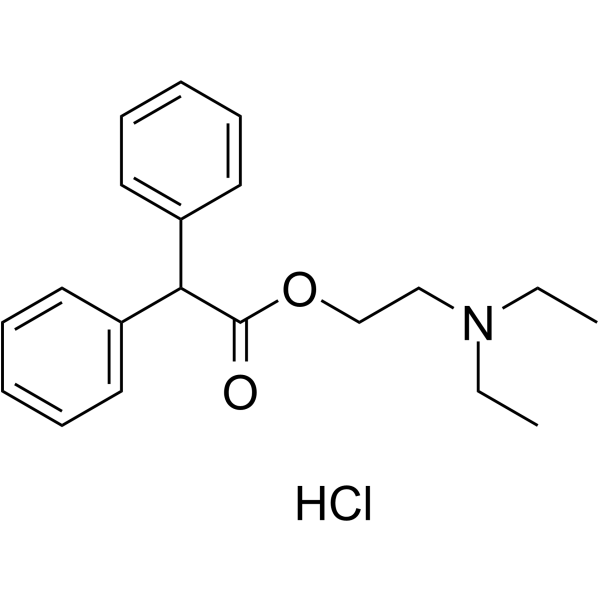
    mAChR Neurological Disease
    Piperidolate hydrochloride is an antimuscarinic, inhibits intestinal cramp induced by acetylcholine (rats and dogs).
    Piperidolate hydrochloride
  • HY-N7004

    mAChR Cardiovascular Disease
    Arborine inhibits the peripheral action of acetylcholine and induces a fall in blood pressure .
    Arborine
  • HY-P1271

    Catestatin (cattle)

    nAChR Cardiovascular Disease
    Catestatin is a 21-amino acid residue, cationic and hydrophobic peptide. Catestatin is an endogenous peptide that regulates cardiac function and blood pressure . Catestatin is a non-competitive nicotinic antagonist acting through nicotinic acetylcholine receptors (nAChRs) to inhibit catecholamine release .
    Catestatin
  • HY-W415004

    Cholinesterase (ChE) Neurological Disease
    ACHE-IN-38 (Compound mol-8) inhibits the metabolic breakdown of the neurotransmitter acetylcholine (ACh) by the enzyme acetylcholinesterase (AChE) and hence alleviates memory deficits in patients with Alzheimer’s Disease by potentiating cholinergic transmission .
    ACHE-IN-38
  • HY-B0942R

    Reference Standards nAChR Bacterial Neurological Disease
    Benzethonium (chloride) (Standard) is the analytical standard of Benzethonium (chloride). This product is intended for research and analytical applications. Benzethonium chloride inhibits nicotinic acetylcholine receptors in human recombinant α7 and α4β2 neurons in Xenopus laevis oocytes.
    Benzethonium chloride (Standard)
  • HY-100968

    Dopamine Receptor Neurological Disease
    GBR 12783 dihydrochloride is a specific, potent and selective dopamine uptake inhibitor that inhibits the [ 3H]dopamine uptake by rat and mice striatal synaptosomes with IC50s of 1.8 nM and 1.2 nM, respectively. GBR 12783 dihydrochloride can improve memory performance and increase hippocampal acetylcholine release in rats .
    GBR 12783 dihydrochloride
  • HY-N12302

    N1-Dihydrocaffeoyl, N10-caffeoyl spermidine

    mAChR Others
    Scotanamine D (N1-Dihydrocaffeoyl, N10-caffeoyl spermidine) is a spermidine alkaloid. It can be isolated from S. tangutica. Scotanamine D potently and selectively inhibits the activity of the M1 muscarinic acetylcholine receptor, with an IC50 of 32 nM. It can be used in studies related to Parkinson's disease .
    Scotanamine D
  • HY-N0801

    MMP Cholinesterase (ChE) Neurological Disease Inflammation/Immunology
    Polygalacic acid, is a triterpene, isolated from the root of Polygala tenuifolia Willd. Polygalacic acid inhibits MMP expression. Polygalacic acid may have a therapeutic effect in Osteoarthritis (OA) treatment . Polygalacic acid exerts a significant neuroprotective effect on cognitive impairment, PA improves cholinergic system reactivity by inhibiting acetylcholinesterase (AChE) activity, increasing choline acetyltransferase (ChAT) activity, and elevating levels of acetylcholine (Ach) in the hippocampus and frontal cortex .
    Polygalacic acid
  • HY-B1315R

    Reference Standards Insecticide Cholinesterase (ChE) Reactive Oxygen Species (ROS) Apoptosis Neurological Disease Inflammation/Immunology
    Carbaryl (Standard) is the analytical standard of Carbaryl (HY-B1315). This product is intended for research and analytical applications. Carbaryl is the inhibitor for acetylcholinesterase that inhibits the degradation of acetylcholine in the synaptic cleft, leads to the accumulation of acetylcholine and causes neurotoxicity. Carbaryl can be used as an insecticide.
    Carbaryl (Standard)
  • HY-W127668

    Acyltransferase Neurological Disease
    Triethylcholine iodide is a choline acetyltransferase inhibitor and a regulator of the acetylcholine synthesis pathway. Triethylcholine iodide inhibits acetylcholine synthesis in brain tissues and blocks neuromuscular and autonomic ganglionic transmission. Triethylcholine iodide exerts weak curare-like effects at extremely high concentrations. Triethylcholine iodide elevates the pentylenetetrazol seizure threshold, alters electroencephalogram patterns in Felis catus, but does not affect the maximal electroshock seizure threshold in Oryctolagus cuniculus. Triethylcholine iodide can be used in seizure-related research .
    Triethylcholine iodide
  • HY-B0732A

    HSR803 free base

    Cholinesterase (ChE) Dopamine Receptor Bacterial Others
    Itopride (HSR803 free base) is a potent and orally active dopamine-2 antagonist and an acetylcholine esterase (AChE) inhibitor. Itopride enhances gastric motility through both antidopaminergic and anti-acetylcholinesterasic actions, can be used as a gastrointestinal prokinetic agent. Itopride can be used for researching gastro-esophageal reflux disease (GERD) .
    Itopride
  • HY-B1315S1

    Isotope-Labeled Compounds Insecticide Cholinesterase (ChE) Reactive Oxygen Species (ROS) Apoptosis Neurological Disease Inflammation/Immunology
    Carbaryl-d7 is the deuterium labeled Carbaryl (HY-B1315). Carbaryl is the inhibitor for acetylcholinesterase that inhibits the degradation of acetylcholine in the synaptic cleft, leads to the accumulation of acetylcholine and causes neurotoxicity. Carbaryl can be used as an insecticide .
    Carbaryl-d7
  • HY-B0327A
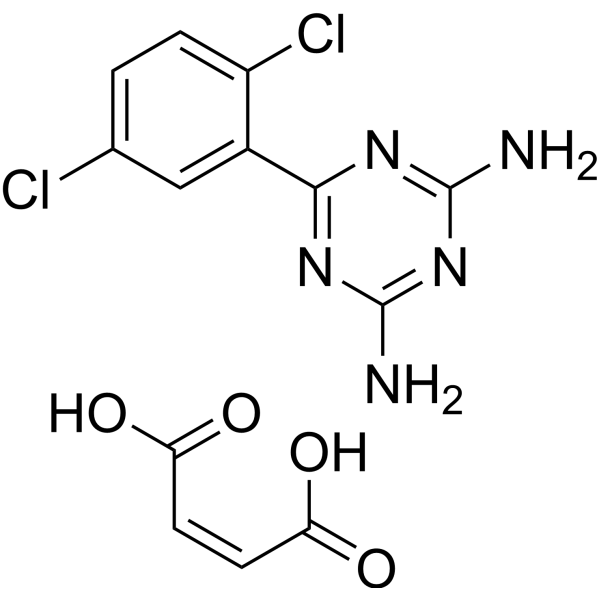
    Irsogladine maleate
    3 Publications Verification

    Dicloguamine maleate; MN1695

    mAChR Phosphodiesterase (PDE) Inflammation/Immunology
    Irsogladine is a PDE4 inhibitor and muscarinic acetylcholine receptor binder.
    Irsogladine maleate
  • HY-W983015

    5-HT Receptor Metabolic Disease
    Davidigenin is an antidiabetic compound with antitumor, antispasmodic, and antioxidant activities. Davidigenin inhibits duodenal contractions induced by acetylcholine or histamine.
    Davidigenin
  • HY-P5823

    nAChR Neurological Disease
    Azemiopsin is a potent nicotinic acetylcholine receptor (nAChR) inhibitor with IC50s of 0.18 μM and 22 μM against T. californica nAChR and human α7 nAChR, respectively. Azemiopsin blocks acetylcholine-induced currents in Xenopus oocytes heterologously expressing human muscle-type nAChR .
    Azemiopsin
  • HY-117284

    mAChR Neurological Disease
    Eucatropine is a potent muscarinic acetylcholine receptor (mAChR) inhibitor with an IC50 value of 0.583 μM. Eucatropine is an anticholinergic agent .
    Eucatropine
  • HY-B0827S

    MTI-446-d3

    nAChR Parasite Infection Cardiovascular Disease
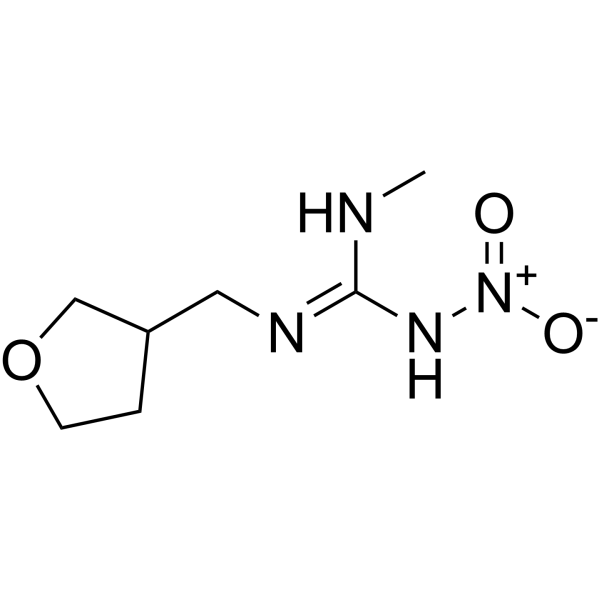
    Dinotefuran-d3 is the deuterium labeled Dinotefuran . Dinotefuran is an insecticide of the neonicotinoid class, its mechanism of action involves disruption of the insect's nervous system by inhibiting nicotinic acetylcholine receptors .
    Dinotefuran-d3
  • HY-P0033A

    Acetyl hexapeptide-3 acetate; Acetyl hexapeptide-8 acetate

    Calcium Channel Neurological Disease
    Argireline acetate (Acetyl hexapeptide-3 acetate) is a non-toxic, skin-permeable, antiwrinkle peptide. Argireline acetate significantly inhibits Ca 2+ dependent neurotransmitter release (acetylcholine) at the neuromuscular junction. Argireline acetate has antiwrinkle and anti-aging activity .
    Argireline acetate
  • HY-P1271A

    nAChR Cardiovascular Disease
    Catestatin TFA is a 21-amino acid residue, cationic and hydrophobic peptide. Catestatin TFA is an endogenous peptide that regulates cardiac function and blood pressure . Catestatin TFA is a non-competitive nicotinic antagonist acting through nicotinic acetylcholine receptors (nAChRs) to inhibit catecholamine release .
    Catestatin TFA

Inquiry Online

Your information is safe with us. * Required Fields.

Salutation


Country or Region *

Applicant Name *


Organization Name *

Department *


Email Address *


Product Name *

Cat. No.


Requested quantity *

Phone Number *


Remarks

Inquiry Online

Inquiry Information

Product Name:
Cat. No.:
Quantity:
MCE Japan Authorized Agent:

