



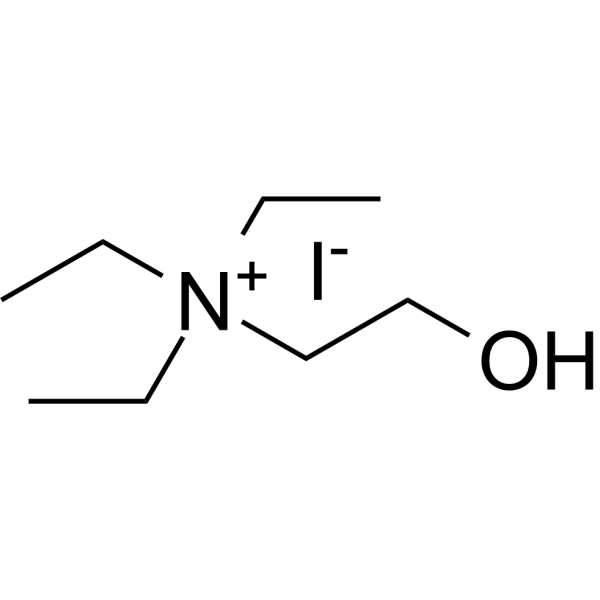
Triethylcholine iodide
Triethylcholine iodide is a choline acetyltransferase inhibitor and a regulator of the acetylcholine synthesis pathway. Triethylcholine iodide inhibits acetylcholine synthesis in brain tissues and blocks neuromuscular and autonomic ganglionic transmission. Triethylcholine iodide exerts weak curare-like effects at extremely high concentrations. Triethylcholine iodide elevates the pentylenetetrazol seizure threshold, alters electroencephalogram patterns in Felis catus, but does not affect the maximal electroshock seizure threshold in Oryctolagus cuniculus. Triethylcholine iodide can be used in seizure-related research.
For research use only. We do not sell to patients.
- CAS No.: 5957-17-5
- Formula: C8H20INO
- Molecular Weight:273.15
-
Storage:
Please store the product under the recommended conditions in the Certificate of Analysis.

To place orders, for customer services and technical support, please contact: MedChemExpress USA
Tel: 609-228-6898 E-mail: [email protected] [email protected]


-
 Biological Activity
-
Chemical Information
- Purity & Documentation
- References
-
 Help & FAQs


-
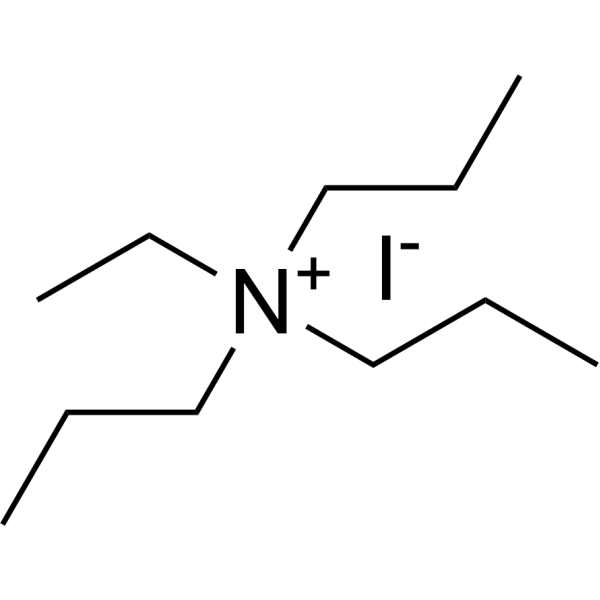
HY-W099929
N-Ethyl-N,N-dipropylpropan-1-aminium iodideBiochemical Assay Reagent -
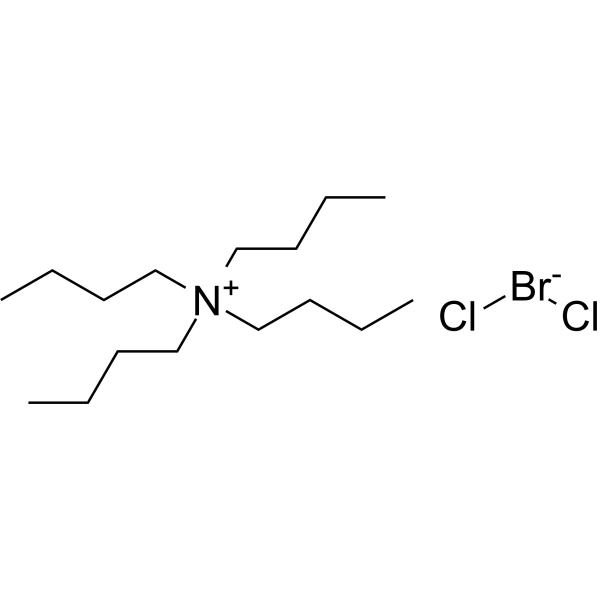
HY-W127681
Tetrabutylammonium dichlorobromideBiochemical Assay Reagent -
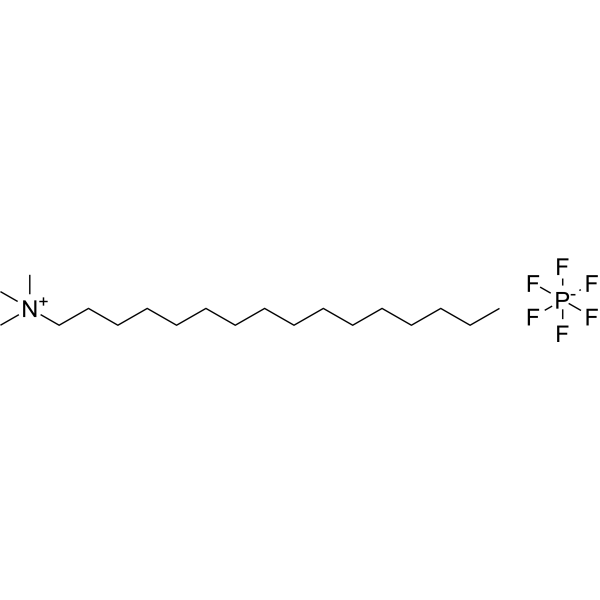
HY-W099577
N-Hexadecyltrimethylammonium hexafluorophosphateBiochemical Assay Reagent -
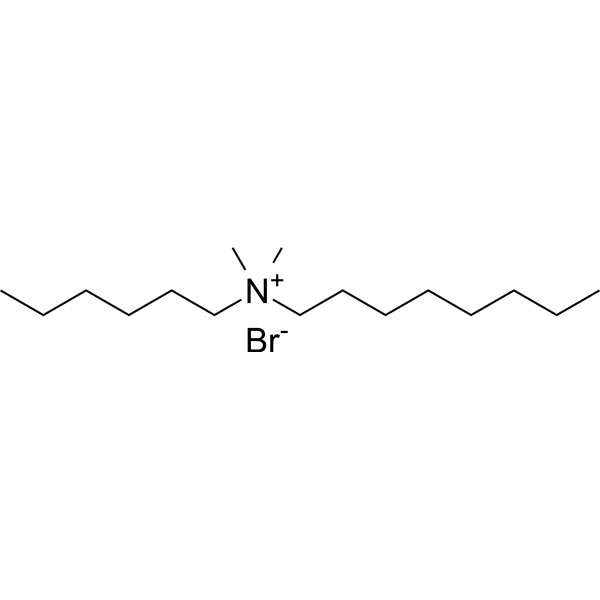
HY-W127650
Hexyldimethyloctylammonium bromideBiochemical Assay Reagent -
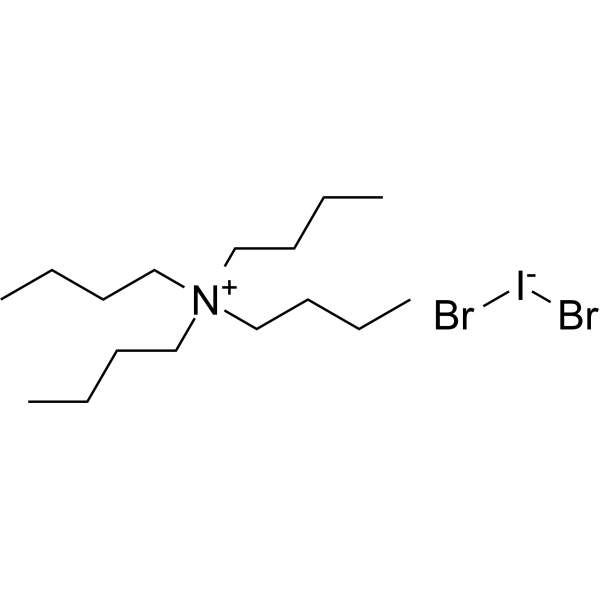
HY-W127684
Tetrabutylammonium dibromoiodideBiochemical Assay Reagent -
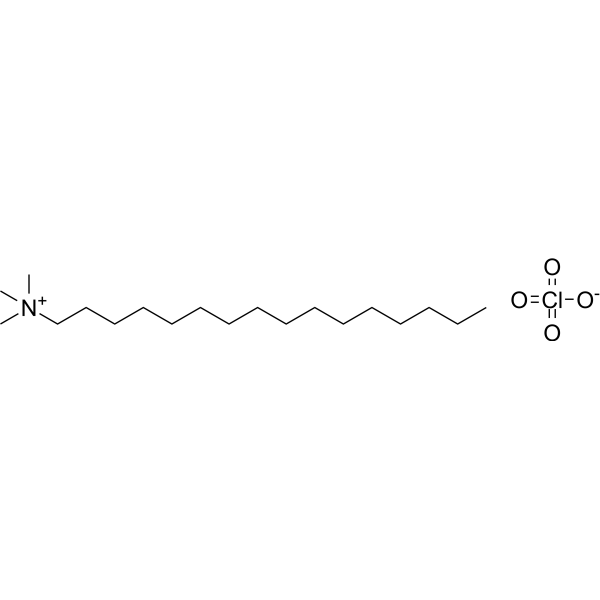
HY-W127694
Hexadecyltrimethylammonium perchlorateBiochemical Assay Reagent


Biological Activity
Description
In Vitro
Triethylcholine (1.04-10.4 mg; 1 h) iodide inhibits acetylcholine synthesis in the "mitochondrial" fraction of untreated rabbit brain homogenates in a concentration-dependent manner[1].
When co-incubated with 0.4 mg choline for 1 hour, Triethylcholine (1.04-10.4 mg; administered 1 hour prior) iodide exhibits a much stronger inhibitory effect on acetylcholine synthesis in the "mitochondrial" fraction of rabbit brain homogenates without ether treatment (inhibition rate: 19-56%) than in that of ether-treated "mitochondrial" fractions (inhibition rate: 6-15%)[1].
Triethylcholine (10.4 mg; 1 h) iodide inhibits acetylcholine synthesis in fresh frozen sections of rabbit caudate nucleus by 48% under low choline levels, by 28% under moderate choline levels, and increases synthesis by 6% after 1 h of incubation under high choline levels[1].
Triethylcholine iodide reduces acetylcholine synthesis in in vitro brain tissues[2].
MedChemExpress (MCE) has not independently confirmed the accuracy of these methods. They are for reference only. .
In Vivo
Triethylcholine iodide (100 mg/kg; i.v.; single dose) increases the pentylenetetrazol convulsion threshold in midbrain-transected cats to greater than 100 mg/kg, from a mean baseline of 19.5 mg/kg[2].
Triethylcholine iodide (100 mg/kg; i.v.; single dose) does not significantly affect maximal electroshock seizure thresholds in male New Zealand albino rabbits[2].
MedChemExpress (MCE) has not independently confirmed the accuracy of these methods. They are for reference only.
-
Animal Model:Cat (male and female, 2.3-2.8 kg, spinal cord-transected)[2]
-
Dosage:100 mg/kg
-
Administration:i.v.; single dose
-
Result:Elevated the mean pentylenetetrazol threshold from 22.2 mg/kg to 69.8 mg/kg.
Converted drowsy-state EEG patterns to an alert pattern initially, followed by a near-isoelectric EEG pattern.
-
Animal Model:Cat (male and female, 2.3-2.8 kg, midbrain-transected)[2]
-
Dosage:100 mg/kg
-
Administration:i.v.; single dose
-
Result:Elevated the pentylenetetrazol threshold to values exceeding 100 mg/kg in all 4 midbrain-transected cats, from a mean control threshold of 19.5 mg/kg.
Abolished the drowsy-state low-frequency, high-amplitude EEG waves and changed the EEG to a near-isoelectric pattern.
-
Animal Model:New Zealand albino rabbit (male, 2-3 kg)[2]
-
Dosage:100 mg/kg
-
Administration:i.v.; single dose
-
Result:Did not significantly alter maximal electroshock seizure thresholds; thresholds remained within 5 milliamperes of each rabbit's control value.


Chemical Information
-
CAS No. 5957-17-5
-
Molecular Weight 273.15
-
Formula C8H20INO
-
SMILES
CC[N+](CC)(CC)CCO.[I-]
-
Shipping
Room temperature in continental US; may vary elsewhere.
-
Storage
Please store the product under the recommended conditions in the Certificate of Analysis.


Purity & Documentation
References

Calculators
Concentration (start) × Volume (start) = Concentration (final) × Volume (final)


Triethylcholine iodide Related Classifications
HY-W127668 Related Classifications
 Powered by Bioz
Keywords
- Triethylcholine
- 5957-17-5
- Acyltransferase
- neuromuscular transmission
- electroencephalogram
- membrane-bound choline acetyltransferase
- pentylenetetrazol
- brain tissue
- acetylcholine synthesis pathway
- frog rectus abdominis muscle
- choline acetyltransferase
- autonomic ganglionic transmission
- seizures
- Inhibitor
- inhibitor
- inhibit