


From 11:00 pm to 12:00 pm EST ( 8:00 pm to 9:00 pm PST ) on January 6th, the website will be under maintenance. We are sorry for the inconvenience. Please arrange your schedule properly.
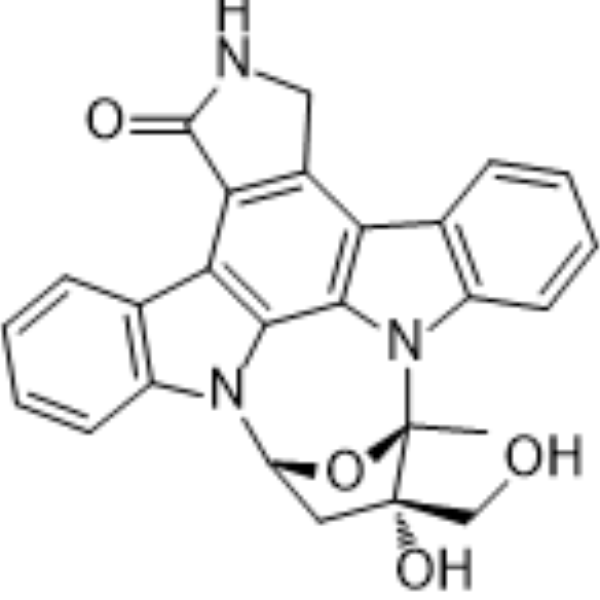
Lestaurtinib (CEP-701) is an orally active and selective RPTKs (receptor protein tyrosine kinase) inhibitor, competitively inhibits ATP binding to the TrkA/B/Cdomain. Lestaurtinib inhibits RPTKs phosphorylation, with IC50s of 2, 25 and 0.9 nM for FLT3, TrkA and JAK2, respectively. Lestaurtinib induces apoptosis and cycle arrest, also can inhibit growth of tumor .
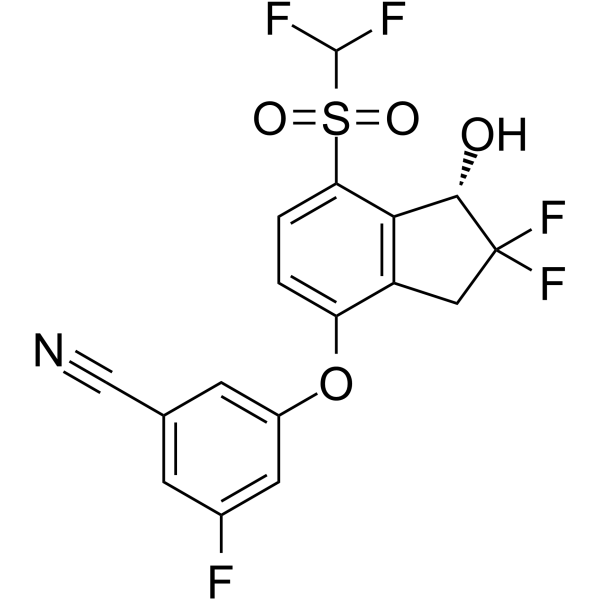
PT2399 is a potent and selective HIF-2α antagonist, which directly binds to HIF-2α PAS Bdomain with an IC50 of 6 nM. PT2399 displays potent antitumor activity in vivo .
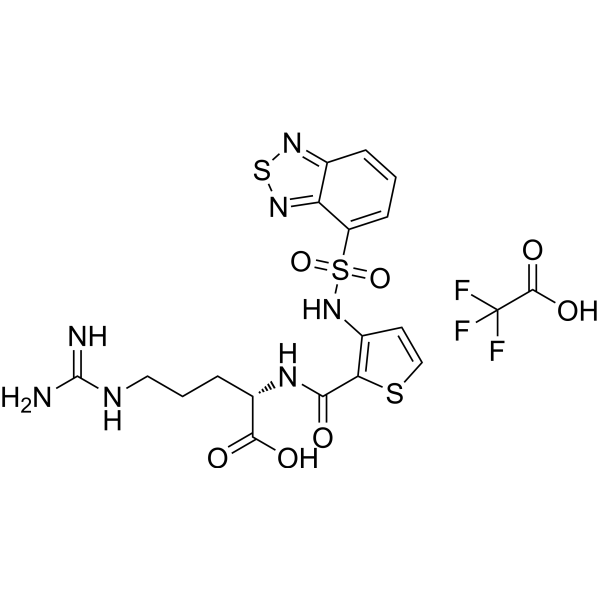
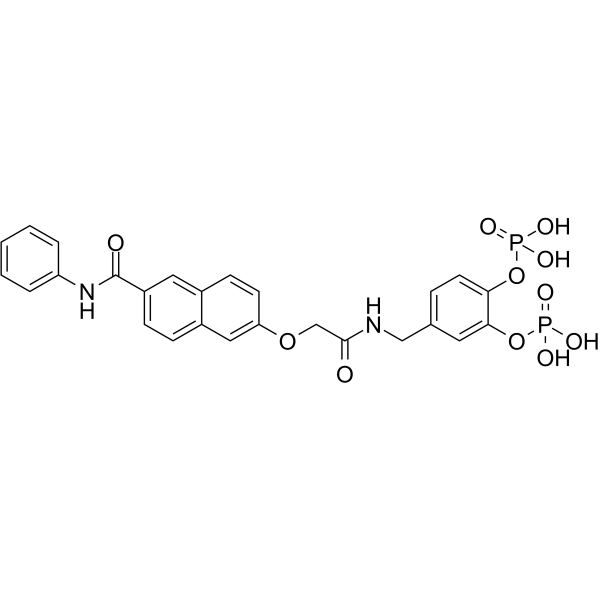
EG00229 is a neuropilin 1 (NRP1) receptor antagonist. EG00229 selectively inhibits VEGF-A binding to NRP1b1 domain with an IC50 of 3 μM, but has no effect on VEGFA binding to VEGFR-1 and VEGFR-2 .
Povetacicept (ALPN-303) is an engineered Fc fusion protein containing the TACI domain, and acts as a dual APRIL/BAFF antagonist. The Kd value of Povetacicept for human BAFF is 59.3 pM, while its Kd value for human APRIL is 1.00 pM. Povetacicept reduces the activation, proliferation, differentiation and survival of B cells, and inhibits the production of immunoglobulins and autoantibodies. Povetacicept can be used in research related to autoimmune hemolytic anemia, immune thrombocytopenia, systemic lupus erythematosus, lupus nephritis and myasthenia gravis .
YL-5092 is a selective YT521-B homology (YTH) domain-containing protein 1 (YTHDC1) inhibitor with an IC50 of 7.4 nM and a KD of 29.6 nM. YL-5092 can suppress cancer cell proliferation and induce cell G0/G1 phase arrest and apoptosis. YL-5092 can be used for the research of cancer, such as acute myeloid leukemia (AML) .
Anti-Mouse/Human CD44 Antibody (IM7) is an anti-huamn and mouse CD44 IgG2b monoclonal antibody that recognizes a conserved epitope outside the HA-binding domain of the CD44 molecule. Anti-Mouse/Human CD44 Antibody (IM7) exerts a potent anti-inflammatory effect by inducing the shedding of cell surface CD44, significantly improving symptoms in mice with rheumatoid arthritis without affecting relevant immune responses. Anti-Mouse/Human CD44 Antibody (IM7) can be used for researches on inflammation conditions and cancer such as arthritis and osteosarcoma .
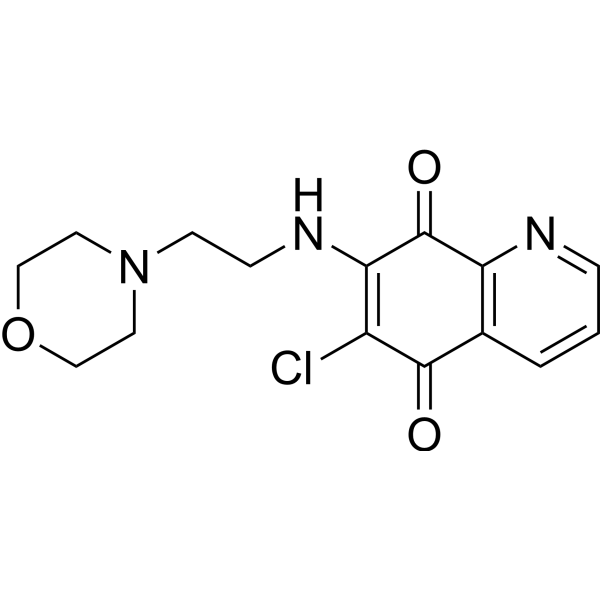
NSC 663284 (DA-3003-1) is a potent, cell-permeable, and irreversible Cdc25 dual specificity phosphatase inhibitor, has an IC50 for Cdc25B2 of 0.21 μM. NSC 663284 exhibits mixed competitive kinetics against Cdc25A, Cdc25B(2), and Cdc25C with Ki values of 29, 95, and 89 nM, respectively . NSC 663284 inhibits NSD2 (IC50 of 170 nM) through a direct interaction with the catalytic SET domain (Kd of 370 nM) .
KG-548 is an ARNT/TACC3 disruptor and a HIF-1α inhibitor. KG-548 directly interferes with ARNT/TACC3 complex formation by competing with TACC3 for binding to the ARNT PAS-Bdomain. ARNT is the aryl hydrocarbon receptor nuclear translocator, also known as HIF-β .
Tat-NR2B9c (Tat-NR2Bct; NA-1) is a postsynaptic density-95 (PSD-95) inhibitor, with EC50 values of 6.7 nM and 670 nM for PSD-95d2 (PSD-95 PDZ domain 2) and PSD-95d1, respectively. Tat-NR2B9c disrupts the PSD-95/NMDAR interaction, inhibiting NR2A and NR2B binding to PSD-95 with IC50 values of 0.5 μM and 8 μM, respectively. Tat-NR2B9c also inhibits neuronal nitric oxide synthase (nNOS)/PSD-95 interaction, and possesses neuroprotective efficacy .
L002 is a potent, cell permeable, reversible and specific acetyltransferase p300 (KAT3B) inhibitor with an IC50 of 1.98 μM . L002 binds the acetyl-CoA pocket and competitively inhibits the FATp300 catalytic domain, blocks histone acetylation and p53 acetylation, and inhibits STAT3 activation . L002 has the potential for hypertension-induced cardiac hypertrophy and fibrogenesis treatment .
Topobexin is a TOP2B-selective inhibitor with IC50 values of 0.19 μM and 4.8 μM for TOP2B and TOP2A (DNA decatenation assay). Topobexin binds to non-homologous residues in the obex pocket and targets the ATPase domain of TOP2B. Topobexin prevents anthracycline-induced DNA double-strand break formation, apoptotic signaling mediated by caspase 3/7, 8 and 9, cardiomyocyte morphological changes, mitochondrial depolarization/loss, left ventricular systolic dysfunction, extracellular matrix remodeling, fibrotic alterations, and increases in plasma cardiac troponin T and BNP. Topobexin does not impair the antiproliferative effects of anthracyclines in cancer cells, exhibits no intrinsic cytotoxicity in cardiomyocytes, and is well tolerated in rabbits. Topobexin can be used in studies related to anthracycline-induced cardiotoxicity .
PBIT is a specific inhibitor of the Jumonji AT-rich Interactive Domain 1 (JARID1) enzymes. PBIT inhibits JARID1B(KDM5B or PLU1) histone demethylase with an IC50 of about 3 μM . PBIT also inhibits JARID1A and JARID1C with IC50s of 6 μM and 4.9 μM, respectively .
Fiztasovimab (NPC-21; EV2038) is a fully human IgG1λ mAb against human cytomegalovirus (hCMV). Fiztasovimab acts neutralizing activity by binding to the antigenic domain 1 of glycoprotein B on hCMV envelope. Fiztasovimab inhibits cell-to-cell transmission of hCMV .
Bemarituzumab (FUT8-KO) is an anti-FGFR2b monoclonal antibody expressed by CHO cells with the fucosyltransferase 8 gene (FUT8) knocked out. Fucose deficiency enhances the ADCC effect of the antibody. Bemarituzumab (FUT8-KO) lacks a core fucose in the polysaccharide portion of the Fc domain of the antibody, and results in a high affinity to human FcγRIIIa .
OM-7D3-B3 is an antibody-based antiviral agent targeting the tight junction protein CLDN1 (Kd=4 nM). By binding to the first extracellular domain of CLDN1, OM-7D3-B3 disrupts the formation of the CLDN1-CD81 co-receptor complex, thereby effectively inhibiting the entry of hepatitis C virus (HCV). OM-7D3-B3 not only prevents de novo and chronic HCV infections in humanized liver chimeric mice and uPA-SCID mice transplanted with human livers, but also exhibits favorable safety with no toxic effects observed. OM-7D3-B3 serves as a critical tool for research on HCV infection mechanisms and antiviral drug development .
NVS-STG2 is a molecular glue that targets STINGb and activates STING-mediated immune signaling. NVS-STG2 induces higher-order oligomerization of human STING by binding to pockets between adjacent STING dimer transmembrane domains, effectively acting as a molecular glue. NVS-STGI enhances the activity of cGAMP by inducing the formation of more abundant and larger oligomers. NVS-STG2 produces antitumor activity in animal models .
2-Guanidinobezimidazole (2GBI) is a NLRP3 agonist with a KD of 1.29 μM and a selective state-dependent HVCN1 blocker. 2-Guanidinobezimidazole directly binds NLRP3’s LRR domain, enhances NLRP3-ASC and NLRP3-NEK7 interactions, and drives NLRP3 inflammasome activation. 2-Guanidinobezimidazole can be used for the research of LLC lung carcinoma, B16F10 melanoma and ischemic stroke .
Imdevimab (REGN10987) is a human monoclonal antibody that targets SARS-CoV-2 virus. Imdevimab can be used in combination with Casirivimab (HY-P99341) to reduce viral load and transiently increases anti-receptor-binding domain IgG titers. Imdevimab maintains most of its neutralization activity against viruses with B.1.1.7, B.1.351 and mink cluster 5 spike proteins .
M1001 is a weak hypoxia-inducible factor-2α (HIF-2α) agonist. M1001 can bind to the HIF-2α PAS-Bdomain, with a Kd of 667 nM. M1001 can be used in chronic kidney disease research .
Anle138b-F105 is an autophagy-targeting chimera (AUTOTAC) that targets p62/Sequestosome-1/SQSTM1. Anle138b-F105 binds to the ZZ domain of p62, induces conformational activation, self-oligomerization, interaction with LC3, and formation of autophagosomes. Anle138b-F105 induces autophagic flux of ubiquitin-conjugated aggregated proteins, leading to their lysosomal degradation. Anle138b-F105 is applicable for the research of neurodegenerative proteinopathies .
LIN28-IN-2 is a Lin28 inhibitor with activity against Lin28a, Lin28b, and their zinc knuckle domain. LIN28-IN-2 blocks Lin28-RNA substrate binding, perturbs zinc knuckle domain conformation. LIN28-IN-2 inhibits cancer cell proliferation, spheroid growth, and induces G2/M phase arrest. LIN28-IN-2 suppresses cancer stem cell phenotypes, Lin28-mediated stress granule formation, let-7 target genes, cancer stem cell biomarkers, and neuroendocrine biomarkers expression in cancer cells. LIN28-IN-2 can be used for the research of cancer .
Anti-Mouse PD-L1/B7-H1 Antibody (10F.9G2-Mouse IgG1) is a recombinant chimeric version of the original 10F.9G2 antibody (HY-P99145). The variable domain sequences are identical to the original 10F.9G2 but the constant region sequences have been switched from rat IgG2b to mouse IgG1. Anti-Mouse PD-L1/B7-H1 Antibody (10F.9G2-Mouse IgG1) contains no Fc mutations just as the original rat IgG2b antibody does not. Anti-Mouse PD-L1/B7-H1 Antibody (10F.9G2-Mouse IgG1) blocks PD-1 signaling. Anti-Mouse PD-L1/B7-H1 Antibody (10F.9G2-Mouse IgG1) can be used for the research of cancer.
DDR1-IN-5 is a selective Discoidin Domain Receptor family, member 1 (DDR1) inhibitor with an IC50 of 7.36 nM. DDR1-IN-5 inhibits auto-phosphorylation DDR1b (Y513) with an IC50 of 4.1 nM. DDR1-IN-5 has anti-cancer activity . DDR1-IN-5 is a click chemistry reagent, it contains an Alkyne group and can undergo copper-catalyzed azide-alkyne cycloaddition (CuAAc) with molecules containing Azide groups.
DDR1-IN-6 is a selective Discoidin Domain Receptor family, member 1 (DDR1) inhibitor with an IC50 of 9.72 nM. DDR1-IN-6 inhibits auto-phosphorylation DDR1b (Y513) with an IC50 of 9.7 nM. DDR1-IN-6 has anti-cancer activity . DDR1-IN-6 is a click chemistry reagent, it contains an Alkyne group and can undergo copper-catalyzed azide-alkyne cycloaddition (CuAAc) with molecules containing Azide groups.
123B9, a tumor-homing agent, is a potent and selective EphA2 agonist with a Kd value of 4.0 μM. 123B9 selectively targets the EphA2 tyrosine kinase receptor ligand-binding domain. 123B9 does not appreciably inhibit the ligand binding domains of the most closely related EphA3 and EphA4 receptors .
CAF-382 (compound B1) is an analog of SNS-032 and a CDKL5 and pan-CDK inhibitor with a weak GSK3α/β affinity (>1.8 μM) and inhibitory activity. CAF-382 inhibits CDKL5 and blocks the phosphorylation of the CDKL5 E2 domain .
Conbercept (KH902) is a recombinant fusion protein composed of VEGFR-1 (second domain) and VEGFR-2 (third and fourth domains) regions fused to human IgG1 Fc. Conbercept is a VEGF inhibitor (IC50 = 8.8 pM) and is a soluble receptor decoy that blocks all isoforms of VEGF-A (Kd = 0.5 pM), VEGF-B (Kd = 8 pM), VEGF-C, and PlGF (Kd = 5 pM). Conbercept has anti-inflammatory effects, can lower the levels of VEGF, TNF-α and IL-6, and reduce the infiltration of inflammatory cells. Conbercept decreases tumor growth in several oncology studies. Conbercept can be used for various eye diseases such as polypoidal choroidal vasculopathy (PCV), diabetic macular edema (DME) and pathologic myopia choroidal neovascularization (pmCNV) .
cyclo(CLLFVY) is an inhibitor for hypoxia inducible factor-1 (HIF-1), with IC50 of 19 μM (in U2OS) and 16 μM (in MCF-7). cyclo(CLLFVY) binds to the PAS-Bdomain of HIF-1α, inhibits HIF-1 dimerization and transcriptional activity. cyclo(CLLFVY) downregulates the expression of hypoxia response genes, such as VEGF and CAIX, exhibits antitumor against the HIF-1 associated cancers .
Anti-Mouse PD-L1/B7-H1 (D265A) Antibody (10F.9G2) is a recombinant chimeric version of the original 10F.9G2 antibody (HY-P99145). The variable domain sequences are identical to the original 10F.9G2 but the constant region sequences have been switched from rat IgG2b to mouse IgG1. Anti-Mouse PD-L1/B7-H1 (D265A) Antibody (10F.9G2) contains a D265A mutation in the Fc fragment rendering it unable to bind to endogenous Fcγ receptors. Anti-Mouse PD-L1/B7-H1 (D265A) Antibody (10F.9G2) blocks PD-1 signaling. Anti-Mouse PD-L1/B7-H1 (D265A) Antibody (10F.9G2) can be used for the research of cancer.
Anti-Mouse PD-L1/B7-H1 (LALA-PG) Antibody (10F.9G2) is a recombinant chimeric version of the original 10F.9G2 antibody (HY-P99145). The variable domain sequences are identical to the original 10F.9G2 but the constant region sequences have been switched from rat IgG2b to mouse IgG2a. Anti-Mouse PD-L1/B7-H1 (LALA-PG) Antibody (10F.9G2) contains a LALA-PG mutation in the Fc fragment rendering it unable to bind to endogenous Fcγ receptors. Anti-Mouse PD-L1/B7-H1 (LALA-PG) Antibody (10F.9G2) blocks PD-1 signaling. Anti-Mouse PD-L1/B7-H1 (LALA-PG) Antibody (10F.9G2) can be used for the research of cancer.
PROTAC BET Degrader-12 (Compound 8b) is a PROTAC degrader for bromodomain and extra-terminal domain (BET)-containing proteins, which degrades the BRD3 and BRD4 in a DCAF11-dependent manner. PROTAC BET Degrader-12 inhibits cell viability of KBM7 with a DC50 of 305.2 nM. (Pink: ligand for target protein (+)-JQ-1 (HY-13030); Black: linker (HY-159077); Blue: ligand for E3 ligase (HY-159076))
Cyclo(CKLIIF) TFA is an inhibitor of HIF-1α and HIF-2α. The KD values of Cyclo(CKLIIF) TFA for the PAS-Bdomains of HIF1-α and HIF2-α are 2.6 μM and 2.2 μM, respectively. Cyclo(CKLIIF) TFA disrupts the protein-protein interaction between HIF-1α and HIF-1β. Cyclo(CKLIIF) TFA can be used in cancer research .
PAIR2 is a highly selective inhibitor targeting the kinase domain of human IRE1α, with a Ki value of 8.8 nM against human IRE1α. PAIR2 fully occupies the ATP-binding site of the IRE1α kinase domain, partially antagonizes the ribonuclease activity of IRE1α, specifically inhibits regulated IRE1α-dependent decay (RIDD) and its mediated substrate cleavage, while preserving the splicing function of Xbp1 mRNA. PAIR2 also promotes the differentiation of B cells into plasma cells, blocks IRE1α-induced cell apoptosis, and restores the expression of Fgfr2 mRNA in AT2 cells. PAIR2 effectively reaches a steady-state concentration in the lung tissues of Mus musculus, and serves as an important tool for investigating the function of the IRE1α signaling pathway in diseases such as pulmonary fibrosis .
Caloxin 1B1 is a biological active peptide. (Caloxin 1b1 is obtained by screening for binding to extracellular domain 1 of PMCA4, which inhibited PMCA extracellularly, selectively, and had a higher affinity for PMCA4 than PMCA1. Because caloxin 1b1 had been selected to bind to an extracellular domain of PMCA, it could be added directly to cells and tissues to examine its effects on smooth muscle and endothelium.)
AV5116 is a cap-dependent endonuclease inhibitor (CENI) that binds to the active site of the cap-dependent endonuclease (CEN) located in the N-terminal domain of the polymerase acidic. AV5116 exhibits potent inhibitory activity against influenza viruses (influenza A, B, and C viruses). AV5116 can be used for the study of influenza virus infections .
UCM-13369 (Compound 4b) is a NPM1 inhibitor. UCM-13369 downregulates the pathway associated with mutant NPM1 C+, and specifically recognizes the C-end DNA-binding domain of NPM1 C+. UCM-13369 induces apoptosis in AML cell lines and primary cells. UCM-13369 can be used for leukemia research .
Tat-NR2B9c TFA (Tat-NR2Bct TFA) is a postsynaptic density-95 (PSD-95) inhibitor, with EC50 values of 6.7 nM and 670 nM for PSD-95d2 (PSD-95 PDZ domain 2) and PSD-95d1, respectively. Tat-NR2B9c TFA disrupts the PSD-95/NMDAR interaction, inhibiting NR2A and NR2B binding to PSD-95 with IC50 values of 0.5 μM and 8 μM, respectively. Tat-NR2B9c TFA also inhibits neuronal nitric oxide synthase (nNOS)/PSD-95 interaction, and possesses neuroprotective efficacy .
NOD1/2 antagonist-1 (compound 36b) is a potent NOD1/2 (nucleotide-binding
oligomerization domain-like receptor 1/2) dual antagonist, with IC50 values of 1.13 (NOD1) and 0.77 μM (NOD2), respectively. NOD1/2 antagonist-1 has a acceptable T1/2 (67.6 min). NOD1/2 antagonist-1 (compound 36b) can improve the antitumor efficacy of Paclitaxel (PTX) .
Isocryptotanshinone is a dual STAT3 and PTP1B (IC50 = 56.1 μM) inhibitor. Isocryptotanshinone inhibits STAT3 by binding to the STAT3 SH2 domain to block phosphorylation and nuclear translocation [1][2]. Isocryptotanshinone exerts its anti-proliferative effect via the induction of cell cycle arrest, apoptosis, and pro-death autophagy, through the regulation of STAT3, AKT/mTOR and MAPK signaling pathways. Isocryptotanshinone suppresses the xenograft gastric cancer (GC) tumor growth in BALB/c nude mice. Isocryptotanshinone can be used for cancer research, such as lung cancer, breast cancer and GC .
EM-163 is a summative BB-Loop analog. EM-163 can alleviate inflammation and prevent death from toxic shock by targeting the TIR domain of MyD88. EM-163 can be used in the study of SEB poisoning (SEB: Staphylococcal enterotoxin B) .
Cyclo CRLLIF is a dual inhibitor for hypoxia inducible factor (HIF) 1 and 2, which disrupts the interaction of both HIF1-α and HIF2-α with HIF1-β, with affinity for HIF1-α and HIF2-α PAS-BdomainsKD of 14.5 and 10.2 μM, respectively .
FCPR03 is a potent and selective phosphodiesterase 4 (PDE4) inhibitor with IC50 values of 60 nM, 31 nM and 47 nM for PDE4 catalytic domain, PDE4B1 and PDE4D7, respectively. FCPR03 displays at least 2100-fold selectivity over other PDEs (PDE1-3 and PDE5-11). FCPR03 has anti-inflammatory, neuroprotective and antidepressant-like effects .
Anti-Mouse CLEC9A/CD370 Antibody (7H11) is a rat-derived IgG1 κ type antibody inhibitor, targeting to mouse CLEC9A/CD370. Anti-Mouse CLEC9A/CD370 Antibody (7H11) reacts with mouse CLEC9A (C-type lectin domain family member 9A) and blocks CLEC9A. Anti-Mouse CLEC9A/CD370 Antibody (7H11) can be used for the researches of cancer and immunology, such as B16.F10-OVA tumor .
Briobacept (BR 3FC) is a recombinant glucoprotein, consists of 2 molecules from the BLyS receptor (BR3)and a Fc domain of human IgG1. Briobacept selectively targets to BLyS (BAFF), induces B cells apoptosis. Briobacept can be used in studies of rheumatoid arthritis (RA) .
Inh2-B1 is a Ser/Thr protein kinase (STK1) inhibitor. Inh2-B1 specifically inhibits STK1 activity by directly binding to its ATP-binding catalytic domain. Inh2-B1 down-regulates cell wall hydrolase genes and disrupts the biofilm formation of Methicillin-resistant Staphylococcus aureus (MRSA) clearly .
BCL6-IN-10 (Compound 6) is a selective partially degradable molecular glue inhibitor that targets the BTB domain of BCL6 with an IC50 of 4 nM. BCL6-IN-10 shows anti-proliferative effect in diffuse large B-cell lymphoma (DLBCL) cell lines. BCL6-IN-10 can be used for the research of cancer .
WF-47-JS03 is a potent, selective and brain-penetrantRET kinase inhibitor with IC50s of 1.7 nM and 5.3 nM for KIF5B-RET transfected Ba/F3 cells and CCDC6-RET transfected LC-2/ad lung cancer cells, respectively. WF-47-JS03 demonstrates >500-fold selectivity against kinase insert domain receptor (KDR) .
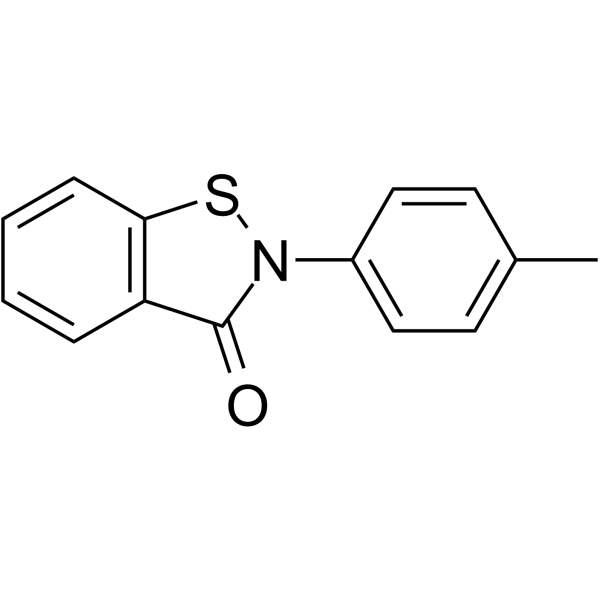
Sulfiram is a very weak aldehyde dehydrogenase (ALDH) inhibitor, with an IC50 value of 413 μM against Saccharomyces cerevisiae ALDH. As a photochemical precursor, Sulfiram undergoes photoconversion to form Disulfiram (HY-B0240), a potent ALDH inhibitor. Sulfiram inhibits the dimerization of the extracellular domain fragment (amino acid residues 230-624) of amyloid precursor protein (APP), alters the monomer-dimer equilibrium, induces conformational changes in the fragment, and enhances the production of sAPPα via α-cleavage of APP. Sulfiram can be used in research related to scabies and Alzheimer's disease .
VGB4 is a VEGF-A and VEGF-B antagonist peptide that duplicates two binding domains of VEGF-B (loop 1 and loop3) and are linked together by the receptor-binding domain of VEGF-A (loop3). VGB4 has significant anti-angiogenic and anti-tumor activities and can regulate tumor growth and metastasis through multiple mechanisms. VGB4 could be used in anti-tumor research .
Anti-Mouse/Human/Canine HER2 (domain III) Antibody (H2Mab-19) reacts with domain III of human and canine HER2. Anti-Mouse/Human/Canine HER2 (domain III) Antibody (H2Mab-19) exerts antitumor activity in mouse oral cancer xenografts. Recommend Isotype Controls: Mouse IgG2b kappa, Isotype Control (HY-P99982) .
Elipunercept is a fusion protein that combines human TNFRSF1B extracellular domain fragment (1-235) fused at the C-terminus to a human IgG1 Fc fragment. Elipunercept is an immunomodulator .
IBI-334 is a bispecific B7-H3 and EGFR antibody. IBI-334 has an EGFR arm for signal blockage and is coupled with a fine-tuned B7-H3 arm with optimal affinity and binding domain. IBI-334 shows antibody-mediated cell cytotoxicity (ADCC) effects. IBI-334 has a wide range of applications in many EGFR-driven solid tumors .
FB-825 is a human monoclonal antibody (mAb) targeting IGHE. FB-825 targets the CεmX domain of membrane IgE (mIgE), resulting in the downregulation of mIgE-positive B cells and the production of IgE. FB-825 can be used in Allergic asthma, Atopic dermatitis, Job syndrome and Allergic rhinitis research .
UCM-13369 (Compound 4b) is a NPM1 inhibitor. UCM-13369 downregulates the pathway associated with mutant NPM1 C+, and specifically recognizes the C-end DNA-binding domain of NPM1 C+. UCM-13369 induces apoptosis in AML cell lines and primary cells, that can be used for the research of AML .
Rinvatercept, a fusion protein, is a glycyl (1)-chimeric N-terminal (1-108)-peptide (2-109) combined from the sequences of the extracellular domains of the human ACVR2A/B, and is fused via a G3 peptide linker (110-112) to an immunoglobulin G1 (IgG1) Fc fragment. Rinvatercept can be used for research of neuromuscular disease .
Cyclo CRVIIF is a dual inhibitor for hypoxia inducible factor (HIF) 1 and 2, which disrupts the interaction of both HIF1-α and HIF2-α with HIF1-β, with affinity for HIF1-α and HIF2-α PAS-BdomainsKD of 65 and 123 μM, respectively .
PLK1-IN-10 (Compound 4Bb) is an orally active PLK1 PBD (polo-box domain) inhibitor. PLK1-IN-10 blocks the interaction of PLK1 with the cell division regulator protein 1 (PRC1) and decreases the protein expression of the CDK1-Cyclin B1 complex. PLK1-IN-10 reacts with glutathione (GSH) to increase cellular oxidative stress, ultimately leading to cell death .
STAT3-IN-49 (compound B16) is a potent and selective STAT3 inhibitor. STAT3-IN-49 binds to the SH2 domain of STAT3, thereby suppressing its phosphorylation and nuclear translocation. STAT3-IN-49 inhibits triple-negative breast cancer (TNBC) cell migration, invasion, and colony formation. STAT3-IN-49 inhibits tumor growth in an MDA-MB-231 xenograft mouse model. STAT3-IN-49 can be used for TNBC research .
ND-L11B is a potent degrader of nuclear receptor binding SET domain protein 2 (NSD2) and RE-IIBP, with the DC50 of 1.48 and 0.8 μM, the Dmax is closed to 80 % .
ND-L11B TFA is a potent degrader of nuclear receptor binding SET domain protein 2 (NSD2) and RE-IIBP, with the DC50 of 1.48 and 0.8 μM, the Dmax is closed to 80 % .
UHMCP1 dihydrochloride is a potent UHM domain splicing inhibitor with a Kd value of 79 μM. UHMCP1 dihydrochloride prevents the SF3b155/U2AF65 interaction. UHMCP1 dihydrochloride impacts cell viability and RNA splicing .
Tat-HA-NR2B9 contains a fragment of the cellmembrane transduction domain of HIV-1 Tat, a influenza virus hemagglutinin (HA) epitope-tag, and the C-terminal 9 amino acids of NR2B (NR2B9c). Tat-HA-NR2B9 reduces infarct size and improves neurological functions in ischemia-induced cerebral injury in the rats
GQN-B37-E is a potent selective binder and inhibitor of MCL-1. GQN-B37-E binds to the BH3-domain-binding pocket in MCL-1. GQN-B37-E exhibits binding affinity for MCL-1 at the submicromolar range (Ki = 0.6 μM) without apparent binding to BCL-2 or BCL-XL .
Ropivacaine-d7 hydrochloride is a deuterium labeled Ropivacaine (hydrochloride) (HY-B0563B) . Ropivacaine hydrochloride is a potent sodium channel blocker and blocks impulse conduction via reversible inhibition of sodium ion influx in nerve fibrese . Ropivacaine is also an inhibitor of K2P (two-pore domain potassium channel) TREK-1 with an IC50 of 402.7 μM in COS-7 cell's membrane . Ropivacaine is widely used for neuropathic pain management in vivo .
Efdelikofusp alfa is a bispecific Fc fusion protein. Efdelikofusp alfa is formed by fusing the N-terminal extracellular domain of human CD80 (B7.1) with the Fc fragment of human immunoglobulin G4 (IgG4), and is linked to an interleukin-2 variant (IL-2v) as the C-terminal part. Efdelikofusp alfa exhibits potential immunostimulatory, immune checkpoint inhibitory, and antitumor activities.
Efzilonkofusp alfa is a bispecific Fc fusion protein. Efzilonkofusp alfa is formed by fusing the N-terminal extracellular domain of human CD80 (B7.1) with the Fc fragment of human immunoglobulin G4 (IgG4), and is linked to an interleukin-2 variant (IL-2v) as the C-terminal part. Efzilonkofusp alfa exhibits potential immunostimulatory, immune checkpoint inhibitory, and antitumor activities.
μ-TRTX-Hd1a, a spider venom, is a selective NaV 1.7 inhibitor. μ-TRTX-Hd1a is a gating modifier that inhibits human NaV 1.7 by interacting with the S3b-S4 paddle motif in channel domain II .
BA6b9 is an allosteric inhibitor of SK4 channels that targets the CaM–PIP2-binding domain with a IC50 value of 8.6 µM (WT SK4). BA6b9 inhibits SK4 channels by interacting with two specific residues, Arg191 and His192 in the S4–S5 linker. BA6b9 significantly prolongs atrial and atrioventricular effective refractory period (ERP) and reduces atrial fibrillation (AF) induction in rat isolated hearts, which has the potential to be used for the research of arrhythmia .
Amodiaquine-d10 hydrochloride is deuterated labeled Amodiaquine (HY-B1322A). Amodiaquine (Amodiaquin), a 4-aminoquinoline class of antimalarial agent, is a potent and orally active histamine N-methyltransferase inhibitor. Amodiaquine is also a Nurr1 agonist and specifically binds to Nurr1-LBD (ligand binding domain) with an EC50 of ~20 μM. Anti-inflammatory effect .
Tumour-associated MUC1 epitope is a biological active peptide. (This sequence is the hallmark of MUC1 mucin. MUC1 is a highly glycosylated type I transmembrane glycoprotein with a unique extracellular domain consisting of a variable number of tandem repeats (VNTR) of this 20 amino acid peptide. It is overexpressed on the cell surface of many human adenocarcinomas and hematological malignancies, including multiple myeloma and B-cell lymphoma, making MUC1 broadly applicable target for immunotherapeutic strategies.)
FGFR4-IN-19 (compound 8B) is a potent covalent fibroblast growth factor receptor 4 (FGFR4) inhibitor (IC50=1.2 nM). FGFR4-IN-19 achieves high efficiency and isotype selectivity by covalently targeting a rare cysteine (C552) in the FGFR4 kinase domain. FGFR4-IN-19 can be used for hepatocellular carcinoma (HCC) research .
Anti-SARS-CoV-2 S protein Antibody (RBD epitope B, SARS2-34) is a mouse-derived IgG1 κ type antibody inhibitor, targeting to SARS-CoV-2 S protein. Anti-SARS-CoV-2 S protein Antibody (RBD epitope B, SARS2-34) reacts with the receptor binding domain (RBD) epitope B in the spike (S) protein of SARS-CoV-2 (Severe Acute Respiratory Syndrome Coronavirus 2). Anti-SARS-CoV-2 S protein Antibody (RBD epitope B, SARS2-34) can block the binding of the SARS-CoV-2 S protein to angiotensin-converting enzyme 2 (ACE2). Anti-SARS-CoV-2 S protein Antibody (RBD epitope B, SARS2-34) can be used for the research of SARS-CoV-2 infection .
RdRP-IN-9 (Compound 6b) is a reversible covalent allosteric inhibitor of RdRp. RdRP-IN-9 demonstrates high anti-coronavirus activity, with an EC50 value of 0.68 μM against HCoV-OC43 RdRP-IN-9 exerts a more prolonged antiviral effect by reversibly acylating Cys12 in the NiRAN domain of non-structural protein 12 (nsp 12) and exhibits synergistic anti-coronavirus activity with Molnupiravir (HY-135853) .
(-)-JJ-450 is a non-competitive antagonist targeting the androgen receptor (AR). (-)-JJ-450 is more potent than (+)-JJ-450 (HY-403733B) in inhibiting androgen-induced AR activity, and the mechanism of AR inhibition by (+)-JJ-450 is different from that of Enzalutamide (MDV3100) (HY-70003), which may target the ligand binding domain (LBD) of AR. (-)-JJ-450 inhibits the transcriptional activity of wild-type AR and mutant AR F876L by inhibiting AR nuclear translocation and promoting nuclear degradation of unbound AR. (-)-JJ-450 can be used in the study of castration-resistant prostate cancer (CRPC) resistant to Enzalutamide .
GLPG0492- 13C,d3 racemate is 13C-labeled GLPG0492 (racemate) (HY-18102B). GLPG0492 racemate is an orally active, non-steroidal selective androgen receptor modulator. GLPG0492 racemate exerts functional transactivation by binding to the ligand-binding domain of the receptor, exhibiting preferential partial agonist activity in muscle and bone tissues with low activity in reproductive tissues. GLPG0492 racemate effectively counteracts muscle atrophy-related pathways, significantly enhances muscle strength, maintains motor ability, reduces fibrosis and improves electrophysiological parameters. GLPG0492 racemate prevents immobilization-induced muscle atrophy and regulates muscle mass homeostasis, serving as a valuable tool compound for studies on Duchenne muscular dystrophy, muscle loss and various types of disuse musculoskeletal atrophy .
JMJD3/HDAC-IN-1 (compound A5b) is a dual inhibitor targeting Jumonji domain-containing protein demethylase 3 (JMJD3) and histone deacetylase (HDAC1, IC50=16 nM). JMJD3/HDAC-IN-1 promotes hypermethylation of histone H3K27 and hyperacetylation of H3K9, and also cleaves caspase-7 and PARP to induce apoptosis. JMJD3/HDAC-IN-1 effectively inhibits cancer cell cloning, migration, and invasion .
FITC-Acp-RpYTPEP-NH2 is a potent fluorescent tracer. FITC-Acp-RpYTPEP-NH2 shows a binding affinity (Kd = 0.07 μM) for the Cbl-b SH2 domain. Fluorescence polarization assay based on FITC-Acp-RpYTPEP-NH2 can be for evaluating Cbl-b SH2 domain inhibitors .
BAP2 is an allosteric protein disulfide isomerase (PDI) inhibitor with a IC50 of 0.85 μM. BAP2 binds to His256 in the b′ domain of PDI and exerts inhibitory effects through allosteric binding to the b′ domain. BAP2 upregulates GRP78. BAP2 inhibits the growth of glioblastoma cells. BAP2 can be used in studies related to glioblastoma .
H3B-616 is a selective carbamoyl phosphate synthetase 1 (CPS1) inhibitor with a human IC50 of 66 nM. H3B-616 binds to an allosteric pocket in the CPS1 integrating domain to exert target engagement and inhibit enzyme activity. H3B-616 can be used for the research of nonsmall cell lung cancer and gastric cancer .
NEURL1B-IN-1 is a molecular glue-like NEURL1B degrader with a Kd value of 46.2 nM. NEURL1B-IN-1 binds to Arg422 within the NHR2 domain of NEURL1B, triggers its autoubiquitination and proteasomal degradation, disrupts its interaction with DLL1, and attenuates the Notch signaling pathway. NEURL1B-IN-1 induces cell cycle arrest and apoptosis, and inhibits migration of hepatocellular carcinoma cells. NEURL1B-IN-1 is applicable to research related to hepatocellular carcinoma .
Anti-Mouse CXCR2 Antibody (Cx2Mab-1) reacts with mouse CXCR2 targeting the N-terminal extracellular domain of CXCR2. Recommend Isotype Controls: Rat IgG2b kappa, Isotype Control (HY-P990682).
Anti-WNV E protein DIII-LR Antibody (E16) reacts with the domain III lateral ridge (DIII-LR) of the envelope (E) protein of West Nile Virus (WNV). Anti-Mouse CD11b Antibody (5C6) protects mice from WNV infection. Recommend Isotype Controls: Mouse IgG2b kappa, Isotype Control (HY-P99982) .
BCL6-IN-12 (Compound 11e) is a BCL6 inhibitor with a Kd of 0.81 μM. BCL6-IN-12 binds to the BTB domain of BCL6. BCL6-IN-12 can be used in the research of diffuse large B-cell lymphoma .
Anti-Mouse ACKR4 Antibody (A4Mab-3) reacts with atypical chemokine receptor 4 (ACKR4). ACKR4 is a seven-transmembrane domain-containing protein that belongs to the atypical chemokine receptors (ACKRs) family. Recommend Isotype Controls: Rat IgG2b kappa, Isotype Control (HY-P990682) .
IBI-334 (FUT8-KO) is a bispecific B7-H3 and EGFR antibody that has knocked out the fucosyltransferase 8 gene (FUT8). IBI-334 (FUT8-KO) has an EGFR arm for signal blocking and is coupled with a fine-tuned B7-H3 arm with the best affinity and binding domain. IBI-334 (FUT8-KO), compared to IBI-334 (HY-P991092), has enhanced antibody-mediated cytotoxicity (ADCC) effect. IBI-334 (FUT8-KO) has wide applications in many EGFR-driven solid tumors .
PT2399 (Standard) is the analytical standard of PT2399 (HY-108697). This product is intended for research and analytical applications. PT2399 is a potent and selective HIF-2α antagonist, which directly binds to HIF-2α PAS Bdomain with an IC50 of 6 nM. PT2399 displays potent antitumor activity in vivo .
EG00229 trifluoroacetate (Standard) is the analytical standard of EG00229 (trifluoroacetate) (HY-10799). This product is intended for research and analytical applications. EG00229 is a neuropilin 1 (NRP1) receptor antagonist. EG00229 selectively inhibits VEGF-A binding to NRP1 b1 domain with an IC50 of 3 μM, but has no effect on VEGFA binding to VEGFR-1 and VEGFR-2 .
NSC 663284 (Standard) is the analytical standard of NSC 663284 (HY-100034). This product is intended for research and analytical applications. NSC 663284 (DA-3003-1) is a potent, cell-permeable, and irreversible Cdc25 dual specificity phosphatase inhibitor, has an IC50 for Cdc25B2 of 0.21 μM. NSC 663284 exhibits mixed competitive kinetics against Cdc25A, Cdc25B(2), and Cdc25C with Ki values of 29, 95, and 89 nM, respectively . NSC 663284 inhibits NSD2 (IC50 of 170 nM) through a direct interaction with the catalytic SET domain (Kd of 370 nM) .
Anti-Eastern equine encephalitis virus E2 protein Antibody (EEEV-3) reacts with the Bdomain of the E2 glycoprotein on the eastern equine encephalitis virus (EEEV). Anti-Eastern equine encephalitis virus E2 protein Antibody (EEEV-3) exhibits a modest inhibition of viral attachment to the plasma membrane of the cells. Recommend Isotype Controls: Mouse IgG2c kappa, Isotype Control (HY-P99981) .
ODZ10117 is a STAT3 and NLRP3 inhibitor with a human STAT3 SH2 domainIC50 of 7.5 μM. ODZ10117 binds to the STAT3 SH2 domain, suppressing tyrosine phosphorylation, dimerization, nuclear translocation, and transcriptional activity. ODZ10117 binds to NLRP3, impairs NEK7 interaction, prevents inflammasome formation, and inhibits caspase-1 and IL-1β cleavage.ODZ10117 reduces MSU (HY-B2130A)-induced IL-1β release, lowers LPS (HY-D1056)-induced sepsis mortality, and exhibits anti-inflammatory effects. ODZ10117 induces apoptosis, suppresses breast cancer cell migration and invasion, reduces tumor growth and lung metastasis, and extends survival in breast cancer models. ODZ10117 can be used for the research of Monosodium urate (HY-B2130A)-induced peritonitis, LPS-induced sepsis, breast cancer, glioblastoma, and Alzheimer's disease .
WX-02-43 is a weak covalent inhibitor of SF3B1, and is the (1S,3R) enantiomer of WX-02-23 (HY-168534). WX-02-43 cannot effectively covalently modify the C258 site in the DNA-binding domain of FOXA1, and its inhibitory activity against SF3B1 is also weaker than that of WX-02-23. WX-02-43 serves as a negative control probe that fails to remodel the chromatin binding pattern and transcriptional activity of FOXA1. WX-02-43 can be used in studies on cancers such as prostate cancer to verify the specific effects of WX-02-23 on FOXA1 and SF3B1 targets .
DD04107 is a neuronal exocytosis inhibitor with a rat Syt1-C2Bdomain binding Ka of 2.4 μM. DD04107 interferes with synaptobrevin-syntaxin-SNAP-25 complex formation and Syt1-SNARE complex interaction to block α-calcitonin gene-related peptide (α-CGRP) exocytotic release from primary sensory neurons. DD04107 blocks inflammatory ion channel recruitment to nociceptor plasma membranes. DD04107 can be used for the research of chronic inflammatory pain, neuropathic pain, osteosarcoma pain, chemotherapy-induced peripheral neuropathy, diabetic neuropathy, inflammatory pain .
(-)-Enitociclib (Standard) is the analytical standard of (-)-Enitociclib (HY-103019B). This product is intended for research and analytical applications. (-)-Enitociclib ((R)-Enitociclib) is an enantiomer of Enitociclib (HY-103019E) with an optical rotation of (-). Enitociclib is a selective CDK9 inhibitor and apoptosis inducer. Enitociclib inhibits CDK9 activity and reduces the phosphorylation of Ser2 in the carboxyl-terminal domain (CTD) of RNA polymerase Pol II, thereby downregulating the transcription of key oncogenes such as MYC and MCL1. Enitociclib has anti-proliferative activity targeting MYC+ lymphoma and multiple myeloma (MM) cells, and has synergistic effects with Bortezomib (HY-10227) and Lenalidomide (HY-A0003), and can be used in the research of hematological malignancies .
GyrB-IN-1 is a DNA gyrase (GyrB) inhibitor. GyrB-IN-1 shows an IC50 of 19.1 μM against Mycobacterium smegmatis GyrB ATPase activity and 21.9 μM against Mycobacterium tuberculosis GyrB DNA supercoiling activity. GyrB-IN-1 exerts antimycobacterial activity and has cytotoxicity. GyrB-IN-1 can be used for the research of tuberculosis .
L002 (Standard) is the analytical standard of L002 (HY-100671). This product is intended for research and analytical applications. L002 is a potent, cell permeable, reversible and specific acetyltransferase p300 (KAT3B) inhibitor with an IC50 of 1.98 μM . L002 binds the acetyl-CoA pocket and competitively inhibits the FATp300 catalytic domain, blocks histone acetylation and p53 acetylation, and inhibits STAT3 activation . L002 has the potential for hypertension-induced cardiac hypertrophy and fibrogenesis treatment .
HIF-2α-IN-17 is a selective hypoxia-inducible factor 2α (HIF2α) inhibitor that binds to the PAS-Bdomain of HIF2α. HIF-2α-IN-17 disrupts the interaction between HIF2α and the molecular chaperone Hsp70, leading to proteasomal degradation of HIF2α. HIF-2α-IN-17 exhibits antitumor activity and induces apoptosis in cancer cells. HIF-2α-IN-17 is applicable for research on cancers such as clear cell renal cell carcinoma .
RKER-216 is a human monoclonal IgG antibody inhibitor targeting ALK2 with a KD of 58.7 pM. RKER-216 reduces hepcidin transcription in Hep3B.RKER-216 competes with BMP ligands for binding to the extracellular domain of ALK2, thereby inhibiting BMP-SMAD signal. RKER-216 mobilizes tissue iron effectively in inflammatory conditions. RKER-216 improves microcytic anemia in a dose-dependent manner by inhibiting SMAD signaling to reduce hepcidin and promote iron absorption and utilization in vivo. RKER-216 can be used for research on anemia of inflammation .
CLH304a (compound 14) is a specific and noncompetitive GABAB receptor negative allosteric modulator (NAM). CLH304a decreases GABA-induced IP3 production with an IC50 of 37.9 μM. CLH304a has no effect on other GPCR Class C members such as mGluR1, mGluR2, and mGluR5. CLH304a acts on the heptahelical domain of GB2 subunits and non-competitively inhibits the effect of agonists with inverse agonist properties. CLH304a inhibits Baclofen (HY-B0007)-induced ERK1/2 phosphorylation in HEK293 cells overexpressing GABAB receptor .
BMS-986458 is a highly selective, orally active cereblon-based BCL6PROTAC degrader and antitumor agent. BMS-986458 selectively degrades BCL6 by binding cereblon to the BTB domain of BCL6, thereby regulating the cell cycle, antiproliferative and interferon signaling pathways, and upregulating the expression and distribution of CD20. BMS-986458 modulates the phenotype of follicular helper T cells and reduces circulating tumor DNA levels. The combination of BMS-986458 with CD20xCD3 bispecific antibody also enhances the efficiency of T cell tumor infiltration and expansion. BMS-986458 induces regression of BCL6-positive tumors and prolongs survival, and it is suitable for research related to B-cell non-Hodgkin lymphoma, diffuse large B-cell lymphoma, follicular lymphoma, and relapsed/refractory lymphoma .
NERx 329 is a replication protein A (RPA) inhibitor with an IC50 of 4.9 μM. NERx 329 blocks the interaction between RPA and single-stranded DNA, and induces functional RPA depletion, loss of single-stranded DNA gap protection, chromosome fragmentation and cell death. NERx 329 inhibits the DNA damage response signaling pathway, exhibits broad single-agent anticancer activity, and enhances the activity of DNA-damaging agents. NERx 329 can be used in research related to brca1-deficient breast cancer, non-small cell lung cancer, and brca1-deficient ovarian cancer .
Anti-Chikungunya virus E2 Antibody (CHK-265) is mouse-derived IgG2c κ type antibody inhibitor, targeting to Chikungunya virus E2. Anti-Chikungunya virus E2 Antibody (CHK-265) reacts with a conserved epitope on the Bdomain of the E2 glycoprotein of chikungunya virus. Anti-Chikungunya virus E2 Antibody (CHK-265) can block viral entry and egress. Anti-Chikungunya virus E2 Antibody (CHK-265) can be used for the research of infection, such as Chikungunya virus (CHIKV), Mayaro (MAYV) and O’nyong’nyong virus (ONNV) .
Anti-Mouse TIM-4 Antibody (RMT4-53) is a rat-derived IgG2b κ type antibody inhibitor, targeting to mouse TIM-4. Anti-Mouse TIM-4 Antibody (RMT4-53) can block T cell immunoglobulin and mucin domain 4 (TIM-4). Anti-Mouse TIM-4 Antibody (RMT4-53) can inhibit the engulfment of apoptotic cells and T cell proliferation. Anti-Mouse TIM-4 Antibody (RMT4-53) can be used for the researches of cancer, immunology and metabolic disease, such as MC38 tumor and graft .
PICK1 PDZ-IN-1 (Compound 6b) is a selective and brain-penetrant protein interacting with C kinase 1 (PICK1) PDZ domain inhibitor with a Ki of 27.73 μM. PICK1 PDZ-IN-1 can competitively inhibit the interaction between PICK1 and the GluA2 subunit of AMPA receptors. PICK1 PDZ-IN-1 can increase the survival rate of HT22 cells and primary cortical neuron cells induced by glutamate and inhibit ROS production. PICK1 PDZ-IN-1 exhibits neuroprotective effect and reduces the area of cerebral infarction. PICK1 PDZ-IN-1 can be used for the research of ischemic stroke .
rTRD01 is an orally active, specific TDP-43 binder that targets the RRM1 and RRM2domains of TDP-43. rTRD01 partially disrupts the interaction between TDP-43 and c9orf72 repeat RNA, but does not affect the binding of TDP-43 to canonical binding sequences. rTRD01 exhibits significant neuroprotective effects in zebrafish models, improves motor function and protects against paraquat (a widely used herbicide)-induced neurodegeneration, with no teratogenicity at high concentrations. rTRD01 is not a general antioxidant and cannot counteract Rotenone (HY-B1756)-induced neuronal death. rTRD01 can be used to study amyotrophic lateral sclerosis and other TDP-43 proteinopathies .
QL-1200186 is a selective, orally active, allosteric inhibitor targeting the tyrosine kinase TYK2 pseudokinase domainJH2 (IC50=0.06 nM, TYK2 JH2), with 164-fold selectivity over TYK1 JH2 (IC50=9.85 nM,TYK1 JH2). QL-1200186 first stabilizes the TYK2 JH2 conformation, inhibits the activity of the JH1 catalytic domain, and blocks the IFNα, IL-12/IL-23-mediated JAK-STAT signaling pathway. QL-1200186 can inhibit the production of Th1/Th17 cell-related cytokines (such as IFNγ, IL-23), reduce immune cell activation, and has no significant effect on JAK1/2/3 kinase activity. QL-1200186 can significantly improve skin inflammation in the Imiquimod (HY-B0180)-induced psoriasis mouse model and reduce the Psoriasis Area and Severity Index (PASI) score. QL-1200186 can be used in the study of autoimmune diseases such as psoriasis and systemic lupus erythematosus (SLE) .
PDZ1i (113B7) is a inhibitor of MDA-9/Syntenin, with selective binding to the PDZ1 domain. PDZ1i inhibits radiation-induced invasion of glioblastoma (GBM) cells, radiosensitizes GBM cells, and impairs GBM-related signaling pathways (including Src/EphA2, EGFRvIII/FAK, and NF-κB). PDZ1i reduces radiation-induced secretion of invasion-related proteases (MMP-2, MMP-9, ADAM9). PDZ1i shows anti-tumor effects in nude mice bearing intracranial U1242-luc xenografts or GBM xenografts. PDZ1i can be used for the study of glioblastoma (GBM), breast cancer and prostate cancer .
NLRP3-IN-87 is a selective and orally active NLRP3 inhibitor with a Kd of 0.23 μM. NLRP3-IN-87 binds directly to the NLRP3 NACHT domain, disrupts NLRP3-NEK7 and NLRP3-ASC interactions, inhibits ASC oligomerization, and blocks inflammasome assembly. NLRP3-IN-87 suppresses caspase-1 activation and IL-1β secretion. NLRP3-IN-87 exhibits anti-inflammatory and analgesic activity, reducing joint swelling, inflammation, and pain in an MSU (HY-B2130A)-induced acute gout mouse model. NLRP3-IN-87 can be used for the research of gout .
TST1N-224 is a potent response regulator VraRC inhibitor. TST1N-224 can disrupt VraRC-DNA complex formation (IC50=60.2 μM). TST1N-224 exhibits interference with VraRC binding to its cognate DNA through a fast-on-fast-off binding mechanism (KD=23.4 μM). TST1N-224 predominantly interacts with the α9- and α10-helixes of the DNA-binding domain of VraR. TST1N-224 inhibits the growths of S. aureus (SA; MIC>126 μM), Methicillin-resistant S. aureus (MRSA; MIC>126 μM), and Vancomycin-intermediate S. aureus (VISA; MIC=63 μM). TST1N-224, an antimicrobial agent, evidently enhances the susceptibility of VISA to both Vancomycin (HY-B0671) and Methicillin (HY-B0974) .
SH514 is an orally active IRF4 inhibitor (IC50= 2.63 μM). SH514 binds to the IRF4-DBD domain, thereby inhibiting the interaction of IRF4 protein with DNA (KD = 1.28 μM). SH514 can inhibit the proliferation of IRF4-high-expressing NCI-H929 and MM.1R cells, and displays no cytotoxicity for normal cells. SH514 significantly downregulates the expression of IRF4 downstream target genes concentration-dependently. SH514 inhibits the expression of cell cycle-related proteins CDC2, Cyclin B1, Cyclin D1, Cyclin E1, and CMYC in Multiple Myeloma cells. SH514 can induce DNA damage and increase the expression of γH2AX. SH514 effectively inhibits the proliferation of multiple myeloma tumors .
Antibacterial agent 338 (Compound 65) is an antibacterial agent and GyrB inhibitor, with an IC50 of 12.60 nM against GyrB from E. coli. Antibacterial agent 338 binds to the ATP-binding domain of E. coliGyrB, thereby inhibiting the ATPase activity of GyrB. Antibacterial agent 338 exhibits broad-spectrum antibacterial activity against multidrug-resistant Gram-negative bacteria. Antibacterial agent 338 reduces bacterial load in a neutropenic mouse thigh infection model. Antibacterial agent 338 can be used for the research of Acinetobacter baumannii infection .
HIF-2α-IN-18 is a selective HIF-2α inhibitor with a human IC50 of 8.1 nM. HIF-2α-IN-18 binds to the HIF-2α PAS-Bdomain, induces conformational perturbations at the HIF-2α/ARNT dimerization interface, destabilizes the HIF-2α/ARNT heterodimer, and blocks HIF-2α-mediated transcriptional activity. HIF-2α-IN-18 inhibits hypoxia-induced expression of HIF-2α target genes EPO and SERPINE1, without inhibiting HIF-1α target genes PGK1 and PDK1. HIF-2α-IN-18 can be used for the research of clear cell renal cell carcinoma, hepatocellular carcinoma[1].
2-Mercaptobenzothiazole is an activator of the aryl hydrocarbon receptor (AhR) , inhibiting thyroid hormone synthesis and dopamine beta-hydroxylase activity . 2-Mercaptobenzothiazole promotes bladder cancer cell invasion by altering the conformation of the AhR ligand binding domain (LBD), activating AhR transcription, and upregulating the mRNA and protein expression of target genes CYP1A1 and CYP1B1 . 2-Mercaptobenzothiazole inhibits thyroid peroxidase (TPO) with an IC50 value of 11.5 μM, induces histological changes such as follicular cell hypertrophy in Xenopus laevis tadpoles, delaying metamorphosis . 2-Mercaptobenzothiazole increases chromosomal aberrations and sister chromatid exchanges (SCEs) in Chinese hamster ovary (CHO) cells, and enhances carcinogenicity in F344/N rats . 2-Mercaptobenzothiazole inhibits norepinephrine synthesis in mice and completely blocks the conversion of exogenous dopamine to norepinephrine in rat cardiomyocytes .
Vatreptacog alfa is a recombinant hFVIIa analog, differing from native FVIIa by three amino acid substitutions (V158D, E296V and M298Q) in the protease domain. Vatreptacog alfa exhibits enhanced tissue factor-independent enzymatic activity toward activated platelets. Vatreptacog alfa can be used in the research of hemophilia .
Tat-NR2B9c (Tat-NR2Bct; NA-1) is a postsynaptic density-95 (PSD-95) inhibitor, with EC50 values of 6.7 nM and 670 nM for PSD-95d2 (PSD-95 PDZ domain 2) and PSD-95d1, respectively. Tat-NR2B9c disrupts the PSD-95/NMDAR interaction, inhibiting NR2A and NR2B binding to PSD-95 with IC50 values of 0.5 μM and 8 μM, respectively. Tat-NR2B9c also inhibits neuronal nitric oxide synthase (nNOS)/PSD-95 interaction, and possesses neuroprotective efficacy .
123B9, a tumor-homing agent, is a potent and selective EphA2 agonist with a Kd value of 4.0 μM. 123B9 selectively targets the EphA2 tyrosine kinase receptor ligand-binding domain. 123B9 does not appreciably inhibit the ligand binding domains of the most closely related EphA3 and EphA4 receptors .
cyclo(CLLFVY) is an inhibitor for hypoxia inducible factor-1 (HIF-1), with IC50 of 19 μM (in U2OS) and 16 μM (in MCF-7). cyclo(CLLFVY) binds to the PAS-Bdomain of HIF-1α, inhibits HIF-1 dimerization and transcriptional activity. cyclo(CLLFVY) downregulates the expression of hypoxia response genes, such as VEGF and CAIX, exhibits antitumor against the HIF-1 associated cancers .
Cyclo(CKLIIF) TFA is an inhibitor of HIF-1α and HIF-2α. The KD values of Cyclo(CKLIIF) TFA for the PAS-Bdomains of HIF1-α and HIF2-α are 2.6 μM and 2.2 μM, respectively. Cyclo(CKLIIF) TFA disrupts the protein-protein interaction between HIF-1α and HIF-1β. Cyclo(CKLIIF) TFA can be used in cancer research .
Caloxin 1B1 is a biological active peptide. (Caloxin 1b1 is obtained by screening for binding to extracellular domain 1 of PMCA4, which inhibited PMCA extracellularly, selectively, and had a higher affinity for PMCA4 than PMCA1. Because caloxin 1b1 had been selected to bind to an extracellular domain of PMCA, it could be added directly to cells and tissues to examine its effects on smooth muscle and endothelium.)
Tat-NR2B9c TFA (Tat-NR2Bct TFA) is a postsynaptic density-95 (PSD-95) inhibitor, with EC50 values of 6.7 nM and 670 nM for PSD-95d2 (PSD-95 PDZ domain 2) and PSD-95d1, respectively. Tat-NR2B9c TFA disrupts the PSD-95/NMDAR interaction, inhibiting NR2A and NR2B binding to PSD-95 with IC50 values of 0.5 μM and 8 μM, respectively. Tat-NR2B9c TFA also inhibits neuronal nitric oxide synthase (nNOS)/PSD-95 interaction, and possesses neuroprotective efficacy .
Cyclo CRLLIF is a dual inhibitor for hypoxia inducible factor (HIF) 1 and 2, which disrupts the interaction of both HIF1-α and HIF2-α with HIF1-β, with affinity for HIF1-α and HIF2-α PAS-BdomainsKD of 14.5 and 10.2 μM, respectively .
VGB4 is a VEGF-A and VEGF-B antagonist peptide that duplicates two binding domains of VEGF-B (loop 1 and loop3) and are linked together by the receptor-binding domain of VEGF-A (loop3). VGB4 has significant anti-angiogenic and anti-tumor activities and can regulate tumor growth and metastasis through multiple mechanisms. VGB4 could be used in anti-tumor research .
Cyclo CRVIIF is a dual inhibitor for hypoxia inducible factor (HIF) 1 and 2, which disrupts the interaction of both HIF1-α and HIF2-α with HIF1-β, with affinity for HIF1-α and HIF2-α PAS-BdomainsKD of 65 and 123 μM, respectively .
Tat-HA-NR2B9 contains a fragment of the cellmembrane transduction domain of HIV-1 Tat, a influenza virus hemagglutinin (HA) epitope-tag, and the C-terminal 9 amino acids of NR2B (NR2B9c). Tat-HA-NR2B9 reduces infarct size and improves neurological functions in ischemia-induced cerebral injury in the rats
μ-TRTX-Hd1a, a spider venom, is a selective NaV 1.7 inhibitor. μ-TRTX-Hd1a is a gating modifier that inhibits human NaV 1.7 by interacting with the S3b-S4 paddle motif in channel domain II .
Tumour-associated MUC1 epitope is a biological active peptide. (This sequence is the hallmark of MUC1 mucin. MUC1 is a highly glycosylated type I transmembrane glycoprotein with a unique extracellular domain consisting of a variable number of tandem repeats (VNTR) of this 20 amino acid peptide. It is overexpressed on the cell surface of many human adenocarcinomas and hematological malignancies, including multiple myeloma and B-cell lymphoma, making MUC1 broadly applicable target for immunotherapeutic strategies.)
FITC-Acp-RpYTPEP-NH2 is a potent fluorescent tracer. FITC-Acp-RpYTPEP-NH2 shows a binding affinity (Kd = 0.07 μM) for the Cbl-b SH2 domain. Fluorescence polarization assay based on FITC-Acp-RpYTPEP-NH2 can be for evaluating Cbl-b SH2 domain inhibitors .
DD04107 is a neuronal exocytosis inhibitor with a rat Syt1-C2Bdomain binding Ka of 2.4 μM. DD04107 interferes with synaptobrevin-syntaxin-SNAP-25 complex formation and Syt1-SNARE complex interaction to block α-calcitonin gene-related peptide (α-CGRP) exocytotic release from primary sensory neurons. DD04107 blocks inflammatory ion channel recruitment to nociceptor plasma membranes. DD04107 can be used for the research of chronic inflammatory pain, neuropathic pain, osteosarcoma pain, chemotherapy-induced peripheral neuropathy, diabetic neuropathy, inflammatory pain .
Povetacicept (ALPN-303) is an engineered Fc fusion protein containing the TACI domain, and acts as a dual APRIL/BAFF antagonist. The Kd value of Povetacicept for human BAFF is 59.3 pM, while its Kd value for human APRIL is 1.00 pM. Povetacicept reduces the activation, proliferation, differentiation and survival of B cells, and inhibits the production of immunoglobulins and autoantibodies. Povetacicept can be used in research related to autoimmune hemolytic anemia, immune thrombocytopenia, systemic lupus erythematosus, lupus nephritis and myasthenia gravis .
Anti-Mouse/Human CD44 Antibody (IM7) is an anti-huamn and mouse CD44 IgG2b monoclonal antibody that recognizes a conserved epitope outside the HA-binding domain of the CD44 molecule. Anti-Mouse/Human CD44 Antibody (IM7) exerts a potent anti-inflammatory effect by inducing the shedding of cell surface CD44, significantly improving symptoms in mice with rheumatoid arthritis without affecting relevant immune responses. Anti-Mouse/Human CD44 Antibody (IM7) can be used for researches on inflammation conditions and cancer such as arthritis and osteosarcoma .
Fiztasovimab (NPC-21; EV2038) is a fully human IgG1λ mAb against human cytomegalovirus (hCMV). Fiztasovimab acts neutralizing activity by binding to the antigenic domain 1 of glycoprotein B on hCMV envelope. Fiztasovimab inhibits cell-to-cell transmission of hCMV .
Bemarituzumab (FUT8-KO) is an anti-FGFR2b monoclonal antibody expressed by CHO cells with the fucosyltransferase 8 gene (FUT8) knocked out. Fucose deficiency enhances the ADCC effect of the antibody. Bemarituzumab (FUT8-KO) lacks a core fucose in the polysaccharide portion of the Fc domain of the antibody, and results in a high affinity to human FcγRIIIa .
OM-7D3-B3 is an antibody-based antiviral agent targeting the tight junction protein CLDN1 (Kd=4 nM). By binding to the first extracellular domain of CLDN1, OM-7D3-B3 disrupts the formation of the CLDN1-CD81 co-receptor complex, thereby effectively inhibiting the entry of hepatitis C virus (HCV). OM-7D3-B3 not only prevents de novo and chronic HCV infections in humanized liver chimeric mice and uPA-SCID mice transplanted with human livers, but also exhibits favorable safety with no toxic effects observed. OM-7D3-B3 serves as a critical tool for research on HCV infection mechanisms and antiviral drug development .
Anti-Chikungunya virus E2 Antibody (CHK-265) is mouse-derived IgG2c κ type antibody inhibitor, targeting to Chikungunya virus E2. Anti-Chikungunya virus E2 Antibody (CHK-265) reacts with a conserved epitope on the Bdomain of the E2 glycoprotein of chikungunya virus. Anti-Chikungunya virus E2 Antibody (CHK-265) can block viral entry and egress. Anti-Chikungunya virus E2 Antibody (CHK-265) can be used for the research of infection, such as Chikungunya virus (CHIKV), Mayaro (MAYV) and O’nyong’nyong virus (ONNV) .
Imdevimab (REGN10987) is a human monoclonal antibody that targets SARS-CoV-2 virus. Imdevimab can be used in combination with Casirivimab (HY-P99341) to reduce viral load and transiently increases anti-receptor-binding domain IgG titers. Imdevimab maintains most of its neutralization activity against viruses with B.1.1.7, B.1.351 and mink cluster 5 spike proteins .
Anti-Mouse PD-L1/B7-H1 Antibody (10F.9G2-Mouse IgG1) is a recombinant chimeric version of the original 10F.9G2 antibody (HY-P99145). The variable domain sequences are identical to the original 10F.9G2 but the constant region sequences have been switched from rat IgG2b to mouse IgG1. Anti-Mouse PD-L1/B7-H1 Antibody (10F.9G2-Mouse IgG1) contains no Fc mutations just as the original rat IgG2b antibody does not. Anti-Mouse PD-L1/B7-H1 Antibody (10F.9G2-Mouse IgG1) blocks PD-1 signaling. Anti-Mouse PD-L1/B7-H1 Antibody (10F.9G2-Mouse IgG1) can be used for the research of cancer.
Conbercept (KH902) is a recombinant fusion protein composed of VEGFR-1 (second domain) and VEGFR-2 (third and fourth domains) regions fused to human IgG1 Fc. Conbercept is a VEGF inhibitor (IC50 = 8.8 pM) and is a soluble receptor decoy that blocks all isoforms of VEGF-A (Kd = 0.5 pM), VEGF-B (Kd = 8 pM), VEGF-C, and PlGF (Kd = 5 pM). Conbercept has anti-inflammatory effects, can lower the levels of VEGF, TNF-α and IL-6, and reduce the infiltration of inflammatory cells. Conbercept decreases tumor growth in several oncology studies. Conbercept can be used for various eye diseases such as polypoidal choroidal vasculopathy (PCV), diabetic macular edema (DME) and pathologic myopia choroidal neovascularization (pmCNV) .
Anti-Mouse PD-L1/B7-H1 (D265A) Antibody (10F.9G2) is a recombinant chimeric version of the original 10F.9G2 antibody (HY-P99145). The variable domain sequences are identical to the original 10F.9G2 but the constant region sequences have been switched from rat IgG2b to mouse IgG1. Anti-Mouse PD-L1/B7-H1 (D265A) Antibody (10F.9G2) contains a D265A mutation in the Fc fragment rendering it unable to bind to endogenous Fcγ receptors. Anti-Mouse PD-L1/B7-H1 (D265A) Antibody (10F.9G2) blocks PD-1 signaling. Anti-Mouse PD-L1/B7-H1 (D265A) Antibody (10F.9G2) can be used for the research of cancer.
Anti-Mouse PD-L1/B7-H1 (LALA-PG) Antibody (10F.9G2) is a recombinant chimeric version of the original 10F.9G2 antibody (HY-P99145). The variable domain sequences are identical to the original 10F.9G2 but the constant region sequences have been switched from rat IgG2b to mouse IgG2a. Anti-Mouse PD-L1/B7-H1 (LALA-PG) Antibody (10F.9G2) contains a LALA-PG mutation in the Fc fragment rendering it unable to bind to endogenous Fcγ receptors. Anti-Mouse PD-L1/B7-H1 (LALA-PG) Antibody (10F.9G2) blocks PD-1 signaling. Anti-Mouse PD-L1/B7-H1 (LALA-PG) Antibody (10F.9G2) can be used for the research of cancer.
Efanesoctocog alfa is a Bdomain-deleted single-chain Factor VIII (FVIII) connected to D'D3 domain of von Willebrand Factor (vWF). Efanesoctocog alfa has an extended half-life. Efanesoctocog alfa can be used for the study of inherited hemophilia A .
Anti-Mouse CLEC9A/CD370 Antibody (7H11) is a rat-derived IgG1 κ type antibody inhibitor, targeting to mouse CLEC9A/CD370. Anti-Mouse CLEC9A/CD370 Antibody (7H11) reacts with mouse CLEC9A (C-type lectin domain family member 9A) and blocks CLEC9A. Anti-Mouse CLEC9A/CD370 Antibody (7H11) can be used for the researches of cancer and immunology, such as B16.F10-OVA tumor .
Anti-Mouse TIM-4 Antibody (RMT4-53) is a rat-derived IgG2b κ type antibody inhibitor, targeting to mouse TIM-4. Anti-Mouse TIM-4 Antibody (RMT4-53) can block T cell immunoglobulin and mucin domain 4 (TIM-4). Anti-Mouse TIM-4 Antibody (RMT4-53) can inhibit the engulfment of apoptotic cells and T cell proliferation. Anti-Mouse TIM-4 Antibody (RMT4-53) can be used for the researches of cancer, immunology and metabolic disease, such as MC38 tumor and graft .
Briobacept (BR 3FC) is a recombinant glucoprotein, consists of 2 molecules from the BLyS receptor (BR3)and a Fc domain of human IgG1. Briobacept selectively targets to BLyS (BAFF), induces B cells apoptosis. Briobacept can be used in studies of rheumatoid arthritis (RA) .
Anti-Mouse/Human/Canine HER2 (domain III) Antibody (H2Mab-19) reacts with domain III of human and canine HER2. Anti-Mouse/Human/Canine HER2 (domain III) Antibody (H2Mab-19) exerts antitumor activity in mouse oral cancer xenografts. Recommend Isotype Controls: Mouse IgG2b kappa, Isotype Control (HY-P99982) .
Elipunercept is a fusion protein that combines human TNFRSF1B extracellular domain fragment (1-235) fused at the C-terminus to a human IgG1 Fc fragment. Elipunercept is an immunomodulator .
IBI-334 is a bispecific B7-H3 and EGFR antibody. IBI-334 has an EGFR arm for signal blockage and is coupled with a fine-tuned B7-H3 arm with optimal affinity and binding domain. IBI-334 shows antibody-mediated cell cytotoxicity (ADCC) effects. IBI-334 has a wide range of applications in many EGFR-driven solid tumors .
FB-825 is a human monoclonal antibody (mAb) targeting IGHE. FB-825 targets the CεmX domain of membrane IgE (mIgE), resulting in the downregulation of mIgE-positive B cells and the production of IgE. FB-825 can be used in Allergic asthma, Atopic dermatitis, Job syndrome and Allergic rhinitis research .
Rinvatercept, a fusion protein, is a glycyl (1)-chimeric N-terminal (1-108)-peptide (2-109) combined from the sequences of the extracellular domains of the human ACVR2A/B, and is fused via a G3 peptide linker (110-112) to an immunoglobulin G1 (IgG1) Fc fragment. Rinvatercept can be used for research of neuromuscular disease .
Efdelikofusp alfa is a bispecific Fc fusion protein. Efdelikofusp alfa is formed by fusing the N-terminal extracellular domain of human CD80 (B7.1) with the Fc fragment of human immunoglobulin G4 (IgG4), and is linked to an interleukin-2 variant (IL-2v) as the C-terminal part. Efdelikofusp alfa exhibits potential immunostimulatory, immune checkpoint inhibitory, and antitumor activities.
Efzilonkofusp alfa is a bispecific Fc fusion protein. Efzilonkofusp alfa is formed by fusing the N-terminal extracellular domain of human CD80 (B7.1) with the Fc fragment of human immunoglobulin G4 (IgG4), and is linked to an interleukin-2 variant (IL-2v) as the C-terminal part. Efzilonkofusp alfa exhibits potential immunostimulatory, immune checkpoint inhibitory, and antitumor activities.
Anti-SARS-CoV-2 S protein Antibody (RBD epitope B, SARS2-34) is a mouse-derived IgG1 κ type antibody inhibitor, targeting to SARS-CoV-2 S protein. Anti-SARS-CoV-2 S protein Antibody (RBD epitope B, SARS2-34) reacts with the receptor binding domain (RBD) epitope B in the spike (S) protein of SARS-CoV-2 (Severe Acute Respiratory Syndrome Coronavirus 2). Anti-SARS-CoV-2 S protein Antibody (RBD epitope B, SARS2-34) can block the binding of the SARS-CoV-2 S protein to angiotensin-converting enzyme 2 (ACE2). Anti-SARS-CoV-2 S protein Antibody (RBD epitope B, SARS2-34) can be used for the research of SARS-CoV-2 infection .
Anti-Mouse CXCR2 Antibody (Cx2Mab-1) reacts with mouse CXCR2 targeting the N-terminal extracellular domain of CXCR2. Recommend Isotype Controls: Rat IgG2b kappa, Isotype Control (HY-P990682).
Anti-WNV E protein DIII-LR Antibody (E16) reacts with the domain III lateral ridge (DIII-LR) of the envelope (E) protein of West Nile Virus (WNV). Anti-Mouse CD11b Antibody (5C6) protects mice from WNV infection. Recommend Isotype Controls: Mouse IgG2b kappa, Isotype Control (HY-P99982) .
Anti-Mouse ACKR4 Antibody (A4Mab-3) reacts with atypical chemokine receptor 4 (ACKR4). ACKR4 is a seven-transmembrane domain-containing protein that belongs to the atypical chemokine receptors (ACKRs) family. Recommend Isotype Controls: Rat IgG2b kappa, Isotype Control (HY-P990682) .
IBI-334 (FUT8-KO) is a bispecific B7-H3 and EGFR antibody that has knocked out the fucosyltransferase 8 gene (FUT8). IBI-334 (FUT8-KO) has an EGFR arm for signal blocking and is coupled with a fine-tuned B7-H3 arm with the best affinity and binding domain. IBI-334 (FUT8-KO), compared to IBI-334 (HY-P991092), has enhanced antibody-mediated cytotoxicity (ADCC) effect. IBI-334 (FUT8-KO) has wide applications in many EGFR-driven solid tumors .
Anti-Eastern equine encephalitis virus E2 protein Antibody (EEEV-3) reacts with the Bdomain of the E2 glycoprotein on the eastern equine encephalitis virus (EEEV). Anti-Eastern equine encephalitis virus E2 protein Antibody (EEEV-3) exhibits a modest inhibition of viral attachment to the plasma membrane of the cells. Recommend Isotype Controls: Mouse IgG2c kappa, Isotype Control (HY-P99981) .
RKER-216 is a human monoclonal IgG antibody inhibitor targeting ALK2 with a KD of 58.7 pM. RKER-216 reduces hepcidin transcription in Hep3B.RKER-216 competes with BMP ligands for binding to the extracellular domain of ALK2, thereby inhibiting BMP-SMAD signal. RKER-216 mobilizes tissue iron effectively in inflammatory conditions. RKER-216 improves microcytic anemia in a dose-dependent manner by inhibiting SMAD signaling to reduce hepcidin and promote iron absorption and utilization in vivo. RKER-216 can be used for research on anemia of inflammation .
Vatreptacog alfa is a recombinant hFVIIa analog, differing from native FVIIa by three amino acid substitutions (V158D, E296V and M298Q) in the protease domain. Vatreptacog alfa exhibits enhanced tissue factor-independent enzymatic activity toward activated platelets. Vatreptacog alfa can be used in the research of hemophilia .
2-Mercaptobenzothiazole is an activator of the aryl hydrocarbon receptor (AhR) , inhibiting thyroid hormone synthesis and dopamine beta-hydroxylase activity . 2-Mercaptobenzothiazole promotes bladder cancer cell invasion by altering the conformation of the AhR ligand binding domain (LBD), activating AhR transcription, and upregulating the mRNA and protein expression of target genes CYP1A1 and CYP1B1 . 2-Mercaptobenzothiazole inhibits thyroid peroxidase (TPO) with an IC50 value of 11.5 μM, induces histological changes such as follicular cell hypertrophy in Xenopus laevis tadpoles, delaying metamorphosis . 2-Mercaptobenzothiazole increases chromosomal aberrations and sister chromatid exchanges (SCEs) in Chinese hamster ovary (CHO) cells, and enhances carcinogenicity in F344/N rats . 2-Mercaptobenzothiazole inhibits norepinephrine synthesis in mice and completely blocks the conversion of exogenous dopamine to norepinephrine in rat cardiomyocytes .
Isocryptotanshinone is a dual STAT3 and PTP1B (IC50 = 56.1 μM) inhibitor. Isocryptotanshinone inhibits STAT3 by binding to the STAT3 SH2 domain to block phosphorylation and nuclear translocation [1][2]. Isocryptotanshinone exerts its anti-proliferative effect via the induction of cell cycle arrest, apoptosis, and pro-death autophagy, through the regulation of STAT3, AKT/mTOR and MAPK signaling pathways. Isocryptotanshinone suppresses the xenograft gastric cancer (GC) tumor growth in BALB/c nude mice. Isocryptotanshinone can be used for cancer research, such as lung cancer, breast cancer and GC .
KDM3B protein is a histone demethylase that mainly targets "Lys-9" of histone H3, catalyzes demethylation and produces formaldehyde and succinic acid by-products. In addition to histone modifications, KDM3B has been implicated in tumor suppressor activity, indicating its importance in cellular processes, gene expression regulation, and epigenetic modifications. KDM3B Protein, Human (Myc, His-SUMO) is the recombinant human-derived KDM3B protein, expressed by E. coli , with C-Myc, N-SUMO, N-His labeled tag.
KDM6B protein is a histone demethylase targeting "Lys-27" of histone H3, which mainly affects the histone code. Demethylates H3 "Lys-27" to shape the epigenetic landscape. KDM6B Protein, Human (sf9) is the recombinant human-derived KDM6B protein, expressed by sf9 insect cells , with tag free.
The OTUD7B protein acts as a negative regulator to inhibit the non-canonical NF-kappa-B pathway by deubiquitinating TRAF3, thereby inhibiting B cell responses. It prevents degradation of “Lys-48”-linked polyubiquitin chains on TRAF3 during atypical NF-kappa-B stimulation, avoiding overactivation of the pathway and affecting mucosal immunity. OTUD7B Protein, Human (sf9) is the recombinant human-derived OTUD7B protein, expressed by sf9 insect cells , with tag free.
The OTUD7B protein acts as a negative regulator to inhibit the non-canonical NF-kappa-B pathway by deubiquitinating TRAF3, thereby inhibiting B cell responses. It prevents degradation of “Lys-48”-linked polyubiquitin chains on TRAF3 during atypical NF-kappa-B stimulation, avoiding overactivation of the pathway and affecting mucosal immunity. OTUD7B Protein, Human (sf9, His, Strep) is the recombinant human-derived OTUD7B protein, expressed by sf9 insect cells , with N-Strep, N-8*His labeled tag.
KDM6B protein is a histone demethylase targeting "Lys-27" of histone H3, which mainly affects the histone code. Demethylates H3 "Lys-27" to shape the epigenetic landscape. KDM6B Protein, Human (sf9, His) is the recombinant human-derived KDM6B protein, expressed by sf9 insect cells , with N-8*His labeled tag.
ABHD14B Protein, identified as an atypical protein-lysine deacetylase, catalyzes lysine deacetylation using CoA as a substrate in vitro, generating acetyl-CoA and free amine. Although confirmation of in vivo deacetylase activity is needed, ABHD14B also exhibits hydrolase activity toward various p-nitrophenyl substrates. It may potentially activate transcription. ABHD14B Protein, Human (His) is the recombinant human-derived ABHD14B protein, expressed by E. coli , with N-6*His labeled tag.
UBASH3B/STS1 protein blocks CBL-mediated down-regulation and degradation of receptor-type tyrosine kinases, leading to the accumulation of activating receptors such as T cell receptors and EGFR on the cell surface. It exhibits tyrosine phosphatase activity against substrates such as EGFR, FAK, SYK and ZAP70. UBASH3B/STS1 Protein, Human (His) is the recombinant human-derived UBASH3B/STS1 protein, expressed by E. coli , with N-His labeled tag.
The CLEC1B/CLEC-2 protein serves as a platelet receptor for PDPN. When activated, it signals through SRC and SYK kinases, activating PLCG2. CLEC1B forms homodimers and interacts with RACK1, promoting its ubiquitination and degradation. It also interacts with SYK and PDPN, independently of glycosylation, activating CLEC1B/CLEC-2. CLEC1B/CLEC-2 Protein, Mouse (HEK293, Fc) is the recombinant mouse-derived CLEC1B/CLEC-2 protein, expressed by HEK293 , with N-hFc labeled tag.
CLEC1B/CLEC-2 protein is a C-type lectin-like receptor that acts as a platelet receptor and snake venom protein receptor for PDPN in microbial infections. Upon activation, it initiates a signaling cascade involving SRC and SYK kinases, leading to PLCG2 activation. CLEC1B/CLEC-2 Protein, Human (HEK293, His) is the recombinant human-derived CLEC1B/CLEC-2, expressed by HEK293, with N-10*His labeled tag.
CLEC1B/CLEC-2 protein is a C-type lectin-like receptor that acts as a platelet receptor and snake venom protein receptor for PDPN in microbial infections. Upon activation, it initiates a signaling cascade involving SRC and SYK kinases, leading to PLCG2 activation. CLEC1B/CLEC-2 Protein, Human (HEK293, His, solution) is the recombinant human-derived CLEC1B/CLEC-2 protein, expressed by HEK293 , with N-His labeled tag.
RPRD1B, is a necessary scaffolding protein that maintains genetic integrity by regulating resolution of R-loops at both the transcription termination and DNA double-strand break (DSB) repair levels. In endometrial cancers, RPRD1B accelerates cell cycle through up-regulating Cyclin D1, CDK4, and CDK6. In addition, RPRD1B enhancse transcription of CCND1 and promotes cell proliferation by interacting with RNA polymerase II. RPRD1B enhances the β-Catenin·TCF4 transcriptional activity in response to Wnt signaling. RPRD1B Protein, Human (HEK293, N-His) is the recombinant human-derived RPRD1B protein, expressed by HEK293 , with N-6*His labeled tag.
Tetranectin/CLEC3B protein exhibits binding to plasminogen and isolated kringle 4, suggesting potential roles in exocytosis-related molecule packaging and ocular physiology. Its homotrimeric structure emphasizes a propensity for trimeric complexes, highlighting the multifaceted nature of Tetranectin/CLEC3B in diverse molecular interactions and cellular processes. Tetranectin/CLEC3B Protein, Human (HEK293, His) is the recombinant human-derived Tetranectin/CLEC3B protein, expressed by HEK293 , with C-6*His labeled tag.
The B7-H4 protein acts as a negative regulator and inhibits T cell-mediated immune responses, including activation, proliferation, cytokine production, and cytotoxicity. Significant significance can be observed when expressed on tumor macrophages, cooperating with regulatory T cells (Tregs) to suppress tumor-associated antigen-specific T cell immunity. B7-H4 Protein, Mouse (HEK293, His) is the recombinant mouse-derived B7-H4 protein, expressed by HEK293 , with C-His labeled tag.
The B7-H4 protein acts as a negative regulator, inhibiting T cell-mediated immune responses, including activation, proliferation, cytokine production, and cytotoxicity. When expressed on tumor macrophages, it cooperates with regulatory T cells to suppress tumor-associated antigen-specific T cell immunity. B7-H4 Protein, Human (HEK293, His) is the recombinant human-derived B7-H4 protein, expressed by HEK293 , with C-His labeled tag.
The B7-H4 protein acts as a negative regulator, inhibiting T cell activation, proliferation, cytokine production, and cytotoxicity. When expressed on tumor macrophages, it cooperates with regulatory T cells (Tregs) to suppress tumor-associated antigen-specific T cell immunity and create an immunosuppressive microenvironment. B7-H4 Protein, Rat (HEK293, His) is the recombinant rat-derived B7-H4 protein, expressed by HEK293 , with C-His labeled tag.
KBTBD11 Protein, Human (sf9, His, Strep) is the recombinant human-derived KBTBD11 protein, expressed by sf9 insect cells, with N-Strep, N-8*His labeled tag.
Tetranectin/CLEC3B protein exhibits binding to plasminogen and isolated kringle 4, suggesting potential roles in exocytosis-related molecule packaging and ocular physiology.Its homotrimeric structure emphasizes a propensity for trimeric complexes, highlighting the multifaceted nature of Tetranectin/CLEC3B in diverse molecular interactions and cellular processes.Tetranectin/CLEC3B Protein, Mouse (HEK293, His) is the recombinant mouse-derived Tetranectin/CLEC3B protein, expressed by HEK293 , with C-His labeled tag.
The B7-H4 protein acts as a negative regulator, inhibiting T cell-mediated immune responses, including activation, proliferation, cytokine production, and cytotoxicity. When expressed on tumor macrophages, it cooperates with regulatory T cells to suppress tumor-associated antigen-specific T cell immunity. B7-H4 Protein, Human (HEK293, His, solution) is the recombinant human-derived B7-H4 protein, expressed by HEK293 , with C-His labeled tag.
The B7-H4 protein acts as a negative regulator, inhibiting T cell-mediated immune responses, including activation, proliferation, cytokine production, and cytotoxicity. When expressed on tumor macrophages, it cooperates with regulatory T cells to suppress tumor-associated antigen-specific T cell immunity. B7-H4 Protein, Human (Biotinylated, HEK293, His) is the recombinant human-derived B7-H4 protein, expressed by HEK293 , with C-His labeled tag.
The EIF3M protein is a component of the eIF-3 complex and promotes protein synthesis initiation (eg, mRNA recruitment, scanning, and ribosomal subunit attachment) (PubMed:17403899, PubMed:25849773). EIF3M Protein, Human (His-SUMO) is the recombinant human-derived EIF3M protein, expressed by E. coli , with N-His, N-SUMO labeled tag.
The B7-H4 protein acts as a negative regulator and inhibits T cell-mediated immune responses, including activation, proliferation, cytokine production, and cytotoxicity. Significant significance can be observed when expressed on tumor macrophages, cooperating with regulatory T cells (Tregs) to suppress tumor-associated antigen-specific T cell immunity. Azide-labeled B7-H4 Protein, Mouse (HEK293, His) is the recombinant mouse-derived Azide-labeled B7-H4 protein, expressed by HEK293, with C-His labeled tag.
ZBTB7B; Zinc finger and BTB domain-containing protein 7B; Krueppel-related zinc finger protein cKrox; hcKrox; T-helper-inducing POZ/Krueppel-like factor; Zinc finger and BTB domain-containing protein 15; Zinc finger protein 67 homolog; Zfp-67; Zinc finger protein 857B; Zinc finger protein Th-POK
The ZBTB7B protein is a transcriptional regulator that determines the lineage commitment of T cell precursors, which is critical for the fate of CD4 and CD8 cells. Essential for CD4 commitment, its absence results in CD8 commitment. ZBTB7B Protein, Human (sf9) is the recombinant human-derived ZBTB7B protein, expressed by sf9 insect cells , with tag free.
B7-H4 Protein, Mouse (HEK293, Fc) may participate in negative regulation of cell-mediated immunity in peripheral tissues. Cell-associated B7-H4 could also inhibit T cell response. B7-H4 acts as a morphogenic factor for cancer cells.
The B7-H4 protein acts as a negative regulator, inhibiting T cell-mediated immune responses, including activation, proliferation, cytokine production, and cytotoxicity. When expressed on tumor macrophages, it cooperates with regulatory T cells to suppress tumor-associated antigen-specific T cell immunity. B7-H4 Protein, Human (Biotinylated, HEK293, Fc-Avi) is the recombinant human-derived B7-H4 protein, expressed by HEK293 , with C-Avi, C-hFc labeled tag.
ZBTB7B; Zinc finger and BTB domain-containing protein 7B; Krueppel-related zinc finger protein cKrox; hcKrox; T-helper-inducing POZ/Krueppel-like factor; Zinc finger and BTB domain-containing protein 15; Zinc finger protein 67 homolog; Zfp-67; Zinc finger protein 857B; Zinc finger protein Th-POK
The ZBTB7B protein is a transcriptional regulator that determines the lineage commitment of T cell precursors, which is critical for the fate of CD4 and CD8 cells. Essential for CD4 commitment, its absence results in CD8 commitment. ZBTB7B Protein, Human (sf9, His, Strep) is the recombinant human-derived ZBTB7B protein, expressed by sf9 insect cells , with N-Strep, N-8*His labeled tag.
B7-H4 Protein, Human (HEK293, Fc) may participate in negative regulation of cell-mediated immunity in peripheral tissues. Cell-associated B7-H4 could also inhibit T cell response. B7-H4 acts as a morphogenic factor for cancer cells.
B7-H4 Protein, Rhesus macaque (HEK293, His) may participate in negative regulation of cell-mediated immunity in peripheral tissues. Cell-associated B7-H4 could also inhibit T cell response. B7-H4 acts as a morphogenic factor for cancer cells.
B7-H4 Protein, Rhesus macaque (HEK293, Fc) may participate in negative regulation of cell-mediated immunity in peripheral tissues. Cell-associated B7-H4 could also inhibit T cell response. B7-H4 acts as a morphogenic factor for cancer cells.
The DDR2 protein is a tyrosine kinase and cell surface receptor for fibrillar collagen that critically regulates cell differentiation, extracellular matrix remodeling, migration, and proliferation.DDR2 is crucial for bone development.It affects osteoblast differentiation and chondrocyte maturation through the MAP kinase signaling pathway and activates the transcription factor RUNX2.DDR2 Protein, Mouse (HEK293, His) is the recombinant mouse-derived DDR2 protein, expressed by HEK293 , with C-6*His labeled tag.
The DDR2 protein is a tyrosine kinase critical in tissue remodeling, acting as a cell surface receptor for fibrillar collagen and affecting cell differentiation, extracellular matrix remodeling, migration, and proliferation. DDR2 is critical for bone development and centrally regulates osteoblast differentiation and chondrocyte maturation through MAP kinase signaling and activation of RUNX2. DDR2 Protein, Rat (HEK293, His) is the recombinant rat-derived DDR2 protein, expressed by HEK293 , with C-His labeled tag.
The DDR2 protein is a tyrosine kinase critical in tissue remodeling, acting as a cell surface receptor for fibrillar collagen and affecting cell differentiation, extracellular matrix remodeling, migration, and proliferation. DDR2 is critical for bone development and centrally regulates osteoblast differentiation and chondrocyte maturation through MAP kinase signaling and activation of RUNX2. DDR2 Protein, Human (HEK293, His) is the recombinant human-derived DDR2 protein, expressed by HEK293 , with C-His labeled tag.
The DDR2 protein is a tyrosine kinase critical in tissue remodeling, acting as a cell surface receptor for fibrillar collagen and affecting cell differentiation, extracellular matrix remodeling, migration, and proliferation. DDR2 is critical for bone development and centrally regulates osteoblast differentiation and chondrocyte maturation through MAP kinase signaling and activation of RUNX2. DDR2 Protein, Rat (HEK293, hFc) is the recombinant rat-derived DDR2 protein, expressed by HEK293 , with C-hFc labeled tag.
The DDR2 protein is a tyrosine kinase critical in tissue remodeling, acting as a cell surface receptor for fibrillar collagen and affecting cell differentiation, extracellular matrix remodeling, migration, and proliferation. DDR2 is critical for bone development and centrally regulates osteoblast differentiation and chondrocyte maturation through MAP kinase signaling and activation of RUNX2. DDR2 Protein, Human (HEK293, Fc) is the recombinant human-derived DDR2 protein, expressed by HEK293 , with C-hFc labeled tag.
The DDR2 protein is a tyrosine kinase critical in tissue remodeling, acting as a cell surface receptor for fibrillar collagen and affecting cell differentiation, extracellular matrix remodeling, migration, and proliferation. DDR2 is critical for bone development and centrally regulates osteoblast differentiation and chondrocyte maturation through MAP kinase signaling and activation of RUNX2. DDR2 Protein, Rhesus Macaque (HEK293, His) is the recombinant Rhesus Macaque-derived DDR2 protein, expressed by HEK293 , with C-His labeled tag.
The DDR2 protein is a tyrosine kinase critical in tissue remodeling, acting as a cell surface receptor for fibrillar collagen and affecting cell differentiation, extracellular matrix remodeling, migration, and proliferation. DDR2 is critical for bone development and centrally regulates osteoblast differentiation and chondrocyte maturation through MAP kinase signaling and activation of RUNX2. DDR2 Protein, Rhesus Macaque (HEK293, Fc) is the recombinant Rhesus Macaque-derived DDR2 protein, expressed by HEK293 , with C-hFc labeled tag.
The DDR2 protein is a tyrosine kinase critical in tissue remodeling, acting as a cell surface receptor for fibrillar collagen and affecting cell differentiation, extracellular matrix remodeling, migration, and proliferation. DDR2 is critical for bone development and centrally regulates osteoblast differentiation and chondrocyte maturation through MAP kinase signaling and activation of RUNX2. DDR2 Protein, Human (sf9, GST) is the recombinant human-derived DDR2, expressed by Sf9 insect cells, with GST labeled tag. The total length of DDR2 Protein, Human (sf9, GST) is 434 a.a..
The PLBD2 protein is a putative phospholipase that may participate in cellular processes by interacting with IGF2R. Although the function and mechanism of the enzyme are unclear, its association with IGF2R suggests involvement in the insulin-like growth factor 2 receptor-related signaling pathway. PLBD2 Protein, Rat (His-SUMO) is the recombinant rat-derived PLBD2 protein, expressed by E. coli , with N-His, N-SUMO labeled tag.
The DDR2 protein is a tyrosine kinase critical in tissue remodeling, acting as a cell surface receptor for fibrillar collagen and affecting cell differentiation, extracellular matrix remodeling, migration, and proliferation. DDR2 is critical for bone development and centrally regulates osteoblast differentiation and chondrocyte maturation through MAP kinase signaling and activation of RUNX2. DDR2 Protein, Human (sf9, His-GST) is the recombinant human-derived DDR2 protein, expressed by Sf9 insect cells , with N-His, N-GST labeled tag.
ADAM17/TACE Protein, a pivotal enzyme, cleaves TNF-alpha and activates various cell-surface proteins like p75 TNF-receptor. It also mediates the cleavage of Notch, activates the Notch pathway, and contributes to hemostasis by shedding GP1BA. ADAM17/TACE further facilitates the cleavage of LAG3, IL6R, and FCGR3A, showcasing its significance in diverse cellular functions. ADAM17/TACE Protein, Rat (HEK293, His) is the recombinant rat-derived ADAM17/TACE protein, expressed by HEK293 , with C-10*His labeled tag.
VISTA/B7-H5 Protein is a type I transmembrane protein expressed primarily in white blood cells that inhibits T cell function. VISTA/B7-H5 Protein promotes embryonic stem cell differentiation by inhibiting BMP4 signaling and stimulates MMP14 mediated MMP2 activation. VISTA/B7-H5 Protein is highly expressed in tumors. VISTA/B7-H5 Protein, Mouse (159a.a, HEK293, His) is the recombinant mouse-derived VISTA/B7-H5 protein, expressed by HEK293 , with C-6*His labeled tag.
B Cell Maturation Antigen (BCMA) also referred to as TNFRSF17 or CD269, is a transmembrane glycoprotein member of the tumor necrosis factor receptor (TNFR) superfamily. BCMA is used as a biomarker for Multiple myeloma (MM). BCMA mainly plays an important role in B cells for their proliferation, survival and also differentiates them into plasma cells. BCMA/TNFRSF17 Protein, Cynomolgus (HEK293, Fc) is a recombinant protein with a C-Terminal Fc label, It consists of 53 amino acids (M1-A53) and is produced in HEK293 cells.
The RNF216 protein accepts ubiquitin from specific enzymes and transfers it to the substrate, promoting its ubiquitination. It has antiviral activity, inhibits TNF- and IL-1-mediated NF-kappa-B activation, and promotes TNF- and RIP-mediated apoptosis. RNF216 Protein, Human is the recombinant human-derived RNF216 protein, expressed by E. coli , with tag free.
The RNF216 protein accepts ubiquitin from specific enzymes and transfers it to the substrate, promoting its ubiquitination. It has antiviral activity, inhibits TNF- and IL-1-mediated NF-kappa-B activation, and promotes TNF- and RIP-mediated apoptosis. RNF216 Protein, Human (His) is the recombinant human-derived RNF216 protein, expressed by E. coli , with N-6*His labeled tag.
Ropivacaine-d7 hydrochloride is a deuterium labeled Ropivacaine (hydrochloride) (HY-B0563B) . Ropivacaine hydrochloride is a potent sodium channel blocker and blocks impulse conduction via reversible inhibition of sodium ion influx in nerve fibrese . Ropivacaine is also an inhibitor of K2P (two-pore domain potassium channel) TREK-1 with an IC50 of 402.7 μM in COS-7 cell's membrane . Ropivacaine is widely used for neuropathic pain management in vivo .
Amodiaquine-d10 hydrochloride is deuterated labeled Amodiaquine (HY-B1322A). Amodiaquine (Amodiaquin), a 4-aminoquinoline class of antimalarial agent, is a potent and orally active histamine N-methyltransferase inhibitor. Amodiaquine is also a Nurr1 agonist and specifically binds to Nurr1-LBD (ligand binding domain) with an EC50 of ~20 μM. Anti-inflammatory effect .
GLPG0492- 13C,d3 racemate is 13C-labeled GLPG0492 (racemate) (HY-18102B). GLPG0492 racemate is an orally active, non-steroidal selective androgen receptor modulator. GLPG0492 racemate exerts functional transactivation by binding to the ligand-binding domain of the receptor, exhibiting preferential partial agonist activity in muscle and bone tissues with low activity in reproductive tissues. GLPG0492 racemate effectively counteracts muscle atrophy-related pathways, significantly enhances muscle strength, maintains motor ability, reduces fibrosis and improves electrophysiological parameters. GLPG0492 racemate prevents immobilization-induced muscle atrophy and regulates muscle mass homeostasis, serving as a valuable tool compound for studies on Duchenne muscular dystrophy, muscle loss and various types of disuse musculoskeletal atrophy .
Histone methyltransferase SMYD2; HSKM B; HSKM-B; HSKMB; KMT3C; Lysine N-methyltransferase 3C; MGC119305; N lysine methyltransferase SMYD2; N-lysine methyltransferase SMYD2; SET and MYND domain containing 2; SET and MYND domain containing protein 2; SET and MYND domain-containing protein 2; Smyd2; SMYD2_HUMAN; Zinc finger MYND domain containing 14; ZMYND14.
WB, IHC-P, IF-Tissue
Human, Mouse
SMYD2 Antibody is a Rabbit-derived and non-conjugated polyclonal antibody, targeting to SMYD2.
BOP; CD8 beta opposite; CD8b opposite; Histone lysine N methyltransferase SMYD1; KMT3D; SET and MYND domain-containing protein 1; SMYD1; SMYD1_HUMAN; Zinc finger MYND domain containing 18; ZMYND18; ZMYND22; zinc finger, MYND domain containing 18.
WB
Rat
SMYD1 Antibody (YA5193) is a Mouse-derived and non-conjugated monoclonal antibody, targeting to SMYD1.
Basic domain helix loop helix protein class B 1 antibody; Basic helix loop helix protein class B 1 antibody; BHLHB antibody; bHLHB1 antibody; bHLHe19 antibody; Class B basic helix loop helix protein 1 antibody; Class B basic helix-loop-helix protein 1 antibody; class E basic helix loop helix protein 19 antibody; Class E basic helix-loop-helix protein 19 antibody; Human protein kinase C binding protein RACK17 antibody; Basic domain helix loop helix protein class B 1 antibody; Basic helix loop helix protein class B 1 antibody
WB, IHC-P, IHC-F, ICC/IF, IF-Tissue, mIHC
Human, Mouse, Rat, Monkey, Pig
Olig2 Antibody(YA6613) is a Rabbit-derived and non-conjugated IgG monoclonal antibody, targeting to Olig2.
Basic domain helix loop helix protein class B 1; Basic helix loop helix protein class B 1; BHLHB; bHLHB1; bHLHe19; Class B basic helix loop helix protein 1; Class B basic helix-loop-helix protein 1; class E basic helix loop helix protein 19
WB
Human, Mouse, Rat
Olig2 Antibody (YA1012) is a Mouse-derived and non-conjugated IgG1 monoclonal antibody, targeting to Olig2.
Basic domain helix loop helix protein class B 1; Basic helix loop helix protein class B 1; BHLHB; bHLHB1; bHLHe19; Class B basic helix loop helix protein 1; Class B basic helix-loop-helix protein 1; class E basic helix loop helix protein 19
WB, IHC-P
Human, Mouse, Rat
Olig2 Antibody (YA1013) is a Rabbit-derived and non-conjugated IgG monoclonal antibody, targeting to Olig2.
B cell Oct binding protein 1; B cell specific coactivator OBF 1; B cell specific coactivator OBF1; B-cell-specific coactivator OBF-1; BOB 1; BOB-1; OBF 1; OBF1; OBF1_HUMAN; OCA B; OCA-B; OCAB; OCT binding factor 1; OCT-binding factor 1; POU class 2 associating factor 1; POU domain class 2 associating factor 1; POU domain class 2-associating factor 1; Pou2af1
IHC-P, WB, ICC/IF, ELISA
Human, Mouse
BOB1 Antibody (YA5521) is a Mouse-derived and non-conjugated IgG2a monoclonal antibody, targeting to BOB1.
"Basic helix loop helix domain containing class B protein 7 antibody; Basic helix-loop-helix domain-containing protein, class B, 7 antibody; bHLHB7 antibody; bHLHe20 antibody; Class B basic helix loop helix protein 7 antibody; Class B basic helix-loop-helix protein 7 antibody; Class E basic helix loop helix protein 20 antibody; Class E basic helix-loop-helix protein 20 antibody; Olig3 antibody; OLIG3_HUMAN antibody; "Basic helix loop helix domain containing class B protein 7 antibody; Basic helix-loop-helix domain-containing protein, class B, 7 antibody; bHLHB7 antibody; bHLHe20 antibody; Class B basic helix loop helix protein 7 antibody; Class B basic helix-loop-helix protein 7 antibody; Class E basic helix loop helix protein 20 antibody; Class E basic helix-loop-helix protein 20 antibody; Olig3 antibody; OLIG3_HUMAN antibody; Oligo3 antibody; Oligodendrocyte lineage transcription factor 3 antibody; Oligodendrocyte specific bHLH transcription factor 3 antibody; Oligodendrocyte transcription factor 3 antibody; "
WB, ICC/IF, IHC-P
Human, Mouse
Olig3 Antibody (YA6692) is a Rabbit-derived and non-conjugated IgG monoclonal antibody, targeting to Olig3.
Fas like protein; Apoptosis inducing protein TRICK2A/2B; Apoptosis inducing receptor TRAIL R2; CD 262; CD262; CD262 antigen; Cytotoxic TRAIL receptor 2; Death domain containing receptor for TRAIL/Apo 2L; Death domain containing receptor for TRAIL/Apo2L; D
WB, ICC/IF
Human, Mouse
DR5 Antibody (YA660) is a Mouse-derived and non-conjugated IgG1 monoclonal antibody, targeting to DR5.
Fas like protein; Apoptosis inducing protein TRICK2A/2B; Apoptosis inducing receptor TRAIL R2; CD 262; CD262; CD262 antigen; Cytotoxic TRAIL receptor 2; Death domain containing receptor for TRAIL/Apo 2L; Death domain containing receptor for TRAIL/Apo2L; D
WB, ICC/IF
Human, Mouse
DR5 Antibody (YA660) is a Mouse-derived and non-conjugated IgG1 monoclonal antibody, targeting to DR5.
Basic domain helix loop helix protein class B 1; Basic helix loop helix protein class B 1; BHLHB; bHLHB1; bHLHe19; Class B basic helix loop helix protein 1; Class B basic helix-loop-helix protein 1; class E basic helix loop helix protein 19; Class E basic helix-loop-helix protein 19; Human protein kinase C binding protein RACK17; Olig2; OLIG2_HUMAN; Oligo2; Oligodendrocyte lineage transcription factor 2; Oligodendrocyte specific bHLH transcription factor 2; Oligodendrocyte transcription factor 2; OTTHUMP00000067569; OTTHUMP00000067570; PRKCBP2; Protein kinase C binding protein 2; Protein kinase C binding protein RACK17; Protein kinase C-binding protein 2; Protein kinase C-binding protein RACK17; RACK17.
WB, ICC/IF, ELISA
Human, Mouse
Olig2 Antibody (YA5279) is a Mouse-derived and non-conjugated IgG monoclonal antibody, targeting to Olig2.
Cancer/testis antigen 98; CT98; DKFZp686F1078; hKOC; IF2B3_HUMAN; IGF II mRNA binding protein 3; IGF-II mRNA-binding protein 3; IGF2 mRNA binding protein 3; IGF2 mRNA-binding protein 3; IGF2BP3; IMP 3; IMP-3; Insulin like growth factor 2 mRNA binding protein 3; Insulin-like growth factor 2 mRNA-binding protein 3; KH domain containing protein overexpressed in cancer; KH domain-containing protein overexpressed in cancer; KOC 1; KOC1; VICKZ 3; VICKZ family member 3; VICKZ3.
IHC-P, WB, ICC/IF, ELISA
Human, Mouse
IMP3 Antibody (YA5275) is a Mouse-derived and non-conjugated IgG monoclonal antibody, targeting to IMP3.
(5)
Product Comparison
Compare
Clear All
Compare Products
Products
In-stock
-
+
Add to Cart
Cat. No.
Host
Reactivity
Application
Dilution Ratio
Molecular Weight
Conjugation
Clonality
Immunogen
Appearance
Isotype
Gene ID
SwissProt ID
Purity
Formulation
Free Sample
YesNo
Size
* This product has been "discontinued".
Optimized version of product available:
/
In-stock
-
+
Add to Cart
Get quote
Inquiry Online
Your information is safe with us. * Required Fields.
Western blot analysis of extracts from THP-1(lane 2(20μg), Jurkat (lane 3(20μg) and NIH3T3(lane 4(20μg) using FOXO1A (HY-P80132) Rabbit mAb. Proteins were transferred
to a PVDF membrane and blocked with 5% non-fat milk in TBST for 2 hour at room temperature. The primary antibody (1/1000) and Loading control antibody (Beta Actin, HY-P80438, 1/10000) was
used in 5% non-fat milk in TBST at 4°C overnight. Goat Anti-Mouse/Rabbit IgG-HRP Secondary Antibody (1/10000) was used for 1 hour at room temperature.
Western blot analysis of extracts from THP-1(lane 2(20μg), Jurkat (lane 3(20μg) and NIH3T3(lane 4(20μg) using FOXO1A (HY-P80132) Rabbit mAb. Proteins were transferred
to a PVDF membrane and blocked with 5% non-fat milk in TBST for 2 hour at room temperature. The primary antibody (1/1000) and Loading control antibody (Beta Actin, HY-P80438, 1/10000) was
used in 5% non-fat milk in TBST at 4°C overnight. Goat Anti-Mouse/Rabbit IgG-HRP Secondary Antibody (1/10000) was used for 1 hour at room temperature.
Western blot analysis of extracts from THP-1(lane 2(20μg), Jurkat (lane 3(20μg) and NIH3T3(lane 4(20μg) using FOXO1A (HY-P80132) Rabbit mAb. Proteins were transferred
to a PVDF membrane and blocked with 5% non-fat milk in TBST for 2 hour at room temperature. The primary antibody (1/1000) and Loading control antibody (Beta Actin, HY-P80438, 1/10000) was
used in 5% non-fat milk in TBST at 4°C overnight. Goat Anti-Mouse/Rabbit IgG-HRP Secondary Antibody (1/10000) was used for 1 hour at room temperature.
Western blot analysis of extracts from THP-1(lane 2(20μg), Jurkat (lane 3(20μg) and NIH3T3(lane 4(20μg) using FOXO1A (HY-P80132) Rabbit mAb. Proteins were transferred
to a PVDF membrane and blocked with 5% non-fat milk in TBST for 2 hour at room temperature. The primary antibody (1/1000) and Loading control antibody (Beta Actin, HY-P80438, 1/10000) was
MedchemExpress Validation 03
Western blot analysis of extracts from THP-1(lane 2(20μg), Jurkat (lane 3(20μg) and NIH3T3(lane 4(20μg) using FOXO1A (HY-P80132) Rabbit mAb. Proteins were transferred
MedchemExpress Validation 04
Western blot analysis of extracts from THP-1(lane 2(20μg), Jurkat (lane 3(20μg) and NIH3T3(lane 4(20μg) using FOXO1A (HY-P80132) Rabbit mAb. Proteins were transferred
to a PVDF membrane and blocked with 5% non-fat milk in TBST for 2 hour at room temperature. The primary antibody (1/1000) and Loading control antibody (Beta Actin, HY-P80438, 1/10000) was
used in 5% non-fat milk in TBST at 4°C overnight. Goat Anti-Mouse/Rabbit IgG-HRP Secondary Antibody (1/10000) was used for 1 hour at room temperature.
MedchemExpress Validation
Western blot analysis of extracts from THP-1(lane 2(20μg), Jurkat (lane 3(20μg) and NIH3T3(lane 4(20μg) using FOXO1A (HY-P80132) Rabbit mAb. Proteins were transferred
to a PVDF membrane and blocked with 5% non-fat milk in TBST for 2 hour at room temperature. The primary antibody (1/1000) and Loading control antibody (Beta Actin, HY-P80438, 1/10000) was
used in 5% non-fat milk in TBST at 4°C overnight. Goat Anti-Mouse/Rabbit IgG-HRP Secondary Antibody (1/10000) was used for 1 hour at room temperature.
Western blot analysis of extracts from THP-1(lane 2(20μg), Jurkat (lane 3(20μg) and NIH3T3(lane 4(20μg) using FOXO1A (HY-P80132) Rabbit mAb. Proteins were transferred
to a PVDF membrane and blocked with 5% non-fat milk in TBST for 2 hour at room temperature. The primary antibody (1/1000) and Loading control antibody (Beta Actin, HY-P80438, 1/10000) was
used in 5% non-fat milk in TBST at 4°C overnight. Goat Anti-Mouse/Rabbit IgG-HRP Secondary Antibody (1/10000) was used for 1 hour at room temperature.
MedchemExpress Validation
Western blot analysis of extracts from THP-1(lane 2(20μg), Jurkat (lane 3(20μg) and NIH3T3(lane 4(20μg) using FOXO1A (HY-P80132) Rabbit mAb. Proteins were transferred
to a PVDF membrane and blocked with 5% non-fat milk in TBST for 2 hour at room temperature. The primary antibody (1/1000) and Loading control antibody (Beta Actin, HY-P80438, 1/10000) was
used in 5% non-fat milk in TBST at 4°C overnight. Goat Anti-Mouse/Rabbit IgG-HRP Secondary Antibody (1/10000) was used for 1 hour at room temperature.
MedchemExpress Validation
Western blot analysis of extracts from THP-1(lane 2(20μg), Jurkat (lane 3(20μg) and NIH3T3(lane 4(20μg) using FOXO1A (HY-P80132) Rabbit mAb. Proteins were transferred
to a PVDF membrane and blocked with 5% non-fat milk in TBST for 2 hour at room temperature. The primary antibody (1/1000) and Loading control antibody (Beta Actin, HY-P80438, 1/10000) was
used in 5% non-fat milk in TBST at 4°C overnight. Goat Anti-Mouse/Rabbit IgG-HRP Secondary Antibody (1/10000) was used for 1 hour at room temperature.
MedchemExpress Validation
Western blot analysis of extracts from THP-1(lane 2(20μg), Jurkat (lane 3(20μg) and NIH3T3(lane 4(20μg) using FOXO1A (HY-P80132) Rabbit mAb. Proteins were transferred
to a PVDF membrane and blocked with 5% non-fat milk in TBST for 2 hour at room temperature. The primary antibody (1/1000) and Loading control antibody (Beta Actin, HY-P80438, 1/10000) was
used in 5% non-fat milk in TBST at 4°C overnight. Goat Anti-Mouse/Rabbit IgG-HRP Secondary Antibody (1/10000) was used for 1 hour at room temperature.
MedchemExpress Validation
Western blot analysis of extracts from THP-1(lane 2(20μg), Jurkat (lane 3(20μg) and NIH3T3(lane 4(20μg) using FOXO1A (HY-P80132) Rabbit mAb. Proteins were transferred
to a PVDF membrane and blocked with 5% non-fat milk in TBST for 2 hour at room temperature. The primary antibody (1/1000) and Loading control antibody (Beta Actin, HY-P80438, 1/10000) was
used in 5% non-fat milk in TBST at 4°C overnight. Goat Anti-Mouse/Rabbit IgG-HRP Secondary Antibody (1/10000) was used for 1 hour at room temperature.
MedchemExpress Validation
Western blot analysis of extracts from THP-1(lane 2(20μg), Jurkat (lane 3(20μg) and NIH3T3(lane 4(20μg) using FOXO1A (HY-P80132) Rabbit mAb. Proteins were transferred
to a PVDF membrane and blocked with 5% non-fat milk in TBST for 2 hour at room temperature. The primary antibody (1/1000) and Loading control antibody (Beta Actin, HY-P80438, 1/10000) was
used in 5% non-fat milk in TBST at 4°C overnight. Goat Anti-Mouse/Rabbit IgG-HRP Secondary Antibody (1/10000) was used for 1 hour at room temperature.
MedchemExpress Validation
Western blot analysis of extracts from THP-1(lane 2(20μg), Jurkat (lane 3(20μg) and NIH3T3(lane 4(20μg) using FOXO1A (HY-P80132) Rabbit mAb. Proteins were transferred
to a PVDF membrane and blocked with 5% non-fat milk in TBST for 2 hour at room temperature. The primary antibody (1/1000) and Loading control antibody (Beta Actin, HY-P80438, 1/10000) was
used in 5% non-fat milk in TBST at 4°C overnight. Goat Anti-Mouse/Rabbit IgG-HRP Secondary Antibody (1/10000) was used for 1 hour at room temperature.
MedChemExpress values your privacy and your trust is important to us. We use cookies to enhance your website experience. Some cookies are necessary to run the website.
Privacy and Cookie Policy

