



SDCBP
Syntenin Syndecan Binding Protein (SDCBP)/MDA-9
Melanoma differentiation associated gene-9 (mda-9), also known as Syntenin-1 or Syndecan Binding Protein (SDCBP) or Pro-TGF-α Cytoplasmic Domain-Interacting Protein. Structurally, MDA-9/Syntenin has four domains, i.e., N-terminal or NTD (1-109 aa), two tandem PDZ domains, PDZ1 and PDZ2 (amino acid 110-193 and amino acid 194-273, respectively) and a short carboxyl-terminal domain (CTD). Biologically, the function of PDZ domains are better described as compared to the roles of the NTD and CTD domains with respect to cancer metastasis[1]. Preferential elevated expression of mda-9/Syntenin is evident in histologically distinct tumors and contributes to several steps in the metastatic process. These include tumor cell invasion and migration, induction of angiogenesis through secretion of proangiogenic factors, enhancement of epithelial–mesenchymal transition (EMT), regulation of the expression of integrins affecting cell-adhesion processes, exosome biogenesis and exosome-mediated signaling in cell–cell communication, and recently immune-modulation suppressing host-immune surveillance[2].
参考文献:
- [1]. Das SK, et al. MDA-9/Syntenin (SDCBP): Novel gene and therapeutic target for cancer metastasis. Pharmacol Res. 2020 May;155:104695. [Content Brief]
- [2]. Anjan K Pradhan, et al. Pharmacological inhibition of MDA-9/Syntenin blocks breast cancer metastasis through suppression of IL-1β. Proc Natl Acad Sci U S A. 2021 May 25;118(21):e2103180118. [Content Brief]
All Product Categories
-
SDCBP 関連製品 (5)
関連製品 (5)

-
PDZ1i
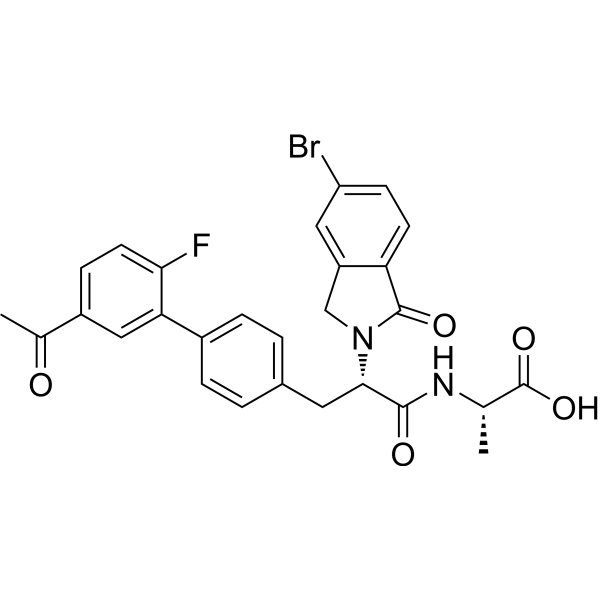
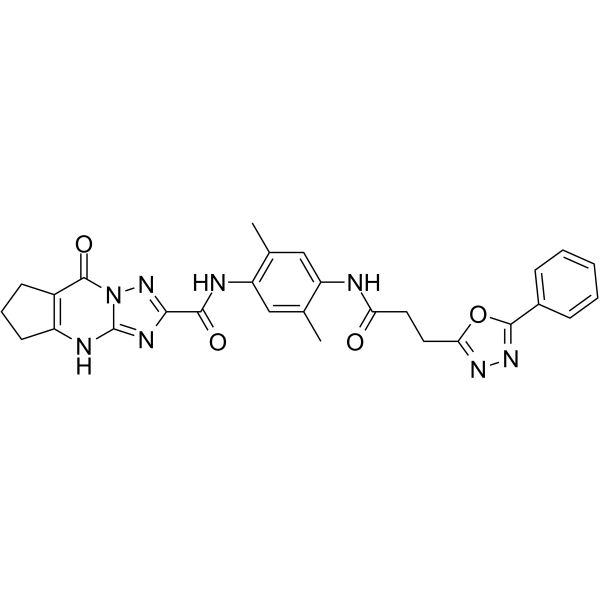 0 Images別名: 113B7PDZ1i (113B7) is a inhibitor of MDA-9/Syntenin, with selective binding to the PDZ1 domain. PDZ1i inhibits radiation-induced invasion of glioblastoma (GBM) cells, radiosensitizes GBM cells, and impairs GBM-related signaling pathways (including Src/EphA2, EGFRvIII/FAK, and NF-κB). PDZ1i reduces radiation-induced secretion of invasion-related proteases (MMP-2, MMP-9, ADAM9). PDZ1i shows anti-tumor effects in nude mice bearing intracranial U1242-luc xenografts or GBM xenografts. PDZ1i can be used for the study of glioblastoma (GBM), breast cancer and prostate cancer.
-
IVMT-Rx-3
 0 Images製品番号: HY-156247
-
KSL 128114
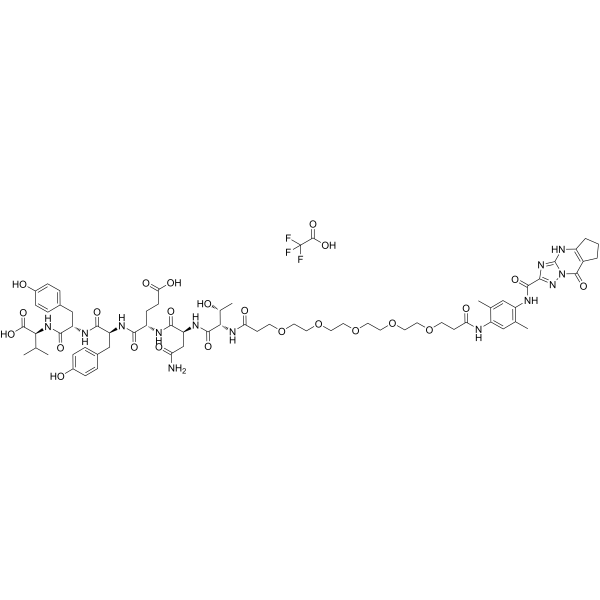
 0 Images製品番号: HY-P10331CAS 番号: 2757292-12-7KSL 128114, a peptide inhibitor of syntenin, binds the PDZ1 domain of syntenin with nanomolar affinity. KSL 128114 is resistant toward degradation in human plasma and mouse hepatic microsomes and displays a global PDZ domain selectivity for syntenin.
-
AG73
 0 Images製品番号: HY-P11777CAS 番号: 170655-66-0AG73 is a polypeptide. AG73 is derived from the G domain of the Laminin α1 chain. AG73 binds heparin, Syndecan-1 and Syndecan-4. AG73 promotes the adhesion of various cells, induces the differentiation of salivary gland acinar cells, stimulates neurite outgrowth, secretion of matrix metalloproteinases and angiogenesis. AG73 retains its angiogenic activity when conjugated to chitosan membranes. AG73 can be used in the research of melanoma and ischemic injury.



