From 11:00 pm to 12:00 pm EST ( 8:00 pm to 9:00 pm PST ) on January 6th, the website will be under maintenance. We are sorry for the inconvenience. Please arrange your schedule properly.
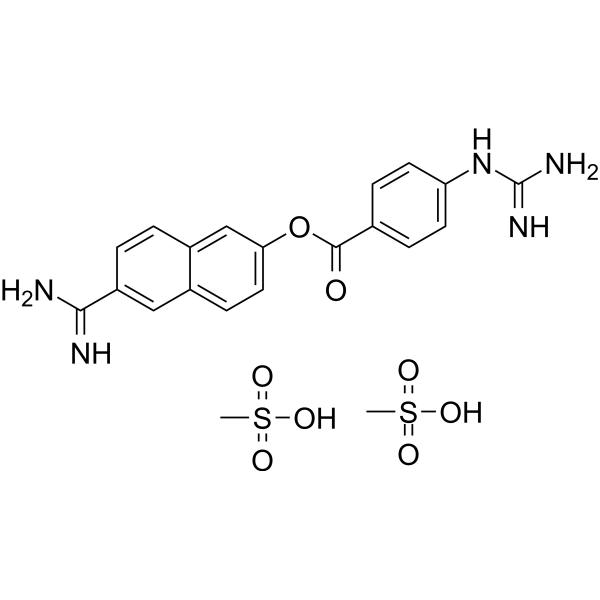
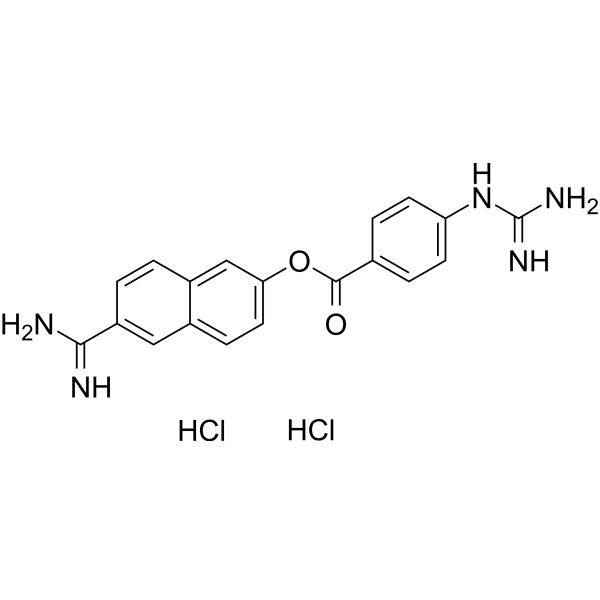
Nafamostat mesylate (FUT-175), an anticoagulant, is a synthetic serine protease inhibitor. Nafamostat mesylate has anticancer and antivirus effect. Nafamostat mesylate induce apoptosis by up-regulating the expression of tumor necrosis factor receptor-1 (TNFR1). Nafamostat mesylate can be used in the development of the pathological thickening of the arterial wall .
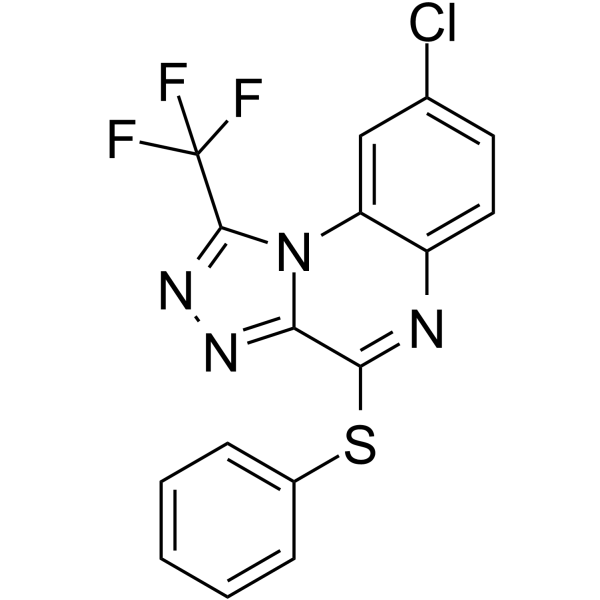
SMTIN-T140 (compound 6a) is a potent TRAP1 (tumor-necrosis-factor-receptor associated protein 1) inhibitor, with an IC50 of 1.646 μM. SMTIN-T140 shows anticancer activity. SMTIN-T140 leads to mitochondrial dysfunction, increases mitochondrial ROS production and activates AMPK. SMTIN-T140 potently suppressed tumor growth without any noticeable in vivo toxicity in a mouse model xenografted with PC3 prostate cancer cells .
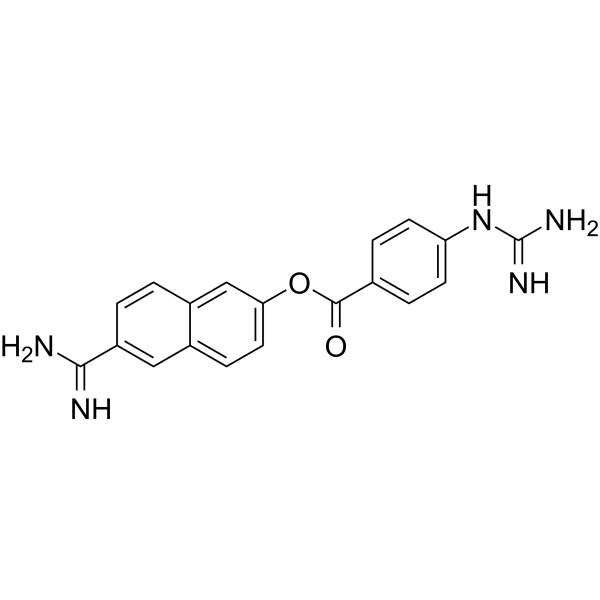
Nafamostat, an anticoagulant, is a synthetic serine protease inhibitor. Nafamostat has anticancer and antivirus effect. Nafamostat induce apoptosis by up-regulating the expression of tumor necrosis factor receptor-1 (TNFR1). Nafamostat can be used in the development of the pathological thickening of the arterial wall .
BMS-986156 is a fully humanized IgG1 agonist monoclonal antibody agonist corticosteroid-induced tumor necrosis factor receptor-related protein (GITR). BMS-986156 binds to GITR and promotes activation of T effector cells and inactivates T regulatory cells. BMS-986156 is indicated for use in advanced solid tumor studies .
Nafamostat (mesylate) (Standard) is the analytical standard of Nafamostat (mesylate). This product is intended for research and analytical applications. Nafamostat mesylate (FUT-175), an anticoagulant, is a synthetic serine protease inhibitor. Nafamostat mesylate has anticancer and antivirus effect. Nafamostat mesylate induce apoptosis by up-regulating the expression of tumor necrosis factor receptor-1 (TNFR1). Nafamostat mesylate can be used in the development of the pathological thickening of the arterial wall .
Opamtistomig is a humanized immunoglobulin (H-γ1-scFv-L-κ) dimer monoclonal antibody targeting human programmed death ligand 1 (PD-L1), CD274 and tumor necrosis factor receptor superfamily member 9 (TNFRSF9). Opamtistomig is promising for research of various solid tumors and hematological malignancies .
Cenzestotug is a monoclonal antibody targeting human tumor necrosis factor receptor superfamily member 4 (TNFRSF4). Cenzestotug activates relevant immune cells by binding to TNFRSF4, exerting immunostimulatory and antitumor activities. Cenzestotug is promising for research of cancer immunotherapy .
Nafamostat hydrochloride, an anticoagulant, is a synthetic serine protease inhibitor. Nafamostat hydrochloride has anticancer and antivirus effect. Nafamostat hydrochloride induces apoptosis by up-regulating the expression of tumor necrosis factor receptor-1 (TNFR1). Nafamostat hydrochloride can be used in the development of the pathological thickening of the arterial wall .
Human LTBR mRNA encodes the human lymphotoxin beta receptor (LTBR) protein, a member of the tumor necrosis factor receptor superfamily. LTBR plays a role in signalling during the development of lymphoid and other organs, lipid metabolism, immune response, and programmed cell death.
BCMA CAR mRNA can express the CAR protein targeting human BCMA. BCMA CAR mRNA can trigger the transient expression of CAR, enabling T cells to be targeted without the need for permanent genetic modification. BCMA is a member of the tumor necrosis factor receptor superfamily 17 (TNFRSF17), also known as B-cell maturation antigen (CD269), which promotes B-cell survival and plays a role in regulating humoral immunity. BCMA is highly expressed in multiple myeloma and is a biomarker for the diagnosis of multiple myeloma.
REGN6569 is a fully human IgG1 monoclonal antibody targeting glucocorticoid-induced tumor necrosis factor receptor-related protein (GITR) with high specificity for GITR. REGN6569 exerts stronger in vitro antibody-dependent cell-mediated cytotoxicity (ADCC) against regulatory T cells expressing GITR. REGN6569 selectively depletes regulatory T cells via antibody-dependent cell-mediated cytotoxicity and increases the proportion of proliferative natural killer (NK) cells in peripheral blood. REGN6569 is applicable for advanced solid malignancies. Isotype control: HY-P99001 .
BMS-986156 is a fully humanized IgG1 agonist monoclonal antibody agonist corticosteroid-induced tumor necrosis factor receptor-related protein (GITR). BMS-986156 binds to GITR and promotes activation of T effector cells and inactivates T regulatory cells. BMS-986156 is indicated for use in advanced solid tumor studies .
Opamtistomig is a humanized immunoglobulin (H-γ1-scFv-L-κ) dimer monoclonal antibody targeting human programmed death ligand 1 (PD-L1), CD274 and tumor necrosis factor receptor superfamily member 9 (TNFRSF9). Opamtistomig is promising for research of various solid tumors and hematological malignancies .
Cenzestotug is a monoclonal antibody targeting human tumor necrosis factor receptor superfamily member 4 (TNFRSF4). Cenzestotug activates relevant immune cells by binding to TNFRSF4, exerting immunostimulatory and antitumor activities. Cenzestotug is promising for research of cancer immunotherapy .
REGN6569 is a fully human IgG1 monoclonal antibody targeting glucocorticoid-induced tumor necrosis factor receptor-related protein (GITR) with high specificity for GITR. REGN6569 exerts stronger in vitro antibody-dependent cell-mediated cytotoxicity (ADCC) against regulatory T cells expressing GITR. REGN6569 selectively depletes regulatory T cells via antibody-dependent cell-mediated cytotoxicity and increases the proportion of proliferative natural killer (NK) cells in peripheral blood. REGN6569 is applicable for advanced solid malignancies. Isotype control: HY-P99001 .
TNFRSF1A (TNF RI) protein has a high ability to
bind with tumor necrosis factor-alpha (TNF-α). TNFRSF1A is a STAT3 target gene
that regulates the NF-κB pathway. TNFRSF1A activate NF-κB, mediate apoptosis,
and function as a regulator of inflammation. TNF RI/TNFRSF1A Protein, Human (His) is
expressed by E. coli with a 6*His tag at the N-terminus.
TNFRII (TNFRSF1B) protein has a high ability to bind with tumor necrosis factor-alpha (TNF-α). TNFRII has pro-apoptotic function. TNFRII recruits TRAF2, induces gene expression and intensively crosstalks with TNF-R1. TNFRII selectively enhances the induction of apoptosis by the death receptor TNFRI. TNFRII Protein, Human (174a.a, HEK293, His) is expressed by HEK293 and has a transmembrane region (K288-S461) with 6*His tag at the C-terminus.
TNFRSF3/LTBR Protein, Human (HEK293, Fc) is a cell surface receptor for apoptotic and cytokine-released lymphotoxins involved in activation of gene transcription programs and cell death, and is important in immune development and host defense. TNFRSF3/LTBR Protein, Human (HEK293, Fc) is expressed by HEK293 cells and is a transmembrane protein (L228-W248) with a Fc tag at the C-terminus.
TNFRII (TNFRSF1B) protein has a high ability to bind with tumor necrosis factor-alpha (TNF-α). TNFRII has pro-apoptotic function. TNFRII recruits TRAF2, induces gene expression and intensively crosstalks with TNF-R1. TNFRII selectively enhances the induction of apoptosis by the death receptor TNFRI. TNF RII/TNFRSF1B Protein, Human (183a.a, HEK293, mFc) is expressed by HEK293 and has a transmembrane region (P24-T206) with mFc tag at the C-terminus.
TNFRSF3/LTBR Protein, Human (HEK293, His) is a cell surface receptor for apoptotic and cytokine-released lymphotoxins involved in activation of gene transcription programs and cell death, and is important in immune development and host defense. TNFRSF3/LTBR Protein, Human (HEK293, His) is expressed by HEK293 cells and is a transmembrane protein (L228-W248) with a His tag at the C-terminus.
EDAR Protein, a receptor for EDA isoform A1, activates NF-kappa-B and JNK signaling pathways upon binding, eliciting diverse cellular responses. It may also contribute to caspase-independent cell death. EDAR forms a complex with EDARADD and associates with signaling molecules like TRAF1, TRAF2, TRAF3, and NIK, highlighting its participation in intricate signaling cascades. EDAR Protein, Human (HEK293, His) is the recombinant human-derived EDAR protein, expressed by HEK293 , with C-His labeled tag.
EDAR Protein is a typical Tumor Necrosis Factor receptor (TNFR) family member. EDAR is a receptor for EDA isoform A1. Its binding results in recruitment of the intracellular EDAR-associated death domain (EDARADD) adapter protein and simultaneous activation of NF-kappa-B and JNK signaling pathways, potentially leading to various cellular responses. Additionally, EDAR may play a role in promoting caspase-independent cell death. EDAR Protein, Rat (HEK293, Fc) is the recombinant rat-derived EDAR protein, expressed by HEK293 , with C-hFc labeled tag.
EDAR Protein, a receptor for EDA isoform A1, activates NF-kappa-B and JNK signaling pathways upon binding, eliciting diverse cellular responses. It may also contribute to caspase-independent cell death. EDAR forms a complex with EDARADD and associates with signaling molecules like TRAF1, TRAF2, TRAF3, and NIK, highlighting its participation in intricate signaling cascades. EDAR Protein, Human (HEK293, Fc) is the recombinant human-derived EDAR protein, expressed by HEK293 , with C-hFc labeled tag.
EDAR Protein, a receptor for EDA isoform A1, activates NF-kappa-B and JNK signaling pathways upon binding, eliciting diverse cellular responses. It may also contribute to caspase-independent cell death. EDAR forms a complex with EDARADD and associates with signaling molecules like TRAF1, TRAF2, TRAF3, and NIK, highlighting its participation in intricate signaling cascades. EDAR Protein, Cynomolgus (HEK293, His) is the recombinant cynomolgus-derived EDAR protein, expressed by HEK293 , with C-His labeled tag.
EDAR Protein, a receptor for EDA isoform A1, activates NF-kappa-B and JNK signaling pathways upon binding, eliciting diverse cellular responses. It may also contribute to caspase-independent cell death. EDAR forms a complex with EDARADD and associates with signaling molecules like TRAF1, TRAF2, TRAF3, and NIK, highlighting its participation in intricate signaling cascades. EDAR Protein, Cynomolgus (HEK293, Fc) is the recombinant cynomolgus-derived EDAR protein, expressed by HEK293 , with C-hFc labeled tag.
TNFRII (TNFRSF1B) protein has a high ability to bind with tumor necrosis factor-alpha (TNF-α). TNFRII has pro-apoptotic function. TNFRII recruits TRAF2, induces gene expression and intensively crosstalks with TNF-R1. TNFRII selectively enhances the induction of apoptosis by the death receptor TNFRI. TNFRII Protein, Human (HEK293, hFc) is expressed by HEK293 and has a transmembrane region (L23-D257) with hFc tag at the C-terminus.
HVEM (herpes virus entry mediator, TNFRSF14, CD270) is a member of the tumor necrosis factor receptor superfamily (TNFRSF). HVEM is a bidirectional molecular switch that transduces positive and negative signals. HVEM can deliver proinflammatory and survival signals when engaged by BTLA or LIGHT, stimulating lymphocyte proliferation, activation, and inducing inflammatory reactions. While, HVEM binds to CD160 and BTLA, inhibiting T- and B-lymphocyte activation and proliferation. HVEM/TNFRSF14 Protein, Human (HEK293, His) is a recombinant protein with a C-Terminal His label, It is produced in HEK293 cells.
HVEM (herpes virus entry mediator, TNFRSF14, CD270) is a member of the tumor necrosis factor receptor superfamily (TNFRSF). HVEM is a bidirectional molecular switch that transduces positive and negative signals. HVEM can deliver proinflammatory and survival signals when engaged by BTLA or LIGHT, stimulating lymphocyte proliferation, activation, and inducing inflammatory reactions. While, HVEM binds to CD160 and BTLA, inhibiting T- and B-lymphocyte activation and proliferation. HVEM/TNFRSF14 Protein, Mouse (HEK293, Fc) is a recombinant protein with a C-Terminal Fc label, It consists of 169 amino acids (Q39-V207) and is produced in HEK293 cells.
HVEM (herpes virus entry mediator, TNFRSF14, CD270) is a member of the tumor necrosis factor receptor superfamily (TNFRSF). HVEM is a bidirectional molecular switch that transduces positive and negative signals. HVEM can deliver proinflammatory and survival signals when engaged by BTLA or LIGHT, stimulating lymphocyte proliferation, activation, and inducing inflammatory reactions. While, HVEM binds to CD160 and BTLA, inhibiting T- and B-lymphocyte activation and proliferation. HVEM/TNFRSF14 Protein, Rhesus macaque (HEK293, Fc) is a recombinant protein with a C-Terminal Fc label, It consists of 167 amino acids (P37-V203) and is produced in HEK293 cells.
The HVEM/TNFRSF14 protein acts as a receptor for four ligands, including TNFSF14/LIGHT, LTA/lymphotoxin-α, BTLA, and CD160, forming a complex stimulatory and inhibitory signaling network. Utilizes the TRAF2-TRAF3 E3 ligase pathway to promote the survival and differentiation of immune cells. HVEM/TNFRSF14 Protein, Human (HEK293, hFc) is the recombinant human-derived HVEM/TNFRSF14 protein, expressed by HEK293 , with C-hFc labeled tag.
The HVEM/TNFRSF14 protein acts as a receptor for four ligands, including TNFSF14/LIGHT, LTA/lymphotoxin-α, BTLA, and CD160, forming a complex stimulatory and inhibitory signaling network. Utilizes the TRAF2-TRAF3 E3 ligase pathway to promote the survival and differentiation of immune cells. HVEM/TNFRSF14 Protein, Human (HEK293, mFc) is the recombinant human-derived HVEM/TNFRSF14 protein, expressed by HEK293, with C-mFc labeled tag.
RANK (TNFRSF11A) is a receptor activator of nuclear factor κB (NF-κB), which is involved in bone metabolism and immune system function. RANK is mainly expressed by osteoblasts/stromal cells, and is associated with the formation of giant cell tumor of bone (GCTBs) . RANK combined with RANKL ligand activated the RANKL/RANK/ OPG system to regulate bone resorption . RANKL/RANK is also a regulator of dendritic cell (DC)-T cell interaction, which is associated with mammary epithelial formation and central nervous system thermoregulation in lactating female . RANK/TNFRSF11A Protein, Rat (HEK293, Fc) produced by HEK293 cells with C-terminal hFc-tag.
RANK (TNFRSF11A) is a receptor activator of nuclear factor κB (NF-κB), which is involved in bone metabolism and immune system function. RANK is mainly expressed by osteoblasts/stromal cells, and is associated with the formation of giant cell tumor of bone (GCTBs) . RANK combined with RANKL ligand activated the RANKL/RANK/ OPG system to regulate bone resorption . RANKL/RANK is also a regulator of dendritic cell (DC)-T cell interaction, which is associated with mammary epithelial formation and central nervous system thermoregulation in lactating female . RANK/TNFRSF11A Protein, Rat (HEK293, His) produced by HEK293 cells with C-terminal His-tag.
Osteoprotegerin (OPG), a TNF receptor superfamily, is expressed in many tissues including heart, kidney, liver, spleen, and bone marrow. Osteoprotegerin has osteoprotective effect and is critical in bone remodeling. Osteoprotegerin can bind to RANKL and inhibit the binding between TNFSF11 and RANKL, thereby neutralizing the RANKL function in osteoclastogenesis. OPG is also involved in multiple biological processes of cancers. TNFRSF11B/OPG Protein, Human (CHO, Fc) is a recombinant human TNFRSF11B/OPG (E22-L201) with C-terminal hFc tag, which is produced in CHO cell.
RANK (TNFRSF11A) is a receptor activator of nuclear factor κB (NF-κB), which is involved in bone metabolism and immune system function. RANK is mainly expressed by osteoblasts/stromal cells, and is associated with the formation of giant cell tumor of bone (GCTBs) . RANK combined with RANKL ligand activated the RANKL/RANK/ OPG system to regulate bone resorption . RANKL/RANK is also a regulator of dendritic cell (DC)-T cell interaction, which is associated with mammary epithelial formation and central nervous system thermoregulation in lactating female . RANK/TNFRSF11A Protein, Human (His) produced by HEK293 cells with N-terminal His-tag.
GITR (TNFRSF18) is a member of the TNFR superfamily. GITR promotes T cell activation and proliferation and increases resistance to tumors and viral infections, and exacerbates autoimmune diseases and inflammation processes. GITR Protein, Mouse (HEK293, Fc-His) is a recombinant protein with a C-terminal Fc label and a C-terminal His label, It consists of 132 amino acids (S22-H153) and is produced in HEK293 cells.
TROY Protein also known as TAJ, TNFRSF19, a type I transmembrane receptor, is a member of the TNF receptor superfamily. TROY Protein is involved in embryonic development and the development of skin and hair follicles. TROY Protein inhibits cell proliferation in vitro and shows antitumor activity in xenografted models. TROY/TNFRSF19 Protein, Mouse (HEK293, His) is a recombinant protein with a C-Terminal His label, It consists of 170 amino acids (M1-L170) and is produced in HEK293 cells.
TROY Protein also known as TAJ, TNFRSF19, a type I transmembrane receptor, is a member of the TNF receptor superfamily. TROY Protein is involved in embryonic development and the development of skin and hair follicles. TROY Protein inhibits cell proliferation in vitro and shows antitumor activity in xenografted models. TROY/TNFRSF19 Protein, Human (HEK293, His) is a recombinant protein with a C-Terminal His label, It consists of 170 amino acids (M1-L170) and is produced in HEK293 cells.
GITR (TNFRSF18) is a member of the TNFR superfamily. GITR promotes T cell activation and proliferation and increases resistance to tumors and viral infections, and exacerbates autoimmune diseases and inflammation processes. GITR Protein, Rat (HEK293, Fc) is a recombinant protein with a C-terminal Fc label, It consists of 121 amino acids (M1-K121) and is produced in HEK293 cells.
GITR (TNFRSF18) is a member of the TNFR superfamily. GITR promotes T cell activation and proliferation and increases resistance to tumors and viral infections, and exacerbates autoimmune diseases and inflammation processes. GITR Protein, Mouse (HEK293, His) is a recombinant protein with a C-terminal His label and is produced in HEK293 cells.
GITR (TNFRSF18) is a member of the TNFR superfamily. GITR promotes T cell activation and proliferation and increases resistance to tumors and viral infections, and exacerbates autoimmune diseases and inflammation processes. GITR Protein, Human (HEK293, His) is a recombinant protein with a C-terminal His label, It consists of 161 amino acids (M1-E161) and is produced in HEK293 cells.
TROY Protein also known as TAJ, TNFRSF19, a type I transmembrane receptor, is a member of the TNF receptor superfamily. TROY Protein is involved in embryonic development and the development of skin and hair follicles. TROY Protein inhibits cell proliferation in vitro and shows antitumor activity in xenografted models. TROY/TNFRSF19 Protein, Mouse (HEK293, Fc) is a recombinant protein with a C-Terminal Fc label, It consists of 141 amino acids (E30-L170) and is produced in HEK293 cells.
TROY Protein also known as TAJ, TNFRSF19, a type I transmembrane receptor, is a member of the TNF receptor superfamily. TROY Protein is involved in embryonic development and the development of skin and hair follicles. TROY Protein inhibits cell proliferation in vitro and shows antitumor activity in xenografted models. TROY/TNFRSF19 Protein, Human (HEK293, Fc) is a recombinant protein with a C-Terminal Fc label, It consists of 170 amino acids (M1-L170) and is produced in HEK293 cells.
GITR (TNFRSF18) is a member of the TNFR superfamily. GITR promotes T cell activation and proliferation and increases resistance to tumors and viral infections, and exacerbates autoimmune diseases and inflammation processes. GITR Protein, Mouse (HEK293, Fc) is a recombinant protein with a C-terminal Fc label and is produced in HEK293 cells.
GITR (TNFRSF18) is a member of the TNFR superfamily. GITR promotes T cell activation and proliferation and increases resistance to tumors and viral infections, and exacerbates autoimmune diseases and inflammation processes. GITR Protein, Cynomolgus (HEK293, His) is a recombinant protein with a C-terminal His label, It consists of 155 amino acids (M1-E155) and is produced in HEK293 cells.
CD40 protein is a TNFSF5/CD40LG receptor that transduces signals through the TRAF6 and MAP3K8 pathways, activates ERK in macrophages and B cells, and induces immunoglobulin secretion. CD40 exists in monomeric and homodimeric forms, interacts with TRAF proteins (TRAF1, TRAF2, TRAF3, TRAF5 and TRAF6) and crucially mediates cellular responses to external signals. CD40 Protein, Mouse (HEK293, His) is the recombinant mouse-derived CD40 protein, expressed by HEK293 , with C-6*His labeled tag.
CD40 Protein, a vital TNFR superfamily member, lacks conserved residue(s) crucial for feature annotation propagation, indicating unique structural attributes. This distinctiveness may influence CD40's functional interactions within the TNFR superfamily, underscoring the need for further exploration to unravel its specific roles and regulatory mechanisms in cellular signaling pathways. CD40 Protein, Cynomolgus (HEK293, His) is the recombinant cynomolgus-derived CD40 protein, expressed by HEK293 , with C-6*His labeled tag.
The TNFRSF13B protein is a receptor for TNFSF13/APRIL and TNFSF13B/TALL1/BAFF/BLYS and binds these two ligands with high affinity. It mediates calcineurin-dependent activation of NF-AT as well as NF-kappa-B and AP-1, contributing to B- and T-cell function and humoral immune regulation. TNFRSF13B Protein, Mouse (HEK293, Fc) is the recombinant mouse-derived TNFRSF13B protein, expressed by HEK293 , with C-hFc labeled tag.
TNFRSF13B protein is a receptor for TNFSF13/APRIL and TNFSF13B/TALL1/BAFF/BLYS and exhibits high-affinity binding to both ligands. Its activation stimulates B-cell and T-cell function and modulates humoral immunity through calcineurin-dependent NF-AT activation as well as NF-kappa-B and AP-1 activation. TNFRSF13B Protein, Human (HEK293, Fc) is the recombinant human-derived TNFRSF13B protein, expressed by HEK293 , with C-hFc labeled tag.
TNFRSF3/LTBR Protein, Rat (HEK293, His) is a cell surface receptor for apoptotic and cytokine-released lymphotoxins involved in activation of gene transcription programs and cell death, and is important in immune development and host defense. TNFRSF3/LTBR Protein, Rat (HEK293, His) is expressed by HEK293 cells and is a transmembrane protein (M222-W245) with a His tag at the C-terminus.
TNFRSF3/LTBR Protein,Cynomolgus (HEK293, Fc) is a cell surface receptor for apoptotic and cytokine-released lymphotoxins involved in activation of gene transcription programs and cell death, and is important in immune development and host defense. TNFRSF3/LTBR Protein, Cynomolgus (HEK293, Fc) is expressed by HEK293 cells and is a transmembrane protein (M225-W248) with a His tag at the C-terminus.
TNFRII (TNFRSF1B) protein has a high ability to bind with tumor necrosis factor-alpha (TNF-α). TNFRII has pro-apoptotic function. TNFRII recruits TRAF2, induces gene expression and intensively crosstalks with TNF-R1. TNFRII selectively enhances the induction of apoptosis by the death receptor TNFRI. TNF RII/TNFRSF1B Protein, Mouse (HEK293, His-Avi) is expressed by HEK293 and has a transmembrane region (V23-G258) with Avi and 6*His tag at the C-terminus.
TNFRSF13B protein is a receptor for TNFSF13/APRIL and TNFSF13B/TALL1/BAFF/BLYS and exhibits high-affinity binding to both ligands.Its activation stimulates B-cell and T-cell function and modulates humoral immunity through calcineurin-dependent NF-AT activation as well as NF-kappa-B and AP-1 activation.TNFRSF13B Protein, Human (HEK293, His) is the recombinant human-derived TNFRSF13B protein, expressed by HEK293 , with C-His labeled tag.
TNFRSF3/LTBR Protein, Rat (HEK293, Fc) is a cell surface receptor for apoptotic and cytokine-released lymphotoxins involved in activation of gene transcription programs and cell death, and is important in immune development and host defense. TNFRSF3/LTBR Protein, Rat (HEK293, Fc) is expressed by HEK293 cells with a His tag at the C-terminus.
RELT protein may play a role in apoptosis, suggesting its involvement in the complex cellular process of programmed cell death. When overexpressed, RELT activates the MAPK14/p38 and MAPK8/JNK MAPK cascades, affecting key signaling pathways. RELT Protein, Human (HEK293, Fc) is the recombinant human-derived RELT protein, expressed by HEK293 , with C-hFc labeled tag.
B Cell Maturation Antigen (BCMA) also referred to as TNFRSF17 or CD269, is a transmembrane glycoprotein member of the tumor necrosis factor receptor (TNFR) superfamily. BCMA is used as a biomarker for Multiple myeloma (MM). BCMA mainly plays an important role in B cells for their proliferation, survival and also differentiates them into plasma cells. BCMA/TNFRSF17 Protein, Human (HEK293, His) is a recombinant protein with a C-Terminal His label, It consists of 54 amino acids (M1-A54) and is produced in HEK293 cells.
Osteoprotegerin (OPG), a TNF receptor superfamily, is expressed in many tissues including heart, kidney, liver, spleen, and bone marrow. Osteoprotegerin has osteoprotective effect and is critical in bone remodeling. Osteoprotegerin can bind to RANKL and inhibit the binding between TNFSF11 and RANKL, thereby neutralizing the RANKL function in osteoclastogenesis. OPG is also involved in multiple biological processes of cancers. TNFRSF11B/OPG Protein, Human (HEK293, His, solution) is a recombinant human TNFRSF11B/OPG (E22-L401) with C-terminal His tag, which is produced in HEK293 cell.
B Cell Maturation Antigen (BCMA) also referred to as TNFRSF17 or CD269, is a transmembrane glycoprotein member of the tumor necrosis factor receptor (TNFR) superfamily. BCMA is used as a biomarker for Multiple myeloma (MM). BCMA mainly plays an important role in B cells for their proliferation, survival and also differentiates them into plasma cells. BCMA/TNFRSF17 Protein, Rat (HEK293, Fc) is a recombinant protein with a C-Terminal Fc label, It consists of 49 amino acids (M1-T49) and is produced in HEK293 cells.
GITR (TNFRSF18) is a member of the TNFR superfamily. GITR promotes T cell activation and proliferation and increases resistance to tumors and viral infections, and exacerbates autoimmune diseases and inflammation processes. GITR Protein, Human (Biotinylated, HEK293, Fc-Avi) is a recombinant protein with a C-terminal Fc label and a C-terminal Avi label, It consists of 161 amino acids (M1-E161) and is produced in HEK293 cells.
DR6/TNFRSF21 protein is the core protein of apoptosis and can activate NF-kappa-B, BAX-mediated apoptosis and mitochondrial cytochrome c release.In neuronal apoptosis, it is critical for amyloid peptide-triggered cell body death and axonal pruning.DR6/TNFRSF21 Protein, Human (HEK293) is the recombinant human-derived DR6/TNFRSF21 protein, expressed by HEK293 , with tag free.
HVEM (herpes virus entry mediator, TNFRSF14, CD270) is a member of the tumor necrosis factor receptor superfamily (TNFRSF). HVEM is a bidirectional molecular switch that transduces positive and negative signals. HVEM can deliver proinflammatory and survival signals when engaged by BTLA or LIGHT, stimulating lymphocyte proliferation, activation, and inducing inflammatory reactions. While, HVEM binds to CD160 and BTLA, inhibiting T- and B-lymphocyte activation and proliferation. HVEM/TNFRSF14 Protein, Rhesus macaque (HEK293, His) is a recombinant protein with a C-Terminal His label, It consists of 165 amino acids (L39-V203) and is produced in HEK293 cells.
TNFRSF1A (TNF RI) protein has a high
ability to bind with tumor necrosis factor-alpha (TNF-α). TNFRSF1A is a STAT3
target gene that regulates the NF-κB pathway. TNFRSF1A activate NF-κB, mediate
apoptosis, and function as a regulator of inflammation. TNF RI/TNFRSF1A
Protein, Mouse is expressed by E. coli and has a
transmembrane region (I22-A212).
RANK (TNFRSF11A) is a receptor activator of nuclear factor κB (NF-κB), which is involved in bone metabolism and immune system function. RANK is mainly expressed by osteoblasts/stromal cells, and is associated with the formation of giant cell tumor of bone (GCTBs) . RANK combined with RANKL ligand activated the RANKL/RANK/ OPG system to regulate bone resorption . RANKL/RANK is also a regulator of dendritic cell (DC)-T cell interaction, which is associated with mammary epithelial formation and central nervous system thermoregulation in lactating female . RANK/TNFRSF11A Protein, Mouse (HEK293, His) has 184 amino acids (V31-S214), produced by HEK293 cells with C-terminal 6*His-tag.
DR6/TNFRSF21 protein is the core protein of apoptosis and can activate NF-kappa-B, BAX-mediated apoptosis and mitochondrial cytochrome c release.In neuronal apoptosis, it is critical for amyloid peptide-triggered cell body death and axonal pruning.DR6/TNFRSF21 Protein, Human (HEK293, His) is the recombinant human-derived DR6/TNFRSF21 protein, expressed by HEK293 , with C-6*His labeled tag.
B Cell Maturation Antigen (BCMA) also referred to as TNFRSF17 or CD269, is a transmembrane glycoprotein member of the tumor necrosis factor receptor (TNFR) superfamily. BCMA is used as a biomarker for Multiple myeloma (MM). BCMA mainly plays an important role in B cells for their proliferation, survival and also differentiates them into plasma cells. BCMA/TNFRSF17 Protein, Mouse (HEK293, His-Fc) is a recombinant protein with a C-Terminal Fc label and a C-Terminal His label, It is produced in HEK293 cells.
DR6/TNFRSF21 protein is the core of apoptosis and may activate NF-kappa-B and promote BAX-mediated apoptosis through cytochrome c release. In neuronal apoptosis, it responds to amyloid peptides in APP, which is critical for cell body death and axonal pruning. DR6/TNFRSF21 Protein, Rat (HEK293, Fc) is the recombinant rat-derived DR6/TNFRSF21 protein, expressed by HEK293 , with C-hFc labeled tag.
B Cell Maturation Antigen (BCMA) also referred to as TNFRSF17 or CD269, is a transmembrane glycoprotein member of the tumor necrosis factor receptor (TNFR) superfamily. BCMA is used as a biomarker for Multiple myeloma (MM). BCMA mainly plays an important role in B cells for their proliferation, survival and also differentiates them into plasma cells. BCMA/TNFRSF17 Protein, Rhesus Macaque (HEK293, Fc) is a recombinant protein with a C-Terminal Fc label, It consists of 53 amino acids (M1-A53) and is produced in HEK293 cells.
Tnfrsf21 Protein, also known as death receptor 6 (DR6), CD358, or BM-018, is highly expressed in differentiating neurons as well as in the adult brain, and is upregulated in injured neurons. DR6 negatively regulates neuron, axon, and oligodendrocyte survival, hinders axondendrocyte and oligodendrocyte regeneration and its inhibition has a neuro-protective effect in nerve injury. It activates nuclear factor kappa-B (NFkB) and mitogen-activated protein kinase 8 (MAPK8, also called c-Jun N-terminal kinase 1), and induces cell apoptosis by associating with TNFRSF1A-associated via death domain (TRADD), which is known to mediate signal transduction of tumor necrosis factor receptors. DR6/TNFRSF21 Protein, Cynomolgus (HEK293, His) is the recombinant cynomolgus-derived DR6/TNFRSF21 protein, expressed by HEK293 , with C-His labeled tag.
B Cell Maturation Antigen (BCMA) also referred to as TNFRSF17 or CD269, is a transmembrane glycoprotein member of the tumor necrosis factor receptor (TNFR) superfamily. BCMA is used as a biomarker for Multiple myeloma (MM). BCMA mainly plays an important role in B cells for their proliferation, survival and also differentiates them into plasma cells. BCMA/TNFRSF17 Protein, Human (P.pastoris, His) is a recombinant protein with a C-Terminal His label, It consists of 54 amino acids (M1-A54) and is produced in P. pastoris.
RANK (TNFRSF11A) is a receptor activator of nuclear factor κB (NF-κB), which is involved in bone metabolism and immune system function. RANK is mainly expressed by osteoblasts/stromal cells, and is associated with the formation of giant cell tumor of bone (GCTBs) . RANK combined with RANKL ligand activated the RANKL/RANK/ OPG system to regulate bone resorption . RANKL/RANK is also a regulator of dendritic cell (DC)-T cell interaction, which is associated with mammary epithelial formation and central nervous system thermoregulation in lactating female . RANK/TNFRSF11A Protein, Human (HEK293, His) has 183 amino acids (I30-P212), produced by HEK293 cells with C-terminal 6*His-tag.
DR6/TNFRSF21 protein is the core protein of apoptosis and can activate NF-kappa-B, BAX-mediated apoptosis and mitochondrial cytochrome c release.In neuronal apoptosis, it is critical for amyloid peptide-triggered cell body death and axonal pruning.DR6/TNFRSF21 Protein, Human (HEK293, Fc) is the recombinant human-derived DR6/TNFRSF21 protein, expressed by HEK293 , with C-hFc labeled tag.
The DR6/TNFRSF21 protein participates in multiple cellular processes and promotes apoptosis through NF-kappa-B activation, BAX-mediated pathways, and cytochrome c release. It is critical for neuronal apoptosis, particularly in response to APP-derived amyloid peptides, and is critical for normal cell body death and axonal pruning. DR6/TNFRSF21 Protein, Mouse (HEK293, His) is the recombinant mouse-derived DR6/TNFRSF21 protein, expressed by HEK293 , with C-His labeled tag.
TNFR1 associated DEATH domain protein; TNFR1-associated DEATH domain protein; TNFRSF1A associated via death domain; TNFRSF1A-associated via death domain; tradd; TRADD_HUMAN; Tumor necrosis factor receptor type 1 associated DEATH domain protein; Tumor necrosis factor receptor type 1-associated DEATH domain protein
The TRADD protein acts as a linker for TNFRSF1A/TNFR1 and mediates its interaction with FADD. TRADD induces TNF-induced responses: apoptosis and NF-kappa-B activation. TRADD Protein, Human (His) is the recombinant human-derived TRADD protein, expressed by E. coli , with C-6*His labeled tag.
B Cell Maturation Antigen (BCMA) also referred to as TNFRSF17 or CD269, is a transmembrane glycoprotein member of the tumor necrosis factor receptor (TNFR) superfamily. BCMA is used as a biomarker for Multiple myeloma (MM). BCMA mainly plays an important role in B cells for their proliferation, survival and also differentiates them into plasma cells. BCMA/TNFRSF17 Protein, Mouse (HEK293, Fc) is a recombinant protein with a C-Terminal Fc label, It is produced in HEK293 cells.
The DR6/TNFRSF21 protein participates in multiple cellular processes and promotes apoptosis through NF-kappa-B activation, BAX-mediated pathways, and cytochrome c release. It is critical for neuronal apoptosis, particularly in response to APP-derived amyloid peptides, and is critical for normal cell body death and axonal pruning. DR6/TNFRSF21 Protein, Mouse (HEK293, Fc-His) is the recombinant mouse-derived DR6/TNFRSF21 protein, expressed by HEK293 , with C-hFc, C-6*His labeled tag.
B Cell Maturation Antigen (BCMA) also referred to as TNFRSF17 or CD269, is a transmembrane glycoprotein member of the tumor necrosis factor receptor (TNFR) superfamily. BCMA is used as a biomarker for Multiple myeloma (MM). BCMA mainly plays an important role in B cells for their proliferation, survival and also differentiates them into plasma cells. BCMA/TNFRSF17 Protein, Mouse (Biotinylated, HEK293, Fc-Avi) is a biotinylated recombinant protein with a C-Terminal Avi label and a C-Terminal Fc label, It is produced in HEK293 cells.
CD40 Protein, the receptor for TNFSF5/CD40LG, transduces signals via TRAF6 and MAP3K8, activating ERK in macrophages and B cells, leading to immunoglobulin secretion. Existing as a monomer and homodimer, CD40 interacts with TRAF proteins (TRAF1, TRAF2, TRAF3, TRAF5, and TRAF6), with its interaction with TRAF6 and MAP3K8 crucial for ERK activation. CD40 Protein, Canine (HEK293) is the recombinant canine-derived CD40 protein, expressed by HEK293 , with tag free.
CD30/TNFRSF8 protein (TNFSF8/CD30L receptor) is a key factor regulating cell growth and lymphoblast transformation and may activate NF-kappa-B signaling. CD30/TNFRSF8 Protein, Human (HEK293, hFc) is the recombinant human-derived CD30/TNFRSF8 protein, expressed by HEK293 , with C-hFc labeled tag.
Osteoprotegerin (OPG), a TNF receptor superfamily, is expressed in many tissues including heart, kidney, liver, spleen, and bone marrow. Osteoprotegerin has osteoprotective effect and is critical in bone remodeling. Osteoprotegerin can bind to RANKL and inhibit the binding between TNFSF11 and RANKL, thereby neutralizing the RANKL function in osteoclastogenesis. OPG is also involved in multiple biological processes of cancers. TNFRSF11B/OPG Protein, Human (HEK293, His) is a recombinant human TNFRSF11B/OPG (E22-L401) with C-terminal 6*His tag, which is produced in HEK293 cell.
Osteoprotegerin (OPG), a TNF receptor superfamily, is expressed in many tissues including heart, kidney, liver, spleen, and bone marrow. Osteoprotegerin has osteoprotective effect and is critical in bone remodeling. Osteoprotegerin can bind to RANKL and inhibit the binding between TNFSF11 and RANKL, thereby neutralizing the RANKL function in osteoclastogenesis. OPG is also involved in multiple biological processes of cancers. TNFRSF11B/OPG Protein, Mouse (HEK293, His) is a recombinant mouse TNFRSF11B/OPG (E22-L401) with C-terminal 10*His tag, which is produced in HEK293 cell.
TNFRII (TNFRSF1B) protein has a high ability to bind with tumor necrosis factor-alpha (TNF-α). TNFRII has pro-apoptotic function. TNFRII recruits TRAF2, induces gene expression and intensively crosstalks with TNF-R1. TNFRII selectively enhances the induction of apoptosis by the death receptor TNFRI. TNF RII/TNFRSF1B Protein, Mouse (HEK293, His) is expressed by HEK293 and has a transmembrane region with 6*His tag at the C-terminus.
4-1BB (CD137; TNFRSF9), a receptor of TNFSF9/4-1BBL, belongs to the tumor necrosis factor (TNF) receptor superfamily. 4-1BB is helpful for T cell activation and development, and also induces peripheral mononuclear cell proliferation and migration to the tumor microenvironment. 4-1BB is also involved in enhancing Nrf2 and NF-κB pathway mediated apoptosis of endothelial cells. Mouse 4-1BB protein is a surface glycoprotein with a transmembrane domain. 4-1BB/TNFRSF9 Protein, Mouse (HEK293, His) is the extracellular part (V24-L187) of 4-1BB protein, produced by HEK293 cells with C-terminal His-tag.
CD40 protein is a TNFSF5/CD40LG receptor that transduces signals through TRAF6 and MAP3K8-mediated pathways, activates ERK in macrophages and B cells, and induces immunoglobulin secretion. CD40 exists as monomers and homodimers and interacts with TRAF proteins (TRAF1, TRAF2, TRAF3, TRAF5, and TRAF6). CD40 Protein, Human (HEK293, Fc) is the recombinant human-derived CD40 protein, expressed by HEK293 , with C-hFc labeled tag.
CD40, also known as TNFR5, is a protein that exhibits defects in conserved residues necessary for feature annotation propagation. Specific residues missing in CD40 prevent the propagation of certain functional features associated with this protein. CD40 Protein, Rat (HEK293, His) is the recombinant rat-derived CD40 protein, expressed by HEK293 , with C-His labeled tag.
CD40 Protein, the receptor for TNFSF5/CD40LG, transduces signals via TRAF6 and MAP3K8, activating ERK in macrophages and B cells, leading to immunoglobulin secretion. Existing as a monomer and homodimer, CD40 interacts with TRAF proteins (TRAF1, TRAF2, TRAF3, TRAF5, and TRAF6), with its interaction with TRAF6 and MAP3K8 crucial for ERK activation. CD40 Protein, Canine (HEK293, His) is the recombinant canine-derived CD40 protein, expressed by HEK293 , with C-His labeled tag.
BAFF Receptor (B-cell activating factor receptor, BAFF-R), also known as TNFRSF13C and BR3, is a membrane protein of the TNF receptor superfamily which recognizes BAFF. BAFF Receptor is the crucial receptor for B-cell survival and also is a potent costimulator of both B and T cell activation. BAFFR/TNFRSF13C Protein, Rat (HEK293, Fc) is a recombinant protein with a C-Terminal hFC label, It consists of 62 amino acids (S10-A71) and is produced in HEK293 cells.
TRAILR4/TNFRSF10D protein is a receptor for TRAIL and lacks the ability to induce apoptosis due to the truncated death domain. Paradoxically, not only does it fail to induce apoptosis, but it also prevents TRAIL-mediated apoptosis. TRAILR4/TNFRSF10D Protein, Human (HEK293, His) is the recombinant human-derived TRAILR4/TNFRSF10D protein, expressed by HEK293 , with C-His labeled tag.
TNFRH3/TNFRSF26 protein is significantly expressed in the thymus and spleen, indicating that it plays a crucial role in regulating immune system function. Its presence in the thymus, a key organ for T-cell development, underscores its important role in overseeing fundamental cellular processes required for immune maturation. TNFRH3/TNFRSF26 Protein, Mouse (HEK293, Fc) is the recombinant mouse-derived TNFRH3/TNFRSF26 protein, expressed by HEK293 , with C-hFc labeled tag.
OX40 (TNFRSF4), is a receptor for OX40 Ligand. OX40 is preferentially expressed by T cells. OX40 can be activated by OX40 Ligand, thereby functioning as a T cell co-stimulatory molecule. The OX40-OX40 Ligand interaction promotes effector T-cell survival and effectively induces memory T-cell generation, as well as enhances the helper function of Tfh for B cells, and also promotes the differentiation and maturation of DCs. OX40/TNFRSF4 Protein, Mouse (HEK293, His) is a recombinant mouse OX40 (V20-P211) with C-terminal 6*His tag, which is produced in HEK293.
CD40 protein is a TNFSF5/CD40LG receptor that transduces signals through TRAF6 and MAP3K8-mediated pathways, activates ERK in macrophages and B cells, and induces immunoglobulin secretion. CD40 exists as monomers and homodimers and interacts with TRAF proteins (TRAF1, TRAF2, TRAF3, TRAF5, and TRAF6). CD40 Protein, Human (HEK293, C-His) is the recombinant human-derived CD40 protein, expressed by HEK293 , with C-6*His labeled tag.
BAFF Receptor (B-cell activating factor receptor, BAFF-R), also known as TNFRSF13C and BR3, is a membrane protein of the TNF receptor superfamily which recognizes BAFF. BAFF Receptor is the crucial receptor for B-cell survival and also is a potent costimulator of both B and T cell activation. BAFFR/TNFRSF13C Protein, Human (HEK293, His) is a recombinant protein with a C-Terminal His label, produced in HEK293 cells.
CD40 protein is a TNFSF5/CD40LG receptor that transduces signals through the TRAF6 and MAP3K8 pathways, activates ERK in macrophages and B cells, and induces immunoglobulin secretion. CD40 exists in monomeric and homodimeric forms, interacts with TRAF proteins (TRAF1, TRAF2, TRAF3, TRAF5 and TRAF6) and crucially mediates cellular responses to external signals. CD40 Protein, Mouse (HEK293, Fc) is the recombinant mouse-derived CD40 protein, expressed by HEK293 , with C-hFc labeled tag.
HVEM (herpes virus entry mediator, TNFRSF14, CD270) is a member of the tumor necrosis factor receptor superfamily (TNFRSF). HVEM is a bidirectional molecular switch that transduces positive and negative signals. HVEM can deliver proinflammatory and survival signals when engaged by BTLA or LIGHT, stimulating lymphocyte proliferation, activation, and inducing inflammatory reactions. While, HVEM binds to CD160 and BTLA, inhibiting T- and B-lymphocyte activation and proliferation. HVEM/TNFRSF14 Protein, Mouse (HEK293, His-Fc) is a recombinant protein with a C-Terminal Fc label and a C-Terminal His label, is produced in HEK293 cells.
CD40, also known as TNFR5, is a protein that exhibits defects in conserved residues necessary for feature annotation propagation. Specific residues missing in CD40 prevent the propagation of certain functional features associated with this protein. CD40 Protein, Rat (HEK293, Fc) is the recombinant rat-derived CD40 protein, expressed by HEK293 , with C-hFc labeled tag.
CD40 Protein, the receptor for TNFSF5/CD40LG, transduces signals via TRAF6 and MAP3K8, activating ERK in macrophages and B cells, leading to immunoglobulin secretion. Existing as a monomer and homodimer, CD40 interacts with TRAF proteins (TRAF1, TRAF2, TRAF3, TRAF5, and TRAF6), with its interaction with TRAF6 and MAP3K8 crucial for ERK activation. CD40 Protein, Canine (P.pastoris, His) is the recombinant canine-derived CD40 protein, expressed by P. pastoris , with C-His labeled tag.
CD40 Protein, the receptor for TNFSF5/CD40LG, transduces signals via TRAF6 and MAP3K8, activating ERK in macrophages and B cells, leading to immunoglobulin secretion. Existing as a monomer and homodimer, CD40 interacts with TRAF proteins (TRAF1, TRAF2, TRAF3, TRAF5, and TRAF6), with its interaction with TRAF6 and MAP3K8 crucial for ERK activation. CD40 Protein, Canine (HEK293, Fc) is the recombinant canine-derived CD40 protein, expressed by HEK293 , with C-hFc labeled tag.
CD30/TNFRSF8 protein (TNFSF8/CD30L receptor) is a key factor regulating cell growth and lymphoblast transformation and may activate NF-kappa-B signaling. CD30/TNFRSF8 Protein, Human (Biotinylated, HEK293, His) is the recombinant human-derived CD30/TNFRSF8 protein, expressed by HEK293 , with C-His labeled tag.
B Cell Maturation Antigen (BCMA) also referred to as TNFRSF17 or CD269, is a transmembrane glycoprotein member of the tumor necrosis factor receptor (TNFR) superfamily. BCMA is used as a biomarker for Multiple myeloma (MM). BCMA mainly plays an important role in B cells for their proliferation, survival and also differentiates them into plasma cells. BCMA/TNFRSF17 Protein, Rhesus Macaque (Biotinylated, HEK293, Fc-Avi) is a biotinylated recombinant protein with a C-Terminal Avi label and a C-Terminal Fc label, It consists of 53 amino acids (M1-A53) and is produced in HEK293 cells.
BAFF Receptor (B-cell activating factor receptor, BAFF-R), also known as TNFRSF13C and BR3, is a membrane protein of the TNF receptor superfamily which recognizes BAFF. BAFF Receptor is the crucial receptor for B-cell survival and also is a potent costimulator of both B and T cell activation. BAFFR/TNFRSF13C Protein, Rat (HEK293, His) is a recombinant protein with a C-Terminal His label, It consists of 62 amino acids (S10-A71) and is produced in HEK293 cells.
The TNFRSF10C protein is a receptor for TRAIL and lacks a cytoplasmic death domain, making it unable to induce apoptosis. Instead, it protects cells by competing for ligand binding with TRAIL-R1 and R2, acting as a decoy receptor and mitigating TRAIL-mediated apoptosis. TNFRSF10C Protein, Human (210a.a, HEK293, His) is the recombinant human-derived TNFRSF10C protein, expressed by HEK293 , with C-His labeled tag.
CD30/TNFRSF8 protein (TNFSF8/CD30L receptor) is a key factor regulating cell growth and lymphoblast transformation and may activate NF-kappa-B signaling. CD30/TNFRSF8 Protein, Human (HEK293, His-Avi) is the recombinant human-derived CD30/TNFRSF8, expressed by HEK293, with C-Avi, C-His labeled tag. The total length of CD30/TNFRSF8 Protein, Human (HEK293, His-Avi) is 361 a.a..
BAFFR/TNFRSF13C Protein, a B-cell receptor, specifically recognizes TNFSF13B/TALL1/BAFF/BLyS, playing a crucial role in promoting the survival of mature B-cells and enhancing the B-cell response, contributing to a healthy immune system. BAFFR/TNFRSF13C Protein, Human (HEK293, hFc) is the recombinant human-derived BAFFR/TNFRSF13C protein, expressed by HEK293, with C-hFc labeled tag.
CD40 protein is a TNFSF5/CD40LG receptor that transduces signals through TRAF6 and MAP3K8-mediated pathways, activates ERK in macrophages and B cells, and induces immunoglobulin secretion. CD40 exists as monomers and homodimers and interacts with TRAF proteins (TRAF1, TRAF2, TRAF3, TRAF5, and TRAF6). CD40 Protein, Human (HEK293, mFc) is the recombinant human-derived CD40 protein, expressed by HEK293, with C-mFc labeled tag.
Fas receptor is a cell surface death receptor, can bind to Fas ligand to form death-inducing signaling complexes, such as Fas associated death domain proteins (FADD). Fas receptor participates in the caspase cascade and regulate the activation of JNK and p38-K downstream. It is also involved in the signaling cascade of ERK/JNK MAPKs, activating MAPK3/ERK1, MAPK8/JNK and NF-κB, which has been implicated in the pathogenesis of various malignant tumors and immune system diseases. Human Fas receptor contain a death domain (230-314 a.a.) that plays a key role in regulating programmed death. Fas/CD95 Protein, Human has a full length of 157 amino acids (R17-N173), produced in E.coli with tag free.
B Cell Maturation Antigen (BCMA) also referred to as TNFRSF17 or CD269, is a transmembrane glycoprotein member of the tumor necrosis factor receptor (TNFR) superfamily. BCMA is used as a biomarker for Multiple myeloma (MM). BCMA mainly plays an important role in B cells for their proliferation, survival and also differentiates them into plasma cells. BCMA/TNFRSF17 Protein, Cynomolgus (HEK293, His) is a recombinant protein with a C-Terminal His label, It consists of 53 amino acids (M1-A53) and is produced in HEK293 cells.
B Cell Maturation Antigen (BCMA) also referred to as TNFRSF17 or CD269, is a transmembrane glycoprotein member of the tumor necrosis factor receptor (TNFR) superfamily. BCMA is used as a biomarker for Multiple myeloma (MM). BCMA mainly plays an important role in B cells for their proliferation, survival and also differentiates them into plasma cells. BCMA/TNFRSF17 Protein, Human (HEK293, mFc) is a recombinant protein with a C-Terminal Fc label, It consists of 54 amino acids (M1-A54) and is produced in HEK293 cells.
TNFRSF1A (TNF RI) protein has a high ability
to bind with tumor necrosis factor-alpha (TNF-α). TNFRSF1A is a STAT3 target
gene that regulates the NF-κB pathway. TNFRSF1A activate NF-κB, mediate
apoptosis, and function as a regulator of inflammation. TNF RI/TNFRSF1A Protein,
Mouse (HEK293, Fc) is expressed by HEK 293 cells and has a transmembrane region
with a Fc tag at the C-terminus.
TNFRSF1A (TNF RI) protein has a high
ability to bind with tumor necrosis factor-alpha (TNF-α). TNFRSF1A is a STAT3
target gene that regulates the NF-κB pathway. TNFRSF1A activate NF-kappaB,
mediate apoptosis, and function as a regulator of inflammation. TNF RI/TNFRSF1A
Protein, Mouse (HEK293, His) is expressed by HEK 293 cells and has a
transmembrane region with a His tag at the
C-terminus.
B Cell Maturation Antigen (BCMA) also referred to as TNFRSF17 or CD269, is a transmembrane glycoprotein member of the tumor necrosis factor receptor (TNFR) superfamily. BCMA is used as a biomarker for Multiple myeloma (MM). BCMA mainly plays an important role in B cells for their proliferation, survival and also differentiates them into plasma cells. BCMA/TNFRSF17 Protein, Human (Biotinylated, HEK293, Fc-Avi) is a biotinylated recombinant protein with a C-Terminal Avi label and a C-Terminal Fc label, It consists of 54 amino acids (M1-A54) and is produced in HEK293 cells.
TNFRSF1A (TNF RI) protein has a high
ability to bind with tumor necrosis factor-alpha (TNF-α). TNFRSF1A is a STAT3
target gene that regulates the NF-κB pathway. TNFRSF1A activate NF-κB, mediate
apoptosis, and function as a regulator of inflammation. TNFRSF1A Protein, Rat
(HEK293, His) is expressed by HEK293 and has a transmembrane region (M1-A211) with
a His tag at the C-terminus.
TNFRSF1A (TNF RI) protein has a high
ability to bind with tumor necrosis factor-alpha (TNF-α). TNFRSF1A is a STAT3
target gene that regulates the NF-κB pathway. TNFRSF1A activate NF-κB, mediate
apoptosis, and function as a regulator of inflammation. TNFRSF1A Protein, Rat
(HEK293, Fc) is expressed by HEK293 and has a transmembrane region with a Fc tag at the C-terminus.
CD40 Protein, a vital TNFR superfamily member, lacks conserved residue(s) crucial for feature annotation propagation, indicating unique structural attributes. This distinctiveness may influence CD40's functional interactions within the TNFR superfamily, underscoring the need for further exploration to unravel its specific roles and regulatory mechanisms in cellular signaling pathways. CD40 Protein, Rhesus Macaque (HEK293, His) is the recombinant Rhesus Macaque-derived CD40 protein, expressed by HEK293 , with C-10*His labeled tag.
TNFR5/CD40 protein does not possess the necessary conserved residue(s) for propagating feature annotation. CD40 Protein, Rhesus Macaque (HEK293, Fc) is the recombinant Rhesus Macaque-derived CD40 protein, expressed by HEK293 , with C-hFc labeled tag.
TRAILR4/TNFRSF10D Protein , a receptor for TRAIL. Paradoxically, it not only fails to induce apoptosis but also protects against TRAIL-mediated apoptosis. Conflicting reports exist about its role in activating the NF-kappa-B pathway. The dual nature of TRAILR4 in interacting with TRAIL, both as a receptor and a protective factor, highlights the complexity of its regulatory functions in cellular responses to TRAIL signaling. TRAILR4/TNFRSF10D Protein, Rhesus Macaque (HEK293, Fc) is the recombinant Rhesus Macaque-derived TRAILR4/TNFRSF10D protein, expressed by HEK293 , with C-hFc labeled tag.
TRAILR4/TNFRSF10D Protein , a receptor for TRAIL. Paradoxically, it not only fails to induce apoptosis but also protects against TRAIL-mediated apoptosis. Conflicting reports exist about its role in activating the NF-kappa-B pathway. The dual nature of TRAILR4 in interacting with TRAIL, both as a receptor and a protective factor, highlights the complexity of its regulatory functions in cellular responses to TRAIL signaling. TRAILR4/TNFRSF10D Protein, Rhesus Macaque (HEK293, His) is the recombinant Rhesus Macaque-derived TRAILR4/TNFRSF10D protein, expressed by HEK293 , with C-His labeled tag.
The TNFR-1/CD120a protein is a receptor for TNFSF2/TNF-α and TNFSF1/lymphotoxin-α, and initiates caspase-8-mediated apoptosis upon TNF binding. It induces non-cytocidal TNF action, activates acid sphingomyelinase and establishes an antiviral state. TNFR-1/CD120a Protein, Human (HEK293, His) is the recombinant human-derived TNFR-1/CD120a protein, expressed by HEK293 , with C-8*His labeled tag.
The TNFR-1/CD120a protein is a receptor for TNFSF2/TNF-α and TNFSF1/lymphotoxin-α, and initiates caspase-8-mediated apoptosis upon TNF binding. It induces non-cytocidal TNF action, activates acid sphingomyelinase and establishes an antiviral state. TNFR-1/CD120a Protein, Human (HEK293, Fc) is the recombinant human-derived TNFR-1/CD120a protein, expressed by HEK293 , with C-hFc labeled tag.
TNFRSF11B/OPG acts as a decoy receptor for TNFSF11/RANKL, neutralizing its osteoclastic effects and promoting osteoclast apoptosis in vitro. It regulates the TNFSF11/TNFRSF11B ratio and is critical for bone homeostasis. TNFRSF11B/OPG Protein, Human (HEK293, hFc-Flag) is the recombinant human-derived TNFRSF11B/OPG protein, expressed by HEK293 , with C-hFc, C-Flag labeled tag.
BAFFR/TNFRSF13C Protein, a B-cell receptor, specifically recognizes TNFSF13B/TALL1/BAFF/BLyS, playing a crucial role in promoting the survival of mature B-cells and enhancing the B-cell response, contributing to a healthy immune system. BAFFR/TNFRSF13C Protein, Human (HEK293, hFc-Flag) is the recombinant human-derived BAFFR/TNFRSF13C protein, expressed by HEK293 , with C-hFc, C-Flag labeled tag.
BAFFR/TNFRSF13C Protein, a B-cell receptor, specifically recognizes TNFSF13B/TALL1/BAFF/BLyS, playing a crucial role in promoting the survival of mature B-cells and enhancing the B-cell response, contributing to a healthy immune system. BAFFR/TNFRSF13C Protein, Human (HEK293, Llama Fc) is the recombinant human-derived BAFFR/TNFRSF13C protein, expressed by HEK293, with C-Llama Fc labeled tag.
B Cell Maturation Antigen (BCMA) also referred to as TNFRSF17 or CD269, is a transmembrane glycoprotein member of the tumor necrosis factor receptor (TNFR) superfamily. BCMA is used as a biomarker for Multiple myeloma (MM). BCMA mainly plays an important role in B cells for their proliferation, survival and also differentiates them into plasma cells. BCMA/TNFRSF17 Protein, Human (HEK293, Fc) is a recombinant protein with a C-Terminal Fc label, It consists of 54 amino acids (M1-A54) and is produced in HEK293 cells.
GITR (TNFRSF18) is a member of the TNFR superfamily. GITR promotes T cell activation and proliferation and increases resistance to tumors and viral infections, and exacerbates autoimmune diseases and inflammation processes. GITR Protein, Human (HEK293, hFc) is a recombinant protein with a C-terminal Fc label, It consists of 136 amino acids (Q26-E161) and is produced in HEK293 cells.
The EDA2R/XEDAR protein is a receptor for EDA isoform A2 (but not A1) and plays a key role in activating the NF-kappa-B and JNK pathways. This activation involves binding to TRAF3 and TRAF6, as indicated by protein similarity. EDA2R/XEDAR Protein, Mouse (HEK293, His) is the recombinant mouse-derived EDA2R/XEDAR protein, expressed by HEK293 , with C-6*His labeled tag.
CD40 protein is a TNFSF5/CD40LG receptor that transduces signals through TRAF6 and MAP3K8-mediated pathways, activates ERK in macrophages and B cells, and induces immunoglobulin secretion. CD40 exists as monomers and homodimers and interacts with TRAF proteins (TRAF1, TRAF2, TRAF3, TRAF5, and TRAF6). CD40 Protein, Human (Biotinylated, HEK293, Fc-Avi) is the recombinant human-derived CD40 protein, expressed by HEK293 , with C-Avi, C-hFc labeled tag.
TRAIL R1/TNFRSF10A protein is a receptor for TNFSF10/TRAIL, which recruits caspase-8 through FADD to initiate cell apoptosis and form a death-inducing signaling complex (DISC). It activates NF-kappa-B and interacts with TRADD and RIPK1 in the monomeric state. TRAIL R1/TNFRSF10A Protein, Human (HEK293, hFc) is the recombinant human-derived TRAIL R1/TNFRSF10A protein, expressed by HEK293 , with C-hFc labeled tag.
The EDA2R/XEDAR protein acts as a receptor for the EDA isoform A2 (unlike A1) and is critical for activating the NF-kappa-B and JNK pathways. Its activation involves binding to TRAF3 and TRAF6. EDA2R/XEDAR Protein, Human (HEK293, Fc) is the recombinant human-derived EDA2R/XEDAR protein, expressed by HEK293 , with C-hFc labeled tag.
The EDA2R/XEDAR protein acts as a receptor for the EDA isoform A2 (unlike A1) and is critical for activating the NF-kappa-B and JNK pathways. Its activation involves binding to TRAF3 and TRAF6. EDA2R/XEDAR Protein, Human (HEK293, His) is the recombinant human-derived EDA2R/XEDAR protein, expressed by HEK293 , with N-His labeled tag.
The EDA2R/XEDAR protein is a receptor for EDA isoform A2 (but not A1) and plays a key role in activating the NF-kappa-B and JNK pathways. This activation involves binding to TRAF3 and TRAF6, as indicated by protein similarity. EDA2R/XEDAR Protein, Mouse (HEK293, Fc) is the recombinant mouse-derived EDA2R/XEDAR protein, expressed by HEK293 , with C-hFc labeled tag.
OX40 (TNFRSF4), is a receptor for OX40 Ligand. OX40 is preferentially expressed by T cells. OX40 can be activated by OX40 Ligand, thereby functioning as a T cell co-stimulatory molecule. The OX40-OX40 Ligand interaction promotes effector T-cell survival and effectively induces memory T-cell generation, as well as enhances the helper function of Tfh for B cells, and also promotes the differentiation and maturation of DCs. OX40/TNFRSF4 Protein, Cynomolgus/Rhesus Macaque (HEK293, Fc) is a recombinant rhesus macaque OX40 with C-terminal hFc tag, which is produced in HEK293.
OX40 (TNFRSF4), is a receptor for OX40 Ligand. OX40 is preferentially expressed by T cells. OX40 can be activated by OX40 Ligand, thereby functioning as a T cell co-stimulatory molecule. The OX40-OX40 Ligand interaction promotes effector T-cell survival and effectively induces memory T-cell generation, as well as enhances the helper function of Tfh for B cells, and also promotes the differentiation and maturation of DCs. OX40/TNFRSF4 Protein, Cynomolgus/Rhesus Macaque (HEK293, His) is a recombinant rhesus macaque OX40 with C-terminal His tag, which is produced in HEK293.
TNFRII (TNFRSF1B) protein has a high ability to bind with tumor necrosis factor-alpha (TNF-α). TNFRII has pro-apoptotic function. TNFRII recruits TRAF2, induces gene expression and intensively crosstalks with TNF-R1. TNFRII selectively enhances the induction of apoptosis by the death receptor TNFRI. TNF RII/TNFRSF1B Protein, Mouse (HEK293, Fc) is expressed by HEK293 and has a transmembrane region with Fc tag at the C-terminus.
The EDA2R/XEDAR proteins lack conserved residues critical for feature annotation propagation and exhibit unique characteristics that raise questions about their structural and functional aspects. This uniqueness suggests potential changes in molecular interactions and signaling pathways. EDA2R/XEDAR Protein, Rat (HEK293, Fc) is the recombinant rat-derived EDA2R/XEDAR protein, expressed by HEK293 , with C-hFc labeled tag.
The EDA2R/XEDAR proteins lack conserved residues critical for feature annotation propagation and exhibit unique characteristics that raise questions about their structural and functional aspects. This uniqueness suggests potential changes in molecular interactions and signaling pathways. EDA2R/XEDAR Protein, Rat (HEK293, His) is the recombinant rat-derived EDA2R/XEDAR protein, expressed by HEK293 , with C-His labeled tag.
Fas receptor is a cell surface death receptor, can bind to Fas ligand to form death-inducing signaling complexes, such as Fas associated death domain proteins (FADD). Fas receptor participates in the caspase cascade and regulate the activation of JNK and p38-K downstream. It is also involved in the signaling cascade of ERK/JNK MAPKs, activating MAPK3/ERK1, MAPK8/JNK and NF-κB, which has been implicated in the pathogenesis of various malignant tumors and immune system diseases. Macaca mulatta Fas receptor contain a death domain (228-312 a.a.) that plays a key role in regulating programmed death. Fas/CD95 Protein, Cynomolgus (HEK293) has a full length of 173 amino acids (M1-D173), produced in HEK293 cells with tag free.
TNFRII (TNFRSF1B) protein has a high ability to bind with tumor necrosis factor-alpha (TNF-α). TNFRII has pro-apoptotic function. TNFRII recruits TRAF2, induces gene expression and intensively crosstalks with TNF-R1. TNFRII selectively enhances the induction of apoptosis by the death receptor TNFRI. TNF RII/TNFRSF1B Protein, Human (HEK293, His) is expressed by HEK293 with His tag at the C-terminus.
CD30/TNFRSF8 protein (TNFSF8/CD30L receptor) is a key factor regulating cell growth and lymphoblast transformation and may activate NF-kappa-B signaling. CD30/TNFRSF8 Protein, Cynomolgus (194a.a, HEK293, His) is the recombinant cynomolgus-derived CD30/TNFRSF8 protein, expressed by HEK293 , with C-His labeled tag.
The EDA2R/XEDAR proteins lack conserved residues critical for feature annotation propagation and exhibit unique characteristics that raise questions about their structural and functional aspects. This uniqueness suggests potential changes in molecular interactions and signaling pathways. EDA2R/XEDAR Protein, Cynomolgus (HEK293, His) is the recombinant cynomolgus-derived EDA2R/XEDAR protein, expressed by HEK293 , with C-His labeled tag.
EDA2R Protein, also known as EDA-2R and TNFRSF27, is a transmembrane protein in the TNF receptor superfamily. EDA2R Protein is widely expressed, notably in embryonic basal epidermal cells and maturing hair follicles, and it does not contain a cytoplasmic death domain. EDA2R Protein can associate with Fas and induce EDA-A2 dependent apoptosis. EDA2R/XEDAR Protein, Cynomolgus (HEK293, Fc) is the recombinant cynomolgus-derived EDA2R/XEDAR protein, expressed by HEK293 , with C-hFc labeled tag.
Fas receptor is a cell surface death receptor, can bind to Fas ligand to form death-inducing signaling complexes, such as Fas associated death domain proteins (FADD). Fas receptor participates in the caspase cascade and regulate the activation of JNK and p38-K downstream. It is also involved in the signaling cascade of ERK/JNK MAPKs, activating MAPK3/ERK1, MAPK8/JNK and NF-κB, which has been implicated in the pathogenesis of various malignant tumors and immune system diseases. Human Fas receptor contain a death domain (230-314 a.a.) that plays a key role in regulating programmed death. Fas/CD95 Protein, Human (HEK293) has a full length of 157 amino acids (Q26-S172), produced in HEK293 cells with tag free.
Fas receptor is a cell surface death receptor, can bind to Fas ligand to form death-inducing signaling complexes, such as Fas associated death domain proteins (FADD). Fas receptor participates in the caspase cascade and regulate the activation of JNK and p38-K downstream. It is also involved in the signaling cascade of ERK/JNK MAPKs, activating MAPK3/ERK1, MAPK8/JNK and NF-κB, which has been implicated in the pathogenesis of various malignant tumors and immune system diseases. Human Fas receptor contain a death domain (230-314 a.a.) that plays a key role in regulating programmed death. Fas/CD95 Protein, Human (HEK293, Fc) has a full length of 173 amino acids (M1-N173), produced in HEK293 cells with C-terminal hFc-tag.
Fas receptor is a cell surface death receptor, can bind to Fas ligand to form death-inducing signaling complexes, such as Fas associated death domain proteins (FADD). Fas receptor participates in the caspase cascade and regulate the activation of JNK and p38-K downstream. It is also involved in the signaling cascade of ERK/JNK MAPKs, activating MAPK3/ERK1, MAPK8/JNK and NF-κB, which has been implicated in the pathogenesis of various malignant tumors and immune system diseases. Rat Fas receptor contain a death domain (219-303 a.a.) that plays a key role in regulating programmed death. Fas/CD95 Protein, Rat (HEK293, Fc) produced in HEK293 cells with C-terminal hFc tag.
Fas receptor is a cell surface death receptor, can bind to Fas ligand to form death-inducing signaling complexes, such as Fas associated death domain proteins (FADD). Fas receptor participates in the caspase cascade and regulate the activation of JNK and p38-K downstream. It is also involved in the signaling cascade of ERK/JNK MAPKs, activating MAPK3/ERK1, MAPK8/JNK and NF-κB, which has been implicated in the pathogenesis of various malignant tumors and immune system diseases. Rat Fas receptor contain a death domain (219-303 a.a.) that plays a key role in regulating programmed death. Fas/CD95 Protein, Rat (HEK293, His) has a full length of 149 amino acids (Q22-K170), produced in HEK293 cells with C-terminal 6*His-tag.
CD40 protein is a TNFSF5/CD40LG receptor that transduces signals through the TRAF6 and MAP3K8 pathways, activates ERK in macrophages and B cells, and induces immunoglobulin secretion.CD40 exists in monomeric and homodimeric forms, interacts with TRAF proteins (TRAF1, TRAF2, TRAF3, TRAF5 and TRAF6) and crucially mediates cellular responses to external signals.CD40 Protein, Mouse (Biotinylated, HEK293, His-Avi) is the recombinant mouse-derived CD40 protein, expressed by HEK293 , with C-Avi, C-His labeled tag.
Fas receptor is a cell surface death receptor, can bind to Fas ligand to form death-inducing signaling complexes, such as Fas associated death domain proteins (FADD). Fas receptor participates in the caspase cascade and regulate the activation of JNK and p38-K downstream. It is also involved in the signaling cascade of ERK/JNK MAPKs, activating MAPK3/ERK1, MAPK8/JNK and NF-κB, which has been implicated in the pathogenesis of various malignant tumors and immune system diseases. Macaca mulatta Fas receptor contain a death domain (228-312 a.a.) that plays a key role in regulating programmed death. Fas/CD95 Protein, Cynomolgus (HEK293, Fc) is produced in HEK293 cells with C-terminal hFc-tag.
TNFRSF13B protein is a receptor for TNFSF13/APRIL and TNFSF13B/TALL1/BAFF/BLYS and exhibits high-affinity binding to both ligands. Its activation stimulates B-cell and T-cell function and modulates humoral immunity through calcineurin-dependent NF-AT activation as well as NF-kappa-B and AP-1 activation. TNFRSF13B Protein, Human is the recombinant human-derived TNFRSF13B protein, expressed by E. coli , with tag free.
TNFRII (TNFRSF1B) protein has a high ability to bind with tumor necrosis factor-alpha (TNF-α). TNFRII has pro-apoptotic function. TNFRII recruits TRAF2, induces gene expression and intensively crosstalks with TNF-R1. TNFRII selectively enhances the induction of apoptosis by the death receptor TNFRI. TNF RII/TNFRSF1B Protein, Cynomolgus/Rhesus Macaque (HEK293, His) is expressed by HEK293 with 6*His tag at the C-terminus.
DR3/TNFRSF25 Protein, the receptor for TNFSF12/APO3L/TWEAK, interacts with adapter TRADD, activating NF-kappa-B and inducing apoptosis. It may crucially regulate lymphocyte homeostasis. Forming homodimers, it strongly interacts with TNFRSF1 and TRADD via death domains, initiating distinct apoptosis and NF-kappa-B signaling cascades. Interaction with BAG4 contributes to its multifaceted cellular response roles. DR3/TNFRSF25 Protein, Human (HEK293, Fc) is the recombinant human-derived DR3/TNFRSF25 protein, expressed by HEK293 , with C-hFc labeled tag.
DcR3 is a secreted member of the Tumor Necrosis Factor (TNF) receptor superfamily, recognized as a significant anti-apoptotic factor with prominent involvement in various inflammatory and neoplastic conditions. DcR3 can neutralize the cytotoxic ligands TNFS14/LIGHT, TNFSF15 and TNFSF6/FASL against apoptosis. DcR3 has been associated with tumorigenesis and metastasis, via DcR3/STAT1/IRF1 feedback loop. DcR3/TNFRSF6B Protein, Human (sf9, hFc) has a full length of 300 amino acids (M1-H300), produced in sf9 insect cells with C-terminal hFc-tag.
TNFRII (TNFRSF1B) protein has a high ability to bind with tumor necrosis factor-alpha (TNF-α). TNFRII has pro-apoptotic function. TNFRII recruits TRAF2, induces gene expression and intensively crosstalks with TNF-R1. TNFRII selectively enhances the induction of apoptosis by the death receptor TNFRI. TNF RII/TNFRSF1B Protein, Cynomolgus/Rhesus Macaque (HEK293, Fc) is expressed by HEK293 and has a transmembrane region (M1-D257) with hFc tag at the C-terminus.
DR3/TNFRSF25 Protein, the receptor for TNFSF12/APO3L/TWEAK, interacts with adapter TRADD, activating NF-kappa-B and inducing apoptosis. It may crucially regulate lymphocyte homeostasis. Forming homodimers, it strongly interacts with TNFRSF1 and TRADD via death domains, initiating distinct apoptosis and NF-kappa-B signaling cascades. Interaction with BAG4 contributes to its multifaceted cellular response roles. DR3/TNFRSF25 Protein, Human (HEK293, His) is the recombinant human-derived DR3/TNFRSF25 protein, expressed by HEK293, with C-His labeled tag.
OX40 (TNFRSF4), is a receptor for OX40 Ligand. OX40 is preferentially expressed by T cells. OX40 can be activated by OX40 Ligand, thereby functioning as a T cell co-stimulatory molecule. The OX40-OX40 Ligand interaction promotes effector T-cell survival and effectively induces memory T-cell generation, as well as enhances the helper function of Tfh for B cells, and also promotes the differentiation and maturation of DCs. OX40/TNFRSF4 Protein, Cynomolgus/Rhesus Macaque (187a.a, HEK293, His) is a recombinant cynomolgus OX40 (K28-A216) with C-terminal 6*His tag, which is produced in HEK293.
TRAIL R2/TNFRSF10B protein is the receptor of TNFSF10/TRAIL and activates apoptosis through FADD-mediated recruitment of caspase-8 to form death-inducing signaling complex (DISC).It initiates caspase cascade-mediated apoptosis and promotes NF-kappa-B activation, which is critical for ER stress-induced apoptosis.TRAIL R2/TNFRSF10B Protein, Mouse (HEK293, hFc) is the recombinant mouse-derived TRAIL R2/TNFRSF10B protein, expressed by HEK293 , with C-hFc labeled tag.
GITR (TNFRSF18) is a member of the TNFR superfamily. GITR promotes T cell activation and proliferation and increases resistance to tumors and viral infections, and exacerbates autoimmune diseases and inflammation processes. GITR Protein, Human (T45A, HEK293, mFc) is a recombinant protein with a C-terminal Fc label and T at position 45 is mutated to A. It consists of 136 amino acids (Q26-E161) and is produced in HEK293 cells.
TRAIL R1/TNFRSF10A protein is a receptor for TNFSF10/TRAIL, which recruits caspase-8 through FADD to initiate cell apoptosis and form a death-inducing signaling complex (DISC). It activates NF-kappa-B and interacts with TRADD and RIPK1 in the monomeric state. TRAIL R1/TNFRSF10A Protein, Human (HEK293, His) is the recombinant human-derived TRAIL R1/TNFRSF10A protein, expressed by HEK293 , with C-6*His labeled tag.
TRAIL R2/TNFRSF10B protein is the receptor of TNFSF10/TRAIL and recruits caspase-8 through FADD to initiate cell apoptosis. It forms the death-inducing signaling complex (DISC), activates caspases and mediates apoptosis. TRAIL R2/TNFRSF10B Protein, Human (HEK293, hFc) is the recombinant human-derived TRAIL R2/TNFRSF10B protein, expressed by HEK293 , with C-hFc labeled tag.
TRAIL R1/TNFRSF10A protein is a receptor for TNFSF10/TRAIL, which recruits caspase-8 through FADD to initiate cell apoptosis and form a death-inducing signaling complex (DISC). It activates NF-kappa-B and interacts with TRADD and RIPK1 in the monomeric state. TRAIL R1/TNFRSF10A Protein, Human (239a.a, HEK293, His) is the recombinant human-derived TRAIL R1/TNFRSF10A, expressed by HEK293, with C-His labeled tag.
DR3/TNFRSF25 Protein, the receptor for TNFSF12/APO3L/TWEAK, interacts with adapter TRADD, activating NF-kappa-B and inducing apoptosis. It may crucially regulate lymphocyte homeostasis. Forming homodimers, it strongly interacts with TNFRSF1 and TRADD via death domains, initiating distinct apoptosis and NF-kappa-B signaling cascades. Interaction with BAG4 contributes to its multifaceted cellular response roles. DR3/TNFRSF25 Protein, Human (Biotinylated, HEK293, Fc) is the recombinant human-derived DR3/TNFRSF25 protein, expressed by HEK293 , with C-hFc labeled tag.
RANK/TNFRSF11A protein is the receptor of TNFSF11/RANKL and is critical for RANKL-induced osteoclastogenesis. It interacts with EEIG1 to promote osteoclast formation by promoting NFATC1 transcription and activating PLCG2. RANK/TNFRSF11A Protein, Human is the recombinant human-derived RANK/TNFRSF11A protein, expressed by E. coli , with tag free.
TRAIL R2/TNFRSF10B protein is the receptor of TNFSF10/TRAIL and recruits caspase-8 through FADD to initiate cell apoptosis. It forms the death-inducing signaling complex (DISC), activates caspases and mediates apoptosis. TRAIL R2/TNFRSF10B Protein, Human (Biotinylated, HEK293, His) is the recombinant human-derived TRAIL R2/TNFRSF10B protein, expressed by HEK293 , with C-His labeled tag.
TNFRSF3/LTBR Protein, Mouse (HEK293, Fc) is a cell surface receptor for apoptotic and cytokine-released lymphotoxins involved in activation of gene transcription programs and cell death, and is important in immune development and host defense. TNFRSF3/LTBR Protein, Mouse (HEK293, Fc) is expressed by HEK293 cells and is a transmembrane protein with a Fc tag at the C-terminus.
TRAIL R2/TNFRSF10B protein is the receptor of TNFSF10/TRAIL and activates apoptosis through FADD-mediated recruitment of caspase-8 to form death-inducing signaling complex (DISC).It initiates caspase cascade-mediated apoptosis and promotes NF-kappa-B activation, which is critical for ER stress-induced apoptosis.TRAIL R2/TNFRSF10B Protein, Mouse (HEK293, His-Fc) is the recombinant mouse-derived TRAIL R2/TNFRSF10B protein, expressed by HEK293 , with C-hFc, C-His labeled tag.
TRAIL R2/TNFRSF10B protein is the receptor of TNFSF10/TRAIL and activates apoptosis through FADD-mediated recruitment of caspase-8 to form death-inducing signaling complex (DISC).It initiates caspase cascade-mediated apoptosis and promotes NF-kappa-B activation, which is critical for ER stress-induced apoptosis.TRAIL R2/TNFRSF10B Protein, Mouse (HEK293, Avi-His) is the recombinant mouse-derived TRAIL R2/TNFRSF10B protein, expressed by HEK293 , with C-Avi, C-6*His labeled tag.
The TNFRII protein is a receptor with high affinity for TNFSF2/TNF-α and low affinity for TNFSF1/lymphotoxin-α, and plays a key role in mediating the metabolic effects of TNF-α. The TRAF1/TRAF2 complex recruits BIRC2 and BIRC3 to TNFRSF1B/TNFR2 to regulate the apoptotic pathway. TNFRII Protein, Human (183a.a) is the recombinant human-derived TNFRII protein, expressed by E. coli , with tag free.
B Cell Maturation Antigen (BCMA) also referred to as TNFRSF17 or CD269, is a transmembrane glycoprotein member of the tumor necrosis factor receptor (TNFR) superfamily. BCMA is used as a biomarker for Multiple myeloma (MM). BCMA mainly plays an important role in B cells for their proliferation, survival and also differentiates them into plasma cells. BCMA/TNFRSF17 Protein, Cynomolgus (HEK293, Fc) is a recombinant protein with a C-Terminal Fc label, It consists of 53 amino acids (M1-A53) and is produced in HEK293 cells.
EDAR protein is a receptor for the EDA isoform TAA, which, unlike TA-2, may activate the NF-kappa-B and JNK pathways, indicating its involvement in immune signaling. In addition, EDAR may cause caspase-independent cell death. EDAR Protein, Mouse (HEK293, Fc) is the recombinant mouse-derived EDAR protein, expressed by HEK293 , with C-hFc labeled tag.
TRAIL R2/TNFRSF10B protein is the receptor of TNFSF10/TRAIL and recruits caspase-8 through FADD to initiate cell apoptosis. It forms the death-inducing signaling complex (DISC), activates caspases and mediates apoptosis. TRAIL R2/TNFRSF10B Protein, Human is the recombinant human-derived TRAIL R2/TNFRSF10B protein, expressed by E. coli , with tag free.
TRAILR4/TNFRSF10D protein is a receptor for TRAIL and lacks the ability to induce apoptosis due to the truncated death domain. Paradoxically, not only does it fail to induce apoptosis, but it also prevents TRAIL-mediated apoptosis. TRAILR4/TNFRSF10D Protein, Human (HEK293, Fc) is the recombinant human-derived TRAILR4/TNFRSF10D protein, expressed by HEK293 , with C-hFc labeled tag.
CD40 Protein, a vital TNFR superfamily member, lacks conserved residue(s) crucial for feature annotation propagation, indicating unique structural attributes. This distinctiveness may influence CD40's functional interactions within the TNFR superfamily, underscoring the need for further exploration to unravel its specific roles and regulatory mechanisms in cellular signaling pathways. CD40 Protein, Cynomolgus (HEK293, Fc) is the recombinant cynomolgus-derived CD40 protein, expressed by HEK293 , with C-hFc labeled tag.
CD30/TNFRSF8 protein (TNFSF8/CD30L receptor) is a key factor regulating cell growth and lymphoblast transformation and may activate NF-kappa-B signaling. CD30/TNFRSF8 Protein, Mouse (HEK293, His) is the recombinant mouse-derived CD30/TNFRSF8 protein, expressed by HEK293 , with C-6*His labeled tag.
OX40 (TNFRSF4), is a receptor for OX40 Ligand. OX40 is preferentially expressed by T cells. OX40 can be activated by OX40 Ligand, thereby functioning as a T cell co-stimulatory molecule. The OX40-OX40 Ligand interaction promotes effector T-cell survival and effectively induces memory T-cell generation, as well as enhances the helper function of Tfh for B cells, and also promotes the differentiation and maturation of DCs. OX40/TNFRSF4 Protein, Human (HEK293, Fc) is a recombinant human OX40 (L29-A216) with C-terminal Fc tag, which is produced in HEK293.
OX40/TNFRSF4, a receptor for TNFSF4/OX40L/GP34, crucially acts as a costimulatory molecule in long-term T-cell immunity. Additionally, OX40 functions as a receptor for human herpesvirus 6B/HHV-6B during microbial infections, highlighting its dual role in the adaptive immune response and potential involvement in specific viral interactions. OX40/TNFRSF4 Protein, Human (HEK293, mFc) is the recombinant human-derived OX40/TNFRSF4 protein, expressed by HEK293, with C-mFc labeled tag.
Fas receptor is a cell surface death receptor, can bind to Fas ligand to form death-inducing signaling complexes, such as Fas associated death domain proteins (FADD). Fas receptor participates in the caspase cascade and regulate the activation of JNK and p38-K downstream. It is also involved in the signaling cascade of ERK/JNK MAPKs, activating MAPK3/ERK1, MAPK8/JNK and NF-κB, which has been implicated in the pathogenesis of various malignant tumors and immune system diseases. Mouse Fas receptor contain a death domain (222-306 a.a.) that plays a key role in regulating programmed death. Fas/CD95 Protein, Mouse (HEK293, His) has a full length of 148 amino acids (Q22-R169), produced in HEK293 cells with C-terminal 6*His-tag.
CD27/TNFRSF7 Protein lacks conserved residue(s) crucial for feature annotation propagation, suggesting a unique structural characteristic. This peculiarity may influence CD27's functional properties within the TNFR superfamily, emphasizing the need for further investigation to understand its specific roles and regulatory mechanisms in cellular processes. CD27/TNFRSF7 Protein, Rhesus macaque (HEK293, His) is the recombinant Rhesus Macaque-derived CD27/TNFRSF7 protein, expressed by HEK293 , with C-6*His labeled tag.
CD30/TNFRSF8 protein (TNFSF8/CD30L receptor) is a key factor regulating cell growth and lymphoblast transformation and may activate NF-kappa-B signaling. CD30/TNFRSF8 Protein, Human (HEK293, His) is the recombinant human-derived CD30/TNFRSF8 protein, expressed by HEK293 , with C-6*His labeled tag.
Fas receptor is a cell surface death receptor, can bind to Fas ligand to form death-inducing signaling complexes, such as Fas associated death domain proteins (FADD). Fas receptor participates in the caspase cascade and regulate the activation of JNK and p38-K downstream. It is also involved in the signaling cascade of ERK/JNK MAPKs, activating MAPK3/ERK1, MAPK8/JNK and NF-κB, which has been implicated in the pathogenesis of various malignant tumors and immune system diseases. Human Fas receptor contain a death domain (230-314 a.a.) that plays a key role in regulating programmed death. Fas/CD95 Protein, Human (HEK293, His) has a full length of 147 amino acids (Q26-N173), produced in HEK293 cells with C-terminal 6*His-tag.
CD30/TNFRSF8 protein (TNFSF8/CD30L receptor) is a key factor regulating cell growth and lymphoblast transformation and may activate NF-kappa-B signaling. CD30/TNFRSF8 Protein, Human (HEK293, N-His, C-Myc) is the recombinant human-derived CD30/TNFRSF8 protein, expressed by HEK293 , with C-Myc, N-10*His labeled tag.
The TNFRSF10C protein is a receptor for TRAIL and lacks a cytoplasmic death domain, making it unable to induce apoptosis. Instead, it protects cells by competing for ligand binding with TRAIL-R1 and R2, acting as a decoy receptor and mitigating TRAIL-mediated apoptosis. TNFRSF10C Protein, Human (HEK293, His) is the recombinant human-derived TNFRSF10C protein, expressed by HEK293 , with C-6*His labeled tag.
TRAIL R2/TNFRSF10B protein is the receptor of TNFSF10/TRAIL and recruits caspase-8 through FADD to initiate cell apoptosis. It forms the death-inducing signaling complex (DISC), activates caspases and mediates apoptosis. TRAIL R2/TNFRSF10B Protein, Human (127a.a, HEK293, His) is the recombinant human-derived TRAIL R2/TNFRSF10B protein, expressed by HEK293 , with C-6*His labeled tag.
TNFRSF12A Protein, the receptor for TNFSF12/TWEAK, acts as a weak apoptosis inducer in specific cell types. It also promotes angiogenesis, endothelial cell proliferation, and may modulate cellular adhesion to matrix proteins. Association with TRAF1, TRAF2, and potentially TRAF3 underscores its involvement in diverse cellular signaling pathways. TNFRSF12A Protein, Human is the recombinant human-derived TNFRSF12A protein, expressed by E. coli , with tag free.
Human LTBR mRNA encodes the human lymphotoxin beta receptor (LTBR) protein, a member of the tumor necrosis factor receptor superfamily. LTBR plays a role in signalling during the development of lymphoid and other organs, lipid metabolism, immune response, and programmed cell death.
BCMA CAR mRNA can express the CAR protein targeting human BCMA. BCMA CAR mRNA can trigger the transient expression of CAR, enabling T cells to be targeted without the need for permanent genetic modification. BCMA is a member of the tumor necrosis factor receptor superfamily 17 (TNFRSF17), also known as B-cell maturation antigen (CD269), which promotes B-cell survival and plays a role in regulating humoral immunity. BCMA is highly expressed in multiple myeloma and is a biomarker for the diagnosis of multiple myeloma.
Inquiry Online
Your information is safe with us. * Required Fields.
Western blot analysis of extracts from THP-1(lane 2(20μg), Jurkat (lane 3(20μg) and NIH3T3(lane 4(20μg) using FOXO1A (HY-P80132) Rabbit mAb. Proteins were transferred
to a PVDF membrane and blocked with 5% non-fat milk in TBST for 2 hour at room temperature. The primary antibody (1/1000) and Loading control antibody (Beta Actin, HY-P80438, 1/10000) was
used in 5% non-fat milk in TBST at 4°C overnight. Goat Anti-Mouse/Rabbit IgG-HRP Secondary Antibody (1/10000) was used for 1 hour at room temperature.
Western blot analysis of extracts from THP-1(lane 2(20μg), Jurkat (lane 3(20μg) and NIH3T3(lane 4(20μg) using FOXO1A (HY-P80132) Rabbit mAb. Proteins were transferred
to a PVDF membrane and blocked with 5% non-fat milk in TBST for 2 hour at room temperature. The primary antibody (1/1000) and Loading control antibody (Beta Actin, HY-P80438, 1/10000) was
used in 5% non-fat milk in TBST at 4°C overnight. Goat Anti-Mouse/Rabbit IgG-HRP Secondary Antibody (1/10000) was used for 1 hour at room temperature.
Western blot analysis of extracts from THP-1(lane 2(20μg), Jurkat (lane 3(20μg) and NIH3T3(lane 4(20μg) using FOXO1A (HY-P80132) Rabbit mAb. Proteins were transferred
to a PVDF membrane and blocked with 5% non-fat milk in TBST for 2 hour at room temperature. The primary antibody (1/1000) and Loading control antibody (Beta Actin, HY-P80438, 1/10000) was
used in 5% non-fat milk in TBST at 4°C overnight. Goat Anti-Mouse/Rabbit IgG-HRP Secondary Antibody (1/10000) was used for 1 hour at room temperature.
Western blot analysis of extracts from THP-1(lane 2(20μg), Jurkat (lane 3(20μg) and NIH3T3(lane 4(20μg) using FOXO1A (HY-P80132) Rabbit mAb. Proteins were transferred
to a PVDF membrane and blocked with 5% non-fat milk in TBST for 2 hour at room temperature. The primary antibody (1/1000) and Loading control antibody (Beta Actin, HY-P80438, 1/10000) was
MedchemExpress Validation 03
Western blot analysis of extracts from THP-1(lane 2(20μg), Jurkat (lane 3(20μg) and NIH3T3(lane 4(20μg) using FOXO1A (HY-P80132) Rabbit mAb. Proteins were transferred
MedchemExpress Validation 04
Western blot analysis of extracts from THP-1(lane 2(20μg), Jurkat (lane 3(20μg) and NIH3T3(lane 4(20μg) using FOXO1A (HY-P80132) Rabbit mAb. Proteins were transferred
to a PVDF membrane and blocked with 5% non-fat milk in TBST for 2 hour at room temperature. The primary antibody (1/1000) and Loading control antibody (Beta Actin, HY-P80438, 1/10000) was
used in 5% non-fat milk in TBST at 4°C overnight. Goat Anti-Mouse/Rabbit IgG-HRP Secondary Antibody (1/10000) was used for 1 hour at room temperature.
MedchemExpress Validation
Western blot analysis of extracts from THP-1(lane 2(20μg), Jurkat (lane 3(20μg) and NIH3T3(lane 4(20μg) using FOXO1A (HY-P80132) Rabbit mAb. Proteins were transferred
to a PVDF membrane and blocked with 5% non-fat milk in TBST for 2 hour at room temperature. The primary antibody (1/1000) and Loading control antibody (Beta Actin, HY-P80438, 1/10000) was
used in 5% non-fat milk in TBST at 4°C overnight. Goat Anti-Mouse/Rabbit IgG-HRP Secondary Antibody (1/10000) was used for 1 hour at room temperature.
Western blot analysis of extracts from THP-1(lane 2(20μg), Jurkat (lane 3(20μg) and NIH3T3(lane 4(20μg) using FOXO1A (HY-P80132) Rabbit mAb. Proteins were transferred
to a PVDF membrane and blocked with 5% non-fat milk in TBST for 2 hour at room temperature. The primary antibody (1/1000) and Loading control antibody (Beta Actin, HY-P80438, 1/10000) was
used in 5% non-fat milk in TBST at 4°C overnight. Goat Anti-Mouse/Rabbit IgG-HRP Secondary Antibody (1/10000) was used for 1 hour at room temperature.
MedchemExpress Validation
Western blot analysis of extracts from THP-1(lane 2(20μg), Jurkat (lane 3(20μg) and NIH3T3(lane 4(20μg) using FOXO1A (HY-P80132) Rabbit mAb. Proteins were transferred
to a PVDF membrane and blocked with 5% non-fat milk in TBST for 2 hour at room temperature. The primary antibody (1/1000) and Loading control antibody (Beta Actin, HY-P80438, 1/10000) was
used in 5% non-fat milk in TBST at 4°C overnight. Goat Anti-Mouse/Rabbit IgG-HRP Secondary Antibody (1/10000) was used for 1 hour at room temperature.
MedchemExpress Validation
Western blot analysis of extracts from THP-1(lane 2(20μg), Jurkat (lane 3(20μg) and NIH3T3(lane 4(20μg) using FOXO1A (HY-P80132) Rabbit mAb. Proteins were transferred
to a PVDF membrane and blocked with 5% non-fat milk in TBST for 2 hour at room temperature. The primary antibody (1/1000) and Loading control antibody (Beta Actin, HY-P80438, 1/10000) was
used in 5% non-fat milk in TBST at 4°C overnight. Goat Anti-Mouse/Rabbit IgG-HRP Secondary Antibody (1/10000) was used for 1 hour at room temperature.
MedchemExpress Validation
Western blot analysis of extracts from THP-1(lane 2(20μg), Jurkat (lane 3(20μg) and NIH3T3(lane 4(20μg) using FOXO1A (HY-P80132) Rabbit mAb. Proteins were transferred
to a PVDF membrane and blocked with 5% non-fat milk in TBST for 2 hour at room temperature. The primary antibody (1/1000) and Loading control antibody (Beta Actin, HY-P80438, 1/10000) was
used in 5% non-fat milk in TBST at 4°C overnight. Goat Anti-Mouse/Rabbit IgG-HRP Secondary Antibody (1/10000) was used for 1 hour at room temperature.
MedchemExpress Validation
Western blot analysis of extracts from THP-1(lane 2(20μg), Jurkat (lane 3(20μg) and NIH3T3(lane 4(20μg) using FOXO1A (HY-P80132) Rabbit mAb. Proteins were transferred
to a PVDF membrane and blocked with 5% non-fat milk in TBST for 2 hour at room temperature. The primary antibody (1/1000) and Loading control antibody (Beta Actin, HY-P80438, 1/10000) was
used in 5% non-fat milk in TBST at 4°C overnight. Goat Anti-Mouse/Rabbit IgG-HRP Secondary Antibody (1/10000) was used for 1 hour at room temperature.
MedchemExpress Validation
Western blot analysis of extracts from THP-1(lane 2(20μg), Jurkat (lane 3(20μg) and NIH3T3(lane 4(20μg) using FOXO1A (HY-P80132) Rabbit mAb. Proteins were transferred
to a PVDF membrane and blocked with 5% non-fat milk in TBST for 2 hour at room temperature. The primary antibody (1/1000) and Loading control antibody (Beta Actin, HY-P80438, 1/10000) was
used in 5% non-fat milk in TBST at 4°C overnight. Goat Anti-Mouse/Rabbit IgG-HRP Secondary Antibody (1/10000) was used for 1 hour at room temperature.
MedchemExpress Validation
Western blot analysis of extracts from THP-1(lane 2(20μg), Jurkat (lane 3(20μg) and NIH3T3(lane 4(20μg) using FOXO1A (HY-P80132) Rabbit mAb. Proteins were transferred
to a PVDF membrane and blocked with 5% non-fat milk in TBST for 2 hour at room temperature. The primary antibody (1/1000) and Loading control antibody (Beta Actin, HY-P80438, 1/10000) was
used in 5% non-fat milk in TBST at 4°C overnight. Goat Anti-Mouse/Rabbit IgG-HRP Secondary Antibody (1/10000) was used for 1 hour at room temperature.
MedChemExpress values your privacy and your trust is important to us. We use cookies to enhance your website experience. Some cookies are necessary to run the website.
Privacy and Cookie Policy