



Nafamostat mesylate
Based on 20 publication(s) in Google Scholar
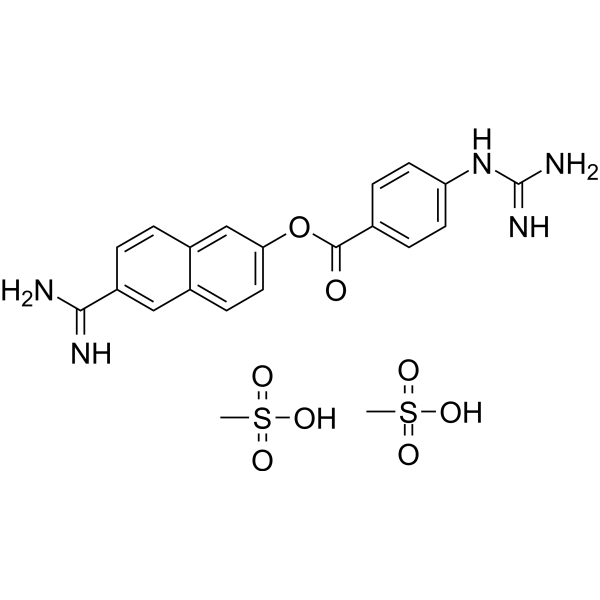
Nafamostat mesylate (FUT-175), an anticoagulant, is a synthetic serine protease inhibitor. Nafamostat mesylate has anticancer and antivirus effect. Nafamostat mesylate induce apoptosis by up-regulating the expression of tumor necrosis factor receptor-1 (TNFR1). Nafamostat mesylate can be used in the development of the pathological thickening of the arterial wall.
For research use only. We do not sell to patients.
- Purity : 99.94%
- CAS No.: 82956-11-4
- Formula: C21H25N5O8S2
- Molecular Weight:539.58
-
Storage:
4°C, sealed storage, away from moisture and light
* In solvent : -80°C, 1 year; -20°C, 6 months (sealed storage, away from moisture and light)

To place orders, for customer services and technical support, please contact: MedChemExpress USA
Tel: 609-228-6898 E-mail: [email protected] [email protected]


-
 Biological Activity
-
Chemical Information
-
Solvent & Solubility
- Protocols
- Purity & Documentation
- References
-
 Help & FAQs


-
HY-P0017
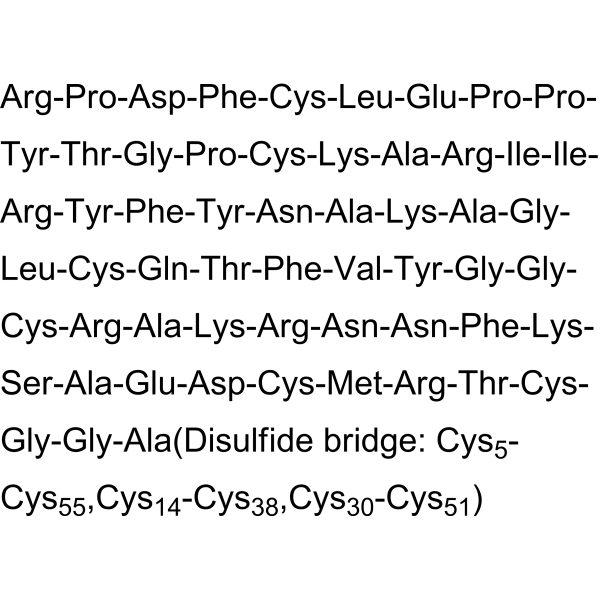
AprotininBPTI Inhibitor -
HY-13512
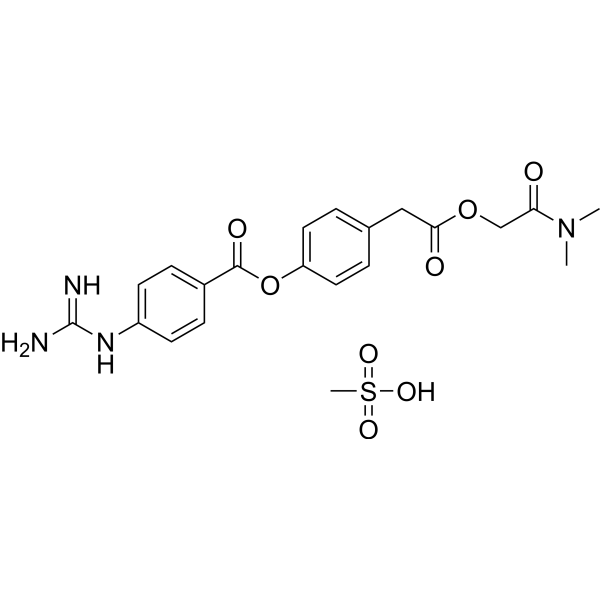
Camostat mesylateSerine Protease Inhibitor -
HY-12821
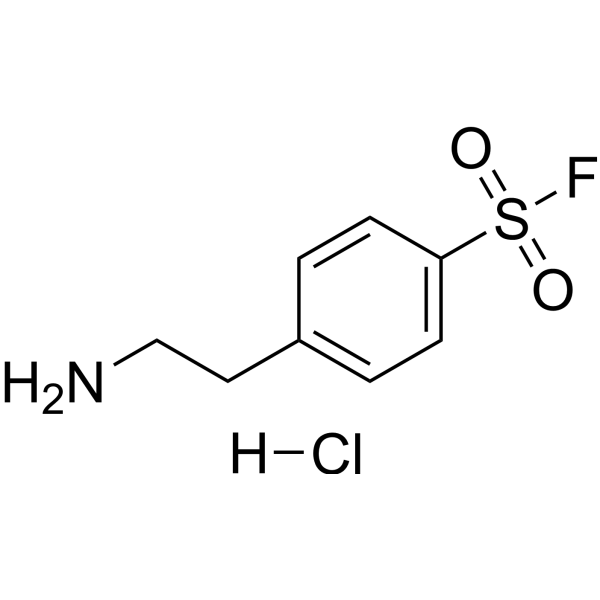
AEBSF hydrochlorideThrombin Inhibitor -
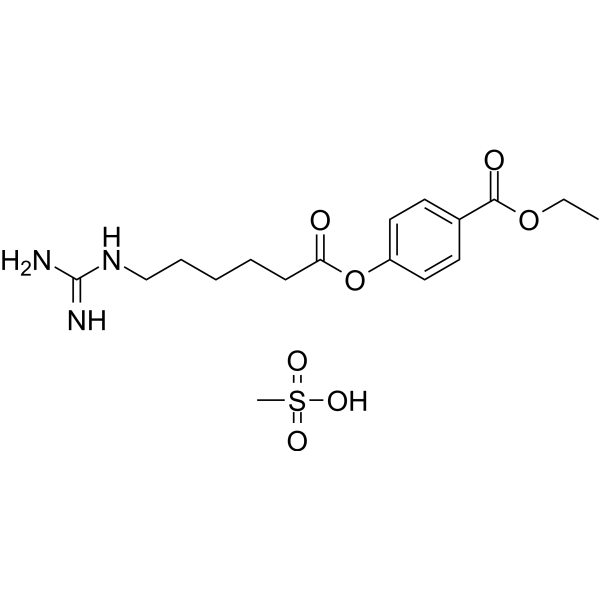
HY-B0385
Gabexate mesylateProteasome Inhibitor -
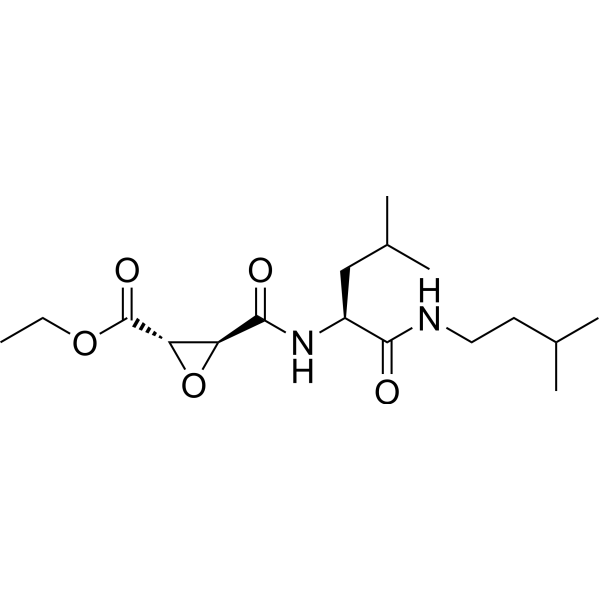
HY-100229
AloxistatinCysteine Protease Inhibitor -
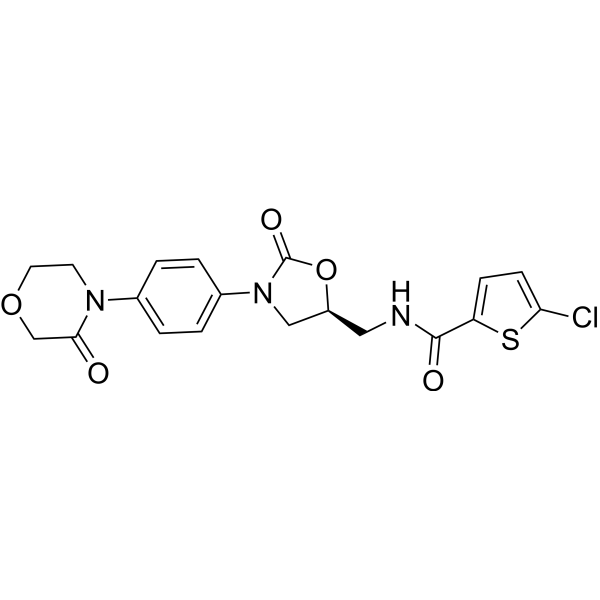
HY-50903
RivaroxabanFactor Xa Inhibitor -

HY-134616
UlinastatinTrypsin/Serine Protease Inhibitor -
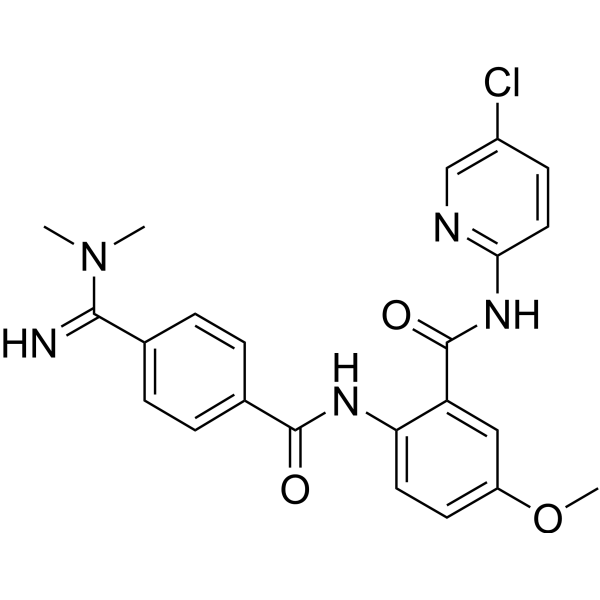
HY-10268
BetrixabanFactor Xa Inhibitor -
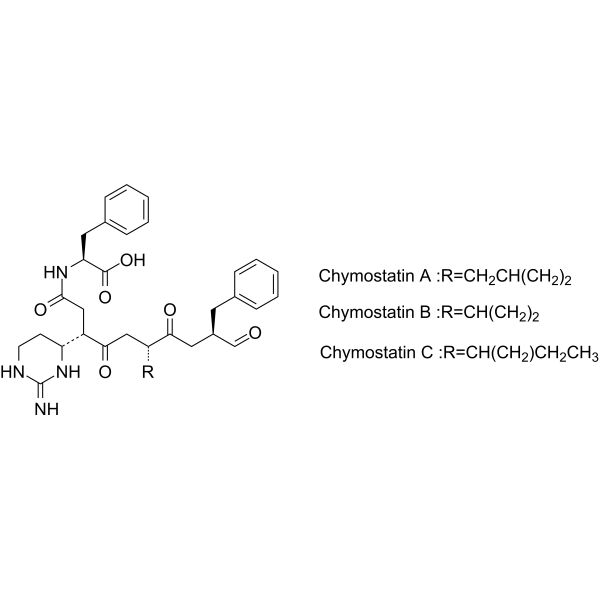
HY-P3042
ChymostatinCathepsin G Inhibitor -
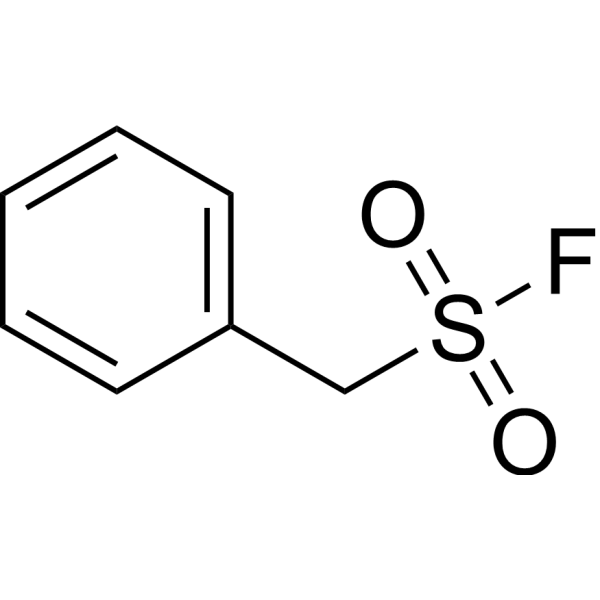
HY-B0496
PMSFCathepsin Inhibitor -
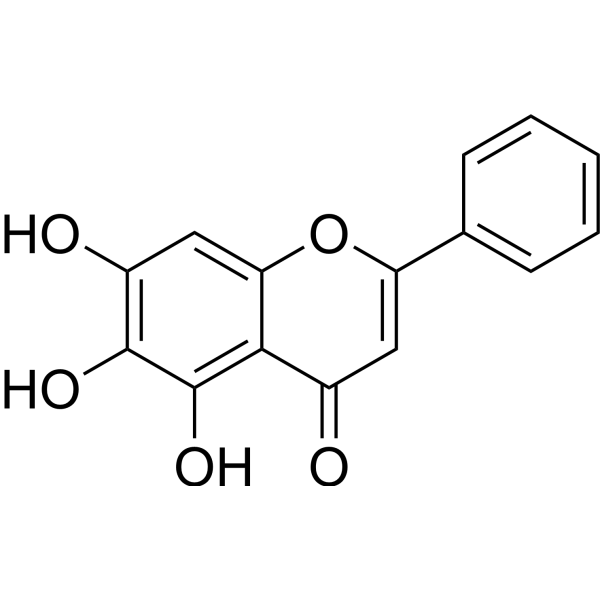
HY-N0196
BaicaleinXanthine Oxidase Inhibitor -

HY-B0190AR
Nafamostat mesylate (Standard)Serine Protease Inhibitor
Publications Citing Use of MedChemExpress (MCE) Nafamostat mesylate
More- Cell Res. 2020 Mar;30(3):269-271. [Abstract]
- Nat Commun. 2024 Jun 27;15(1):5458. [Abstract]
- Exp Mol Med. 2024 Dec;56(12):2631-2641. [Abstract]
- Nat Chem Biol. 2022 Sep;18(9):963-971. [Abstract]
- Nucleic Acids Res. 2021 Jan 8;49(D1):D1113-D1121. [Abstract]
- Mol Biomed. 2026 Aug 3;7(1):122.
- Adv Healthc Mater. 2025 Aug 1:e02156. [Abstract]
- Cells. 2022 Jan 18;11(3):319. [Abstract]
- Cell Rep Methods. 2023 Oct 23;3(10):100599. [Abstract]
- Eur J Pharmacol. 2023 Jan 5:938:175394. [Abstract]
- Eur J Pharmacol. 2022 Mar 15:919:174795. [Abstract]
- Biomolecules. 2022 Jul 31;12(8):1063. [Abstract]
- Sci Rep. 2026 May 16. [Abstract]
- Antiviral Res. 2023 Jun:214:105606. [Abstract]
- Viruses. 2022 Sep 12;14(9):2017. [Abstract]
- ChemMedChem. 2026 Mar 31;21(7):e202501099.
- bioRxiv. 2026 Jan 24.
- Res Sq. 2025 Apr 07.
- bioRxiv. 2024 October 09.
- Patent. US20230210807A1.
 Customer Validation & Images

-
Bio/Physico-chemical Assay
-
Bio/Physico-chemical Assay
-
Bio/Physico-chemical Assay
-
IF
-
Bio/Physico-chemical Assay


Biological Activity
Description
IC50 & Target
|
I-kappaBalpha |
Cellular Effect
|
Cell Line

|
Type | Value | Description | References |
|---|---|---|---|---|
| Caco-2 | CC50 |
>20 μM
Compound: NAFAMOSTAT
|
Toxicity against Caco-2 cells determined at 48 hours by intracellular ATP concentration using the CellTiter-Glo Luminescent Cell Viability Assay
Toxicity against Caco-2 cells determined at 48 hours by intracellular ATP concentration using the CellTiter-Glo Luminescent Cell Viability Assay
|
10.21203/rs.3.rs-23951/v1 |
| Caco-2 | IC50 |
0.04 μM
Compound: NAFAMOSTAT
|
Determination of IC50 values for inhibition of SARS-CoV-2 induced cytotoxicity of Caco-2 cells after 48 hours by high content imaging
Determination of IC50 values for inhibition of SARS-CoV-2 induced cytotoxicity of Caco-2 cells after 48 hours by high content imaging
|
10.21203/rs.3.rs-23951/v1 |
In Vitro
Nafamostat mesylate (10-80 μg/mL, 3-48 h) inhibits NF-κB activity by blocking IκBα phosphorylation in MDAPanc-28 cells[1].
Nafamostat mesylate (80 μg/mL, 24-48 h) induces apoptosis by up-regulating the expression of tumor necrosis factor receptor-1 (TNFR1) in MDAPanc-28 cells[1].
Nafamostat mesylate (0.1-10 μM, 24 h) has suppressive effect on invasiveness in Panc-1 cells[2].
MedChemExpress (MCE) has not independently confirmed the accuracy of these methods. They are for reference only. Further protocols information, click here.
-
Cell Line:MDAPanc-28 cells
-
Concentration:80 μg/mL
-
Incubation Time:24 h, 48 h
-
Result:Substantially reduced the cell viability of MDAPanc-28 cells at both 24 hours and 48 hours.
-
Cell Line:Inhibited NF-κB DNA-binding activity and the degradation of IκBα in a dose-dependent manner as well as in a time-dependent manner.
Inhibited NF-κB DNA-binding activity and the degradation of IκBα in a dose-dependent manner as well as in a time-dependent manner.
Panc-1 cells -
Concentration:0.1 μM, 1 μM, 10 μM
-
Incubation Time:24 h
-
Result:Observed significant inhibition in Panc-1-Try clones at concentrations as low as 0.1 mM.
-
Cell Line:MDAPanc-28 cells
-
Concentration:10 μg/mL, 20 μg/mL ,40 μg/mL, 80 μg/mL
-
Incubation Time:3 h, 8 h, 24 h, 48 h
-
Result:Inhibited NF-κB DNA-binding activity and the degradation of IκBα in a dose-dependent manner as well as in a time-dependent manner.
Inhibited phosphorylation of IκBα in a time-dependent manner.
In Vivo
Nafamostat mesylate (0.5-2.0 mg/mL (dissolved in saline), Intraperitoneal injection, once a day for 7 consecutive days) has inhibitory effect on neointimal formation after balloon injury of the rat carotid wall[4].
MedChemExpress (MCE) has not independently confirmed the accuracy of these methods. They are for reference only.
-
Animal Model:A129 mice[3]
-
Dosage:10 mg/kg
-
Administration:Intraperitoneal injection (i.p.)
-
Result:Exhibit delayed lethality and improved survival (40%).
-
Animal Model:Balloon injury of the rat carotid wall [4]
-
Dosage:0.5 mg/mL, 1 mg/mL, 2 mg/mL (dissolved in saline)
-
Administration:Intraperitoneal injection (i.p.)
-
Result:Showed smaller ratios of the neointima/medial area.
Showed positive but reduced immunoreactivity of the cells in the neointimal.
Clinical Trial
| NCT Number | Sponsor | Condition | Start Date |
Phase
|
|---|---|---|---|---|
| NCT01329991 | Plexxikon| | 2011-05 | PHASE1 |


Chemical Information
-
CAS No. 82956-11-4
-
Appearance Solid
-
Molecular Weight 539.58
-
Formula C21H25N5O8S2
-
Color White to light yellow
-
SMILES
CS(=O)(O)=O.O=C(OC1=CC=C2C=C(C(N)=N)C=CC2=C1)C3=CC=C(NC(N)=N)C=C3.CS(=O)(O)=O
-
Synonyms
FUT-175
-
Shipping
Room temperature in continental US; may vary elsewhere.
-
Storage
4°C, sealed storage, away from moisture and light
* In solvent : -80°C, 1 year; -20°C, 6 months (sealed storage, away from moisture and light)


Publications (20)
-
Journal Impact Factor
-
Most Recent
-
Cell Res
Remdesivir and chloroquine effectively inhibit the recently emerged novel coronavirus (2019-nCoV) in vitro. [Abstract]2020 Mar;30(3):269-271. PMID: 32020029 -
Nat Commun
Structural basis for potent neutralization of human respirovirus type 3 by protective single-domain camelid antibodies. [Abstract]2024 Jun 27;15(1):5458. PMID: 38937429 -
Exp Mol Med
Distribution and impact of p16INK4A+ senescent cells in elderly tissues: a focus on senescent immune cell and epithelial dysfunction. [Abstract]2024 Dec;56(12):2631-2641. PMID: 39617789 -
Nat Chem Biol
2022 Sep;18(9):963-971. PMID: 35676539 -
Nucleic Acids Res
COVID19 Drug Repository: text-mining the literature in search of putative COVID19 therapeutics. [Abstract]2021 Jan 8;49(D1):D1113-D1121. PMID: 33166390 -
-
Adv Healthc Mater
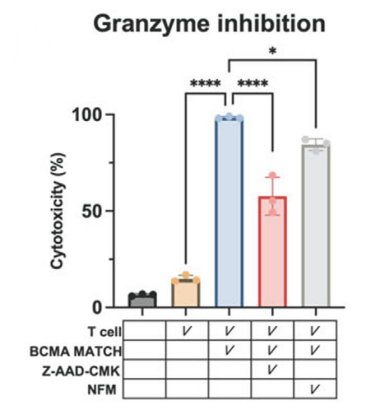
Self-Assembling Multi-Antigen T Cell Hybridizers for Precision Immunotherapy of Multiple Myeloma. [Abstract]2025 Aug 1:e02156. PMID: 40747784
Nafamostat mesylate purchased from MedChemExpress. Usage Cited in: Adv Healthc Mater. 2025 Aug 1:e02156. [Abstract]
Targeted inhibition of granzyme B with Z‐AAD‐CMK and granzyme A with Nafamostat mesylate (NFM) attenuates cell death.
-
Cells
Assessment of FDA-Approved Drugs as a Therapeutic Approach for Niemann-Pick Disease Type C1 Using Patient-Specific iPSC-Based Model Systems. [Abstract]2022 Jan 18;11(3):319. PMID: 35159129 -
Cell Rep Methods
RECOVER identifies synergistic drug combinations in vitro through sequential model optimization. [Abstract]2023 Oct 23;3(10):100599. PMID: 37797618 -
Eur J Pharmacol
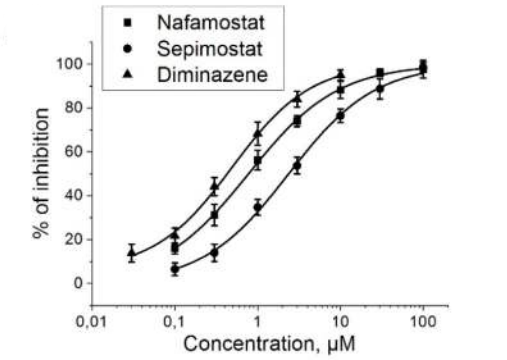
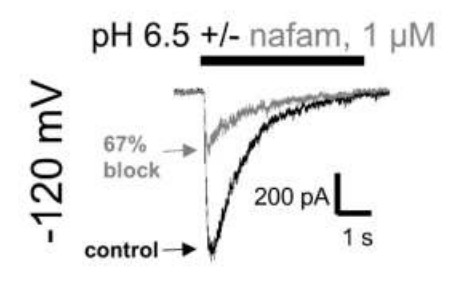
Mechanisms of acid-sensing ion channels inhibition by nafamostat, sepimostat and diminazene. [Abstract]2023 Jan 5:938:175394. PMID: 36403685
Nafamostat mesylate purchased from MedChemExpress. Usage Cited in: Eur J Pharmacol. 2023 Jan 5:938:175394. [Abstract]
Concentration-inhibition curves for Nafamostat mesylate, sepimostat and diminazene aceturate.
Nafamostat mesylate purchased from MedChemExpress. Usage Cited in: Eur J Pharmacol. 2023 Jan 5:938:175394. [Abstract]
Representative examples of current inhibition by 1 μM Nafamostat mesylate.
-
Eur J Pharmacol
2022 Mar 15:919:174795. PMID: 35122868 -
Biomolecules
The Rabep1-Mediated Endocytosis and Activation of Trypsinogen to Promote Pancreatic Stellate Cell Activation. [Abstract]2022 Jul 31;12(8):1063. PMID: 36008957 -
Sci Rep
Production and characterization of gigastasin, a leech-derived inhibitor of complement and coagulation pathways. [Abstract]2026 May 16. PMID: 42143157 -
Antiviral Res
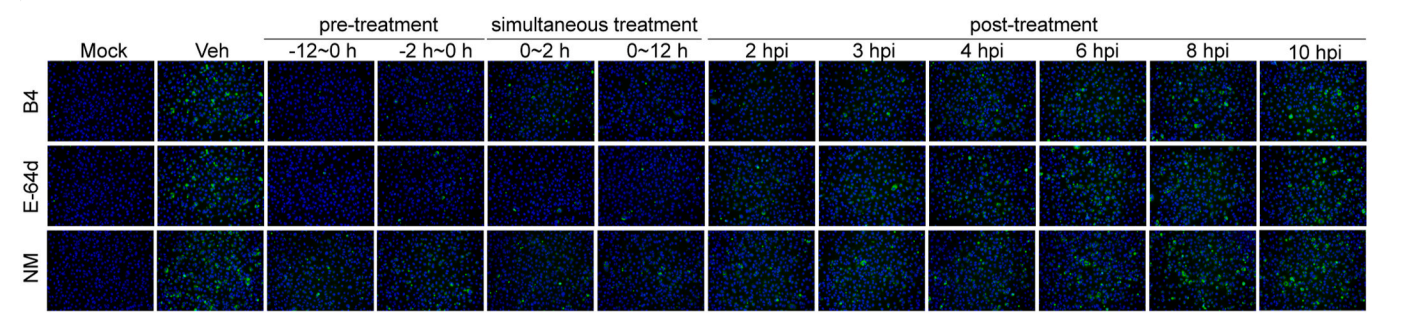
Omicsynin B4 potently blocks coronavirus infection by inhibiting host proteases cathepsin L and TMPRSS2. [Abstract]2023 Jun:214:105606. PMID: 37076089
Nafamostat mesylate purchased from MedChemExpress. Usage Cited in: Antiviral Res. 2023 Jun:214:105606. [Abstract]
Huh7.5 cells was infected with HCoV-229E (MOI = 3.5) and treated with omicsynin B4 (10 μM), E−64d (1 μM) or nafamostat mesylate (40 μM) at the indicated times. Immunofluorescence staining of the dsRNA (green) were merged with the nuclear Hoechst 33342 dye (blue) using a fluorescence microscopy (200 × ). Mock, the cell control. Veh, the vehicle control. Cpd, compound. NH4Cl, ammonium chloride. B4, omicsynin B4. NM, nafamostat mesylate. hpi, hour post infection.
-
Viruses
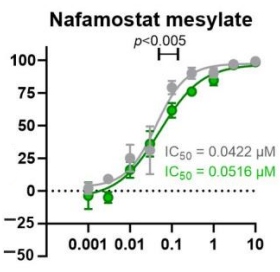
Molecular Analyses of Clinical Isolates and Recombinant SARS-CoV-2 Carrying B.1 and B.1.617.2 Spike Mutations Suggest a Potential Role of Non-Spike Mutations in Infection Kinetics. [Abstract]2022 Sep 12;14(9):2017. PMID: 36146823
Nafamostat mesylate purchased from MedChemExpress. Usage Cited in: Viruses. 2022 Sep 12;14(9):2017. [Abstract]
Efficacy of small molecule inhibitors Remdesivir, Nafamostat mesylate, Nirmatrelvir, and Molnupiravir against B.1BAC-V (green), B.1.617.2BAC-V (orange), and corresponding clinical isolates (CI, grey).
-
-
-
-
-


Solvent & Solubility
In Vitro:
DMSO : 50 mg/mL (92.66 mM; Need ultrasonic; Hygroscopic DMSO has a significant impact on the solubility of product, please use newly opened DMSO)
H2O : 33.33 mg/mL (61.77 mM; Need ultrasonic)
Please refer to the solubility information to select the appropriate solvent. Once prepared, please aliquot and store the solution to prevent product inactivation from repeated freeze-thaw cycles.
Storage method and period of stock solution: -80°C, 1 year; -20°C, 6 months (sealed storage, away from moisture and light). When stored at -80°C, please use it within 1 year. When stored at -20°C, please use it within 6 months.
* Note: If you choose water as the stock solution, please dilute it to the working solution, then filter and sterilize it with a 0.22 μm filter before use.
Please refer to the solubility information to select the appropriate solvent. Once prepared, please aliquot and store the solution to prevent product inactivation from repeated freeze-thaw cycles.
Storage method and period of stock solution: -80°C, 1 year; -20°C, 6 months (sealed storage, away from moisture and light). When stored at -80°C, please use it within 1 year. When stored at -20°C, please use it within 6 months.
* Note: If you choose water as the stock solution, please dilute it to the working solution, then filter and sterilize it with a 0.22 μm filter before use.
Concentration (start) × Volume (start) = Concentration (final) × Volume (final)
In Vivo:
Select the appropriate dissolution method based on your experimental animal and administration route.
- For the following dissolution methods, please ensure to first prepare a clear stock solution using an In Vitro approach and then sequentially add co-solvents:
- To ensure reliable experimental results, the clarified stock solution can be appropriately stored based on storage conditions. As for the working solution for In Vivo experiments, it is recommended to prepare freshly and use it on the same day.
- The percentages shown for the solvents indicate their volumetric ratio in the final prepared solution. If precipitation or phase separation occurs during preparation, heat and/or sonication can be used to aid dissolution.
Add each solvent one by one: 10% DMSO 40% PEG300 5% Tween-80 45% Saline
Solubility: ≥ 2.5 mg/mL (4.63 mM); Clear solution
This protocol yields a clear solution of ≥ 2.5 mg/mL (saturation unknown).
Taking 1 mL working solution as an example, add 100 μL DMSO stock solution (25.0 mg/mL) to 400 μL PEG300, and mix evenly; then add 50 μL Tween-80 and mix evenly; then add 450 μL Saline to adjust the volume to 1 mL.
Preparation of Saline: Dissolve 0.9 g sodium chloride in ddH₂O and dilute to 100 mL to obtain a clear Saline solution.
Add each solvent one by one: 10% DMSO 90% (20% SBE-β-CD in Saline)
Solubility: ≥ 2.5 mg/mL (4.63 mM); Clear solution
This protocol yields a clear solution of ≥ 2.5 mg/mL (saturation unknown).
Taking 1 mL working solution as an example, add 100 μL DMSO stock solution (25.0 mg/mL) to 900 μL 20% SBE-β-CD in Saline, and mix evenly.
Preparation of 20% SBE-β-CD in Saline (4°C, storage for one week): 2 g SBE-β-CD powder is dissolved in 10 mL Saline, completely dissolve until clear.
In Vivo Dissolution Calculator
Please enter the basic information of animal experiments:
-
-
-
-
Recommended: Prepare an additional quantity of animals to account for potential losses during experiments.
Working solution concentration: 0.22 mg/mL
This product has good water solubility, please refer to the measured solubility data in water/PBS/Saline for details.

Protocols
-
RNA extraction experimental
By lysing cells, releasing RNA, and removing impurities such as proteins and DNA, high-purity RNA products are finally obtained. The commonly used traditional method is the guanidine isothiocyanate/phenol/chloroform method (Trizol), which is suitable for a variety of animal materials including animal tissues, microorganisms, cultured cells, etc., and most plant materials.
-
Apoptosis
Apoptosis, also called programmed cell death, is generally characterized by distinct morphological characteristics.
-
TUNEL staining for apoptotic DNA fragmentation
TUNEL staining detects DNA strand breaks by using terminal deoxynucleotidyl transferase to add labeled nucleotides to exposed 3′-OH DNA termini, generating either microscopic staining in fixed cells or tissue sections, or fluorescence/cytometric signal in cell suspensions. TUNEL positivity reflects DNA fragmentation but should not be interpreted alone as definitive apoptosis, because TUNEL can also label necrotic, autolytic, mechanically damaged, or DNA-repair-associated DNA breaks.
-
Annexin V plus membrane-impermeant dye apoptosis staining
Annexin V-based apoptosis assays rely on the detection of phosphatidylserine (PS) externalization from the inner leaflet of the plasma membrane to the outer leaflet, an early biochemical hallmark of apoptosis. Fluorescently labeled Annexin V binds PS in a calcium-dependent manner, enabling identification of early apoptotic cells by flow cytometry or fluorescence microscopy. When combined with a membrane-impermeant DNA-binding dye (e. g. , propidium iodide), this approach allows discrimination between viable (Annexin V−/dye−), early apoptotic (Annexin V+/dye−), and late apoptotic or necrotic (Annexin V+/dye+) cell populations by assessing membrane integrity and PS exposure.
-
Apoptosis Solutions
Apoptosis is a regulated, generally non-lytic cell-death pathway that removes unwanted, damaged, infected, or abnormal cells through coordinated morphological changes, caspase activation, DNA fragmentation, and membrane remodeling. The intrinsic apoptosis pathway is controlled mainly by mitochondrial outer membrane permeabilization, BCL-2 family proteins, cytochrome c release, apoptosome formation, caspase-9 activation, and downstream executioner caspase-3/7 activation. The extrinsic apoptosis pathway is initiated by death receptors such as Fas, TNFR, and TRAIL receptors, which recruit adaptor proteins and activate caspase-8 before engaging executioner caspases or mitochondrial amplification through BID cleavage. Apoptosis is linked to many phenotypes, including cancer cell killing, tissue homeostasis, immune regulation, neurodegeneration, infection response, and treatment-induced cytotoxicity; unresolved questions include how apoptosis interacts with necroptosis, pyroptosis, ferroptos


Purity & Documentation
-
Data Sheet (280 KB)
-
SDS (396 KB)
- English - EN (396 KB)
- Français - FR (396 KB)
- Deutsch - DE (396 KB)
- Norwegian - NO (396 KB)
- Español - ES (396 KB)
- Swedish - SV (396 KB)
- Italian - IT (396 KB)
- Korean - KR (396 KB)
- Portuguese - PT (396 KB)
-
Handling Instructions (2659 KB)
References
[1]. Uwagawa T, et al. Mechanisms of synthetic serine protease inhibitor (FUT‐175)‐mediated cell death [J]. Cancer: Interdisciplinary International Journal of the American Cancer Society, 2007, 109(10): 2142-2153. [Content Brief]
[2]. Tajima H, et al. Enhanced invasiveness of pancreatic adenocarcinoma cells stably transfected with cationic trypsinogen cDNA [J]. International journal of cancer, 2001, 94(5): 699-704. [Content Brief]
[3]. Yan Y, et al. Nafamostat mesylate as a broad-spectrum candidate for the treatment of flavivirus infections by targeting envelope proteins [J]. Antiviral research, 2022, 202: 105325. [Content Brief]
[4]. Sawada M, et al. Prevention of neointimal formation by a serine protease inhibitor, FUT-175, after carotid balloon injury in rats [J]. Stroke, 1999, 30(3): 644-650. [Content Brief]


Complete Stock Solution Preparation Table
Please refer to the solubility information to select the appropriate solvent. Once prepared, please aliquot and store the solution to prevent product inactivation from repeated freeze-thaw cycles.
Storage method and period of stock solution: -80°C, 1 year; -20°C, 6 months (sealed storage, away from moisture and light). When stored at -80°C, please use it within 1 year. When stored at -20°C, please use it within 6 months.
| Optional Solvent | Concentration Solvent Mass | 1 mg | 5 mg | 10 mg | 25 mg |
|---|---|---|---|---|---|
| H2O / DMSO | 1 mM | 1.8533 mL | 9.2665 mL | 18.5329 mL | 46.3323 mL |
| 5 mM | 0.3707 mL | 1.8533 mL | 3.7066 mL | 9.2665 mL | |
| 10 mM | 0.1853 mL | 0.9266 mL | 1.8533 mL | 4.6332 mL | |
| 15 mM | 0.1236 mL | 0.6178 mL | 1.2355 mL | 3.0888 mL | |
| 20 mM | 0.0927 mL | 0.4633 mL | 0.9266 mL | 2.3166 mL | |
| 25 mM | 0.0741 mL | 0.3707 mL | 0.7413 mL | 1.8533 mL | |
| 30 mM | 0.0618 mL | 0.3089 mL | 0.6178 mL | 1.5444 mL | |
| 40 mM | 0.0463 mL | 0.2317 mL | 0.4633 mL | 1.1583 mL | |
| 50 mM | 0.0371 mL | 0.1853 mL | 0.3707 mL | 0.9266 mL | |
| 60 mM | 0.0309 mL | 0.1544 mL | 0.3089 mL | 0.7722 mL | |
| DMSO | 80 mM | 0.0232 mL | 0.1158 mL | 0.2317 mL | 0.5792 mL |
* Note: If you choose water as the stock solution, please dilute it to the working solution, then filter and sterilize it with a 0.22 μm filter before use.


Nafamostat mesylate Related Classifications
HY-B0190A Related Classifications
 Powered by Bioz