Search Result
Results for "
adrenergic receptor agonist
" in MedChemExpress (MCE) Product Catalog:
2
Biochemical Assay Reagents
47
Isotope-Labeled Compounds
| Cat. No. |
상품명 |
Target |
연구분야 |
Chemical Structure |
-
- HY-13715
-
-
-
- HY-13715A
-
-
-
- HY-B0225
-
-
-
- HY-B1276
-
-
-
- HY-N0166
-
-
-
- HY-B0802A
-
-
-
- HY-B0802
-
|
Terbutaline hemisulfate
|
Adrenergic Receptor
Antibiotic
|
Endocrinology
|
|
Terbutaline sulfate is an orally active β2-adrenergic receptor agonist and an active metabolite of bambuterol . Terbutaline sulfate can be used in asthma symptom research .
|
-
-
- HY-B1270
-
|
|
Adrenergic Receptor
iGluR
|
Neurological Disease
Endocrinology
|
|
Isoxsuprine hydrochloride is a beta-adrenergic receptor agonist with Kis of 13.65 μΜ and 3.48 μΜ for myometrial and placcntal beta-adrenergic receptor, respectively. Isoxsuprine hydrochloride is also a NMDA receptor antagonist.
|
-
-
- HY-B0225B
-
|
L-(-)-α-Methyldopa hydrate; MK-351 hydrate
|
Adrenergic Receptor
Endogenous Metabolite
|
Cardiovascular Disease
Endocrinology
|
|
Methyldopa hydrate (L-(-)-α-Methyldopa hydrate), a potent antihyoertensive agent, is an alpha-adrenergic agonist (selective for α2-adrenergic receptors). Methyldopa hydrate is a proagent and is metabolized (α-Methylepinephrine) in the central nervous system .
|
-
-
- HY-B0659
-
-
-
- HY-B0659A
-
-
-
- HY-B1052
-
|
Baq-168; MDL-14042
|
Adrenergic Receptor
Imidazoline Receptor
|
Neurological Disease
Metabolic Disease
|
|
Lofexidine hydrochloride (Baq-168) is an orally active agonist of the imidazoline I1 receptor (imidazoline I1 receptor) (Ki: 1.9 nM) and α2-adrenergic receptor (α2-adrenergic receptor). Lofexidine hydrochloride binds to the α2A-adrenergic receptor, reduces sympathetic outflow, lowers blood pressure, and exhibits vasoconstrictive effects. Lofexidine hydrochloride regulates the expression of c-fos and alleviates opioid withdrawal symptoms. Lofexidine hydrochloride is applicable to research on opioid addiction and withdrawal .
|
-
-
- HY-59132
-
|
|
Drug Intermediate
|
Others
|
|
2-Amino-1-phenylethanol is a pharmaceutical intermediate that can be used for the synthesis of antimalarial agents and β2-adrenergic receptor agonists .
|
-
-
- HY-B1675A
-
|
(R)-Albuterol hydrochloride; (R)-Salbutamol hydrochloride; Levosalbutamol hydrochloride
|
Adrenergic Receptor
|
Inflammation/Immunology
|
|
Levalbuterol ((R)-Albuterol) hydrochloride is a short-acting β2-adrenergic receptor agonist and the active (R)-enantiomer of Salbutamol. Levalbuterol hydrochloride is a more potent bronchodilator than Salbutamol and has the potential for the treatment of COPD .
|
-
-
- HY-U00205
-
-
-
- HY-B1052A
-
|
Baq-168 free base; MDL-14042 free base
|
Imidazoline Receptor
Adrenergic Receptor
|
Neurological Disease
Metabolic Disease
|
|
Lofexidine (Baq-168 free base) is an orally active agonist of the imidazoline I1 receptor (imidazoline I1 receptor) (Ki: 1.9 nM) and α2-adrenergic receptor (α2-adrenergic receptor). Lofexidine binds to the α2A-adrenergic receptor, reduces sympathetic outflow, lowers blood pressure, and exhibits vasoconstrictive effects. Lofexidine regulates the expression of c-fos and alleviates opioid withdrawal symptoms. Lofexidine is applicable to research on opioid addiction and withdrawal .
|
-
-
- HY-Z6449
-
|
|
Adrenergic Receptor
|
Neurological Disease
|
|
Phenylephrine hydrochlorid is an α1-adrenergic receptor agonist. As a sympathomimetic agent, Phenylephrine hydrochlorid exerts similar effects to epinephrine and ephedrine. Phenylephrine hydrochlorid induces vasoconstriction and increases perfusion pressure .
|
-
-
- HY-B1116
-
|
Metaradrine tartrate
|
Adrenergic Receptor
|
Cardiovascular Disease
Endocrinology
|
|
Metaraminol tartrate?(Metaradrine tartrate) is an α-adrenergic agonist . Metaraminol tartrate is a sympathomimetic amine that directly and indirectly affects adrenergic receptors, with alpha effects being predominant.Metaraminol tartrate acts as a vasopressor agent .
|
-
-
- HY-B1696
-
|
|
Adrenergic Receptor
|
Cardiovascular Disease
|
|
Methyldopate is an ethyl ester proagent of α-Methyldopa (α-MD; HY-B0225). Methyldopa (L-(-)-α-Methyldopa) is an α-adrenergic agonist (selective for α2-adrenergic receptors). Methyldopate has the potential for severe hypertension research .
|
-
-
- HY-B1347
-
-
-
- HY-B1694A
-
-
-
- HY-B1615S
-
-
-
- HY-16413
-
|
Caytine hydrochloride; JB-251 hydrochloride
|
TRP Channel
Adrenergic Receptor
|
Others
|
|
Protokylol hydrochloride (Caytine hydrochloride; JB-251 hydrochloride) is the hydrochloride salt form of Protokylol (HY-114630). Protokylol hydrochloride is an agonist for β2-adrenergic receptor and TRPV1. Protokylol hydrochloride exhibits activity as a bronchodilator .
|
-
-
- HY-12463A
-
|
|
Adrenergic Receptor
|
Inflammation/Immunology
|
|
Carmoterol is a highly potent and selective long-acting β2-adrenergic receptor agonist with a pEC50 of 10.19. Carmoterol shows 53-fold higher affinity for β2-adrenergic receptors than for β1-adrenergic receptors. Carmoterol stimulates cyclic adenosine monophosphate accumulation, induces airway smooth muscle relaxation, inhibits bronchoconstriction, reduces thromboxane B2 release, and prolongs survival time. Carmoterol can be used in research related to asthma and chronic obstructive pulmonary disease (COPD) .
|
-
-
- HY-119985
-
|
Z 1170
|
Adrenergic Receptor
|
Others
|
|
Broxaterol (Z 1170) is the an agonist of β2 adrenergic receptor that affects the smooth muscle receptors in the body. Broxaterol plays an important role in respiratory disease .
|
-
-
- HY-13713
-
-
-
- HY-W702712
-
-
-
- HY-112071
-
|
|
Adrenergic Receptor
|
Cardiovascular Disease
|
|
Prenalterol is a selective β1-adrenergic receptor agonist. Prenalterol has no effect on gut smooth muscle contractile activity. Prenalterol can be used for researching cardiovascular disease .
|
-
-
- HY-B1276A
-
-
-
- HY-107847
-
|
|
5-HT Receptor
Adrenergic Receptor
|
Neurological Disease
|
|
2-(2-Methoxyphenoxy)ethylamine hydrochloride (Compound 2b) is a mixed agonist/antagonist. 2-(2-Methoxyphenoxy)ethylamine hydrochloride is a5-HT1A receptor partial agonist and a α1-adrenergic receptor antagonist. 2-(2-Methoxyphenoxy)ethylamine hydrochloride can be used for neurological diseases research, such as anxiety, depression and psychosis .
|
-
-
- HY-W009456
-
-
-
- HY-131145
-
-
-
- HY-19057
-
|
MK-467; L-659066
|
Adrenergic Receptor
|
Cardiovascular Disease
Neurological Disease
|
|
Vatinoxan (MK-467) is an alpha 2-adrenergic receptor antagonist. The peripheral selectivity of Vatinoxan determines that it has limited penetration across the blood-brain barrier and therefore has low concentrations in the central nervous system. Vatinoxan antagonizes alpha 2-adrenergic receptor receptors by binding to them, thereby reducing or preventing cardiovascular effects caused by α2-adrenergic agonists. Vatinoxan can be used in studies of cardiovascular effects, sedation and analgesia .
|
-
-
- HY-14298
-
|
GSK-159797C
|
Adrenergic Receptor
|
Endocrinology
|
|
Milveterol hydrochloride is a long-acting β2-adrenergic receptor agonist. Milveterol hydrochloride can be used in study asthma and chronic obstructive pulmonary disease (COPD) .
|
-
-
- HY-B0225A
-
|
L-(-)-α-Methyldopa hydrochloride; MK-351 hydrochloride
|
Adrenergic Receptor
Endogenous Metabolite
|
Cardiovascular Disease
Endocrinology
|
|
Methyldopa hydrochloride (L-(-)-α-Methyldopa hydrochloride) hydrochloride, a potent antihyoertensive agent, is an alpha-adrenergic agonist (selective for α2-adrenergic receptors). Methyldopa hydrochloride is a proagent and is metabolized (α-Methylepinephrine) in the central nervous system .
|
-
-
- HY-119456A
-
-
-
- HY-B0659S
-
-
-
- HY-B1696A
-
|
|
Adrenergic Receptor
|
Cardiovascular Disease
|
|
Methyldopate hydrochloride is an ethyl ester hydrochloride proagent of α-Methyldopa (α-MD; HY-B0225). Methyldopa (L-(-)-α-Methyldopa) is an α-adrenergic agonist (selective for α2-adrenergic receptors). Methyldopate hydrochloride has the potential for severe hypertension research .
|
-
-
- HY-B1675
-
|
(R)-Albuterol; (R)-Salbutamol; Levosalbutamol
|
Adrenergic Receptor
|
Inflammation/Immunology
|
|
Levalbuterol ((R)-Albuterol; (R)-Salbutamol) is a short-acting β2-adrenergic receptor agonist and the active (R)-enantiomer of Salbutamol. Levalbuterol is a more potent bronchodilator than Salbutamol and has the potential for the treatment of COPD .
|
-
-
- HY-122440
-
-
-
- HY-B1052S
-
|
Baq-168-d4; MDL-14042-d4
|
Isotope-Labeled Compounds
Imidazoline Receptor
Adrenergic Receptor
|
Neurological Disease
Metabolic Disease
|
|
Lofexidine-d4 hydrochloride (Baq-168-d4) is the deuterium labeled Lofexidine hydrochloride (HY-B1052). Lofexidine hydrochloride (Baq-168) is an orally active agonist of the imidazoline I1 receptor (imidazoline I1 receptor) (Ki: 1.9 nM) and α2-adrenergic receptor (α2-adrenergic receptor). Lofexidine hydrochloride binds to the α2A-adrenergic receptor, reduces sympathetic outflow, lowers blood pressure, and exhibits vasoconstrictive effects. Lofexidine hydrochloride regulates the expression of c-fos and alleviates opioid withdrawal symptoms. Lofexidine hydrochloride is applicable to research on opioid addiction and withdrawal .
|
-
-
- HY-114732
-
|
|
Adrenergic Receptor
|
Others
|
|
Procaterol is an oral selective β2 adrenergic receptor agonist. Procaterol inhibits eosinophil migration and the release of eosinophil chemotactic factor from BEAS-2B cells through a cyclic AMP-dependent mechanism. Procaterol has a large dose difference existing between the bronchodilator effect and the anabolic effect in rat, can be used for asthma research in athletes .
|
-
-
- HY-106562
-
-
-
- HY-U00293
-
-
-
- HY-B1694
-
-
-
- HY-114630
-
-
-
- HY-129697
-
|
3-OH Medetomidine; Medetomidine metabolite MIII
|
Drug Metabolite
|
Metabolic Disease
|
|
3-Hydroxy Medetomidine (3-OH Medetomidine; Medetomidine metabolite MIII) is a metabolite of the α2-adrenergic receptor agonist medetomidine.
|
-
-
- HY-119456
-
-
-
- HY-131104AS
-
-
-
- HY-117406
-
-
- HY-19277
-
|
|
Adrenergic Receptor
|
Metabolic Disease
|
|
CP-114271 is a potent selective β3-adrenergic receptor agonist. CP-114271 possesses an in vivo efficacy in rodent models. CP-114271 can be used for obesity research .
|
-
- HY-14915A
-
|
MN-221; KUR-1246
|
Adrenergic Receptor
|
Inflammation/Immunology
|
|
Bedoradrine (MN-221) sulfate is a highly selective β2-adrenergic receptor agonist. Bedoradrine sulfate can effectively relieve airway spasm, dilate airway smooth muscle cells, reduce airway inflammation, and thus improve respiratory function. Bedoradrine sulfate can be used in research on asthma .
|
-
- HY-128515
-
-
- HY-B1270A
-
-
- HY-107358A
-
|
WHR-1142A
|
Adrenergic Receptor
|
Others
|
|
Lidamidine hydrochloride (WHR-1142A) is an α2-adrenergic receptor agonist and antidiarrheal agent .
|
-
- HY-W014726
-
|
(±)-Phenylephrine hydrochloride
|
Adrenergic Receptor
|
Cardiovascular Disease
|
|
DL-Phenylephrine ((±)-Phenylephrine) hydrochloride is a selective agonist of the alpha1-adrenergic receptor, exhibiting potent vasoconstrictive activity.
|
-
- HY-106933
-
-
- HY-13338S
-
-
- HY-107072A
-
-
- HY-50290A
-
-
- HY-107358
-
-
- HY-U00371
-
-
- HY-19401
-
-
- HY-U00391
-
-
- HY-149728
-
-
- HY-122053
-
-
- HY-B1270S
-
-
- HY-120057
-
-
- HY-W909149
-
-
- HY-112074
-
|
HOE 440
|
Adrenergic Receptor
|
Cardiovascular Disease
|
|
Tiamenidine (HOE 440) is an orally active α2-adrenergic receptor agonist with antihypertensive effect. Tiamenidine is used as an antihypertensive agent for hypertension research .
|
-
- HY-19401A
-
-
- HY-B1270R
-
|
|
Reference Standards
Adrenergic Receptor
iGluR
|
Neurological Disease
Endocrinology
|
|
Isoxsuprine hydrochloride (Standard) is the analytical standard of Isoxsuprine hydrochloride. This product is intended for research and analytical applications. Isoxsuprine hydrochloride is a beta-adrenergic receptor agonist with Kis of 13.65 μΜ and 3.48 μΜ for myometrial and placcntal beta-adrenergic receptor, respectively. Isoxsuprine hydrochloride is also a NMDA receptor antagonist.
|
-
- HY-131104S
-
-
- HY-116970
-
-
- HY-112658
-
|
|
Adrenergic Receptor
Adenosine Receptor
|
Endocrinology
|
|
p-Iodoclonidine hydrochloride is a partial agonist of α2-adrenergic receptor. p-Iodoclonidine hydrochloride also has minimal agonist activity in inhibiting adenylate cyclase in platelet membranes, and potentiates ADP induced platelet aggregation with an EC50 of 1.5 μM .
|
-
- HY-131106S
-
-
- HY-117378A
-
|
KRP-204 hydrochloride
|
Adrenergic Receptor
|
Inflammation/Immunology
Cancer
|
|
N-5984 (KRP-204) hydrochloride is a potent and selective agonist of β3-adrenergic receptor. N-5984 hydrochloride can be used for research of obesity and diabetes mellitus .
|
-
- HY-120519
-
-
- HY-114948
-
|
|
Adrenergic Receptor
|
Endocrinology
|
|
Rimiterol is a selective β2-adrenergic receptor agonist. Rimiterol activates adenylate cyclase and elevates intracellular cAMP levels to cause smooth muscle relaxation. Rimiterol is promising for research of asthma .
|
-
- HY-119883
-
|
|
Adrenergic Receptor
|
Neurological Disease
|
|
A-61603 free base is a potent adrenergic receptor agonist. A-61603 free base reduces carotid artery conductance in anesthetized pigs mediated by α1 and α2 adrenergic receptors (pEC50=7.25). A-61603 free base can be used as a probe to study adrenergic function .
|
-
- HY-124208A
-
-
- HY-50290
-
-
- HY-113320R
-
-
- HY-124208
-
-
- HY-B0225AS
-
|
L-(-)-α-Methyldopa-d3 hydrochloride; MK-351-d3 hydrochloride
|
Isotope-Labeled Compounds
Adrenergic Receptor
Endogenous Metabolite
|
Cardiovascular Disease
Endocrinology
|
|
Methyldopa-d3 (hydrochloride) is deuterium labeled Methyldopa (hydrochloride). Methyldopa hydrochloride (L-(-)-α-Methyldopa hydrochloride) hydrochloride, a potent antihyoertensive agent, is an alpha-adrenergic agonist (selective for α2-adrenergic receptors). Methyldopa hydrochloride is a proagent and is metabolized (α-Methylepinephrine) in the central nervous system .
|
-
- HY-B1347R
-
|
|
Reference Standards
Adrenergic Receptor
|
Inflammation/Immunology
Endocrinology
|
|
Clorprenaline hydrochloride (Standard) is the analytical standard of Clorprenaline hydrochloride. This product is intended for research and analytical applications. Clorprenaline hydrochloride is a β2-adrenergic receptor agonist that is implicated in bronchial expansion. Clorprenaline has the potential for asthma research .
|
-
- HY-B0659R
-
|
UK 14304 (Standard); AGN190342 (Standard)
|
Reference Standards
Adrenergic Receptor
|
Endocrinology
Cancer
|
|
Brimonidine (Standard) is the analytical standard of Brimonidine. This product is intended for research and analytical applications. Brimonidine (UK 14304) is a full α2-adrenergic receptor (α2-AR) agonist.
|
-
- HY-B0452S1
-
-
- HY-131145R
-
|
Bromobuterol hydrochloride (Standard)
|
Reference Standards
Adrenergic Receptor
|
Inflammation/Immunology
|
|
Brombuterol (hydrochloride) (Standard) is the analytical standard of Brombuterol (hydrochloride). This product is intended for research and analytical applications. Brombuterol hydrochloride (Bromobuterol hydrochloride) is a β-adrenergic receptor agonist .
|
-
- HY-17034BS
-
-
- HY-B1052R
-
|
Baq-168 (Standard); MDL-14042 (Standard)
|
Adrenergic Receptor
Reference Standards
|
Neurological Disease
Metabolic Disease
|
|
Lofexidine (Baq-168) hydrochloride Standard is the analytical standard of Lofexidine hydrochloride (HY-B1052). This product is intended for research and analytical applications. Lofexidine hydrochloride (Baq-168) is an orally active agonist of the imidazoline I1 receptor (imidazoline I1 receptor) (Ki: 1.9 nM) and α2-adrenergic receptor (α2-adrenergic receptor). Lofexidine hydrochloride binds to the α2A-adrenergic receptor, reduces sympathetic outflow, lowers blood pressure, and exhibits vasoconstrictive effects. Lofexidine hydrochloride regulates the expression of c-fos and alleviates opioid withdrawal symptoms. Lofexidine hydrochloride is applicable to research on opioid addiction and withdrawal .
|
-
- HY-W753523
-
-
- HY-117378
-
|
KRP-204
|
Adrenergic Receptor
|
Inflammation/Immunology
Cancer
|
|
N-5984 (KRP-204) is a potent and selective agonist of β3-adrenergic receptor. N-5984 has the potential for developing as one of the clinically effective drugs for obesity and diabetes mellitus .
|
-
- HY-B0225BR
-
|
L-(-)-α-Methyldopa hydrate (Standard); MK-351 hydrate (Standard)
|
Reference Standards
Adrenergic Receptor
Endogenous Metabolite
|
Cardiovascular Disease
Endocrinology
|
|
Methyldopa (hydrate) (Standard) is the analytical standard of Methyldopa (hydrate). This product is intended for research and analytical applications. Methyldopa hydrate (L-(-)-α-Methyldopa hydrate), a potent antihyoertensive agent, is an alpha-adrenergic agonist (selective for α2-adrenergic receptors). Methyldopa hydrate is a proagent and is metabolized (α-Methylepinephrine) in the central nervous system .
|
-
- HY-U00123
-
-
- HY-B1052S1
-
|
Baq-168 free base-d4; MDL-14042 free base-d4
|
Isotope-Labeled Compounds
Imidazoline Receptor
Adrenergic Receptor
|
Neurological Disease
Metabolic Disease
|
|
Lofexidine-d4 (Baq-168 free base-d4) is deuterium labeled Lofexidine (HY-B1052A). Lofexidine (Baq-168 free base) is an orally active agonist of the imidazoline I1 receptor (imidazoline I1 receptor) (Ki: 1.9 nM) and α2-adrenergic receptor (α2-adrenergic receptor). Lofexidine binds to the α2A-adrenergic receptor, reduces sympathetic outflow, lowers blood pressure, and exhibits vasoconstrictive effects. Lofexidine regulates the expression of c-fos and alleviates opioid withdrawal symptoms. Lofexidine is applicable to research on opioid addiction and withdrawal .
|
-
- HY-117158
-
|
|
Adrenergic Receptor
|
Others
|
|
SKF 89748 is an α1-adrenergic receptor agonist with the activity of inhibiting food and water intake. SKF 89748 inhibits food and water intake in adult male rats with an ED50 of 0.37mg/kg for inhibiting food intake.
|
-
- HY-13713A
-
-
- HY-14767
-
|
|
Adrenergic Receptor
|
Endocrinology
|
|
Fasobegron is a β3-adrenergic receptor agonist with a human EC50 of 4.8 nM. Fasobegron shows an EC50 of 250 nM for human β1-adrenergic receptors. Fasobegron can be used for the research of overactive bladder .
|
-
- HY-165456
-
|
|
Adrenergic Receptor
Vasopressin Receptor
|
Endocrinology
|
|
AGN-190851 is a potent and selective agonist of α2-adrenergic receptor (α2 adrenoceptor). AGN-190851 induces dose-dependent water diuresis in rats, and inhibits vasopressin V2 receptor in a species-dependent manner in vitro, thereby suppressing cAMP production. AGN-190851 enhances the contraction of porcine myometrium. AGN 190851 can be used in studies on renal diuretic mechanisms, pharmacology of α2-adrenergic receptor subtypes, and parturition .
|
-
- HY-U00123A
-
|
Hydroxyguanabenz hydrochloride
|
Adrenergic Receptor
|
Neurological Disease
|
|
Guanoxabenz (Hydroxyguanabenz) hydrochloride is an α2 adrenergic receptor agonist, with a Ki of 4000 nM and the fully activated form 40 nM for an α2A adrenoceptor .
|
-
- HY-A0007
-
|
N-0923 Hydrochloride
|
Dopamine Receptor
Adrenergic Receptor
5-HT Receptor
|
Neurological Disease
|
|
Rotigotine Hydrochloride (N-0923 Hydrochloride) is a full agonist of dopamine receptor, a partial agonist of the 5-HT1A receptor, and an antagonist of the α2B-adrenergic receptor, with Ki of 0.71 nM, 4-15 nM, and 83 nM for the dopamine D3 receptor and D2, D5, D4 receptors, and dopamine D1 receptor.
|
-
- HY-13715B
-
-
- HY-A0066A
-
|
Imidaline hydrochloride; NSC35110 hydrochloride
|
Adrenergic Receptor
|
Cardiovascular Disease
Endocrinology
|
|
Tolazoline hydrochloride (Imidaline hydrochloride) is an α-adrenergic receptor antagonist. Tolazoline hydrochloride inhibits Noradrenaline (HY-13715)-induced cell contraction, modulates vascular resistance, increases arterial pressure, and reverses bradycardia and tachypnea. Tolazoline hydrochloride can be used to study erectile dysfunction, α2-adrenergic receptor agonist-related poisoning, and skin vascular disease research .
|
-
- HY-119497
-
|
|
Adrenergic Receptor
|
Cardiovascular Disease
Metabolic Disease
|
|
SB251023 is a β3-adrenergic receptor agonist with pEC50 values of 7.14 and 6.91 for the β3a- and β3b-adrenergic receptors, respectively. SB251023 is capable of modulating cyclic AMP levels and extracellular acidification rate (EAR) in cells. It has potential application value in the study of cardiovascular diseases and metabolic-related disorders .
|
-
- HY-A0066
-
|
Imidaline; NSC35110
|
Adrenergic Receptor
|
Cardiovascular Disease
Endocrinology
|
|
Tolazoline (Imidaline) is an α-adrenergic receptor antagonist. Tolazoline inhibits Noradrenaline (HY-13715)-induced cell contraction, modulates vascular resistance, increases arterial pressure, and reverses bradycardia and tachypnea. Tolazoline can be used to study erectile dysfunction, α2-adrenergic receptor agonist-related poisoning, and skin vascular disease research .
|
-
- HY-137575
-
|
|
Drug Metabolite
|
Others
|
|
Terbutalone is a derivative of Terbutaline (HY-B0802A). Terbutaline is an orally active β2-adrenergic receptor agonist and an active metabolite of Bambuterol (HY-17501). Terbutaline can be used in asthma symptom research .
|
-
- HY-W705539
-
|
(±)-Phenylephrine-d3 hydrochloride
|
Isotope-Labeled Compounds
Adrenergic Receptor
|
Cardiovascular Disease
|
|
DL-Phenylephrine-d3 hydrochloride ((±)-Phenylephrine-d3 hydrochloride) is the deuterium labeled DL-Phenylephrine hydrochloride (HY-W014726). DL-Phenylephrine ((±)-Phenylephrine) hydrochloride is a selective agonist of the alpha1-adrenergic receptor, exhibiting potent vasoconstrictive activity.
|
-
- HY-B0659AR
-
|
UK 14304 tartrate (Standard); AGN190342 tartrate (Standard)
|
Reference Standards
Adrenergic Receptor
|
Endocrinology
Cancer
|
|
Brimonidine (tartrate) (Standard) is the analytical standard of Brimonidine (tartrate). This product is intended for research and analytical applications. Brimonidine tartrate (UK 14304 tartrate) is a full α2-adrenergic receptor (α2-AR) agonist.
|
-
- HY-14296A
-
|
|
Adrenergic Receptor
|
Inflammation/Immunology
|
|
PF-610355 hydrochloride is a β2-adrenergic receptor (β2-AR) full agonist with selectivity for β1-adrenergic receptors. PF-610355 hydrochloride increases intracellular cAMP levels, induces sustained tracheal smooth muscle relaxation, and inhibits acetylcholine-induced bronchoconstriction. PF-610355 hydrochloride can be used in research related to chronic obstructive pulmonary disease, asthma, and respiratory system diseases .
|
-
- HY-13715C
-
-
- HY-15394
-
|
N-0437 hydrochloride
|
Dopamine Receptor
Adrenergic Receptor
5-HT Receptor
|
Neurological Disease
Endocrinology
|
|
(Rac)-Rotigotine hydrochloride is a racemate of Rotigotine. Rotigotine is a full agonist of dopamine receptor, a partial agonist of the 5-HT1A receptor, and an antagonist of the α2B-adrenergic receptor, with Kis of 0.71 nM, 4-15 nM, and 83 nM for the dopamine D3 receptor and D2, D5, D4 receptors, and dopamine D1 receptor.
|
-
- HY-121809
-
|
rac α-Methyl DOPA
|
Adrenergic Receptor
|
Neurological Disease
|
|
DL-Methyldopa (rac α-Methyl DOPA) (Compound 14) is a centrally acting α2-adrenergic receptor agonist. DL-Methyldopa can serve as an intermediate in neurotransmitter biosynthesis. DL-Methyldopa can be used in research on neurological diseases .
|
-
- HY-B1298A
-
|
|
Adrenergic Receptor
|
Cardiovascular Disease
|
|
Methoxamine is a selective alpha1-adrenergic receptor agonist. Methoxamine causes vasoconstriction and increased peripheral vascular resistance . Methoxamine hydrochloride significantly increased the overflow of ATP, ADP and AMP, but not adenosine, by a prazosin-sensitive mechanism in the rabbit pulmonary artery .
|
-
- HY-B1298
-
|
|
Adrenergic Receptor
|
Neurological Disease
Endocrinology
|
|
Methoxamine hydrochloride is a selective alpha1-adrenergic receptor agonist. Methoxamine hydrochloride causes vasoconstriction and increased peripheral vascular resistance . Methoxamine hydrochloride significantly increased the overflow of ATP, ADP and AMP, but not adenosine, by a prazosin-sensitive mechanism in the rabbit pulmonary artery .
|
-
- HY-107580
-
|
|
GPR109A
|
Cardiovascular Disease
Metabolic Disease
Inflammation/Immunology
|
|
GPR109 receptor agonist-1 is a highly selective agonist of the human orphan G protein-coupled receptor GPR109b, and does not activate the mouse homologous receptor PUMA-G. GPR109 receptor agonist-1 functionally modulates the human GPR109b receptor via the cAMP signaling pathway, with an EC50 of 400 nM. GPR109 receptor agonist-1 inhibits isoproterenol (HY-B0468)-stimulated lipolysis in human subcutaneous adipocytes, with efficacy comparable to that of Niacin (HY-B0143), and does not act on β-adrenergic receptors. GPR109 receptor agonist-1 can be used in studies related to dyslipidemia and atherosclerosis .
|
-
- HY-121251
-
-
- HY-113749
-
|
|
Adrenergic Receptor
|
Inflammation/Immunology
|
|
L-Mabuterol hydrochloride is a selective β2-adrenergic receptor agonist with bronchodilator activity. L-Mabuterol hydrochloride can improve respiratory function and relieve asthma symptoms. L-Mabuterol hydrochloride also shows potential efficacy in the management of chronic obstructive pulmonary disease (COPD) .
|
-
- HY-15394A
-
|
N-0437
|
Adrenergic Receptor
5-HT Receptor
Dopamine Receptor
|
Neurological Disease
Endocrinology
|
|
(Rac)-Rotigotine (N-0437) is a racemate of Rotigotine. Rotigotine is a full agonist of dopamine receptor, a partial agonist of the 5-HT1A receptor, and an antagonist of the α2B-adrenergic receptor, with Kis of 0.71 nM, 4-15 nM, and 83 nM for the dopamine D3 receptor and D2, D5, D4 receptors, and dopamine D1 receptor.
|
-
- HY-E71266
-
|
|
Biochemical Assay Reagents
|
Others
|
|
β-Adrenergic-receptor kinase (EC 2.7.11.15) requires G-protein for activation and therefore belongs to the family of G-protein-dependent receptor kinases (GRKs) . Acts on the agonist-occupied form of the receptor; also phosphorylates rhodopsin, but more slowly.
|
-
- HY-101094
-
|
R79598
|
5-HT Receptor
Dopamine Receptor
|
Neurological Disease
|
|
Ocaperidone is an effective antipsychotic agent, acting as a potent 5-HT2 and dopamine D2 antagonist, and a 5-HT1A agonist, with Kis of 0.14 nM, 0.46 nM, 0.75 nM, 1.6 nM and 5.4 nM for 5-HT2, a1-adrenergic receptor, dopamine D2, histamine H1 and a2-adrenergic receptor, respectively, and a pEC50 and pKi of 7.60 and 8.08 for h5-HT1A.
|
-
- HY-176078
-
|
|
Adrenergic Receptor
|
Others
|
|
4-Hydroxy xylazine O-glucuronide (lithium) is a metabolite of the α2-adrenergic receptor agonist xylazine. 4-Hydroxy xylazine O-glucuronide (lithium) can be synthesized from xylazine via the intermediate metabolite 4-hydroxy xylazine .
|
-
- HY-B0802R
-
|
Terbutaline hemisulfate (Standard)
|
Reference Standards
Adrenergic Receptor
Antibiotic
|
Endocrinology
|
|
Terbutaline (sulfate) (Standard) is the analytical standard of Terbutaline (sulfate). This product is intended for research and analytical applications. Terbutaline sulfate is an orally active β2-adrenergic receptor agonist and an active metabolite of bambuterol . Terbutaline sulfate can be used in asthma symptom research .
|
-
- HY-12749
-
|
(±)-Midodrin
|
Adrenergic Receptor
|
Cardiovascular Disease
|
|
Midodrine is a selective and orally active adrenergic α1-receptor agonist. Midodrine can strengthen vascular contraction. Midodrine can be used for the researches of cardiovascular disease, such as orthostatic hypotension .
|
-
- HY-14299B
-
|
|
Adrenergic Receptor
|
Others
|
|
(S)-Indacaterol is the S-enantiomer of Indacaterol (HY-14299). Indacaterol is an orally active ultra-long-acting β2 adrenergic receptor (ADRB2) agonist .
|
-
- HY-B1111
-
-
- HY-178319
-
-
- HY-P10336
-
|
|
Serpin
|
Neurological Disease
Endocrinology
|
|
Serpinin is an agonist of the protease inhibitor Nexin-1 (PN-1). Serpinin upregulates the expression of PN-1 through the cAMP-PKA-Sp1 signaling pathway, promoting granule biogenesis in endocrine cells. Serpinin is used in research related to the regulation of secretory function . Serpinin is a selective agonist for β-adrenergic receptors. Serpinin interacts with β1-adrenergic receptors to activate the AC-cAMP-PKA pathway, which regulates myocardial systolic and diastolic function. pGlu-serpinin upregulates Bcl2 mRNA transcription and exerts neuroprotective effects .
|
-
- HY-B0010E
-
|
(R,R)-Formoterol maleate
|
Adrenergic Receptor
|
Inflammation/Immunology
|
|
Arformoterol ((R,R)-Formoterol) maleate, the (R,R)-enantiomer of Formoterol, is a long-acting β2-adrenergic receptor (β2-AR) agonist, with a Kd of 2.9 nM. Arformoterol maleate can be used for the research of chronic obstructive pulmonary disease (COPD) .
|
-
- HY-B0010A
-
|
(R,R)-Formoterol
|
Adrenergic Receptor
|
Inflammation/Immunology
|
|
Arformoterol ((R,R)-Formoterol), the (R,R)-enantiomer of Formoterol, is a long-acting β2-adrenergic receptor (β2-AR) agonist, with a Kd of 2.9 nM. Arformoterol can be used for the research of chronic obstructive pulmonary disease (COPD) .
|
-
- HY-B1675AR
-
|
(R)-Albuterol hydrochloride (Standard); (R)-Salbutamol hydrochloride (Standard); Levosalbutamol hydrochloride (Standard)
|
Reference Standards
Adrenergic Receptor
|
Inflammation/Immunology
|
|
Levalbuterol (hydrochloride) (Standard) is the analytical standard of Levalbuterol (hydrochloride). This product is intended for research and analytical applications. Levalbuterol ((R)-Albuterol) hydrochloride is a short-acting β2-adrenergic receptor agonist and the active (R)-enantiomer of Salbutamol. Levalbuterol hydrochloride is a more potent bronchodilator than Salbutamol and has the potential for the treatment of COPD .
|
-
- HY-120223
-
|
|
Adrenergic Receptor
|
Metabolic Disease
|
|
BMS-196085 is an orally active, potent and selective full agonist against human β3 adrenergic receptor with a Ki value of 21 nM. BMS-196085 also has partial agonist activity at the β1 receptor. BMS-196085 is promising for research of obesity and type-II diabetes .
|
-
- HY-12749A
-
|
(±)-Midodrine hydrochloride
|
Adrenergic Receptor
|
Cardiovascular Disease
|
|
Midodrine hydrochloride ((±)-Midodrine hydrochloride) is a selective and orally active adrenergic α1-receptor agonist. Midodrine hydrochloride can strengthen vascular contraction. Midodrine hydrochloride can be used for the researches of cardiovascular disease, such as orthostatic hypotension .
|
-
- HY-178259
-
-
- HY-14561
-
|
RX 781094
|
Adrenergic Receptor
Imidazoline Receptor
|
Neurological Disease
|
|
Idazoxan (RX 781094) is a potent antagonist of α2 adrenergic receptor (α2AR) and potential I2 imidazoline receptor agonist. Idazoxan can be used in the research of antidepression and schizophrenia. Idazoxan has oral bioactivity .
|
-
- HY-101078A
-
|
CMI 545 dihydrochloride
|
Dopamine Receptor
|
Neurological Disease
|
|
(±)-Epibatidine (CMI 545) dihydrochloride is an agonist of nicotinic with potent analgetic activity. (±)-Epibatidine (CMI 545) dihydrochloride is an alkaloid originally characterized from frog skin. (±)-Epibatidine (CMI 545) dihydrochloride have little or no activity at a variety of other central receptors, including opioid receptors, muscarinic receptors, adrenergic receptors, dopamine receptors, serotonin receptors, and gamma-aminobutyric acid receptors .
|
-
- HY-N0166R
-
|
Donaxine (Standard)
|
Reference Standards
Adrenergic Receptor
Reverse Transcriptase
|
Infection
Metabolic Disease
Endocrinology
Cancer
|
|
Gramine (Standard) is the analytical standard of Gramine. This product is intended for research and analytical applications. Gramine (Donaxine) is an alkaloid, acts as an active adiponectin receptor (AdipoR) agonist, with IC50s of 3.2 and 4.2 μM for AdipoR2 and AdipoR1, respectively . Gramine is also a human and mouse β2-Adrenergic receptor (β2-AR) agonist . Gramine (Donaxine) has anti-tumor, anti-viral and anti-inflammatory properties .
|
-
- HY-W741999
-
-
- HY-B1615
-
|
NAB-365
|
Adrenergic Receptor
|
Inflammation/Immunology
|
|
Clenbuterol (NAB-365) is a β2-adrenergic receptor agonist with an EC50 of 31.9 nM . Clenbuterol is a very potent inhibitor of the lipopolysaccharide (LPS)-induced release of TNF-α and IL-1β. Clenbuterol can inhibit the inflammatory process. Clenbuterol is a bronchodilator .
|
-
- HY-B1116R
-
|
Metaradrine tartrate (Standard)
|
Reference Standards
Adrenergic Receptor
|
Cardiovascular Disease
Endocrinology
|
|
Metaraminol (tartrate) (Standard) is the analytical standard of Metaraminol (tartrate). This product is intended for research and analytical applications. Metaraminol tartrate?(Metaradrine tartrate) is an α-adrenergic agonist . Metaraminol tartrate is a sympathomimetic amine that directly and indirectly affects adrenergic receptors, with alpha effects being predominant.Metaraminol tartrate acts as a vasopressor agent .
|
-
- HY-B0010D
-
|
(R,R)-Formoterol tartrate
|
Adrenergic Receptor
|
Inflammation/Immunology
|
|
Arformoterol ((R,R)-Formoterol) tartrate, the (R,R)-enantiomer of Formoterol, is a long-acting β2-adrenergic receptor (β2-AR) agonist, with a Kd of 2.9 nM. Arformoterol tartrate can be used for the research of chronic obstructive pulmonary disease (COPD) .
|
-
- HY-B1276S
-
-
- HY-100323
-
-
- HY-32329
-
|
Org-8282
|
5-HT Receptor
Adrenergic Receptor
|
Neurological Disease
|
|
Setiptiline (Org-8282) is a serotonin receptor antagonist. Setiptiline is a tetracyclic antidepressant (TeCA) which acts as a noradrenergic and specific serotonergic antidepressant (NaSSA). Setiptiline acts as a norepinephrine reuptake inhibitor, α2-adrenergic receptor antagonist, and serotonin receptor antagonist, likely at the 5-HT2A, 5-HT2C, and/or 5-HT3 subtypes, as well as an H1 receptor inverse agonist/antihistamine.
|
-
- HY-75502
-
|
N-0923; (-)-N 0437
|
Dopamine Receptor
Adrenergic Receptor
5-HT Receptor
|
Neurological Disease
Endocrinology
|
|
Rotigotine is a potent dopamine receptor agonist with Ki values of 0.71 nM, 4-15 nM, and 83 nM for the dopamine D3 receptor and D2, D5, D4 receptors and dopamine D1 receptor. Rotigotine a partial agonist of the 5-HT1A receptor, and an antagonist of the α2B-adrenergic receptor. Rotigotine can be used for parkinson's disease (PD) research .
|
-
- HY-A0007R
-
|
N-0923 Hydrochloride (Standard)
|
Reference Standards
Dopamine Receptor
Adrenergic Receptor
5-HT Receptor
|
Neurological Disease
|
|
Rotigotine (Hydrochloride) (Standard) is the analytical standard of Rotigotine (Hydrochloride). This product is intended for research and analytical applications. Rotigotine Hydrochloride (N-0923 Hydrochloride) is a full agonist of dopamine receptor, a partial agonist of the 5-HT1A receptor, and an antagonist of the α2B-adrenergic receptor, with Ki of 0.71 nM, 4-15 nM, and 83 nM for the dopamine D3 receptor and D2, D5, D4 receptors, and dopamine D1 receptor.
|
-
- HY-A0066R
-
|
Imidaline (Standard); NSC35110 (Standard)
|
Adrenergic Receptor
Reference Standards
|
Cardiovascular Disease
Endocrinology
|
|
Tolazoline (Standard) is the analytical standard of Tolazoline. This product is intended for research and analytical applications. Tolazoline (Imidaline) is an α-adrenergic receptor antagonist. Tolazoline inhibits Noradrenaline (HY-13715)-induced cell contraction, modulates vascular resistance, increases arterial pressure, and reverses bradycardia and tachypnea. Tolazoline can be used to study erectile dysfunction, α2-adrenergic receptor agonist-related poisoning, and skin vascular disease research .
|
-
- HY-162620
-
|
|
Adrenergic Receptor
|
Cancer
|
|
α2A-AR agonist 1 (Compound B9) is a selective agonist for α2-adrenergic receptor (α2A-AR) with EC50 of 0.23 nM. α2A-AR agonist 1 exhibits a hypnotic effect, with ED50 of 0.138 mg/kg in the loss of righting reflex (LORR) experiment. α2A-AR agonist 1 exhibits metabolic stability in mouse liver microsomes .
|
-
- HY-13715AR
-
-
- HY-19436A
-
|
GW 427353B
|
Adrenergic Receptor
|
Metabolic Disease
Endocrinology
|
|
Solabegron hydrochloride is a selective β3-adrenergic receptor agonist, stimulating cAMP accumulation in Chinese hamster ovary cells expressing the human β3-AR, with an EC50 value of 22 nM . Solabegron hydrochloride (GW 427353) is being developed for the treatment of overactive bladder and irritable bowel syndrome .
|
-
- HY-B1276R
-
|
Metaproterenol sulfate (Standard)
|
Reference Standards
Adrenergic Receptor
|
Cardiovascular Disease
Inflammation/Immunology
Endocrinology
|
|
Metaproterenol (hemisulfate) (Standard) is the analytical standard of Metaproterenol (hemisulfate). This product is intended for research and analytical applications. Metaproterenol hemisulfate (Orciprenaline hemisulfate) is a direct-acting sympathomimetic and a β2-adrenergic receptor (β2AR) agonist with an IC50 of 68 nM. Metaproterenol hemisulfate also has anti-inflammatory activity .
|
-
- HY-19686A
-
|
TVX Q 7821
|
5-HT Receptor
|
Neurological Disease
|
|
Ipsapirone hydrochloride (TVX Q 7821) is an anxiolytic compound and a 5-HT1A receptor partial agonist. Ipsapirone hydrochloride (TVX Q 7821) also exhibits 5-HT1A receptor antagonistic effect, and only at high doses it can also produce an inhibitory effect on 5-HT2 and the α1-adrenergic function .
|
-
- HY-19686
-
|
TVX Q 7821 free base
|
5-HT Receptor
|
Neurological Disease
|
|
Ipsapirone (TVX Q 7821) is an anxiolytic compound and a 5-HT1A receptor partial agonist. Ipsapirone (TVX Q 7821) also exhibits 5-HT1A receptor antagonistic effect, and only at high doses it can also produce an inhibitory effect on 5-HT2 and the α1-adrenergic function .
|
-
- HY-19682A
-
|
|
5-HT Receptor
Adrenergic Receptor
|
Neurological Disease
|
|
Enciprazine dihydrochloride is an orally active non-benzodiazepine anxiolytic. Enciprazine dihydrochloride acts as an agonist of 5-HT1A receptor (5-HT1AR) and an antagonist of α1-adrenergic receptor (α1-adrenergic receptor) . Enciprazine dihydrochloride induces drug-related electroencephalogram changes by reducing the average power of δ waves and θ waves, and increasing the average power of α waves and fast β waves. Enciprazine dihydrochloride exhibits anti-aggressive activity, with only weak sedative and ataxic effects. Enciprazine dihydrochloride regulates plasma corticosterone levels and activates the hypothalamic-pituitary-adrenal axis. Enciprazine dihydrochloride can be used in research related to anxiety disorders, generalized anxiety syndrome and psychosis .
|
-
- HY-19682
-
|
|
5-HT Receptor
Adrenergic Receptor
|
Neurological Disease
|
|
Enciprazine is an orally active non-benzodiazepine anxiolytic. Enciprazine acts as an agonist of 5-HT1A receptor (5-HT1AR) and an antagonist of α1-adrenergic receptor (α1-adrenergic receptor) . Enciprazine induces drug-related electroencephalogram changes by reducing the average power of δ waves and θ waves, and increasing the average power of α waves and fast β waves. Enciprazine exhibits anti-aggressive activity, with only weak sedative and ataxic effects. Enciprazine regulates plasma corticosterone levels and activates the hypothalamic-pituitary-adrenal axis. Enciprazine can be used in research related to anxiety disorders, generalized anxiety syndrome and psychosis .
|
-
- HY-107847R
-
|
|
Reference Standards
5-HT Receptor
Adrenergic Receptor
|
Neurological Disease
|
|
2-(2-Methoxyphenoxy)ethylamine hydrochloride (Standard) is the analytical standard of 2-(2-Methoxyphenoxy)ethylamine (hydrochloride) (HY-107847). This product is intended for research and analytical applications. 2-(2-Methoxyphenoxy)ethylamine hydrochloride (Compound 2b) is a mixed agonist/antagonist. 2-(2-Methoxyphenoxy)ethylamine hydrochloride is a5-HT1A receptor partial agonist and a α1-adrenergic receptor antagonist. 2-(2-Methoxyphenoxy)ethylamine hydrochloride can be used for neurological diseases research, such as anxiety, depression and psychosis .
|
-
- HY-N0166S
-
|
Donaxine-d2
|
Adrenergic Receptor
Reverse Transcriptase
|
Others
|
|
Gramine-d2 is the deuterium labeled Gramine . Gramine (Donaxine) is a natural alkaloid isolated from giant reed , acts as an active adiponectin receptor (AdipoR) agonist, with IC50s of 3.2 and 4.2 μM for AdipoR2 and AdipoR1, respectively . Gramine is also a human and mouse β2-Adrenergic receptor (β2-AR) agonist . Gramine (Donaxine) has anti-tumor, anti-viral and anti-inflammatory properties .
|
-
- HY-116222
-
|
|
Fluorescent Dye
|
Endocrinology
|
|
A 53693 is a rigid catecholamine with selective adrenergic agonist activity. A 53693 has affinity for certain rat alpha-2 receptor subtypes. A 53693 shows high selectivity for alpha-2 receptors and, in contrast, has low affinity for alpha-1 receptors. A 53693 is used as a probe in biological studies to explore the molecular interactions of alpha agonist compounds .
|
-
- HY-32329A
-
|
MO-8282
|
5-HT Receptor
|
Neurological Disease
|
|
Setiptiline maleate (MO-8282 maleate) is a serotonin receptor antagonist. Setiptiline maleate is a tetracyclic antidepressant (TeCA) which acts as a noradrenergic and specific serotonergic antidepressant (NaSSA). Setiptiline maleate acts as a norepinephrine reuptake inhibitor, α2-adrenergic receptor antagonist, and serotonin receptor antagonist, likely at the 5-HT2A, 5-HT2C, and/or 5-HT3 subtypes, as well as an H1 receptor inverse agonist/antihistamine .
|
-
- HY-13715S
-
-
- HY-10349A
-
|
|
5-HT Receptor
Dopamine Receptor
|
Neurological Disease
|
|
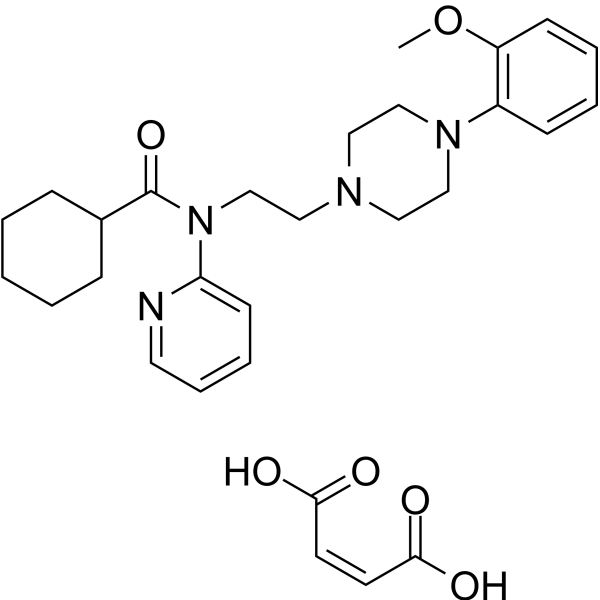
WAY-100635 maleate is a potent and selective 5-hydroxytryptamine 1A (5-HT1A) receptor antagonist with an IC50 value of 0.91 nM and Ki value of 0.39 nM. WAY-100635 maleate has pIC50 values for 5-HT1A and α1-adrenergic receptors of 8.9 and 6.6, respectively. WAY-100635 maleate is also a potent dopamine D4 receptor agonist .
|
-
- HY-A0066AR
-
|
Imidaline hydrochloride (Standard); NSC35110 hydrochloride (Standard)
|
Reference Standards
Adrenergic Receptor
|
Cardiovascular Disease
Endocrinology
|
|
Tolazoline (hydrochloride) (Standard) is the analytical standard of Tolazoline hydrochloride (HY-A0066A). This product is intended for research and analytical applications. Tolazoline hydrochloride (Imidaline hydrochloride) is an α-adrenergic receptor antagonist. Tolazoline hydrochloride inhibits Noradrenaline (HY-13715)-induced cell contraction, modulates vascular resistance, increases arterial pressure, and reverses bradycardia and tachypnea. Tolazoline hydrochloride can be used to study erectile dysfunction, α2-adrenergic receptor agonist-related poisoning, and skin vascular disease research .
|
-
- HY-15394S1
-
|
N-0437-d3 hydrochloride
|
Isotope-Labeled Compounds
Adrenergic Receptor
Dopamine Receptor
5-HT Receptor
|
Endocrinology
|
|
(Rac)-Rotigotine-d3 hydrochloride is a deuterium labeled (Rac)-Rotigotine (hydrochloride) (HY-15394). (Rac)-Rotigotine hydrochloride is a racemate of Rotigotine. Rotigotine is a full agonist of dopamine receptor, a partial agonist of the 5-HT1A receptor, and an antagonist of the α2B-adrenergic receptor, with Kis of 0.71 nM, 4-15 nM, and 83 nM for the dopamine D3 receptor and D2, D5, D4 receptors, and dopamine D1 receptor.
|
-
- HY-15394R
-
|
N-0437 hydrochloride (Standard)
|
Dopamine Receptor
Adrenergic Receptor
5-HT Receptor
Reference Standards
|
Neurological Disease
Endocrinology
|
|
(Rac)-Rotigotine (hydrochloride) (Standard) is the analytical standard of (Rac)-Rotigotine (hydrochloride). This product is intended for research and analytical applications. (Rac)-Rotigotine hydrochloride is a racemate of Rotigotine. Rotigotine is a full agonist of dopamine receptor, a partial agonist of the 5-HT1A receptor, and an antagonist of the α2B-adrenergic receptor, with Kis of 0.71 nM, 4-15 nM, and 83 nM for the dopamine D3 receptor and D2, D5, D4 receptors, and dopamine D1 receptor.
|
-
- HY-15394S
-
|
N-0437-d7 (hydrochloride)
|
Isotope-Labeled Compounds
Dopamine Receptor
Adrenergic Receptor
5-HT Receptor
|
Neurological Disease
Endocrinology
|
|
(Rac)-Rotigotine-d7 (hydrochloride) is deuterium labeled (Rac)-Rotigotine (hydrochloride). (Rac)-Rotigotine hydrochloride is a racemate of Rotigotine. Rotigotine is a full agonist of dopamine receptor, a partial agonist of the 5-HT1A receptor, and an antagonist of the α2B-adrenergic receptor, with Kis of 0.71 nM, 4-15 nM, and 83 nM for the dopamine D3 receptor and D2, D5, D4 receptors, and dopamine D1 receptor.
|
-
- HY-137575R
-
|
|
Reference Standards
Drug Metabolite
|
Others
|
|
Terbutalone (Standard) is the analytical standard of Terbutalone. This product is intended for research and analytical applications. Terbutalone is a derivative of Terbutaline (HY-B0802A). Terbutaline is an orally active β2-adrenergic receptor agonist and an active metabolite of Bambuterol (HY-17501). Terbutaline can be used in asthma symptom research .
|
-
- HY-59132R
-
|
|
Reference Standards
Drug Intermediate
|
Others
|
|
2-Amino-1-phenylethanol (Standard) is the analytical standard of 2-Amino-1-phenylethanol. This product is intended for research and analytical applications. 2-Amino-1-phenylethanol is a pharmaceutical intermediate that can be used for the synthesis of antimalarial agents and β2-adrenergic receptor agonists.
|
-
- HY-19436
-
|
GW 427353
|
Adrenergic Receptor
|
Metabolic Disease
Endocrinology
|
|
Solabegron (GW 427353) is a selective β3-adrenergic receptor agonist, stimulating cAMP accumulation in Chinese hamster ovary cells expressing the human β3-AR, with an EC50 value of 22 nM . Solabegron (GW 427353) is being developed for the treatment of overactive bladder and irritable bowel syndrome .
|
-
- HY-175136
-
|
GAh acetate
|
Adrenergic Receptor
|
Infection
Neurological Disease
|
|
Chloroguanabenz (acetate) is an antiprion agent and a derivative of the α2-adrenergic receptor agonist guanabenz. Chloroguanabenz (acetate) can inhibit the formation of prion in yeast and mammalian in vitro assays. Chloroguanabenz (acetate) can reduce the levels of truncated Huntingtin derivative Htt48 in HEK293T cells. Chloroguanabenz (acetate) can be studied in research on Huntington’s disease .
|
-
- HY-B0010AS
-
|
|
Isotope-Labeled Compounds
Adrenergic Receptor
|
Inflammation/Immunology
|
|
Formoterol-d3 is deuterium labeled Arformoterol. Arformoterol ((R,R)-Formoterol), the (R,R)-enantiomer of Formoterol, is a long-acting β2-adrenergic receptor (β2-AR) agonist, with a Kd of 2.9 nM. Arformoterol can be used for the research of chronic obstructive pulmonary disease (COPD) .
|
-
- HY-160210
-
|
|
Adrenergic Receptor
|
Cardiovascular Disease
|
|
BAY-6096, a chemical probe, is a potent, selective, and highly water-soluble adrenergic receptor α2B antagonist with an IC50 of 14 nM. BAY-6096 can effectively reduceα 2B receptor agonist-induced rat vascular contraction .
|
-
- HY-13715R
-
-
- HY-117071A
-
|
Ro 115-1240 hydrochloride
|
Adrenergic Receptor
Apoptosis
|
Cardiovascular Disease
Endocrinology
|
|
Dabuzalgron (Ro 115-1240) hydrochloride is an orally active and selective α-1A adrenergic receptor agonist for the treatment of urinary incontinence. Dabuzalgron hydrochloride protects against Doxorubicin-induced cardiotoxicity by preserving mitochondrial function .
|
-
- HY-B1111S1
-
-
- HY-117406R
-
|
|
Adrenergic Receptor
Reference Standards
|
Metabolic Disease
|
|
Clencyclohexerol (Standard) is the analytical standard of Clencyclohexerol (HY-117406). This product is intended for research and analytical applications. Clencyclohexerol is a β2 adrenergic receptor agonist. Clencyclohexerol can be used as a growth promoter in animals .
|
-
- HY-117071
-
|
Ro 115-1240
|
Adrenergic Receptor
Apoptosis
|
Cardiovascular Disease
Endocrinology
|
|
Dabuzalgron (Ro 115-1240) is an orally active and selective α-1A adrenergic receptor agonist for the treatment of urinary incontinence. Dabuzalgron protects against Doxorubicin-induced cardiotoxicity by preserving mitochondrial function .
|
-
- HY-100634
-
|
(±)-4-hydroxy Propranolol hydrochloride
|
Adrenergic Receptor
|
Cardiovascular Disease
|
|
4-Hydroxypropranolol hydrochloride is a non-cardiac selective β-adrenergic receptor antagonist and a metabolite produced after oral administration of Propranolol (HY-B0573B). 4-Hydroxypropranolol hydrochloride also acts as a membrane stabilizer and possesses intrinsic sympathomimetic inhibitory activity. 4-Hydroxypropranolol hydrochloride blocks β-adrenergic receptors to antagonize the effects of catecholamines, acts as a partial β-adrenergic receptor agonist, and induces membrane stabilization. 4-Hydroxypropranolol hydrochloride alters heart rate, left ventricular contractility, and atrioventricular conduction time. 4-Hydroxypropranolol hydrochloride can be used in research related to cardiovascular and cerebrovascular diseases .
|
-
- HY-W722796
-
|
|
Adrenergic Receptor
|
Others
|
|
Tuaminoheptane sulfate is an alpha-adrenergic receptor agonist. Tuaminoheptane sulfate exerts its decongestant and irritant effects by inhibiting norepinephrine reuptake and promoting its release. Tuaminoheptane sulfate can be used in research on nasal diseases such as decongestion .
|
-
- HY-101094R
-
|
R79598 (Standard)
|
5-HT Receptor
Reference Standards
Dopamine Receptor
|
Neurological Disease
|
|
Ocaperidone (Standard) is the analytical standard of Ocaperidone (HY-101094). This product is intended for research and analytical applications. Ocaperidone is an effective antipsychotic agent, acting as a potent 5-HT2 and dopamine D2 antagonist, and a 5-HT1A agonist, with Kis of 0.14 nM, 0.46 nM, 0.75 nM, 1.6 nM and 5.4 nM for 5-HT2, a1-adrenergic receptor, dopamine D2, histamine H1 and a2-adrenergic receptor, respectively, and a pEC50 and pKi of 7.60 and 8.08 for h5-HT1A.
|
-
- HY-171978A
-
|
|
Adrenergic Receptor
|
Cardiovascular Disease
|
|
LM-189 free base, a G protein alpha subunit I (Gαi)-biased agonist, is a Gαi-biased ligand of β2-adrenergic receptor (β2AR). LM-189 free base stabilizes a distinct conformation in TM6 and increases the dynamics of ICL2. LM-189 free base can be used to develop the Gαi-biased β2AR agonists .
|
-
- HY-75502R
-
|
N-0923 (Standard); (-)-N 0437 (Standard)
|
Reference Standards
Dopamine Receptor
Adrenergic Receptor
5-HT Receptor
|
Neurological Disease
Endocrinology
|
|
Rotigotine (Standard) is the analytical standard of Rotigotine. This product is intended for research and analytical applications. Rotigotine is a potent dopamine receptor agonist with Ki values of 0.71 nM, 4-15 nM, and 83 nM for the dopamine D3 receptor and D2, D5, D4 receptors and dopamine D1 receptor. Rotigotine a partial agonist of the 5-HT1A receptor, and an antagonist of the α2B-adrenergic receptor. Rotigotine can be used for parkinson's disease (PD) research .
|
-
- HY-129481
-
|
|
5-HT Receptor
|
Neurological Disease
|
|
LY 178210 (Compound 24) is a selective partial agonist of the 5-HT1A receptor, with Ki values of 0.67 and 380 nM for the 5-HT1A and 5-HT1D receptors, respectively. LY 178210 has almost no activity against α₂-adrenergic receptors, 5-HT₂, and other neurotransmitter receptors. LY 178210 inhibits Foscolin-stimulated cyclase activity, but its maximum potency is lower than that of the full agonist 8-OH-DPAT (HY-112061). LY 178210 significantly reduces 5-hydroxyindoleacetic acid (5-HIAA) levels in the greater hypothalamus and increases serum corticosterone concentrations .
|
-
- HY-100300
-
-
- HY-13715BR
-
|
Levarterenol bitartrate monohydrate (Standard); L-Noradrenaline bitartrate monohydrate (Standard)
|
Reference Standards
Adrenergic Receptor
Autophagy
Endogenous Metabolite
|
Cardiovascular Disease
Endocrinology
Cancer
|
|
Norepinephrine (bitartrate monohydrate) (Standard) is the analytical standard of Norepinephrine (bitartrate monohydrate). This product is intended for research and analytical applications. Norepinephrine (Levarterenol; L-Noradrenaline) bitartrate monohydrate is a potent adrenergic receptor (AR) agonist. Norepinephrine activates α1, α2, β1 receptors .
|
-
- HY-12749AS
-
|
|
Isotope-Labeled Compounds
Adrenergic Receptor
|
Cardiovascular Disease
|
|
Midodrine-d6 (hydrochloride) is a selective and orally active adrenergic α1-receptor agonist. Midodrine-d6 (hydrochloride) can strengthen vascular contraction. Midodrine-d6 (hydrochloride) can be used for the researches of cardiovascular disease, such as orthostatic hypotension .
|
-
- HY-106863
-
|
|
Adrenergic Receptor
|
Metabolic Disease
|
|
BRL 35135 is a potent and selective β3-adrenergic receptor agonist. BRL 35135 can dose dependently increase energy expenditure, reduce weight, and only reduce fat without reducing muscle protein. BRL 35135 can significantly improve glucose tolerance and insulin sensitivity. BRL 35135 can be used to study metabolic conditions such as obesity and diabetes .
|
-
- HY-B1037
-
|
Albuterol; AH-3365
|
Adrenergic Receptor
ERK
|
Inflammation/Immunology
Cancer
|
|
Salbutamol (Albuterol) is an orally active short-acting β2-adrenergic receptor agonist. Salbutamol promotes tumorigenesis in gastric cancer cells through the β2-AR/ERK/EMT pathway. Salbutamol can relax bronchial smooth muscle and is used to study bronchospasm induced by asthma and chronic obstructive pulmonary disease .
|
-
- HY-101320A
-
|
ICI-D 7114 hydrochloride
|
Adrenergic Receptor
|
Endocrinology
|
|
ZD-7114 hydrochloride is a potent and selective agonist of β3-adrenergic. ZD-7114 hydrochloride is a selective thermogenic agent in vivo. ZD-7114 hydrochloride can be used in study obesity and diabetes .
|
-
- HY-W103960
-
|
|
Adrenergic Receptor
|
Metabolic Disease
|
|
Mirabegron impurity-1 is a potent and selective β3- adrenergic receptor agonist. Mirabegron impurity-1 has the activity of inhibiting metabolism. Mirabegron impurity-1 can be used in the study of the study of bladder impurity .
|
-
- HY-B1111R
-
|
BTS-27419 (Standard)
|
Reference Standards
Adrenergic Receptor
Monoamine Oxidase
Parasite
|
Infection
Endocrinology
|
|
Amitraz (Standard) is the analytical standard of Amitraz. This product is intended for research and analytical applications. Amitraz is a non-systemic acaricide and insecticide with alpha-adrenergic agonist activity that interacts with octopamine receptors in the central nervous system and inhibits monoamine oxidase and prostaglandin synthesis.
|
-
- HY-100935
-
|
CL 263780; (±)-2-Amino-5-[1-hydroxy-2-[(1-methylethyl)amino]ethyl]benzonitrile
|
Adrenergic Receptor
|
Metabolic Disease
|
|
Cimaterol (CL 263780) is a β-adrenergic agonist on energy metabolism in ob/ob mice . The Kd for Cimaterol binding to the L6 β-receptor is 26 nM which is compatible with its EC50 for the stimulation of protein synthesis (approx 5 nM) .
|
-
- HY-32329S
-
|
|
Isotope-Labeled Compounds
5-HT Receptor
Adrenergic Receptor
|
Neurological Disease
|
|
Setiptiline-d3 is the deuterium labeled Setiptiline. Setiptiline (Org-8282) is a serotonin receptor antagonist. Setiptiline is a tetracyclic antidepressant (TeCA) which acts as a noradrenergic and specific serotonergic antidepressant (NaSSA). Setiptiline acts as a norepinephrine reuptake inhibitor, α2-adrenergic receptor antagonist, and serotonin receptor antagonist, likely at the 5-HT2A, 5-HT2C, and/or 5-HT3 subtypes, as well as an H1 receptor inverse agonist/antihistamine .
|
-
- HY-32329R
-
|
Org-8282 (Standard)
|
5-HT Receptor
Adrenergic Receptor
Reference Standards
|
Neurological Disease
|
|
Setiptiline (Standard) is the analytical standard of Setiptiline. This product is intended for research and analytical applications. Setiptiline (Org-8282) is a serotonin receptor antagonist. Setiptiline is a tetracyclic antidepressant (TeCA) which acts as a noradrenergic and specific serotonergic antidepressant (NaSSA). Setiptiline acts as a norepinephrine reuptake inhibitor, α2-adrenergic receptor antagonist, and serotonin receptor antagonist, likely at the 5-HT2A, 5-HT2C, and/or 5-HT3 subtypes, as well as an H1 receptor inverse agonist/antihistamine.
|
-
- HY-107915
-
|
(-)-Cobefrin; (-)-α-Methylnoradrenaline; (-)-Nordefrin
|
Adrenergic Receptor
|
Cardiovascular Disease
|
Levonordefrin ((-)-Cobefrin; (-)-α-Methylnoradrenaline; (-)-Nordefrin) is an α-adrenergic receptor agonist with blood pressure regulatory properties. Levonordefrin is a key metabolite responsible for the hypotensive effect of α-methyldopa. By stimulating central α-adrenergic receptors in the nucleus tractus solitarius region of the medulla oblongata, Levonordefrin induces centrally mediated hypotension and bradycardia. When administered intravenously, Levonordefrin increases mean arterial blood pressure in a dose-dependent manner. Levonordefrin is applicable for research on the pathophysiology of hypertension and drug metabolism .
|
-
- HY-183859
-
|
|
Adrenergic Receptor
|
Cardiovascular Disease
|
|
H142/08 is a β1-adrenergic receptor-selective agonist. H142/08 induces concentration-dependent relaxation of isolated rat uterus and acts as a chronotropic stimulant to increase atrial rate, and its effects are effectively antagonized by Pafenolol (HY-165495). H142/08 also antagonizes the chronotropic effect of isoproterenol on isolated rat right atrium, but requires a higher proportion of receptor occupancy to produce sufficient stimulatory effects .
|
-
- HY-A0007S
-
|
N-0923 D7 Hydrochloride
|
Isotope-Labeled Compounds
Dopamine Receptor
|
Neurological Disease
|
|
Rotigotine-d7 (N-0923-d7) hydrochloride is the deuterium labeled Rotigotine(HY-75502). Rotigotine is a potent dopamine receptor agonist with Ki values of 0.71 nM, 4-15 nM, and 83 nM for the dopamine D3 receptor and D2, D5, D4 receptors and dopamine D1 receptor. Rotigotine a partial agonist of the 5-HT1A receptor, and an antagonist of the α2B-adrenergic receptor. Rotigotine can be used for parkinson's disease (PD) research.
|
-
- HY-B1615R
-
|
NAB-365 (Standard)
|
Reference Standards
Adrenergic Receptor
|
Inflammation/Immunology
|
|
Clenbuterol (Standard) is the analytical standard of Clenbuterol. This product is intended for research and analytical applications. Clenbuterol (NAB-365) is a β2-adrenergic receptor agonist with an EC50 of 31.9 nM . Clenbuterol is a very potent inhibitor of the lipopolysaccharide (LPS)-induced release of TNF-α and IL-1β. Clenbuterol can inhibit the inflammatory process. Clenbuterol is a bronchodilator .
|
-
- HY-W015546R
-
|
BMAA hydrochloride (Standard)
|
Bacterial
Reference Standards
mGluR
PKC
|
Neurological Disease
Inflammation/Immunology
|
|
Clenbuterol (Standard) is the analytical standard of Clenbuterol. This product is intended for research and analytical applications. Clenbuterol (NAB-365) is a β2-adrenergic receptor agonist with an EC50 of 31.9 nM . Clenbuterol is a very potent inhibitor of the lipopolysaccharide (LPS)-induced release of TNF-α and IL-1β. Clenbuterol can inhibit the inflammatory process. Clenbuterol is a bronchodilator .
|
-
- HY-128510
-
|
|
Adrenergic Receptor
|
Cardiovascular Disease
|
|
Colterol is the agonist for adrenergic receptor, and exhibits good affinity to β1-adrenoreceptor (heart) and β2-adrenoreceptor (lung) with IC50 of 645 nM and 147 nM. Colterol exhibits potential as a bronchodilator .
|
-
- HY-108353
-
-
- HY-108509
-
|
BMY-14802-1; BMS 181100 hydrochloride
|
Sigma Receptor
5-HT Receptor
Adrenergic Receptor
|
Neurological Disease
|
|
BMY-14802 hydrochloride (BMY-14802-1) is a selective and orally active sigma receptor antagonist with an IC50 of 112 nM. BMY-14802 hydrochloride is also a 5-HT1A and adrenergic α1 receptors agonist. BMY-14802 hydrochloride has antipsychotic effects .
|
-
- HY-32329AR
-
|
MO-8282 (Standard)
|
5-HT Receptor
Reference Standards
|
Neurological Disease
|
|
Setiptiline (maleate) (Standard) is the analytical standard of Setiptiline (maleate). This product is intended for research and analytical applications. Setiptiline maleate (MO-8282 maleate) is a serotonin receptor antagonist. Setiptiline maleate is a tetracyclic antidepressant (TeCA) which acts as a noradrenergic and specific serotonergic antidepressant (NaSSA). Setiptiline maleate acts as a norepinephrine reuptake inhibitor, α2-adrenergic receptor antagonist, and serotonin receptor antagonist, likely at the 5-HT2A, 5-HT2C, and/or 5-HT3 subtypes, as well as an H1 receptor inverse agonist/antihistamine .
|
-
- HY-108353A
-
-
- HY-B0468
-
|
Isoproterenol hydrochloride
|
Adrenergic Receptor
Endogenous Metabolite
|
Cardiovascular Disease
Endocrinology
|
|
Isoprenaline (Isoproterenol) hydrochloride is a non-selective, orally active β-adrenergic receptor agonist. Isoprenaline has potent peripheral vasodilator, bronchodilator, and cardiac stimulating activities. Isoprenaline can be used for the research of bradycardia and bronchial asthma .
|
-
- HY-B0436
-
|
Albuterol hemisulfate; AH-3365 hemisulfate
|
Adrenergic Receptor
ERK
|
Inflammation/Immunology
Cancer
|
|
Salbutamol (Albuterol) hemisulfate is an orally active short-acting β2-adrenergic receptor agonist. Salbutamol hemisulfate promotes tumorigenesis in gastric cancer cells through the β2-AR/ERK/EMT pathway. Salbutamol hemisulfate can relax bronchial smooth muscle and is used to study bronchospasm induced by asthma and chronic obstructive pulmonary disease .
|
-
- HY-B0010DR
-
|
(R,R)-Formoterol tartrate (Standard)
|
Reference Standards
Adrenergic Receptor
|
Inflammation/Immunology
|
|
Arformoterol (tartrate) (Standard) is the analytical standard of Arformoterol (tartrate). This product is intended for research and analytical applications. Arformoterol ((R,R)-Formoterol) tartrate, the (R,R)-enantiomer of Formoterol, is a long-acting β2-adrenergic receptor (β2-AR) agonist, with a Kd of 2.9 nM. Arformoterol tartrate can be used for the research of chronic obstructive pulmonary disease (COPD) .
|
-
- HY-B1037B
-
|
Albuterol adipate; AH-3365 adipate
|
Adrenergic Receptor
ERK
|
Inflammation/Immunology
Cancer
|
|
Salbutamol (Albuterol) adipate is an orally active short-acting β2-adrenergic receptor agonist. Salbutamol adipate promotes tumorigenesis in gastric cancer cells through the β2-AR/ERK/EMT pathway. Salbutamol adipate can relax bronchial smooth muscle and is used to study bronchospasm induced by asthma and chronic obstructive pulmonary disease .
|
-
- HY-14300
-
|
GW642444
|
Adrenergic Receptor
|
Inflammation/Immunology
Endocrinology
Cancer
|
|
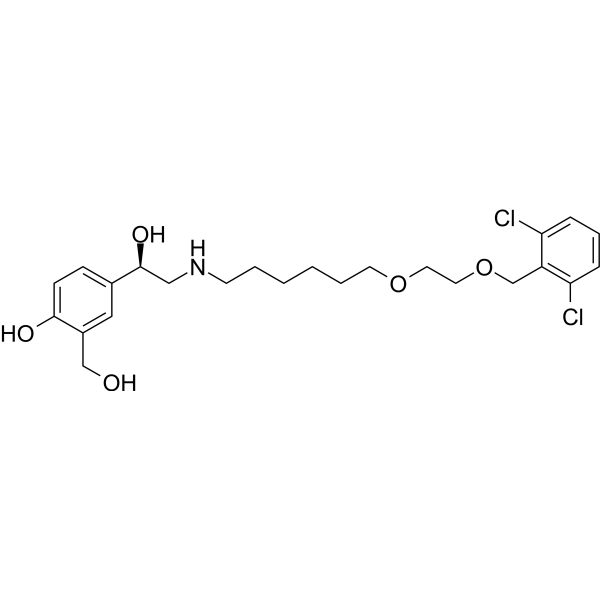
Vilanterol (GW642444) is a long-acting β2 adrenergic receptor agonist. Vilanterol has pEC50 values for β2-AR, β1-AR, and β3-AR of 9.4, 6.4, and 6.1, respectively. Vilanterol selectively activates airway β2 adrenergic receptors, increases cAMP and thus relaxes bronchial smooth muscle. Vilanterol can be used in asthma research [3][5].
|
-
- HY-14300D
-
|
GW642444 acetate
|
Adrenergic Receptor
|
Inflammation/Immunology
|
|
Vilanterol (GW642444) acetate is a long-acting β2 adrenergic receptor agonist. Vilanterol acetate has pEC50 values for β2-AR, β1-AR, and β3-AR of 9.4, 6.4, and 6.1, respectively. Vilanterol acetate selectively activates airway β2 adrenergic receptors, increases cAMP and thus relaxes bronchial smooth muscle. Vilanterol acetate can be used in asthma research [1][2].
|
-
- HY-B0475A
-
|
|
Adrenergic Receptor
|
Inflammation/Immunology
|
|
Xylometazoline is an α-adrenergic receptor agonist (Ki=0.05-1.7 μM). Xylometazoline can constrict nasal blood vessels and increase nasal airflow. Xylometazoline hydrochloride can be used in nose stuffiness and runny nose research .
|
-
- HY-B0475
-
|
|
Adrenergic Receptor
|
Inflammation/Immunology
|
|
Xylometazoline hydrochloride is an α-adrenergic receptor agonist (Ki=0.05-1.7 μM). Xylometazoline hydrochloride can constrict nasal blood vessels and increase nasal airflow. Xylometazoline hydrochloride can be used in nose stuffiness and runny nose research .
|
-
- HY-151198
-
|
|
mAChR
Adrenergic Receptor
Calcium Channel
|
Inflammation/Immunology
Endocrinology
|
|
CHF-6366 is a potent M3 muscarinic antagonist and β2-adrenergic receptors agonist with pKi values of 10.4 and 11.4, respectively. CHF-6366 is also a weak calcium channel inhibitor (IC50~50 μM). CHF-6366 inhibits bronchoconstriction in guinea pigs. CHF-6366 can be used to research chronic obstructive pulmonary disease (COPD) .
|
-
- HY-B1111S
-
-
- HY-153091
-
|
|
Adrenergic Receptor
5-HT Receptor
Sigma Receptor
|
Neurological Disease
|
|
BMY 14802 is a sigma-1 receptor (σ1R) antagonist, as well as an agonist at serotonin (5-HT) 1A and adrenergic alpha-1 receptors. BMY 14802 inhibits abnormal involuntary movement (AIM) in rat Parkinson's disease (PD) model, with down-regulating the expression of AIM .
|
-
- HY-10349AR
-
|
|
Reference Standards
5-HT Receptor
Dopamine Receptor
|
Neurological Disease
|
|
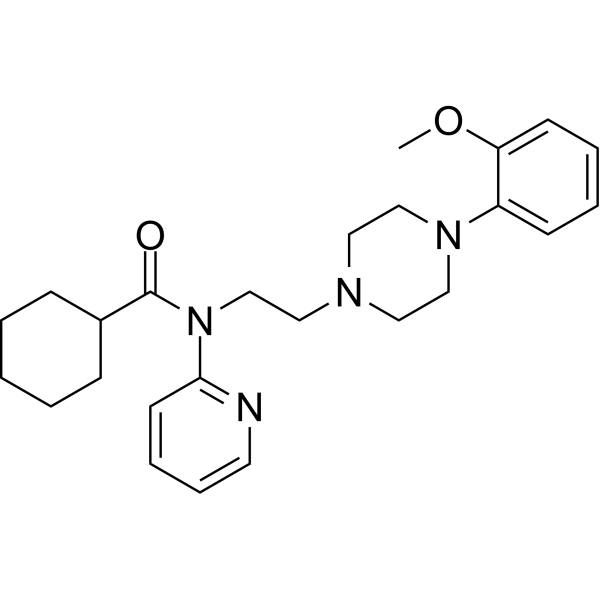
WAY-100635 (maleate) (Standard) is the analytical standard of WAY-100635 (maleate). This product is intended for research and analytical applications. WAY-100635 maleate is a potent and selective 5-hydroxytryptamine 1A (5-HT1A) receptor antagonist with an IC50 value of 0.91 nM and Ki value of 0.39 nM. WAY-100635 maleate has pIC50 values for 5-HT1A and α1-adrenergic receptors of 8.9 and 6.6, respectively. WAY-100635 maleate is also a potent dopamine D4 receptor agonist .
|
-
- HY-14300A
-
|
GW642444 trifenatate
|
Adrenergic Receptor
|
Inflammation/Immunology
Endocrinology
Cancer
|
|
Vilanterol (GW642444) trifenatate is a long-acting β2 adrenergic receptor agonist. Vilanterol trifenatate has pEC50 values for β2-AR, β1-AR, and β3-AR of 9.4, 6.4, and 6.1, respectively. Vilanterol trifenatate selectively activates airway β2 adrenergic receptors, increases cAMP and thus relaxes bronchial smooth muscle. Vilanterol trifenatate can be used in asthma research [2][4].
|
-
- HY-103110
-
ST1936
1 Publications Verification
|
5-HT Receptor
Adrenergic Receptor
|
Neurological Disease
|
|
ST1936 is a selective, nanomolar affinity 5-HT6 receptor agonist with Ki values of 13 nM, 168 nM and 245 nM for human 5-HT6, 5-HT7 and 5-HT2B receptors, respectively. ST1936 also shows moderate affinity (Ki of 300 nM) for human and rat α2 adrenergic receptor .
|
-
- HY-185289
-
|
|
Adrenergic Receptor
Akt
|
Cancer
|
|
Methoxyfenoterol is a β2-adrenergic receptor agonist. Methoxyfenoterol stimulates intracellular cAMP accumulation, inhibits tumor cell proliferation, induces G1 cell cycle arrest, upregulates cyclin-dependent kinase inhibitor p27, downregulates cyclin D1 and cyclin A, and inhibits Akt phosphorylation. Methoxyfenoterol crosses the blood-brain barrier and inhibits growth of astrocytoma xenografts. Methoxyfenoterol can be used for the research of astrocytoma, glioblastoma .
|
-
- HY-19436S
-
|
GW 427353-d8
|
Isotope-Labeled Compounds
Adrenergic Receptor
|
Metabolic Disease
Endocrinology
|
|
Solabegron-d8 (GW 427353-d8) is deuterium labeled Solabegron. Solabegron (GW 427353) is a selective β3-adrenergic receptor agonist, stimulating cAMP accumulation in Chinese hamster ovary cells expressing the human β3-AR, with an EC50 value of 22 nM . Solabegron (GW 427353) is being developed for the treatment of overactive bladder and irritable bowel syndrome .
|
-
- HY-101300
-
|
LD 3098 hydrochloride
|
Adenosine Receptor
|
Neurological Disease
|
|
Cirazoline hydrochloride (LD 3098 hydrochloride) is a potent competitive full α1A-adrenergic receptor (α1A-AR) agonist (Ki=120 nM) and only a partial agonist at α1B-AR (Ki= 960 nM) and α1D-AR (Ki=660 nM) .
|
-
- HY-10349
-
|
|
5-HT Receptor
Dopamine Receptor
|
Neurological Disease
|
|
WAY-100635 is a potent and selective 5-HT1A Receptor antagonist with a pIC50 of 8.87, an apparent pA2 of 9.71.
WAY-100635 is a potent and selective 5-hydroxytryptamine 1A (5-HT1A) receptor antagonist with an IC50 value of 0.91 nM and Ki value of 0.39 nM. WAY-100635 has pIC50 values for 5-HT1A and α1-adrenergic receptors of 8.9 and 6.6, respectively. WAY-100635 is also a potent dopamine D4 receptor agonist .
|
-
- HY-103110A
-
|
|
5-HT Receptor
Adrenergic Receptor
|
Neurological Disease
|
|
ST1936 oxalate is a selective, nanomolar affinity 5-HT6 receptor agonist with Ki values of 13 nM, 168 nM and 245 nM for human 5-HT6, 5-HT7 and 5-HT2B receptors, respectively. ST1936 oxalate also shows moderate affinity (Ki of 300 nM) for human and rat α2 adrenergic receptor .
|
-
- HY-128510A
-
|
|
Adrenergic Receptor
|
Cardiovascular Disease
|
|
Colterol hydrochloride is the hydrochloride salt form of Colterol (HY-128510). Colterol hydrochloride is the agonist for adrenergic receptor, and exhibits good affinity to β1-adrenoreceptor (heart) and β2-adrenoreceptor (lung) with IC50 of 645 nM and 147 nM. Colterol hydrochloride exhibits potential as a bronchodilator .
|
-
- HY-A0144A
-
|
|
Adrenergic Receptor
AMPK
Akt
|
Cardiovascular Disease
|
|
Etilefrine hydrochloride is a sympathetic nerve agonist and AMPK activator that selectively targets α1/β1 adrenergic receptors. Etilefrine hydrochloride stimulates α1 adrenergic receptors, leading to contraction of vascular smooth muscle and increased peripheral resistance. Etilefrine hydrochloride also stimulates β1 receptors to enhance myocardial contractility and increase heart rate, thereby increasing blood pressure and improving cardiac output. Etilefrine hydrochloride also bidirectionally regulates the AMPK/Akt pathway and modulates the phosphorylation levels. Etilefrine hydrochloride can be used in cardiovascular research, such as postural hypotension, chylothorax, and improving low cardiac output .
|
-
- HY-A0144
-
|
|
Adrenergic Receptor
AMPK
Akt
|
Cardiovascular Disease
|
|
Etilefrine is a sympathetic nerve agonist and AMPK activator that selectively targets α1/β1 adrenergic receptors. Etilefrine stimulates α1 adrenergic receptors, leading to contraction of vascular smooth muscle and increased peripheral resistance. Etilefrine also stimulates β1 receptors to enhance myocardial contractility and increase heart rate, thereby increasing blood pressure and improving cardiac output. Etilefrine also bidirectionally regulates the AMPK/Akt pathway and modulates the phosphorylation levels. Etilefrine can be used in cardiovascular research, such as postural hypotension, chylothorax, and improving low cardiac output .
|
-
- HY-14300AS
-
|
GW642444-d4 trifenatate
|
Isotope-Labeled Compounds
Adrenergic Receptor
|
Inflammation/Immunology
Endocrinology
|
|
Vilanterol-d4 (trifenatate) is deuterium labeled Vilanterol (trifenatate).Vilanterol (GW642444) acetate is a long-acting β2 adrenergic receptor agonist. Vilanterol acetate has pEC50 values for β2-AR, β1-AR, and β3-AR of 9.4, 6.4, and 6.1, respectively. Vilanterol acetate selectively activates airway β2 adrenergic receptors, increases cAMP and thus relaxes bronchial smooth muscle. Vilanterol acetate can be used in asthma research.
|
-
- HY-120246
-
|
|
Adrenergic Receptor
Phosphodiesterase (PDE)
|
Inflammation/Immunology
|
|
GS-5759 is both a β₂-adrenergic receptor agonist and a PDE4 inhibitor. GS-5759 increases intracellular cAMP levels by activating the β₂ receptor, promoting bronchial dilation. GS-5759 inhibits PDE4 activity, reduces cAMP degradation, and enhances anti-inflammatory effects. GS-5759 exhibits potent bronchial dilation and anti-inflammatory capabilities in animal models. GS-5759 can be used for research on respiratory diseases such as chronic obstructive pulmonary disease (COPD) .
|
-
- HY-107915R
-
|
(-)-Cobefrin (Standard); (-)-α-Methylnoradrenaline (Standard); (-)-Nordefrin (Standard)
|
Reference Standards
Adrenergic Receptor
|
Others
|
|
Levonordefrin (Standard) is the analytical standard of Levonordefrin. This product is intended for research and analytical applications. Levonordefrin ((-)-Cobefrin; (-)-α-Methylnoradrenaline; (-)-Nordefrin) is an α-adrenergic receptor agonist with blood pressure regulatory properties. Levonordefrin is a key metabolite responsible for the hypotensive effect of α-methyldopa. By stimulating central α-adrenergic receptors in the nucleus tractus solitarius region of the medulla oblongata, Levonordefrin induces centrally mediated hypotension and bradycardia. When administered intravenously, Levonordefrin increases mean arterial blood pressure in a dose-dependent manner. Levonordefrin is applicable for research on the pathophysiology of hypertension and drug metabolism .
|
-
- HY-135525
-
|
|
Dopamine Receptor
Adrenergic Receptor
|
Neurological Disease
Inflammation/Immunology
|
|
Agroclavine acts as an agonist of the D1-dopamine receptor and α1-adrenergic receptor. Agroclavine enhances the sensitivity of the brain to magnetic fields; it impairs spatial memory without affecting hippocampal long-term potentiation (LTP). Agroclavine exerts bidirectional regulatory effects on immune activity: it enhances NK cell activity with low toxicity under normal conditions, while it inhibits NK cell activity and exhibits significant cardiac and hepatic toxicity under stress conditions. Agroclavine can be used for research on neuroelectrophysiology, learning and memory, and immunoregulation .
|
-
- HY-17457
-
|
Levosalbutamol hemitartrate
|
Adrenergic Receptor
PI3K
|
Inflammation/Immunology
|
|
Levalbuterol (Levosalbutamol) hemitartrate is a β2-adrenergic receptor agonist and PI3K inhibitor. Levalbuterol hemitartrate inhibits PI3K activity, reduces NF-κB and Rb protein expression, activates the cAMP/PKA pathway, and stimulates cAMP release. Levalbuterol hemitartrate relaxes airway smooth muscle, reduces intracellular calcium levels, and inhibits spasmogen-induced contractions. Levalbuterol hemitartrate can be used for the research of moderate-to-severe asthma .
|
-
- HY-119706
-
|
|
Apoptosis
Arrestin
|
Others
|
|
Barbadin is a novel and selective β-arrestin/β2-adaptin interaction inhibitor, has IC50 values of 19.1 μM for β-arrestin1 and 15.6 μM for β-arrestin2. Barbadin blocks agonist-promoted endocytosis of the prototypical β2-adrenergic, V2-vasopressin and angiotensin-II type-1 receptors. Barbadin can induce apoptosis .
|
-
- HY-118944
-
|
|
Adrenergic Receptor
|
Endocrinology
|
|
L-748328 is a potent and selective human β3-adrenergic receptor antagonist. L-748328 has a Ki of 3.7 nM against human cloned β3-AR expressed in Chinese hamster ovary (CHO) cells. In addition, L-748328 inhibits the lipolytic response induced by the β3-AR agonist L-742791 in isolated non-human primate adipocytes .
|
-
- HY-B1481A
-
|
Isoetarine
|
Adrenergic Receptor
|
Cardiovascular Disease
Inflammation/Immunology
|
|
Isoetharine (Isoetarine) is an orally active selective agonist of β-adrenergic receptors. Isoetharine is a catechol-like agent and catechol O-methyltransferase (COMT) mediates its methylation. Isoetharine can promote the production of cAMP which stimulates the relaxation of smooth muscle cells and can be used as an emphysema, bronchitis and bronchodilator .
|
-
- HY-B1481
-
|
Isoetarine mesylate
|
Adrenergic Receptor
|
Cardiovascular Disease
Inflammation/Immunology
|
|
Isoetharine (Isoetarine) mesylate is an orally active selective agonist of β-adrenergic receptors. Isoetharine mesylate is a catechol-like agent and catechol O-methyltransferase (COMT) mediates its methylation. Isoetharine mesylate can promote the production of cAMP which stimulates the relaxation of smooth muscle cells and can be used as an emphysema, bronchitis and bronchodilator .
|
-
- HY-106928
-
|
|
5-HT Receptor
|
Neurological Disease
|
|
U93385 is a 5-HT₁A receptor agonist. U93385 exhibits no significant α₂ adrenergic, D₂ dopamine, or other receptor activities. U93385 has a heart rate regulating effect, stimulating the vagus nerve to induce bradycardia. U93385 can be used to study the 5-HT₁A receptor-mediated vagal nerve tolerance mechanism .
|
-
- HY-B0468S
-
|
Isoproterenol-d7 hydrochloride
|
Isotope-Labeled Compounds
Endogenous Metabolite
Adrenergic Receptor
|
Cardiovascular Disease
|
|
Isoprenaline-d7 (hydrochloride) is a deuterated labeled Isoprenaline (hydrochloride) . Isoprenaline (Isoproterenol) hydrochloride is a non-selective, orally active β-adrenergic receptor agonist. Isoprenaline has potent peripheral vasodilator, bronchodilator, and cardiac stimulating activities. Isoprenaline can be used for the research of bradycardia and bronchial asthma .
|
-
- HY-100935R
-
|
CL 263780 (Standard); (±)-2-Amino-5-[1-hydroxy-2-[(1-methylethyl)amino]ethyl]benzonitrile (Standard)
|
Reference Standards
Adrenergic Receptor
|
Metabolic Disease
|
|
Cimaterol (Standard) is the analytical standard of Cimaterol. This product is intended for research and analytical applications. Cimaterol (CL 263780) is a β-adrenergic agonist on energy metabolism in ob/ob mice . The Kd for Cimaterol binding to the L6 β-receptor is 26 nM which is compatible with its EC50 for the stimulation of protein synthesis (approx 5 nM) .
|
-
- HY-B1037S
-
|
Albuterol-d3; AH-3365-d3
|
Isotope-Labeled Compounds
ERK
Adrenergic Receptor
|
Inflammation/Immunology
Cancer
|
|
Salbutamol-d3 (Albuterol-d3) is the deuterium labeled Salbutamol (HY-B1037). Salbutamol (Albuterol) is an orally active short-acting β2-adrenergic receptor agonist. Salbutamol promotes tumorigenesis in gastric cancer cells through the β2-AR/ERK/EMT pathway. Salbutamol can relax bronchial smooth muscle and is used to study bronchospasm induced by asthma and chronic obstructive pulmonary disease .
|
-
- HY-B0436R
-
|
Albuterol hemisulfate (Standard); AH-3365 hemisulfate (Standard)
|
Reference Standards
Adrenergic Receptor
ERK
|
Inflammation/Immunology
Cancer
|
|
Salbutamol (Albuterol) hemisulfate (Standard) is the analytical standard of Salbutamol hemisulfate (HY-B0436). This product is intended for research and analytical applications. Salbutamol (Albuterol) hemisulfate is an orally active short-acting β2-adrenergic receptor agonist. Salbutamol hemisulfate promotes tumorigenesis in gastric cancer cells through the β2-AR/ERK/EMT pathway. Salbutamol hemisulfate can relax bronchial smooth muscle and is used to study bronchospasm induced by asthma and chronic obstructive pulmonary disease.
|
-
- HY-137312
-
|
SKF 40383-A
|
Adrenergic Receptor
|
Inflammation/Immunology
|
|
Carbuterol (SKF 40383-A) is a selective β2-adrenergic receptor agonist that primarily targets bronchial smooth muscle, exhibiting significant bronchodilatory and anti-allergic activity. Carbuterol can directly inhibit the immunologically induced release of histamine and slow-reacting substance of anaphylaxis (SRS-A), thereby alleviating allergic responses. Carbuterol exerts mild β1-mediated cardiac stimulation and is applicable to studies related to respiratory and immune-related diseases such as asthma and allergic disorders .
|
-
- HY-137312A
-
|
SKF 40383-A hydrochloride
|
Adrenergic Receptor
|
Inflammation/Immunology
|
|
Carbuterol (SKF 40383-A) hydrochloride is a selective β2-adrenergic receptor agonist that primarily targets bronchial smooth muscle, exhibiting significant bronchodilatory and anti-allergic activity. Carbuterol hydrochloride can directly inhibit the immunologically induced release of histamine and slow-reacting substance of anaphylaxis (SRS-A), thereby alleviating allergic responses. In addition, it exerts mild β1-mediated cardiac stimulation and is applicable to studies related to respiratory and immune-related diseases such as asthma and allergic disorders .
|
-
- HY-B1037S3
-
|
Albuterol-d9 acetate; AH-3365-d9 acetate
|
Isotope-Labeled Compounds
ERK
Adrenergic Receptor
|
Inflammation/Immunology
Cancer
|
|
Salbutamol-d9 (Albuterol-d9) acetate is the deuterium labeled Salbutamol (HY-B1037). Salbutamol (Albuterol) is an orally active short-acting β2-adrenergic receptor agonist. Salbutamol promotes tumorigenesis in gastric cancer cells through the β2-AR/ERK/EMT pathway. Salbutamol can relax bronchial smooth muscle and is used to study bronchospasm induced by asthma and chronic obstructive pulmonary disease .
|
-
- HY-B1037S2
-
|
Albuterol-d9; AH-3365-d9
|
Isotope-Labeled Compounds
ERK
Adrenergic Receptor
|
Inflammation/Immunology
Cancer
|
|
Salbutamol-d9 (Albuterol-d9) is the deuterium labeled Salbutamol (HY-B1037). Salbutamol (Albuterol) is an orally active short-acting β2-adrenergic receptor agonist. Salbutamol promotes tumorigenesis in gastric cancer cells through the β2-AR/ERK/EMT pathway. Salbutamol can relax bronchial smooth muscle and is used to study bronchospasm induced by asthma and chronic obstructive pulmonary disease .
|
-
- HY-B0475S
-
|
|
Adrenergic Receptor
Isotope-Labeled Compounds
|
Inflammation/Immunology
|
|
Xylometazoline-d4 hydrochloride is deuterated labeled Xylometazoline hydrochloride (HY-B0475). Xylometazoline hydrochloride is an α-adrenergic receptor agonist (Ki=0.05-1.7 μM). Xylometazoline hydrochloride can constrict nasal blood vessels and increase nasal airflow. Xylometazoline hydrochloride can be used in nose stuffiness and runny nose research .
|
-
- HY-B0475R
-
|
|
Reference Standards
Adrenergic Receptor
|
Inflammation/Immunology
|
|
Xylometazoline (hydrochloride) (Standard) is the analytical standard of Xylometazoline (hydrochloride). This product is intended for research and analytical applications. Xylometazoline hydrochloride is an α-adrenergic receptor agonist (Ki=0.05-1.7 μM). Xylometazoline hydrochloride can constrict nasal blood vessels and increase nasal airflow. Xylometazoline hydrochloride can be used in nose stuffiness and runny nose research .
|
-
- HY-B0468R
-
|
Isoproterenol hydrochloride (Standard)
|
Reference Standards
Adrenergic Receptor
Endogenous Metabolite
|
Cardiovascular Disease
Endocrinology
|
|
Isoprenaline (hydrochloride) (Standard) is the analytical standard of Isoprenaline (hydrochloride). This product is intended for research and analytical applications. Isoprenaline (Isoproterenol) hydrochloride is a non-selective, orally active β-adrenergic receptor agonist. Isoprenaline has potent peripheral vasodilator, bronchodilator, and cardiac stimulating activities. Isoprenaline can be used for the research of bradycardia and bronchial asthma .
|
-
- HY-A0144R
-
|
|
Adrenergic Receptor
AMPK
Akt
Reference Standards
|
Cardiovascular Disease
|
|
Etilefrine (Standard) is the analytical standard of Etilefrine. This product is intended for research and analytical applications. Etilefrine is a sympathetic nerve agonist and AMPK activator that selectively targets α1/β1 adrenergic receptors. Etilefrine stimulates α1 adrenergic receptors, leading to contraction of vascular smooth muscle and increased peripheral resistance. Etilefrine also stimulates β1 receptors to enhance myocardial contractility and increase heart rate, thereby increasing blood pressure and improving cardiac output. Etilefrine also bidirectionally regulates the AMPK/Akt pathway and modulates the phosphorylation levels. Etilefrine can be used in cardiovascular research, such as postural hypotension, chylothorax, and improving low cardiac output .
|
-
- HY-A0144AR
-
|
|
Reference Standards
AMPK
Adrenergic Receptor
Akt
|
Cardiovascular Disease
|
|
Etilefrine hydrochloride (Standard) is the analytical standard of Etilefrine hydrochloride (HY-A0144A). This product is intended for research and analytical applications. Etilefrine hydrochloride is a sympathetic nerve agonist and AMPK activator that selectively targets α1/β1 adrenergic receptors. Etilefrine hydrochloride stimulates α1 adrenergic receptors, leading to contraction of vascular smooth muscle and increased peripheral resistance. Etilefrine hydrochloride also stimulates β1 receptors to enhance myocardial contractility and increase heart rate, thereby increasing blood pressure and improving cardiac output. Etilefrine hydrochloride also bidirectionally regulates the AMPK/Akt pathway and modulates the phosphorylation levels. Etilefrine hydrochloride can be used in cardiovascular research, such as postural hypotension, chylothorax, and improving low cardiac output .
|
-
- HY-10349R
-
|
|
Reference Standards
5-HT Receptor
Dopamine Receptor
|
Neurological Disease
|
|
WAY-100635 (Standard) is the analytical standard of WAY-100635. This product is intended for research and analytical applications. WAY-100635 is a potent and selective 5-HT1A Receptor antagonist with a pIC50 of 8.87, an apparent pA2 of 9.71.
WAY-100635 is a potent and selective 5-hydroxytryptamine 1A (5-HT1A) receptor antagonist with an IC50 value of 0.91 nM and Ki value of 0.39 nM. WAY-100635 has pIC50 values for 5-HT1A and α1-adrenergic receptors of 8.9 and 6.6, respectively. WAY-100635 is also a potent dopamine D4 receptor agonist .
|
-
- HY-101300R
-
|
LD 3098 hydrochloride (Standard)
|
Reference Standards
Adenosine Receptor
|
Neurological Disease
|
|
Cirazoline (hydrochloride) (Standard) is the analytical standard of Cirazoline (hydrochloride). This product is intended for research and analytical applications. Cirazoline hydrochloride (LD 3098 hydrochloride) is a potent competitive full?α1A-adrenergic receptor (α1A-AR) agonist (Ki=120 nM) and only a partial agonist at α1B-AR (Ki= 960 nM) and α1D-AR (Ki=660 nM) .
|
-
- HY-101514
-
-
- HY-182597
-
|
|
Imidazoline Receptor
5-HT Receptor
Adrenergic Receptor
|
Neurological Disease
|
|
Tracizoline is an orally active I2-imidazoline receptor agonist. Tracizoline functionally modulates I2-imidazoline receptors, regulates hippocampal FADD cell fate adaptor, attenuates mechanical and thermal hyperalgesia, activates α2A-adrenergic receptors with very weak partial agonism, and induces antidepressant-like activity via 5-HT1A receptor activation. Tracizoline can be used for the research of inflammatory pain, neuropathic pain, and depression .
|
-
- HY-144224S
-
|
|
Isotope-Labeled Compounds
Opioid Receptor
iGluR
MMP
PI3K
Akt
NF-κB
|
Neurological Disease
Inflammation/Immunology
Cancer
|
|
Tianeptine-d6 hydrochloride is the deuterium labeled Tianeptine hydrochloride. Tianeptine hydrochloride is an atypical antidepressant. Tianeptine hydrochloride is a moderate-intensity agonist of the μ-opioid receptor (MOR), and to a lesser extent, is an agonist of the δ-opioid receptor (DOR). Tianeptine hydrochloride is a glutamate modulator that can enhance AMPA receptor and antagonize NMDA receptor. Tianeptine hydrochloride increases sensitivity of the α1 adrenergic receptor, which only manifests in chronic treatment. Tianeptine hydrochloride exerts neuroprotective effects under stress/inflammation-induced conditions, exhibiting anti-inflammatory and antioxidant properties. Tianeptine hydrochloride inhibits MMP-9 by suppressing the PI3K/Akt-mediated NF-κB pathway. Tianeptine hydrochloride can be used to alleviate symptoms of depression and anxiety, but does not cause sedative effects.
|
-
- HY-90003A
-
|
|
Opioid Receptor
iGluR
MMP
PI3K
Akt
NF-κB
|
Neurological Disease
Inflammation/Immunology
|
|
Tianeptine sodium salt is an atypical antidepressant. Tianeptine sodium salt is a moderate-intensity agonist of the μ-opioid receptor (MOR), and to a lesser extent, is an agonist of the δ-opioid receptor (DOR). Tianeptine sodium salt is a glutamate modulator that can enhance AMPA receptor and antagonize NMDA receptor. Tianeptine sodium salt increases sensitivity of the α1 adrenergic receptor, which only manifests in chronic treatment. Tianeptine sodium salt exerts neuroprotective effects under stress/inflammation-induced conditions, exhibiting anti-inflammatory and antioxidant properties. Tianeptine sodium salt inhibits MMP-9 by suppressing the PI3K/Akt-mediated NF-κB pathway. Tianeptine sodium salt can be used to alleviate symptoms of depression and anxiety, but does not cause sedative effects .
|
-
- HY-90003
-
|
|
Opioid Receptor
iGluR
MMP
PI3K
Akt
NF-κB
|
Neurological Disease
Inflammation/Immunology
|
|
Tianeptine is an atypical antidepressant. Tianeptine is a moderate-intensity agonist of the μ-opioid receptor (MOR), and to a lesser extent, is an agonist of the δ-opioid receptor (DOR). Tianeptine is a glutamate modulator that can enhance AMPA receptor and antagonize NMDA receptor. tianeptine increases sensitivity of the α1 adrenergic receptor, which only manifests in chronic treatment. Tianeptine exerts neuroprotective effects under stress/inflammation-induced conditions, exhibiting anti-inflammatory and antioxidant properties. Tianeptine inhibits MMP-9 by suppressing the PI3K/Akt-mediated NF-κB pathway. Tianeptine can be used to alleviate symptoms of depression and anxiety, but does not cause sedative effects .
|
-
- HY-W755295
-
|
|
Adrenergic Receptor
|
Cardiovascular Disease
|
|
Mabuterol hydrochloride is a selective and orally active beta-2 adrenergic receptor (ADRB2) agonist. Mabuterol hydrochloride inhibits the proliferation and suppresses the increase of intracellular Ca2+ induced by PDGF-BB. Mabuterol hydrochloride suppresses the protein expressions of Drp-1, cyclinD1 and PCNA and enhanced the expression of Mfn-2 induced by PDGF-BB .
|
-
- HY-13338
-
|
|
Adrenergic Receptor
|
Cardiovascular Disease
|
|
Mabuterol is a selective and orally active beta-2 adrenergic receptor (ADRB2) agonist. Mabuterol inhibits the proliferation and suppresses the increase of intracellular Ca2+ induced by PDGF-BB. Mabuterol suppresses the protein expressions of Drp-1, cyclinD1 and PCNA and enhanced the expression of Mfn-2 induced by PDGF-BB .
|
-
- HY-100300R
-
-
- HY-149727
-
|
|
Adrenergic Receptor
|
Metabolic Disease
|
|
β2AR agonist 2(compound 8a) is a β2 -Adrenergic receptor (β2AR) agonist. β2AR agonist 2 is a saturated nitrogen ring compound containing 4- to 7-membered heterocycle. β2AR agonist 2 has a chiral structure (the -R form) by carrying carbon containing the essential hydroxyl, thereby enhancing cellular glucose uptake (GU) activity and significantly stimulating glucose uptake by skeletal muscle cells. β2AR agonist 2 can be used in the study of Type 2 Diabetes (T2D) .
|
-
- HY-114833
-
|
(Rac)-Bunolol; dl-Bunolol
|
Adrenergic Receptor
|
Cardiovascular Disease
Neurological Disease
|
|
Bunolol ((Rac)-Bunolol) is a β-adrenergic receptor blocker. Bunolol antagonizes the β-receptor agonist activity induced by Isoproterenol (HY-B0468) and Dichloroisoproterenol. Bunolol reduces the heart rate and mean blood pressure of anesthetized dogs. Bunolol decreases spontaneous motor activity and Amphetamine-induced hyperactivity in rats, potentiates Pentobarbital-induced hypnosis in mice, and protects rats from extensor tonic convulsions induced by maximal electroshock .
|
-
- HY-108509R
-
|
BMY-14802-1 (Standard); BMS 181100 hydrochloride (Standard)
|
Reference Standards
Sigma Receptor
5-HT Receptor
Adrenergic Receptor
|
Neurological Disease
|
|
BMY-14802 hydrochloride (Standard) is the analytical standard of BMY-14802 (hydrochloride) (HY-108509). This product is intended for research and analytical applications. BMY-14802 hydrochloride (BMY-14802-1) is a selective and orally active sigma receptor antagonist with an IC50 of 112 nM. BMY-14802 hydrochloride is also a 5-HT1A and adrenergic α1 receptors agonist. BMY-14802 hydrochloride has antipsychotic effects .
|
-
- HY-16056
-
|
|
Adrenergic Receptor
|
Cardiovascular Disease
|
|
Arbutamine is a short-acting, potent and nonselective β-adrenoceptor agonist. Arbutamine stimulates cardiac β1-, tracheal β2-, and adiopocyte β3- adrenergic receptors. Arbutamine provides cardiac stress increases heart rate, cardiac contractility, and systolic blood pressure. Arbutamine can be used for cardiac stress agent .
|
-
- HY-16056A
-
|
|
Adrenergic Receptor
|
Cardiovascular Disease
|
|
Arbutamine hydrochloride is a short-acting, potent and nonselective β-adrenoceptor agonist. Arbutamine hydrochloride stimulates cardiac β1-, tracheal β2-, and adiopocyte β3- adrenergic receptors. Arbutamine hydrochloride provides cardiac stress increases heart rate, cardiac contractility, and systolic blood pressure. Arbutamine hydrochloride can be used for cardiac stress agent .
|
-
- HY-B0446
-
|
Naphthazoline hydrochloride
|
Adrenergic Receptor
TNF Receptor
Interleukin Related
VEGFR
|
Cardiovascular Disease
Inflammation/Immunology
Cancer
|
|
Naphazoline (Naphthazoline) hydrochloride is a potent α-adrenergic receptor agonist. Naphazoline hydrochloride reduces vascular hyperpermeability and promotes vasoconstriction. Naphazoline hydrochloride reduces the levels of inflammatory factors (TNF-α, IL-1β and IL-6), cytokines (IFN-γ and IL-4), IgE, GMCSF, and NGF. Naphazoline hydrochloride can be used for non-bacterial conjunctivitis research .
|
-
- HY-W103960R
-
|
|
Adrenergic Receptor
Reference Standards
|
Metabolic Disease
|
|
Mirabegron impurity-1 (Standard) is the analytical standard of Mirabegron impurity-1. This product is intended for research and analytical applications. Mirabegron impurity-1 is a potent and selective β3- adrenergic receptor agonist. Mirabegron impurity-1 has the activity of inhibiting metabolism. Mirabegron impurity-1 can be used in the study of the study of bladder impurity .
|
-
- HY-111326
-
-
- HY-103110R
-
|
|
Reference Standards
5-HT Receptor
Adrenergic Receptor
|
Neurological Disease
|
|
ST1936 (Standard) is the analytical standard of ST1936 (HY-103110). This product is intended for research and analytical applications. ST1936 is a selective, nanomolar affinity 5-HT6 receptor agonist with Ki values of 13 nM, 168 nM and 245 nM for human 5-HT6, 5-HT7 and 5-HT2B receptors, respectively. ST1936 also shows moderate affinity (Ki of 300 nM) for human and rat α2 adrenergic receptor .
|
-
- HY-90003S
-
|
|
Isotope-Labeled Compounds
Opioid Receptor
iGluR
MMP
PI3K
Akt
NF-κB
|
Neurological Disease
Inflammation/Immunology
|
|
Tianeptine-d12 is a deuterated analog of Tianeptine (HY-90003).Tianeptine is an atypical antidepressant. Tianeptine is a moderate-intensity agonist of the μ-opioid receptor (MOR), and to a lesser extent, is an agonist of the δ-opioid receptor (DOR). Tianeptine is a glutamate modulator that can enhance AMPA receptor and antagonize NMDA receptor. Tianeptine increases sensitivity of the α1 adrenergic receptor, which only manifests in chronic treatment. Tianeptine exerts neuroprotective effects under stress/inflammation-induced conditions, exhibiting anti-inflammatory and antioxidant properties. Tianeptine inhibits MMP-9 by suppressing the PI3K/Akt-mediated NF-κB pathway. Tianeptine can be used to alleviate symptoms of depression and anxiety, but does not cause sedative effects.
|
-
- HY-90003AR
-
|
|
Reference Standards
Opioid Receptor
iGluR
MMP
PI3K
Akt
NF-κB
|
Neurological Disease
Inflammation/Immunology
|
|
Tianeptine sodium salt (Standard) is the analytical standard of Tianeptine sodium salt (HY-90003A). This product is intended for research and analytical applications. Tianeptine sodium salt is an atypical antidepressant. Tianeptine sodium salt is a moderate-intensity agonist of the μ-opioid receptor (MOR), and to a lesser extent, is an agonist of the δ-opioid receptor (DOR). Tianeptine sodium salt is a glutamate modulator that can enhance AMPA receptor and antagonize NMDA receptor. Tianeptine sodium salt increases sensitivity of the α1 adrenergic receptor, which only manifests in chronic treatment. Tianeptine sodium salt exerts neuroprotective effects under stress/inflammation-induced conditions, exhibiting anti-inflammatory and antioxidant properties. Tianeptine sodium salt inhibits MMP-9 by suppressing the PI3K/Akt-mediated NF-κB pathway. Tianeptine sodium salt can be used to alleviate symptoms of depression and anxiety, but does not cause sedative effects.
|
-
- HY-101366
-
|
|
Adrenergic Receptor
|
Endocrinology
|
|
A-61603 is a selective α1A/α1a-adrenergic receptor agonist with Ki of 8.89 nM for rat submaxillary gland α1A, Ki of 30.5 nM for cloned bovine α1a. A-61603 potentiates Ca 2+ transients with EC50 of 6.9 nM. A-61603 stimulates phosphoinositide hydrolysis, induces contractile responses in vas deferens, prostate strips, and spleen strips, and exhibits low activity in aortic rings. A-61603 can be used for research on adrenergic function .
|
-
- HY-14299D
-
|
|
Adrenergic Receptor
|
Cardiovascular Disease
Endocrinology
Cancer
|
|
Indacaterol acetate is an orally active ultra-long-acting β2 adrenergic receptor (ADRB2) agonist. Indacaterol acetate inhibits NF-κB activity in a β-arrestin2-dependent manner, preventing further lung damage and improving lung function in COPD (chronic obstructive pulmonary disorder). Indacaterol acetate can also be used in cardiovascular disease research .
|
-
- HY-14299
-
|
|
Adrenergic Receptor
|
Cardiovascular Disease
Endocrinology
Cancer
|
|
Indacaterol is an orally active ultra-long-acting β2 adrenergic receptor (ADRB2) agonist. Indacaterol inhibits NF-κB activity in a β-arrestin2-dependent manner, preventing further lung damage and improving lung function in COPD (chronic obstructive pulmonary disorder). Indacaterol can also be used in cardiovascular disease research .
|
-
- HY-W710337
-
|
|
Isotope-Labeled Compounds
Adrenergic Receptor
|
Cardiovascular Disease
|
|
Colterol hydrochloride-d9 is the deuterium labeled Colterol hydrochloride (HY-128510A). Colterol hydrochloride is the hydrochloride salt form of Colterol (HY-128510). Colterol hydrochloride is the agonist for adrenergic receptor, and exhibits good affinity to β1-adrenoreceptor (heart) and β2-adrenoreceptor (lung) with IC50 of 645 nM and 147 nM. Colterol hydrochloride exhibits potential as a bronchodilator .
|
-
- HY-135096
-
|
|
Serotonin Transporter
5-HT Receptor
Histamine Receptor
mAChR
Adrenergic Receptor
Sodium Channel
Trk Receptor
|
Neurological Disease
|
|
Amitriptyline-d3 hydrochloride is the deuterium labeled Amitriptyline (hydrochloride). Amitriptyline hydrochloride is an inhibitor of serotonin reuptake transporter (SERT) and noradrenaline reuptake transporter (NET), with Kis of 3.45 nM and 13.3 nM for human SERT and NET, respectively. Amitriptyline hydrochloride also weakly binds to dopamine reuptake transporter (DAT) with a Ki of 2.58 μM. Amitriptyline hydrochloride also inhibits adrenergic, muscarinic, histamine and 5-HT receptors. Amitriptyline hydrochloride is a TrkA and TrkB receptors agonist with potent neurotrophic activity. Amitriptyline hydrochloride has antidepressant activity .
|
-
- HY-111326A
-
-
- HY-100935S
-
|
CL 263780-d7
|
Isotope-Labeled Compounds
Adrenergic Receptor
|
Endocrinology
|
|
Cimaterol-d7 is the deuterium labeled Cimaterol. Cimaterol is a potent agonist of β-adrenergic receptors (pEC50s=8.13, 8.78, and 6.62 for human β1, β2, and β3, respectively). Cimaterol has been used in farmed animals to increase carcass mass and to alter muscle and fat deposition.
|
-
- HY-14299A
-
|
QAB149
|
Adrenergic Receptor
|
Cardiovascular Disease
Endocrinology
Cancer
|
|
Indacaterol maleate (QAB149) is an orally active ultra-long-acting β2 adrenergic receptor (ADRB2) agonist. Indacaterol maleate inhibits NF-κB activity in a β-arrestin2-dependent manner, preventing further lung damage and improving lung function in COPD (chronic obstructive pulmonary disorder). Indacaterol maleate can also be used in cardiovascular disease research .
|
-
- HY-113781S
-
|
LY031537 free base-d6
|
Isotope-Labeled Compounds
Adrenergic Receptor
Trace Amine-associated Receptor (TAAR)
|
Metabolic Disease
|
|
Ractopamine-d6 is the deuterium labeled Ractopamine (HY-113781). Ractopamine (LY031537) hydrochloride is a potent β-adrenergic receptor (βAR) agonist with Kd values of ~25 nM for pig β1AR and β2AR. Ractopamine hydrochloride is linked to protein metabolism. Ractopamine hydrochloride can be used for researching to increase lean tissue growth and improve production efficiency in pigs .
|
-
- HY-152051S
-
|
|
Isotope-Labeled Compounds
Adrenergic Receptor
|
Cardiovascular Disease
|
|
Mabuterol-d9 (hydrochloride) is deuterium labeled Mabuterol (hydrochloride). Mabuterol hydrochloride is a selective and orally active beta-2 adrenergic receptor (ADRB2) agonist. Mabuterol hydrochloride inhibits the proliferation and suppresses the increase of intracellular Ca2+ induced by PDGF-BB. Mabuterol hydrochloride suppresses the protein expressions of Drp-1, cyclinD1 and PCNA and enhanced the expression of Mfn-2 induced by PDGF-BB .
|
-
- HY-19002
-
|
|
Adrenergic Receptor
|
Metabolic Disease
|
|
BRL-26830A is a β-adrenergic receptor agonist. BRL-26830A reduces body weight and increases metabolic rate in obese mouse models. BRL-26830A stimulates insulin release and significantly reduces blood glucose levels in ICR mouse models. BRL-26830A can be used to study endocrine and metabolic diseases such as obesity and diabetes .
|
-
- HY-125641
-
|
|
5-HT Receptor
Adrenergic Receptor
|
Cardiovascular Disease
|
|
AL-34662 is a selective 5-HT2A receptoragonist (IC50: 0.77 nM and 1.5 nM for rat and human 5-HT2 receptor). AL-34662 is also a weak α-1D adrenergic agonist activity (EC50:0.4 μM). AL-34662 is an ocular hypotensive agent .
|
-
- HY-B1421
-
|
LY031537
|
Adrenergic Receptor
Trace Amine-associated Receptor (TAAR)
|
Metabolic Disease
|
|
Ractopamine hydrochloride (LY031537) is a potent and orally active β-adrenergic receptor (βAR) agonist with Kd value of ~25 nM for pig β1AR and β2AR. Ractopamine hydrochloride also is a mTAAR1 agonist with an EC50 of 16 μM. Ractopamine hydrochloride promotes muscle mass development, limits fat deposition, reduces feed consumption, increases total cellular protein synthesis, and improves growth rate and feed efficiency in finishing swine. Ractopamine hydrochloride can be used for researching to increase lean tissue growth and improve production efficiency in pigs .
|
-
- HY-W755295R
-
|
|
Reference Standards
Adrenergic Receptor
|
Cardiovascular Disease
|
|
Mabuterol (hydrochloride) (Standard) is the analytical standard of Mabuterol (hydrochloride). This product is intended for research and analytical applications. Mabuterol hydrochloride is a selective and orally active beta-2 adrenergic receptor (ADRB2) agonist. Mabuterol hydrochloride inhibits the proliferation and suppresses the increase of intracellular Ca2+ induced by PDGF-BB. Mabuterol hydrochloride suppresses the protein expressions of Drp-1, cyclinD1 and PCNA and enhanced the expression of Mfn-2 induced by PDGF-BB .
|
-
- HY-13338R
-
|
|
Adrenergic Receptor
Reference Standards
|
Cardiovascular Disease
|
|
Mabuterol (Standard) is the analytical standard of Mabuterol. This product is intended for research and analytical applications. Mabuterol is a selective and orally active beta-2 adrenergic receptor (ADRB2) agonist. Mabuterol inhibits the proliferation and suppresses the increase of intracellular Ca2+ induced by PDGF-BB. Mabuterol suppresses the protein expressions of Drp-1, cyclinD1 and PCNA and enhanced the expression of Mfn-2 induced by PDGF-BB .
|
-
- HY-B1037R
-
|
Albuterol (Standard); AH-3365 (Standard)
|
Reference Standards
Adrenergic Receptor
ERK
|
Inflammation/Immunology
Cancer
|
|
Salbutamol (Standard) is the analytical standard of Salbutamol. This product is intended for research and analytical applications. Salbutamol (Albuterol) is a short-acting beta-2 adrenergic receptor agonist with oral activity. Salbutamol promotes tumorigenesis of gastric cancer cells through the β2-AR/ERK/EMT pathway. Salbutamol is used to study bronchospasms caused by asthma and chronic obstructive pulmonary disease (COPD) .
|
-
- HY-121837
-
|
|
Adrenergic Receptor
Arrestin
|
Cardiovascular Disease
Inflammation/Immunology
|
|
β2AR-IN-15 is a selective β2-adrenergic receptor (β2AR) antagonist with a Kd of 1.7 μM. β2AR-IN-15 binds to an intracellular β2AR region overlapping the G-protein binding site, enhancing orthosteric inverse agonist binding while negatively modulating binding of orthosteric agonists with EC50 values of 1.9 and 0.48 μM. β2AR-IN-15 shows inhibitory effect on cAMP production and β-arrestin recruitment to activated β2AR. β2AR-IN-15 can be used for the research of cardiovascular and pulmonary diseases .
|
-
- HY-113781
-
|
LY031537 free base
|
Adrenergic Receptor
Trace Amine-associated Receptor (TAAR)
|
Metabolic Disease
|
|
Ractopamine (LY031537 free base) is a potent and orally active β-adrenergic receptor (βAR) agonist with Kd value of ~25 nM for pig β1AR and β2AR. Ractopamine also is a mTAAR1 agonist with an EC50 of 16 μM. Ractopamine promotes muscle mass development, limits fat deposition, reduces feed consumption, increases total cellular protein synthesis, and improves growth rate and feed efficiency in finishing swine. Ractopamine can be used for researching to increase lean tissue growth and improve production efficiency in pigs .
|
-
- HY-B1421S1
-
|
LY031537-d9
|
Isotope-Labeled Compounds
Adrenergic Receptor
|
Metabolic Disease
|
|
Ractopamine-d9 (LY031537-d9) hydrochloride is the deuterium labeled Ractopamine hydrochloride (HY-B1421). Ractopamine (LY031537) hydrochloride is a potent β-adrenergic receptor (βAR) agonist with Kd values of ~25 nM for pig β1AR and β2AR. Ractopamine hydrochloride is linked to protein metabolism. Ractopamine hydrochloride can be used for researching to increase lean tissue growth and improve production efficiency in pigs .
|
-
- HY-B1421S
-
|
LY031537-d6
|
Isotope-Labeled Compounds
Adrenergic Receptor
|
Metabolic Disease
|
|
Ractopamine-d6 (LY031537-d6) hydrochloride is the deuterium labeled Ractopamine hydrochloride (HY-B1421). Ractopamine (LY031537) hydrochloride is a potent β-adrenergic receptor (βAR) agonist with Kd values of ~25 nM for pig β1AR and β2AR. Ractopamine hydrochloride is linked to protein metabolism. Ractopamine hydrochloride can be used for researching to increase lean tissue growth and improve production efficiency in pigs .
|
-
- HY-B1421S3
-
|
LY031537-d5
|
Isotope-Labeled Compounds
Adrenergic Receptor
|
Metabolic Disease
|
|
Ractopamine-d5 (LY031537-d5) hydrochloride is the deuterium labeled Ractopamine hydrochloride (HY-B1421). Ractopamine (LY031537) hydrochloride is a potent β-adrenergic receptor (βAR) agonist with Kd values of ~25 nM for pig β1AR and β2AR. Ractopamine hydrochloride is linked to protein metabolism. Ractopamine hydrochloride can be used for researching to increase lean tissue growth and improve production efficiency in pigs .
|
-
- HY-14299R
-
|
|
Reference Standards
Adrenergic Receptor
|
Cardiovascular Disease
Endocrinology
Cancer
|
|
Indacaterol (Standard) is the analytical standard of Indacaterol. This product is intended for research and analytical applications. Indacaterol is an orally active ultra-long-acting β2 adrenergic receptor (ADRB2) agonist. Indacaterol inhibits NF-κB activity in a β-arrestin2-dependent manner, preventing further lung damage and improving lung function in COPD (chronic obstructive pulmonary disorder). Indacaterol can also be used in cardiovascular disease research .
|
-
- HY-B0446R
-
|
Naphthazoline hydrochloride (Standard)
|
Reference Standards
Adrenergic Receptor
TNF Receptor
Interleukin Related
VEGFR
|
Cardiovascular Disease
Inflammation/Immunology
|
|
Naphazoline (hydrochloride) (Standard) is the analytical standard of Naphazoline (hydrochloride). This product is intended for research and analytical applications. Naphazoline (Naphthazoline) hydrochloride is a potent α-adrenergic receptor agonist. Naphazoline hydrochloride reduces vascular hyperpermeability and promotes vasoconstriction. Naphazoline hydrochloride reduces the levels of inflammatory factors (TNF-α, IL-1β and IL-6), cytokines (IFN-γ and IL-4), IgE, GMCSF, and NGF。Naphazoline hydrochloride can be used for non-bacterial conjunctivitis research .
|
-
- HY-B1404
-
|
Buphenine hydrochloride
|
iGluR
Influenza Virus
|
Infection
Cardiovascular Disease
Inflammation/Immunology
|
|
Nylidrin hydrochloride (Buphenine hydrochloride) is an orally active β-adrenergic agonist. Nylidrin hydrochloride antagonizes NR1A/2B NMDA receptors (IC50 = 0.18 μM in Xenopus oocytes). Nylidrin hydrochloride reduces the levels of NP, HA, and M1. Nylidrin hydrochloride has antiviral activity against multiple H1N1 subtype influenza A viruses. Nylidrin hydrochloride improves hemorrhagic shock and anti-allergic effects .
|
-
- HY-N2037
-
|
Norcoclaurine; Demethyl-Coclaurine
|
MAP3K
MDM-2/p53
Adrenergic Receptor
ROS Kinase
Apoptosis
|
Cardiovascular Disease
Endocrinology
|
|
Higenamine (Norcoclaurine), a β2-AR agonist with antioxidant capability, is a key component of the Chinese herb aconite root that prescribes for treating symptoms of heart failure in the oriental Asian countries. Higenamine is also a α1-adrenergic receptor antagonist with hypotensive effect. is a selective LSD1 inhibitor (IC50=1.47 μM) that can be isolated from aconite. Higenamine hydrochloride has anti-inflammatory and antibacterial activity. Higenamine protects myocyte Apoptosis and ischemia/reperfusion (I/R) injury through selective activation of beta2-adrenergic receptor (β2-AR). Higenamine also reduces I/R-induced myocardial infarction in mice. Higenamine can attenuate IL-1β-induced Apoptosis through ROS-mediated PI3K/Akt signaling pathway. Higenamine protects brain cells from oxygen deprivation. Higenamine can promote bone formation in osteoporosis through the SMAD2/3 pathway. Higenamine can be used to study cancer, inflammation, cardiorenal syndrome and other diseases .
|
-
- HY-N2037R
-
|
Norcoclaurine (Standard); Demethyl-Coclaurine (Standard)
|
Reference Standards
MAP3K
MDM-2/p53
Adrenergic Receptor
ROS Kinase
Apoptosis
|
Cardiovascular Disease
Endocrinology
|
|
Higenamine (Norcoclaurine), a β2-AR agonist with antioxidant capability, is a key component of the Chinese herb aconite root that prescribes for treating symptoms of heart failure in the oriental Asian countries. Higenamine is also a α1-adrenergic receptor antagonist with hypotensive effect. is a selective LSD1 inhibitor (IC50=1.47 μM) that can be isolated from aconite. Higenamine hydrochloride has anti-inflammatory and antibacterial activity. Higenamine protects myocyte Apoptosis and ischemia/reperfusion (I/R) injury through selective activation of beta2-adrenergic receptor (β2-AR). Higenamine also reduces I/R-induced myocardial infarction in mice. Higenamine can attenuate IL-1β-induced Apoptosis through ROS-mediated PI3K/Akt signaling pathway. Higenamine protects brain cells from oxygen deprivation. Higenamine can promote bone formation in osteoporosis through the SMAD2/3 pathway. Higenamine can be used to study cancer, inflammation, cardiorenal syndrome and other diseases .
|
-
- HY-111326AR
-
|
Naphthazoline nitrate (Standard)
|
Reference Standards
Adrenergic Receptor
TNF Receptor
Interleukin Related
VEGFR
|
Cardiovascular Disease
Inflammation/Immunology
|
|
Naphazoline (nitrate) (Standard) is the analytical standard of Naphazoline (nitrate). This product is intended for research and analytical applications. Naphazoline (Naphthazoline) nitrate is an α-adrenergic receptor agonist. Naphazoline nitrate reduces vascular hyperpermeability and promotes vasoconstriction. Naphazoline nitrate reduces the levels of inflammatory factors (TNF-α, IL-1β and IL-6), cytokines (IFN-γ and IL-4), IgE, GMCSF, and NGF. Naphazoline nitrate can be used for non-bacterial conjunctivitis research .
|
-
- HY-14299AR
-
|
QAB149 (Standard)
|
Reference Standards
Adrenergic Receptor
|
Cardiovascular Disease
Endocrinology
Cancer
|
|
Indacaterol (maleate) (Standard) is the analytical standard of Indacaterol (maleate). This product is intended for research and analytical applications. Indacaterol maleate (QAB149) is an orally active ultra-long-acting β2 adrenergic receptor (ADRB2) agonist. Indacaterol maleate inhibits NF-κB activity in a β-arrestin2-dependent manner, preventing further lung damage and improving lung function in COPD (chronic obstructive pulmonary disorder). Indacaterol maleate can also be used in cardiovascular disease research .
|
-
- HY-121185
-
|
|
Adrenergic Receptor
|
Infection
Neurological Disease
Inflammation/Immunology
Endocrinology
|
|
Hexoprenaline is an orally active and selective β-adrenergic receptor agonist. Hexoprenaline can dilate the bronchi. Hexoprenaline can activate adenylate cyclase and increases 14C-Aminopyrine uptake. Hexoprenaline exhibits anti-infection and anti-inflammmation effect. Hexoprenaline can increase placental weight and blood flow. Hexoprenaline can be used for the researches of inflammation, immunology, infection, endocrinology and neurological disease, such as asthma, chronic bronchitis, sepsis and intoxication of organophosphorus compounds .
|
-
- HY-103117
-
|
|
5-HT Receptor
|
Neurological Disease
|
|
S 32212 hydrochloride is an inverse agonist of 5-HT receptors 5-HT2(CINI) and 5-HT2(CVSV) (Kis=6.6, 8.9 nM) and an antagonist of 5-HT2A and α2β-adrenergic receptors (Ki=5.8, 5.8 nM). S 32212 hydrochloride can reduce the binding of GTPγS to Gαq, and reduce the activity of phospholipase C (PLC) in HEK293 cells expressing 5-HT2(CINI) receptor and CHO cells expressing 5-HT2(CVSV) receptor (EC50=38 and 18.6 nM, respectively). S 32212 hydrochloride (2.5 mg/kg) reduces 5-HT receptor agonist-induced head twitches and penile erections in mice and rats. S 32212 hydrochloride (10, 40 mg/kg) reduces immobility time in the forced swim test and marble burying behavior in mice and rats, exerting antidepressant and anxiolytic activities.
|
-
- HY-121185A
-
|
|
Adrenergic Receptor
|
Infection
Neurological Disease
Inflammation/Immunology
Endocrinology
|
|
Hexoprenaline sulfate is an orally active and selective β-adrenergic receptor agonist. Hexoprenaline sulfate can dilate the bronchi. Hexoprenaline sulfate can activate adenylate cyclase and increases 14C-Aminopyrine uptake. Hexoprenaline sulfate exhibits anti-infection and anti-inflammmation effect. Hexoprenaline sulfate can increase placental weight and blood flow. Hexoprenaline sulfate can be used for the researches of inflammation, immunology, infection, endocrinology and neurological disease, such as asthma, chronic bronchitis, sepsis and intoxication of organophosphorus compounds .
|
-
- HY-W707640
-
|
Albuterol-d4; AH-3365-d4
|
Isotope-Labeled Compounds
ERK
Adrenergic Receptor
|
Cancer
|
|
Salbutamol-d4 (Albuterol-d4; AH-3365-d4) is the deuterium labeled Salbutamol (HY-B1037). Salbutamol (Albuterol) is a short-acting beta-2 adrenergic receptor agonist with oral activity. Salbutamol promotes tumorigenesis of gastric cancer cells through the β2-AR/ERK/EMT pathway. Salbutamol is used to study bronchospasms caused by asthma and chronic obstructive pulmonary disease (COPD) .
|
-
- HY-W751276
-
|
|
Isotope-Labeled Compounds
Adrenergic Receptor
Trace Amine-associated Receptor (TAAR)
|
Metabolic Disease
|
|
Ractopamine- 13C6 is the 13C-labeled Ractopamine (HY-113781). Ractopamine (LY031537 free base) is a potent and orally active β-adrenergic receptor (βAR) agonist with Kd value of ~25 nM for pig β1AR and β2AR. Ractopamine also is a mTAAR1 agonist with an EC50 of 16 μM. Ractopamine promotes muscle mass development, limits fat deposition, reduces feed consumption, increases total cellular protein synthesis, and improves growth rate and feed efficiency in finishing swine. Ractopamine can be used for researching to increase lean tissue growth and improve production efficiency in pigs .
|
-
- HY-101393A
-
|
(±)-CGP 12177 hydrochloride
|
Adrenergic Receptor
|
Cardiovascular Disease
Metabolic Disease
|
|
CGP 12177 ((±)-CGP 12177) hydrochloride is a β-Adrenergic receptor (β-AR) ligand. CGP 12177 hydrochloride is a β3-AR (Ki = 88 nM) agonist with β1/β2-AR (Ki = 0.9 nM for β1; Ki = 4 nM for β2) antagonist action. CGP 12177 hydrochloride exhibits partial agonist properties for α1-AR in rat pulmonary artery. CGP 12177 hydrochloride regulates the expression of ucp and leptin genes in NMRI mice adipose tissues. CGP 12177 hydrochloride can be used for cardiovascular and metabolic disease research [1][2][3][4].
|
-
- HY-101393
-
|
(±)-CGP 12177
|
Adrenergic Receptor
|
Cardiovascular Disease
Metabolic Disease
|
|
CGP 12177 ((±)-CGP 12177) is a β-Adrenergic receptor (β-AR) ligand. CGP 12177 is a β3-AR (Ki = 88 nM) agonist with β1/β2-AR (Ki = 0.9 nM for β1; Ki = 4 nM for β2) antagonist action. CGP 12177 exhibits partial agonist properties for α1-AR in rat pulmonary artery. CGP 12177 regulates the expression of ucp and leptin genes in NMRI mice adipose tissues. CGP 12177 can be used for cardiovascular and metabolic disease research .
|
-
- HY-W751275
-
|
|
Isotope-Labeled Compounds
Adrenergic Receptor
Trace Amine-associated Receptor (TAAR)
|
Metabolic Disease
|
|
Ractopamine- 13C2 is the 13C-labeled Ractopamine (HY-113781). Ractopamine (LY031537 free base) is a potent and orally active β-adrenergic receptor (βAR) agonist with Kd value of ~25 nM for pig β1AR and β2AR. Ractopamine also is a mTAAR1 agonist with an EC50 of 16 μM. Ractopamine promotes muscle mass development, limits fat deposition, reduces feed consumption, increases total cellular protein synthesis, and improves growth rate and feed efficiency in finishing swine. Ractopamine can be used for researching to increase lean tissue growth and improve production efficiency in pigs .
|
-
- HY-B1404R
-
|
Buphenine hydrochloride (Standard)
|
Reference Standards
iGluR
Influenza Virus
|
Infection
Cardiovascular Disease
Inflammation/Immunology
|
|
Nylidrin (hydrochloride) (Standard) is the analytical standard of Nylidrin hydrochloride (HY-B1404). This product is intended for research and analytical applications. Nylidrin hydrochloride (Buphenine hydrochloride) is an orally active β-adrenergic agonist. Nylidrin hydrochloride antagonizes NR1A/2B NMDA receptors (IC50 = 0.18 μM in Xenopus oocytes). Nylidrin hydrochloride reduces the levels of NP, HA, and M1. Nylidrin hydrochloride has antiviral activity against multiple H1N1 subtype influenza A viruses. Nylidrin hydrochloride improves hemorrhagic shock and anti-allergic effects .
|
-
- HY-B1421S2
-
|
LY031537-d3
|
Isotope-Labeled Compounds
Adrenergic Receptor
Trace Amine-associated Receptor (TAAR)
|
Metabolic Disease
|
|
Ractopamine-d3 (LY031537-d3) hydrochloride is the deuterium labeled Ractopamine hydrochloride (HY-B1421). Ractopamine hydrochloride (LY031537) is a potent and orally active β-adrenergic receptor (βAR) agonist with Kd value of ~25 nM for pig β1AR and β2AR. Ractopamine hydrochloride also is a mTAAR1 agonist with an EC50 of 16 μM. Ractopamine hydrochloride promotes muscle mass development, limits fat deposition, reduces feed consumption, increases total cellular protein synthesis, and improves growth rate and feed efficiency in finishing swine. Ractopamine hydrochloride can be used for researching to increase lean tissue growth and improve production efficiency in pigs .
|
-
- HY-182091
-
|
|
5-HT Receptor
Dopamine Receptor
Dopamine Transporter
Adrenergic Receptor
Calcium Channel
|
Neurological Disease
|
|
CYD-1-79 is a selective positive allosteric modulator of 5-HT2C receptor. CYD-1-79 potentiates 5-HT-evoked intracellular calcium release via a topographically distinct allosteric site. CYD-1-79 shows significant inhibition of binding at dopamine D3 receptor, DAT, and α2A/α2B adrenergic receptors. CYD-1-79 modulates 5-HT2C receptor-mediated spontaneous ambulation in rodents and synergizes with a low dose of a 5-HT2C receptor agonist. CYD-1-79 attenuates relapse vulnerability of psychoactive substance in a rodent self-administration model. CYD-1-79 can be used for the research of neurological disease .
|
-
- HY-B0527A
-
|
|
Serotonin Transporter
5-HT Receptor
mAChR
Histamine Receptor
Adrenergic Receptor
Trk Receptor
Sodium Channel
Potassium Channel
Dopamine Transporter
Apoptosis
|
Neurological Disease
Inflammation/Immunology
Endocrinology
|
|
Amitriptyline hydrochloride is an orally active tricyclic antidepressant (TCA). Amitriptyline hydrochloride mainly exerts its antidepressant effect by blocking SERT (Ki = 3.45 nM) and NET (Ki = 13.3 nM), thereby increasing the concentrations of 5-hydroxytryptamine (5-HT) and norepinephrine (NE) in the synaptic cleft. Amitriptyline hydrochloride is also an agonist at α2A and TrkA/TrkB receptors, thereby exerting analgesic and neurotrophic activities (inhibiting cell apoptosis). Amitriptyline hydrochloride can reduce inflammation, angiogenesis and fibrosis. Amitriptyline hydrochloride binds to DAT (with Ki = 2.58 μM). Amitriptyline hydrochloride has high affinity for a series of receptors and can antagonize muscarinic cholinergic receptors (M1/M2/M3/M4/M5 receptors) (Ki = 11-24 nM), H1 receptors (Ki = 0.5-1.1 nM), adrenergic α1 receptors (Ki = 4.4 nM), etc., resulting in a series of side effects. Amitriptyline hydrochloride can block sodium channels and hERG potassium channel (IC50 = 4.78 μM) and it has cardiotoxicity .
|
-
- HY-B0527
-
|
|
Serotonin Transporter
Trk Receptor
Sodium Channel
5-HT Receptor
Histamine Receptor
Adrenergic Receptor
mAChR
Potassium Channel
Dopamine Transporter
Apoptosis
|
Neurological Disease
Inflammation/Immunology
Endocrinology
|
|
Amitriptyline is an orally active tricyclic antidepressant (TCA). Amitriptyline mainly exerts its antidepressant effect by blocking SERT (Ki = 3.45 nM) and NET (Ki = 13.3 nM), thereby increasing the concentrations of 5-hydroxytryptamine (5-HT) and norepinephrine (NE) in the synaptic cleft. Amitriptyline is also an agonist at α2A and TrkA/TrkB receptors, thereby exerting analgesic and neurotrophic activities (inhibiting cell apoptosis). Amitriptyline can reduce inflammation, angiogenesis and fibrosis. Amitriptyline binds to DAT (with Ki = 2.58 μM). Amitriptyline has high affinity for a series of receptors and can antagonize muscarinic cholinergic receptors (M1/M2/M3/M4/M5 receptors) (Ki = 11-24 nM), H1 receptors (Ki = 0.5-1.1 nM), adrenergic α1 receptors (Ki = 4.4 nM), etc., resulting in a series of side effects. Amitriptyline can block sodium channels and hERG potassium channel (IC50 = 4.78 μM) and it has cardiotoxicity .
|
-
- HY-B0527AS
-
|
|
Isotope-Labeled Compounds
Serotonin Transporter
5-HT Receptor
Histamine Receptor
mAChR
Adrenergic Receptor
Trk Receptor
Sodium Channel
Potassium Channel
Dopamine Transporter
Apoptosis
|
Neurological Disease
Inflammation/Immunology
Endocrinology
|
|
Amitriptyline-d6 hydrochloride is the deuterium labeled Amitriptyline hydrochloride (HY-B0527A). Amitriptyline hydrochloride is an orally active tricyclic antidepressant (TCA). Amitriptyline hydrochloride mainly exerts its antidepressant effect by blocking SERT (Ki = 3.45 nM) and NET (Ki = 13.3 nM), thereby increasing the concentrations of 5-hydroxytryptamine (5-HT) and norepinephrine (NE) in the synaptic cleft. Amitriptyline hydrochloride is also an agonist at α2A and TrkA/TrkB receptors, thereby exerting analgesic and neurotrophic activities (inhibiting cell apoptosis). Amitriptyline hydrochloride can reduce inflammation, angiogenesis and fibrosis. Amitriptyline hydrochloride binds to DAT (with Ki = 2.58 μM). Amitriptyline hydrochloride has high affinity for a series of receptors and can antagonize muscarinic cholinergic receptors (M1/M2/M3/M4/M5 receptors) (Ki = 11-24 nM), H1 receptors (Ki = 0.5-1.1 nM), adrenergic α1 receptors (Ki = 4.4 nM), etc., resulting in a series of side effects. Amitriptyline hydrochloride can block sodium channels and hERG potassium channel (IC50 = 4.78 μM) and it has cardiotoxicity.
|
-
- HY-B0527AR
-
|
|
Reference Standards
Serotonin Transporter
5-HT Receptor
Histamine Receptor
mAChR
Adrenergic Receptor
Trk Receptor
Sodium Channel
Potassium Channel
Dopamine Transporter
Apoptosis
|
Neurological Disease
Inflammation/Immunology
Endocrinology
|
|
Amitriptyline hydrochloride (Standard) is the analytical standard of Amitriptyline hydrochloride (HY-B0527A). This product is intended for research and analytical applications. Amitriptyline hydrochloride is an orally active tricyclic antidepressant (TCA). Amitriptyline hydrochloride mainly exerts its antidepressant effect by blocking SERT (Ki = 3.45 nM) and NET (Ki = 13.3 nM), thereby increasing the concentrations of 5-hydroxytryptamine (5-HT) and norepinephrine (NE) in the synaptic cleft. Amitriptyline hydrochloride is also an agonist at α2A and TrkA/TrkB receptors, thereby exerting analgesic and neurotrophic activities (inhibiting cell apoptosis). Amitriptyline hydrochloride can reduce inflammation, angiogenesis and fibrosis. Amitriptyline hydrochloride binds to DAT (with Ki = 2.58 μM). Amitriptyline hydrochloride has high affinity for a series of receptors and can antagonize muscarinic cholinergic receptors (M1/M2/M3/M4/M5 receptors) (Ki = 11-24 nM), H1 receptors (Ki = 0.5-1.1 nM), adrenergic α1 receptors (Ki = 4.4 nM), etc., resulting in a series of side effects. Amitriptyline hydrochloride can block sodium channels and hERG potassium channel (IC50 = 4.78 μM) and it has cardiotoxicity.
|
-
- HY-103216A
-
|
|
Adrenergic Receptor
|
Neurological Disease
|
|
RWJ-52353 hydrochloride is an orally potent, highly selective α2D adrenergic receptor agonist (Ki: 1.5 nM) with potential analgesic effects. RWJ-52353 hydrochloride demonstrated analgesic activity in abdominal tests in rats and mice, and improved agitation in mice in the hot plate test and tail flick test. RWJ-52353 hydrochloride also regulates the organic cation transporter (OCT) subtype, inhibiting rOCT1 and rOCT2 with IC50s of 100 μM and 20 μM respectively; it also activates rOCT3, affecting [3H]-1- in cells. Methyl-4-phenylpyridinium ([3H]MPP) transport .
|
-
- HY-18282
-
|
|
LXR
|
Cardiovascular Disease
Metabolic Disease
Cancer
|
|
AZ876 is a selective, orally active agonist of liver X receptor (LXRα/β) (Ki=0.007 μM [LXRα, human], 0.011 μM [LXRβ, human]. AZ876 induces the expression of target genes such as ABCA1 and ABCG1, promotes reverse cholesterol transport (RCT) and regulates lipid metabolism and anti-inflammatory effects. AZ876 increases cardiac polyunsaturated fatty acid levels, reduces myocardial fibrosis, and reduces lesion area and monocyte adhesion in atherosclerosis models. AZ876 can be used in cardiovascular disease research, such as preventing and treating β-adrenergic-induced cardiac diastolic dysfunction and inhibiting the progression of atherosclerosis .
|
-
- HY-183206
-
|
|
Potassium Channel
Calcium Channel
|
Cardiovascular Disease
Inflammation/Immunology
|
|
UR 8225 is an orally active ATP-sensitive K + channel activator with vasodilator, smooth muscle relaxant, antihypertensive, and bronchodilator activities. UR 8225 induces membrane hyperpolarization by increasing outward K + conductance and reduces Ca 2+ influx through voltage-gated L-type Ca 2+ channels. UR 8225 reduces total peripheral vascular resistance, shortens cardiac action potential duration, inhibits agonist-induced Ca 2+ influx, and stimulates renin release. UR 8225 induces reflex tachycardia but lacks β-adrenergic receptor blocking activity. UR 8225 is widely applicable to research in fields related to hypertension, myocardial ischemia, ventricular fibrillation, and other conditions .
|
-
- HY-18282R
-
|
|
LXR
|
Cardiovascular Disease
Metabolic Disease
Cancer
|
|
AZ876 (Standard) is the analytical standard of AZ876. This product is intended for research and analytical applications. AZ876 is a selective, orally active agonist of liver X receptor (LXRα/β) (Ki=0.007 μM [LXRα, human], 0.011 μM [LXRβ, human]. AZ876 induces the expression of target genes such as ABCA1 and ABCG1, promotes reverse cholesterol transport (RCT) and regulates lipid metabolism and anti-inflammatory effects. AZ876 increases cardiac polyunsaturated fatty acid levels, reduces myocardial fibrosis, and reduces lesion area and monocyte adhesion in atherosclerosis models. AZ876 can be used in cardiovascular disease research, such as preventing and treating β-adrenergic-induced cardiac diastolic dysfunction and inhibiting the progression of atherosclerosis .
|
-
-
- HY-A0144A
-
|
|
Biochemical Assay Reagents
|
|
Etilefrine hydrochloride is a sympathetic nerve agonist and AMPK activator that selectively targets α1/β1 adrenergic receptors. Etilefrine hydrochloride stimulates α1 adrenergic receptors, leading to contraction of vascular smooth muscle and increased peripheral resistance. Etilefrine hydrochloride also stimulates β1 receptors to enhance myocardial contractility and increase heart rate, thereby increasing blood pressure and improving cardiac output. Etilefrine hydrochloride also bidirectionally regulates the AMPK/Akt pathway and modulates the phosphorylation levels. Etilefrine hydrochloride can be used in cardiovascular research, such as postural hypotension, chylothorax, and improving low cardiac output .
|
-
- HY-A0144AR
-
|
|
Biochemical Assay Reagents
|
|
Etilefrine hydrochloride (Standard) is the analytical standard of Etilefrine hydrochloride (HY-A0144A). This product is intended for research and analytical applications. Etilefrine hydrochloride is a sympathetic nerve agonist and AMPK activator that selectively targets α1/β1 adrenergic receptors. Etilefrine hydrochloride stimulates α1 adrenergic receptors, leading to contraction of vascular smooth muscle and increased peripheral resistance. Etilefrine hydrochloride also stimulates β1 receptors to enhance myocardial contractility and increase heart rate, thereby increasing blood pressure and improving cardiac output. Etilefrine hydrochloride also bidirectionally regulates the AMPK/Akt pathway and modulates the phosphorylation levels. Etilefrine hydrochloride can be used in cardiovascular research, such as postural hypotension, chylothorax, and improving low cardiac output .
|
| Cat. No. |
상품명 |
Target |
Research Area |
-
- HY-P10336
-
|
|
Serpin
|
Neurological Disease
Endocrinology
|
|
Serpinin is an agonist of the protease inhibitor Nexin-1 (PN-1). Serpinin upregulates the expression of PN-1 through the cAMP-PKA-Sp1 signaling pathway, promoting granule biogenesis in endocrine cells. Serpinin is used in research related to the regulation of secretory function . Serpinin is a selective agonist for β-adrenergic receptors. Serpinin interacts with β1-adrenergic receptors to activate the AC-cAMP-PKA pathway, which regulates myocardial systolic and diastolic function. pGlu-serpinin upregulates Bcl2 mRNA transcription and exerts neuroprotective effects .
|
| Cat. No. |
상품명 |
Category |
Target |
Chemical Structure |
-
- HY-B0468
-
-
-
- HY-13715
-
-
-
- HY-13715A
-
-
-
- HY-13715B
-
-
-
- HY-B0225
-
-
-
- HY-N2037
-
-
-
- HY-N0166
-
-
-
- HY-108353
-
-
-
- HY-B0225B
-
-
-
- HY-13715C
-
-
-
- HY-59132
-
-
-
- HY-A0066A
-
-
-
- HY-13715R
-
-
-
- HY-N0166R
-
-
-
- HY-13715AR
-
-
-
- HY-108353A
-
-
-
- HY-135525
-
-
-
- HY-B0225A
-
-
-
- HY-122440
-
-
-
- HY-13715BR
-
-
-
- HY-B0468R
-
-
-
- HY-N2037R
-
|
Norcoclaurine (Standard); Demethyl-Coclaurine (Standard)
|
Alkaloids
Structural Classification
Ranunculaceae
Phenols
Polyphenols
Aconitum carmichaeli Debx.
Plants
Isoquinoline Alkaloids
Source Classification
|
Reference Standards
MAP3K
MDM-2/p53
Adrenergic Receptor
ROS Kinase
Apoptosis
|
|
Higenamine (Norcoclaurine), a β2-AR agonist with antioxidant capability, is a key component of the Chinese herb aconite root that prescribes for treating symptoms of heart failure in the oriental Asian countries. Higenamine is also a α1-adrenergic receptor antagonist with hypotensive effect. is a selective LSD1 inhibitor (IC50=1.47 μM) that can be isolated from aconite. Higenamine hydrochloride has anti-inflammatory and antibacterial activity. Higenamine protects myocyte Apoptosis and ischemia/reperfusion (I/R) injury through selective activation of beta2-adrenergic receptor (β2-AR). Higenamine also reduces I/R-induced myocardial infarction in mice. Higenamine can attenuate IL-1β-induced Apoptosis through ROS-mediated PI3K/Akt signaling pathway. Higenamine protects brain cells from oxygen deprivation. Higenamine can promote bone formation in osteoporosis through the SMAD2/3 pathway. Higenamine can be used to study cancer, inflammation, cardiorenal syndrome and other diseases .
|
-
-
- HY-50290A
-
-
-
- HY-50290
-
-
-
- HY-113320R
-
-
-
- HY-B0225BR
-
-
-
- HY-101078A
-
|
CMI 545 dihydrochloride
|
Alkaloids
Structural Classification
Animals
Pyridine Alkaloids
Source Classification
|
Dopamine Receptor
|
|
(±)-Epibatidine (CMI 545) dihydrochloride is an agonist of nicotinic with potent analgetic activity. (±)-Epibatidine (CMI 545) dihydrochloride is an alkaloid originally characterized from frog skin. (±)-Epibatidine (CMI 545) dihydrochloride have little or no activity at a variety of other central receptors, including opioid receptors, muscarinic receptors, adrenergic receptors, dopamine receptors, serotonin receptors, and gamma-aminobutyric acid receptors .
|
-
-
- HY-A0066AR
-
|
Imidaline hydrochloride (Standard); NSC35110 hydrochloride (Standard)
|
Alkaloids
Other Alkaloids
Alpinia officinarum Hance
Plants
Source Classification
Zingiberaceae
|
Reference Standards
Adrenergic Receptor
|
|
Tolazoline (hydrochloride) (Standard) is the analytical standard of Tolazoline hydrochloride (HY-A0066A). This product is intended for research and analytical applications. Tolazoline hydrochloride (Imidaline hydrochloride) is an α-adrenergic receptor antagonist. Tolazoline hydrochloride inhibits Noradrenaline (HY-13715)-induced cell contraction, modulates vascular resistance, increases arterial pressure, and reverses bradycardia and tachypnea. Tolazoline hydrochloride can be used to study erectile dysfunction, α2-adrenergic receptor agonist-related poisoning, and skin vascular disease research .
|
-
-
- HY-59132R
-
-
-
- HY-W015546R
-
-
| Cat. No. |
상품명 |
Chemical Structure |
-
- HY-B1037S
-
|
|
|
Salbutamol-d3 (Albuterol-d3) is the deuterium labeled Salbutamol (HY-B1037). Salbutamol (Albuterol) is an orally active short-acting β2-adrenergic receptor agonist. Salbutamol promotes tumorigenesis in gastric cancer cells through the β2-AR/ERK/EMT pathway. Salbutamol can relax bronchial smooth muscle and is used to study bronchospasm induced by asthma and chronic obstructive pulmonary disease .
|
-
-
- HY-B1037S2
-
|
|
|
Salbutamol-d9 (Albuterol-d9) is the deuterium labeled Salbutamol (HY-B1037). Salbutamol (Albuterol) is an orally active short-acting β2-adrenergic receptor agonist. Salbutamol promotes tumorigenesis in gastric cancer cells through the β2-AR/ERK/EMT pathway. Salbutamol can relax bronchial smooth muscle and is used to study bronchospasm induced by asthma and chronic obstructive pulmonary disease .
|
-
-
- HY-B1615S
-
|
|
|
Clenbuterol-d9 is the deuterium labeled Clenbuterol. Clenbuterol (NAB-365) is a β2-adrenergic receptor agonist with an EC50 of 31.9 nM .
|
-
-
- HY-B1111S1
-
|
|
|
Amitraz-d3 is the deuterium labeled Amitraz. Amitraz is a non-systemic acaricide and insecticide, with alpha-adrenergic agonist activity, interaction with octopamine receptors of the central nervous system and inhibition of monoamine oxidases and prostaglandin synthesis.
|
-
-
- HY-B0527AS
-
|
|
|
Amitriptyline-d6 hydrochloride is the deuterium labeled Amitriptyline hydrochloride (HY-B0527A). Amitriptyline hydrochloride is an orally active tricyclic antidepressant (TCA). Amitriptyline hydrochloride mainly exerts its antidepressant effect by blocking SERT (Ki = 3.45 nM) and NET (Ki = 13.3 nM), thereby increasing the concentrations of 5-hydroxytryptamine (5-HT) and norepinephrine (NE) in the synaptic cleft. Amitriptyline hydrochloride is also an agonist at α2A and TrkA/TrkB receptors, thereby exerting analgesic and neurotrophic activities (inhibiting cell apoptosis). Amitriptyline hydrochloride can reduce inflammation, angiogenesis and fibrosis. Amitriptyline hydrochloride binds to DAT (with Ki = 2.58 μM). Amitriptyline hydrochloride has high affinity for a series of receptors and can antagonize muscarinic cholinergic receptors (M1/M2/M3/M4/M5 receptors) (Ki = 11-24 nM), H1 receptors (Ki = 0.5-1.1 nM), adrenergic α1 receptors (Ki = 4.4 nM), etc., resulting in a series of side effects. Amitriptyline hydrochloride can block sodium channels and hERG potassium channel (IC50 = 4.78 μM) and it has cardiotoxicity.
|
-
-
- HY-B0659S
-
|
|
|
Brimonidine-d4 is the deuterium labeled Brimonidine. Brimonidine (UK 14304) is a full α2-adrenergic receptor (α2-AR) agonist.
|
-
-
- HY-B1052S
-
|
|
|
Lofexidine-d4 hydrochloride (Baq-168-d4) is the deuterium labeled Lofexidine hydrochloride (HY-B1052). Lofexidine hydrochloride (Baq-168) is an orally active agonist of the imidazoline I1 receptor (imidazoline I1 receptor) (Ki: 1.9 nM) and α2-adrenergic receptor (α2-adrenergic receptor). Lofexidine hydrochloride binds to the α2A-adrenergic receptor, reduces sympathetic outflow, lowers blood pressure, and exhibits vasoconstrictive effects. Lofexidine hydrochloride regulates the expression of c-fos and alleviates opioid withdrawal symptoms. Lofexidine hydrochloride is applicable to research on opioid addiction and withdrawal .
|
-
-
- HY-13715S
-
|
|
|
(Rac)-Norepinephrine-d3 (formate) is deuterium labeled Norepinephrine. Norepinephrine (Levarterenol; L-Noradrenaline) is a potent adrenergic receptor (AR) agonist. Norepinephrine activates α1, α2, β1 receptors .
|
-
-
- HY-B0010AS
-
|
|
|
Formoterol-d3 is deuterium labeled Arformoterol. Arformoterol ((R,R)-Formoterol), the (R,R)-enantiomer of Formoterol, is a long-acting β2-adrenergic receptor (β2-AR) agonist, with a Kd of 2.9 nM. Arformoterol can be used for the research of chronic obstructive pulmonary disease (COPD) .
|
-
-
- HY-12749AS
-
|
|
|
Midodrine-d6 (hydrochloride) is a selective and orally active adrenergic α1-receptor agonist. Midodrine-d6 (hydrochloride) can strengthen vascular contraction. Midodrine-d6 (hydrochloride) can be used for the researches of cardiovascular disease, such as orthostatic hypotension .
|
-
-
- HY-B1037S3
-
|
|
|
Salbutamol-d9 (Albuterol-d9) acetate is the deuterium labeled Salbutamol (HY-B1037). Salbutamol (Albuterol) is an orally active short-acting β2-adrenergic receptor agonist. Salbutamol promotes tumorigenesis in gastric cancer cells through the β2-AR/ERK/EMT pathway. Salbutamol can relax bronchial smooth muscle and is used to study bronchospasm induced by asthma and chronic obstructive pulmonary disease .
|
-
-
- HY-131104AS
-
|
|
|
Brombuterol-d9 (hydrochloride) is a deuterium labeled Brombuterol hydrochloride. Brombuterol hydrochloride is a β-adrenergic receptor agonist .
|
-
-
- HY-15394S
-
|
|
|
(Rac)-Rotigotine-d7 (hydrochloride) is deuterium labeled (Rac)-Rotigotine (hydrochloride). (Rac)-Rotigotine hydrochloride is a racemate of Rotigotine. Rotigotine is a full agonist of dopamine receptor, a partial agonist of the 5-HT1A receptor, and an antagonist of the α2B-adrenergic receptor, with Kis of 0.71 nM, 4-15 nM, and 83 nM for the dopamine D3 receptor and D2, D5, D4 receptors, and dopamine D1 receptor.
|
-
-
- HY-A0007S
-
|
|
|
Rotigotine-d7 (N-0923-d7) hydrochloride is the deuterium labeled Rotigotine(HY-75502). Rotigotine is a potent dopamine receptor agonist with Ki values of 0.71 nM, 4-15 nM, and 83 nM for the dopamine D3 receptor and D2, D5, D4 receptors and dopamine D1 receptor. Rotigotine a partial agonist of the 5-HT1A receptor, and an antagonist of the α2B-adrenergic receptor. Rotigotine can be used for parkinson's disease (PD) research.
|
-
-
- HY-B1111S
-
|
|
|
Amitraz-d6 (BTS-27419-d6) is the deuterium labeled Amitraz. Amitraz is a non-systemic acaricide and insecticide, with alpha-adrenergic agonist activity, interaction with octopamine receptors of the central nervous system and inhibition of monoamine oxidases and prostaglandin synthesis.
|
-
-
- HY-14300AS
-
|
|
|
Vilanterol-d4 (trifenatate) is deuterium labeled Vilanterol (trifenatate).Vilanterol (GW642444) acetate is a long-acting β2 adrenergic receptor agonist. Vilanterol acetate has pEC50 values for β2-AR, β1-AR, and β3-AR of 9.4, 6.4, and 6.1, respectively. Vilanterol acetate selectively activates airway β2 adrenergic receptors, increases cAMP and thus relaxes bronchial smooth muscle. Vilanterol acetate can be used in asthma research.
|
-
-
- HY-90003S
-
|
|
|
Tianeptine-d12 is a deuterated analog of Tianeptine (HY-90003).Tianeptine is an atypical antidepressant. Tianeptine is a moderate-intensity agonist of the μ-opioid receptor (MOR), and to a lesser extent, is an agonist of the δ-opioid receptor (DOR). Tianeptine is a glutamate modulator that can enhance AMPA receptor and antagonize NMDA receptor. Tianeptine increases sensitivity of the α1 adrenergic receptor, which only manifests in chronic treatment. Tianeptine exerts neuroprotective effects under stress/inflammation-induced conditions, exhibiting anti-inflammatory and antioxidant properties. Tianeptine inhibits MMP-9 by suppressing the PI3K/Akt-mediated NF-κB pathway. Tianeptine can be used to alleviate symptoms of depression and anxiety, but does not cause sedative effects.
|
-
-
- HY-B1421S
-
|
|
|
Ractopamine-d6 (LY031537-d6) hydrochloride is the deuterium labeled Ractopamine hydrochloride (HY-B1421). Ractopamine (LY031537) hydrochloride is a potent β-adrenergic receptor (βAR) agonist with Kd values of ~25 nM for pig β1AR and β2AR. Ractopamine hydrochloride is linked to protein metabolism. Ractopamine hydrochloride can be used for researching to increase lean tissue growth and improve production efficiency in pigs .
|
-
-
- HY-13338S
-
|
|
|
Mabuterol-d9 is a deuterium labeled Mabuterol. Mabuterol is an agonist of the β2-adrenergic receptor .
|
-
-
- HY-B1270S
-
|
|
|
Isoxsuprine-d6 (hydrochloride) is the deuterium labeled Isoxsuprine hydrochloride. Isoxsuprine hydrochloride is a beta-adrenergic receptor agonist with Kis of 13.65 μΜ and 3.48 μΜ for myometrial and placcntal beta-adrenergic receptor, respectively. Isoxsuprine hydrochloride is also a NMDA receptor antagonist.
|
-
-
- HY-131104S
-
|
|
|
Brombuterol-d9 is a deuterium labeled Brombuterol. Brombuterol is a β-adrenergic receptor agonist .
|
-
-
- HY-131106S
-
|
|
|
Clorprenaline-d7 is a deuterium labeled Clorprenaline. Clorprenaline is a β2-adrenergic receptor agonist that is implicated in bronchial expansion. Clorprenaline has the potential for asthma research .
|
-
-
- HY-B0225AS
-
|
|
|
Methyldopa-d3 (hydrochloride) is deuterium labeled Methyldopa (hydrochloride). Methyldopa hydrochloride (L-(-)-α-Methyldopa hydrochloride) hydrochloride, a potent antihyoertensive agent, is an alpha-adrenergic agonist (selective for α2-adrenergic receptors). Methyldopa hydrochloride is a proagent and is metabolized (α-Methylepinephrine) in the central nervous system .
|
-
-
- HY-B0452S1
-
|
|
|
Ritodrine-d3 (hydrochloride) is the deuterium labeled Ritodrine (hydrochloride). Ritodrine hydrochloride (DU21220 hydrochloride) is a β-2 adrenergic receptor agonist.
|
-
-
- HY-17034BS
-
|
|
|
Medetomidine-d3 (hydrochloride) is the deuterium labeled Medetomidine hydrochloride. Medetomidine hydrochloride is an agonist of adrenergic alpha-2 receptor .
|
-
-
- HY-W753523
-
|
|
|
Clorprenaline-d7 hydrochloride is the deuterium labeled Clorprenaline hydrochloride (HY-B1347). Clorprenaline hydrochloride is a β2-adrenergic receptor agonist that is implicated in bronchial expansion. Clorprenaline has the potential for asthma research .
|
-
-
- HY-B1052S1
-
|
|
|
Lofexidine-d4 (Baq-168 free base-d4) is deuterium labeled Lofexidine (HY-B1052A). Lofexidine (Baq-168 free base) is an orally active agonist of the imidazoline I1 receptor (imidazoline I1 receptor) (Ki: 1.9 nM) and α2-adrenergic receptor (α2-adrenergic receptor). Lofexidine binds to the α2A-adrenergic receptor, reduces sympathetic outflow, lowers blood pressure, and exhibits vasoconstrictive effects. Lofexidine regulates the expression of c-fos and alleviates opioid withdrawal symptoms. Lofexidine is applicable to research on opioid addiction and withdrawal .
|
-
-
- HY-W705539
-
|
|
|
DL-Phenylephrine-d3 hydrochloride ((±)-Phenylephrine-d3 hydrochloride) is the deuterium labeled DL-Phenylephrine hydrochloride (HY-W014726). DL-Phenylephrine ((±)-Phenylephrine) hydrochloride is a selective agonist of the alpha1-adrenergic receptor, exhibiting potent vasoconstrictive activity.
|
-
-
- HY-W741999
-
|
|
|
Metaproterenol-d7-1 (hemisulfate) is deuterium labeled Metaproterenol (hemisulfate). Metaproterenol hemisulfate (Orciprenaline hemisulfate) is a direct-acting sympathomimetic and a β2-adrenergic receptor (β2AR) agonist with an IC50 of 68 nM. Metaproterenol hemisulfate also has anti-inflammatory activity .
|
-
-
- HY-B1276S
-
|
|
|
Metaproterenol-d7 (hemisulfate) is the deuterium labeled Metaproterenol hemisulfate. Metaproterenol hemisulfate (Orciprenaline hemisulfate) is a direct-acting sympathomimetic and a β2-adrenergic receptor (β2AR) agonist with an IC50 of 68 nM. Metaproterenol hemisulfate also has anti-inflammatory activity .
|
-
-
- HY-15394S1
-
|
|
|
(Rac)-Rotigotine-d3 hydrochloride is a deuterium labeled (Rac)-Rotigotine (hydrochloride) (HY-15394). (Rac)-Rotigotine hydrochloride is a racemate of Rotigotine. Rotigotine is a full agonist of dopamine receptor, a partial agonist of the 5-HT1A receptor, and an antagonist of the α2B-adrenergic receptor, with Kis of 0.71 nM, 4-15 nM, and 83 nM for the dopamine D3 receptor and D2, D5, D4 receptors, and dopamine D1 receptor.
|
-
-
- HY-32329S
-
|
|
|
Setiptiline-d3 is the deuterium labeled Setiptiline. Setiptiline (Org-8282) is a serotonin receptor antagonist. Setiptiline is a tetracyclic antidepressant (TeCA) which acts as a noradrenergic and specific serotonergic antidepressant (NaSSA). Setiptiline acts as a norepinephrine reuptake inhibitor, α2-adrenergic receptor antagonist, and serotonin receptor antagonist, likely at the 5-HT2A, 5-HT2C, and/or 5-HT3 subtypes, as well as an H1 receptor inverse agonist/antihistamine .
|
-
-
- HY-19436S
-
|
|
|
Solabegron-d8 (GW 427353-d8) is deuterium labeled Solabegron. Solabegron (GW 427353) is a selective β3-adrenergic receptor agonist, stimulating cAMP accumulation in Chinese hamster ovary cells expressing the human β3-AR, with an EC50 value of 22 nM . Solabegron (GW 427353) is being developed for the treatment of overactive bladder and irritable bowel syndrome .
|
-
-
- HY-B0468S
-
|
|
|
Isoprenaline-d7 (hydrochloride) is a deuterated labeled Isoprenaline (hydrochloride) . Isoprenaline (Isoproterenol) hydrochloride is a non-selective, orally active β-adrenergic receptor agonist. Isoprenaline has potent peripheral vasodilator, bronchodilator, and cardiac stimulating activities. Isoprenaline can be used for the research of bradycardia and bronchial asthma .
|
-
-
- HY-B0475S
-
|
|
|
Xylometazoline-d4 hydrochloride is deuterated labeled Xylometazoline hydrochloride (HY-B0475). Xylometazoline hydrochloride is an α-adrenergic receptor agonist (Ki=0.05-1.7 μM). Xylometazoline hydrochloride can constrict nasal blood vessels and increase nasal airflow. Xylometazoline hydrochloride can be used in nose stuffiness and runny nose research .
|
-
-
- HY-144224S
-
|
|
|
Tianeptine-d6 hydrochloride is the deuterium labeled Tianeptine hydrochloride. Tianeptine hydrochloride is an atypical antidepressant. Tianeptine hydrochloride is a moderate-intensity agonist of the μ-opioid receptor (MOR), and to a lesser extent, is an agonist of the δ-opioid receptor (DOR). Tianeptine hydrochloride is a glutamate modulator that can enhance AMPA receptor and antagonize NMDA receptor. Tianeptine hydrochloride increases sensitivity of the α1 adrenergic receptor, which only manifests in chronic treatment. Tianeptine hydrochloride exerts neuroprotective effects under stress/inflammation-induced conditions, exhibiting anti-inflammatory and antioxidant properties. Tianeptine hydrochloride inhibits MMP-9 by suppressing the PI3K/Akt-mediated NF-κB pathway. Tianeptine hydrochloride can be used to alleviate symptoms of depression and anxiety, but does not cause sedative effects.
|
-
-
- HY-W710337
-
|
|
|
Colterol hydrochloride-d9 is the deuterium labeled Colterol hydrochloride (HY-128510A). Colterol hydrochloride is the hydrochloride salt form of Colterol (HY-128510). Colterol hydrochloride is the agonist for adrenergic receptor, and exhibits good affinity to β1-adrenoreceptor (heart) and β2-adrenoreceptor (lung) with IC50 of 645 nM and 147 nM. Colterol hydrochloride exhibits potential as a bronchodilator .
|
-
-
- HY-100935S
-
|
|
|
Cimaterol-d7 is the deuterium labeled Cimaterol. Cimaterol is a potent agonist of β-adrenergic receptors (pEC50s=8.13, 8.78, and 6.62 for human β1, β2, and β3, respectively). Cimaterol has been used in farmed animals to increase carcass mass and to alter muscle and fat deposition.
|
-
-
- HY-152051S
-
|
|
|
Mabuterol-d9 (hydrochloride) is deuterium labeled Mabuterol (hydrochloride). Mabuterol hydrochloride is a selective and orally active beta-2 adrenergic receptor (ADRB2) agonist. Mabuterol hydrochloride inhibits the proliferation and suppresses the increase of intracellular Ca2+ induced by PDGF-BB. Mabuterol hydrochloride suppresses the protein expressions of Drp-1, cyclinD1 and PCNA and enhanced the expression of Mfn-2 induced by PDGF-BB .
|
-
-
- HY-W707640
-
|
|
|
Salbutamol-d4 (Albuterol-d4; AH-3365-d4) is the deuterium labeled Salbutamol (HY-B1037). Salbutamol (Albuterol) is a short-acting beta-2 adrenergic receptor agonist with oral activity. Salbutamol promotes tumorigenesis of gastric cancer cells through the β2-AR/ERK/EMT pathway. Salbutamol is used to study bronchospasms caused by asthma and chronic obstructive pulmonary disease (COPD) .
|
-
-
- HY-W751276
-
|
|
|
Ractopamine- 13C6 is the 13C-labeled Ractopamine (HY-113781). Ractopamine (LY031537 free base) is a potent and orally active β-adrenergic receptor (βAR) agonist with Kd value of ~25 nM for pig β1AR and β2AR. Ractopamine also is a mTAAR1 agonist with an EC50 of 16 μM. Ractopamine promotes muscle mass development, limits fat deposition, reduces feed consumption, increases total cellular protein synthesis, and improves growth rate and feed efficiency in finishing swine. Ractopamine can be used for researching to increase lean tissue growth and improve production efficiency in pigs .
|
-
-
- HY-W751275
-
|
|
|
Ractopamine- 13C2 is the 13C-labeled Ractopamine (HY-113781). Ractopamine (LY031537 free base) is a potent and orally active β-adrenergic receptor (βAR) agonist with Kd value of ~25 nM for pig β1AR and β2AR. Ractopamine also is a mTAAR1 agonist with an EC50 of 16 μM. Ractopamine promotes muscle mass development, limits fat deposition, reduces feed consumption, increases total cellular protein synthesis, and improves growth rate and feed efficiency in finishing swine. Ractopamine can be used for researching to increase lean tissue growth and improve production efficiency in pigs .
|
-
-
- HY-N0166S
-
|
|
|
Gramine-d2 is the deuterium labeled Gramine . Gramine (Donaxine) is a natural alkaloid isolated from giant reed , acts as an active adiponectin receptor (AdipoR) agonist, with IC50s of 3.2 and 4.2 μM for AdipoR2 and AdipoR1, respectively . Gramine is also a human and mouse β2-Adrenergic receptor (β2-AR) agonist . Gramine (Donaxine) has anti-tumor, anti-viral and anti-inflammatory properties .
|
-
-
- HY-113781S
-
|
|
|
Ractopamine-d6 is the deuterium labeled Ractopamine (HY-113781). Ractopamine (LY031537) hydrochloride is a potent β-adrenergic receptor (βAR) agonist with Kd values of ~25 nM for pig β1AR and β2AR. Ractopamine hydrochloride is linked to protein metabolism. Ractopamine hydrochloride can be used for researching to increase lean tissue growth and improve production efficiency in pigs .
|
-
-
- HY-B1421S1
-
|
|
|
Ractopamine-d9 (LY031537-d9) hydrochloride is the deuterium labeled Ractopamine hydrochloride (HY-B1421). Ractopamine (LY031537) hydrochloride is a potent β-adrenergic receptor (βAR) agonist with Kd values of ~25 nM for pig β1AR and β2AR. Ractopamine hydrochloride is linked to protein metabolism. Ractopamine hydrochloride can be used for researching to increase lean tissue growth and improve production efficiency in pigs .
|
-
-
- HY-B1421S3
-
|
|
|
Ractopamine-d5 (LY031537-d5) hydrochloride is the deuterium labeled Ractopamine hydrochloride (HY-B1421). Ractopamine (LY031537) hydrochloride is a potent β-adrenergic receptor (βAR) agonist with Kd values of ~25 nM for pig β1AR and β2AR. Ractopamine hydrochloride is linked to protein metabolism. Ractopamine hydrochloride can be used for researching to increase lean tissue growth and improve production efficiency in pigs .
|
-
-
- HY-B1421S2
-
|
|
|
Ractopamine-d3 (LY031537-d3) hydrochloride is the deuterium labeled Ractopamine hydrochloride (HY-B1421). Ractopamine hydrochloride (LY031537) is a potent and orally active β-adrenergic receptor (βAR) agonist with Kd value of ~25 nM for pig β1AR and β2AR. Ractopamine hydrochloride also is a mTAAR1 agonist with an EC50 of 16 μM. Ractopamine hydrochloride promotes muscle mass development, limits fat deposition, reduces feed consumption, increases total cellular protein synthesis, and improves growth rate and feed efficiency in finishing swine. Ractopamine hydrochloride can be used for researching to increase lean tissue growth and improve production efficiency in pigs .
|
-
Your information is safe with us. * Required Fields.
Inquiry Information
- 상품명:
- Cat. No.:
- 수량:
- MCE Japan Authorized Agent:

