



Norepinephrine hydrochloride (Standard)
Based on 1 Customer Validation
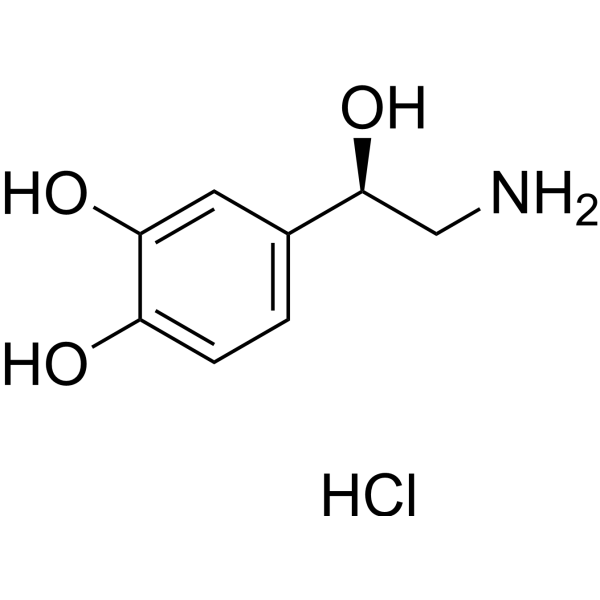
Norepinephrine (hydrochloride) (Standard) is the analytical standard of Norepinephrine (hydrochloride). This product is intended for research and analytical applications. Norepinephrine (Levarterenol; L-Noradrenaline) hydrochloride is a potent adrenergic receptor (AR) agonist. Norepinephrine activates α1, α2, β1 receptors[1][2][3][4].
For research use only. We do not sell to patients.
- Purity : 99.58%
- CAS No.: 329-56-6
- Formula: C8H12ClNO3
- Molecular Weight:205.64
-
Storage:
Please store the product under the recommended conditions in the Certificate of Analysis.


To place orders, for customer services and technical support, please contact: MedChemExpress USA
Tel: 609-228-6898 E-mail: [email protected] [email protected]


-
 Product Information
-
Chemical Information
- Purity & Documentation
-
 Help & FAQs


-
HY-13715A
Norepinephrine hydrochlorideAdrenergic Receptor Agonist -
HY-13715B
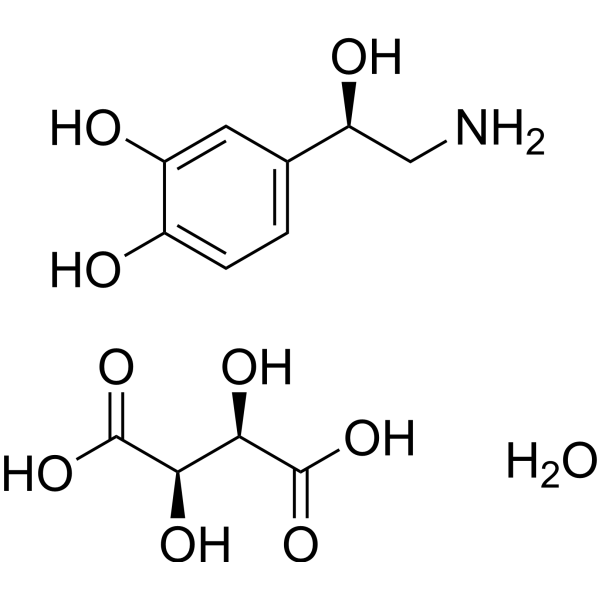
Norepinephrine bitartrate monohydrateAdrenergic Receptor Agonist -
HY-B0193A
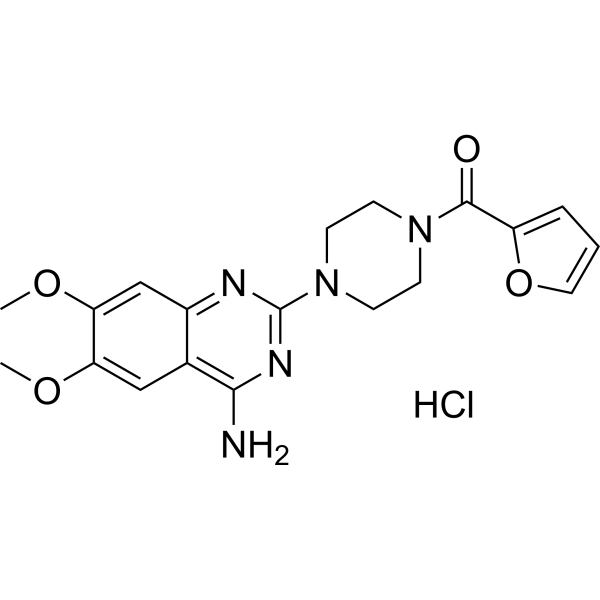
Prazosin hydrochlorideAdrenergic Receptor Antagonist -
HY-17034A
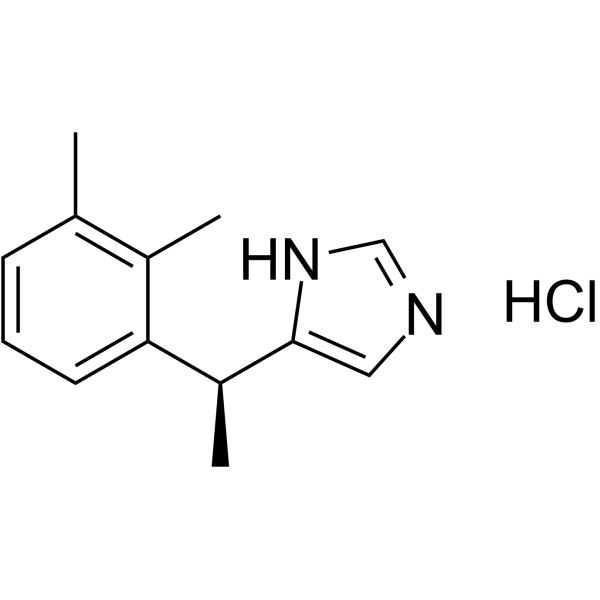
Dexmedetomidine hydrochlorideα2-adrenoceptor Agonist -
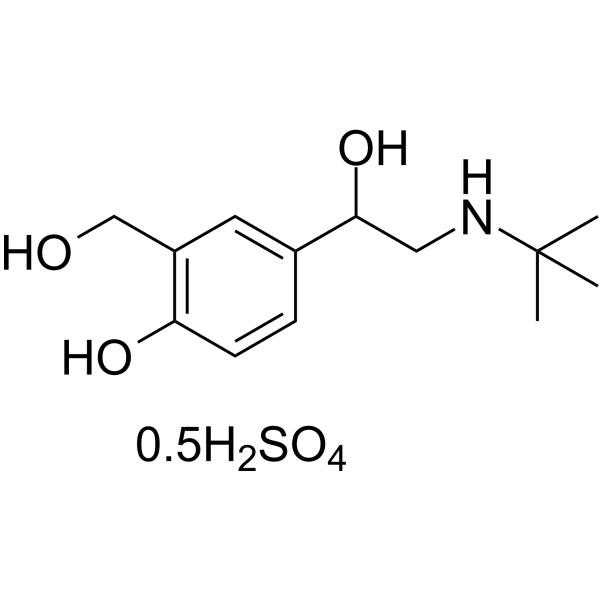
HY-B0436
Salbutamol hemisulfateAdrenergic Receptor Agonist -

HY-13715BR
Norepinephrine (bitartrate monohydrate) (Standard)Adrenergic Receptor Agonist -
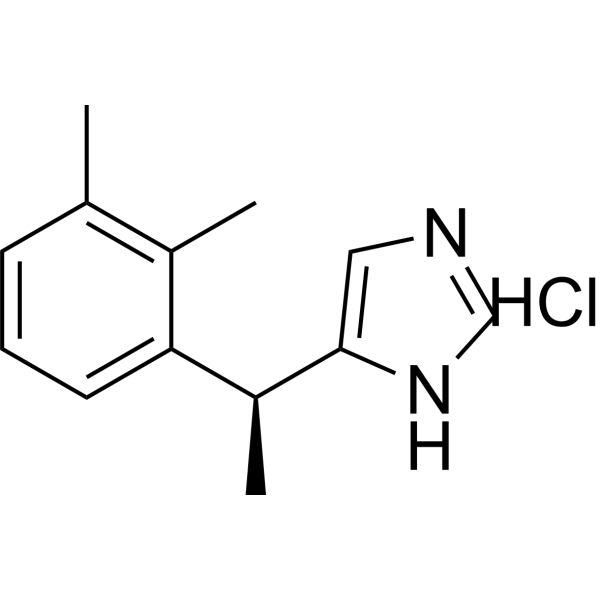
HY-17034AR
Dexmedetomidine hydrochloride (Standard)α2-adrenoceptor Agonist -

HY-B0436R
Salbutamol hemisulfate (Standard)Standard of Salbutamol hemisulfate -
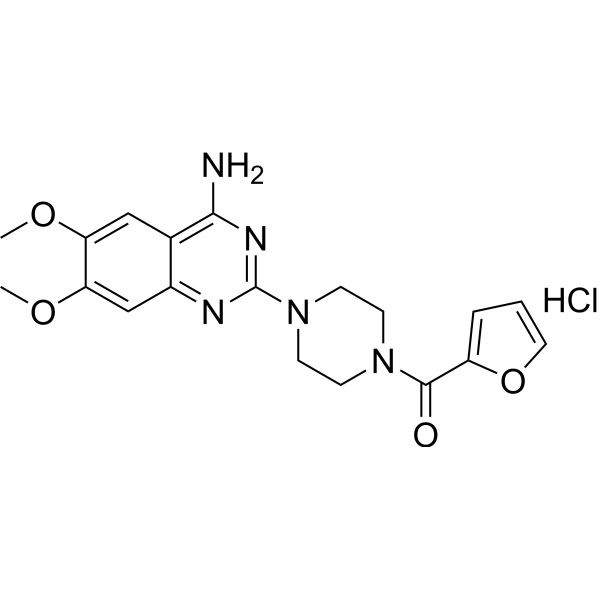
HY-B0193AR
Prazosin hydrochloride (Standard)Adrenergic Receptor Antagonist


Product Information
Information
Application
The compound is the grade of analytical standard, which is the reference standard supplied assay. It is commonly used in qualitative, quantitative and methodological research experiments in HPLC, GC and MS.


Chemical Information
-
CAS No. 329-56-6
-
Appearance Solid
-
Molecular Weight 205.64
-
Formula C8H12ClNO3
-
Color White to off-white
-
SMILES
OC1=CC=C([C@@H](O)CN)C=C1O.Cl
-
Synonyms
Levarterenol hydrochloride (Standard); L-Noradrenaline hydrochloride (Standard)
-
Structure Classification
-
Initial Source
-
Shipping
Room temperature in continental US; may vary elsewhere.
-
Storage
Please store the product under the recommended conditions in the Certificate of Analysis.


Purity & Documentation
References
[1]. Brian P Ramos, et al. Adrenergic pharmacology and cognition: focus on the prefrontal cortex. Pharmacol Ther. 2007 Mar;113(3):523-36. [Content Brief]
[2]. MacGregor DA, et al. Relative efficacy and potency of beta-adrenoceptor agonists for generating cAMP in human lymphocytes. Chest. 1996 Jan;109(1):194-200. [Content Brief]
[3]. Littlejohn NK, et al. Suppression of Resting Metabolism by the Angiotensin AT2 Receptor. Cell Rep. 2016 Aug 9;16(6):1548-60. [Content Brief]
[4]. Xinyu Xu, et al. Binding pathway determines norepinephrine selectivity for the human β 1 AR over β 2 AR. Cell Res. 2021 May;31(5):569-579. [Content Brief]

Calculators
Concentration (start) × Volume (start) = Concentration (final) × Volume (final)


Norepinephrine hydrochloride (Standard) Related Classifications
HY-13715AR Related Classifications
 Powered by Bioz