



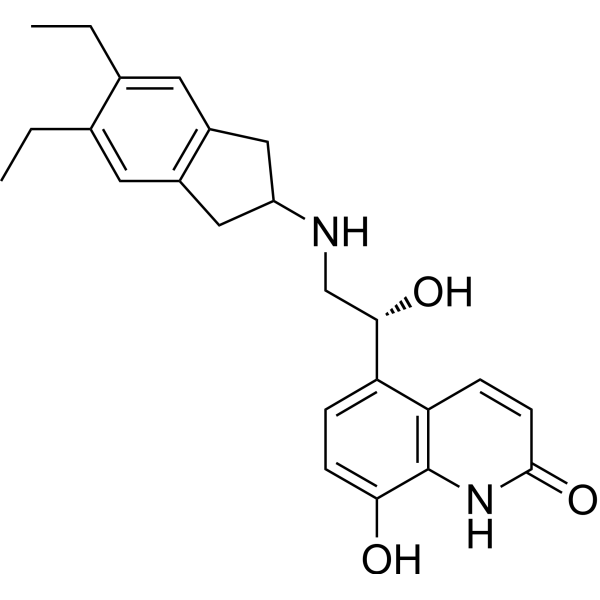
Indacaterol
Based on 5 publication(s) in Google Scholar
Indacaterol is an orally active ultra-long-acting β2 adrenergic receptor (ADRB2) agonist. Indacaterol inhibits NF-κB activity in a β-arrestin2-dependent manner, preventing further lung damage and improving lung function in COPD (chronic obstructive pulmonary disorder). Indacaterol can also be used in cardiovascular disease research.
For research use only. We do not sell to patients.
- Purity : 99.98%
- CAS No.: 312753-06-3
- Formula: C24H28N2O3
- Molecular Weight:392.49
-
Storage:Powder -20°C, 3 years , 4°C, 2 years ; In solvent -80°C, 2 years , -20°C, 1 year

To place orders, for customer services and technical support, please contact: MedChemExpress USA
Tel: 609-228-6898 E-mail: [email protected] [email protected]


-
 Biological Activity
-
Chemical Information
-
Solvent & Solubility
- Protocols
- Purity & Documentation
- References
-
 Help & FAQs


-
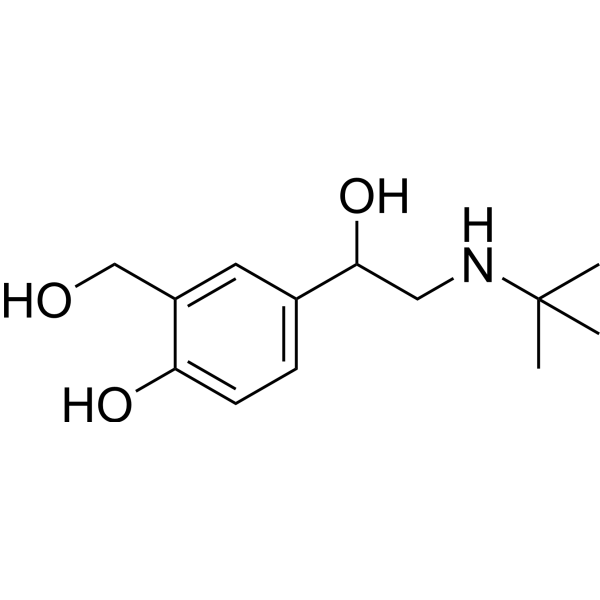
HY-B1037
SalbutamolAdrenergic Receptor Agonist -

HY-14299R
Indacaterol (Standard)ADRB2 Agonist -
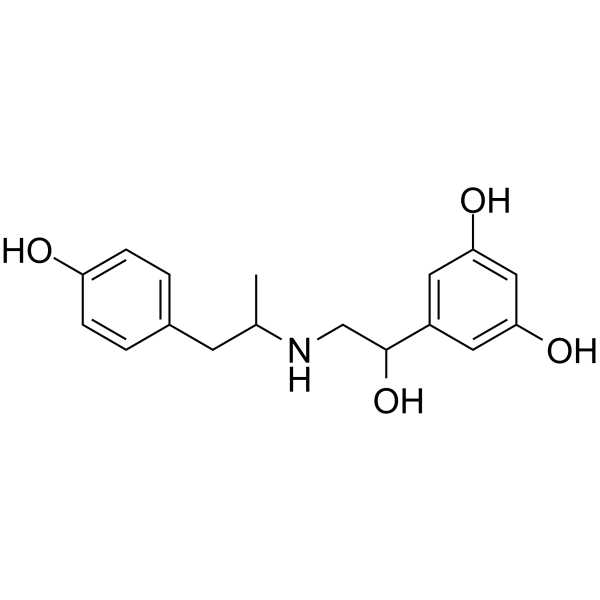
HY-B0976
Fenoterolβ2-adrenoceptor Agonist -

HY-B0010A
Arformoterolβ2-AR Agonist -
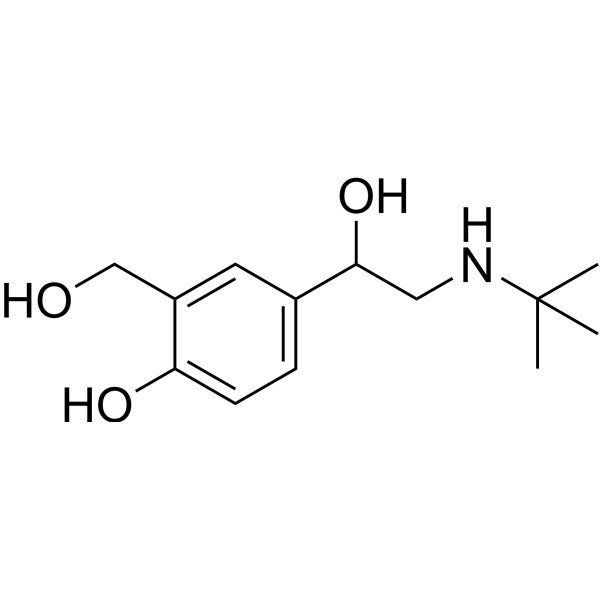
HY-B1037R
Salbutamol (Standard)Adrenergic Receptor Agonist -
HY-14300A
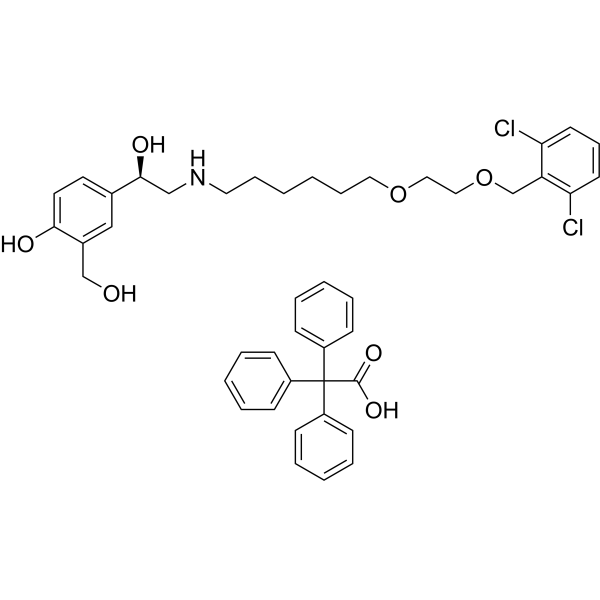
Vilanterol trifenatateAdrenergic Receptor Agonist -

HY-B0010D
Arformoterol tartrateβ2-AR Agonist -
HY-B1675A
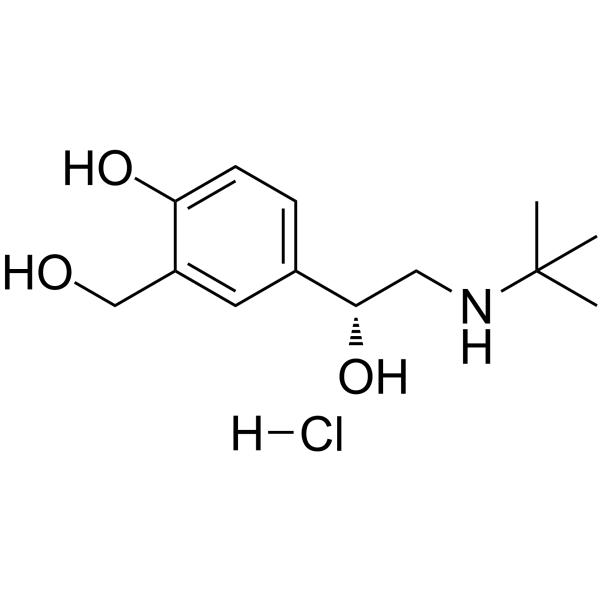
Levalbuterol hydrochlorideβ2-Adrenergic Receptor Agonist -
HY-14300
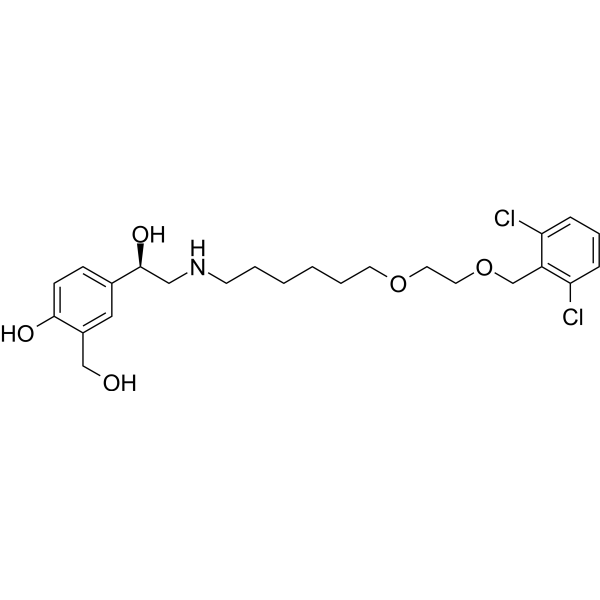
VilanterolAdrenergic Receptor Agonist -

HY-B1675AR
Levalbuterol hydrochloride (Standard)β2-Adrenergic Receptor Agonist -

HY-B0976R
Fenoterol (Standard)β2-adrenoceptor Agonist -

HY-B0010DR
Arformoterol tartrate (Standard)β2-AR Agonist
Publications Citing Use of MedChemExpress (MCE) Indacaterol
MoreAll Adrenergic Receptor Isoforms
More

Biological Activity
Description
|
β adrenergic receptor |
Cellular Effect
|
Cell Line

|
Type | Value | Description | References |
|---|---|---|---|---|
| A-431 | EC50 |
1.5 nM
Compound: Indacaterol
|
Agonist activity at adrenergic beta2 receptor in human A431 cells assessed as elevation of cAMP level
Agonist activity at adrenergic beta2 receptor in human A431 cells assessed as elevation of cAMP level
|
[PMID: 25065493] |
| CHO | EC50 |
>1.0 x 10⁻⁵M
Compound: Indacaterol
|
Activity at human D2R expressed in CHO cells by radiolabelled [35S]GTPgammaS assay
Activity at human D2R expressed in CHO cells by radiolabelled [35S]GTPgammaS assay
|
[PMID: 25065493] |
In Vitro
Indacaterol (1, 2.5, 5, 10 μM; 12 h) inhibits TNF-α induced MMP-9 expression and activity in human fibrosarcoma HT1080 cells[1].
Indacaterol (10 μM; 6 h) inhibits TNF-α induced invasion and migration of human fibrosarcoma cells by reducing MMP-9 expression and activity[1].
Indacaterol (1, 2.5, 5, 10 μM; 2.5 h) inhibits TNF-α-activated IKK/NF-кB signaling in HT1080 cells[1].
MedChemExpress (MCE) has not independently confirmed the accuracy of these methods. They are for reference only.
-
Cell Line:HT1080 cells (constitutively express MMP-9)
-
Concentration:1, 2.5, 5, 10 µM
-
Incubation Time:12 h (pretreat)
-
Result:Significantly suppressed MMP-9 mRNA expression in the 2.5 to 10 µM range.
-
Cell Line:HT1080 cells (constitutively express MMP-9)
-
Concentration:10 µM
-
Incubation Time:6 h (pretreat for 2 h, then incubat with TNF-α for 4 h)
-
Result:Significantly reduced cell migration of fibrosarcoma and inhibited HT1080 cell migration in the zone of wound healing.
-
Cell Line:HT1080 cells
-
Concentration:1, 2.5, 5, 10 µM
-
Incubation Time:2.5 h (pretreat for 2 h, then incubat with TNF-α for 0.5 h)
-
Result:Suppressed TNF-α induced the phosphorylation of IκBα and IKKα/β (the upstream activators of NF-κB).
Inhibited TNF-α-induced NF-κB nuclear translocation when at 5 and 10 µM.
Suppressed TNF-α-induced MMP-9 enzyme activity and decreased MMP-9 protein levels in a dose-dependent manner in the 2.5 to 10 µM range.
In Vivo
MedChemExpress (MCE) has not independently confirmed the accuracy of these methods. They are for reference only.
-
Animal Model:Male Wistar rats (225-250 g; myocardial infarction (MI) rat model of heart failure (HF))[2].
-
Dosage:0.3 mg/kg
-
Administration:In animal drinking water; sinle daily for 15 weeks
-
Result:Significantly reduced both mean arterial blood pressure and heart rate.
Increased both systolic and diastolic LVID where in HF, and reversed the decreased ejection fraction (%) values.
Significantly reduced the infarct size, and catecholamine values to basal levels.
Significantly increased β1 mRNA expression and cardiac cAMP levels in respect to HF.


Chemical Information
-
CAS No. 312753-06-3
-
Appearance Solid
-
Molecular Weight 392.49
-
Formula C24H28N2O3
-
Color White to yellow
-
SMILES
OC1=CC=C([C@@H](O)CNC2CC(C=C(CC)C(CC)=C3)=C3C2)C4=C1NC(C=C4)=O
-
Shipping
Room temperature in continental US; may vary elsewhere.
-
Storage
Powder -20°C 3 years 4°C 2 years In solvent -80°C 2 years -20°C 1 year


Publications (5)
-
Journal Impact Factor
-
Most Recent
-
Pharmaceutics
Development of an In Vitro System to Study the Interactions of Aerosolized Drugs with Pulmonary Mucus. [Abstract]2020 Feb 11;12(2):145. PMID: 32053877 -
J Chromatogr A
2024 Feb 22:1717:464696. PMID: 38310699 -
J Neuroimmunol
Mechanism underlying β2-AR agonist-mediated phenotypic conversion of LPS-activated microglial cells. [Abstract]2019 Jul 15:332:37-48. PMID: 30933849 -
Drug Test Anal
High-throughput liquid chromatography tandem mass spectrometry assay as initial testing procedure for analysis of total urinary fraction. [Abstract]2021 Feb;13(2):283-298. PMID: 32852861 -
bioRxiv
2025 May 29:2025.05.28.656715. PMID: 40502188


Solvent & Solubility
In Vitro:
DMSO : 62.5 mg/mL (159.24 mM; Need ultrasonic; Hygroscopic DMSO has a significant impact on the solubility of product, please use newly opened DMSO)
Please refer to the solubility information to select the appropriate solvent. Once prepared, please aliquot and store the solution to prevent product inactivation from repeated freeze-thaw cycles.
Storage method and period of stock solution: -80°C, 2 years; -20°C, 1 year. When stored at -80°C, please use it within 2 years. When stored at -20°C, please use it within 1 year.
Please refer to the solubility information to select the appropriate solvent. Once prepared, please aliquot and store the solution to prevent product inactivation from repeated freeze-thaw cycles.
Storage method and period of stock solution: -80°C, 2 years; -20°C, 1 year. When stored at -80°C, please use it within 2 years. When stored at -20°C, please use it within 1 year.
Concentration (start) × Volume (start) = Concentration (final) × Volume (final)
In Vivo:
Select the appropriate dissolution method based on your experimental animal and administration route.
- For the following dissolution methods, please ensure to first prepare a clear stock solution using an In Vitro approach and then sequentially add co-solvents:
- To ensure reliable experimental results, the clarified stock solution can be appropriately stored based on storage conditions. As for the working solution for In Vivo experiments, it is recommended to prepare freshly and use it on the same day.
- The percentages shown for the solvents indicate their volumetric ratio in the final prepared solution. If precipitation or phase separation occurs during preparation, heat and/or sonication can be used to aid dissolution.
Add each solvent one by one: 10% DMSO 40% PEG300 5% Tween-80 45% Saline
Solubility: ≥ 2.08 mg/mL (5.30 mM); Clear solution
This protocol yields a clear solution of ≥ 2.08 mg/mL (saturation unknown).
Taking 1 mL working solution as an example, add 100 μL DMSO stock solution (20.8 mg/mL) to 400 μL PEG300, and mix evenly; then add 50 μL Tween-80 and mix evenly; then add 450 μL Saline to adjust the volume to 1 mL.
Preparation of Saline: Dissolve 0.9 g sodium chloride in ddH₂O and dilute to 100 mL to obtain a clear Saline solution.
Add each solvent one by one: 10% DMSO 90% (20% SBE-β-CD in Saline)
Solubility: ≥ 2.08 mg/mL (5.30 mM); Clear solution
This protocol yields a clear solution of ≥ 2.08 mg/mL (saturation unknown).
Taking 1 mL working solution as an example, add 100 μL DMSO stock solution (20.8 mg/mL) to 900 μL 20% SBE-β-CD in Saline, and mix evenly.
Preparation of 20% SBE-β-CD in Saline (4°C, storage for one week): 2 g SBE-β-CD powder is dissolved in 10 mL Saline, completely dissolve until clear.
In Vivo Dissolution Calculator
Please enter the basic information of animal experiments:
-
-
-
-
Recommended: Prepare an additional quantity of animals to account for potential losses during experiments.
Please enter your animal formula composition:
-
%DMSO +
Recommended: Keep the proportion of DMSO in working solution below 2% if your animal is weak.
-
%+
-
+%Tween-80 + +
-
%Saline +
The co-solvents required include: DMSO, . All of co-solvents are available by MedChemExpress (MCE). , Tween 80. All of co-solvents are available by MedChemExpress (MCE).
Working solution concentration: 0.22 mg/mL
Method for preparing stock solution: mg drug dissolved in μL DMSO. Stock solution concentration: mg/mL.
1. Take μL DMSO stock solution;
2. Add μL .
μL , mix evenly;
3. Then add μL Tween 80, mix evenly;
4. Then add μL
Please ensure that the stock solution in the first step is dissolved to a clear state, and add co-solvents in sequence. You can use ultrasonic heating (ultrasonic cleaner, recommended frequency 20-40 kHz), vortexing, etc. to assist dissolution.


Purity & Documentation
-
Data Sheet (281 KB)
-
SDS (393 KB)
- English - EN (393 KB)
- Français - FR (393 KB)
- Deutsch - DE (393 KB)
- Norwegian - NO (393 KB)
- Español - ES (393 KB)
- Swedish - SV (393 KB)
- Italian - IT (393 KB)
- Korean - KR (393 KB)
- Portuguese - PT (393 KB)
-
Handling Instructions (2659 KB)
References
[1]. Lee SU, et al. Indacaterol inhibits tumor cell invasiveness and MMP-9 expression by suppressing IKK/NF-κB activation. Mol Cells. 2014 Aug;37(8):585-91. [Content Brief]
[2]. Calzetta L, et al. Effects of the new ultra-long-acting β2-AR agonist indacaterol in chronic treatment alone or in combination with the β1-AR blocker metoprolol on cardiac remodelling. 2015. [Content Brief]


Complete Stock Solution Preparation Table
Please refer to the solubility information to select the appropriate solvent. Once prepared, please aliquot and store the solution to prevent product inactivation from repeated freeze-thaw cycles.
Storage method and period of stock solution: -80°C, 2 years; -20°C, 1 year. When stored at -80°C, please use it within 2 years. When stored at -20°C, please use it within 1 year.
| Optional Solvent | Concentration Solvent Mass | 1 mg | 5 mg | 10 mg | 25 mg |
|---|---|---|---|---|---|
| DMSO | 1 mM | 2.5478 mL | 12.7392 mL | 25.4784 mL | 63.6959 mL |
| 5 mM | 0.5096 mL | 2.5478 mL | 5.0957 mL | 12.7392 mL | |
| 10 mM | 0.2548 mL | 1.2739 mL | 2.5478 mL | 6.3696 mL | |
| 15 mM | 0.1699 mL | 0.8493 mL | 1.6986 mL | 4.2464 mL | |
| 20 mM | 0.1274 mL | 0.6370 mL | 1.2739 mL | 3.1848 mL | |
| 25 mM | 0.1019 mL | 0.5096 mL | 1.0191 mL | 2.5478 mL | |
| 30 mM | 0.0849 mL | 0.4246 mL | 0.8493 mL | 2.1232 mL | |
| 40 mM | 0.0637 mL | 0.3185 mL | 0.6370 mL | 1.5924 mL | |
| 50 mM | 0.0510 mL | 0.2548 mL | 0.5096 mL | 1.2739 mL | |
| 60 mM | 0.0425 mL | 0.2123 mL | 0.4246 mL | 1.0616 mL | |
| 80 mM | 0.0318 mL | 0.1592 mL | 0.3185 mL | 0.7962 mL | |
| 100 mM | 0.0255 mL | 0.1274 mL | 0.2548 mL | 0.6370 mL |


Indacaterol Related Classifications
HY-14299 Related Classifications
 Powered by Bioz