1. Search Result
Search Result
Results for "

amyloid protein

" in MedChemExpress (MCE) Product Catalog:

209

Inhibitors & Agonists

3

Fluorescent Dyes

2

Biochemical Assay Reagents

88

Peptides

8

Inhibitory Antibodies

20

Natural
Products

36

Recombinant Proteins

5

Isotope-Labeled Compounds

22

Antibodies

1

Click Chemistry

8

Oligonucleotides

Targets Recommended:
Cat. No. Product Name Target Research Areas Chemical Structure
  • HY-P0265A
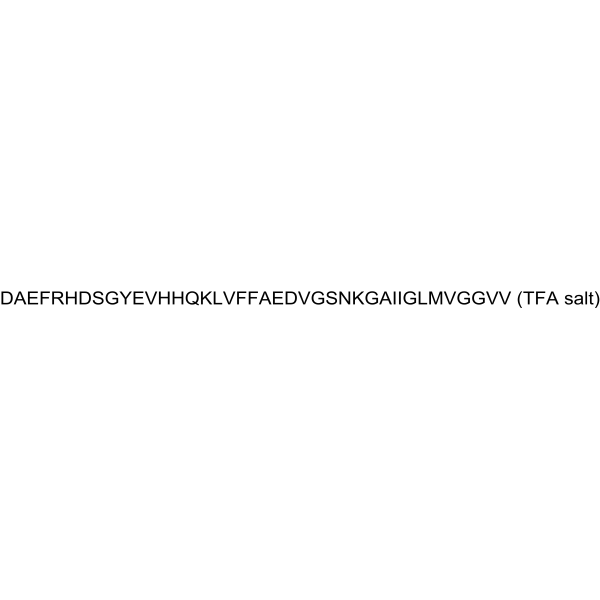
    β-Amyloid (1-40) (human) TFA
    5+ Cited Publications

    amyloid β-Peptide (1-40) (human) TFA; Aβ40 (human) TFA; Aβ(1-40) (human) TFA

    Amyloid-β Neurological Disease
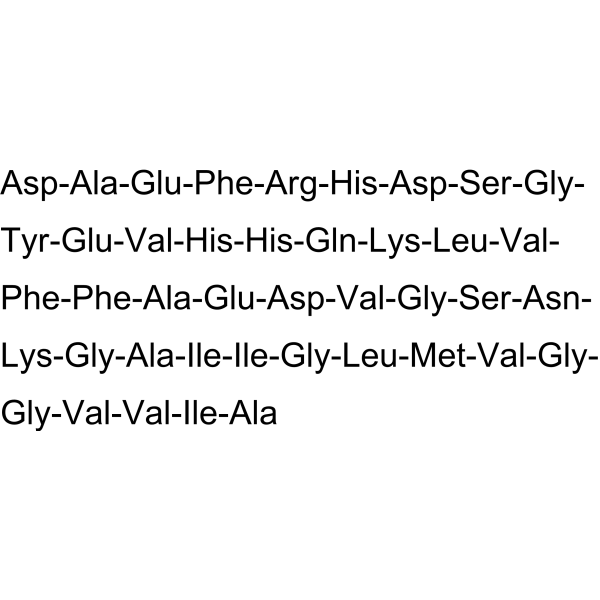
    β-Amyloid (1-40) TFA is a primary protein in plaques found in the brains of patients with Alzheimer's disease .
    β-Amyloid (1-40) (human) TFA
  • HY-16009

    (+)-Phenserine; ANVS401

    α-synuclein Neurological Disease Inflammation/Immunology
    Buntanetap ((+)-Phenserine) is a selective acetylcholinesterase inhibitor. Buntanetap is a multiple neurotoxic protein translation inhibitor with oral activity, including amyloid precursor protein (APP), α-synuclein (αSYN) and huntingtin protein (HTT). Buntanetap reduces the production of β-amyloid precursor protein by blocking its mRNA translation. Buntanetap has anti-inflammatory effects and can be used in the study of Alzheimer's disease and Parkinson's disease .
    Buntanetap
  • HY-13438
    AZD3839 free base
    2 Publications Verification

    Beta-secretase Neurological Disease
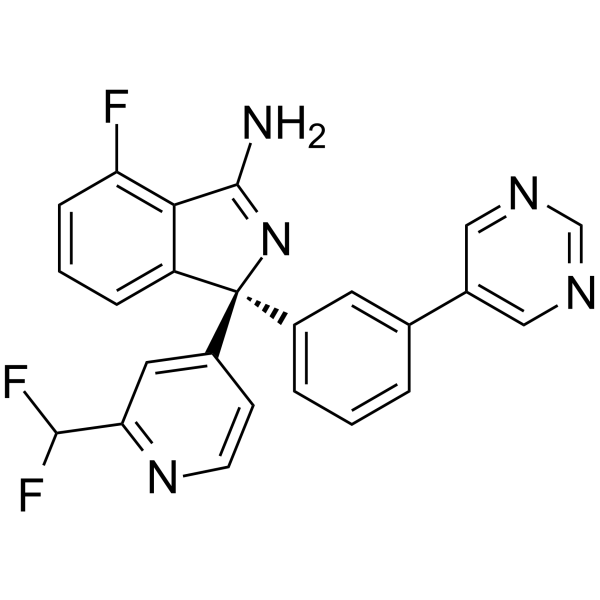
    AZD3839 is an orally available, selective, reversible inhibitor of the β-site amyloid precursor protein cleaving enzyme BACE1 that can cross the blood-brain barrier. AZD3839 inhibits recombinant human BACE1 with a Ki=26.1 nM. AZD3839 inhibits A40 production in SH-SY5Y cells with an IC50 of 4.8 nM. AZD3839 binds to BACE1 and reduces the Aβ amyloid produced by the cleavage of amyloid precursor protein (APP) by BACE1 and γ-secretase. AZD3839 can be used in the field of Alzheimer's disease research .
    AZD3839 free base
  • HY-148089
    Eplontersen
    1 Publications Verification

    Transthyretin (TTR) Neurological Disease
    Eplontersen is a triantennary N-acetyl galactosamine (GalNAc3-7a)-conjugated antisense oligonucleotide targeting transthyretin (TTR) mRNA to inhibit production of both variant and wild-type TTR protein. Misfolded TTR induces amyloid fibrils formation in the heart and peripheral nerves, leads to amyloid TTR (ATTR) amyloidosis diseases .
    Eplontersen
  • HY-P5096

    Amyloid-β Neurological Disease
    FITC-β-Ala-Amyloid β-Protein (1-42) is a FITC tagged Aβ1-42 peptide. Aβ1-42 plays a key role in the pathogenesis of Alzheimer’s disease .
    FITC-β-Ala-Amyloid β-Protein (1-42)
  • HY-P0265C

    Amyloid-β Neurological Disease
    β-Amyloid (1-40), HFIP-treated is a β-Amyloid (1-40) (HY-P0265A) treated with HFIP. β-Amyloid (1-40) is a primary protein in plaques found in the brains of patients with Alzheimer's disease .
    β-Amyloid (1-40), HFIP-treated TFA
  • HY-P1466

    amyloid β-protein (1-16)

    Amyloid-β Neurological Disease
    β-Amyloid (1-16) is a β-Amyloid protein fragment involved in metal binding. Beta-amyloid is a peptide that forms amyloid plaques in the brains of Alzheimer's disease (AD) patients.
    β-Amyloid (1-16)
  • HY-P3908

    Amyloid-β Neurological Disease
    FITC-β-Ala-Amyloid β-Protein (1-42) ammonium is a FITC tagged Aβ1-42 peptide. Aβ1-42 plays a key role in the pathogenesis of Alzheimer’s disease .
    FITC-β-Ala-Amyloid β-Protein (1-42) ammonium
  • HY-50883

    γ-secretase Neurological Disease
    BMS 299897 is a sulfonamide γ-secretase inhibitor with an IC50 of 7 nM for Aβ production inhibition in HEK293 cells stably overexpressing amyloid precursor protein (APP).
    BMS 299897
  • HY-P1903

    Amyloid-β Neurological Disease
    β-Amyloid (35-42) is a peptide consisting of amino acid of 35 to 42 of beta amyloid protein.
    β-Amyloid (35-42)
  • HY-124832
    δ-Secretase inhibitor 11
    1 Publications Verification

    Caspase Amyloid-β Neurological Disease
    δ-Secretase inhibitor 11 (compound 11) is an orally active, potent, BBB-penetrated, non-toxic, selective and specific δ-secretase inhibitor, with an IC50 of 0.7 μM. δ-Secretase inhibitor 11 interacts with both the active site and allosteric site of δ-secretase. δ-Secretase inhibitor 11 attenuates tau and APP (amyloid precursor protein) cleavage. δ-Secretase inhibitor 11 ameliorates synaptic dysfunction and cognitive impairments in tau P301S and 5XFAD transgenic mouse models. δ-Secretase inhibitor 11 can be used for Alzheimer's disease research .
    δ-Secretase inhibitor 11
  • HY-14537

    Dimebolin dihydrochloride

    Amyloid-β Histamine Receptor Adrenergic Receptor 5-HT Receptor Autophagy Neurological Disease Endocrinology
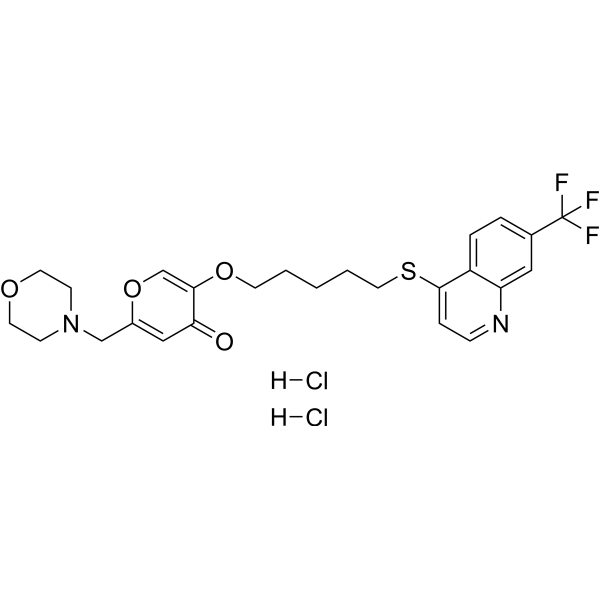
    Latrepirdine dihydrochloride is a neuroactive compound with antagonist activity at histaminergic, α-adrenergic, and serotonergic receptors. Latrepirdine stimulates amyloid precursor protein (APP) catabolism and amyloid-β () secretion.
    Latrepirdine dihydrochloride
  • HY-P990301

    Amyloid-β Neurological Disease
    Anti-Human/Mouse/Rat Amyloid-beta Antibody (MOAB-2) is a mouse-derived IgG2b λ type antibody inhibitor, targeting to Amyloid-beta. Anti-Human/Mouse/Rat Amyloid-beta Antibody (MOAB-2) recognizes unaggregated, oligomeric or fibrillar forms of Aβ42 and unaggregated Aβ40. Anti-Human/Mouse/Rat Amyloid-beta Antibody (MOAB-2) is selective for human Aβ42 over Aβ40, but not amyloid precursor protein (APP). Anti-Human/Mouse/Rat Amyloid-beta Antibody (MOAB-2) can immunostain human or rat and mouse tissue. Anti-Human/Mouse/Rat Amyloid-beta Antibody (MOAB-2) can be used for detections of western blot, immunohistochemistry, immunofluorescence, immunoprecipitation and ELISA .
    Anti-Human/Mouse/Rat Amyloid-beta Antibody (MOAB-2)
  • HY-103374

    (-)-Eseroline phenylcarbamate; (-)-Phenserine

    Cholinesterase (ChE) Amyloid-β Neurological Disease
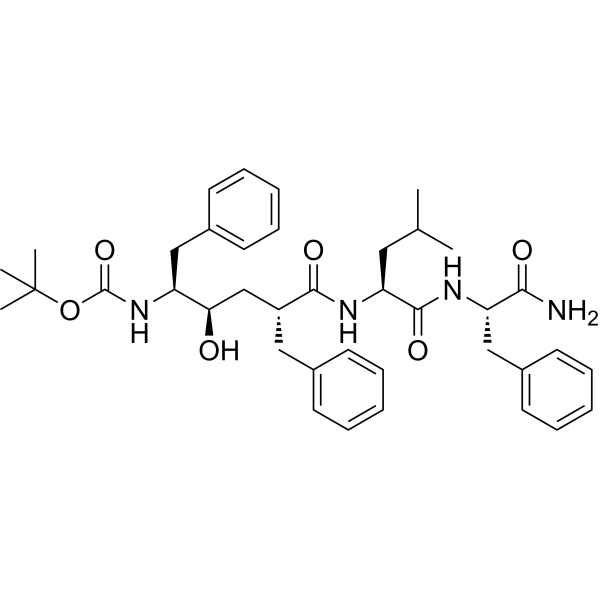
    Phenserine ((-)-Eseroline phenylcarbamate) is a derivative of Physostigmine (HY-N6608) and is a potent, noncompetitive, long-acting and selective AChE inhibitor. Phenserine reduces β-amyloid precursor protein (APP) and β-amyloid peptide (Aβ) formation. Phenserine improves cognitive performance and attenuates the progression of Alzheimer's disease .
    Phenserine
  • HY-P4882A

    Amyloid-β Neurological Disease
    (Pyr3)-Amyloid β-Protein (3-42) TFA is the predominant amyloid β-peptide structure deposited in human brain of Alzheimer's disease and Down's syndrome patients. (Pyr3)-Amyloid β-Protein (3-42) TFA is suggested to accumulate in the brain and to trigger the formation of insoluble amyloid β-peptide deposits .
    (Pyr3)-Amyloid β-Protein (3-42) TFA
  • HY-P10040

    Amyloid-β Neurological Disease
    (Gln22)β-Amyloid (1-40) human is an amyloid beta protein (Aβ)-containing peptide used in Alzheimer's disease research .
    (Gln22)β-Amyloid (1-40) human
  • HY-14862

    Dimebolin; Dimebone

    Amyloid-β Histamine Receptor Adrenergic Receptor 5-HT Receptor Autophagy Endocrinology
    Latrepirdine is a neuroactive compound with antagonist activity at histaminergic, α-adrenergic, and serotonergic receptors. Latrepirdine stimulates amyloid precursor protein (APP) catabolism and amyloid-β () secretion.
    Latrepirdine
  • HY-18292

    Amyloid-β Neurological Disease
    ARN2966 is a potent, orally active and cross the blood-brain barrier amyloid precursor protein (APP) translation modulator.
    ARN2966
  • HY-153430

    Amyloid-β Neurological Disease
    Aβ/tau aggregation-IN-3 is a potent amyloid protein aggregation inhibitor with an IC50 of 0.85 μM by Aβ-Thioflavin T (Aβ-ThT) functional aggregation assay. Aβ/tau aggregation-IN-3 has anti-amyloid activity .
    Aβ/tau aggregation-IN-3
  • HY-128849

    Amyloid-β Inflammation/Immunology
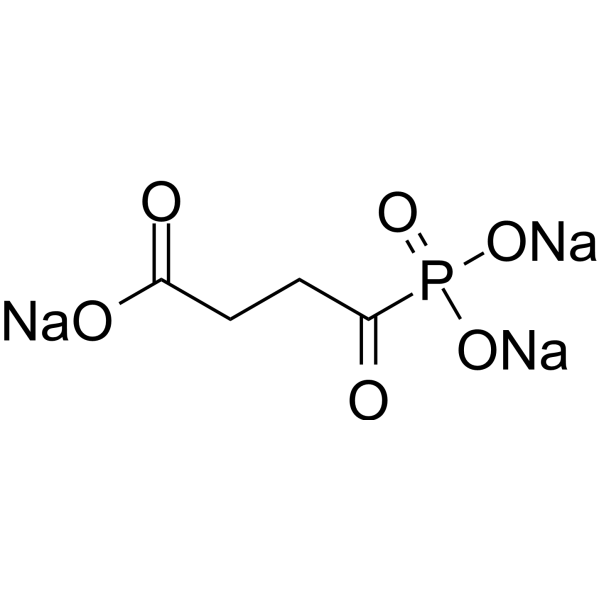
    Eprodisate (70% in water) is an amyloid inhibitor that interferes with the interaction between amyloidogenic proteins and glycosaminoglycans, thereby inhibiting the aggregation of amyloid fibrils and the deposition of fibrils in tissues. Eprodisate (70% in water) slows the progression of renal disease associated with AA amyloidosis and may be useful for other types of amyloidosis .
    Eprodisate (70% in water)
  • HY-100936

    SQ 20009; EHT 0202 hydrochloride

    Phosphodiesterase (PDE) GABA Receptor Neurological Disease Inflammation/Immunology
    Etazolate hydrochloride (SQ 20009) is an orally active, selective inhibitor of type 4 phosphodiesterase (PDE4) with an IC50 of 2 μM. Etazolate hydrochloride is a γ-aminobutyric acid A (GABAA) receptor regulator. Etazolate hydrochloride is an α-secretase activator and induced the production of soluble amyloid precursor protein (sAPPα). Etazolate hydrochloride, a pyrazolopyridine class derivative, increases cAMP levels. Etazolate hydrochloride has anxiolyticlike, antidepressant-like and anti-inflammatory effects .
    Etazolate hydrochloride
  • HY-P1046

    amyloid β-protein (1-15)

    Amyloid-β Neurological Disease
    β-Amyloid (1-15) is a fragment of β-Amyloid peptide. Beta-amyloid is a peptide that forms amyloid plaques in the brains of Alzheimer's disease (AD) patients.
    β-Amyloid (1-15)
  • HY-P990011

    ACU-193

    Amyloid-β Neurological Disease
    Sabirnetug is a humanized IgG2κ antibody targeting the Amyloid-β A4 precursor protein.
    Sabirnetug
  • HY-P1468

    amyloid β-protein (1-28)

    Amyloid-β Neurological Disease
    β-Amyloid (1-28) is a β-Amyloid protein fragment involved in metal binding. Beta-amyloid is a peptide that forms amyloid plaques in the brains of Alzheimer's disease (AD) patients.
    β-Amyloid (1-28)
  • HY-P4885

    AβpE3-40

    Amyloid-β Neurological Disease
    Glp-Amyloid-β (3-40) Peptide (human) (AβpE3-40) is a minor amounts of pyroglutamate-modified isolated from from 24-month-old Amyloid precursor protein (APP) transgenic Mice .
    Glp-amyloid-β (3-40) peptide (human)
  • HY-50882

    γ-secretase Neurological Disease
    ELN318463 is an amyloid precursor protein (APP) selective γ-secretase inhibitor. ELN318463 shows differential inhibition of presenilin (PS1)- and PS2-comprised γ-secretase with EC50s of 12 nM and 656 nM for PS1 and PS2, respectively. ELN318463 is 51-fold more selective for PS1 .
    ELN318463
  • HY-159083

    Amyloid-β Neurological Disease
    DN5355 is a small molecule compound that targets amyloid β protein () and hyperphosphorylated tau protein. DN5355 can inhibit the aggregation of and tau protein and disaggregate the formed and tau protein fibers. DN5355 can be used in the study of Alzheimer's disease .
    DN5355
  • HY-P4882

    Amyloid-β Neurological Disease
    (Pyr3)-Amyloid β-Protein (3-42) is the predominant amyloid β-peptide structure deposited in human brain of Alzheimer's disease and Down's syndrome patients. (Pyr3)-Amyloid β-Protein (3-42) is suggested to accumulate in the brain and to trigger the formation of insoluble amyloid β-peptide deposits .
    (Pyr3)-Amyloid β-Protein (3-42)
  • HY-P4788

    Amyloid-β Neurological Disease
    Acetyl-Amyloid β-Protein (1-6) amide is a hexapeptide that contains a potential copper(II) binding site. Acetyl-Amyloid β-Protein (1-6) amide can be used for research of Alzheimer's disease and related disorders .
    Acetyl-Amyloid β-Protein (1-6) amide
  • HY-P1894

    Amyloid-β Neurological Disease
    β-Amyloid Protein Precursor 770 (135-155) is a peptide of amyloid precursor protein isoform (APP 770). APP 770 produces Aβ40/42 .
    β-Amyloid Protein Precursor 770 (135-155)
  • HY-P3780

    Amyloid-β Neurological Disease
    Cys-Gly-Lys-Lys-Gly-Amyloid β-Protein (36-42) is the 36-42 fragment of Amyloid β-Protein. β-amyloid, a polypeptide made up of 36-43 amino acids, is the main component of amyloid plaques found in the brains of people with Alzheimer's disease. β-amyloid oligomers (Aβos) plays A key role in the progression of Alzheimer's disease (AD) by inducing neuronal damage and cognitive impairment .
    Cys-Gly-Lys-Lys-Gly-Amyloid β-Protein (36-42)
  • HY-P4886A

    Amyloid-β Neurological Disease
    Amyloid β-Protein (3-42) TFA is a precursor of Pyr peptide. Pyroglutamic acid-modified Aβ (pEAβ) (3-42) is the core of the amyloid plaque in Alzheimer's disease. pEAβ (3-42) accelerates the aggregation of Aβ(1-42), while Aβ(1-42) significantly slows down the primary and secondary nucleation of pEAβ(3-42).
    Amyloid β-Protein (3-42) TFA
  • HY-P3779

    Aβ(17-42)

    Apoptosis Neurological Disease
    Amyloid 17-42 (Aβ(17-42)) is a major constituent of diffuse plaques in Alzheimer's disease and cerebellar pre-amyloid in Down's syndrome, derived by alpha- and gamma-secretase cleavage of the amyloid precursor protein (APP). Amyloid 17-42 can induce neuronal apoptosis via a Fas-like/caspase-8 activation pathway .
    Amyloid 17-42
  • HY-126047

    NF-κB Beta-secretase Neurological Disease
    (S)-(-)-Anatabine is an NFκB/BACE-1 inhibitor with blood-brain barrier penetration. (S)-(-)-Anatabine inhibits NFκB activation via phosphorylation of its p65 subunit. (S)-(-)-Anatabine inhibits BACE-1 transcription and reduces BACE-1 protein levels. (S)-(-)-Anatabine lowers production of 1-40 and 1-42 by reducing β-cleavage of amyloid precursor protein without affecting α-cleavage. (S)-(-)-Anatabine can be used for the research of Alzheimer's disease .
    (S)-(-)-Anatabine
  • HY-121817

    Aldehyde Dehydrogenase (ALDH) Drug Intermediate Amyloid-β Infection Neurological Disease
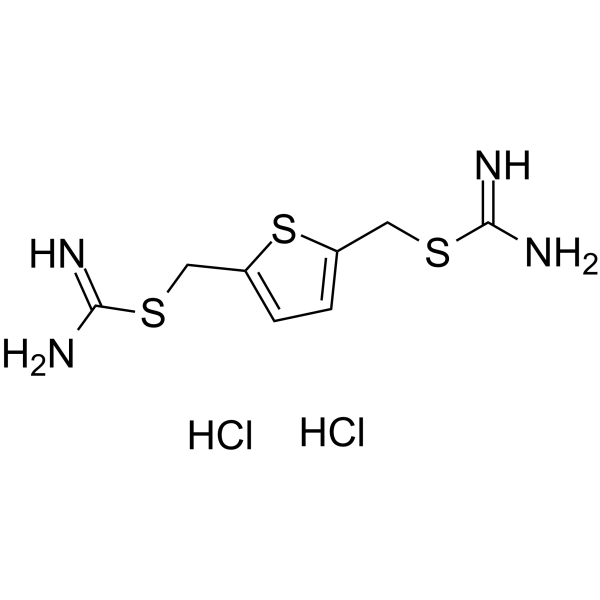
    Sulfiram is a very weak aldehyde dehydrogenase (ALDH) inhibitor, with an IC50 value of 413 μM against Saccharomyces cerevisiae ALDH. As a photochemical precursor, Sulfiram undergoes photoconversion to form Disulfiram (HY-B0240), a potent ALDH inhibitor. Sulfiram inhibits the dimerization of the extracellular domain fragment (amino acid residues 230-624) of amyloid precursor protein (APP), alters the monomer-dimer equilibrium, induces conformational changes in the fragment, and enhances the production of sAPPα via α-cleavage of APP. Sulfiram can be used in research related to scabies and Alzheimer's disease .
    Sulfiram
  • HY-P991130

    Amyloid-β Neurological Disease
    Dalidnetug is a humanized monoclonal antibody targeting human amyloid-beta precursor protein (APP). Dalidnetug specifically binds to APP to reduce the production of amyloid-beta (Aβ), thus exerting the activity of clearing amyloid-beta. Dalidnetug is promising for research of Alzheimer's disease .
    Dalidnetug
  • HY-177646

    ALN-APP

    Amyloid-β Neurological Disease
    Mivelsiran is a siRNA targeted to amyloid-beta precursor protein (APP). It is used for the study of Alzheimer's disease.
    Mivelsiran
  • HY-16009B

    (+)-Phenserine L-Tartrate; ANVS401 L-Tartrate

    Amyloid-β Neurological Disease
    Buntanetap L-Tartrate (Phenserine L-Tartrate) is a selective AChE inhibitor (IC50 = 22.2 nM). Buntanetap is a multiple neurotoxic protein translation inhibitor with oral activity, including amyloid precursor protein (APP), α-synuclein (αSYN) and huntingtin protein (HTT). Buntanetap reduces the production of β-amyloid precursor protein by blocking its mRNA translation. Buntanetap has anti-inflammatory effects and can be used in the study of Alzheimer's disease and Parkinson's disease .
    Buntanetap L-Tartrate
  • HY-P1051

    amyloid β-protein (12-28)

    Amyloid-β Neurological Disease
    β-Amyloid (12-28) (Amyloid β-Protein (12-28)) is a peptide fragment of β-amyloid protein (β1-42). β1-42, a 42 amino acid protein , is the major component of senile plaque cores. β-Amyloid (12-28) shows aggregation properties. β-Amyloid (12-28) has the potential for Alzheimer’s disease research .
    β-Amyloid (12-28)
  • HY-P3846

    Amyloid-β Neurological Disease
    (Glu20)-Amyloid β-Protein (1-42) is a slower fibrillizing variant of amyloid β-protein (Aβ). The Glu20 mutation reduces the aggregation propensity of Aβ42 and prevents accumulation of the slowly fibrillizing peptide. Amyloid β-protein is the primary component of both vascular and parenchymal amyloid deposits in Alzheimer's disease .
    (Glu20)-Amyloid β-Protein (1-42)
  • HY-P4391

    Amyloid-β Neurological Disease
    (Asp37)-Amyloid β-Protein (1-42) is the G37D mutant of wild-type Amyloid-beta (1-42) peptide .
    (Asp37)-Amyloid β-Protein (1-42)
  • HY-P4892

    Amyloid-β Others
    Amyloid β-Protein (4-42) is aAβ Fragment.
    Amyloid β-Protein (4-42)
  • HY-P4884

    Amyloid-β Others
    Amyloid β-Protein (1-46) is aAβ Fragment.
    Amyloid β-Protein (1-46)
  • HY-P3859

    Amyloid-β Neurological Disease
    Cys-Gly-Lys-Arg-Amyloid β-Protein (1-42) is a peptide fragment of amyloid β-protein (Aβ). Cys-Gly-Lys-Arg-Amyloid β-Protein (1-42) can be used in research of Alzheimer's disease .
    Cys-Gly-Lys-Arg-Amyloid β-Protein (1-42)
  • HY-P1894A

    Amyloid-β Neurological Disease
    β-Amyloid Protein Precursor 770 (135-155) TFA is a peptide of amyloid precursor protein isoform (APP 770). APP 770 produces Aβ40/42 .
    β-Amyloid Protein Precursor 770 (135-155) TFA
  • HY-P4886

    Amyloid-β Neurological Disease
    Amyloid β-Protein (3-42) is the precursor of Pyr peptide. Pyroglutamate-modified Aβ (pEAβ) (3-42) is the core of the amyloid template block in Alzheimer's disease. pEAβ(3-42) accelerated the aggregation of Aβ(1-42), while Aβ(1-42) significantly slowed the primary and secondary nucleation of pEAβ(3-42) .
    Amyloid β-Protein (3-42)
  • HY-P10494

    Amyloid-β Neurological Disease
    FEFEFKFK is an octapeptide that self-assembles into fibrillar structures. FEFEFKFK is able to form gels at concentrations greater than about 7 mg/mL. The self-assembly and gelation properties of FEFEFKFK help to understand the mechanism of amyloid fibril formation in protein misfolding diseases such as Alzheimer's disease and Parkinson's disease .
    FEFEFKFK
  • HY-50882A

    γ-secretase Neurological Disease
    ELN318463 racemate is the racemate of ELN318463. ELN318463 is an amyloid precursor protein (APP) selective γ-secretase inhibitor. ELN318463 shows differential inhibition of presenilin (PS1)- and PS2-comprised γ-secretase with EC50s of 12nM and 656 nM for PS1and PS2, respectively. ELN318463 is 51-fold more selective for PS1 .
    ELN318463 racemate
  • HY-P3782

    Amyloid-β Others
    (Met(O2)35)-Amyloid β-Protein (1-42) is a peptide .
    (Met(O2)35)-Amyloid β-Protein (1-42)
  • HY-P0265AS

    amyloid Beta-Peptide-15N (1-40) (human) TFA; amyloid β-Peptide-15N (1-40) (human) TFA

    Amyloid-β Neurological Disease
    β-Amyloid- 15N (1-40) (TFA) is the 15N-labledβ-Amyloid (1-40) (TFA). β-Amyloid (1-40) is a primary protein in plaques found in the brains of patients with Alzheimer's disease .
    β-Amyloid-15N (1-40) TFA

Inquiry Online

Your information is safe with us. * Required Fields.

Salutation


Country or Region *

Applicant Name *


Organization Name *

Department *


Email Address *


Product Name *

Cat. No.


Requested quantity *

Phone Number *


Remarks

Inquiry Online

Inquiry Information

Product Name:
Cat. No.:
Quantity:
MCE Japan Authorized Agent:

