

From 11:00 pm to 12:00 pm EST ( 8:00 pm to 9:00 pm PST ) on January 6th, the website will be under maintenance. We are sorry for the inconvenience. Please arrange your schedule properly.
Trastuzumab (anti-HER2) is a humanized IgG1 monoclonal antibody for patients with invasive breast cancers that overexpress HER2. Trastuzumab (anti-HER2) has the potential for HER2 Positive Metastatic Breast Cancer and HER2 Positive Gastric Cancer research.
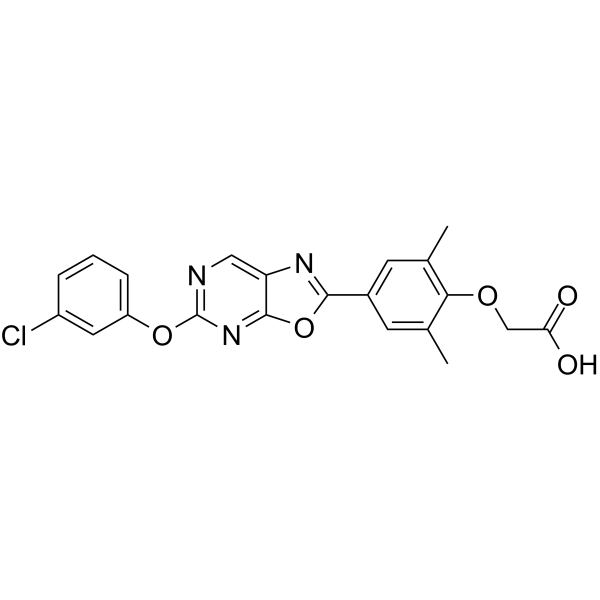
SAR247799 (S1P1 agonist 3) is an oral activity, selective G-protein-biased sphingosine-1 phosphate receptor-1 (S1P1 ) agonist, with EC50s rang from 12.6 to 493 nM in S1P1-overexpressing cells and HUVECs. SAR247799 can be used for the research of endothelial protection, including type-2 diabetes, metabolic syndrome .
Farletuzumab (MORAb-003) is a potent folate receptor-alpha (FRα) inhibitor. Farletuzumab is a humanized monoclonal antibody with high affinity for FRα. Farletuzumab possesses growth-inhibitory functions on cells overexpressing FRα. Farletuzumab can be used in research of cancer .
Serpin B9-IN-1 (BTCA) is an inhibitor that specifically targets Serpin B9 (SB9); SB9 is a natural inhibitor of granzyme B (GrB) , but may promote the metastasis of lung cancer cells into the bone marrow. SB9-overexpressing cancer cells promote proliferation and metastasis in an immune cell-dependent manner by binding to GrB. Inhibition of SB9 by Serpin B9-IN-1 significantly inhibits immunotherapy of lung cancer bone metastases in the caudal artery (CA) mouse model (LCBM) .
D574-0246 is a dual-activity inhibitor of OXCT1, inhibiting both the ketolytic and succinyltransferase activities of OXCT1. D574-0246 reduces substrate-specific (LACTB K284) and global protein succinylation and decreases OXCT1 ketolytic activity in HepG2 cells. D574-0246 inhibits the viability of HCC cells (IC50: 16.49 μM in PLC cells, 6.656 μM in HepG2 cells). D574-0246 exerts anti-tumor efficacy in nude mice bearing OXCT1-overexpressing HepG2 xenograft tumors. D574-0246 can be used for the study of hepatocellular carcinoma (HCC) .
CDK-TCIP1 is a bivalent molecule linking CDK9 inhibitor SNS-032 (HY-10008) to BCL6 ligand BI3812 (HY-111381). CDK-TCIP1 potently and specifically kills BCL6-overexpressing cells with EC50 of 7.7 nM for SUDHL5 cells .
QS11 is an inhibitor of ARFGAP1 (ADP-ribosylation factor GTPase-activating protein 1), with an EC50 of 1.5 μM. QS11 activates Wnt/β-catenin signaling through an effect on protein trafficking. QS11 inhibits migration of ARFGAP overexpressing breast cancer cells .
VVD-849 is a RAS ligand. VVD-849 covalently binds to Cys242 in the RAS-binding domain of PI3K p110α and promotes RAS/PI3K interaction. VVD-849 partially inhibits pAKT (S473) in HER2-overexpressing tumors. VVD-849 can be used for the research of cancers such as breast cancer .
BMS 299897 is a sulfonamide γ-secretase inhibitor with an IC50 of 7 nM for Aβ production inhibition in HEK293 cells stably overexpressing amyloid precursor protein (APP).
VVD-442 is an inhibitor targeting PI3Kα. VVD-442 covalently binds to Cys242 in the RAS-binding domain of PI3K p110α, induces conformational changes, and disrupts the interaction between PI3K p110α and RAS proteins. VVD-442 also blocks RAS-mediated PI3K activation. VVD-442 can be used in research related to RAS-mutant cancers and HER2-overexpressing cancers .
ALK4290 (AKST4290) is a potent, orally active and selective CCR3 inhibitor with a Ki of 3.2 nM. ALK4290 blocks CCR3-mediated signaling, abrogates macrophage supernatant-driven mesothelial-to-mesenchymal transition, and decreases p38 phosphorylation. ALK4290 inhibits CCL26-CCR3 axis-driven GPX2-mediated B-cell activation, and targets B cells to inhibit activation by GPX2-overexpressing tumor cells. ALK4290 can be used for the research of hepatocellular carcinome and Parkinson’s disease .
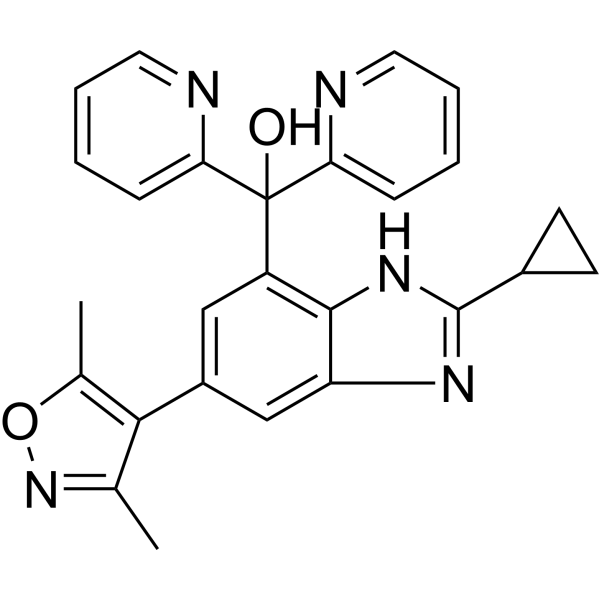
Alobresib (GS-5829) is a BET bromodomain inhibitor, which represents a highly effective therapeutics agent against recurrent/chemotherapy resistant uterine serous carcinoma (USC) overexpressing c-Myc. Alobresib can be used in the metastatic castration-resistant prostate cancer (mCRPC) research .
HLX-22 is a humanized monoclonal antibody targeting HER2. HLX-22 induces apoptosis in HER2-overexpressing breast and gastric cancer cells combined with Trastuzumab (HY-P9907). HLX-22 has potent antitumor activity against advanced solid tumors .
CB1 antagonist 4 (compound 8) is a selective cannabinoid receptor 1 (CB1) inverse agonist with an IC50 of 8.5 nM for human CB1. CB1 antagonist 4 shows selective for CB1 over CB2 receptors (IC50 of 604.9 nM). CB1 antagonist 4 inhibits GTP binding to CB1-overexpressing cell membranes with an EC50 of 18.5 nM .
F16 is a potent growth inhibitor of the neu-overexpressing cells and also selectively inhibits proliferation of mammary epithelial as well as a variety of mouse mammary tumor and human breast cancer cell lines.
MG-HuR2 is a molecular glue degrader targeting the oncogenic RNA-binding protein HuR (IC50=0.5 μM). MG-HuR2 is promising for research of HuR-overexpressing malignancies (e.g., breast cancer) .
MUC1, mucin core is the region of the MUC1 mucin core. MUC1 is a type I transmembrane glycoprotein, and is overexpressed and aberrantly glycosylated in carcinoma cells. MUC1, mucin core protein binds to domain 1 of ICAM-1 .
MX69-102 (compound MX69-102) is an MDM-2/p53 inhibitor, inducing MDM2 degradation, resulting in p53 activation and cancer cell apoptosis. MX69-102 shows effective inhibition on xenografted human MDM2-overexpressing ALL in SCID mice. .
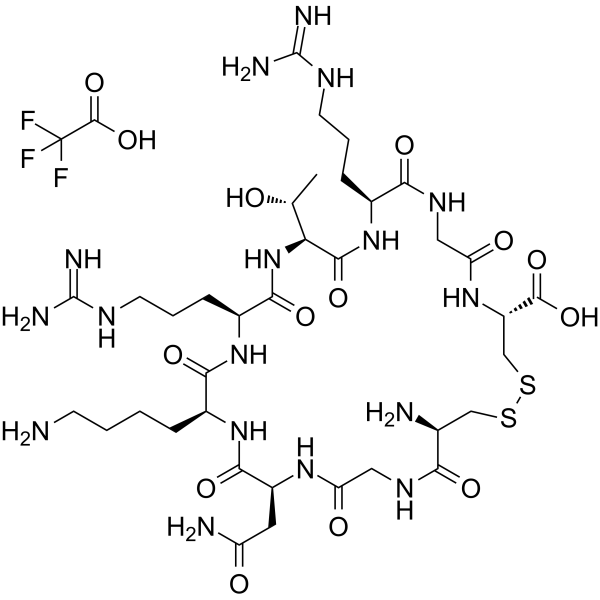
LARLLT TFA is an EGFR-binding peptide. LARLLT has the potential for research of EGFR overexpressing cancers, such as lung, ovarian and colorectal cancer .
LARLLT (D4) is an EGFR-binding peptide. LARLLT has the potential for research of EGFR overexpressing cancers, such as lung, ovarian and colorectal cancer .
Tenacissoside G is a C21 steroid from the stems of Marsdenia tenacissima. Tenacissoside G reverses multidrug resistance in P-glycoprotein (Pgp)-overexpressing multidrug-resistant cancer cells .
TBE56, a molecular glue, is a BACH1 degrader, with an EC50of 44 nM. TBE56 is a weak NRF2 inducer and the biotinylated TBE31. TBE56 interacts and promotes the
degradation of BACH1 via a mechanism involving the E3 ligase FBX022. TBE56 reduces intracellular Fe 2+ accumulation, ROS generation, and malondialdehyde (MDA) content, while increasing GSH/GSSG ratio and upregulating GPX4 in Prominin-2-overexpressed BMSCs. TBE56 significantly ameliorates intervertebral disc degeneration (IVDD) in puncture-induced SD rat IVDD model. TBE56 can be used for the study of intervertebral disc degeneration (IVDD) .
Tenatumomab (ST2146) is a murine monoclonal antibody against tenascin-C. And tenascin-C, the large extracellular glycoprotein, is overexpressed in cancer. Tenatumomab has been used for Pretargeted Antibody Guided Radioimmunoresearch (PAGRIT), and delivering radionuclides to tumors via PAGRIT and direct 131Iodine labeling approach .
SIC5-6 is a potent Separase inhibitor. Separase, a large cysteine protease, involves in chromosome segregation during mitosis and meiosis, DNA damage repair, centrosome disengagement and duplication, spindle stabilization and elongation. Separase is highly overexpressed in many solid cancers, serves as an attractive chemotherapeutic target .
Idetrexed (ONX 0801) is a thymidylate synthase (TS) inhibitor with a Ki of 1.2 nM. Idetrexed can be specifically transported into α-folate receptor (α-FR)-overexpressing tumors, such as ovarian cancer .
ELR510444 is a novel microtubule disruptor; inhibits MDA-MB-231 cell proliferation with IC50 of 30.9 nM; not a substrate for the P-glycoprotein drug transporter and retains activity in βIII-tubulin-overexpressing cell lines.
Lonigutamab (hz208F2-4) is a humanized anti-IGF-1R monoclonal antibody, serveing as a targeting vector for antibody-drug conjugates (ADCs). Lonigutamab causes G2-M phase cell cycle arrest and increases apoptosis in IGF-1R-overexpressing tumor cells. Lonigutamab demonstrates potent antitumor efficacy in IGF-1R-overexpressing xenograft models. Lonigutamab can be used for the study of Solid tumors with overexpression of IGF-1R and thyroid eye
diseases .
DBPR728 is an acyl prodrug of 6K465 that carries fewer hydrogen bond donors. 6K465 acts as an Aurora kinase inhibitor that destabilizes MYC family cancer proteins and has antitumor efficacy. DBPR728 has the potential to inhibit cancers that overexpress C-MYC and N-MYC, with a 10-fold increase in oral bioavailability compared to 6K465 .
ZINC110492 is a selective ligand of CS-ΔEx4 (a splicing isoform of citrate synthase (CS)). ZINC110492 does not bind to CS full-length (CS-FL). ZINC110492 inhibits colorectal cancer (CRC) cell growth in cells overexpressing CS-ΔEx4 with an IC50 of 7.840 µM. ZINC110492 significantly decreases both citrate and 2-hydroxyglutarate (2-HG) levels in the CS-ΔEx4-overexpressing SW1116 cells .
CYP1B1-IN-7 (compound 2a) is a selective inhibitor of CYP1B1 (IC50: 75 nM). CYP1B1-IN-7 also reverses resistance (IC50: 29 μM) and exhibits cytotoxicity in the CYP1B1-overexpressing MCF-7 cell line that is resistant to Docetaxel (HY-B0011) .
BGC1614 is a Nectin-4-targeting bicyclic toxin conjugate (BTC) belonging to the category of peptide-drug conjugates (PDCs). BGC1614 exhibits strong targeted binding ability to Nectin-4, with an KD of 3.859 × 10 -7 M. BGC1614 exhibits superior antitumor efficacy in nude mice bearing PC-3 and N87 tumor xenografts. BGC1614 can be used for research related to Nectin-4-overexpressing tumors (such as prostate cancer, gastric cancer) .
NOTA-IMB-RGD is a dual molecular probe targeting integrin αvβ3 and programmed death ligand-1 (PD-L1). NOTA-IMB-RGD blocks the PD-1/PD-L1 signaling pathway and integrin αvβ3-overexpressing tumor vasculature. NOTA-IMB-RGD is promising for research of solid tumors co-expressing PD-L1 and αvβ3 (e.g., glioma, breast cancer) .
5-Iodouracil (Compound 4b) is an irreversible dihydropyrimidine dehydrogenase (DPD) inhibitor (IC50=0.22 μM). 5-Iodouracil is promising for research of DPD-overexpressing solid tumors like non-small cell lung cancer (NSCLC) .
KP-2067 is a form of the CaSR agonist peptide. KP-2067 can result in dose-dependent activation of CaSR in HEK293T overexpressing hCaSR cell line, with an EC50 of 18.4 μM. KP-2067 significantly reduces plasma parathyroid hormone in rat model .
PNMT-IN-1 (inhibtor 4) is a specific inhibitor of phenylethanolamine N-methyltransferas (PNMT) with a Ki value of 1.2 nM and a IC50 value of 81 nM.
PNMT-IN-1 also inhibits the vitality of DNMT1 and DNMT3b, with the IC50 value of 61 μM and 17 μM, respectively, and has an antagonistic effect on epinephrine.PNMT-IN-1 (inhibtor 4 ) is a second generation inhibitor .
SG3376 is an antibody-drug conjugate (ADC) targeting human epidermal growth factor receptor 2 (HER2). SG3376 is promising for research of HER2-overexpressing cancers (e.g., breast, gastric cancer) .
NSC 57148 is a selective Grb7 SH2 domain antagonist with an IC50 value of 1.1 μM. NSC 57148 reduces cancer cell proliferation and migration. NSC 57148 is promising for research of Grb7-overexpressing malignancies such as breast and pancreatic cancers .
Enpp-1-IN-29 (Compound 1) is a highly selective ectonucleotide pyrophosphatase/phosphodiesterase 1 (ENPP1) inhibitor (IC50=0.05 nM). Enpp-1-IN-29 is promising for research of ENPP1-overexpressing cancers (e.g., breast cancer, head/neck cancer, metastatic chromosome-unstable tumors) and immune-related diseases (e.g., autoimmune disorders, tumor immune evasion) .
Idetrexed (ONX 0801) trisodium is a thymidylate synthase (TS) inhibitor with a Ki of 1.2 nM. Idetrexed trisodium can be specifically transported into α-folate receptor (α-FR)-overexpressing tumors, such as ovarian cancer .
PeS-9 is an Androgen Receptor (AR) degrader that induces androgen receptor degradation PeS-9 induces mitochondrial and ER stress by promoting cytotoxic ROS production, leading to the release of mitochondrial cytochrome C and AIF. PeS-9 subsequently activates caspases-9 and -3, causing DNA fragmentation and apoptotic cell death. PeS-9 has anticancer activity against prostate cancer and exerts in vivo antitumor and antimetastatic activity with minor side effects. PeS-9 can be used for the study of targeting monotherapy againstGLUT-1-overexpressing tumors .
2-Deoxy-L-ribose is a stereoisomer of 2-Deoxy-d-ribose that inhibits 2-Deoxy-d-ribose anti-apoptotic effects. 2-Deoxy-L-ribose suppresses metastasis of tumor cells overexpressing thymidine phosphorylase .
MM-111 is a bispecific antibody fusion protein targeting the ErbB2/ErbB3 oncogenic unit. MM-111 blocks activation of the PI3K pro-survival pathway. MM-111 binds to the ErbB2 receptor, which localizes the bispecific molecule to ErbB2 over-expressing tumor cells and promotes binding of the anti-ErbB3 arm to the ErbB3 receptor. MM-111 binding to ErbB3 results in inhibition of ErbB3 signaling by blocking the binding of the ErbB3 physiological ligand heregulin. MM-111 can be used for the study of ErbB2 over-expressing breast tumors .
NOTA-FAPI-52 is a tracer with potent tumor uptake. NOTA-FAPI-52 can be radiolabeled to enable PET imaging or other bioimaging techniques. NOTA-FAPI-52 can be used to study diseases in which fibroblast activation protein (FAP) is overexpressed .
DSPE-PEG3400-GE11 is a PEG compound which composed of DSPE and an EGFR targeting peptide (GE11). GE11 can be used for EGFR overexpressed cancer cells. DSPE-PEG3400-GE11 can be used for drug delivery .
LB-60-OF61 hydrochloride is a potent NAMPT (nicotinamide phosphoribosyltransferase) inhibitor. LB-60-OF61 hydrochloride is a cytotoxic compound with a selectivity towards MYC overexpressing cell lines .
Vasoactive intestinal contractor is a novel member of the endothelin family. Vasoactive intestinal contractor stimulates a rapid increase in the intracellular Ca 2+ concentration in fura-2-overexpressed Swiss 3T3 cells [1.
PROTAC GDI2 Degrader-1 (compound 21) is a potent PROTAC GDI2 degrader. PROTAC GDI2 Degrader-1 exhibits excellent in vivo antitumor activity in the GDI2-overexpressing pancreatic xenograft models .
(R)-Verapamil-d7 (hydrochloride) is a deuterium labeled (R)-Verapamil hydrochloride. (R)-Verapamil hydrochloride ((R)-(+)-Verapamil hydrochloride) is a P-Glycoprotein inhibitor. (R)-Verapamil hydrochloride blocks MRP1 mediated transport, resulting in chemosensitization of MRP1-overexpressing cells to anticancer agents .
N,N-Dimethyl-idarubicin, an Idarubicin (HY-17381) derivative, is a potent histone evictor which does not induce DNA double-strand breaks. N,N-Dimethyl-idarubicin, an anthracycline, is an effective cytotoxic agent for ABCB1-overexpressing, Doxorubicin-resistant cells .
ABCG2-IN-5 (Compound 10) is a is a selective ABCG2 inhibitor, with an IC50 of 0.34 µM. ABCG2-IN-5 can be used for the study of ABCG2-overexpressing tumors such as non-small cell lung cancer (NSCLC) .
GDI2-IN-1 (compound (+)-37) is a GDP-dissociation inhibitor beta (GDI2) inhibitor with an IC50 of 2.87 μM and a KD of 36 μM. GDI2-IN-1 exhibits excellent in vivo antitumor activity in GDI2-overexpressing pancreatic xenograft models .
SSO111 sodium, a 20mer fully modified antisense oligonucleotide, targets the oncogene?HER2. SSO111 sodium induces exon 15 skipping during splicing, leading to the generation of a novel mRNA transcript that excludes exon 15. SSO111 sodium downregulated HER2 mRNA, which resulted in the inhibition of proliferation and induction of apoptosis in HER2-overexpressing tumor cells.
BTA-EG4 is a catalase-amyloid interaction inhibitor, which can significantly enhance the neurotoxicity of amyloid peptides in catalase-overexpressing neuronal cells, and can be used in the study of neurodegenerative diseases .
LS10 can specifically bind to NG2 protein and is a functional ligand for targeted drug delivery to glioma. NG2 proteins are widely overexpressed in the glioma cells and restricted in normal tissue .
TTX-P is a fluorescent probe. TTX-P responds in situ to the overexpressed alkaline phosphatase (ALP) in liver, imaging of diabetic liver injury in the near-infrared second-window (NIR-II) region .
Anticancer agent 198 (compound 18b) is a potent anticancer agent and potential WRN protein inhibitor. Anticancer agent 198 was significantly toxic to K562 cells and WRN-overexpressing PC3 cells .
PROTAC CYP1B1 degrader-1 (Compound 6C), a α-naphthoflavone chimera derivative, is able to eliminate cytochrome P450 (CYP)1B1-mediated agent resistance via targeted CYP1B1 degradation, with IC50s of 95.1 and 9838.6 nM for CYP1B1 and CYP1A2, respectively. PROTAC CYP1B1 degrader-1 can be used for the research of CYP1B1-overexpressing prostate cancer .
hCA/VEGFR-2-IN-4 (compound 15b) is an indolinylbenzenesulfonamide and a potential dual inhibitor of cancer-associated hCA IX/XII and VEGFR-2. hCA/VEGFR-2-IN-4 inhibits VEGFR-2 (IC50=0.811 μM) and has high binding activity to hCAs, with Ki of 3.8 nM (hCA XII), 6.2 nM (hCA IX), 19.8 nM (hCA II), and 35.5 nM (hCA I), respectively. hCA/VEGFR-2-IN-4 has antiproliferative activity on VEGFR-2-overexpressing breast cancer cells .
hCA/VEGFR-2-IN-2 (compound 8g) is an indolinonylbenzenesulfonamide and a potential dual inhibitor of cancer-associated hCA IX/XII and VEGFR-2. hCA/VEGFR-2-IN-2 inhibits VEGFR-2 (IC50=204 nM) and has high binding activity to hCAs, with Kis of 3.6 nM (hCA IX), 16.1 nM (hCA II), 16.7 nM (hCA XII), and 75.3 nM (hCA I), respectively. hCA/VEGFR-2-IN-2 has antiproliferative activity on VEGFR-2-overexpressing breast cancer cells .
CG-707 inhibits phosphatase of regenerating liver-3 (PRL-3) enzymatic activity with an IC50 value of 0.8 μM. CG-707 inhibits the migration and invasion of PRL-3overexpressing colon cancer cells .
DSPE-PEG5000-A7R is a PEG compound which composed of DSPE and a tumor vascular targeting peptide (A7R). A7R exhibits high affinity and specificity for VEGFR-2, which is overexpressed in various tumors .
DSPE-PEG2000-A7R is a PEG compound which composed of DSPE and a tumor vascular targeting peptide (A7R). A7R exhibits high affinity and specificity for VEGFR-2, which is overexpressed in various tumors .
DSPE-PEG1000-A7R is a PEG compound which composed of DSPE and a tumor vascular targeting peptide (A7R). A7R exhibits high affinity and specificity for VEGFR-2, which is overexpressed in various tumors .
DSPE-PEG3400-A7R is a PEG compound which composed of DSPE and a tumor vascular targeting peptide (A7R). A7R exhibits high affinity and specificity for VEGFR-2, which is overexpressed in various tumors .
LB-60-OF61 (Standard) is the analytical standard of LB-60-OF61 (HY-101280). This product is intended for research and analytical applications. LB-60-OF61 is a NAMPT inhibitor and is a cytotoxic compound with a selectivity towards MYC overexpressing cell lines .
MS2928 is a selective SETD8 inhibitor with an IC50 of 0.14 μM against SETD8 methyltransferase activity. MS2928 reduces cellular H4K20me1 levels and inhibits proliferation of SETD8-overexpressing multiple myeloma cells. MS2928 inhibits tumor growth in xenograft mouse models of SETD8-overexpressing multiple myeloma. MS2928 can be used for the study of SETD8 biological functions and multiple myeloma .
GLX351322 (Standard) is the analytical standard of GLX351322 (HY-100111). This product is intended for research and analytical applications. GLX351322 is an inhibitor of NADPH oxidase 4 (Nox4), and inhibits hydrogen peroxide production from NOX4-overexpressing cells with an IC50 of 5 μM.
WW-104 is a selective USP10 inhibitor with an IC50 of 16.75 μM, a Kd of 237 nM. WW-104 induces the G2 phase arrest and cell Apoptosis. WW-104 exhibits significant anti-proliferative effects across USP10-overexpressing cell lines. WW-104 has anti-cancer effects against hepatocellular carcinoma .
CDK2-IN-52 (Compound Cpb No 39) is a selective cyclin-dependent kinase 2 (CDK2) inhibitor with a DC50 value of 1-10 nM. CDK2-IN-52 induces cell cycle arrest and suppresses tumor cell proliferation. CDK2-IN-52 is promising for research of CDK2-overexpressing malignancies such as breast and ovarian cancers .
Gangaleoidin is a FOXM1 inhibitor with an IC50 of 2.8 μM. Gangaleoidin inhibits interaction between FOXM1’s DNA-binding domain and target DNA sequence, downregulates FOXM1 and downstream target gene CCNB1 at the transcriptional level. Gangaleoidin suppresses proliferation of FOXM1-overexpressing breast cancer cells. Gangaleoidin can be used for the research of breast cancer .
Topoisomerase IV, Acinetobacter baumannii (EC 5.99.1.) is prepared by overexpressing the subunits in E. coli. Topoisomerase IV is supplied as a heterotetramer complex in Dilution buffer.
Topoisomerase IV, Pseudomonas aeruginosa (EC 5.99.1.) is prepared by overexpressing the subunits in E. coli. Topoisomerase IV is supplied as a heterotetramer complex in Dilution buffer.
Topoisomerase IV, E. coli (EC 5.99.1.) is prepared by overexpressing the parC and parE subunits in E. coli. Topoisomerase IV is supplied as a heterotetramer complex in Dilution buffer.
Pseudostellarin E is a proline-rich, caryophyllaceous cyclopeptide present in the roots of Pseudostellaria heterophylla. Pseudostellarin E can be synthesized by overexpressing its precursor gene prePhPE in the leaves of Nicotiana benthamiana .
Imidazole-4-pyruvic acid is derived from histidine catalyzed by histidine transaminase. Imidazole-4-pyruvic acid can be used as a precursor for selective His-labeling in E.colioverexpressed proteins .
Imidazole-4-pyruvic acid is derived from histidine catalyzed by histidine transaminase. Imidazole-4-pyruvic acid can be used as a precursor for selective His-labeling in E.coli overexpressed proteins .
VVD-484 is a PI3K p110α inhibitor with an IC50 of 0.59 μM against human targets.,VVD-484, classified as a "silent ligand", forms a covalent bond with Cys242 of PI3K p110α without disrupting the p110α-KRAS G12C interaction. VVD-484 inhibits phosphorylation (S473) of AKT via a RAS-independent pathway. VVD-484 can be used in the research of HER2-overexpressing cancers .
VVD-844 is an orally active covalent inhibitor of PI3Kα inhibitor. VVD-844 covalently binds to Cys 242 in the RAS binding domain of p110α, blocking RAS-p110α interaction and inhibiting PI3Kα activity. VVD-844 inhibits PI3Kα signaling activation in HER2-overexpressing cells via a RAS-independent mechanism. VVD-844 suppresses tumor growth in mouse. VVD-844 can be used for the research of cancers .
LY2365109 (hydrochloride) (Standard) is the analytical standard of LY2365109 (hydrochloride) (HY-100416A). This product is intended for research and analytical applications. LY2365109 hydrochloride is a potent and selective GlyT1 inhibitor, with an IC50 of 15.8 nM for glycine uptake in cells over-expressing hGlyT1a .
FK-518 is a potent AmpC β-lactamase inhibitor. FK-518 demonstrates strong antimicrobial activity against P. aeruginosa strains overexpressing AmpC β-lactamase. FK-518 is promising for research of P. aeruginosa infections .
BSI-001 (5G9) is a HER2-targeting antibody. BSI-001 inhibits cell proliferation and migration, induces apoptosis and PARP cleavage, and suppresses HER2-mediated downstream signaling pathways (including the phosphorylation of EGFR, HER3, AKT and ERK) when combined with Trastuzumab (HY-P9907) in HER2-positive cancer cells. BSI-001 exhibits synergistic anti-tumor efficacy in animal models of gastric cancer and breast cancer when combined with Trastuzumab. BSI-001 can be used for the research of HER2-positive breast cancer and HER2-overexpressing gastric cancer .
IACS-4619 (compound 4) is a highly selective 2-aminopyrimidine-based MTH1 (MutT homolog 1) inhibitor (IC50=0.2 nM). IACS-4619 inhibits MTH1 by blocking its hydrolysis of oxidized purine nucleotides such as 8-oxo-dGTP, thereby preventing MTH1 from inhibiting the incorporation of oxidized nucleotides into DNA. IACS-4619 significantly inhibits endogenous MTH1 activity in MTH1-overexpressing U2OS cells, but without antiproliferative or cytotoxic effects on various human cancer and normal cell lines. IACS-4619 can be used in oncology research related to the MTH1 target .
DSPE-PEG2000-pPB is a PEG compound which composed of DSPE and a cyclic oligopeptide (pPB). pPB has a strong binding affinity with PDGFRβ, which is overexpressed on activated hepatic stellate cells (HSC). DSPE-PEG2000-pPB can be used for drug delivery .
DSPE-PEG1000-pPB is a PEG compound which composed of DSPE and a cyclic oligopeptide (pPB). pPB has a strong binding affinity with PDGFRβ, which is overexpressed on activated hepatic stellate cells (HSC). DSPE-PEG1000-pPB can be used for drug delivery .
DSPE-PEG1000-GE11 is a PEG compound which composed of DSPE and an EGFR targeting peptide (GE11). GE11 can be used for EGFR overexpressed cancer cells. DSPE-PEG1000-GE11 can be used for drug delivery .
CP-10 is a PROTAC connected by ligands for Cereblon and CDK, with highly selective, specific, and remarkable CDK6 degradation (DC50=2.1 nM). It inhibits proliferation of several haematopoietic cancer cells with impressive potency including multiple myeloma, and can still degrades mutated and overexpressed CDK6 .
Taccalonolide B is microtubule stabilizer isolated from Tacca plantaginea, with antitumor activity. Taccalonolide B is effective in vitro against cell lines that overexpress P-glycoprotein (Pgp) and multidrug-resistance protein (MRP7). Taccalonolide B inhibits growth of SK-OV-3 cells with an IC50 of 208 nM .
DSPE-PEG5000-pPB is a PEG compound which composed of DSPE and a cyclic oligopeptide (pPB). pPB has a strong binding affinity with PDGFRβ, which is overexpressed on activated hepatic stellate cells (HSC). DSPE-PEG5000-pPB can be used for drug delivery .
MYC degrader 1 (compound A80.2HCl) is an orally available MYC molecular glues degrader with anti-tumor activity. MYC degrader 1 restores pRB1 protein activity and re-establishes sensitivity of MYCoverexpressing cancer cells to CDK4/6 inhibitors .
DSPE-PEG5000-GE11 is a PEG compound which composed of DSPE and an EGFR targeting peptide (GE11). GE11 can be used for EGFR overexpressed cancer cells. DSPE-PEG5000-GE11 can be used for drug delivery .
DSPE-PEG3400-pPB is a PEG compound which composed of DSPE and a cyclic oligopeptide (pPB). pPB has a strong binding affinity with PDGFRβ, which is overexpressed on activated hepatic stellate cells (HSC). DSPE-PEG3400-pPB can be used for drug delivery .
CDK18 is a neuronal kinase that phosphorylates TAU protein when overexpressed in human brain. CDK18 shares a conserved PCTAIRE amino acid sequence in the helical α-C region of the kinase N-lobe. CDK18/CycY Recombinant Human Active Protein Kinase is an ortholog of CDK18 .
MYC degrader 1 TFA (compound A80.2HCl) is an orally available MYC molecular glues degrader with anti-tumor activity. MYC degrader 1 TFA restores pRB1 protein activity and re-establishes sensitivity of MYCoverexpressing cancer cells to CDK4/6 inhibitors .
P-gp inhibitor 19 (Compound 6i) is a P-gp inhibitor. P-gp inhibitor 19 can inhibit the efflux of rhodamine 123 (HY-D0816) in P-gp-overexpressing leukemia cells K562/Dox and also restore the sensitivity of DOX-resistant cells .
Aurora A inhibitor 1 is a potent and selective inhibitor of Aurora A. Aurora A has been implicated in cancers of diverse histological origin and may possess oncogenic properties when overexpressed. Aurora A inhibitor 1 has the potential for the research of cancer diseases mediated by aurora a (extracted from patent WO2021147974A1, compound 49) .
ALDH1A3-IN-2 (Compound 15) is a potent inhibitor of ALDH1A3 with an IC50 of 1.29 μM. Aldehyde dehydrogenases (ALDHs) are overexpressed in various tumor types including prostate cancer. ALDH1A3-IN-2 has the potential for the research of cancer diseases .
ALDH3A1-IN-2 (Compound 19) is a potent inhibitor of ALDH3A1 with an IC50 of 1.29 μM. Aldehyde dehydrogenases (ALDHs) are overexpressed in various tumor types including prostate cancer. ALDH3A1-IN-2 has the potential for the research of cancer diseases .
H2-005 is a compound that selectively inhibits diacylglycerol acyltransferase 2 (DGAT2) and has the activity to inhibit triacylglycerol synthesis in hepatocytes and preadipocytes. H2-005 significantly reduces triacylglycerol biosynthesis in HepG2 hepatocytes and 3T3-L1 preadipocytes. H2-005 exhibits specific inhibitory activity in DGAT2-overexpressing HEK293 cells. H2-005 almost completely inhibits lipid droplet formation in 3T3-L1 cells when co-treated with a DGAT1 inhibitor. H2-005 will contribute to DGAT2-related lipid metabolism research and the development of drugs to inhibit metabolic diseases .
NSC756093 (SU093) is a GBP1:PIM1 interaction inhibitor. NSC756093 binds to GBP1-PIM1 with a Kd of 38 nM. NSC756093 suppresses proliferation, reduces migration, induces G1 phase cell-cycle arrest, and increases apoptotic cell death in ovarian cancer cells. NSC756093 reduces cellular proteasomal activity, induces accumulation of ubiquitinated proteins, and restrains tumor progression and lung metastasis in murine ovarian cancer xenograft models. NSC756093 increases sensitivity of prostate cancer cells to Docetaxel (HY-B0011) and sensitizes GBP1-overexpressing ovarian cancer cells to Paclitaxel (HY-B0015). NSC756093 can be used for the research of prostate cancer and ovarian cancer .
9,10-trans-Dehydroepothilone D shows an antiproliferative activity against a paclitaxel-resistant cell lines overexpressingP-glycoprotein. 9,10-trans-Dehydroepothilone D also shows tubulin polymerization activity. 9,10-trans-Dehydroepothilone D is given by lactonization of Seco acid, which is promising for research of cancers .
Orelabrutinib (ICP-022) is a potent, orally active, and irreversible Bruton's tyrosine kinase (BTK) inhibitor with potential antineoplastic activity. Orelabrutinib prevents both the activation of the B-cell antigen receptor (BCR) signaling pathway and BTK-mediated activation of downstream survival pathways, inhibiting the growth of malignant B-cells that overexpress BTK .
RUSKI-201 dihydrochloride is a potent and specific Hedgehog acyltransferase (Hhat) inhibitor with an IC50 of 0.20 μM. RUSKI-201 dihydrochloride is able to block Hh signaling from Shh overexpressing cells and inhibits Hh palmitoylation. RUSKI-201 dihydrochloride is potential Hhat chemical probe in cells and can used in studies of Hhat catalytic function .
WBC100 (14-D-Valine-TPL) is a potent, selective, and orally active c-Myc molecule glue degrader. WBC100 is a c-Myc degrader and targets ubiquitin E3 ligase CHIP mediated 26S proteasome pathway. WBC100 is used for c-Myc overexpressing tumors research .
MS7 is a potent inhibitor of nicotinamide phosphoribosyltransferase (NAMPT). NAMPT is overexpressed in many cancer cells to meet the continuous replenishment of NAD + required for rapid proliferation. MS7, as a NAMPT target protein ligand, can be used to synthesize PROTAC A7, which is an effective NAMPT degrader. MS7 can be used in cancer research .
PHGDH-IN-5 (Compound B12) is a covalen inhibitor of PHGDH with an IC50 value of 0.29 μM. PHGDH-IN-5 can inhibit cell proliferation in cancer cell lines overexpressingPHGDH. PHGDH-IN-5 can reduce the production of serine derived from glucose in MDA-MB-468 cells .
RUSKI-201 is a potent and specific Hedgehog acyltransferase (Hhat) inhibitor, with an IC50 of 0.20 μM. RUSKI-201 is able to block Hh signaling from Shh overexpressing cells and inhibits Hh palmitoylation. RUSKI-201 is potential Hhat chemical probe in cells and can used in studies of Hhat catalytic function .
SKLB188 is an orally active and potent epidermal growth factor receptor (EGFR) inhibitor (IC50=5 nM). SKLB188 suppresses MEK/Erk and Akt/mTOR signaling pathways to inhibit head and neck squamous cell carcinoma (HNSCC) proliferation and induce caspase-dependent apoptosis. SKLB188 is promising for research of EGFR-overexpressing solid tumors .
S07-1066 is an aldo-keto reductase 1C3 (AKR1C3) inhibitor, synergizing doxorubicin (DOX) cytotoxicity. S07-1066 selectively blocks AKR1C3-mediated reduction of DOX, and reverses the DOX resistance in overexpressing AKR1C3 cells .
DSPE-PEG2000-LyP-1 is a PEG compound which composed of DSPE and a nine residue peptide (LyP-1) (HY-P2526). LyP-1 is a cyclic 9-amino-acids tumor homing peptide and selectively bind to p32 receptors overexpressed in various tumor-associated cells .
TME-HYM (PH Probe) is a novel fluorescent probe based on acidic tumor microenvironment (TME) activation and organic anion transporting polypeptide (OATPs, overexpressed on cancer cells), and can be selective uptaken. TME-HYM (PH Probe) can selectively lit up cancer cells and tumor tissues, offering dual tumor selectivity for precise visualization of tumor mass .
DSPE-PEG3000-LyP-1 is a PEG compound which composed of DSPE and a nine residue peptide (LyP-1) (HY-P2526). LyP-1 is a cyclic 9-amino-acids tumor homing peptide and selectively bind to p32 receptors overexpressed in various tumor-associated cells .
MX106 is a survivin inhibitor and an analog of UC-112 (HY-12842). MX106 inhibits the expression of survivin both in vitro and in vivo. MX106 suppresses the proliferation of human melanoma cells, epidermoid carcinoma cells and colon cancer cells, and also exerts inhibitory effects on multidrug-resistant cell lines overexpressing P-glycoprotein .
Acid Ceramidase-IN-2 (compound 1) is an acid ceramidase inhibitor with potentially antiproliferative and cytostatic activities. Moreover, human acid ceramidase is overexpressed in prostate cancer cells, indicating potential anti-tumor effect of Acid Ceramidase-IN-2. And Acid Ceramidase-IN-2 hydrolysis can be inhibited by 3 a-ketoamides GT85, GT98 and GT99 inhibits in vitro .
Tilvestamab (BGB149) is a humanized anti-AXL antibody that blocks AXL-mediated cell signaling. Tilvestamab significantly inhibits Gas6-induced AXL activation in 786-0-Luc RCC cells and inhibits downstream AKT phosphorylation. Tilvestamab can be used in cancer research, particularly in AXLoverexpressing renal cell carcinomas .
CX4338 is a CXCL8-mediated chemokine inhibitor with the activity of inhibiting CXCR2-mediated cell migration. CX4338 selectively inhibits CXCR2-mediated β-arrestin-2 recruitment and receptor internalization while enhancing CXCR2-mediated MAPK activation. CX4338 also inhibited CXCL8-induced chemotaxis, showing efficacy in CXCR2-overexpressing cells and human neutrophils. In vivo, CX4338 significantly reduced LPS-induced neutrophil numbers in mouse bronchoalveolar lavage fluid. The mechanism of action of CX4338 is to selectively inhibit CXCR2-mediated β-arrestin-2 activation, which is sufficient to inhibit CXCL8-mediated chemotaxis .
(GalNAc)3-CPT is a glycoconjugate prodrug that targets the asialoglyco-protein receptor (ASGR) overexpressed on hepatocytes. (GalNAc)3-CPT exhibits significant antitumor activity (IC50 value of 3.07 μM in HepG2 cells) by activating the cGAS-STING pathway and promoting CD8+ T cell infiltration into tumors, thereby inducing tumor cell apoptosis .
SHR-A1403 Antibody is an anti-c-Met monoclonal antibody. SHR-A1403 Antibody down-regulates phosphorylated c-Met, Akt, ERK, weakens intracellular signal cascades, and mediates antibody-c-Met complex endocytosis. SHR-A1403 Antibody can be used for the research of c-met-overexpressing cancers and pancreatic ductal adenocarcinoma .
Alobresib (Standard) is the analytical standard of Alobresib (HY-109050). This product is intended for research and analytical applications. Alobresib (GS-5829) is a BET bromodomain inhibitor, which represents a highly effective therapeutics agent against recurrent/chemotherapy resistant uterine serous carcinoma (USC) overexpressing c-Myc. Alobresib can be used in the metastatic castration-resistant prostate cancer (mCRPC) research .
ALK-IN-37 is an orally active type I1/2 allosteric inhibitor of anaplastic lymphoma kinase (ALK) with an IC50 of 9.58 nM. ALK-IN-37 induces cell apoptosis, inhibits colony formation, suppresses cell migration, and exerts antiproliferative effects in cancer cells overexpressingALK. ALK-IN-37 can be used in research related to non-small cell lung cancer .
CaMdr1p-IN-1 (Compound A) is an inhibitor for the major facilitator superfamily transporter CaMdr1p. CaMdr1p-IN-1 exhibits chemosensitizing efficacy. CaMdr1p-IN-1 synergizes with Fluconazole (HY-B0101), that inhibits CaMdr1p overexpressingCandida albicans with MIC of 10 μM .
ML-191 is an antagonist of GPR55. It inhibits GPR55 signaling induced by lysophosphatidylinositol (EC50=1.076 µM in U2OS cells overexpressing GPR55). ML-191 inhibits LPI-induced phosphorylation of ERK1/2 (IC50=328 nM) and receptor-dependent translocation of PKCβII when used at a concentration of 30 µM .
Tamnorzatinib (ONO-7475) is a potent, selective, and orally active Axl/Mer inhibitor with IC50 values of 0.7 nM and 1.0 nM, respectively. Tamnorzatinib sensitizes AXL-overexpressing EGFR-mutant NSCLC cells to the EGFR-TKIs, suppresses the emergence and maintenance of tolerant cells. Tamnorzatinib combines with Osimertinib (HY-15772) provides a bright promise for the study of EGFR-mutated non-small cell lung cancer (NSCLC).
Taccalonolide A is a microtubule stabilizer, which is a steroid isolated from Tacca chantrieri, with cytotoxic and antimalarial activities . Taccalonolide A causes G2-M accumulation, Bcl-2 phosphorylation and initiation of apoptosis . Taccalonolide A is effective in vitro against cell lines that overexpress P-glycoprotein (Pgp) and multidrug resistance protein 7 (MRP7), with an IC50 of 622 nM for SK-OV-3 cells .
BMS 275183 is a potent, orally active analogue of Paclitaxel (HY-B0015). BMS 275183 can stabilize microtubules and exhibits antitumor activity in in vivo tumor models. BMS 275183 is active in vitro against Paclitaxel-resistant tumors including those harboring tubulin mutations or overexpressingP-glycoprotein. BMS 275183 can be used for cancer research, such as non-small cell lung cancer (NSCLC) and prostate carcinoma .
Ganglioside GD2 (Disialoganglioside GD2) is a tumor-associated antigen. Ganglioside GD2 shows limited expression in normal tissues but is overexpressed in multiple tumor types, and thus can serve as a target in cancer. Ganglioside GD2 is associated with tumor development and malignant phenotypes, and its mechanism of action relies on enhancing cell proliferation, motility, migration, adhesion and invasion, with specific effects depending on the tumor type .
A-371191 is a selective Bcl-XL antagonist with a Ki <0.5 μM, and also acts as a mitochondria-targeting agent and chemosensitizer. A-371191 restores the sensitivity of cancer cells overexpressingBcl-XL to Cisplatin (HY-17394) and Doxorubicin (HY-15142A). A-371191 reduces tumor volume in mice with intraperitoneal tumors. A-371191 can be used in the research of acute myeloid leukemia .
4A7C-301 is a Nurr1 agonist with robust neuroprotective effects in vitro. 4A7C-301 significantly ameliorates neuropathological abnormalities and improves motor and olfactory dysfunctions in AAV2-mediated α-synuclein-overexpressing male mouse models. 4A7C-301 can be used for the research of Parkinson’s disease .
Bcl-2-IN-22 (compound 1) is a gold(I) NHC complex with anticancer activity. Bcl-2-IN-22 induces apoptosis via the mitochondrial pathway with an IC50 value of 0.014 μM. In addition, Bcl-2-IN-22 targets BCL-2 family members and exhibits pro-apoptosis and resensitization properties in multidrug-resistant leukemia cells that overexpressBCL-2 .
Peptide R analogue 10 (compound 10) is an analog of the CXCR4 antagonist peptide Peptide R (HY-P4111) with stronger antagonistic potency, specificity and plasma stability. Peptide R analogue 10 can inhibit CXCL12-mediated cell migration, ERK phosphorylation and CXCR4 internalization. Peptide R analogue 10 can be used in the study of CXCR4 overexpressing leukemia and colon cancer .
Tumour-associated MUC1 epitope is a biological active peptide. (This sequence is the hallmark of MUC1 mucin. MUC1 is a highly glycosylated type I transmembrane glycoprotein with a unique extracellular domain consisting of a variable number of tandem repeats (VNTR) of this 20 amino acid peptide. It is overexpressed on the cell surface of many human adenocarcinomas and hematological malignancies, including multiple myeloma and B-cell lymphoma, making MUC1 broadly applicable target for immunotherapeutic strategies.)
JNJ28871063 hydrochloride is an orally active, highly selective and ATP competitive pan-ErbB kinase inhibitor with IC50 values of 22 nM, 38 nM, and 21 nM for ErbB1, ErbB2, and ErbB4, respectively. JNJ28871063 hydrochloride inhibits phosphorylation of functionally important tyrosine residues in both EGFR and ErbB2. JNJ28871063 hydrochloride crosses the blood-brain barrier and has antitumor activity in human tumor xenograft models that overexpress EGFR and ErbB2 .
Tamrintamab (SC-003 mAb, SC-Mab003, SC34.28ss1) is an ADC Antibody targeting to dipeptidase 3 (DPEP3 or MBD3). DPEP3 is a glycosyl phosphatidylinositol anchored metallopeptidase that is overexpressed in ovarian tumors. Tamrintamab can specifically bind DPEP3-expressing cells to produce cytotoxicity. Tamrintamab can be used in ovarian cancer research .
NM-002 is a metabolite of prodrug NM-001 (HY-178819), with NIR emission. NM-002 generates through activates the prodrug NM-001 by overexpressed Cathepsin B (CTSB) within tumor cells. NM-002 has no toxicity towards tumor cells and can escape from the lysosomes into the cytoplasm. NM-002 can be used for real-time drug release monitoring research .
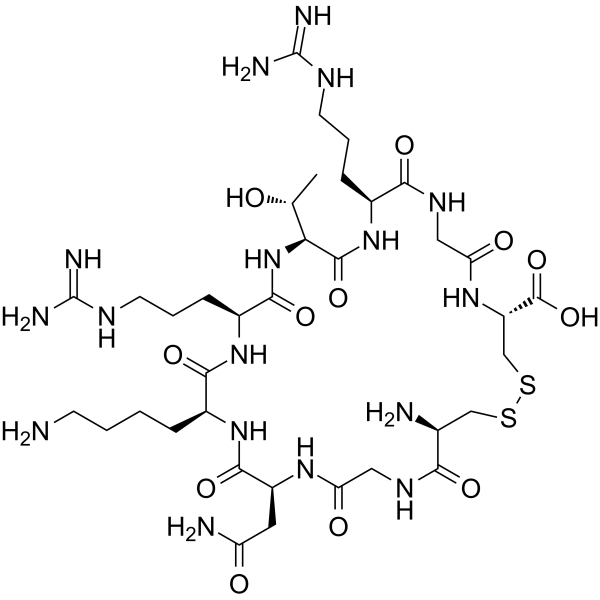
DSPE-PEG1000-Mal-Cys-CGNKRTRGC (Disulfide bridge: Cys2-Cys10) is a PEG compound which composed of DSPE and a nine residue peptide (LyP-1) (HY-P2526). LyP-1 is a cyclic 9-amino-acids tumor homing peptide and selectively bind to p32 receptors overexpressed in various tumor-associated cells .
Ac22(Az8)2 is a selective BCRP inhibitor (EC50: 1-2 nM). Ac22(Az8)2 can restore the drug sensitivity of BCRP-overexpressing cells by inhibiting BCRP-ATPase activity, blocking drug efflux, and increasing intracellular drug accumulation. Ac22(Az8)2 can be used in the research of BCRP-mediated multidrug-resistant cancers .
Anti-c-myc Antibody (9E10) is a kind of mouse IgG1 chimeric antibody, targeting to human c-myc. Anti-c-myc Antibody (9E10) reacts with human c-myc, which is over-expressing in several types of human cancers including lung, breast and colon carcinomas. Anti-c-myc Antibody (9E10) can be can be used for the detections of western blot, ELISA, immunoprecipitation and flow cytometry .
iFSP1 is a potent, selective and glutathione-independent inhibitor of ferroptosis suppressor protein 1 (FSP1) (AIFM2) with an EC50 of 103 nM. iFSP1 selectively induces ferroptosis in GPX4-knockout cells which overexpressed FSP1. iFSP1 is able to sensitize a variety of human cancer cell lines to the ferroptosis inducer, such as (1S,3R)-RSL3 (HY-100218A) .
XZA-1 is a 3-hydroxyacyl-coenzyme A dehydrogenase (HADH) activator. XZA-1 increases the intracellular level of acetoacetyl-CoA, which in turn induces acetoacetylation modification of Chromobox Protein Homolog 4 (CBX4) at lysine 106 (K106). XZA-1 exhibits antitumor effects in a xenograft model of human hepatocellular carcinoma SMMC7721 cells overexpressing CBX4. XZA-1 can be used for the study of hepatocellular carcinoma .
[Leu15]-Gastrin I (human) is a Gastrin I, human (HY-P1097) peptide hormone derivative, which is trophic for normal gastrointestinal epithelium. Gastrin stimulates growth of gastric adenocarcinoma (gastric cancer) through G-protein-coupled receptor called the cholecystokinin (CCK) or cholecystokinin-B receptors (CCK-BR) that are overexpressed in this malignancy. [Leu15]-Gastrin I (human) is promising for research of gastric cancer .
APJ antagonist-1 is an apelin receptor (APJ) antagonist. APJ antagonist-1 shows strong β-arrestin inhibition with an IC50 of 3.1 μM. APJ antagonist-1 selectively inhibits APJ-overexpressing cancer cells and suppresses apelin-induced endothelial cell migration. APJ antagonist-1exhibits high metabolic stability. APJ antagonist-1 can used for the studies of ovarian cancer and tumor angiogenesis .
Hi 76-0079 (NNC0076-0079; 76-0079) is a lipase inhibitor that specifically targets hormone-sensitive lipase (HSL). Hi 76-0079 inhibits PNPB Hydrolysis in cell lysates of HEK293A cells
overexpressing Lipe with an IC50 value of 0.1 μM. Hi 76-0079 synergizes with the ATGL inhibitor Atglistatin (HY-15859) to block lipolysis in vitro. Hi 76-0079 can be used for the study of lipid metabolism .
HDAC-IN-101 (compound H6M) is a HDAC1 inhibitor and NTR/pH-activated fluorescent inducer, with an IC50 of 65 nM against human HDAC1. HDAC-IN-101 blocks cancer cell proliferation by inhibiting HDAC1. HDAC-IN-101 is reduced by overexpressed nitroreductase to generate H6AQ, a product that emits fluorescence under low pH conditions. HDAC-IN-101 is applicable for cancer-related research .
APHS is a specific and covalent COX-2 inhibitor with neuroprotective effects. COX-2 is a prostaglandin (PG) synthetase overexpressed in colorectal cancer (CRC) and has pleiotropic cancer-promoting effects. APHS modifies COX-2 by acetylating the active site (serine 516), thereby inhibiting prostaglandin production. The neuroprotective activity of APHS is inhibited by prostaglandin E2. APHS also co-inhibits the WNT pathway, an anti-tumor mechanism in addition to COX-2 inhibition .
12-NBD Stearate is a fluorescent fatty acid analogue. 12-NBD Stearate binds to fatty acid binding protein (FABP) and sterol carrier protein-2 (SCP-2). Overexpressing sterol carrier protein-2 (SCP-2) 15-kDa isoform enhances 12-NBD Stearate transport. 12-NBD Stearate is a tool for microscopic long chain fatty acids (LCFA) uptake and internalization studies .
Hapalosin is a multidrug resistance reversal agent and chemosensitizer with mild cytotoxicity against cancer cells. Hapalosin inhibits the ATP-dependent drug efflux pump function of P-glycoprotein and antagonizes multidrug resistance-associated proteins. Hapalosin reverses multidrug resistance mediated by P-glycoprotein and multidrug resistance-associated proteins, increases the intracellular accumulation of drugs transported by P-glycoprotein, and enhances the cytotoxicity of these drugs against cancer cells overexpressing P-glycoprotein. Hapalosin can be used in the research of multidrug-resistant cancers .
Avrainvillamide ((+)-Avrainvillamide) is a naturally occurring alkaloid with antiproliferative effects, binds to the nuclear chaperone nucleophosmin, a proposed oncogenic protein that is overexpressed in many different human tumors. Avrainvillamide affects cell biology both by directly binding NPM1 and Crm1 as well as by inhibiting the association of these proteins with certain native cellular partners. Avrainvillamide, an antibiotic, inhibits growth of multi-agent resistant Staphylococcus aureus, Streptococcus pyogenes, and Enterococcus faecalis, with MICs of 12.5, 12.5 and 25 μg/ml, respectively .
NDM-1 inhibitor-2 is an inhibitor of New Delhi metallo-β-lactamase-1 (NDM-1) and has the ability to inhibit NDM-1 activity. NDM-1 inhibitor-2 exhibits a good inhibitory effect on drug-resistant bacterial strains that overexpress NDM-1. When NDM-1 inhibitor-2 is used in combination with the carbapenem antibiotic meropenem, a favorable synergistic effect can be produced .
Clausarin is a selective inhibitor of P-glycoprotein (P-gp), inhibiting P-gp-mediated drug efflux. Clausarin significantly inhibits Daunorubicin (HY-13062A) efflux in K562/R7 human leukemia cells overexpressing P-gp (with Cyclosporin A (HY-B0579) as a positive control). Clausarin can be naturally extracted from the roots of Citrus sinensis (sweet orange) and can be used in research related to overcoming multidrug resistance (MDR) in tumors .
AKR1C3-IN-5 (Compound 6e) is a potent inhibitor of AKR1C3. AKR1C3 enzyme is overexpressed in hormone-dependent prostate and breast tumors. AKR1C3-IN-5 derived from drupanin, which exhibits half-maximal inhibitory concentration (IC50) of 9.6 ± 3 μM and selectivity index (SI) of 5.5 against MCF-7 cells .
SSE1806 is a derivative of podophyllotoxin (a natural antimitotic agent) and a microtubule/tubulin inhibitor with significant anticancer and antiproliferative activities. The GI50 of SSE1806 on cancer cell growth ranges from 1.29-21.15 μM. SSE1806 causes mitotic abnormalities and G2/M phase arrest, increases p53 expression, and inhibits colon cancer organoid growth. SSE1806 is able to overcome multidrug resistance in cell lines overexpressing MDR-1 .
(E/Z)-CLH304a (GABAB receptor antagonist 1) is a mixture of (E)-CLH304a and (Z)-CLH304a. (E)-CLH304a (CLH304a; HY-129636) is a specific and noncompetitive GABAB receptor negative allosteric modulator (NAM). CLH304a inhibits Baclofen (HY-B0007)-induced ERK1/2 phosphorylation in HEK293 cells overexpressing GABAB receptors .
OP-3136 is a selective KAT6 inhibitor. OP-3136 reduces the proliferative capacity of cancer cells and inhibits cell growth in ER + breast cancer cell models with overexpressedKAT6. When combined with ER antagonists/degraders or CDK4/6 inhibitors, OP-3136 exhibits synergistic anti-tumor activity in mouse xenograft models. OP-3136 can be used in studies related to HR +/HER2 - breast cancer .
Focal adhesion kinase (FAK), a non-receptor tyrosine kinase in the cytoplasm, couples with integrins and growth factor receptors to regulate cell adhesion, proliferation, migration, invasion, and metastasis. FAK is overexpressed and aberrantly activated in many cancer types, including triple negative breast cancer (TNBC). FAK aa411-686 Recombinant Human Active Protein Kinase is a recombinant FAK aa411-686 protein that can be used to study FAK aa411-686-related functions .
DBCO-PEG-FA (DBCO-PEG-Folate) (MW 3400) is a multifunctional bioconjugation reagent, which is a copolymer of DBCO and Folic acid (FA) (HY-16637) and can target folate receptors (FR). Folate receptors are highly overexpressed on the surface of many cancer cells (such as lung cancer, nasopharyngeal cancer, ovarian cancer, etc.), but exhibit extremely low expression levels in normal tissues. DBCO-PEG-FA can be used for click chemistry conjugation via its DBCO terminal, and thus applies to various bioconjugation and drug delivery applications .
ZD06519 (7-Hydroxyethyl carbamate-(10Me-11F-Camptothecin)) is a camptothecin (HY-16560) analogue and a topoisomerase I inhibitor. ZD06519 is an ADC cytotoxin with a strong bystander effect, inhibiting a variety of malignancies such as HER2-positive and FRα-overexpressing tumors. ZD06519 inhibits DNA cleavage, relaxation, and reconnection processes, inducing tumor cell death. ZD06519 can be used for ADC synthesis and cancer research .
DS03090629 is an orally active MEK inhibitor that inhibits MEK activity in an ATP-competitive manner. DS03090629 exhibits high affinity for both MEK and phosphorylated MEK, with Kd values of 0.11 and 0.15 nM, respectively. It effectively inhibits the proliferation of BRAF-mutant overexpressing melanoma cell lines, with IC50 values of 74.3 and 97.8 nM for BRAF V600E and MEK1 F53L transfected A375 cells, respectively. DS03090629 holds potential value in the field of anti-melanoma therapy .
WS-691 is an orally active, selective ABCB1 modulator. WS-691 selectively stabilizes ABCB1 via direct binding to ABCB1. WS-691 inhibits the efflux function of ABCB1 and activates ABCB1 ATPase activity. WS-691 elevates intracellular Paclitaxel (HY-B0015) levels and reduces the required dose of Paclitaxel in cancer cells overexpressingABCB1. WS-691 increases the sensitivity of colon cancer cells to Paclitaxel .
DBCO-PEG10000-FA (DBCO-PEG10000-Folate) is a multifunctional bioconjugation reagent, which is a copolymer of DBCO and Folic acid (FA) (HY-16637) and can target folate receptors (FR). Folate receptors are highly overexpressed on the surface of many cancer cells (such as lung cancer, nasopharyngeal cancer, ovarian cancer, etc.), but exhibit extremely low expression levels in normal tissues. DBCO-PEG-FA can be used for click chemistry conjugation via its DBCO terminal, and thus applies to various bioconjugation and drug delivery applications .
RGN6024 is a brain-penetrant, orally active and reversible small molecule tubulin destabilizer. RGN6024 inhibits microtubule polymerization both in biochemical and cellular assays, binds to the colchicine binding pocket of β-tubulin (SPR: Kd = 6.7 μM; tryptophan assay: Kd = 7.4 μM), and triggers G2/M arrest in glioblastoma (GB) cells. RGN6024 retains activity in βIII-tubulinoverexpressing cells. RGN6024 inhibits tumor growth in a GB xenograft mouse model. RGN6024 can be used for the study of glioblastoma (GB) .
WY165 is a bifunctional molecule comprising TR79, an activator of the mitochondrial protease complex caseinolytic protease P (ClpP), linked to desthiobiotin. WY165 mediates selective degradation of monomeric streptavidin (mSA) and its fusion proteins localized to the mitochondrial matrix with a DC50 of 197 nM. WY165 restores mitochondrial morphology by reducing the level of mSA fused to short transmembrane protein 1 (mSA-STMP1) in cells overexpressing mSA-STMP1. WY165 can be used for research in cancer, neurodegenerative diseases, cardiovascular diseases, and metabolic diseases .
DBCO-PEG2000-FA (DBCO-PEG2000-Folate) is a multifunctional bioconjugation reagent, which is a copolymer of DBCO and Folic acid (FA) (HY-16637) and can target folate receptors (FR). Folate receptors are highly overexpressed on the surface of many cancer cells (such as lung cancer, nasopharyngeal cancer, ovarian cancer, etc.), but exhibit extremely low expression levels in normal tissues. DBCO-PEG-FA can be used for click chemistry conjugation via its DBCO terminal, and thus applies to various bioconjugation and drug delivery applications .
DBCO-PEG1000-FA (DBCO-PEG1000-Folate) is a multifunctional bioconjugation reagent, which is a copolymer of DBCO and Folic acid (FA) (HY-16637) and can target folate receptors (FR). Folate receptors are highly overexpressed on the surface of many cancer cells (such as lung cancer, nasopharyngeal cancer, ovarian cancer, etc.), but exhibit extremely low expression levels in normal tissues. DBCO-PEG-FA can be used for click chemistry conjugation via its DBCO terminal, and thus applies to various bioconjugation and drug delivery applications .
(123B9)2-Motif is a selective EphA2 receptor agonist (Kd=4.9 μM) that does not bind to EphA4. (123B9)2-Motif works by inducing EphA2 receptor phosphorylation and oligomerization, thereby promoting receptor activation and internalization. (123B9)2-Motif is primarily used in targeted drug delivery studies for cancers that overexpress EphA2, such as breast cancer, to reduce circulating tumor cells and inhibit metastasis .
DBCO-PEG5000-FA (DBCO-PEG5000-Folate) is a multifunctional bioconjugation reagent, which is a copolymer of DBCO and Folic acid (FA) (HY-16637) and can target folate receptors (FR). Folate receptors are highly overexpressed on the surface of many cancer cells (such as lung cancer, nasopharyngeal cancer, ovarian cancer, etc.), but exhibit extremely low expression levels in normal tissues. DBCO-PEG-FA can be used for click chemistry conjugation via its DBCO terminal, and thus applies to various bioconjugation and drug delivery applications .
Cys-LT7 is a transferrin receptor (TfR)-targeting peptide ligand. Cys-LT7 binds to a TfR site distinct from endogenous transferrin, mediates conjugated Doxorubicin (HY-15142A) delivery to TfR-overexpressed tumor cells, and exhibits low toxicity to TfR-low-expressed normal cells. Cys-LT7 is an L-configuration peptide susceptible to proteolytic enzymes, leading to poor biostability in peptide-drug conjugates. Cys-LT7 can be used for the research of glioblastoma, hepatocellular carcinoma, lung carcinoma .
STARD3-IN-1 (Compound VS1) is a STARD3 inhibitor with an IC₅₀ of 35 μM. STARD3 is a protein that is overexpressed in various cancers and is involved in cholesterol transport. STARD3-IN-1 exhibits anti-proliferative activity in breast cancer and colon cancer cells, significantly weakening the clonogenic ability of cancer cells. STARD3-IN-1 increases the protein levels of FAK and pTyr397-FAK. STARD3-IN-1 can be used for research on breast cancer and colon cancer .
hCA/VEGFR-2-IN-3 (compound 8j) is an indolinonylbenzenesulfonamide and a potential dual inhibitor of cancer-associated hCA IX/XII and VEGFR-2. hCA/VEGFR-2-IN-3 inhibits VEGFR-2 (IC50=358 nM), has high binding activity to hCAs with Ki of 4.2 nM (hCA IX), 22.9 nM (hCA II), 25.1 nM (hCA I), 28.0 nM (hCA XII), respectively. hCA/VEGFR-2-IN-3 has antiproliferative activity against VEGFR-2 overexpressing breast cancer cells .
Ketodarolutamide (ORM-15341) is a potent, high-affinity nonsteroidal competitive full antagonist of androgen receptor (AR). Ketodarolutamide displays a Ki value of 8 nM for rat wild-type AR and an IC50 value of 38 nM in AR-HEK293 cells . Ketodarolutamide inhibits testosterone-induced nuclear translocation of the AR and antagonizes both overexpressed and mutant ARs . Ketodarolutamide specifically suppresses the proliferation of AR-dependent prostate cancer cells and exhibits antitumor activity in models of castration-resistant prostate cancer (CRPC) . Ketodarolutamide is suitable for the mechanistic and therapeutic research of prostate cancer .
DNP002 is a humanized IgG1 monoclonal antibody targeting tumor-associated CEACAM6. DNP002 binds to CEACAM1, CEACAM5 and CEACAM6, and exhibits antibody-dependent cellular cytotoxicity against tumor cells overexpressing these targets. DNP002 binds to CEACAM6 on the surface of tumor-associated neutrophils (including MDSCs) to reverse the immunosuppressive effect in the tumor microenvironment. DNP002 shows anti-tumor activity in advanced solid tumors. DNP002 can be used for the research of advanced solid tumors. The recommended isotype control is human IgG1 kappa (HY-P99001) .
4-Aminophenyl-β-D-galactopyranoside, 98% is a highly efficient substrate for β-galactosidase. It is specifically hydrolyzed by this enzyme to release galactose and electroactive p-aminophenol. 4-Aminophenyl-β-D-galactopyranoside, 98% is widely used in colorimetric and electrochemical assays for detecting β-galactosidase activity and determining enzyme kinetics, such as in biosensing fields including cellular senescence, pathogen and contaminant detection. In addition, since β-galactosidase is often overexpressed in primary ovarian cancer, 4-Aminophenyl-β-D-galactopyranoside, 98% can also be applied to related research on primary ovarian cancer .
SL-176 is a PPM1D (Wip1) inhibitor. SL-176 inhibits lipid droplet formation, downregulates the mRNA and protein expression of PPARγ and C/EBPα, and blocks adipocyte differentiation. SL-176 induces G2/M cell cycle arrest, apoptosis and inhibits cell proliferation in breast cancer cells overexpressingPPM1D, and activates components of the p53 pathway. SL-176 suppresses tumor growth in a zebrafish model of neuroblastoma. SL-176 is applicable to research related to obesity, breast cancer and neuroblastoma .
β-catenin-IN-3 (Compound C2) is a selective β-catenin inhibitor. β-catenin-IN-3 binds to allosteric site on the surface of β-catenin with K D calculated at 54.96 nM. β-catenin-IN-3 selectively inhibits β-catenin via targeting a cryptic allosteric modulation site, lowers its cellular load. β-catenin-IN-3 significantly reduces viability of β-catenin driven cancer cells, and triggers β-catenin degradation via proteasome system in β-catenin-overexpressing cancer cells .
Lysosomal P-gp targeted agent 1 (Compound 14) is an anti-tumor agent targeting lysosomal P-glycoprotein (Pgp). Lysosomal P-gp targeted agent 1 is selectively transported into lysosomes by overexpressed Pgp, release nitric oxide (NO) to generate reactive oxygen species (ROS), resulting in lysosomal membrane permeabilization (LMP) and inducing apoptosis. Lysosomal P-gp targeted agent 1 can overcome P-glycoprotein-mediated drug resistance and lead to cell cycle arrest, but relatively low toxicity to normal cells. Lysosomal P-gp targeted agent 1 has antitumor activity, significantly inhibits tumor volume .
CLH304a (compound 14) is a specific and noncompetitive GABAB receptor negative allosteric modulator (NAM). CLH304a decreases GABA-induced IP3 production with an IC50 of 37.9 μM. CLH304a has no effect on other GPCR Class C members such as mGluR1, mGluR2, and mGluR5. CLH304a acts on the heptahelical domain of GB2 subunits and non-competitively inhibits the effect of agonists with inverse agonist properties. CLH304a inhibits Baclofen (HY-B0007)-induced ERK1/2 phosphorylation in HEK293 cells overexpressing GABAB receptor .
PI3Kδ-IN-24 is a selective PI3Kδ inhibitor (IC50 = 0.1 nM). PI3Kδ-IN-24 exhibits significant antiproliferative effects against PI3Kδ-overexpressing cancer cell lines. PI3Kδ-IN-24 reduces p-AKT levels and induces cell cycle arrest and apoptosis in tumor cells. PI3Kδ-IN-24 is useful in cancer research, such as diffuse large B-cell lymphoma (DLBCL) .
Cyclo[K(N3)larllt] is a seven-membered cyclic peptide targeting EGFR, with a Kd value of 5.09 μM, and exhibits binding selectivity toward homologous proteins HER2 and HER3. Cyclo[K(N3)larllt] has no cytotoxicity and shows no growth inhibitory effect on cancer cells overexpressing EGFR. Cyclo[K(N3)larllt] can serve as a ligand for EGFR-targeted fluorescent conjugates, which is applicable to the detection of cancers with EGFR overexpression. Cyclo[K(N3)larllt] can be used in the research of colorectal cancer .
BMS-599626 dihydrochloride is a small molecule pan-HER (human epidermal growth factor receptor) kinase inhibitor. BMS-599626 dihydrochloride primarily targets HER1 (IC50=20 nmol/L) and HER2 (IC50=30 nmol/L) kinase activity in the HER family. BMS-599626 inhibits the kinase activity of HER1 and HER2 by competing with their ATP-binding sites, and can inhibit the downstream signaling pathway by blocking the heterodimer formation of HER1 and HER2. BMS-599626 dihydrochloride can be used to study the antitumor effects of multiple HER1 or HER2overexpressed tumor models .
Methylcarbamyl PAF C-8 is resistant to the degradation function of platelet-activating factor acetylhydrolase (PAF-AH). It has a half-life of more than 100 minutes in platelet-poor plasma and possesses the activity of inducing platelet aggregation. In NRK-49 cells overexpressing the PAF receptor, Methylcarbamyl PAF C-8 can induce the expression of c-myc and c-fos, and activate mitogen-activated protein kinase (MAPK). Additionally, Methylcarbamyl PAF C-8 can induce cell cycle arrest in the G1 phase. Methylcarbamyl PAF C-8 holds promise for research in the fields of cardiovascular diseases and anti-cancer therapy .
Azacyclonol (γ-pipradol) hydrochloride is a compound with promising anticancer activity, showing effectiveness in inhibiting NOX-derived ROS in A549 human lung cancer cells. Azacyclonol hydrochloride exhibits enhanced proliferation inhibition against androgen-refractory cancer cell lines, specifically DU145 and PC-3. Azacyclonol hydrochloride demonstrates antitumor activity in DU145-xenografted chorioallantoic membrane tumor models. Azacyclonol hydrochloride also acts as a ligand for the M3 muscarinic acetylcholine receptor, which is overexpressed in ARPC. Azacyclonol hydrochloride effectively blocks carbachol-induced proliferation and NOX activity in DU145 cells. Azacyclonol hydrochloride can also be utilized for the treatment of chronic schizophrenia.
Ladiratuzumab (hLIV22) is a humanized monoclonal antibody against zinc transporter LIV-1/ZIP6. Ladiratuzumab is conjugated to MMAE (HY-15162) via a cleavable dipeptide linker to synthesize an antibody-drug conjugate (ADC) Ladiratuzumab vedotin (HY-P99683). Ladiratuzumab vedotin selectively targets LIV-1 protein overexpressed on the surface of tumor cells, enters cells through antibody-mediated receptor endocytosis, releases MMAE to inhibit microtubule polymerization, and kills adjacent tumor cells with a bystander effect. Ladiratuzumab can be used in the study of solid tumors such as metastatic triple-negative breast cancer (mTNBC) .
CL-387785 (EKI-785; WAY-EKI 785) is an orally active EGFR inhibitor with an IC50 of 370 pM. CL-387785 inhibits EGF-stimulated EGFR autophosphorylation with an IC50 of approximately 5 nM. CL-387,785 exerts selective inhibition on cell lines overexpressing EGFR or c-erbB-2, whereas it shows weak inhibitory effects on cell lines with low expression of these two receptors. CL-387785 effectively induces cell cycle arrest and apoptosis. CL-387785 can be used for the research of non-small cell lung cancer and autosomal recessive polycystic kidney disease .
Anti-MUC1/CD227 Antibody (C595 (NCRC48)) is a kind of mouse IgG3 κ chimeric antibody inhibitor, targeting to human MUC1/CD227. Anti-MUC1/CD227 Antibody (C595 (NCRC48)) specifically recognizes and binds to the MUC1 protein, which is overexpressed and abnormally glycosylated on the surface of tumor cells, thereby precisely killing cancer cells. Anti-MUC1/CD227 Antibody (C595 (NCRC48)) can be used for the researches of cancer, such as ovarian cancer .
Photosensitizer-8 (Compound 4), 2-anthrol derivative, is an alkaline phosphatase (ALP)-activatable photosensitizer. Photosensitizer-8 undergoes a phosphate ester hydrolysis reaction in the presence of ALP, rapidly converting into the active photosensitizer 2-anthrol. Photosensitizer-8 exhibits cytotoxicity against ALP-overexpressing cancer cells (HeLa, A549, HCT116) after light exposure, with IC50 values of 14.3 μM, 21.6 μM and 17.5 μM, respectively, while showing no significant cytotoxicity against normal lung fibroblasts (WI-38) (IC50 ≥ 30 μM). Photosensitizer-8 can be used in photodynamic therapy research for ALP-overexpression-related cancers .
GB-6 is a short linear peptide that targets the gastrin releasing peptide receptor (GRPR). GRPR is overexpressed in pancreatic cancer. Based on the tumor selectivity and tumor-specific accumulation properties of GB-6, GB-6 labeled with near infrared (NIR) fluorescent dyes or radionuclide netium-99m (99mTc) can be used as a high-contrast imaging probe. GB-6 has excellent in vivo stability, with tumor to pancreatic and intestinal fluorescence signal ratios of 5.2 and 6.3, respectively, in SW199 0 subcutaneous xenograft models. GB-6 can rapidly target tumors and accurately delineate tumor boundaries, which has broad application prospects .
AurAP14 is an Aurora A PROTAC degrader (DC50 = 120 nM). AurAP14 shows significant inhibitory activity against various tumor cell lines, with IC50s of 0.294 μM in A549 cells and 0.534 μM in MCF-7 cells. AurAP14 induces apoptosis and arrests A549 cells in the S and G2/M phases. AurAP14 demonstrates anti-tumor efficacy in nude mouse xenograft models of A549 and A549/PTR. AurAP14can be used in the research on the treatment of Aurora A-overexpressing NSCLC. (Pink: Aurora A ligand (HY-10971), Blue: E3 ligase Ligand (HY-W437598), Black: Linker) .
Ketodarolutamide-d6 (BAY 1896953-d6) is the deuterium labeled Ketodarolutamide (HY-19337). Ketodarolutamide (ORM-15341) is a potent, high-affinity nonsteroidal competitive full antagonist of androgen receptor (AR). Ketodarolutamide displays a Ki value of 8 nM for rat wild-type AR and an IC50 value of 38 nM in AR-HEK293 cells . Ketodarolutamide inhibits testosterone-induced nuclear translocation of the AR and antagonizes both overexpressed and mutant ARs . Ketodarolutamide specifically suppresses the proliferation of AR-dependent prostate cancer cells and exhibits antitumor activity in models of castration-resistant prostate cancer (CRPC) . Ketodarolutamide is suitable for the mechanistic and therapeutic research of prostate cancer .
FAP6-19 is a fibroblast activation protein (FAP) targeting radioligand with a Kd of 18.2 nM. FAP6-19 selectively delivers therapeutic radioactive nuclides (such as 177Lu) to the tumor site by targeting the overexpressed FAP protein in the tumor microenvironment, achieving precise killing of cancer cells while minimizing radiation damage to healthy tissues. FAP6-19 exhibits extremely high total cellular uptake and good intracellular retention ability in HT1080 cells. After being labeled with 111In, FAP6-19 produced extremely high tumor/kidney and tumor/liver dose ratios in the mouse model with 4T1 tumors. FAP6-19 can be used in the research of solid tumors expressing FAP.
NM-001 is a theranostic prodrug that targets ανβ3 integrin. NM-001 consists of cRGD and GFLG peptides, a DCM fluorophore and Chlorambucil (HY-13593). NM-001 internalizes into lysosomes of tumor cells via the cRGD peptide, and generates NM-002 (HY-178820) and Chlorambucil through intracellular cleavage at the GFLG peptide by overexpressed Cathepsin B (CTSB). NM-001 exhibits green fluorescence under physiological conditions, and converts to NIR fluorescence by CTSB activation. NM-001 has significant antitumor activity with low toxicity in HeLa cell xenografts mouse models. NM-001 can be used for real-time drug release monitoring research .
EGFR T790M/FAK-IN-2 is an orally active dual FAK and EGFR T790M kinase inhibitor, with an IC50 of 1.03 nM against FAK and an IC50 of 3.89 nM against EGFR T790M. EGFR T790M/FAK-IN-2 exerts antiproliferative effects in drug-resistant cancer cells overexpressingFAK, inducing apoptosis and cell cycle arrest. EGFR T790M/FAK-IN-2 exhibits antitumor activity in a pancreatic cancer xenograft mouse model. EGFR T790M/FAK-IN-2 can be used for the research of pancreatic cancer, breast cancer and non-small cell lung cancer .
Ketodarolutamide-d3 (BAY 1896953-d3) is the deuterium labeled Ketodarolutamide (HY-19337). Ketodarolutamide (ORM-15341) is a potent, high-affinity nonsteroidal competitive full antagonist of androgen receptor (AR). Ketodarolutamide displays a Ki value of 8 nM for rat wild-type AR and an IC50 value of 38 nM in AR-HEK293 cells . Ketodarolutamide inhibits testosterone-induced nuclear translocation of the AR and antagonizes both overexpressed and mutant ARs . Ketodarolutamide specifically suppresses the proliferation of AR-dependent prostate cancer cells and exhibits antitumor activity in models of castration-resistant prostate cancer (CRPC) . Ketodarolutamide is suitable for the mechanistic and therapeutic research of prostate cancer .
EGFR-IN-60 (Compound 7d) shows obvious inhibition of EGFR WT, EGFR T790M, EGFR L858R and JAK3 with IC50s of 83, 26, 53, and 69 nM, respectively. EGFR-IN-60 potently inhibits the growth of H1975 cells harboring EGFR T790M mutation (IC50=1.32 µM) over A431 cells overexpressing EGFR WT (IC50=4.96 µM). EGFR-IN-60 exhibits good oral absorption, potent and safe antitumor activity. EGFR-IN-60 induces cell death through apoptosis supported by increased Bax/Bcl-2 ratio .
CL-387785 (EKI-785; WAY-EKI 785) (Standard) is the analytical standard of CL-387785 (HY-10325). This product is intended for research and analytical applications. CL-387785 is an orally active EGFR inhibitor with an IC50 of 370 pM. CL-387785 inhibits EGF-stimulated EGFR autophosphorylation with an IC50 of approximately 5 nM. CL-387,785 exerts selective inhibition on cell lines overexpressing EGFR or c-erbB-2, whereas it shows weak inhibitory effects on cell lines with low expression of these two receptors. CL-387785 effectively induces cell cycle arrest and apoptosis. CL-387785 can be used for the research of non-small cell lung cancer and autosomal recessive polycystic kidney disease.
DCM-KPV is a fluorescent probe targeting the human intestinal oligopeptide transporter PEPT1/SLC15A1 receptor (λex=480 nm, λem=620-670 nm). DCM-KPV specifically binds to PepT1 via its KPV domain and mediates receptor-targeted internalization, thus effectively accumulating in the cytoplasm and nucleus of cells overexpressing this receptor. DCM-KPV has the advantages of long emission wavelength, high emission efficiency, low photobleaching, and negligible cytotoxicity. DCM-KPV maintains stable fluorescence intensity under continuous illumination, exhibiting extremely high live cell compatibility. DCM-KPV can specifically accumulate at colonic inflammatory sites through the intestinal mucosa, enabling direct non-invasive visual differentiation between chronic and acute ulcerative colitis groups and the normal group .
XR5944 is an anti-tumor compound with DNA-targeting activity. As a topoisomerase inhibitor, XR5944 can effectively inhibit the activities of topoisomerase I and II. XR5944 shows excellent anti-tumor activity against human and mouse tumor cells in vitro and in vivo. XR5944 exhibits significant potency in multiple cell lines, with IC50 values of 0.04-0.4 nM. XR5944 is not affected by atypical drug resistance in cells and remains significantly active even in cells overexpressing P-glycoprotein or multidrug resistance-related proteins. XR5944 showed anti-tumor efficacy in human tumor models of H69 small cell lung cancer and HT29 colon cancer, inducing tumor regression in most animals in the HT29 model. XR5944 can be used to study biological processes related to colon and lung cancer .
5-HT2A&5-HT2C agonist-3 (compound 4e) is an orally bioavailable and blood-brain barrier penetrant agonist of 5-HT2A and 5-HT2C. 5-HT2A&5-HT2C agonist-3 increases intracellular calcium levels in cells overexpressing5-HT2A or 5-HT2C receptors, and shows no activity against 5-HT2B receptors. 5-HT2A&5-HT2C agonist-3 can be used for the research of neuropsychiatric disorders .
S2.2 aptamer sodium is a nucleic acid-based MUC1-binding aptamer with high affinity and low toxicity. Upon binding to its target, S2.2 aptamer sodium undergoes a conformational switch and restores fluorescence signal, serving as a targeted imaging agent for MUC1-positive cancer cells. S2.2 aptamer sodium enables targeted delivery to breast cancer cells with overexpressed MUC1. When formulated as the S2.2-PEG-MZF molecular probe, S2.2 aptamer sodium possesses the functions of T2 signal inhibition, magnetic field-induced hyperthermia and targeted magnetic resonance molecular imaging. In the S2.2-PEG-MZF/DOX nanoliposome, S2.2 aptamer sodium supports targeted thermochemotherapy, effectively inhibiting cancer cell proliferation and invasion as well as inducing apoptosis, and is widely used in studies related to breast cancer .
17β-Hydroxy exemestane (17-H-EXE) is the primary active metabolite of Exemestane (HY-13632). 17β-Hydroxy exemestane is an aromatase inhibitor (IC50 = 69 nM) and an androgen receptor (AR) agonist (IC50 = 39.6 nM) that is selective for AR over estrogen receptor α (ERα; IC50 = 21.2 μM). 17β-Hydroxy exemestane stimulates growth of AR- and ERα-positive MCF-7 (EC50= 2.7 μM) and T47D breast cancer cells (EC50s = 0.43 and 1500 nM for AR- and ER-mediated growth, respectively) and inhibits proliferation of testosterone-treated aromatase-overexpressing MCF-7 cells. 17β-Hydroxy exemestane inhibits increases in serum cholesterol and LDL levels and prevents decreases in bone mineral density in the lumbar vertebrae and femur, as well as femoral bending strength and compressive strength of the fifth lumbar vertebrae in ovariectomized rats .
2A3 (2-aminopyridine-3-carboxylic acid imidazolide) is a T cell activator that specifically binds to CEACAM6 and CEACAM5. 2A3 exhibits enzymatic activity that catalyzes the glucuronidation of specific substrates (e.g., 1-naphthol), and possesses significant cytotoxic activity. When integrated into CAR T cells or used alone, 2A3 acts by inducing cytokine release, degranulation, and direct cytotoxicity. 2A3 kills pancreatic and breast cancer cells with high target antigen expression in vitro, and significantly inhibits the growth of pancreatic cancer xenografts in vivo. 2A3 broadly targets malignant tumors with overexpressed CEACAM5, CEACAM6, or co-expressed both, and shows high expression mainly in tissues such as the liver and colon. 2A3 serves as an important research tool for the immunotherapy of pancreatic and breast cancer . 2A3 is a novel SHAPE reagent, which can be used for the analysis of RNA structure both in vitro and in vivo . 2A3 is an electrophilic chemical probe that acylates the 2'-OH in the RNA backbone. 2A3 can be used for RNA SHAPE-MaP experiments and is capable of analyzing the RNA secondary structures at single nucleotide resolution.
TTX-P is a fluorescent probe. TTX-P responds in situ to the overexpressed alkaline phosphatase (ALP) in liver, imaging of diabetic liver injury in the near-infrared second-window (NIR-II) region .
HDAC-IN-101 (compound H6M) is a HDAC1 inhibitor and NTR/pH-activated fluorescent inducer, with an IC50 of 65 nM against human HDAC1. HDAC-IN-101 blocks cancer cell proliferation by inhibiting HDAC1. HDAC-IN-101 is reduced by overexpressed nitroreductase to generate H6AQ, a product that emits fluorescence under low pH conditions. HDAC-IN-101 is applicable for cancer-related research .
DCM-KPV is a fluorescent probe targeting the human intestinal oligopeptide transporter PEPT1/SLC15A1 receptor (λex=480 nm, λem=620-670 nm). DCM-KPV specifically binds to PepT1 via its KPV domain and mediates receptor-targeted internalization, thus effectively accumulating in the cytoplasm and nucleus of cells overexpressing this receptor. DCM-KPV has the advantages of long emission wavelength, high emission efficiency, low photobleaching, and negligible cytotoxicity. DCM-KPV maintains stable fluorescence intensity under continuous illumination, exhibiting extremely high live cell compatibility. DCM-KPV can specifically accumulate at colonic inflammatory sites through the intestinal mucosa, enabling direct non-invasive visual differentiation between chronic and acute ulcerative colitis groups and the normal group .
4-Aminophenyl-β-D-galactopyranoside, 98% is a highly efficient substrate for β-galactosidase. It is specifically hydrolyzed by this enzyme to release galactose and electroactive p-aminophenol. 4-Aminophenyl-β-D-galactopyranoside, 98% is widely used in colorimetric and electrochemical assays for detecting β-galactosidase activity and determining enzyme kinetics, such as in biosensing fields including cellular senescence, pathogen and contaminant detection. In addition, since β-galactosidase is often overexpressed in primary ovarian cancer, 4-Aminophenyl-β-D-galactopyranoside, 98% can also be applied to related research on primary ovarian cancer .
DBCO-PEG1000-FA (DBCO-PEG1000-Folate) is a multifunctional bioconjugation reagent, which is a copolymer of DBCO and Folic acid (FA) (HY-16637) and can target folate receptors (FR). Folate receptors are highly overexpressed on the surface of many cancer cells (such as lung cancer, nasopharyngeal cancer, ovarian cancer, etc.), but exhibit extremely low expression levels in normal tissues. DBCO-PEG-FA can be used for click chemistry conjugation via its DBCO terminal, and thus applies to various bioconjugation and drug delivery applications .
DSPE-PEG2000-pPB is a PEG compound which composed of DSPE and a cyclic oligopeptide (pPB). pPB has a strong binding affinity with PDGFRβ, which is overexpressed on activated hepatic stellate cells (HSC). DSPE-PEG2000-pPB can be used for drug delivery .
DSPE-PEG1000-Mal-Cys-CGNKRTRGC (Disulfide bridge: Cys2-Cys10) is a PEG compound which composed of DSPE and a nine residue peptide (LyP-1) (HY-P2526). LyP-1 is a cyclic 9-amino-acids tumor homing peptide and selectively bind to p32 receptors overexpressed in various tumor-associated cells .
DBCO-PEG2000-FA (DBCO-PEG2000-Folate) is a multifunctional bioconjugation reagent, which is a copolymer of DBCO and Folic acid (FA) (HY-16637) and can target folate receptors (FR). Folate receptors are highly overexpressed on the surface of many cancer cells (such as lung cancer, nasopharyngeal cancer, ovarian cancer, etc.), but exhibit extremely low expression levels in normal tissues. DBCO-PEG-FA can be used for click chemistry conjugation via its DBCO terminal, and thus applies to various bioconjugation and drug delivery applications .
2-Deoxy-L-ribose is a stereoisomer of 2-Deoxy-d-ribose that inhibits 2-Deoxy-d-ribose anti-apoptotic effects. 2-Deoxy-L-ribose suppresses metastasis of tumor cells overexpressing thymidine phosphorylase .
DSPE-PEG3400-GE11 is a PEG compound which composed of DSPE and an EGFR targeting peptide (GE11). GE11 can be used for EGFR overexpressed cancer cells. DSPE-PEG3400-GE11 can be used for drug delivery .
DBCO-PEG-FA (DBCO-PEG-Folate) (MW 3400) is a multifunctional bioconjugation reagent, which is a copolymer of DBCO and Folic acid (FA) (HY-16637) and can target folate receptors (FR). Folate receptors are highly overexpressed on the surface of many cancer cells (such as lung cancer, nasopharyngeal cancer, ovarian cancer, etc.), but exhibit extremely low expression levels in normal tissues. DBCO-PEG-FA can be used for click chemistry conjugation via its DBCO terminal, and thus applies to various bioconjugation and drug delivery applications .
DSPE-PEG5000-A7R is a PEG compound which composed of DSPE and a tumor vascular targeting peptide (A7R). A7R exhibits high affinity and specificity for VEGFR-2, which is overexpressed in various tumors .
DSPE-PEG2000-A7R is a PEG compound which composed of DSPE and a tumor vascular targeting peptide (A7R). A7R exhibits high affinity and specificity for VEGFR-2, which is overexpressed in various tumors .
DSPE-PEG1000-A7R is a PEG compound which composed of DSPE and a tumor vascular targeting peptide (A7R). A7R exhibits high affinity and specificity for VEGFR-2, which is overexpressed in various tumors .
DSPE-PEG3400-A7R is a PEG compound which composed of DSPE and a tumor vascular targeting peptide (A7R). A7R exhibits high affinity and specificity for VEGFR-2, which is overexpressed in various tumors .
DSPE-PEG1000-GE11 is a PEG compound which composed of DSPE and an EGFR targeting peptide (GE11). GE11 can be used for EGFR overexpressed cancer cells. DSPE-PEG1000-GE11 can be used for drug delivery .
DSPE-PEG5000-pPB is a PEG compound which composed of DSPE and a cyclic oligopeptide (pPB). pPB has a strong binding affinity with PDGFRβ, which is overexpressed on activated hepatic stellate cells (HSC). DSPE-PEG5000-pPB can be used for drug delivery .
DSPE-PEG2000-LyP-1 is a PEG compound which composed of DSPE and a nine residue peptide (LyP-1) (HY-P2526). LyP-1 is a cyclic 9-amino-acids tumor homing peptide and selectively bind to p32 receptors overexpressed in various tumor-associated cells .
DSPE-PEG3000-LyP-1 is a PEG compound which composed of DSPE and a nine residue peptide (LyP-1) (HY-P2526). LyP-1 is a cyclic 9-amino-acids tumor homing peptide and selectively bind to p32 receptors overexpressed in various tumor-associated cells .
DBCO-PEG10000-FA (DBCO-PEG10000-Folate) is a multifunctional bioconjugation reagent, which is a copolymer of DBCO and Folic acid (FA) (HY-16637) and can target folate receptors (FR). Folate receptors are highly overexpressed on the surface of many cancer cells (such as lung cancer, nasopharyngeal cancer, ovarian cancer, etc.), but exhibit extremely low expression levels in normal tissues. DBCO-PEG-FA can be used for click chemistry conjugation via its DBCO terminal, and thus applies to various bioconjugation and drug delivery applications .
DBCO-PEG5000-FA (DBCO-PEG5000-Folate) is a multifunctional bioconjugation reagent, which is a copolymer of DBCO and Folic acid (FA) (HY-16637) and can target folate receptors (FR). Folate receptors are highly overexpressed on the surface of many cancer cells (such as lung cancer, nasopharyngeal cancer, ovarian cancer, etc.), but exhibit extremely low expression levels in normal tissues. DBCO-PEG-FA can be used for click chemistry conjugation via its DBCO terminal, and thus applies to various bioconjugation and drug delivery applications .
DSPE-PEG1000-pPB is a PEG compound which composed of DSPE and a cyclic oligopeptide (pPB). pPB has a strong binding affinity with PDGFRβ, which is overexpressed on activated hepatic stellate cells (HSC). DSPE-PEG1000-pPB can be used for drug delivery .
DSPE-PEG3400-pPB is a PEG compound which composed of DSPE and a cyclic oligopeptide (pPB). pPB has a strong binding affinity with PDGFRβ, which is overexpressed on activated hepatic stellate cells (HSC). DSPE-PEG3400-pPB can be used for drug delivery .
[Leu15]-Gastrin I (human) is a Gastrin I, human (HY-P1097) peptide hormone derivative, which is trophic for normal gastrointestinal epithelium. Gastrin stimulates growth of gastric adenocarcinoma (gastric cancer) through G-protein-coupled receptor called the cholecystokinin (CCK) or cholecystokinin-B receptors (CCK-BR) that are overexpressed in this malignancy. [Leu15]-Gastrin I (human) is promising for research of gastric cancer .
Cys-LT7 is a transferrin receptor (TfR)-targeting peptide ligand. Cys-LT7 binds to a TfR site distinct from endogenous transferrin, mediates conjugated Doxorubicin (HY-15142A) delivery to TfR-overexpressed tumor cells, and exhibits low toxicity to TfR-low-expressed normal cells. Cys-LT7 is an L-configuration peptide susceptible to proteolytic enzymes, leading to poor biostability in peptide-drug conjugates. Cys-LT7 can be used for the research of glioblastoma, hepatocellular carcinoma, lung carcinoma .
MUC1, mucin core is the region of the MUC1 mucin core. MUC1 is a type I transmembrane glycoprotein, and is overexpressed and aberrantly glycosylated in carcinoma cells. MUC1, mucin core protein binds to domain 1 of ICAM-1 .
LARLLT TFA is an EGFR-binding peptide. LARLLT has the potential for research of EGFR overexpressing cancers, such as lung, ovarian and colorectal cancer .
LARLLT (D4) is an EGFR-binding peptide. LARLLT has the potential for research of EGFR overexpressing cancers, such as lung, ovarian and colorectal cancer .
BGC1614 is a Nectin-4-targeting bicyclic toxin conjugate (BTC) belonging to the category of peptide-drug conjugates (PDCs). BGC1614 exhibits strong targeted binding ability to Nectin-4, with an KD of 3.859 × 10 -7 M. BGC1614 exhibits superior antitumor efficacy in nude mice bearing PC-3 and N87 tumor xenografts. BGC1614 can be used for research related to Nectin-4-overexpressing tumors (such as prostate cancer, gastric cancer) .
NOTA-IMB-RGD is a dual molecular probe targeting integrin αvβ3 and programmed death ligand-1 (PD-L1). NOTA-IMB-RGD blocks the PD-1/PD-L1 signaling pathway and integrin αvβ3-overexpressing tumor vasculature. NOTA-IMB-RGD is promising for research of solid tumors co-expressing PD-L1 and αvβ3 (e.g., glioma, breast cancer) .
KP-2067 is a form of the CaSR agonist peptide. KP-2067 can result in dose-dependent activation of CaSR in HEK293T overexpressing hCaSR cell line, with an EC50 of 18.4 μM. KP-2067 significantly reduces plasma parathyroid hormone in rat model .
Peptide R analogue 10 (compound 10) is an analog of the CXCR4 antagonist peptide Peptide R (HY-P4111) with stronger antagonistic potency, specificity and plasma stability. Peptide R analogue 10 can inhibit CXCL12-mediated cell migration, ERK phosphorylation and CXCR4 internalization. Peptide R analogue 10 can be used in the study of CXCR4 overexpressing leukemia and colon cancer .
(123B9)2-Motif is a selective EphA2 receptor agonist (Kd=4.9 μM) that does not bind to EphA4. (123B9)2-Motif works by inducing EphA2 receptor phosphorylation and oligomerization, thereby promoting receptor activation and internalization. (123B9)2-Motif is primarily used in targeted drug delivery studies for cancers that overexpress EphA2, such as breast cancer, to reduce circulating tumor cells and inhibit metastasis .
GB-6 is a short linear peptide that targets the gastrin releasing peptide receptor (GRPR). GRPR is overexpressed in pancreatic cancer. Based on the tumor selectivity and tumor-specific accumulation properties of GB-6, GB-6 labeled with near infrared (NIR) fluorescent dyes or radionuclide netium-99m (99mTc) can be used as a high-contrast imaging probe. GB-6 has excellent in vivo stability, with tumor to pancreatic and intestinal fluorescence signal ratios of 5.2 and 6.3, respectively, in SW199 0 subcutaneous xenograft models. GB-6 can rapidly target tumors and accurately delineate tumor boundaries, which has broad application prospects .
FAP6-19 is a fibroblast activation protein (FAP) targeting radioligand with a Kd of 18.2 nM. FAP6-19 selectively delivers therapeutic radioactive nuclides (such as 177Lu) to the tumor site by targeting the overexpressed FAP protein in the tumor microenvironment, achieving precise killing of cancer cells while minimizing radiation damage to healthy tissues. FAP6-19 exhibits extremely high total cellular uptake and good intracellular retention ability in HT1080 cells. After being labeled with 111In, FAP6-19 produced extremely high tumor/kidney and tumor/liver dose ratios in the mouse model with 4T1 tumors. FAP6-19 can be used in the research of solid tumors expressing FAP.
Vasoactive intestinal contractor is a novel member of the endothelin family. Vasoactive intestinal contractor stimulates a rapid increase in the intracellular Ca 2+ concentration in fura-2-overexpressed Swiss 3T3 cells [1.
LS10 can specifically bind to NG2 protein and is a functional ligand for targeted drug delivery to glioma. NG2 proteins are widely overexpressed in the glioma cells and restricted in normal tissue .
CPK peptide is a tumor-localizing peptide. CPK peptide specifically binds to the monocarboxylate transporter 1 (MCT1) receptor, which is overexpressed in many human colon cancer cell lines but not in normal cells. CPK peptide can be used in tumor diagnosis research .
Tumour-associated MUC1 epitope is a biological active peptide. (This sequence is the hallmark of MUC1 mucin. MUC1 is a highly glycosylated type I transmembrane glycoprotein with a unique extracellular domain consisting of a variable number of tandem repeats (VNTR) of this 20 amino acid peptide. It is overexpressed on the cell surface of many human adenocarcinomas and hematological malignancies, including multiple myeloma and B-cell lymphoma, making MUC1 broadly applicable target for immunotherapeutic strategies.)
MAGE-3 (271-279) is a 271-279 residue peptide derived from melanoma antigens encoded by MAGE-3. MAGE-3 is a cytolytic T lymphocyte (CTL)-defined MAGE-3 protein associated with the human leukocyte antigen (HLA)-A2 molecule. MAGE-3 is overexpressed in different human tumor types, including malignant melanoma, but not by normal tissues except for testis and placenta .
Pseudostellarin E is a proline-rich, caryophyllaceous cyclopeptide present in the roots of Pseudostellaria heterophylla. Pseudostellarin E can be synthesized by overexpressing its precursor gene prePhPE in the leaves of Nicotiana benthamiana .
Cyclo[K(N3)larllt] is a seven-membered cyclic peptide targeting EGFR, with a Kd value of 5.09 μM, and exhibits binding selectivity toward homologous proteins HER2 and HER3. Cyclo[K(N3)larllt] has no cytotoxicity and shows no growth inhibitory effect on cancer cells overexpressing EGFR. Cyclo[K(N3)larllt] can serve as a ligand for EGFR-targeted fluorescent conjugates, which is applicable to the detection of cancers with EGFR overexpression. Cyclo[K(N3)larllt] can be used in the research of colorectal cancer .
Trastuzumab (anti-HER2) is a humanized IgG1 monoclonal antibody for patients with invasive breast cancers that overexpress HER2. Trastuzumab (anti-HER2) has the potential for HER2 Positive Metastatic Breast Cancer and HER2 Positive Gastric Cancer research.
Farletuzumab (MORAb-003) is a potent folate receptor-alpha (FRα) inhibitor. Farletuzumab is a humanized monoclonal antibody with high affinity for FRα. Farletuzumab possesses growth-inhibitory functions on cells overexpressing FRα. Farletuzumab can be used in research of cancer .
Ladiratuzumab (hLIV22) is a humanized monoclonal antibody against zinc transporter LIV-1/ZIP6. Ladiratuzumab is conjugated to MMAE (HY-15162) via a cleavable dipeptide linker to synthesize an antibody-drug conjugate (ADC) Ladiratuzumab vedotin (HY-P99683). Ladiratuzumab vedotin selectively targets LIV-1 protein overexpressed on the surface of tumor cells, enters cells through antibody-mediated receptor endocytosis, releases MMAE to inhibit microtubule polymerization, and kills adjacent tumor cells with a bystander effect. Ladiratuzumab can be used in the study of solid tumors such as metastatic triple-negative breast cancer (mTNBC) .
HLX-22 is a humanized monoclonal antibody targeting HER2. HLX-22 induces apoptosis in HER2-overexpressing breast and gastric cancer cells combined with Trastuzumab (HY-P9907). HLX-22 has potent antitumor activity against advanced solid tumors .
Letaplimab (IBI-188) is a human IgG4 anti-CD47 monoclonal antibody. CD47 is overexpressed on cancer cells, it is a ligand for SIRPα. Letaplimab enhances tumor cell phagocytosis .
Tenatumomab (ST2146) is a murine monoclonal antibody against tenascin-C. And tenascin-C, the large extracellular glycoprotein, is overexpressed in cancer. Tenatumomab has been used for Pretargeted Antibody Guided Radioimmunoresearch (PAGRIT), and delivering radionuclides to tumors via PAGRIT and direct 131Iodine labeling approach .
Tilvestamab (BGB149) is a humanized anti-AXL antibody that blocks AXL-mediated cell signaling. Tilvestamab significantly inhibits Gas6-induced AXL activation in 786-0-Luc RCC cells and inhibits downstream AKT phosphorylation. Tilvestamab can be used in cancer research, particularly in AXLoverexpressing renal cell carcinomas .
Lonigutamab (hz208F2-4) is a humanized anti-IGF-1R monoclonal antibody, serveing as a targeting vector for antibody-drug conjugates (ADCs). Lonigutamab causes G2-M phase cell cycle arrest and increases apoptosis in IGF-1R-overexpressing tumor cells. Lonigutamab demonstrates potent antitumor efficacy in IGF-1R-overexpressing xenograft models. Lonigutamab can be used for the study of Solid tumors with overexpression of IGF-1R and thyroid eye
diseases .
Tamrintamab (SC-003 mAb, SC-Mab003, SC34.28ss1) is an ADC Antibody targeting to dipeptidase 3 (DPEP3 or MBD3). DPEP3 is a glycosyl phosphatidylinositol anchored metallopeptidase that is overexpressed in ovarian tumors. Tamrintamab can specifically bind DPEP3-expressing cells to produce cytotoxicity. Tamrintamab can be used in ovarian cancer research .
Anti-CA19-9 Antibody (1116-NS-19-9) is a kind of mouse IgG1 κ chimeric antibody, targeting to human CA19-9. Anti-CA19-9 Antibody (1116-NS-19-9) reacts with carbohydrate antigen 19-9 (CA19-9), which is overexpressed in certain cancers, such as gastric and pancreatic cancer. Anti-CA19-9 Antibody (1116-NS-19-9) can be used for the detections of immunohistochemistry, immunofluorescence and flow cytometry .
Anti-MUC1/CD227 Antibody (C595 (NCRC48)) is a kind of mouse IgG3 κ chimeric antibody inhibitor, targeting to human MUC1/CD227. Anti-MUC1/CD227 Antibody (C595 (NCRC48)) specifically recognizes and binds to the MUC1 protein, which is overexpressed and abnormally glycosylated on the surface of tumor cells, thereby precisely killing cancer cells. Anti-MUC1/CD227 Antibody (C595 (NCRC48)) can be used for the researches of cancer, such as ovarian cancer .
MM-111 is a bispecific antibody fusion protein targeting the ErbB2/ErbB3 oncogenic unit. MM-111 blocks activation of the PI3K pro-survival pathway. MM-111 binds to the ErbB2 receptor, which localizes the bispecific molecule to ErbB2 over-expressing tumor cells and promotes binding of the anti-ErbB3 arm to the ErbB3 receptor. MM-111 binding to ErbB3 results in inhibition of ErbB3 signaling by blocking the binding of the ErbB3 physiological ligand heregulin. MM-111 can be used for the study of ErbB2 over-expressing breast tumors .
Anti-c-myc Antibody (9E10) is a kind of mouse IgG1 chimeric antibody, targeting to human c-myc. Anti-c-myc Antibody (9E10) reacts with human c-myc, which is over-expressing in several types of human cancers including lung, breast and colon carcinomas. Anti-c-myc Antibody (9E10) can be can be used for the detections of western blot, ELISA, immunoprecipitation and flow cytometry .
BSI-001 (5G9) is a HER2-targeting antibody. BSI-001 inhibits cell proliferation and migration, induces apoptosis and PARP cleavage, and suppresses HER2-mediated downstream signaling pathways (including the phosphorylation of EGFR, HER3, AKT and ERK) when combined with Trastuzumab (HY-P9907) in HER2-positive cancer cells. BSI-001 exhibits synergistic anti-tumor efficacy in animal models of gastric cancer and breast cancer when combined with Trastuzumab. BSI-001 can be used for the research of HER2-positive breast cancer and HER2-overexpressing gastric cancer .
SHR-A1403 Antibody is an anti-c-Met monoclonal antibody. SHR-A1403 Antibody down-regulates phosphorylated c-Met, Akt, ERK, weakens intracellular signal cascades, and mediates antibody-c-Met complex endocytosis. SHR-A1403 Antibody can be used for the research of c-met-overexpressing cancers and pancreatic ductal adenocarcinoma .
DNP002 is a humanized IgG1 monoclonal antibody targeting tumor-associated CEACAM6. DNP002 binds to CEACAM1, CEACAM5 and CEACAM6, and exhibits antibody-dependent cellular cytotoxicity against tumor cells overexpressing these targets. DNP002 binds to CEACAM6 on the surface of tumor-associated neutrophils (including MDSCs) to reverse the immunosuppressive effect in the tumor microenvironment. DNP002 shows anti-tumor activity in advanced solid tumors. DNP002 can be used for the research of advanced solid tumors. The recommended isotype control is human IgG1 kappa (HY-P99001) .
Avrainvillamide ((+)-Avrainvillamide) is a naturally occurring alkaloid with antiproliferative effects, binds to the nuclear chaperone nucleophosmin, a proposed oncogenic protein that is overexpressed in many different human tumors. Avrainvillamide affects cell biology both by directly binding NPM1 and Crm1 as well as by inhibiting the association of these proteins with certain native cellular partners. Avrainvillamide, an antibiotic, inhibits growth of multi-agent resistant Staphylococcus aureus, Streptococcus pyogenes, and Enterococcus faecalis, with MICs of 12.5, 12.5 and 25 μg/ml, respectively .
Taccalonolide A is a microtubule stabilizer, which is a steroid isolated from Tacca chantrieri, with cytotoxic and antimalarial activities . Taccalonolide A causes G2-M accumulation, Bcl-2 phosphorylation and initiation of apoptosis . Taccalonolide A is effective in vitro against cell lines that overexpress P-glycoprotein (Pgp) and multidrug resistance protein 7 (MRP7), with an IC50 of 622 nM for SK-OV-3 cells .
Tenacissoside G is a C21 steroid from the stems of Marsdenia tenacissima. Tenacissoside G reverses multidrug resistance in P-glycoprotein (Pgp)-overexpressing multidrug-resistant cancer cells .
Taccalonolide B is microtubule stabilizer isolated from Tacca plantaginea, with antitumor activity. Taccalonolide B is effective in vitro against cell lines that overexpress P-glycoprotein (Pgp) and multidrug-resistance protein (MRP7). Taccalonolide B inhibits growth of SK-OV-3 cells with an IC50 of 208 nM .
12-NBD Stearate is a fluorescent fatty acid analogue. 12-NBD Stearate binds to fatty acid binding protein (FABP) and sterol carrier protein-2 (SCP-2). Overexpressing sterol carrier protein-2 (SCP-2) 15-kDa isoform enhances 12-NBD Stearate transport. 12-NBD Stearate is a tool for microscopic long chain fatty acids (LCFA) uptake and internalization studies .
Gangaleoidin is a FOXM1 inhibitor with an IC50 of 2.8 μM. Gangaleoidin inhibits interaction between FOXM1’s DNA-binding domain and target DNA sequence, downregulates FOXM1 and downstream target gene CCNB1 at the transcriptional level. Gangaleoidin suppresses proliferation of FOXM1-overexpressing breast cancer cells. Gangaleoidin can be used for the research of breast cancer .
Pseudostellarin E is a proline-rich, caryophyllaceous cyclopeptide present in the roots of Pseudostellaria heterophylla. Pseudostellarin E can be synthesized by overexpressing its precursor gene prePhPE in the leaves of Nicotiana benthamiana .
Imidazole-4-pyruvic acid is derived from histidine catalyzed by histidine transaminase. Imidazole-4-pyruvic acid can be used as a precursor for selective His-labeling in E.colioverexpressed proteins .
Imidazole-4-pyruvic acid is derived from histidine catalyzed by histidine transaminase. Imidazole-4-pyruvic acid can be used as a precursor for selective His-labeling in E.coli overexpressed proteins .
Clausarin is a selective inhibitor of P-glycoprotein (P-gp), inhibiting P-gp-mediated drug efflux. Clausarin significantly inhibits Daunorubicin (HY-13062A) efflux in K562/R7 human leukemia cells overexpressing P-gp (with Cyclosporin A (HY-B0579) as a positive control). Clausarin can be naturally extracted from the roots of Citrus sinensis (sweet orange) and can be used in research related to overcoming multidrug resistance (MDR) in tumors .
ANO1/Anoctamin-1 protein, a calcium-activated chloride channel (CaCC), is involved in ion transport, smooth muscle contraction, and mucus secretion. ANO1/Anoctamin-1 Protein, Human (N-His, C-Myc) is the recombinant human-derived ANO1/Anoctamin-1 protein, expressed by E. coli , with C-Myc, N-10*His labeled tag.
NOV/CCN3 Protein belongs to an emerging family of growth regulators referred under the CCN acronym. NOV/CCN3 Protein enables heparin and binding. NOV/CCN3 Protein is involved in cell adhesion and signal transduction. NOV/CCN3 Protein, Canine (HEK293, His) is the recombinant canine-derived NOV/CCN3 protein, expressed by HEK293 , with C-His labeled tag.
NOV/CCN3 proteins perform a wide range of functions, including proliferation, adhesion, migration, differentiation, and survival. It interacts with various proteins, such as integrins and membrane receptors, affecting different cellular responses. NOV/CCN3 Protein, Human (sf9, His) is the recombinant human-derived NOV/CCN3 protein, expressed by Sf9 insect cells , with C-His labeled tag.
NOV/CCN3 proteins are involved in a variety of biological processes, including migration, differentiation, survival, and inflammation. It acts by binding to integrins or membrane receptors such as NOTCH1. NOV/CCN3 Protein, Rhesus Macaque (sf9, His) is the recombinant Rhesus Macaque-derived NOV/CCN3 protein, expressed by Sf9 insect cells , with C-His labeled tag.
The NOV/CCN3 protein is an early player that coordinates diverse cellular processes such as proliferation, adhesion, migration, differentiation, and survival.By interacting with membrane receptors such as integrins or NOTCH1, it regulates hematopoietic stem cells and inhibits myogenic differentiation while affecting the expression of cell cycle regulators.NOV/CCN3 Protein, Mouse (HEK293, His) is the recombinant mouse-derived NOV/CCN3 protein, expressed by HEK293 , with C-6*His labeled tag.
Insulin-like growth factor 2 mRNA-binding protein 3; IGF2 mRNA-binding protein 3; IMP-3; IGF-II mRNA-binding protein 3; KH domain-containing protein overexpressed in cancer (hKOC); VICKZ family member 3; IGF2BP3; IMP3; KOC1; VICKZ3
(R)-Verapamil-d7 (hydrochloride) is a deuterium labeled (R)-Verapamil hydrochloride. (R)-Verapamil hydrochloride ((R)-(+)-Verapamil hydrochloride) is a P-Glycoprotein inhibitor. (R)-Verapamil hydrochloride blocks MRP1 mediated transport, resulting in chemosensitization of MRP1-overexpressing cells to anticancer agents .
Ketodarolutamide-d6 (BAY 1896953-d6) is the deuterium labeled Ketodarolutamide (HY-19337). Ketodarolutamide (ORM-15341) is a potent, high-affinity nonsteroidal competitive full antagonist of androgen receptor (AR). Ketodarolutamide displays a Ki value of 8 nM for rat wild-type AR and an IC50 value of 38 nM in AR-HEK293 cells . Ketodarolutamide inhibits testosterone-induced nuclear translocation of the AR and antagonizes both overexpressed and mutant ARs . Ketodarolutamide specifically suppresses the proliferation of AR-dependent prostate cancer cells and exhibits antitumor activity in models of castration-resistant prostate cancer (CRPC) . Ketodarolutamide is suitable for the mechanistic and therapeutic research of prostate cancer .
Ketodarolutamide-d3 (BAY 1896953-d3) is the deuterium labeled Ketodarolutamide (HY-19337). Ketodarolutamide (ORM-15341) is a potent, high-affinity nonsteroidal competitive full antagonist of androgen receptor (AR). Ketodarolutamide displays a Ki value of 8 nM for rat wild-type AR and an IC50 value of 38 nM in AR-HEK293 cells . Ketodarolutamide inhibits testosterone-induced nuclear translocation of the AR and antagonizes both overexpressed and mutant ARs . Ketodarolutamide specifically suppresses the proliferation of AR-dependent prostate cancer cells and exhibits antitumor activity in models of castration-resistant prostate cancer (CRPC) . Ketodarolutamide is suitable for the mechanistic and therapeutic research of prostate cancer .
Cancer/testis antigen 98; CT98; DKFZp686F1078; hKOC; IF2B3_HUMAN; IGF II mRNA binding protein 3; IGF-II mRNA-binding protein 3; IGF2 mRNA binding protein 3; IGF2 mRNA-binding protein 3; IGF2BP3; IMP 3; IMP-3; Insulin like growth factor 2 mRNA binding protein 3; Insulin-like growth factor 2 mRNA-binding protein 3; KH domain containing protein overexpressed in cancer; KH domain-containing protein overexpressed in cancer; KOC 1; KOC1; VICKZ 3; VICKZ family member 3; VICKZ3.
IHC-P, WB, ICC/IF, ELISA
Human, Mouse
IMP3 Antibody (YA5275) is a Mouse-derived and non-conjugated IgG monoclonal antibody, targeting to IMP3.
IGF2BP3; IMP3; KOC1; VICKZ3; Insulin-like growth factor 2 mRNA-binding protein 3; IGF2 mRNA-binding protein 3; IMP-3; IGF-II mRNA-binding protein 3; KH domain-containing protein overexpressed in cancer; hKOC; VICKZ family member 3
WB, ICC/IF, IP, FC, IHC-P, IHC-F, IF-Tissue
Human
IMP-3 Antibody (YA4918) is a Rabbit-derived and non-conjugated monoclonal antibody, targeting to IMP-3.
DBCO-PEG1000-FA (DBCO-PEG1000-Folate) is a multifunctional bioconjugation reagent, which is a copolymer of DBCO and Folic acid (FA) (HY-16637) and can target folate receptors (FR). Folate receptors are highly overexpressed on the surface of many cancer cells (such as lung cancer, nasopharyngeal cancer, ovarian cancer, etc.), but exhibit extremely low expression levels in normal tissues. DBCO-PEG-FA can be used for click chemistry conjugation via its DBCO terminal, and thus applies to various bioconjugation and drug delivery applications .
Idetrexed (ONX 0801) is a thymidylate synthase (TS) inhibitor with a Ki of 1.2 nM. Idetrexed can be specifically transported into α-folate receptor (α-FR)-overexpressing tumors, such as ovarian cancer .
DBCO-PEG2000-FA (DBCO-PEG2000-Folate) is a multifunctional bioconjugation reagent, which is a copolymer of DBCO and Folic acid (FA) (HY-16637) and can target folate receptors (FR). Folate receptors are highly overexpressed on the surface of many cancer cells (such as lung cancer, nasopharyngeal cancer, ovarian cancer, etc.), but exhibit extremely low expression levels in normal tissues. DBCO-PEG-FA can be used for click chemistry conjugation via its DBCO terminal, and thus applies to various bioconjugation and drug delivery applications .
Idetrexed (ONX 0801) trisodium is a thymidylate synthase (TS) inhibitor with a Ki of 1.2 nM. Idetrexed trisodium can be specifically transported into α-folate receptor (α-FR)-overexpressing tumors, such as ovarian cancer .
DBCO-PEG-FA (DBCO-PEG-Folate) (MW 3400) is a multifunctional bioconjugation reagent, which is a copolymer of DBCO and Folic acid (FA) (HY-16637) and can target folate receptors (FR). Folate receptors are highly overexpressed on the surface of many cancer cells (such as lung cancer, nasopharyngeal cancer, ovarian cancer, etc.), but exhibit extremely low expression levels in normal tissues. DBCO-PEG-FA can be used for click chemistry conjugation via its DBCO terminal, and thus applies to various bioconjugation and drug delivery applications .
DBCO-PEG10000-FA (DBCO-PEG10000-Folate) is a multifunctional bioconjugation reagent, which is a copolymer of DBCO and Folic acid (FA) (HY-16637) and can target folate receptors (FR). Folate receptors are highly overexpressed on the surface of many cancer cells (such as lung cancer, nasopharyngeal cancer, ovarian cancer, etc.), but exhibit extremely low expression levels in normal tissues. DBCO-PEG-FA can be used for click chemistry conjugation via its DBCO terminal, and thus applies to various bioconjugation and drug delivery applications .
DBCO-PEG5000-FA (DBCO-PEG5000-Folate) is a multifunctional bioconjugation reagent, which is a copolymer of DBCO and Folic acid (FA) (HY-16637) and can target folate receptors (FR). Folate receptors are highly overexpressed on the surface of many cancer cells (such as lung cancer, nasopharyngeal cancer, ovarian cancer, etc.), but exhibit extremely low expression levels in normal tissues. DBCO-PEG-FA can be used for click chemistry conjugation via its DBCO terminal, and thus applies to various bioconjugation and drug delivery applications .
MS2928 is a selective SETD8 inhibitor with an IC50 of 0.14 μM against SETD8 methyltransferase activity. MS2928 reduces cellular H4K20me1 levels and inhibits proliferation of SETD8-overexpressing multiple myeloma cells. MS2928 inhibits tumor growth in xenograft mouse models of SETD8-overexpressing multiple myeloma. MS2928 can be used for the study of SETD8 biological functions and multiple myeloma .
Cyclo[K(N3)larllt] is a seven-membered cyclic peptide targeting EGFR, with a Kd value of 5.09 μM, and exhibits binding selectivity toward homologous proteins HER2 and HER3. Cyclo[K(N3)larllt] has no cytotoxicity and shows no growth inhibitory effect on cancer cells overexpressing EGFR. Cyclo[K(N3)larllt] can serve as a ligand for EGFR-targeted fluorescent conjugates, which is applicable to the detection of cancers with EGFR overexpression. Cyclo[K(N3)larllt] can be used in the research of colorectal cancer .
S2.2 aptamer sodium is a nucleic acid-based MUC1-binding aptamer with high affinity and low toxicity. Upon binding to its target, S2.2 aptamer sodium undergoes a conformational switch and restores fluorescence signal, serving as a targeted imaging agent for MUC1-positive cancer cells. S2.2 aptamer sodium enables targeted delivery to breast cancer cells with overexpressed MUC1. When formulated as the S2.2-PEG-MZF molecular probe, S2.2 aptamer sodium possesses the functions of T2 signal inhibition, magnetic field-induced hyperthermia and targeted magnetic resonance molecular imaging. In the S2.2-PEG-MZF/DOX nanoliposome, S2.2 aptamer sodium supports targeted thermochemotherapy, effectively inhibiting cancer cell proliferation and invasion as well as inducing apoptosis, and is widely used in studies related to breast cancer .
DSPE-PEG2000-pPB is a PEG compound which composed of DSPE and a cyclic oligopeptide (pPB). pPB has a strong binding affinity with PDGFRβ, which is overexpressed on activated hepatic stellate cells (HSC). DSPE-PEG2000-pPB can be used for drug delivery .
CD63-1 aptamer sodium is a high-affinity and specific DNA aptamer targeting the CD63 protein (Kd: 38.71 nM). CD63-1 aptamer sodium efficiently binds to CD63-positive cells, including breast cancer MDA-MB-231 cells and CD63-overexpressing HEK293T cells, with moderate binding affinity (Kd~100 nM) as assessed by flow cytometry .
DSPE-PEG1000-Mal-Cys-CGNKRTRGC (Disulfide bridge: Cys2-Cys10) is a PEG compound which composed of DSPE and a nine residue peptide (LyP-1) (HY-P2526). LyP-1 is a cyclic 9-amino-acids tumor homing peptide and selectively bind to p32 receptors overexpressed in various tumor-associated cells .
Sgc8c-M is a PTK7-targeted aptamer-drug conjugate (ApDC). Sgc8c-M is composed of the classic PTK7-specific aptamer Sgc8c, a cathepsin B (CTSB)-cleavable valine-citrulline (VC)-based linker, and the potent antimitotic agent Monomethyl auristatin E (MMAE) (HY-15162) as the payload. Sgc8c-M inhibits the growth of PTK7-overexpressing cancer cells. Sgc8c-M can be used for the study of PTK7-expressing advanced solid tumors .
DSPE-PEG3400-GE11 is a PEG compound which composed of DSPE and an EGFR targeting peptide (GE11). GE11 can be used for EGFR overexpressed cancer cells. DSPE-PEG3400-GE11 can be used for drug delivery .
SSO111 sodium, a 20mer fully modified antisense oligonucleotide, targets the oncogene?HER2. SSO111 sodium induces exon 15 skipping during splicing, leading to the generation of a novel mRNA transcript that excludes exon 15. SSO111 sodium downregulated HER2 mRNA, which resulted in the inhibition of proliferation and induction of apoptosis in HER2-overexpressing tumor cells.
CD63-2 aptamer sodium is a high-affinity and specific DNA aptamer targeting the CD63 protein (Kd: 78.43 nM). CD63-1 aptamer sodium efficiently binds to CD63-positive cells, including breast cancer MDA-MB-231 cells and CD63-overexpressing HEK293T cells, with moderate binding affinity (Kd~100 nM) as assessed by flow cytometry .
DSPE-PEG5000-A7R is a PEG compound which composed of DSPE and a tumor vascular targeting peptide (A7R). A7R exhibits high affinity and specificity for VEGFR-2, which is overexpressed in various tumors .
DSPE-PEG2000-A7R is a PEG compound which composed of DSPE and a tumor vascular targeting peptide (A7R). A7R exhibits high affinity and specificity for VEGFR-2, which is overexpressed in various tumors .
DSPE-PEG1000-A7R is a PEG compound which composed of DSPE and a tumor vascular targeting peptide (A7R). A7R exhibits high affinity and specificity for VEGFR-2, which is overexpressed in various tumors .
DSPE-PEG1000-GE11 is a PEG compound which composed of DSPE and an EGFR targeting peptide (GE11). GE11 can be used for EGFR overexpressed cancer cells. DSPE-PEG1000-GE11 can be used for drug delivery .
DSPE-PEG5000-pPB is a PEG compound which composed of DSPE and a cyclic oligopeptide (pPB). pPB has a strong binding affinity with PDGFRβ, which is overexpressed on activated hepatic stellate cells (HSC). DSPE-PEG5000-pPB can be used for drug delivery .
DSPE-PEG5000-GE11 is a PEG compound which composed of DSPE and an EGFR targeting peptide (GE11). GE11 can be used for EGFR overexpressed cancer cells. DSPE-PEG5000-GE11 can be used for drug delivery .
DSPE-PEG2000-LyP-1 is a PEG compound which composed of DSPE and a nine residue peptide (LyP-1) (HY-P2526). LyP-1 is a cyclic 9-amino-acids tumor homing peptide and selectively bind to p32 receptors overexpressed in various tumor-associated cells .
DSPE-PEG3000-LyP-1 is a PEG compound which composed of DSPE and a nine residue peptide (LyP-1) (HY-P2526). LyP-1 is a cyclic 9-amino-acids tumor homing peptide and selectively bind to p32 receptors overexpressed in various tumor-associated cells .
DSPE-PEG1000-pPB is a PEG compound which composed of DSPE and a cyclic oligopeptide (pPB). pPB has a strong binding affinity with PDGFRβ, which is overexpressed on activated hepatic stellate cells (HSC). DSPE-PEG1000-pPB can be used for drug delivery .
DSPE-PEG3400-pPB is a PEG compound which composed of DSPE and a cyclic oligopeptide (pPB). pPB has a strong binding affinity with PDGFRβ, which is overexpressed on activated hepatic stellate cells (HSC). DSPE-PEG3400-pPB can be used for drug delivery .
Inquiry Online
Your information is safe with us. * Required Fields.
Western blot analysis of extracts from THP-1(lane 2(20μg), Jurkat (lane 3(20μg) and NIH3T3(lane 4(20μg) using FOXO1A (HY-P80132) Rabbit mAb. Proteins were transferred
to a PVDF membrane and blocked with 5% non-fat milk in TBST for 2 hour at room temperature. The primary antibody (1/1000) and Loading control antibody (Beta Actin, HY-P80438, 1/10000) was
used in 5% non-fat milk in TBST at 4°C overnight. Goat Anti-Mouse/Rabbit IgG-HRP Secondary Antibody (1/10000) was used for 1 hour at room temperature.
Western blot analysis of extracts from THP-1(lane 2(20μg), Jurkat (lane 3(20μg) and NIH3T3(lane 4(20μg) using FOXO1A (HY-P80132) Rabbit mAb. Proteins were transferred
to a PVDF membrane and blocked with 5% non-fat milk in TBST for 2 hour at room temperature. The primary antibody (1/1000) and Loading control antibody (Beta Actin, HY-P80438, 1/10000) was
used in 5% non-fat milk in TBST at 4°C overnight. Goat Anti-Mouse/Rabbit IgG-HRP Secondary Antibody (1/10000) was used for 1 hour at room temperature.
Western blot analysis of extracts from THP-1(lane 2(20μg), Jurkat (lane 3(20μg) and NIH3T3(lane 4(20μg) using FOXO1A (HY-P80132) Rabbit mAb. Proteins were transferred
to a PVDF membrane and blocked with 5% non-fat milk in TBST for 2 hour at room temperature. The primary antibody (1/1000) and Loading control antibody (Beta Actin, HY-P80438, 1/10000) was
used in 5% non-fat milk in TBST at 4°C overnight. Goat Anti-Mouse/Rabbit IgG-HRP Secondary Antibody (1/10000) was used for 1 hour at room temperature.
Western blot analysis of extracts from THP-1(lane 2(20μg), Jurkat (lane 3(20μg) and NIH3T3(lane 4(20μg) using FOXO1A (HY-P80132) Rabbit mAb. Proteins were transferred
to a PVDF membrane and blocked with 5% non-fat milk in TBST for 2 hour at room temperature. The primary antibody (1/1000) and Loading control antibody (Beta Actin, HY-P80438, 1/10000) was
MedchemExpress Validation 03
Western blot analysis of extracts from THP-1(lane 2(20μg), Jurkat (lane 3(20μg) and NIH3T3(lane 4(20μg) using FOXO1A (HY-P80132) Rabbit mAb. Proteins were transferred
MedchemExpress Validation 04
Western blot analysis of extracts from THP-1(lane 2(20μg), Jurkat (lane 3(20μg) and NIH3T3(lane 4(20μg) using FOXO1A (HY-P80132) Rabbit mAb. Proteins were transferred
to a PVDF membrane and blocked with 5% non-fat milk in TBST for 2 hour at room temperature. The primary antibody (1/1000) and Loading control antibody (Beta Actin, HY-P80438, 1/10000) was
used in 5% non-fat milk in TBST at 4°C overnight. Goat Anti-Mouse/Rabbit IgG-HRP Secondary Antibody (1/10000) was used for 1 hour at room temperature.
MedchemExpress Validation
Western blot analysis of extracts from THP-1(lane 2(20μg), Jurkat (lane 3(20μg) and NIH3T3(lane 4(20μg) using FOXO1A (HY-P80132) Rabbit mAb. Proteins were transferred
to a PVDF membrane and blocked with 5% non-fat milk in TBST for 2 hour at room temperature. The primary antibody (1/1000) and Loading control antibody (Beta Actin, HY-P80438, 1/10000) was
used in 5% non-fat milk in TBST at 4°C overnight. Goat Anti-Mouse/Rabbit IgG-HRP Secondary Antibody (1/10000) was used for 1 hour at room temperature.
Western blot analysis of extracts from THP-1(lane 2(20μg), Jurkat (lane 3(20μg) and NIH3T3(lane 4(20μg) using FOXO1A (HY-P80132) Rabbit mAb. Proteins were transferred
to a PVDF membrane and blocked with 5% non-fat milk in TBST for 2 hour at room temperature. The primary antibody (1/1000) and Loading control antibody (Beta Actin, HY-P80438, 1/10000) was
used in 5% non-fat milk in TBST at 4°C overnight. Goat Anti-Mouse/Rabbit IgG-HRP Secondary Antibody (1/10000) was used for 1 hour at room temperature.
MedchemExpress Validation
Western blot analysis of extracts from THP-1(lane 2(20μg), Jurkat (lane 3(20μg) and NIH3T3(lane 4(20μg) using FOXO1A (HY-P80132) Rabbit mAb. Proteins were transferred
to a PVDF membrane and blocked with 5% non-fat milk in TBST for 2 hour at room temperature. The primary antibody (1/1000) and Loading control antibody (Beta Actin, HY-P80438, 1/10000) was
used in 5% non-fat milk in TBST at 4°C overnight. Goat Anti-Mouse/Rabbit IgG-HRP Secondary Antibody (1/10000) was used for 1 hour at room temperature.
MedchemExpress Validation
Western blot analysis of extracts from THP-1(lane 2(20μg), Jurkat (lane 3(20μg) and NIH3T3(lane 4(20μg) using FOXO1A (HY-P80132) Rabbit mAb. Proteins were transferred
to a PVDF membrane and blocked with 5% non-fat milk in TBST for 2 hour at room temperature. The primary antibody (1/1000) and Loading control antibody (Beta Actin, HY-P80438, 1/10000) was
used in 5% non-fat milk in TBST at 4°C overnight. Goat Anti-Mouse/Rabbit IgG-HRP Secondary Antibody (1/10000) was used for 1 hour at room temperature.
MedchemExpress Validation
Western blot analysis of extracts from THP-1(lane 2(20μg), Jurkat (lane 3(20μg) and NIH3T3(lane 4(20μg) using FOXO1A (HY-P80132) Rabbit mAb. Proteins were transferred
to a PVDF membrane and blocked with 5% non-fat milk in TBST for 2 hour at room temperature. The primary antibody (1/1000) and Loading control antibody (Beta Actin, HY-P80438, 1/10000) was
used in 5% non-fat milk in TBST at 4°C overnight. Goat Anti-Mouse/Rabbit IgG-HRP Secondary Antibody (1/10000) was used for 1 hour at room temperature.
MedchemExpress Validation
Western blot analysis of extracts from THP-1(lane 2(20μg), Jurkat (lane 3(20μg) and NIH3T3(lane 4(20μg) using FOXO1A (HY-P80132) Rabbit mAb. Proteins were transferred
to a PVDF membrane and blocked with 5% non-fat milk in TBST for 2 hour at room temperature. The primary antibody (1/1000) and Loading control antibody (Beta Actin, HY-P80438, 1/10000) was
used in 5% non-fat milk in TBST at 4°C overnight. Goat Anti-Mouse/Rabbit IgG-HRP Secondary Antibody (1/10000) was used for 1 hour at room temperature.
MedchemExpress Validation
Western blot analysis of extracts from THP-1(lane 2(20μg), Jurkat (lane 3(20μg) and NIH3T3(lane 4(20μg) using FOXO1A (HY-P80132) Rabbit mAb. Proteins were transferred
to a PVDF membrane and blocked with 5% non-fat milk in TBST for 2 hour at room temperature. The primary antibody (1/1000) and Loading control antibody (Beta Actin, HY-P80438, 1/10000) was
used in 5% non-fat milk in TBST at 4°C overnight. Goat Anti-Mouse/Rabbit IgG-HRP Secondary Antibody (1/10000) was used for 1 hour at room temperature.
MedchemExpress Validation
Western blot analysis of extracts from THP-1(lane 2(20μg), Jurkat (lane 3(20μg) and NIH3T3(lane 4(20μg) using FOXO1A (HY-P80132) Rabbit mAb. Proteins were transferred
to a PVDF membrane and blocked with 5% non-fat milk in TBST for 2 hour at room temperature. The primary antibody (1/1000) and Loading control antibody (Beta Actin, HY-P80438, 1/10000) was
used in 5% non-fat milk in TBST at 4°C overnight. Goat Anti-Mouse/Rabbit IgG-HRP Secondary Antibody (1/10000) was used for 1 hour at room temperature.
MedChemExpress values your privacy and your trust is important to us. We use cookies to enhance your website experience. Some cookies are necessary to run the website.
Privacy and Cookie Policy

