



Tamnorzatinib
Based on 2 publication(s) in Google Scholar
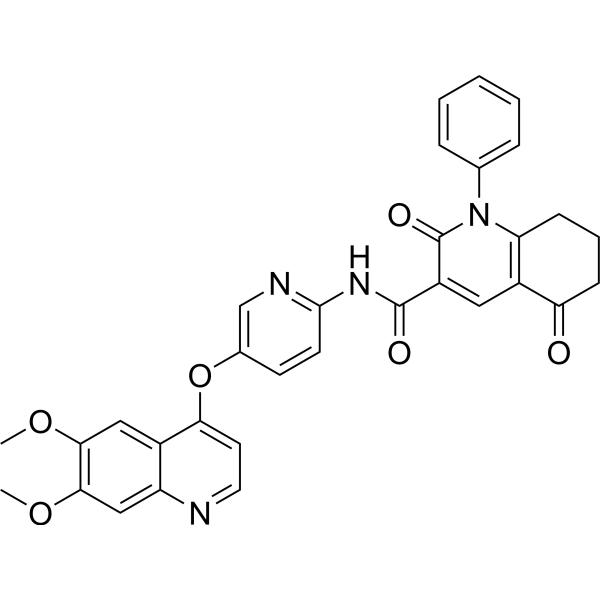
Tamnorzatinib (ONO-7475) is a potent, selective, and orally active Axl/Mer inhibitor with IC50 values of 0.7 nM and 1.0 nM, respectively. Tamnorzatinib sensitizes AXL-overexpressing EGFR-mutant NSCLC cells to the EGFR-TKIs, suppresses the emergence and maintenance of tolerant cells. Tamnorzatinib combines with Osimertinib (HY-15772) provides a bright promise for the study of EGFR-mutated non-small cell lung cancer (NSCLC).
For research use only. We do not sell to patients.
- Purity : 98.59%
- CAS No.: 1646839-59-9
- Formula: C32H26N4O6
- Molecular Weight:562.57
-
Storage:Powder -20°C, 3 years , 4°C, 2 years ; In solvent -80°C, 2 years , -20°C, 1 year

To place orders, for customer services and technical support, please contact: MedChemExpress USA
Tel: 609-228-6898 E-mail: [email protected] [email protected]


-
 Biological Activity
-
Chemical Information
-
Solvent & Solubility
- Purity & Documentation
- References
-
 Help & FAQs


-
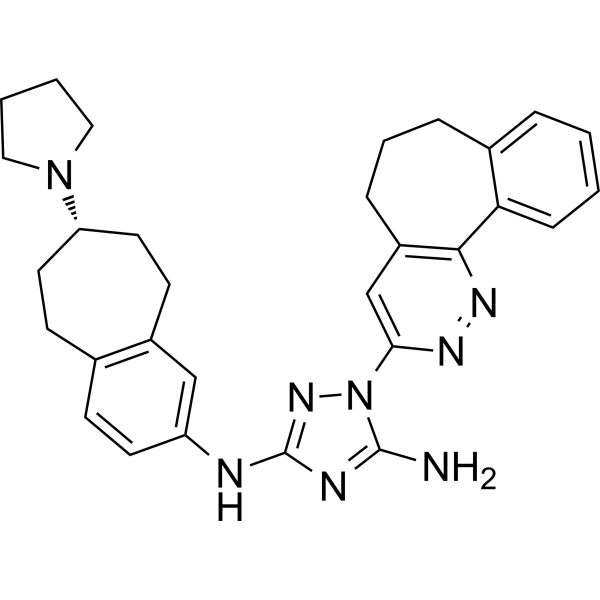
HY-15150
BemcentinibAXL Inhibitor -
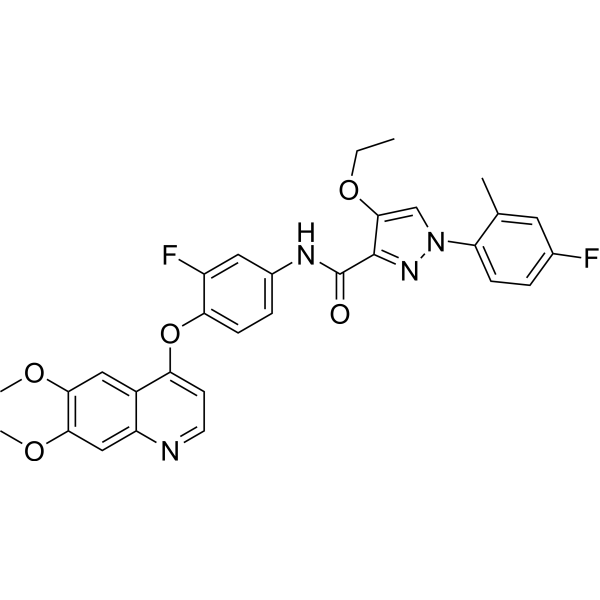
HY-12494
LDC1267AXL/TAM/FLT3 Inhibitor -
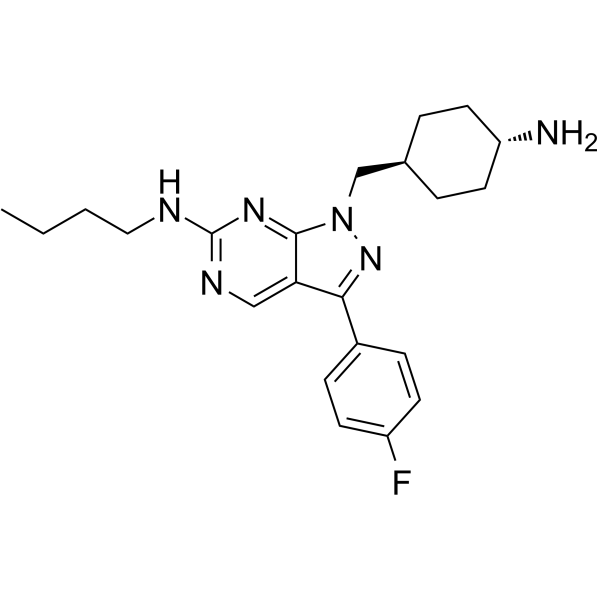
HY-117596
UNC569Mer RTK Inhibitor -
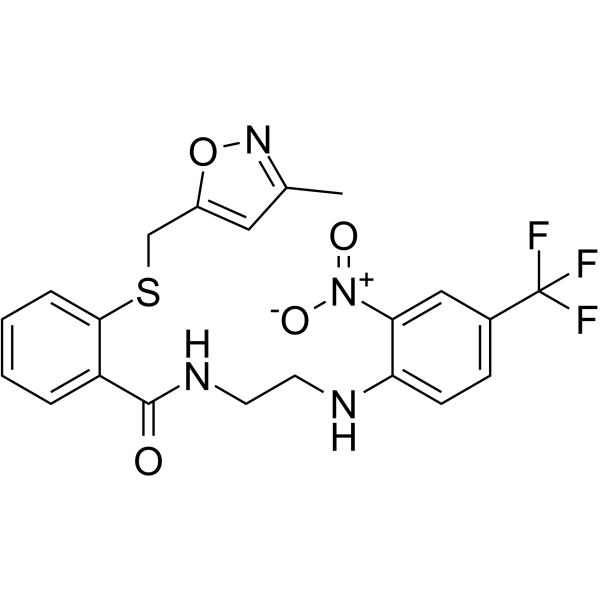
HY-119039
RU-301TAM Inhibitor -
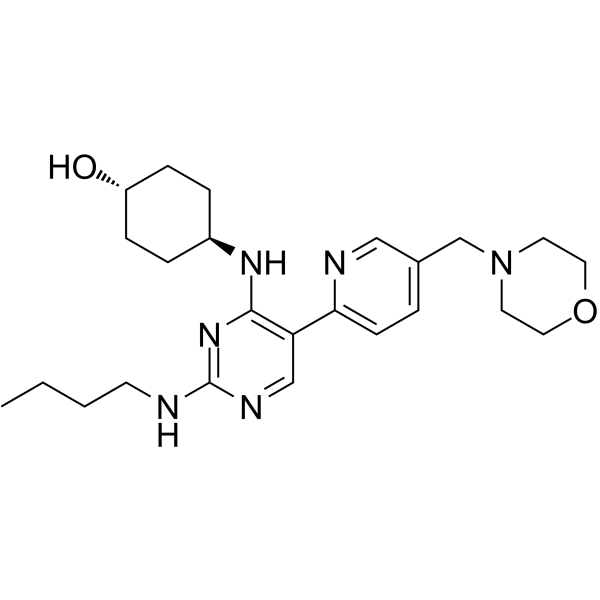
HY-15797
UNC2250Mer Inhibitor -
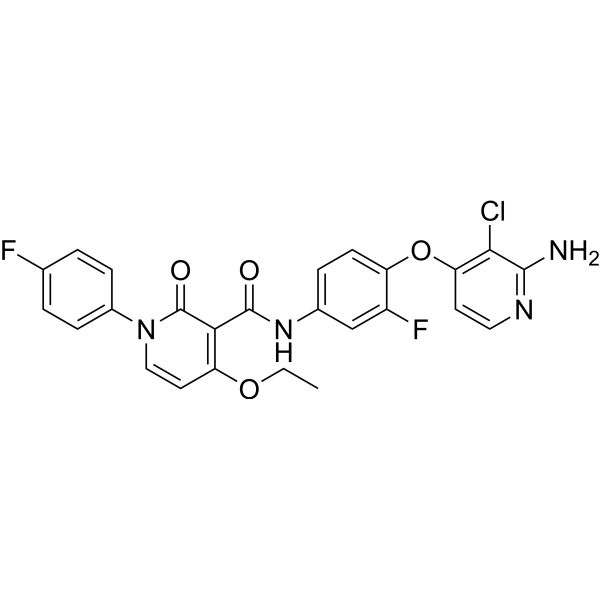
HY-12076
BMS 777607c-Met/Axl Inhibitor -
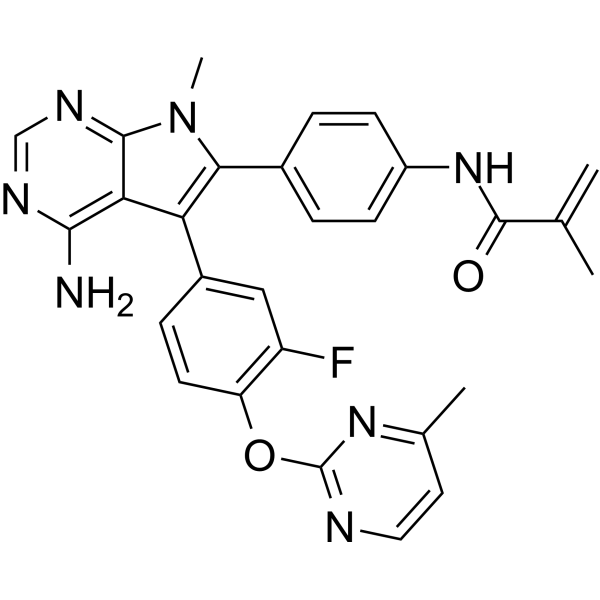
HY-147250
LirafugratinibFGFR2 Inhibitor -
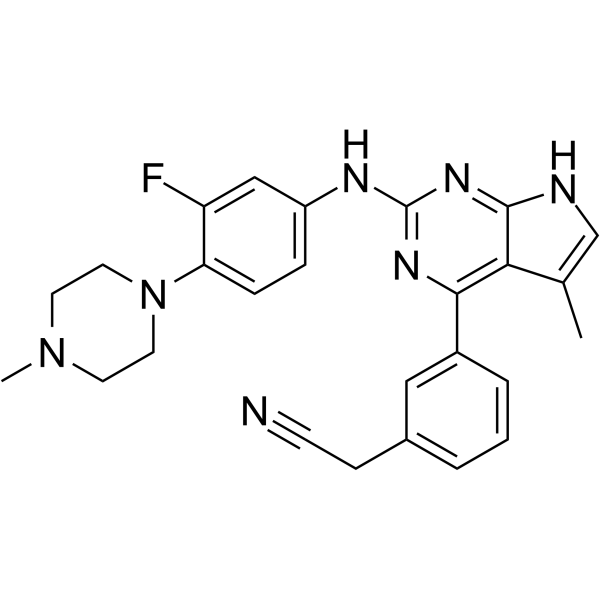
HY-12964
SGI-7079Axl Inhibitor -
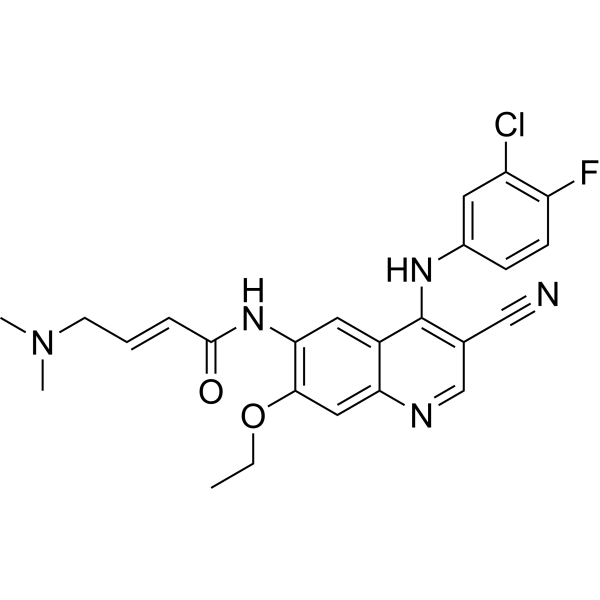
HY-32718
PelitinibSrc Inhibitor -
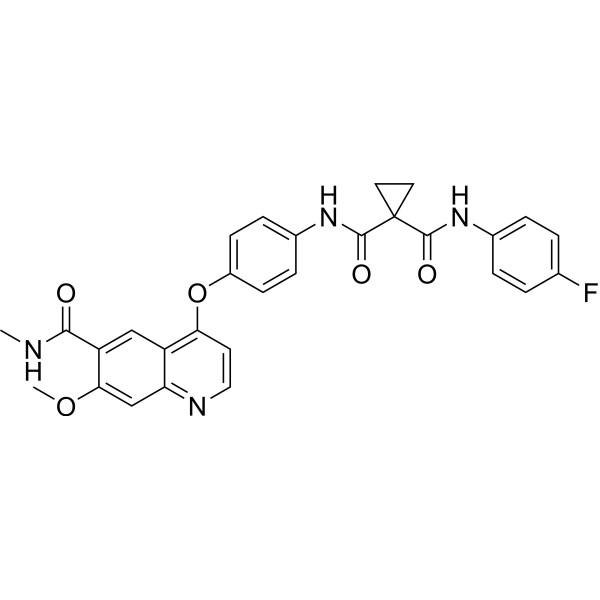
HY-138696
ZanzalintinibAxl/Mer/C-Met Inhibitor -
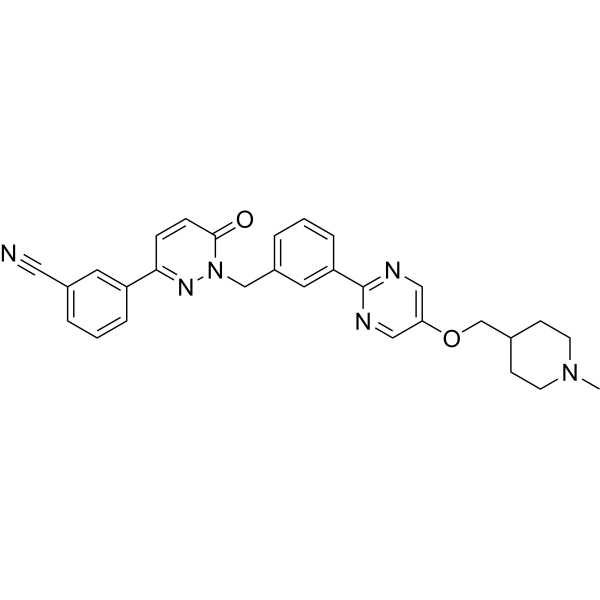
HY-14721
Tepotinibc-Met Inhibitor -
HY-18007
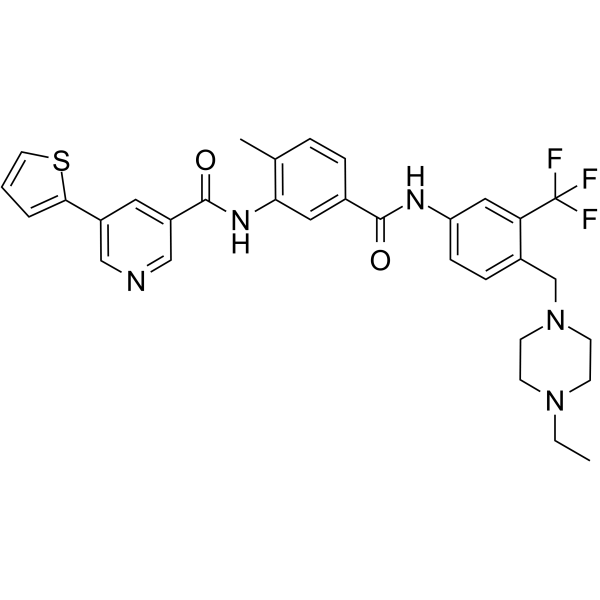
ALW-II-41-27Eph2 Inhibitor
Publications Citing Use of MedChemExpress (MCE) Tamnorzatinib
More

Biological Activity
Description
IC50 & Target
|
TrkA |
Axl |
Tyro3 |
Mer |
In Vitro
Tamnorzatinib is against recombinant human AXL with IC50 values of 0.414 nM and 0.7 nM in off-chip MSA and ACD cell-based tyrosine kinase assay, respectively. It is against AXL, MER, TYRO3, TRKB, PDGFR alpha, TRKA, and FLT3 activities with IC50 values of 0.7 nM, 1.0 nM, 8.7 nM, 15.8 nM, 28.9 nM, 35.7 nM and 147 nM, respectively in a Cell-based Tyrosine Kinase assay[2].Tamnorzatinib (0.0001 μM-1 μM; 72 hours) increases the sensitivity to Osimertinib and Dacomitinib and reduces the viability of high AXL-expressing PC-9 and HCC4011 cells, but not of low-AXL-expressing HCC827 cells. Besides, Tamnorzatinib enhances Osimertinib efficacy on the viability of cell lines PC-9, PC-9KGR, and HCC4011, and H1975, all of which express high levels of AXL. But it has a marginal effect on the viability of cell lines HCC827, HCC4006, and H3255 with low levels of AXL[1].Tamnorzatinib (1 μM; 4 or 48 hours) combines with Osimertinib markedly inhibits the phosphorylation of AXL, AKT, and p70S6K compared with the treatment of the high-AXL-expressing cell lines treated with Osimertinib alone at 4 hours. It combines with osimertinib increases cleaved PARP in PC-9 and HCC4011 cells compared with the treatment with Osimertinib alone[1].
MedChemExpress (MCE) has not independently confirmed the accuracy of these methods. They are for reference only.
-
Cell Line:High AXL-expressing cell: PC-9,HCC4011,H1975, PC-9KGR cellsLow AXL-expressing cell: HCC827, HCC4006, and H3255 cells
-
Concentration:0.0001 μM; 0.001 μM; 0.01 μM; 0.1 μM; 1 μM
-
Incubation Time:72 hours
-
Result:Increased the sensitivity and efficacy to Osimertinib in AXL-high level cells.
-
Cell Line:PC-9, HCC4011 cells
-
Concentration:1 μM
-
Incubation Time:4 or 48 hours
-
Result:Increased p-AXL, AKT, and p70S6K expression at 4 hours and increases p-PARP expression at 48 hours when combindes with Osimertinib.
In Vivo
MedChemExpress (MCE) has not independently confirmed the accuracy of these methods. They are for reference only.
-
Animal Model:Mouse CDX model using high-AXL-expressing PC-9KGR cells (exon 19 deletion and the exon21-T790M mutation in EGFR)[1]
-
Dosage:10 mg/kg; once daily; 19 days
-
Administration:oral gavage
-
Result:Had little effects alone, but combined treatments significantly decreased tumor volume without reappear.
Clinical Trial
| NCT Number | Sponsor | Condition | Start Date |
Phase

|
|---|---|---|---|---|
| NCT01329991 | 2011-05 | PHASE1 |


Chemical Information
-
CAS No. 1646839-59-9
-
Appearance Solid
-
Molecular Weight 562.57
-
Formula C32H26N4O6
-
Color Light yellow to yellow
-
SMILES
O=C(C1=CC2=C(N(C3=CC=CC=C3)C1=O)CCCC2=O)NC4=NC=C(OC5=CC=NC6=CC(OC)=C(OC)C=C56)C=C4
-
Synonyms
ONO-7475
-
Shipping
Room temperature in continental US; may vary elsewhere.
-
Storage
Powder -20°C 3 years 4°C 2 years In solvent -80°C 2 years -20°C 1 year


Publications (2)
-
Journal Impact Factor
-
Most Recent
-
Cancer Cell
Adiponectin reduces immune checkpoint inhibitor-induced inflammation without blocking anti-tumor immunity. [Abstract]2025 Feb 10;43(2):269-291.e19. PMID: 39933899 -
Cell Rep
Phosphoproteomic subtyping of gastric cancer reveals dynamic transformation with chemotherapy and guides targeted cancer treatment. [Abstract]2024 Oct 22;43(10):114774. PMID: 39357518


Solvent & Solubility
In Vitro:
DMSO : 100 mg/mL (177.76 mM; Need ultrasonic; Hygroscopic DMSO has a significant impact on the solubility of product, please use newly opened DMSO)
Please refer to the solubility information to select the appropriate solvent. Once prepared, please aliquot and store the solution to prevent product inactivation from repeated freeze-thaw cycles.
Storage method and period of stock solution: -80°C, 2 years; -20°C, 1 year. When stored at -80°C, please use it within 2 years. When stored at -20°C, please use it within 1 year.
Please refer to the solubility information to select the appropriate solvent. Once prepared, please aliquot and store the solution to prevent product inactivation from repeated freeze-thaw cycles.
Storage method and period of stock solution: -80°C, 2 years; -20°C, 1 year. When stored at -80°C, please use it within 2 years. When stored at -20°C, please use it within 1 year.
Concentration (start) × Volume (start) = Concentration (final) × Volume (final)
In Vivo:
Select the appropriate dissolution method based on your experimental animal and administration route.
- For the following dissolution methods, please ensure to first prepare a clear stock solution using an In Vitro approach and then sequentially add co-solvents:
- To ensure reliable experimental results, the clarified stock solution can be appropriately stored based on storage conditions. As for the working solution for In Vivo experiments, it is recommended to prepare freshly and use it on the same day.
- The percentages shown for the solvents indicate their volumetric ratio in the final prepared solution. If precipitation or phase separation occurs during preparation, heat and/or sonication can be used to aid dissolution.
Add each solvent one by one: 10% DMSO 40% PEG300 5% Tween-80 45% Saline
Solubility: ≥ 1 mg/mL (1.78 mM); Clear solution
This protocol yields a clear solution of ≥ 1 mg/mL (saturation unknown).
Taking 1 mL working solution as an example, add 100 μL DMSO stock solution (10.0 mg/mL) to 400 μL PEG300, and mix evenly; then add 50 μL Tween-80 and mix evenly; then add 450 μL Saline to adjust the volume to 1 mL.
Preparation of Saline: Dissolve 0.9 g sodium chloride in ddH₂O and dilute to 100 mL to obtain a clear Saline solution.
In Vivo Dissolution Calculator
Please enter the basic information of animal experiments:
-
-
-
-
Recommended: Prepare an additional quantity of animals to account for potential losses during experiments.
Please enter your animal formula composition:
-
%DMSO +
Recommended: Keep the proportion of DMSO in working solution below 2% if your animal is weak.
-
%+
-
+%Tween-80 + +
-
%Saline +
The co-solvents required include: DMSO, . All of co-solvents are available by MedChemExpress (MCE). , Tween 80. All of co-solvents are available by MedChemExpress (MCE).
Working solution concentration: 0.22 mg/mL
Method for preparing stock solution: mg drug dissolved in μL DMSO. Stock solution concentration: mg/mL.
1. Take μL DMSO stock solution;
2. Add μL .
μL , mix evenly;
3. Then add μL Tween 80, mix evenly;
4. Then add μL
Please ensure that the stock solution in the first step is dissolved to a clear state, and add co-solvents in sequence. You can use ultrasonic heating (ultrasonic cleaner, recommended frequency 20-40 kHz), vortexing, etc. to assist dissolution.


Purity & Documentation
-
Data Sheet (280 KB)
-
SDS (393 KB)
- English - EN (393 KB)
- Français - FR (393 KB)
- Deutsch - DE (393 KB)
- Norwegian - NO (393 KB)
- Español - ES (393 KB)
- Swedish - SV (393 KB)
- Italian - IT (393 KB)
- Korean - KR (393 KB)
- Portuguese - PT (393 KB)
-
Handling Instructions (2659 KB)
References
[1]. Okura N, et al. ONO-7475, a Novel AXL Inhibitor, Suppresses the Adaptive Resistance to Initial EGFR-TKI Treatment in EGFR-Mutated Non-Small Lung Cancer.Clin Cancer Res. 2020 Jan 17. [Content Brief]
[2]. Ruvolo PP, et al. Anexelekto/MER tyrosine kinase inhibitor ONO-7475 arrests growth and kills FMS-like tyrosine kinase 3-internal tandem duplication mutant acute myeloid leukemia cells by diverse mechanisms.Haematologica. 2017 Dec;102(12):2048-2057. [Content Brief]


Complete Stock Solution Preparation Table
Please refer to the solubility information to select the appropriate solvent. Once prepared, please aliquot and store the solution to prevent product inactivation from repeated freeze-thaw cycles.
Storage method and period of stock solution: -80°C, 2 years; -20°C, 1 year. When stored at -80°C, please use it within 2 years. When stored at -20°C, please use it within 1 year.
| Optional Solvent | Concentration Solvent Mass | 1 mg | 5 mg | 10 mg | 25 mg |
|---|---|---|---|---|---|
| DMSO | 1 mM | 1.7776 mL | 8.8878 mL | 17.7756 mL | 44.4389 mL |
| 5 mM | 0.3555 mL | 1.7776 mL | 3.5551 mL | 8.8878 mL | |
| 10 mM | 0.1778 mL | 0.8888 mL | 1.7776 mL | 4.4439 mL | |
| 15 mM | 0.1185 mL | 0.5925 mL | 1.1850 mL | 2.9626 mL | |
| 20 mM | 0.0889 mL | 0.4444 mL | 0.8888 mL | 2.2219 mL | |
| 25 mM | 0.0711 mL | 0.3555 mL | 0.7110 mL | 1.7776 mL | |
| 30 mM | 0.0593 mL | 0.2963 mL | 0.5925 mL | 1.4813 mL | |
| 40 mM | 0.0444 mL | 0.2222 mL | 0.4444 mL | 1.1110 mL | |
| 50 mM | 0.0356 mL | 0.1778 mL | 0.3555 mL | 0.8888 mL | |
| 60 mM | 0.0296 mL | 0.1481 mL | 0.2963 mL | 0.7406 mL | |
| 80 mM | 0.0222 mL | 0.1111 mL | 0.2222 mL | 0.5555 mL | |
| 100 mM | 0.0178 mL | 0.0889 mL | 0.1778 mL | 0.4444 mL |


Tamnorzatinib Related Classifications
HY-114358 Related Classifications
 Powered by Bioz